
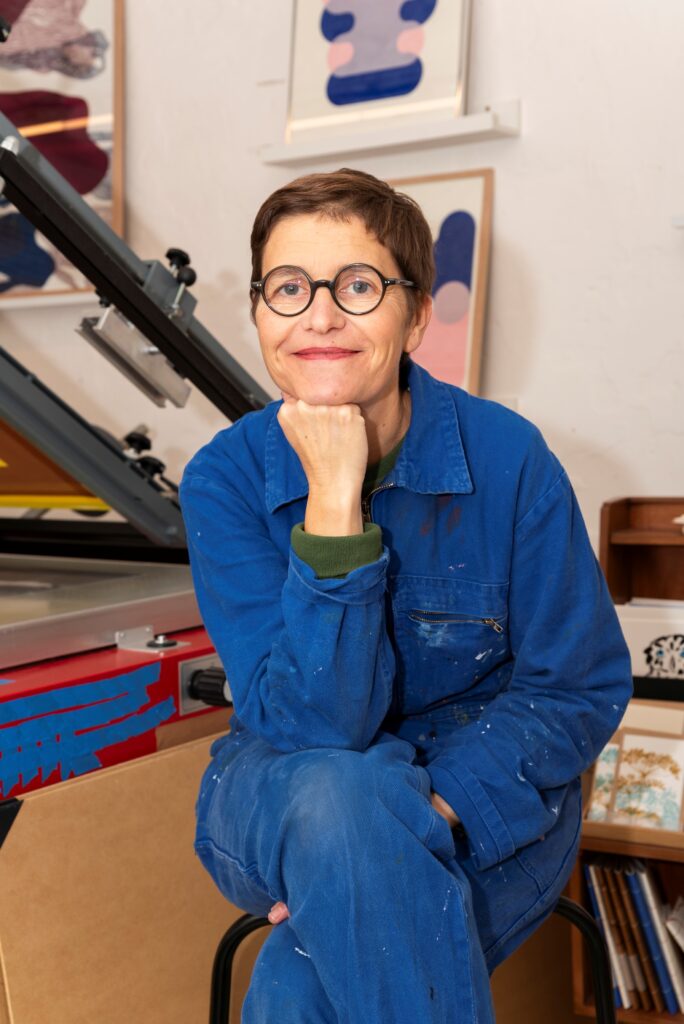
The Louvre gift shop isn’t simply adding another museum souvenir to the long-standing market for merchandise. With Keramos, conceived in collaboration with artist and screen printer Blandine Imberty, it explores a more subtle idea: bringing an ancient motif from the archaeological display case to the contemporary dining table, without confining it to scholarly reference.
The starting point is clear. The Louvre’s collections of Greek, Etruscan, and Roman ceramics belong to the Department of Greek, Etruscan, and Roman Antiquities, which brings together works from the ancient civilizations of the Mediterranean basin, dating from the Neolithic period to the 6th century CE. In the Campana Gallery—a long series of nine rooms running along the Seine—thousands of vases offer a comprehensive overview of ancient Greek ceramics. It is less a display than an alphabet: vase profiles, silhouettes, brown lines, figures, reserved areas, and fragments of narratives.
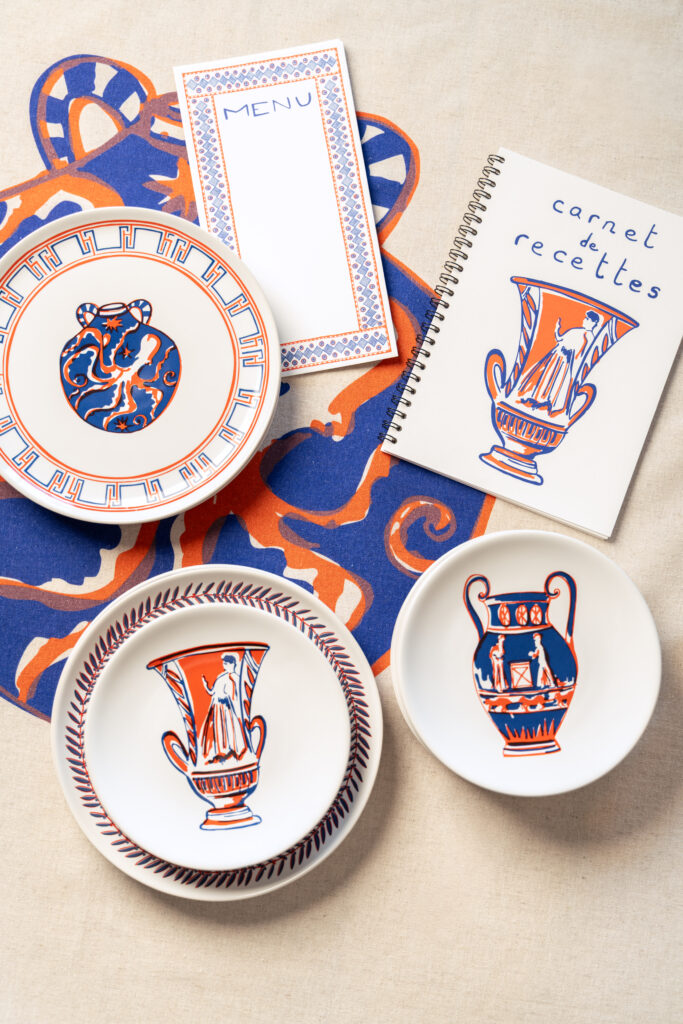
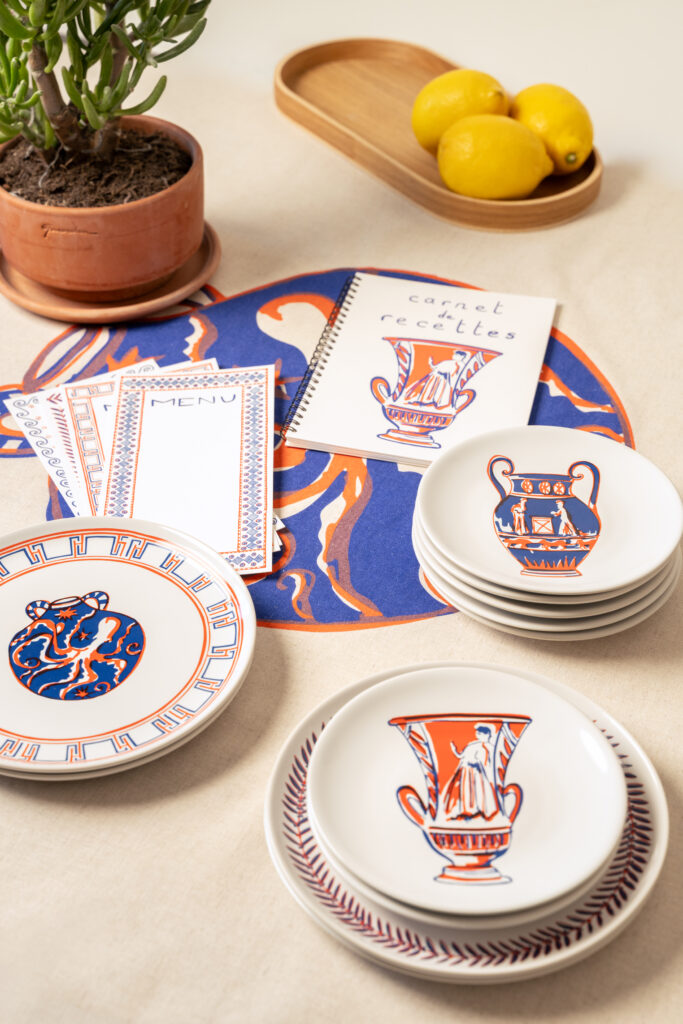
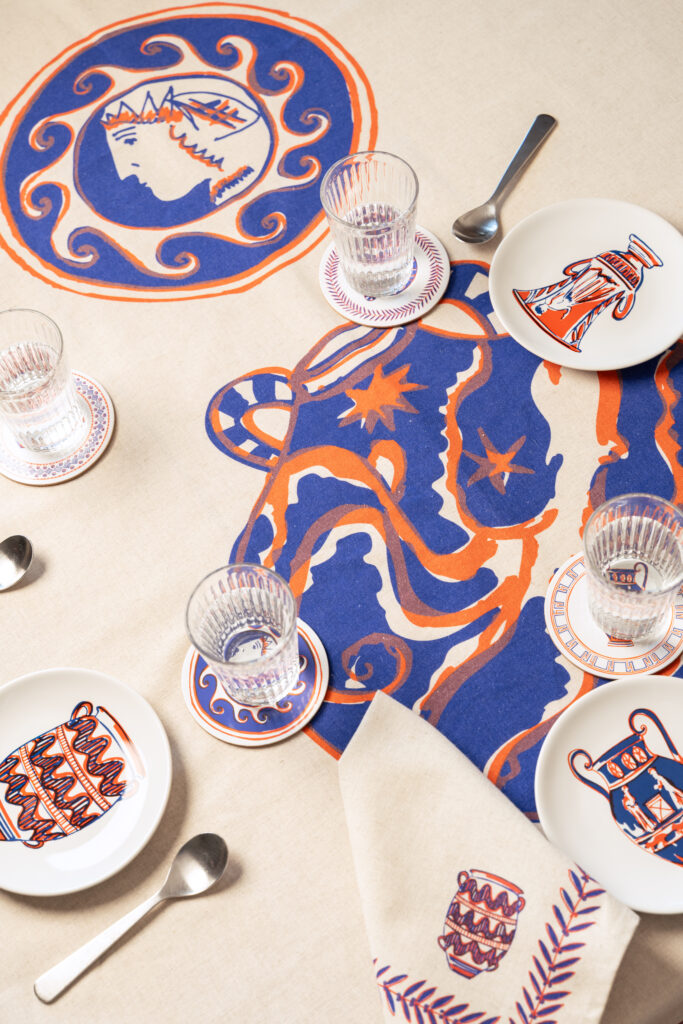
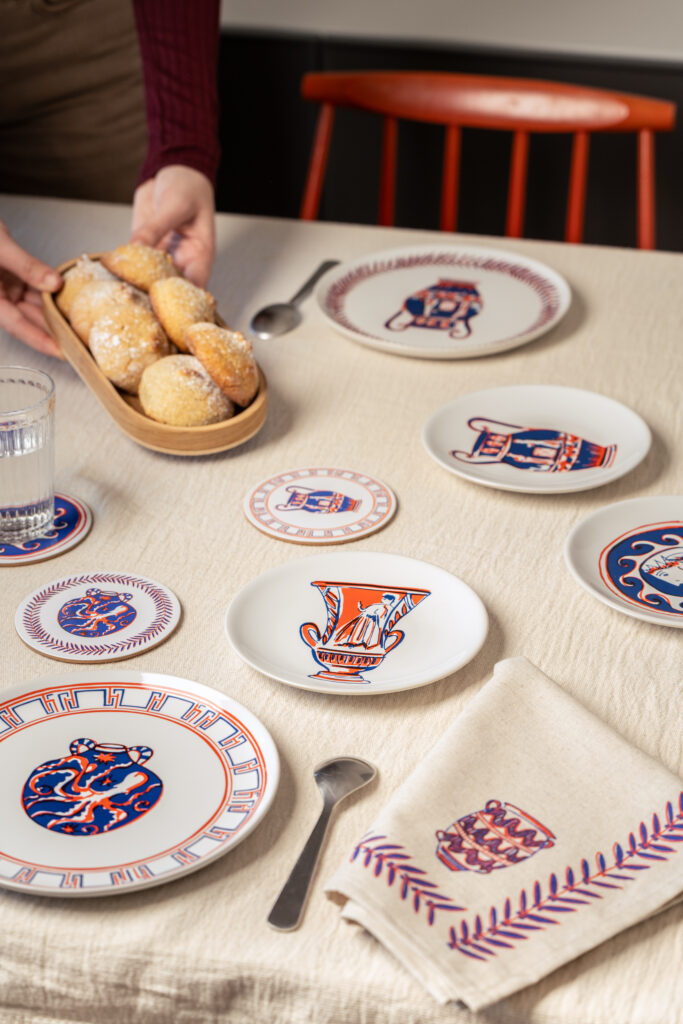
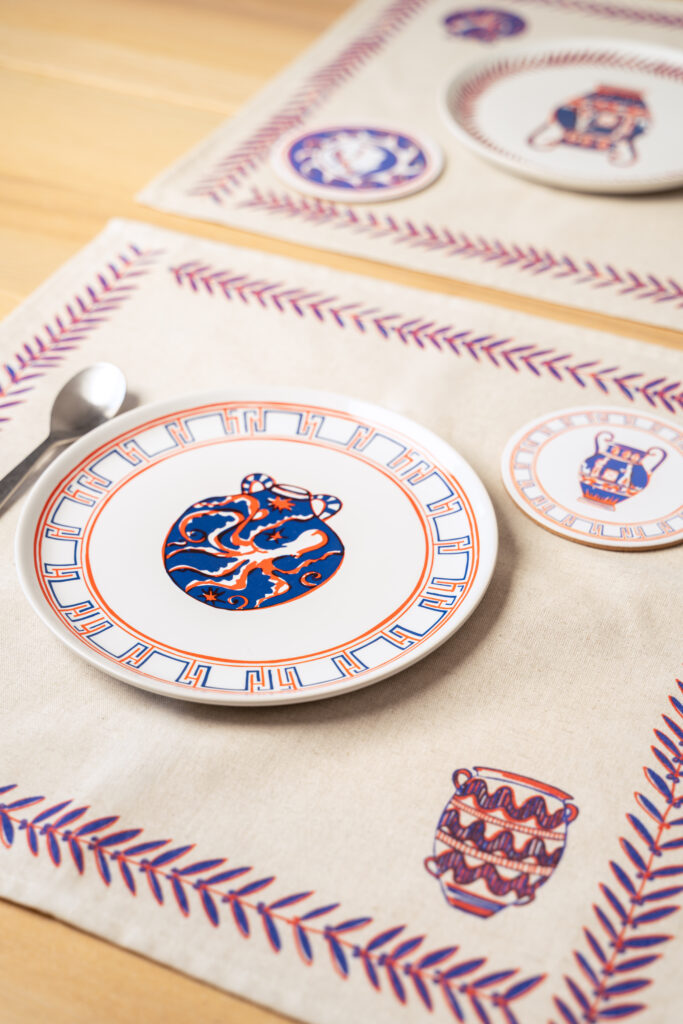
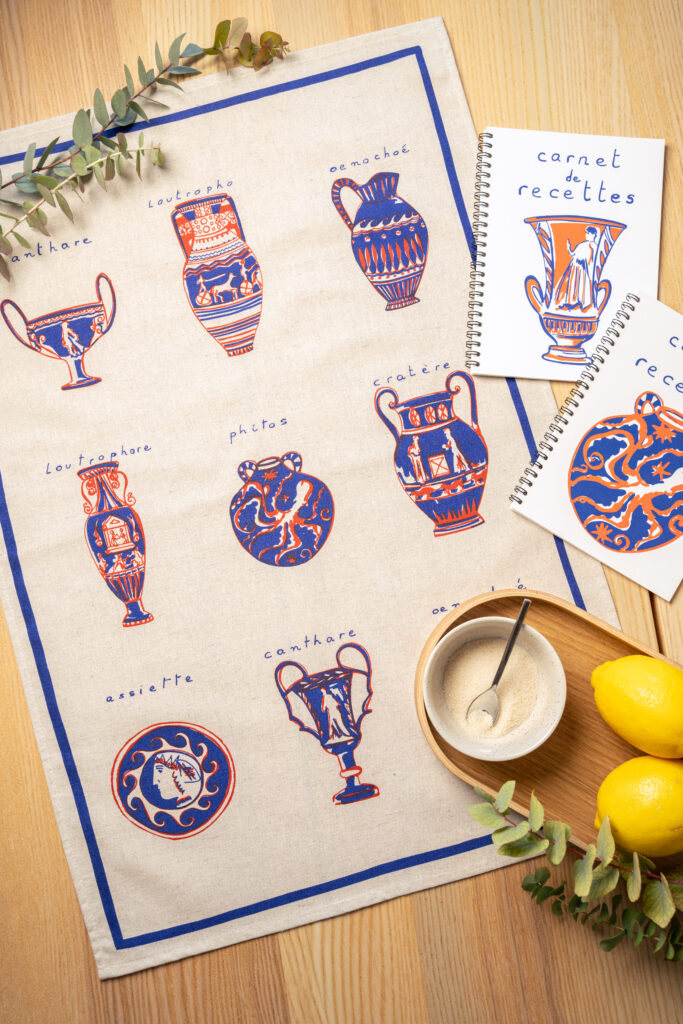
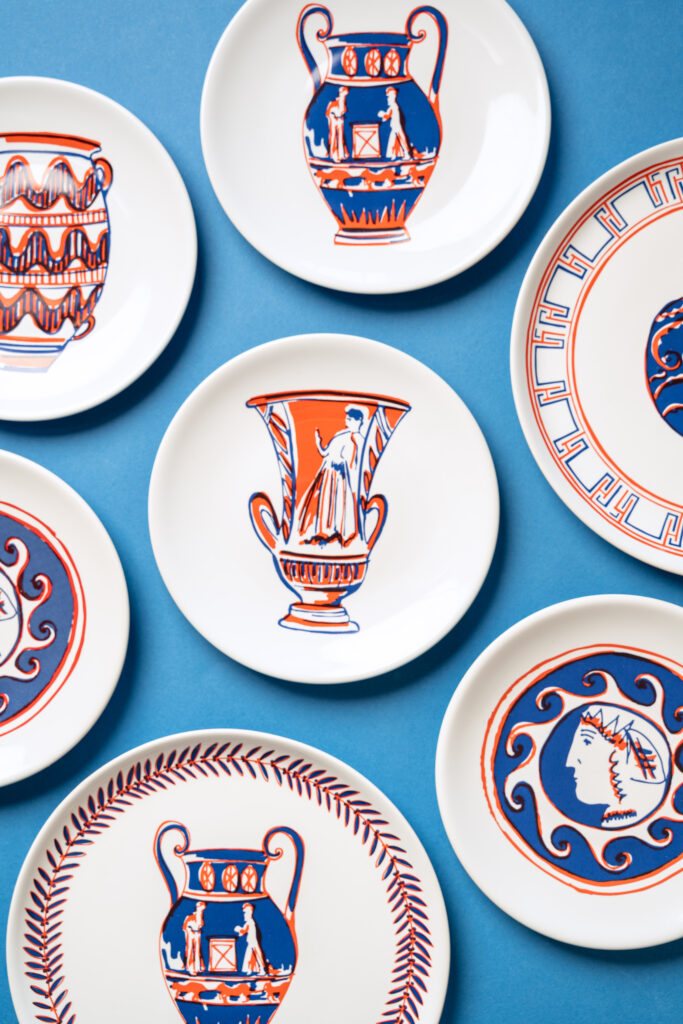
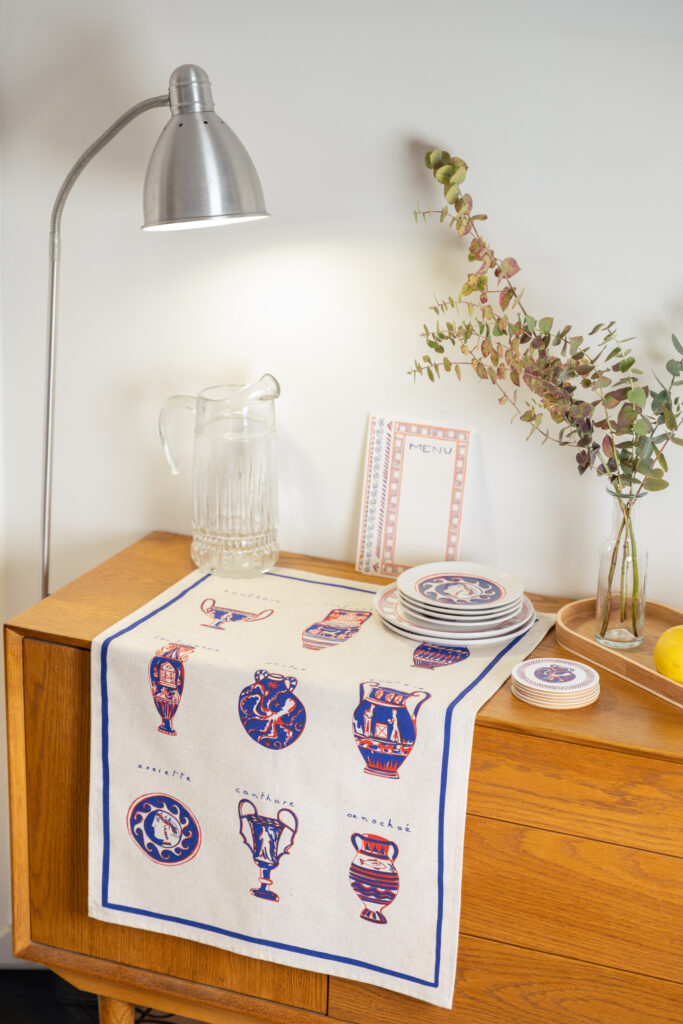
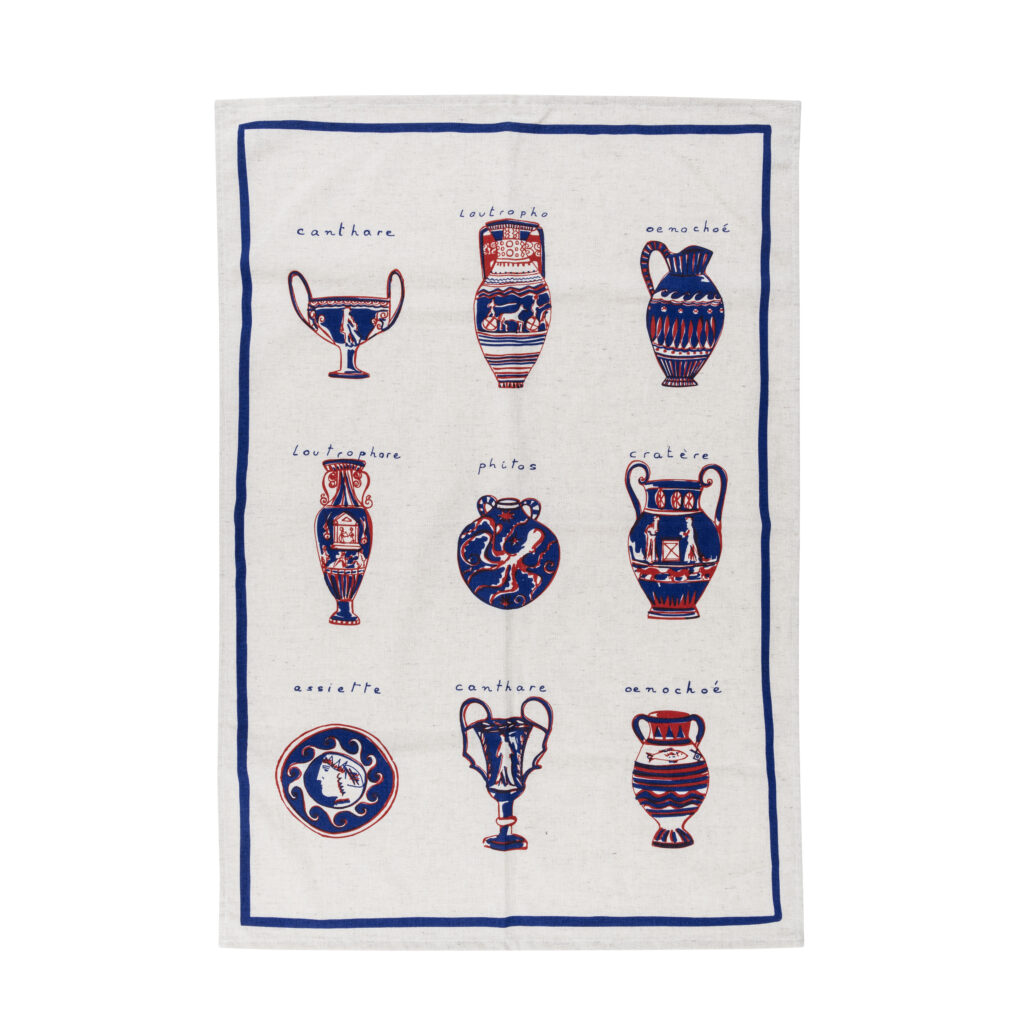
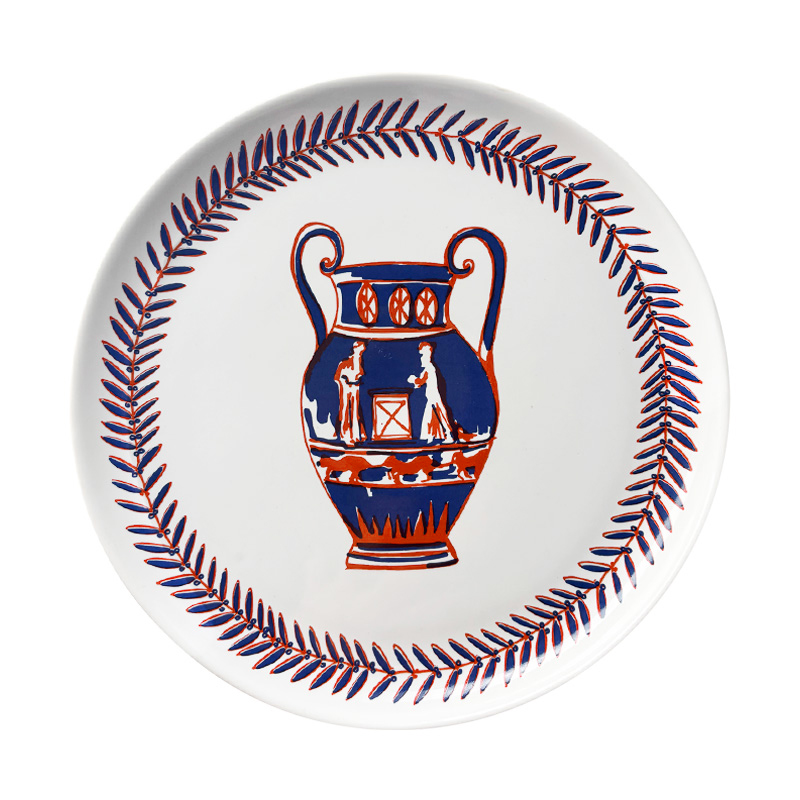
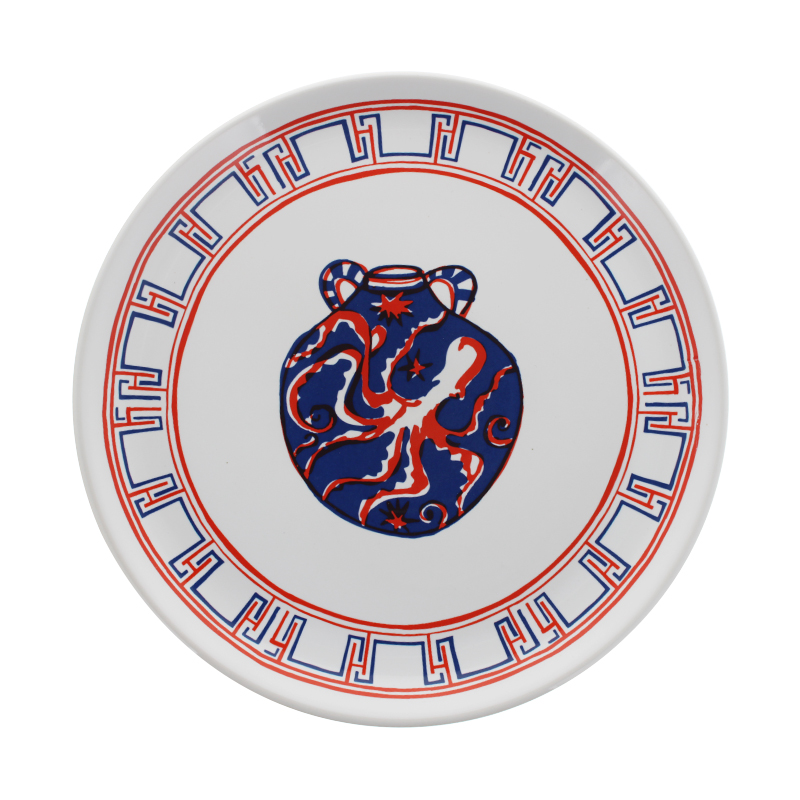
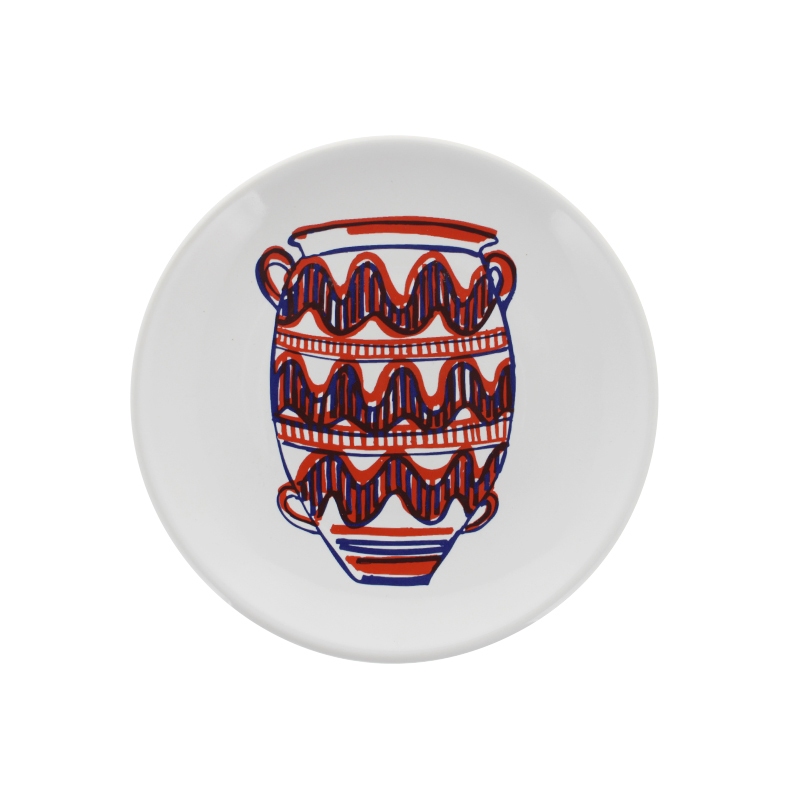
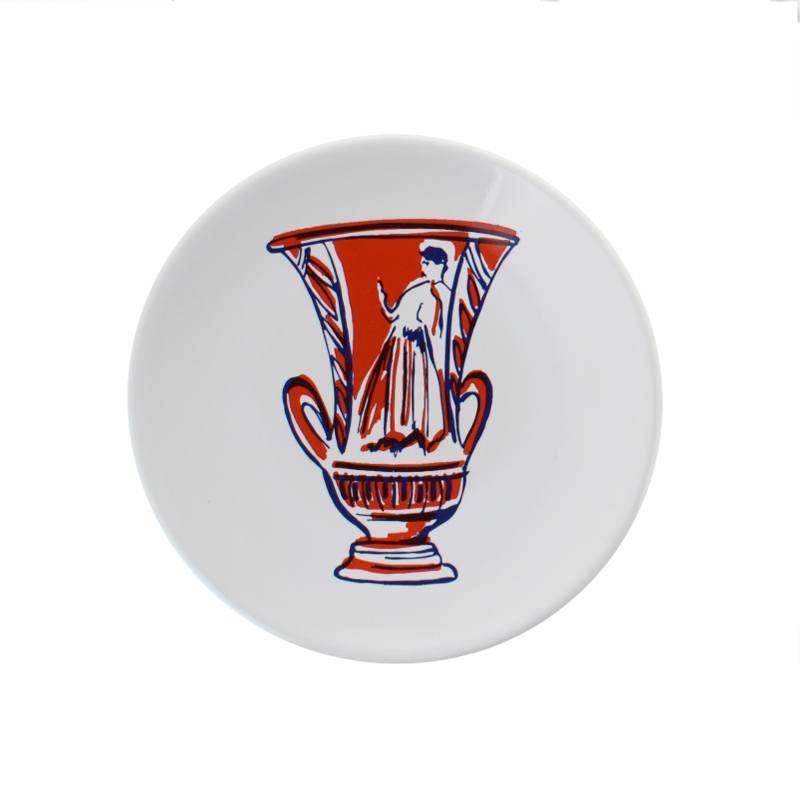
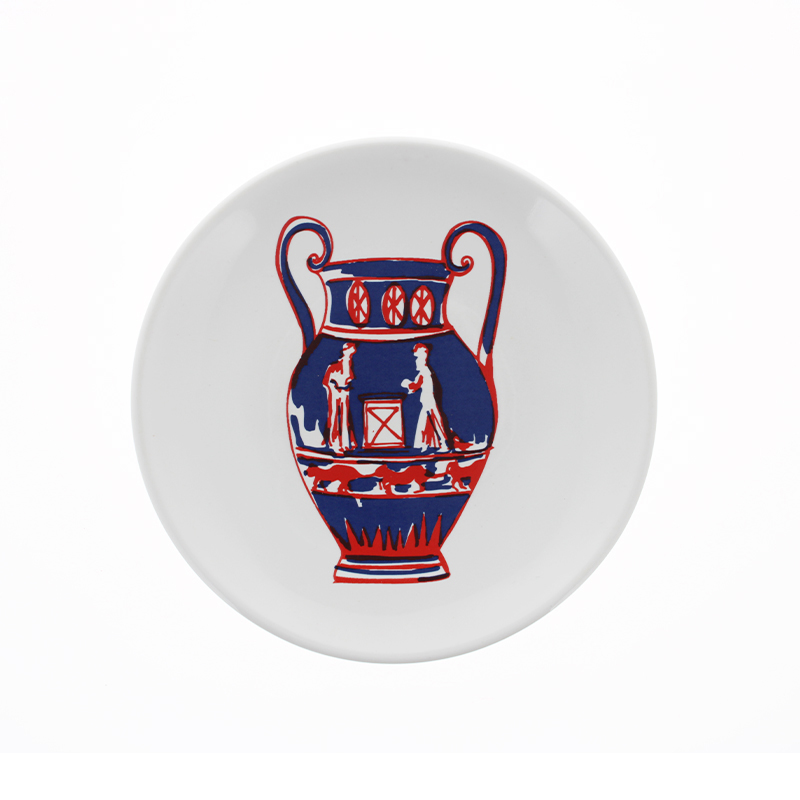
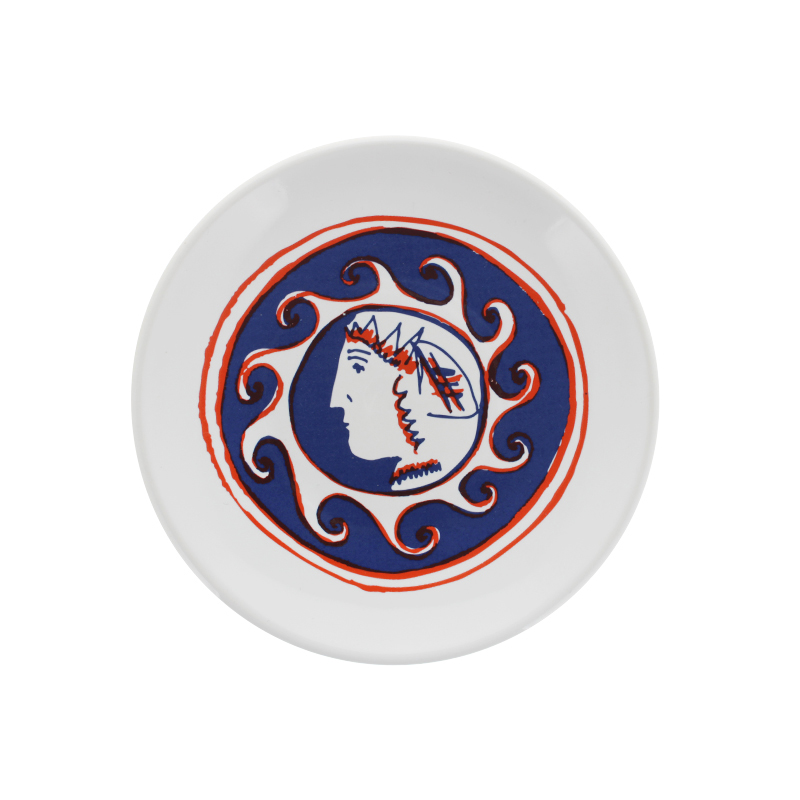
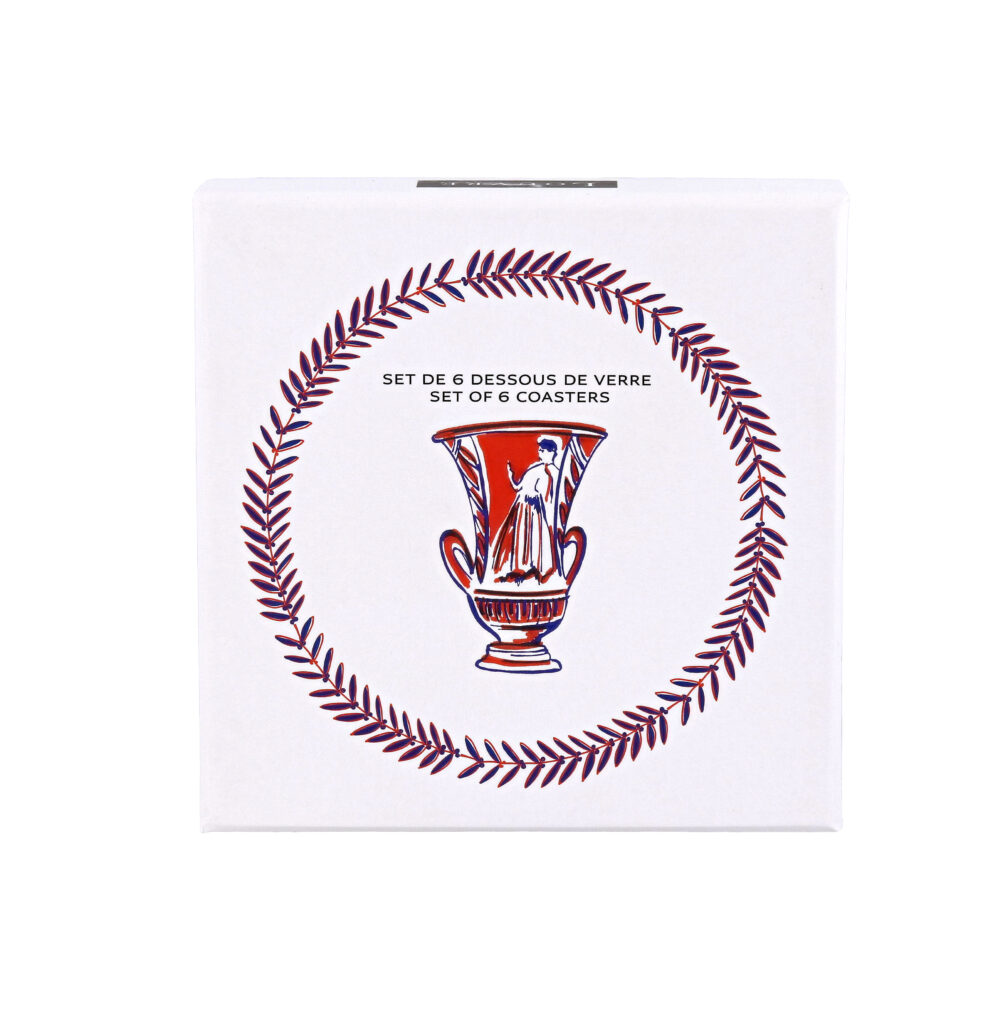
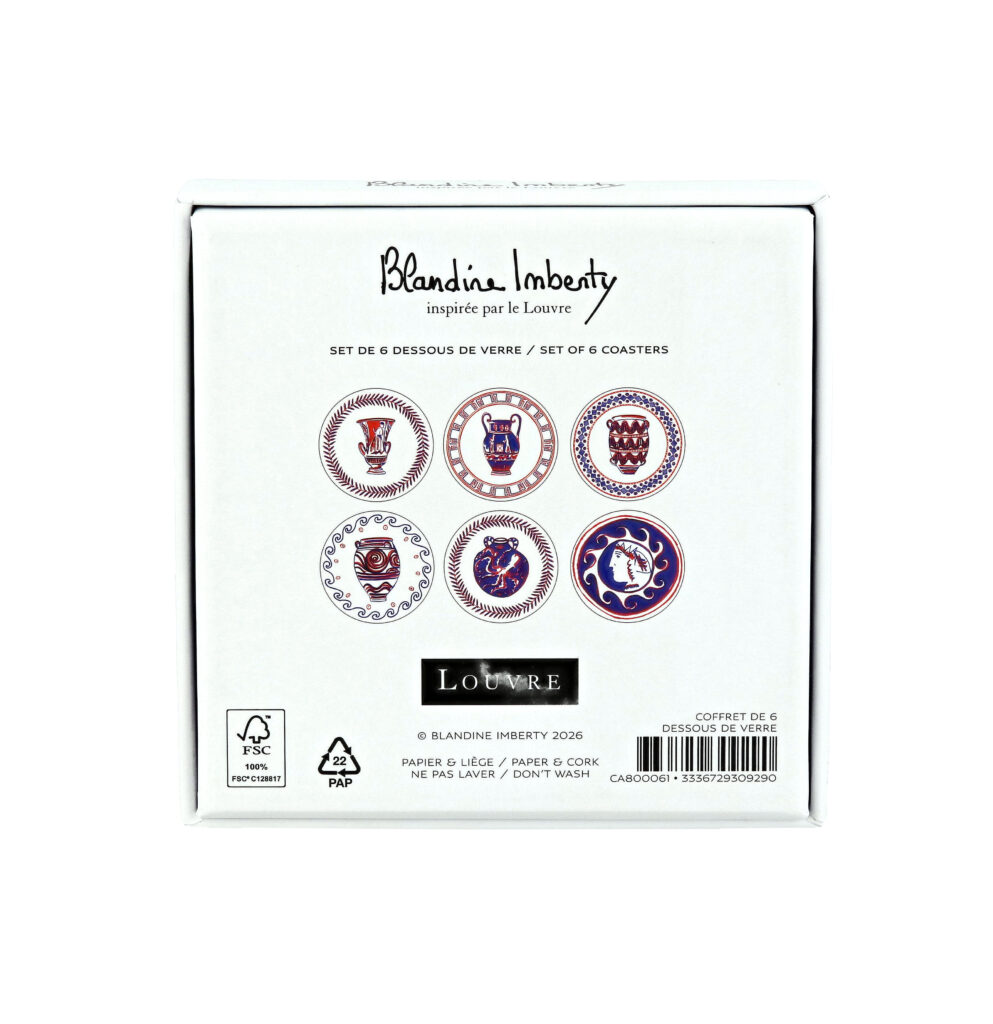
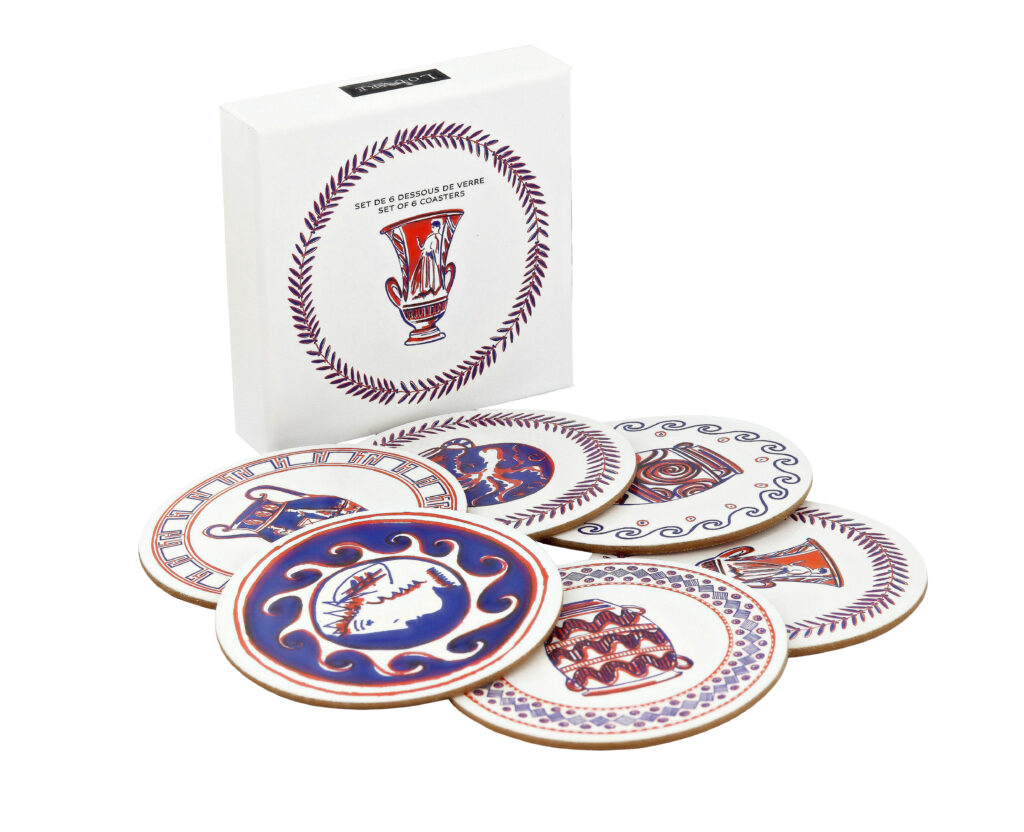
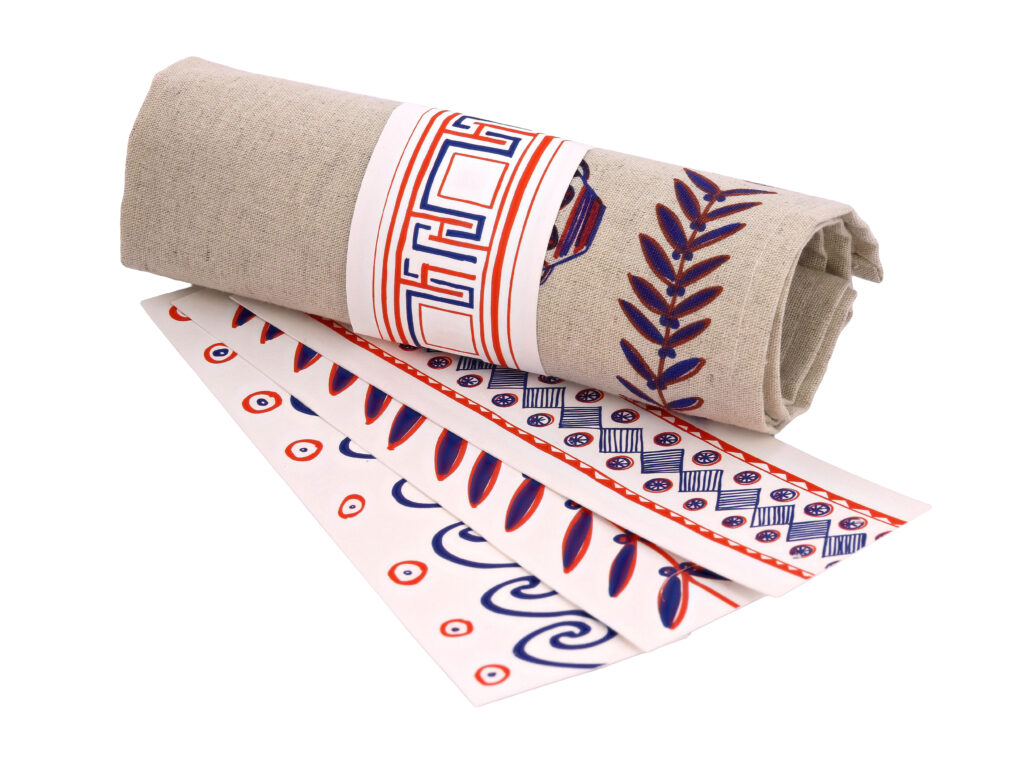
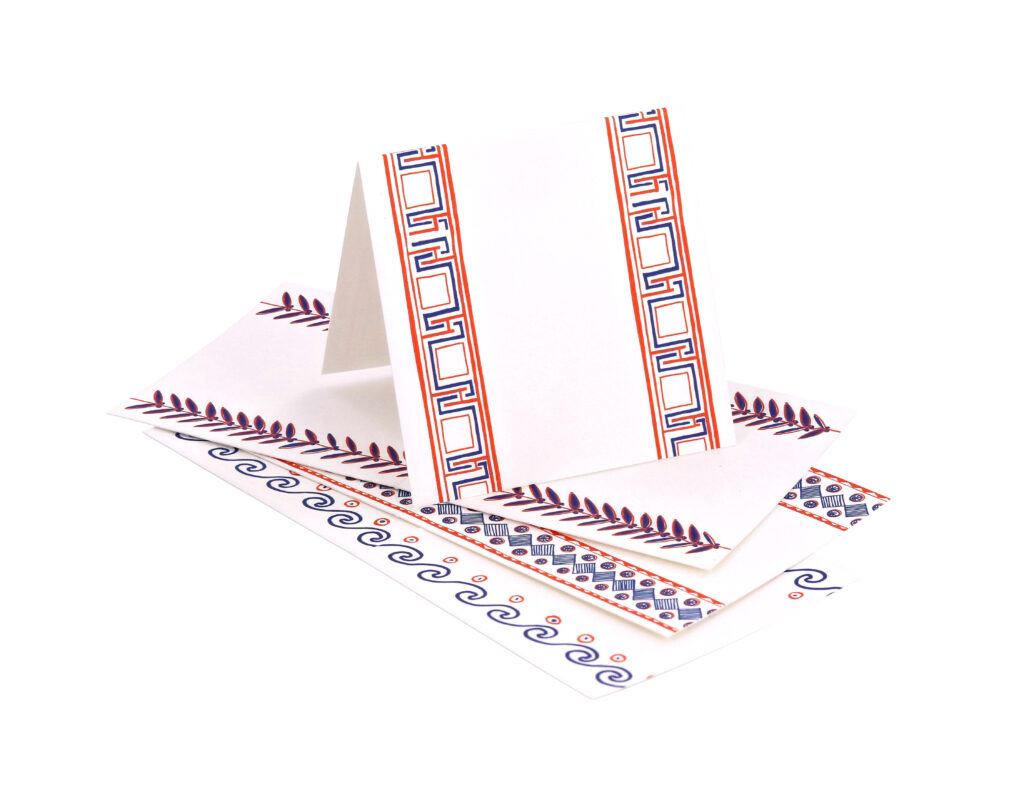
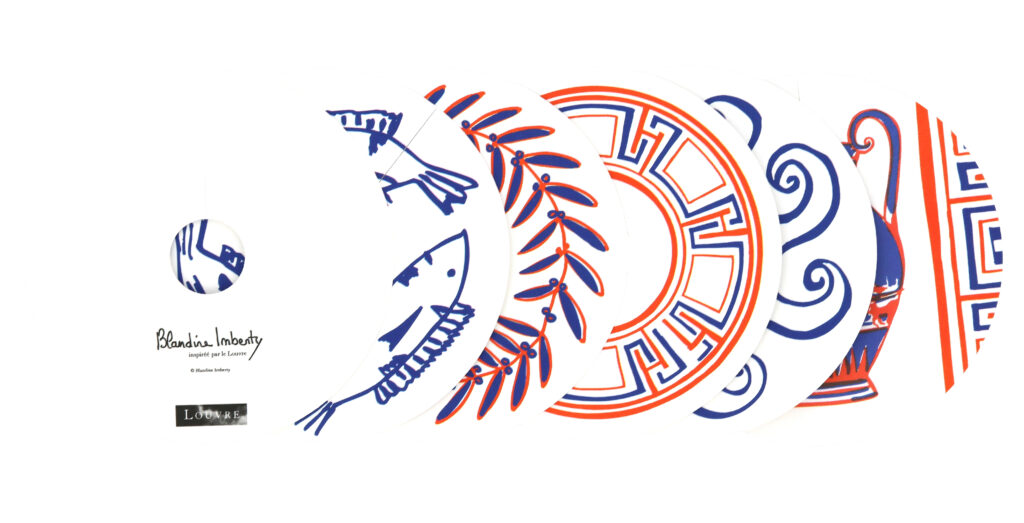
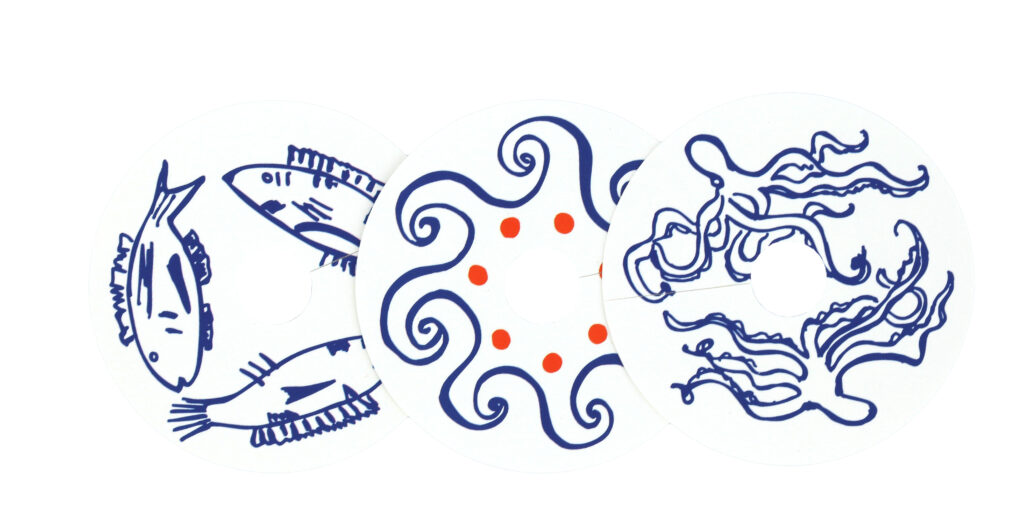
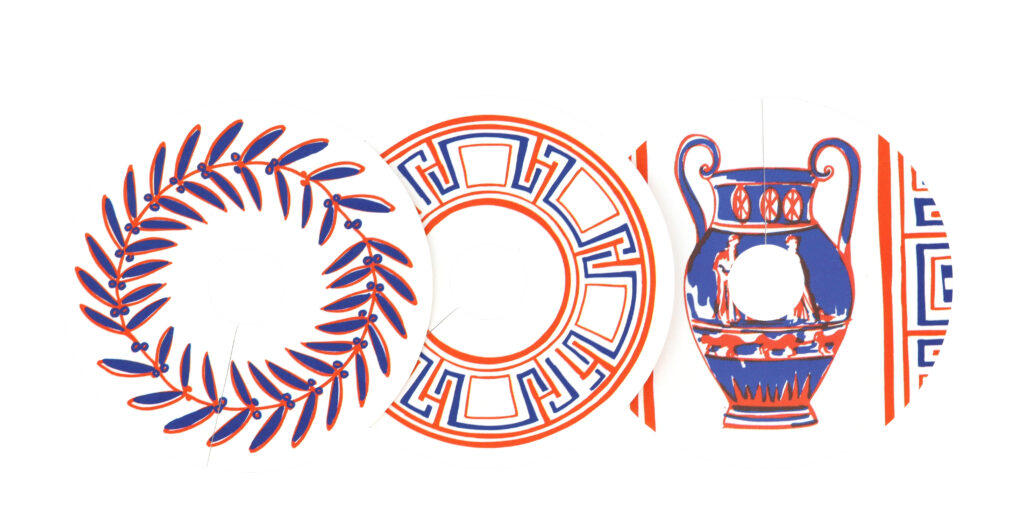
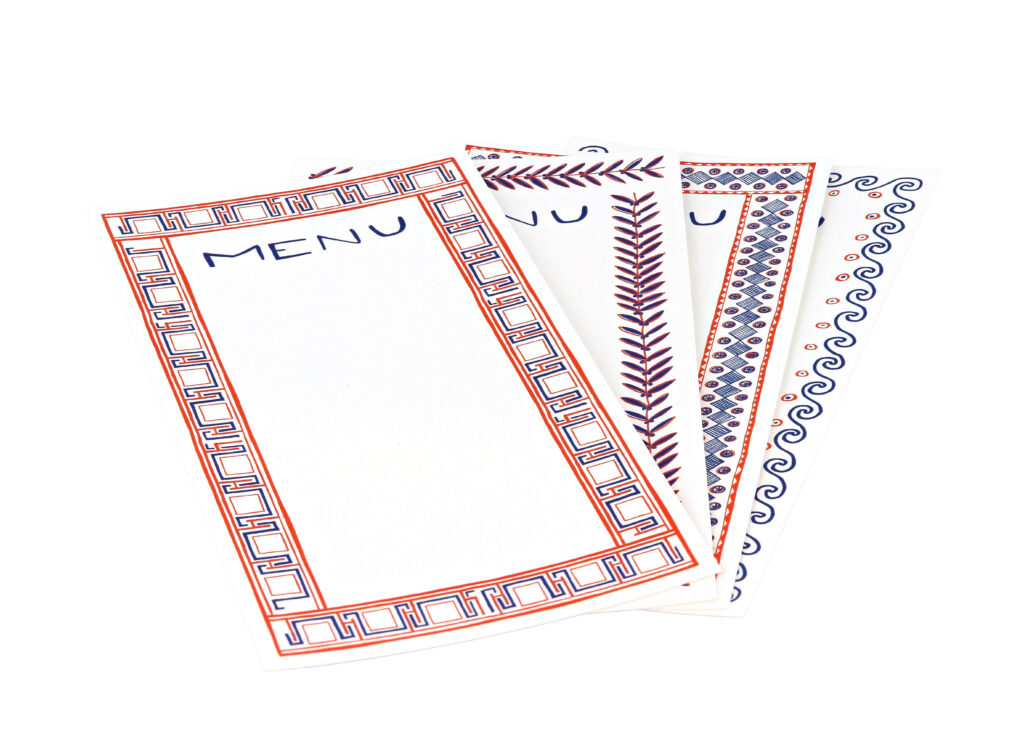
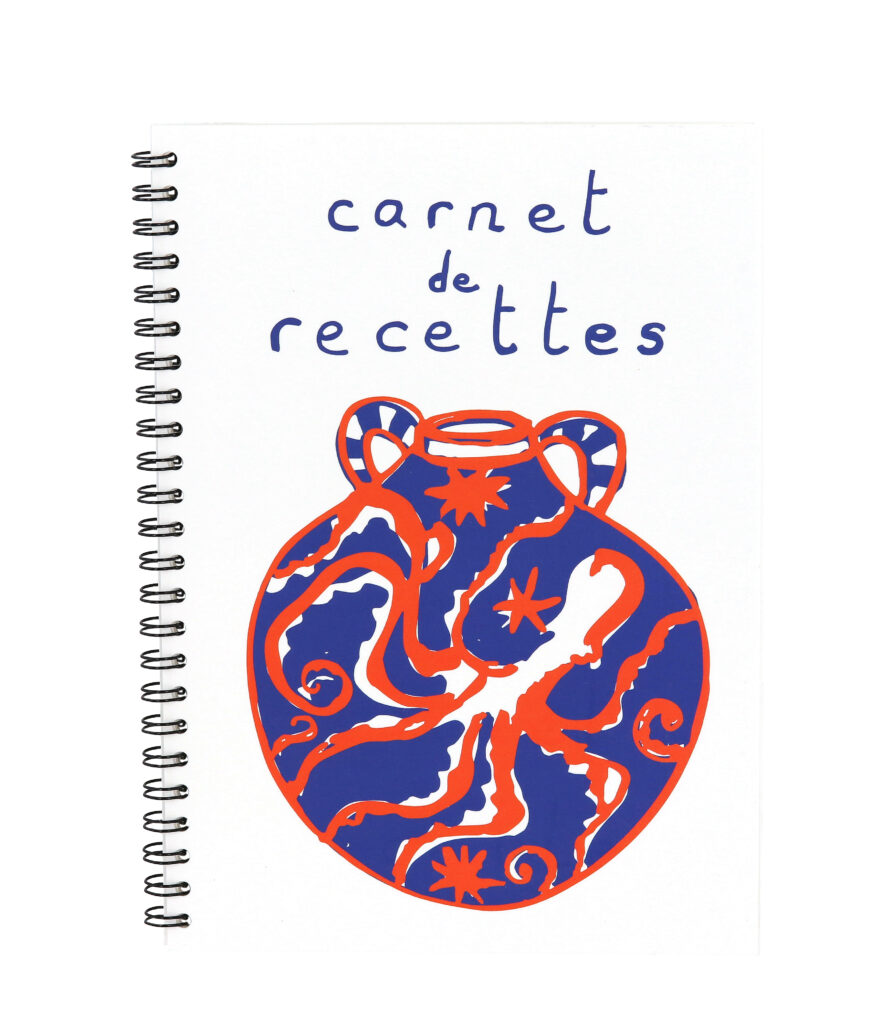
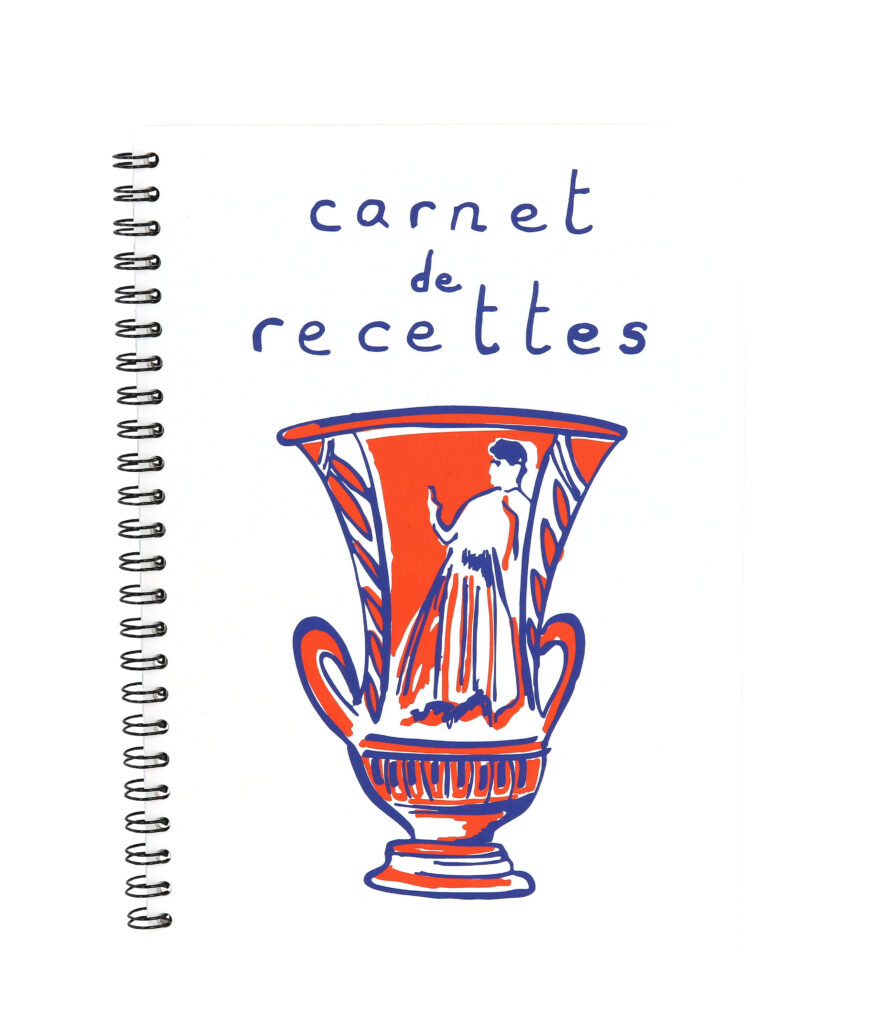
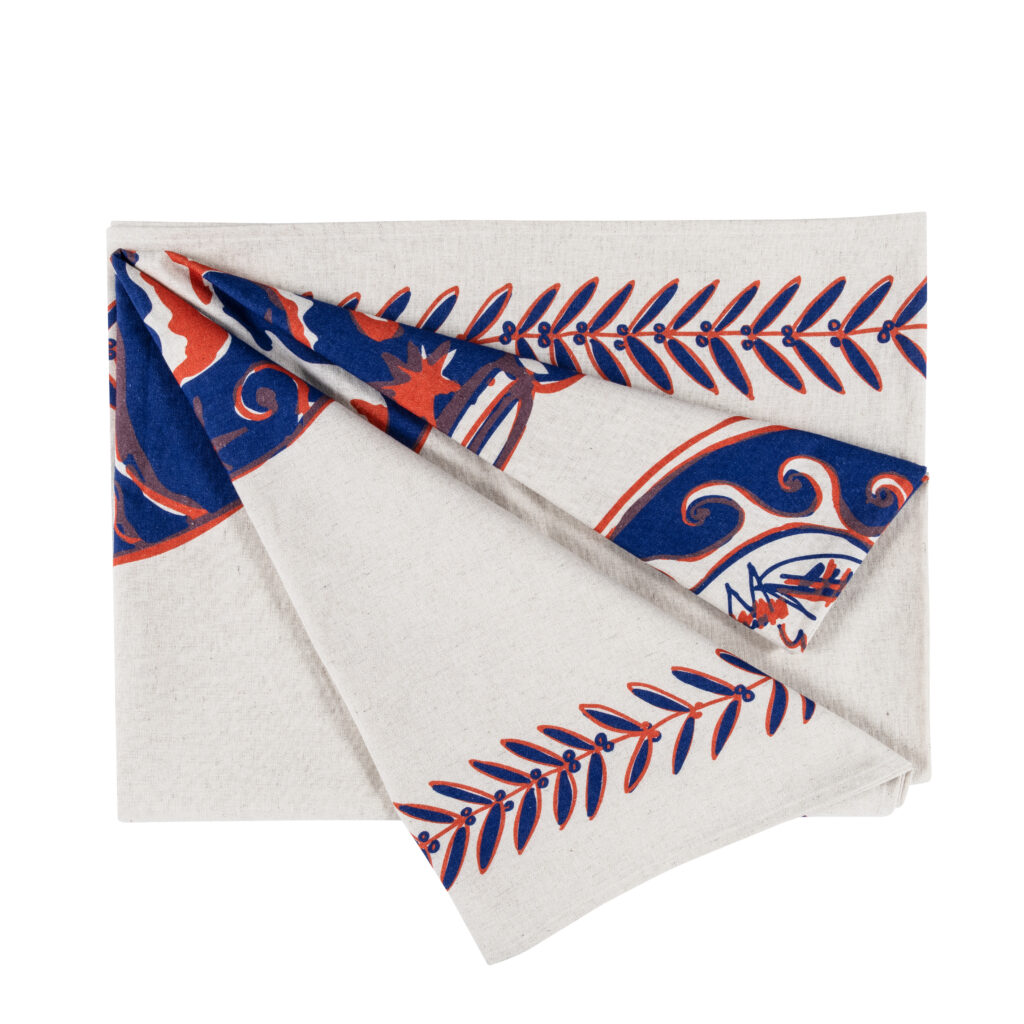
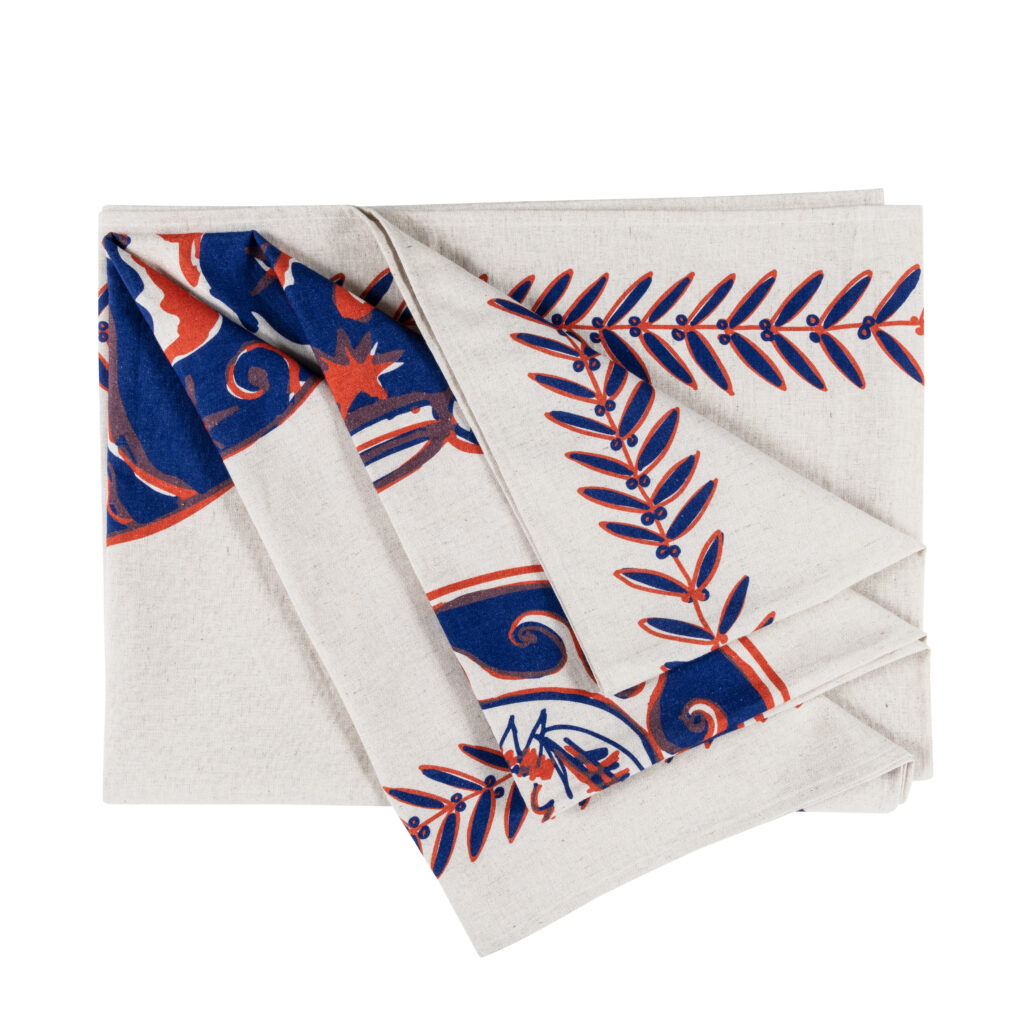
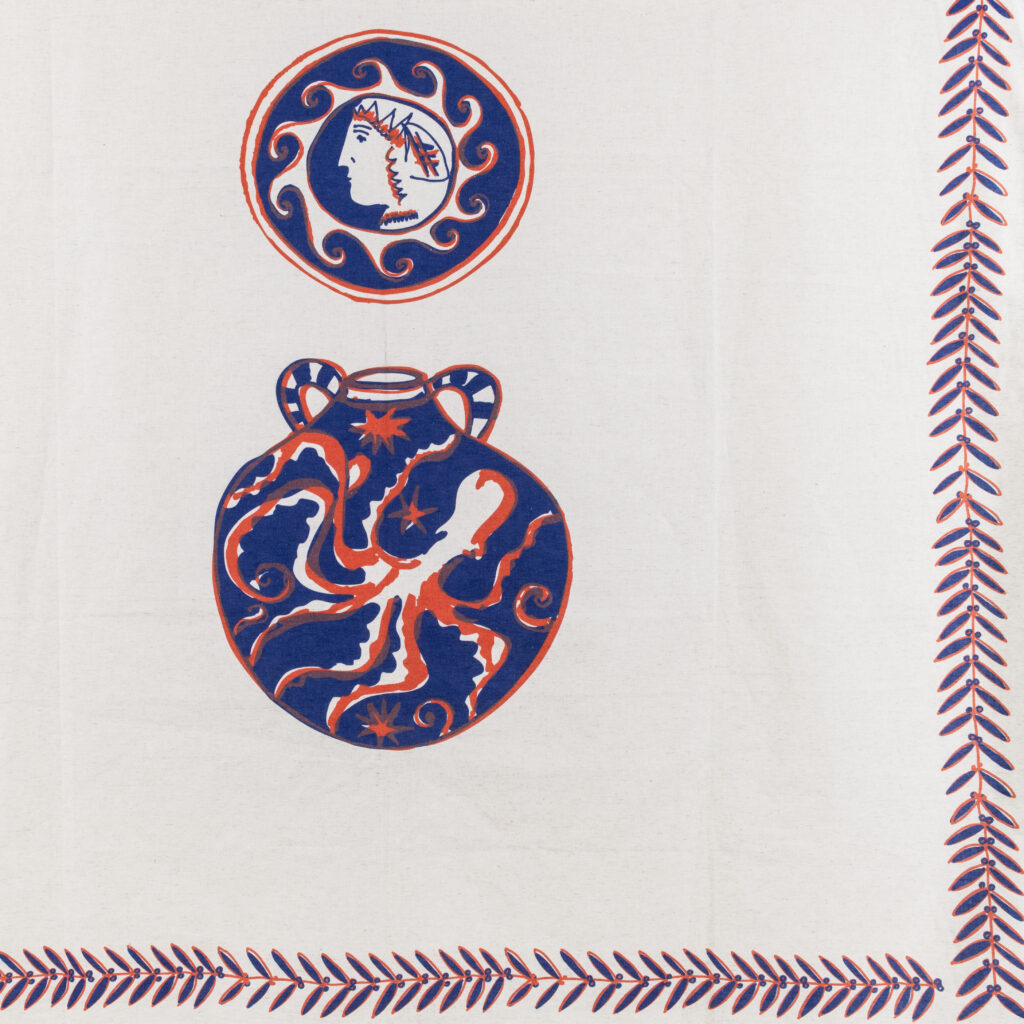
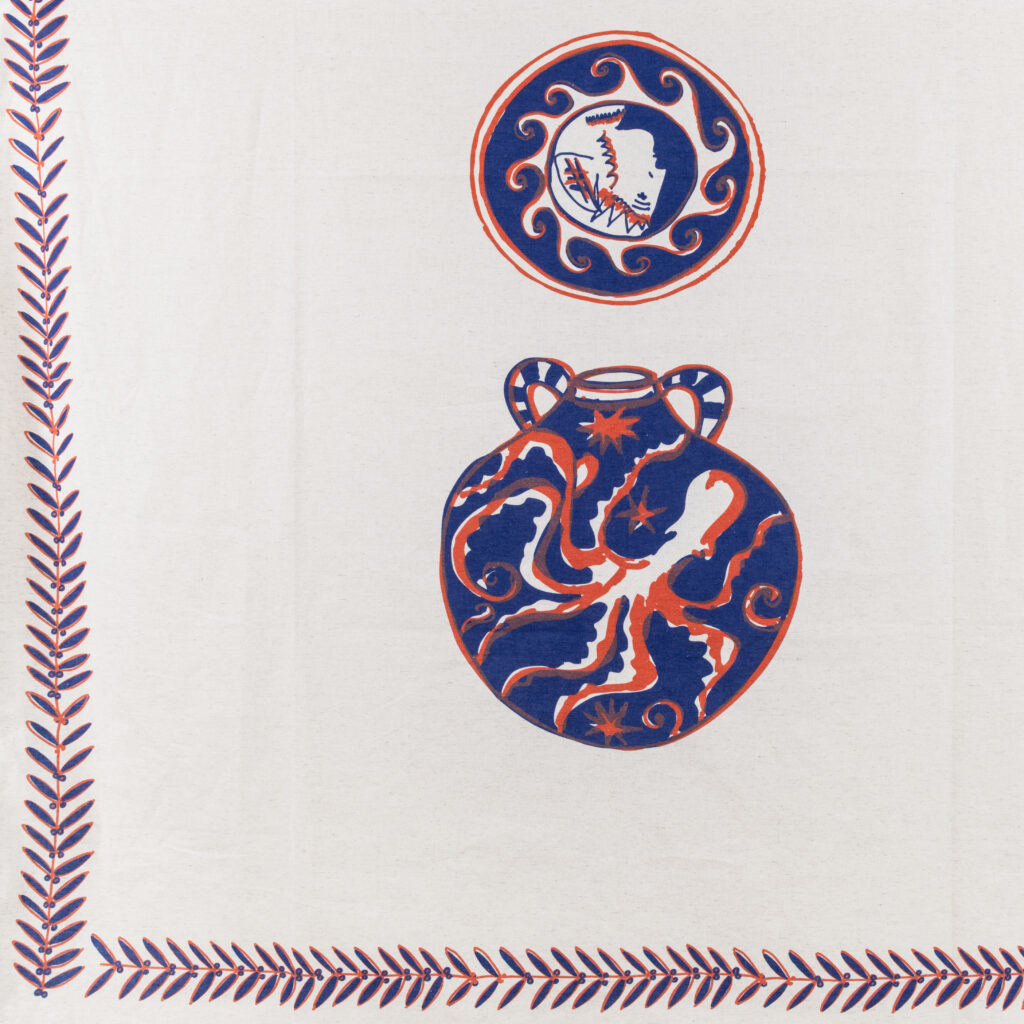
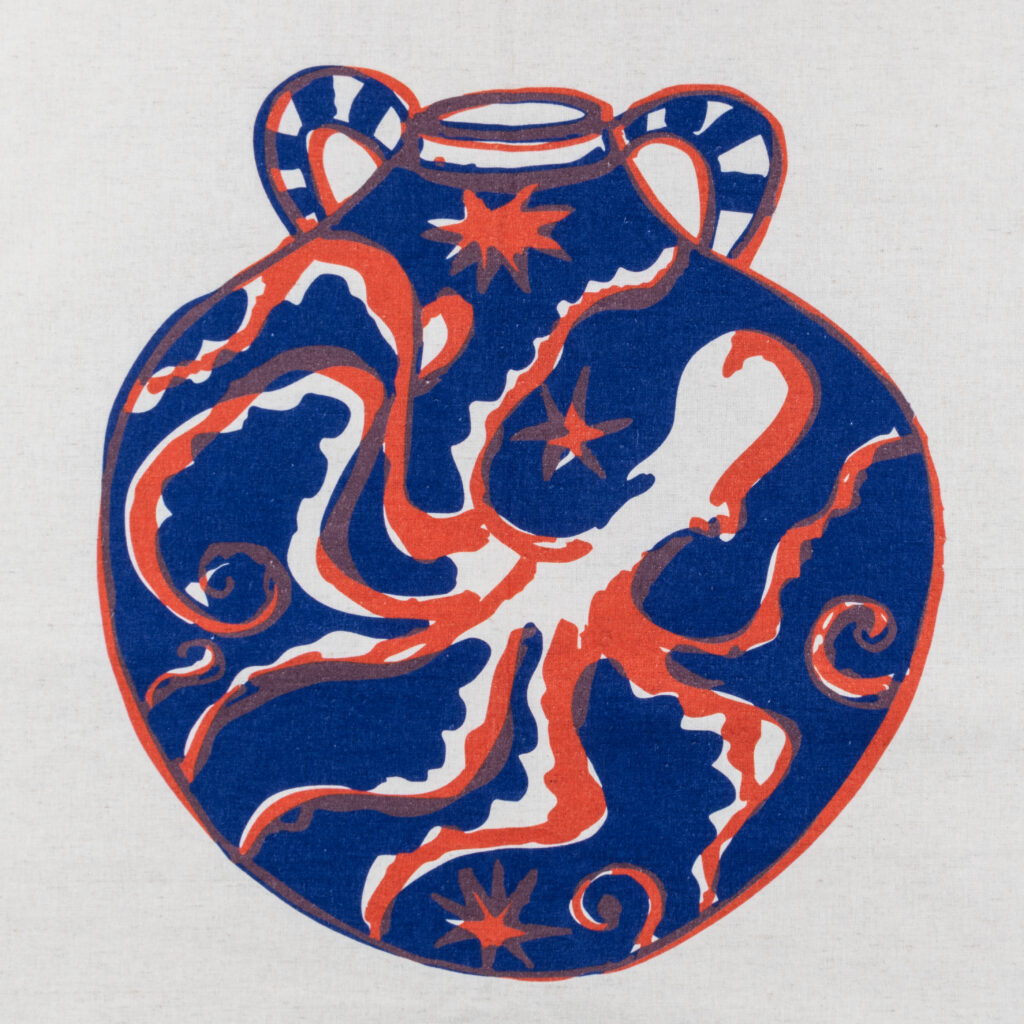
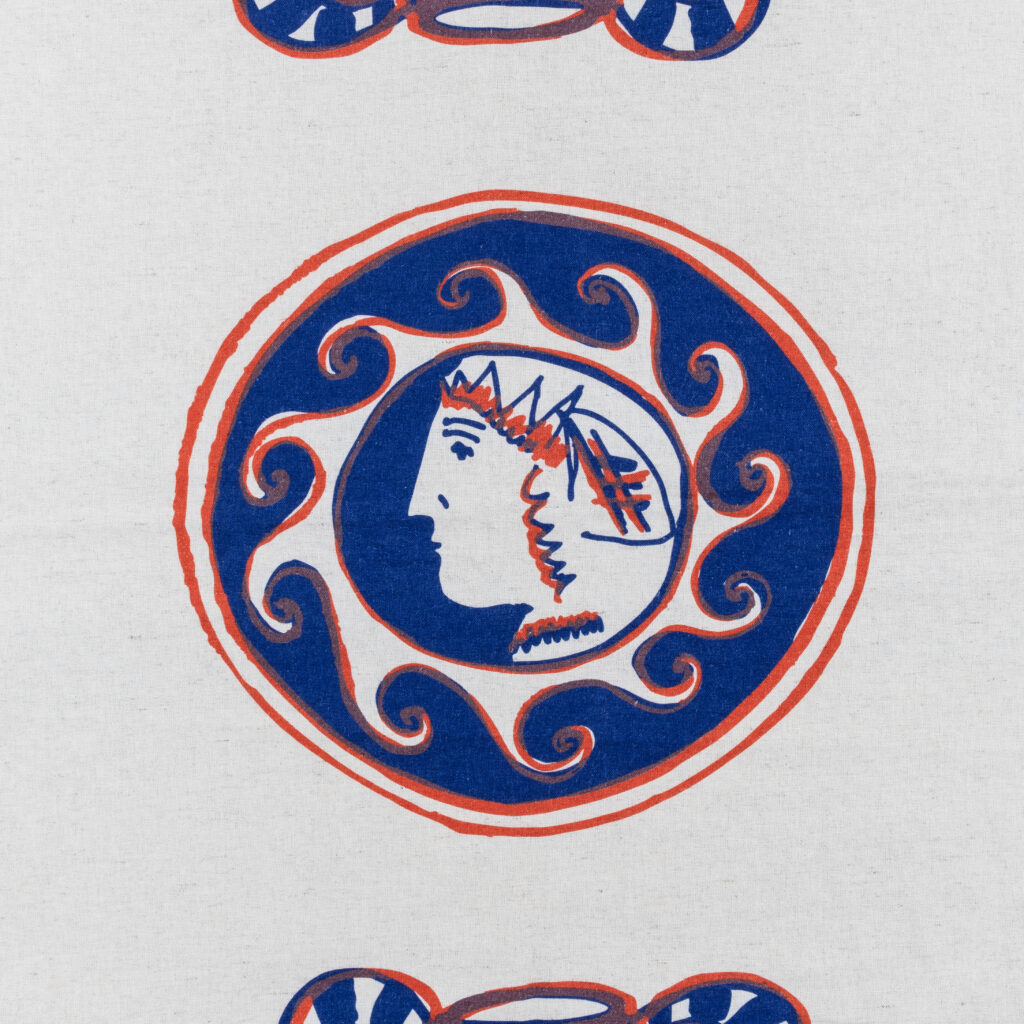
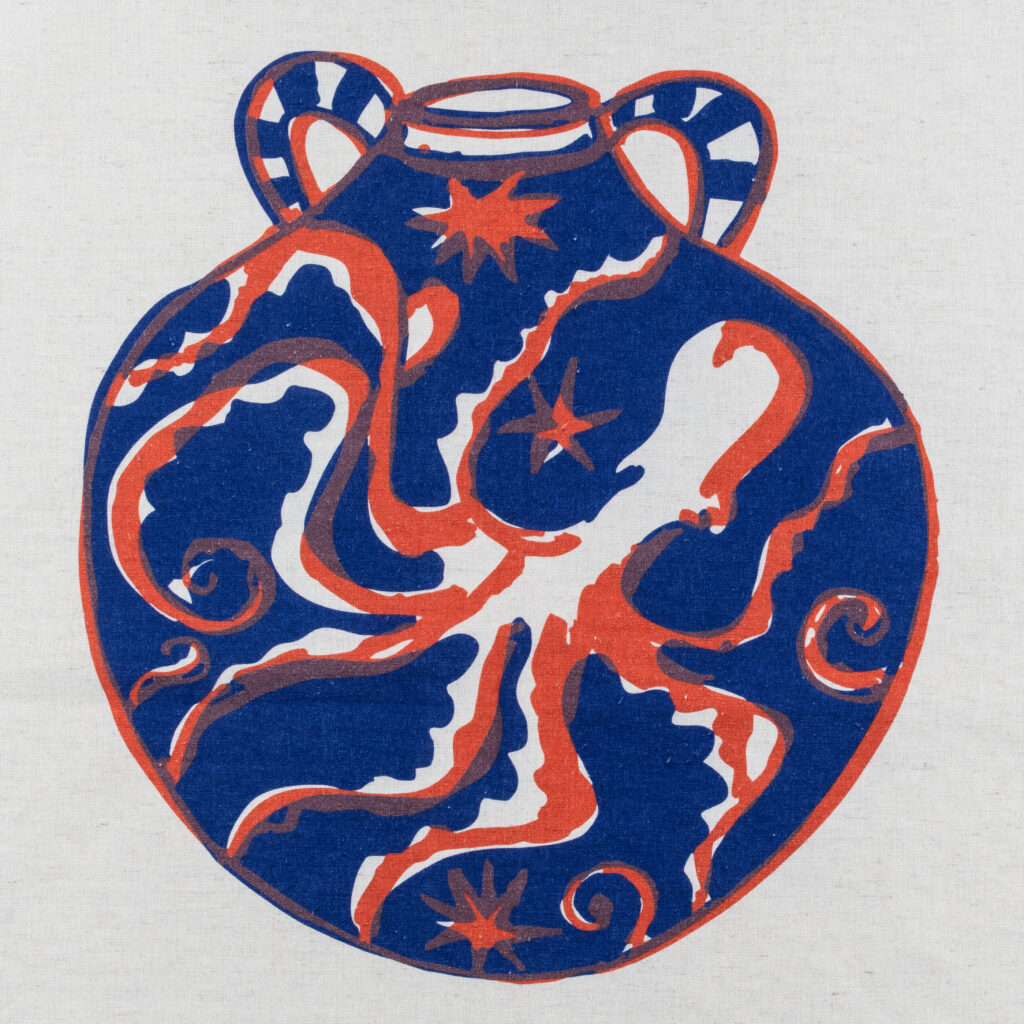
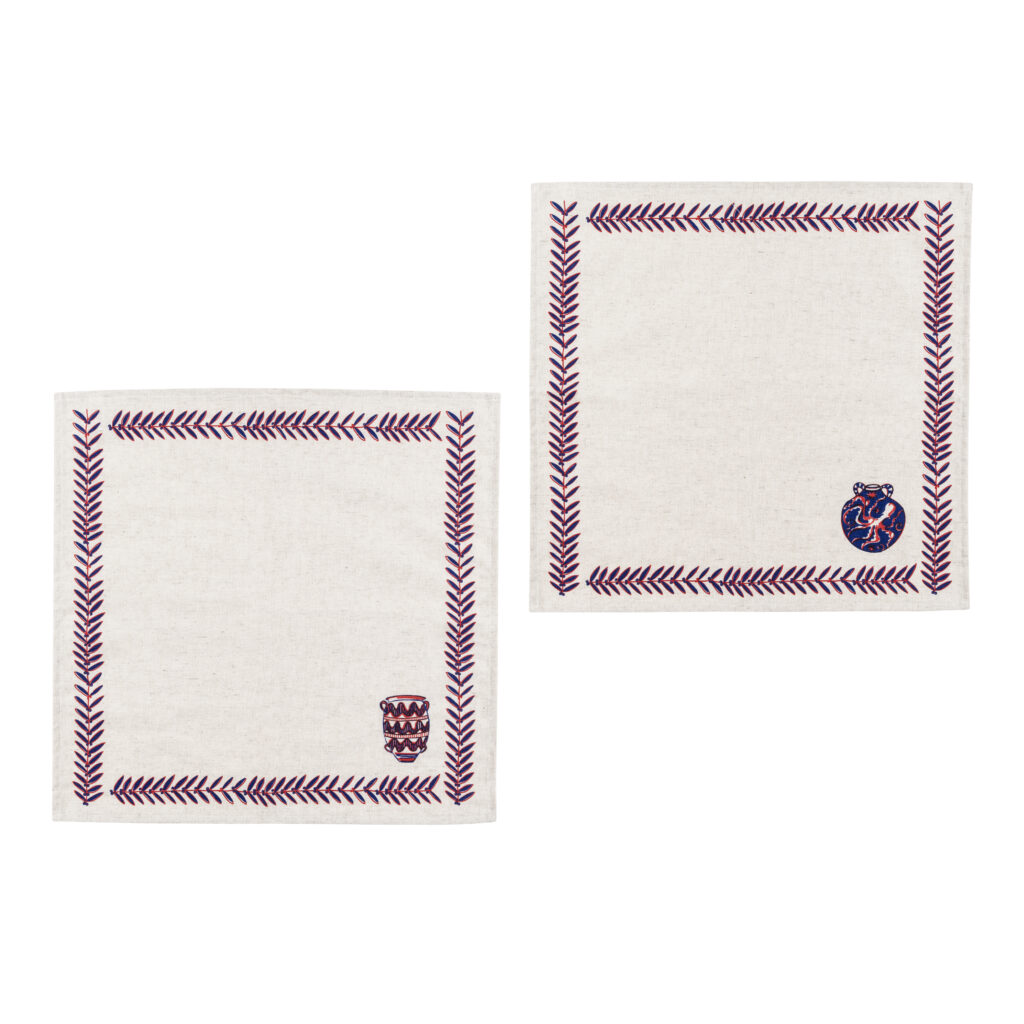
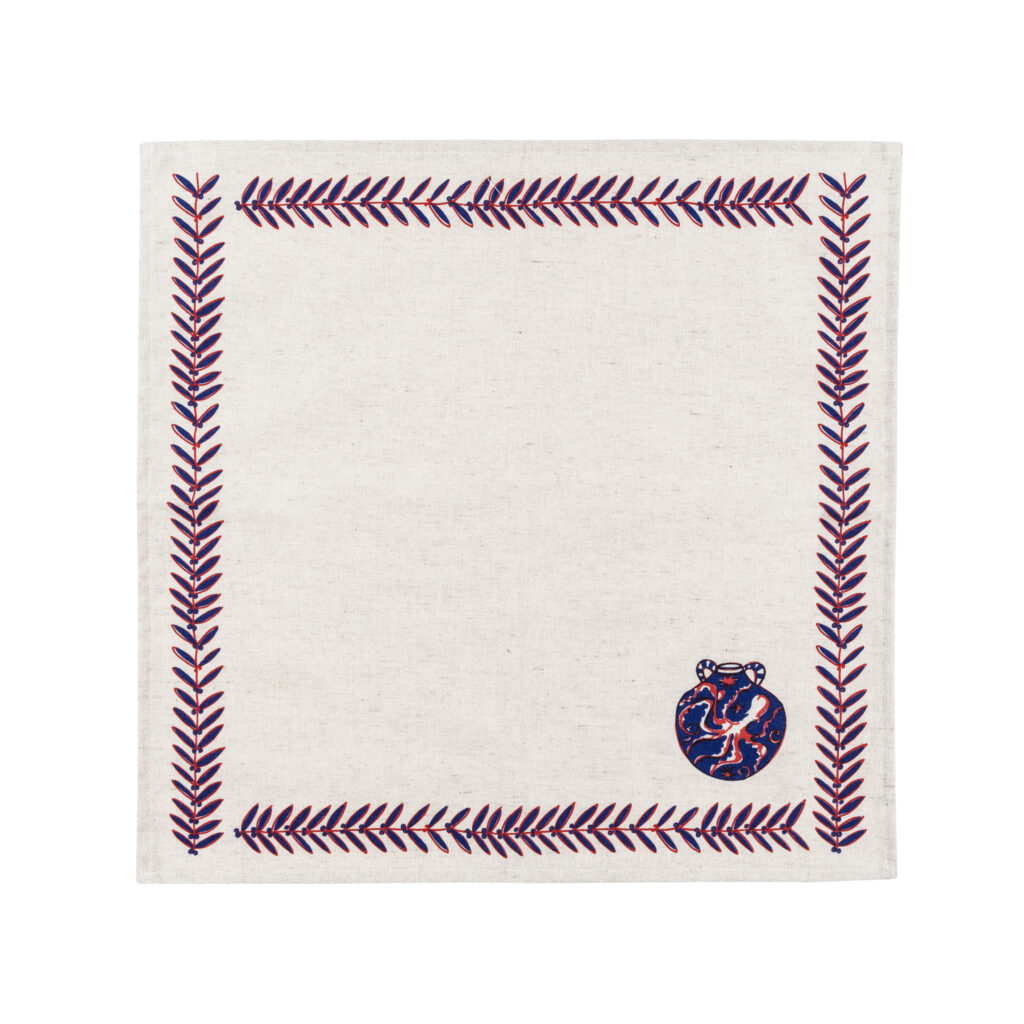
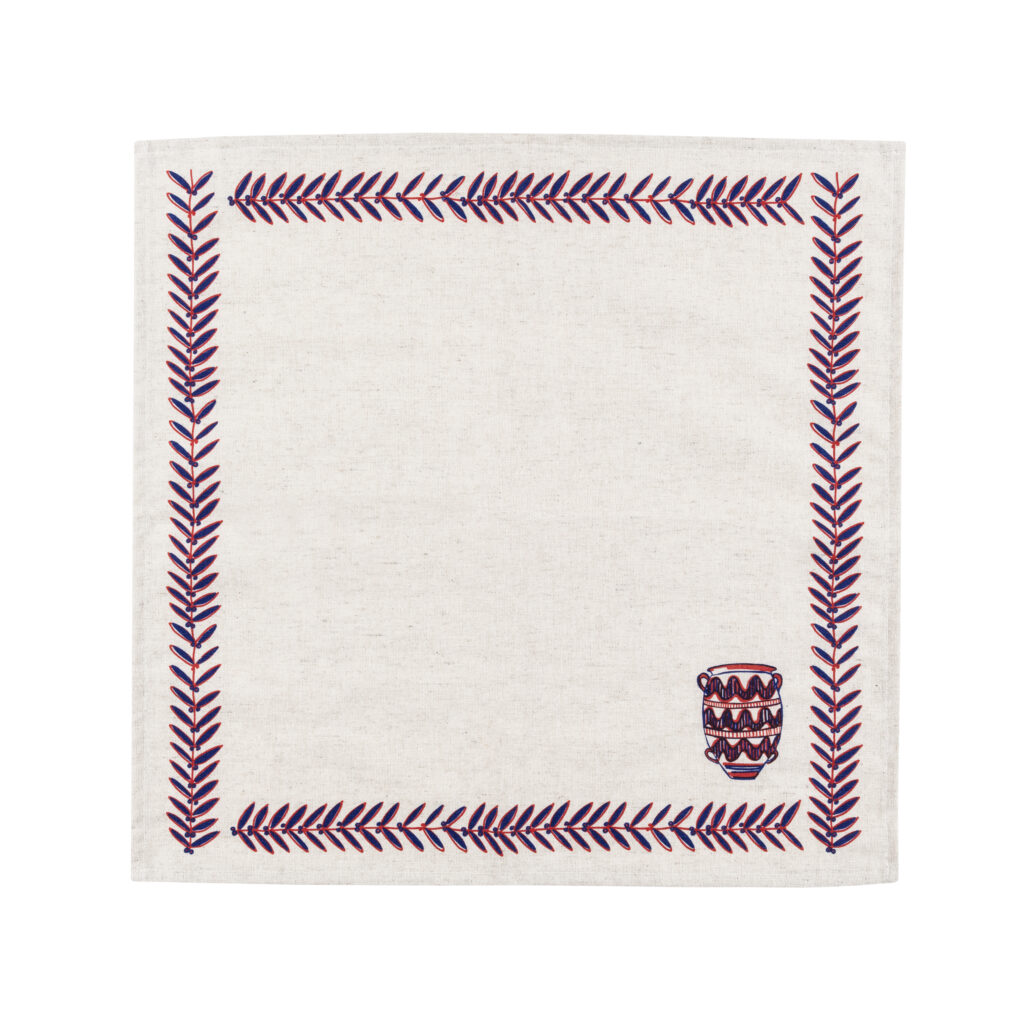
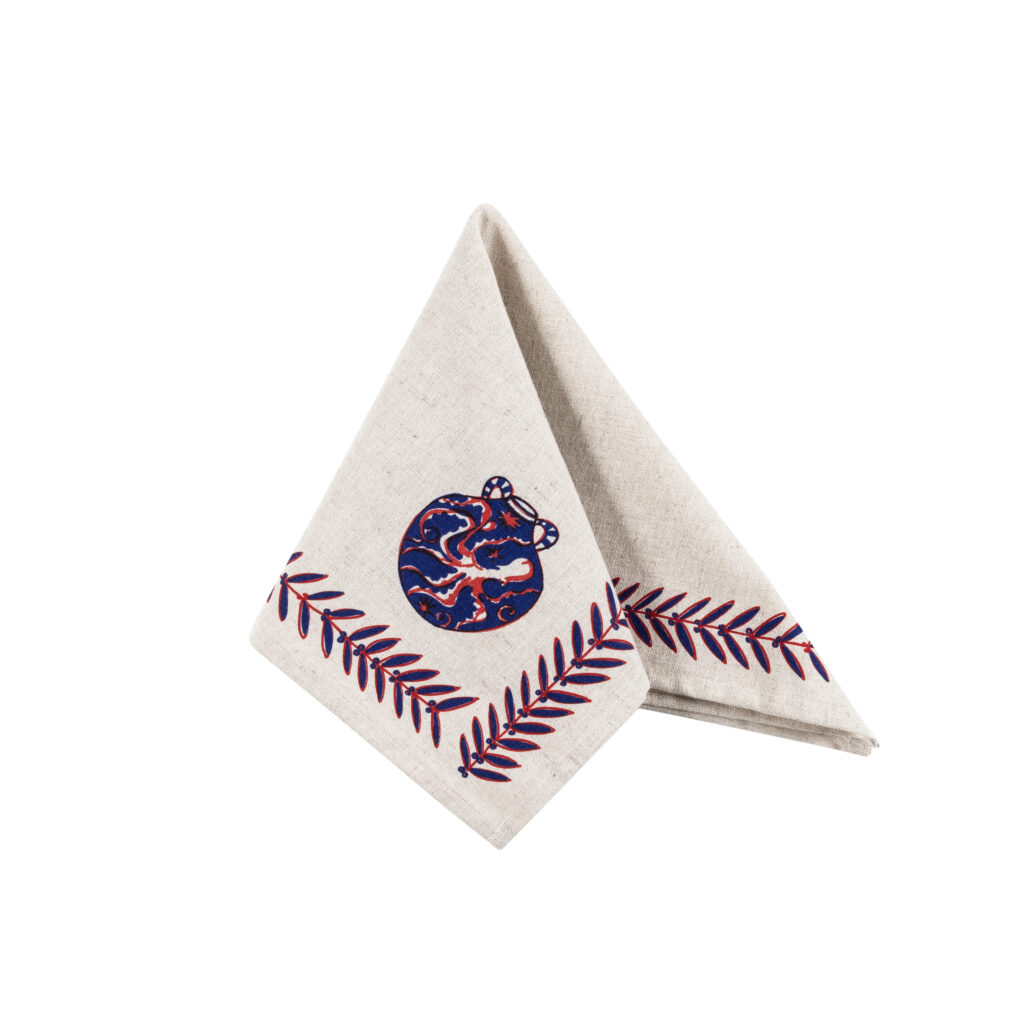
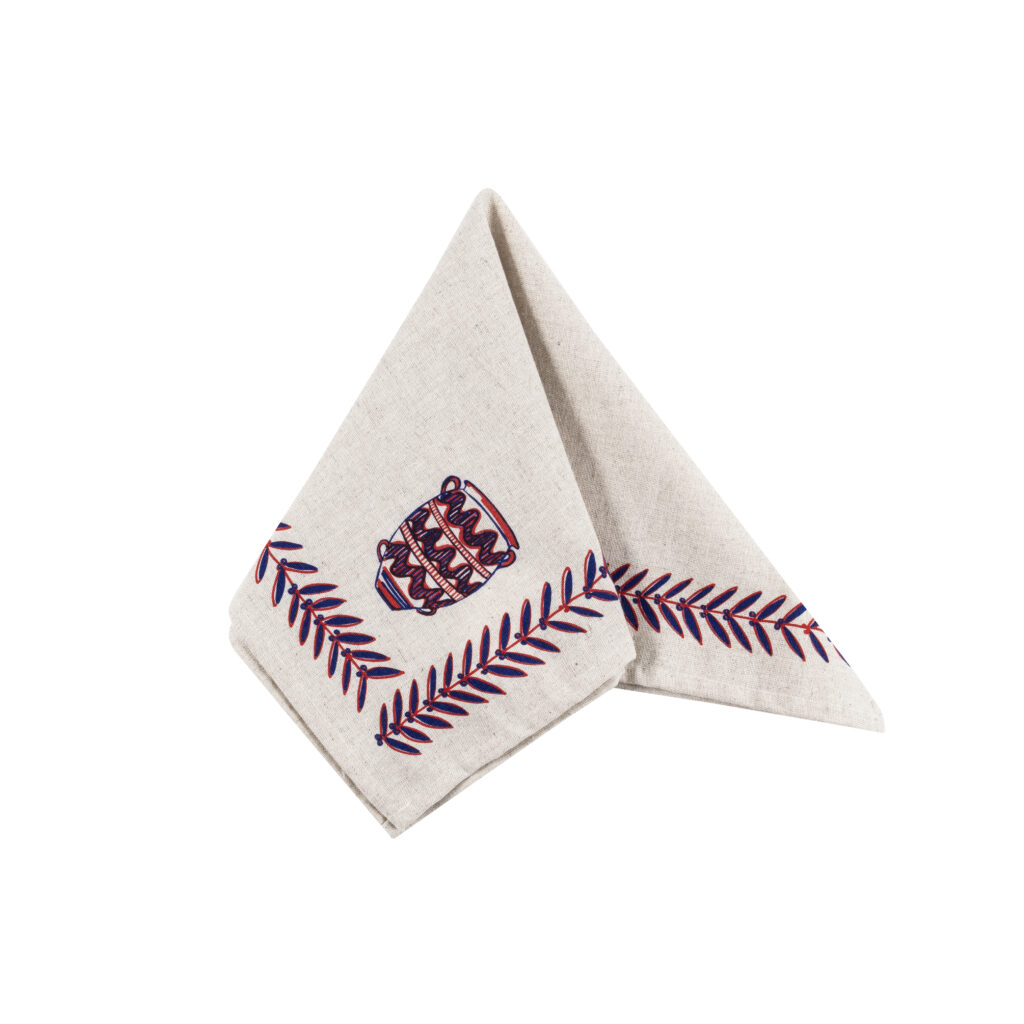
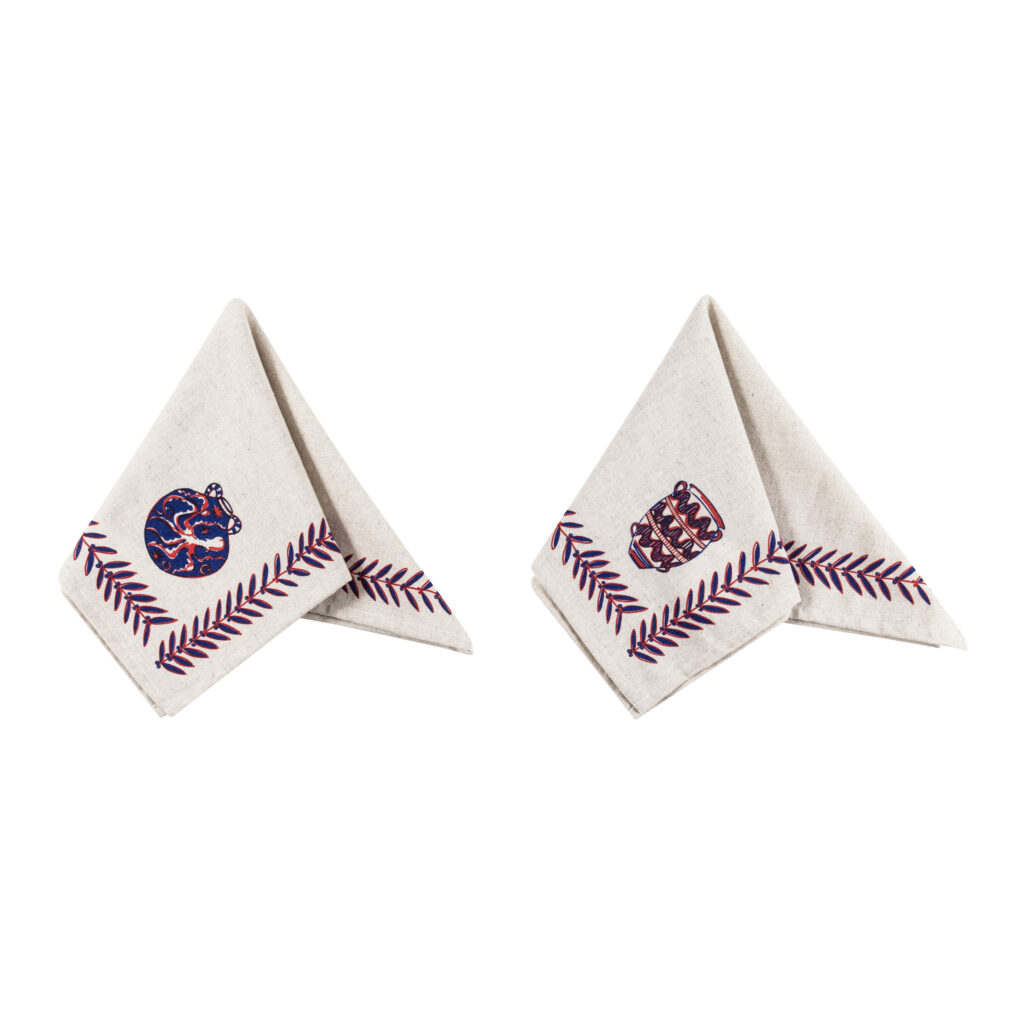
Blandine Imberty focuses on their structure rather than their ornamentation. Her lively and deliberately legible line work translates the memory of the vases into a graphic language designed for everyday use: stoneware dessert plates, 15-centimeter bread plates, napkins, tablecloths, dish towels, menus, place cards, napkin rings, glass markers, and recipe books. The collection transports antiquity into a domestic realm—that of the set table, the meal, and conversation. After all, many of these ancient forms were first and foremost everyday objects before becoming works of art displayed behind glass.
The title *Keramos* provides the key. The term derives from the Greek *keramos*, referring to a potter’s clay, a clay vessel, or pottery—a root that gave rise to the lexical field of ceramics. The name thus avoids a purely decorative effect: it brings the collection back to the material—to clay—and to that ancient understanding of fire, form, and surface.
What is interesting about this collaboration is the shift in scale. The museum preserves, catalogs, and documents. The artist interprets, simplifies, and revitalizes. The ancient motif does not become a pastiche; it is reinterpreted as a rhythm. In this process, screen printing plays a fitting role: as a technique of solid color, bold hues, and controlled repetition, it allows for the transition from an archaeological legacy to an immediately recognizable language. Blandine Imberty, who creates under the name Carnet Chouette, produces handcrafted stationery printed using screen printing in her Parisian studio; her website specifies that the graphic designs are printed in Paris. Her studio-boutique in Montmartre is also presented as the place where her limited-edition notebooks are designed, produced, and numbered.
The manufacturing process follows this philosophy of European roots: paper accessories printed in Paris, textiles made in France, and ceramics produced in Portugal. Details matter. They prevent the object from becoming merely a museum piece and give it a tangible coherence. The cotton napkins and tablecloth, the twill dish towel, and the stoneware plates make up a collection designed to be handled, washed, set out, and moved around. A table setting, not a miniature display.
The quote provided by the artist— “These works amaze me with their finesse, their inventiveness, and their timeless beauty”—says something about the encounter, even if the editorial focus lies elsewhere: in the way a museum allows its heritage to be conveyed through modest objects, without losing its depth. Luxury, here, does not lie in preciousness. It lies in mediation. Bringing antiquity into a cotton tablecloth or a stoneware plate requires a certain kind of trust: the belief that an ancient motif can still captivate our gaze, provided we do not treat it as sacrosanct.
The Keramos collection thus reminds us of a truth that is sometimes forgotten: before they entered the museum, archaeological objects were tools used in daily life. They were used to hold, pour, and serve; they accompanied meals, rituals, and interactions. Bringing them back to the table is therefore not a contemporary whim. It is almost a return to their original purpose.
Cette publication est également disponible en :

