
The pre-owned luxury watch market is living with an uncomfortable contradiction: its professionals almost unanimously say they trust their authentication systems, yet nearly one in five admits being unable to recognise a high-quality counterfeit. This is what an international study conducted by the Watch Register, the world’s largest database of stolen, lost and counterfeit watches, reveals.
The paradox lies in two figures which, set side by side, express a concern that the watch industry usually prefers to keep quiet. On one side, all of the pre-owned luxury watch dealers surveyed for this international study, conducted in the United States, Europe, Asia and the Middle East, say they are very confident (44%) or fairly confident (56%) in their current authentication systems. On the other, nearly one in five (19%) acknowledges that it would simply be unable to identify a high-end counterfeit, and a further 15% admit they manage to do so only intermittently. In other words, the confidence displayed in processes does not match the actual confidence in individual judgement.
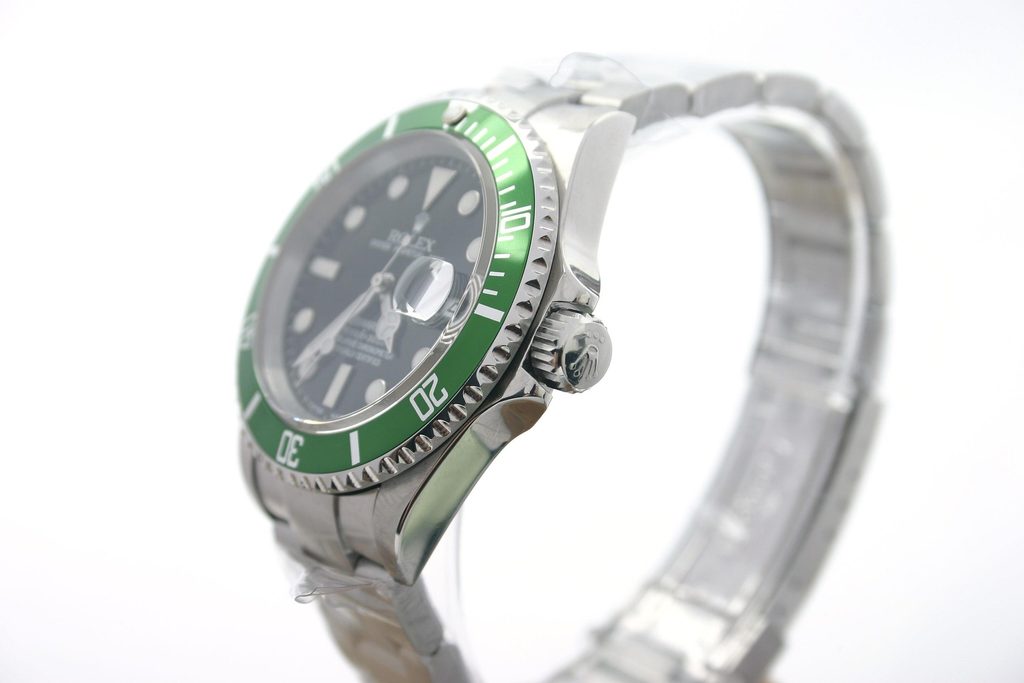
This gap makes full sense in light of the phenomenon the study calls superfakes: counterfeits whose level of finish has now reached a threshold that challenges even the most seasoned professionals of the secondary market. These are no longer the crude copies of a bygone era, but objects capable of deceiving an expert eye during a standard examination, a development that shifts the problem of counterfeiting from a matter of brand protection to one of structural trust for the entire pre-owned market.
The financial consequences of this blurring are already tangible. One third of the dealers surveyed (33%) report having suffered a financial loss linked to a transaction involving a counterfeit watch over the past three years. And when an incident occurs, it is almost never isolated: 69% of the professionals concerned report having suffered losses on four or more occasions. The average cumulative loss amounts to roughly $13,000, rising above $20,000 for 12% of respondents, sums which, at the scale of a specialist business, weigh directly on profitability.
Only 3% of the dealers surveyed do not regard stolen watches or high-quality counterfeits as a risk to the secondary market, a figure which, by its statistical isolation, confirms by contrast how widely the concern is now shared across almost the entire profession. This consensus on the diagnosis, set against the disparity in actual detection capabilities, outlines an industry that is aware of the problem but still unevenly equipped to address it.
For the pre-owned luxury watch market, where authenticity is the founding value of every transaction, this study raises a question that the figures alone cannot settle: how many undetected transactions, considered reliable today, will one day quietly join tomorrow’s statistics?
Cette publication est également disponible en :


