
There are watches you recognize even before you read their name. The Monaco is one of them: a square case, a crown on the left, a long-standing connection to auto racing, and that somewhat bold refusal to conform to the classic rounded shape of a chronograph. In 2026, TAG Heuer returns to this design with the Monaco Evergraph, unveiled at Watches & Wonders Geneva—not to recreate 1969, but to place the mechanical challenge at the very heart of the complication.
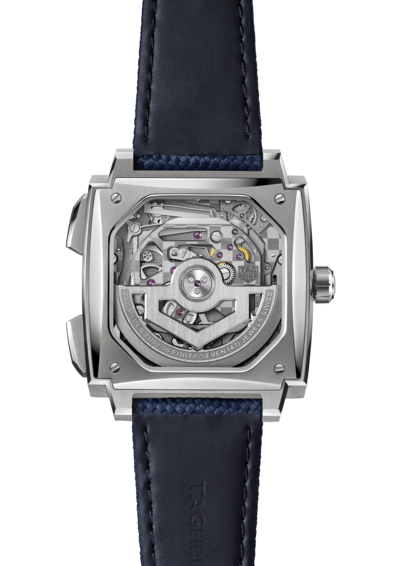
This watch is not merely a new interpretation of the Monaco. Its innovation lies in the Caliber TH80-00, developed around a chronograph mechanism featuring flexible components. Whereas a traditional chronograph relies on an assembly of levers, springs, and control components, TAG Heuer introduces two bistable flexible components here: one dedicated to the start and stop functions, the other to the reset function. According to the brand, their development took five years at the TAG Heuer LAB, with manufacturing carried out using LIGA technology, a microfabrication process used to achieve high-precision geometries.
This technical choice deserves attention, as it touches on an aspect often overlooked in discussions of watchmaking: the feel of the pushpiece. A chronograph is not just a measurement; it is a gesture. Press, stop, reset. In the Monaco Evergraph, TAG Heuer seeks to ensure this gesture remains consistent—from the first press to the ten-thousandth—by minimizing the mechanical variations inherent in traditional designs. This promise is not merely cosmetic: it is based on reducing the number of moving parts in the control mechanisms and on the dimensional stability of the flexible components.
The TH80-00 automatic movement adds to this architecture a frequency of 5 hertz, a 70-hour power reserve, COSC certification, and the TH-Carbonspring oscillator, noted for its magnetic resistance. TAG Heuer also notes that the movement was developed in collaboration with Vaucher Manufacture Fleurier, which has previously partnered on the TH81-00 and TH81-01 calibers for the Monaco and Carrera Split-Seconds split-seconds chronographs.
This development is part of a history that extends far beyond a simple product launch. Heuer was founded in 1860 in Saint-Imier by Édouard Heuer, a fact confirmed by both LVMH and TAG Heuer in their own historical records. In 1887, Heuer filed a patent for the oscillating pinion, a component that became central to the history of the mechanical chronograph. In 1916, the Mikrograph ushered in a new era: that of timing to the hundredth of a second, establishing Heuer’s reputation for precision in sports.
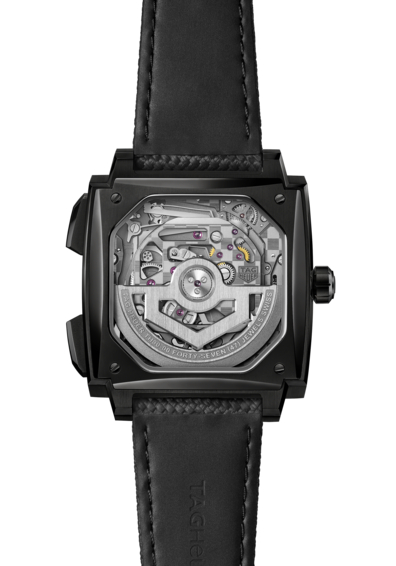
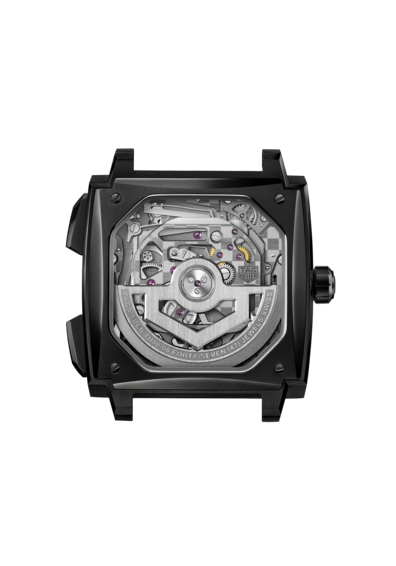
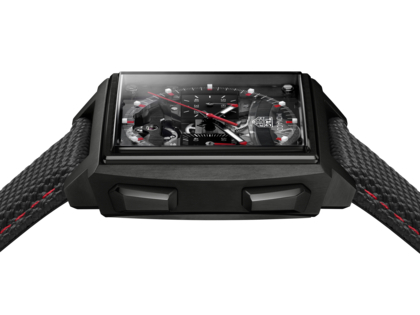
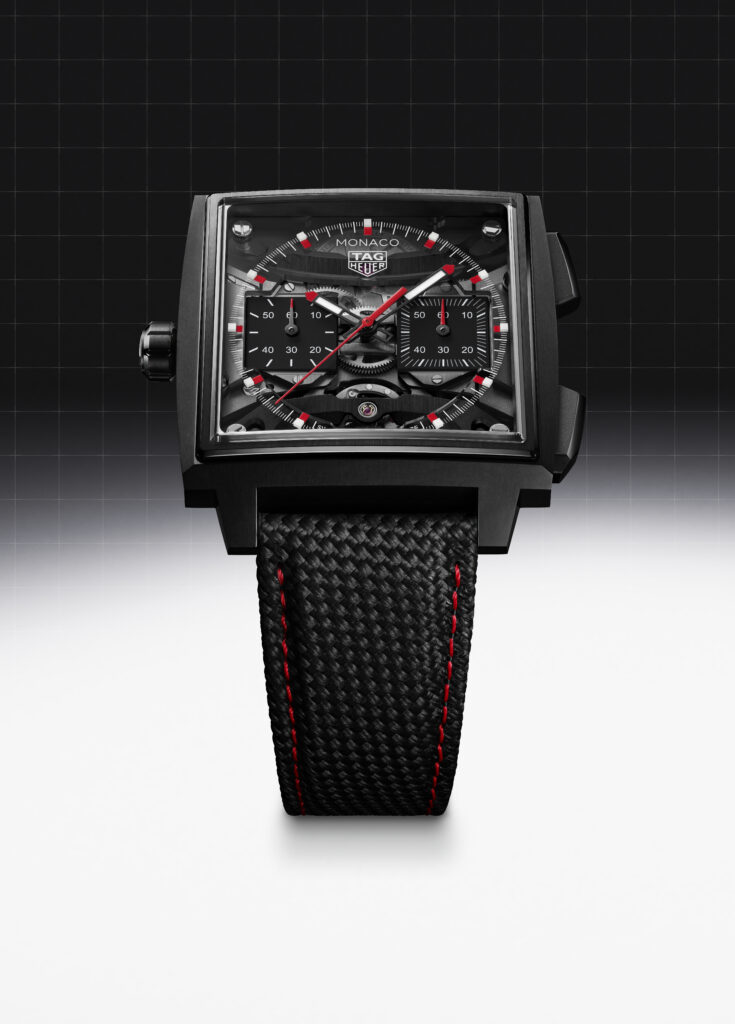
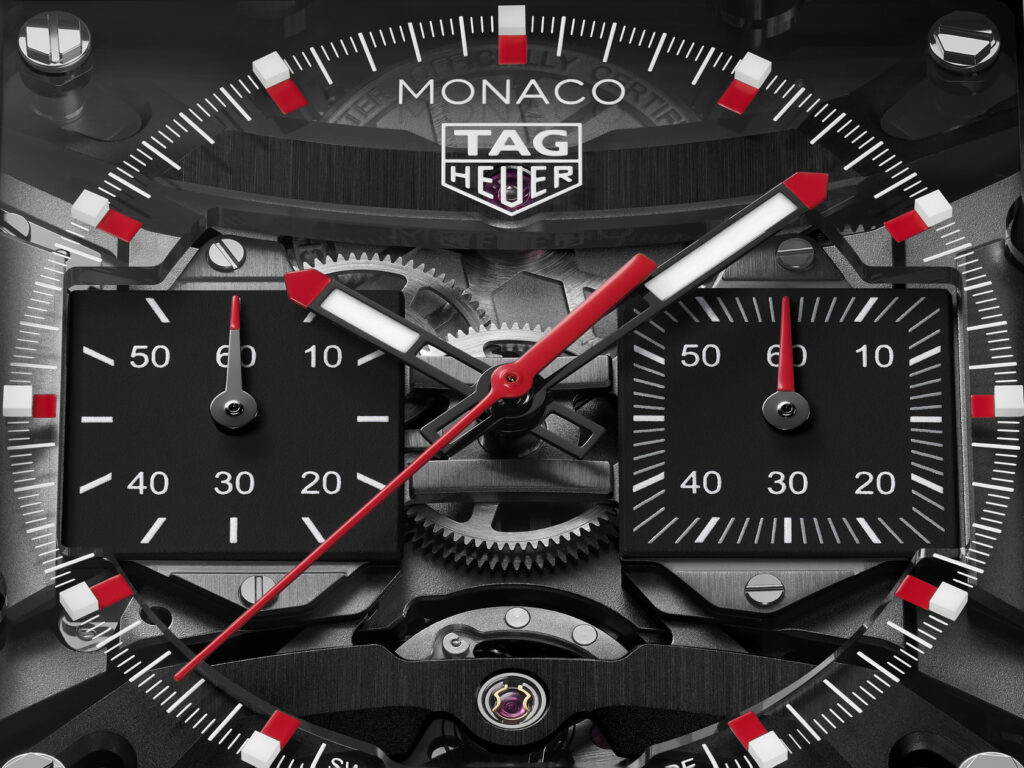
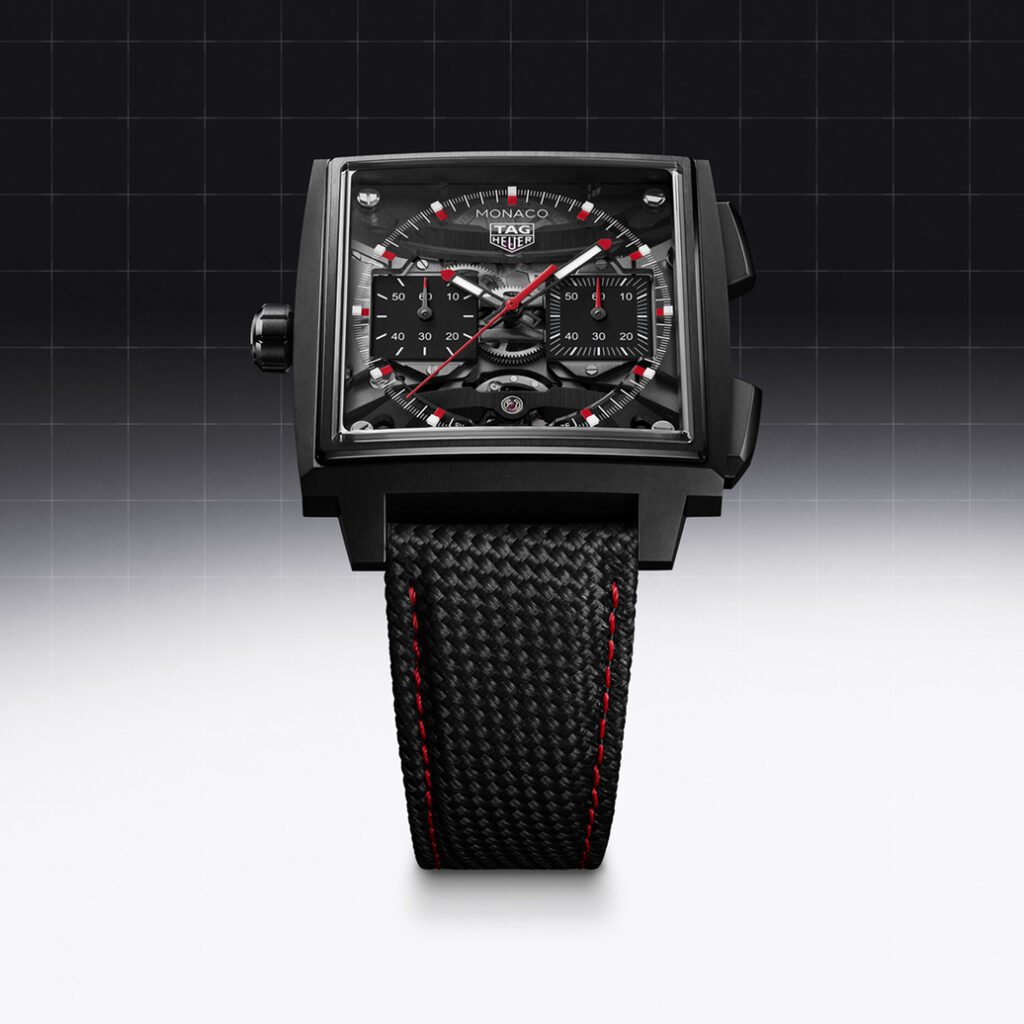
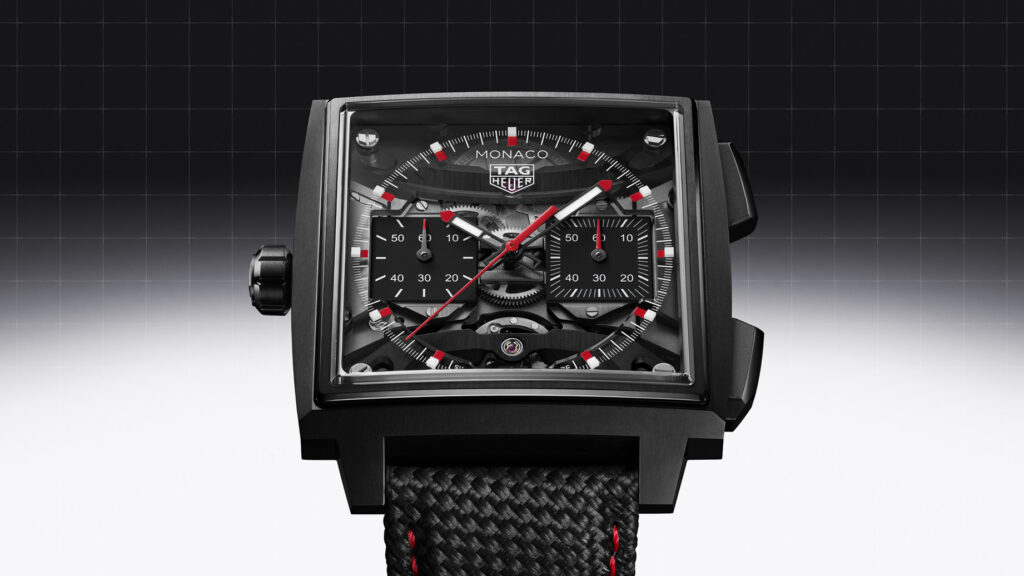
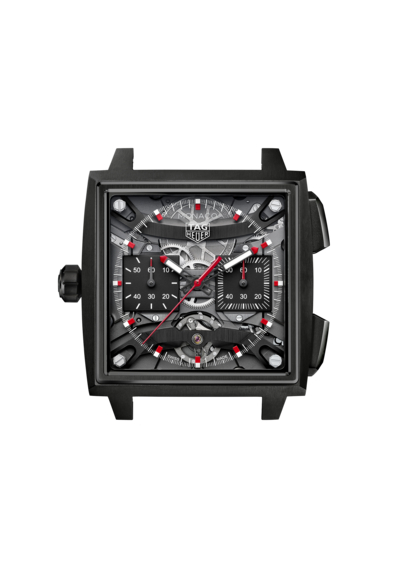
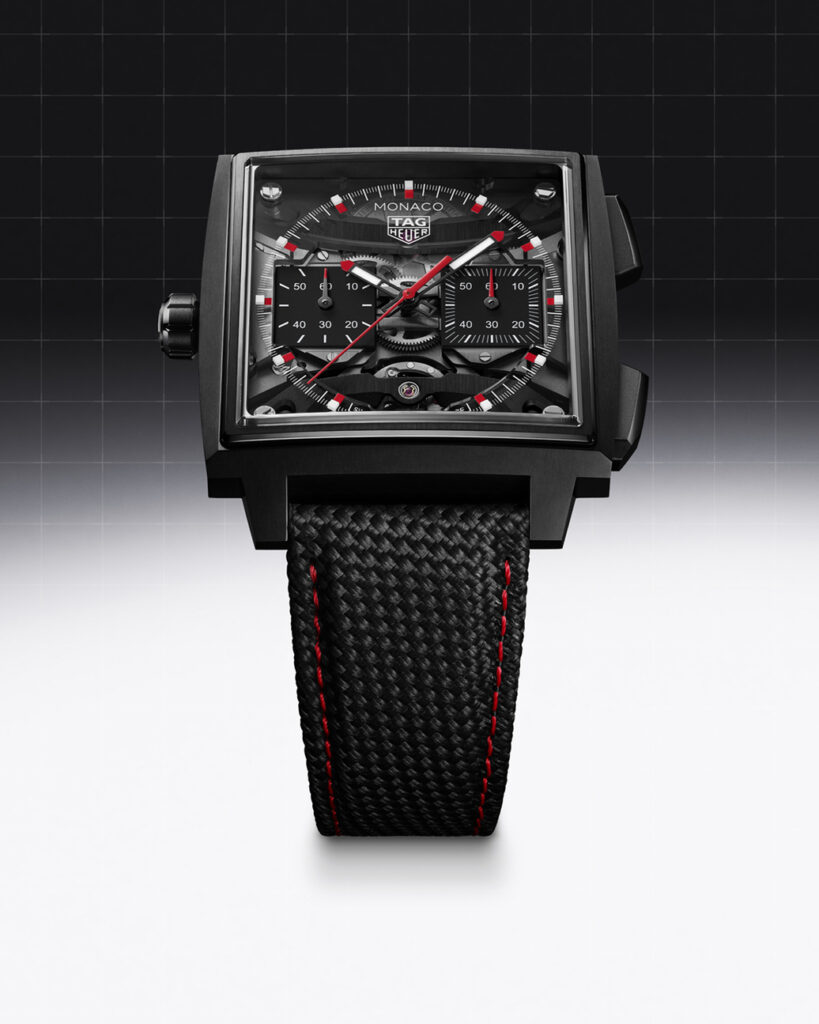
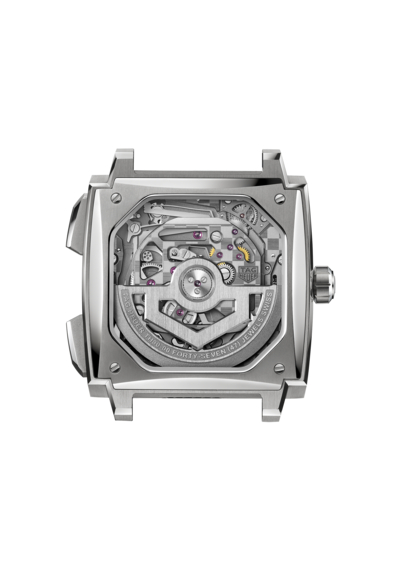
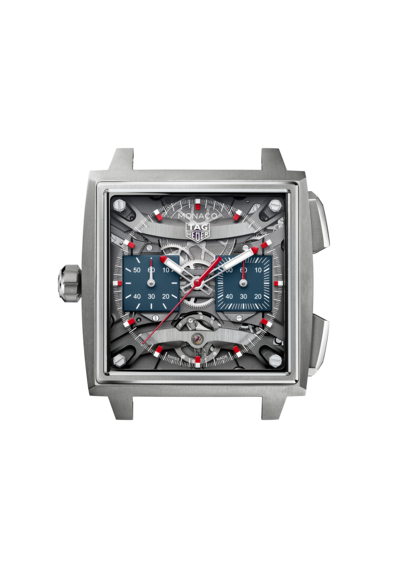
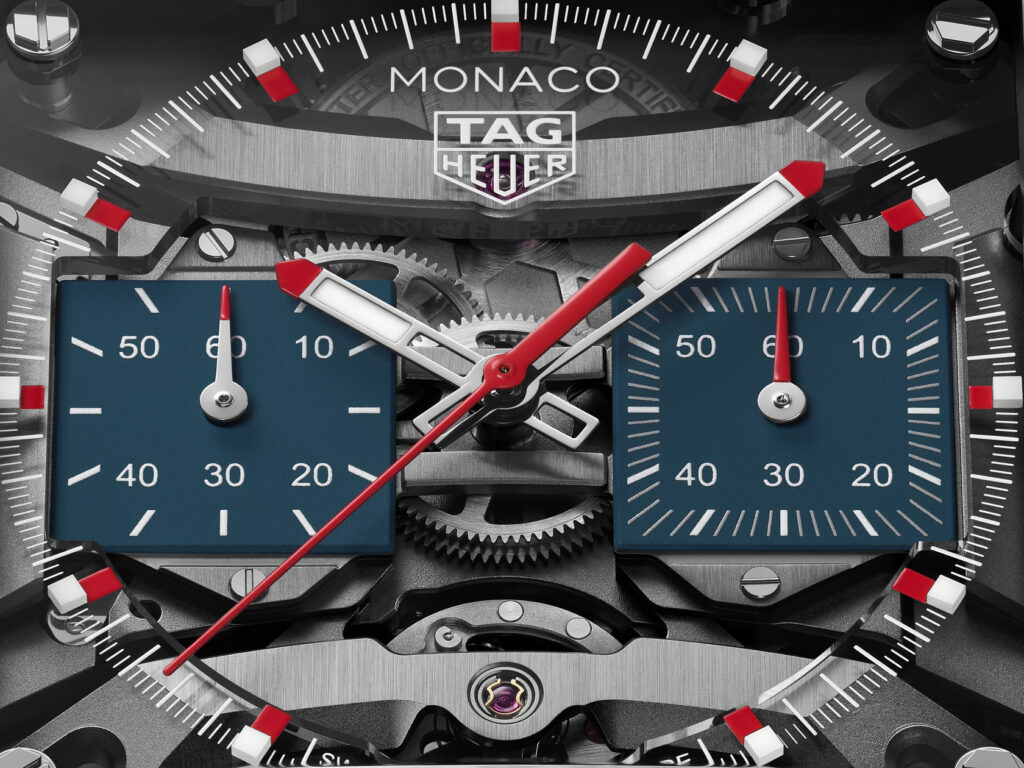
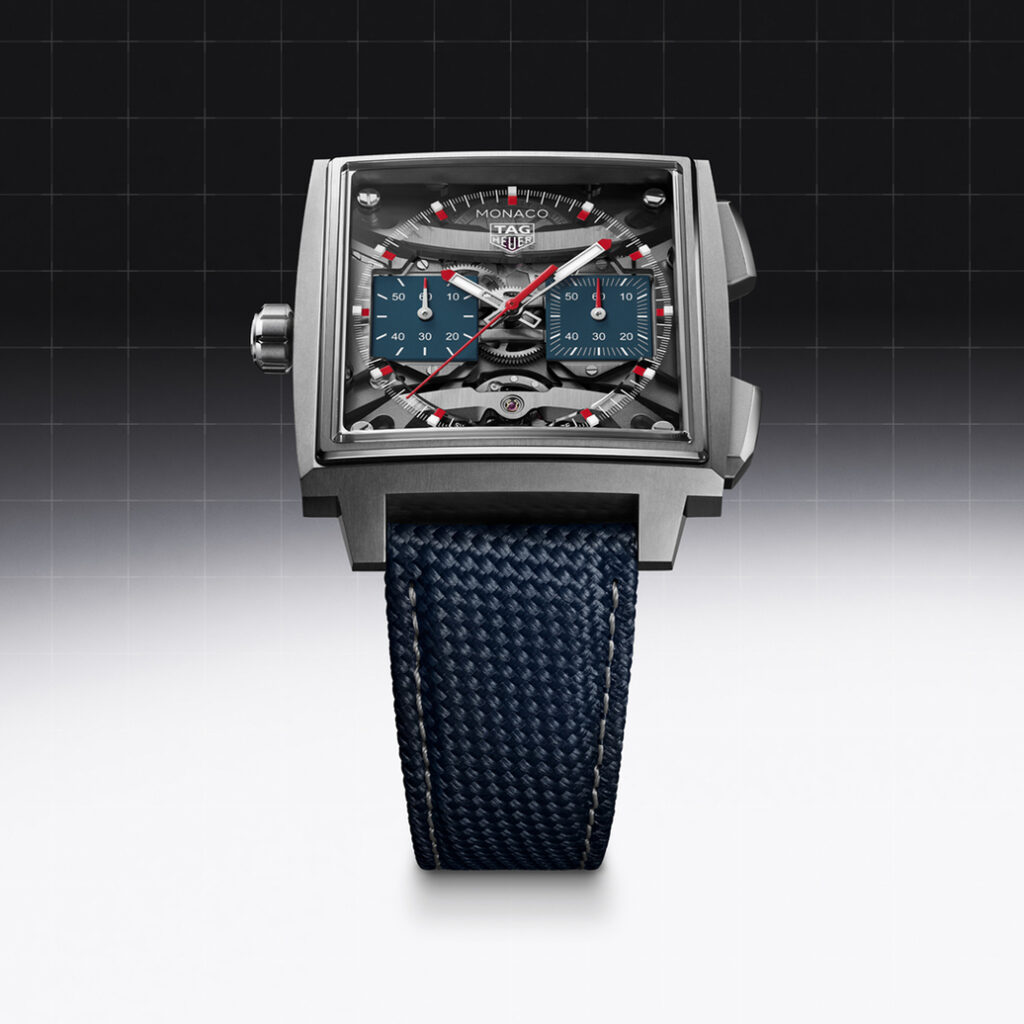
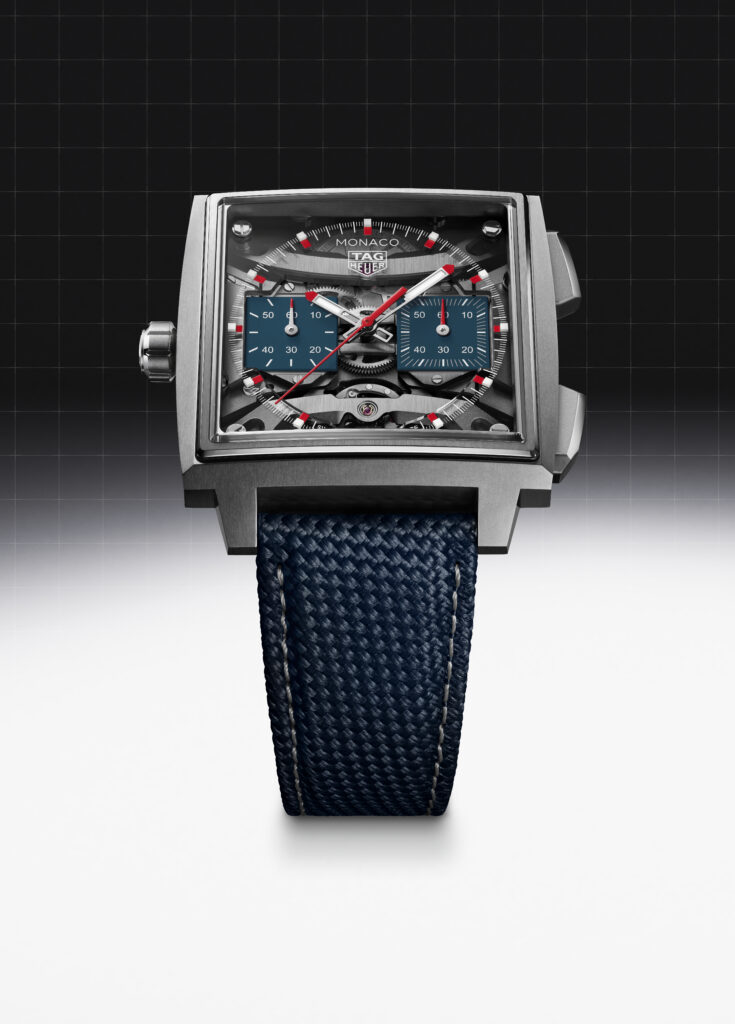
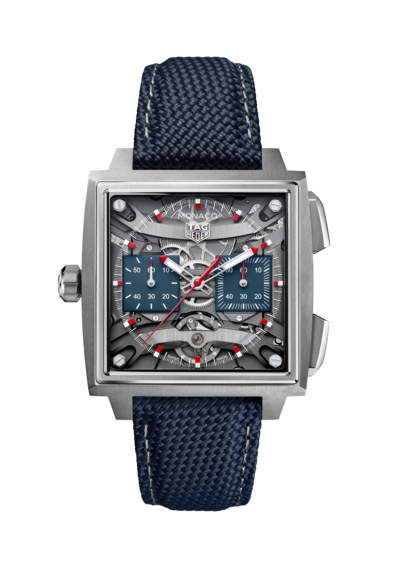
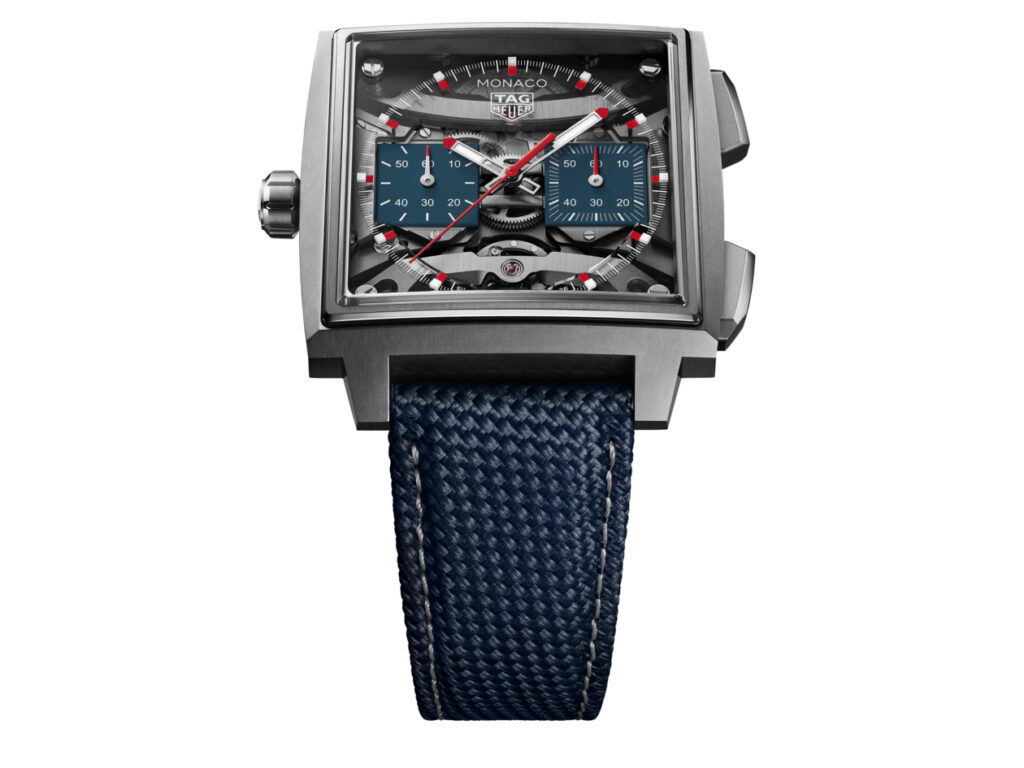
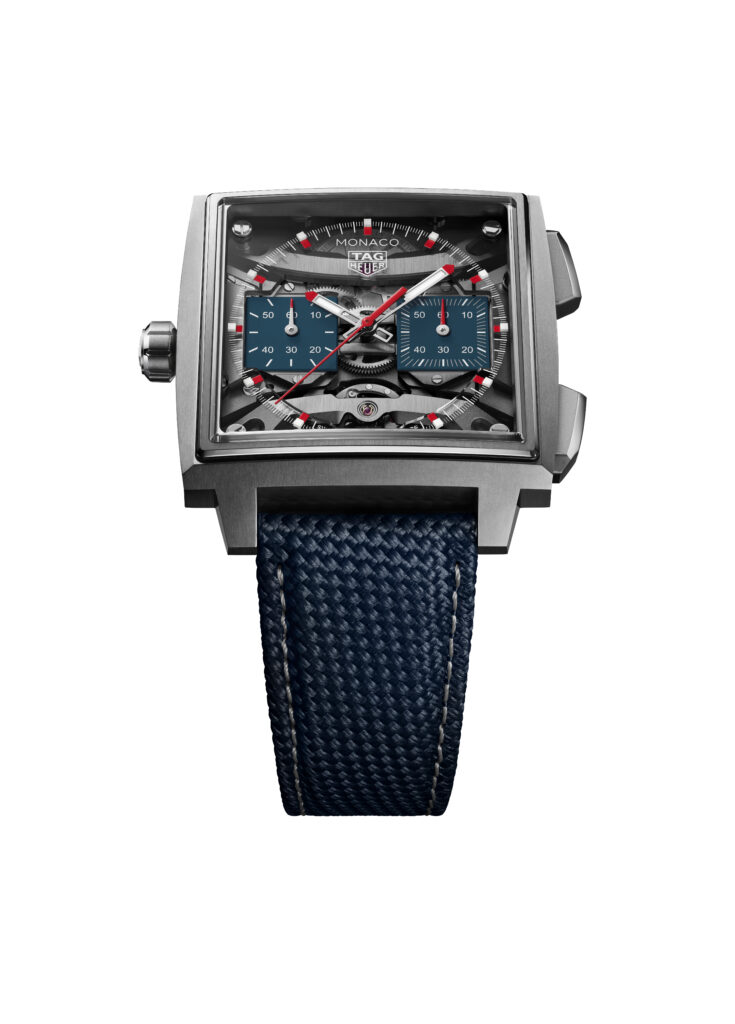
The Monaco, meanwhile, debuted in 1969 with the Caliber 11. TAG Heuer still presents it today as the first square, water-resistant automatic chronograph, recognizable by its left-side crown—a sign that manual winding was no longer necessary. This historical fact is what makes the Evergraph so compelling: the watch doesn’t seek to gloss over its heritage—it showcases it. The 40-mm Grade 5 titanium case retains the square silhouette but reinterprets it with a more legible, almost demonstrative design. The transparent dial, the sub-dials at three and nine o’clock, the brushed and sandblasted bridges, the square sapphire caseback, and the inverted construction all bring the movement to the forefront.
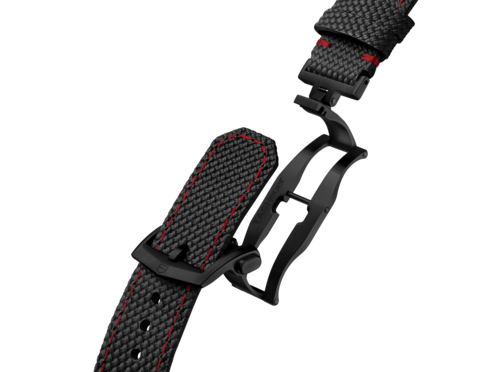
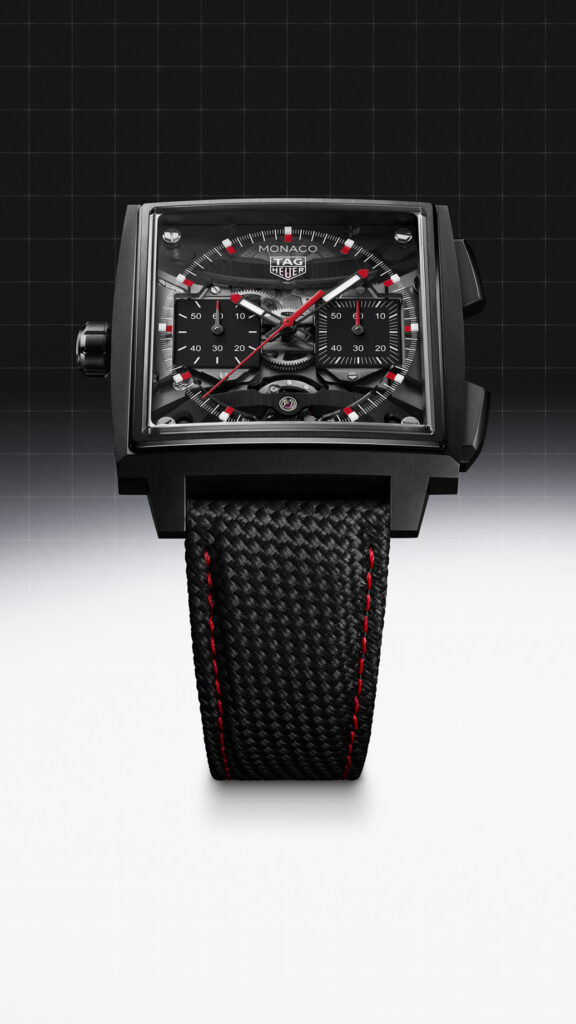
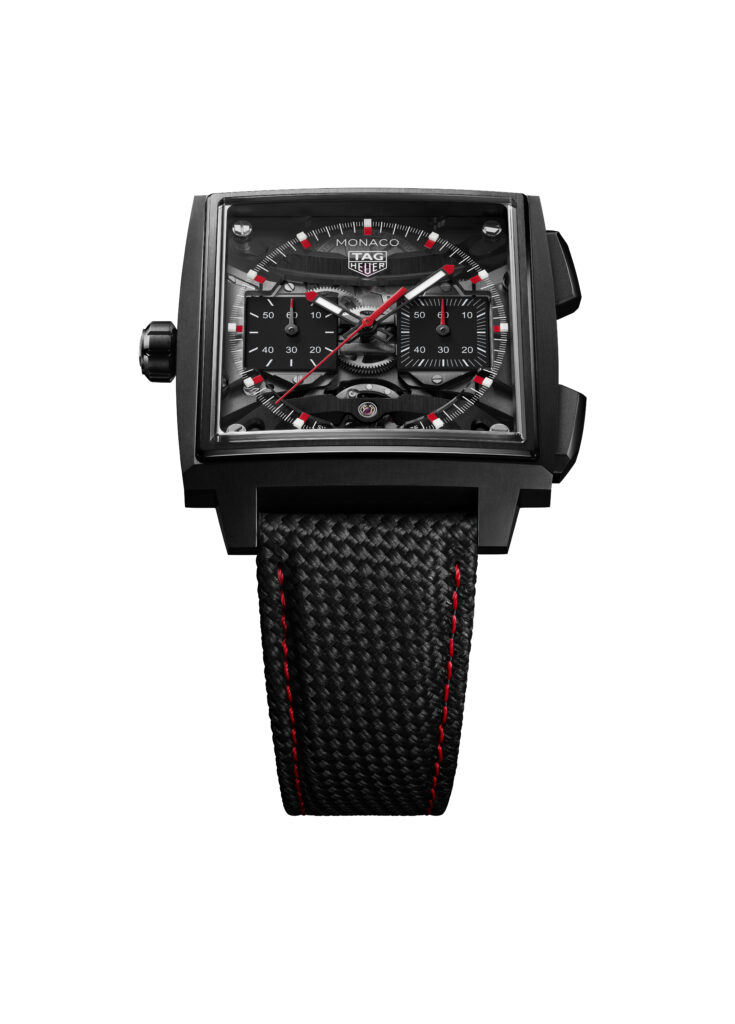
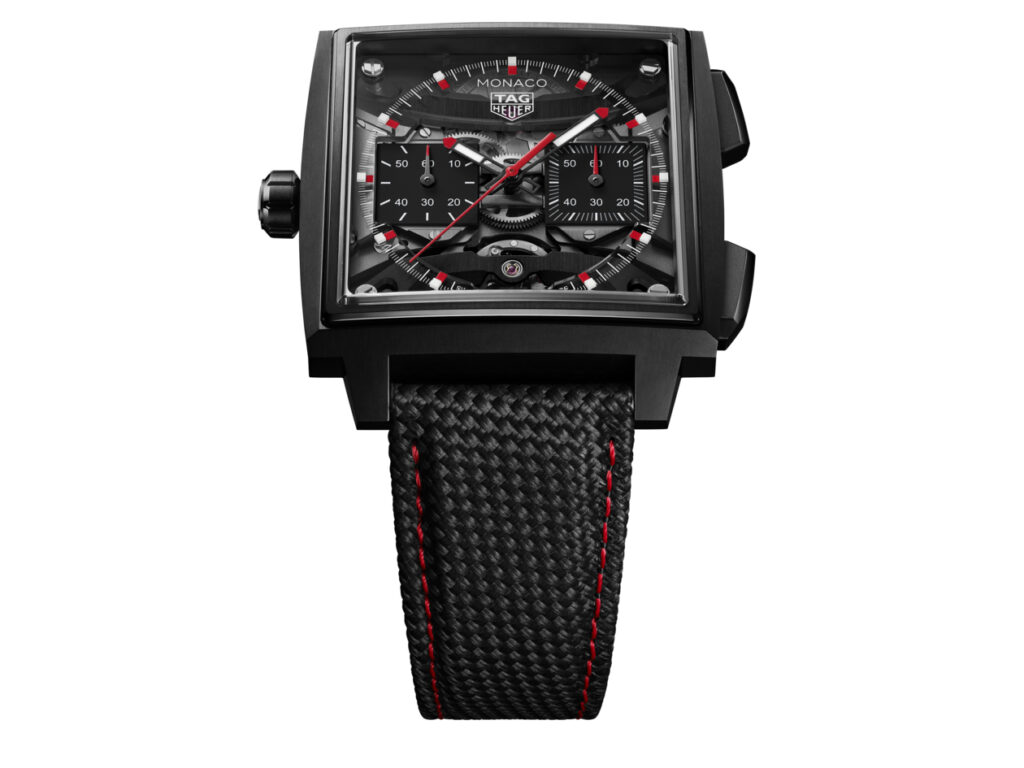
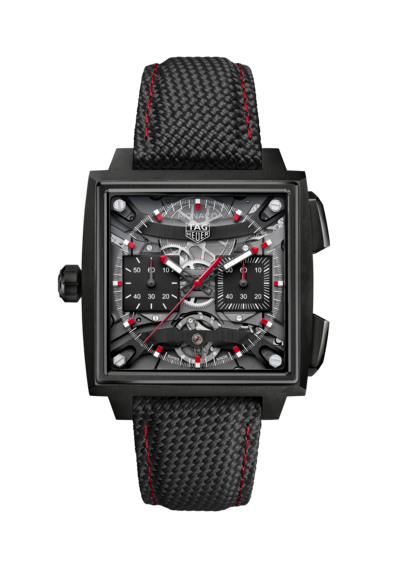
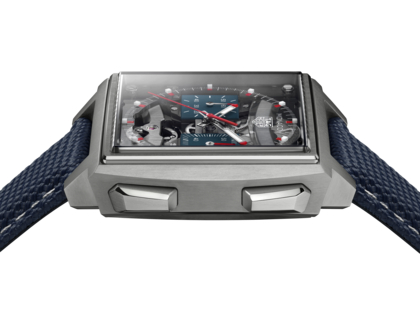
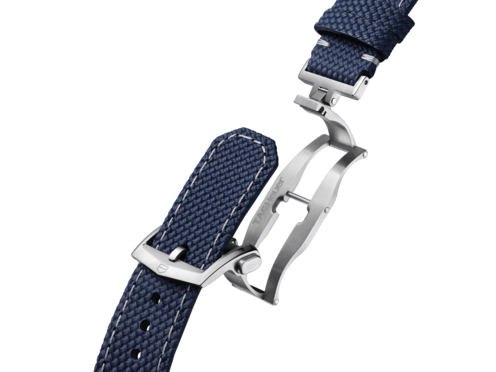
Two versions have been announced. The CEW5181.FT8123 model features Grade 5 titanium, blue opaline dials, a blue rubber strap with a textile pattern, and gray stitching. The CEW5180.FT8122 model features grade 5 titanium with a black DLC coating, black opaline sub-dials, red accents, and a black rubber strap with a textile pattern. Both models feature a crown at 9 o’clock, two pushers at 2 and 4 o’clock, a beveled and domed sapphire crystal, water resistance to 100 meters, and a grade 5 titanium folding clasp.
The Monaco Evergraph is also being launched at a time when motorsports is once again becoming a source of soft power for the luxury sector. LVMH has signed a ten-year global partnership with Formula 1 starting in 2025, and TAG Heuer has regained a central role in this ecosystem of timekeeping, image, and performance. The Monaco is therefore not merely a timepiece crafted in a workshop; it is part of a visual culture built around racetracks, paddocks, swift movements, and split-second timing.
One question remains—the only one that really matters: What does a brand do when it already has an icon? It can protect it, replicate it, or turn it into a heritage piece. TAG Heuer has chosen a different path here: using the Monaco as a testing ground. The square case from 1969 becomes a framework for experimentation. The chronograph, long associated with speed, is here reduced to a more subtle, almost more intimate question: the precision of a push of the button.

Cette publication est également disponible en :

