
For his Spring/Summer 2027 collection, Satoshi Kuwata isn’t embroidering—he’s tying knots. Setchu, the Parisian fashion house he has led since its founding, makes the sailor’s knot the centerpiece of the season—a technical technique borrowed from fishermen and adapted for the body.
A knot from the open sea
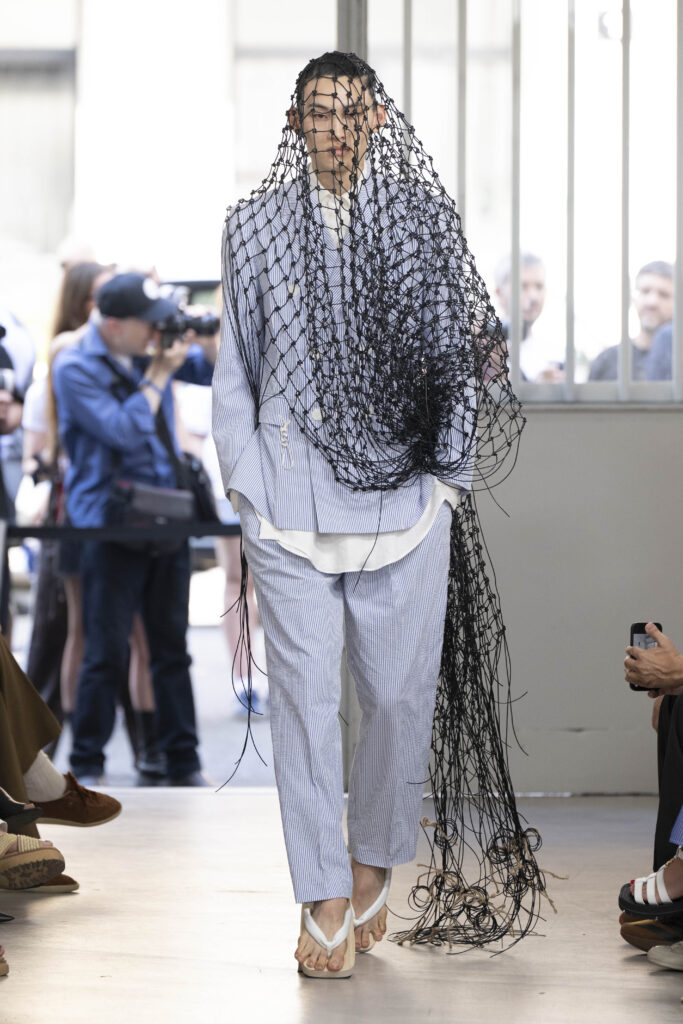
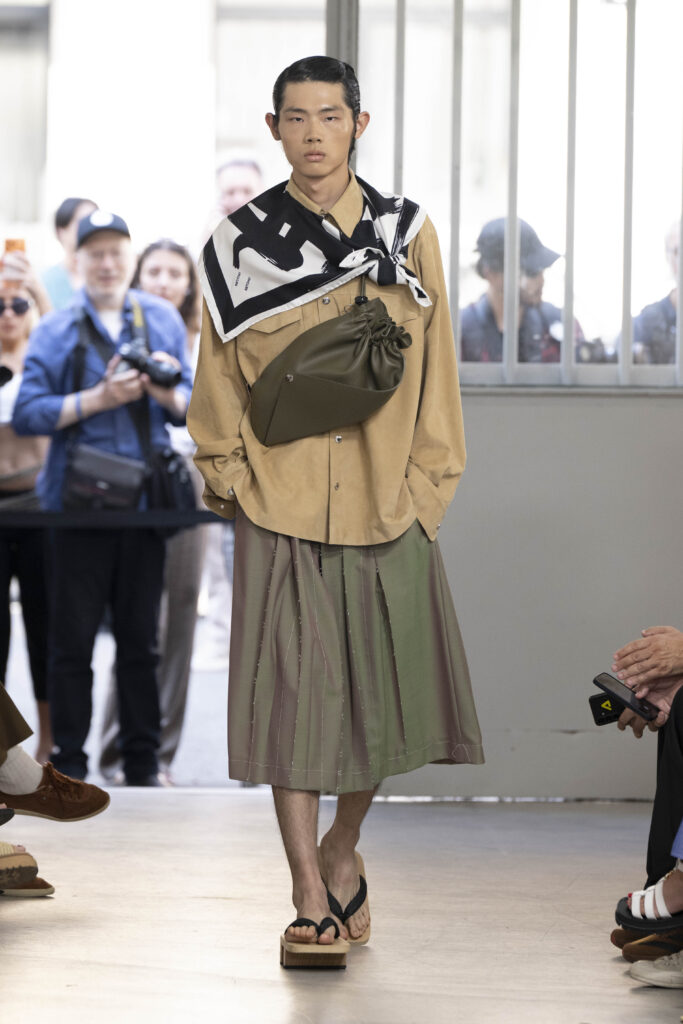
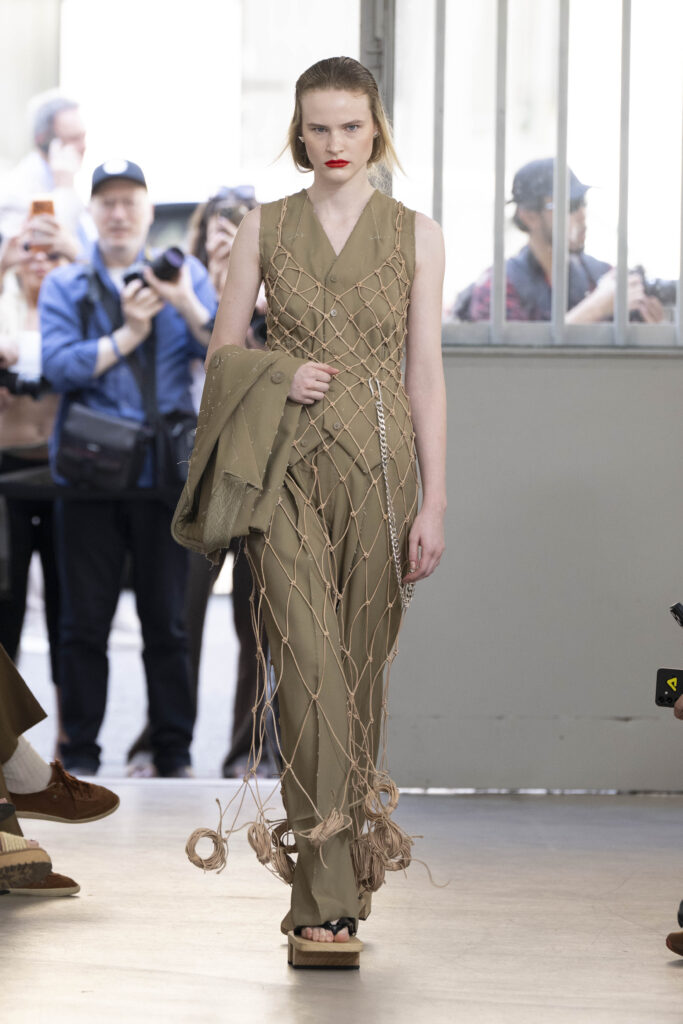
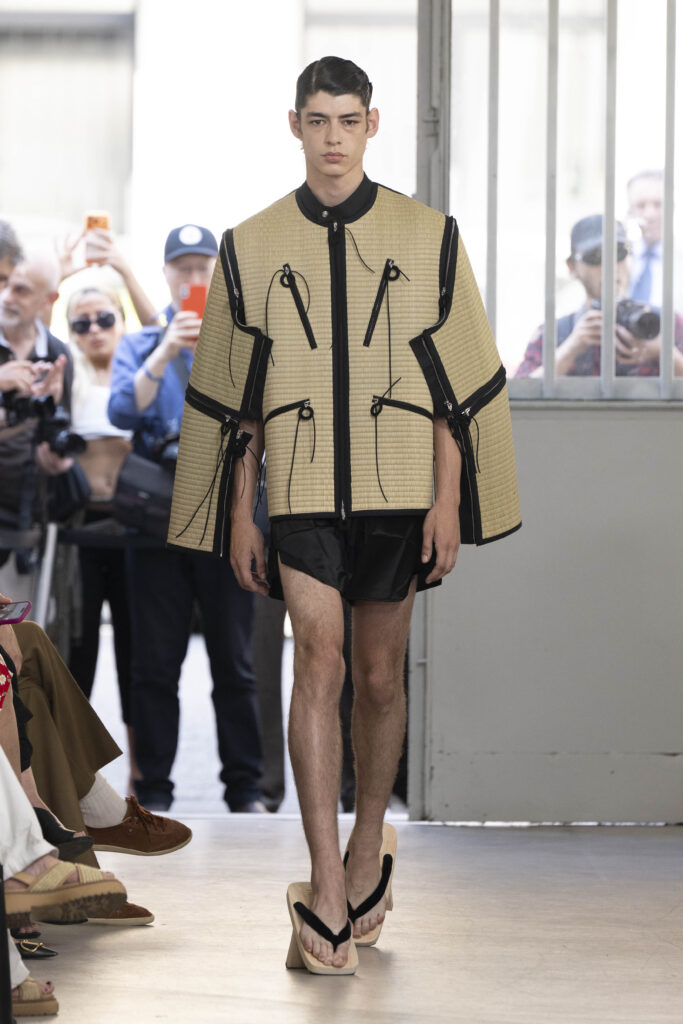
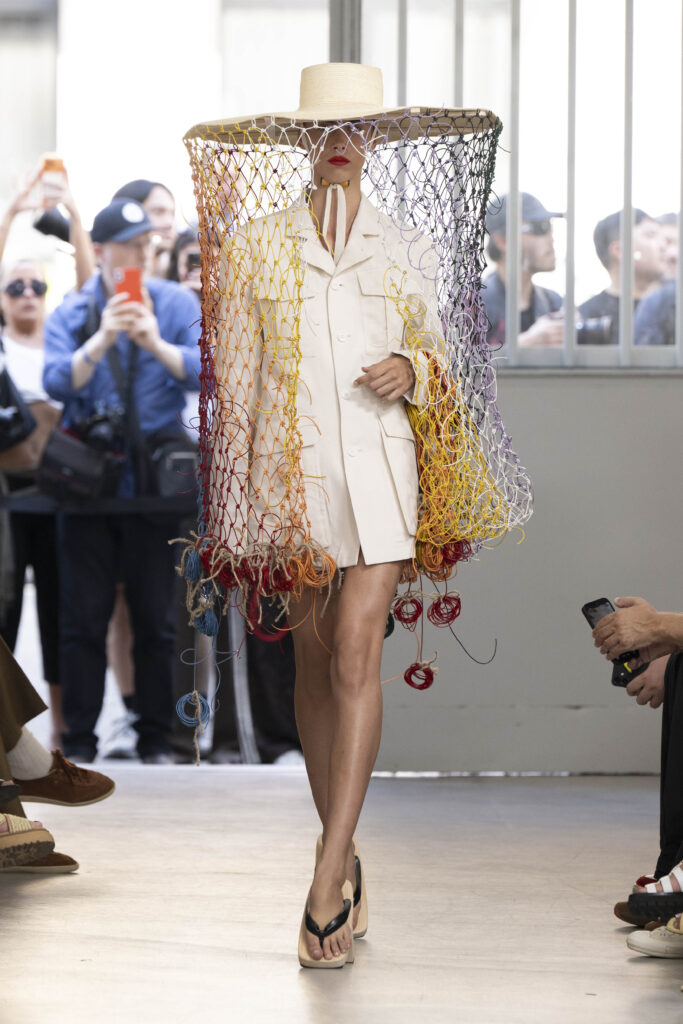
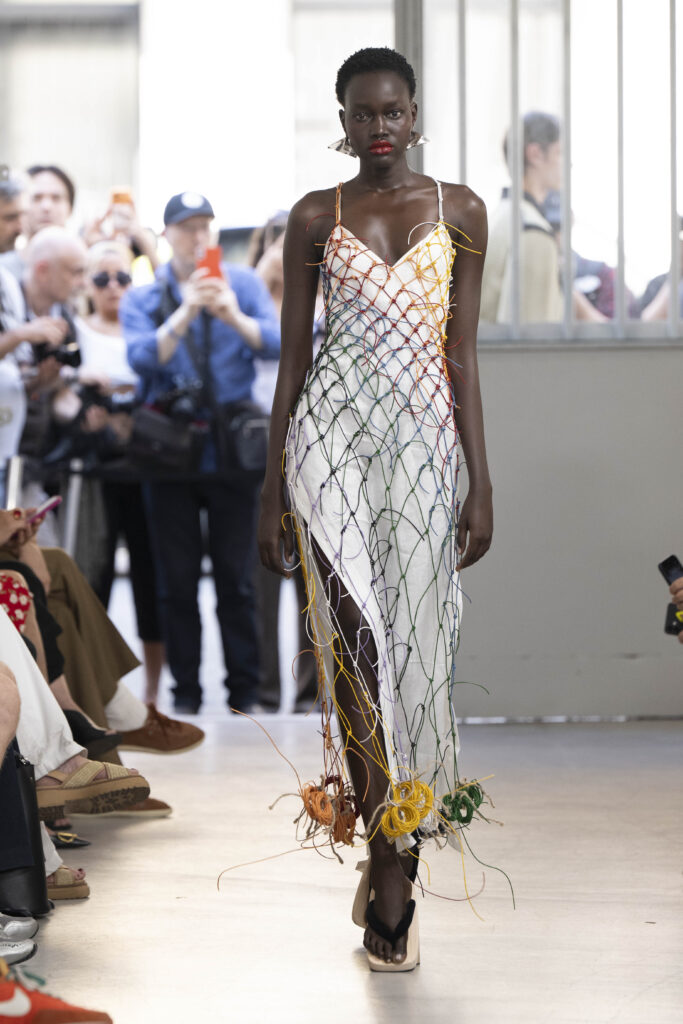
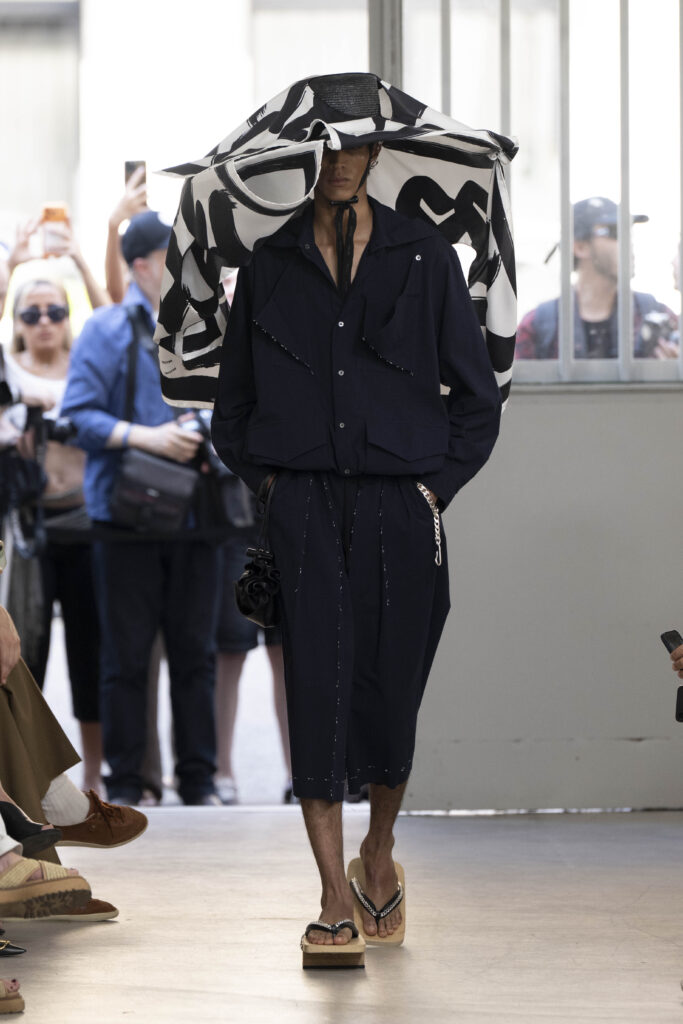
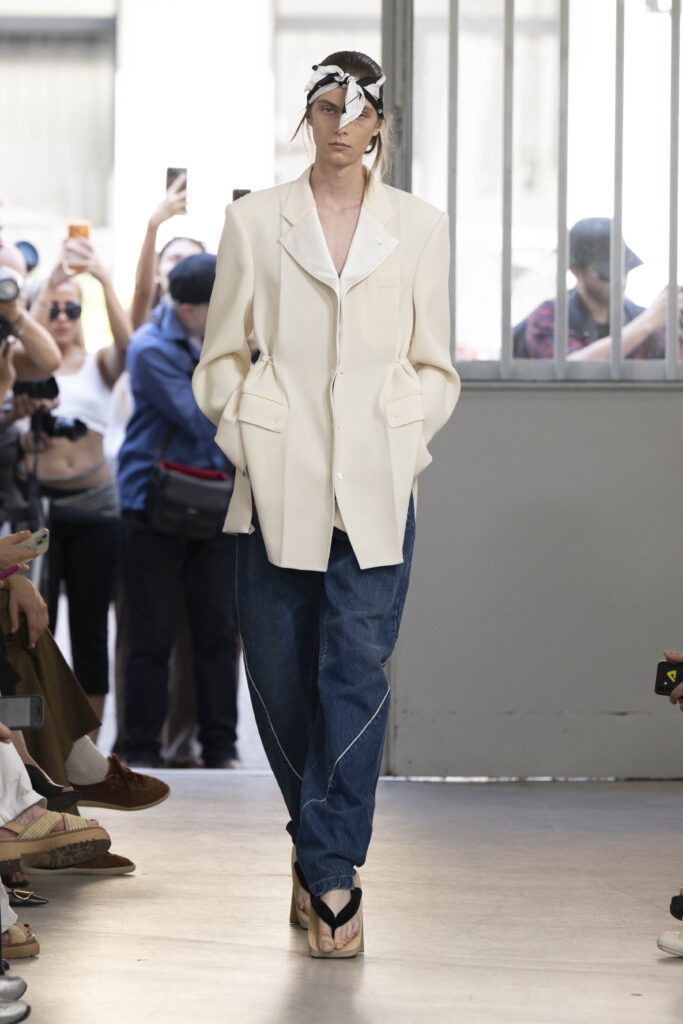
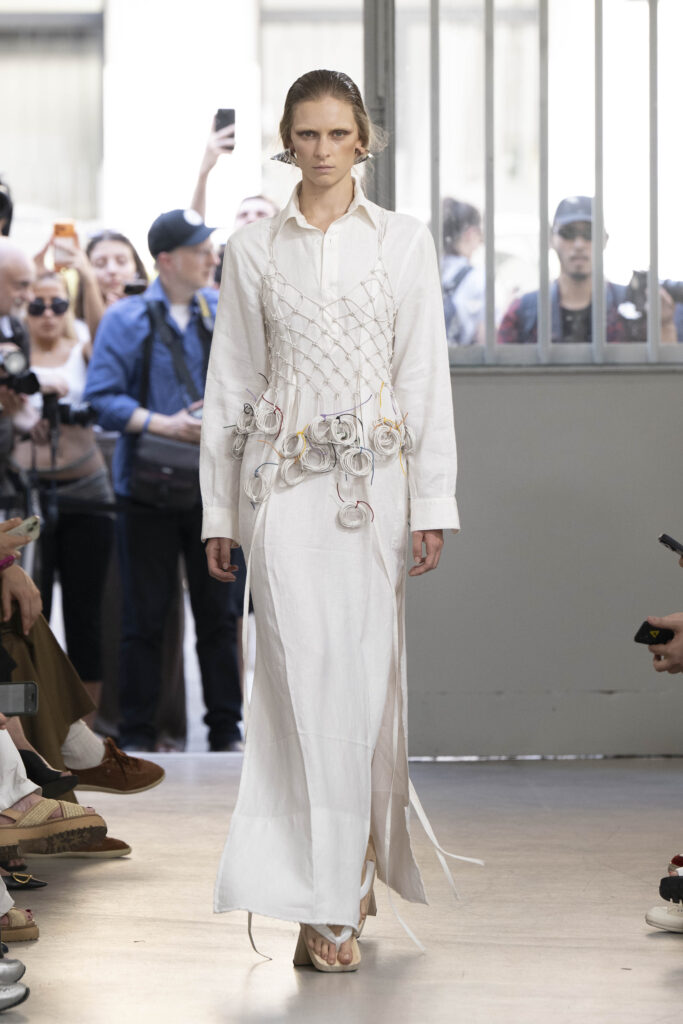
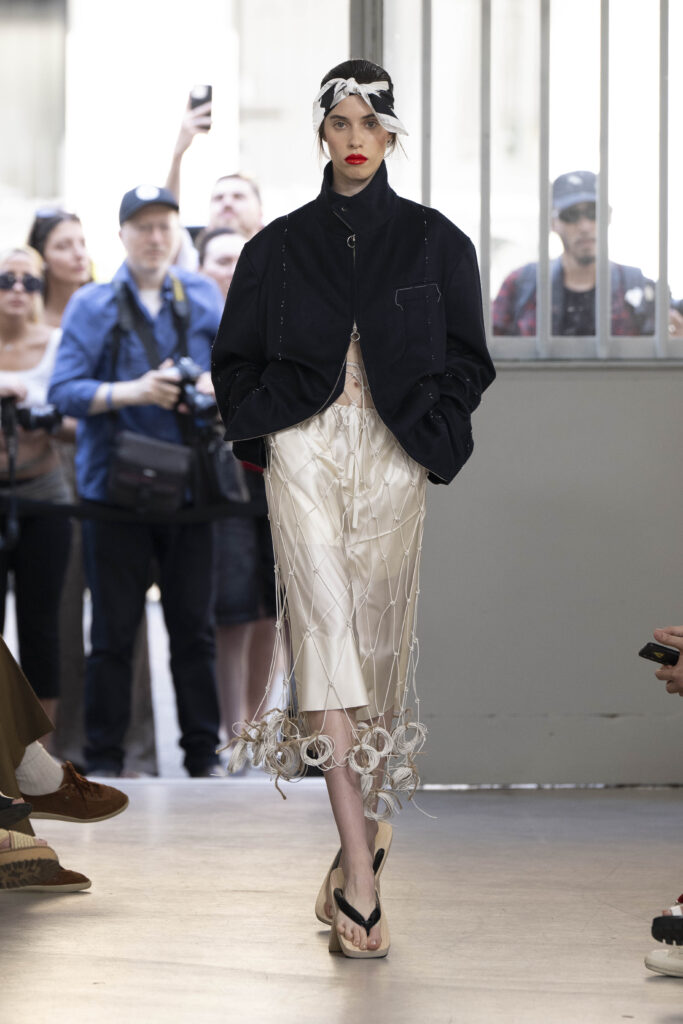
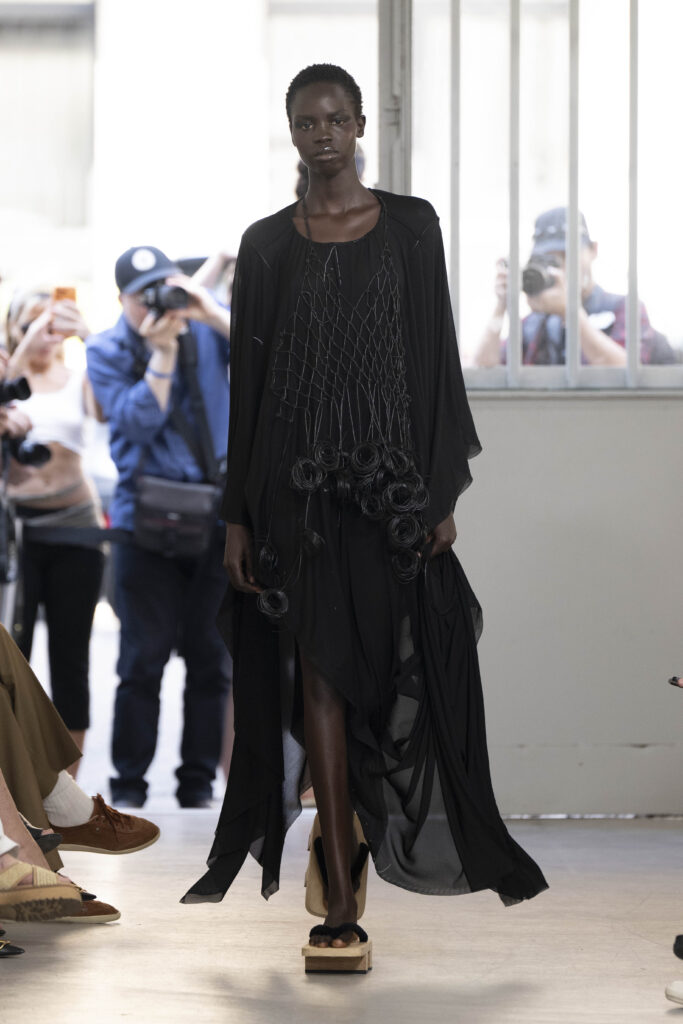
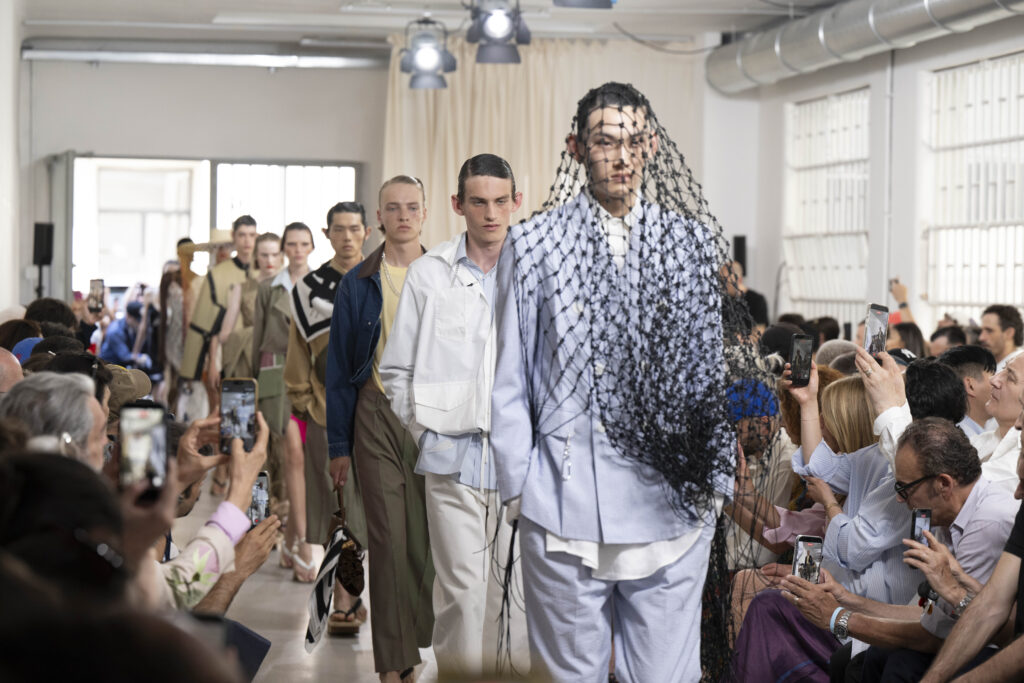
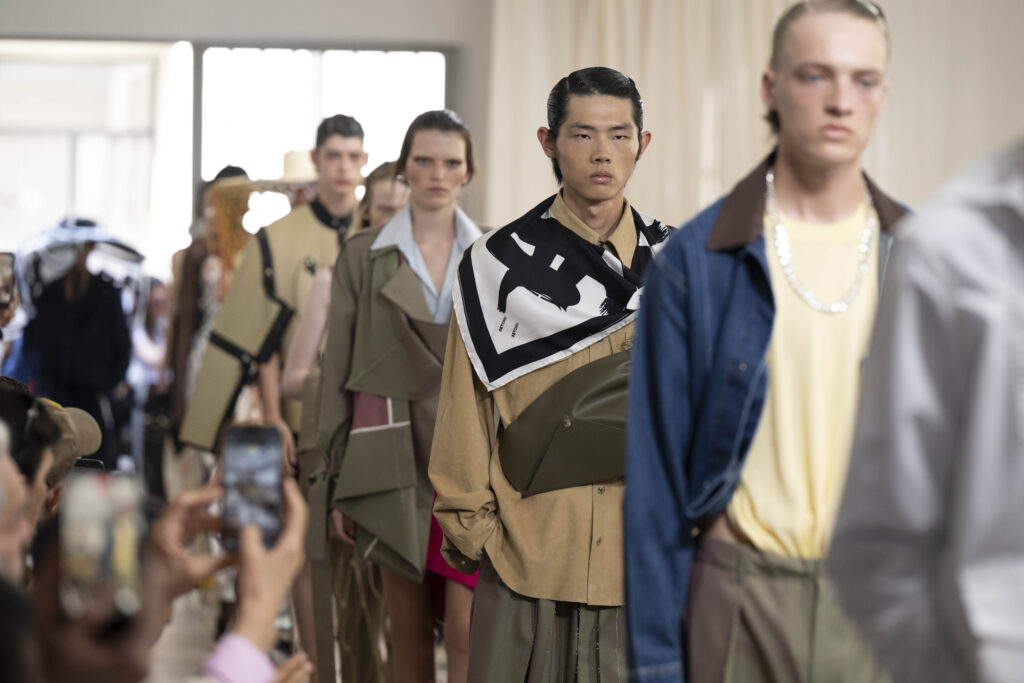
Setchu’s Spring/Summer 2027 collection is built around a network of leather cords in various colors, tied using a technique the brand calls the “Japanese square knot.” This woven pattern envelops the silhouette, sometimes leading it, sometimes seeming to follow it like a second, braided skin. The resulting pieces—jackets crisscrossed with netting, dresses encircled by cords—belong to a wardrobe that Setchu describes as largely genderless: the same knots, the same pieces, for silhouettes that are no longer defined by the wearer’s gender.
The choice of this motif is not arbitrary. Kuwata traces its origin to a memory from a trip: the waters of Gabon, where fishing remains a bountiful subsistence activity. In this interpretation, the knot is not a fashion ornament but a survival tool elevated to the status of a stylistic signature—a way of incorporating a utilitarian gesture into the vocabulary of clothing without erasing its original roughness. Setchu, a brand founded by a designer trained in both Japanese tailoring and European techniques, and winner of the 2023 LVMH Prize for Young Designers, has built its reputation on this kind of fusion between two disparate forms of craftsmanship. This season, the sailor’s knot is the most accomplished expression of this fusion.
Fractions and Arithmetic
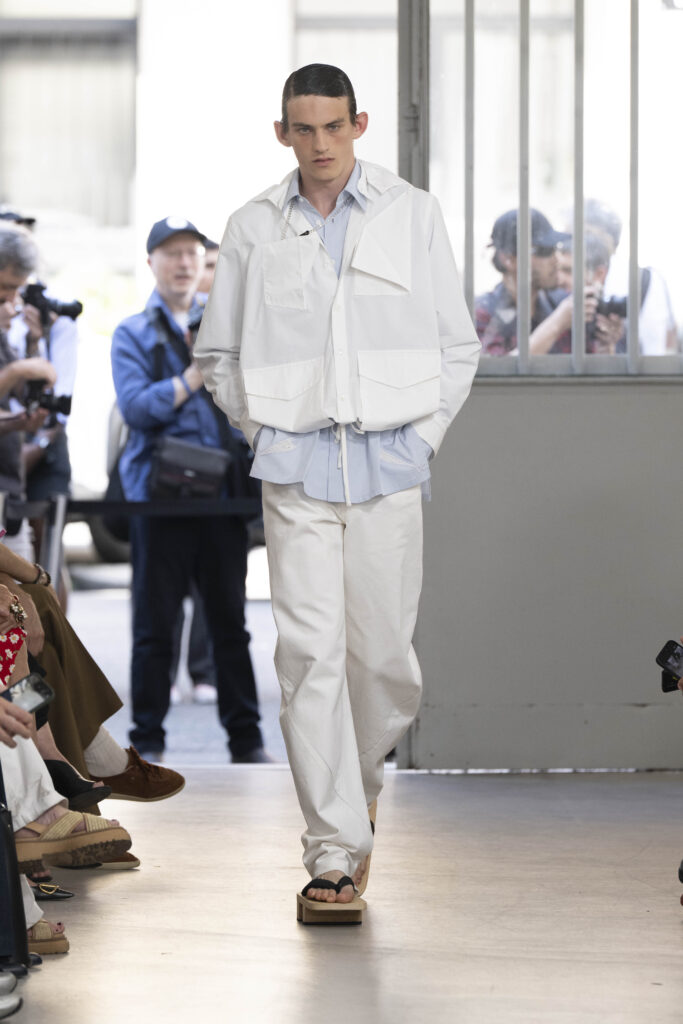
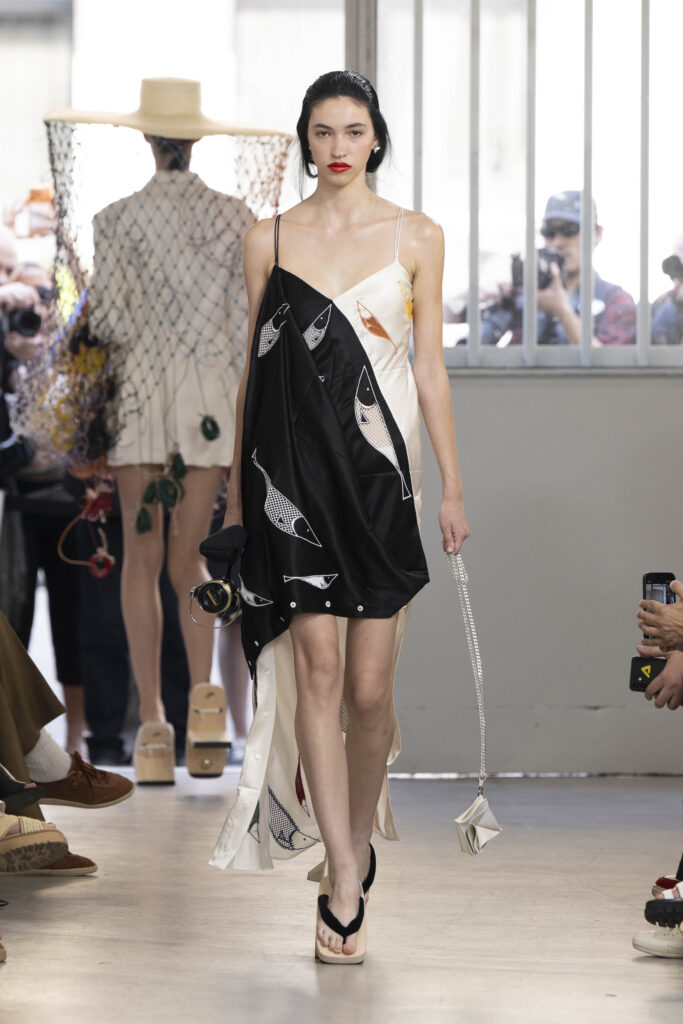
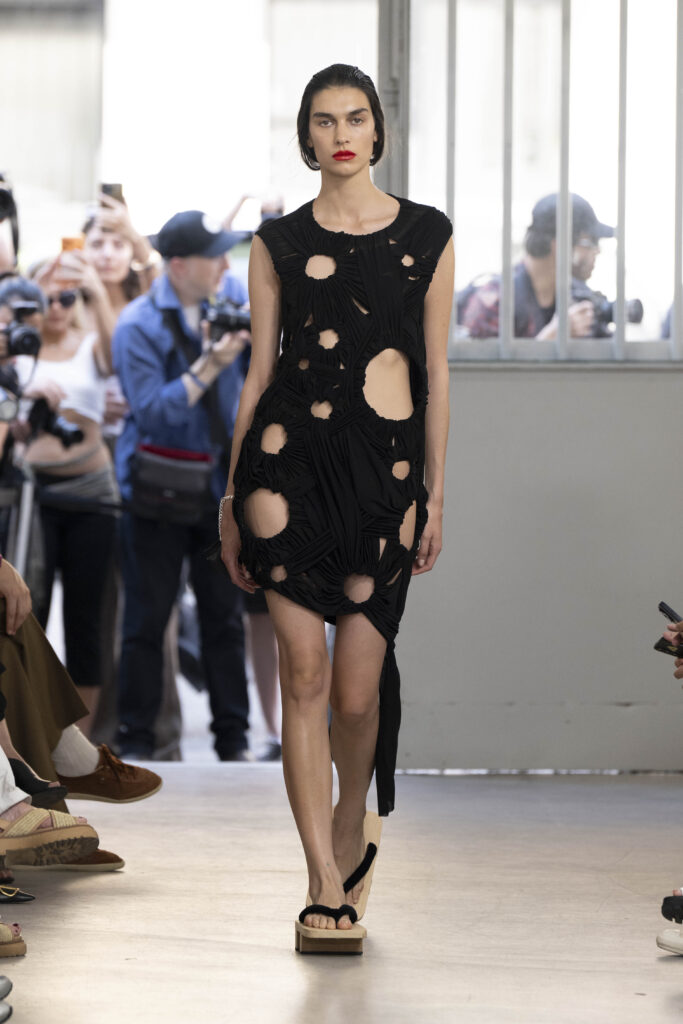
The rest of the collection continues this theme of visible structure. Rectangular pieces of jersey are held taut by circular cutouts that pierce a top or dress—a system that hugs the body while revealing, in an almost diagrammatic way, the garment’s construction. A slit accentuates the asymmetry of a black dress and, when laid flat, reveals its own arithmetic: the cut is no longer concealed; it becomes legible, almost didactic. Elsewhere, another opening conceals a fastening system beneath silk panels, its mechanism deliberately obscure—the same collection that exposes its construction on one side conceals it on the other, like two answers to the same question.
Armor for Uncertain Times
The pieces inspired by Kuwata’s travels are covered in places with scales—delicate fabrics assembled into a contemporary armor: fluid, protective, but never rigid. This is undoubtedly where the season’s most interesting concept lies—not in any single garment, but in the idea that knitwear and knots can function as a flexible shield, a form of protection that does not sacrifice grace. The net, the collection’s primary motif, thus becomes a double-edged metaphor: it holds things in, yet it also lets light pass through its mesh. This trend toward “shield-garments” is not an isolated occurrence in the June 2026 collection schedule; Setchu embraces it without ever naming it, preferring the metaphor of the net to that of military armor.
Setchu doesn’t say what this armor protects against. She lets the knot do the work: holding, enveloping, and, when necessary, coming undone.
Detail — The network of cords that gives structure to several pieces in the collection is assembled using the technique known as the “Japanese square knot,” a fastening method directly inspired by traditional fishing techniques observed by Satoshi Kuwata on the coast of Gabon.




Cette publication est également disponible en :

