
By transforming the geometry of a soccer ball into the case of a mechanical clock, Louis Vuitton asks a question that goes beyond the anniversary of a solidarity campaign: how far can a leather goods House go in the art of watchmaking?
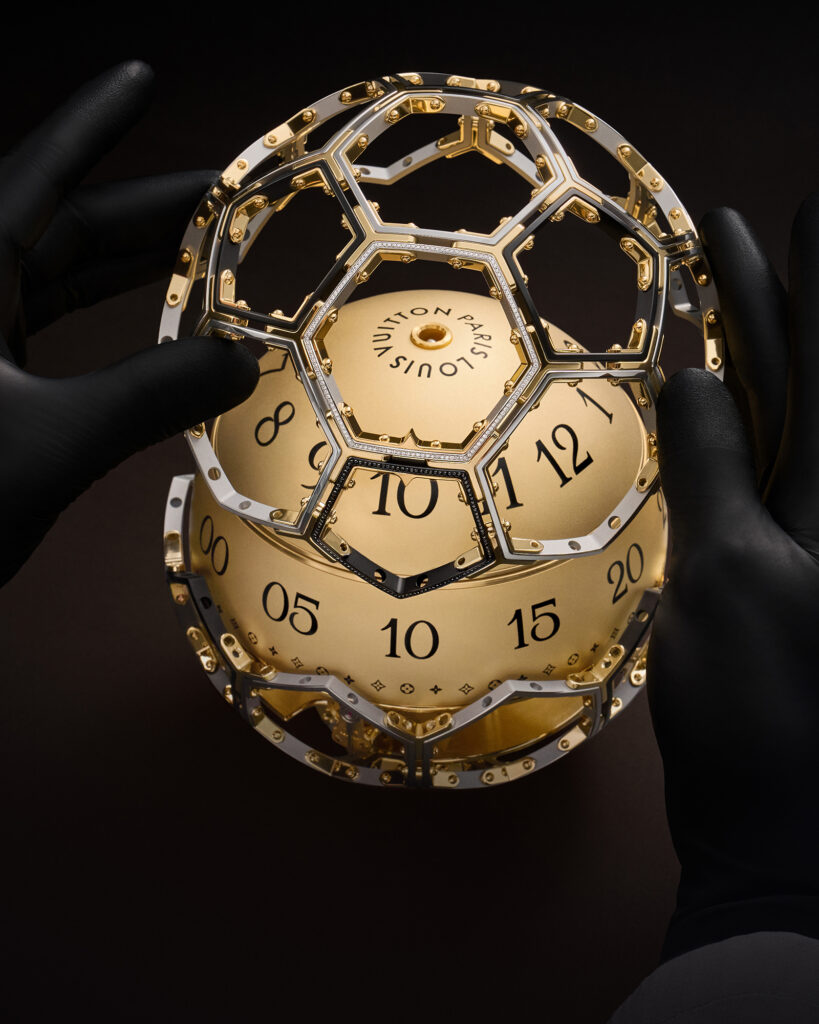
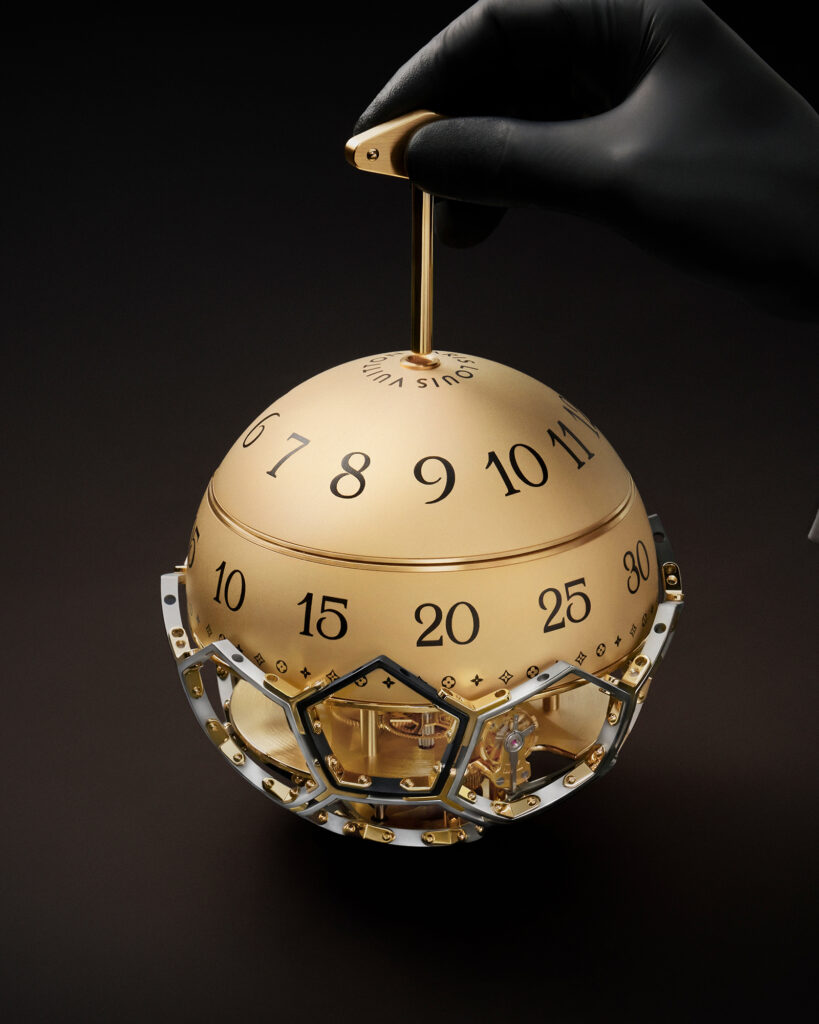
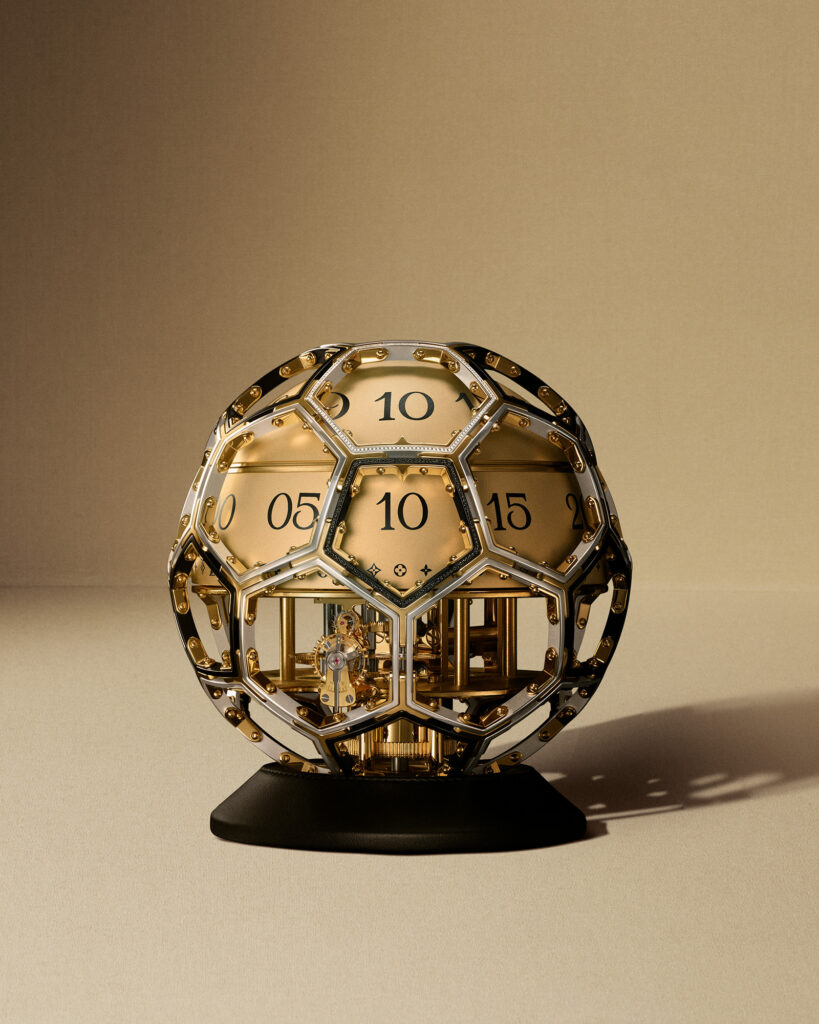
The answer is the Louis Vuitton Unity Time Object. A unique piece, built around an openwork structure whose hexagons and pentagons criss-cross in the exact geometry of a soccer. At the heart of this frame – gilded, studded and reinforced with brass fittings in keeping with the codes inherited from the 1860s – is a mechanical movement developed to order by the Swiss manufacture L’Épée 1839. The time is read on two rotating cylinders: the first features the Monogram flower, the second bears the signature “Louis Vuitton Paris”. A ring set with 144 white diamonds and 120 black diamonds, totalling 1.03 carats, frames the hexagonal openings and guides the eye to the mechanism.
It’s not a piece of communication dressed up as watchmaking. It’s a question posed through materials and kinematics.
Three houses in one object
What Matthieu Hegi, Artistic Director of La Fabrique du Temps Louis Vuitton, says soberly – “it links its heritage to a contemporary vision of time, between tradition and modernity ” – in fact reflects a rare convergence. Three distinct areas of expertise coexist here, without one overpowering the others.
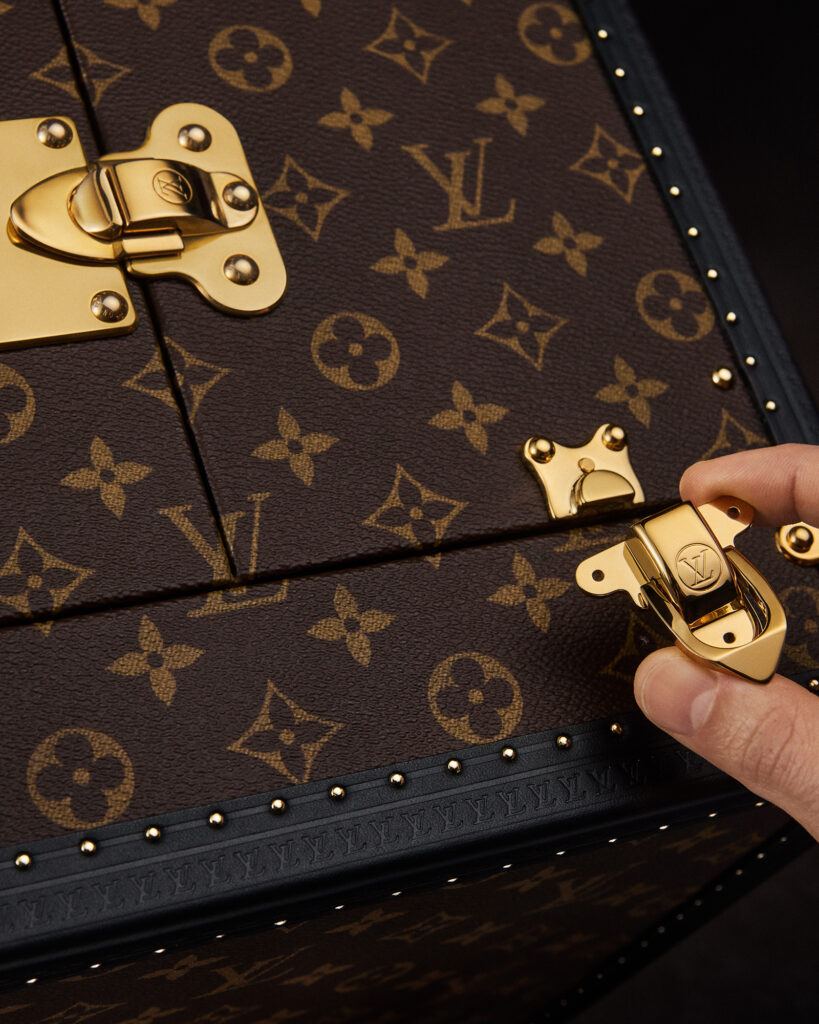
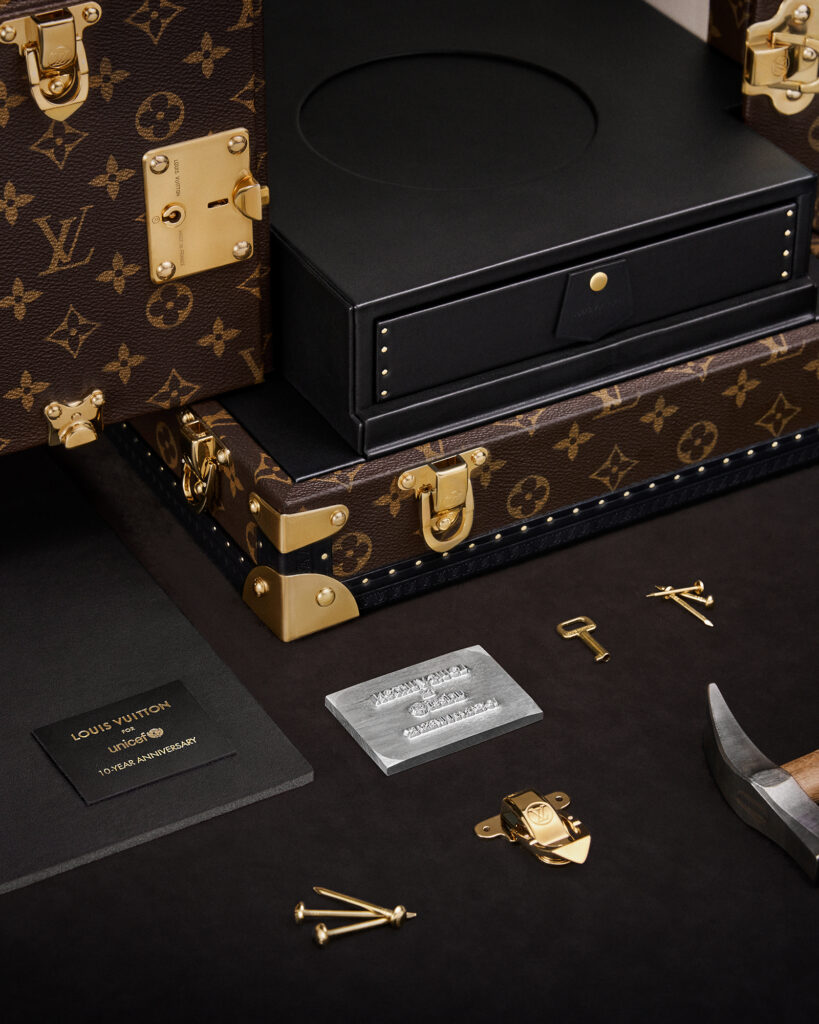
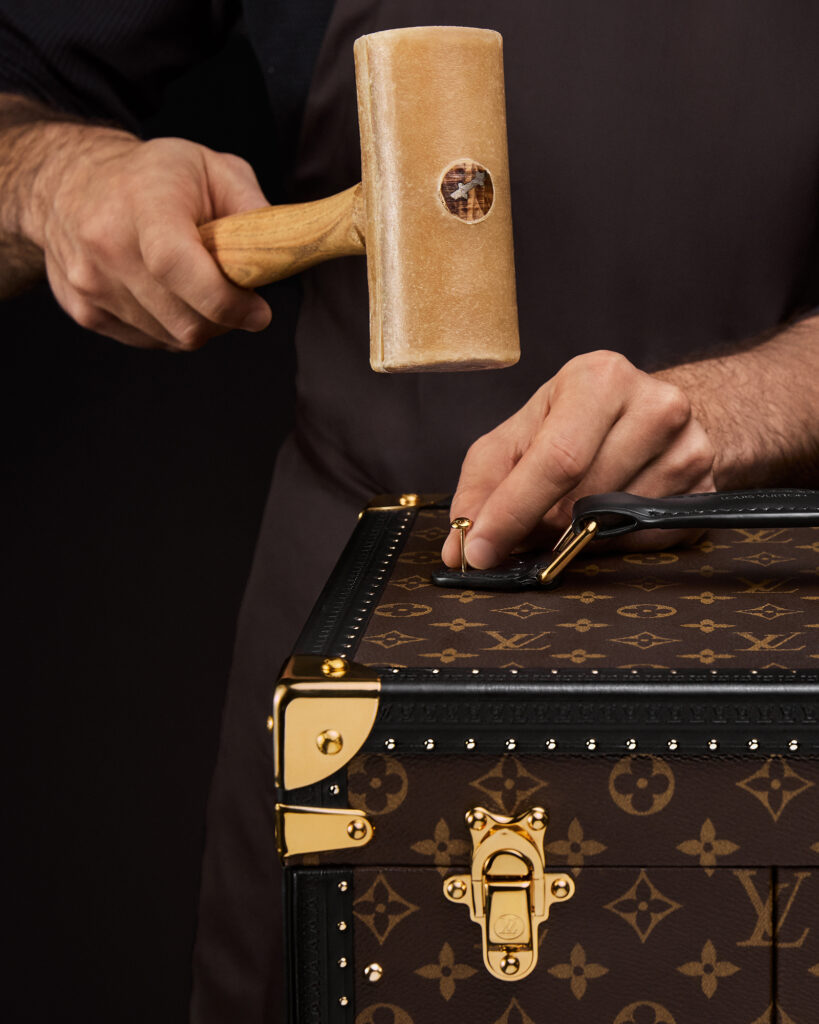
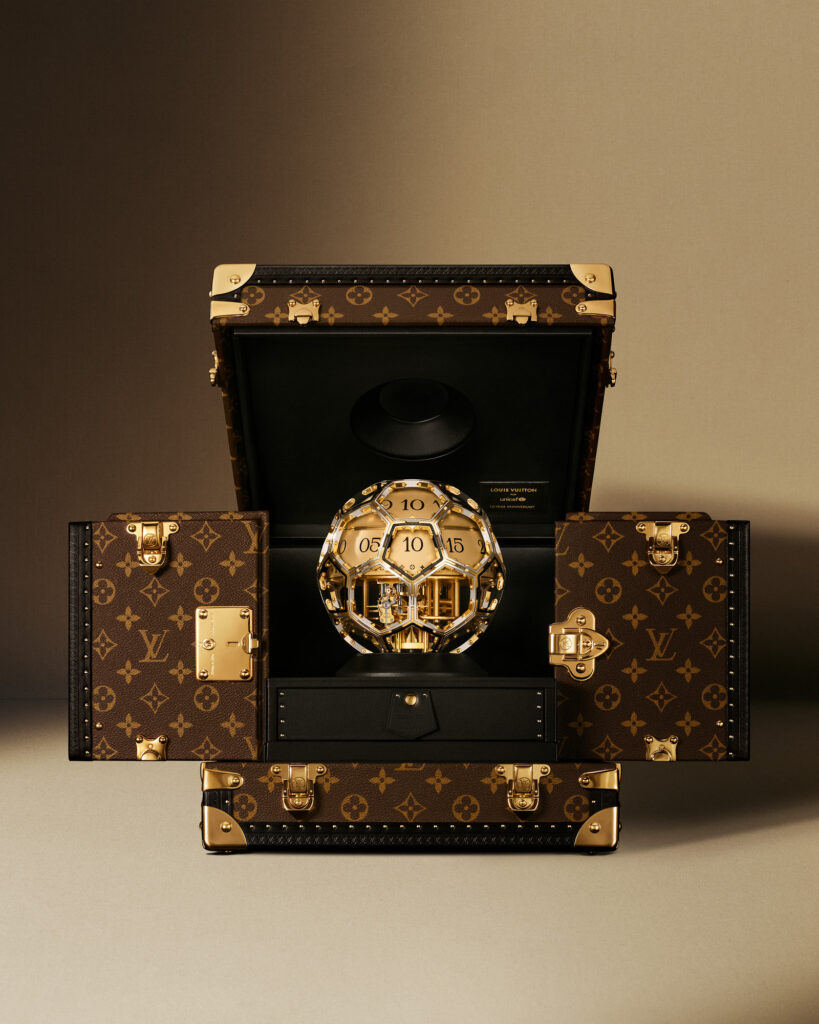
L’Épée 1839 brings its own mechanics: a custom-developed caliber housed in a structure that is not a case in the watchmaking sense, but an architectural sculpture. The historic workshops in Asnières-sur-Seine, based on over 170 years of trunk construction, deliver the Malle Trophée that houses it – entirely hand-made, covered in Monogram canvas, closed by brass locks and clasps whose shape has not changed since the days of the first generation of trunks. Last but not least, La Maison provides the visual grammar: gilded nails, brackets, polished finishes reminiscent of the protective pieces used on large shipping trunks.
The balloon is not a formal pretext. It’s a resonance chamber for skills that don’t naturally intersect.
28 million dollars, ten years of construction
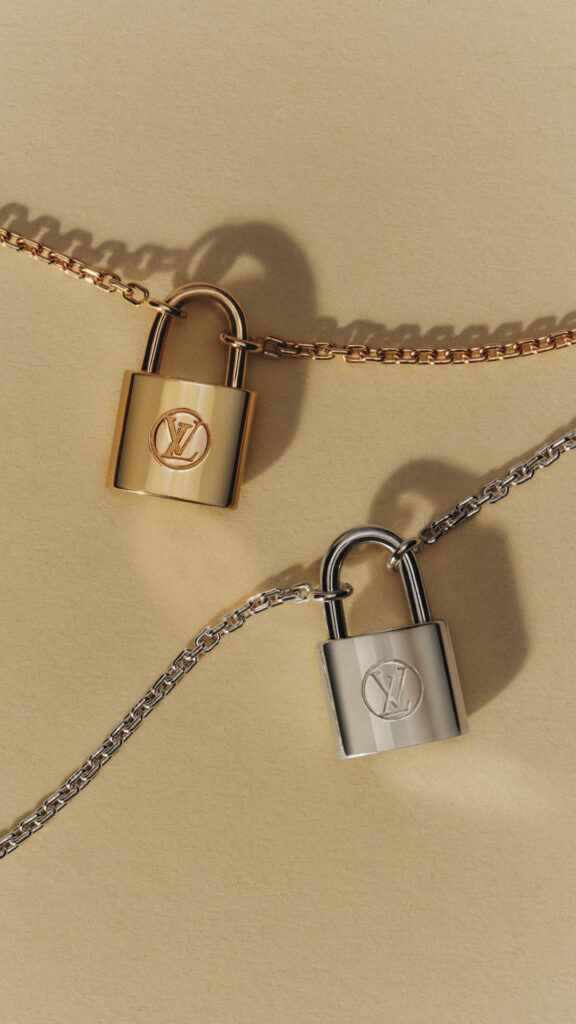
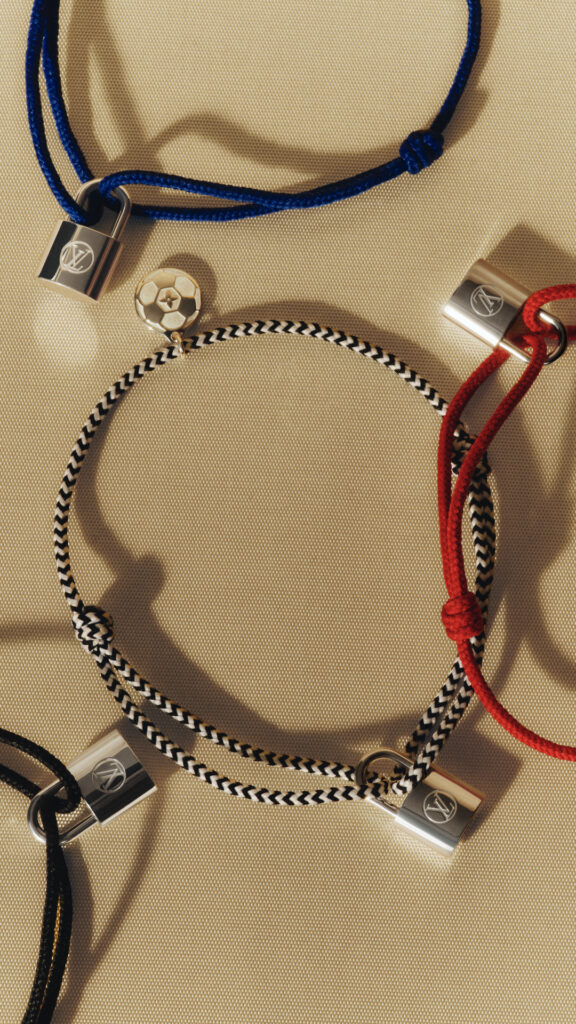
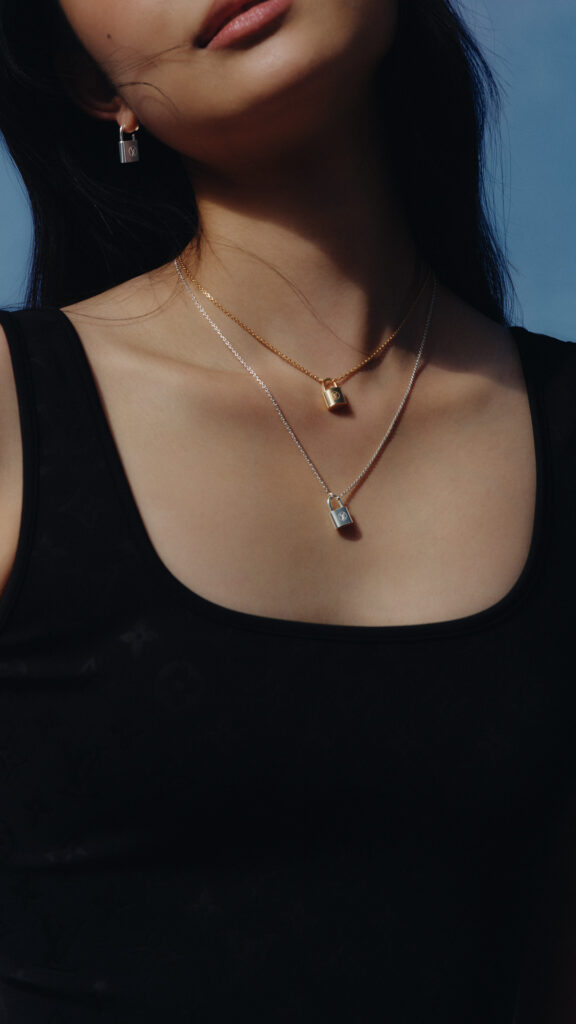
The object is part of a wider system. Since January 12, 2016, when the partnership was launched in Los Angeles, Louis Vuitton has donated $28 million to UNICEF via the Silver Lockit collection – exceeding the contractual minimum of 2 million euros per year. In 2026, the commitment pivots: the POWER4Girls program, deployed in 120 countries, aims to support girls aged ten to 25 in their access to vocational training, healthcare and decision-making structures. To date, 5.4 million girls have benefited from the program in fifteen countries. The announced target is 100,000 new beneficiaries per year.
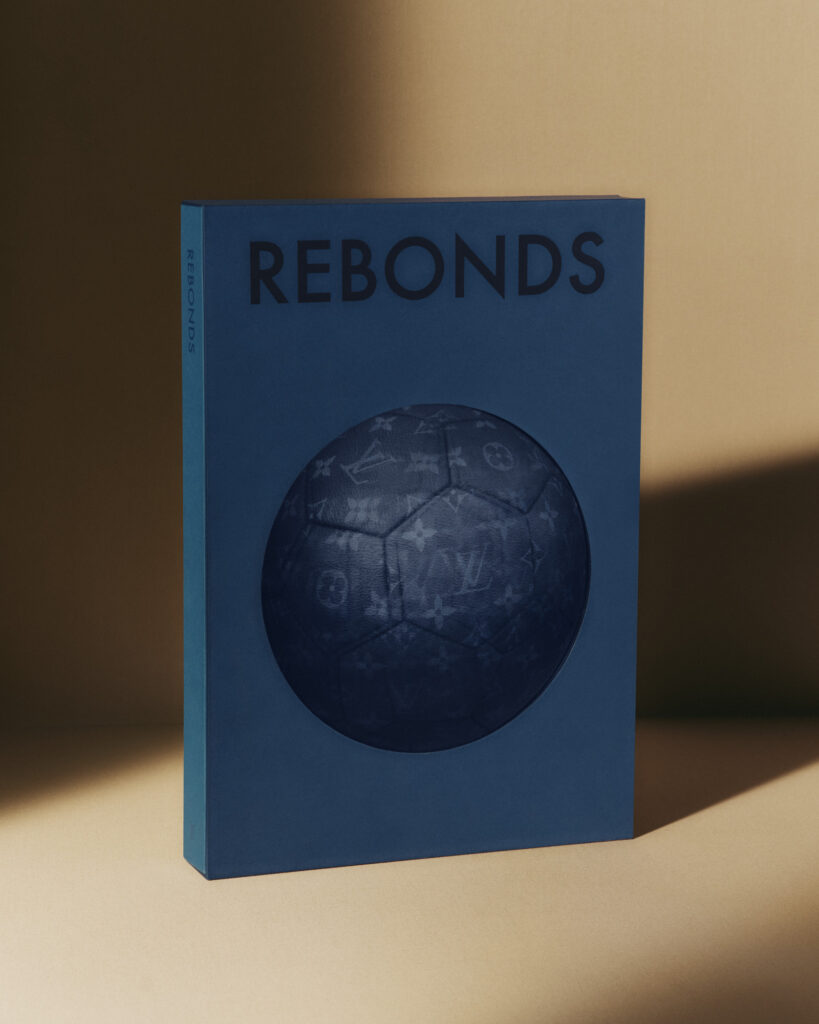
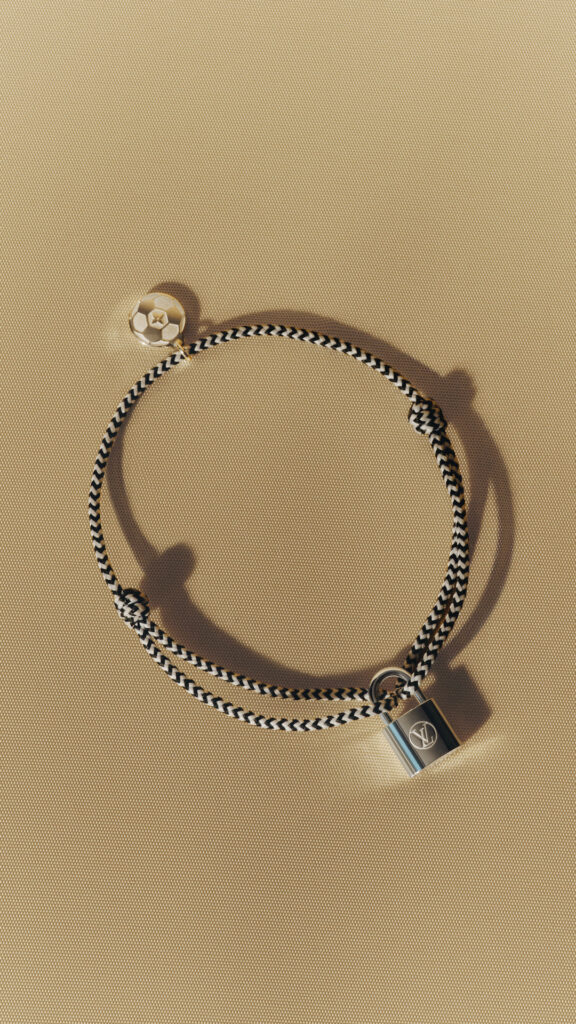
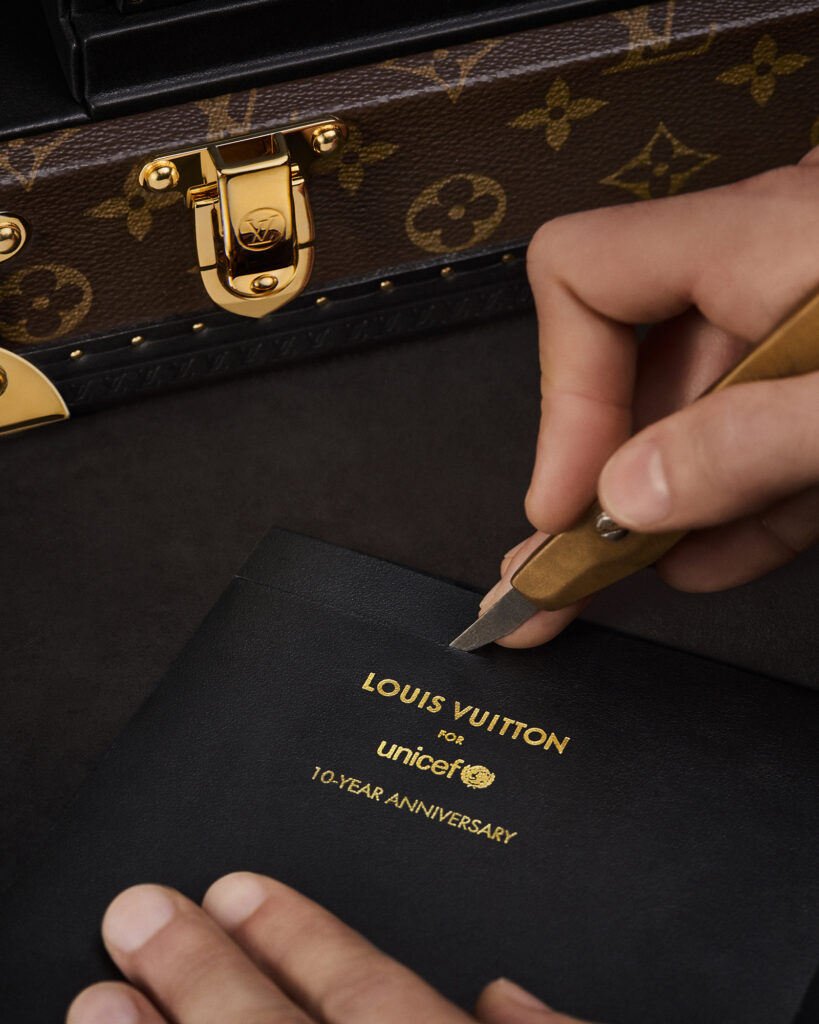
It’s the mechanics of the donation that’s worth looking at here. Each Silver Lockit cord bracelet sold generates a donation of $100; each silver pendant or chain bracelet, $200. All proceeds from the Sotheby’s auction – where the Unity Time Object will be offered from June 9 to 18 – go to UNICEF. The REBONDS book, a reprint of a work published in 1998 following the World Cup and sold for 150 euros, follows the same logic of integral contribution.
This model – a unique piece sold at auction, a permanent collection with a fixed donation threshold, an online limited edition – creates a coherent financial architecture, where each object assumes a calibrated collection function.
What soccer can do
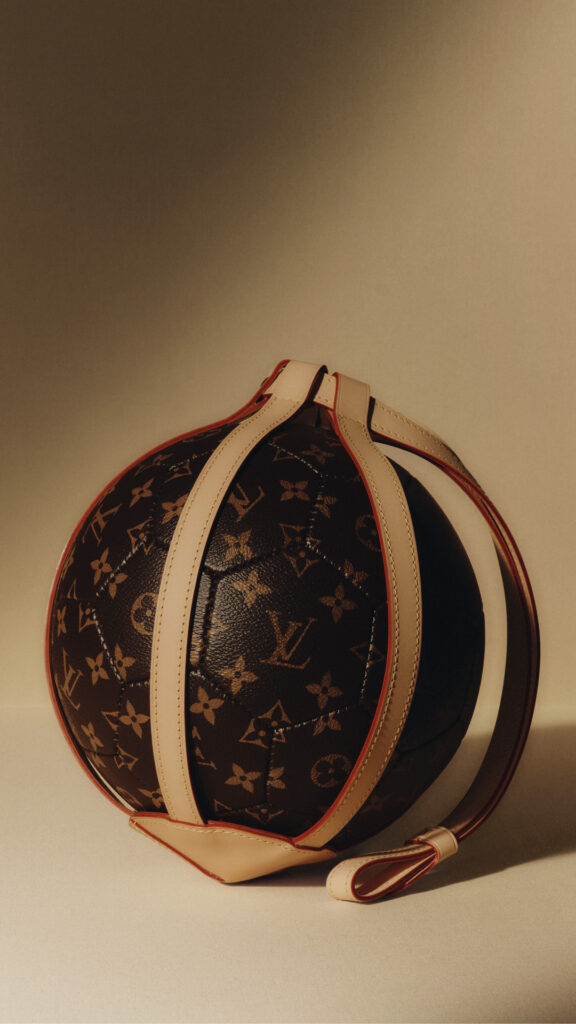
The Unity Time Object reveals something about the way today’s major brands think about their collectibles. Soccer is not used here to broaden the audience: it is chosen for its geometry. The shape of the ball – 12 pentagons, 20 hexagons – is one of the most immediately recognizable three-dimensional constructions in the world, and one of the most demanding to treat in a goldsmith’s language. Transforming this constraint into a framework for exhibiting a mechanical movement implies a structural response to the question of legibility: how to show the cogs through a non-planar surface, without losing either the legibility of the hands or the formal coherence of the object?
The answer lies in a gilded brass dome at the top, two rotating cylinders as a display mode, and a dedicated key for winding – inserted on the side or at the top. Simple, resolutely mechanical, with no digital decoder.
What we’ll remember about this timepiece ten years from now probably won’t be the anniversary it celebrates. It will be the question it silently poses: at what point does a Maison de voyage become a Maison d’horlogerie?
The Unity Time Object: technical data
Openwork hexagon/pentagon structure in gilded metal. Customized mechanical movement: L’Épée 1839. Display: two rotating cylinders (hours / minutes). Minute decoration: Louis Vuitton Monogram flower. Hour decor: “Louis Vuitton Paris”. Ring: 144 white diamonds + 120 black diamonds, 1.03 carats total. Finishes: gold-plated studs and brackets, polished to resemble the protective parts on historic trunks. Winding: dedicated key, side or top insertion. Container: Hand-crafted Trophy trunk, Asnières-sur-Seine workshops, Monogram canvas, brass clasps in accordance with codes used since the 1860s. Unique piece. Sotheby’s sale, June 9-18, 2026. All proceeds donated to UNICEF.


Cette publication est également disponible en :

