
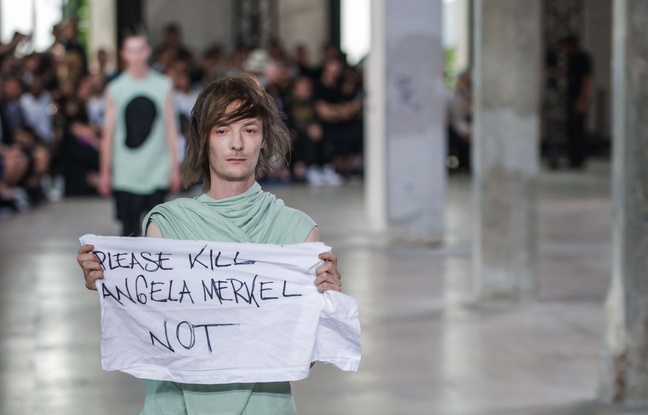
People don’t always talk about you in the way they’d hoped. Your name is sometimes associated with things you’d rather not talk about. For Rick Owens, it’s a buzz, an additional controversy that’s animating press reports, after his men’s spring-summer 2016 show. To recap: a model, the designer’s muse for 12 years, took a few unwelcome liberties (particularly in the context of the terrorist attacks) and displayed the inscription “please kill Angela Merkel/ NOT”. The news was picked up by all the media, but at least it gave us a glimpse of a few pieces from the designer’s collection, and once again raised his name. Whether it’s a calculated publicity stunt or a name, Rick Owens’ shows have become must-sees in recent years. In fact, it’s better to call them an event, or a performance, as they always leave their mark on the season (last season, an exhibitionist fervor animated the show).
The collection’s military inspiration is translated into cut-out, heroic looks. In this way, the banner becomes a political counter-attack that sweeps aside extreme rigor, and recalls the hijacking of classic codes, often carried out by marginal movements. Whether it’s the reappropriation of tartan by punks, or the reuse of preppy suits by mods, counter-culture uses what it criticizes. A show that calls for real reflection.
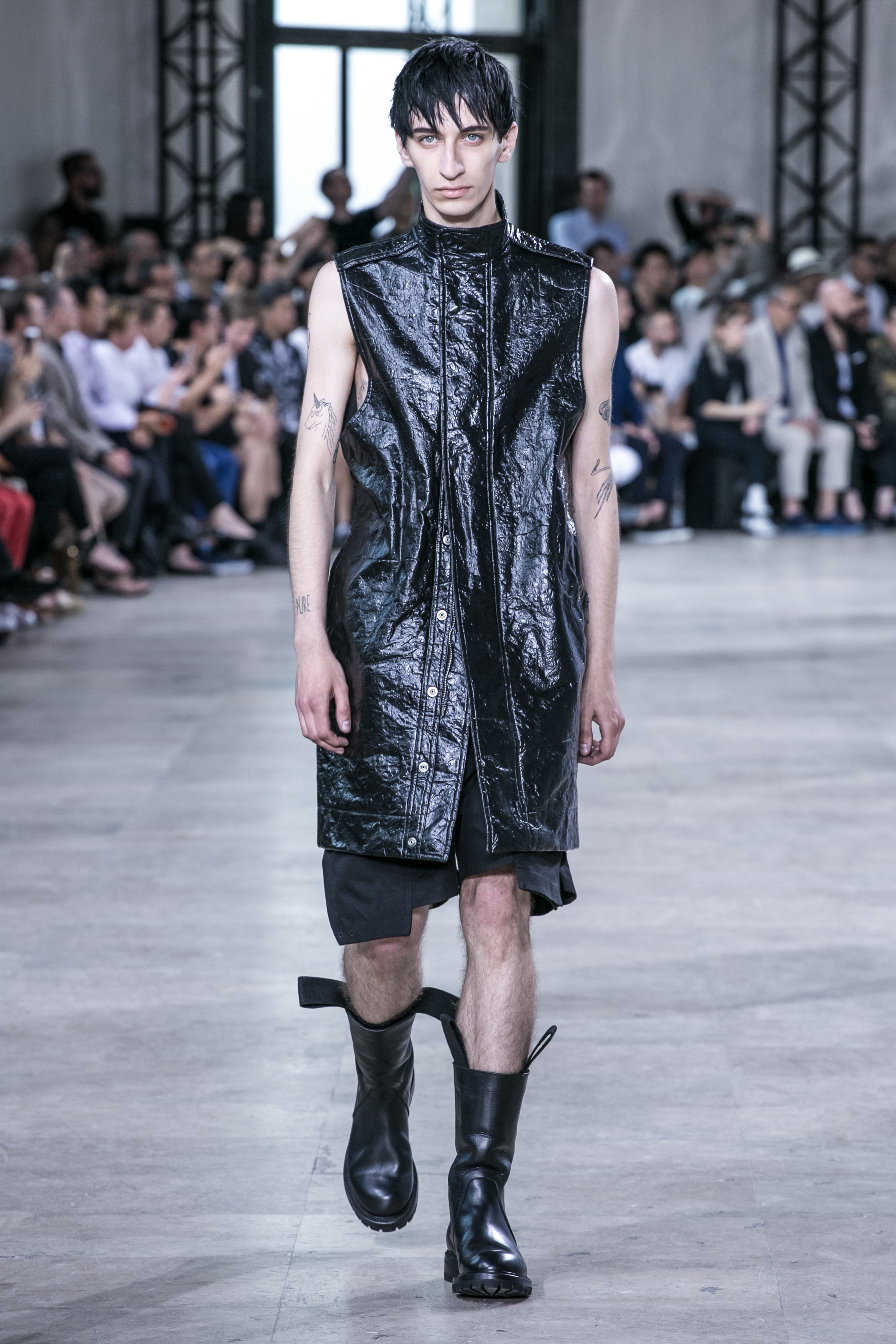
Rick Owens Fashion Show Menswear Collection Spring Summer 2016 in Paris
Photo by Valerio Mezzanotti
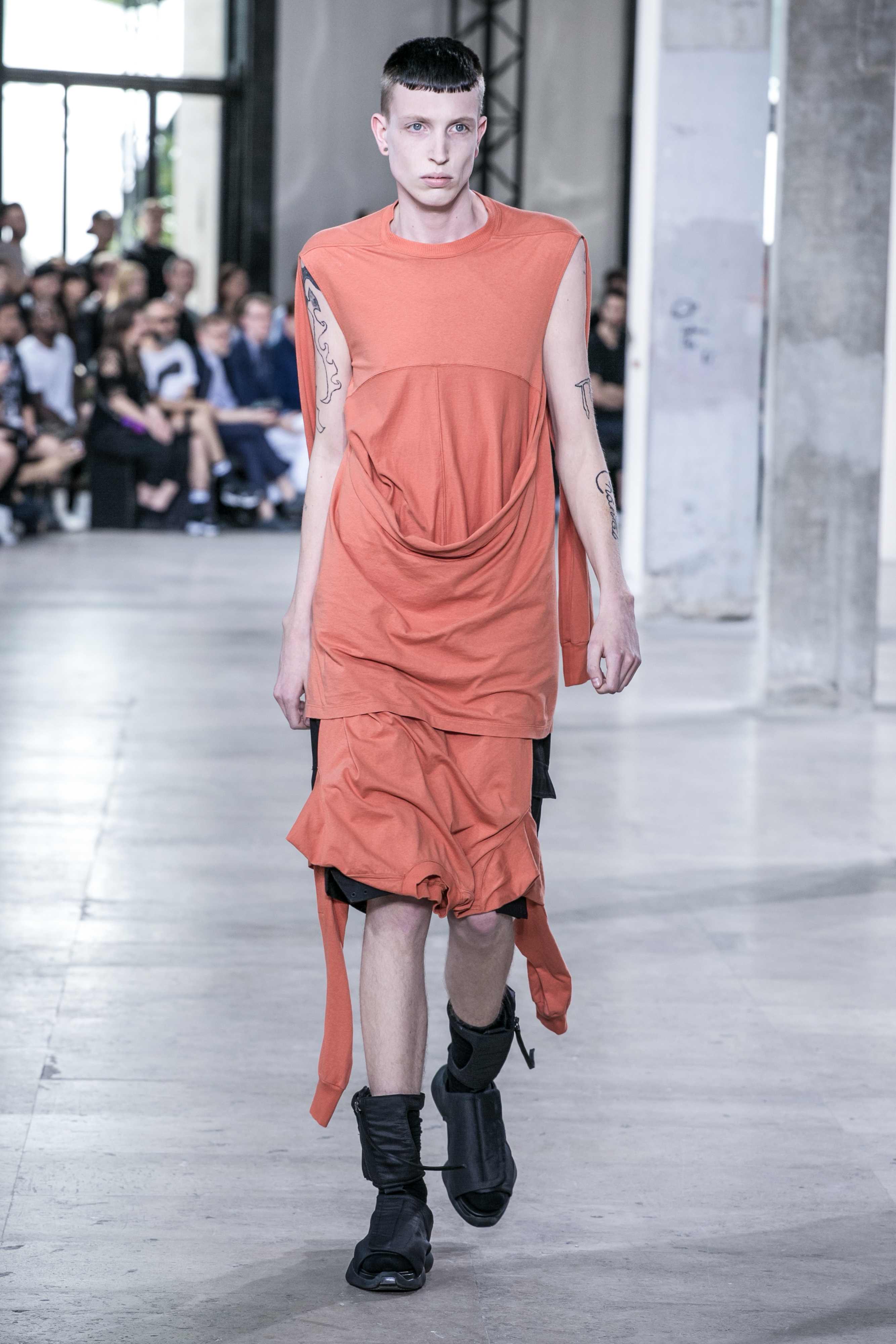
Rick Owens Fashion Show Menswear Collection Spring Summer 2016 in Paris
Photo by Valerio Mezzanotti
A free spirit, but not one for which clothing is a direct outlet. Leather and black, Rick Owens’ hallmarks, overshadow the spirit of youthful rebellion he wishes to instill in the collection. More futuristic cyborg than colorful hippie, unless this is the future look of pacifist warriors.
The boots of this regiment are made less violent and rigid by the fluid touch of the voluminous canvas tunics, and the crumpled, shiny texture. A tribute to the artists of the Sixties and their attitude, the designer claims the influence of John Chamberlains’ sculptures and Steven Parrino’s paintings, finding a second wind in T-shirts as rigid as the supports for these inspirational works.
As a tribute to the destruction wrought by counter-movements, Rick Owens presents his collection under the name of Cyclops. A mythological creature, the Cyclops has only one eye, but it’s with a non-univocal point of view that this collection should be understood. After all, aren’t the legends about Cyclops themselves contradictory?
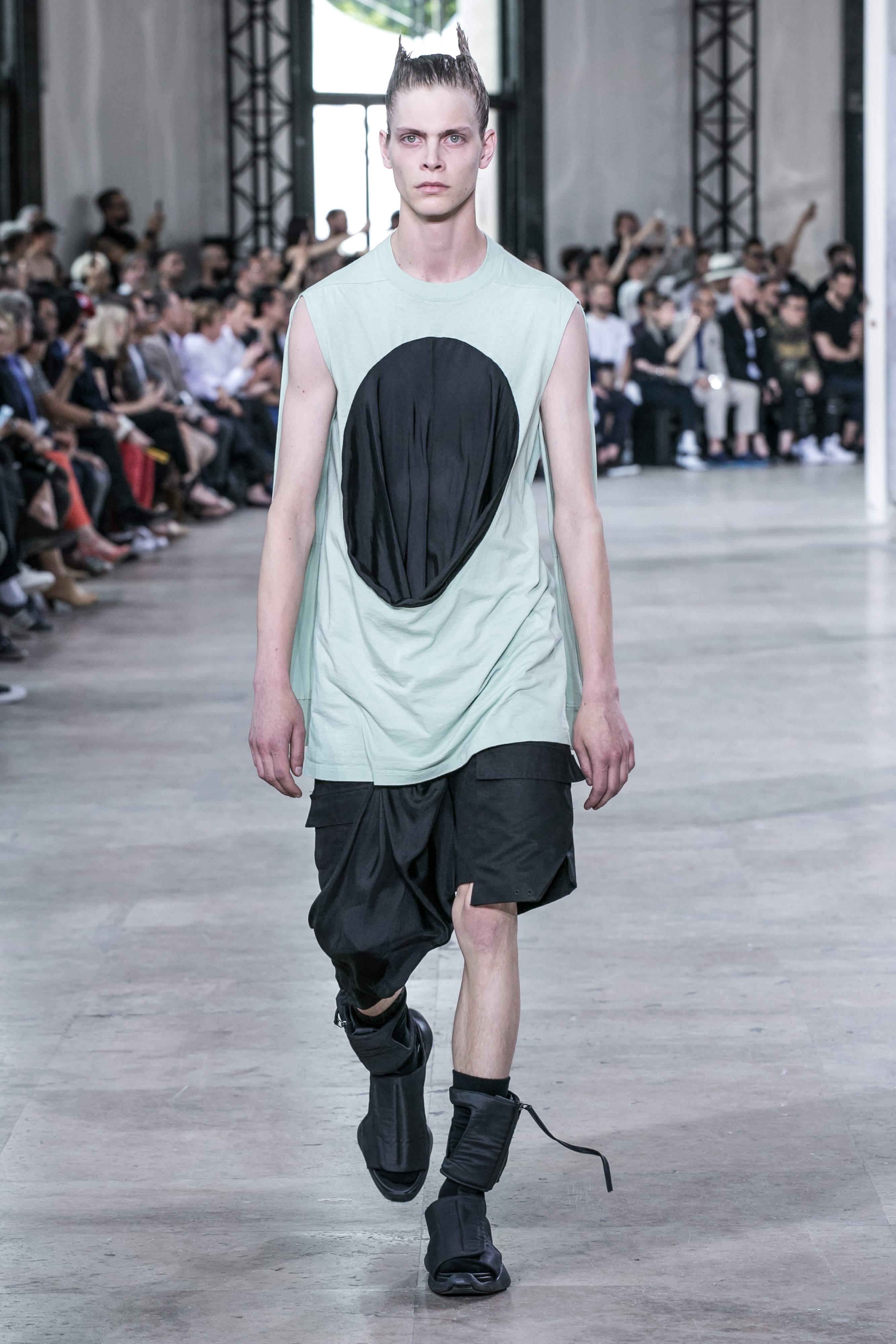
Rick Owens Fashion Show Menswear Collection Spring Summer 2016 in Paris
Photo by Valerio Mezzanotti
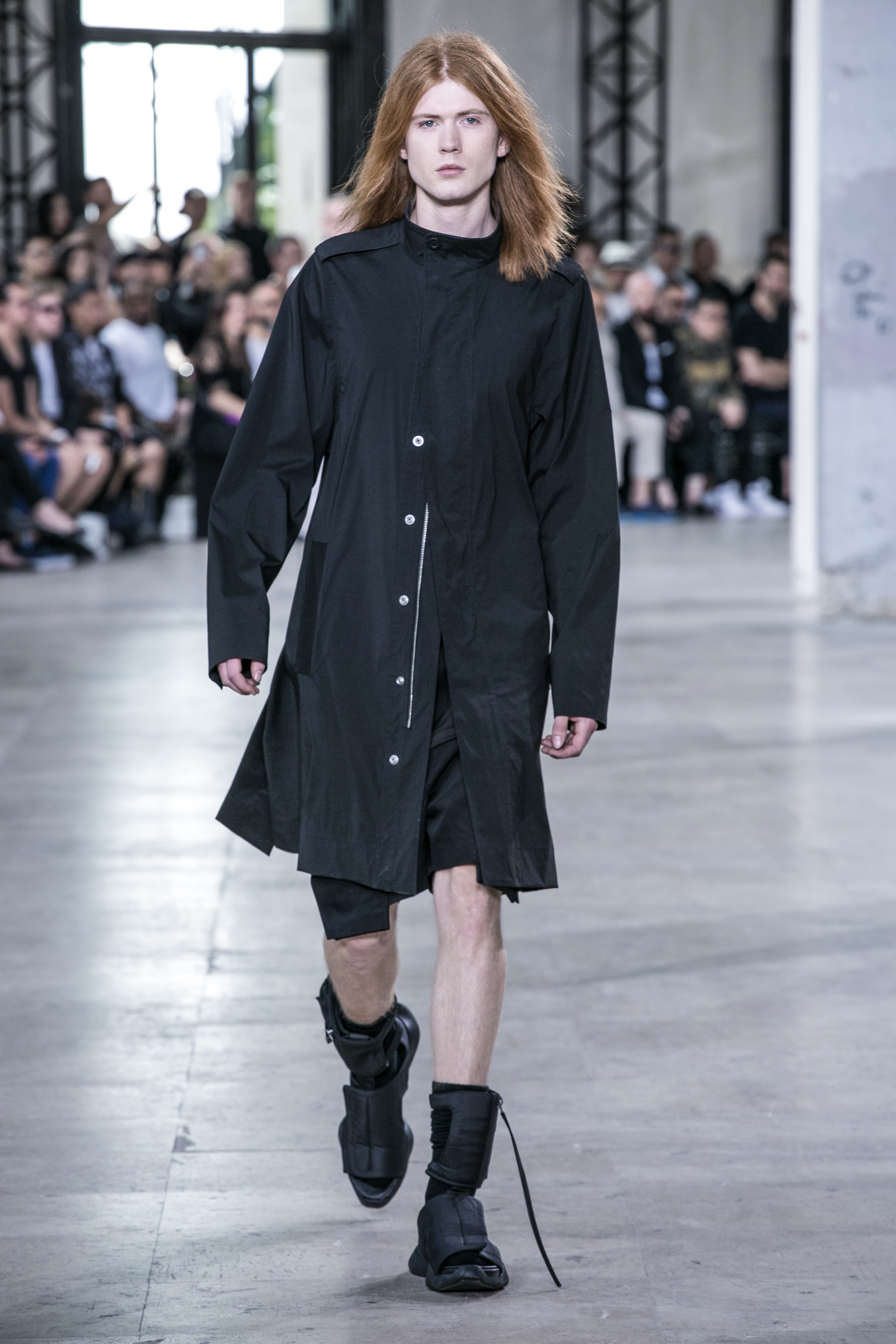
Rick Owens Fashion Show Menswear Collection Spring Summer 2016 in Paris
Photo by Valerio Mezzanotti
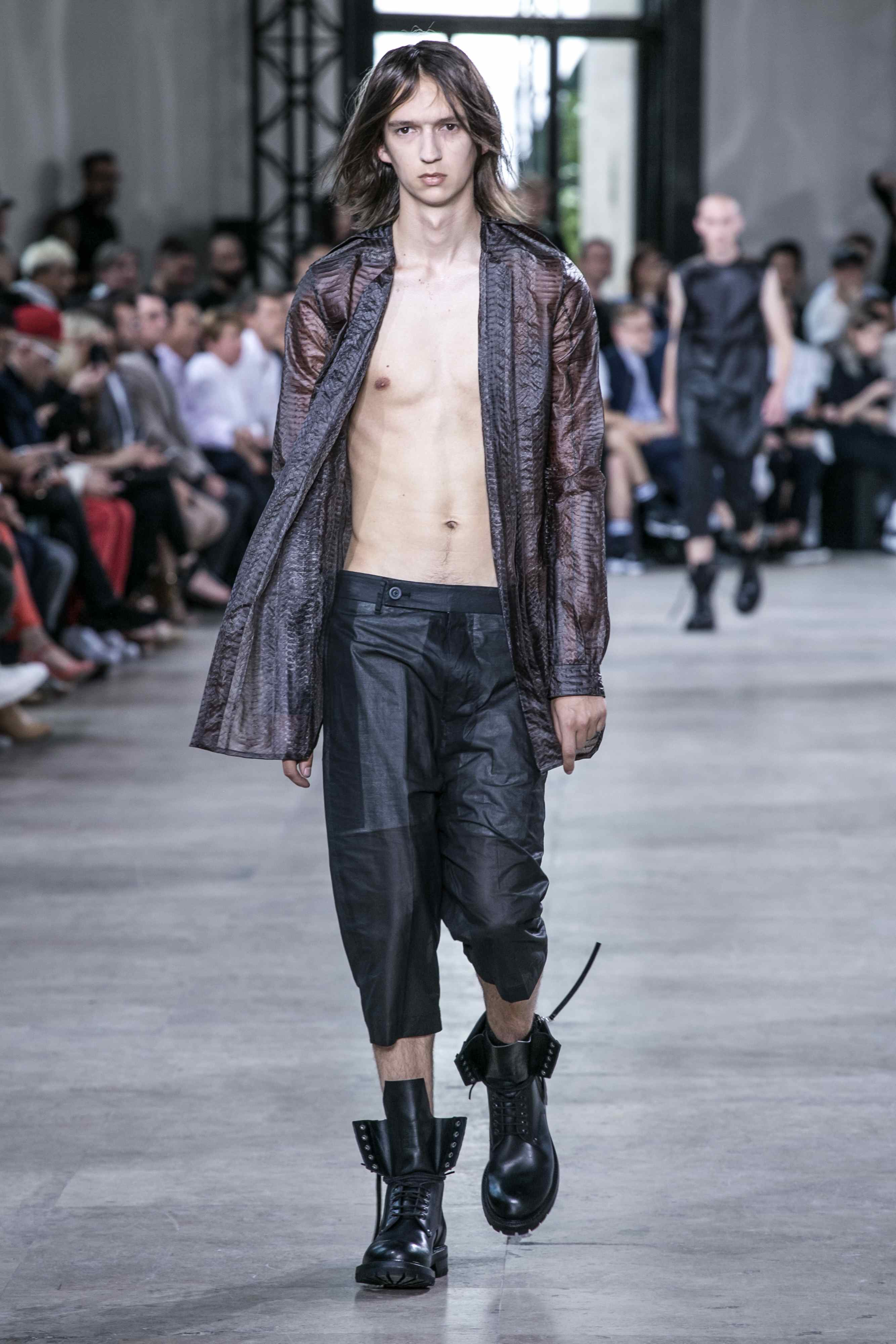
Rick Owens Fashion Show Menswear Collection Spring Summer 2016 in Paris
Photo by Valerio Mezzanotti
Cette publication est également disponible en :

