
The HardWear collection, born from a 1962 design, welcomes turquoise and Akoya pearls in October 2026. The starting point is an archive necklace of lapis lazuli and pearls, worn by Bunny Mellon. Nine designs, and a setting detail worth a close look.
To introduce colour into HardWear, Nathalie Verdeille, artistic director of jewellery and high jewellery, started from a piece in the House’s collection: a lapis lazuli and pearl necklace worn by Rachel Lambert “Bunny” Mellon. The House does not date this necklace and does not name its designer. From its owner it retains an American approach to style, made of ease and discernment.
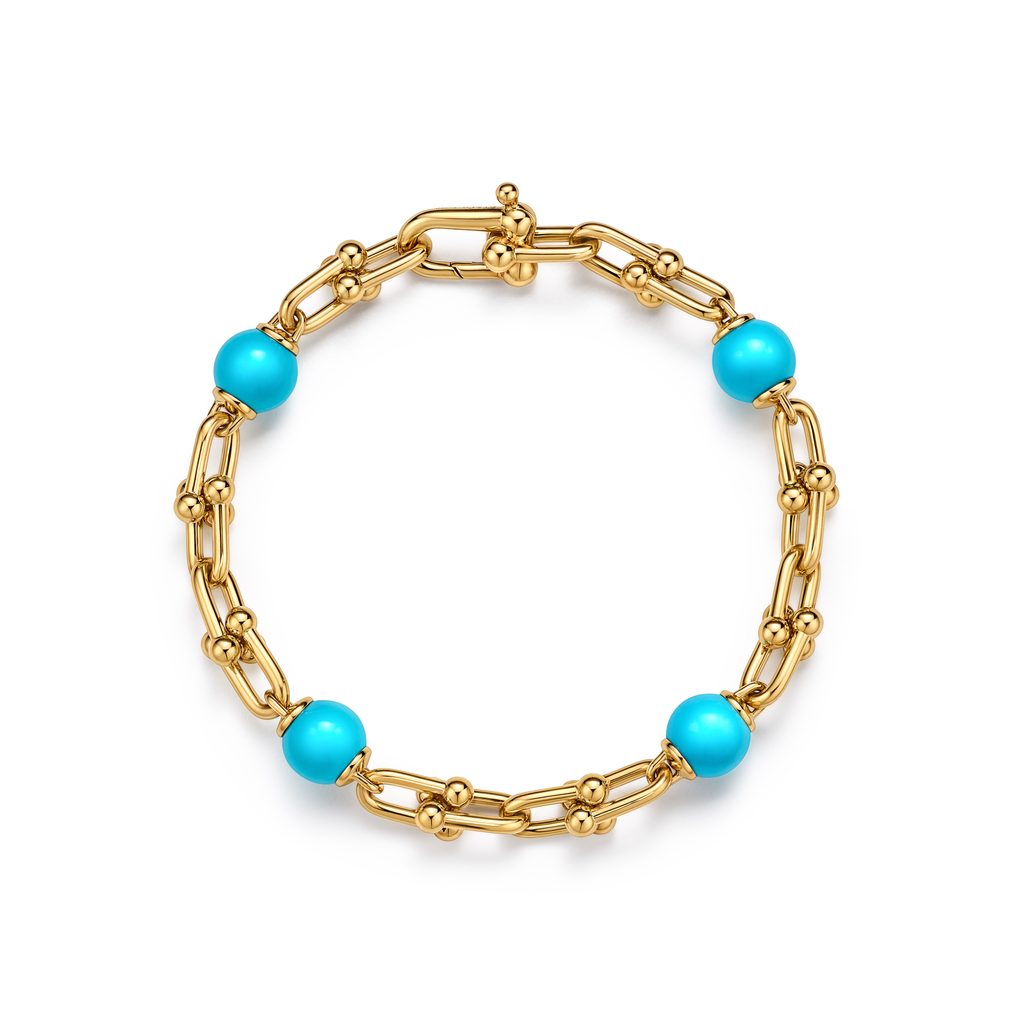
HardWear, according to the House, draws on a 1962 design and expresses the energy of New York. Its vocabulary rests on U-shaped links in 18-carat gold and round pearls. Turquoise and the Akoya pearl come to rest on this grammar of curves. Verdeille adds a second reference, that of Pop Art palettes, and of Andy Warhol in particular. In her press release, she likens the whole to pointillism: each stone is a point of colour and light, and the effect is born of movement.
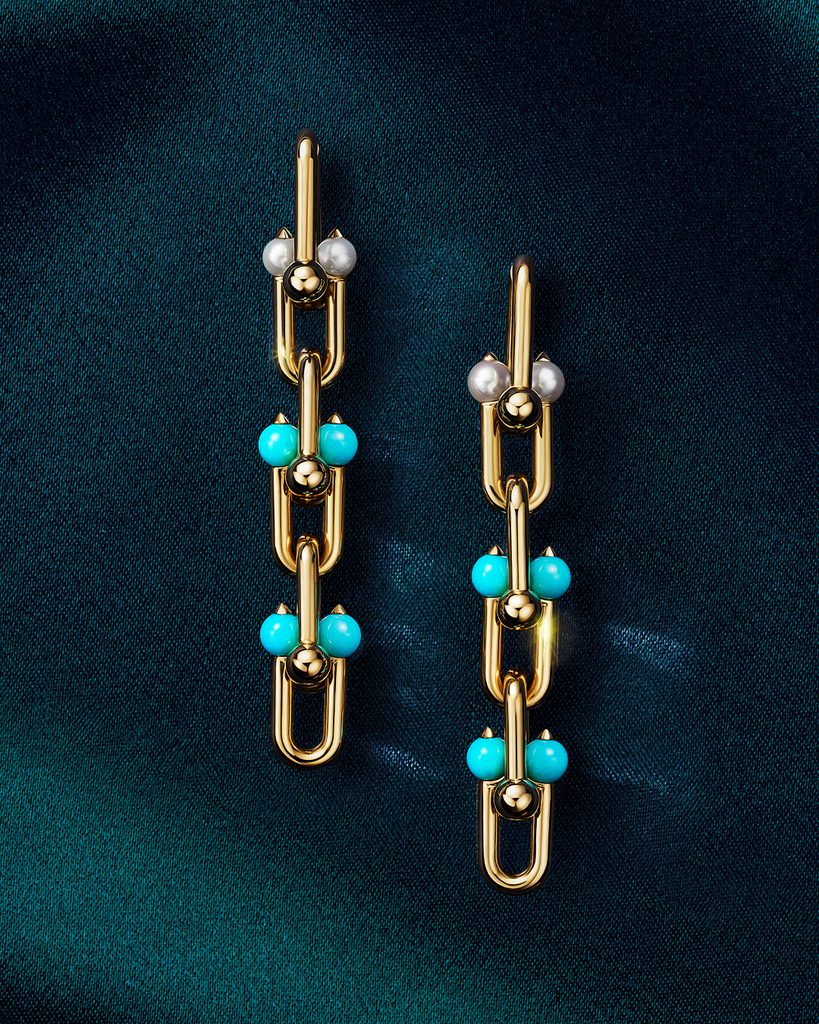
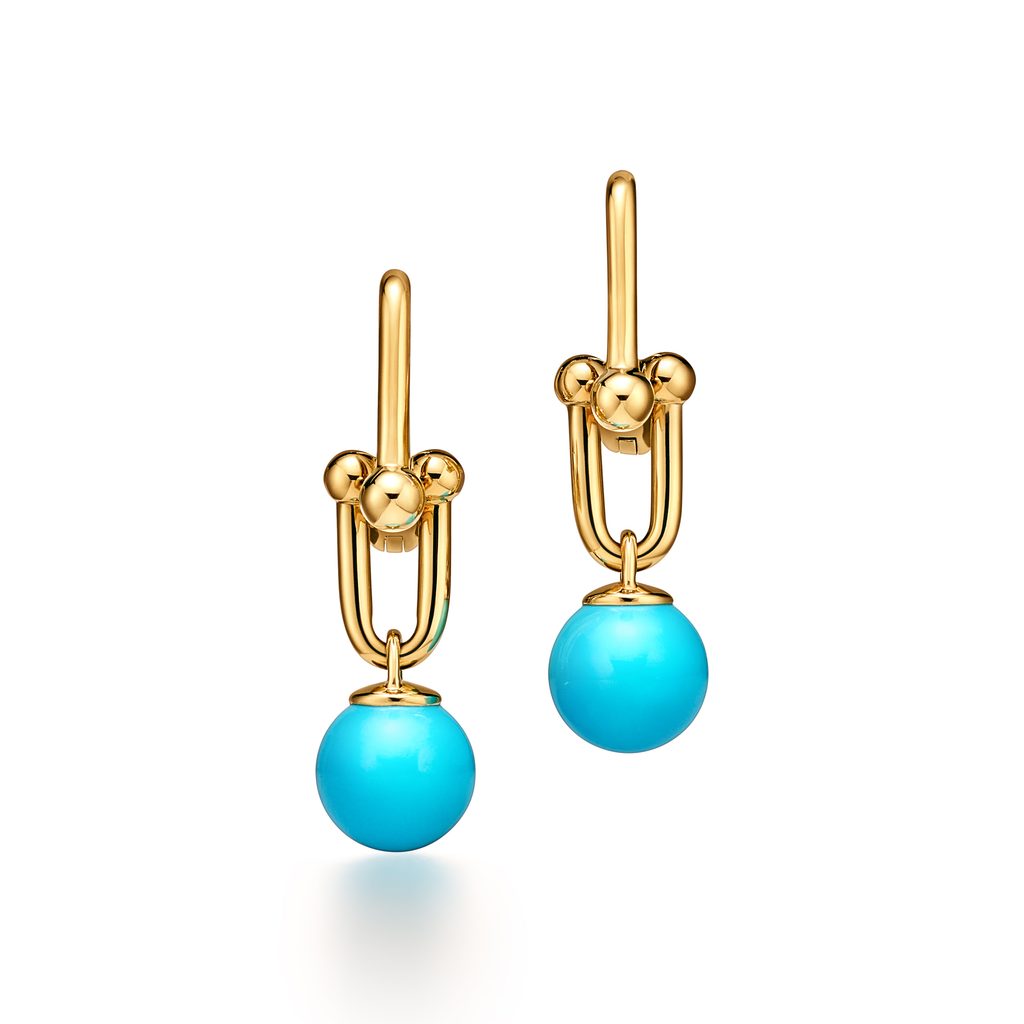
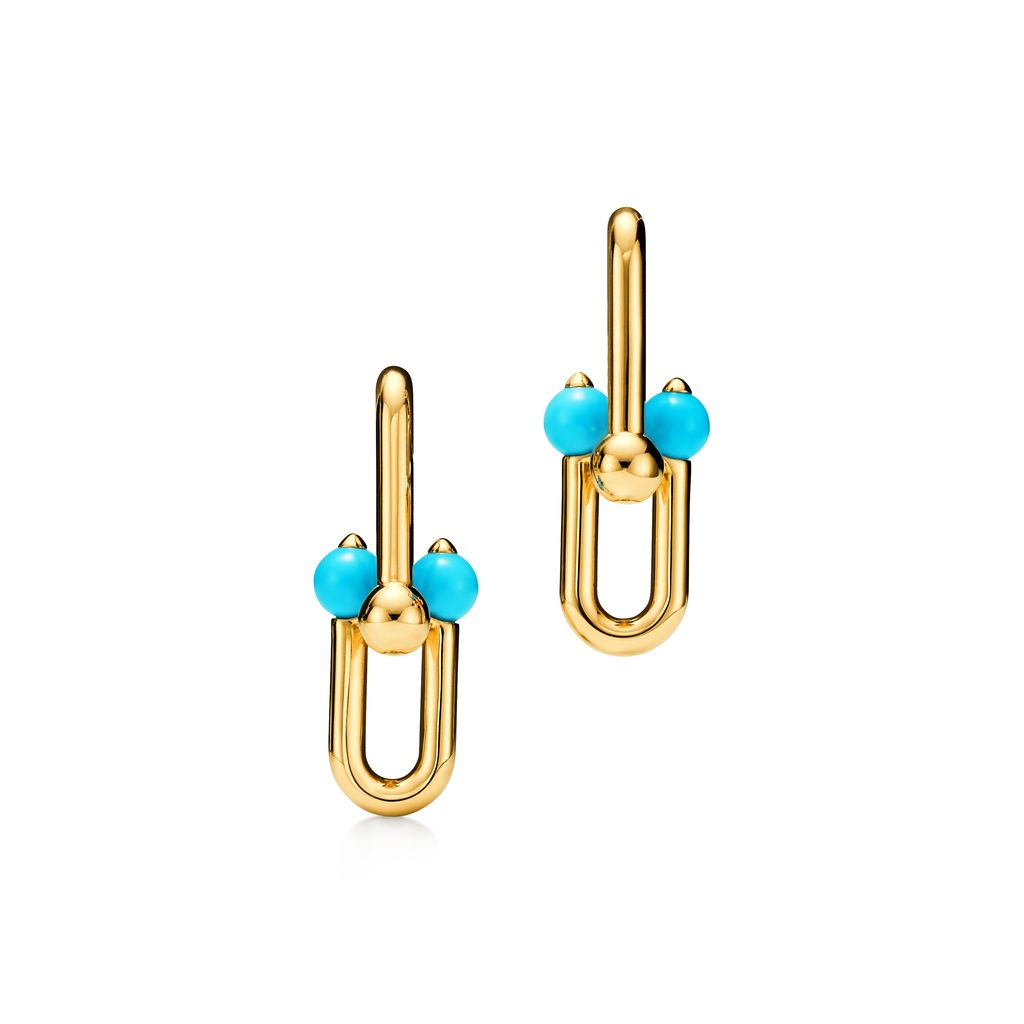
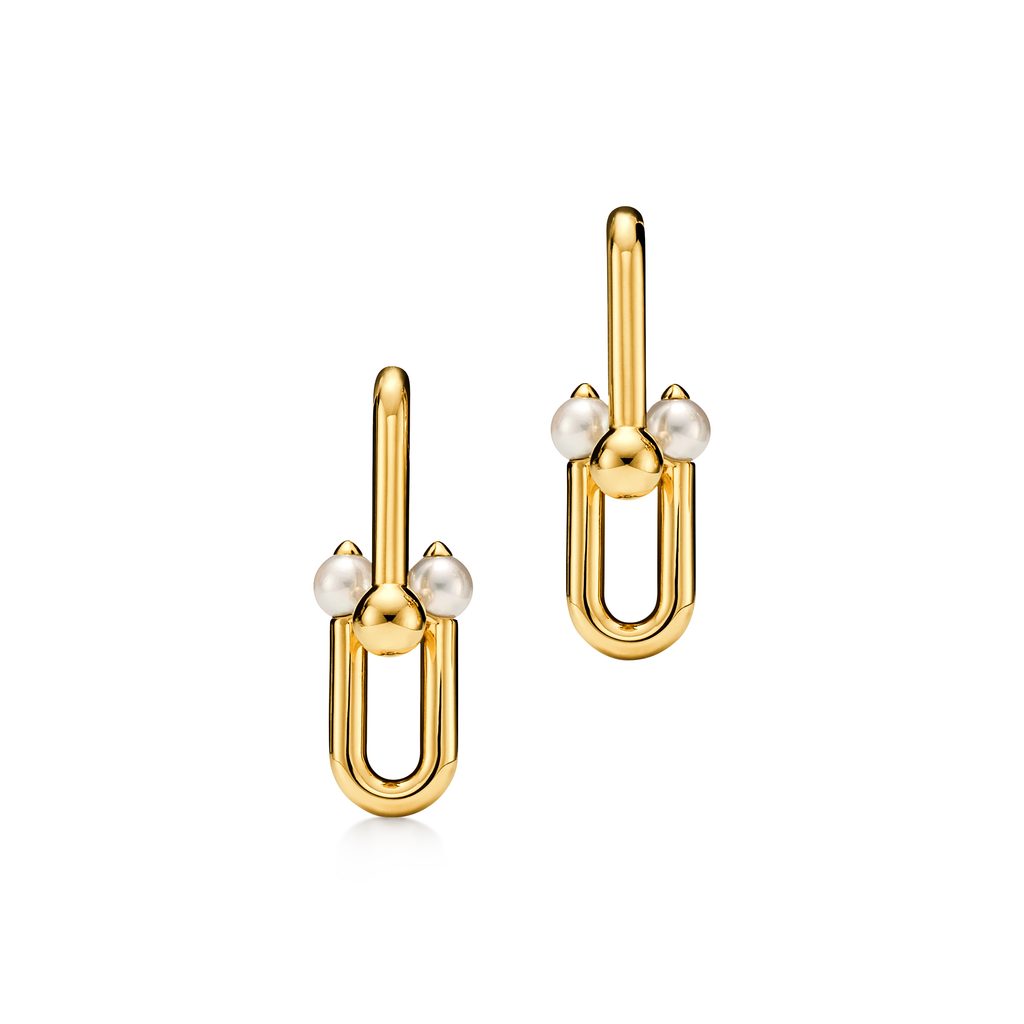
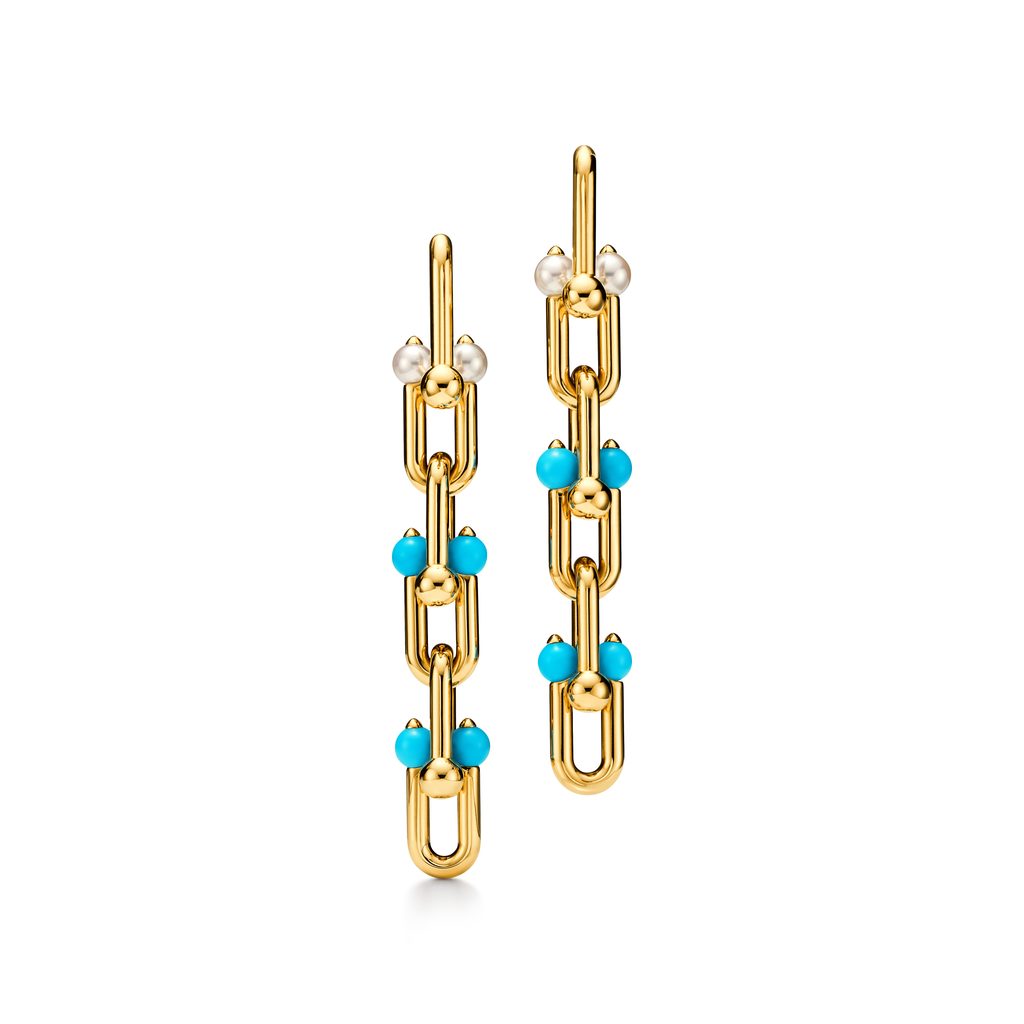
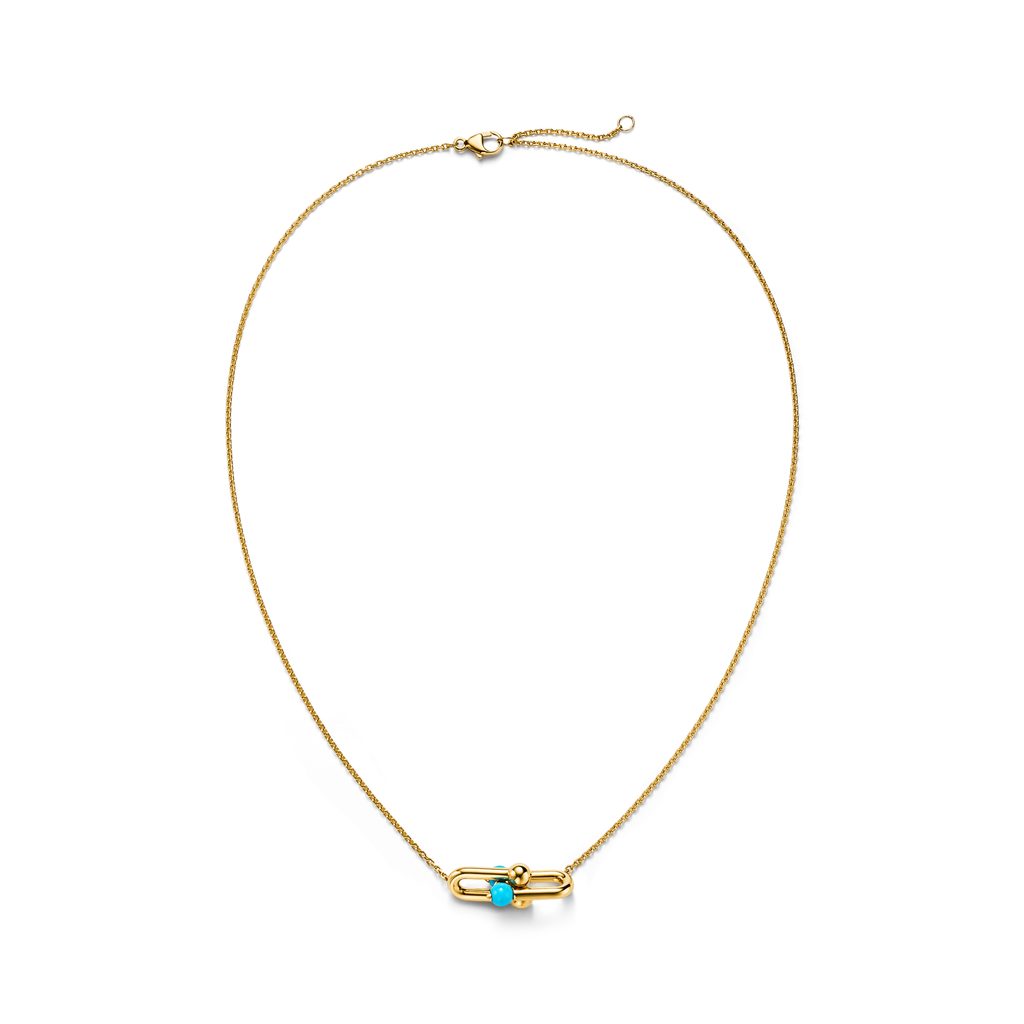
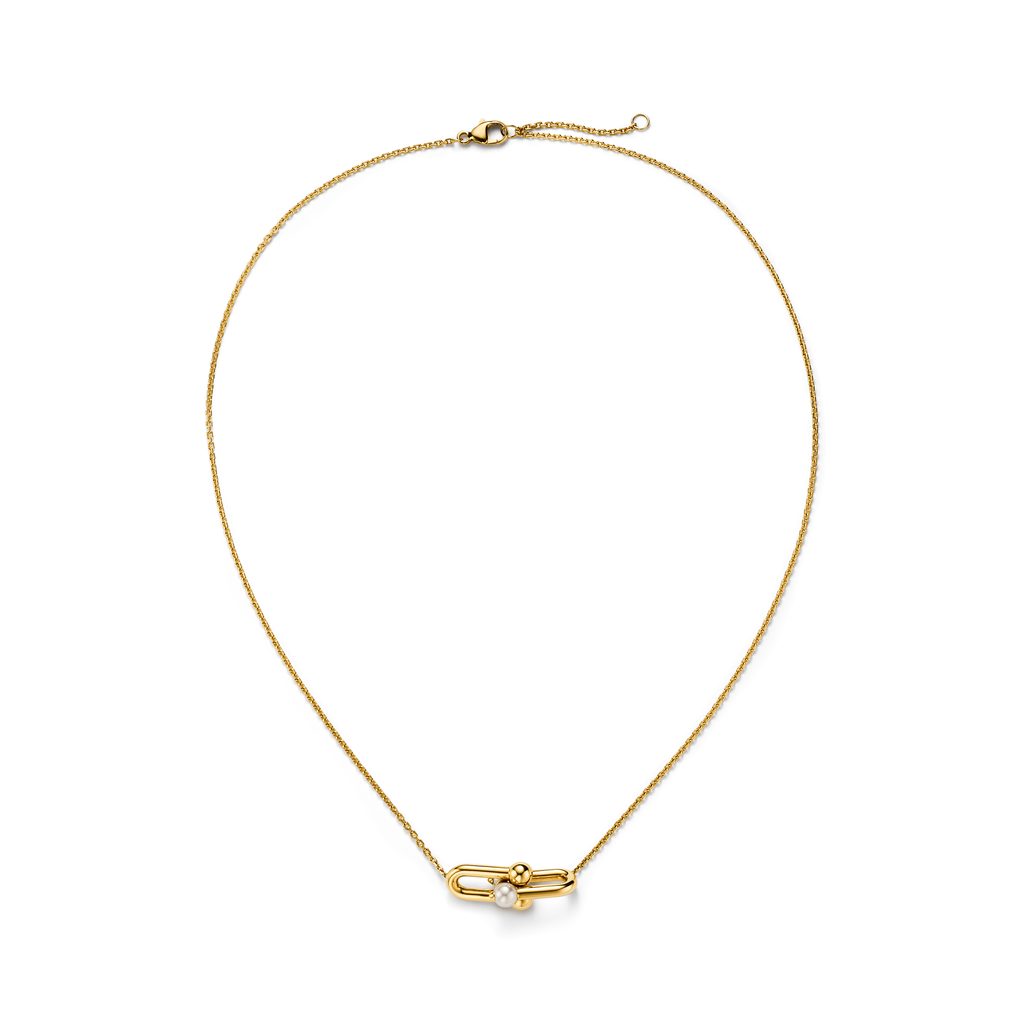
These two references pull in opposite directions, Mellon’s discretion on one side and Warhol’s flat colour on the other. The only place where they concretely meet is the setting. Each stone is held by a gold dome in the shape of a pyramid. The House explains that this pointed profile answers the rounded geometry of the pearls and U-shaped links. It is a bold choice, since edges are being placed in a design made of curves.
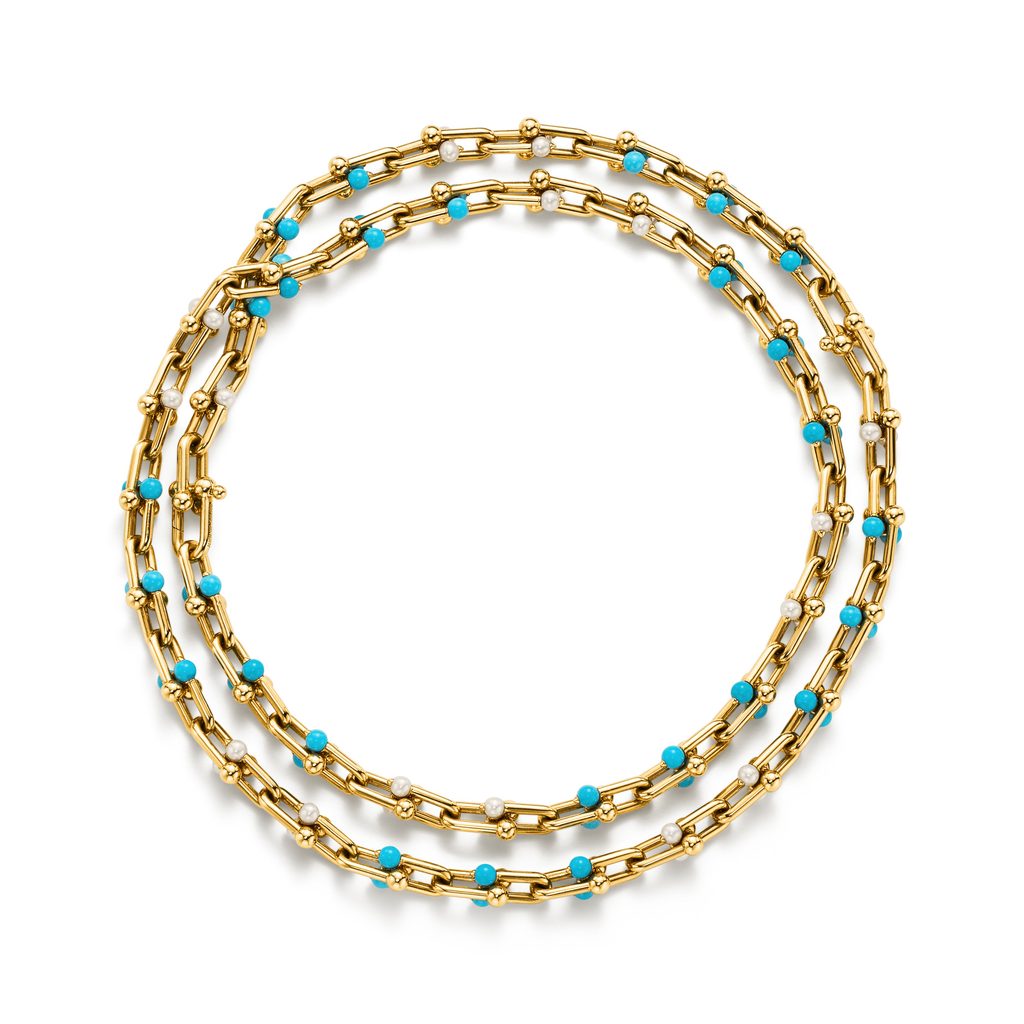
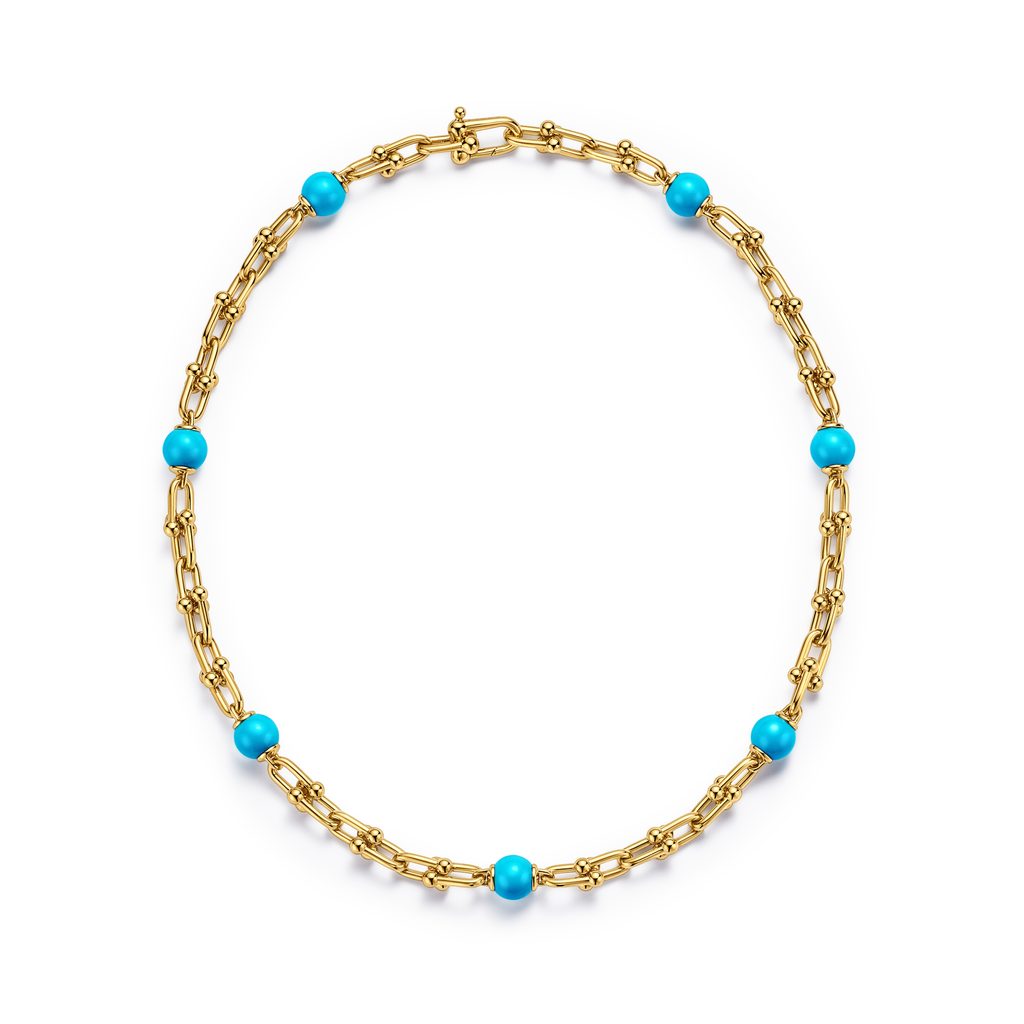
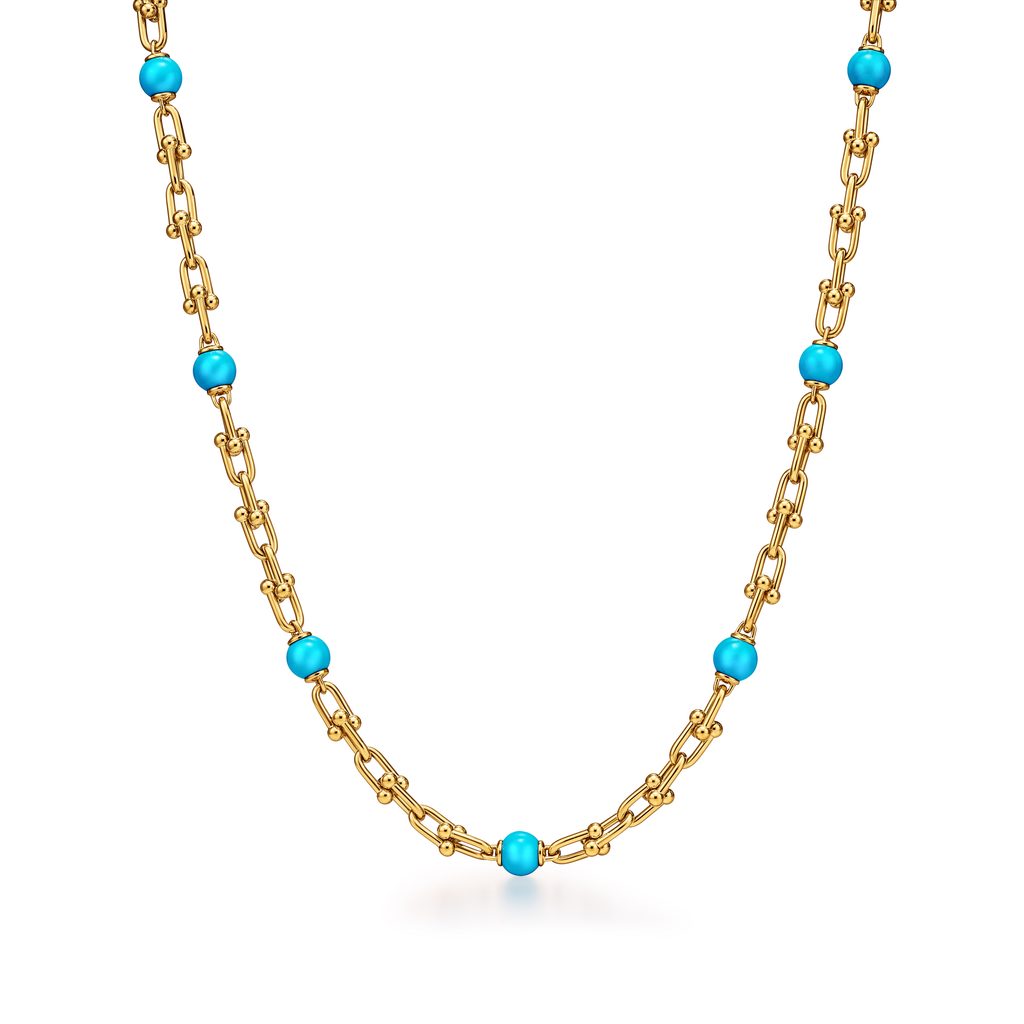
The convertible 34-inch necklace, roughly 86 centimetres, is the fullest demonstration of this. It alternates turquoise and Akoya pearls, and its two integrated clasps allow three ways of wearing it: as a sautoir, doubled, or as a shorter necklace paired with a bracelet. Matching drop earrings accompany it. Another set places larger turquoises at regular intervals, and more everyday pendants and earrings take up the same codes. The whole comprises nine designs.
As for materials, the House states that the turquoises come from the United States and Mexico and are matched one by one for colour. It specifies that the Akoya pearls come from Japan and from sustainable sourcing, without citing any certification.
A pyramidal dome must hold the stone without dulling its colour or stiffening an 86-centimetre necklace designed to move. That can only be checked on the piece, and this article rests solely on the House’s description. On paper, the palette raises no question. The setting is what will need to be seen in the boutique, where the collection is announced from October, as on Tiffany.com.
Also on Luxsure: When the laureate becomes juror: Tiffany & Co. and the question of creative transmission · Tiffany & Co. chooses Natalie Portman to embody a new era of emotional luxury · Tiffany & Co.: the mechanical garden of Blue Book 2026 · Tiffany & Co. turns Mother’s Day into a story of transmission
Cette publication est également disponible en :


