
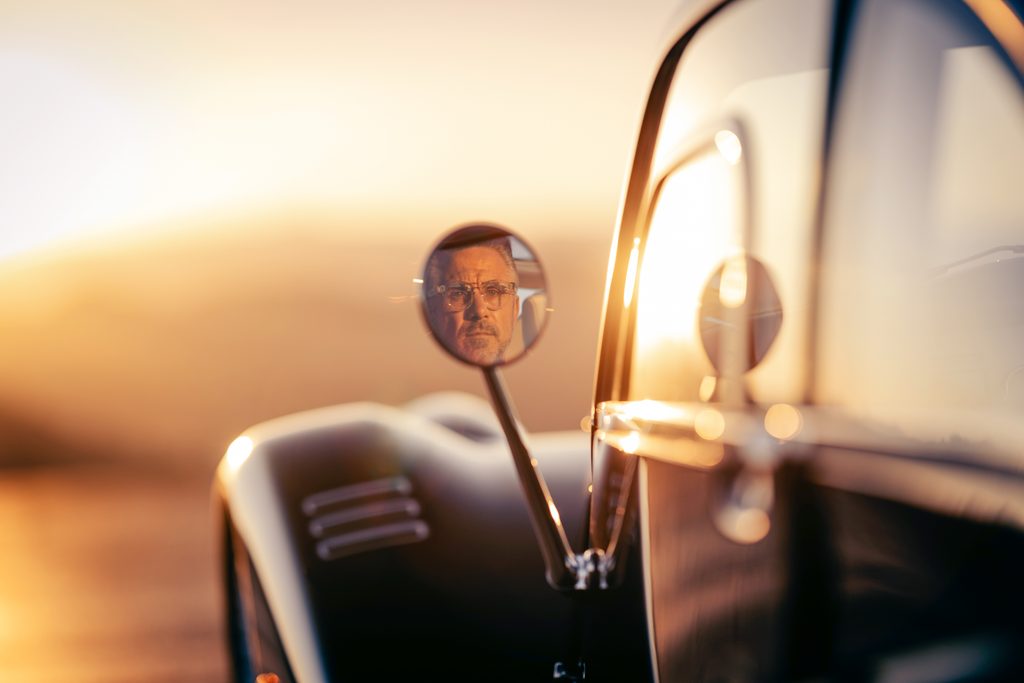
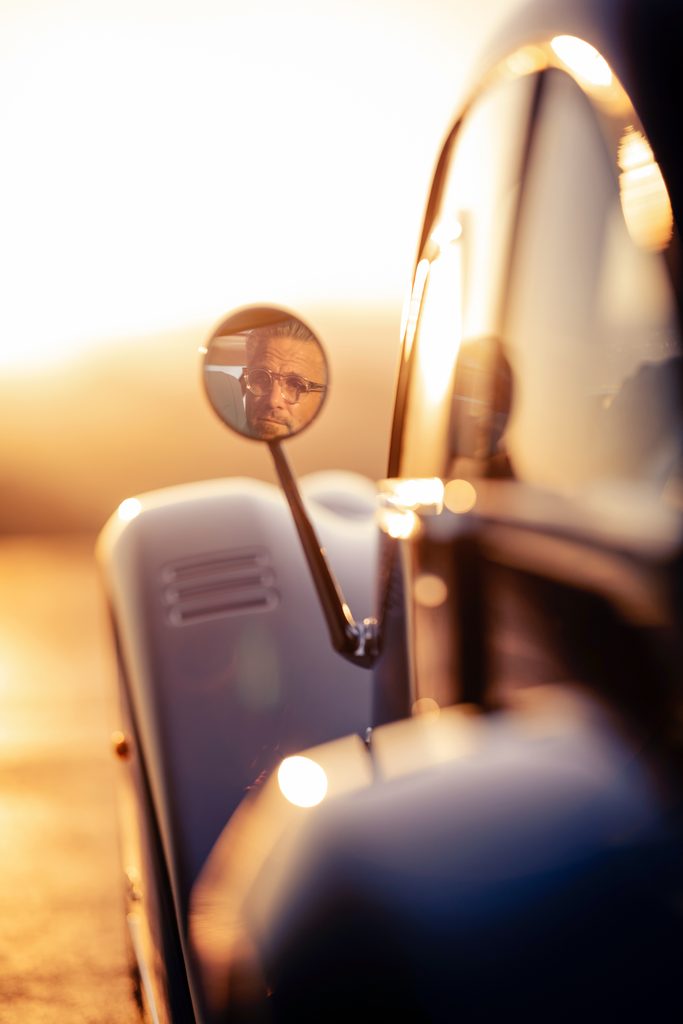
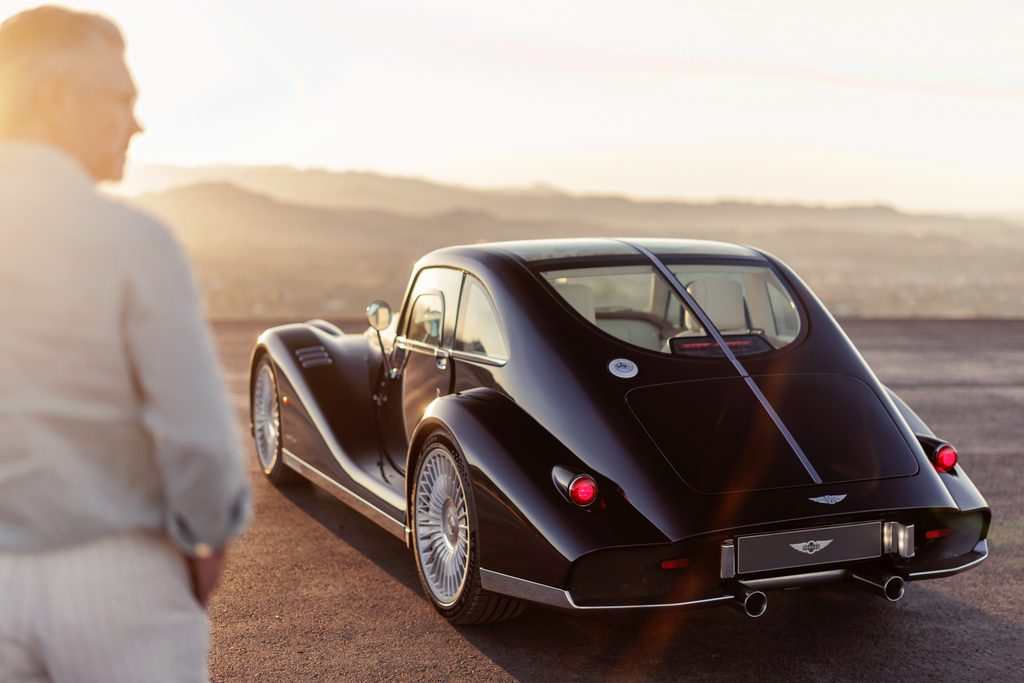
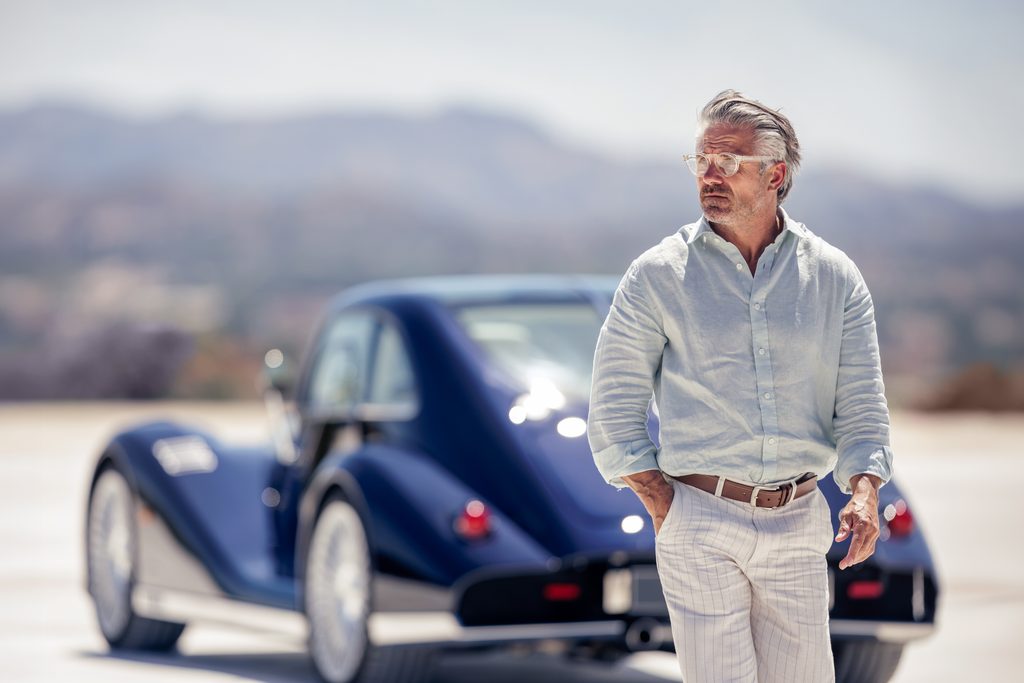
On 24 June, in Malvern, Morgan Motor Company presented the prototype of a bespoke coachwork called the Midsummer Coupé. Nine customer cars will follow, each developed case by case with its commissioner. What is notable is not the line of the coupé, but the way Morgan has brought the roof and windscreen into the strength calculation of the body — a rare choice for a coachbuilder that still shapes its panels by hand.
One more line, one more craft
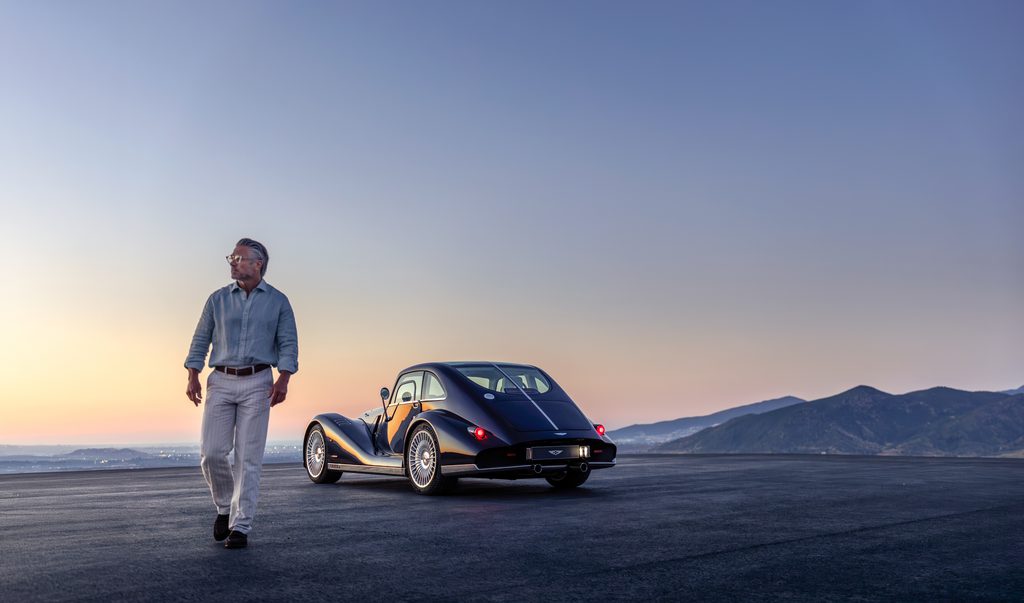
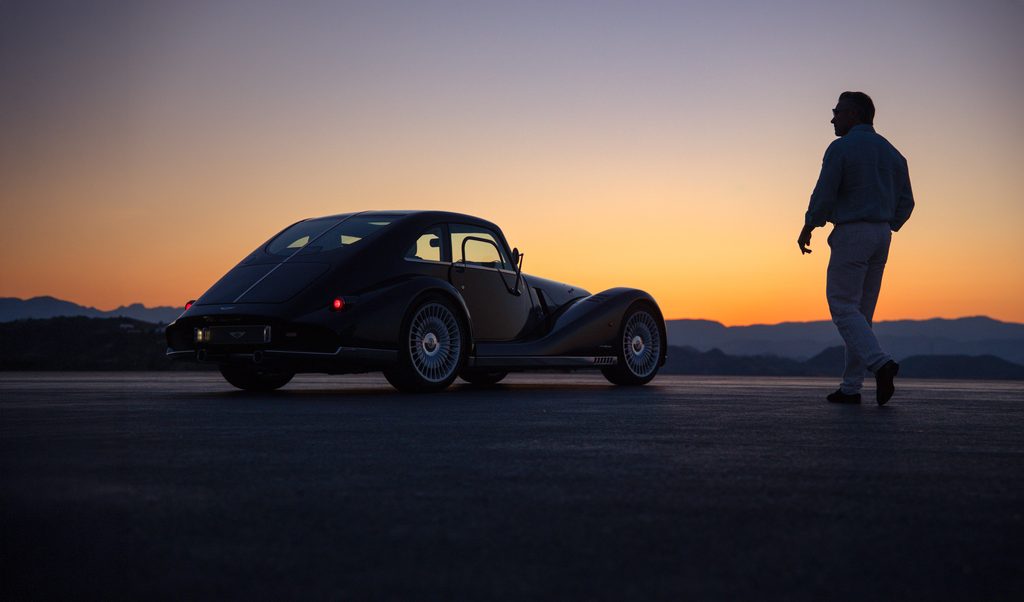
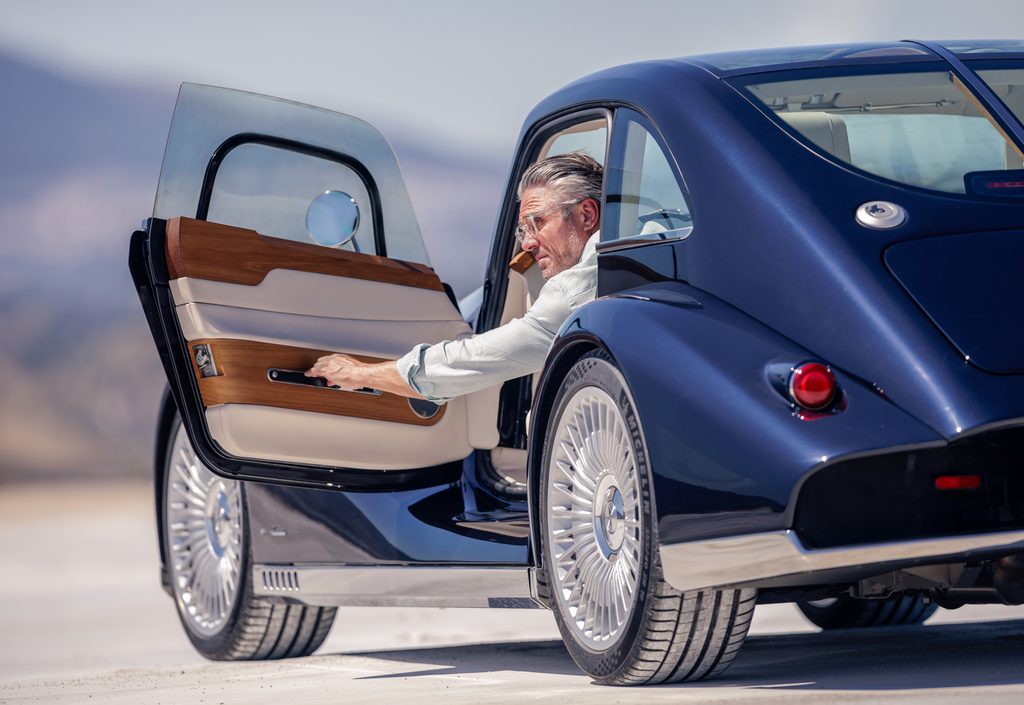
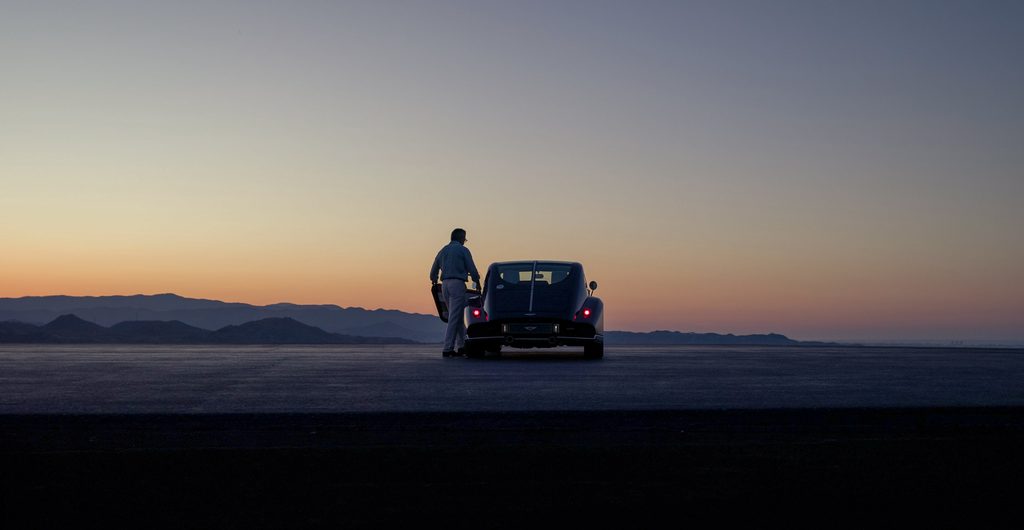
The project extends a collaboration begun with Pininfarina at the launch of the original Midsummer, an open barchetta produced in fifty examples and unveiled in May 2024. The Coupé takes up this base but adds a third line: a fixed roof, developed jointly by the teams in Malvern and those in Cambiano. The exercise was not to close the barchetta, but to redraw the proportions around this new silhouette — side glazing inspired by Italian sports cars of the 1960s, raised door pillars, handles integrated into the aluminium structure.
The windscreen that works
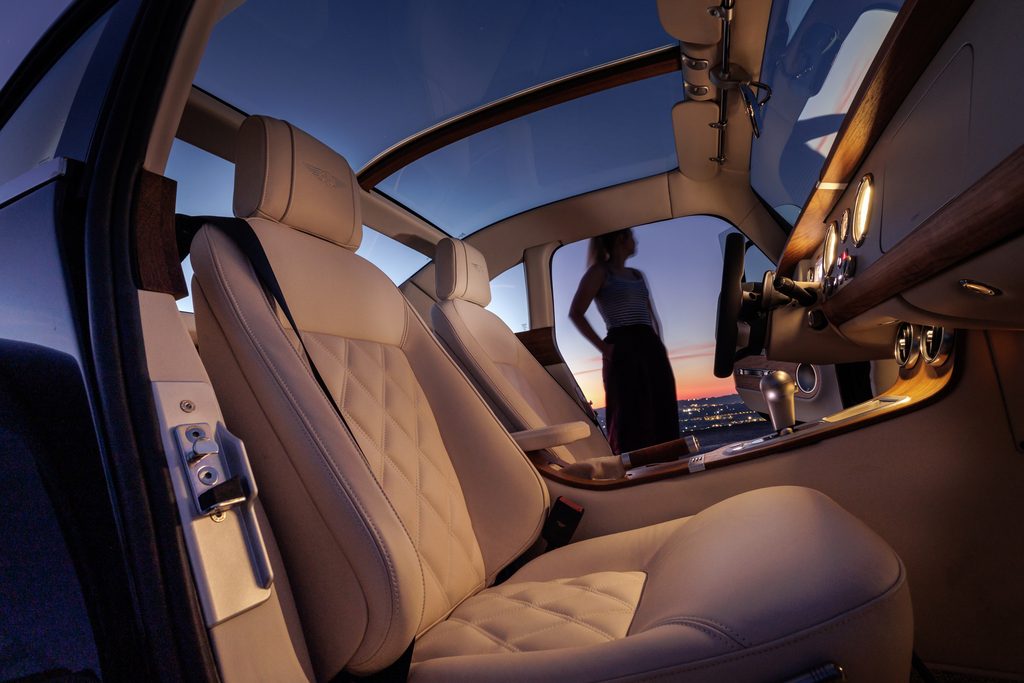
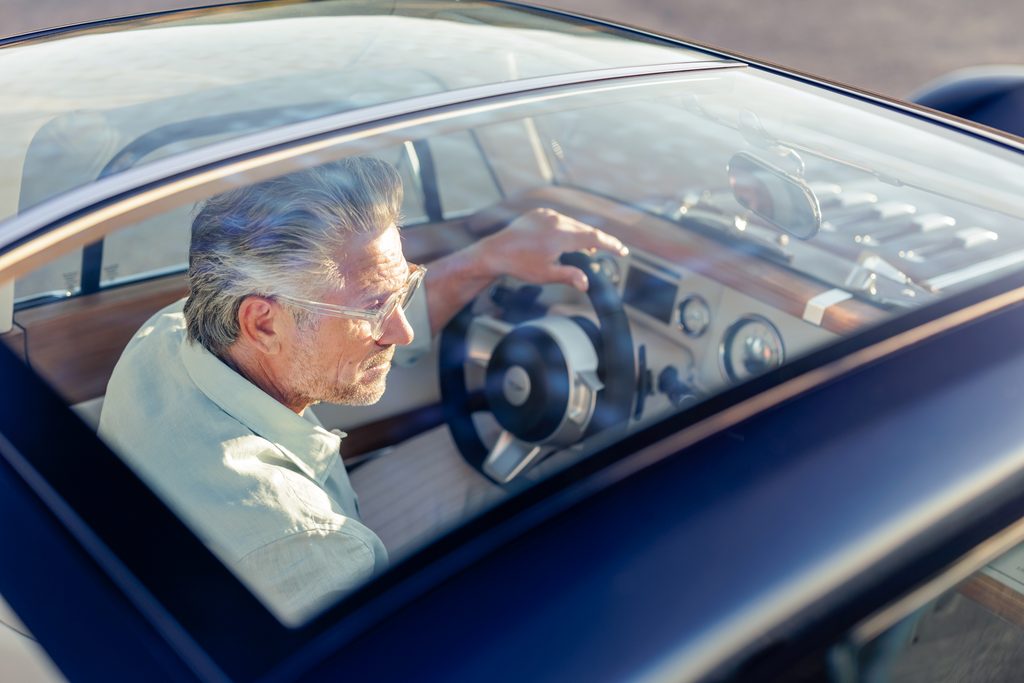
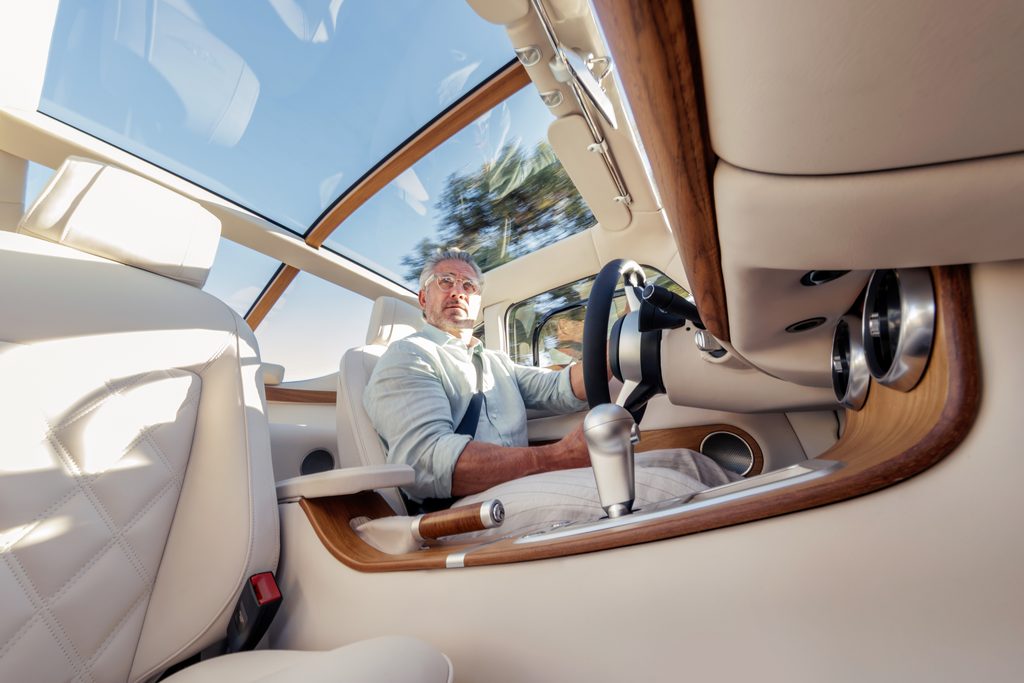
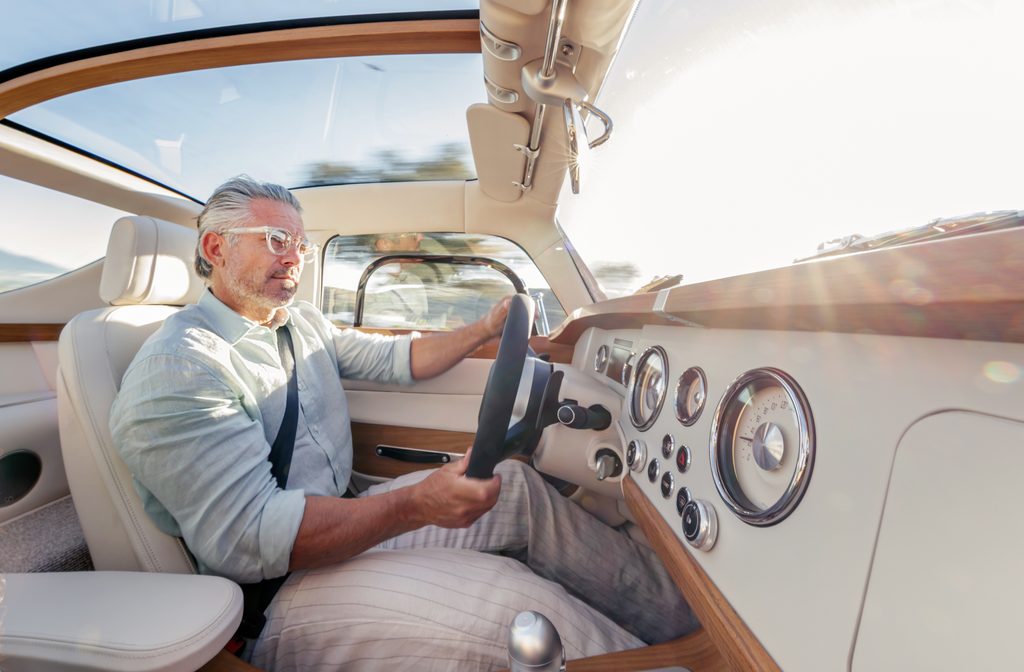
What sets the Midsummer Coupé apart from other Morgan sports cars comes down to one precise technical detail. On the other models in the range, the glazed surfaces are held by a rubber seal. Here, the windscreen is bonded directly to the aluminium structure of the body, as is the fixed glass roof. This bonding allows the glazing to contribute to the rigidity of the whole and reduces by around fifty per cent the maximum stresses recorded in certain key areas of the structure. The result: despite the addition of a roof and an entirely closed architecture, the Midsummer Coupé weighs only 2.5% more than a Supersport fitted with its removable hard-top. The body rests on Morgan’s bonded-aluminium CXV platform, compatible with the BMW B58 “O1” engine already fitted to the Supersport 400.
English wheels and a counted budget of material
The aluminium skin is not an aesthetic covering laid over a load-bearing chassis: it contributes itself to the strength of the vehicle. Each panel is shaped by hand on English wheels, a tool that allows craftsmen to form the metal without having to sand or remove material beyond what is strictly necessary — a direct requirement, since the thickness of the panel determines its load-bearing capacity. Shaping a complete body takes several hundred hours. The panels work at around 30% of the elastic limit of aluminium, a margin that lets the material fulfil its structural function without giving up the manual forming techniques that characterise bespoke coachwork at Morgan.
The assembly combines TIG welding without filler metal and solid aluminium rivets set by double countersinking — a technique inherited from pre-war aircraft construction, reused here with the precision a load-bearing body demands. Each Midsummer Coupé shell is mounted on a laser-controlled precision table, guaranteeing a tolerance of 0.3 millimetres over the whole length of the vehicle; the digital scan serves as a reference, but the final fitting remains the judgement of the craftsmen, with jigs and reference forms to hand.
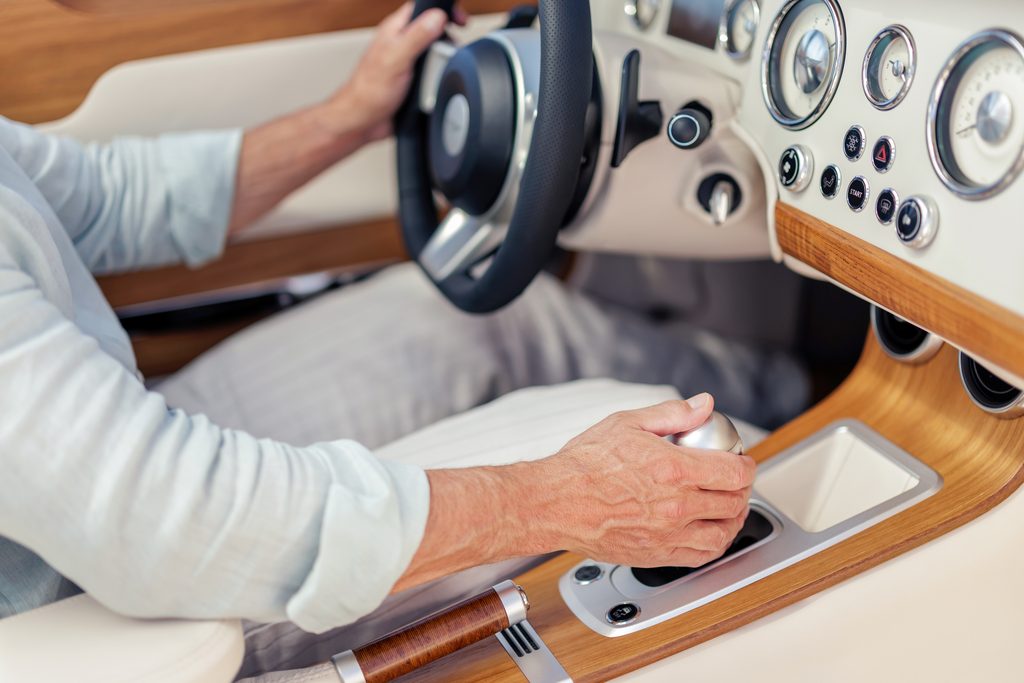
Wood is not confined to the cabin. Laminated wheel arches and machined ash contribute to the load-bearing function of the structure, alongside the aluminium and bonded glass — a choice that also has an acoustic effect, since the damping properties of wood reduce panel resonances. Inside, hand-made laminated wood panels, made up of veneers of around 0.6 millimetres each, are fitted individually to each vehicle. Teak equips the launch car, echoing the original Midsummer barchetta; later cars may explore other species. The nineteen-inch forged aluminium wheels complete the whole: Morgan presents them as the most elaborate wheel design ever conceived by the Manufacture, the prototype combining a chrome centre with a contrast-painted rim.
“The Midsummer Coupé represents the culmination of a creative adventure. What began as a celebration of bespoke coachbuilding, artisanal know-how and collaboration has become one of the most ambitious and rewarding projects we have ever undertaken. Working alongside the Pininfarina teams, in collaboration with our own designers and engineers, has been both a privilege and an extremely enriching experience,” explains Jonathan Wells, Chief Design Officer of Morgan Motor Company. “Each of the nine Midsummer Coupés will be born of a close creative partnership between our designers, our engineers and our craftsmen, giving rise to nine entirely individual interpretations of a single vision.”
Nine commissions, one site
What strikes is less the object than its method of production: nine vehicles, nine distinct dialogues between Morgan and its customer, each resulting in its own combination of colours, leathers and wood species. The prototype, referred to internally as the “Artist’s Proof”, will not be sold: it will join the Louwman Collection in The Hague, one of the great historic car collections, before the first of the nine customer cars takes shape in the workshops of Pickersleigh Road.
The project is part of Morgan’s Special Projects programme, the channel through which the Manufacture develops its most personalised commissions and tests techniques that may later feed into its series range — today made up of the Super 3, the Plus Four and the Supersport. Morgan is still made in one place in the world, at Malvern Link in Worcestershire, with more than 90% British components, over half of them from the Midlands. More than 80% of production, however, is exported, through a network of more than sixty distributors.
“Midsummer Coupé was born of a conversation. A customer came to us with an idea and, rather than asking us how far we could meet that brief, we asked ourselves how far we could push the concept,” reports Matthew Hole, Managing Director of Morgan Motor Company. “Only nine customers will own a Midsummer Coupé, but the impact of this project goes well beyond these commissions and the experiences they provide. Every challenge met, every technique developed and every lesson learned strengthens Morgan’s ability to bring distinctive sports cars to life.”
The technical wager of the Midsummer Coupé — having the glazing carry load rather than endure it — only makes sense when set against the scale of the project: nine cars, several hundred hours of shaping each, a single production site. At this format, profitability comes not from volume but from transmission: every bonded panel, every countersunk rivet also trains the generation of craftsmen who will shape, in ten years’ time, the next bespoke bodies.

Detail
The windscreen and glass roof of the Midsummer Coupé are bonded — rather than fitted on a rubber seal like the rest of the Morgan range — to the aluminium structure of the body. This bonding reduces by around 50% the maximum stresses recorded in certain key areas of the chassis. Each shell is assembled on a laser-controlled precision table guaranteeing a tolerance of 0.3 mm over the whole length of the vehicle, and the hand-shaped aluminium panels work at around 30% of the material’s elastic limit.
Cette publication est également disponible en :


