
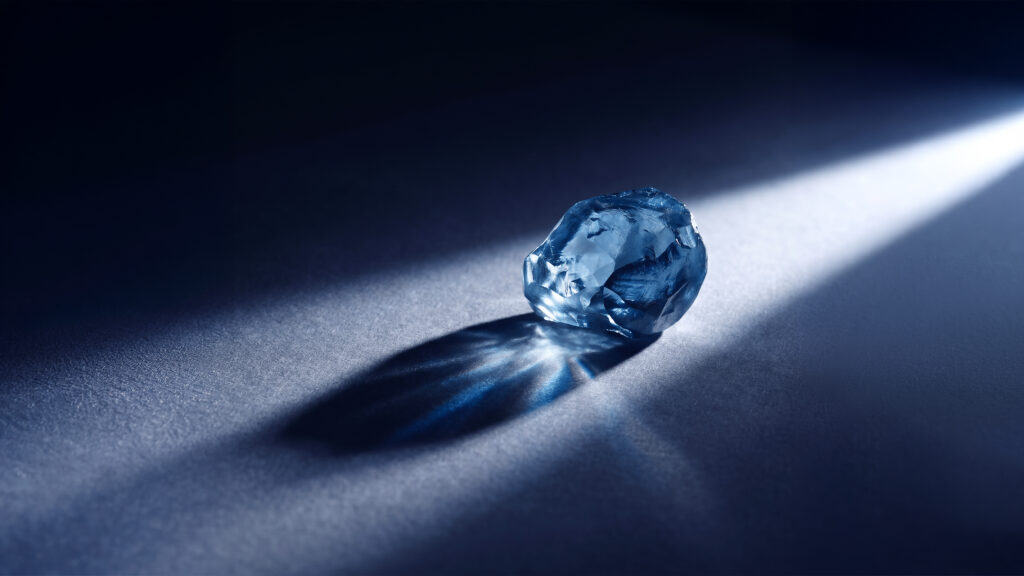
It took nearly eight years for a 41-carat rough stone to become a piece of jewelry. In the meantime, Valérie Messika traveled through Botswana—its deserts and deltas—to create “Terres de Contrastes,” a High Jewelry collection that treats geology as a raw material that is as much narrative as it is mineral.
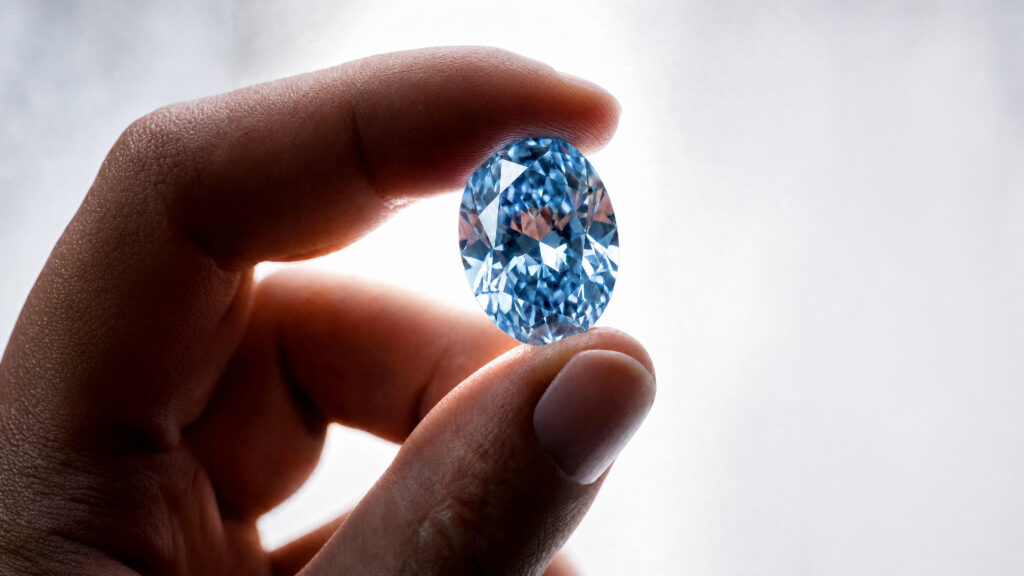
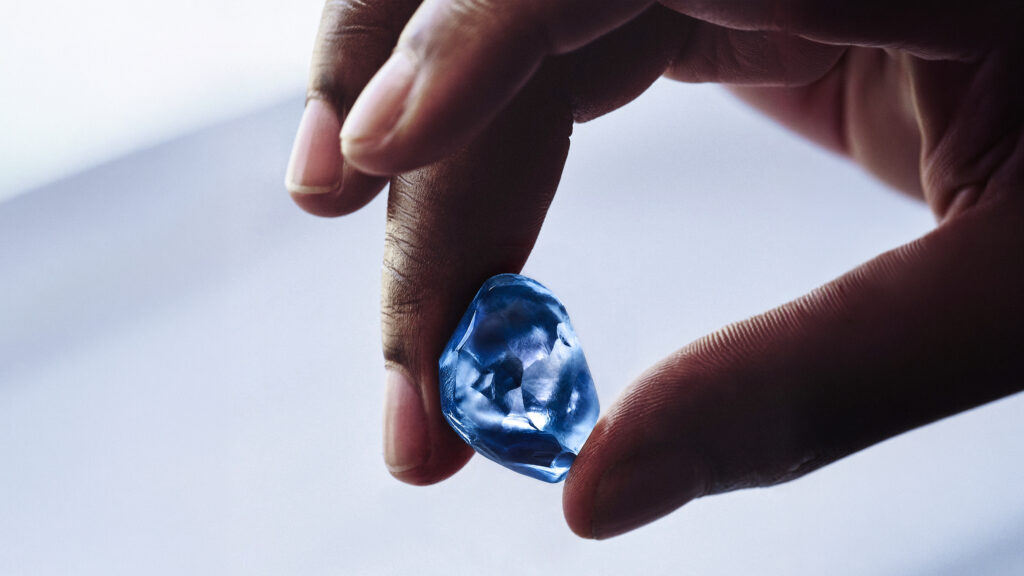
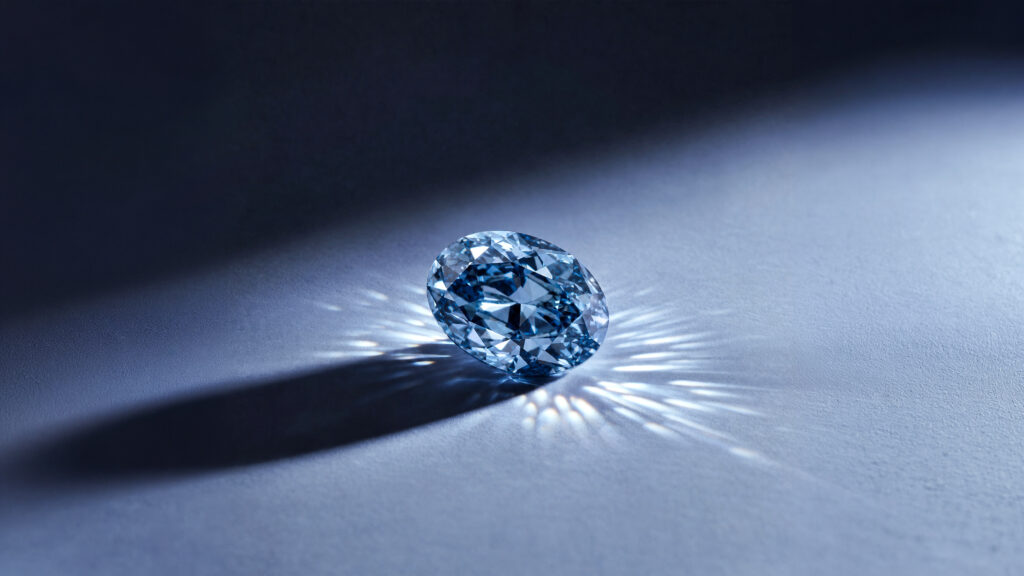
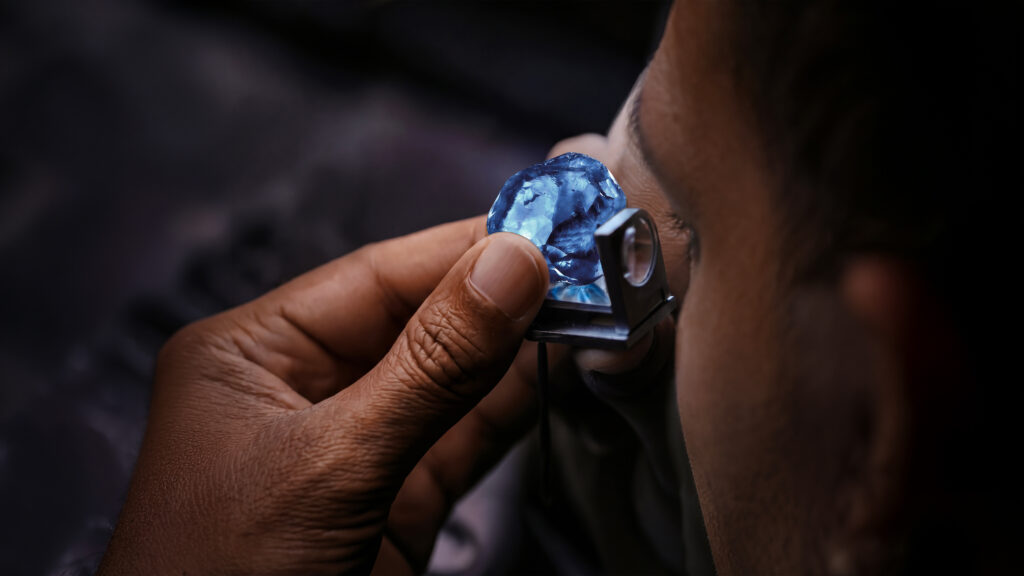
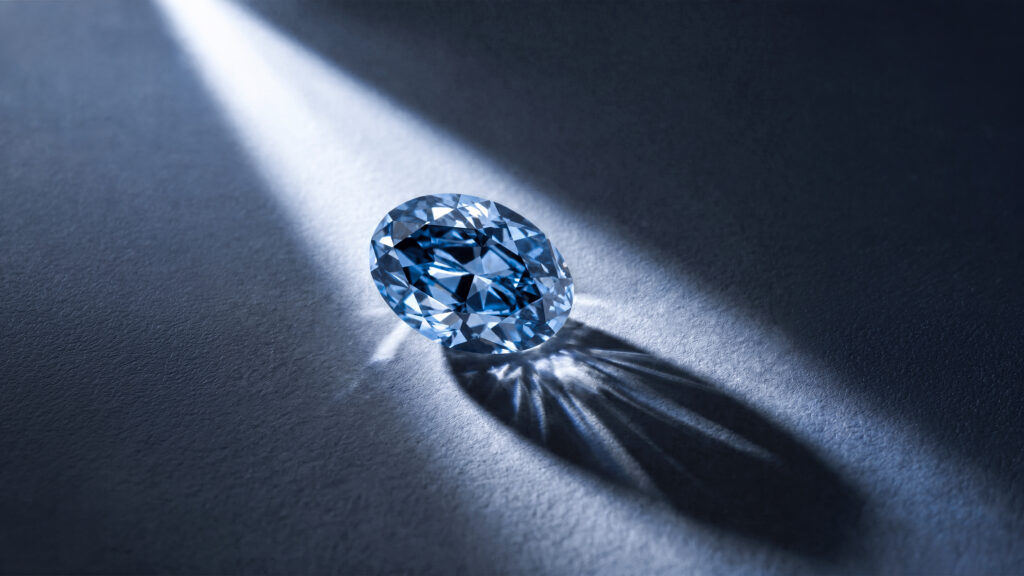
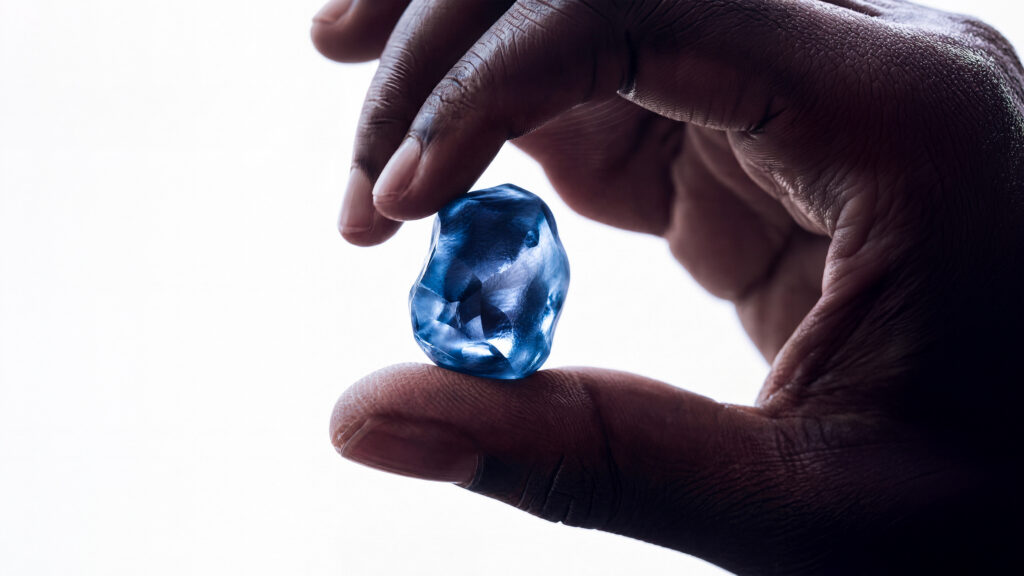
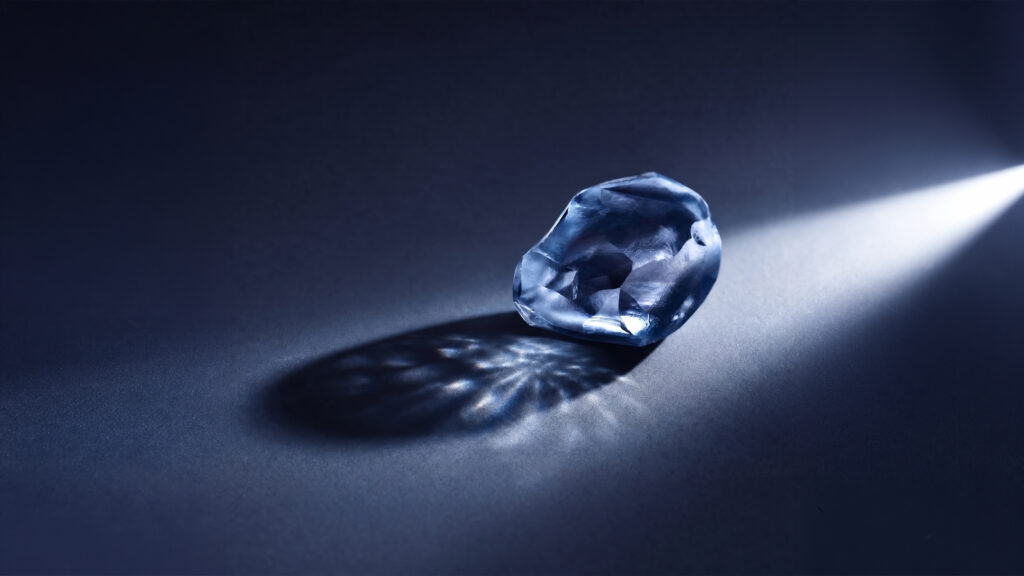
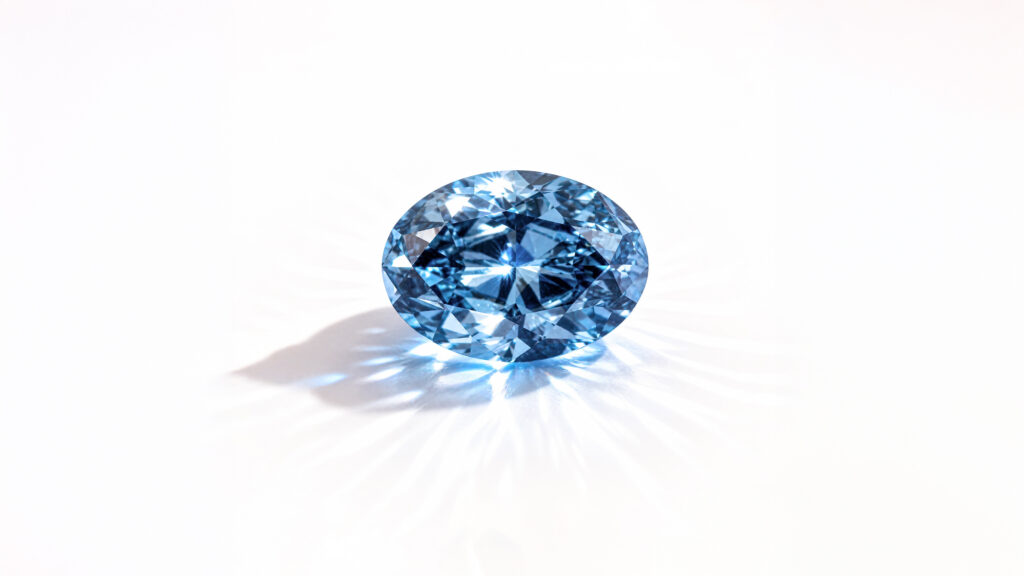
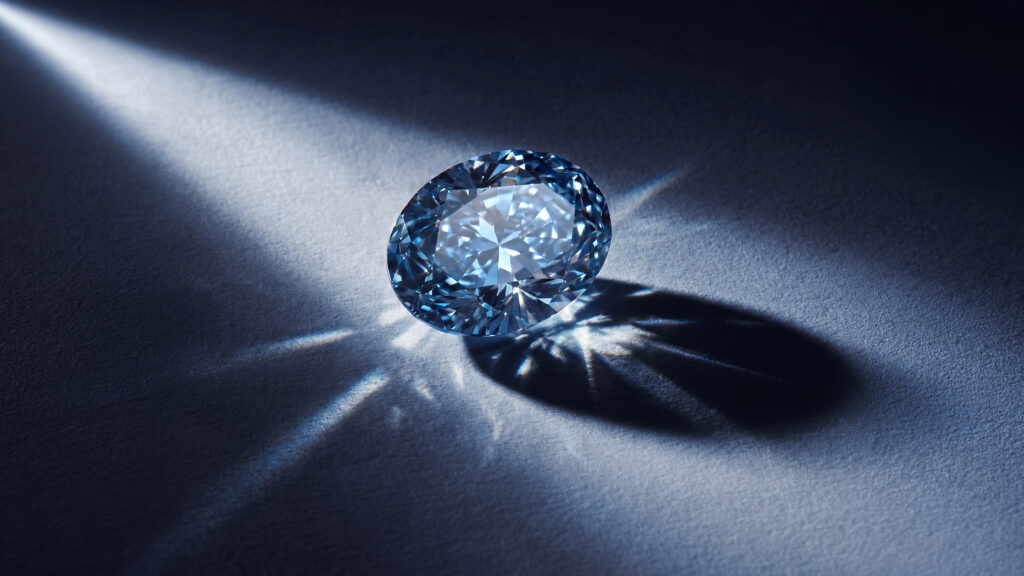
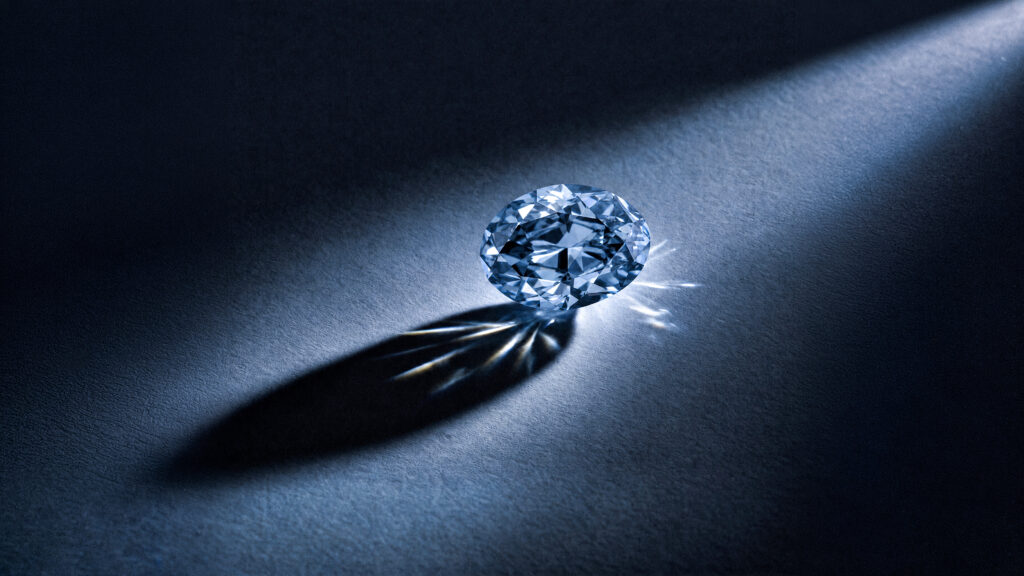
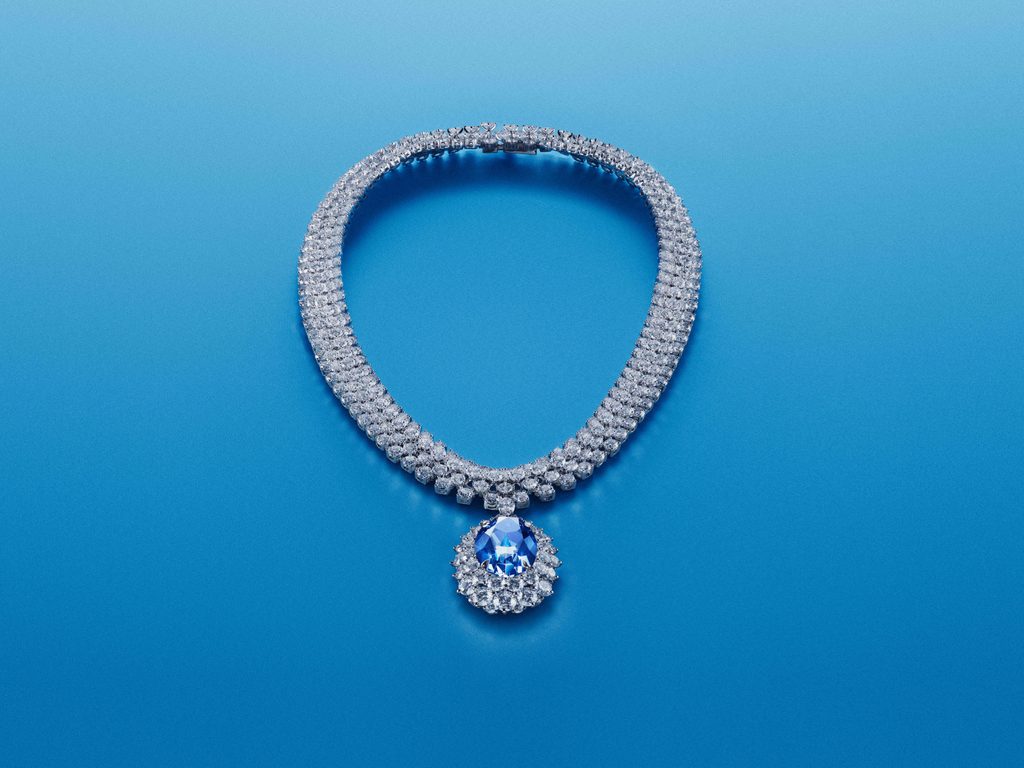
It all began in 2018, deep within the Orapa mine, one of Botswana’s richest diamond deposits. A 41.11-carat rough diamond was extracted there, its blue so intense that it took years of study before a gem cutter dared to work on it. The result—a 20.46-carat cut diamond with a “fancy deep blue” color and VVS1 clarity—became the largest and rarest blue diamond ever recorded in Botswana, and the eighth-largest blue diamond ever discovered in the world. Valérie Messika, founder and artistic director of the house, makes it the beating heart of “Terres de Contrastes,” her new High Jewelry collection.
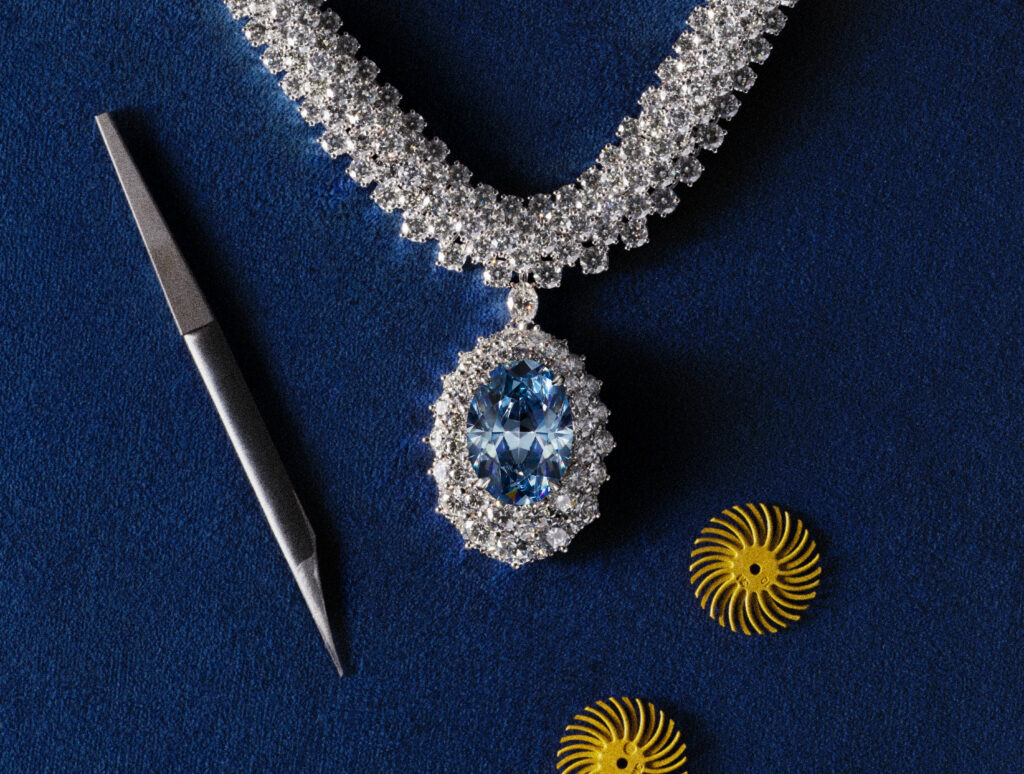
Named “Austral Blue” by the house, the stone owes its unique hue to a subtle gray undertone that softens its deep blue, as if Botswana itself had left a mineral imprint on its own treasure. To set it, Valérie Messika designed a contemporary “rivière” setting composed of five hundred white diamonds, arranged to make the central stone float above the wrist or neck, in a state of near-total weightlessness. This technical feat is no accident: it embodies, in the language of jewelry, a tension that the house has always cherished—that of movement captured within the most static material imaginable.
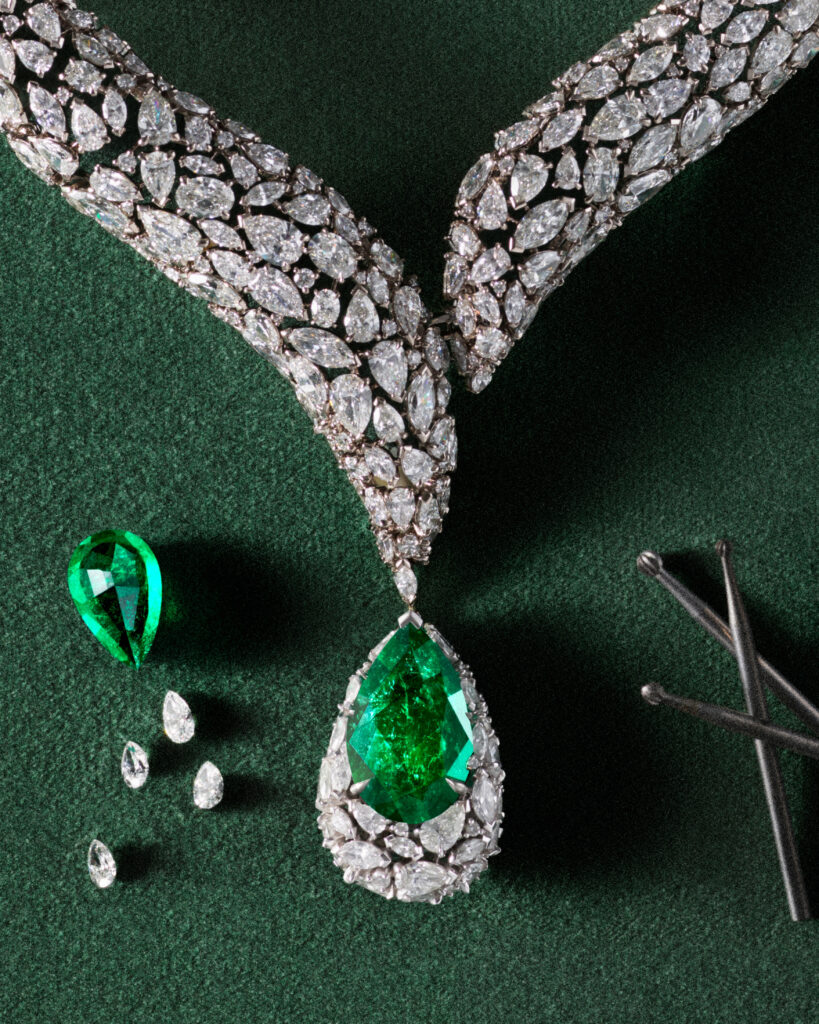
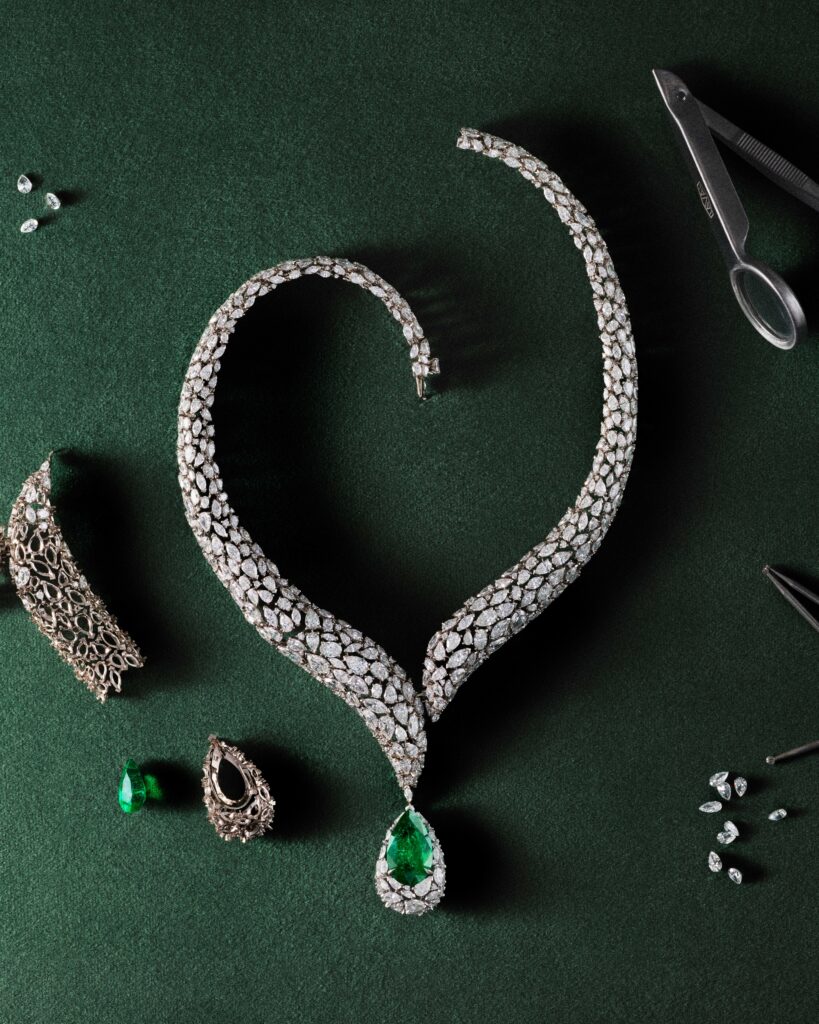
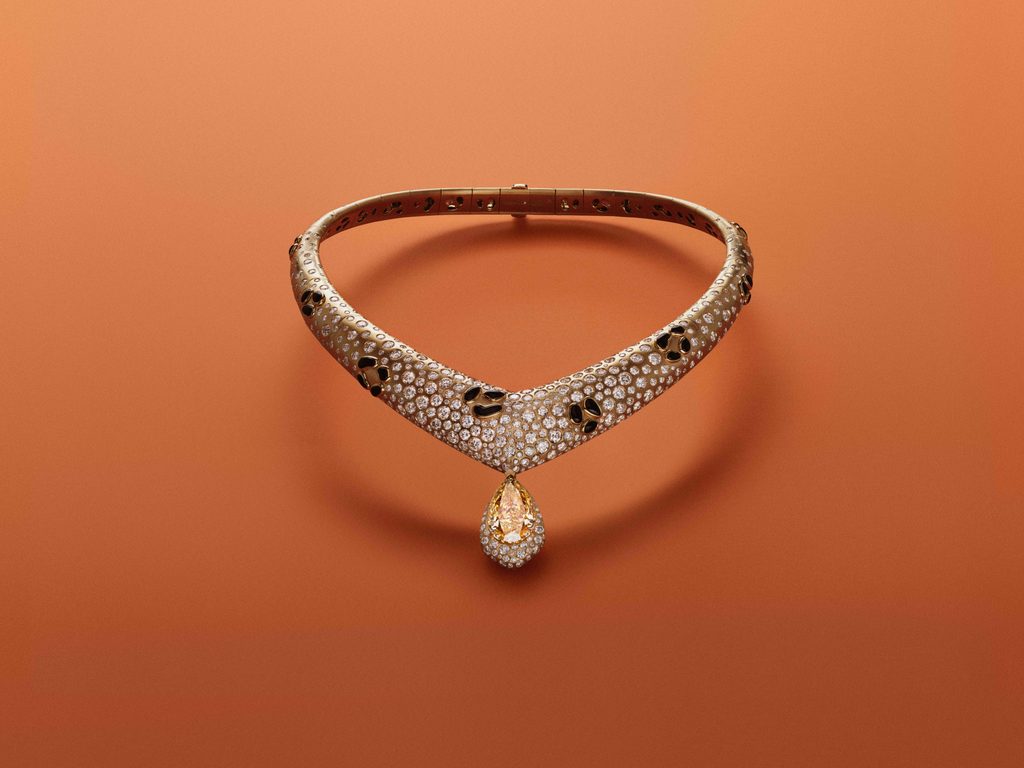
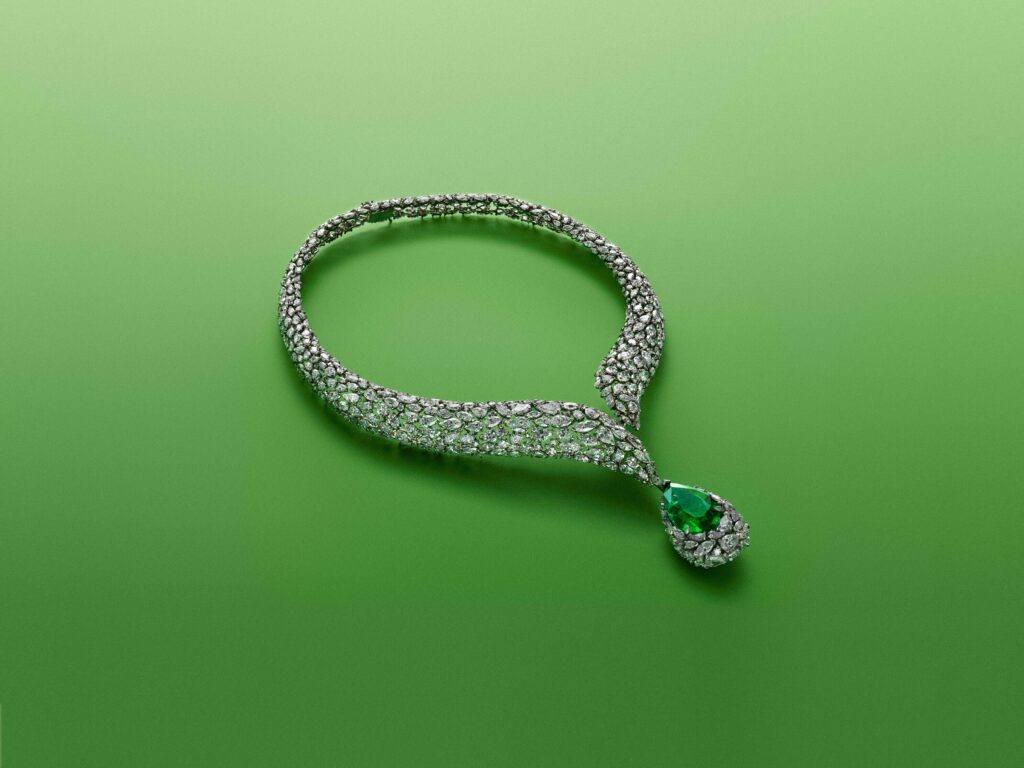
Beyond this exceptional piece, Terres de Contrastes draws its inspiration from three landscapes that define Botswana in the brand’s imagination: the lush Okavango Delta, a green oasis crisscrossed by channels where life thrives in the midst of the desert; the Kalahari, an arid and scorching expanse whose ochre and rust hues infuse certain pieces; and the Makgadikgadi Salt Pans, vast white plains that, once night falls, evoke a sky turned upside down onto the earth. Each of these landscapes becomes a vocabulary of forms and materials, where contrast—which lends its name to the collection—is never merely a stylistic device but a faithful representation of a land where water and drought, green and ochre, darkness and light, interact without ever canceling each other out.
This approach to establishing a country’s identity through the language of jewelry is significant in the current context of the diamond industry. Botswana, the world’s second-largest diamond producer and a long-standing partner of the industry through the Debswana joint venture, has been seeking for several years to have the added value of its production recognized beyond mere extraction. By choosing to name, date, and tell the precise story of the origin of its most exceptional stone, Messika is participating—whether consciously or not—in this broader movement toward traceability and recognition of producing countries, at a time when provenance is becoming as sought-after a factor as carat weight or clarity.
It remains to be seen what history will remember: the stone itself—locked away in a safe or carried down a red carpet—or the story that now accompanies it wherever it goes. Can a diamond truly carry an entire country on just a few carats? At Messika, they seem convinced that once the legend is told, it can never quite be separated from the stone.



Cette publication est également disponible en :

