
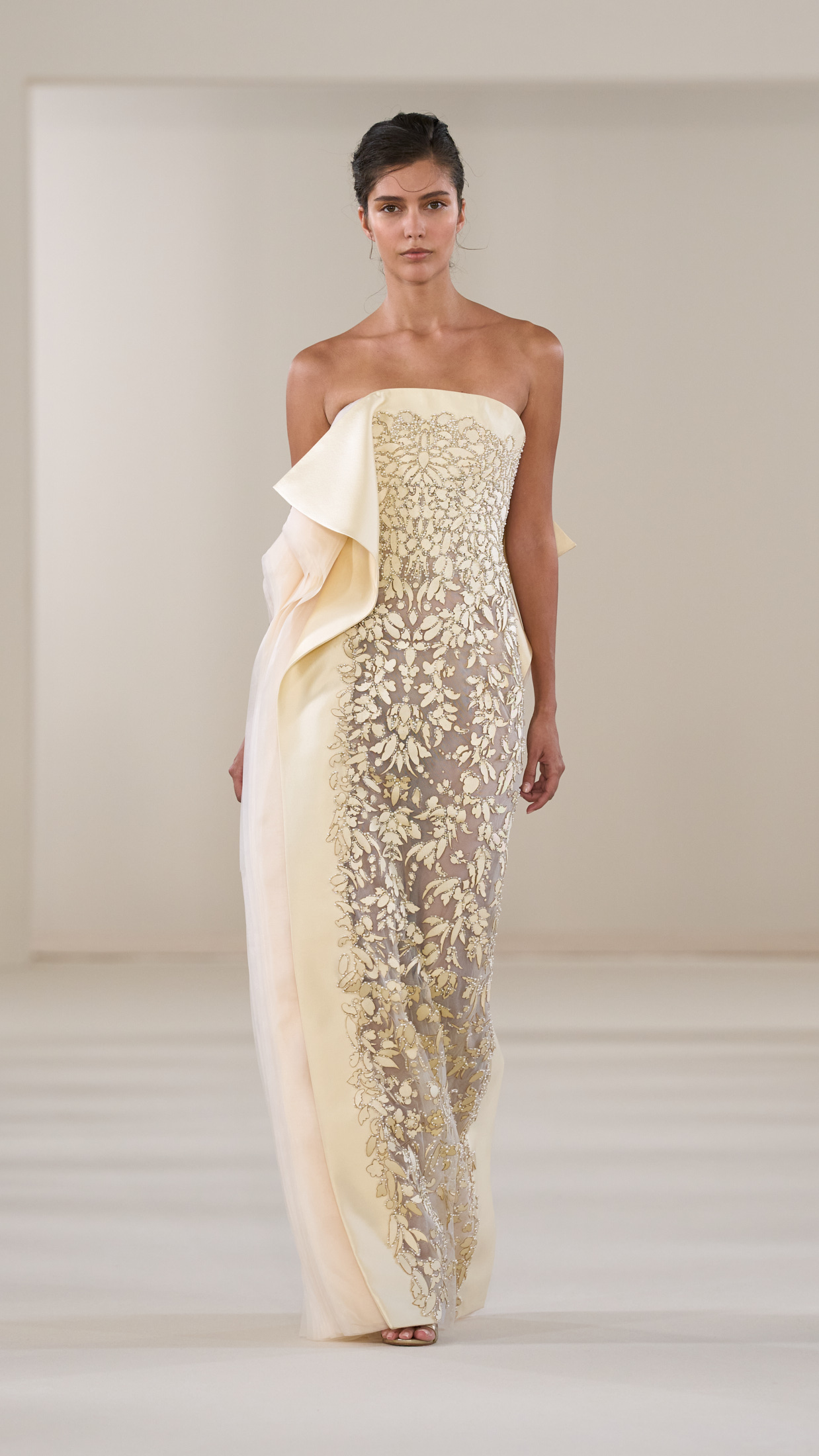
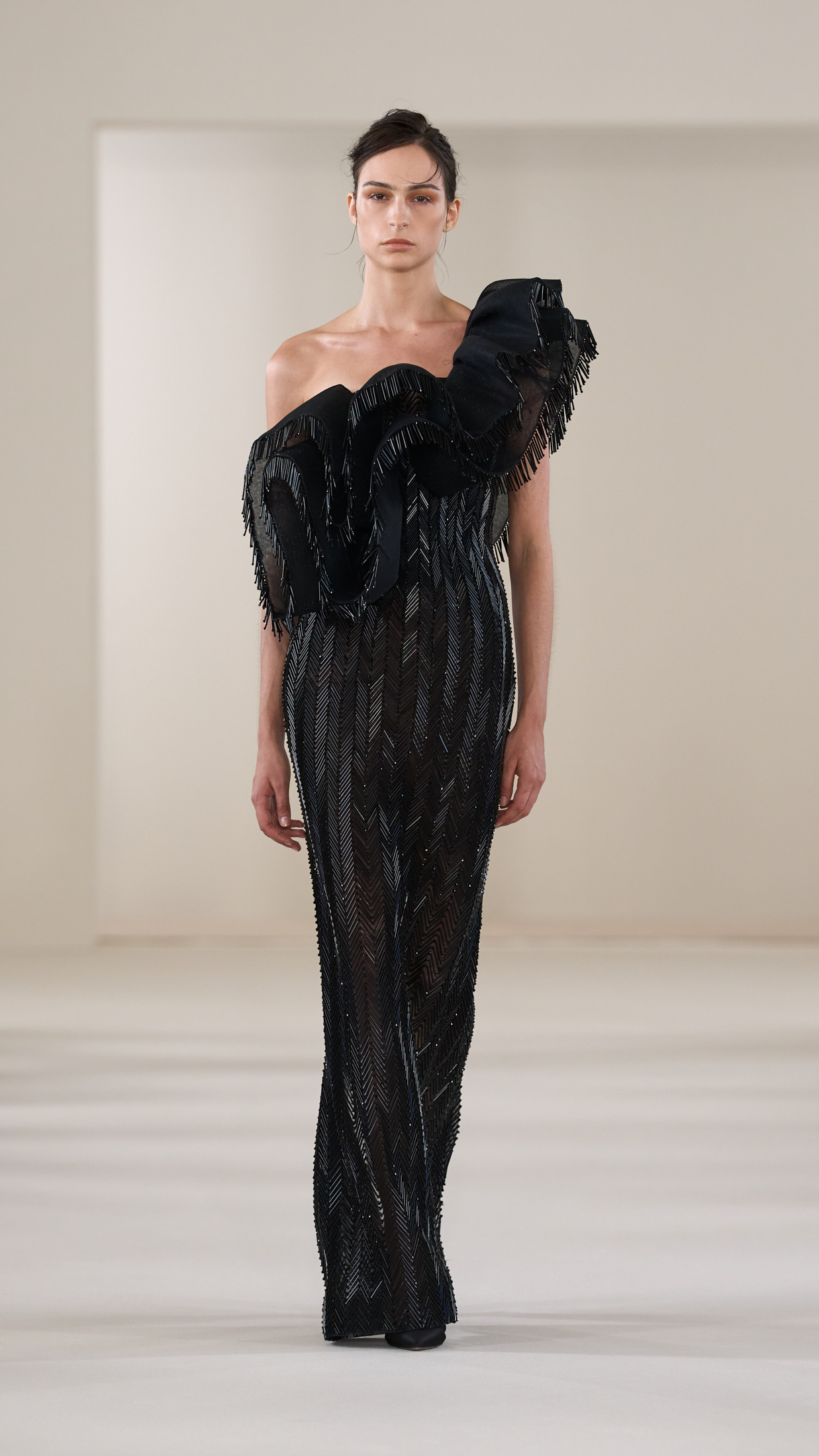
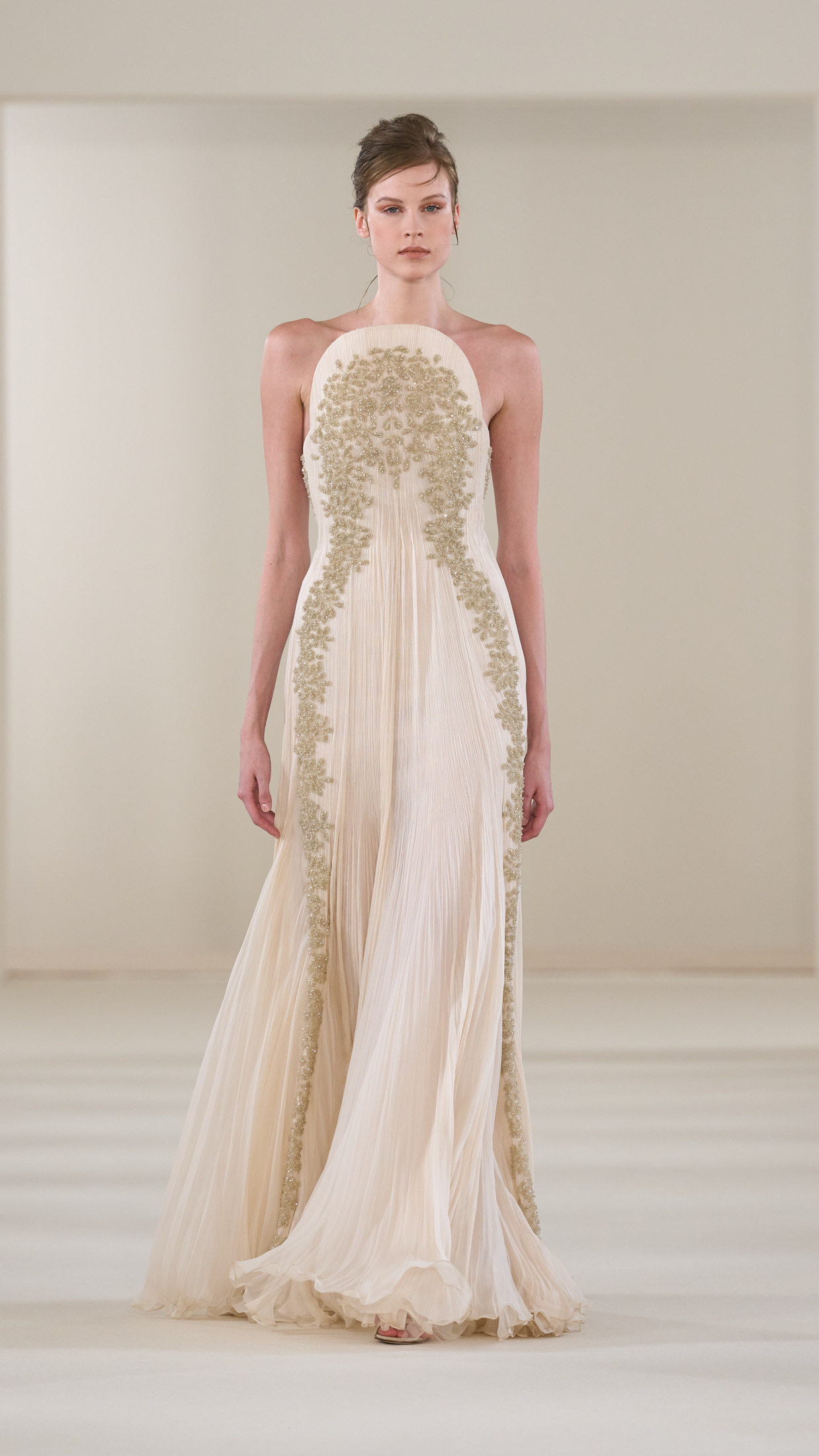
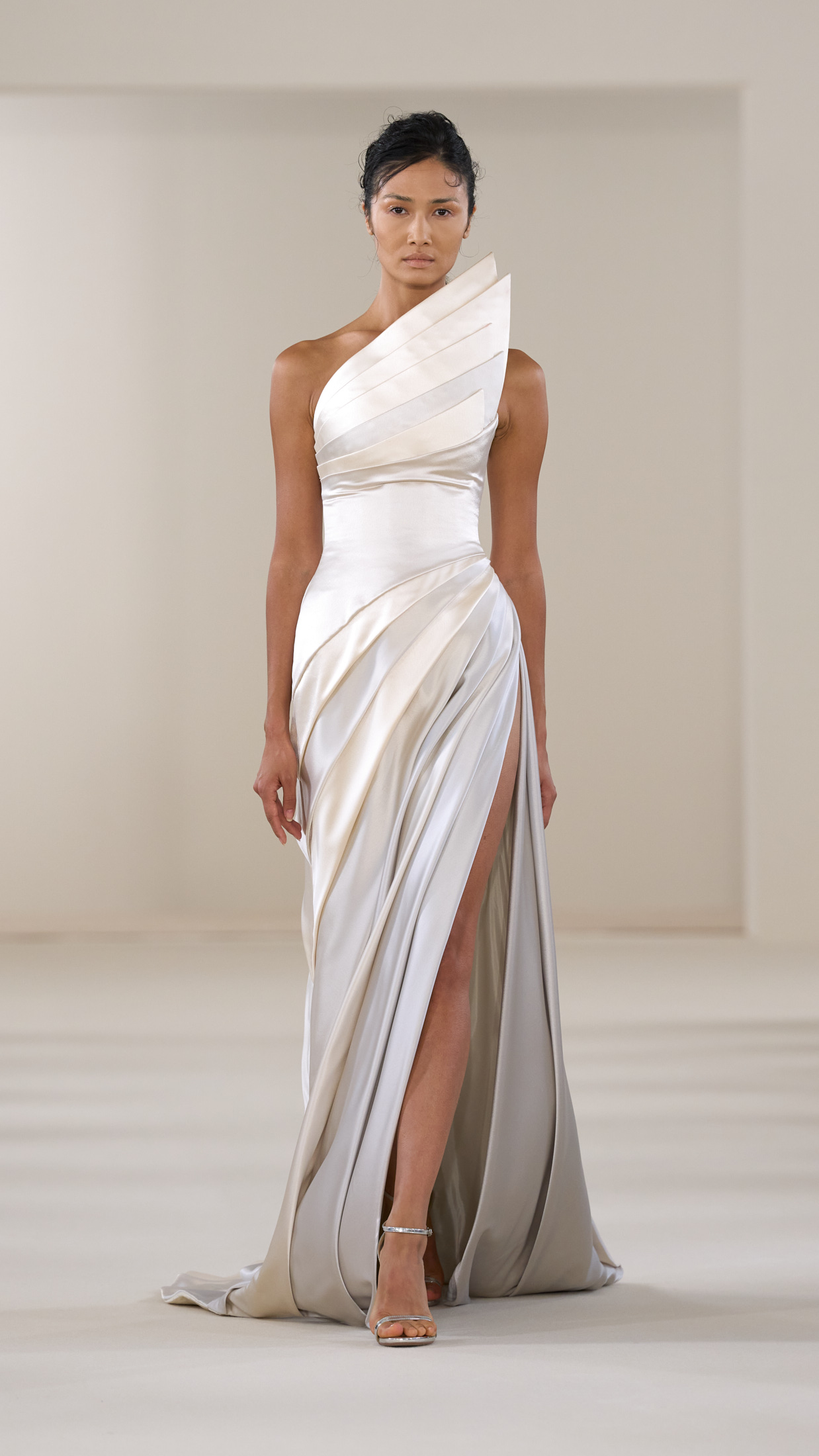
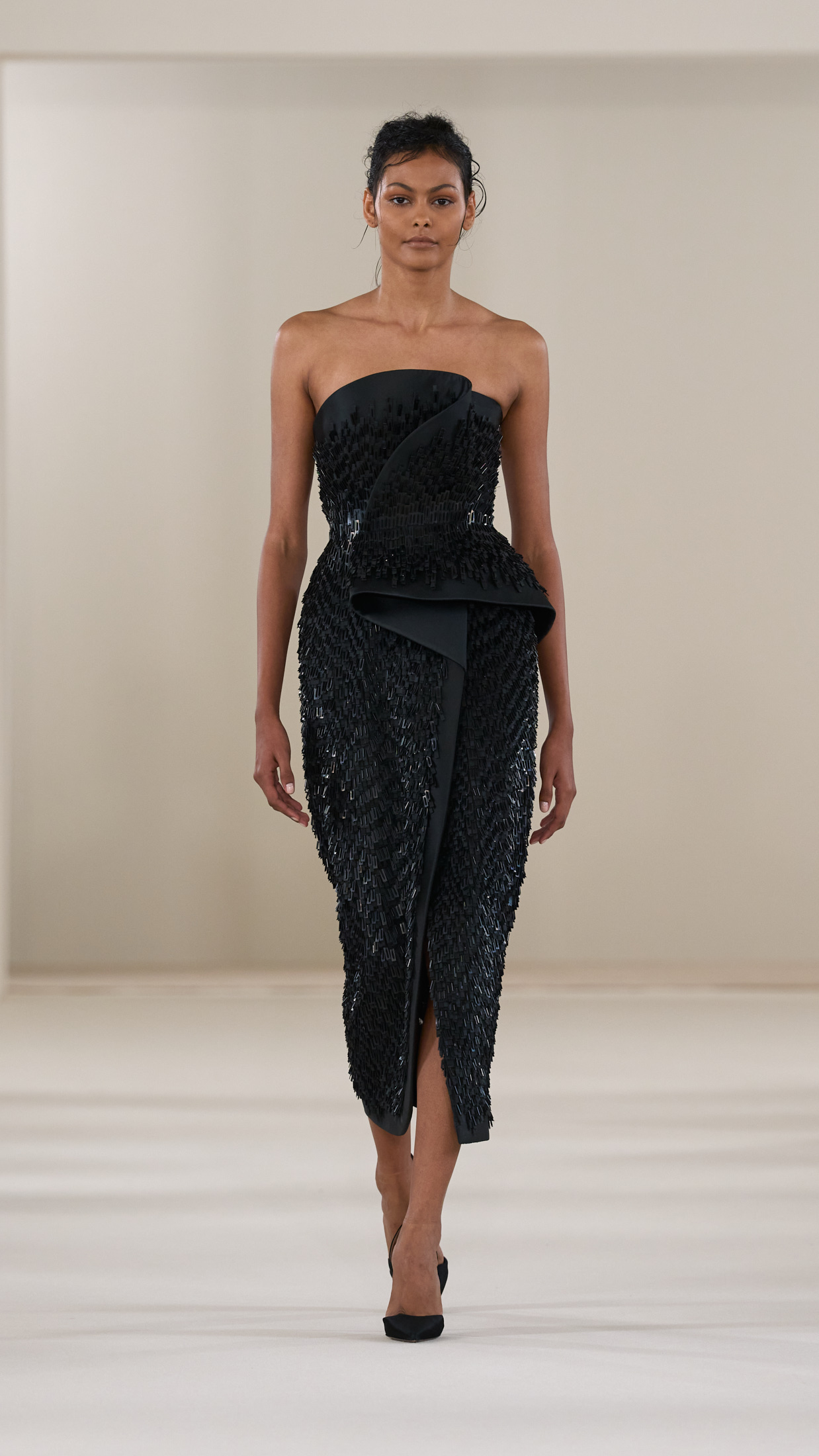
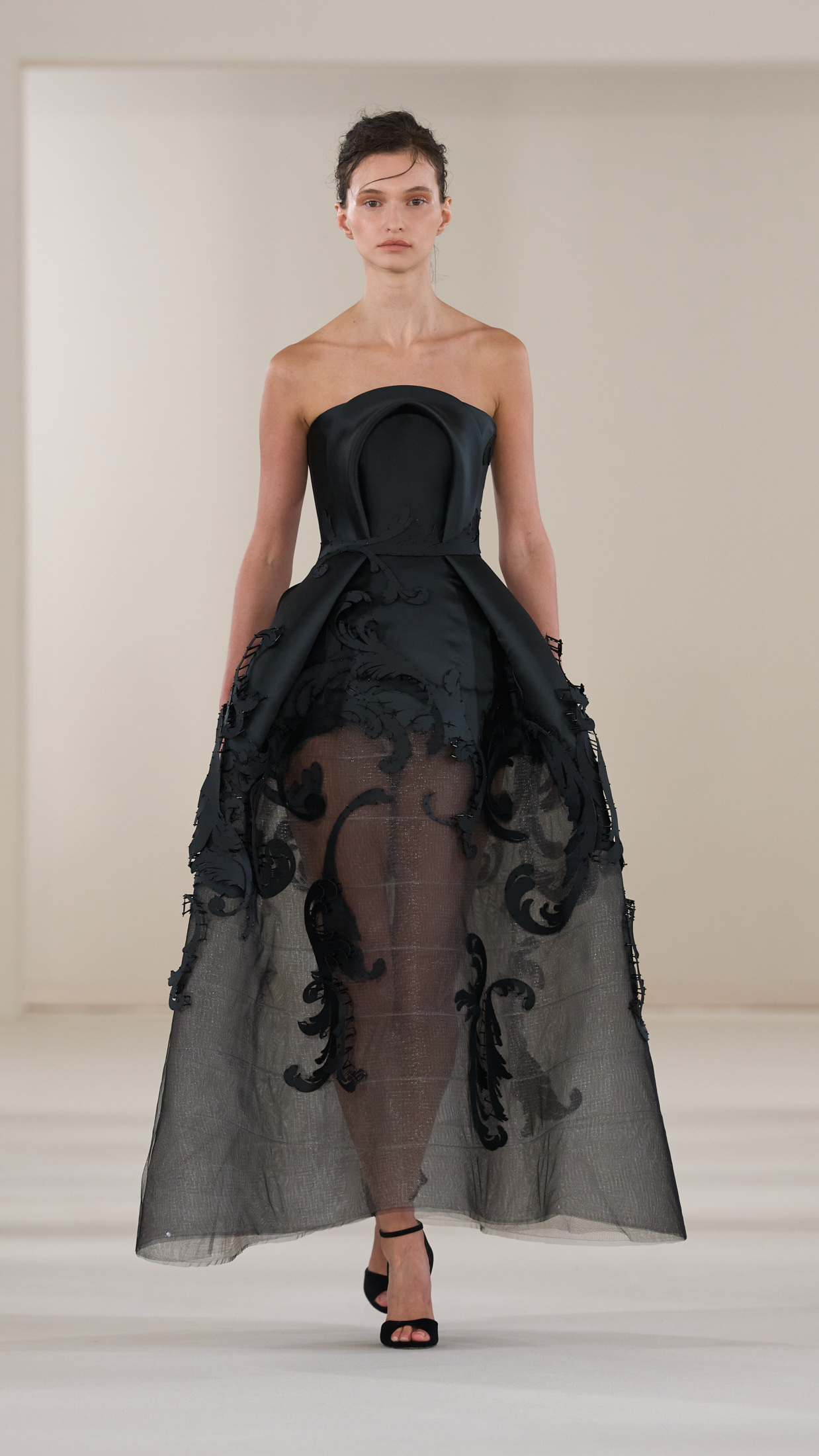
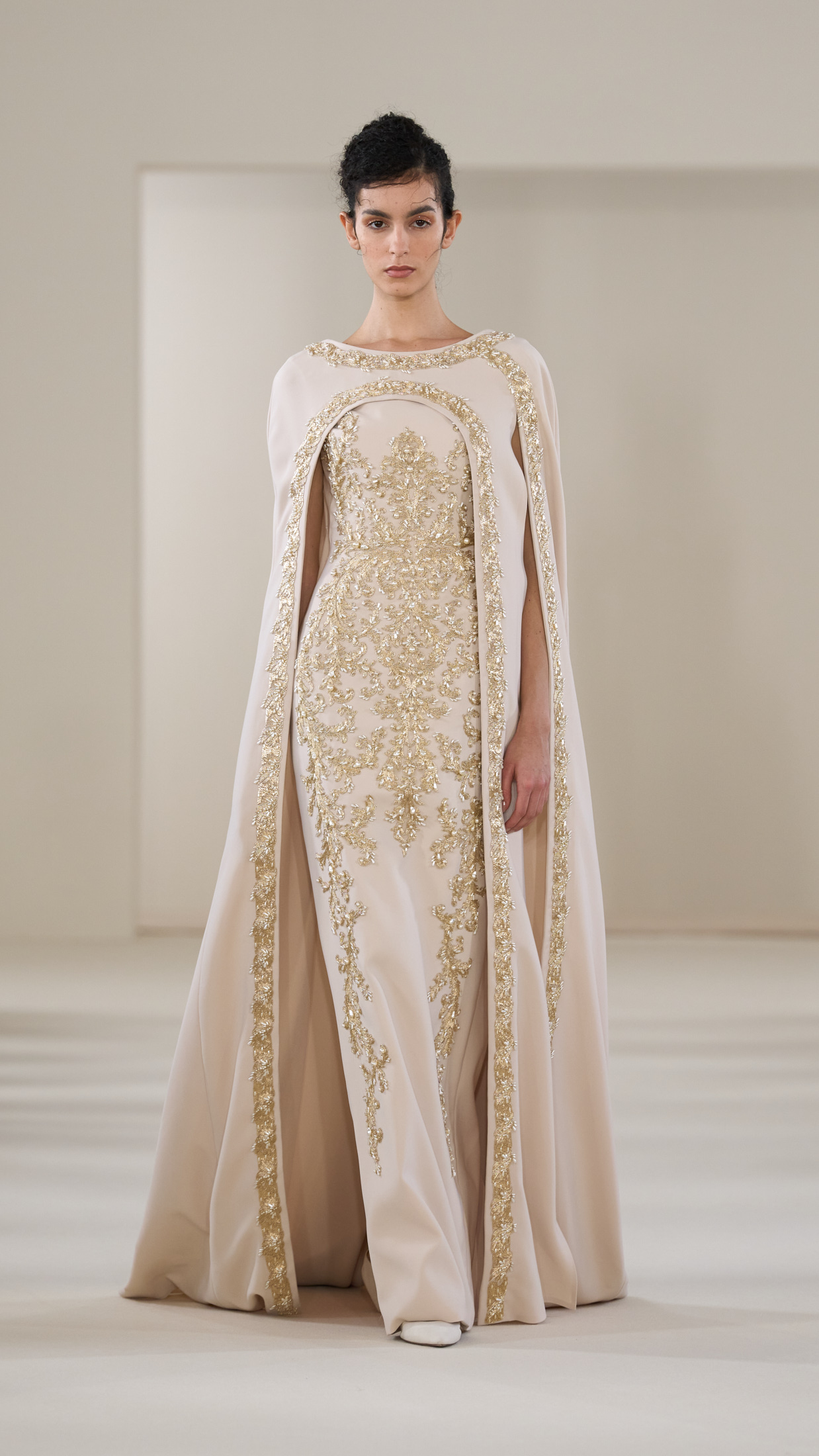
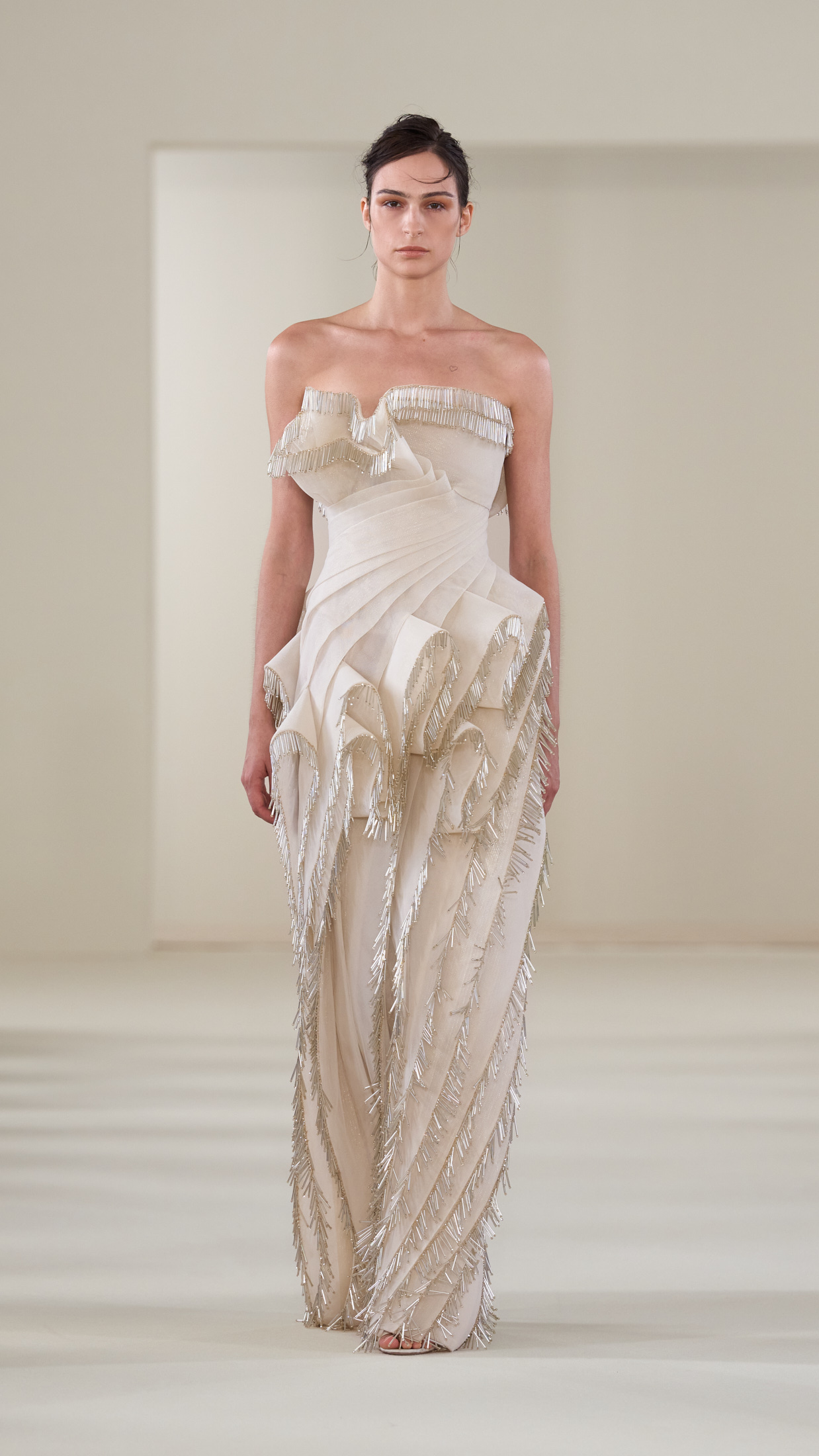
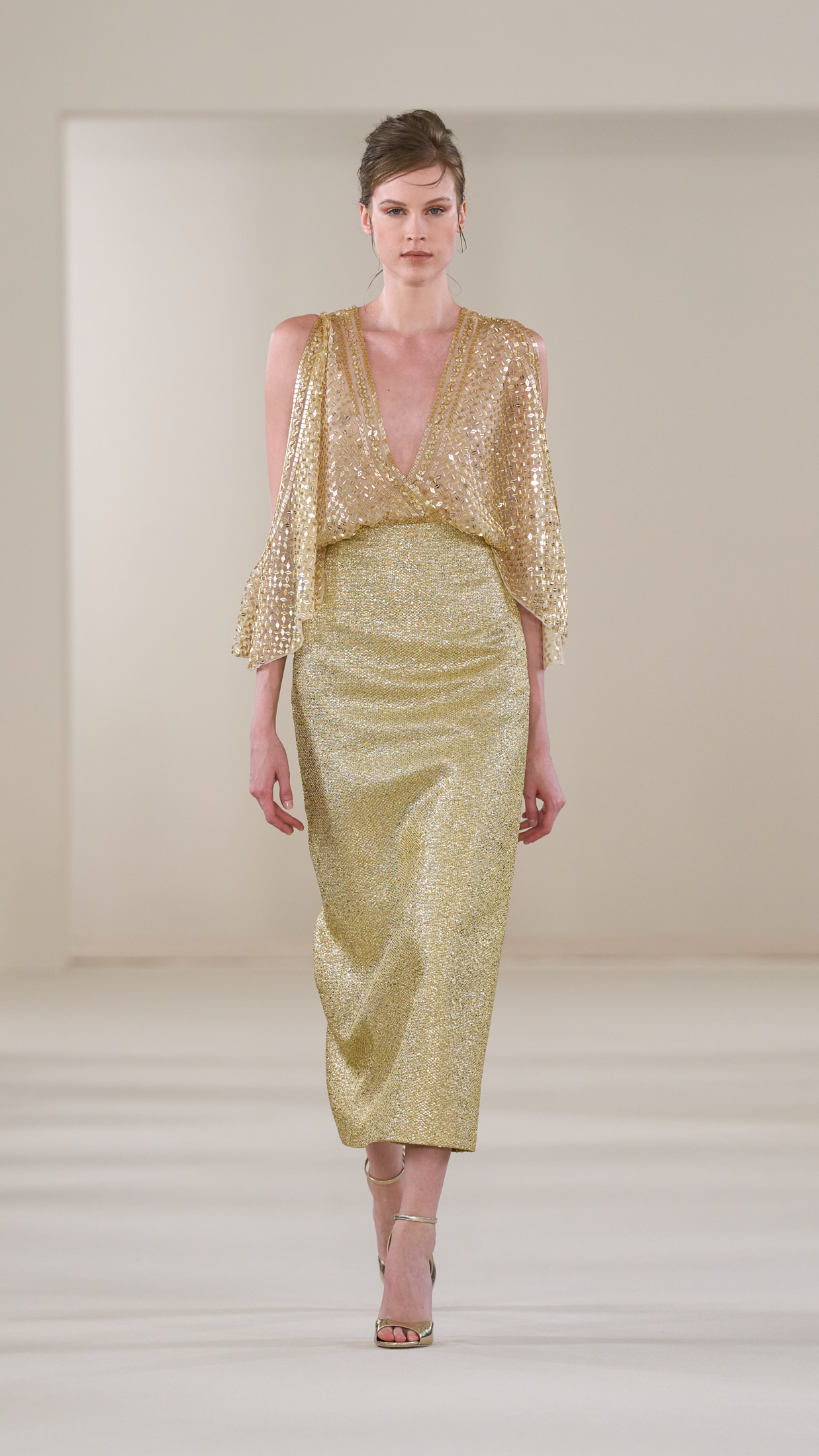
When certainties crumble, what remains is what has always held people together: beauty, memory, and a sense of belonging. For Fall/Winter 2026–2027, Rami Al Ali is not presenting a haute couture collection; he is weaving a shared memory—that of an Arab world connected by invisible threads, from the Gulf to Syria, from exile to rediscovered light.
For more than a decade, Rami Al Ali has been one of those discreet yet tenacious figures on the Parisian haute couture calendar. Born in Syria, trained in Damascus, and now based in Dubai, the designer has built his fashion house far from the spotlight of the Western fashion industry, maintaining a style that few others embrace so openly: a draping technique that owes as much to sculpture as it does to the textile traditions of the Levant. Each season, he returns to Paris to present not a collection in the strict sense of the term, but a vision—a perspective on what couture can still express when it refuses to be merely an exercise in style.
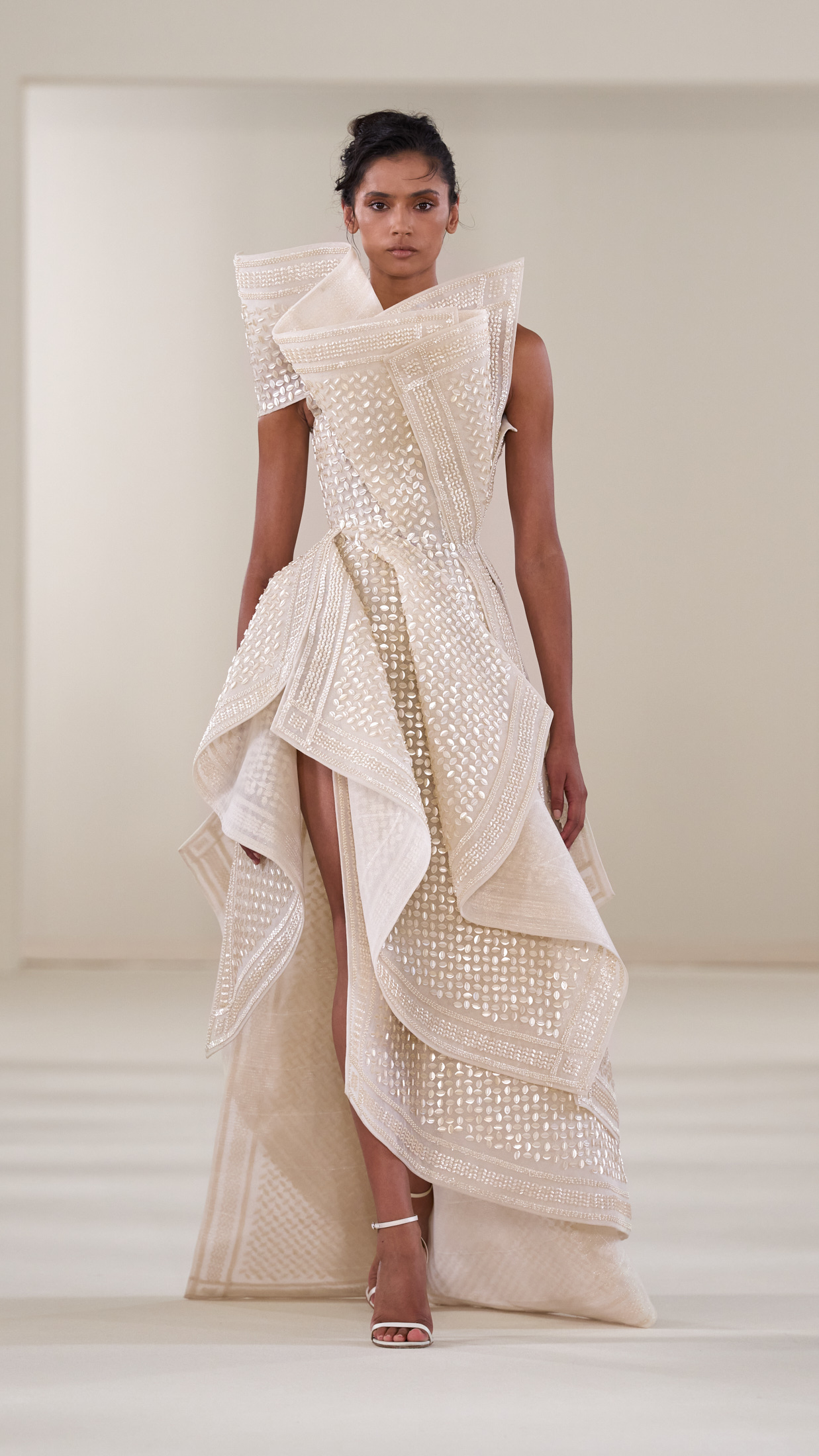
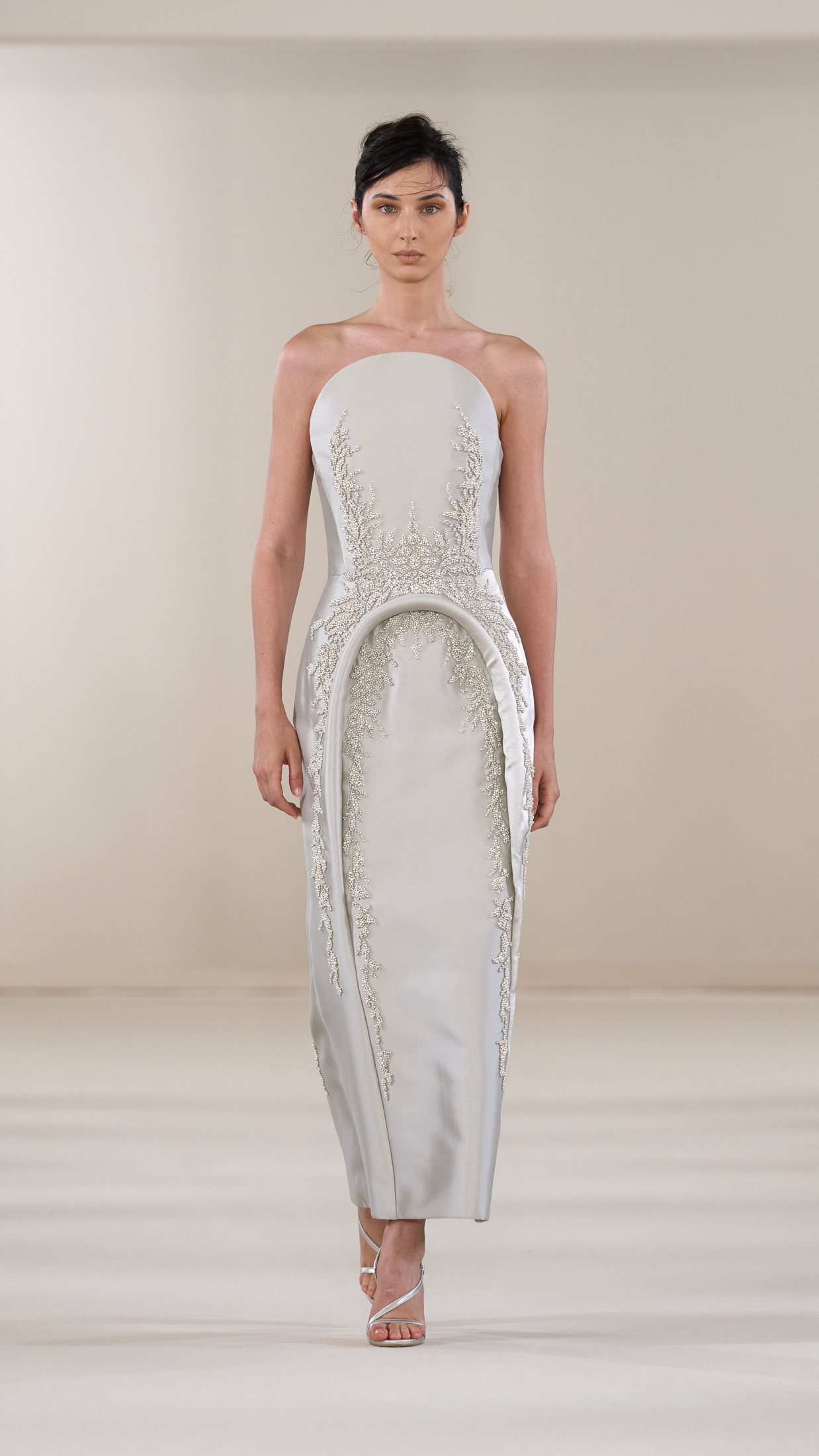
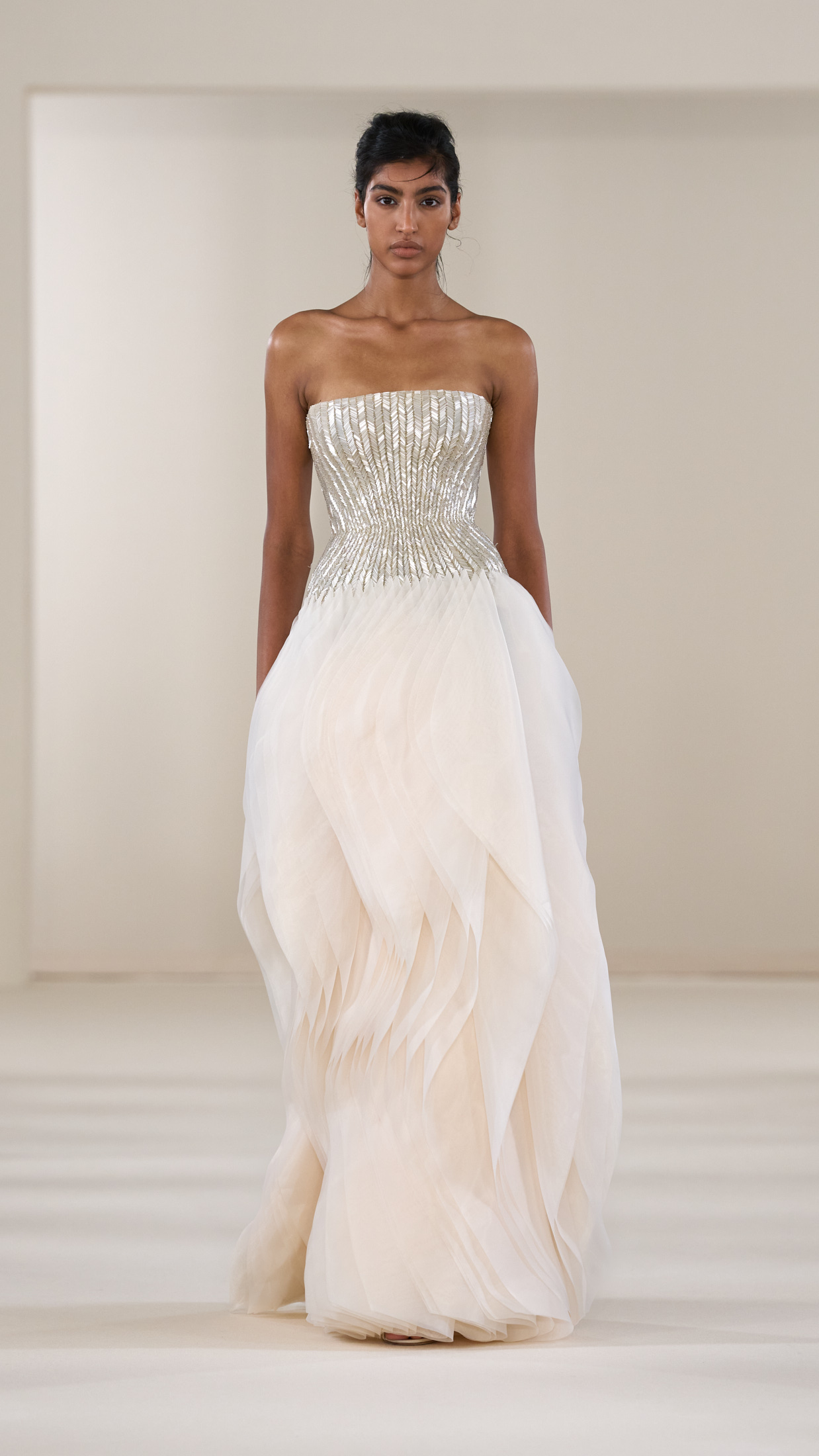
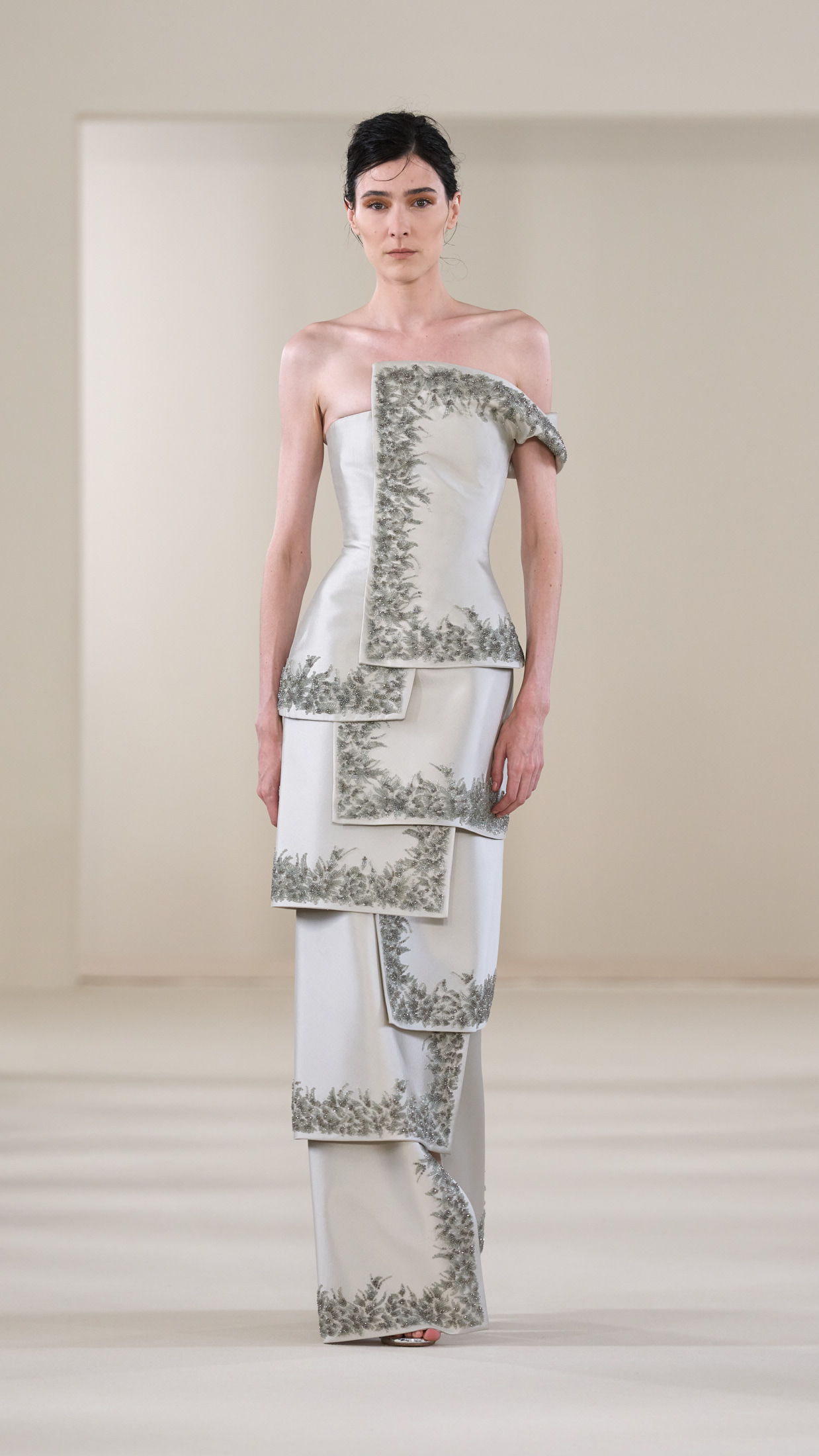
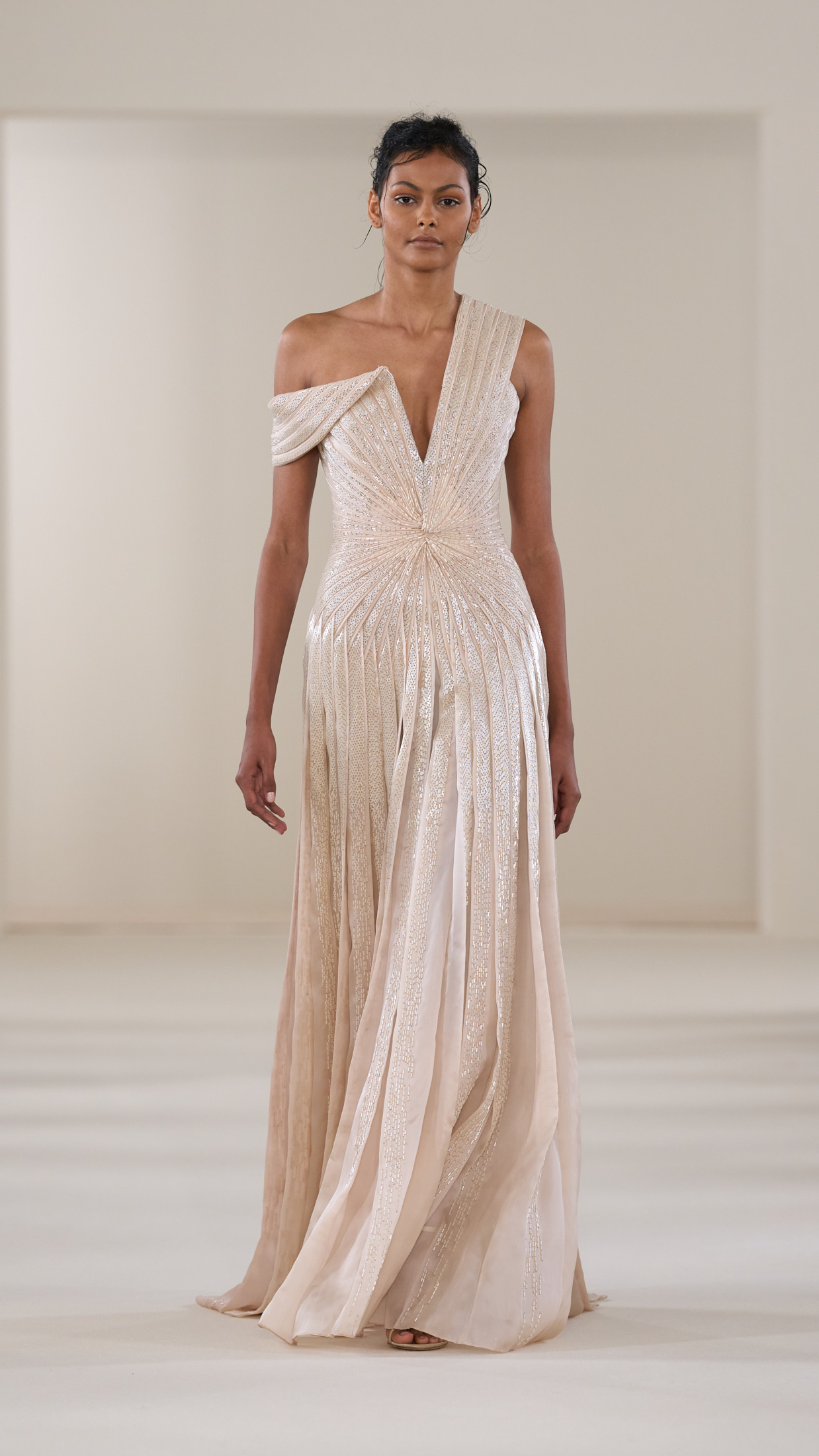
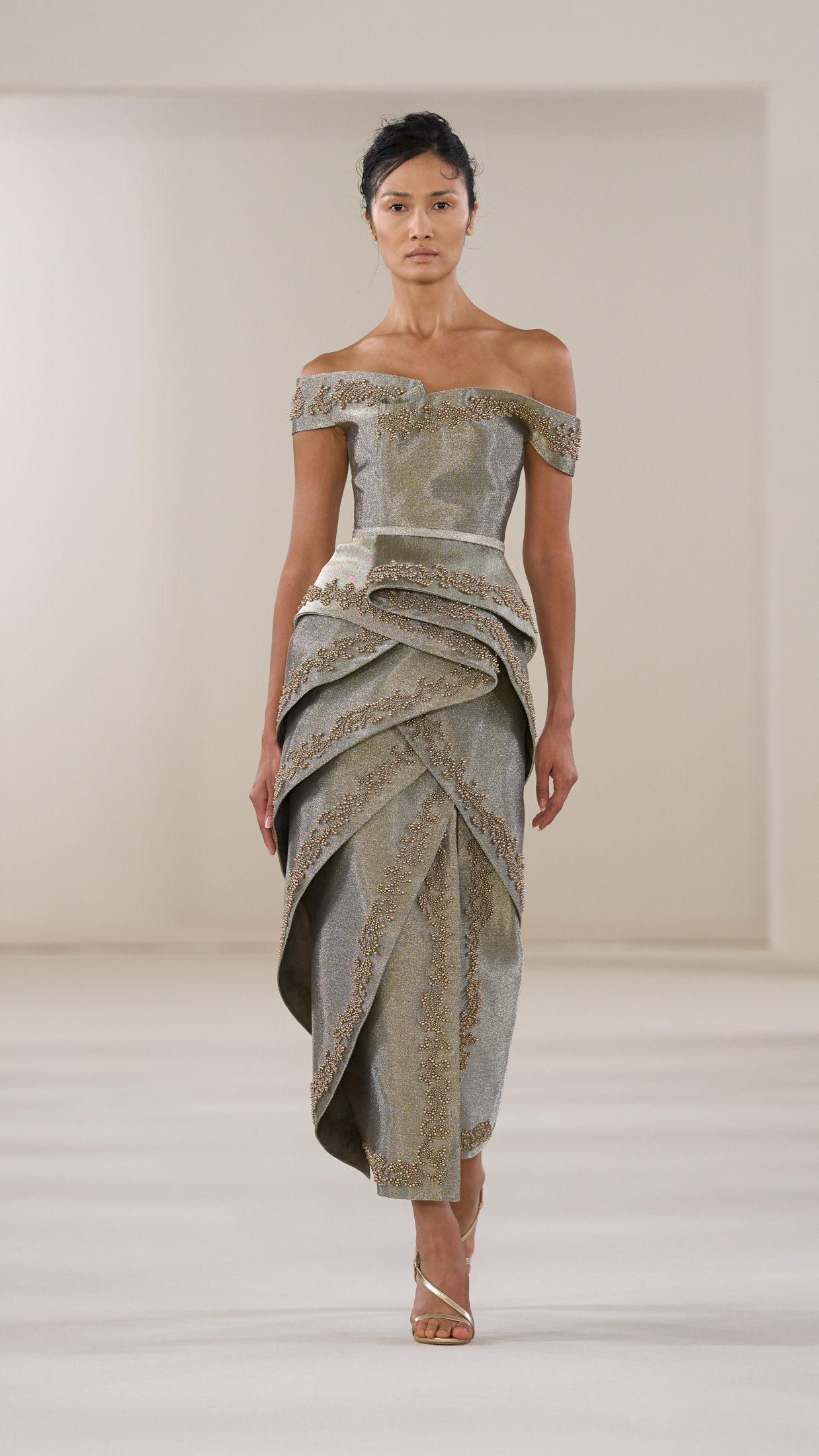
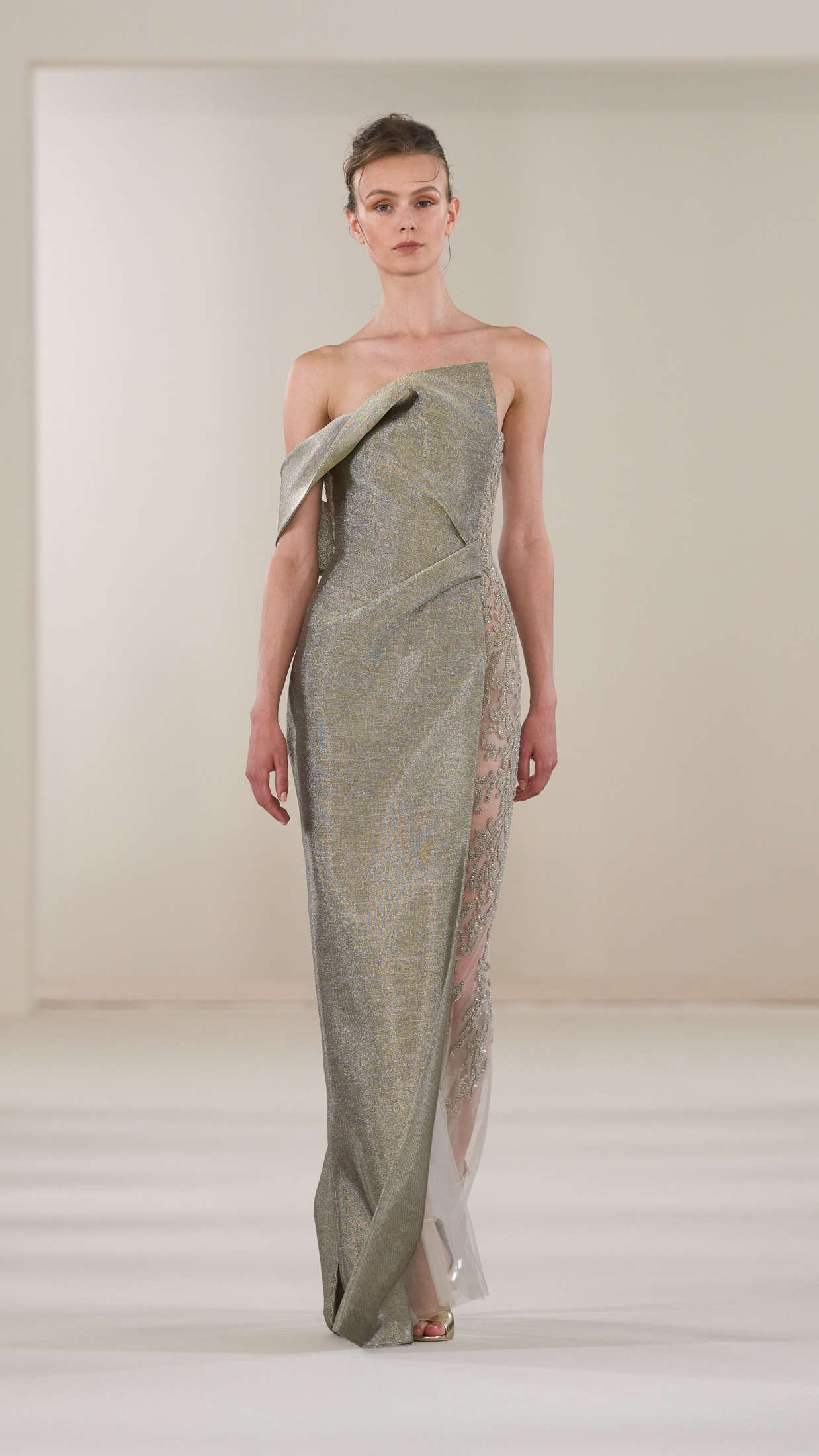
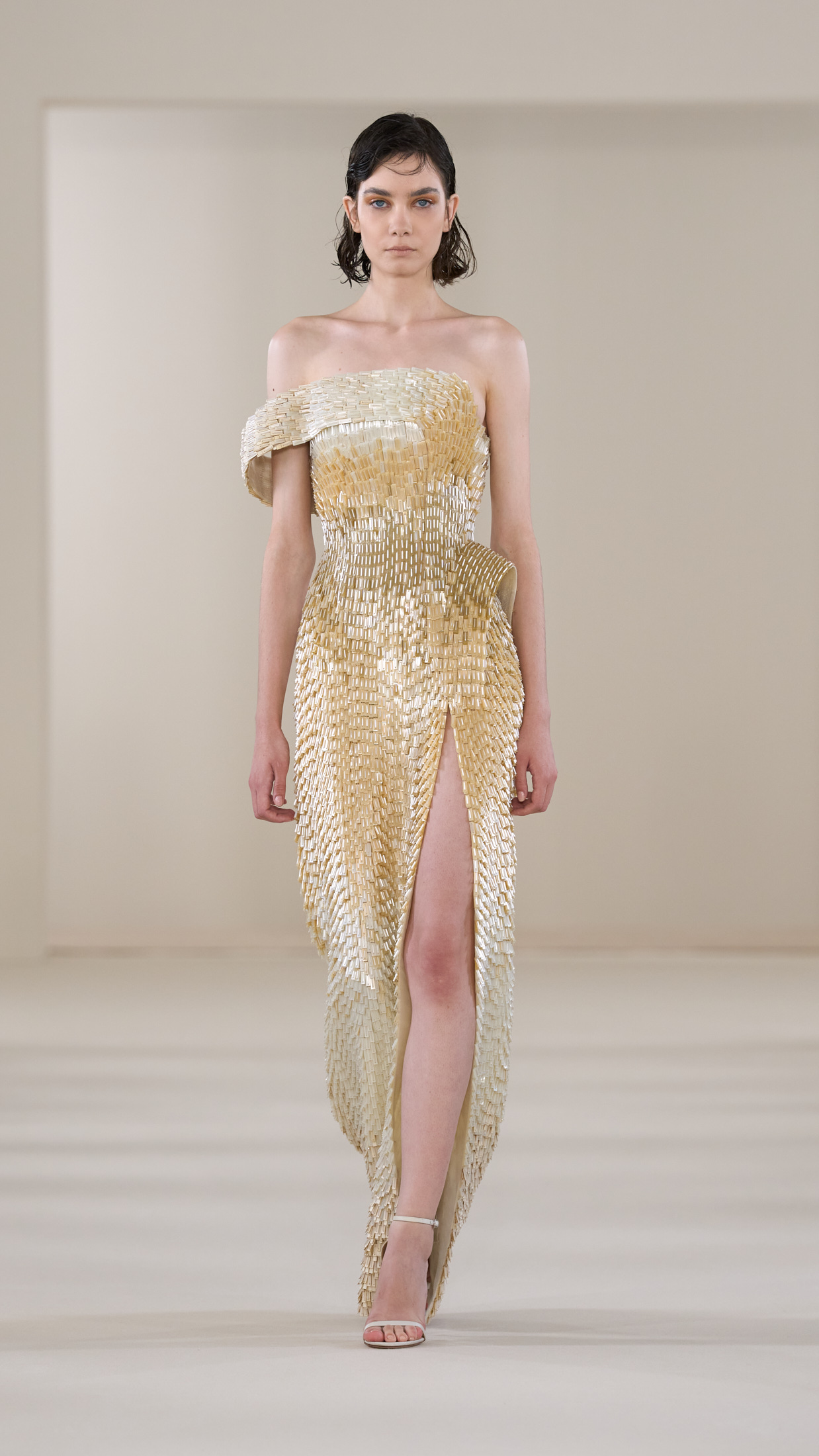
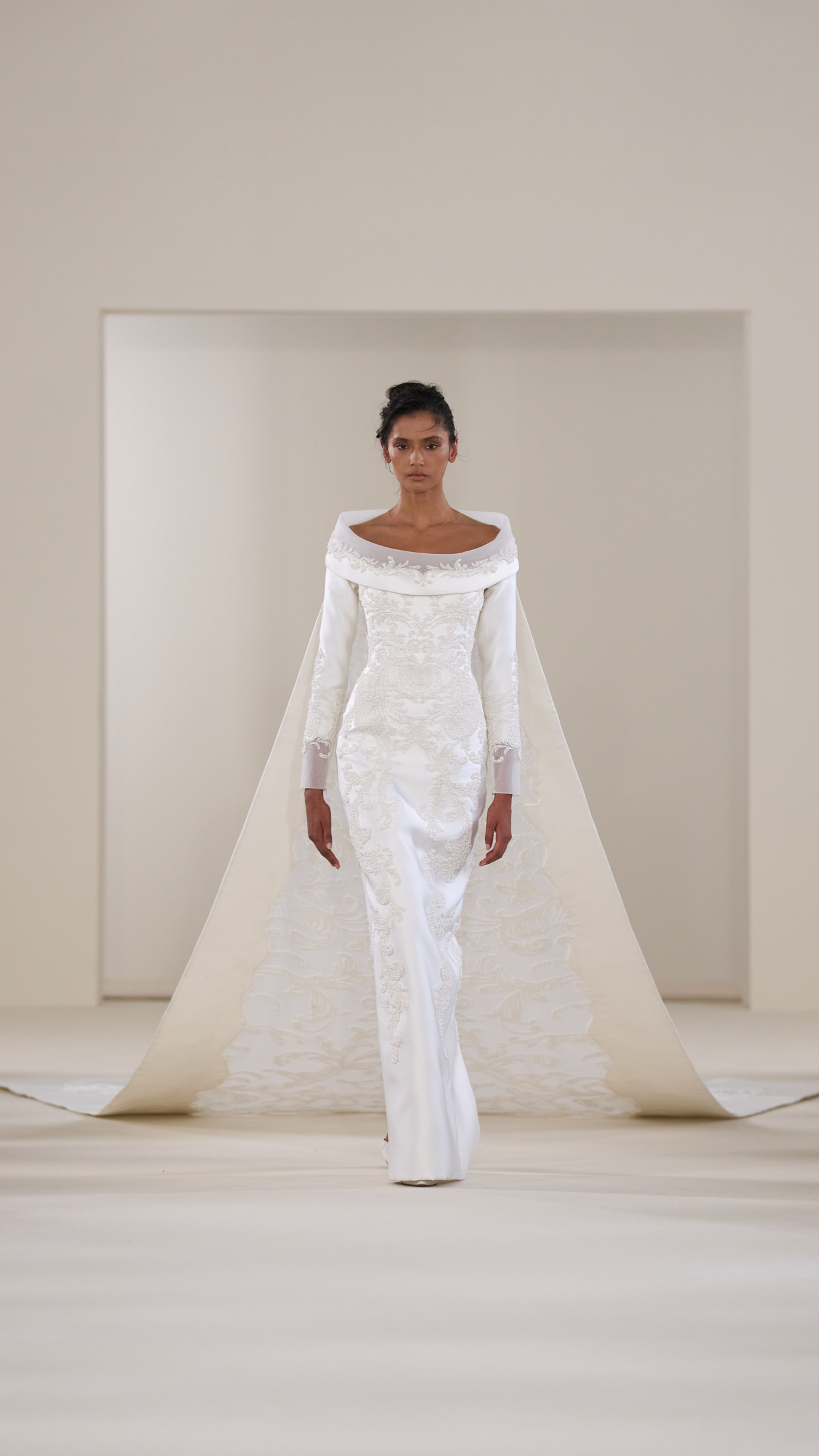
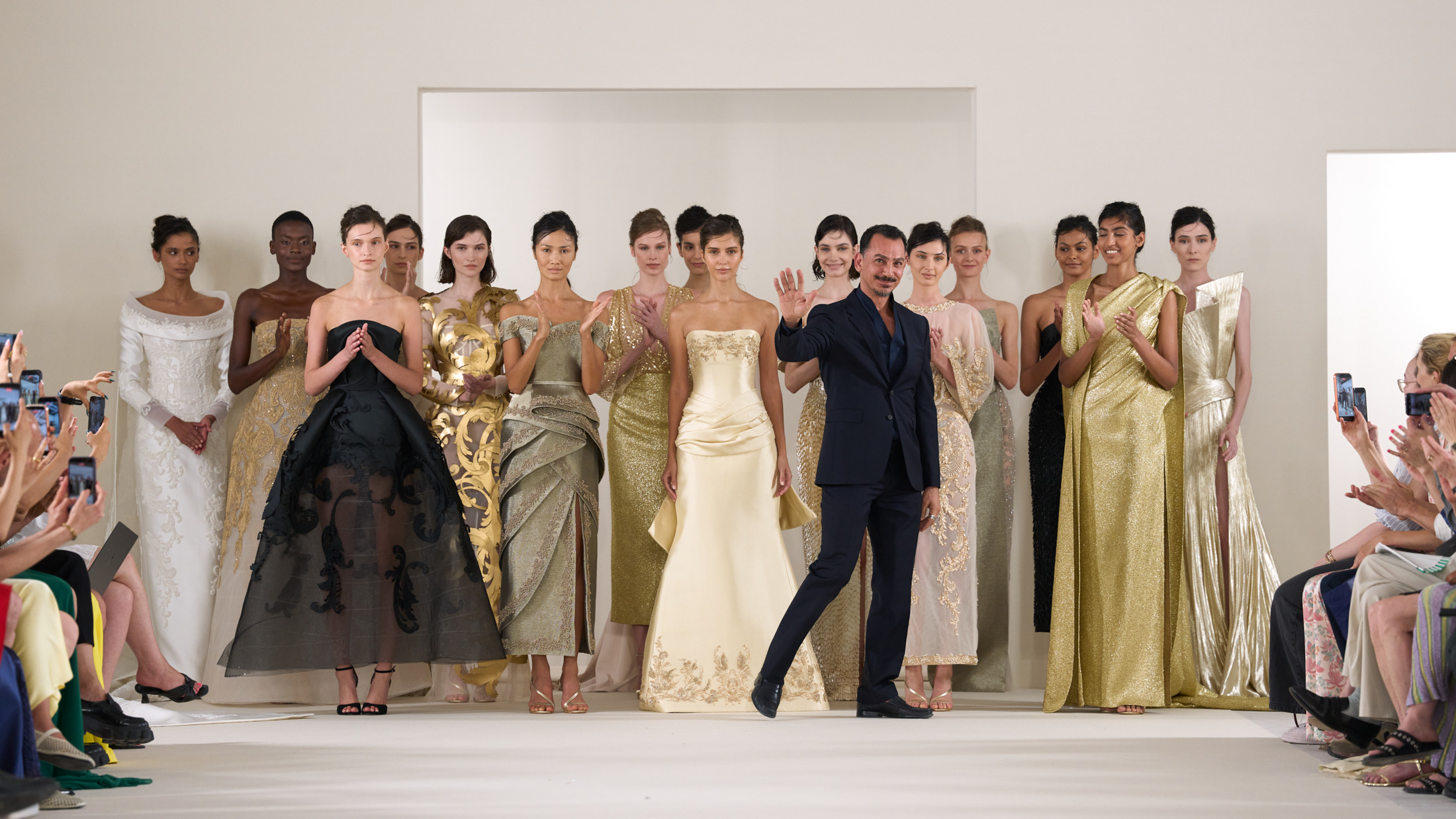
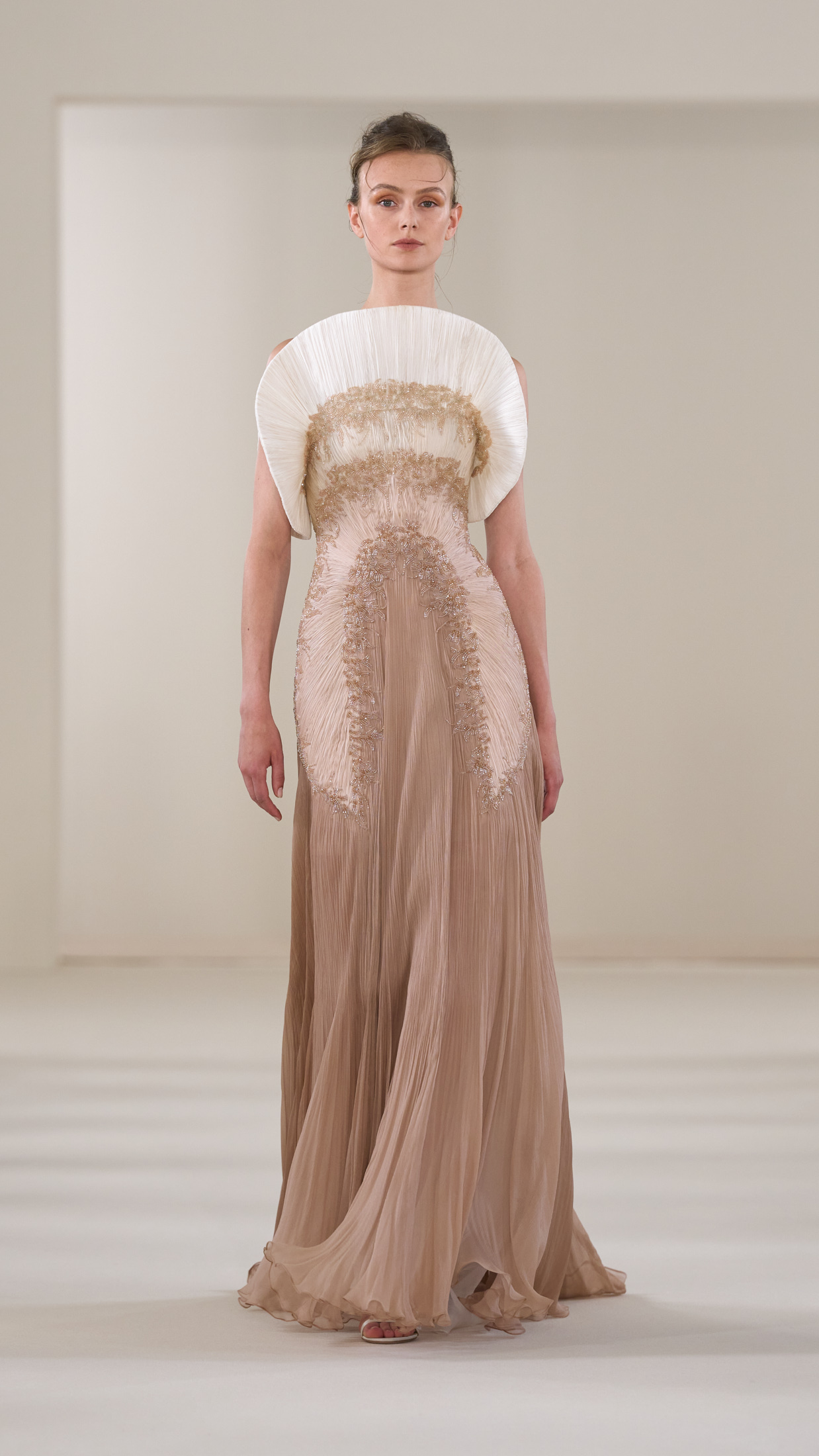
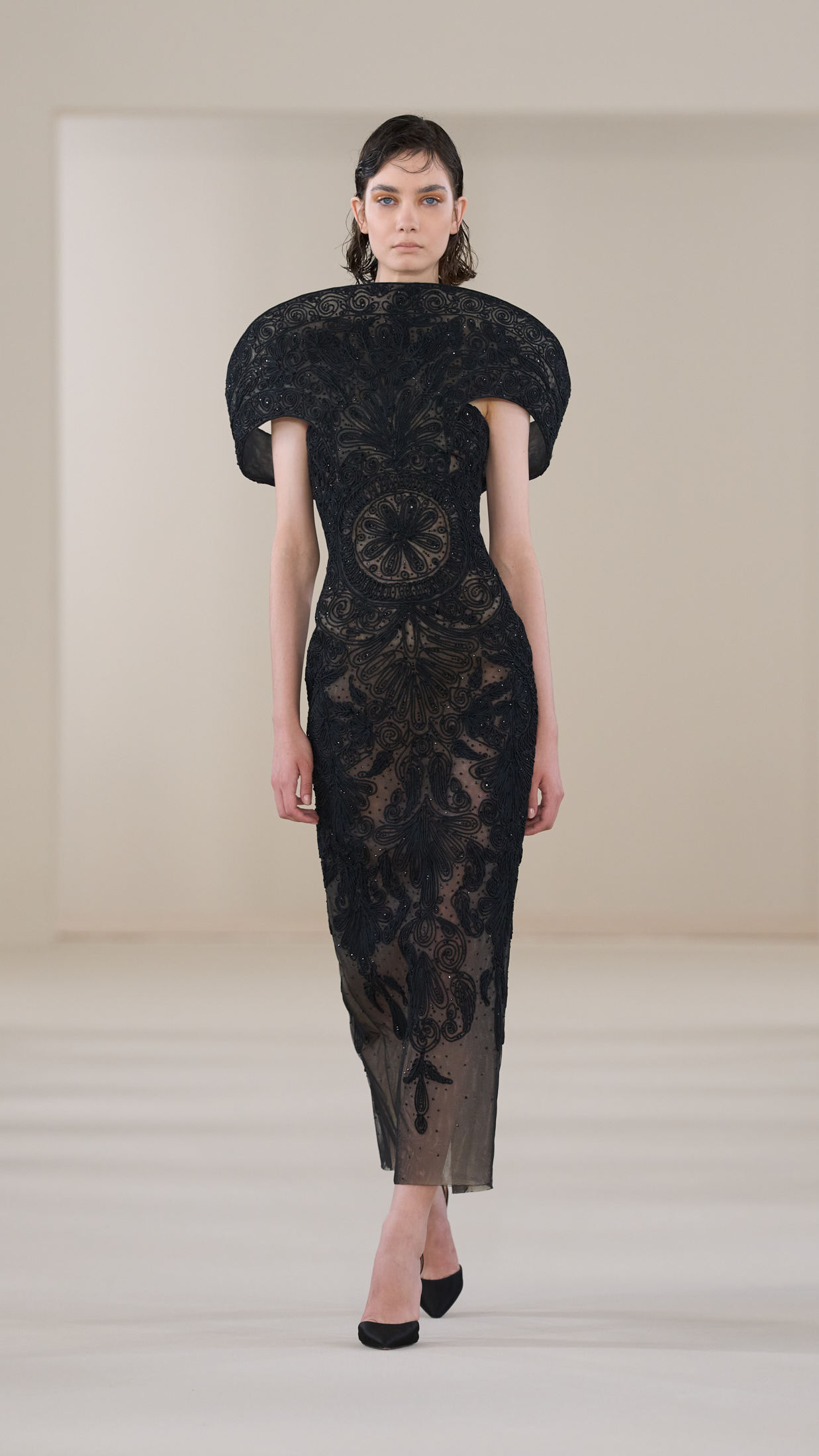
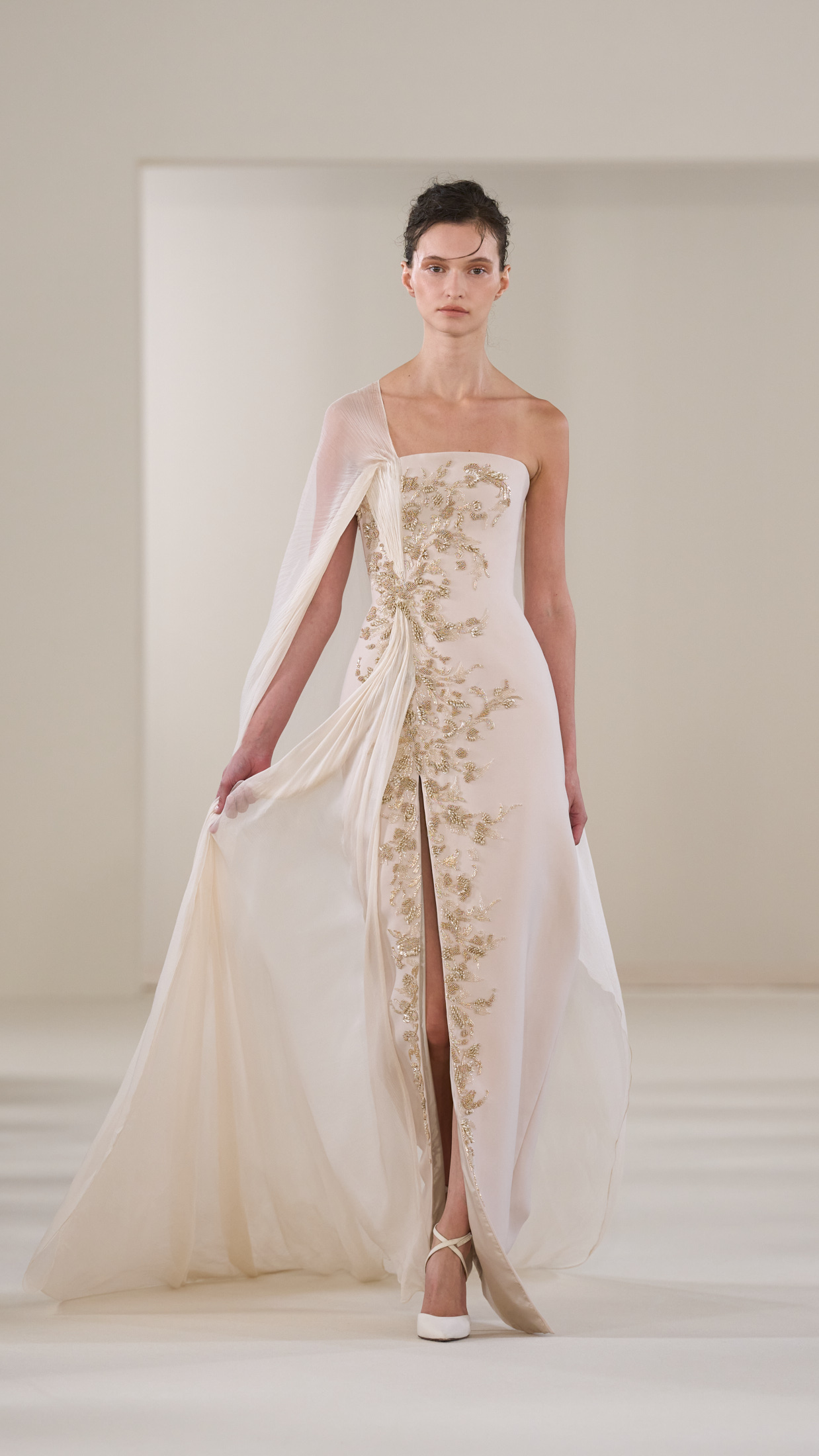
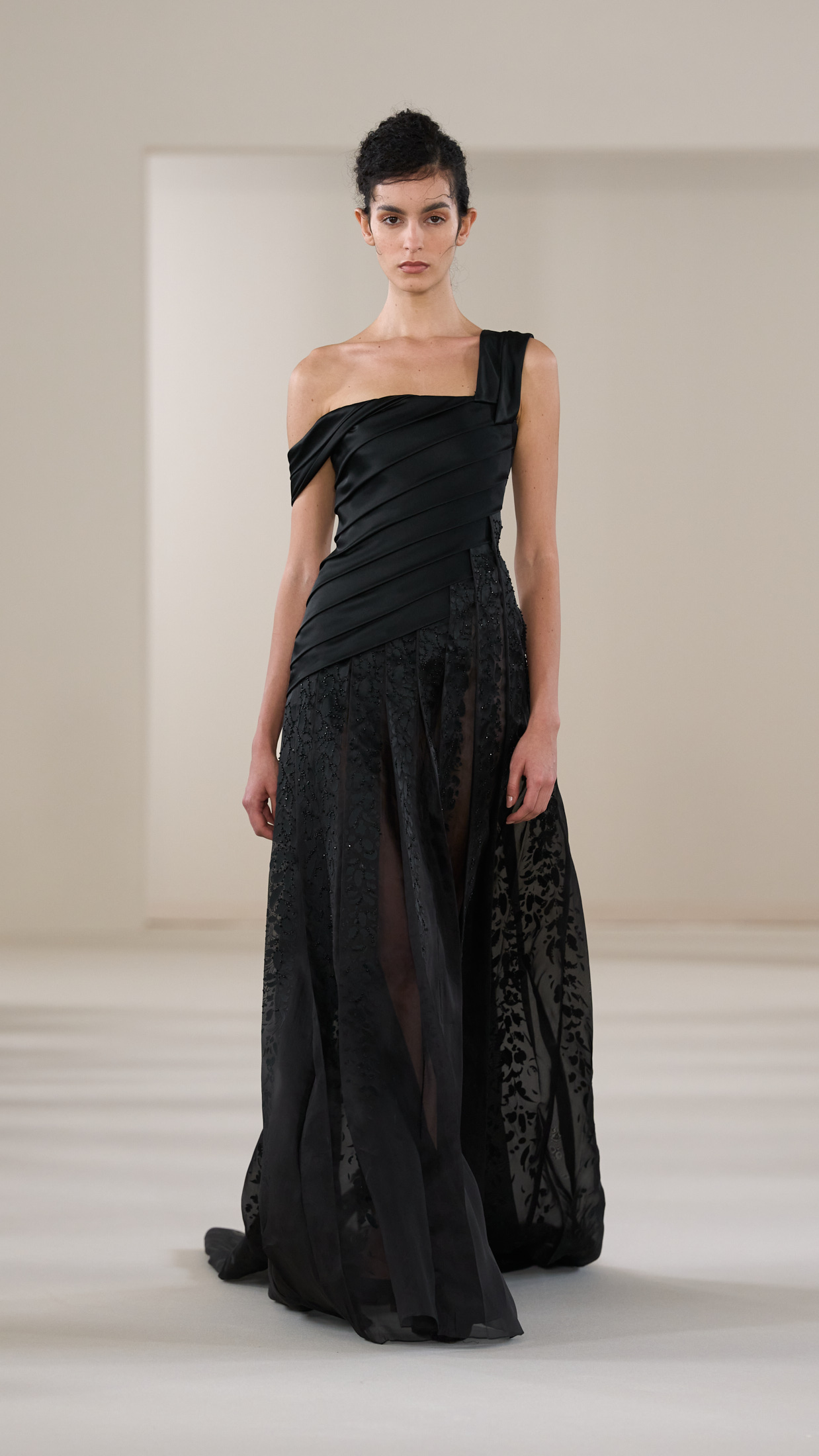
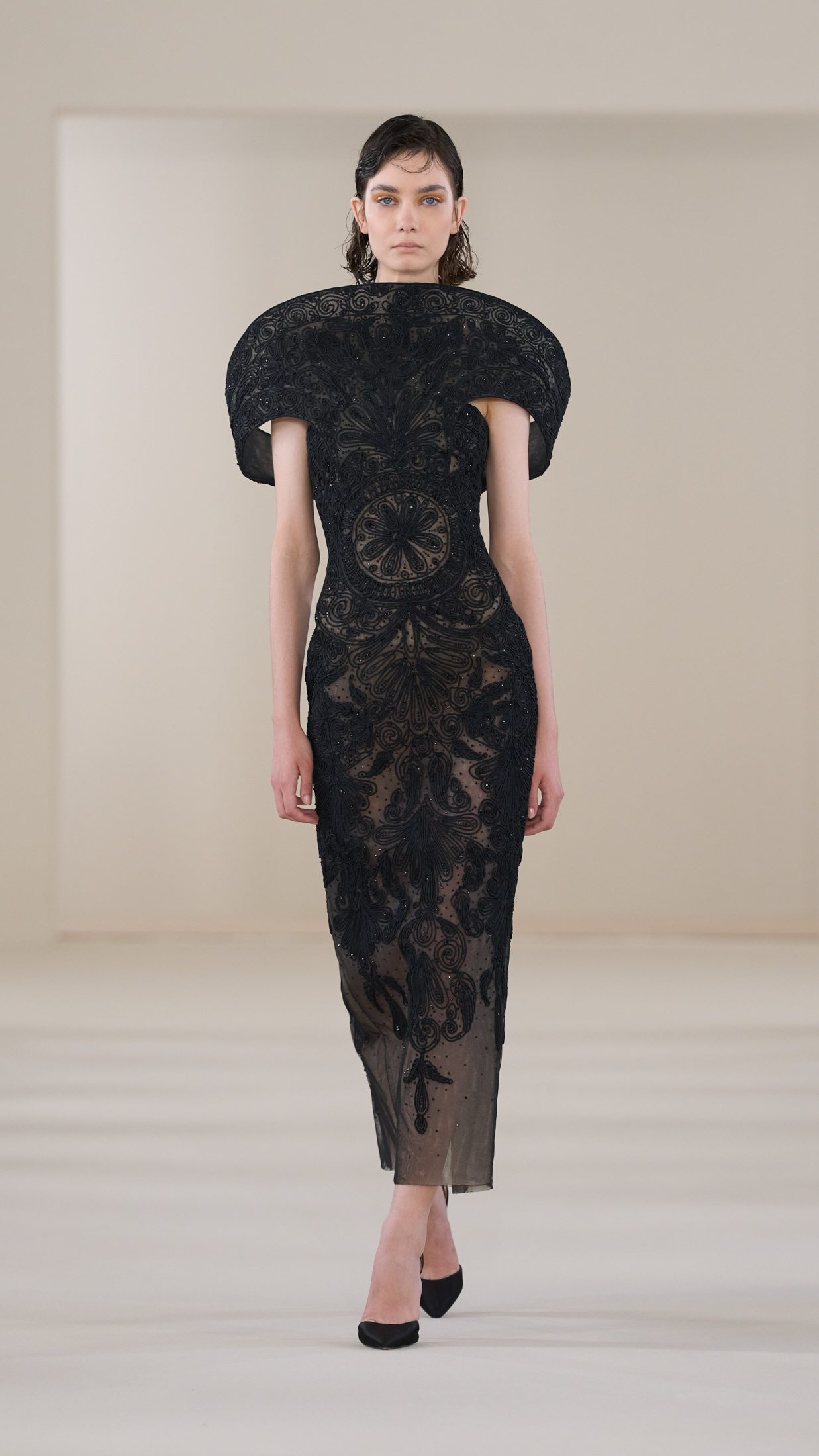
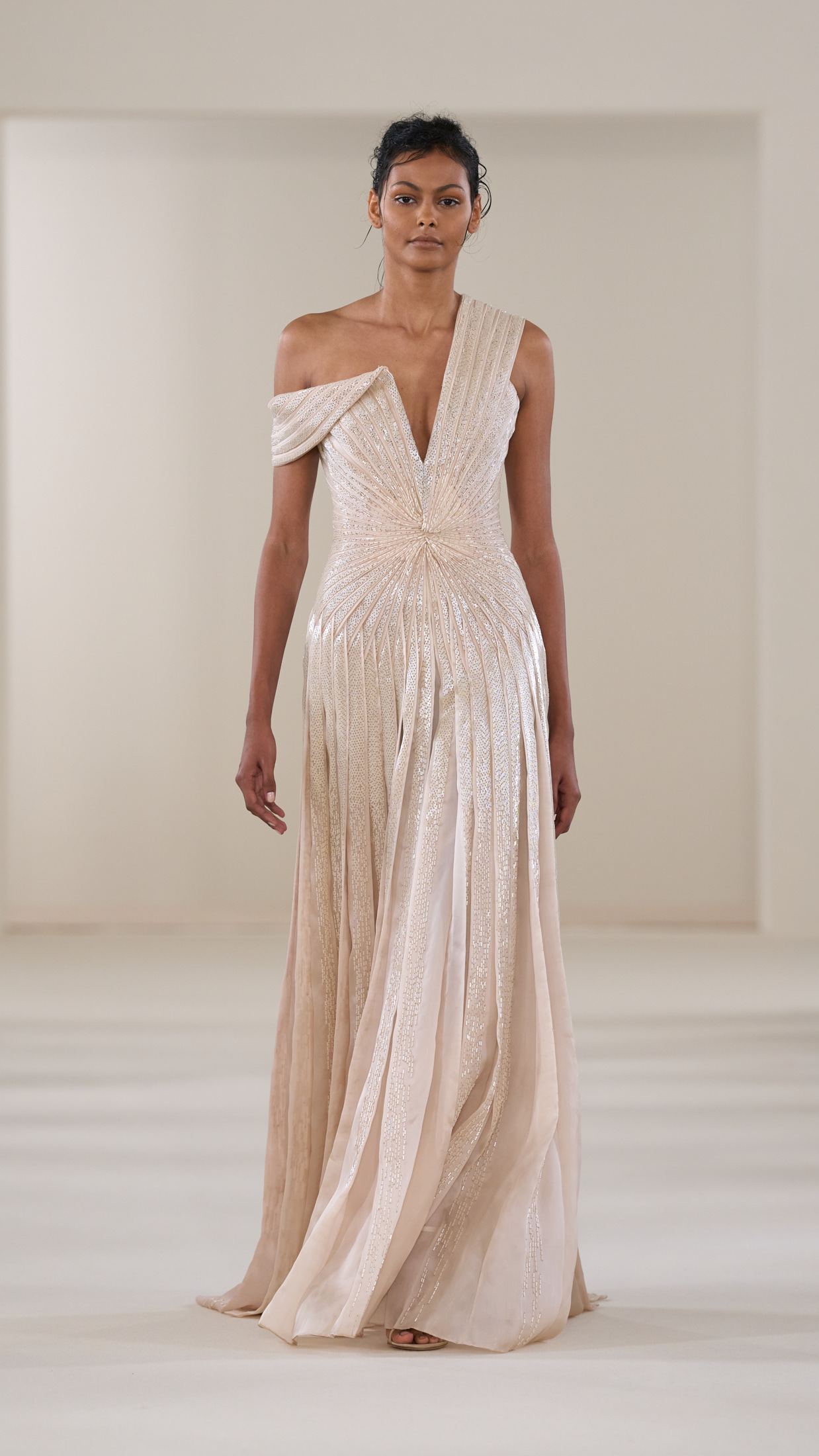
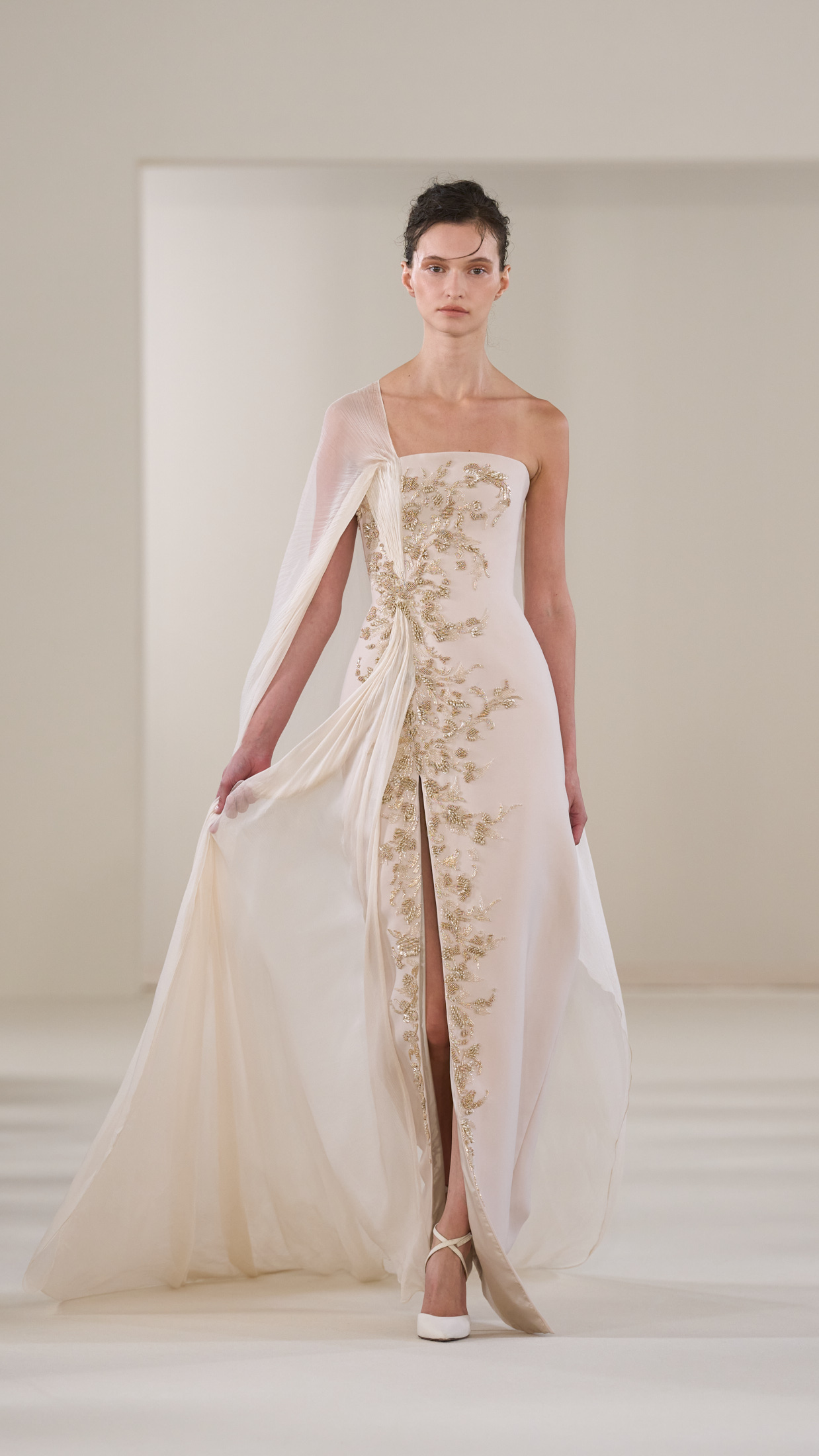
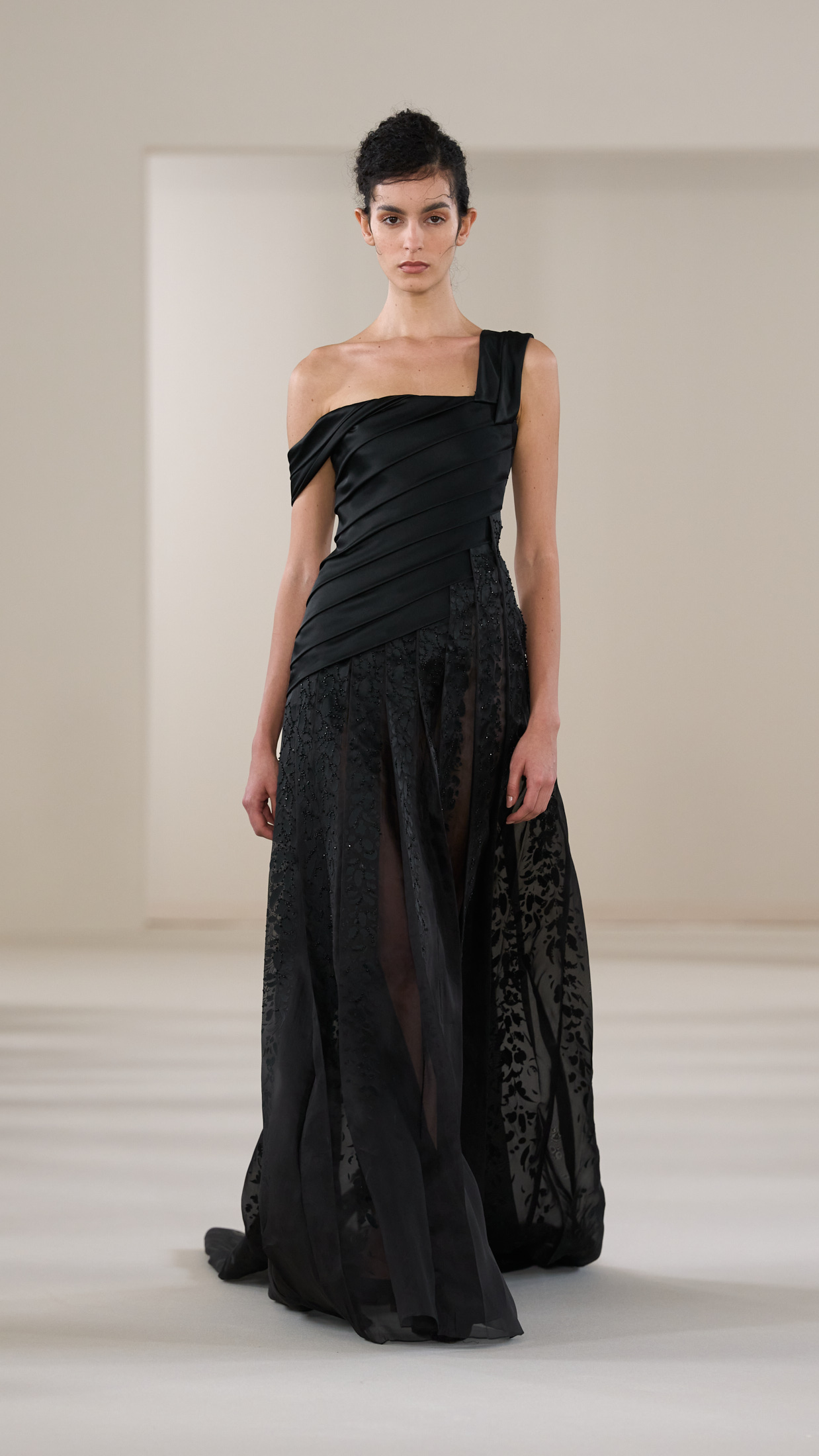
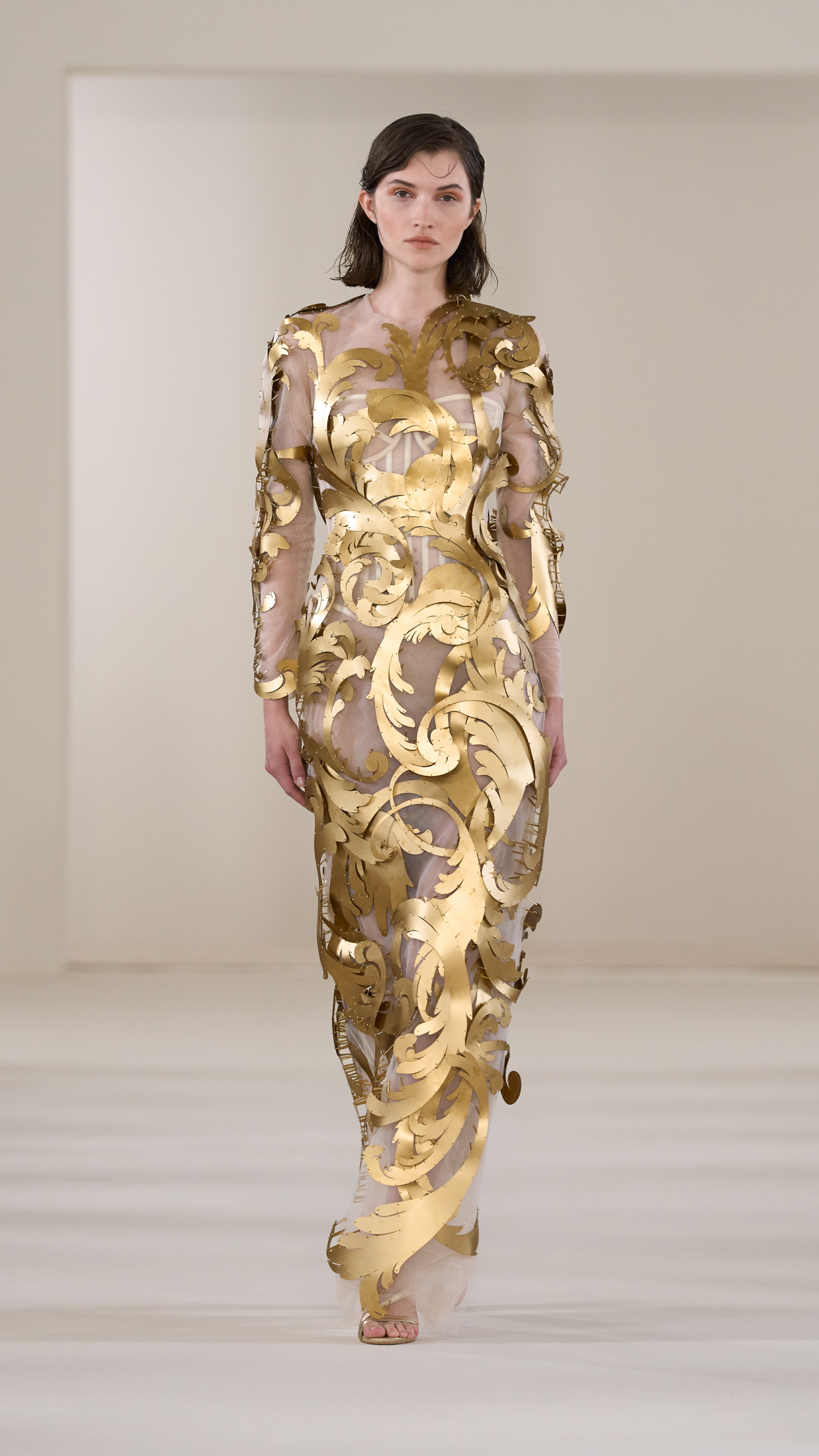
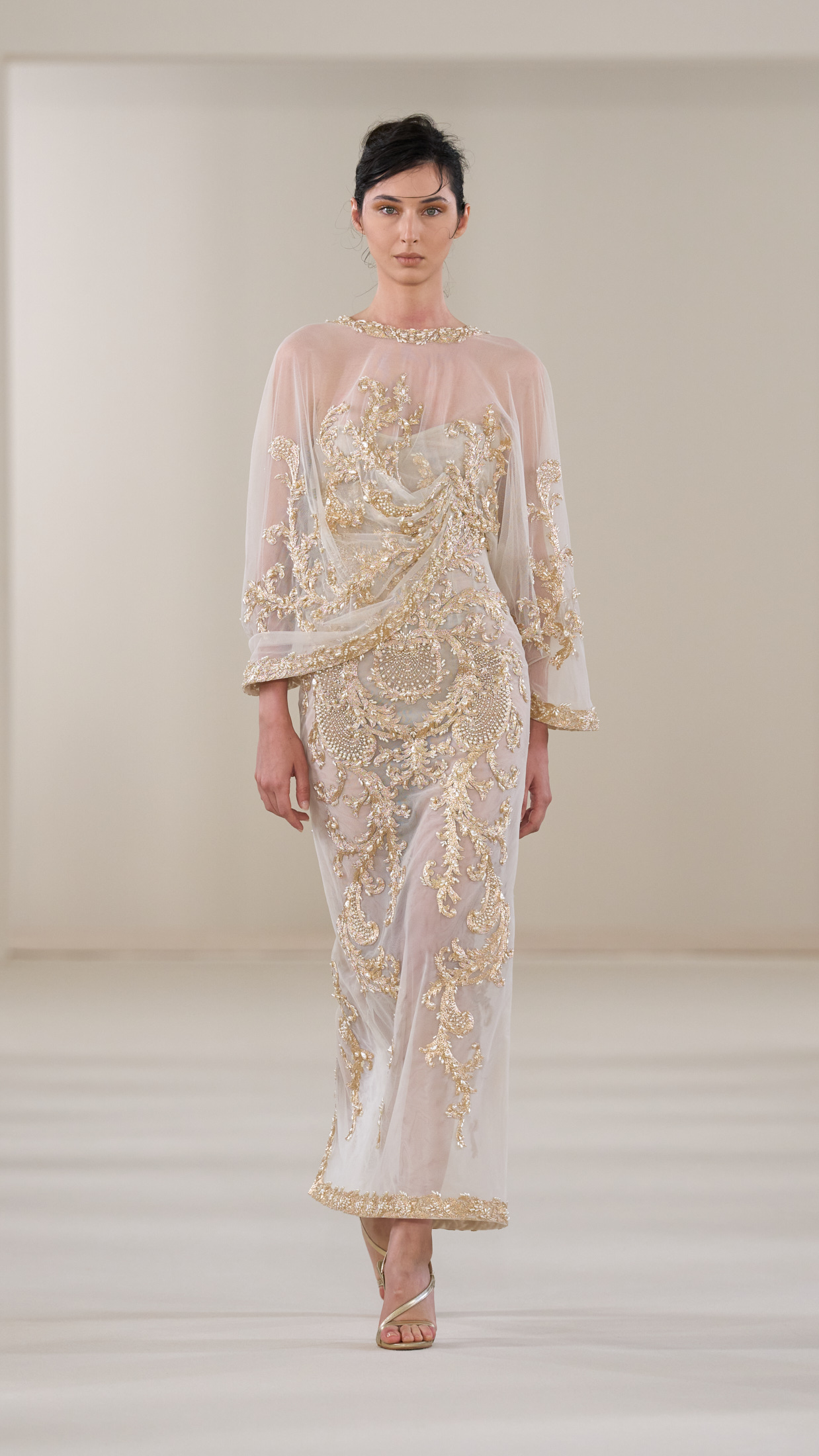
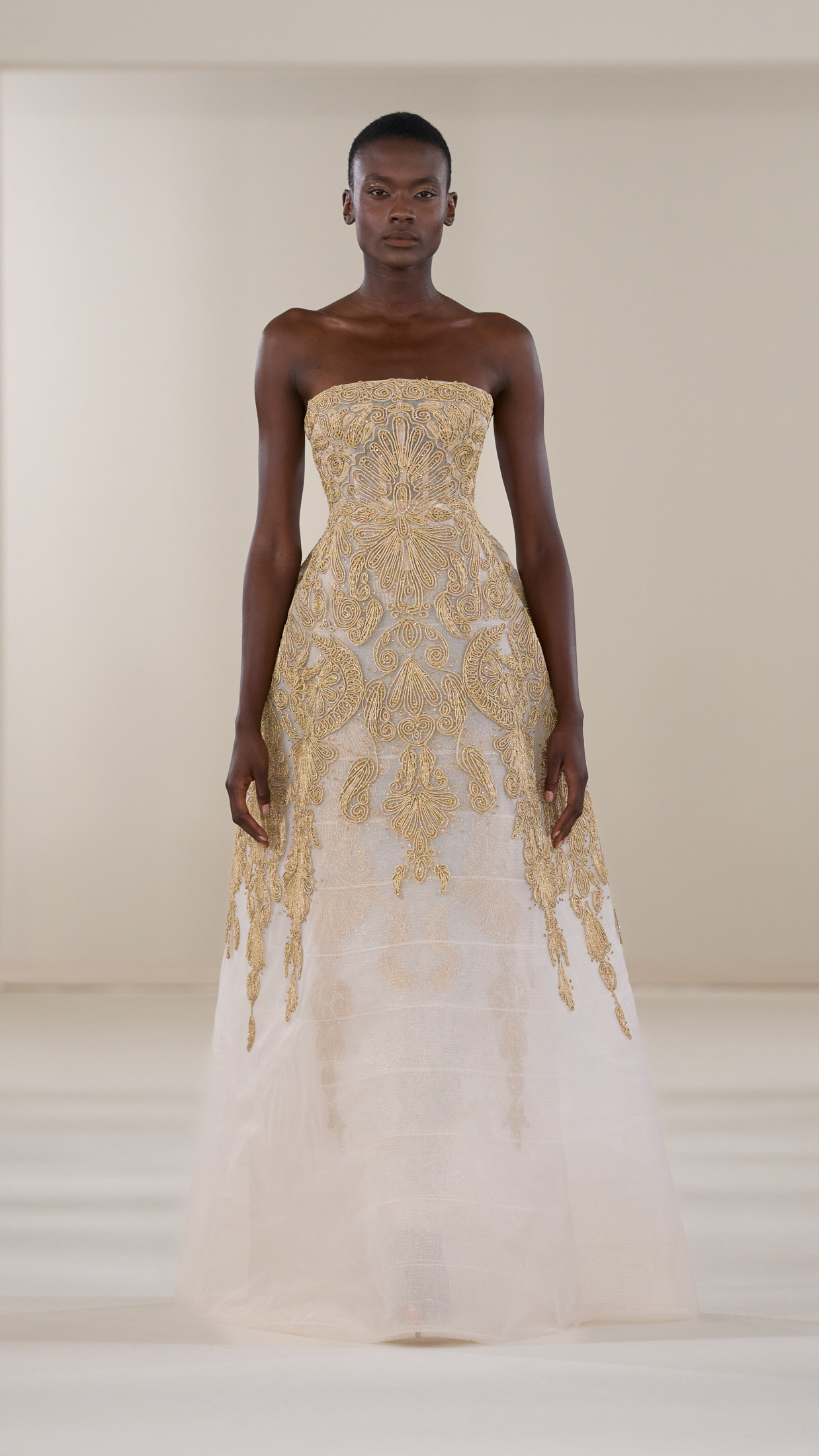
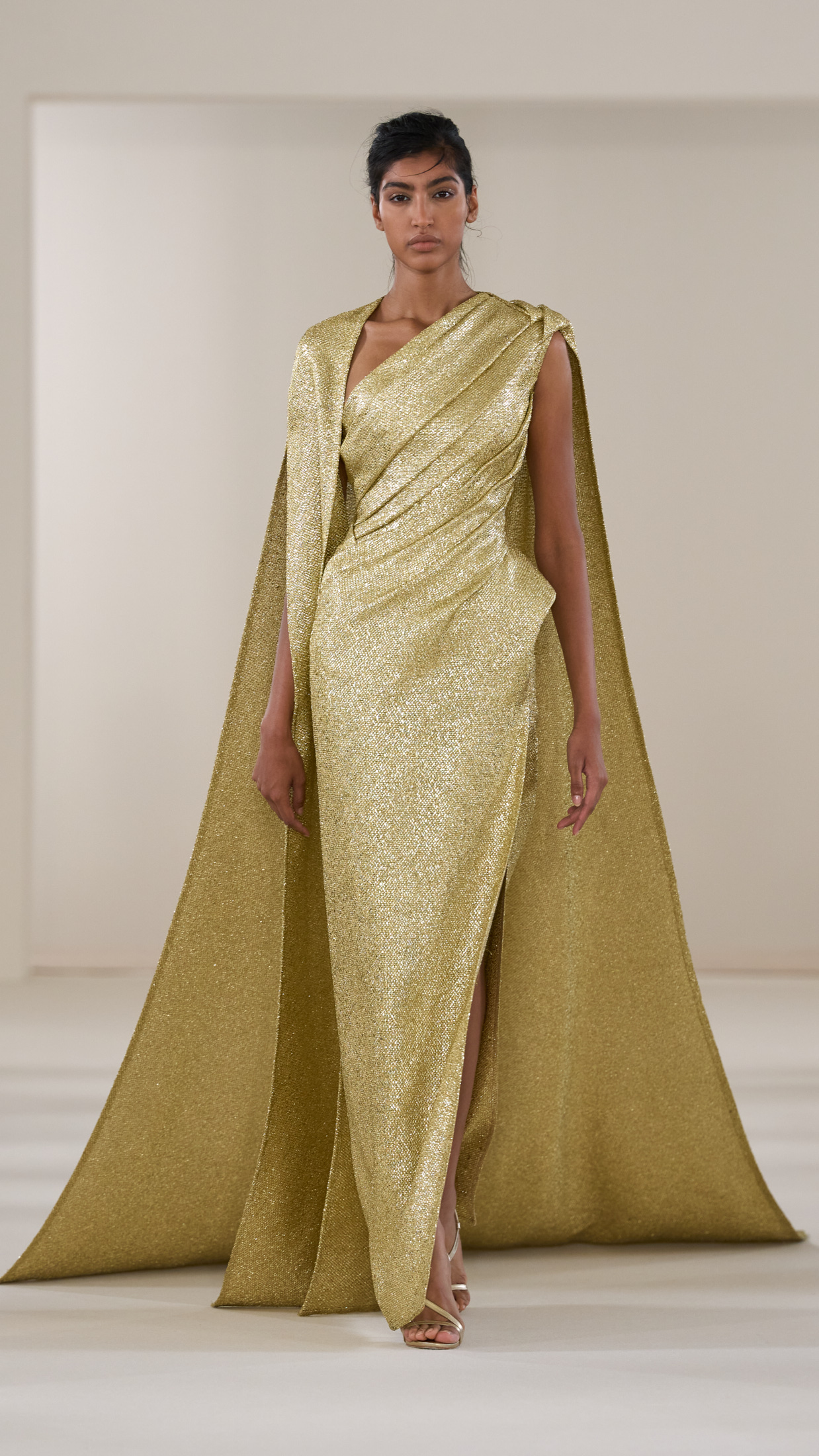
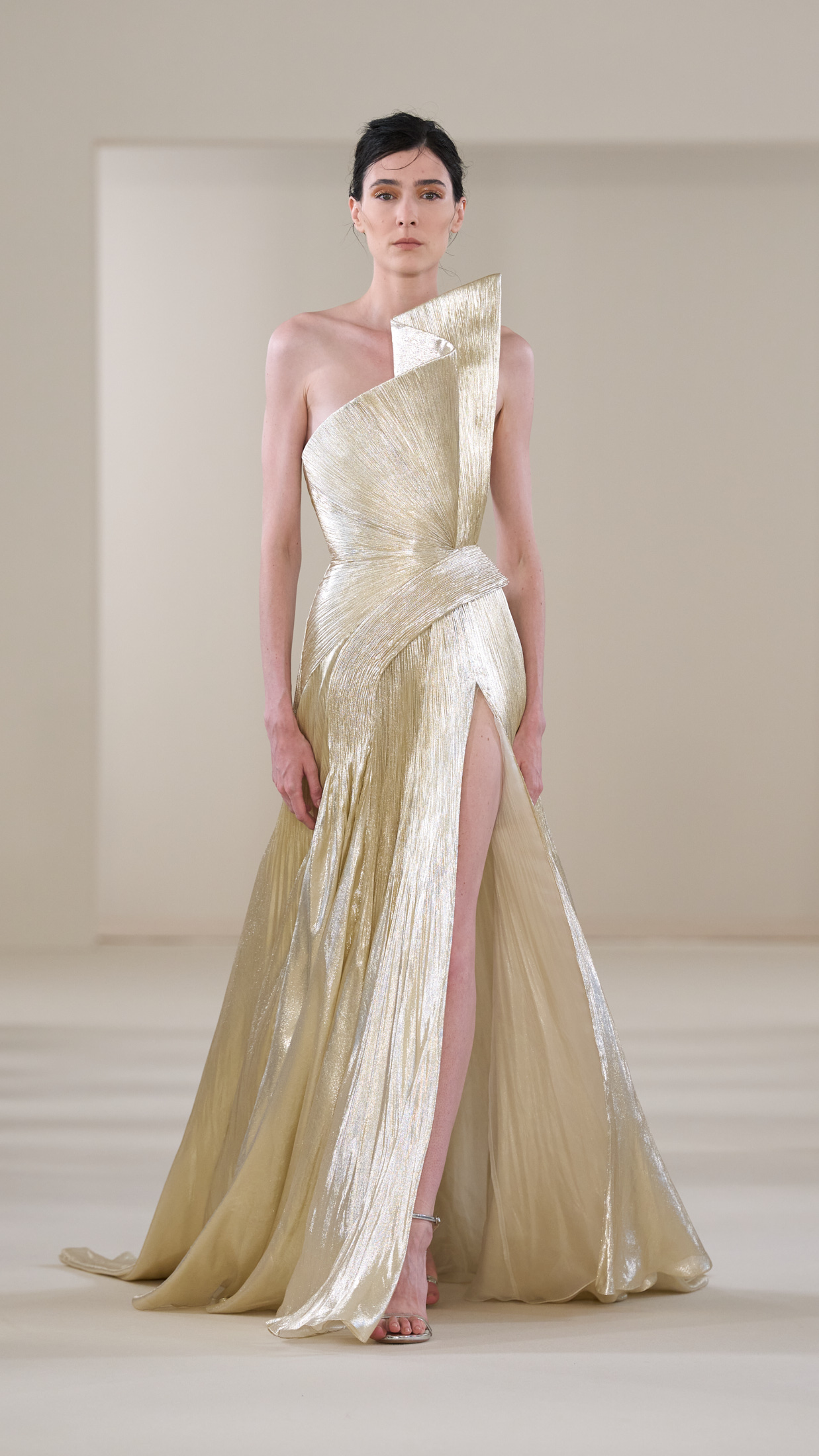
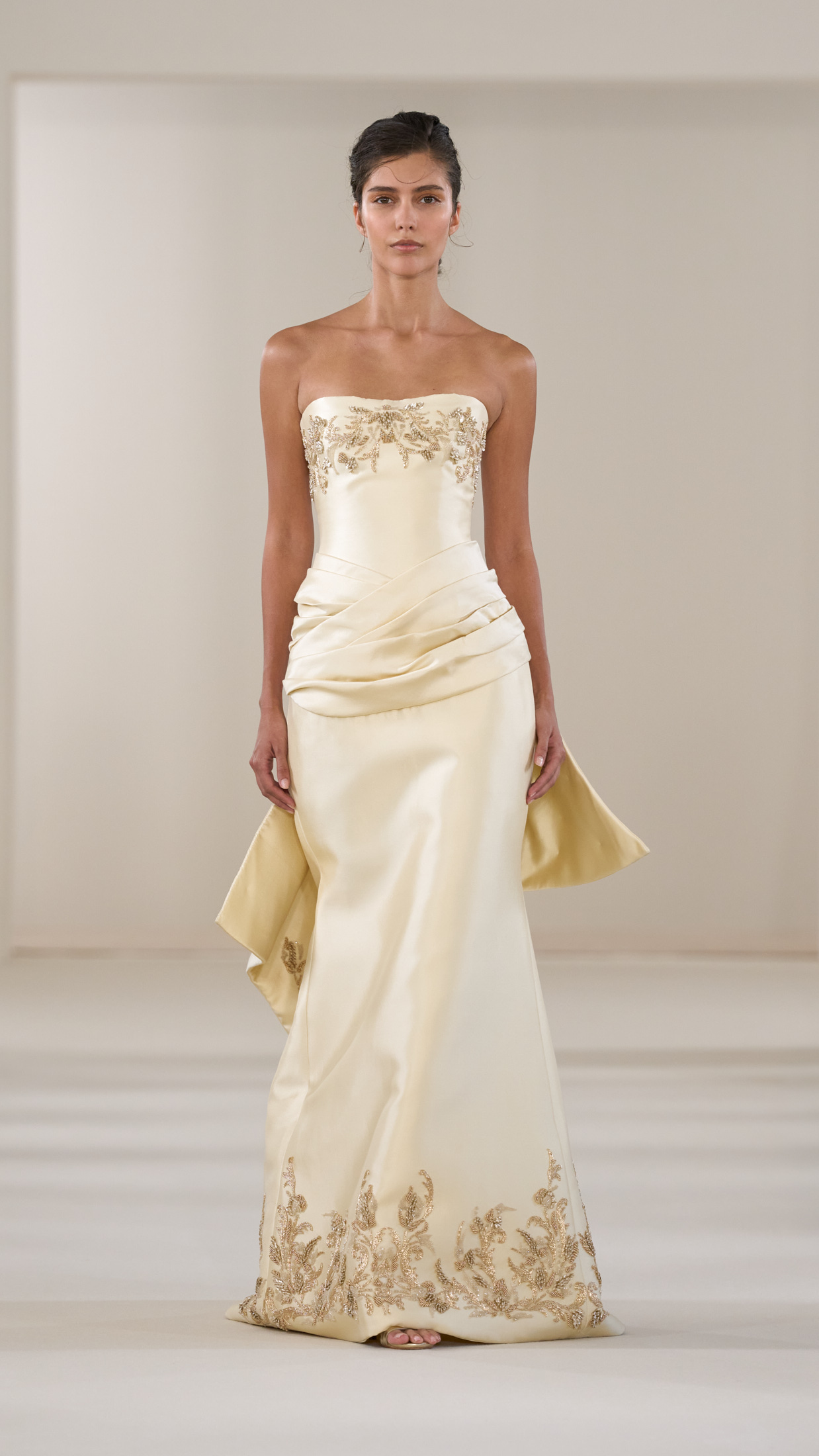
For the Fall-Winter 2026–2027 season, this collection has a name: Threads of Light: A New Dawn. The accompanying press release opens with a sentence that, coming from a Syrian designer speaking to the world from Paris, carries more weight than a mere stylistic flourish: “In times of uncertainty, what endures is what has always united us—beauty, memory, a sense of belonging, and the light that guides us. ” The collection is conceived as a reflection on the enduring bonds that have shaped the cultural landscape of the Arab world for centuries, rooted in a shared heritage that spans the Gulf, Syria, and beyond.
What Rami Al Ali chooses to call “invisible threads”—craftsmanship, architecture, commerce, migration, poetry, music, collective memory—find an almost literal echo in the very vocabulary of haute couture. For here, thread is not merely a metaphor: it is the raw material of the craft. To embroider is to inscribe a trace into fabric; to drape is to give shape to a story. By choosing to make these gestures the explicit subject of his collection rather than merely a tool, the designer shifts our perspective: the dress ceases to be an end result and becomes once again an ongoing narrative—that of a heritage that circulates, is passed down, and is reshaped along trade routes, through exiles, and in folk songs, which, more surely than borders, have defined the contours of a civilization.
There is, in this way of evoking architecture, poetry, or collective memory without ever illustrating them literally, a unique challenge: that of making haute couture a space where a region of the world can tell its own story, far removed from the narratives usually attributed to it from the outside. Paris Haute Couture Week, long regarded as the exclusive echo chamber of Western craftsmanship, has for several seasons now welcomed voices from the Gulf and the Levant that do not ask for a place, but claim it, with their own references. Rami Al Ali is part of this movement without ever claiming it outright—he prefers to let the light, that of his collection’s title, do the work: a new dawn, he suggests, is not heralded; it is sewn, thread by thread, in the studious silence of a workshop.
Cette publication est également disponible en :

