
Provence has been producing rosé wines for centuries. Gassier does things differently—by ensuring that the grapes never see the sun between the vineyard and the press.
For forty-three years, the estate has been cultivating the clay-limestone soils of Sainte-Victoire, the mountain range bordering the Bouches-du-Rhône region that Cézanne painted eighty-seven times. This is no mere decorative coincidence: the red clay retains heat, the limestone drains it, and the microclimate of this slope imposes its own thermal rules on anyone seeking to preserve the acidity of fruit harvested in the height of the Mediterranean summer.
Gassier’s approach is nocturnal. The harvest takes place at night—the grapes arrive at the winery at a temperature that slows oxidation reactions even before pressing begins. This choice isn’t romantic; it’s biochemical. Heat accelerates the interaction between the enzymes in the skin and the phenolic compounds in the juice, which produces color, bitterness, and aromatic instability. Harvesting at night buys time.
The pressing that follows is direct, slow, and delicate—the term “direct” here meaning that there is no prior maceration. The skins do not remain in prolonged contact with the juice: they are separated as quickly as possible to preserve the wine’s pale color and the lightness of the fruit. The blend—Syrah, Grenache, Cinsault, Vermentino—assigns specific roles: Grenache provides body, Cinsault brings floral freshness, Syrah adds structure, and Vermentino contributes a vegetal minerality characteristic of Mediterranean grape varieties of Italian origin.
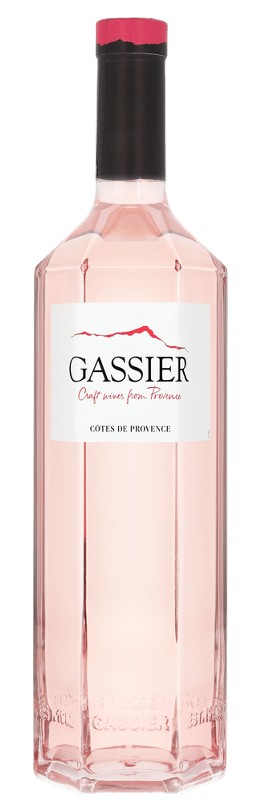
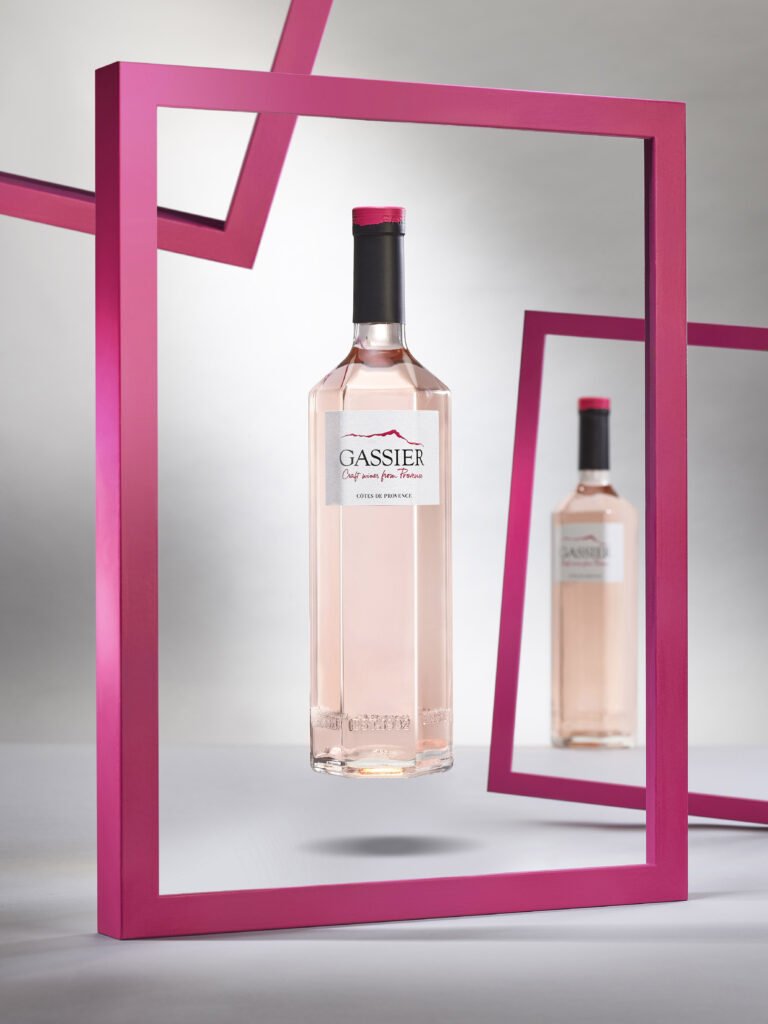
The result in the glass: a pale color with peachy highlights, and a nose that blends strawberry and blackcurrant against a backdrop of stone fruit. The palate is round without being heavy—a texture that the winemakers attribute to gradual pressing and keeping the juice at a low temperature until fermentation. The finish evolves toward wild strawberry and cranberry, two indicators of natural acidity, a sign that the fruit has not undergone any adjustment in the winery.
The estate is certified organic. This changes the way the harvest is managed: without the option of using chemical interventions to correct conditions, every decision made in the field—harvest date, time, and ripeness threshold for each plot—directly affects the final wine. This is precisely why the time of harvest is not merely a matter of atmosphere. It is a methodological requirement.
The blend of the four grape varieties
Vermentino—known as Rolle in Provence—is a late-ripening grape variety of Ligurian or Corsican origin, according to ampelographers, that has gradually become acclimatized to the Mediterranean coast. In a rosé, it contributes less to the color than to the aromatic structure: notes of green almond, a slight iodine-like minerality, and resistance to oxidation. Its role in the Gassier blend is one of precision rather than volume.
A certified organic Provençal rosé, crafted plot by plot on clay-limestone soils at the foot of Sainte-Victoire, is not intended to represent Provence as a whole. It represents forty-three years of observing a single mountain range. The question for future vintages is: to what extent will global warming alter the timing of nighttime harvests—and whether midnight will still be early enough.
Cette publication est également disponible en :

