
Bourbon has historically been a spirit of substance.
Corn, rye, and the time spent in new, charred American oak barrels make up its traditional profile. For more than two centuries, Kentucky’s major distilleries have built their reputations on this interplay between grain, wood, and aging.
The arrival of Jim Beam Pineapple marks an evolution in this story.
Founded in 1795 and passed down through seven generations of the Beam family, this American distillery has built its identity around a bourbon aged for at least four years in new, charred oak barrels. Even today, Fred Noe, representing the seventh generation of the family, embodies this continuity. Yet the longevity of a tradition sometimes depends on its ability to embrace new expressions.
Jim Beam Pineapple is part of this approach.
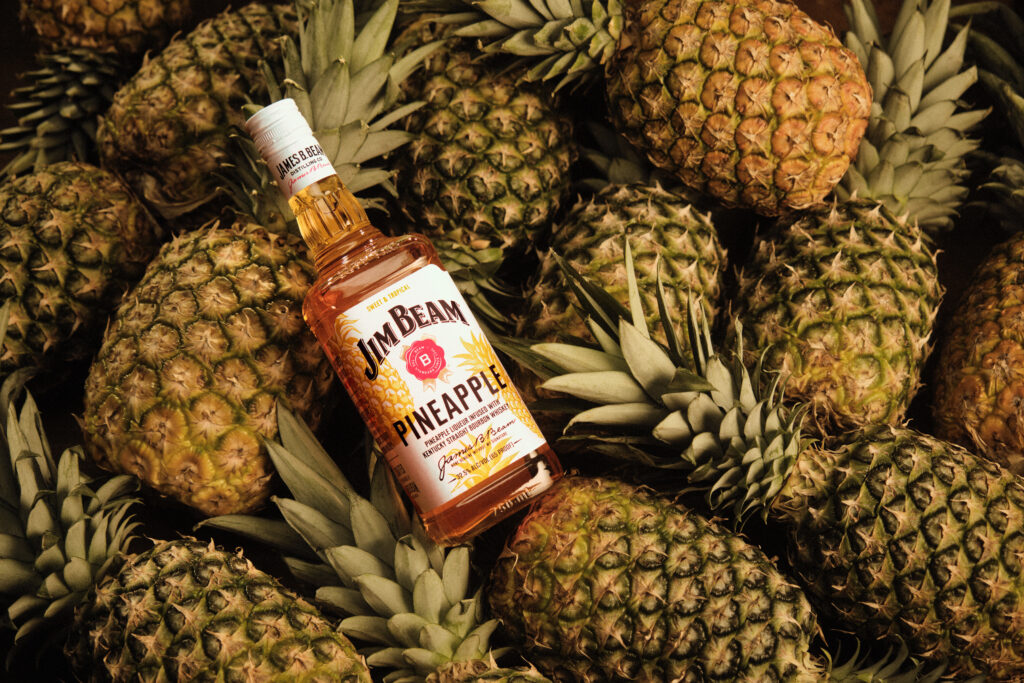
With an alcohol content reduced to 32.5%, this expression takes a more supple approach than that of a classic bourbon. The flavor profile combines the category’s classic notes—vanilla, caramel, and oak—with a fruity dimension dominated by pineapple. The goal is not to mask the bourbon but to shift its focus toward a more accessible and immediately recognizable profile.
This shift reflects a broader change in drinking habits. Whiskey is no longer enjoyed only neat or on the rocks. It has become a cocktail ingredient, a spirit for social gatherings, and sometimes even a gateway to the world of bourbon for consumers who are not yet familiar with its conventions.
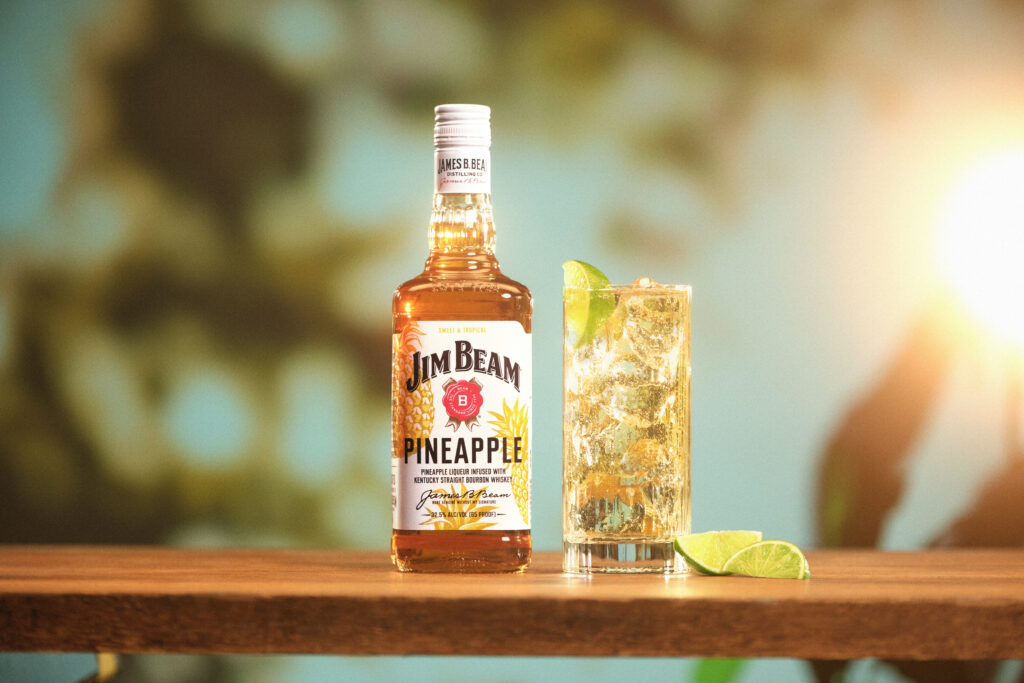
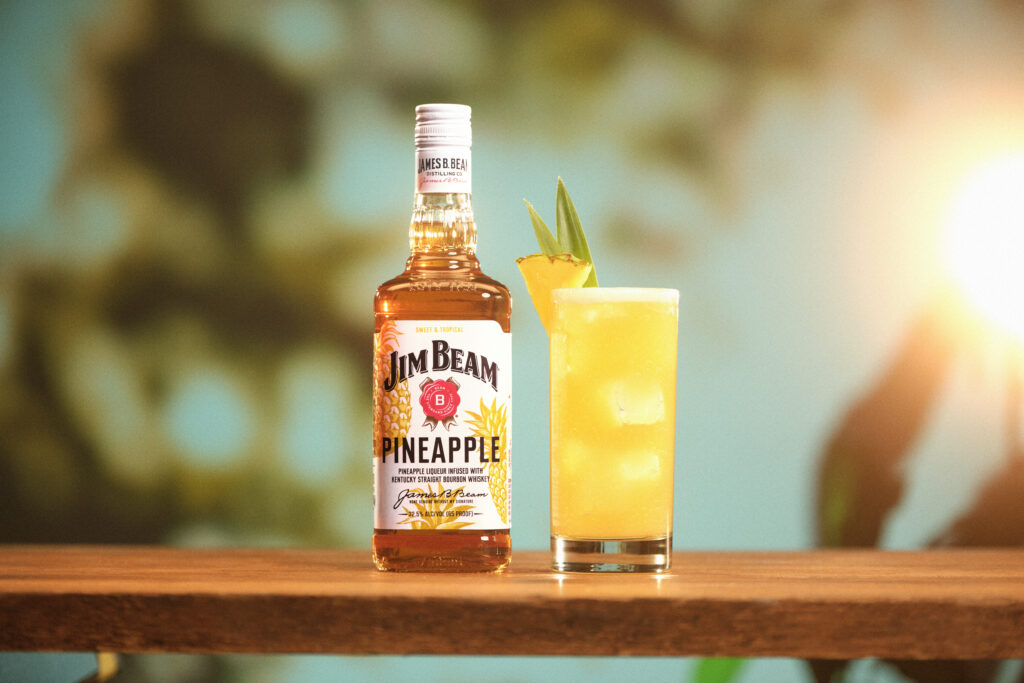
Jim Beam’s marketing, in fact, places greater emphasis on serving methods than on the spirit’s technical characteristics. The “Pineapple & Lemonade” or the pairing with plain pineapple juice reflects a desire for simplicity. The product is designed for immediate home use, a far cry from the sometimes intimidating rituals of traditional tasting.
The most interesting tension lies in the coexistence of two different timeframes. On the one hand, a distillery founded in the late 18th century, committed to a minimum aging period of four years in new barrels. On the other, a product designed for quick cocktails and more spontaneous consumption. This duality encapsulates much of what’s at stake in the American whiskey industry today.
The debate, therefore, goes far beyond pineapple.
For a long time, spirits have thrived on cultural fusion. Gin was built on the spices of maritime trade. Rum accompanied travelers along colonial routes. Today, the major bourbon houses are, in turn, experimenting with new flavor combinations to stay connected with a generation whose drinking habits differ profoundly from those of their predecessors.
Jim Beam Pineapple is less of a departure than a reflection of this trend. It’s a bourbon that evokes the tropics while retaining, in the background, the notes of vanilla, caramel, and wood that have made Kentucky famous.
Cette publication est également disponible en :

