
Three days a year, LVMH lifts the veil on the workings of its houses. At Hennessy, this Journées Particulières ritual opens this year on a subject rarely associated with luxury: distillation, the technical and largely invisible gesture that decides, before anything else, the character of a cognac.
On 16, 17 and 18 October 2026, Maison Hennessy will exceptionally open to the public the Peu distillery, in Juillac-le-Coq, in Charente — a site which, unlike the aging cellars readily shown to visitors, usually remains closed. The choice is not trivial. Distilling is no spectacle: it is a long, repetitive process, governed by heat and gesture, hard to recount without reducing it to imagery of copper and steam. By showing this particular place, the Maison takes the risk of exposing not the result of its savoir-faire, but its driest mechanism — the one where, very concretely, the difference between an ordinary cognac and a Hennessy cognac is decided.
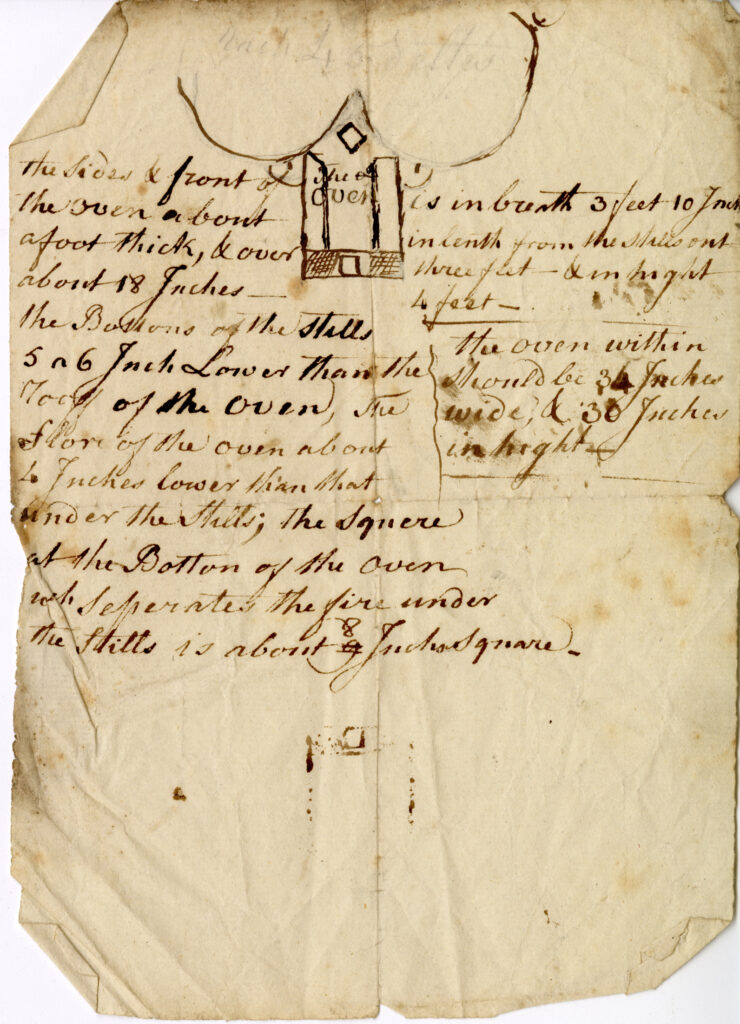
This opening is accompanied by an exhibition, presented from 2 July to 29 November at the Musée des Savoir-Faire du Cognac and at the Maison du négociant, which traces the history of Charentais distillation since the 18th century. Visitors will see a sketch of a still attributed to Richard Hennessy himself, founder of the Maison in 1765, as well as a distillation treatise dating from 1609 — nearly a century and a half before the creation of the brand, proof that this knowledge never belonged to a single house but was handed down, refined and contested over several generations of bouilleurs de cru. More unexpectedly, a 1930 tondo depicting the Maison’s vineyards and distilleries, restored for the occasion, converses with a contemporary work by the artist Zhang Huan entitled Eaux-de-vie, inspired by Hennessy’s heritage collections. The pairing of a 17th-century scientific document and a piece of contemporary art sums up the exhibition’s ambition fairly well: to show that distillation is not knowledge frozen in the past, but a matter constantly reinterpreted.
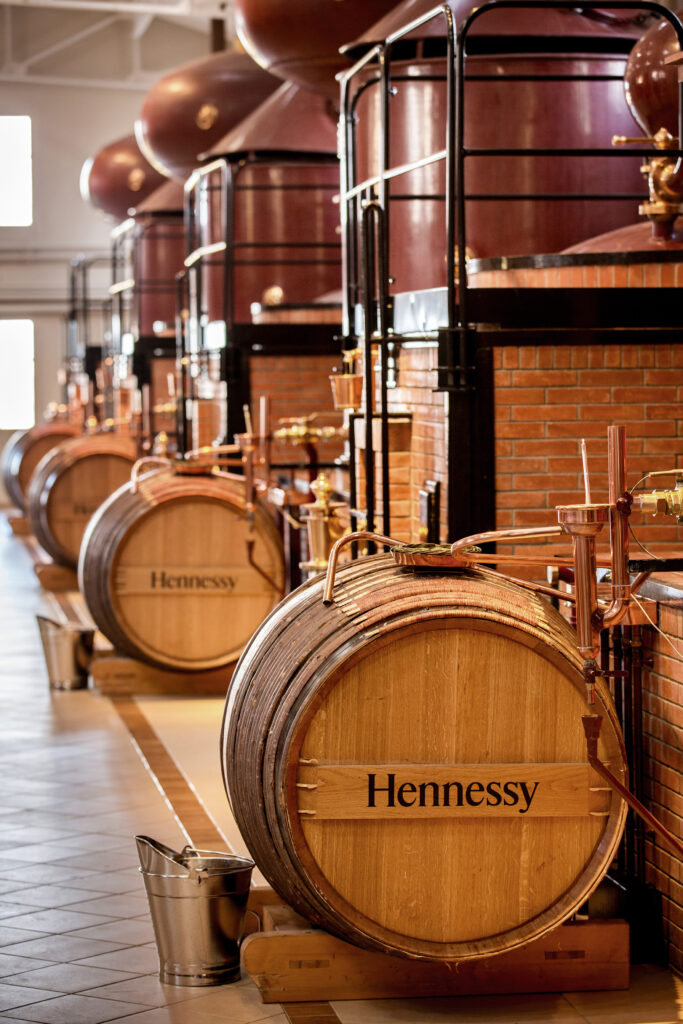
For it is there that the true subject of this communication lies, more than in the exhibition itself: the Peu distillery is not only a place of memory, it is also where the Maison carried out, in 2022, the trials that made it possible to produce the first cognac eau-de-vie distilled with a share of green hydrogen. In other words, the same site that houses the gestures inherited from Richard Hennessy is where the energy transition of an entire industry founded on combustion is being quietly prepared. A continuity that the Maison chooses to present without apparent rupture — as if innovation were merely the logical extension of tradition, whereas it constitutes, by implication, a profound questioning of centuries-old methods.
This tension between permanence and transformation finds a face: that of Yoan Peponnet, named Virtuose LVMH 2025, a distinction that rewards craft excellence within the group. Trained within the Maison, and chef distillateur of the Peu distillery since 2018, he now advises more than 650 partner bouilleurs de cru on the evolution of their practices. His role sums up, on its own, what it can mean to “pass on” a savoir-faire at a time when the raw material of that knowledge — climate, energy, available time — is itself changing in nature. It is no longer only a matter of reproducing a learned gesture, but of accompanying its mutation without losing its meaning.
One question remains that neither the exhibition nor the visit will settle: what becomes of an “ancestral savoir-faire” when the very conditions that shaped it — a stable climate, abundant and inexpensive energy — cease to exist? The Journées Particulières will perhaps answer this question less than they will place it, for three days, before the public.
Cette publication est également disponible en :


