
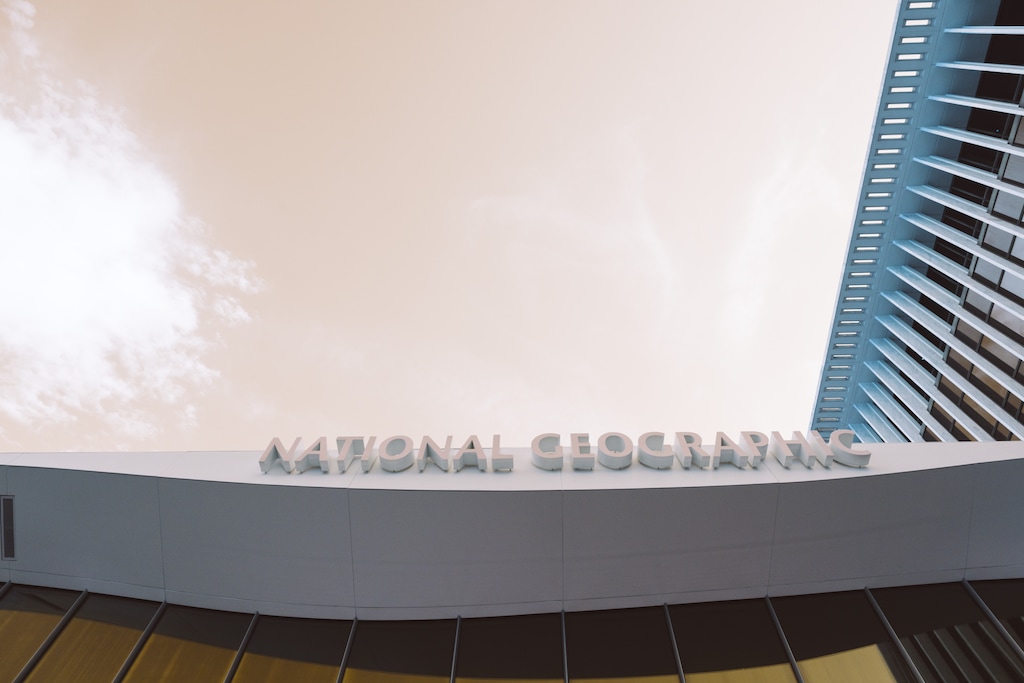
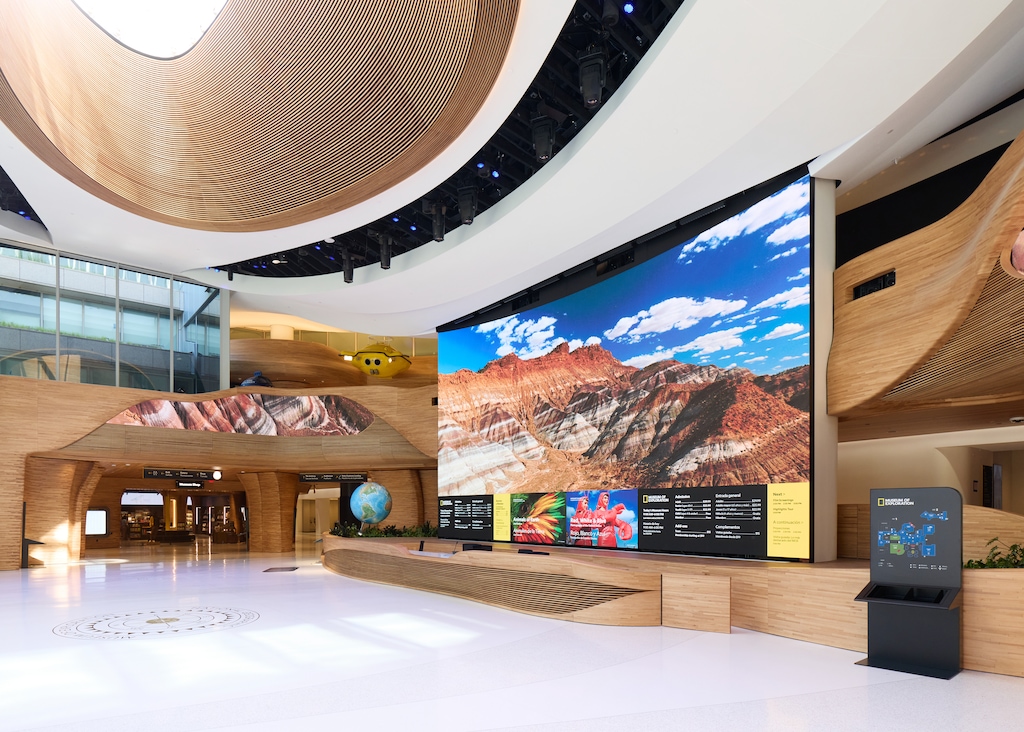
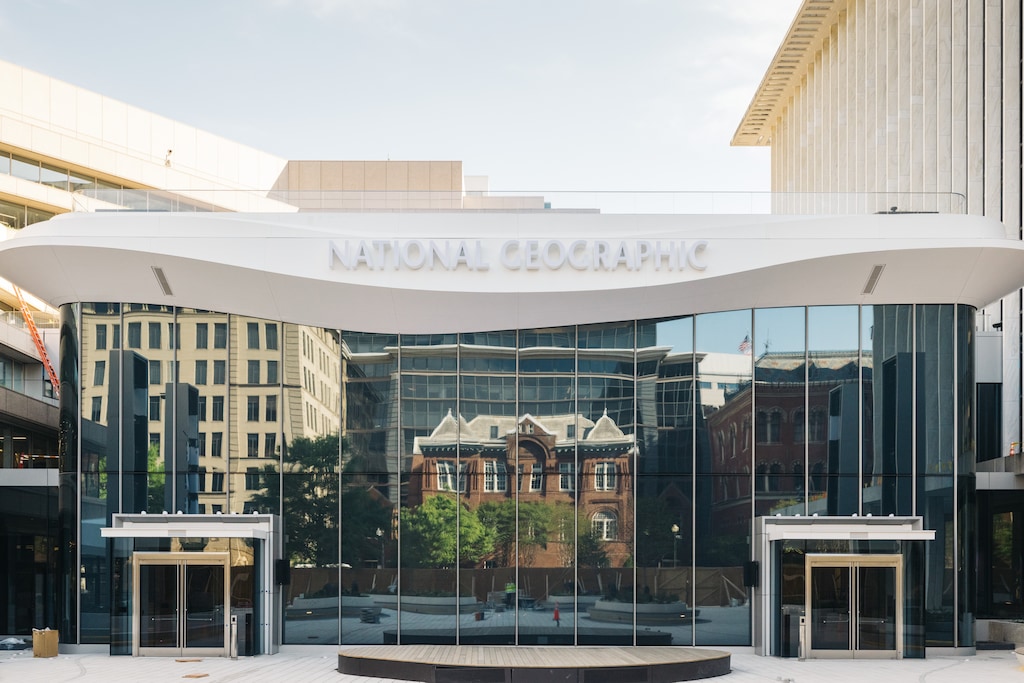
The National Geographic Society has just reopened its Washington, D.C., headquarters under a new name, Base Camp, which now features a museum open to the public. Rolex, which has been associated with the Society since it equipped the expedition that reached the summit of Everest in 1953, has become a founding donor and opening partner of the museum. After 70 years of co-funded expeditions, the partnership has taken the form of a permanent venue for the first time.
From a climbing rope to a building facade
The partnership dates back to the ascent by Edmund Hillary and Tenzing Norgay—the first men to reach the summit of the world’s highest mountain in 1953—who were equipped by Rolex. The following year, National Geographic magazine published a feature on the expedition. That article marked the beginning of a relationship that has continued uninterrupted for decades. In 2019, the partnership took on a new scale: it became a central pillar of Rolex’s Perpetual Planet Initiative, a program that funds scientific expeditions rather than isolated feats.
“National Geographic and Rolex have been partners for more than 70 years now. “We share a common commitment to exploration and innovation,” says Ian Miller, Chief Science and Innovation Officer of the National Geographic Society. This statement frames the partnership as a long-term commitment rather than a one-time event—a shift that will find its architectural expression in 2026.
A building designed to symbolize a return from a mission
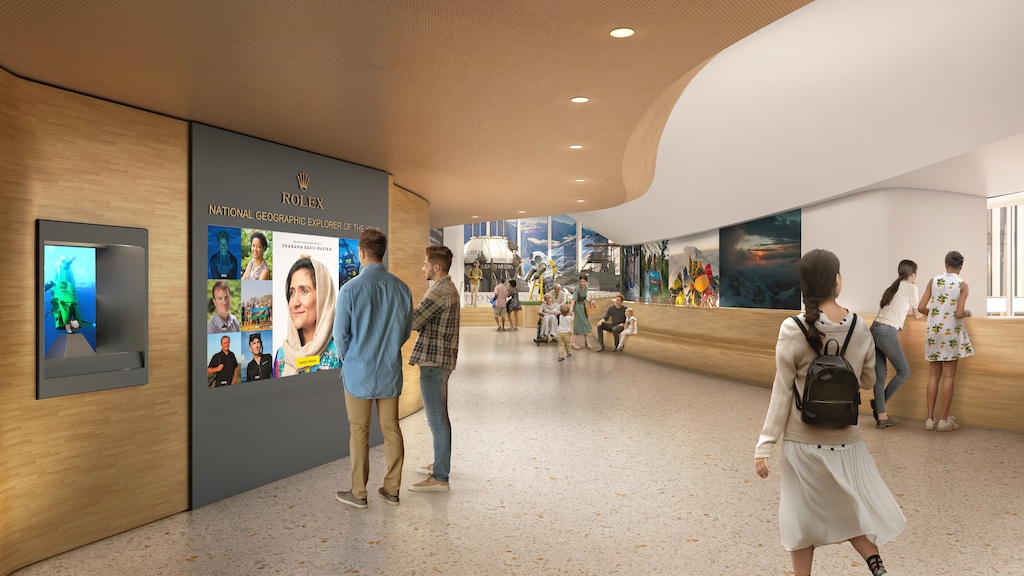
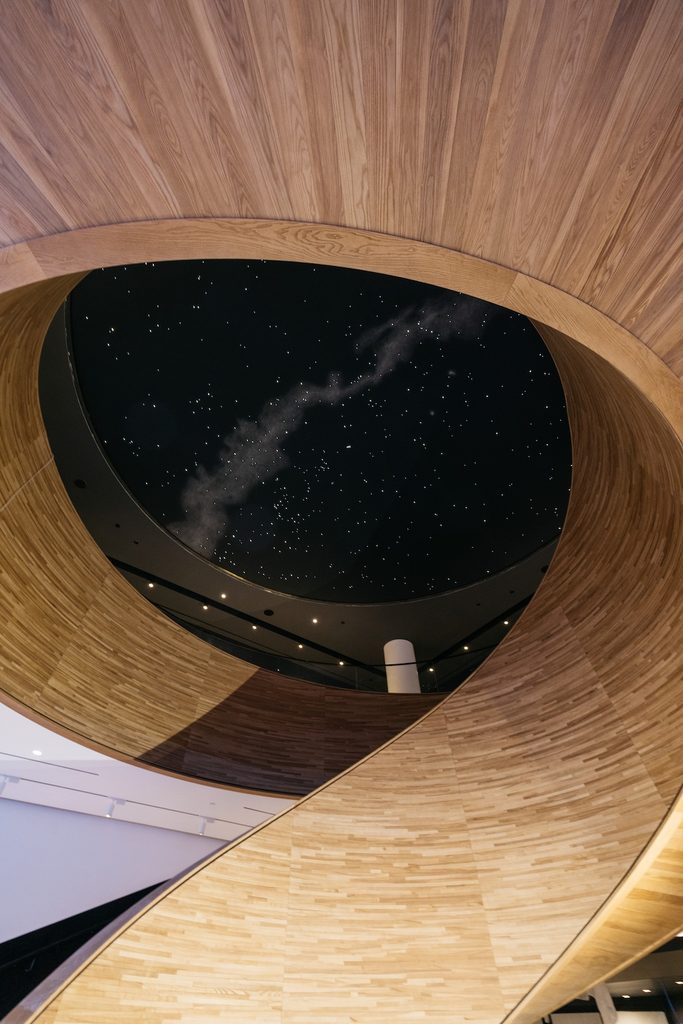
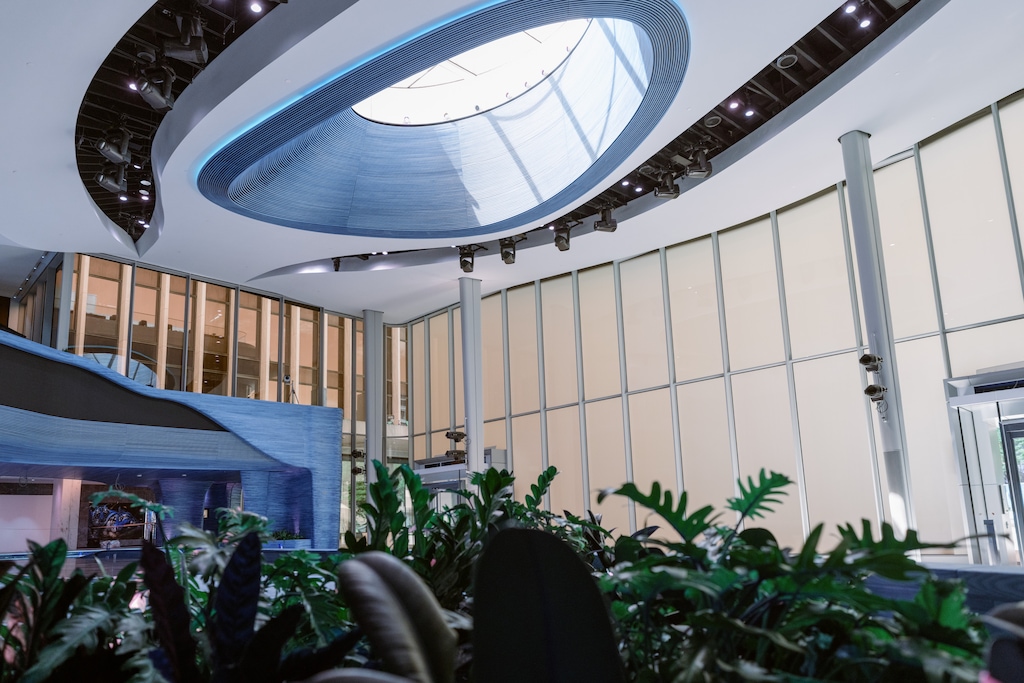
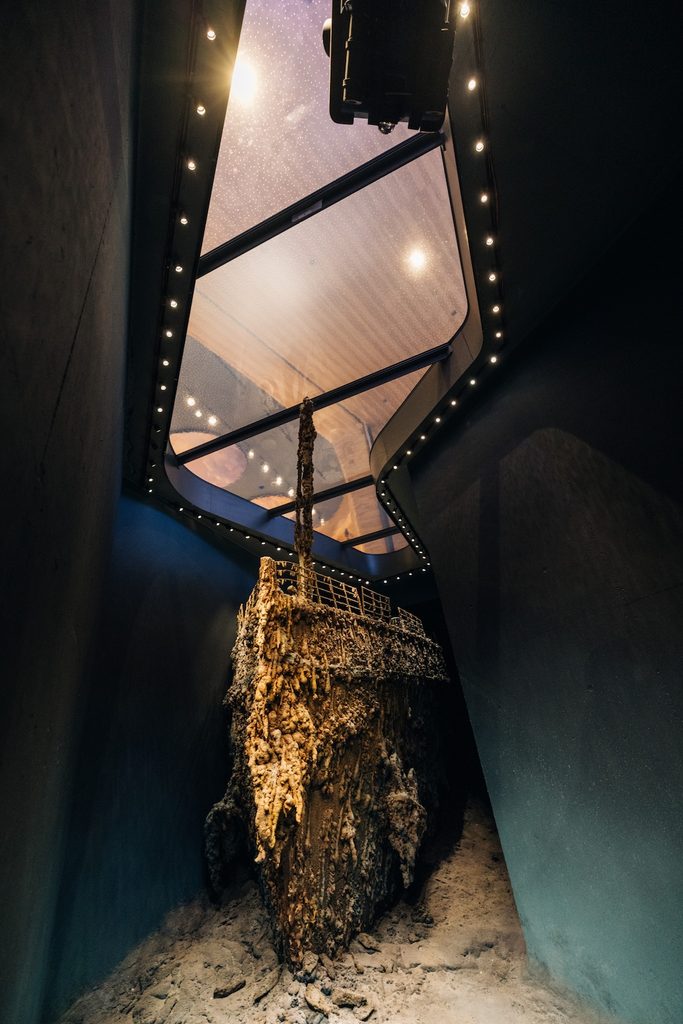
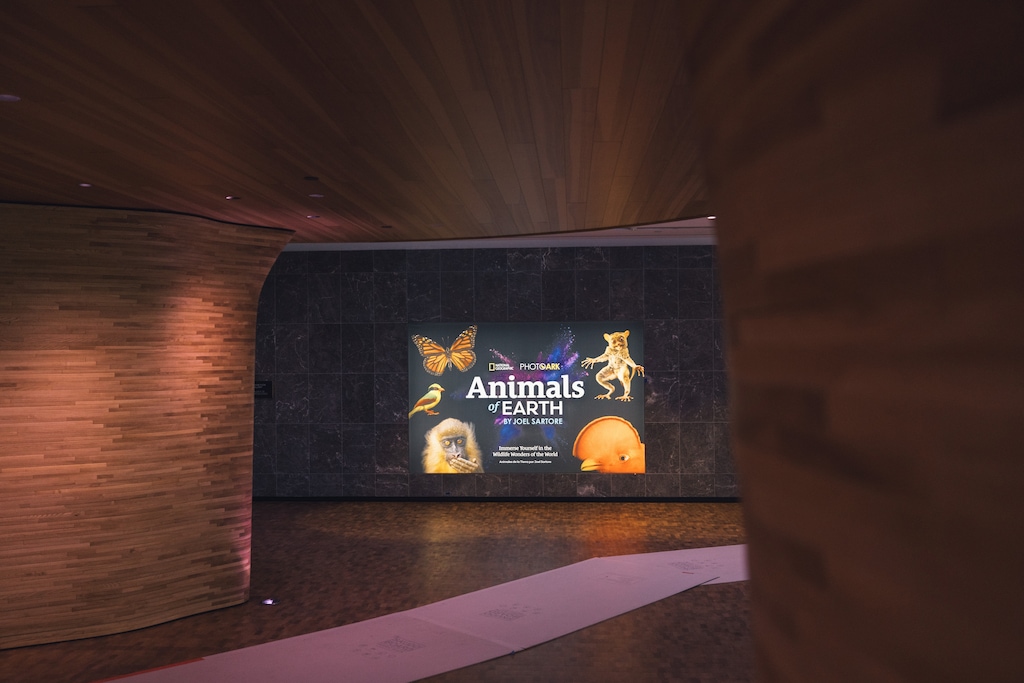
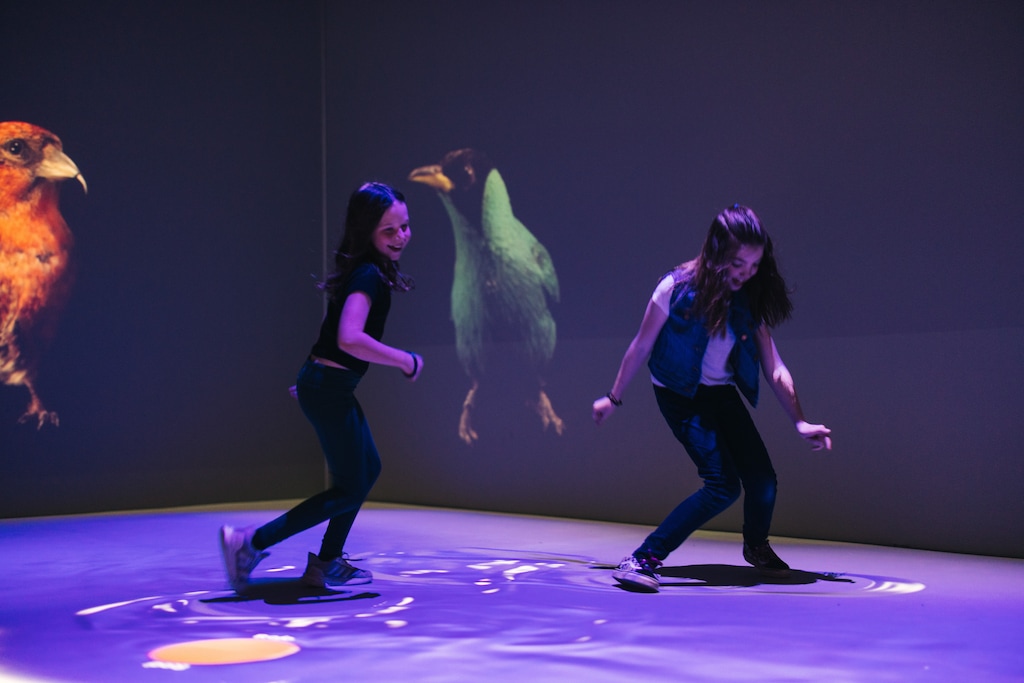
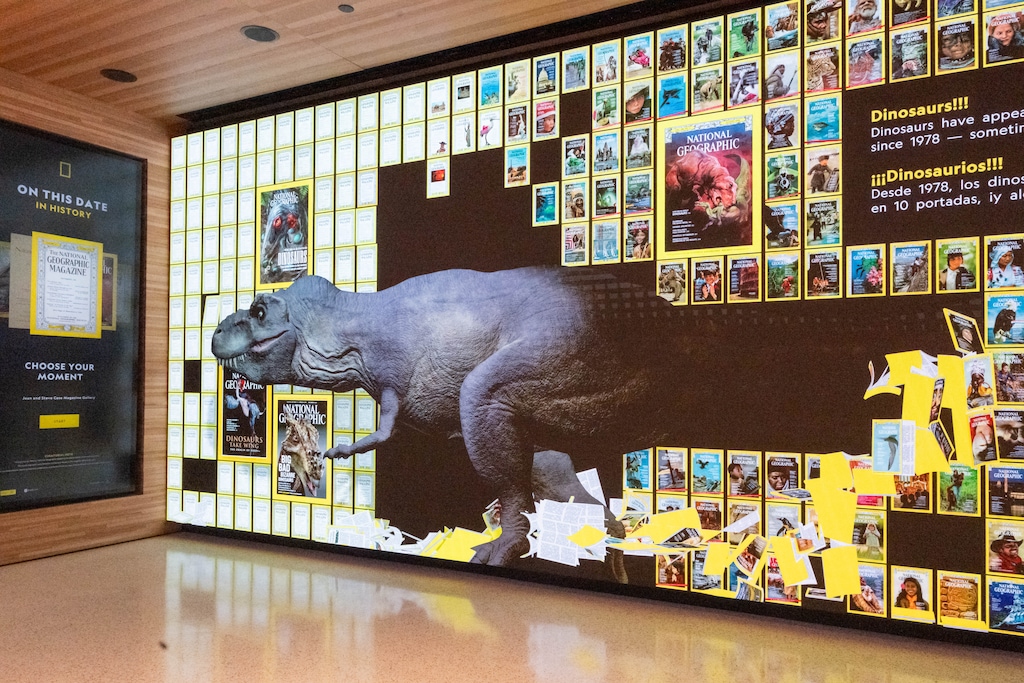
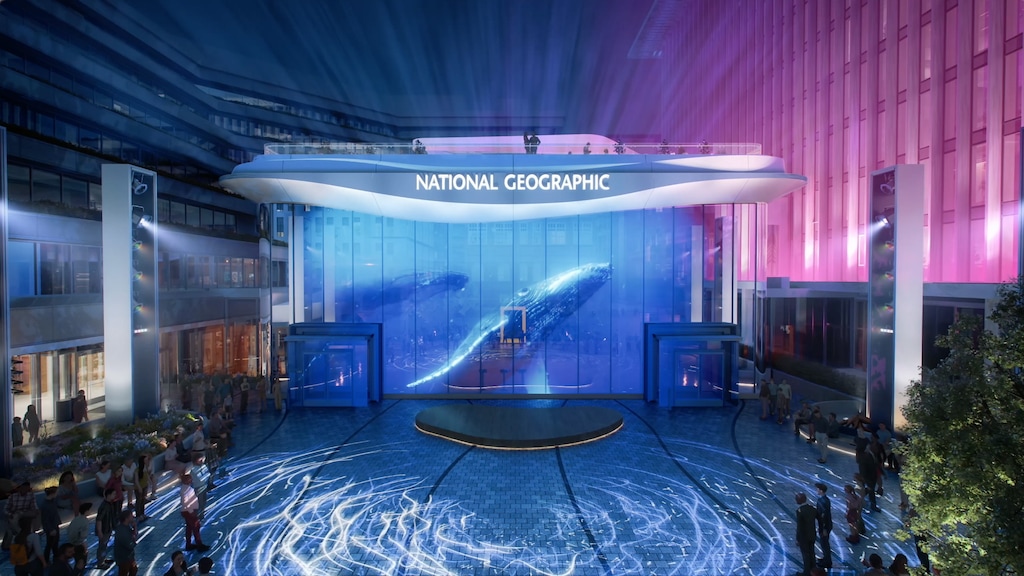
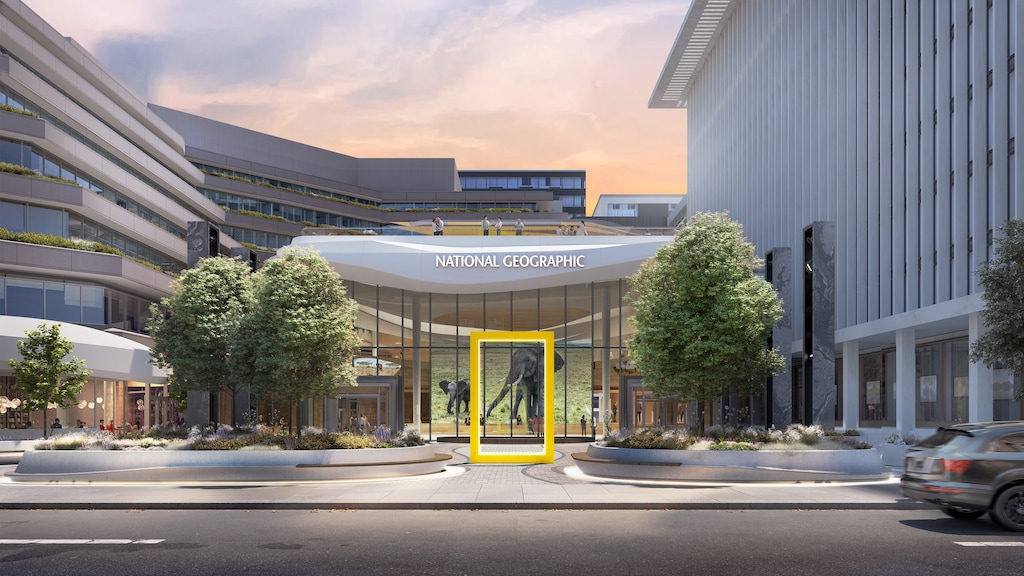
Base Camp is designed as the place where explorers affiliated with the Society return after a mission: to submit their data, reconnect with peers, and engage with a wider audience. The Museum of Exploration, which is opening there, serves as its outward-facing extension: a permanent exhibition space where interactive technologies and immersive experiences showcase the work of the Society’s explorers.
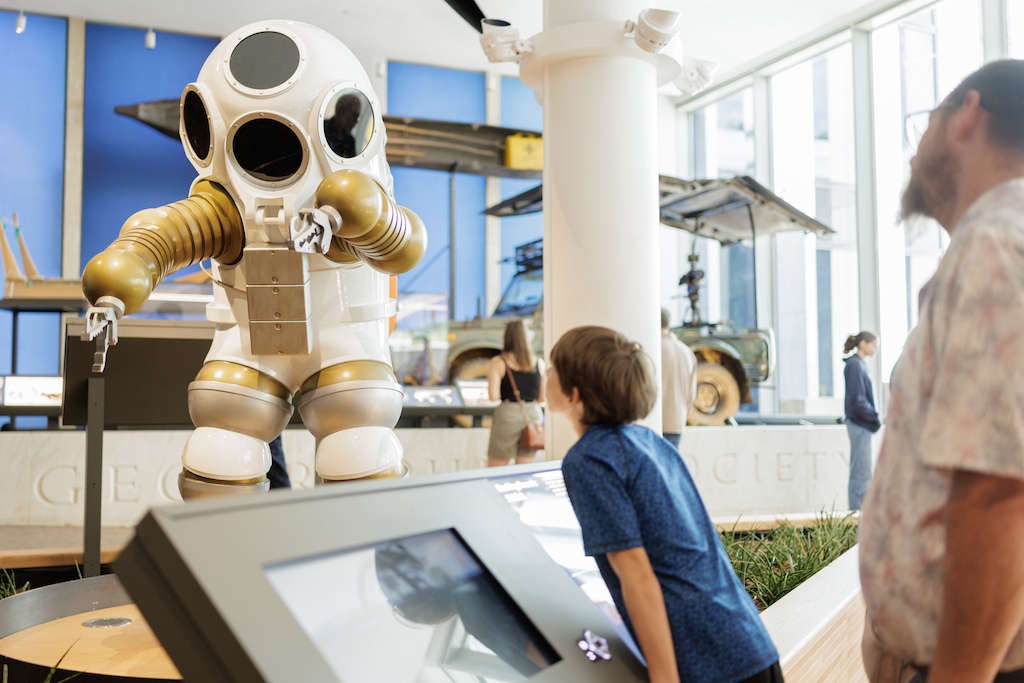
Rolex is sponsoring a space there called Rolex Explorers Landing, organized into four sections (Spark, Trek, Purpose, Impact) that trace the journey of an expedition from its initial concept to its measurable impact. Visitors will see, among other things, artifacts from landmark expeditions, such as the pressurized diving suit worn by Rolex ambassador Sylvia Earle during the deepest untethered underwater walk ever undertaken, in 1979. A second installation, the Perpetual Planet Expeditions Reader Rail, displays data from the field—reported in near real time—by the ongoing Perpetual Planet expeditions.
Details. The Rolex Explorers Landing unfolds across four fixed sequences (Spark, Trek, Purpose, Impact), which mirror the narrative structure of any scientific expedition: from the intuition that sparks it to the impact it documents. Among the items on display is the diving suit Sylvia Earle wore in 1979 during the deepest untethered underwater walk ever recorded.
Fund the expedition, then fund the story behind it
What Rolex is buying here goes beyond the visibility of a logo on a museum wall. By funding the permanent exhibition design of a space that explains what exploration is to a non-specialist audience, the Geneva-based company shifts from the role of expedition sponsor to that of co-author of their narrative—a subtle but real shift in interpretive power. The selection of exhibited objects, the four-part structure, and the highlighting of certain figures over others: these are now editorial choices with which a watchmaker is inherently associated.
This approach to philanthropy is part of a broader initiative. The Perpetual Planet Initiative, launched in 2019, now brings together more than 30 organizations working across three areas: the oceans, with Mission Blue and Sylvia Earle, as well as Cristina Mittermeier and Paul Nicklen; land-based conservation, including a strengthened partnership with the National Geographic Society and the Rewilding Argentina and Rewilding Chile programs; and science, health, and technology, through Rolex Award laureates such as Andrew Bastawrous and Miranda Wang. Since 2011, Rolex and the Society have annually honored a Rolex National Geographic Explorer of the Year at the Society’s annual Explorers Festival. The 2026 title went to Krithi K. Karanth, a 2019 Rolex Awards laureate, for an educational program addressing human-wildlife conflict that has reached more than 50,000 children in India.
“In conservation, we can’t settle for just one year of support. We have to build these projects for the long term. The Perpetual Planet Expeditions represent a partnership between National Geographic and Rolex, and this is invaluable because these are projects that last three or four years,” notes Fernando Trujillo, Rolex National Geographic Explorer of the Year 2024 and explorer on the Perpetual Planet Amazon expedition.
The museum operates according to the same logic as the expeditions it showcases: a commitment that is not limited to a one-time budgetary exercise, but is part of a long-term plan. It remains to be seen what this long-term approach will yield once the exhibits are permanently installed—whether the Reader Rail will continue to update the narrative as the expeditions progress, or whether the museum, like so many other temples of exploration before it, will end up telling a story frozen in time as of its opening date.

Cette publication est également disponible en :

