
There is something telling about the fact that it took until 2025 for a book to offer a structured analysis of the French art of living. Hundreds of brands claim to embody it, dozens of hospitality schools teach it, and international communication strategies have drawn on it for decades—and yet, no analytical framework had previously allowed us to define its contours with precision.
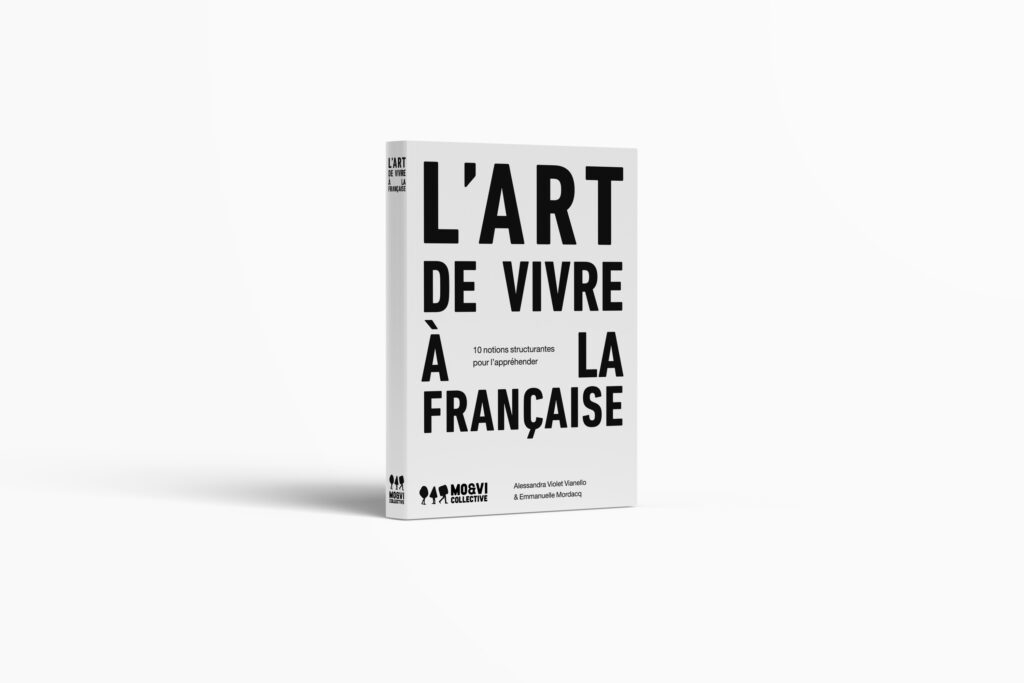
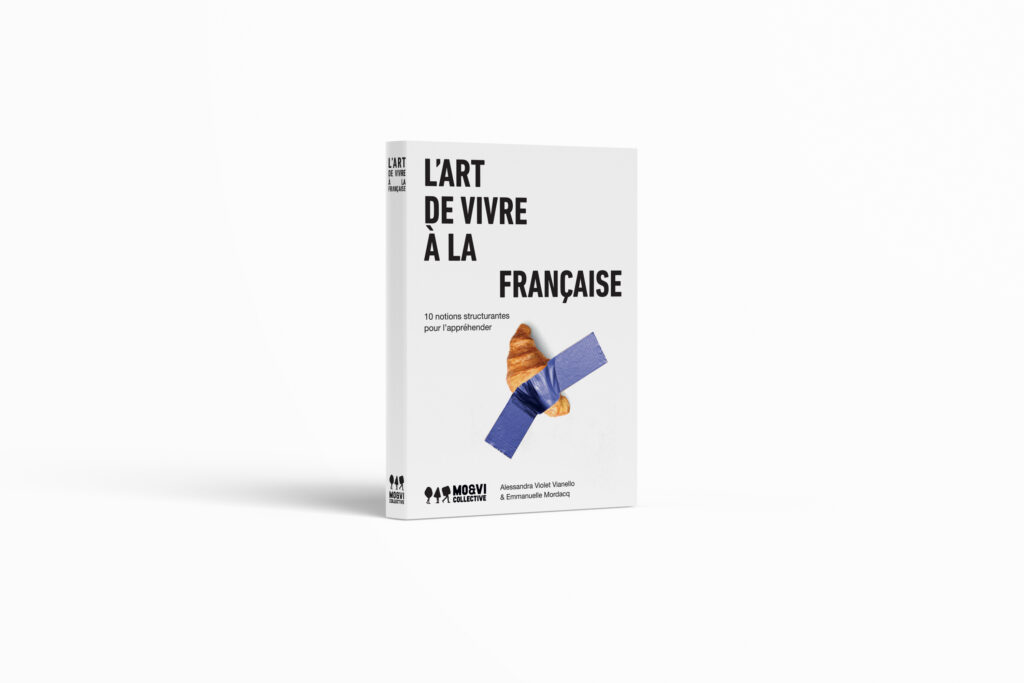
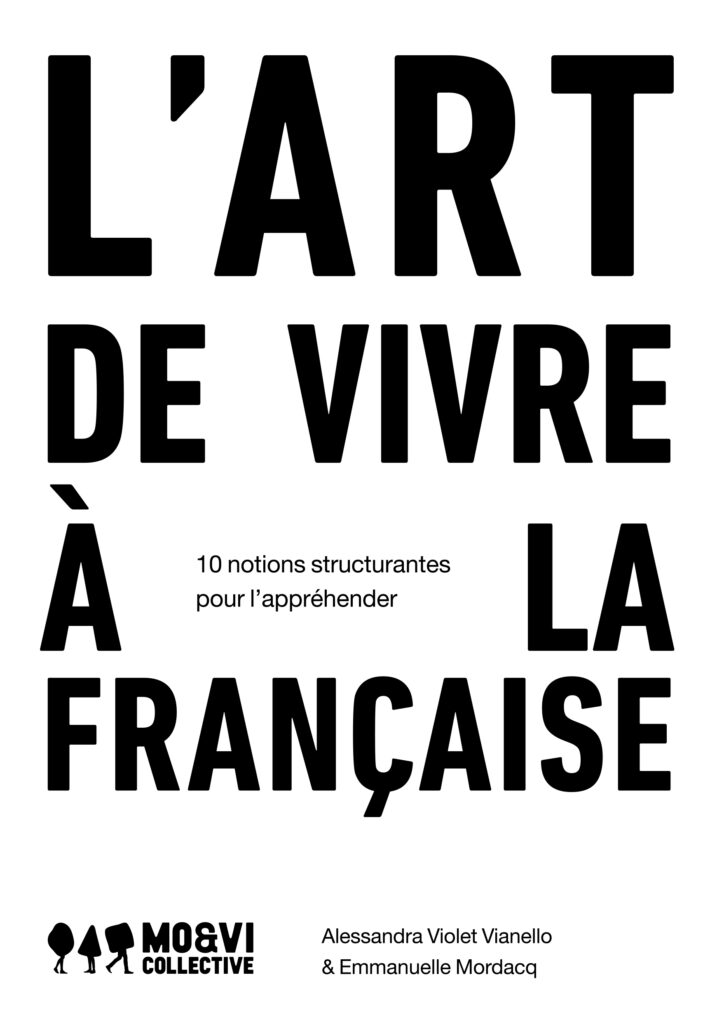
This is the paradox documented by Alessandra Violet Vianello and Emmanuelle Mordacq in *The Art of French Living: 10 Concepts to Understand It*, published in October 2025 by MO&VI Collective, the organization they founded together. “We get stuck between table manners and the codes of etiquette, when in fact it is infinitely broader and more subtle,” they state in the introduction. This shift—from a folkloric notion to a structural analysis—is precisely what the book sets out to achieve over the course of its 178 pages.
Neither of the two authors comes from an academic background. Vianello is a behavioral sociologist, former director of strategic planning at DDB in London and Paris, and a lecturer at Ca’ Foscari University in Venice—she has worked with LVMH, Chanel, Prada, and Sofitel. Mordacq is a semiotician specializing in places: she created the Pullman, MGallery, and ibis styles brands while serving as marketing director at Accor, before founding NeoPlaces. She teaches at IFM, ESSEC, and HEC. Twenty years of fieldwork in the luxury, hospitality, and communications industries—this is the foundation upon which the book is built.
The structure based on ten concepts is, in itself, an editorial choice that says something about their method. Here, we do not find a concise definition—we find a system of interpretations. Freedom Through Structure : the idea that, in France, formal constraints are not the opposite of freedom but rather a prerequisite for it. The Wanderer’s Eye : a tendency toward the aesthetic observation of everyday life, which the authors identify as a defining feature of French sensibility. Seduction: Intellectual Play & Naughty Sensuality : a category that rejects the distinction between desire and the mind—which, in the context of luxury, is not a metaphor but a practical tool for anyone creating a home experience.
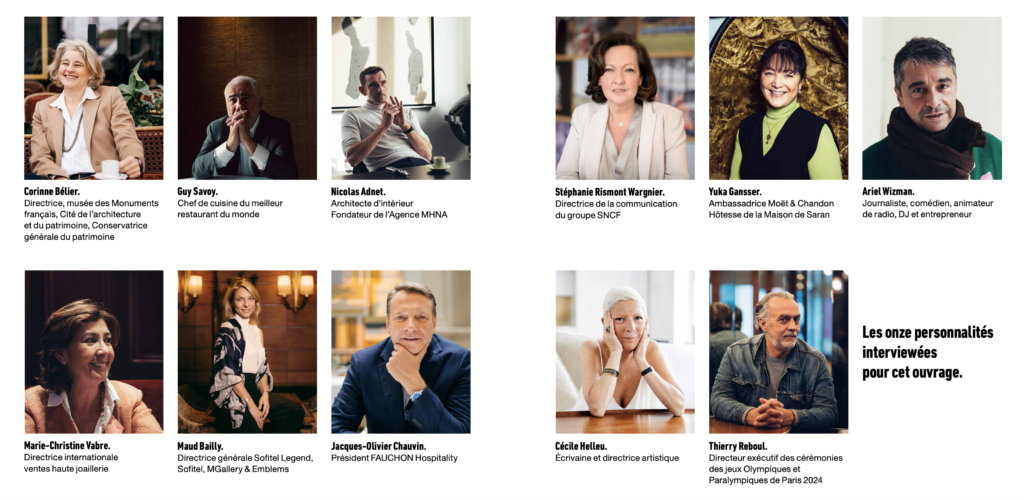
The book includes eleven interviews with prominent figures whose backgrounds span a deliberately broad spectrum: Guy Savoy, Thierry Reboul—executive director of ceremonies for the Paris 2024 Olympic Games— Corinne Bélier, director of the Musée de la Cité de l’Architecture; Maud Bailly, who heads Sofitel Legend, MGallery, and Emblems; and Jacques-Olivier Chauvin, president of FAUCHON Hospitality. This decision to bring together a chef, a national event designer, a curator, a director of a luxury hotel chain, and a professional in the world of gourmet hospitality is not merely for show: it underscores that the French art of living is not the exclusive domain of any single industry.
The timing of this publication is no coincidence. In recent years, the concept of French identity has become a fiercely contested political battleground, often reduced to its most defensive forms. Reframing this debate in analytical terms—not ideological, but structural—makes sense in this context. What Vianello and Mordacq offer is not a celebration, but a mapping. The difference is significant.
For the French luxury industry—whose international influence rests in part on a cultural promise that even its own players struggle to articulate precisely—this book comes at just the right time. Not as a marketing tool, but as a starting point for a more honest conversation about what that promise truly entails.
Cette publication est également disponible en :

