
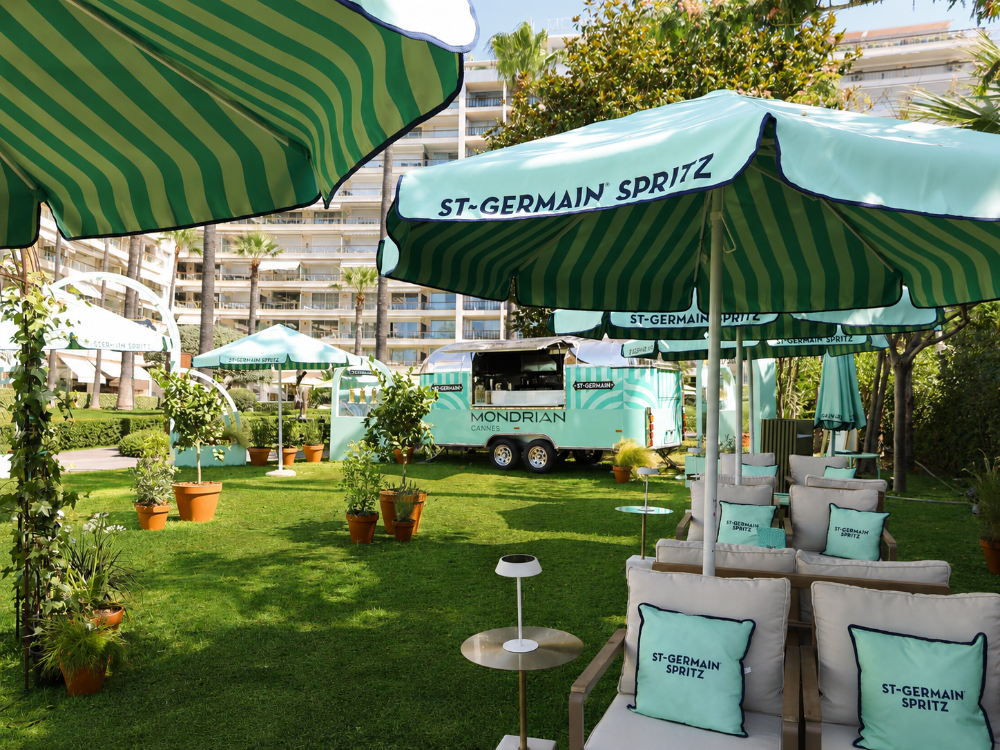
From July 3 to September 6, the gardens of the Mondrian Cannes are dedicating 400 square meters to St-Germain elderflower liqueur. Yet another pop-up club on the French Riviera—and a textbook example of how spirits brands today prefer to create a venue rather than run a campaign.
The St-Germain Club Riviera is open every evening from 5:30 p.m. to midnight in the lush setting of the Mondrian Cannes, with the stated goal of celebrating “the art of the spritz” against the backdrop of the Mediterranean good life. Beyond the signature cocktail—the St-Germain Spritz, which has been synonymous with the brand for several seasons now — the menu was designed in collaboration with Kenzo Hemmi, the hotel’s head bartender, who offers an Elderflower Negroni—a reimagining of the Italian classic—and a Riviera Bloom, which combines the liqueur with Grey Goose vodka, lemon, grapefruit, and an olive-and-rosemary tonic.
The choice of format—two months, a single location, a streamlined menu—says more about the brand’s strategy than any advertising image. Rather than buying visibility, St-Germain buys the setting and time: an entire season during which the French Riviera becomes, for both its customers and influencers, the liqueur’s natural stage. This approach is not unique. Every summer, the gardens of the Riviera’s grand hotels are transformed into venues leased to spirits and champagne houses, which set up pop-up bars, signature cocktails, and branded installations—a way for these establishments to monetize a setting that their regular clientele already pays dearly for, and for the brands to establish themselves in a cultural imagination that no billboard campaign could recreate as effectively.
This type of partnership actually shifts the focus of marketing from the product to the location. You’re no longer selling elderflower liqueur—you’re selling access, for the duration of a cocktail, to a garden you wouldn’t have visited otherwise. The brand name almost fades into the background behind the hotel’s name, and vice versa—to the point where it becomes difficult to say which, the Mondrian or St-Germain, benefits most from the partnership.
The question remains: what effect does this proliferation of pop-up clubs, season after season, have on the unique identity of the venues that host them? Is a hotel garden that changes brands every summer still a hotel garden, or does it become a seasonal film set, rented to the highest bidder of the moment? That summer, this question arose at the Mondrian Cannes, just as it did in many other gardens along the Croisette.
Cette publication est également disponible en :

