
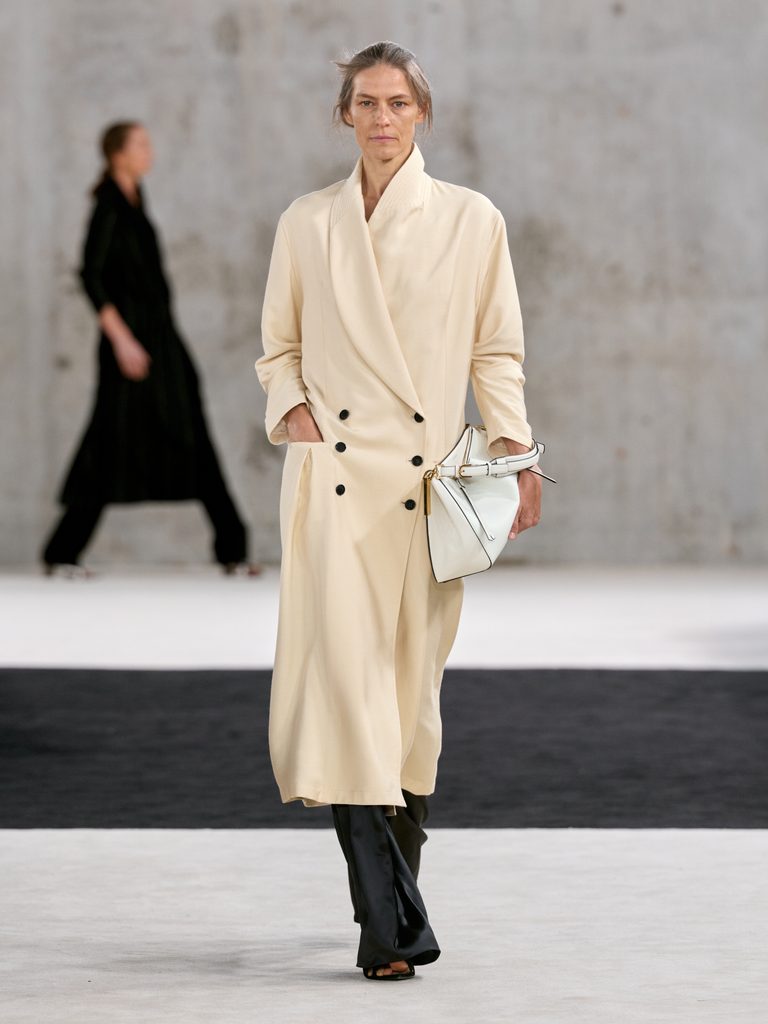
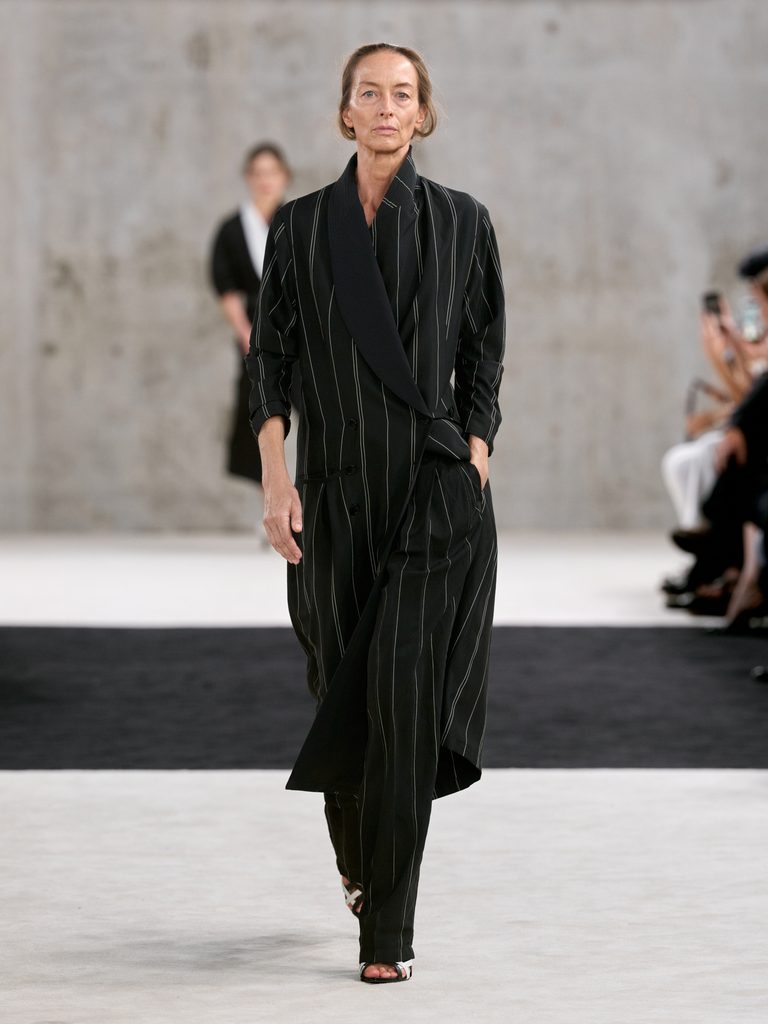
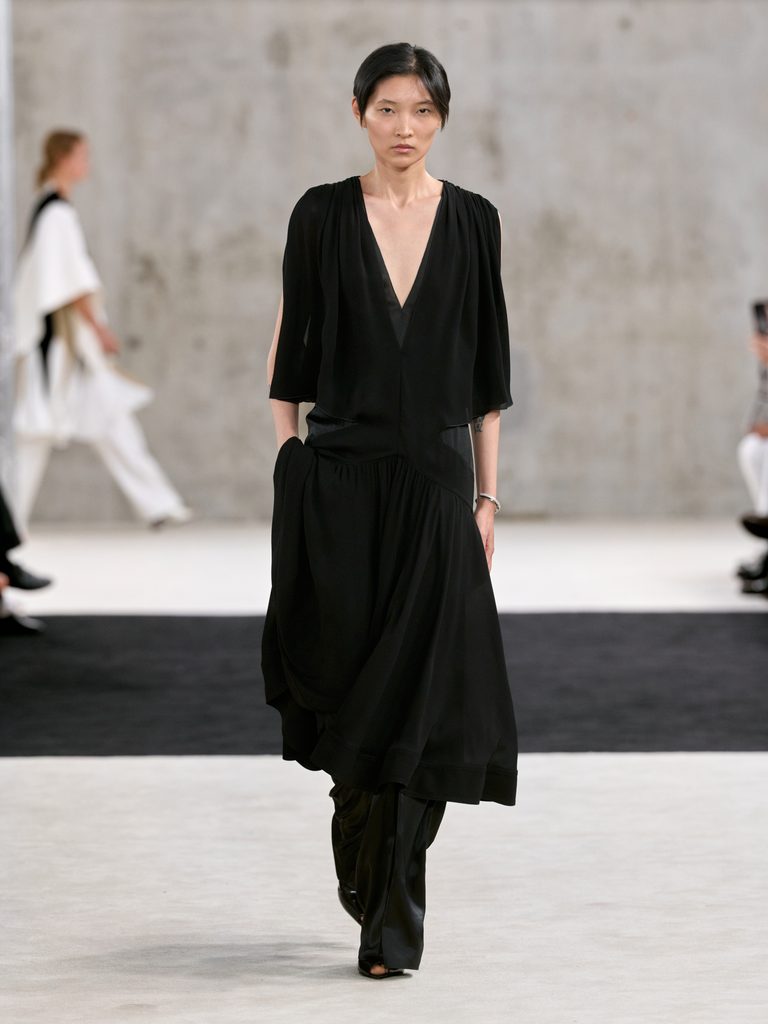
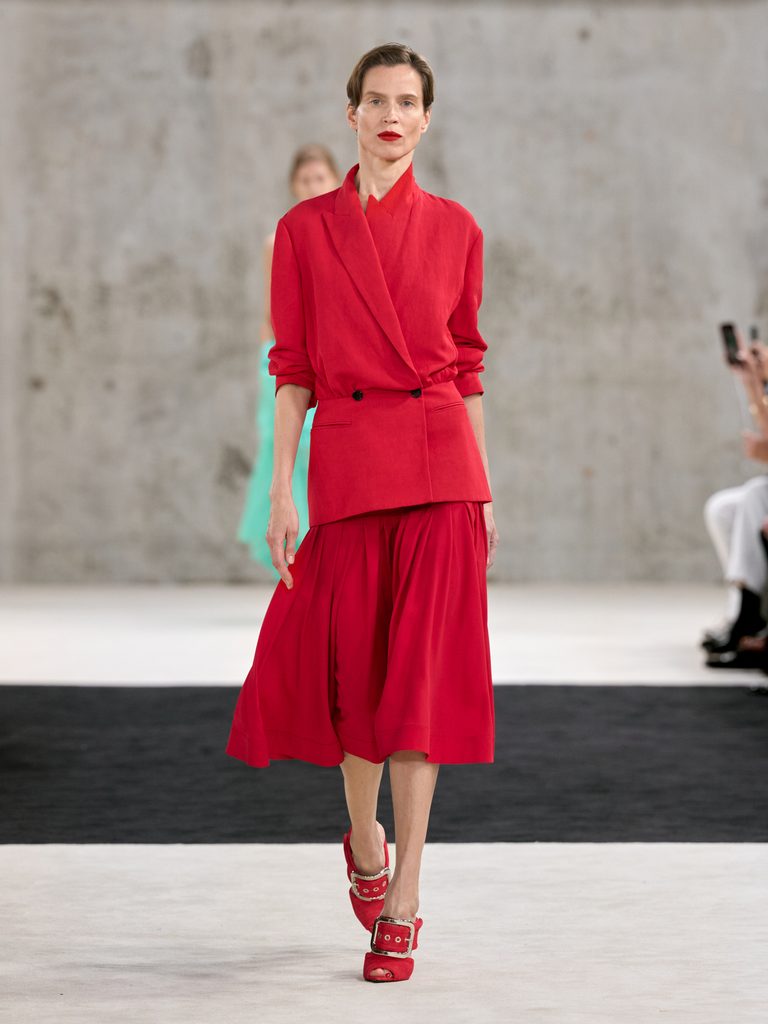
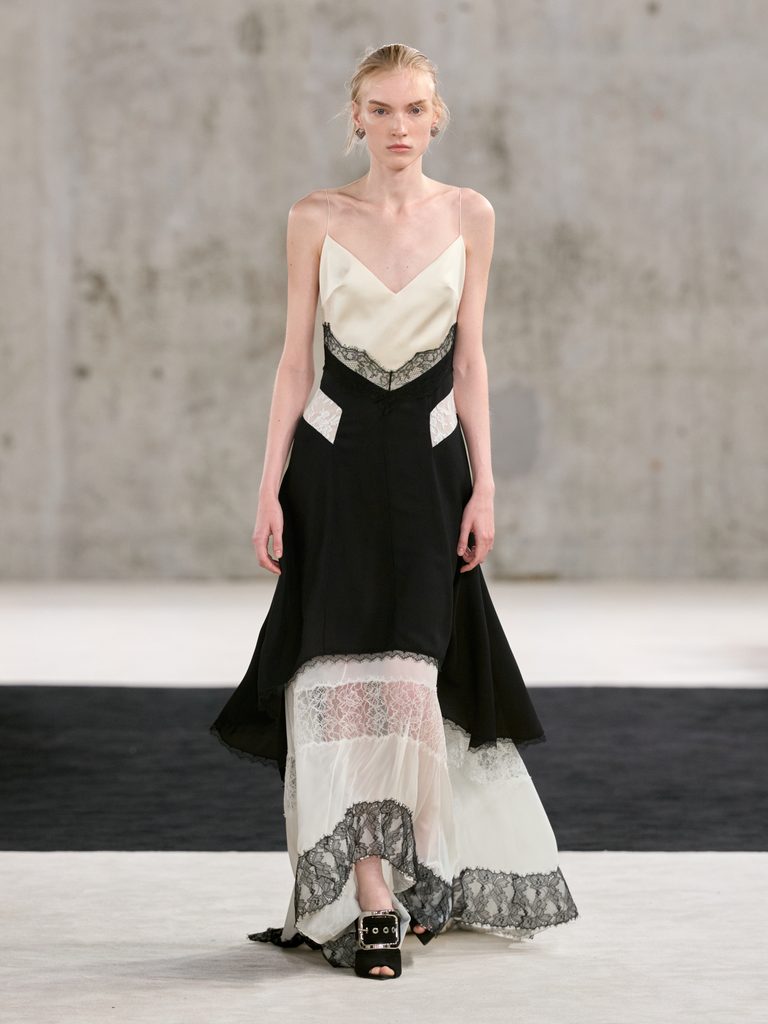
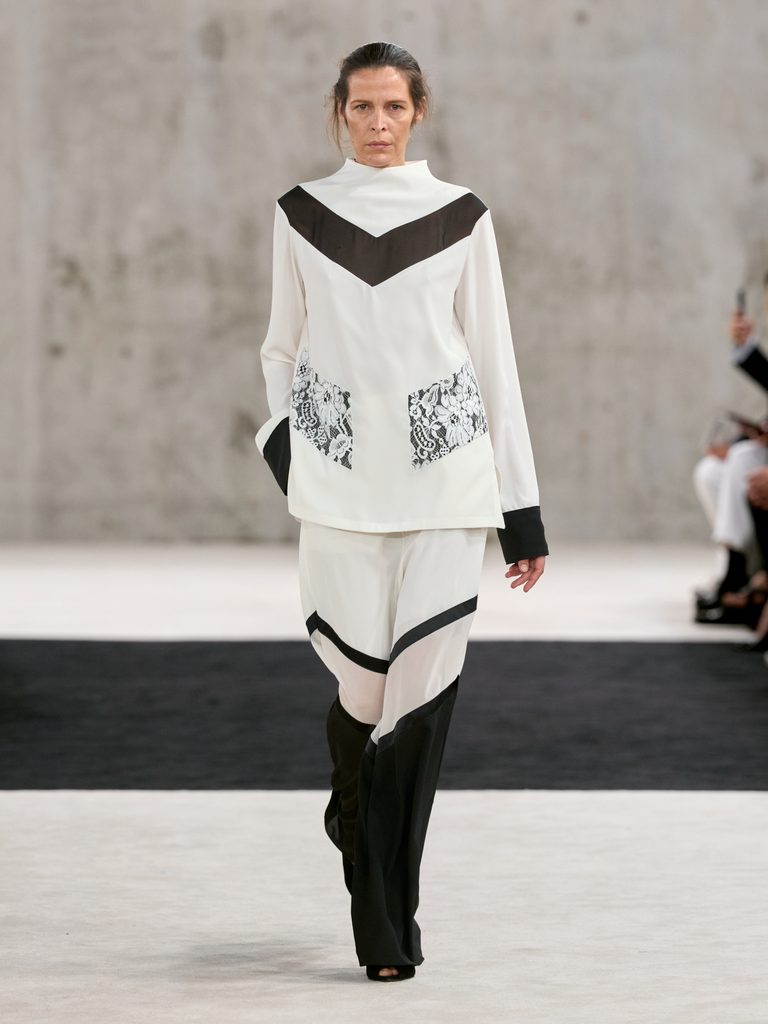
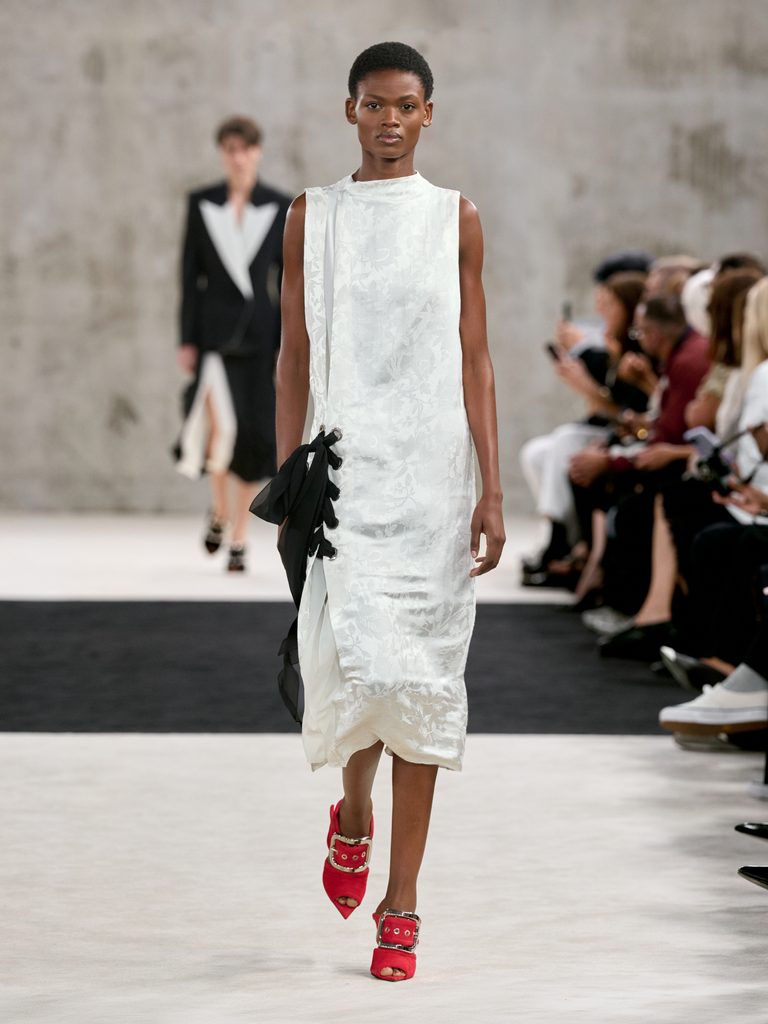
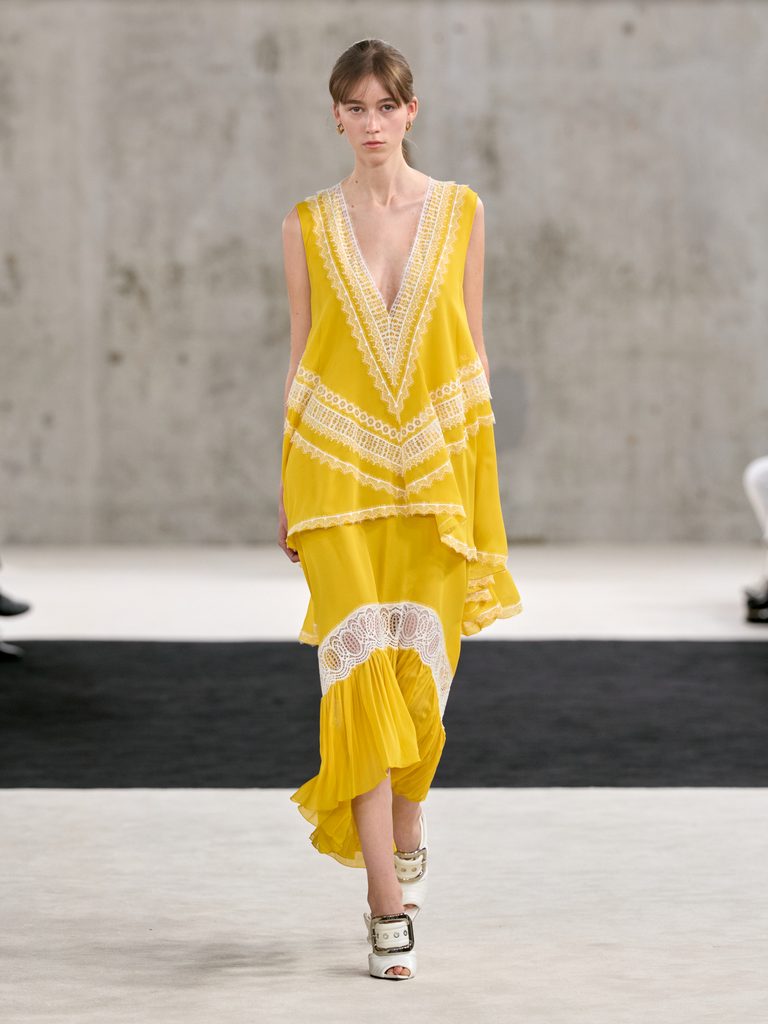
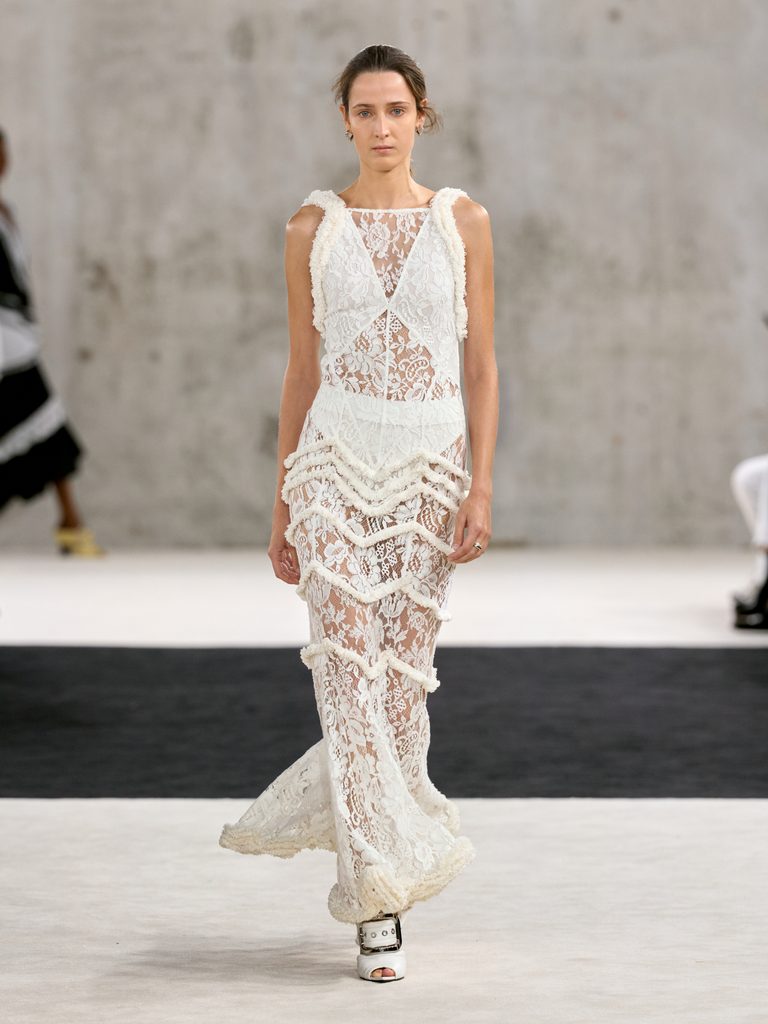
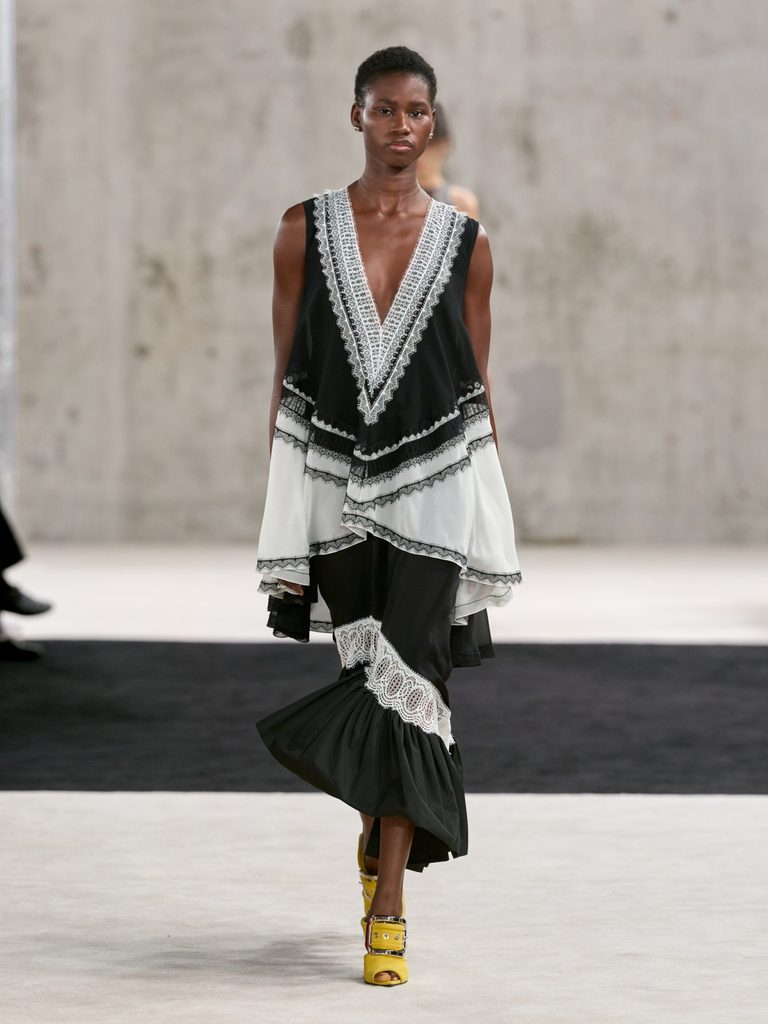
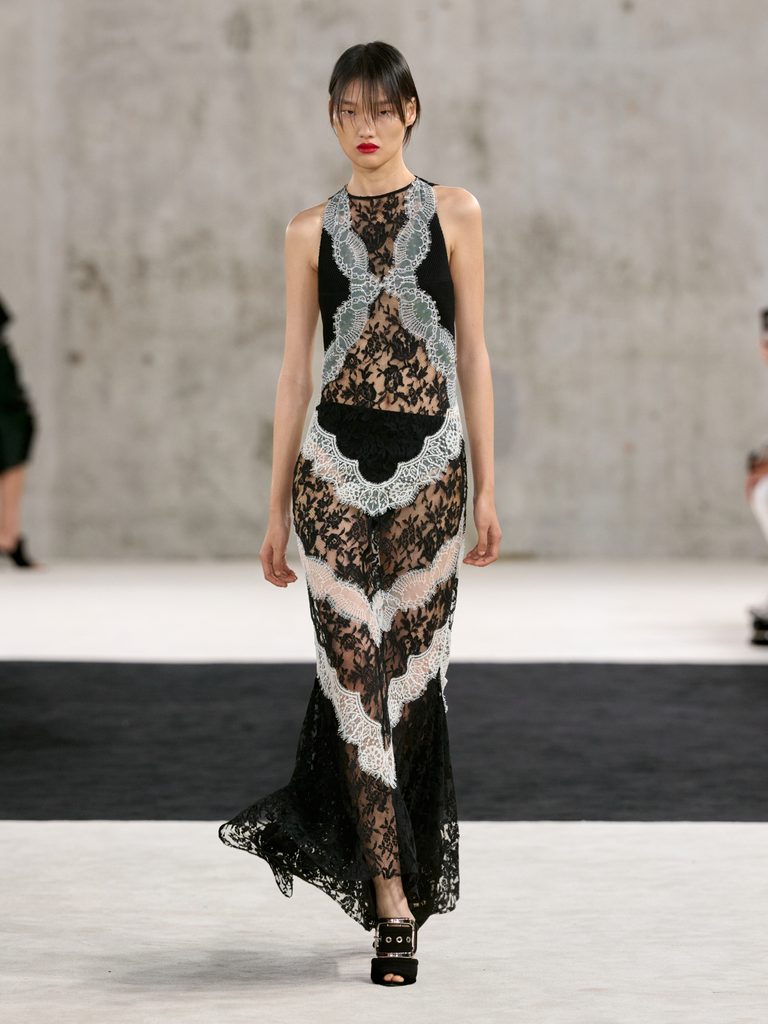
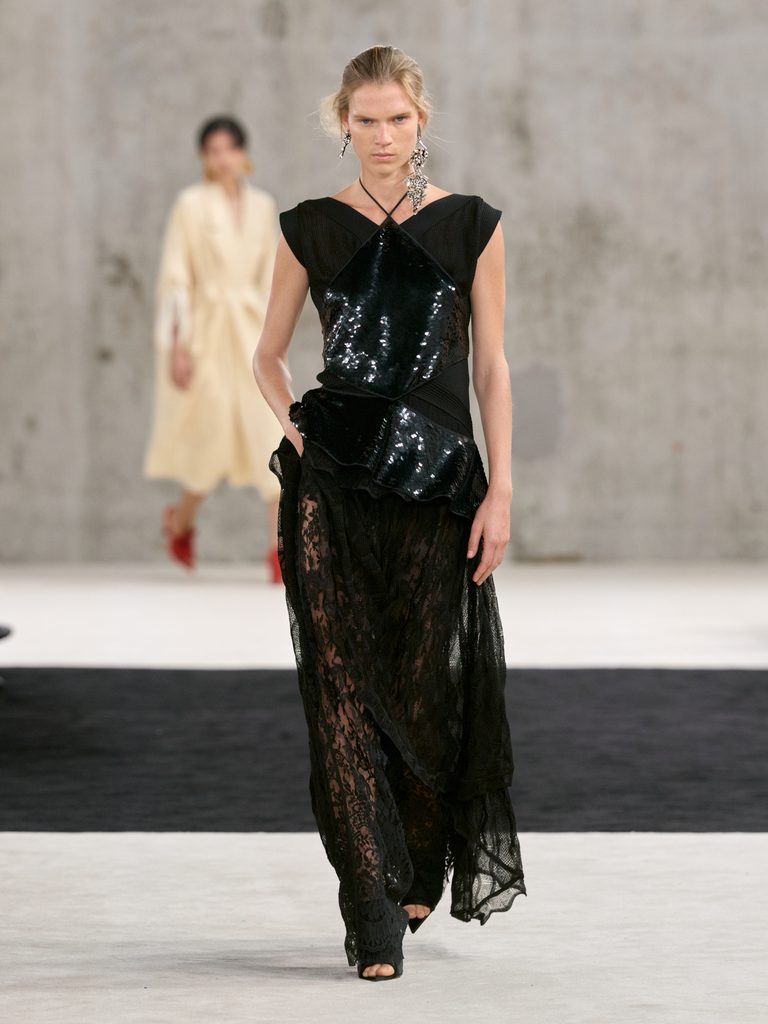
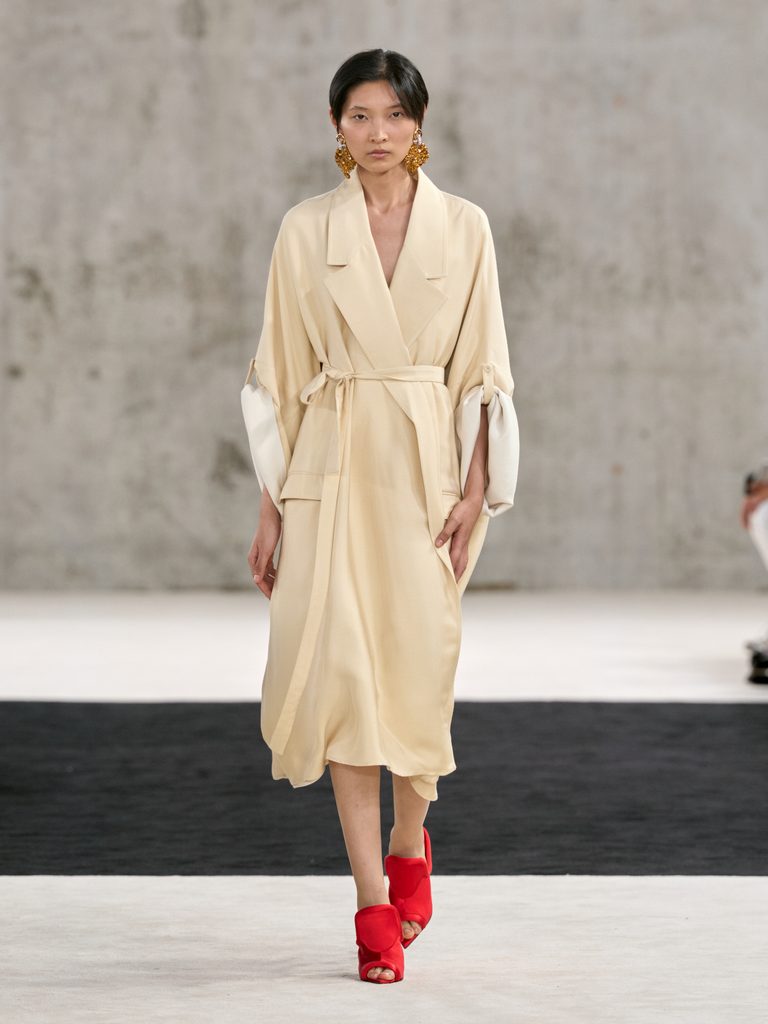
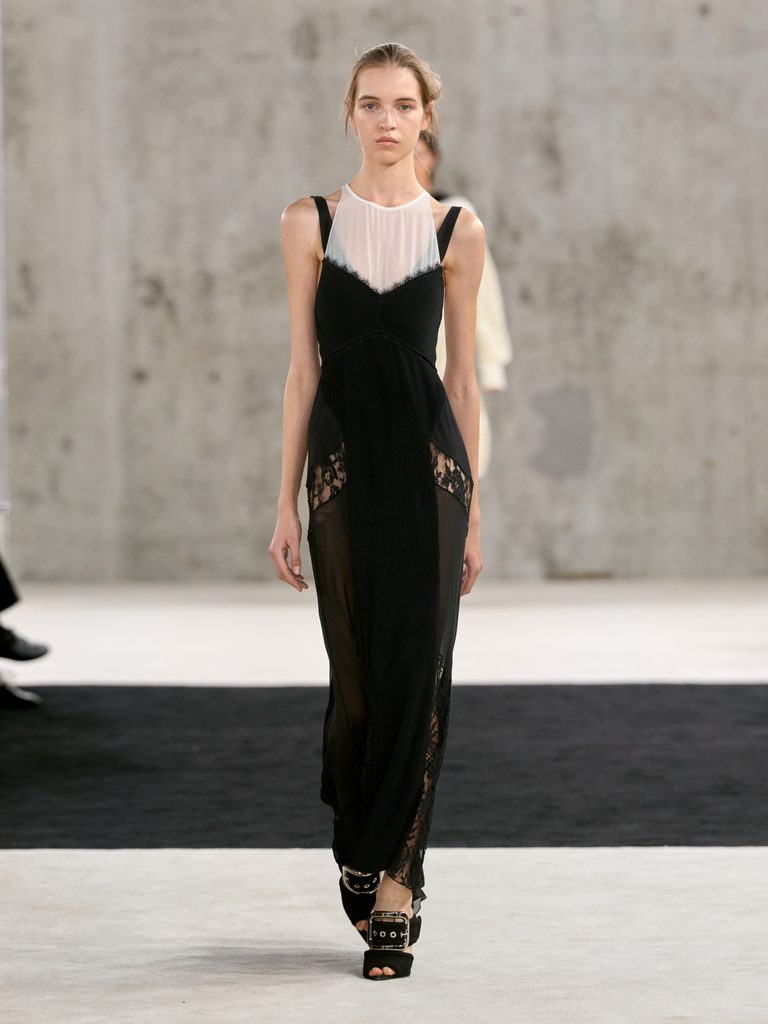
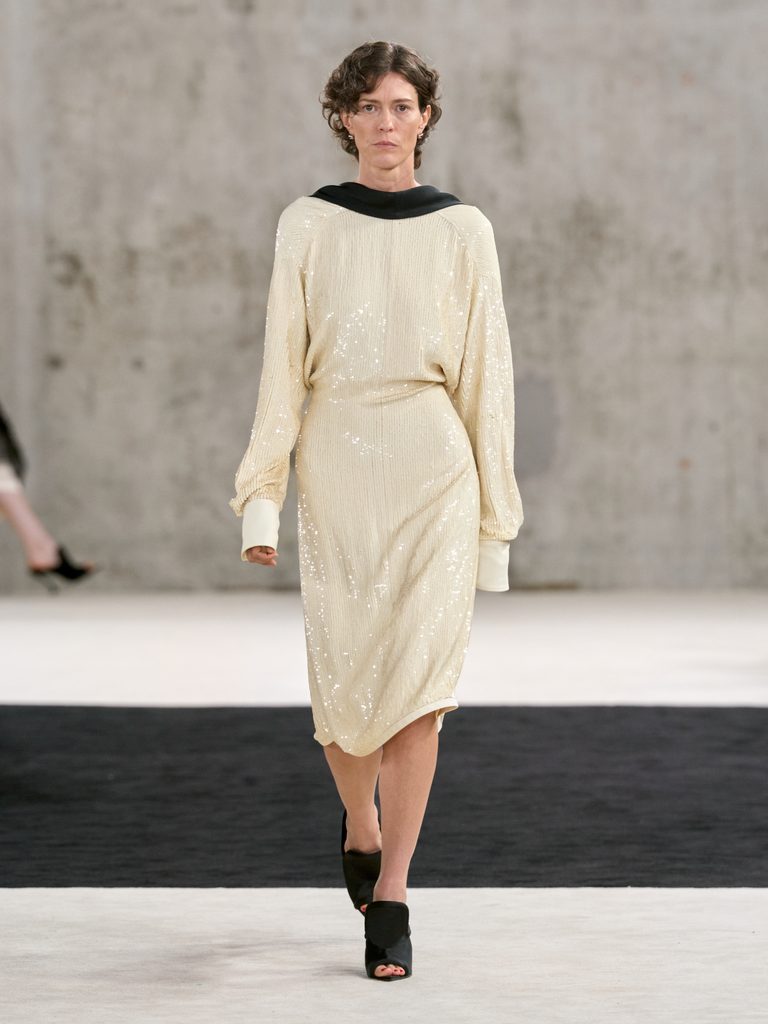
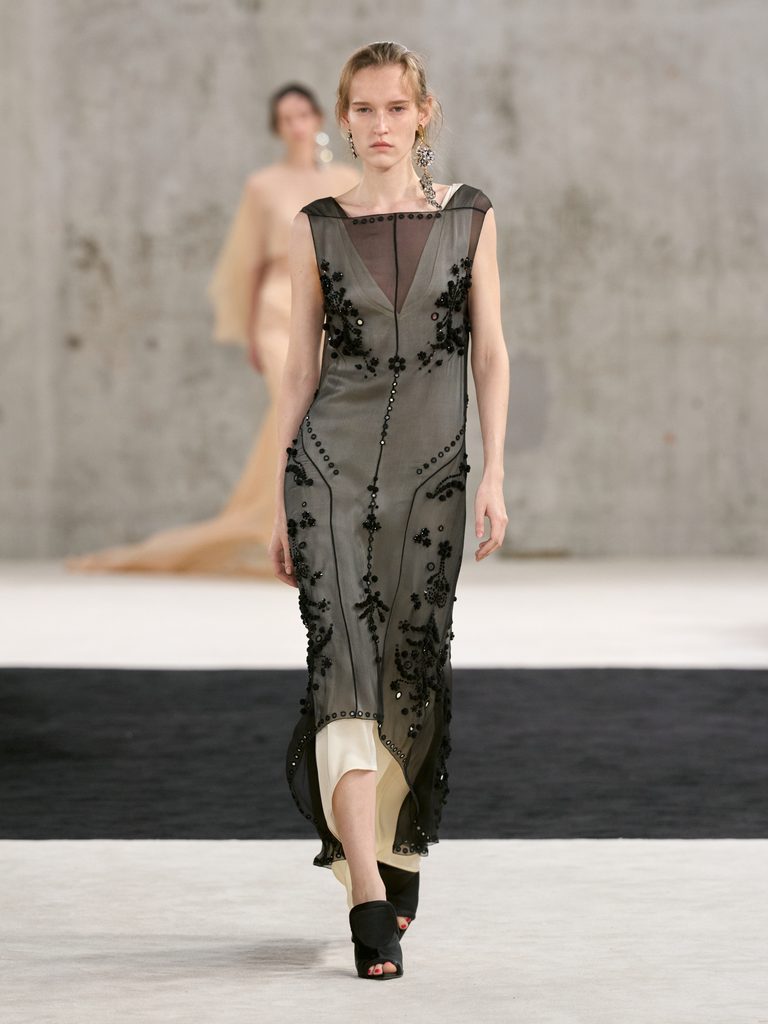
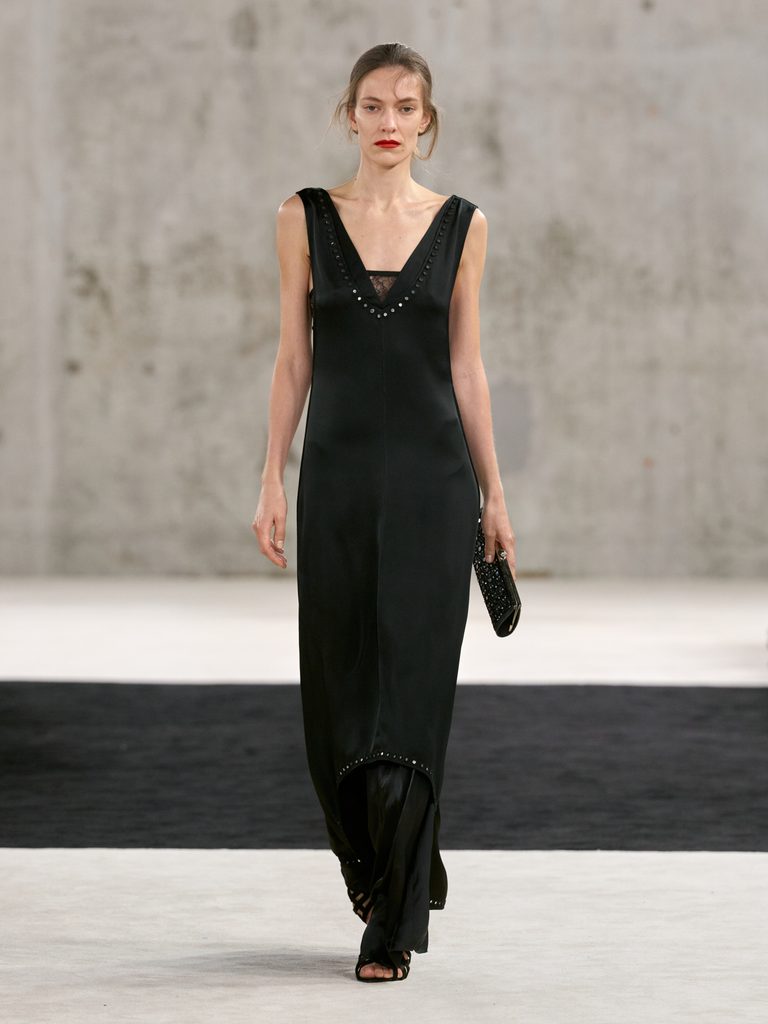
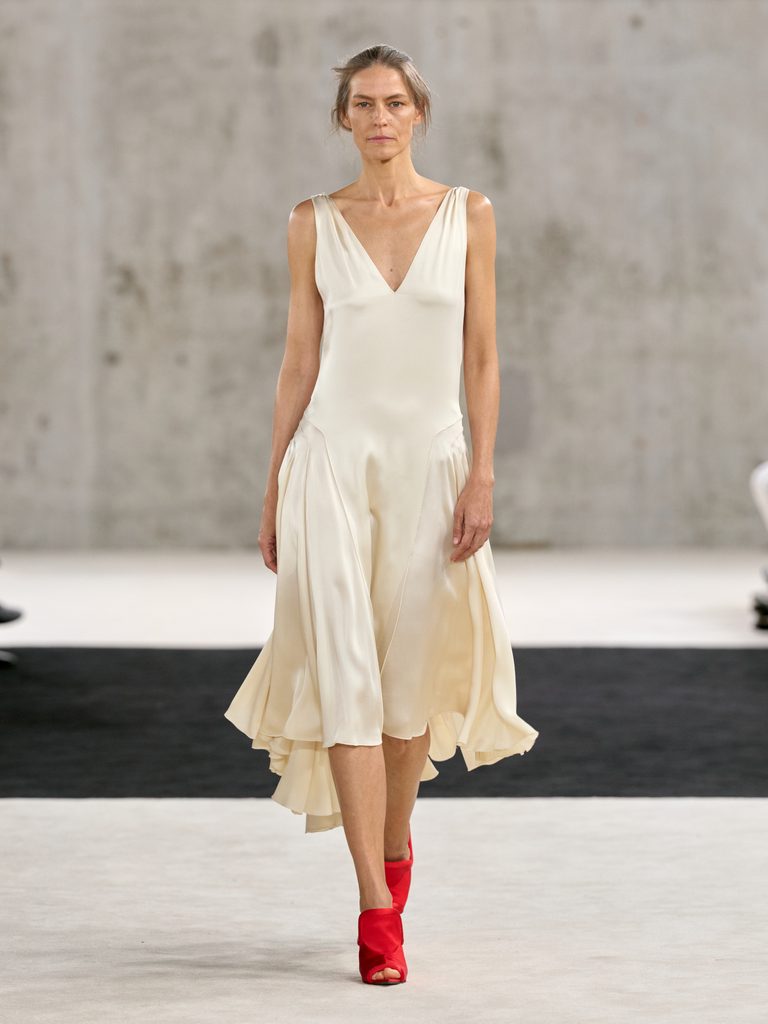
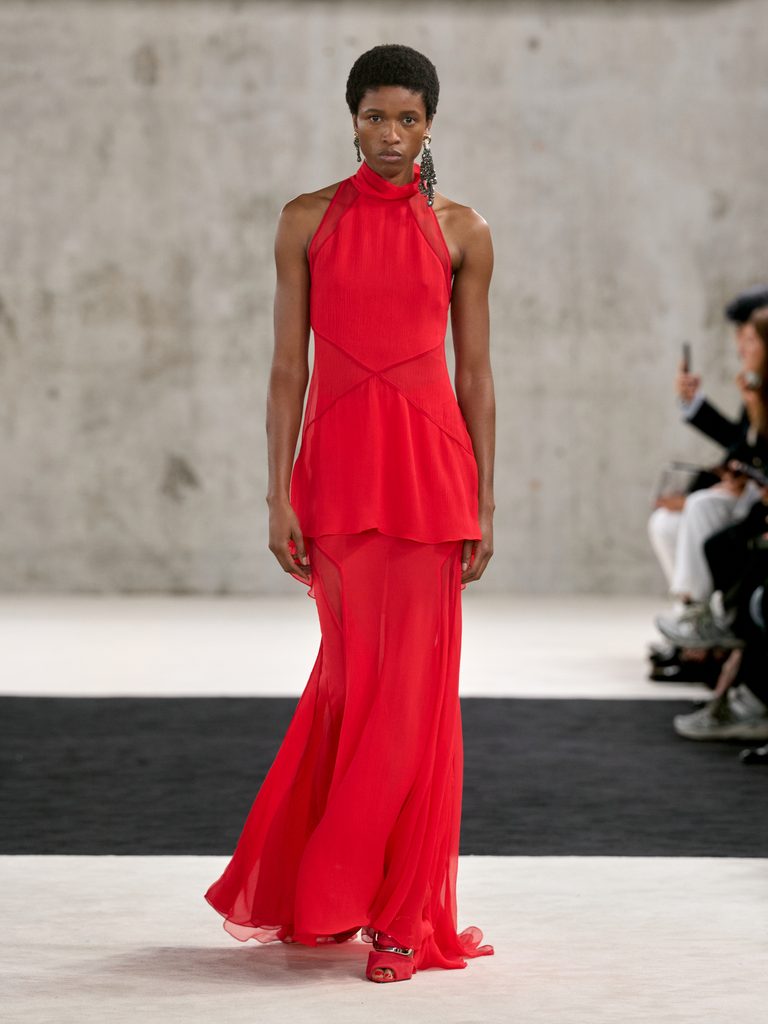
Lanvin presented its Summer 2027 collection on October 2 at the Opéra Bastille in Paris. Among the silhouettes described by the House, just one takes a garment with very distinct codes, the tuxedo jacket, and changes its scale: it becomes a long coat dress.
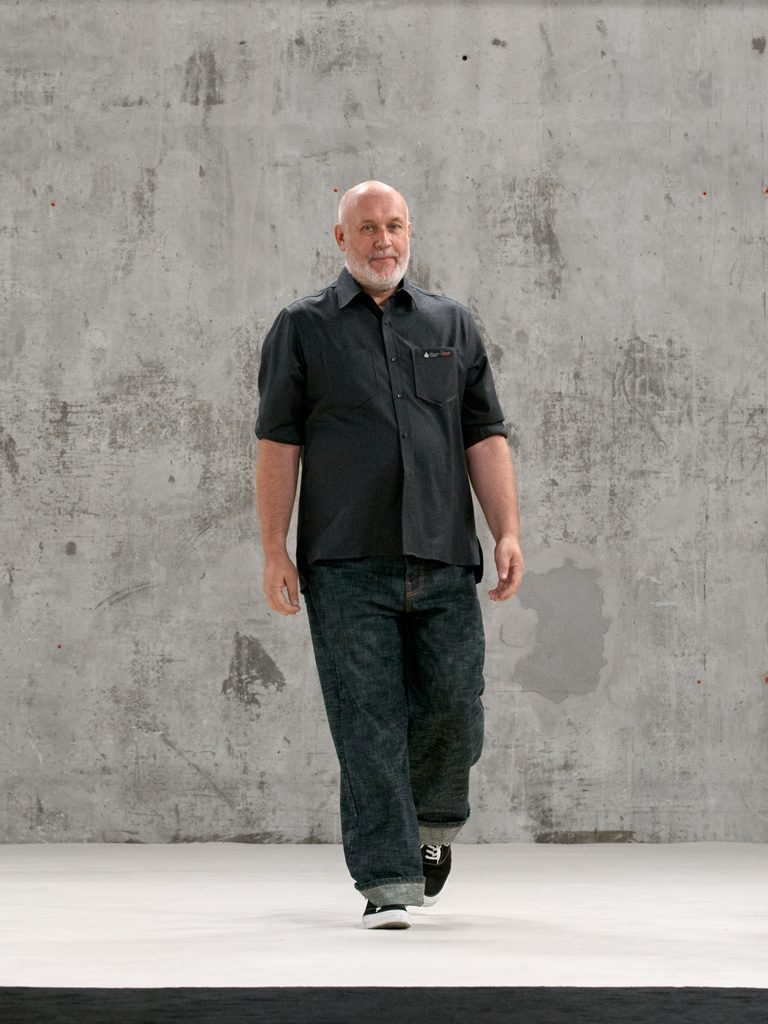
Peter Copping, Lanvin’s artistic director since September 2024, named this collection Gentle Confidence. The House says it draws on free, distinctive women who have enriched art, culture and fashion, from Georgia O’Keeffe to Tina Chow, and that codes borrowed from the male wardrobe become softer here, expressed through fluid fabrics and elongated proportions.
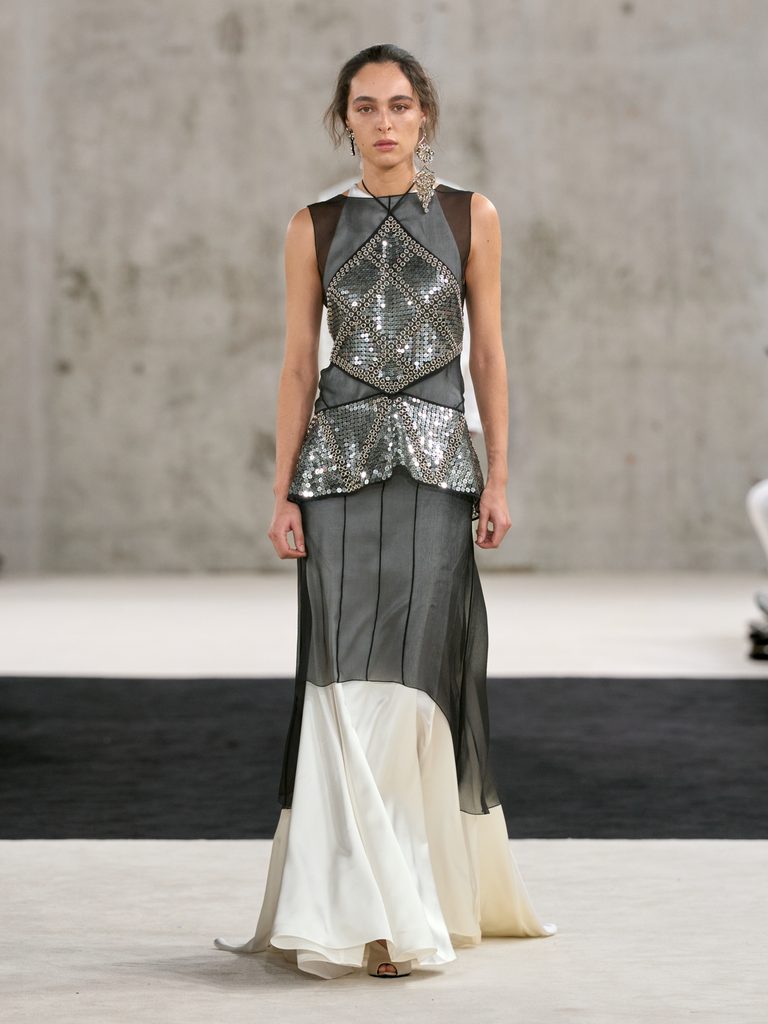
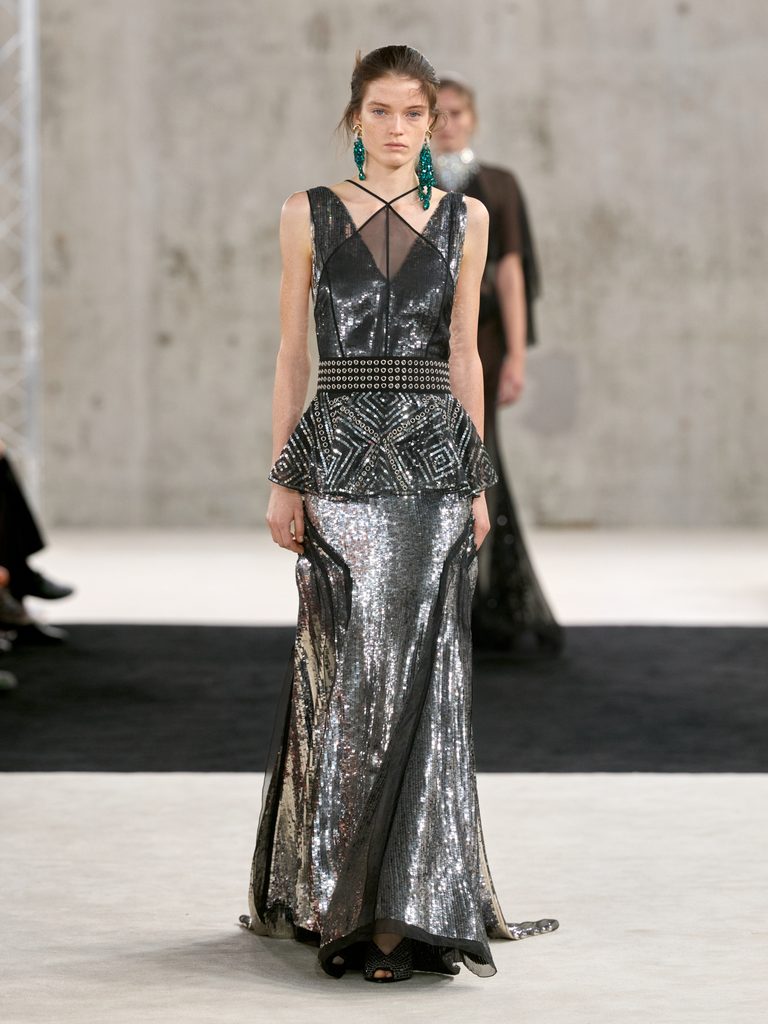
The coat dress is the clearest expression of that statement. A tuxedo jacket is defined by its collar, chest and waist; a coat dress is defined first by its length and drape. Moving from one to the other shifts the question the garment raises: it is no longer simply a matter of fitting a garment to the torso, but of how fabric falls along the full height of a body in motion.
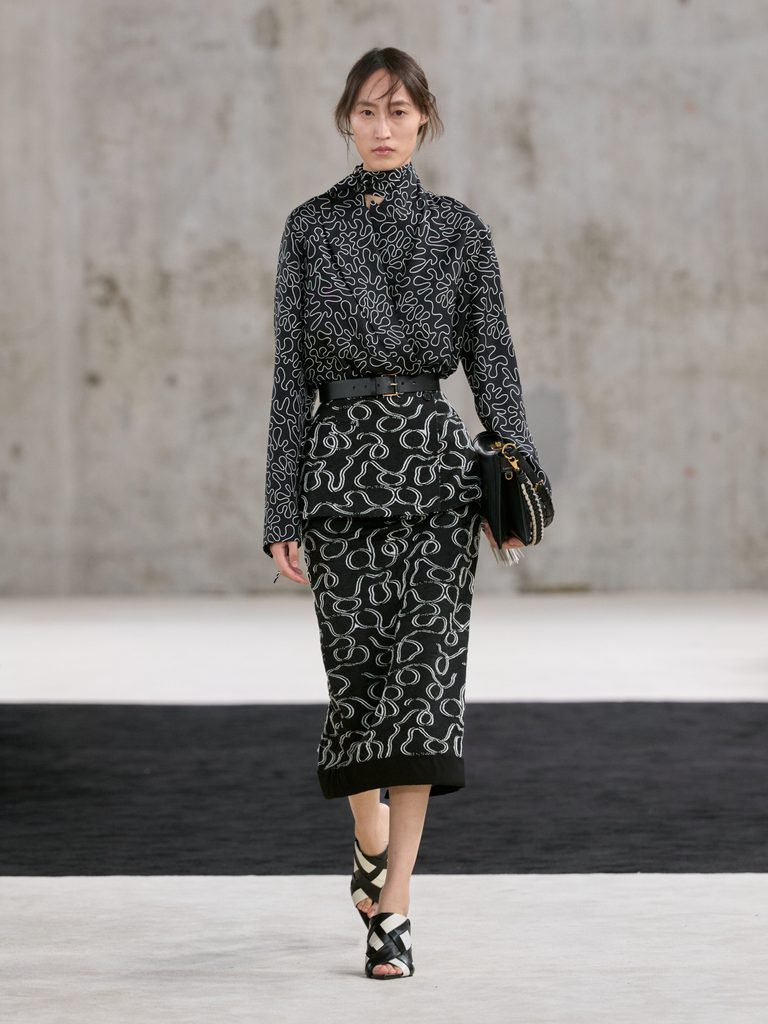
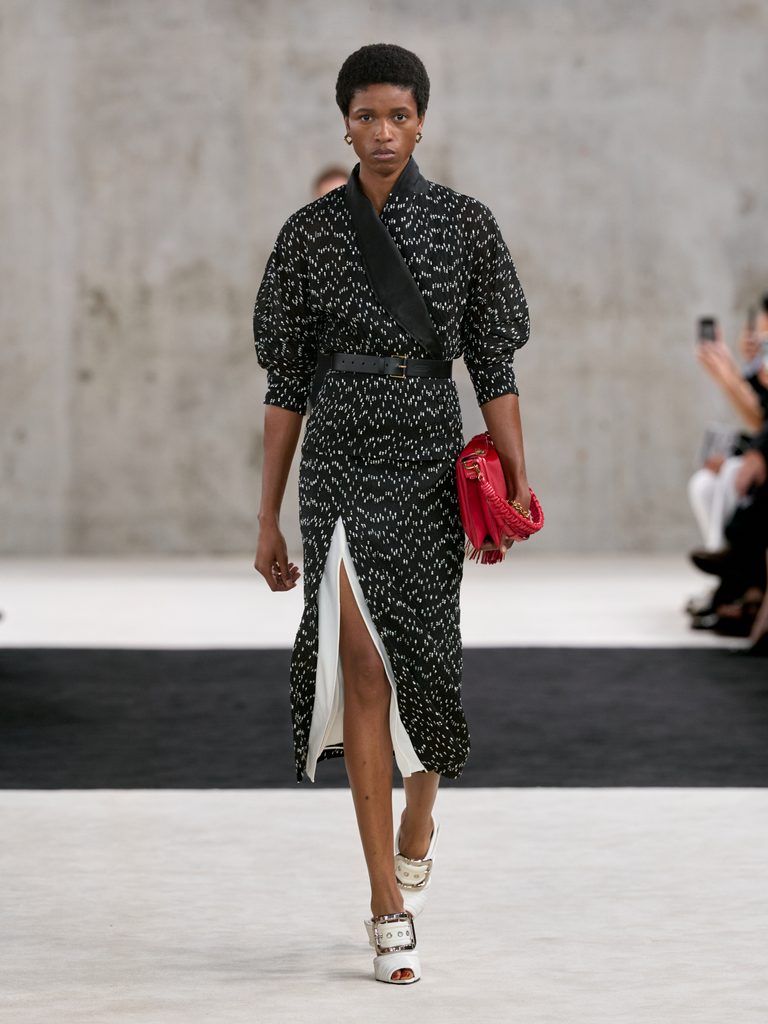
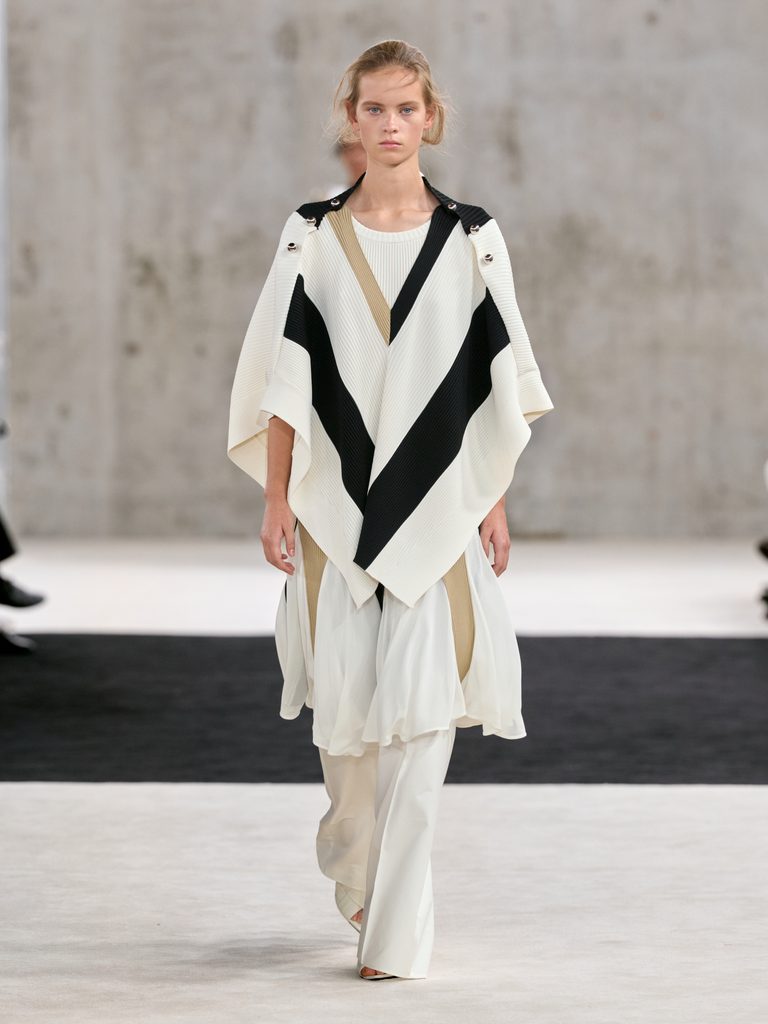
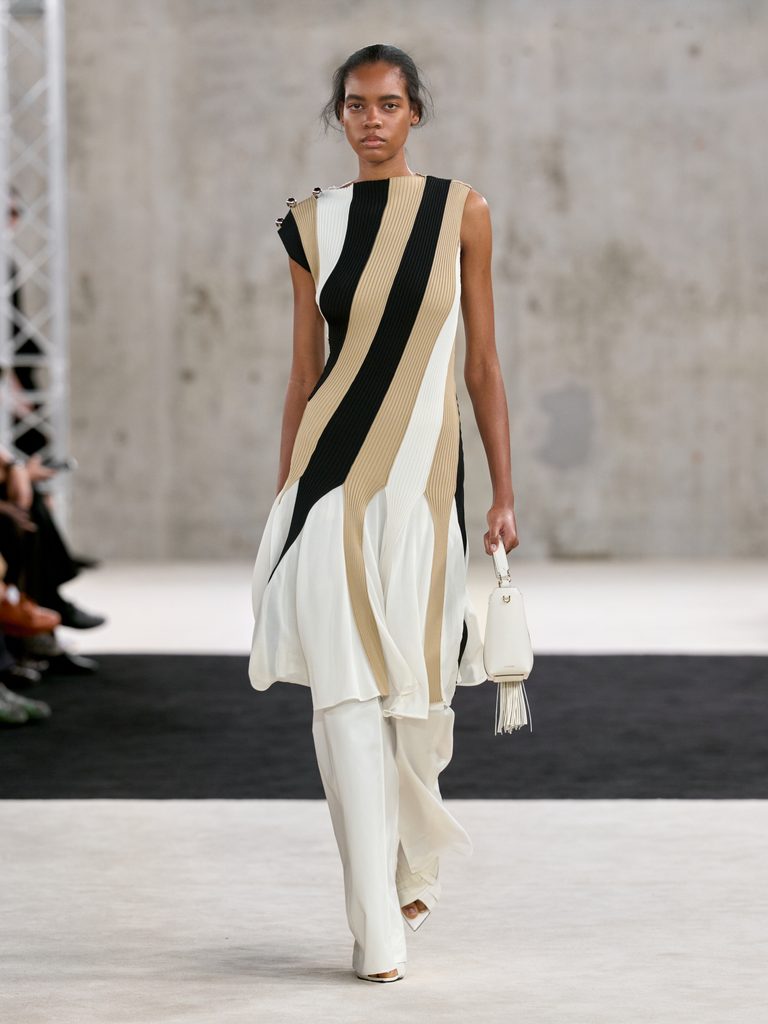
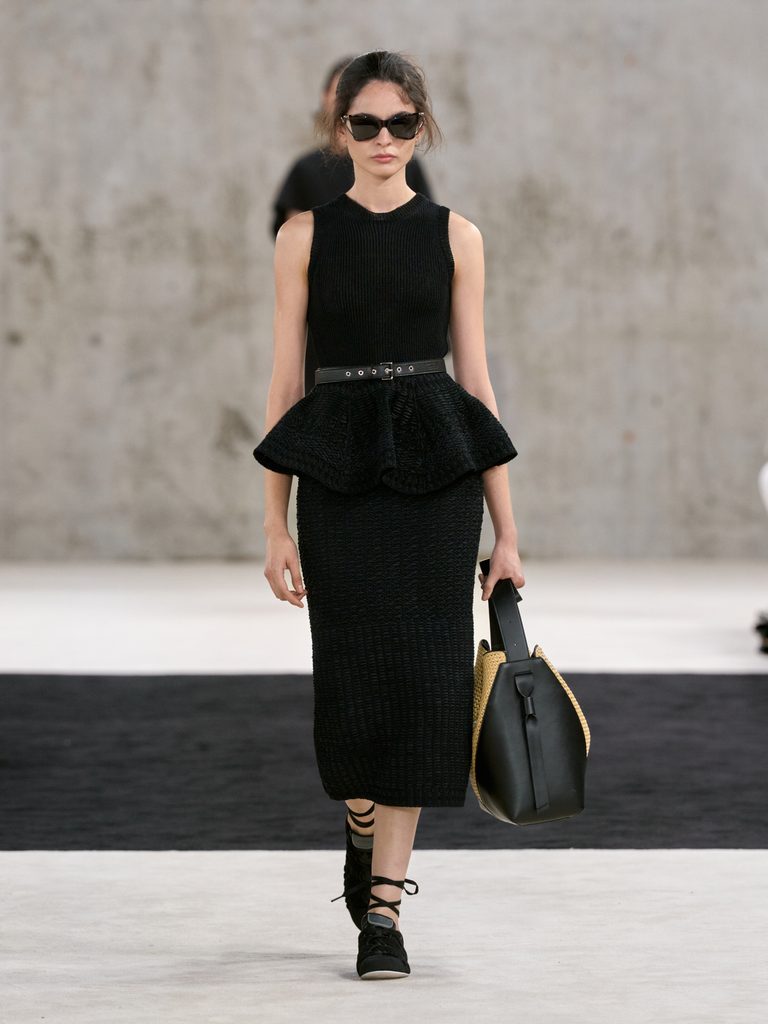
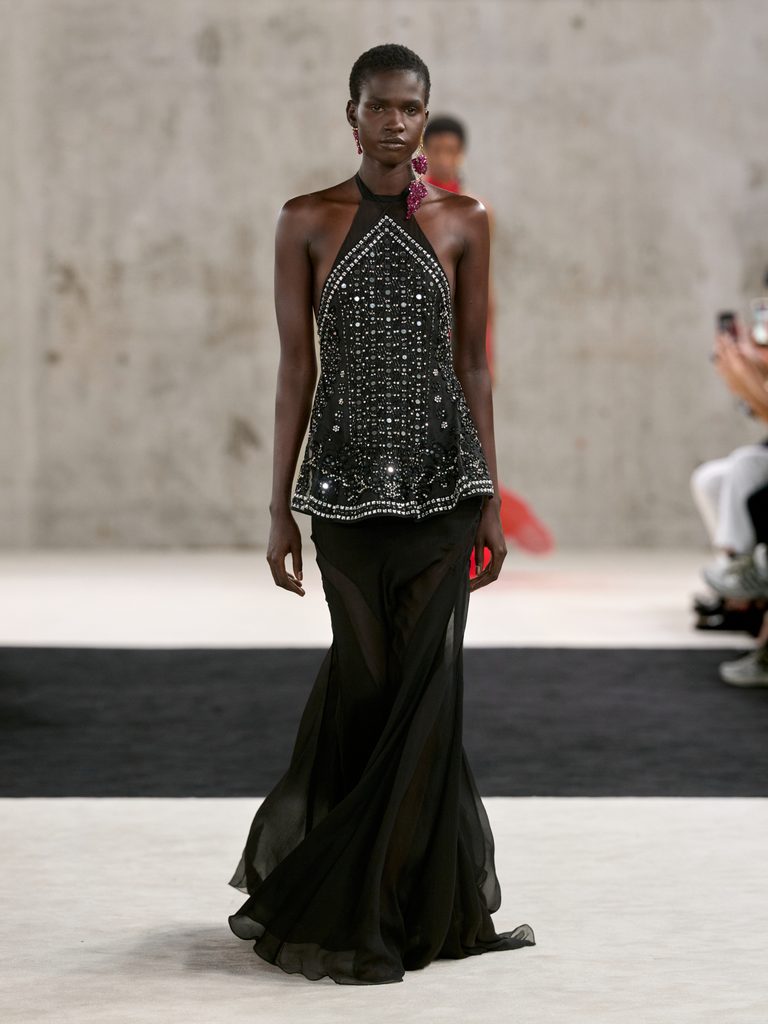
Two details, as described by the House, maintain the connection to the original. Feminine peplums, cut from nappa leather or organza embroidered with mirrors, and bib collars evoke the precision of bespoke tailoring. Leather and embroidered organza do not have the same weight or move in the same way; combining them in a single silhouette requires a construction choice that the description does not explain. Black and white dominate, with a few touches of bright colour, and the collection was shown in a venue with Brutalist architecture, against which the House sets the softness of monochrome silhouettes.
Two criteria allow this piece to be assessed. The first is how clearly the transformation reads: the tuxedo must remain recognisable even as its proportions change. On this point, the description holds up, since the peplums and bib collar preserve precisely the jacket’s most identifiable features. The second is how well the difference between the materials is handled, which can only be assessed on the garment itself.

















Cette publication est également disponible en :


