
In Courchevel, new hotel openings are rarely significant solely for their accommodation capacity. They reshape regional dynamics, shift social centers of gravity, and reconfigure the relationship between the mountains, residential life, and hospitality. Kerzner International’s announcement of the arrival of One&Only in Courchevel 1850 in 2030 thus goes beyond a simple hotel launch: it confirms the French Alps’ definitive entry into a new phase of globalized residential luxury.
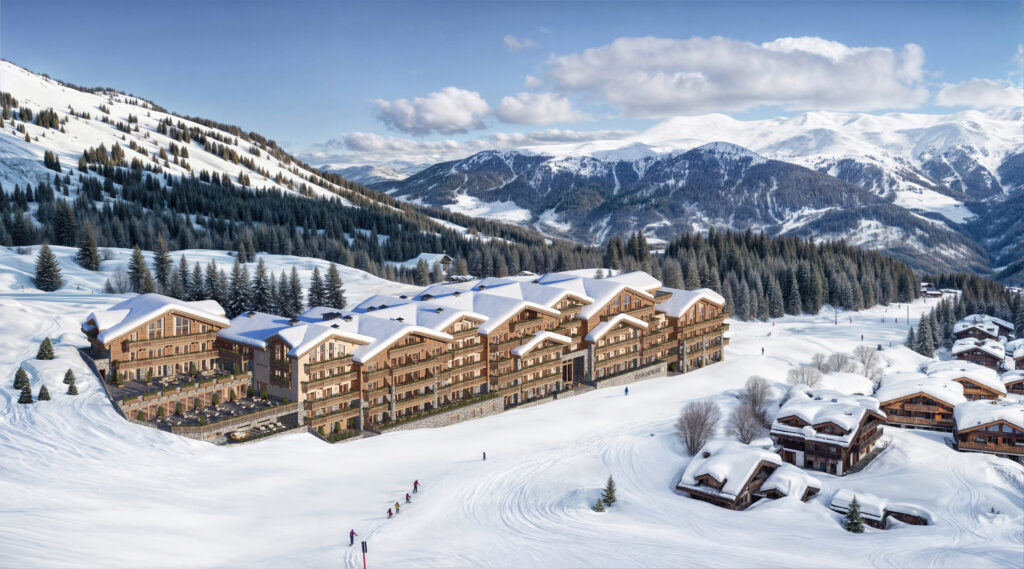
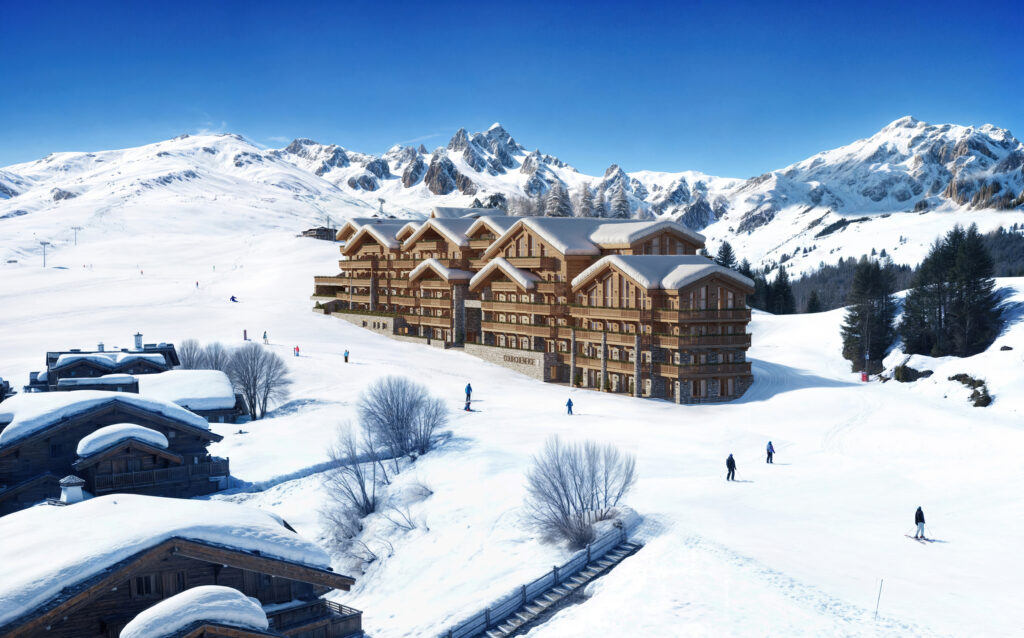
The future resort will be located on the Courcheneige site, the historic home of the Jardin Alpin. This detail matters more than the promises of an immersive experience repeated in the press release. In Courchevel, location remains the true currency of prestige. For several decades, the Jardin Alpin has embodied a unique geography of winter prestige: ski-in/ski-out access, relative seclusion from the resort center, proximity to large private residences, and immediate proximity to the Bellecôte run.
The move also reflects a broader shift in the ultra-premium hospitality sector. For a long time, international hotel groups viewed the French Alps with caution. The region remained dominated by family-run businesses, long-established independent properties, and a few establishments capable of fostering close relationships with a loyal clientele. Over the past five years, this dynamic has shifted. Aman, Six Senses, Ultima Collection, and Experimental are gradually making their mark in the European mountains with an approach that is more residential, less seasonal, and more focused on wellness. One&Only is applying a method here that has already proven successful at its beach destinations: transforming the hotel into a comprehensive ecosystem that combines accommodations, fine dining, a spa, and private residences.
It is likely this last point that constitutes the true strategic core of the project. The One&Only Private Homes announced in Courchevel are not merely a real estate extension of a resort. They are part of a shift in Alpine luxury toward the branded residences model, which is now central to the global high-end hospitality industry. In destinations where land is becoming scarce—and Courchevel 1850 has long fallen into this category—a residence operated by an international hotel group serves as a means of securing one’s wealth as much as a symbol of cultural belonging.
The press release describes a resort designed around physical recovery, thermal contrasts, and sleep. Behind this now-ubiquitous wellness rhetoric, what stands out most is the evolution of the contemporary relationship with the mountains. Courchevel is no longer just a ski resort; it is becoming a place of ongoing rejuvenation, visited well beyond the winter season. The announced development of thermal facilities, indoor-outdoor aquatic circuits, and programs focused on muscle recovery reflects this transformation of the high-altitude setting into an experiential health infrastructure.
The choice of One&Only also has cultural significance. The brand, historically associated with private islands, tropical coastlines, and large resorts that open onto the horizon, is now adapting its design language to a vertical, mineral, and climate-driven environment. Following One&Only Moonlight Basin in Montana, Courchevel becomes the European testing ground for this Alpine adaptation. However, the mountains impose radically different constraints: a shorter operational season, high land density, dependence on ski infrastructure, complex energy management, and a clientele attached to very specific social norms.
One more subtle question remains: What will become of Courchevel’s historical identity as major international brands set up shop there? The press release emphasizes the preservation of Courcheneige’s “timeless spirit.” But in the Alps, architectural heritage is measured less by decorative style than by a certain way of living in the mountains: a connection to silence, to local materials, to winter light, and to the sociability of the French resorts that emerged in the 1950s and 1960s.
The challenge for One&Only, therefore, will not be merely about the hotel business. It will be almost anthropological. Succeeding in Courchevel means understanding that Alpine luxury relies less on ostentation than on mastering the rhythm: arriving discreetly, skiing early, having a late lunch, and knowing the best restaurants before they become well-known. International chains excel at standardizing service; the French Alps, however, still hold their own thanks to a culture of local attention to detail.
With the opening scheduled for 2030, there is still plenty of time. In an industry accustomed to immediate announcements, this long timeframe seems almost in keeping with the mountain itself. Building at high altitudes requires more than just a launch narrative: it means embedding a place within a landscape already saturated with memory.
Cette publication est également disponible en :

