
In the Cyclades, the first mistake is to start with hotels. The archipelago – thirty-three islands and islets according to Visit Greece’s census, of which only ten or so are the focus of structured tourism – doesn’t offer just one way of inhabiting the Aegean Sea. Mykonos and Sifnos do not have the same relationship with silence. Santorini and Milos don’t offer the same light. Paros and Kea do not appeal to the same type of traveler. Choosing a suite before choosing an island is solving the wrong equation.
Cycladic luxury begins with a preliminary discipline: defining the rhythm of your stay. Contemplative honeymoon, social summer, gastronomic retreat, short getaway from Athens, first Greek holiday, family trip with young children. The right address is not the one that scores highest on the aggregators. It’s the one that understands its island – its wind, its light, its density, its relationship with the village and its ability to preserve the landscape rather than consume it.
Mykonos: the luxury of the exhibition
Mykonos remains the island of movement. Beach clubs, private villas, highly sought-after restaurants, fast-paced hospitality and international sociability. The pace is set from the outside – by yacht arrivals, evening bookings, the late afternoon light on the windmills of Chora. It’s a visible, assertive, structured luxury.
The announced arrival of the Four Seasons Resort Mykonos – whose positioning in the island’s upmarket hotel offering was documented by Luxsure – confirms that Mykonos is not looking to move downmarket, but to further raise the level of service for a highly-educated international clientele. This trend has a downside: exposure. In high season, Mykonos is a densely populated island. Luxury here depends as much on the quality of the hotel as on its ability to create a membrane between the stay and the flow.
Santorini: the luxury of images
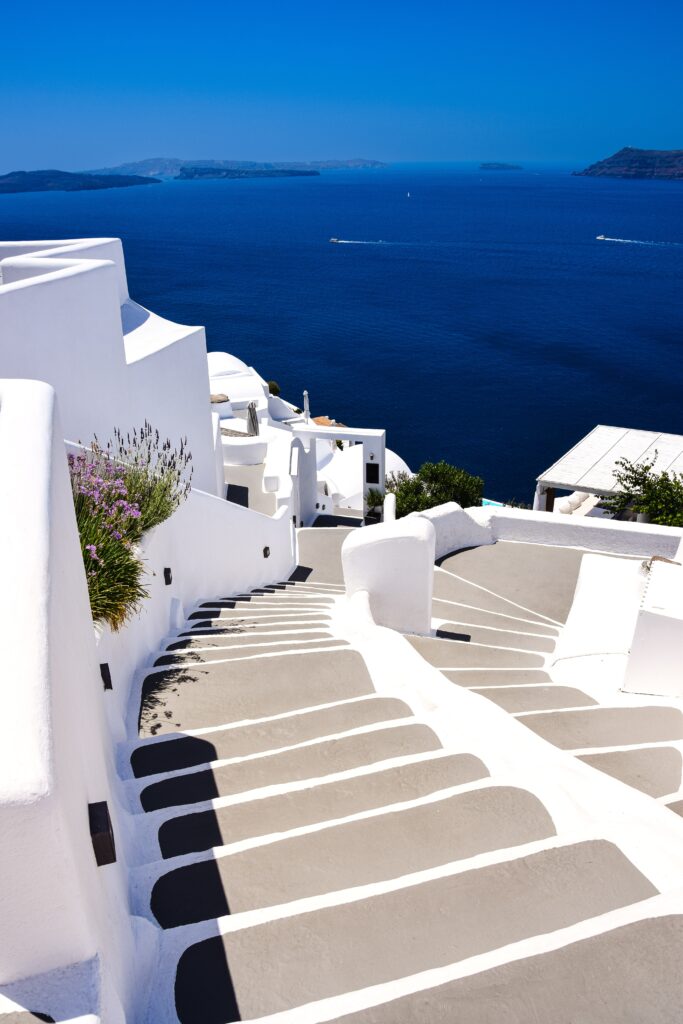
Santorini is all about verticality. Calderas, sunsets over Akrotiri, semi-troglodyte suites carved into the volcanic rock of Oia or Firostefani, terraces suspended above an almost black sea. The beauty of the landscape is real, documented, indisputable.
The risk is not the absence of aesthetics – it’s the saturation of aesthetics. Santorini is one of the most photographed islands in the Mediterranean, and this overexposure produces a paradox: the best-placed addresses are also the most exposed to the gaze of others. Santorini’s luxury lies in the hotel’s ability to create a private setting in a collectively appropriated landscape. The best suites don’t sell the view – they sell the illusion of being alone in it.
Paros, Antiparos: energy without excess
Paros occupies an intermediate position that experienced travellers know well. The island retains its Cycladic energy – white villages, turquoise sea, simple, fair cuisine – without tipping over into overcrowding. Antiparos, just a few minutes’ drive from Parikia, takes discretion one step further.
The Summer Senses Luxury Resort, which Luxsure covered in its review of the Paros hotel industry, illustrates what the island allows: family-friendly, peaceful luxury, where the landscape is not in competition with the hotel but in continuity with it. It’s an island that suits those who have already done Mykonos and Santorini, and are looking for something less constructed.
Sifnos: gastronomy and craftsmanship
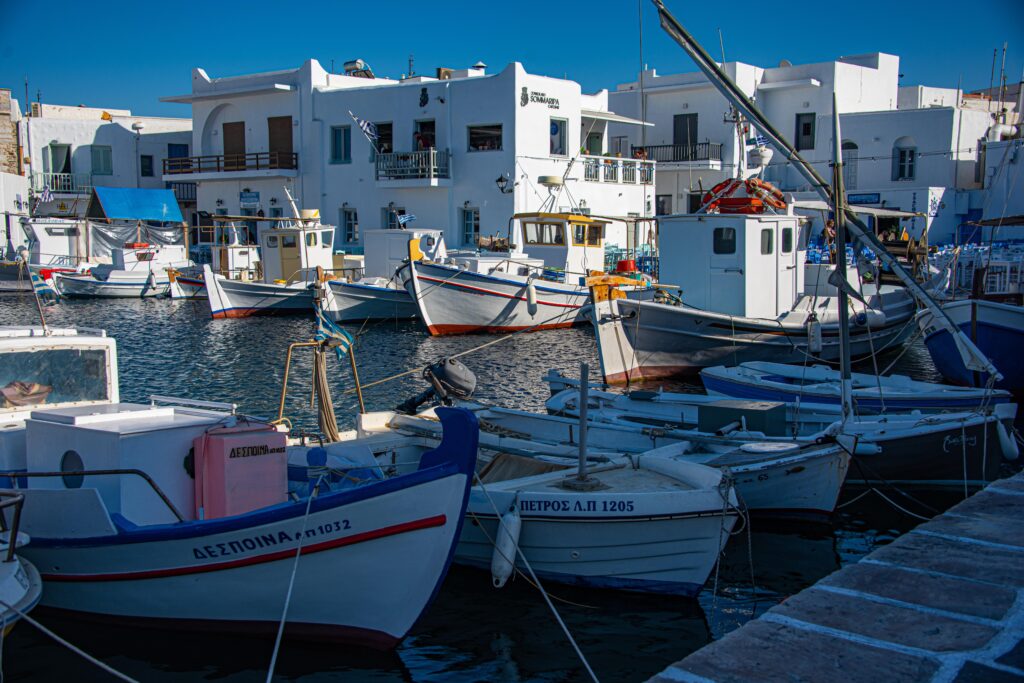
Sifnos adds a dimension that the other islands of the archipelago do not have to the same degree: a gastronomic and artisanal culture that is identified, transmissible and documentable. Sifnese cuisine – revithia cooked in earthenware pots in bakery ovens, local olive ladera, lamb mastello – is one of the most coherent expressions of the Mediterranean diet, listed by UNESCO as part of humanity’s intangible heritage, not as a diet, but as a set of gestures, products, conviviality and a relationship with time.
The ceramics, the paths between the villages, the relationship between the inhabitants and their island – less dependent on mass tourism than its neighbors – make Sifnos a valuable destination for a readership sensitive to taste in the broadest sense. Luxury is less spectacular. It’s harder to photograph. This is often a good sign.
Milos, Kea: minerality and first skinning
Milos is an island for geologists and lovers of sculpted landscapes. The white, lunar cliffs of Sarakiniko, the coves accessible only by sea, the waters that turn green depending on the time of day – Milos speaks to those who put the mineral before the social. A luxury hotel in Milos doesn’t have to do much, other than stand back enough to let the light and wind take center stage. It’s harder than it looks.
Kea, a forty-five-minute hydrofoil ride from Piraeus, offers a different entry to the archipelago. It’s a weekend island for Athenians in the know, an island of discovery for visitors arriving without a pre-built schedule. The hotel density here is low, the luxury offer still emerging – which, according to Luxsure’s readership, may be worth every five stars.
A grid, not a classification
The right method is not to compare infinity pools. It’s to first ask the question of the desired pace, then that of the season – the Cyclades in April and those in August are not the same archipelago – and then that of accessibility, depending on the point of departure. A direct Paris-Mykonos flight in July and an Athens-Milos flight in September produce two journeys that have almost nothing in common, even if both are in the Cyclades.
It’s only once the island has been chosen – for its constraints as much as for its attractions – that the selection of an address becomes relevant. And then the usual criteria take over: orientation, service, cuisine, relationship to the beach, quality of shade at midday. The rest, as always in this type of archipelago, is up to the light.
Cette publication est également disponible en :

