
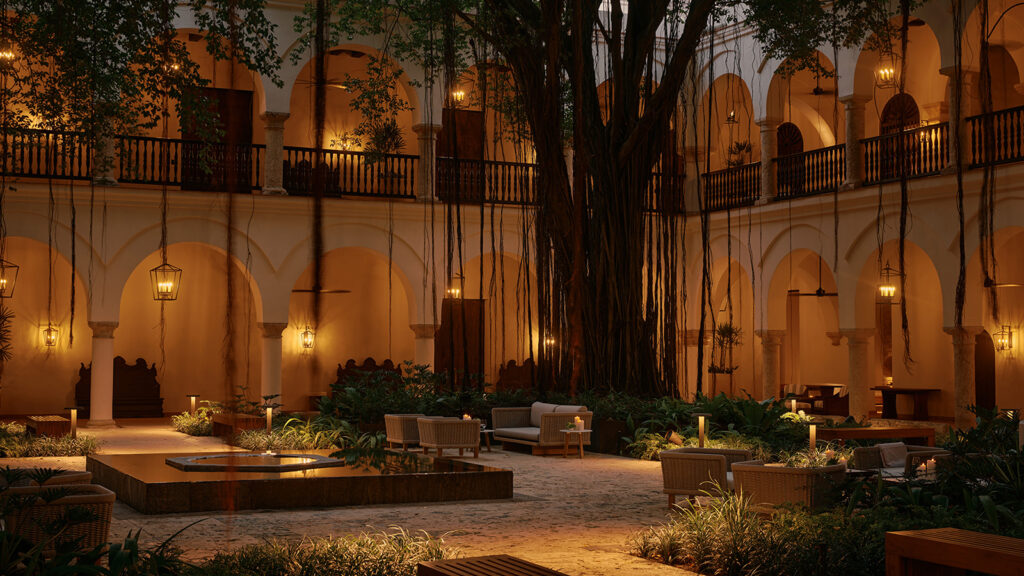
In Cartagena, certain addresses don’t just become established. They take root. The new Four Seasons Hotel and Residences Cartagena doesn’t start from virgin ground, but from a set of structures already there – walls, courtyards, volumes – whose presence it chooses to extend.
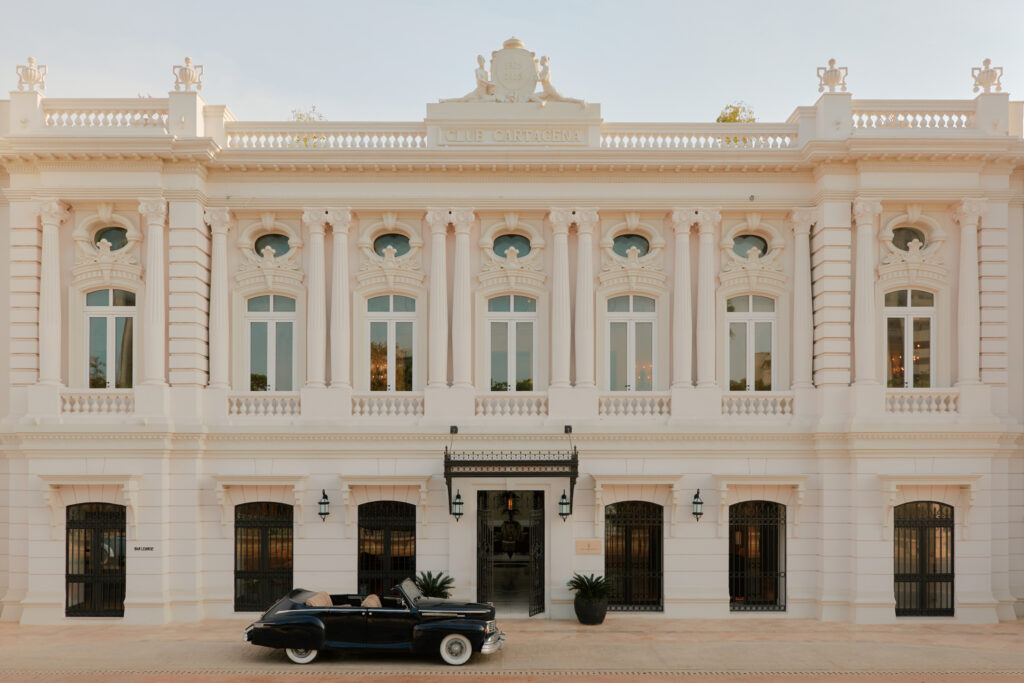
Located in the Getsemaní district, just a stone’s throw from the UNESCO-listed walled city, the project is based on a simple principle: assemble several historic buildings to produce a unique place. Among them, the former Club Cartagena, reintegrated into the scheme without being erased.
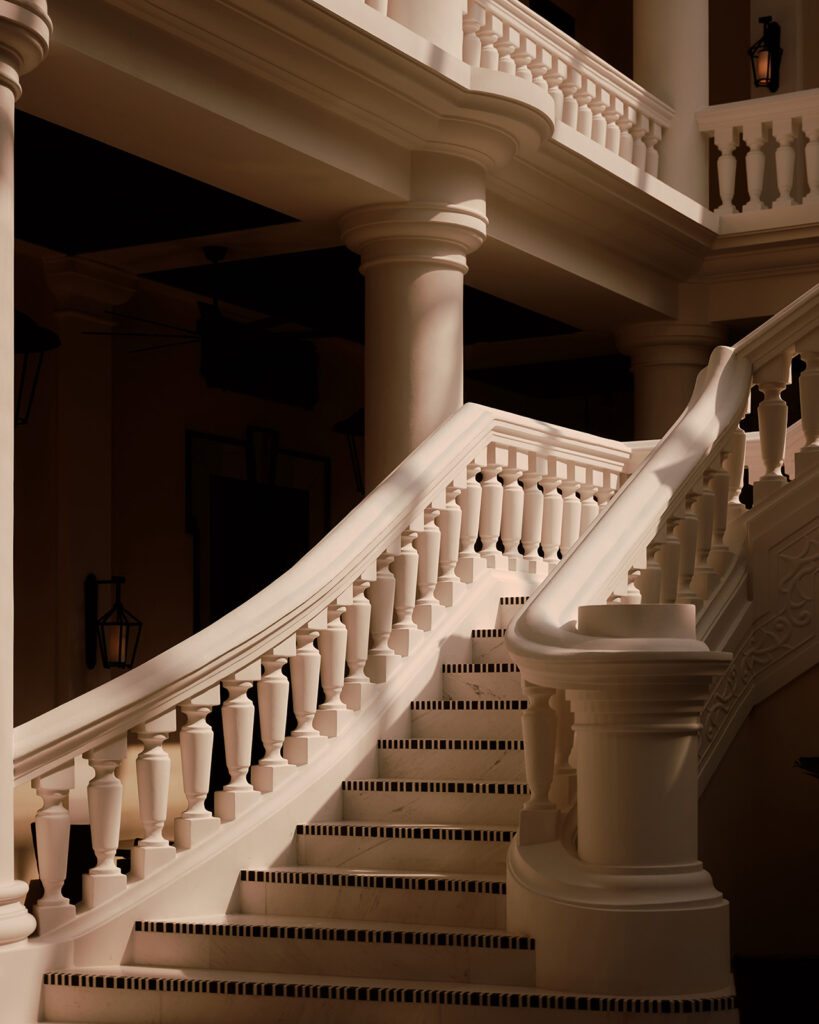
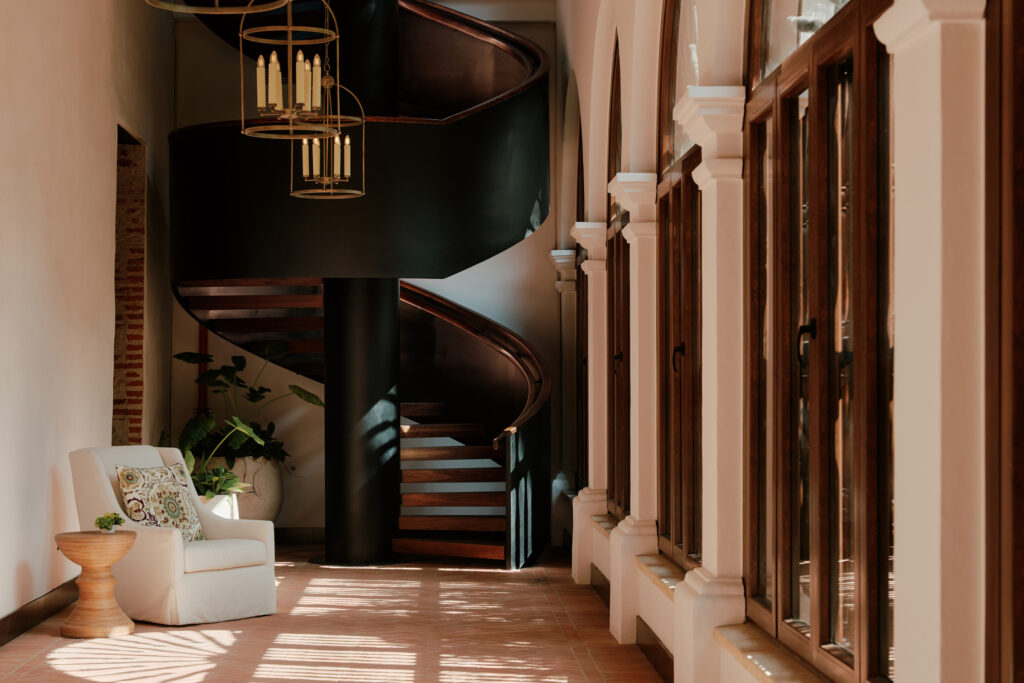
This type of intervention implies a rarely visible constraint: working with what already exists. Ceiling heights, wall thickness, light circulation – these are all parameters set beforehand, which contemporary architecture can only interpret.
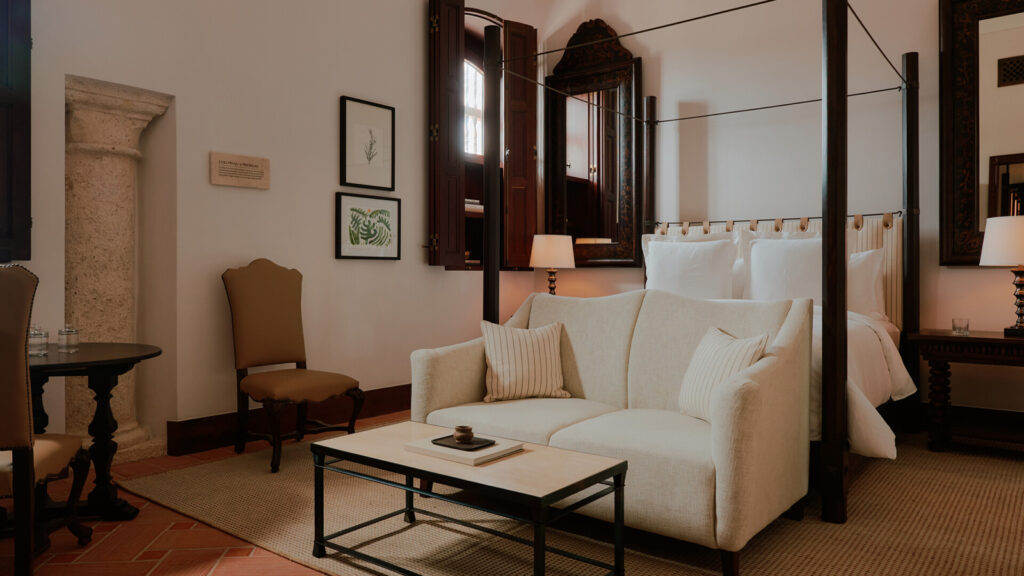
Decorator François Catroux acts as mediator. His approach favors reduced lines and subdued hues, letting the old volumes produce their own presence. He doesn’t redesign space: he clarifies it.
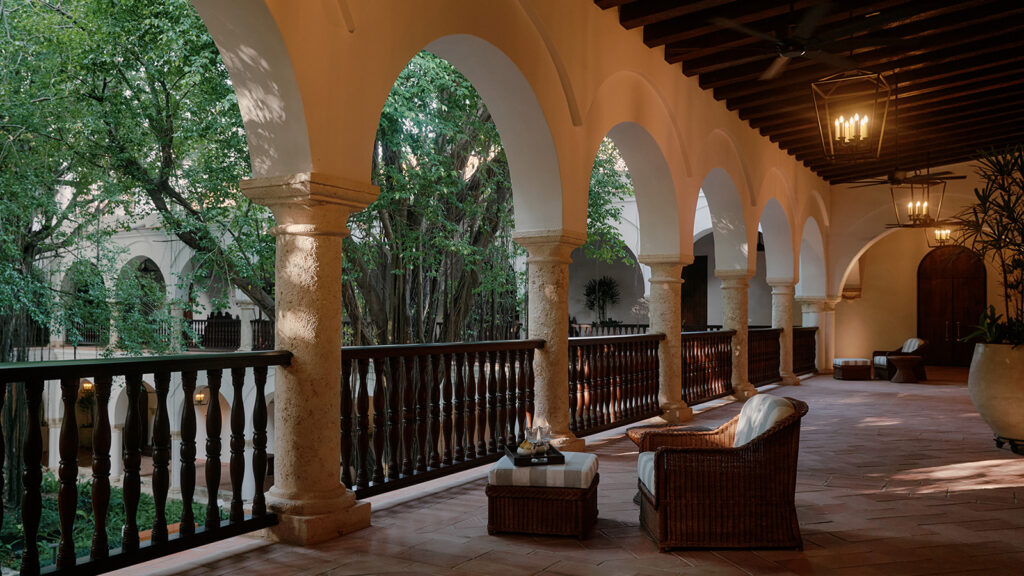
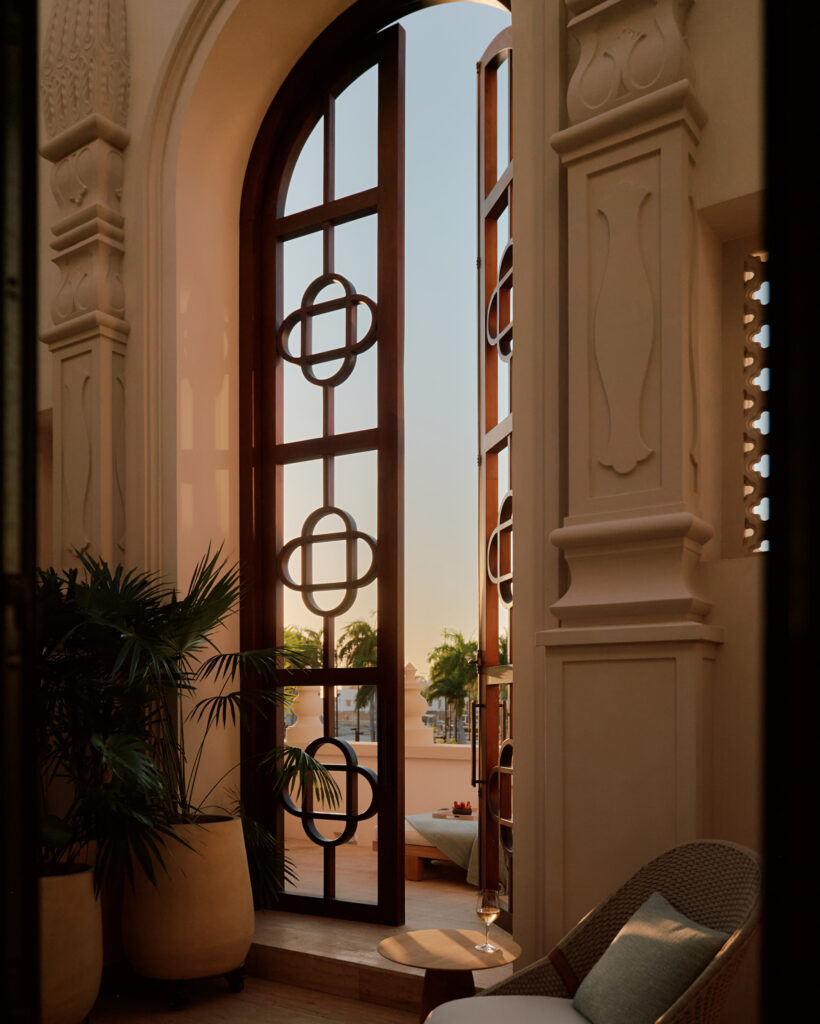
The project is also based on a collective effort involving local architects and craftsmen. Restoration does not aim at reconstitution, but at adjustment. Old materials – stone, woodwork, plaster – are preserved where possible, then reinterpreted in a contemporary way.
Detail
Location: Getsemaní district, Cartagena
Program: 131 rooms and suites
Structure: assembly of historic buildings (including Club Cartagena)
Design: François Catroux
Functions: hotel, private residences, restaurant, spa, event spaces
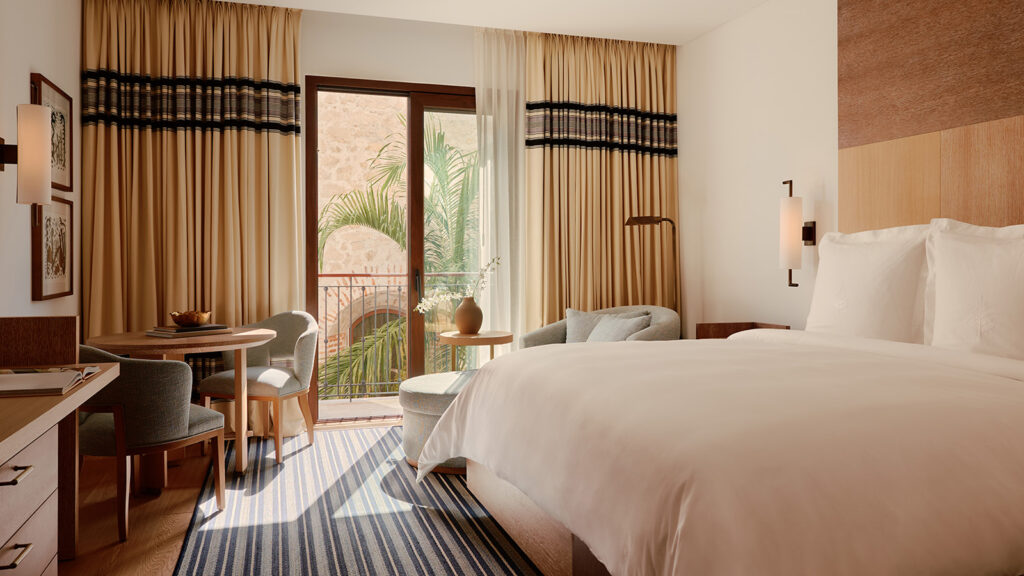
The bedrooms follow this logic. Some retain original features – high ceilings, architectural details – integrated into a more streamlined composition. The Catroux suite, accessible by private elevator, is on a different scale: two bedrooms, a terrace and a fountain, in a vocabulary inspired by colonial architecture.
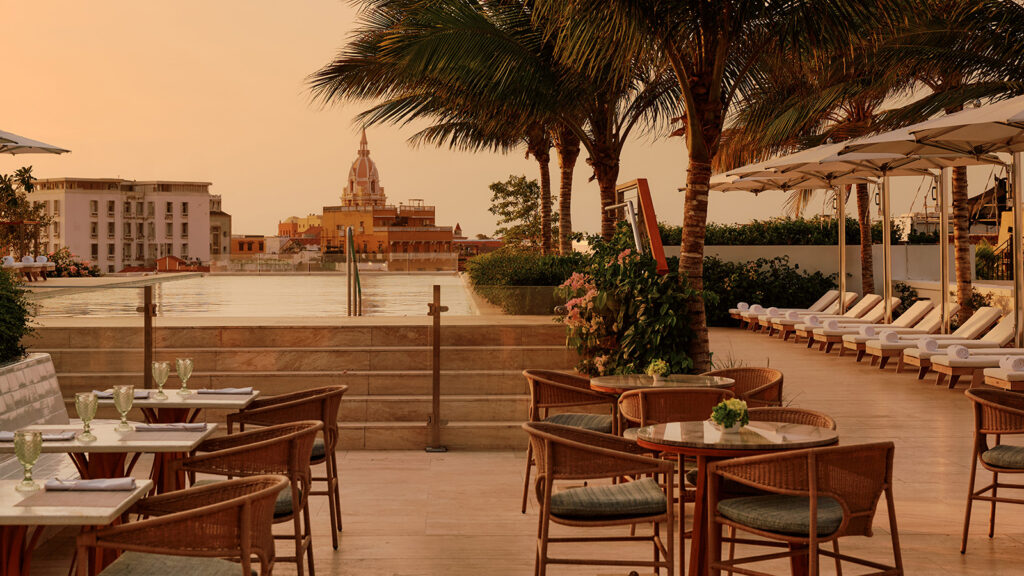
The culinary offering, spread over eight locations, functions like an internal cartography. From the Grand Grill in the old club to the more informal spaces, each address occupies a specific position within the whole. The building contains not one restaurant, but several.
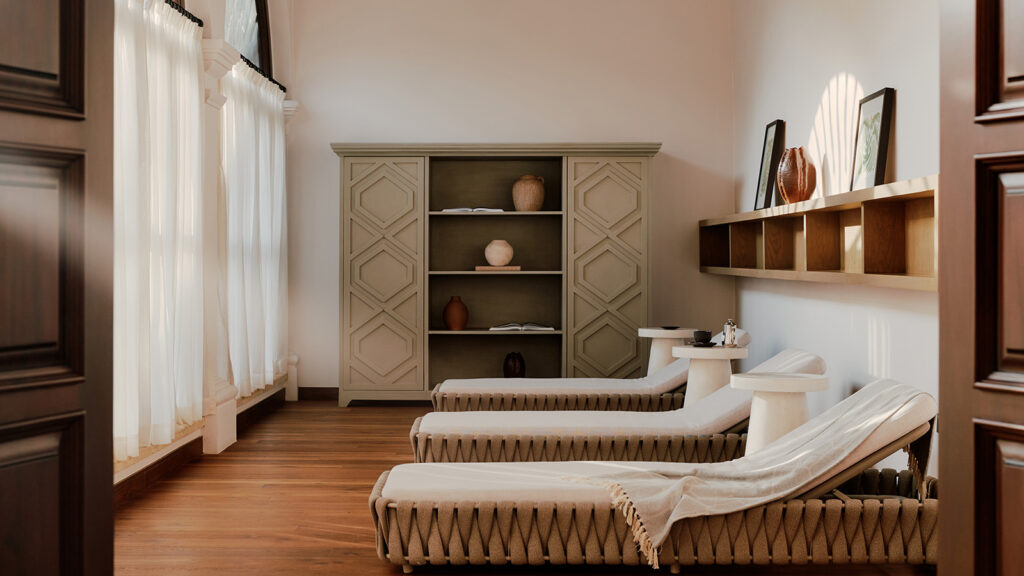
The Umari spa, housed in a former cloister, introduces a different temporality. Religious architecture, originally designed for retreat, is here reallocated to care. Gestures change, but the space retains its primary function: to slow down.
Outside, Getsemaní plays an active role. A dense neighborhood criss-crossed by galleries, cafés and continuous street life, it prevents the hotel from closing in on itself. Luxury is not isolated: it’s porous.
The Veracruz room, capable of accommodating three hundred people, is a reminder that this type of venue must combine two scales – the intimate and the collective. Rooms, patios and terraces on the one hand; events, meetings and celebrations on the other.
What’s taking shape here goes beyond the simple opening of an establishment. It’s a way of working on the city without transforming it head-on. Using what’s already there, shifting its uses, extending its life.
In a context where luxury hotels often tend towards creation ex nihilo, Cartagena offers a slower alternative: that of addition rather than rupture.
Cette publication est également disponible en :

