
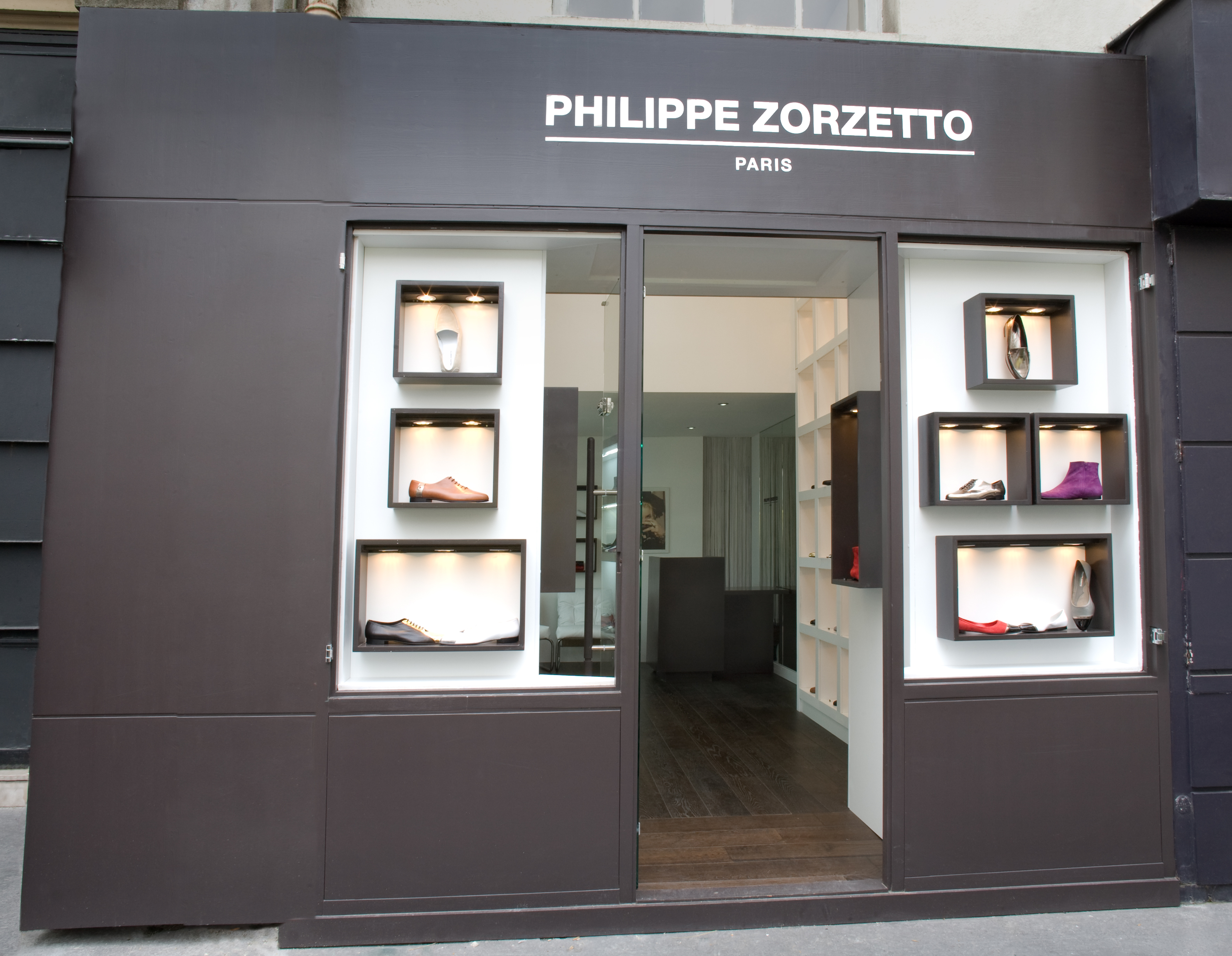
Sometimes, delays have the merit of encouraging beautiful encounters. Philippe Zorzetto is one of them. Meeting him at a fashion show, he quickly told me about his job as a shoemaker and the uniqueness of his unisex shoes. Just the thing for a shoe addict!
When he gave me his card, I was doubly struck. I’d already had his card in my hands on a street corner in the Marais. Then I recognized the address of his store, having walked past it time and again without ever entering, fascinated by the illuminated boxes displaying the shoes in the window.
A few months later, I finally had the chance to ask him about his profession and to enter this famous boutique in the Marais district.
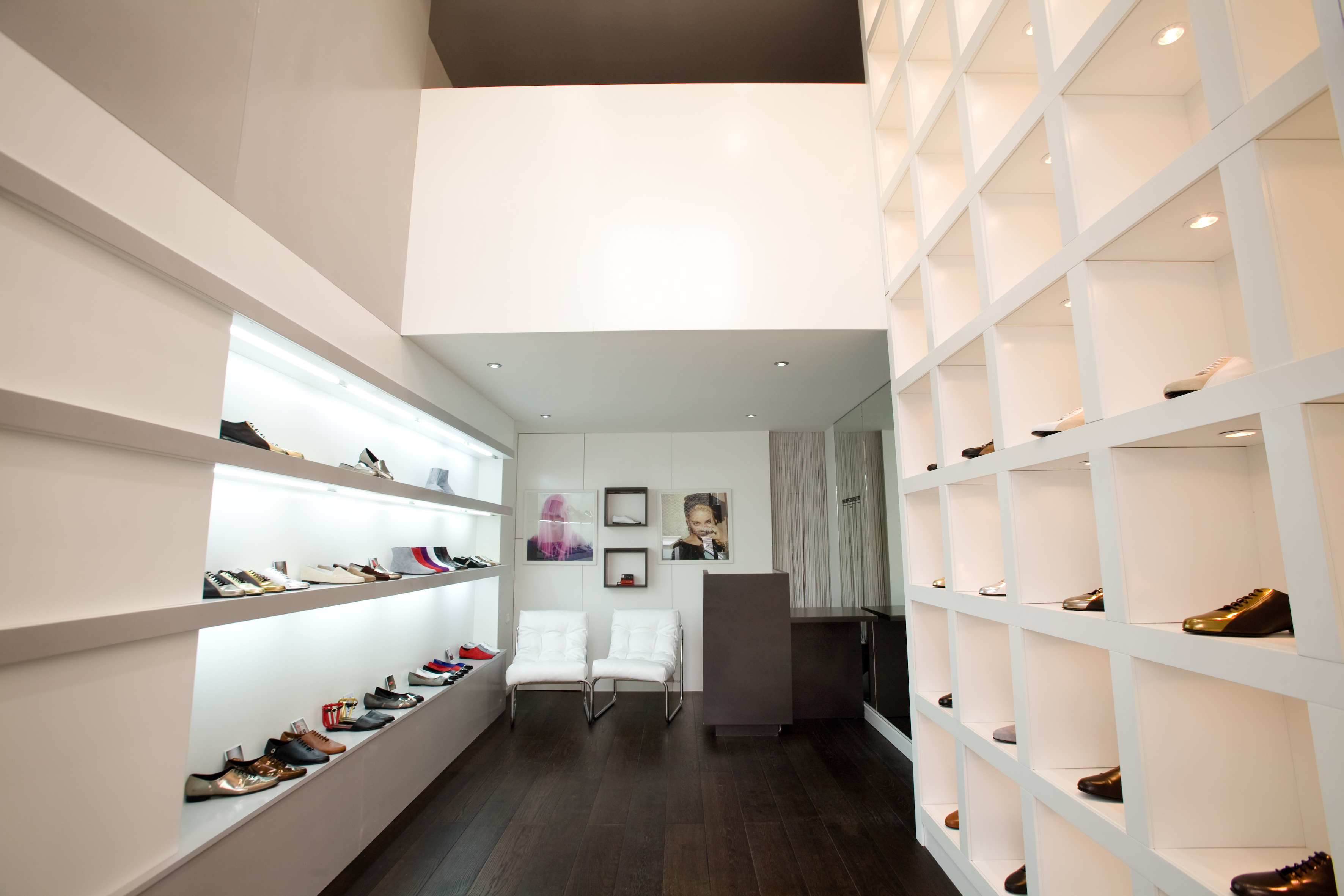
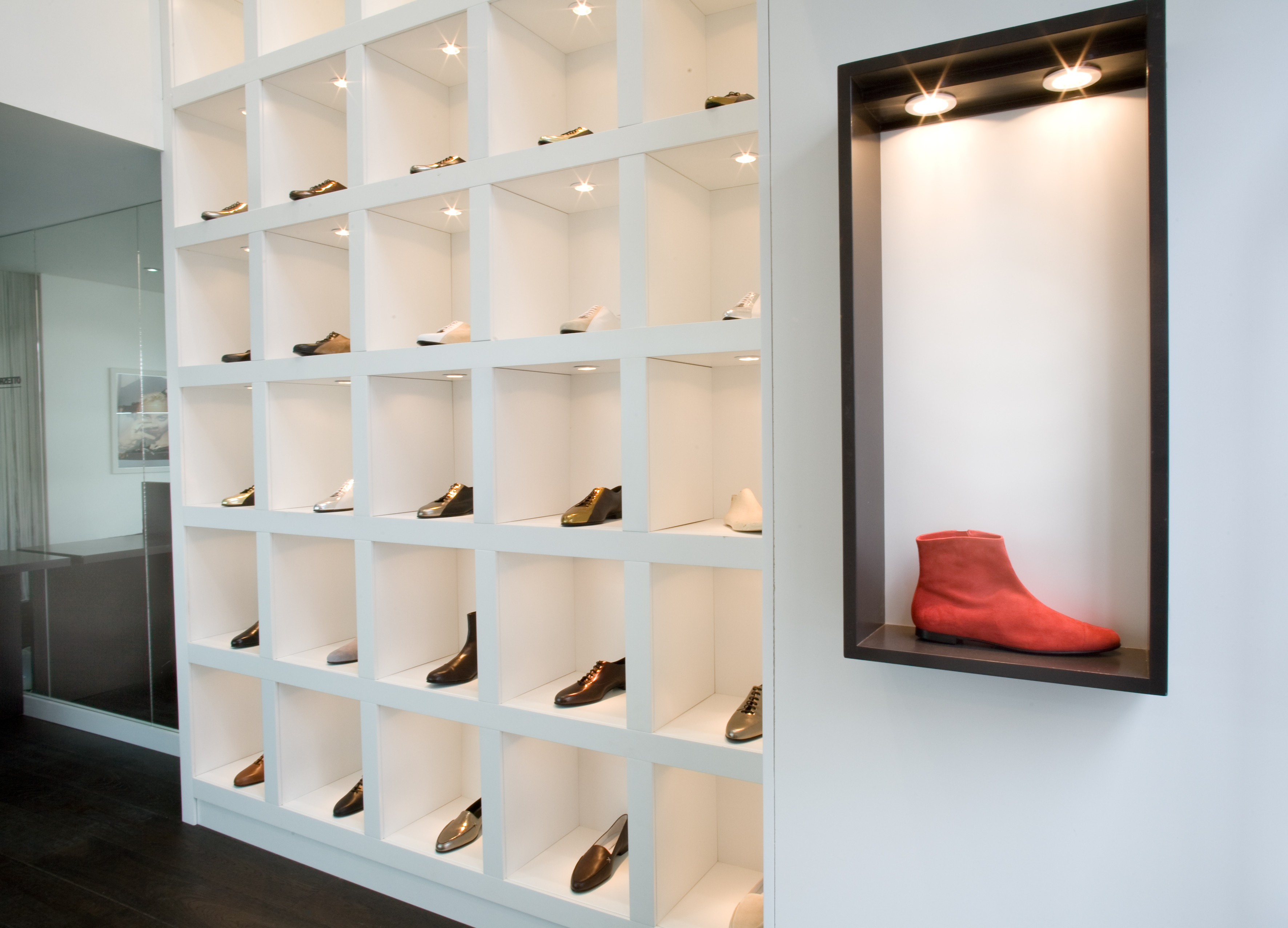
As soon as I enter, I’m struck by the design of the boutique: chic, elegant and sober, with giant Polaroids of Maripol on the wall. I was immediately taken with the place. It’s unlike any other shoe store in Paris. Men’s models are delicately presented in white boxes, while long shelves house women’s creations.
And the man opens up and tells us about his dandy shoes with passion. Because he doesn’t make shoes, no, he just makes exceptional shoes, and has been doing so since 2008.
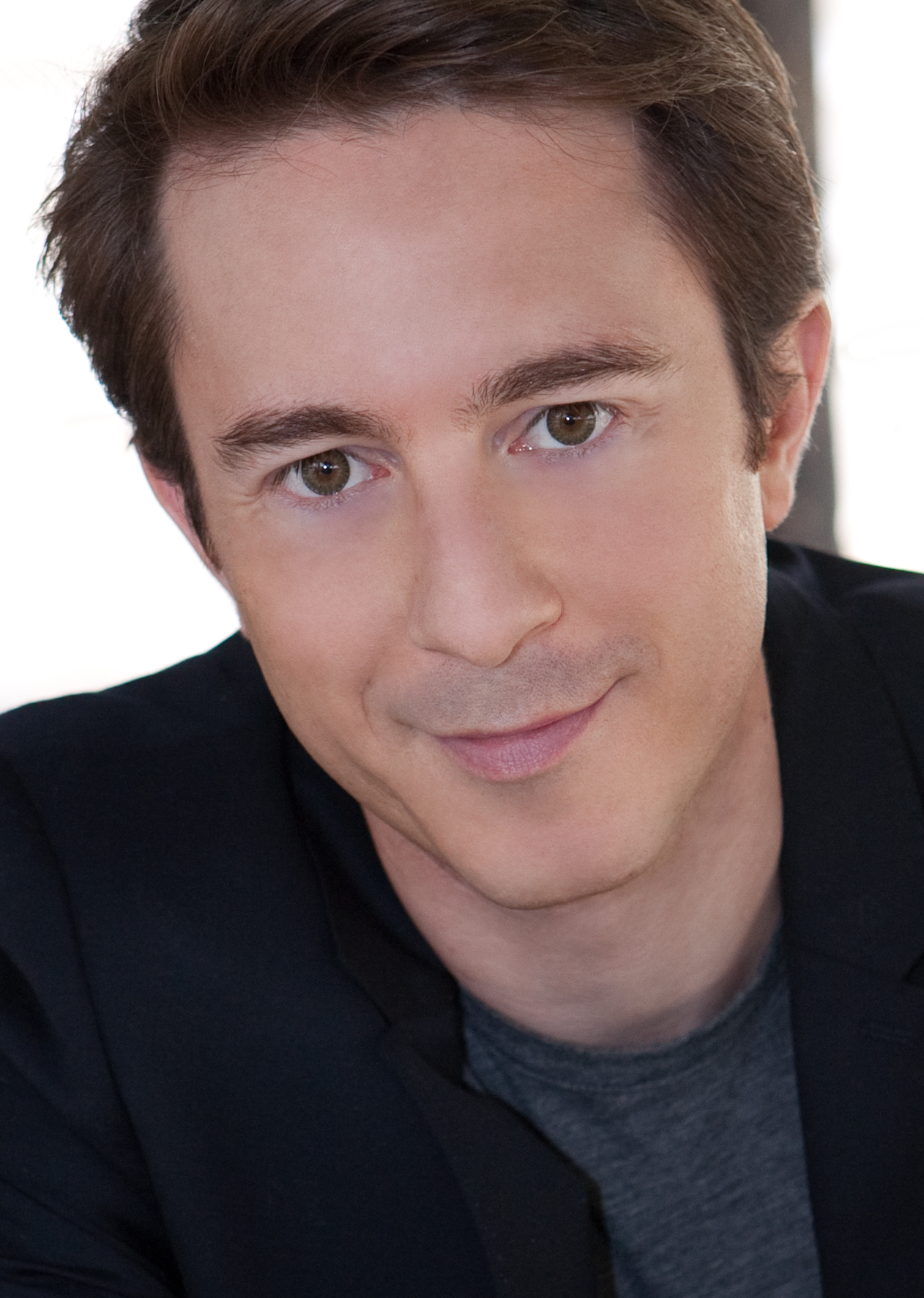
Hello Philippe, and thank you for agreeing to answer our questions. You’re a shoemaker with a small boutique on rue Vielle du Temple. How does a cabinetmaker’s son become a shoemaker?
Throughout my childhood, I was in contact with many materials such as wood and leather too. My father was a cabinetmaker, but he also worked for a wonderful brand called Goyard.
I’ve always been immersed in this world, and when I was a child, I used to go and watch my father work with his hands. In a way, being in workshops is part of my DNA.
For a while, I put it aside, I studied, I had other jobs, but I always had the desire deep down to do something with my hands, concretely. One day, I found some of my grandfather’s old forms in my attic and kept them.
I designed a collection based on these shapes, but purely for fun. And then, finally, I said to myself that I was making shoes that I wanted to wear, and that maybe other people would want to wear them.
I was hooked. I got in touch with workshops and we created the first prototypes. I spent several months in workshops in Spain where I learned the trade.
Having been brought up in a craft context, I quickly felt at home in these workshops. Even though they’re different trades, the gestures are the same, the people are similar. I learned the trade very quickly in the workshops.
Spain is strange. When we talk about shoes, we immediately think of France and Italy, but not Spain.
Spain has the advantage of still having small workshops that play the game on small quantities, which is not always the case, in my experience, in Italy. I came with my sketches, my ideas, I needed to learn and they wanted to work with me, so it was a gamble for them too.
In Spain today, you can still find workshops that produce small quantities on an artisanal basis, in towns where all the trades surrounding footwear still exist. It’s very interesting. It also exists in Italy, but unfortunately less so in France. And Spain is right next door, which is very convenient.
Your shoe concept is an innovative one in Paris. Shoes that can appeal to both men and women. Where did this idea come from? Usually, when we think of women’s shoes, we think of shoes with heels of at least 12 centimetres, pumps. You’ve positioned yourselves in a very different market.
Initially, I wanted to make a men’s last from the 1930s, which has the particularity of being somewhere between round and pointed. It’s a last that had gone out of fashion in men’s footwear, as we were more into either round or very pointed toes. I wanted to use this shape because I felt it was both modern and timeless for men.
Quite quickly, I realized that on the Parisian designer market, there were a lot of people making beautiful heels. It seemed to me that there was nothing more I could bring to this market for women.
On the other hand, I could offer something else for shoes that are easy to put on, well made, sewn, with heels that aren’t too high, that you can wear to work or for walking, and at the same time sophisticated enough to go out in the evening.
It was interesting to make this proposal to women in Paris who are very active but who often don’t have much choice between the very beautiful but not always very comfortable escarpin and the ballerina or sneakers. It was a proposal that went well with the reworked shape, which suited women’s feet.
My shoes are men’s models that are adapted for women, not the other way around. They’re still richelieus and ankle boots, masculine in construction but also corresponding to what some women want to wear. Most of them have both pumps, with 12-centimeter heels, and at the same time flat boots and sneakers. It’s a slightly different proposition.
The last few seasons have seen the return of the women’s derby.
I’m delighted. From my very first collection, I’ve done derbies, richelieus and ankle boots. It’s a real bias to always work with the same shape and to offer something that doesn’t necessarily follow the trend, but is rather linked to style. Perhaps more so for men than for women.
Men’s shoes are more timeless, which is not the case for women’s collections, which are conditioned by a whole host of factors.
Exactly. I work in truly artisanal workshops and I’m very far removed from anything that has to do with trend books. Today, there’s a certain standardization in the shoe industry, because it’s all the same workshops or factories. In the end, we’re inevitably influenced by what others are doing, and that’s normal.
I really try to work on timeless, basic styles, but revisited in my own way. And to bring to desert boots, chelsea boots or richelieus my own little sauce, my own little music from one season to the next, and at the same time know that my customers will find that same spirit.
So, what have you got in store for us this season? I see color, red, camel …
Mole, too. The people who inspire me are my friends, people I meet on the street.
I always try to work on colors that are easy to wear with the colors we all have in our wardrobe: navy blue with jeans, black, gray. I try to bring something new, something other than black, even though black is a color I love. Colors that are easy to wear with navy blue, gray and black, so we find taupe, camel, chocolate and gray.
I try to work with skins that are truly exceptional. These are skins that age well, that develop a patina over time. It’s very important for me to have a shoe that you can wear over several seasons with a skin that will be even more beautiful than when you bought it.
Looking at your models, the shoe shine came to mind. What do you recommend for maintaining them?
It all depends on how you like to wear them. Some people like to wear shoes with leather that has acquired a patina, a matte finish. In that case, you don’t need much maintenance.
Other people like to have a shine, so you need to nourish the leather. I recommend nourishing the leather with colorless shoe polish, preferably, to moisturize the leather like our skin, since it’s skin. And do it regularly to regain that shine.
I only work with matt leathers, but when they’re new, they have a shiny side. And if you want to regain that shine, you have to moisturize them regularly.
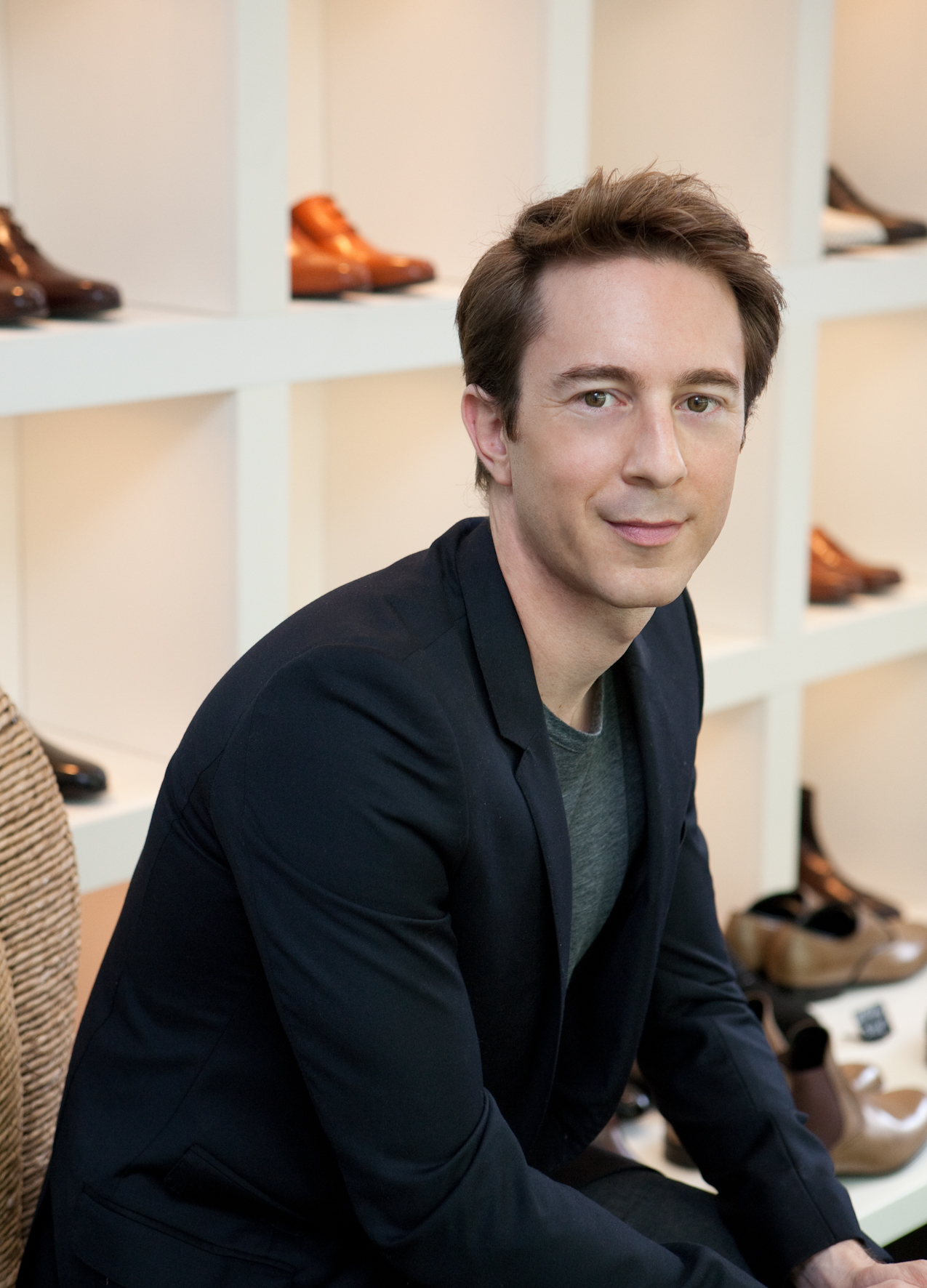
Your women’s shoes are designed for a certain type of woman. What is it?
My shoes are aimed at active women with a certain knowledge of footwear. They’re very sensitive to the quality of the leather, the construction, the Blake stitching – through and through. They have a really sharp, intelligent eye for these models.
They’re not necessarily women with an androgynous or masculine look. They’re also women who actually hijack shoes, richelieus or ankle boots with very feminine outfits, and this works well. What’s really astonishing is that the same model can be interpreted very differently from one person to another. It’s really charming, you can have a totally different spirit depending on your age, depending of course on the way you dress. It’s great to see that the shoe is finally appropriated by the customer, and that’s what I love.
Perhaps a little more so than pumps, where, in the end, you follow the trends and get the same shoes. In that case, you really have to love shoes.
I think there are some very beautiful pumps that are very well constructed with gorgeous leathers. For me, the idea was to have shoes that weren’t just for going out at night.
It’s important to be able to wear them every day, really walk around Paris, take the metro, have a very active life and at the same time go out in the evening when you haven’t really had time to go home and change. And so have the feeling of having something a little exceptional that’s very dressy.
Finally, it’s almost enough to wear pants instead of jeans or something else while keeping the shoes on to look very dressy or simply go to work.
Looking at your men’s shoes, I’d say you create shoes for dandies.
That makes me very happy. I’d go so far as to say that women today are also dandies. I love the 30s and 40s, when people were very elegant.
This shape was certainly revived in the 60s, as richelieus can be worn very classically with a suit, but also with old jeans, very rock n’ roll or pop rock, and it works well.
What I’m interested in is bringing a form of novelty to classic models, either through color or through a mix of colors and materials, but also through details. For example, I always work with soles that are sewn, but where there’s no heaviness; they’re not thick, because I find that doesn’t add anything but weight to the model. Instead, I try to keep things simple and to get to the essence of the model, so that it’s as practical and simple as possible.
Do you design your models and work with a workshop, or do you do it all yourself?
I do everything myself. I design the models, choose the leathers. I go to the workshops to make the prototypes. I wear the prototypes, which is very important, because it’s a way of seeing whether the model works or not and what I can do to improve it. And when I like them, I produce them for the boutique.
Are you planning to open another store?
We recently opened an e-shop. I have a foreign clientele who call me regularly, so I had the idea of setting up an e-shop so they could easily order their models. And it allows me to reach people who don’t live in Paris or who don’t necessarily have the time to come here. I always work on the same lasts, so once you know your shoe size, it’s very easy to order and be sure you won’t find what you’re looking for.
I’m also planning to open a second boutique in Paris in a few months’ time.
Do you make custom-made products?
It’s a project that’s close to my heart, and one that I’m starting to work on, because I’d really like to move towards made-to-measure products to offer exceptional skins. But it’s still a little early to talk about it.
Where do you find inspiration?
I’m also lucky enough to have Matthieu Chédid as a customer, whom I met in the boutique and got on well with. He’s a great influence on me, because he always has great ideas. Sometimes he tells me he’d like this or that model, or why I don’t do it this way. He’s a real think tank, and it’s great to have customers like that to inspire me.
I also have a lot of anonymous clients, architects, people who work in design, advertising agencies or local art galleries. It’s really my customers who inspire me. I like to be in the store to talk and exchange ideas. It’s very important to get their point of view and share their ideas.
Finally, what is the price range of your models?
Prices range from 300 to 390 euros for men and 280 and 360 euros for women.
The models are handmade, and all the soles are Blake-stitched, including for the women’s models, which is unfortunately increasingly rare for women’s shoes. Models are available in small quantities, as I only sell in boutiques.
This gives them an exclusive look, because my customers know that these shoes aren’t available everywhere and aren’t on everyone’s feet. Unfortunately, I sometimes run out of stock on certain colors and sizes.
Well, thank you very much for these few confessions and we hope that many dandies will pass through the door of your dandy shoe store.
Philippe Zorzetto
106 rue Vieille du Temple
75003 Paris
Information: 01 42 71 39 04
Marie-Odile Radom
Cette publication est également disponible en :

