
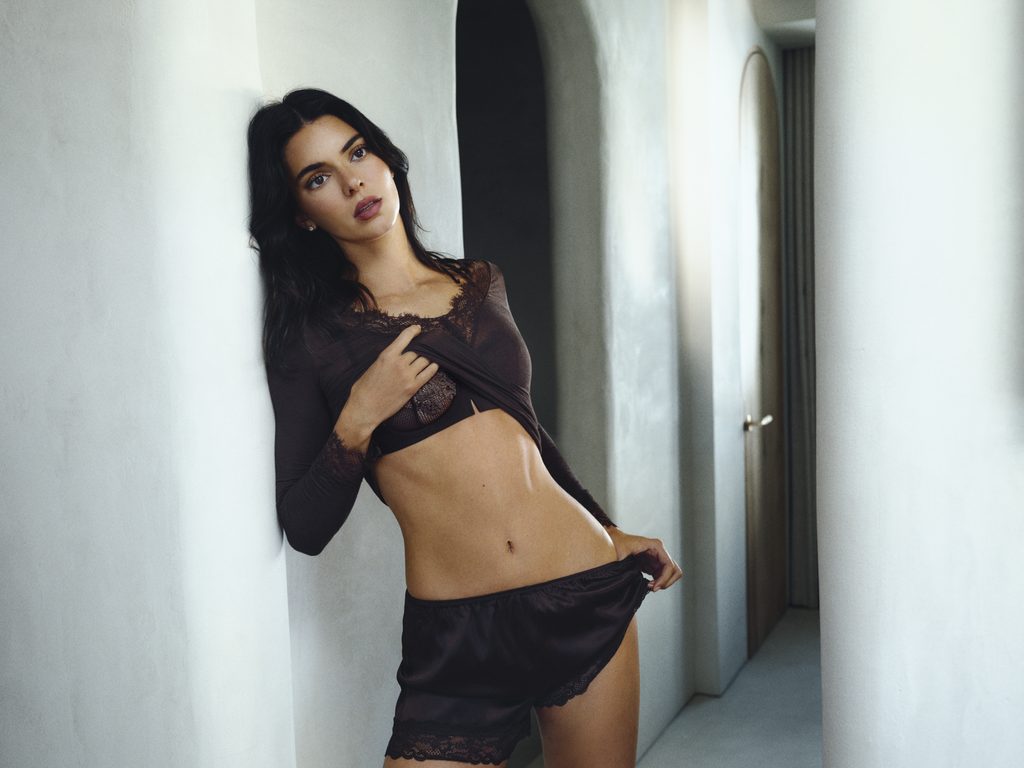
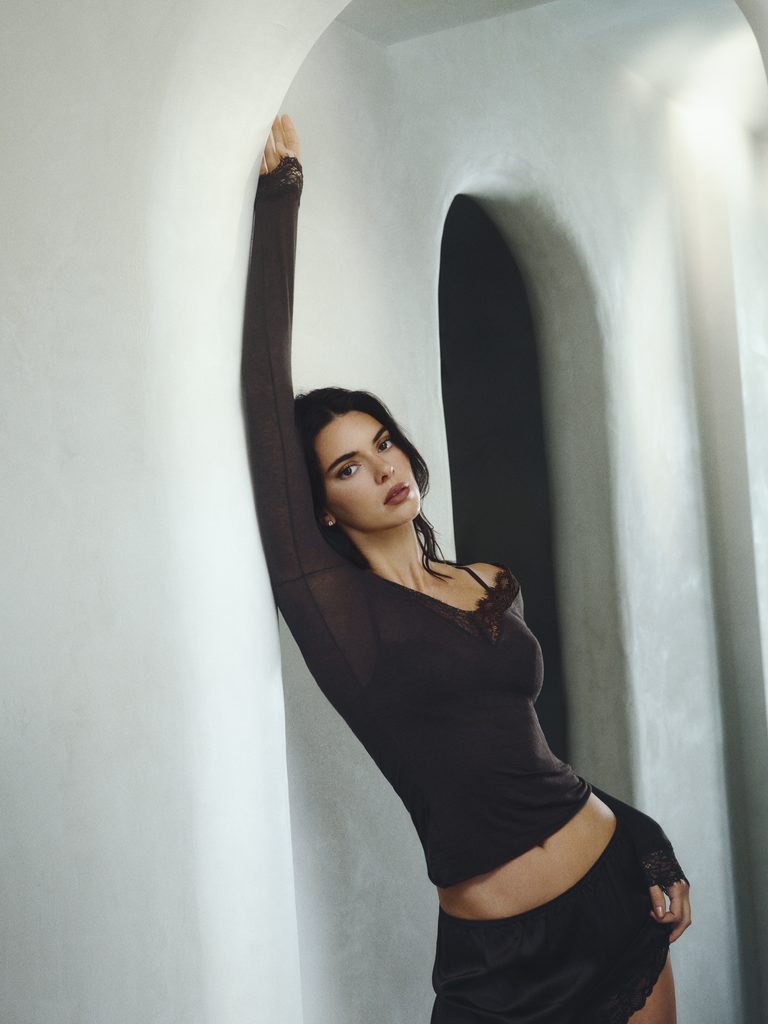
The model, already informally associated with the viral success of the “Ultra-léger avec cachemire” top, opens a new chapter for the collection through a four-part campaign.
An ambassador whose connection predates the campaign
Intimissimi presents a new evolution of its “Ultra-léger avec cachemire” collection for autumn, describing it as a viral phenomenon and bestseller. Its collaboration with Kendall Jenner pays tribute to the model’s longstanding attachment to the line: according to the brand, she was among the first celebrities to wear the boat-neck top naturally, helping introduce it to a new generation of consumers.
That narrative choice — drawing on earlier, spontaneous use rather than a partnership invented from scratch — is a familiar way for accessible fashion brands to lend organic legitimacy to a paid collaboration.
Four chapters, one garment
For the launch, Intimissimi will unveil four campaign chapters featuring Jenner in different looks from “Ultra-léger avec cachemire”. She wears the long-sleeved cashmere-lace top in “chocolate” brown. The piece also comes in black, vanilla, blue, brown, grey, beige and burgundy, alongside new autumn–winter 2026 colours: green, violet and red.
Extending the palette rather than multiplying designs reveals the logic of a bestseller: the brand is not trying to reinvent the garment itself, but to broaden its visual and chromatic presence and prolong its commercial life.
Accessible cashmere becomes a central argument
The prominence of cashmere in an accessible lingerie and loungewear collection reflects a wider market trend: materials once reserved for pure luxury are reaching broader audiences through brands able to produce at scale while retaining the appeal of a prized fibre. Like other internationally distributed Italian lingerie labels, Intimissimi has built part of its identity on the promise of access to fine materials.
Choosing a figure of Kendall Jenner’s stature to embody that promise strengthens the collection’s aspirational appeal. At the same time, the brand points to the model’s earlier, unsponsored use of the piece — a claim of authenticity it foregrounds rather than presenting the arrangement as a conventional image contract.
A partnership based on recognised prior use, rather than an entirely manufactured association, illustrates a wider shift in how accessible fashion brands choose ambassadors. Perceived authenticity now matters more than fame alone: to marketing teams, a global celebrity with no previous connection to a product may be worth less than someone the public already recognises as an actual wearer.
In a European lingerie market where competition among accessible labels has intensified markedly in recent years, a partnership with a major celebrity remains one of the few ways to secure significant media coverage for a garment that has already been sold for several seasons, without developing a new product.

Cette publication est également disponible en :


