
Four hundred shards of mother-of-pearl for a wrist mosaic
With its two new marquetry dials in mother-of-pearl, the Bvlgari Bvlgari brings a two-thousand-year-old craft down to thirty-three millimetres: Roman mosaic.
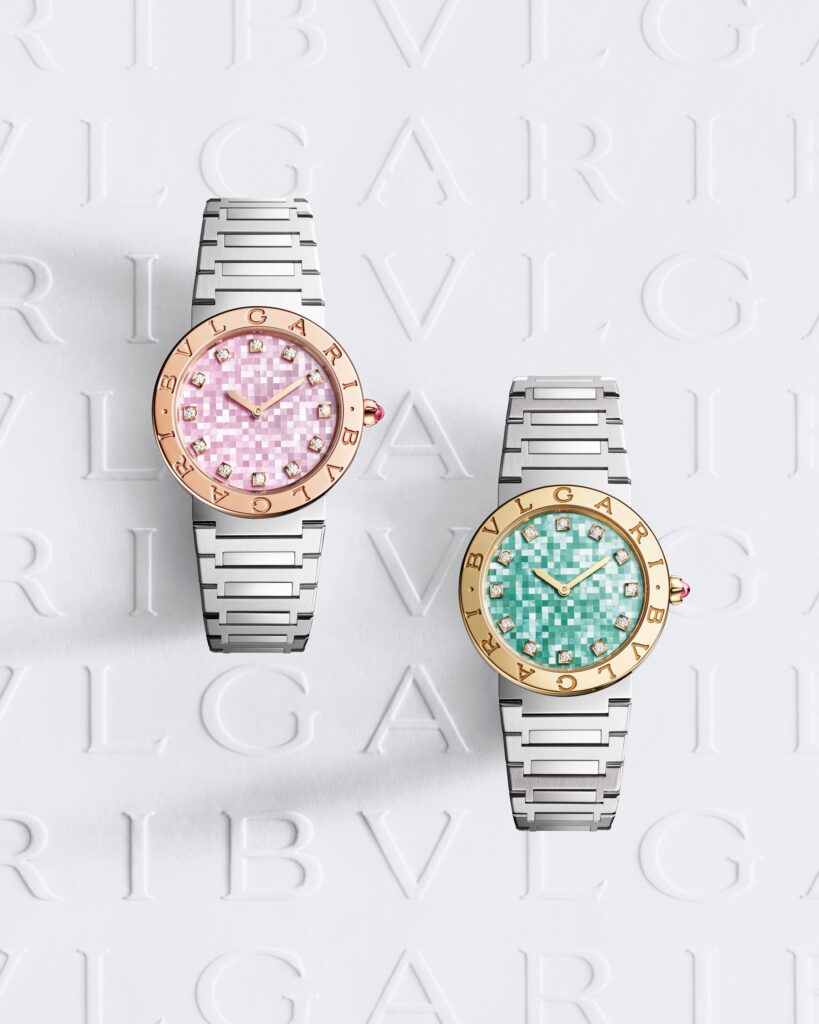
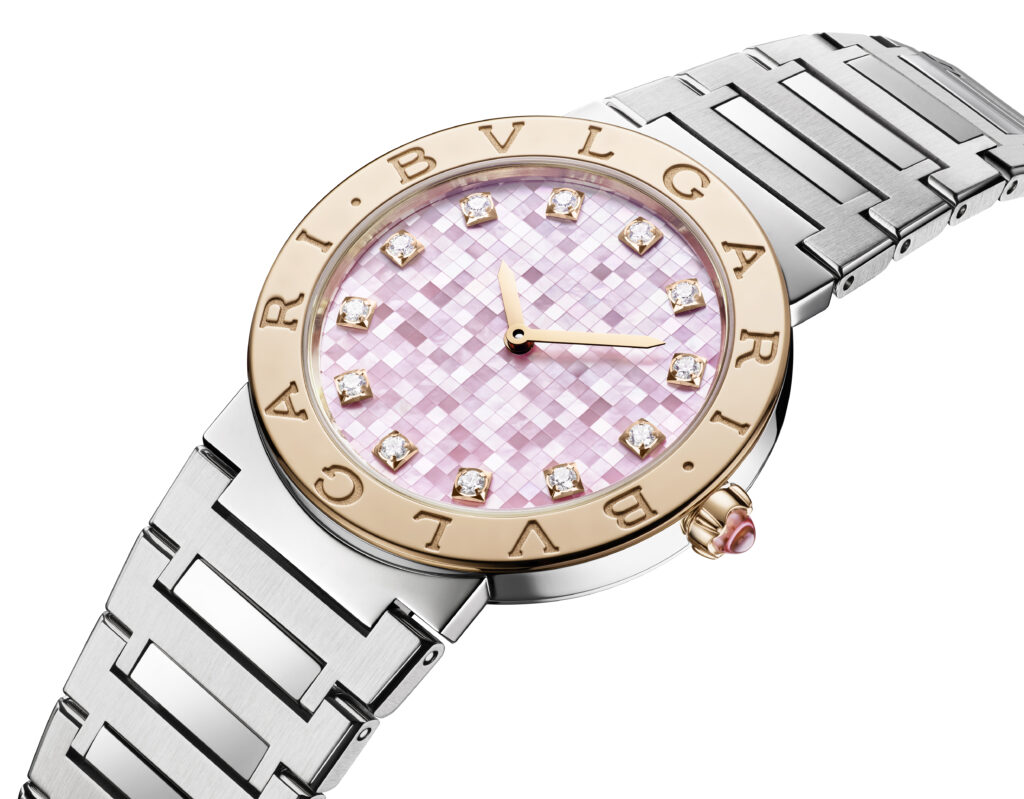
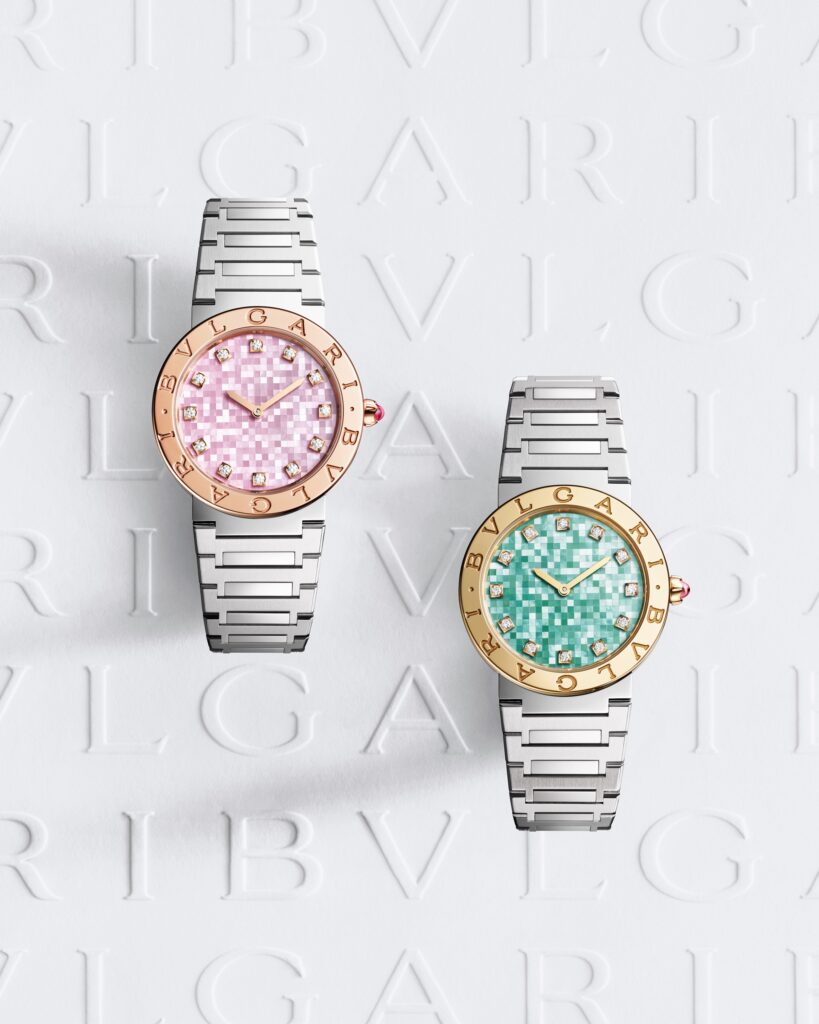
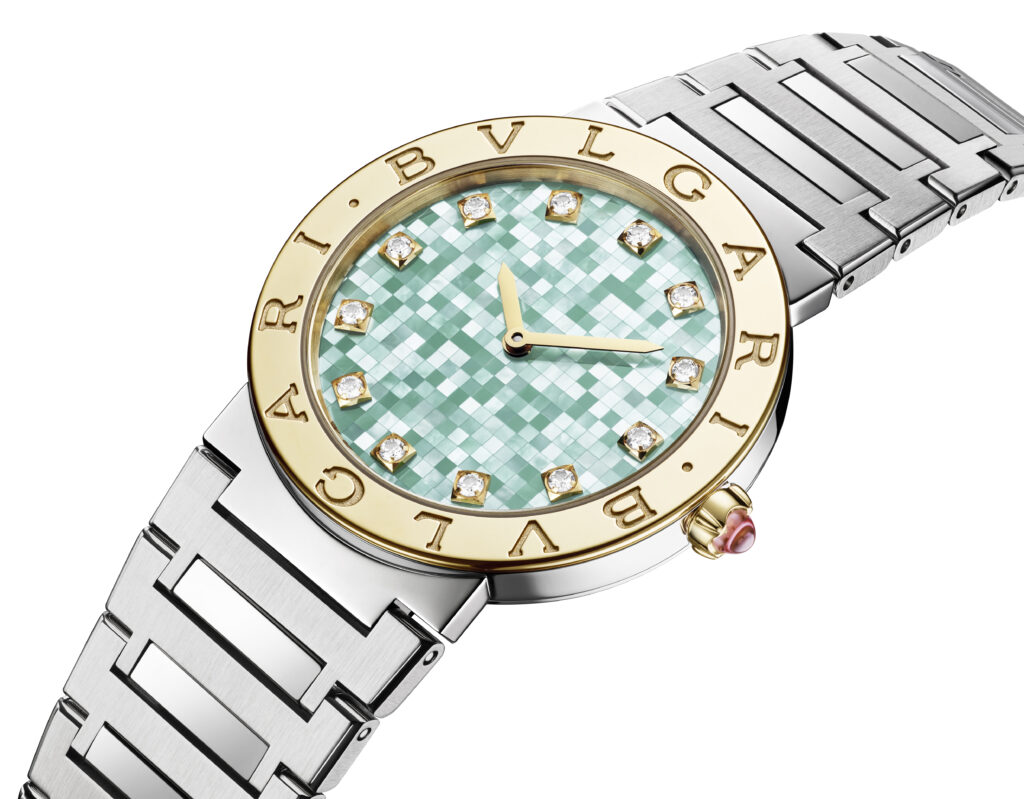
It takes a moment to grasp what you are looking at. The dial of the Bvlgari Bvlgari Roman Summer is neither painted, nor lacquered, nor set with a single sheet of mother-of-pearl. It is composed — literally — of around four hundred fragments of mother-of-pearl laid one by one, by hand, until they form an iridescent fresco. The Roman Manufacture did not invent a summer motif; it scaled down to the wrist a technique Rome once used for its domestic pavements and friezes.
Marquetry as archaeology
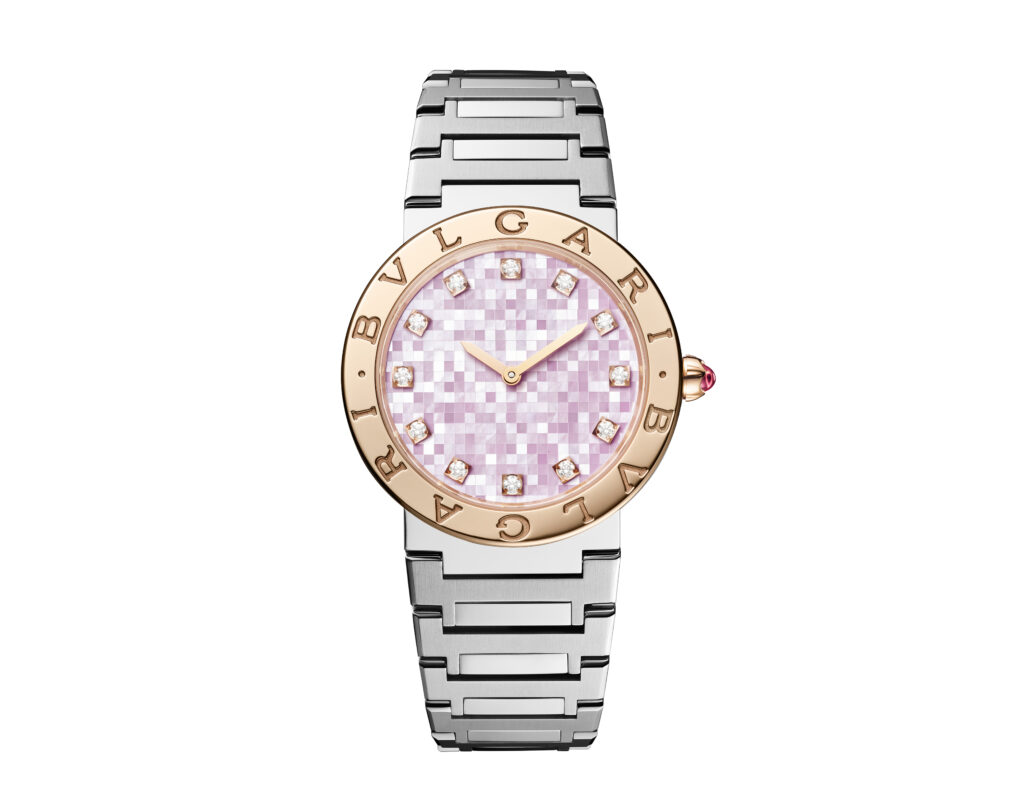
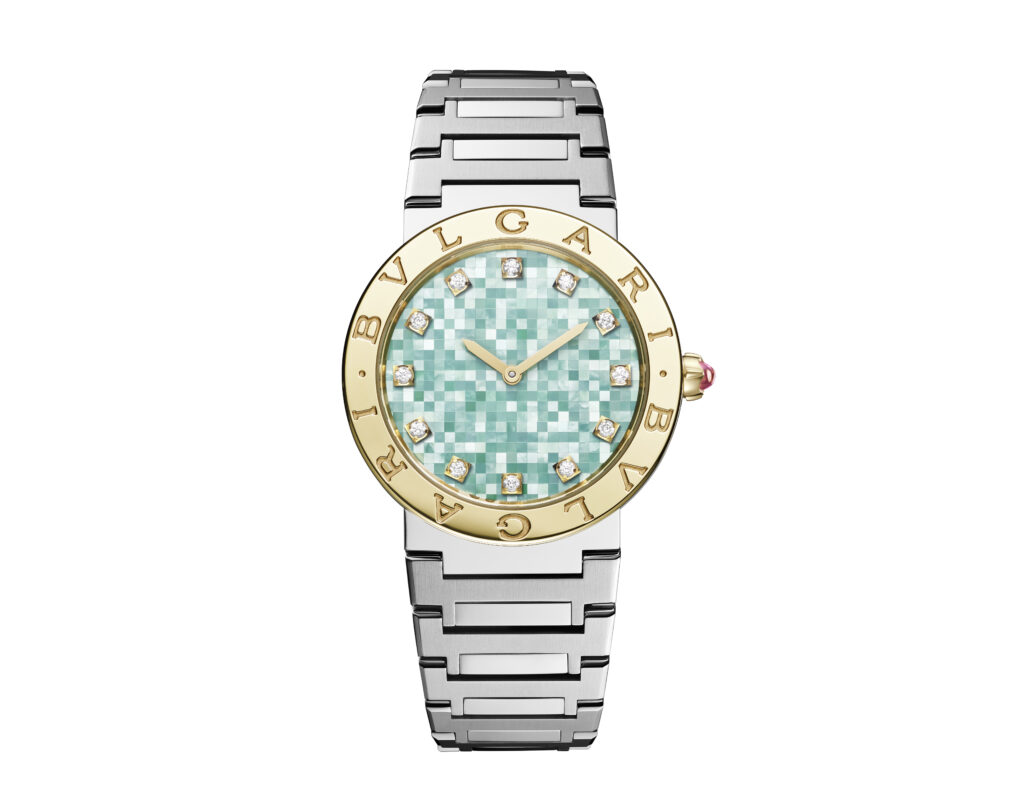
Polychrome mosaic once adorned patrician residences, an assembly of mineral tesserae designed to capture and cast back light. The Bvlgari Bvlgari takes up the same principle with a more elusive material: mother-of-pearl, each shard of which has its own angle of reflection. Set side by side, the pieces do not form a smooth surface but a vibrant field, where light shifts with the tilt of the wrist. Twelve diamond indices punctuate the whole, fixed points amid this shifting matter.
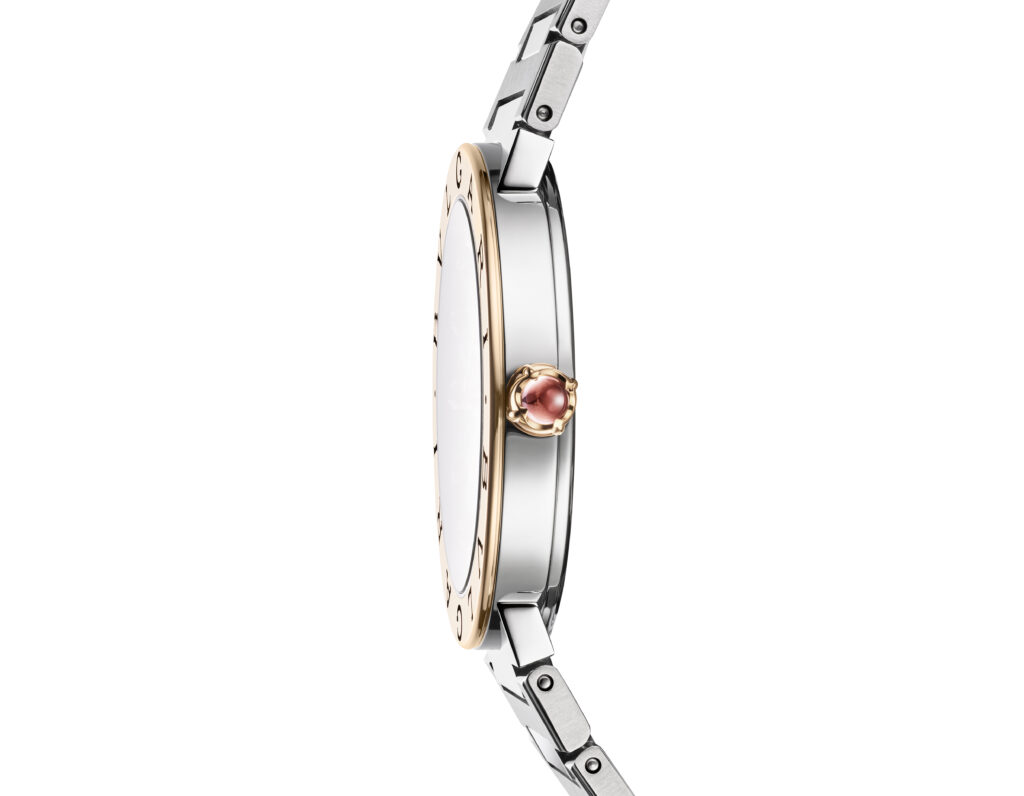
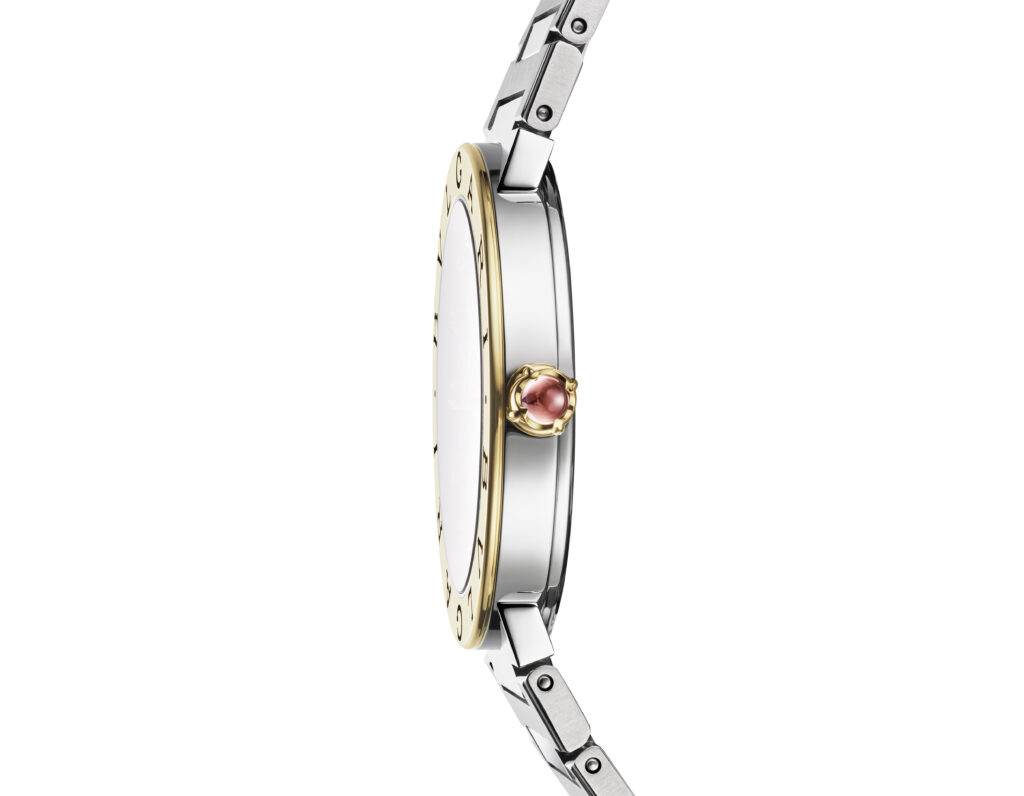
Two shades were chosen, and the gold surrounds that frame them follow a strict chromatic logic: pink mother-of-pearl set in pink gold, green mother-of-pearl ringed in yellow gold. Between the warmth of the metal and the brushed polished steel, each version seeks its own balance. The thirty-three-millimetre case places the object on the side of jewellery rather than instrument — a watch worn the way one wears a gem.
A signature born of a gift
The piece’s history illuminates its boldness. In 1975, Gianni Bulgari conceived the Bvlgari Roma collection as a gift for the hundred most important clients of the historic boutique at 30 Rue du Rhône, in Geneva. Two years later, Gérald Genta reinterpreted it and renamed it Bvlgari Bvlgari. The double signature engraved on the bezel, which evokes ancient coinage and monumental Latin inscriptions, turns the object into a manifesto: the boldness of the Roman jeweller married to the precision of the Swiss watchmaker.
It is this lineage that the Roman Summer continues. By invoking mosaic, the Manufacture is not yielding to summer colour out of seasonal opportunism; it links a jewellery craft to a precise archaeological memory, that of a city which made the assembly of fragments a major decorative art. The question the object raises is not seasonal: how long can a Maison go on miniaturising its own origins before the gesture freezes into quotation? For now, the four hundred shards hold the answer in suspense.
Cette publication est également disponible en :


