
The ryokan takes travelers by surprise when they arrive expecting a typical hotel experience. No lobby, no uniformed concierge, no minibar. What you find instead takes some getting used to: a nakai-san bringing tea, a polished wooden hallway, the sound of water somewhere beyond the garden. Luxury here isn’t about excess. It’s about rhythm.
What a Ryokan Is Not
Applying the criteria used to evaluate Western luxury hotels to a ryokan leads to misunderstandings. The size of the room—often small—says nothing about its quality. The absence of a bed does not mean it is uncomfortable. The silence in the hallways is not a failure of service—it is the service itself.
According to the Japan National Tourism Organization, a traditional ryokan is an inn where the architecture, cuisine, and daily rituals form a unified whole. The concept that underpins this whole experience is calledomotenashi —a form of hospitality that anticipates guests’ needs without them having to ask, without charging extra for them, and without turning them into checkbox items. This is not a marketing concept. It is an approach to service built up over decades, sometimes centuries.
The key difference for a traveler from Europe: in a ryokan, you’re not a customer. You’re a guest. It’s not the same thing.
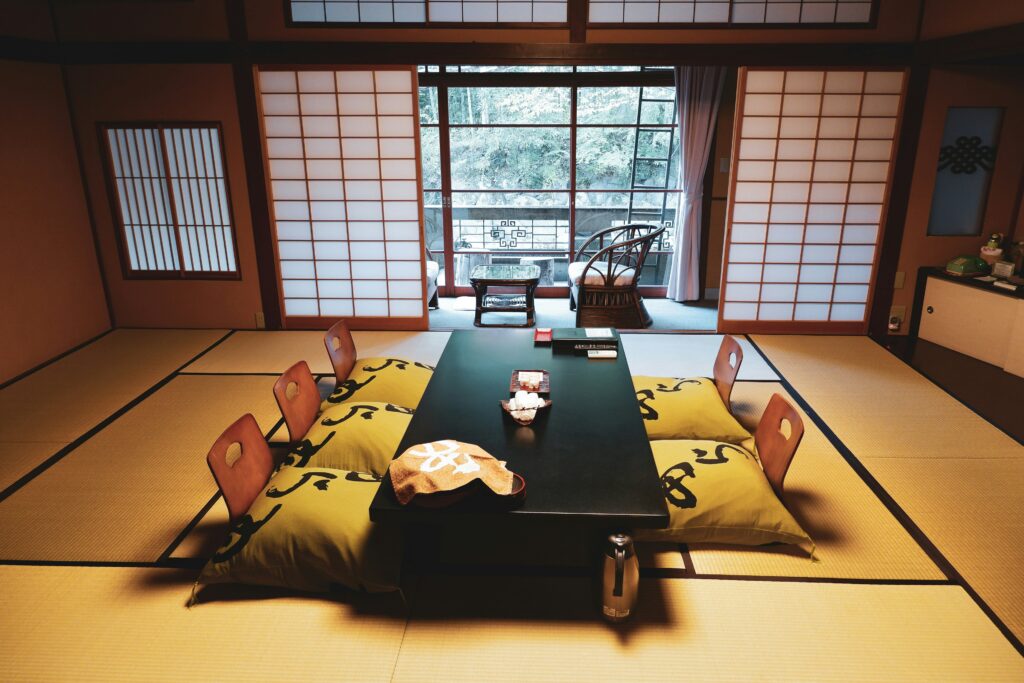
The bedroom, the dining table, the bathroom: a three-step routine
Arriving at a ryokan follows a set procedure that is never improvised. You leave your shoes at the entrance. You are given a yukata —the light cotton kimono you’ll wear until the next morning. You drink tea. The nakai-san explains the evening’s schedule: dinner time, bath hours, and when your futon will be made up. This initial conversation lasts five to ten minutes. It provides all the information you need to get through the night without any questions.
The kaiseki dinner is the second part of the ritual. It is not a set menu—it is a seasonal interpretation of the region. At a seaside ryokan on the Seto Inland Sea, the kaiseki will feature fish, seaweed, yuzu, and rice from the prefecture. In the mountains of Niigata, it will consist of salmon, local sake, and root vegetables. Each dish is served on its own tableware—porcelain, lacquer, or wood—and the choice of tableware is never arbitrary. The meal lasts between two and two and a half hours. You’re in no hurry to leave, and no one will urge you to do so.
Bathing—the third stage—is perhaps the hardest to explain to someone who hasn’t experienced it.An onsen is a natural hot spring fed by geothermal sources, the composition of which varies by region. The rules are set in stone, as documented by the JNTO: wash your entire body before entering the communal bath, do not bring a towel into the water, and speak in a low voice or not at all. These rules are not restrictive—they give the bath its unique character: a space of total relaxation, without phones, without expected conversation, and without a set time limit.
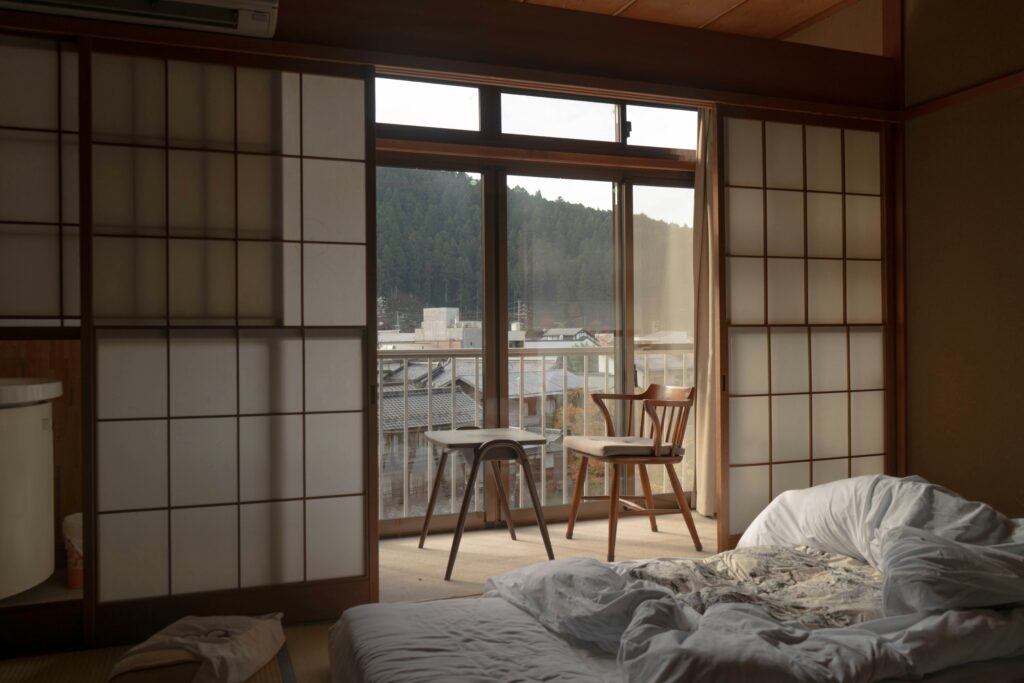
Read about a ryokan before you arrive
Not all ryokan are alike, and the category alone does not guarantee anything. There are ryokan in cities, in the mountains, by the sea, overlooking a Zen garden, or facing a bamboo forest. The size ranges from five to thirty rooms for the most discerning establishments—any more than that, and something is lost in the relationship between the inn and the guest.
There are a few criteria to consider when evaluating a ryokan before checking in. The age of the establishment is a concrete indicator: a ryokan founded in the 18th or 19th century has been passed down through generations of family ownership, which implies that expertise has been passed down through experience rather than through standardized hotel training. Access to a private onsen (kashikiri onsen) is an option that transforms the nature of your stay: this private bath, which can be reserved by the hour, allows you to enjoy the thermal waters outside of the regular group bathing hours.
Cuisine is the third filter. A ryokan whose chef serves local ingredients on tableware chosen for its harmony with the seasons says something about the establishment’s direction. The Nipponia hotels in Izumo, for example, combine the architecture of preserved historic homes with cuisine rooted in the produce of the Shimane region—this blend of lived-in spaces and regional cuisine is what the best ryokans achieve without making a show of it.
Silence as a Service
There’s one thing luxury ryokans do better than any five-star hotel: they cultivate silence. Not the absence of noise—the wood creaks, water flows, carp swim in the pond—but the absence of solicitations. No one knocks to ask if everything is going well. No one offers an optional excursion at morning tea time. The schedule is set upon arrival, and the ryokan keeps its promise.
That silence requires an adjustment that can take a night, sometimes two. Travelers accustomed to bustling hotels, where service is conspicuous, may find the first few hours disconcerting. Then something clicks. The absence of choices to make—which restaurant to go to tonight, what time to have dinner, what to wear—frees up mental space to focus on what’s right there: the light on the tatami, the steam rising from the bath, the quality of the dashi in the first bowl of soup in the morning.
This may be the most honest definition of luxury according to Japanese tradition: not the abundance of what is offered to you, but the precision of what is withheld from you.
See also
- Setouchi, the Hidden Gem of Authentic Japan
- Niigata, Japan: Unexpected and Authentic
- Nipponia Hotels in Izumo
Cette publication est également disponible en :

