
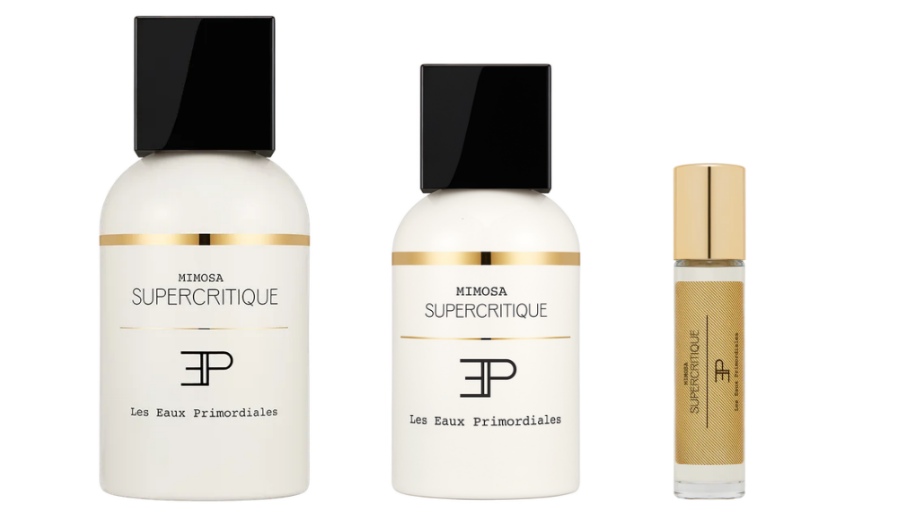
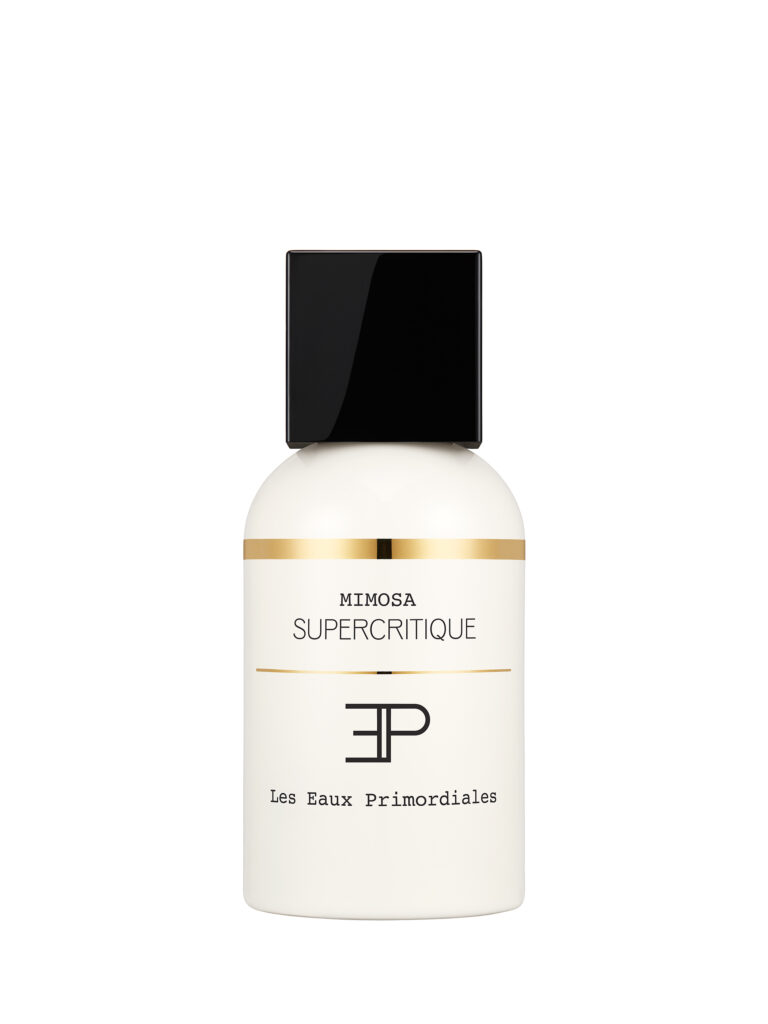
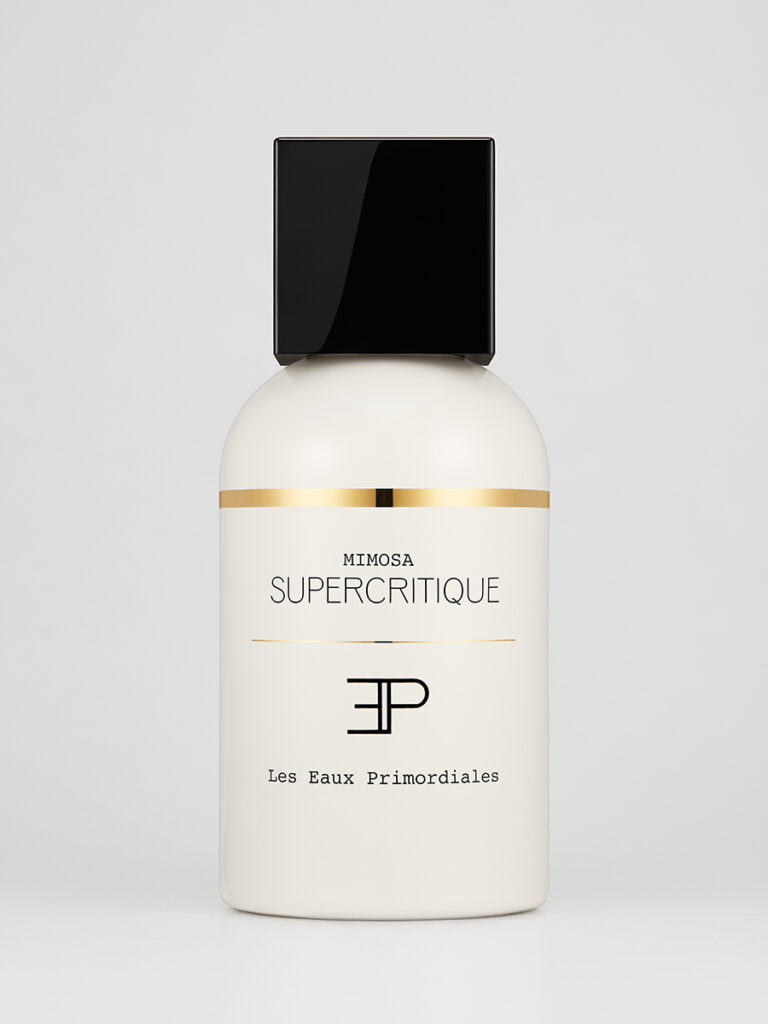
In contrast to sunny floral scents saturated with sweetness or retro nostalgia, Les Eaux Primordiales creates with Mimosa Supercritique a more precise evocation: that of late winter on the French Riviera, when mimosa branches still dot the cold landscapes and the Mediterranean light remains almost white. The fragrance does not seek exoticism. Rather, it explores the transition—between the cold and spring, between the crispness of aldehydes and a more diffuse floral quality.
Founded in 2015 by Arnaud Poulain in the Hauts-de-France region, Les Eaux Primordiales takes pride in an approach where engineering and craftsmanship constantly intersect. In Poulain’s work, this tension between technical precision and personal imagination often runs through his compositions. “Mimosa Supercritique” offers a particularly clear example of this. The fragrance was born from a family memory: winter stays on the French Riviera with his mother, the landscapes of the Estérel, and bouquets of mimosa observed as a seasonal ritual. This detail changes how the fragrance is interpreted. Mimosa no longer appears as a simple floral accord but as a vehicle for memory.
The olfactory structure is based on a very classic Haute Parfumerie framework, but rendered with restraint. Aldehydes open the composition with an almost textile-like, slightly soapy sensation, quickly followed by bergamot and neroli. Next come cyclamen, jasmine, tuberose, and orange blossom. Mimosa does not, in the end, dominate the composition; it acts more like a soft, diffused light in the base of the fragrance, accompanied by white musks and ambroxan. This use of mimosa is intriguing within the contemporary landscape of niche perfumery. Long associated with the powdery compositions of the 1980s and 1990s, it is now making a comeback in lighter, less opulent formulations, where texture matters more than volume.
The very name of the collection, “Supercritique,” refers to an extraction technique that uses CO₂ in a supercritical state to obtain raw materials that more closely resemble the original plant. Although the House does not specify here the exact process used for mimosa, this scientific reference positions the collection within a very contemporary aesthetic in perfumery: less decorative, more focused on the authenticity of the ingredients.
The work of Amélie Bourgeois, of Studio Flair, is also worth highlighting. For several years now, the perfumer has been developing a signature style in which clean musks and enveloping textures interact with more abstract structures. In *Mimosa Supercritique*, this approach prevents the white floral scent from feeling sun-drenched and heavy. The composition remains dry, almost powdery at times, with a sensation of cool light that is more reminiscent of a bouquet placed in a quiet home than a Mediterranean garden saturated with heat.
Arnaud Poulain describes this fragrance as “a tribute to my mother,” created “over several years.” In an industry often dominated by immediate storytelling and rapid launches, this slow pace almost becomes the fragrance’s true subject.
Cette publication est également disponible en :

