
Behind the glittering announcement of Siri AI and Apple Intelligence lies a discreet phrase, almost inaudible in the flood of press releases. Apple has designed its new Foundation Models in collaboration with Google. A silent admission that changes everything – and that the industry has yet to fully digest.
The great reinvention
There was something odd about the way Apple presented its Siri redesign on Monday June 8. No surprise guest on stage, no partnership announced with great fanfare. Just Craig Federighi, impeccable as usual, explaining that a “radically more powerful” assistant would now understand the context of your private life, scrutinize your photos, rummage through your e-mails – all, of course, with the sole aim of serving you.
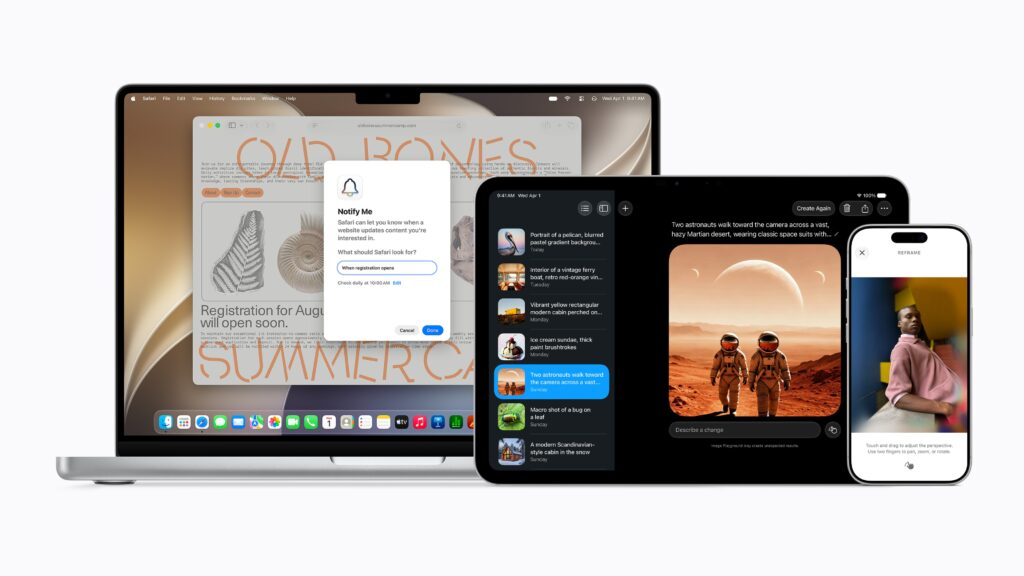
Siri AI is not an update. It’s a breakup. The historic assistant – teased for its off-the-cuff answers, embarrassing misunderstandings and slowness in the face of competitors – has been unceremoniously buried. What takes its place looks more like an ambient brain than a voice command: it observes the screen, understands what you’re looking at, anticipates what you need before you even formulate it.
It’s no longer assistance. It’s presence.
The sentence nobody read
Around the bend in the official press release devoted to Apple Intelligence, a sentence slipped in, almost drowned out in the list of features: Apple’s Foundation Models have been “custom-designed by Apple in collaboration with Google and its Gemini models for deeply integrated Apple Intelligence experiences.”
Apple. Google. Gemini. In the same paragraph, in the same breath. Two companies that have fought for every inch of our digital lives, now allied in the deepest layers of the world’s most closed operating system.
Silicon Valley never does anything by chance. If this collaboration has been mentioned – albeit discreetly – it’s because it’s structuring. The era of “we do everything in-house” is coming to an end, even for Apple. Artificial intelligence has become too vast, too fast and too costly to work alone.
The aesthetics of the invisible
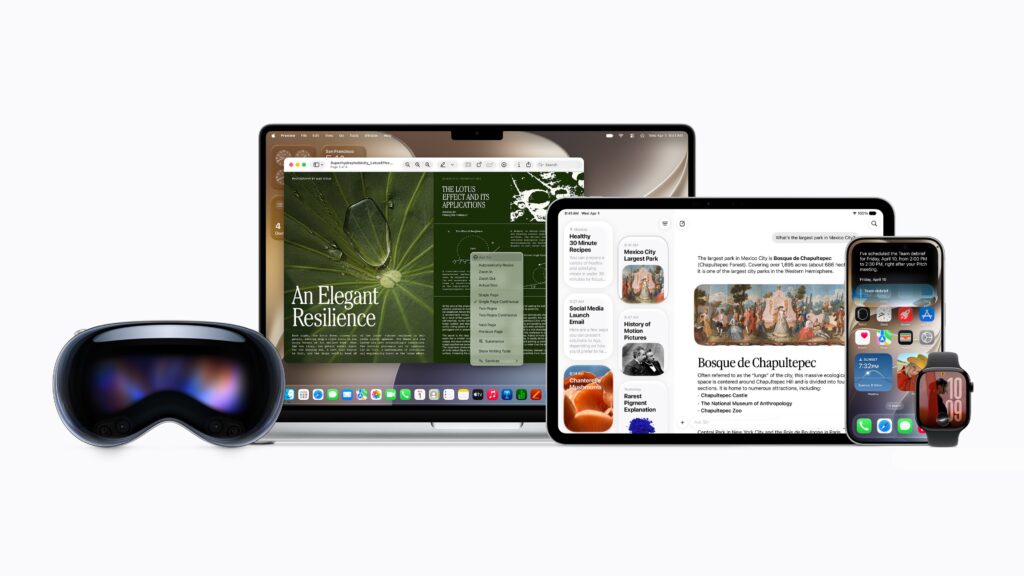
What’s striking, beyond the technical prowess, is the care given to the sensory experience. Apple isn’t selling algorithms. Apple sells a promise of fluidity – the sensation that the technology disappears, leaving only the intention. Spatial Reframing in Photos, which lets you recompose an image after shooting as if you were mentally repositioning the camera. Visual intelligence on Apple Vision Pro, where all you have to do is look at an object and Siri knows more about it than you do. The dedicated Siri app, which synchronizes your conversations between all your devices as one continuous thought.
It’s a vision of the world, not a list of features. And in this vision, luxury is no longer in the rarity of the material – it’s in the quality of the attention the machine gives you.
What the press release does not say
European users will have to wait. Siri AI will not be available on iOS and iPadOS in the European Union at first – a restriction Apple attributes to regulatory requirements without specifying which ones. The battle between Apple and Brussels continues, silently, in the background.
China, meanwhile, is awaiting the necessary regulatory approvals. Apple Intelligence will not be available there until these have been obtained. Which means that a significant part of the global market remains, for the time being, out of reach of the biggest software overhaul of the decade.
There’s something almost romantic about this image: the most ambitious machine ever conceived by Apple, restricted to the boundaries of the physical world. As if intelligence, even artificial intelligence, had yet to get its visa.
What’s next?
There remains a question that neither Apple nor Google ask publicly: do we want a machine that knows us so well? That reads our messages to better answer our e-mails, that observes our screen to anticipate our intentions, that synchronizes our thoughts between our devices as if they belonged to it too?
Craig Federighi talks about “trust”. Engineers talk about “Private Cloud Compute”. But the real question is: at what point does comfort become consent?
The public beta will arrive this autumn. The world will then be able to start responding.
Cette publication est également disponible en :

