
Château d’Issan and its natural refuges
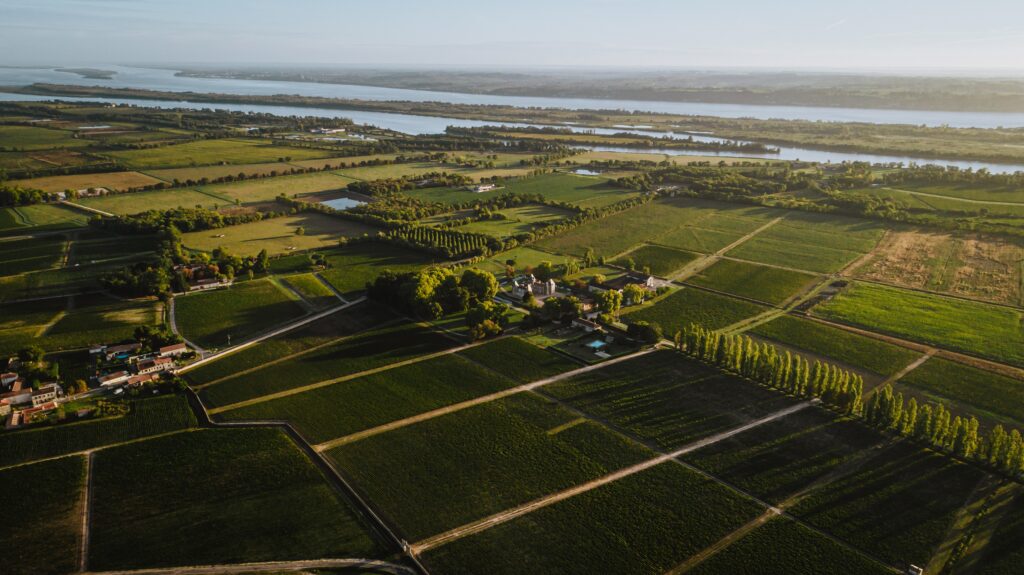
Since the 18th century, the Domaine d’Issan has offered a perfect balance between its 52-hectare AOC Margaux vineyard to the west – the historic part of which is located in the center of a stone walled enclosure built in 1644 – and its 50-hectare natural area of mixed farming to the east, along the banks of the estuary.
The estate is careful to preserve the four zones of refuge historically present on the estate, which play a major role in the balance of its vineyards: water, polyculture, trees and walled areas.
By respecting this ecosystem and its biodiversity, we can continue to enhance the quality and balance of the Château’s wines.
L’WATER : A PRECIOUS REFUGE FROM DOMAIN OF‘ISSAN
The Estuary
It’s thanks to the Gironde estuary that Issan’s terroirs are so complex and renowned. The estate is located almost 600 m from the banks of this estuary (the largest in Europe). Historically, before the island of Issan came to naturally adhere to the bank during the 19th century, the property was only 400 m from the estuary. The estuary provides a natural environment with a high level of biodiversity, protecting the vineyards from frost and excessive heat.
Historic ditches: a unique water network
Facing south-west, the Clos’ ancestral vineyard benefits from excellent drainage provided and reinforced by several ditches that have crossed it since the 16th century. These ditches drain into the Maqueline canal, which flows into the Gironde estuary. A unique water network, it ensures the drainage of the gravel plateau and provides the vines with a constant and regular supply of water.
Rehabilitated since the 1960s, they represent an ecological corridor of over 12 km between the Margaux vineyard plateau and the natural polyculture area. Aquatic vegetation thrives here, attracting wetland-specific fauna such as dragonflies, reptiles and amphibians.
These ditches have a beneficial effect on water quality, acting as phytorepellents thanks to the vegetation present (rushes, reeds, ash, cattails, etc.).
They are ideal for the reproduction of certain insects, and also provide a refuge for crop protection agents.
Last but not least, they actively contribute to the diversity of Issan’s landscape , allowing the development of species that come here to feed and take refuge.
The castle moat
A historic vestige, the moat encircles the central platform of the Château d’Issan, rebuilt in 1626, at 360°. Fed by rainwater and plot drainage, the moats are 2 m deep. The moats are home to a wealth of aquatic flora and fauna.
LA POLYCULTURE : A REFUGE PRESERVED SINCE THE XVIIIEENTH CENTURY
If we compare the map of the Domaine in 1759 with the one we have today, it’s clear that the overall layout has been respected.
Along the banks of the Gironde estuary, this natural polyculture area is cultivated in rotation with cereals and the following crops: wheat, alfalfa, barley, sorghum… 1/3 of fallow land is also preserved each year to ensure a healthy rotation. This offers a greater variety of crops and provides a habitat for numerous animal and plant species. This polyculture also helps combat disease.
This area also benefits from the necessary water reserves that the Domaine naturally enjoys. An area of mixed farming that has been preserved for centuries, bordering on the Issan vineyards, it is unique in the Médoc and a force for balance.
LHE TREES : A REFUGE IN RENEWAL
Fruit trees
To the south-east, the historic 45th parallel avenue runs right through the heart of the polyculture area. In 2020, almost 70 species of trees were planted here: cherry, plum, apple, pear, quince, swamp oak, red maple, walnut…
The main driveway separating the two appellations
This axis to the south of the Château, lined with trees some of which are over 25 m high, represents a veritable backbone of shade in summer, making it a major asset within the estate.
LTHE CLOSES : REFUGES A 360°
Le clos historique
The Issan vineyard, walled in since 1644, benefits from a virtuous cycle that is a strength for the estate’s ecosystem.
Issan’s 1.8 km-long walled garden acts as aninsect hotel. Ants and solitary wasps find refuge here. The stone wall also provides shelter and cover for numerous small mammals and rodents such as shrews, field mice and voles.
In addition to providing physical shelter (from rain, snow, wind, predators, etc.), this wall has the advantage of storing heat during the day and releasing it at night: thanks to the thermal inertia provided by its mass, it offers a more stable temperature , enabling animals to warm up or take shelter. Hedgehogs, bats… also come here to hide or reproduce. Enclosures are therefore a key factor in biodiversity.
Le clos végétal
In its continuity, the polyculture zone is enclosed by a green belt with a diversity of trees: elms, ashes, willows, hawthorns… This green belt, like a hedge, constitutes a genuine natural corridor. By serving as a living and breeding ground for flora and fauna, it facilitates the dispersal of species and the spread of biodiversity, thus combating the fragmentation of habitats so detrimental to wildlife.
Cette publication est également disponible en :

