
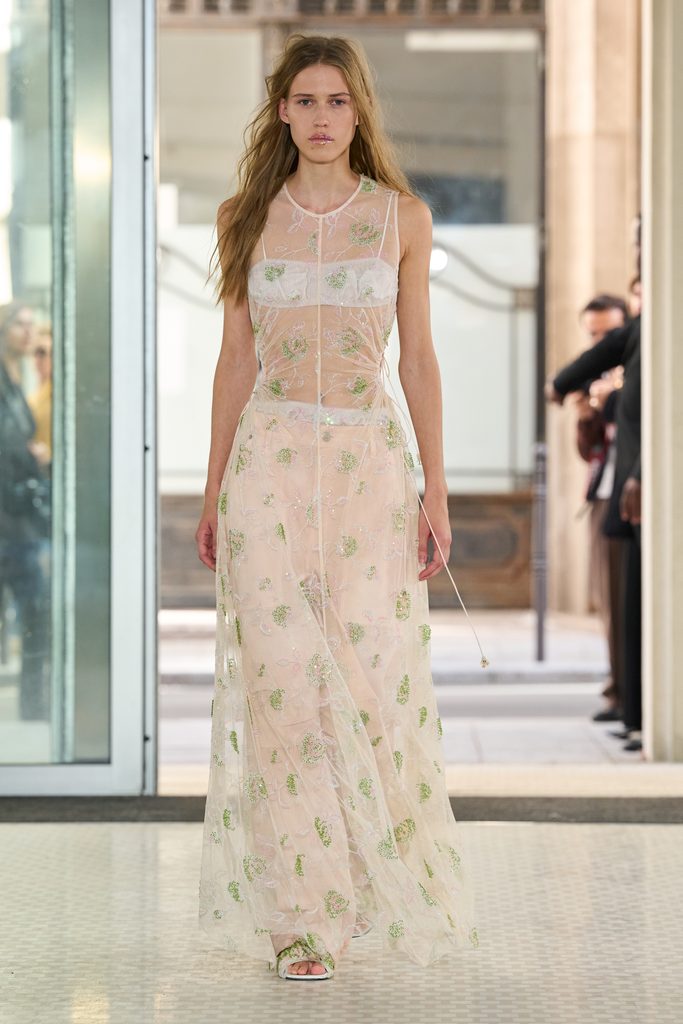
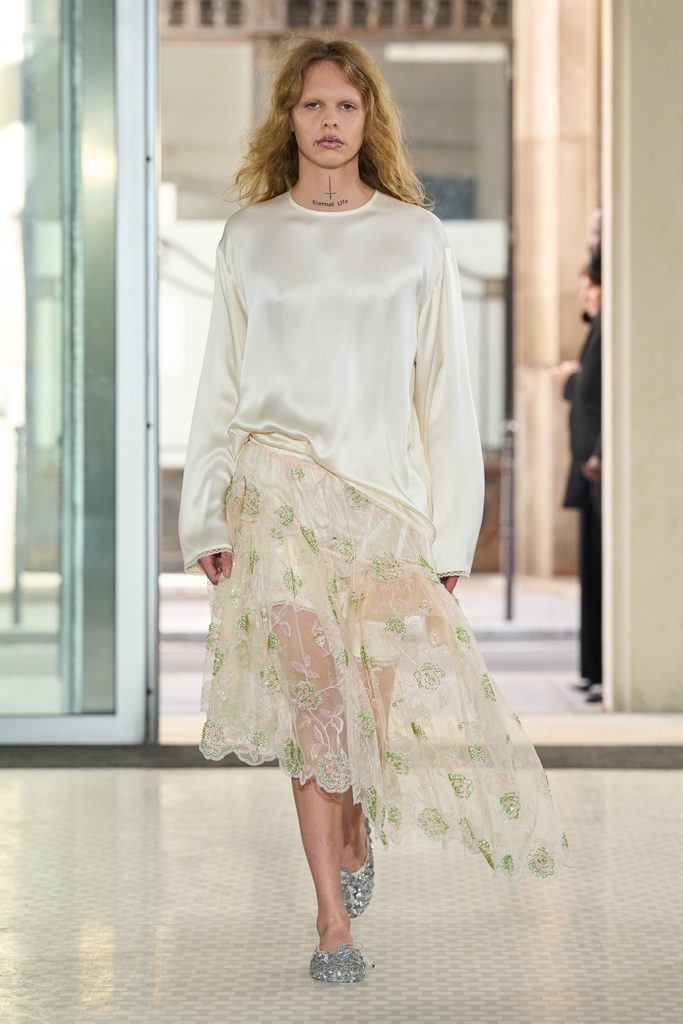
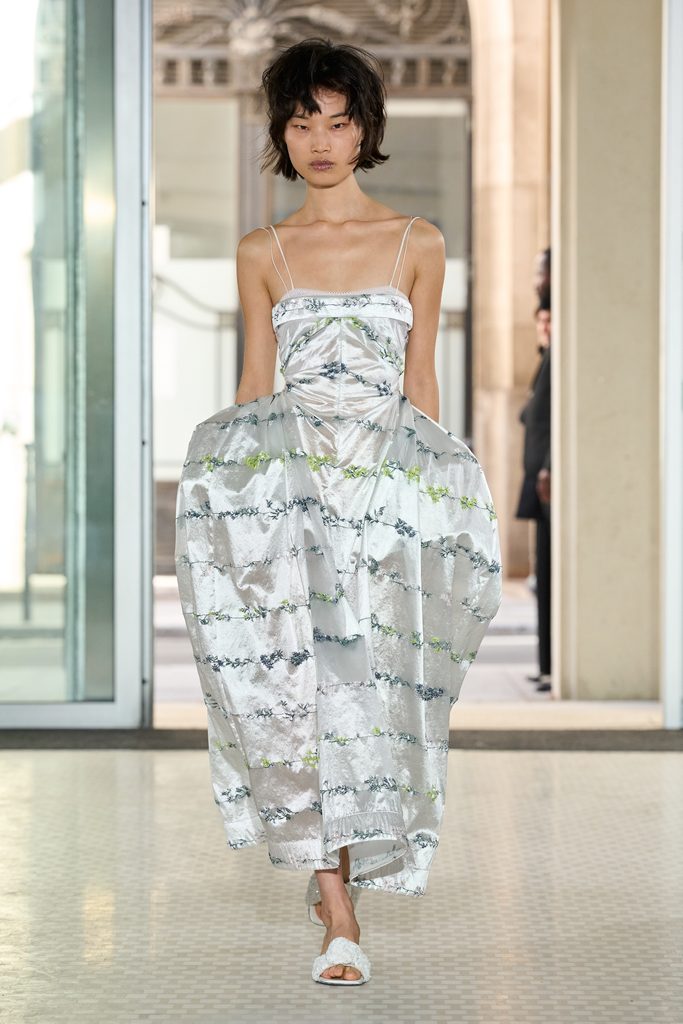
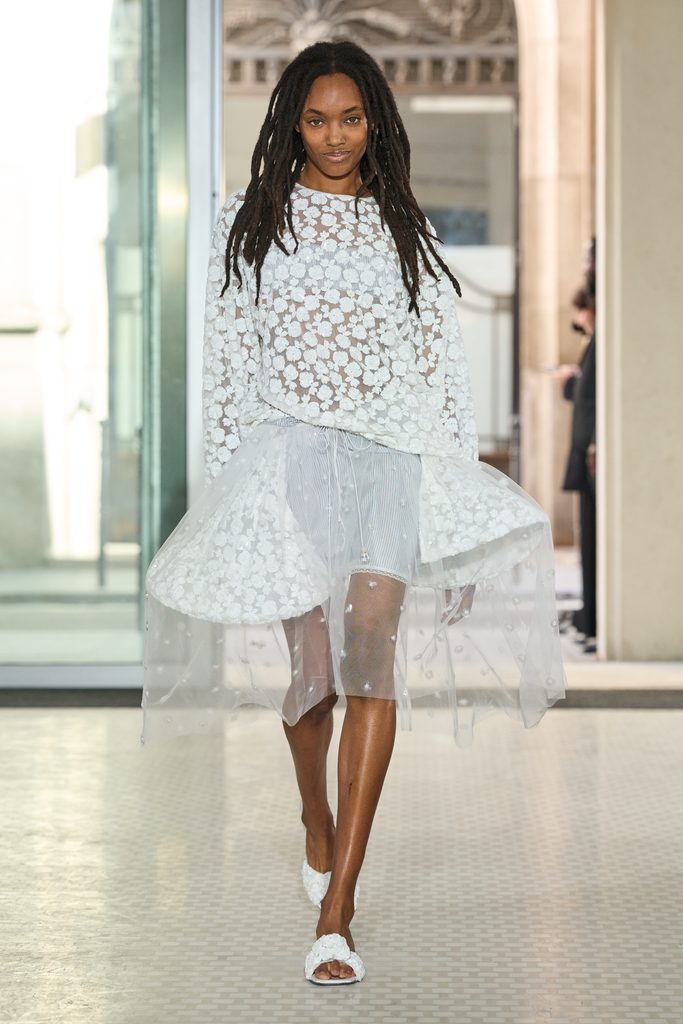
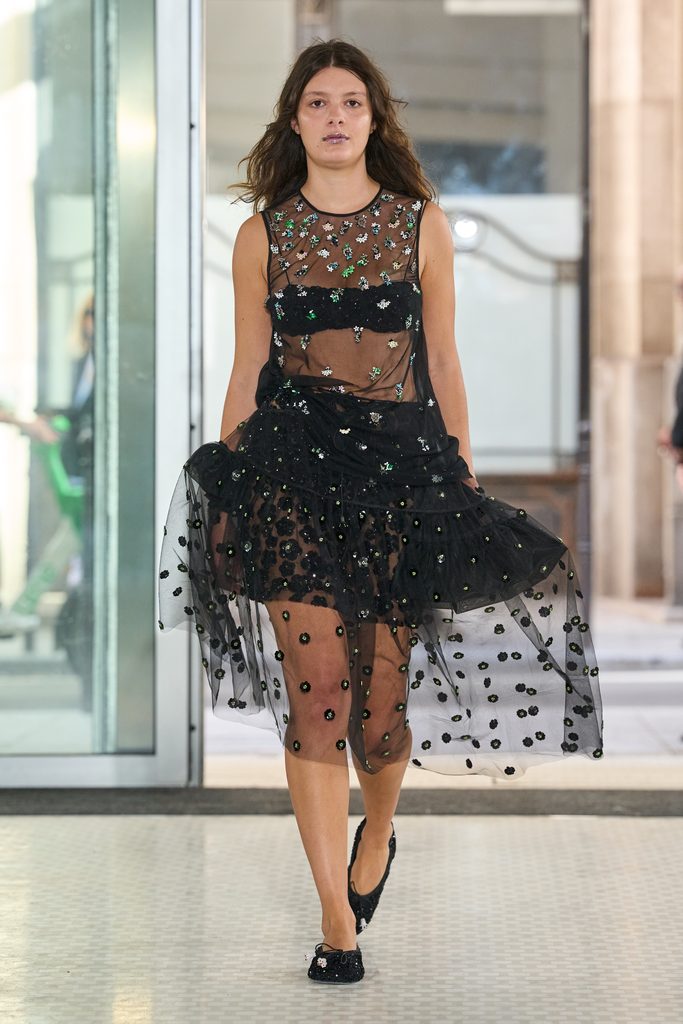
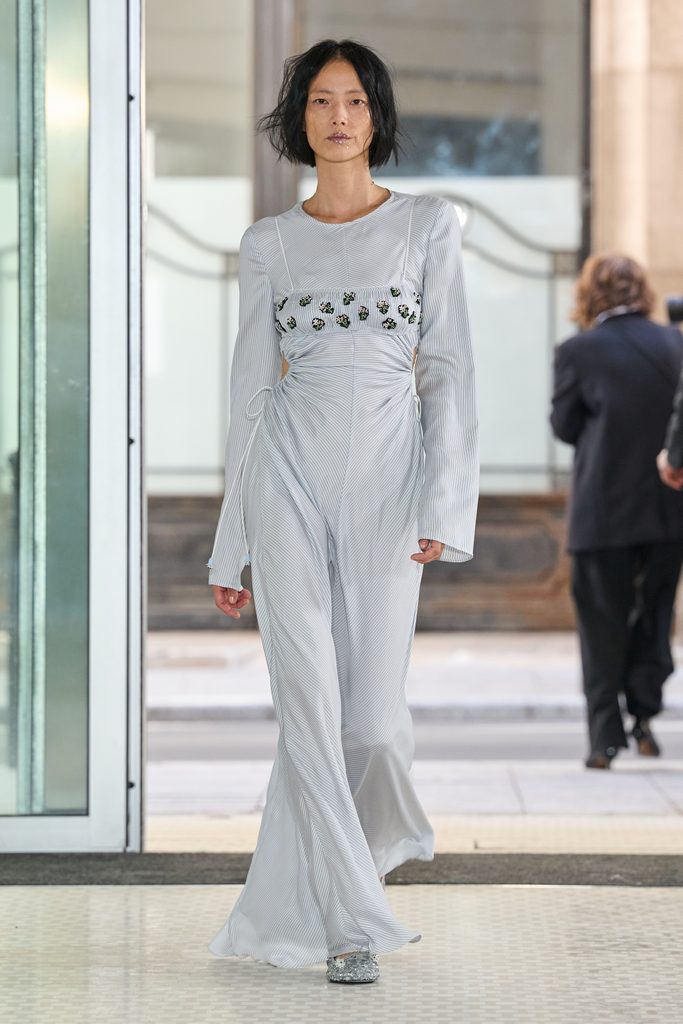
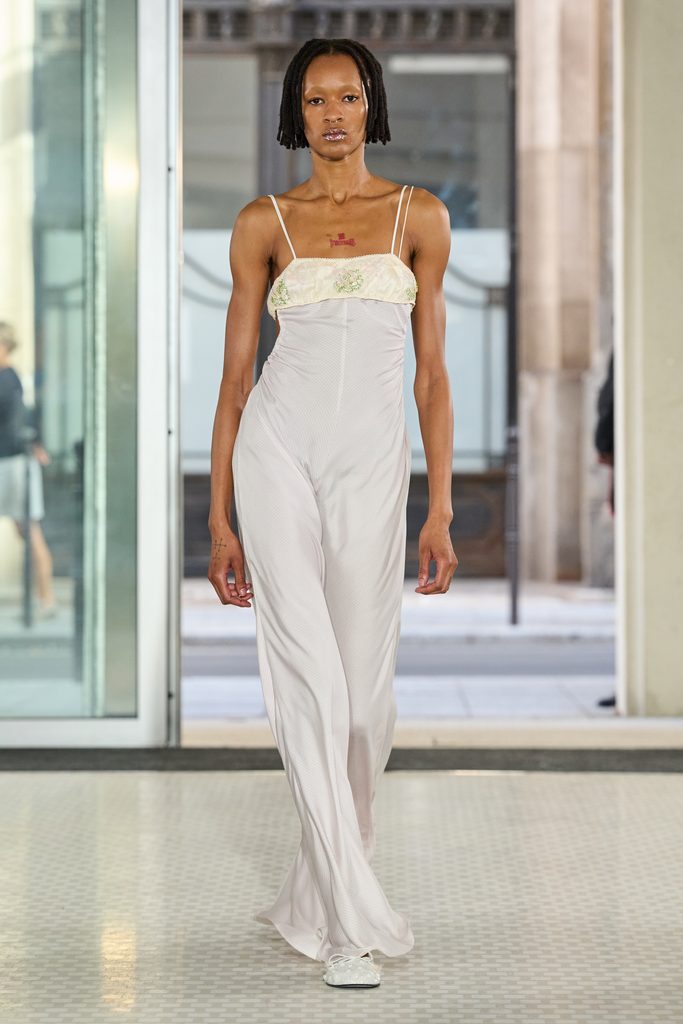
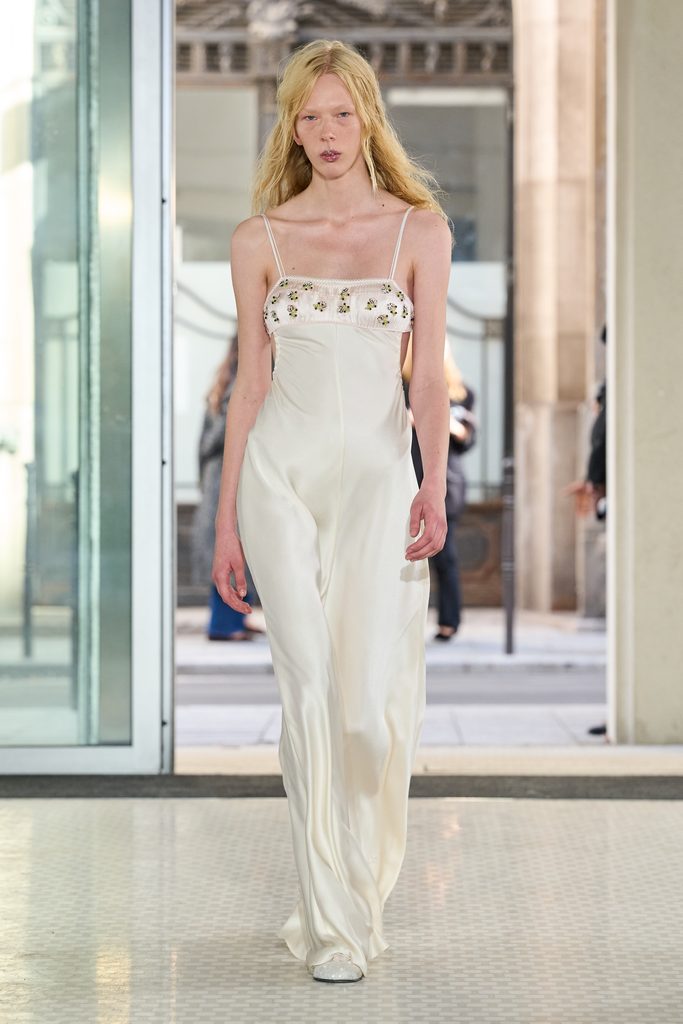
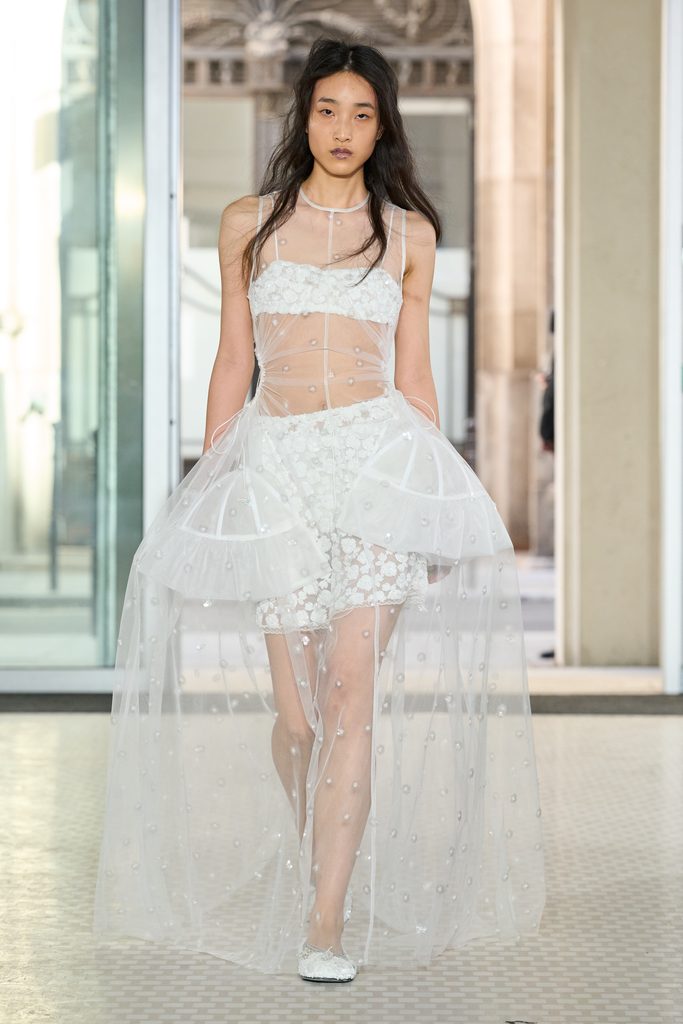
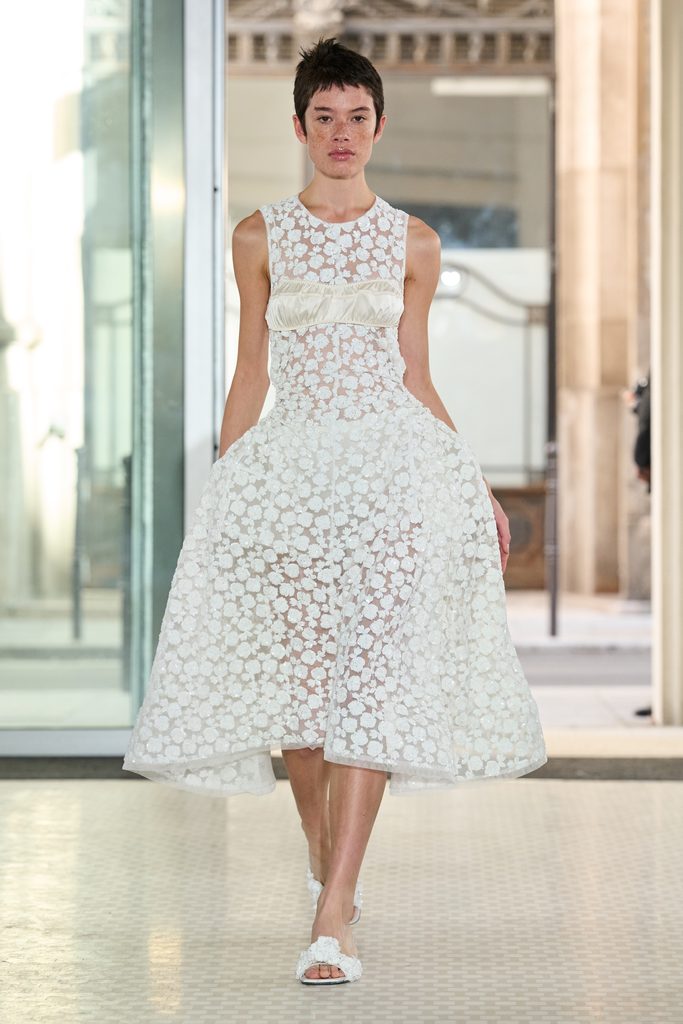
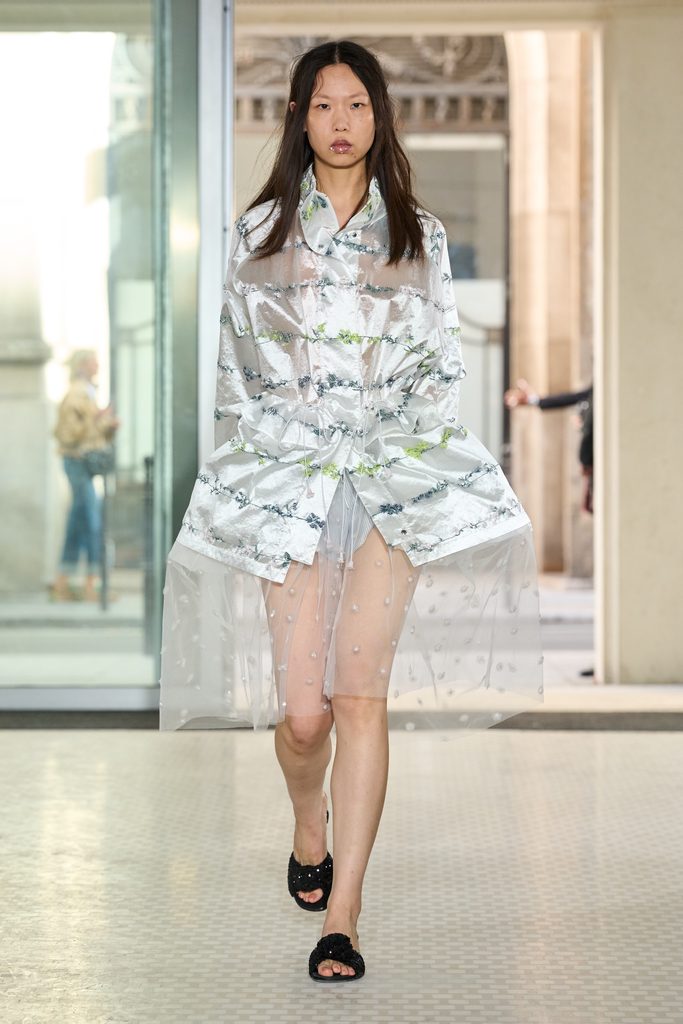
For spring–summer 2027, Cecilie Bahnsen leaves behind dressing for formal evenings and presents thirty complete looks. The question these clothes ask: what remains of embroidery when it is worn every day?
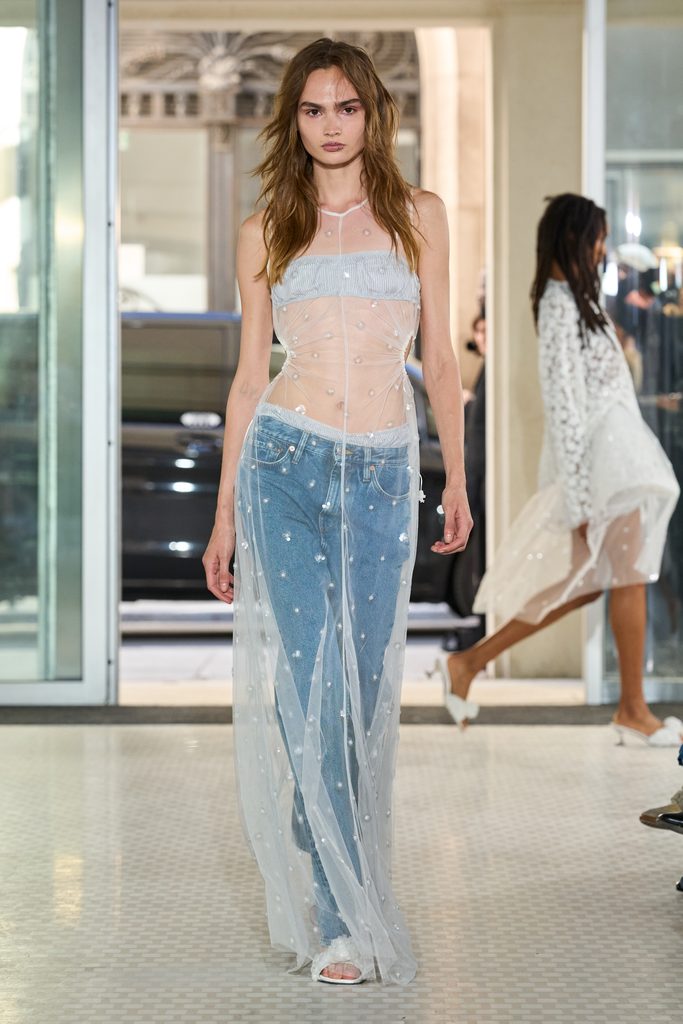
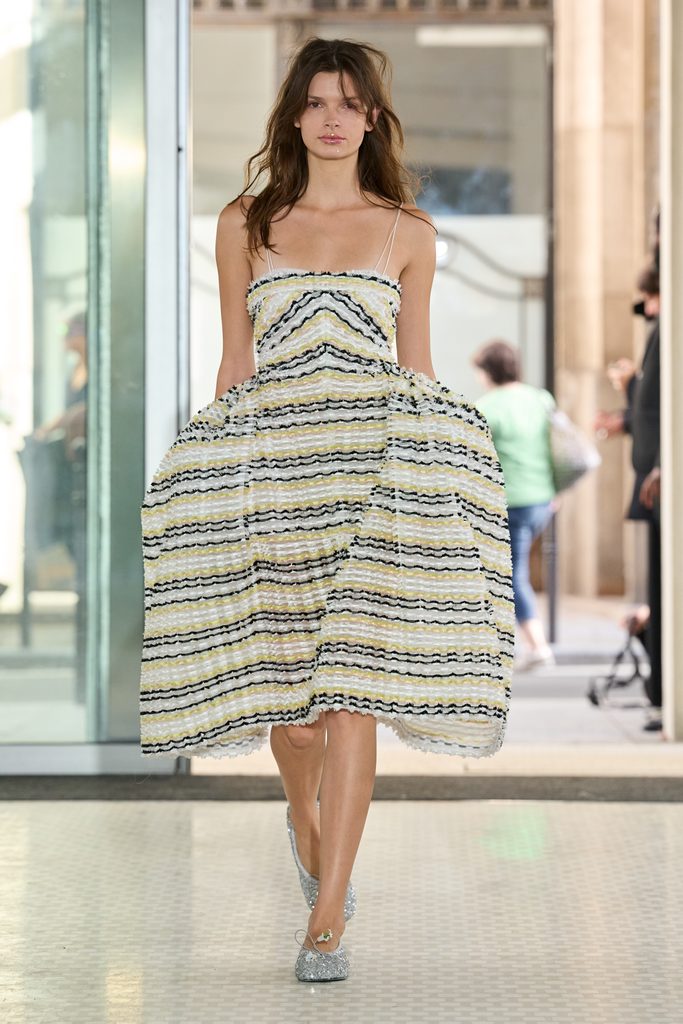
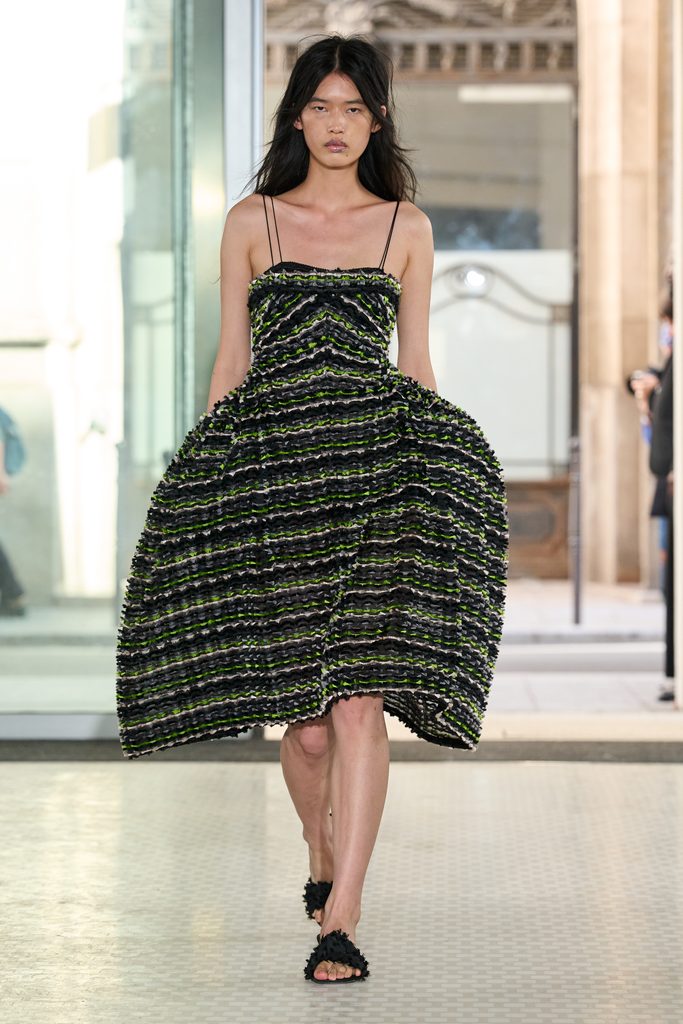
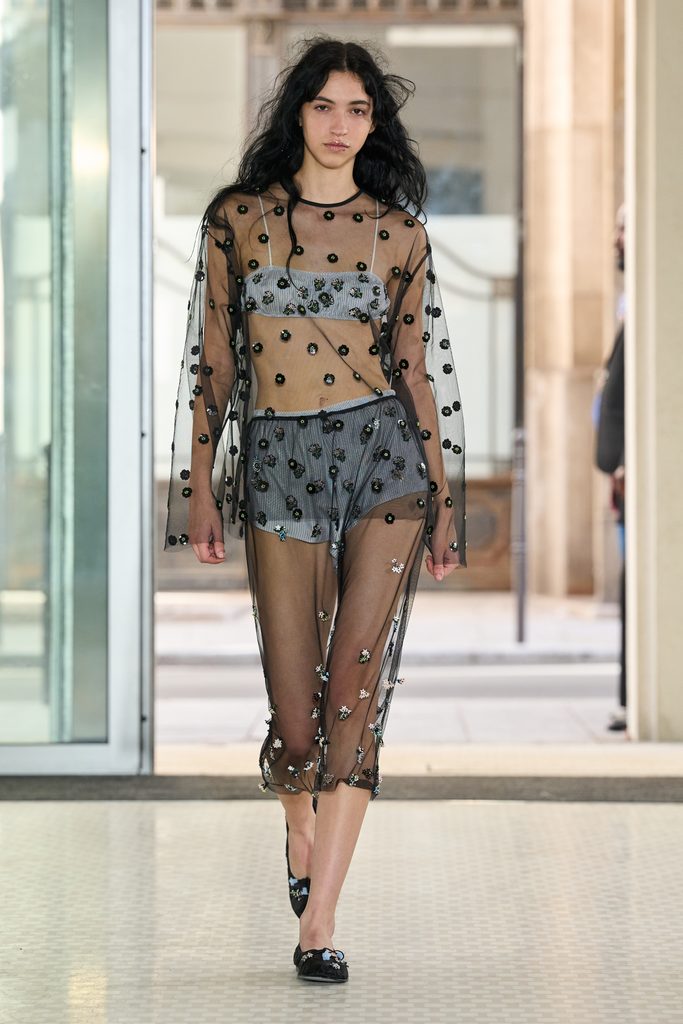
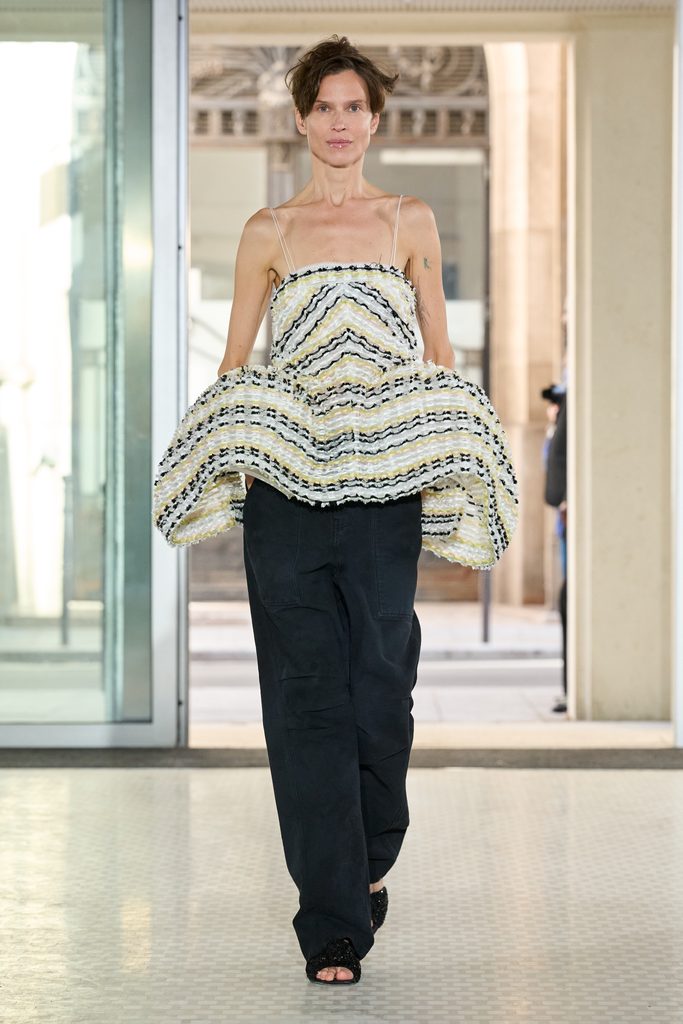
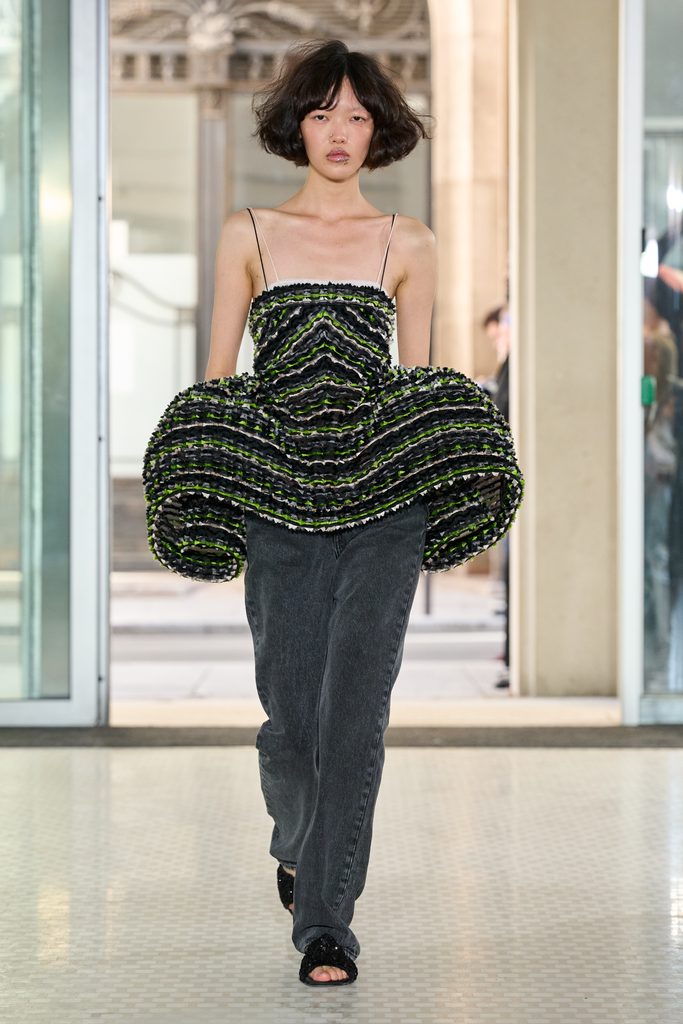
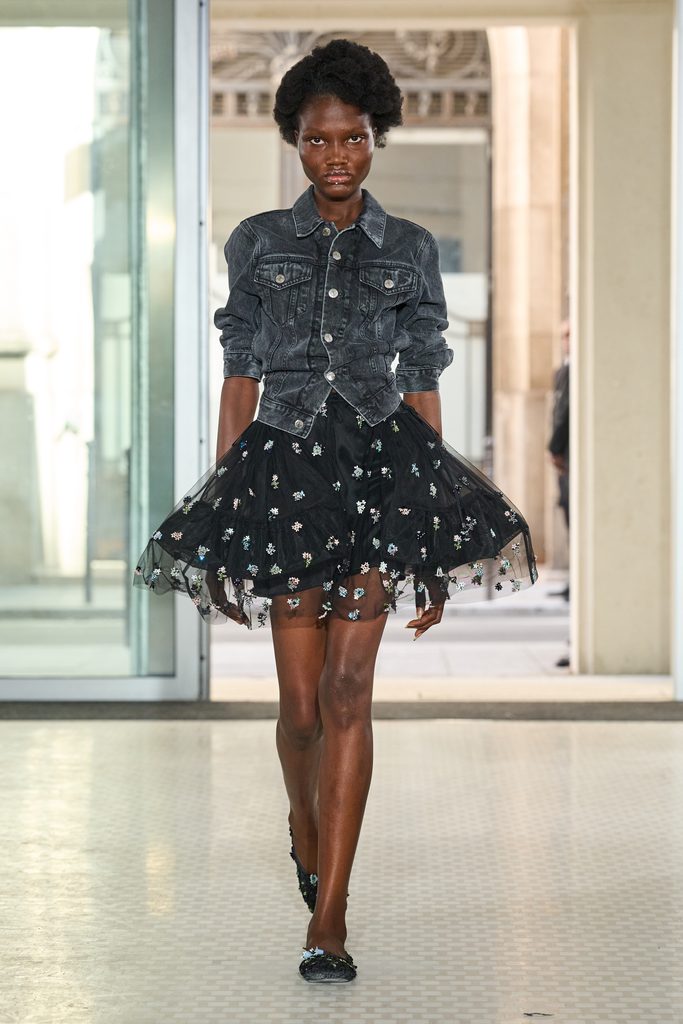
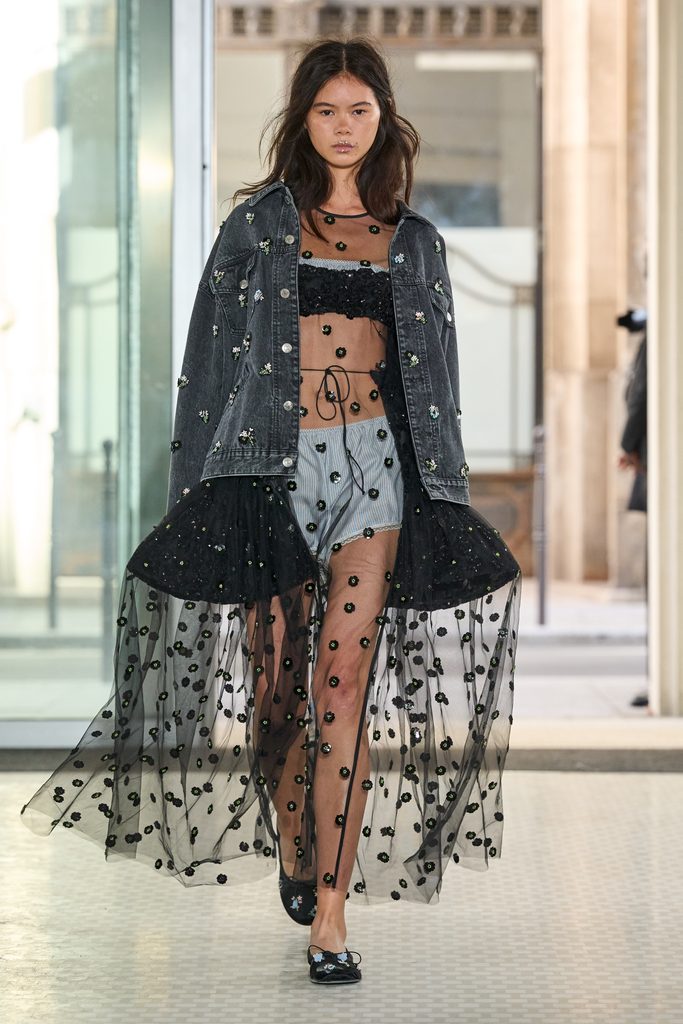
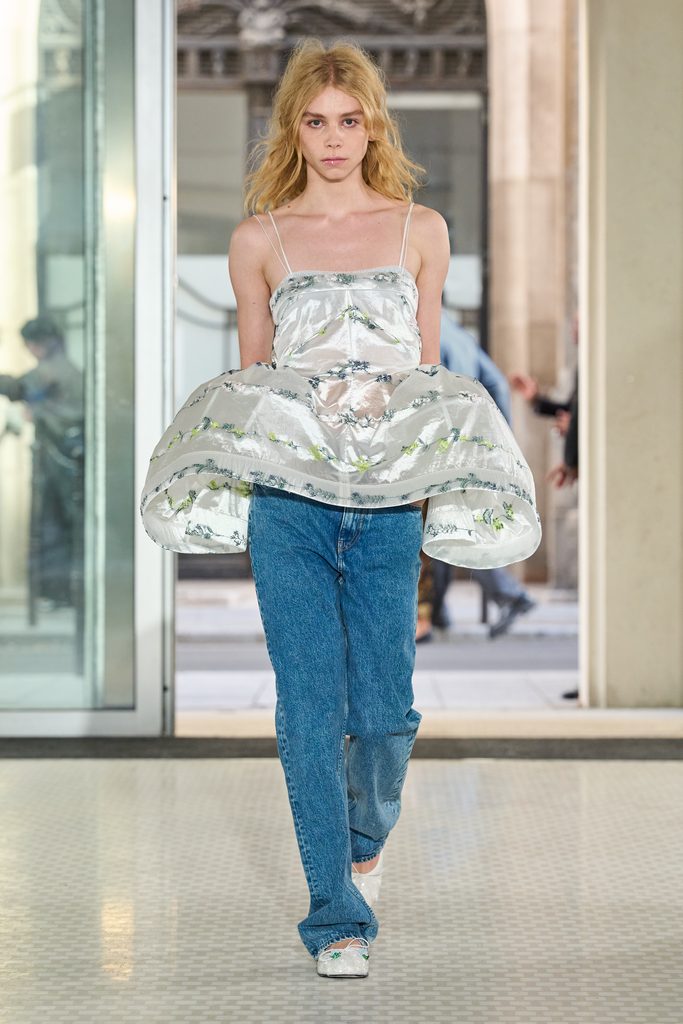
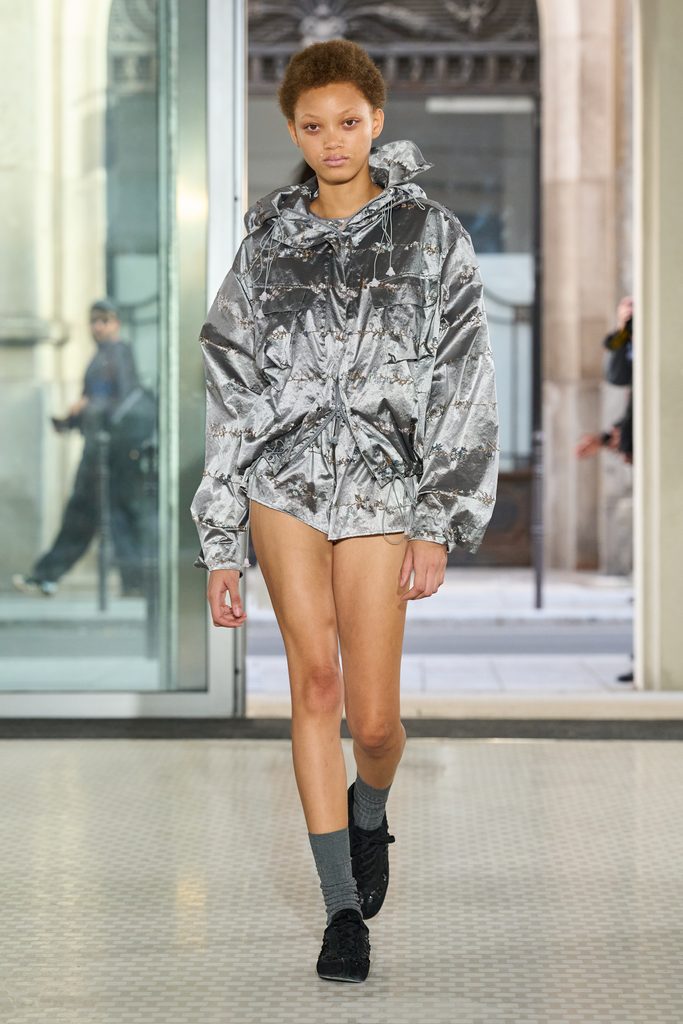
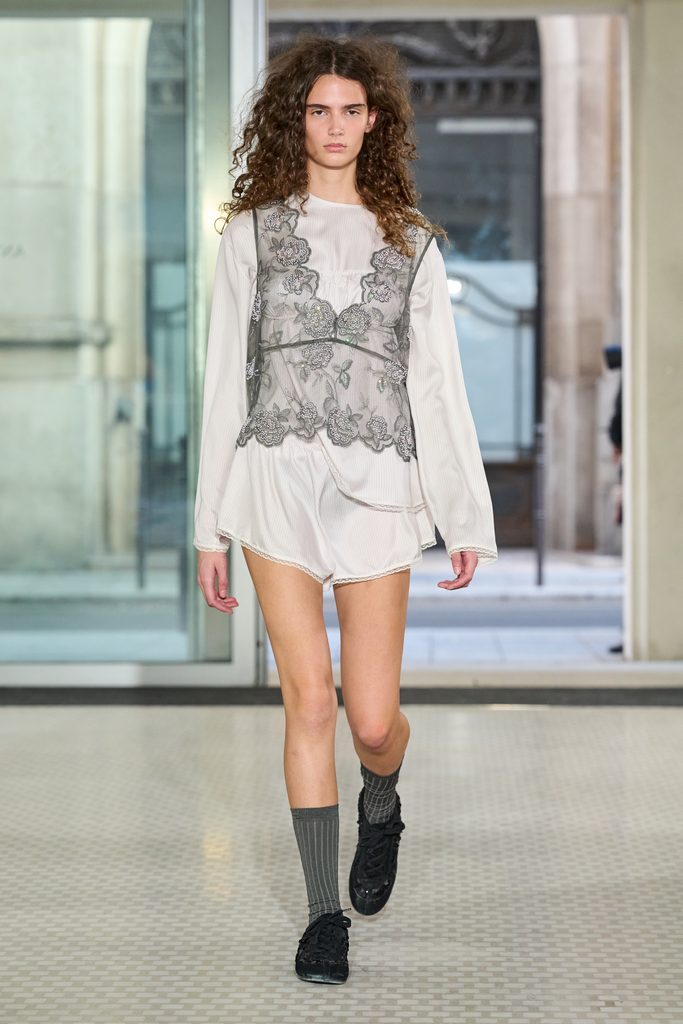
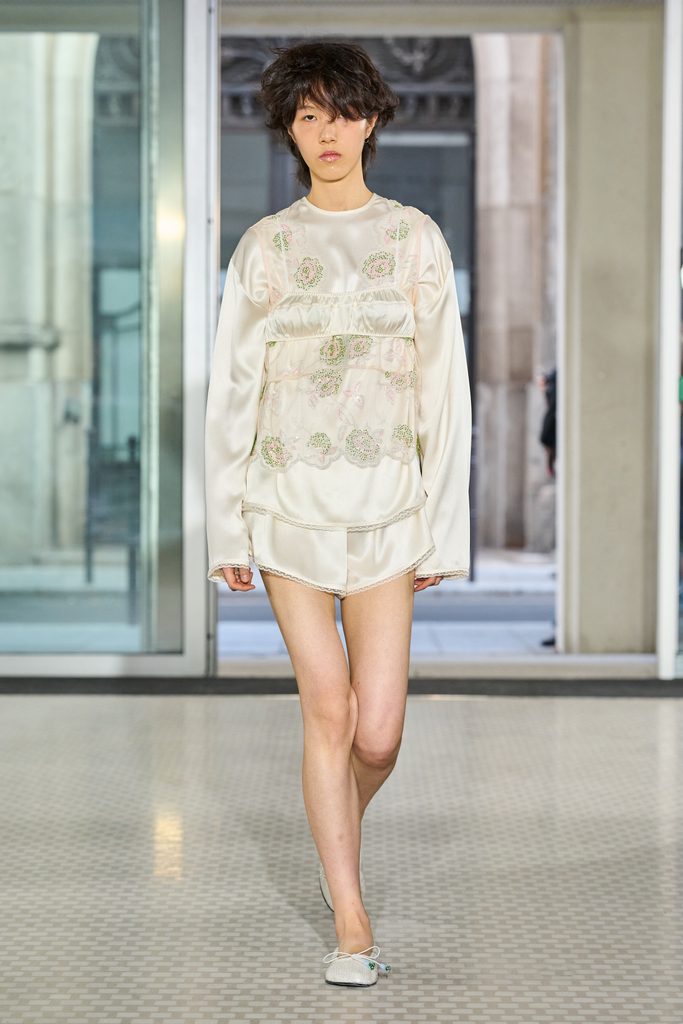
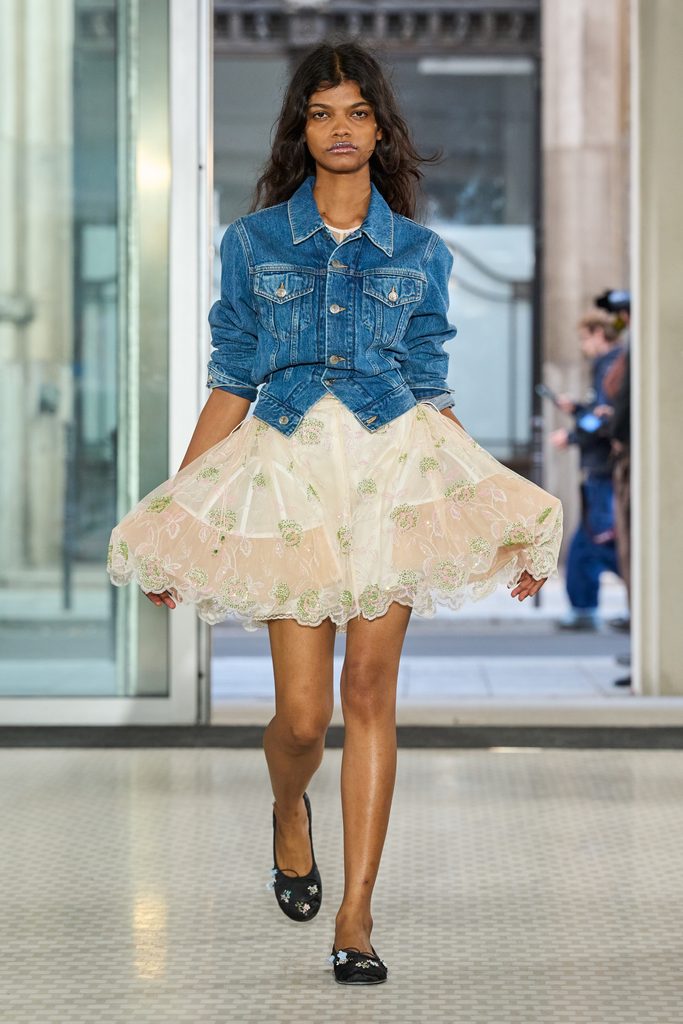
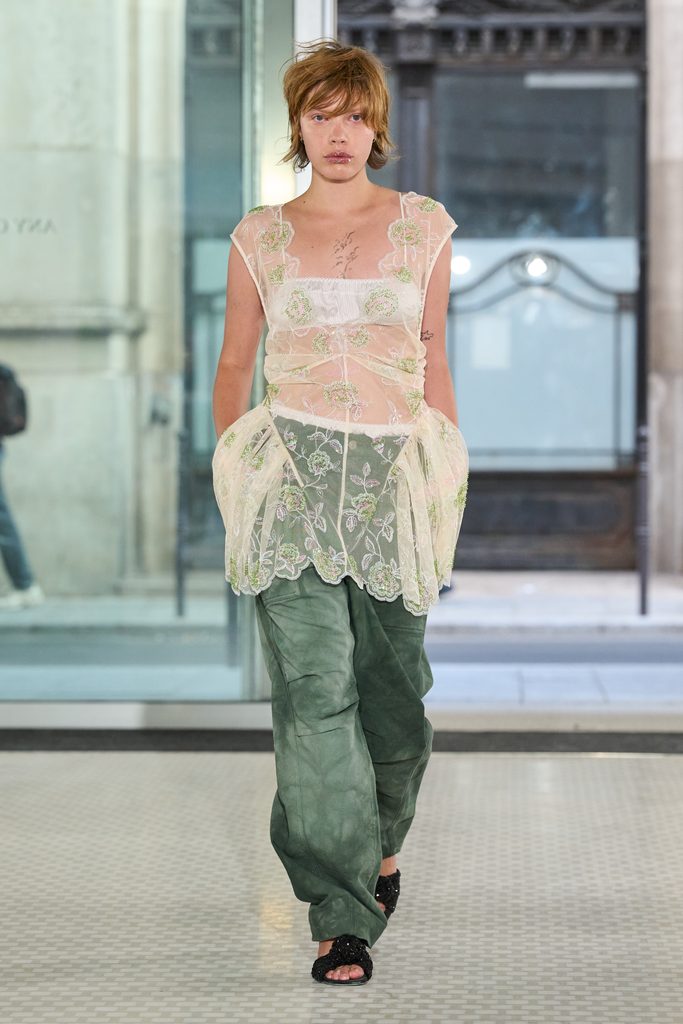
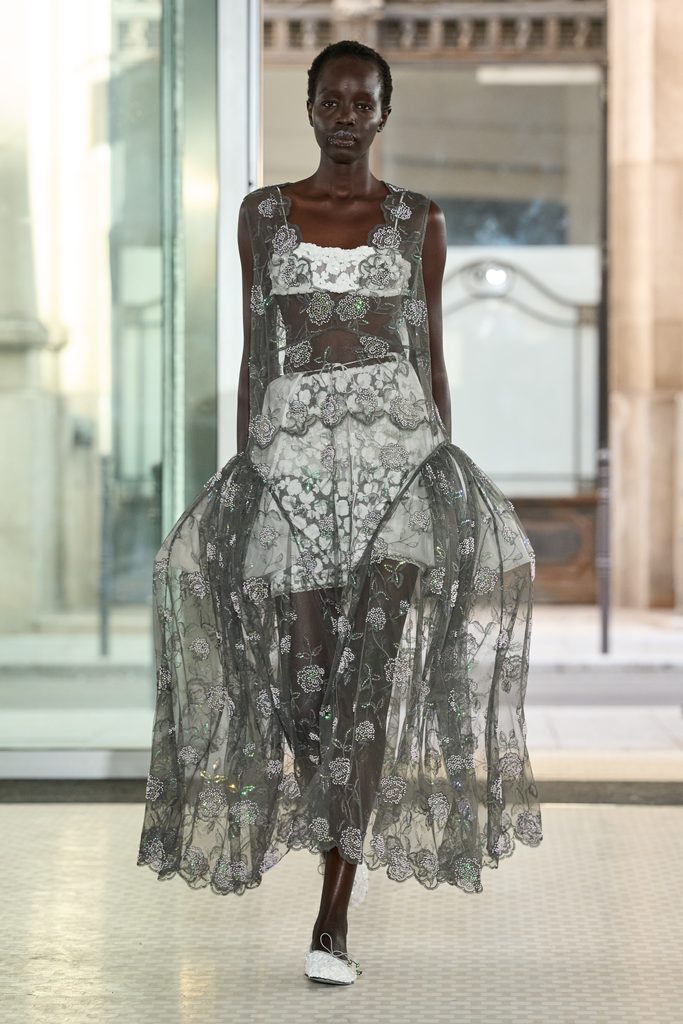
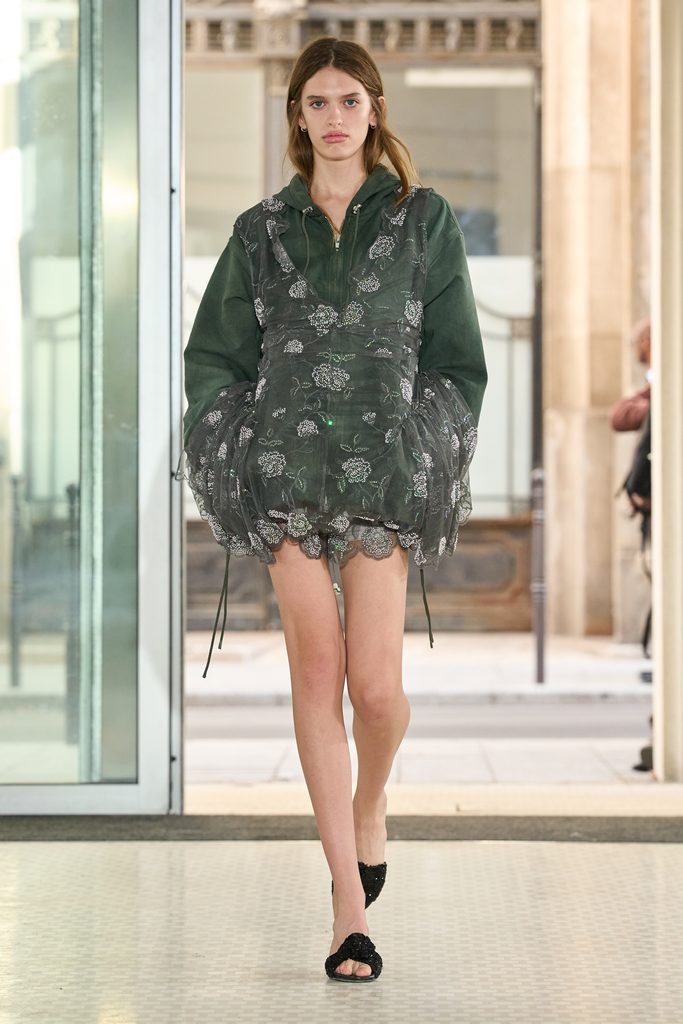
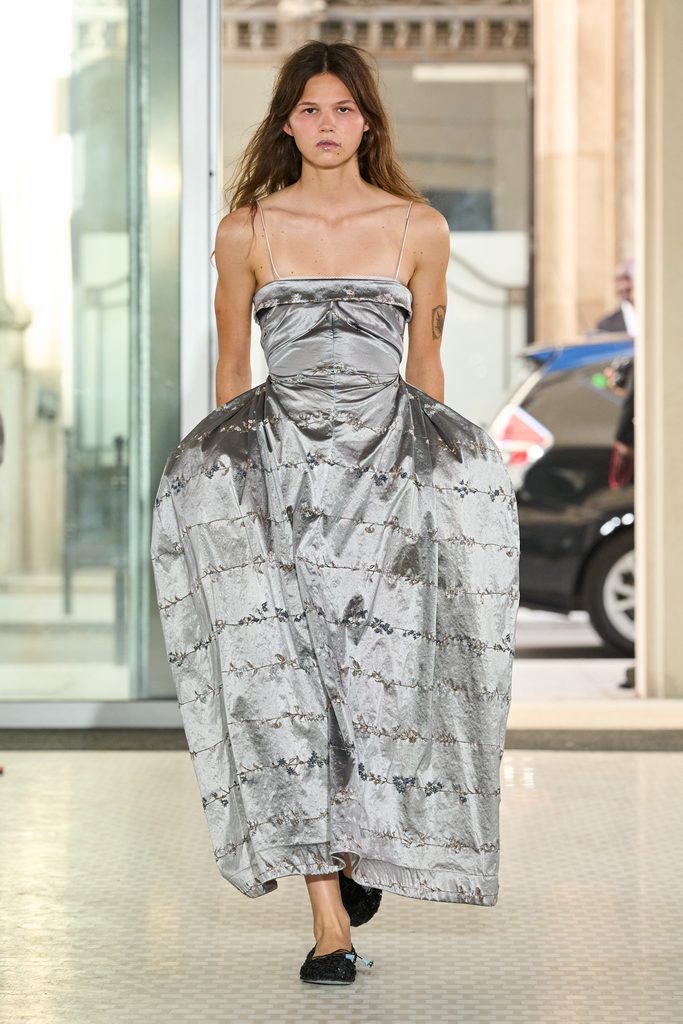
Thirty silhouettes make up the collection: Italian denim, faded workwear, liquid silk, nightwear pieces, embroidery and dresses cut with, as the house puts it, “a new sense of ease”. The designer explains that this time she wanted to build an entire wardrobe, “for eight in the morning and eight in the evening”. Volume decreases, attitude grows more assertive, and the press release stresses one point: nothing waits for a special occasion.
A silhouette closer to the body
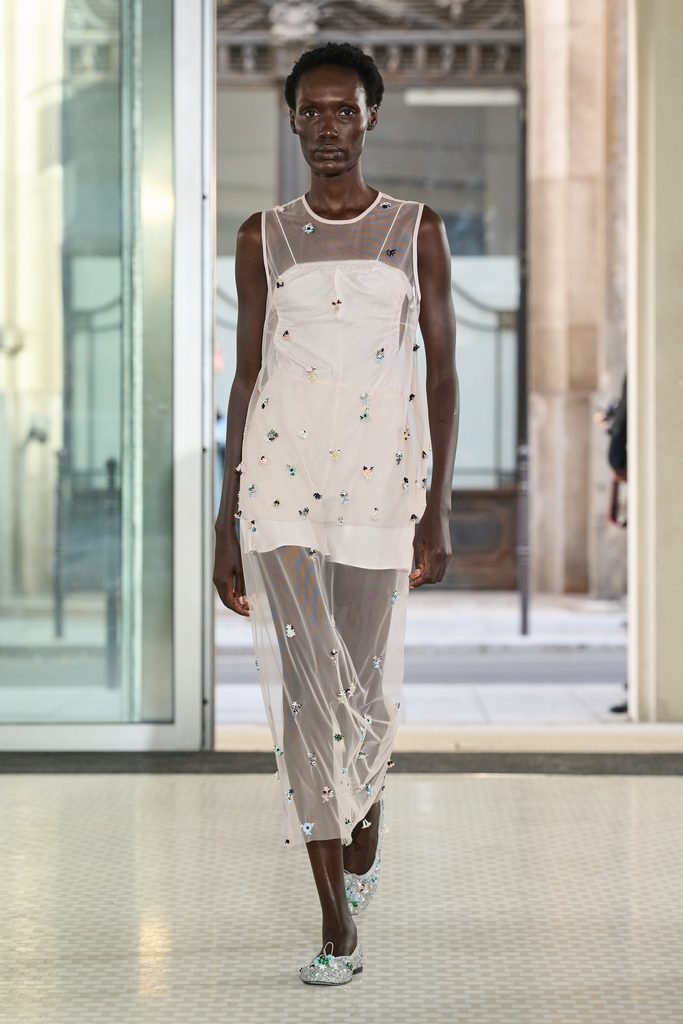
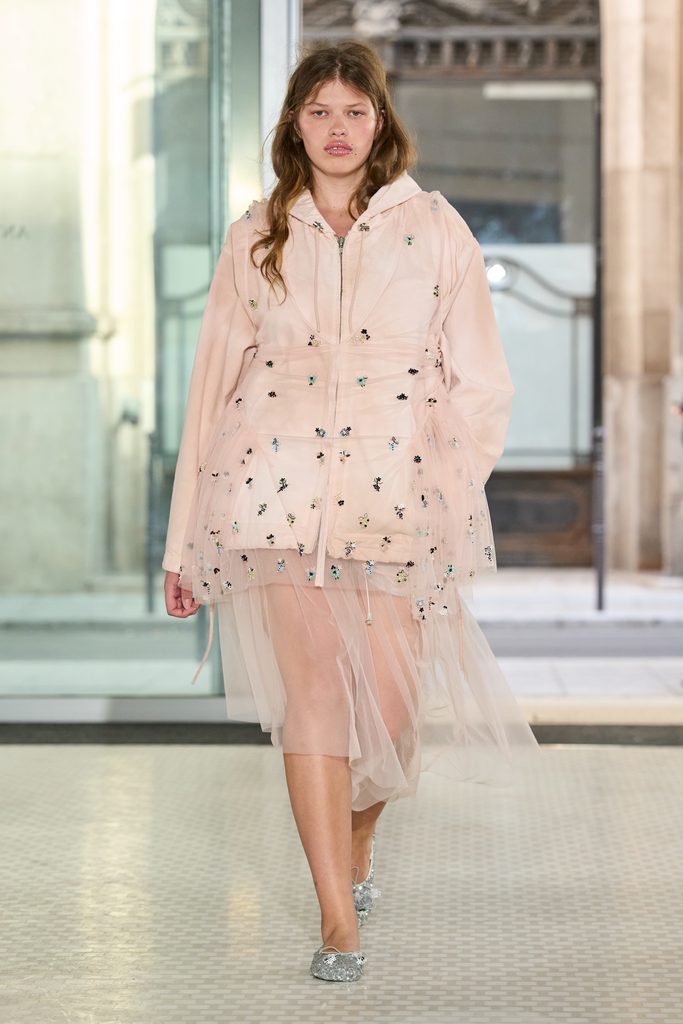
The design changes proportions. The line becomes slimmer, longer, closer to the body, and Cecilie Bahnsen’s familiar volumes are narrowed, lowered or simply interrupted. The pairings announced are precise: a silk jumpsuit set against denim, embroidery on pieces designed to be worn without special care, nightwear moving into broad daylight, workwear softening without losing its function.
This shift touches on what defines the house. Craftsmanship remains central, the text specifies, but it is no longer treated as something precious: it is worn, layered, worn down. In her press release, Cecilie Bahnsen sums up her position this way: “The clothes do not dictate character; the woman does.” Thirty looks, then, with no single muse or prescribed Cecilie Bahnsen woman, each leaving room for a stance, a way of buttoning a jacket or slipping hands into pockets.
What the text allows us to assess
The criterion is simple: do the cut, fabric or embroidery do the work on their own, as the collection announces, saying it dispenses with decorating every idea? On paper, the intention is coherent. It keeps what makes the house recognisable, the delicacy of handwork, and changes its status, from a piece to be looked at to a piece to be worn down. The contrast between cleaner lines and the softness of embroidery, femininity with something rougher underneath, is the real subject.
The promise of a wardrobe from morning to evening is, however, one of the most common in a fashion season. What distinguishes this proposal lies in the pairings named, silk against denim, embroidery on sturdy clothing, rather than in the slogan. There remains a test that only the pieces themselves can settle: how embroidery actually holds up when worn without precautions, and how well a longer, slimmer cut works for different bodies.
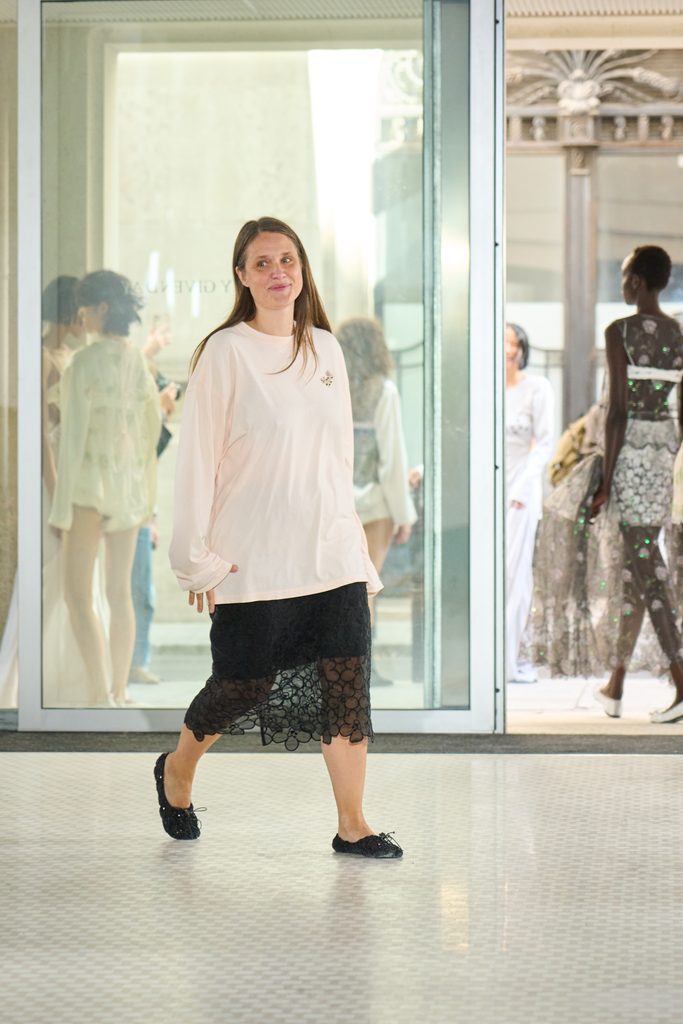
The presentation at Richelieu extends the idea. The press release describes a staging without artifice, where the architecture, the women and the collection exist without unnecessary intervention, under the title Any Given Day. Instead of a separate fantasy, the house chooses to bring clothing closer to everyday life. For the reader, the lasting impression lies in a fundamental question: can a house known for the precious quality of its handwork turn that handwork into everyday clothing?
Cette publication est également disponible en :


