
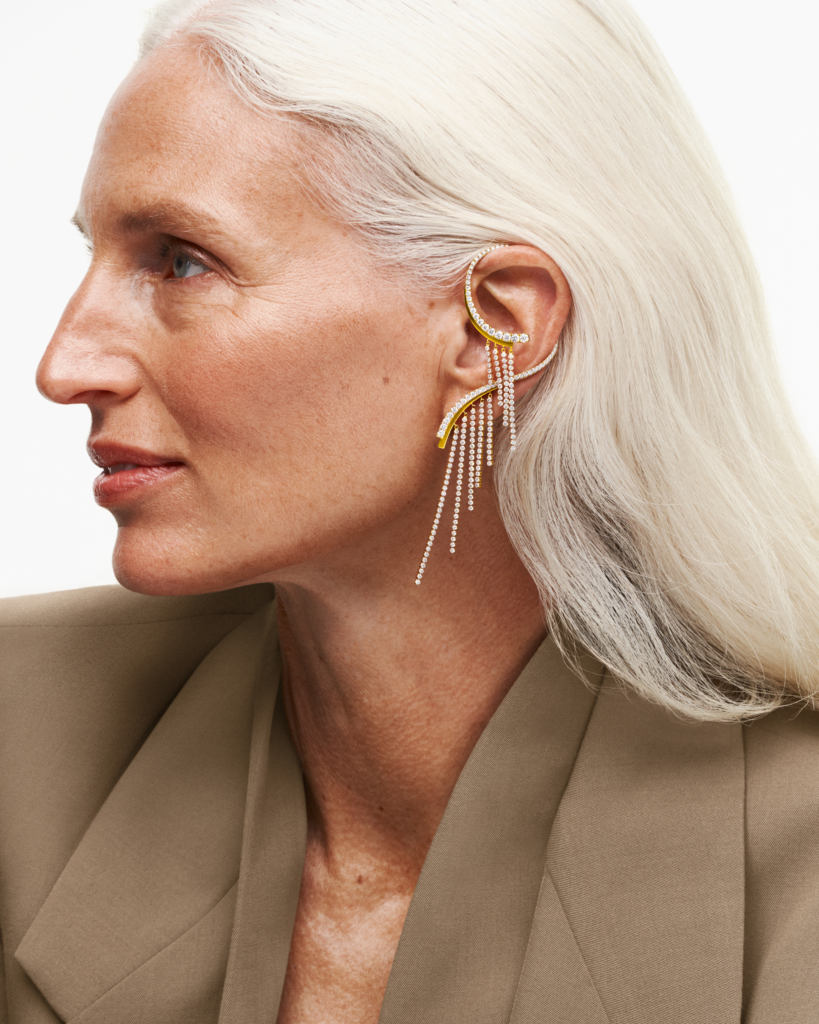
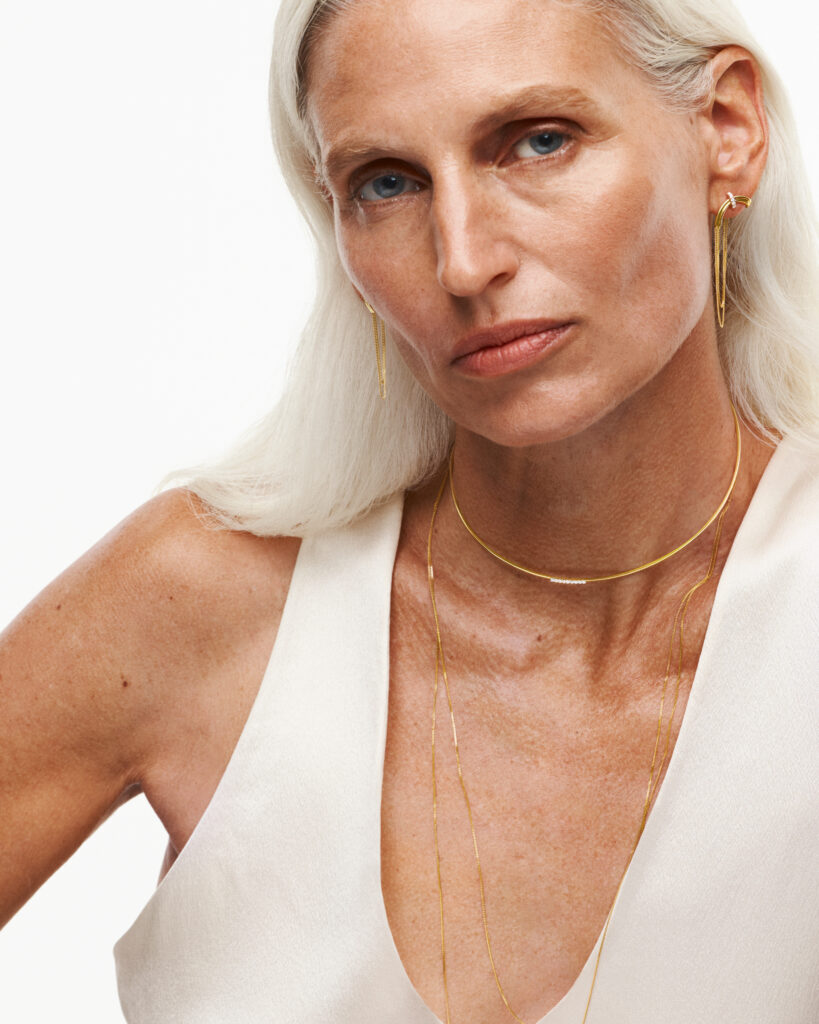
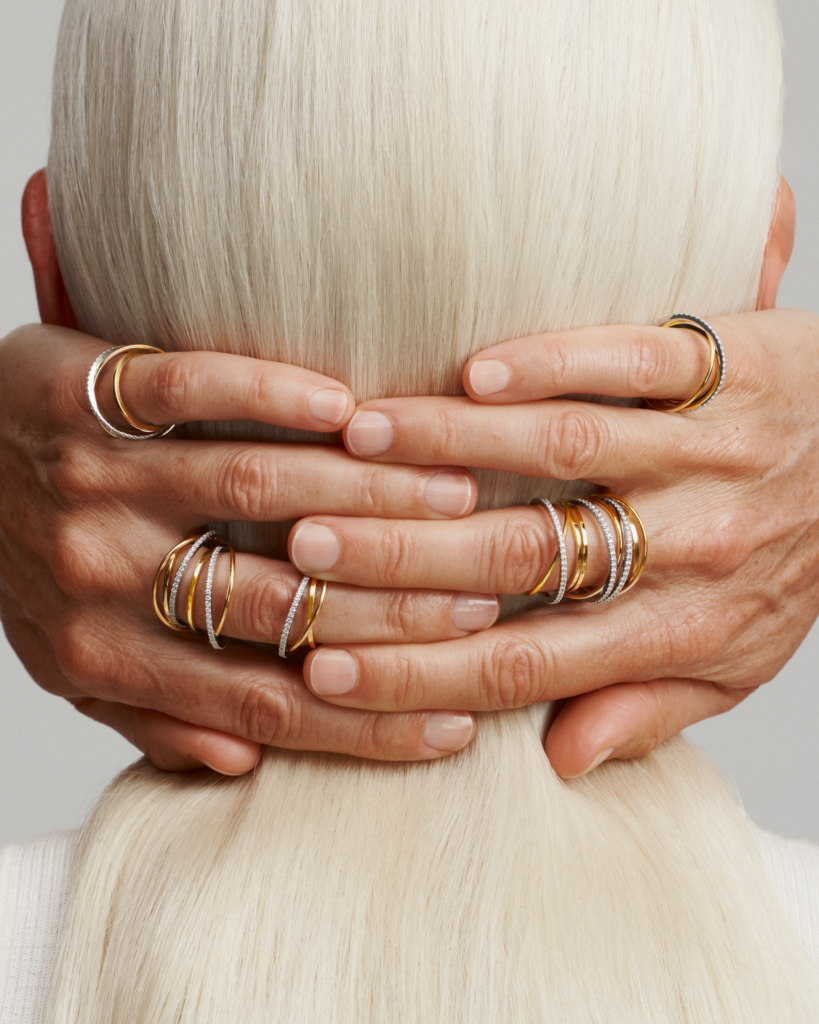
Although not very prominent on the French market, the Japanese brand AHKAH is unveiling a summer collection centered on movement and the refraction of light. This is an opportunity to take a closer look at a approach to jewelry design that is less ostentatious than the Western style, yet just as demanding.
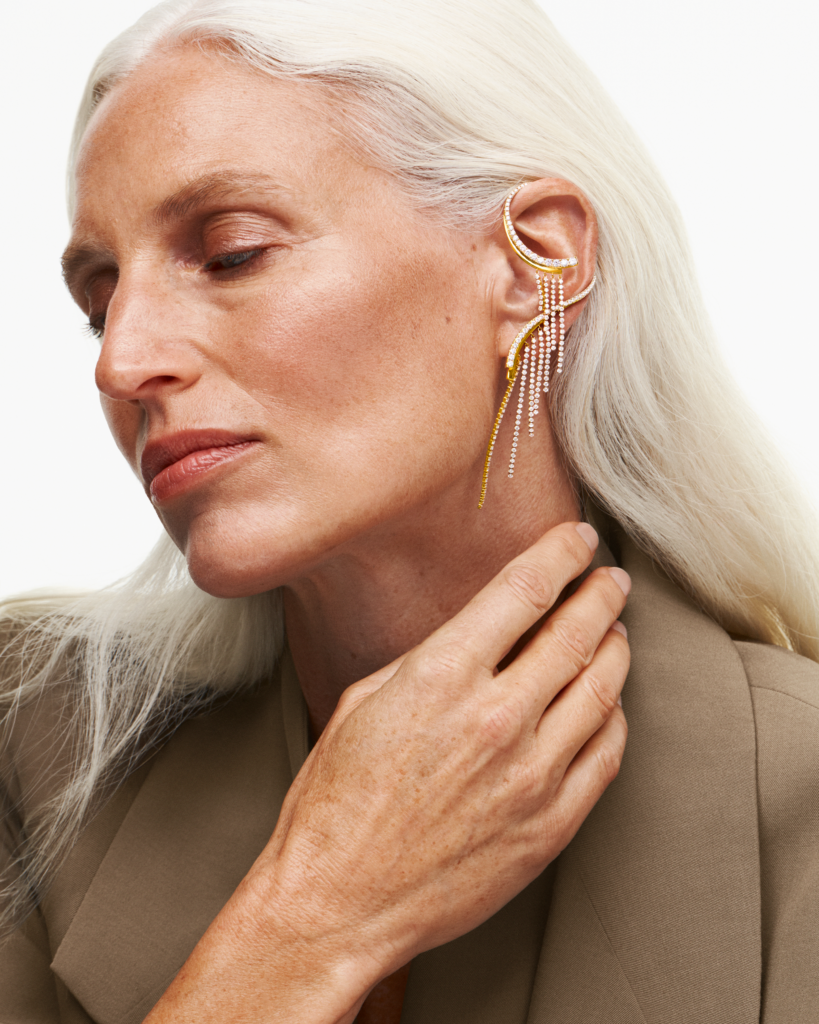
AHKAH isn’t the kind of name that draws crowds to every Parisian storefront. That’s precisely what makes its new summer collection worth checking out. The Japanese brand, represented in France by the agency Hoda Roche Communication, presents a series of pieces conceived, in its own words, as “jewelry in motion, where lines intersect and respond to one another to create ethereal compositions.” The idea isn’t entirely new—kinetic jewelry has been around for decades—but the way AHKAH articulates it, and above all the restraint with which it executes it, reveals a sensibility that owes more to the Japanese aesthetic of emptiness than to Western canons of fine jewelry.
There is one word in the collection’s description that deserves special attention: balance. The designs, the brand writes, play with light and “reveal ever-changing flashes with every movement, in a delicate balance between structure and fluidity.” This tension between structural rigor and freedom of movement evokes a central concept of Japanese aesthetics: ma—that interval, that empty space between elements, which is just as important as the elements themselves. Prestigious Western jewelry generally seeks to fill space, to maximize the visible carat weight; a piece designed according to this Japanese logic, on the contrary, allows the void to work, and it is precisely this space that allows light to circulate and shift depending on the angle of the wrist or neck.
What the press release doesn’t mention is the technical challenge involved in this approach. Creating a piece that remains structurally stable while offering a play of shifting reflections requires masterful craftsmanship in the articulation of its elements—a process closer to watchmaking than to static jewelry. This is a skill that the Western market readily associates with the major Swiss or French houses specializing in transformable jewelry, without always recognizing that there are, elsewhere, schools that are just as rigorous but receive less media attention.
For a brand like AHKAH, the issue isn’t just aesthetic—it’s also commercial. The French luxury market remains structured around a small number of historic names, and a Japanese brand—no matter how technically proficient it may be—must build its legitimacy piece by piece, press release by press release, without being able to draw on a century of Parisian history. It is a longer path, but potentially a more interesting one to follow for anyone interested in the sector’s transformations: as historic European houses explore Asian collaborations or draw inspiration from these same aesthetics, it is legitimate to wonder whether the next formal revolutions in fine jewelry might not come precisely from houses like AHKAH, which have no Western heritage to defend and can therefore afford a more radical interpretation of movement and light.


















Cette publication est également disponible en :

