
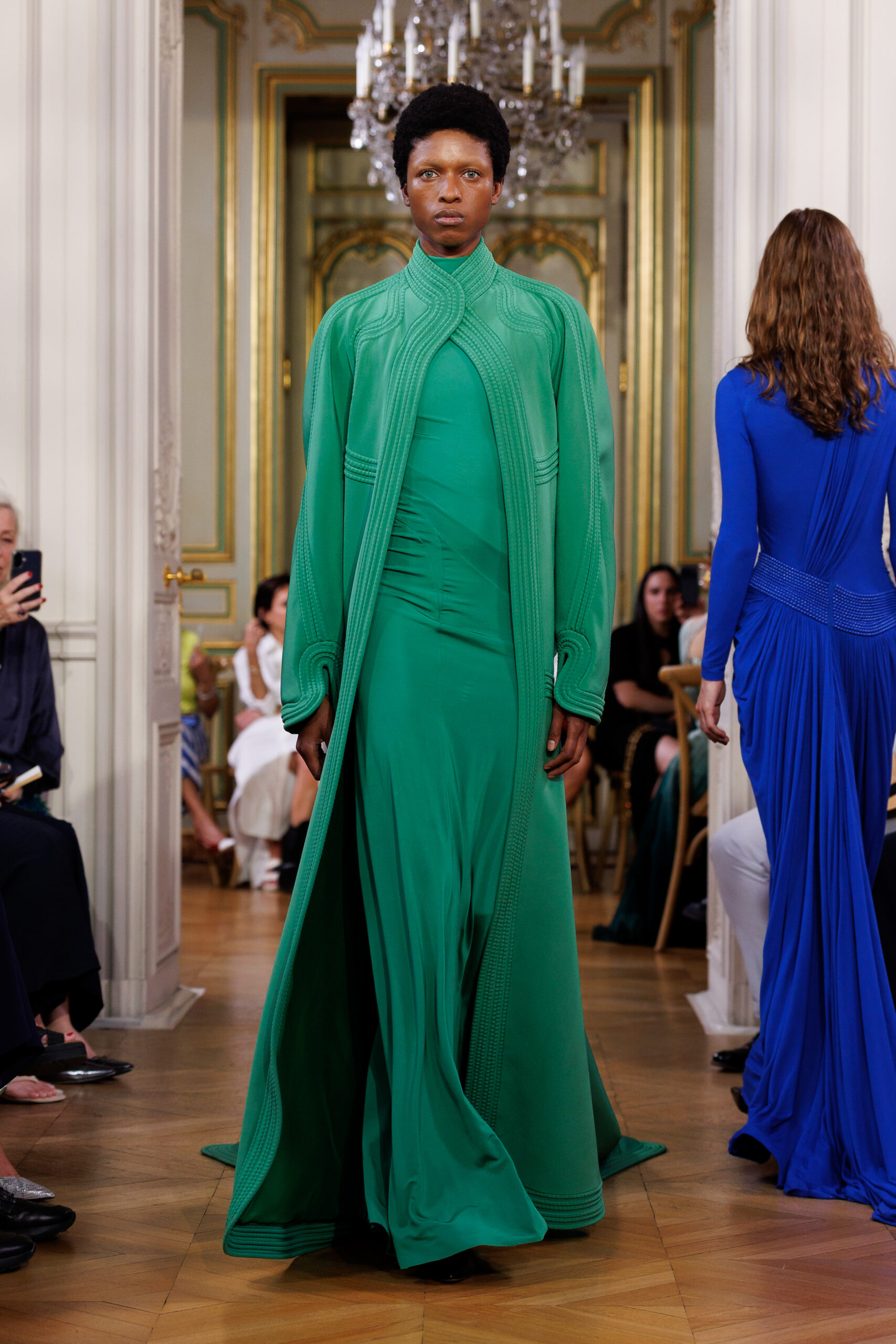
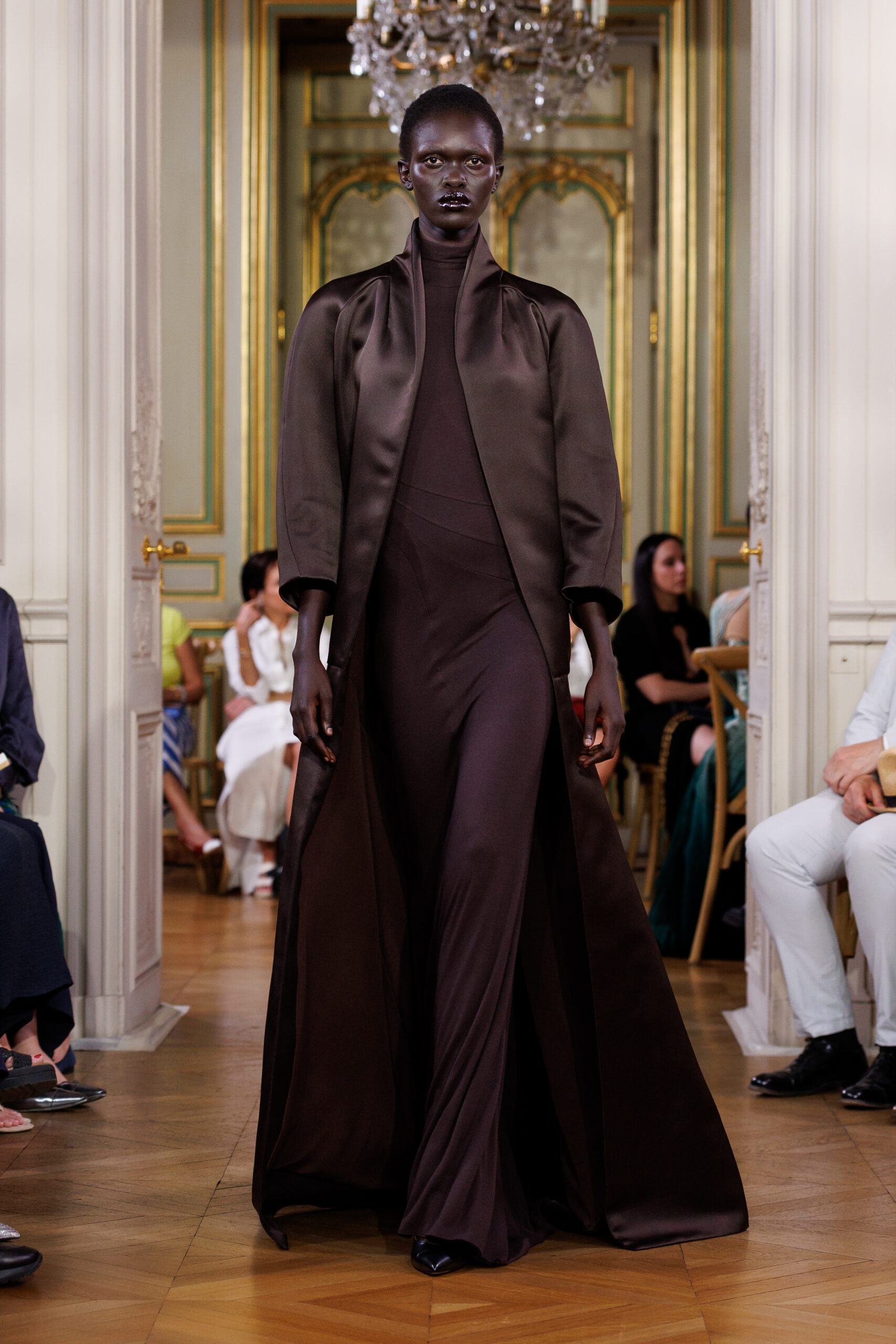
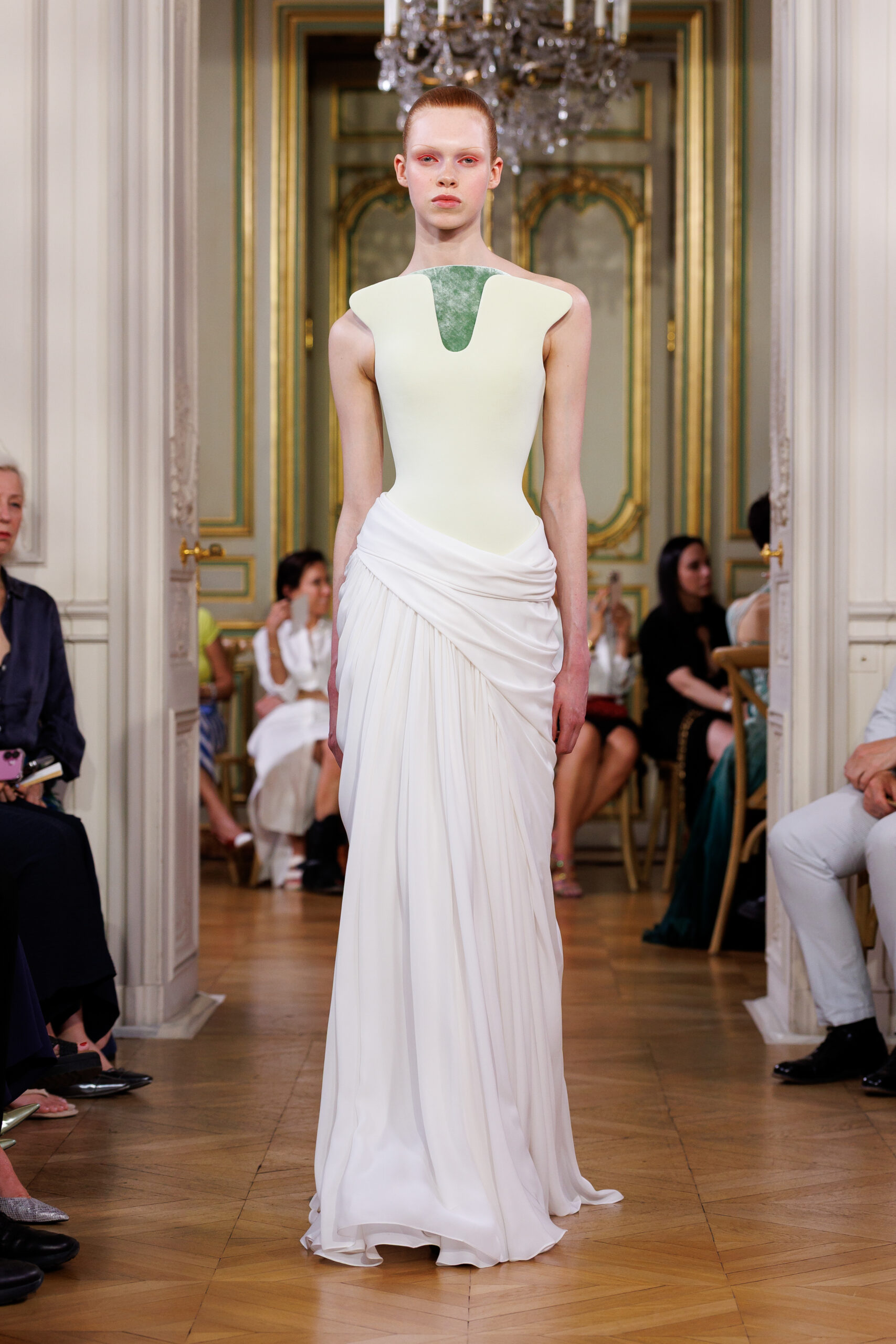
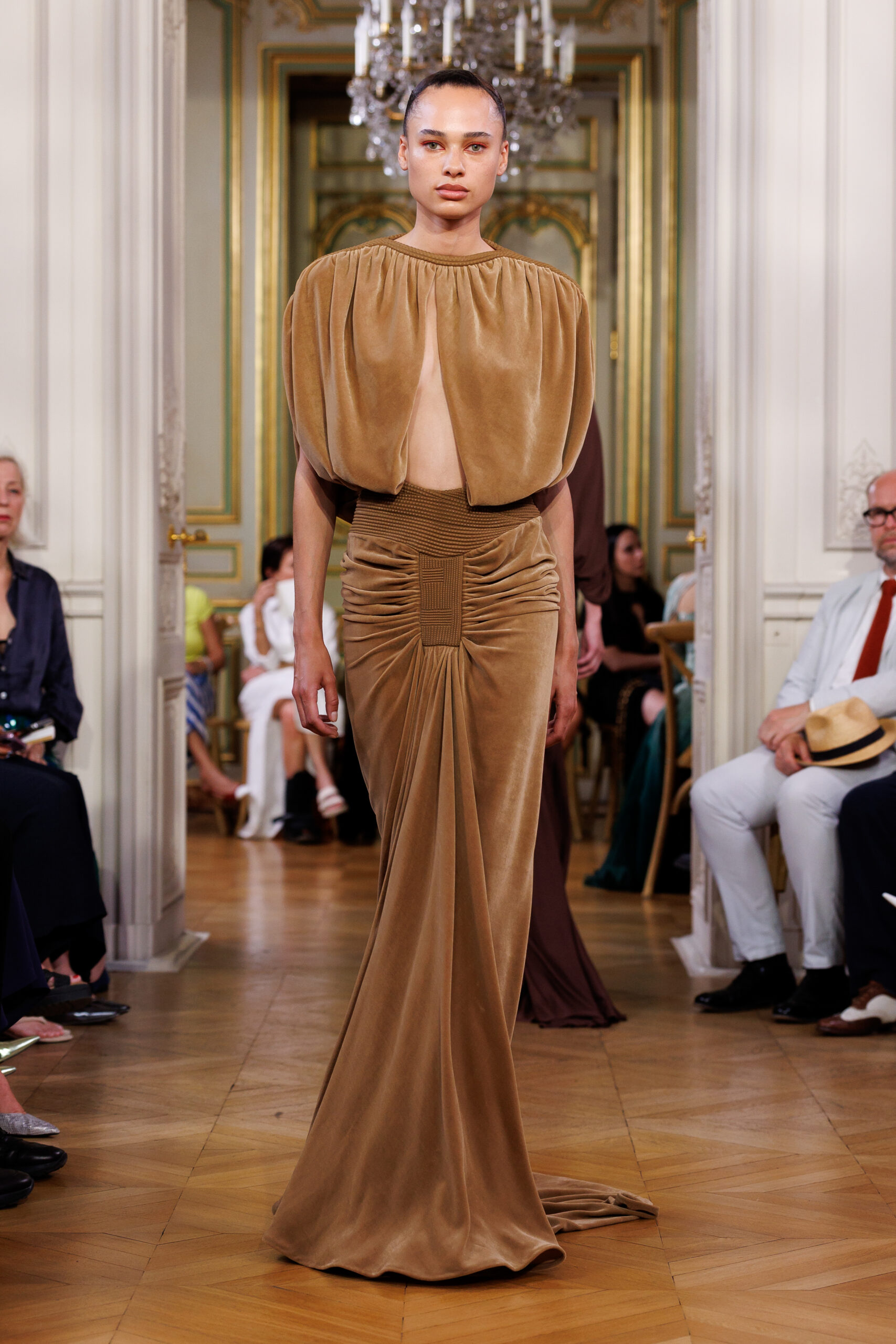
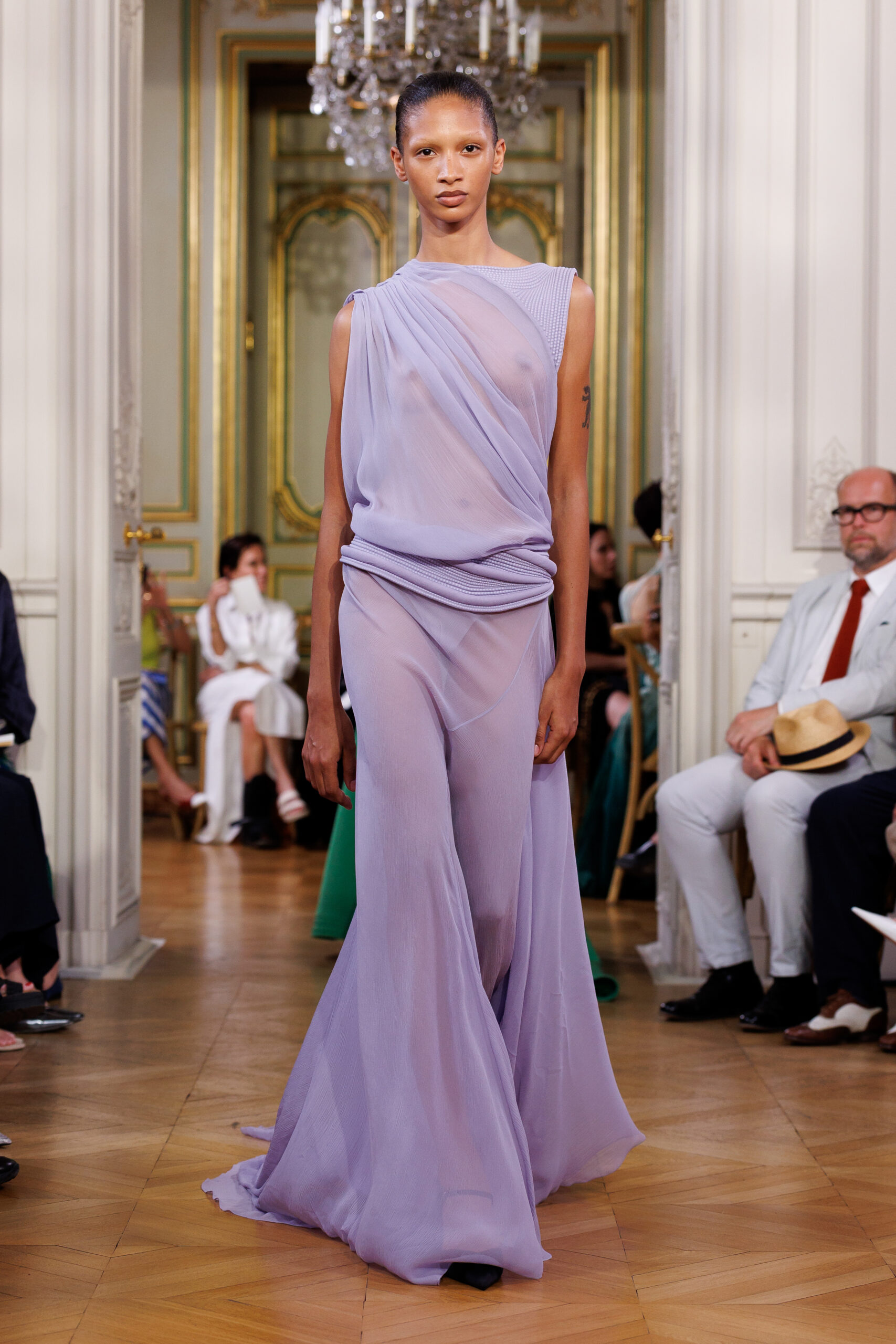
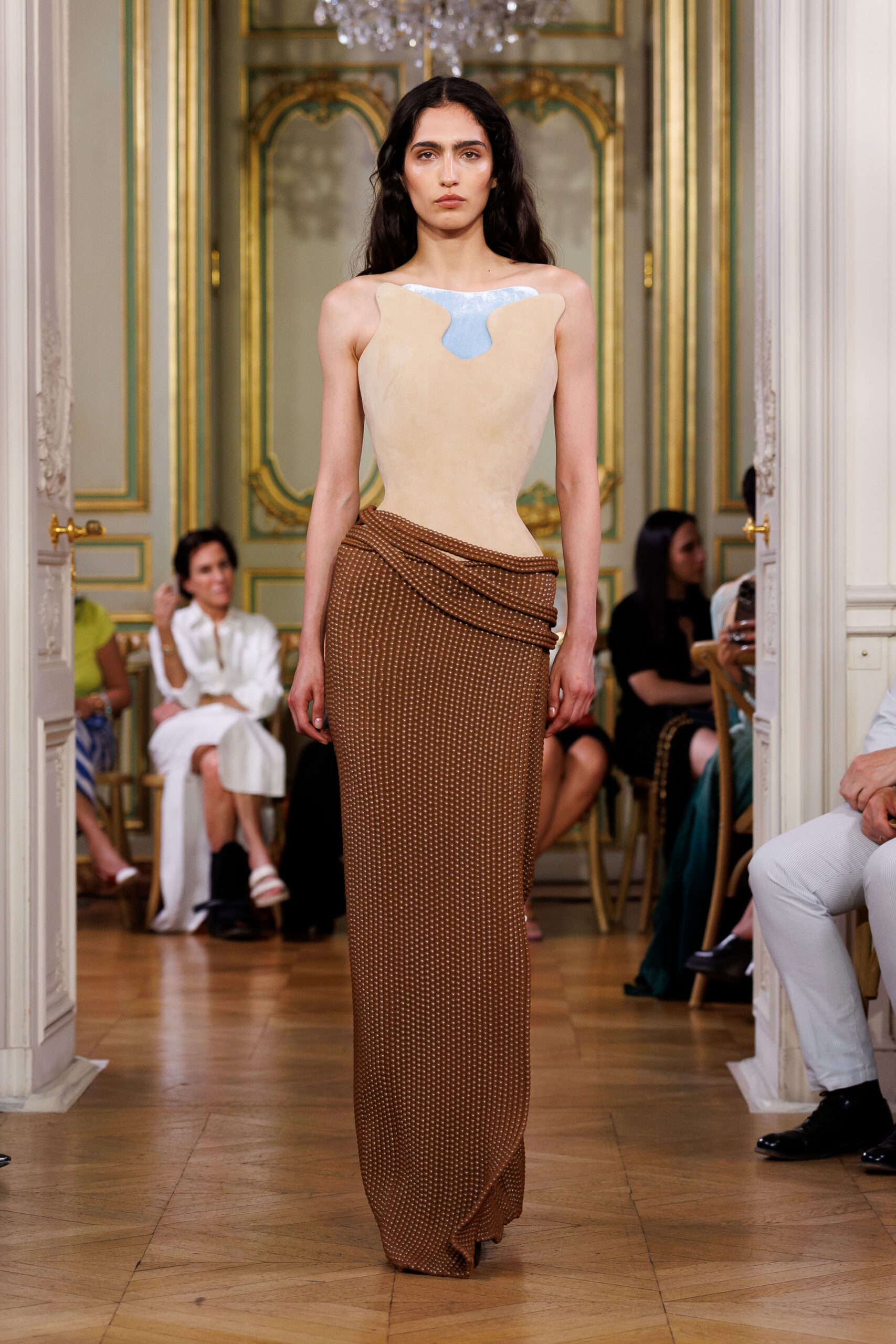
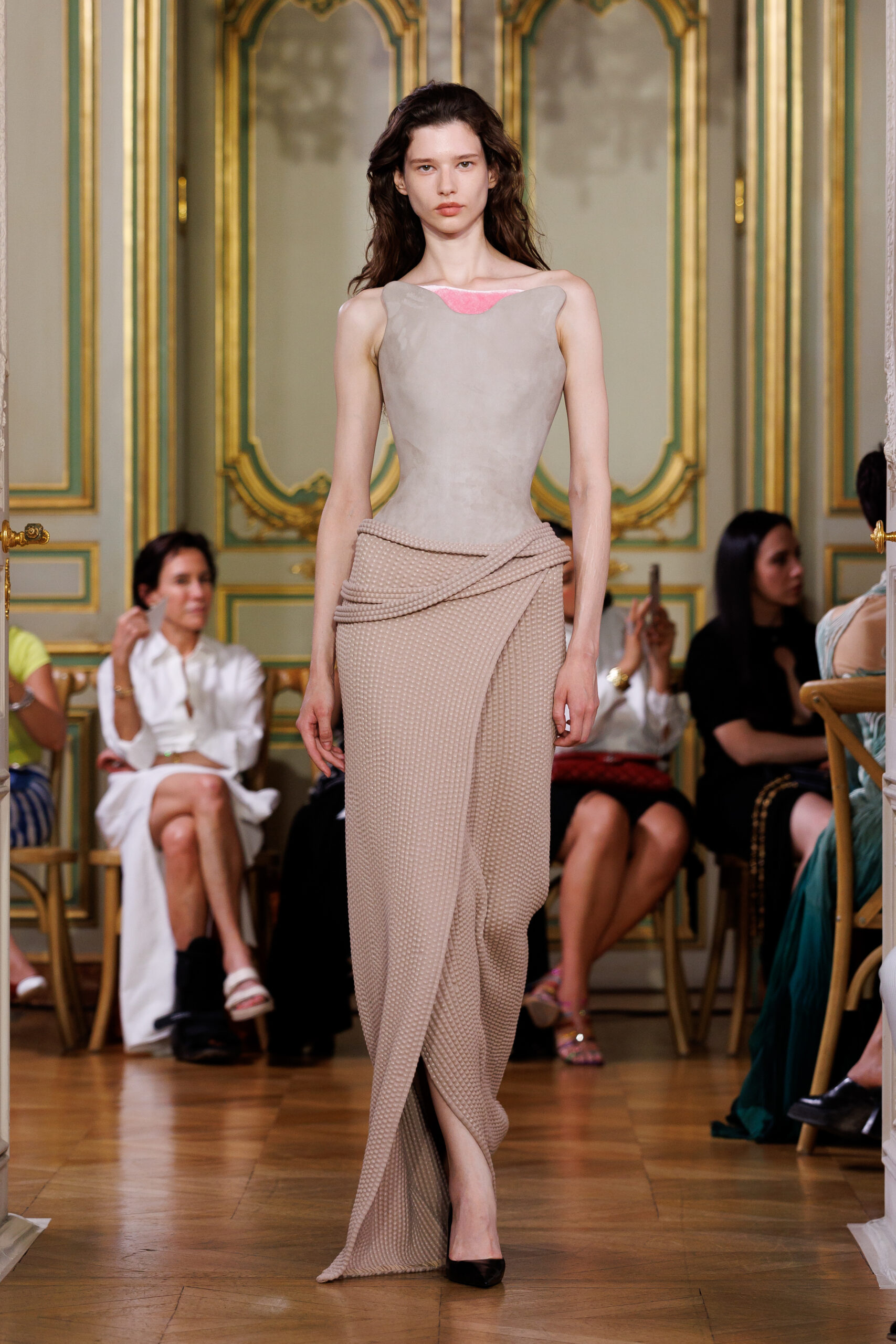
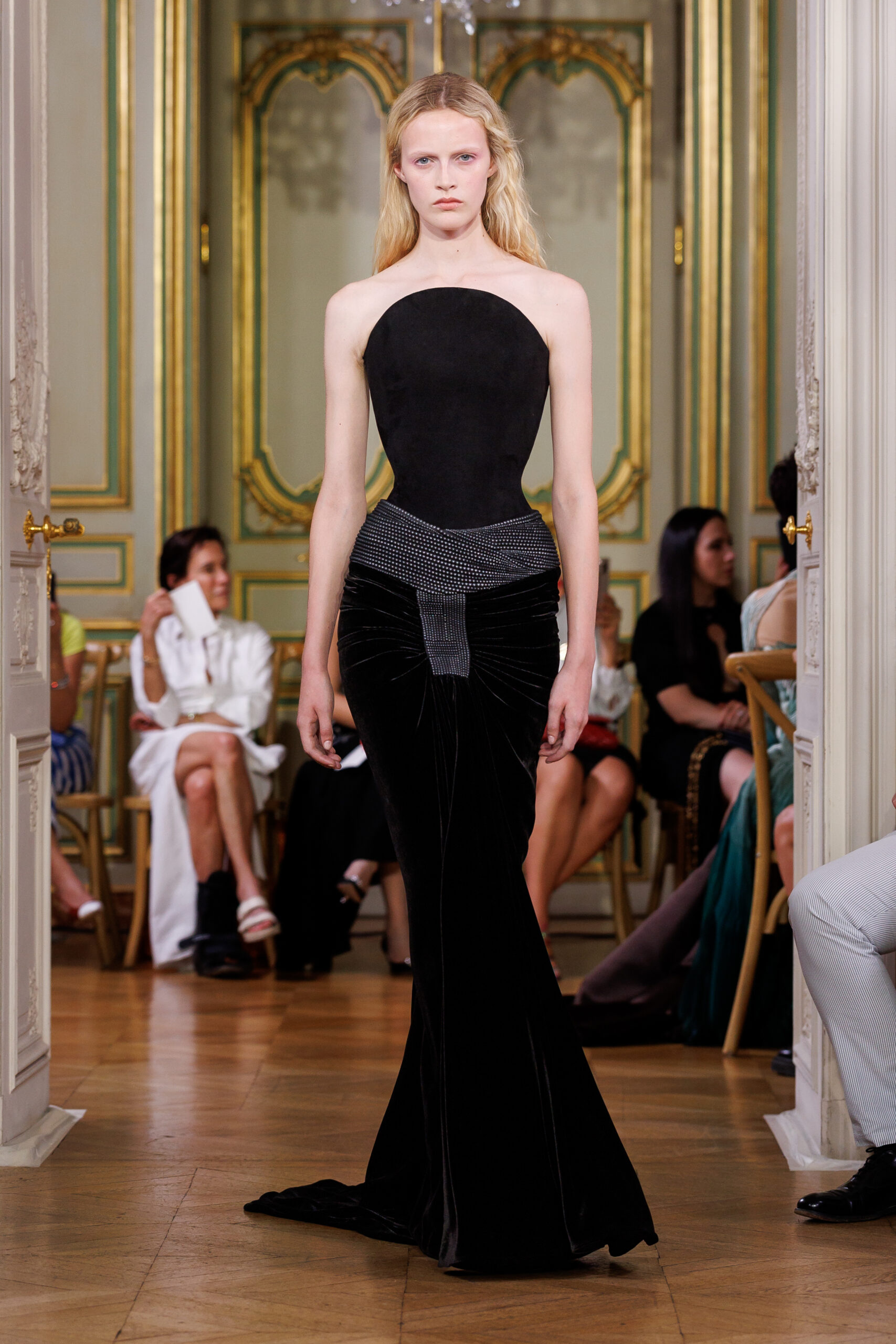
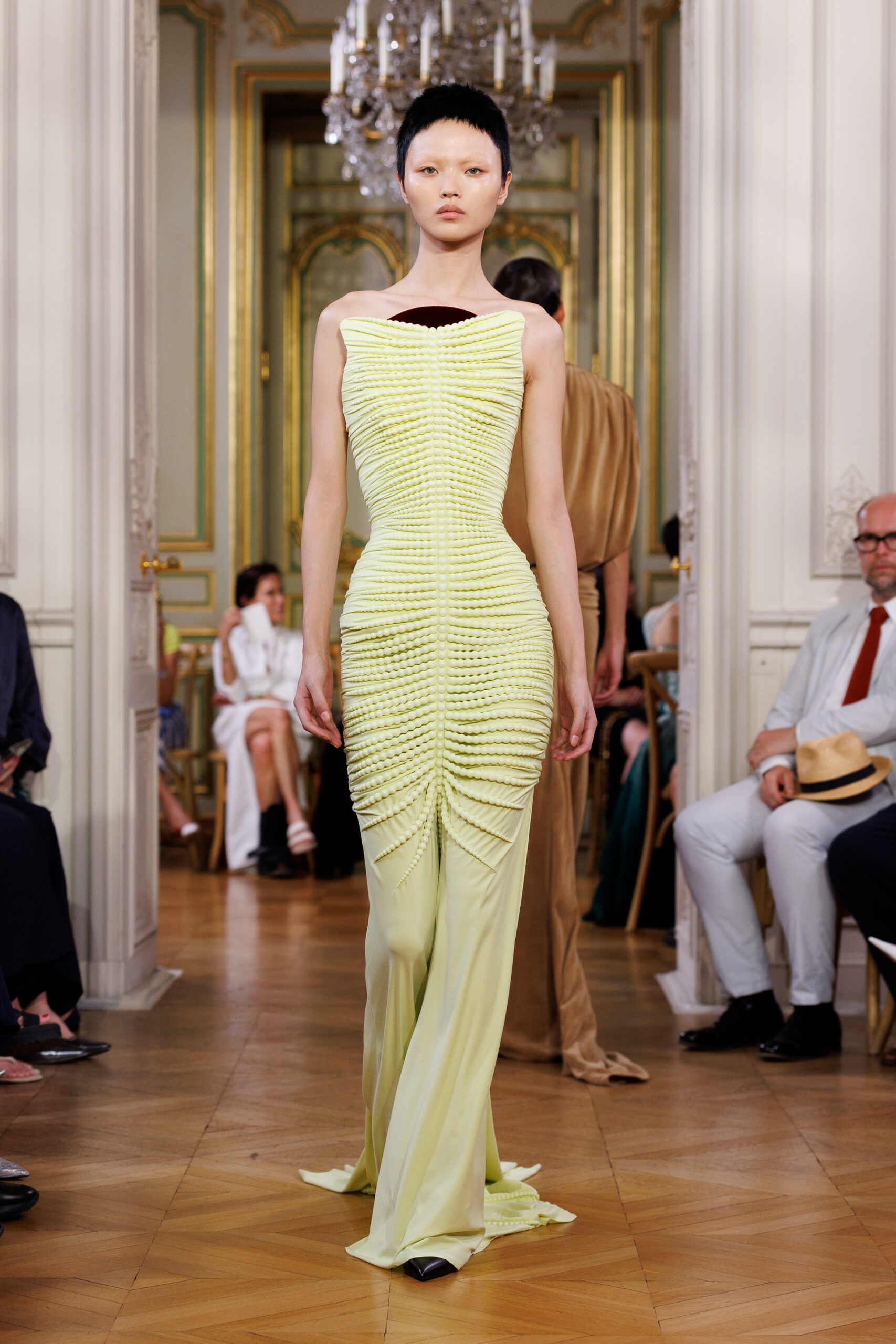
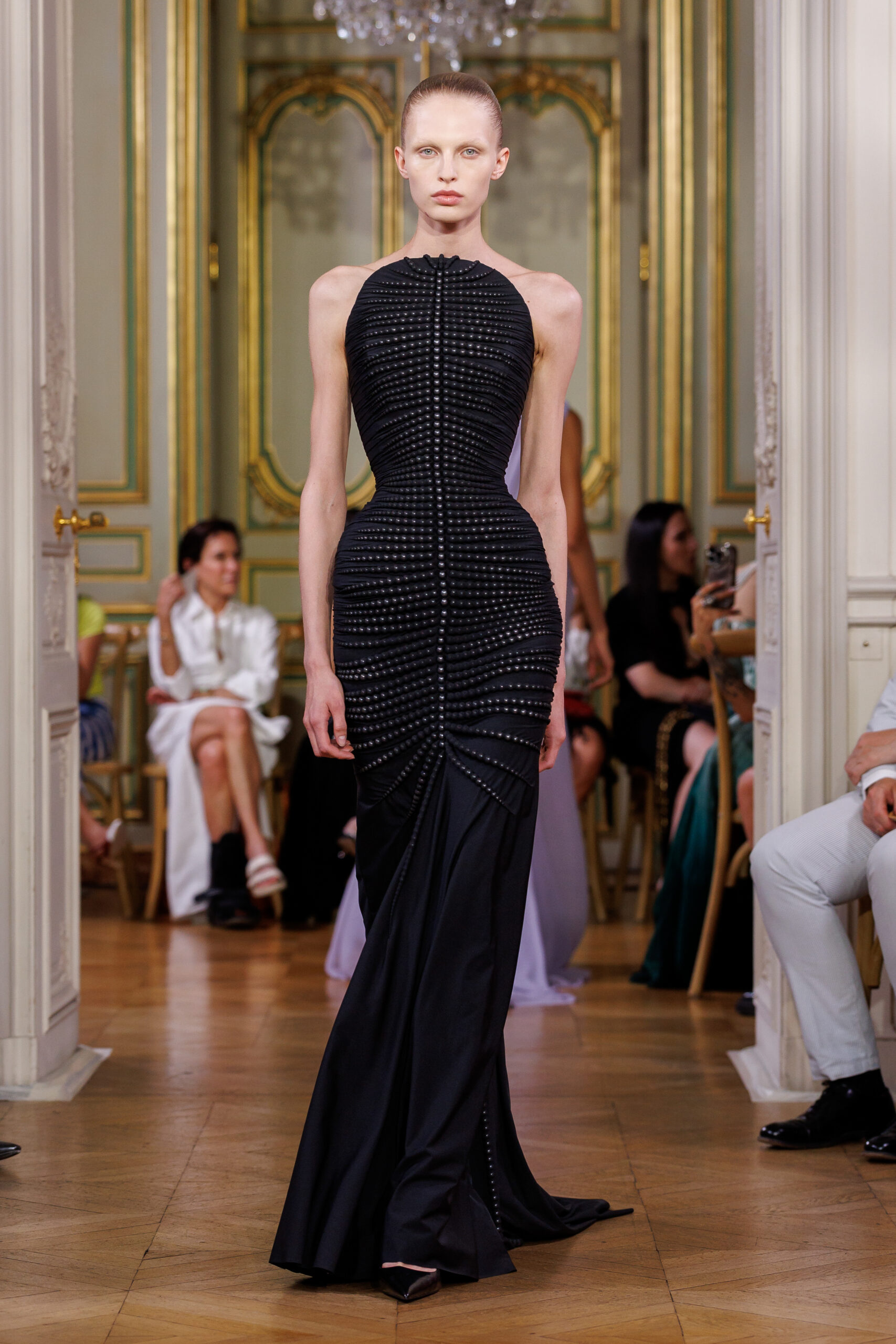
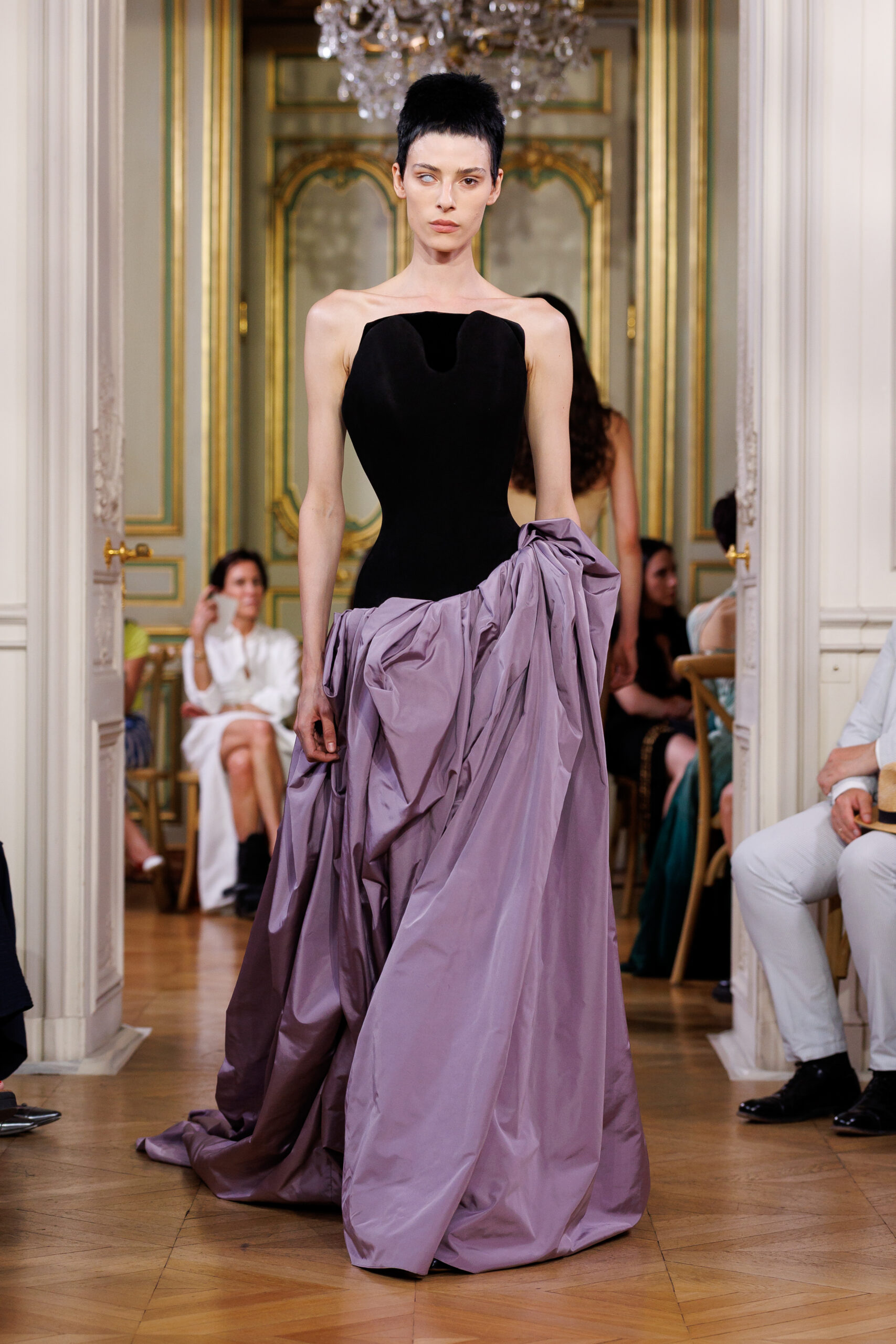
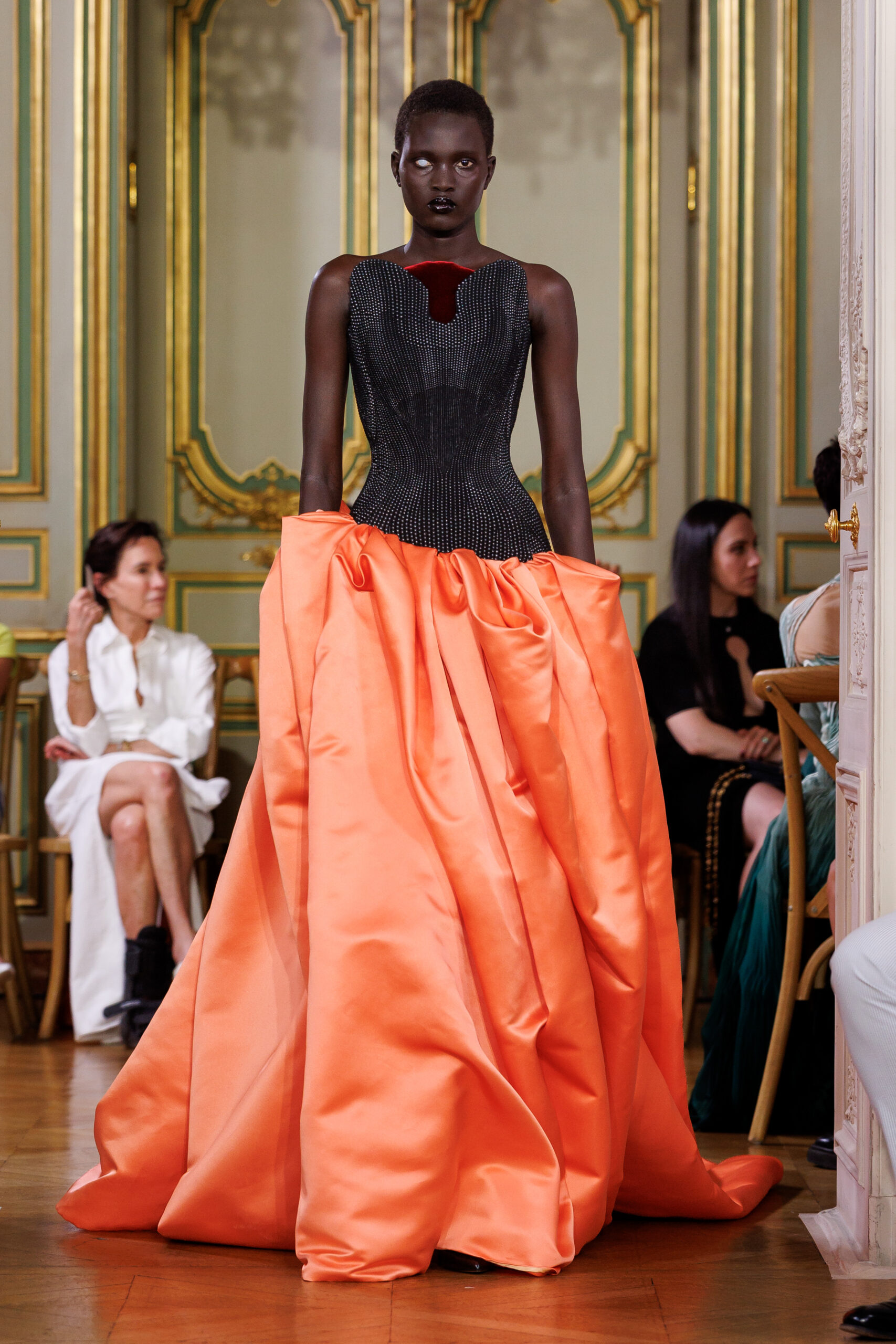
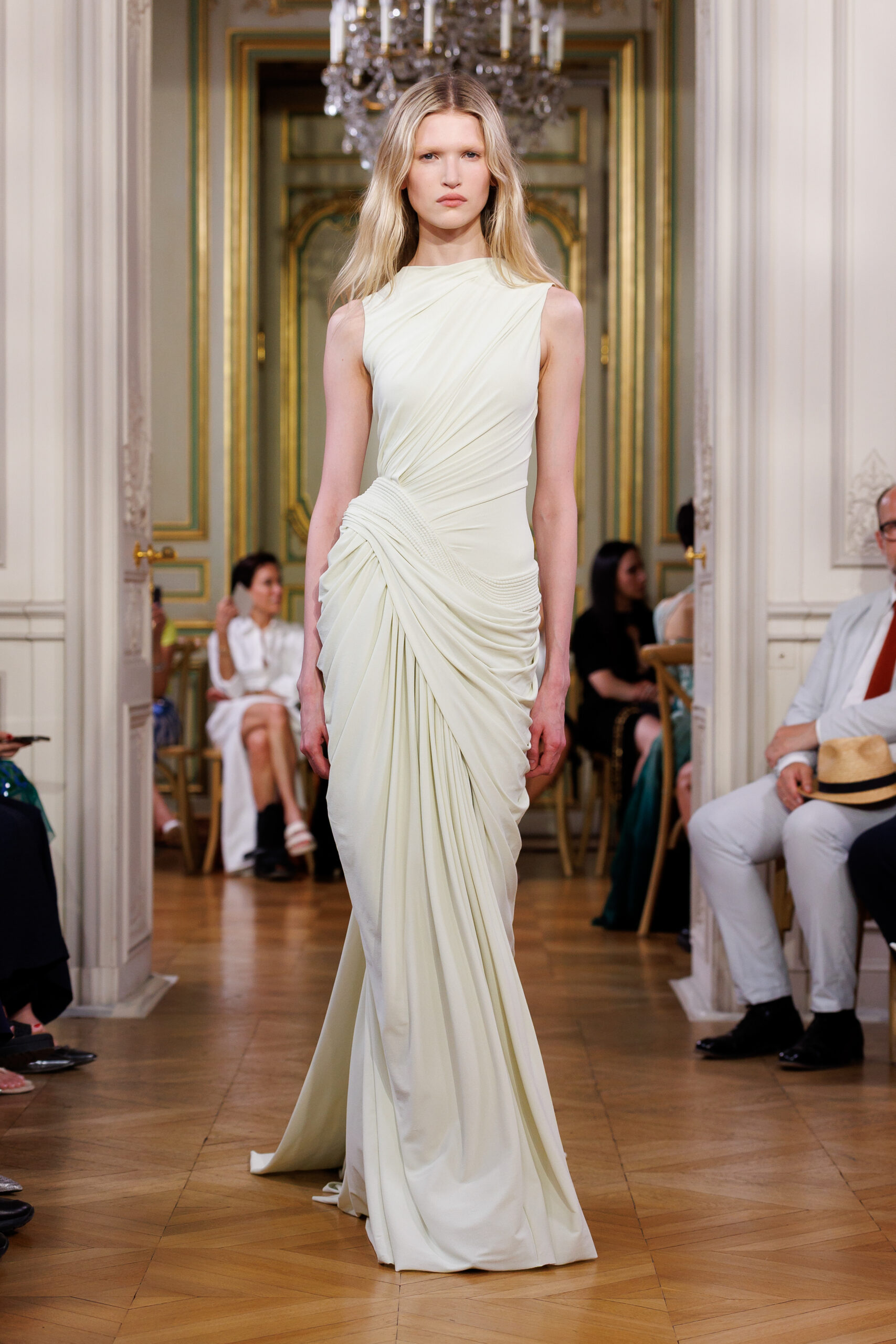
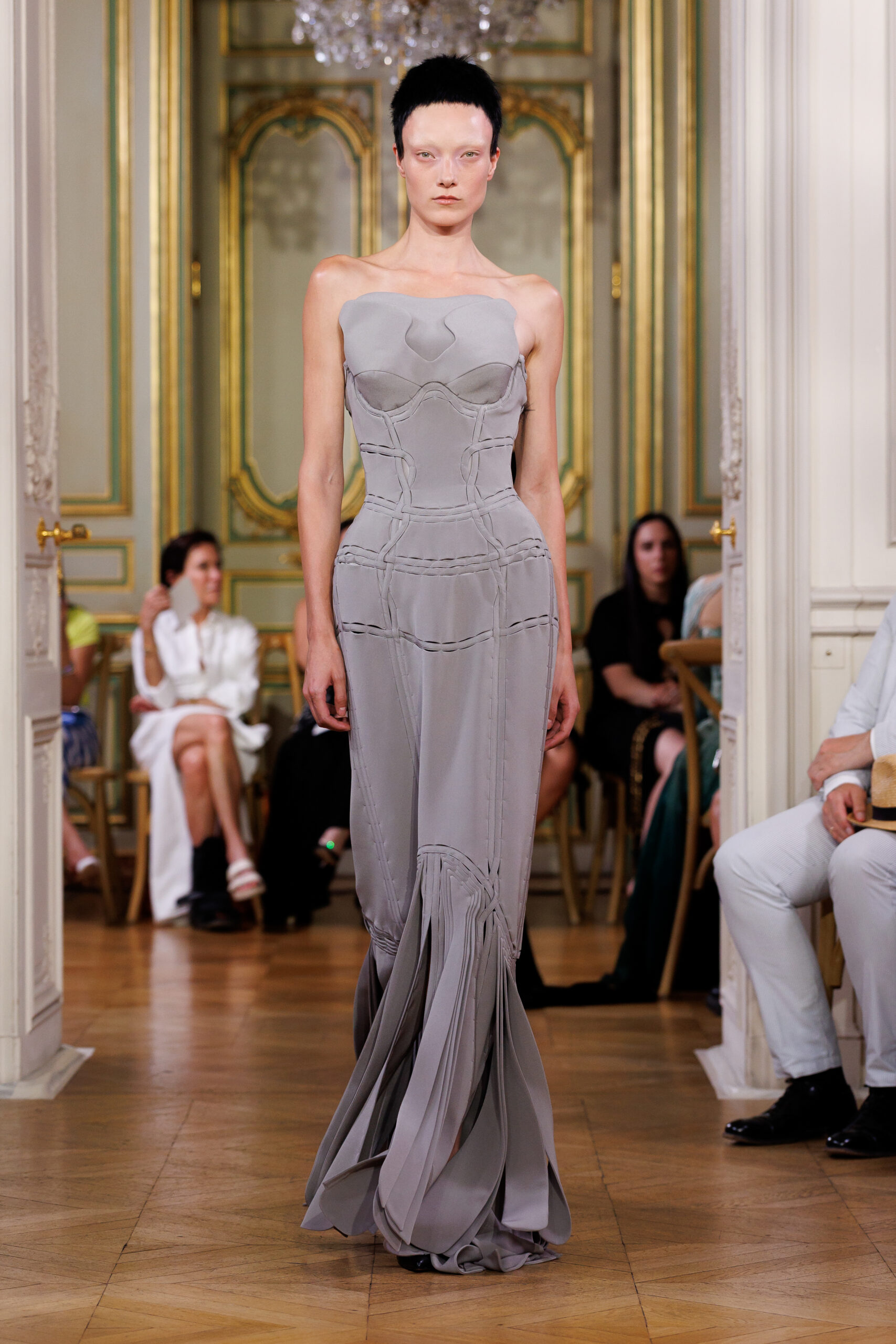
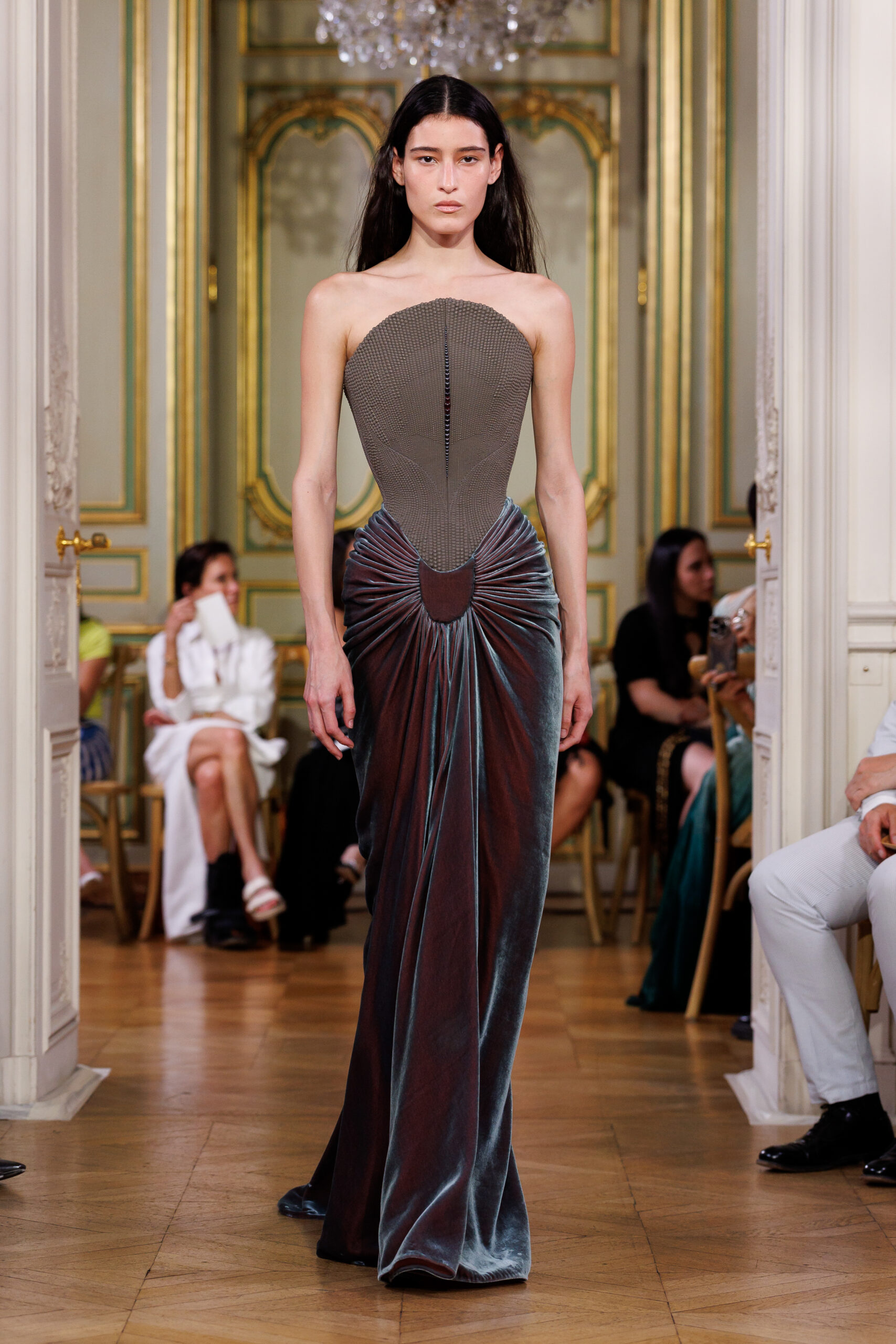
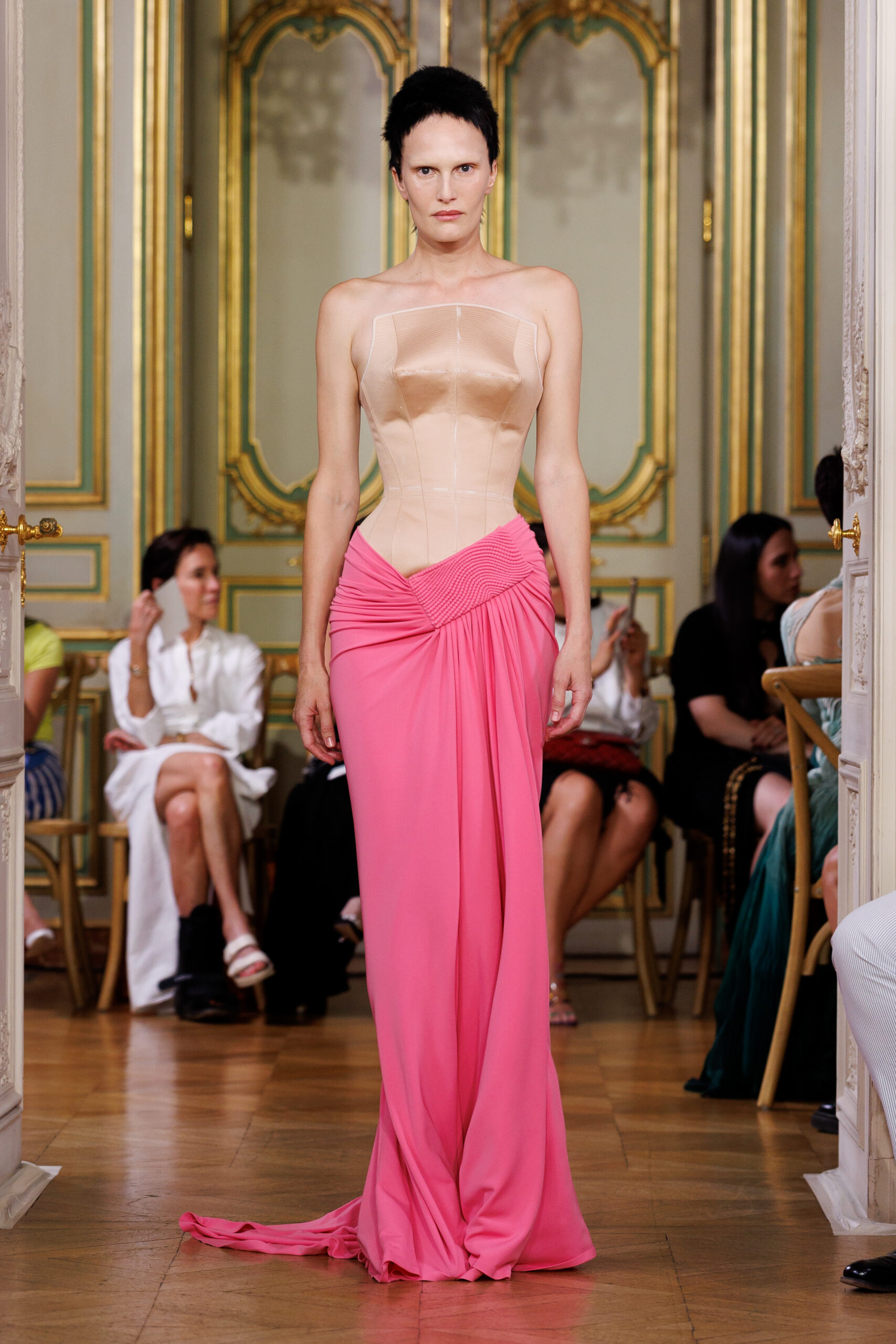
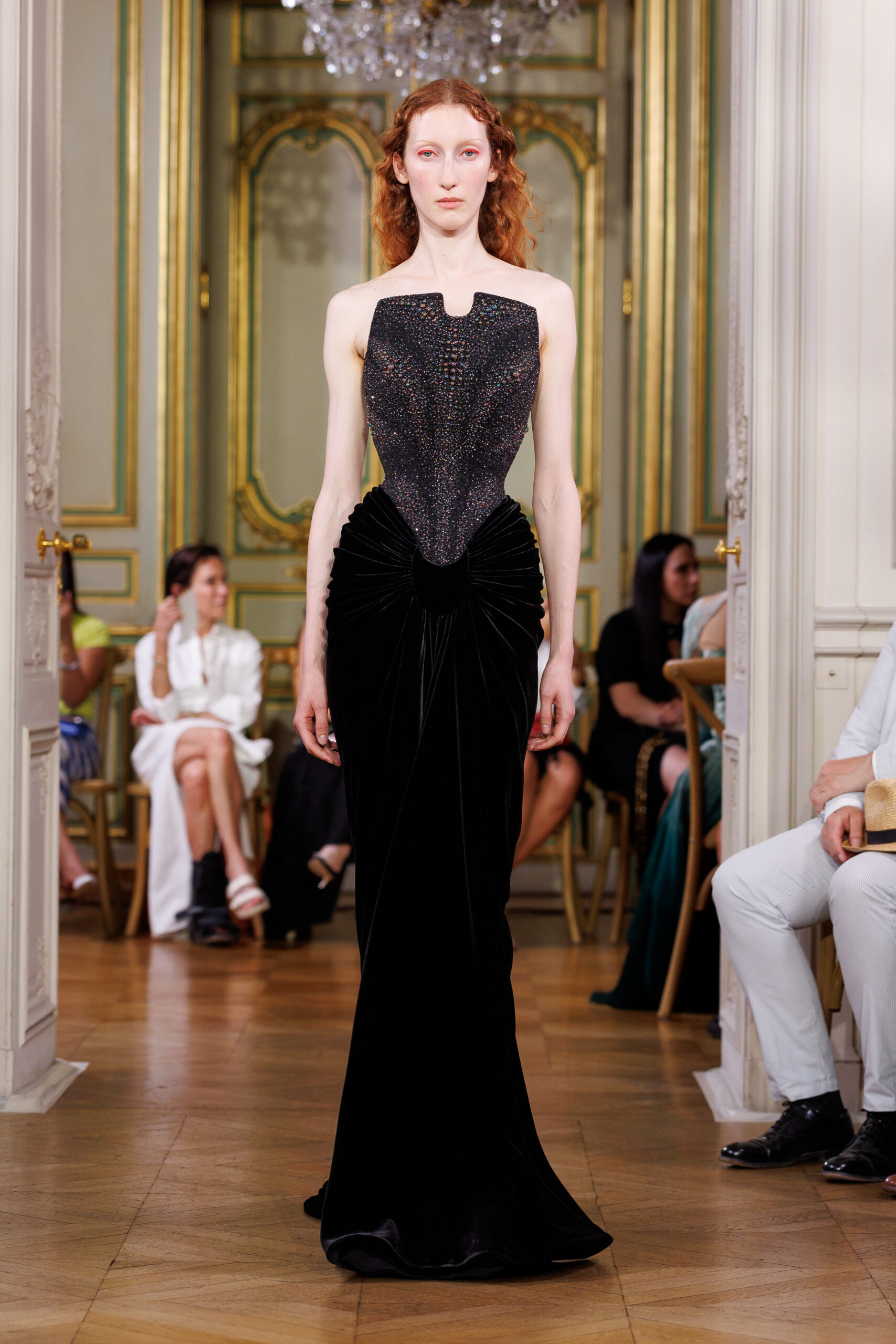
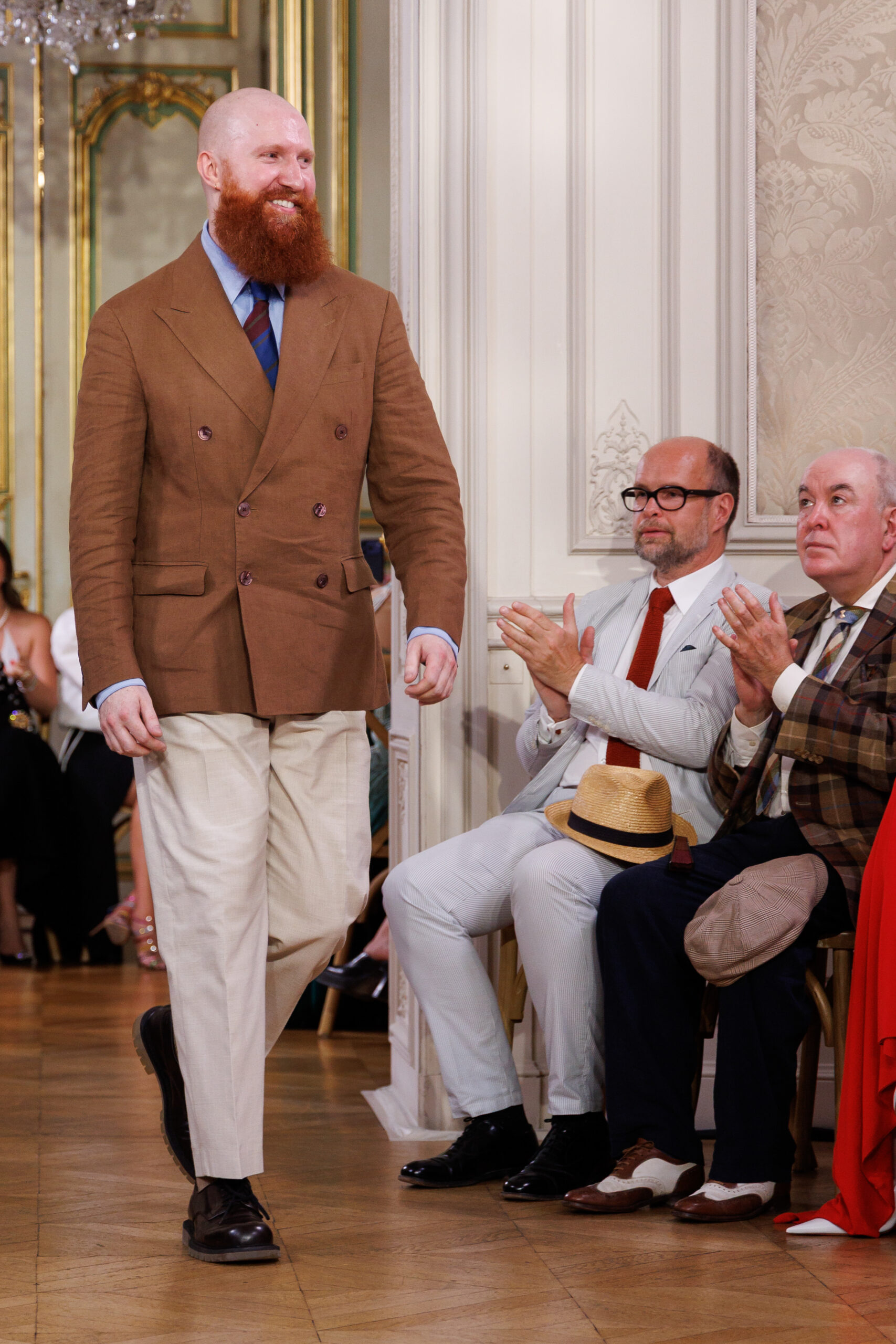
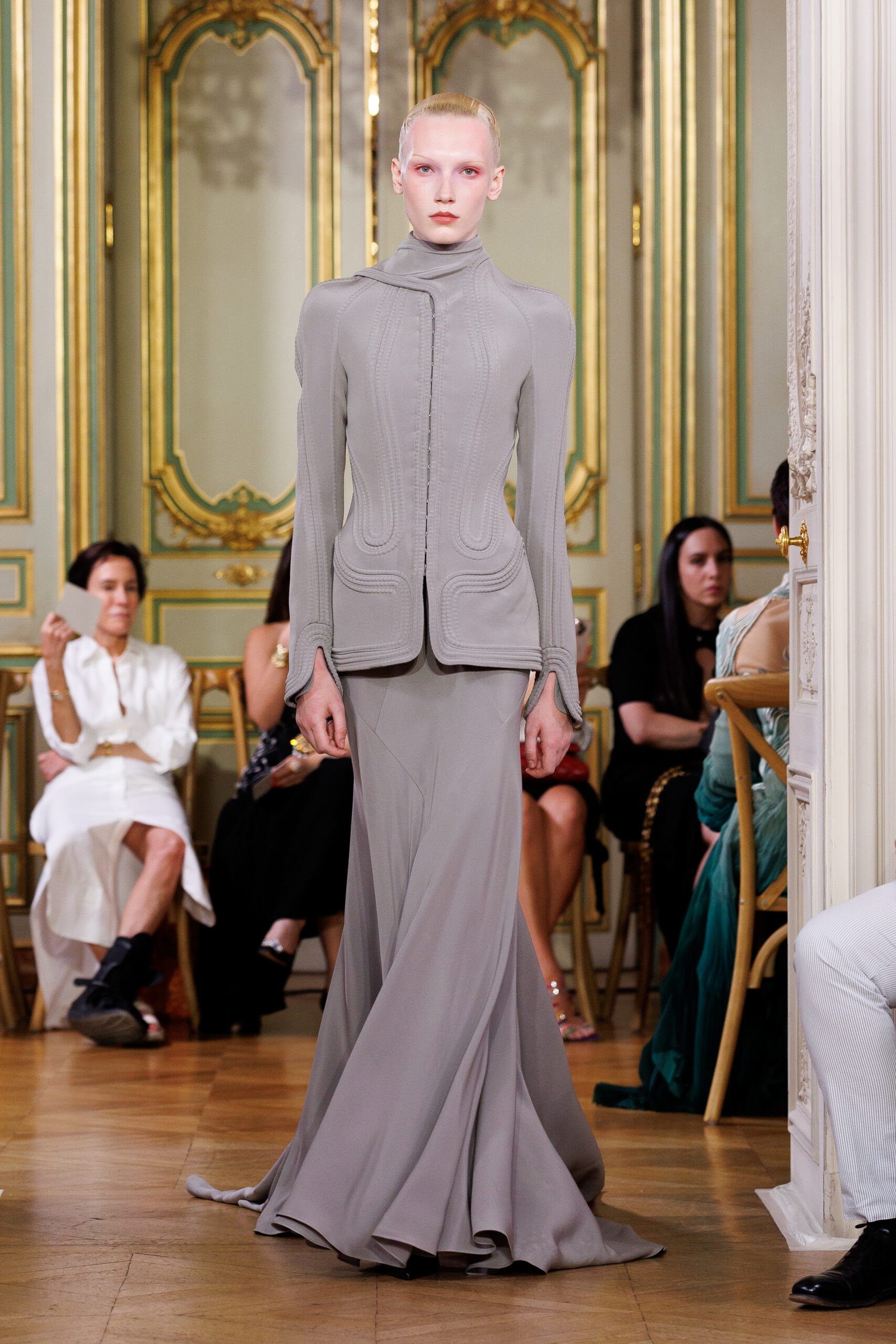
All it took was one fashion show at the Irish Embassy for Michael Stewart to make his mark on Parisian haute couture. True to its name—Standing Ground—the brand makes its debut with a collection where Irish stone and century-old lace interact with an almost mineral-like modernity.
Hosting 150 guests at the Irish Embassy in Paris for a debut Haute Couture fashion show is, in and of itself, a powerful symbolic gesture. Standing Ground, a fashion house founded by Irish designer Michael Stewart, presented its Fall-Winter 2026–2027 collection there as a guest house of the Fédération de la Haute Couture et de la Mode, a provisional status reserved for those who do not yet officially belong to the permanent calendar. In the audience were Anna Wintour, as well as figures as diverse as Delphine Arnault and designer Rick Owens, who had come to witness what few houses manage to achieve on their very first attempt: establishing a fully developed design language.
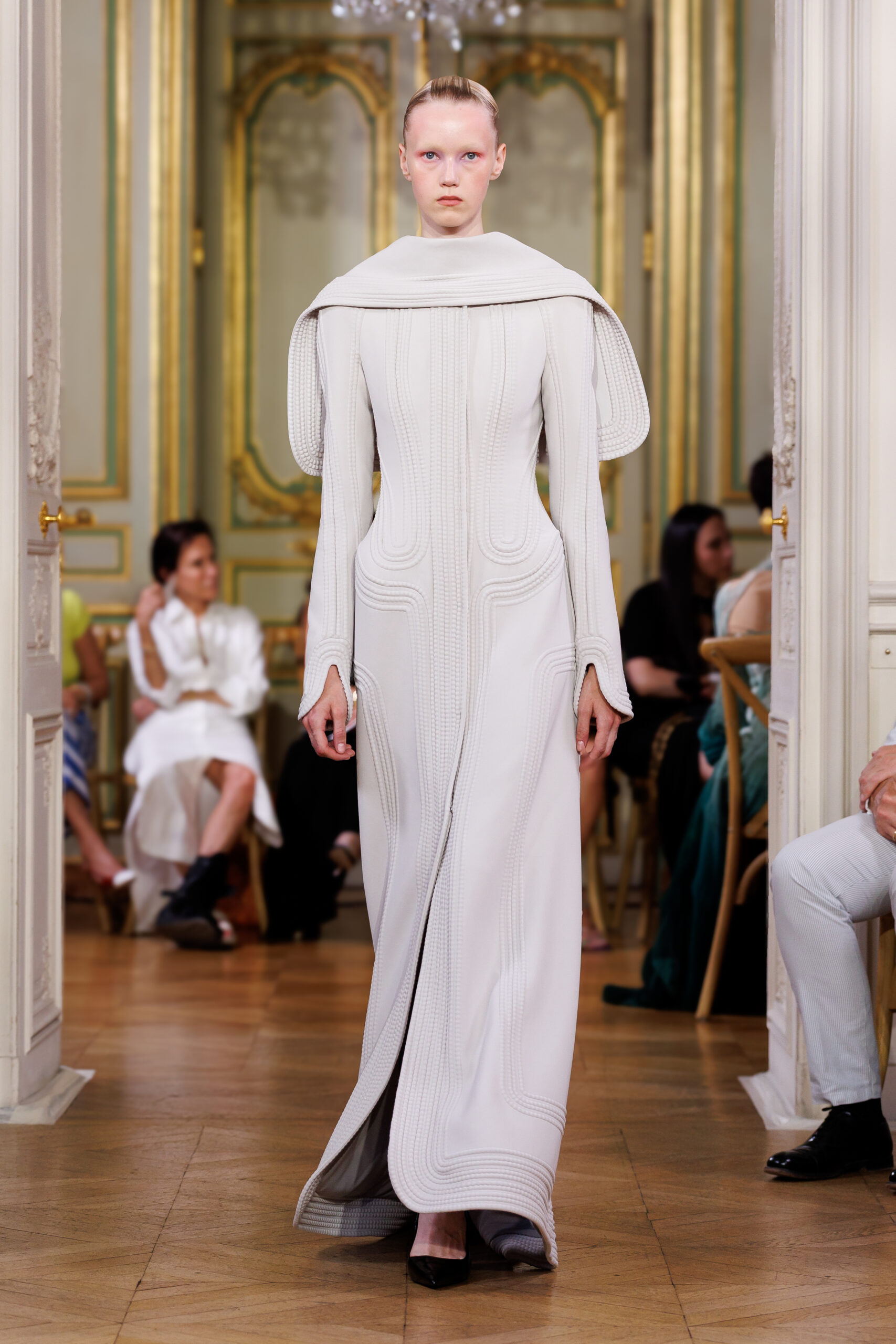
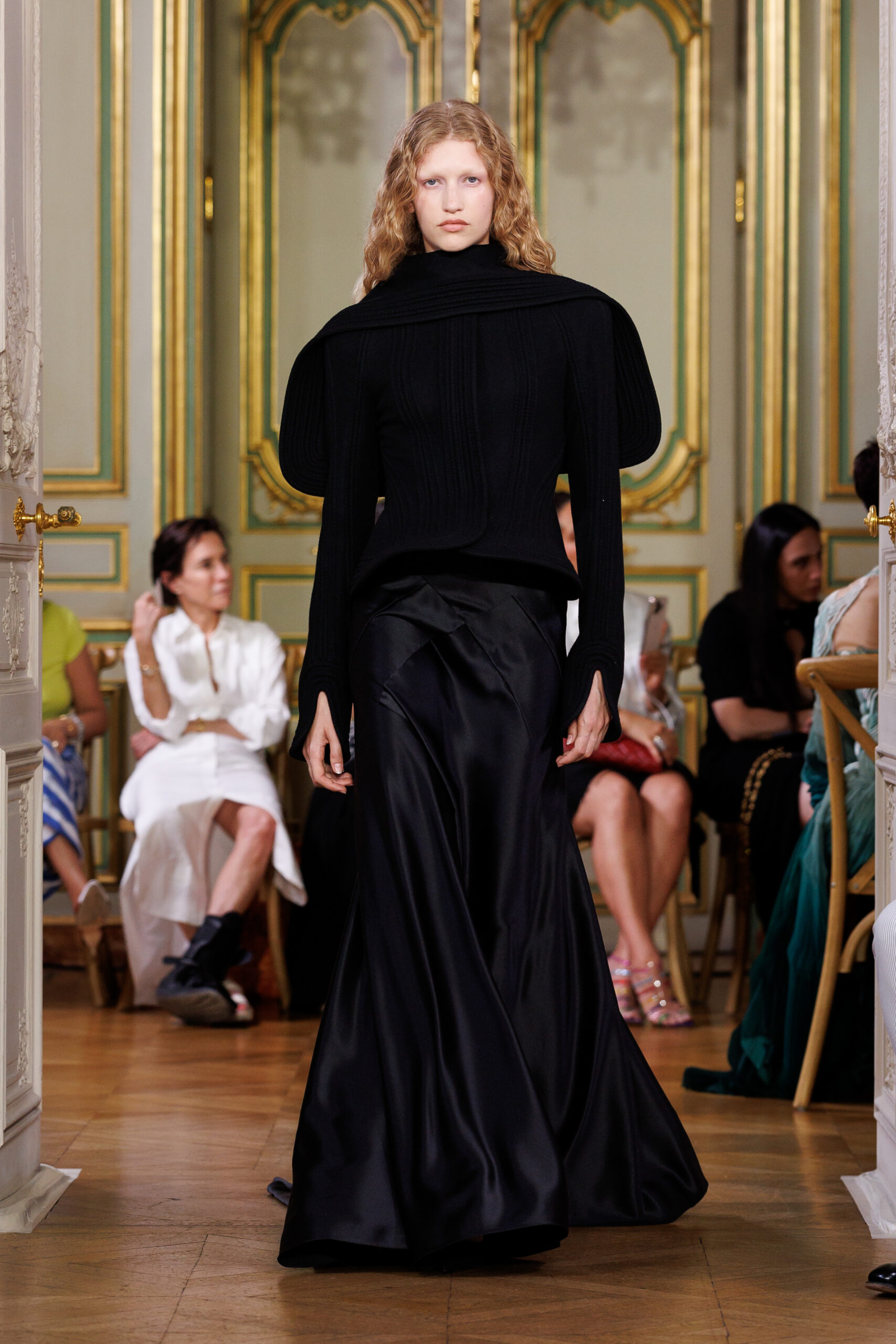
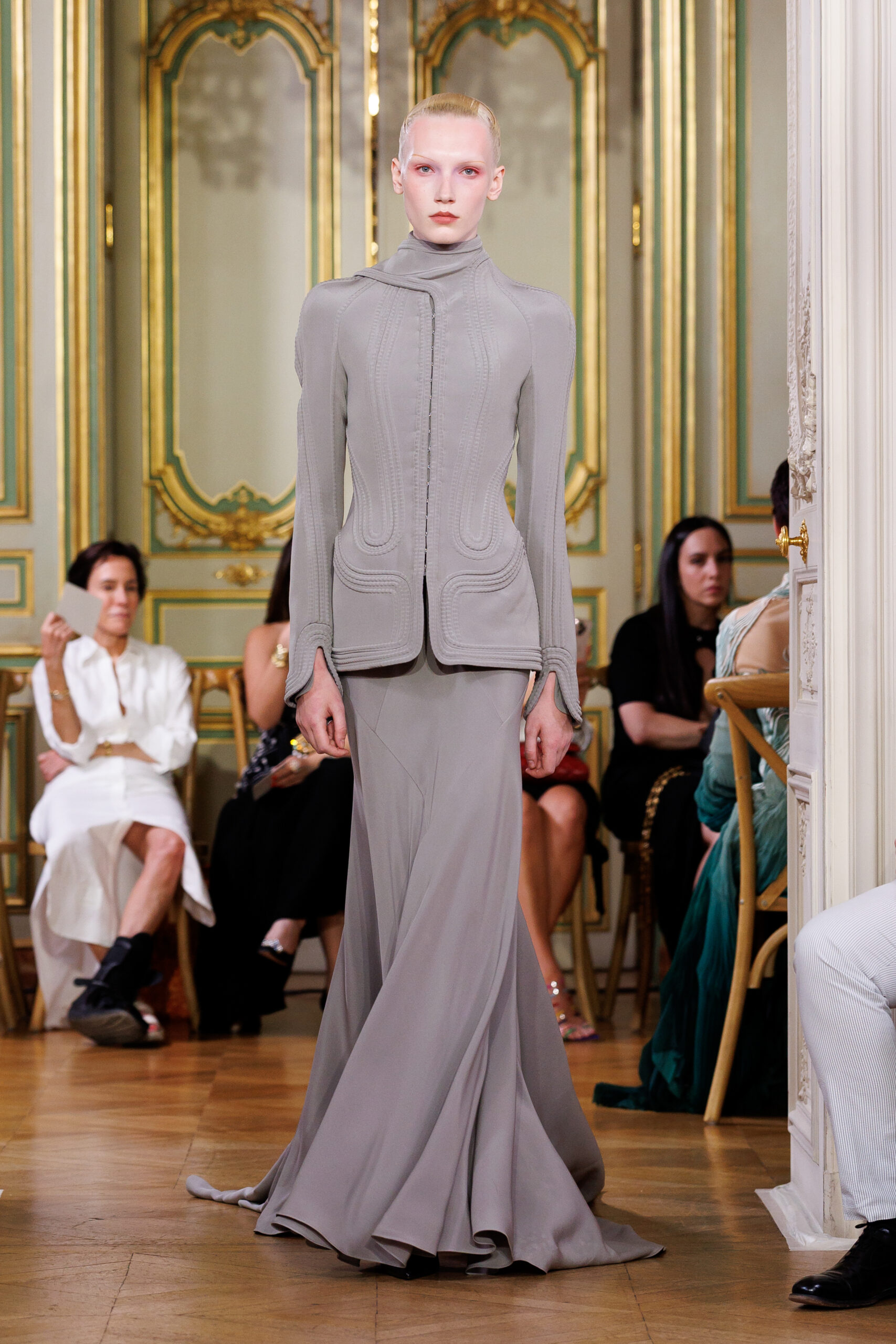
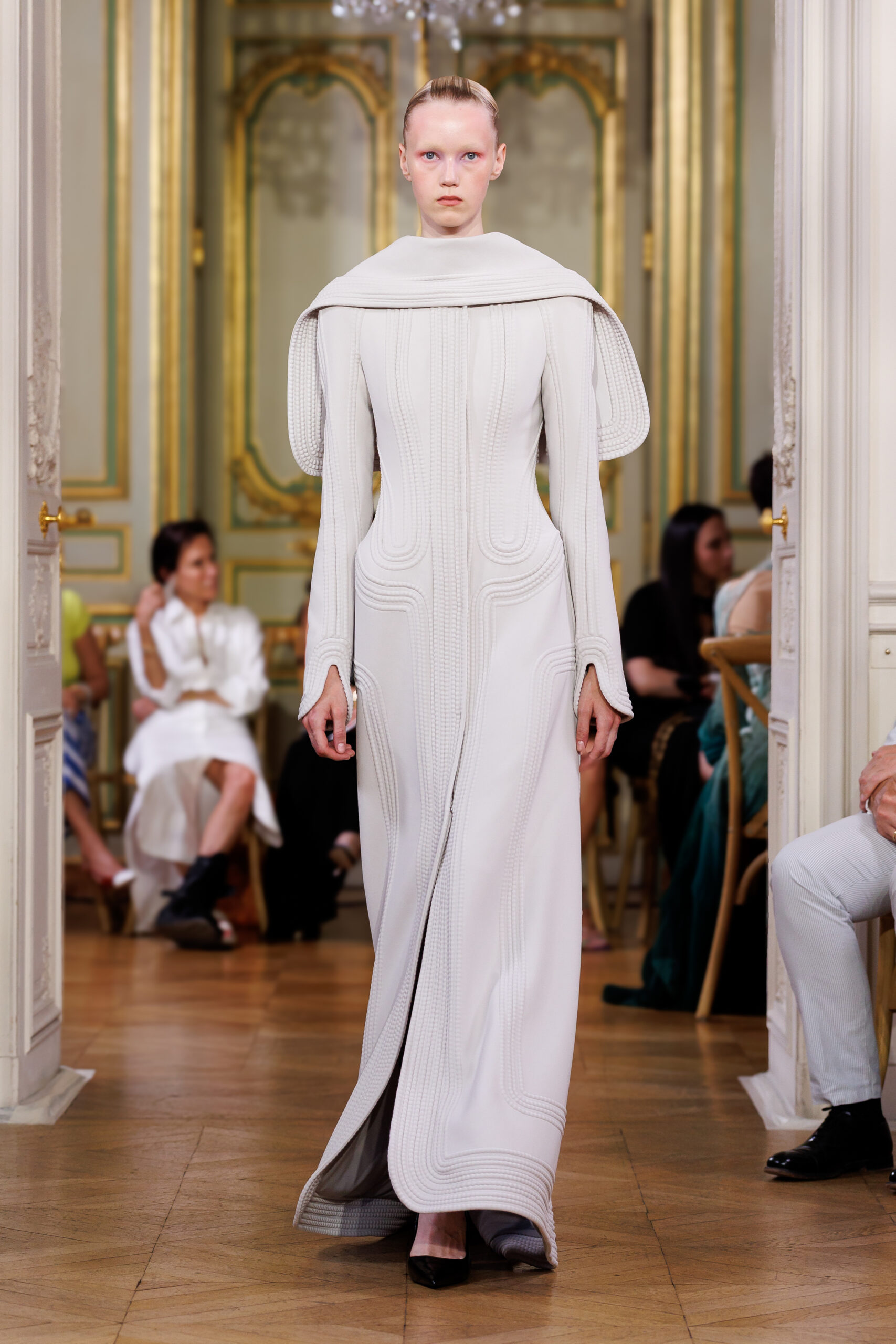
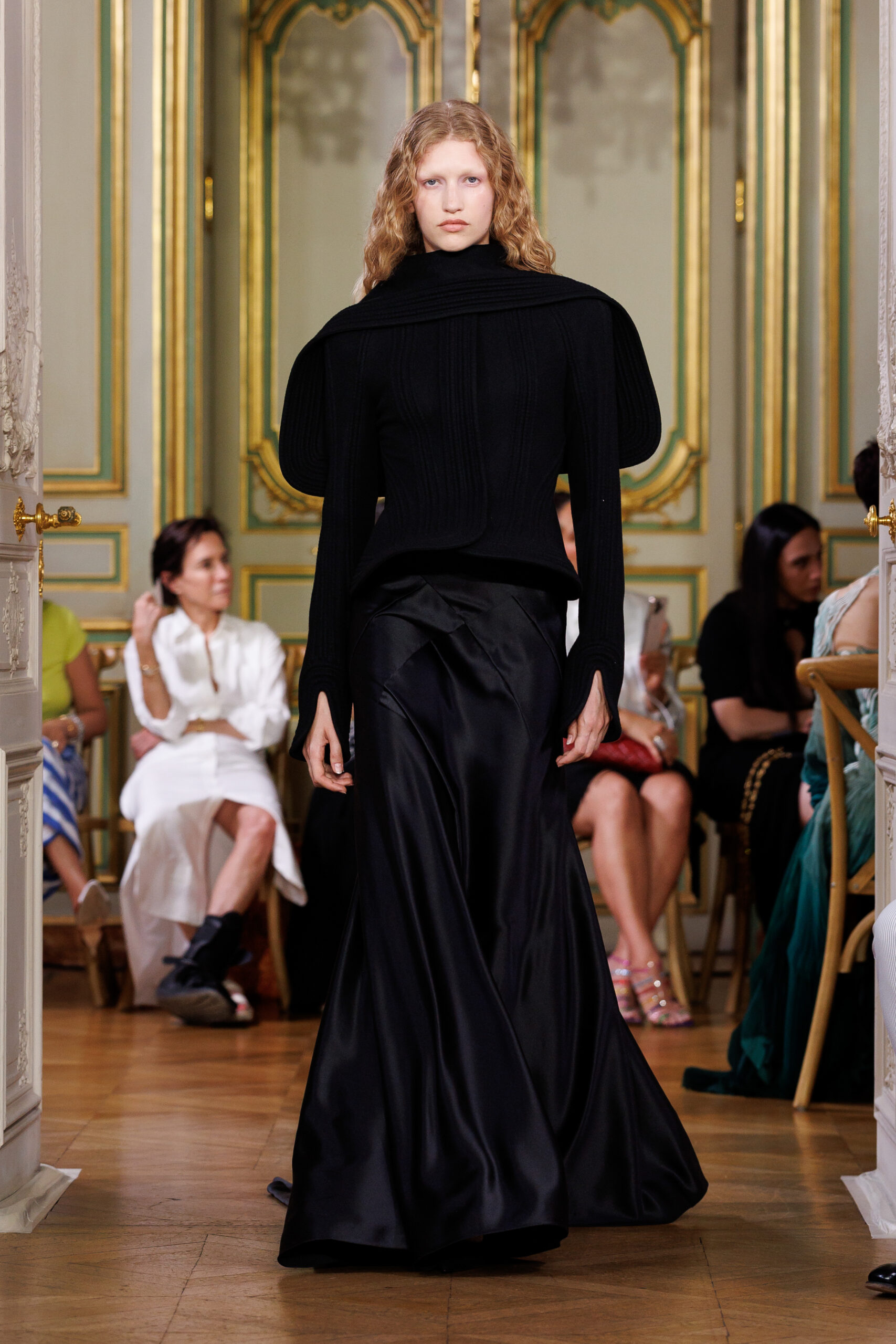
From the very beginning, Michael Stewart has drawn inspiration for this artistic language from standing stones—the menhirs scattered throughout the Irish countryside—silent remnants of a pre-Christian Ireland. Yet there is nothing literal about this reference on the runway: no stones are reproduced, no explicit folklore is invoked. The inspiration lies rather in the posture, the verticality, and the presence of the silhouettes, draped in the jersey that has become the house’s signature, whose seemingly straightforward lines are constantly interrupted by hand-beaded sections, controlled pleats, and variations in weight that evoke—without ever imitating—the eroded texture of a megalith.
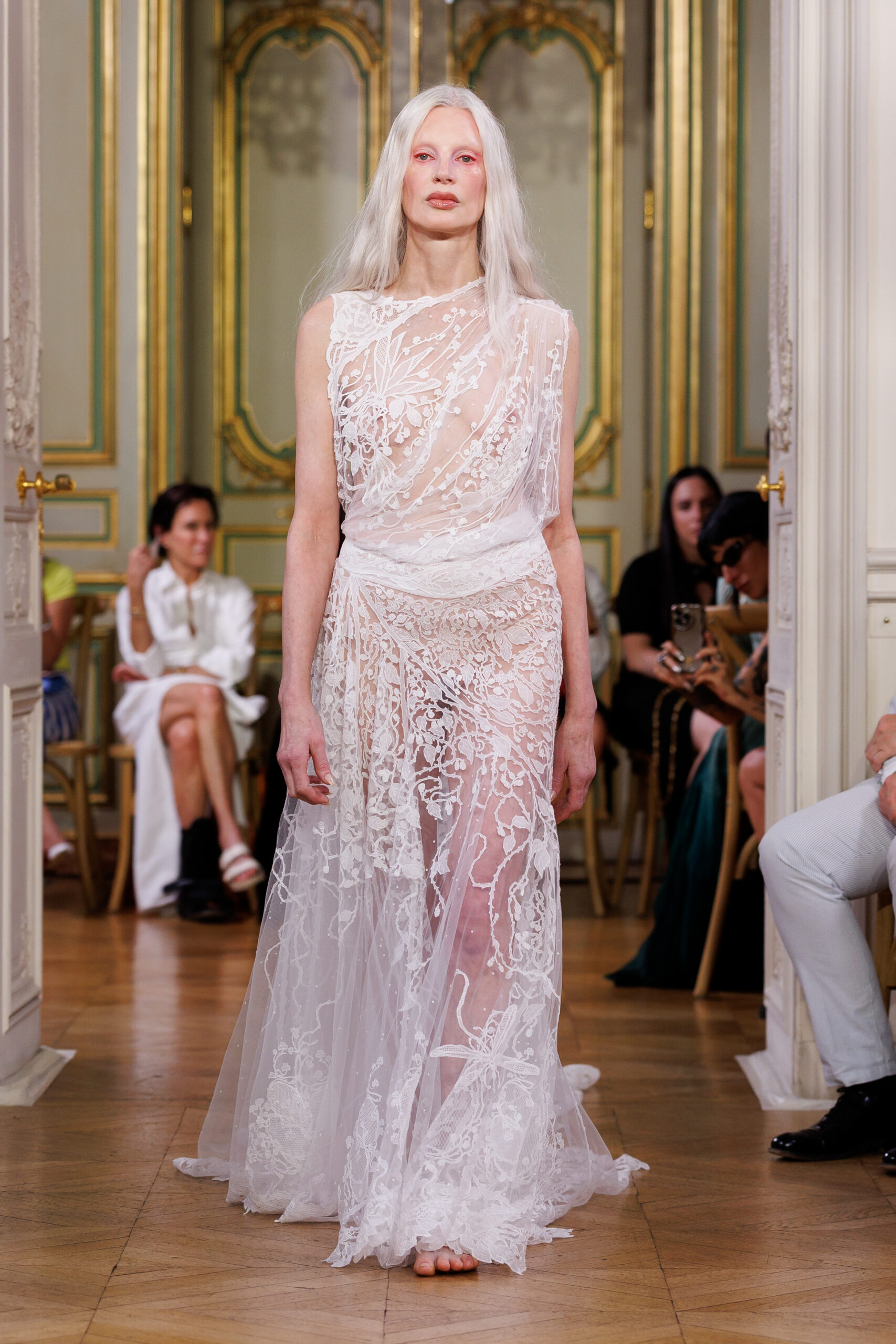
The highlight of the collection came, unsurprisingly, at the very end. Model Kristen McMenamy, barefoot, closed the show wearing a wedding dress made of Carrickmacross lace—a historic Irish craft—created by twenty-six artisans over four thousand hours of work. This choice is no coincidence: Carrickmacross lace, which originated in the nineteenth century in County Monaghan to provide an income for rural families during the Great Famine, embodies a story of survival as much as one of textile virtuosity. By having her walk the runway barefoot, without artifice, Stewart seems to be reminding us that this lace has never needed additional embellishments to assert its value.
The acknowledgments issued by the house at the end of the fashion show speak volumes about this approach: the Design & Crafts Council Ireland, the Heritage Council, and the lace makers of Carrickmacross are listed alongside more expected names from the Parisian luxury sector. Perhaps this is where the true boldness of this debut lies: bringing into the most codified and quintessentially French institution there is, a form of rural Irish craftsmanship long considered a minor art form—without ever turning it into folklore or watering it down to make it more palatable to a Parisian audience.
It remains to be seen whether Standing Ground will achieve permanent Haute Couture status in the coming seasons. But one thing already seems certain: from its very first appearance, the house has raised a question that few dare to ask so directly—how many regional traditions of craftsmanship elsewhere in Europe are still waiting their turn to be recognized for their true worth?
Cette publication est également disponible en :

