
The Capel Rosso Lighthouse, restored by the Mura sisters on Isola del Giglio, is hosting the third edition of its literary festival: readings, a concert, and an intimate experience in the heart of a UNESCO biosphere reserve.
A lighthouse built in 1883, now a place of hospitality
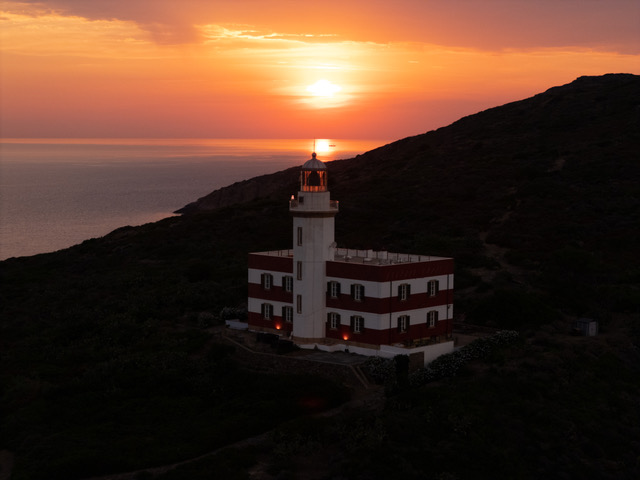
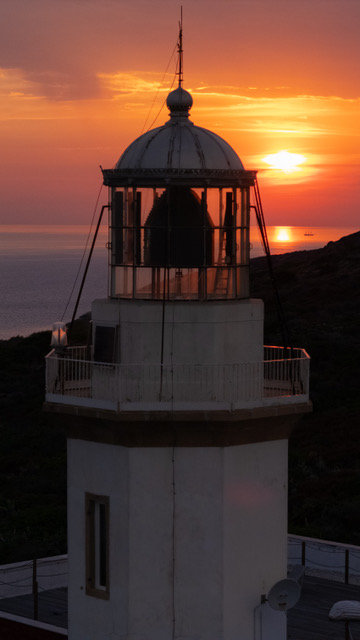
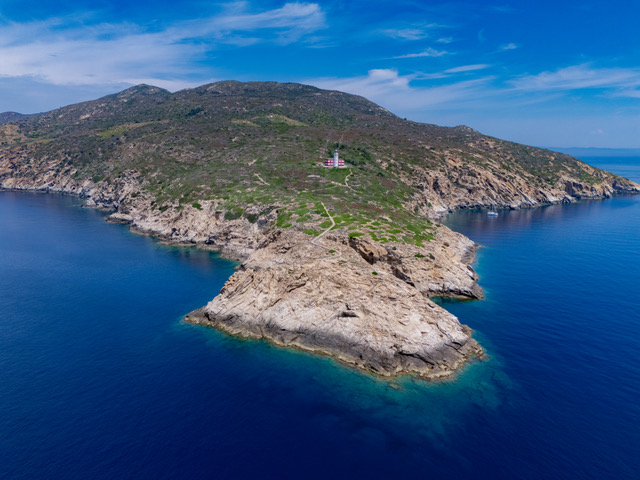
Opened in 1883, the Capel Rosso lighthouse was restored in 2021 by the Mura sisters, who transformed it into an intimate hospitality destination on Isola del Giglio, a Tuscan islet designated a biosphere reserve by UNESCO’s MAB program. The restoration preserved the building’s maritime character while opening it up to a use that its original architecture did not anticipate: welcoming guests, rather than merely signaling the coast to ships.
It is within this framework that, for the third consecutive year, a literary festival is being held—one designed on the scale of the venue rather than as a mass event: a maximum of forty participants, a format that transforms the rarity of access into an integral part of the experience.
A program centered on the voice and the text
The program features authors Diego Ponzin and Silvia Ugolotti, as well as a concert-reading led by actress Daniela Morozzi and musician Stefano “Cocco” Cantini, a leading figure in Tuscan jazz. This combination of literary readings and live musical performance gives the festival the feel of a recital rather than a traditional author event, where the text is heard as much as it is discussed.
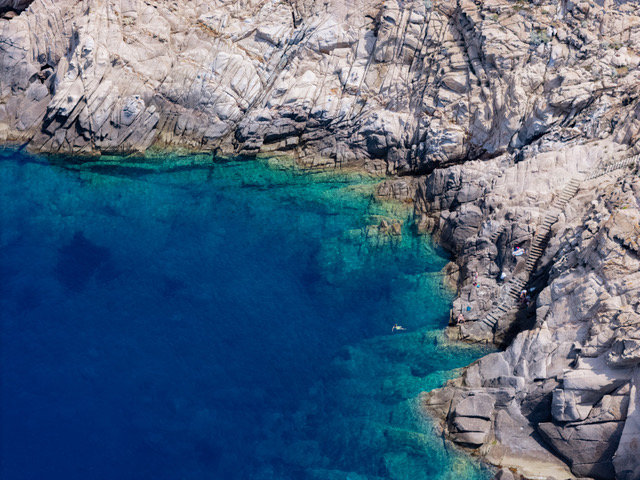
The choice of the lighthouse as a stage rather than merely a backdrop changes the nature of the listening experience: the rotating light, the sound of the sea, and the isolation of the rocky headland become active elements of the staging—elements that would be difficult to replicate at any other cultural venue along the Tuscan coast.
Hospitality as a Prerequisite for the Experience
A stay at the lighthouse for this occasion starts at 800 euros per night, a rate that places Capel Rosso in the realm of rare hospitality rather than that of a traditional vacation rental. The number of available rooms—necessarily limited by the building’s original architecture—explains the cap of forty participants and makes the stay itself part of the program, just like the readings.
This approach—which balances the venue’s size, heritage requirements, and limited access—sets Capel Rosso apart from literary festivals held in halls or gardens rented for the occasion: here, the venue cannot be expanded to accommodate more people, which means the festival must remain true to its original scale.
A model that reframes the issue of cultural access
At a time when a large part of the summer cultural scene seeks to maximize attendance, Capel Rosso takes the opposite approach by building its value on exclusivity rather than audience size. This choice is not unique to the literary world: it is part of a broader trend in Italian heritage hospitality, where venues with inherently limited capacity—lighthouses, towers, restored hermitages—become cultural venues precisely because they cannot be transformed into traditional performance venues.
This third edition also confirms a fundamental trend in Mediterranean hospitality: heritage restoration is no longer limited to creating guest rooms; it is giving rise to editorial and cultural formats that would not exist without the architectural constraints of the site. The lighthouse is not merely a backdrop rented for the occasion—it is, quite literally, the architect of the festival’s format.
Details
Capel Rosso Lighthouse, Isola del Giglio (Tuscany): opened in 1883, restored in 2021 by the Mura sisters. UNESCO MAB Biosphere Reserve. Festival limited to 40 participants; stays starting at 800 euros per night.
By refusing to expand its capacity to meet demand, the Capel Rosso Festival raises a question that few cultural events along the Tuscan coast dare to ask so directly: Is limited access an editorial choice, or the only possible response to a venue that cannot be scaled up?
Cette publication est également disponible en :

