
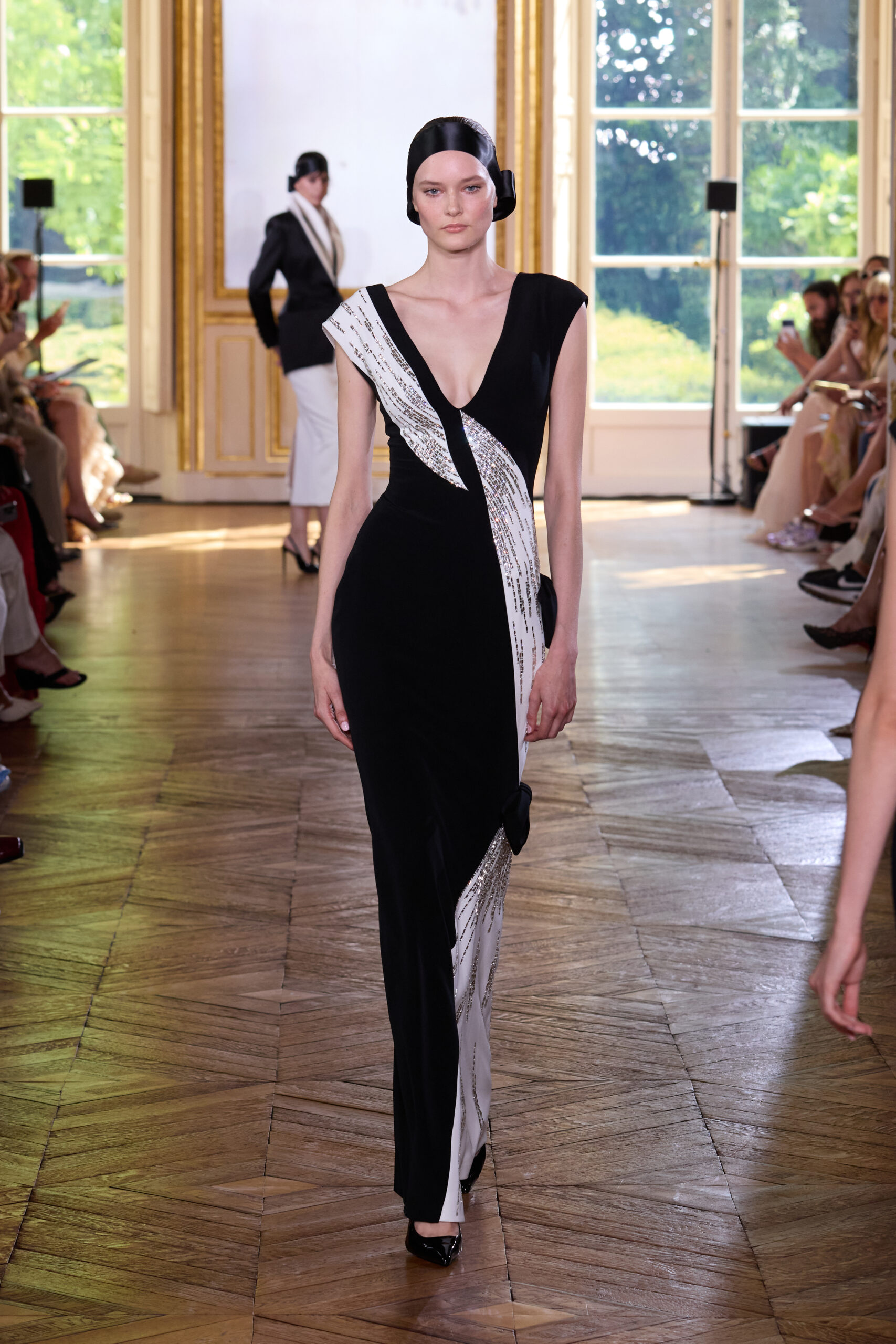
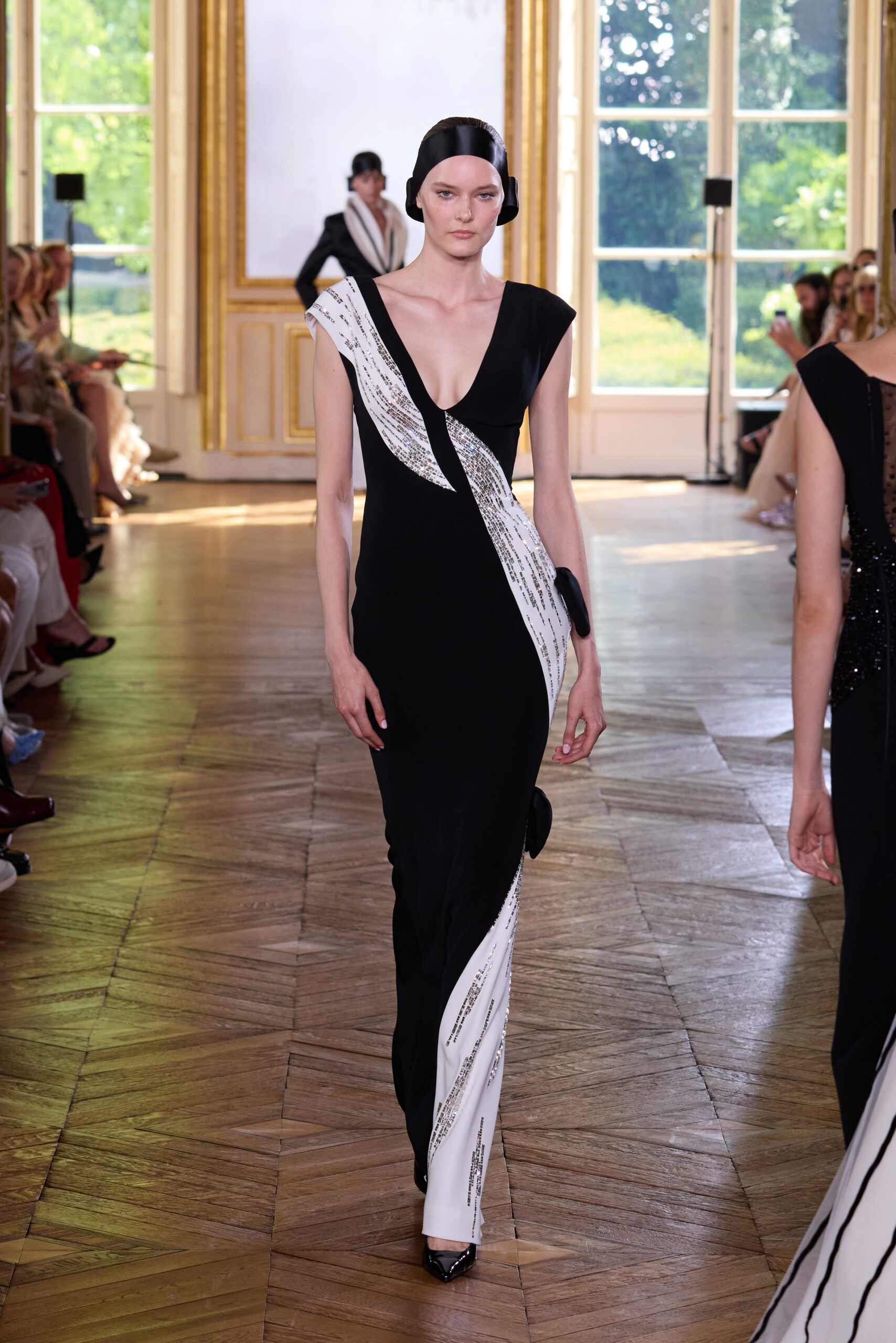
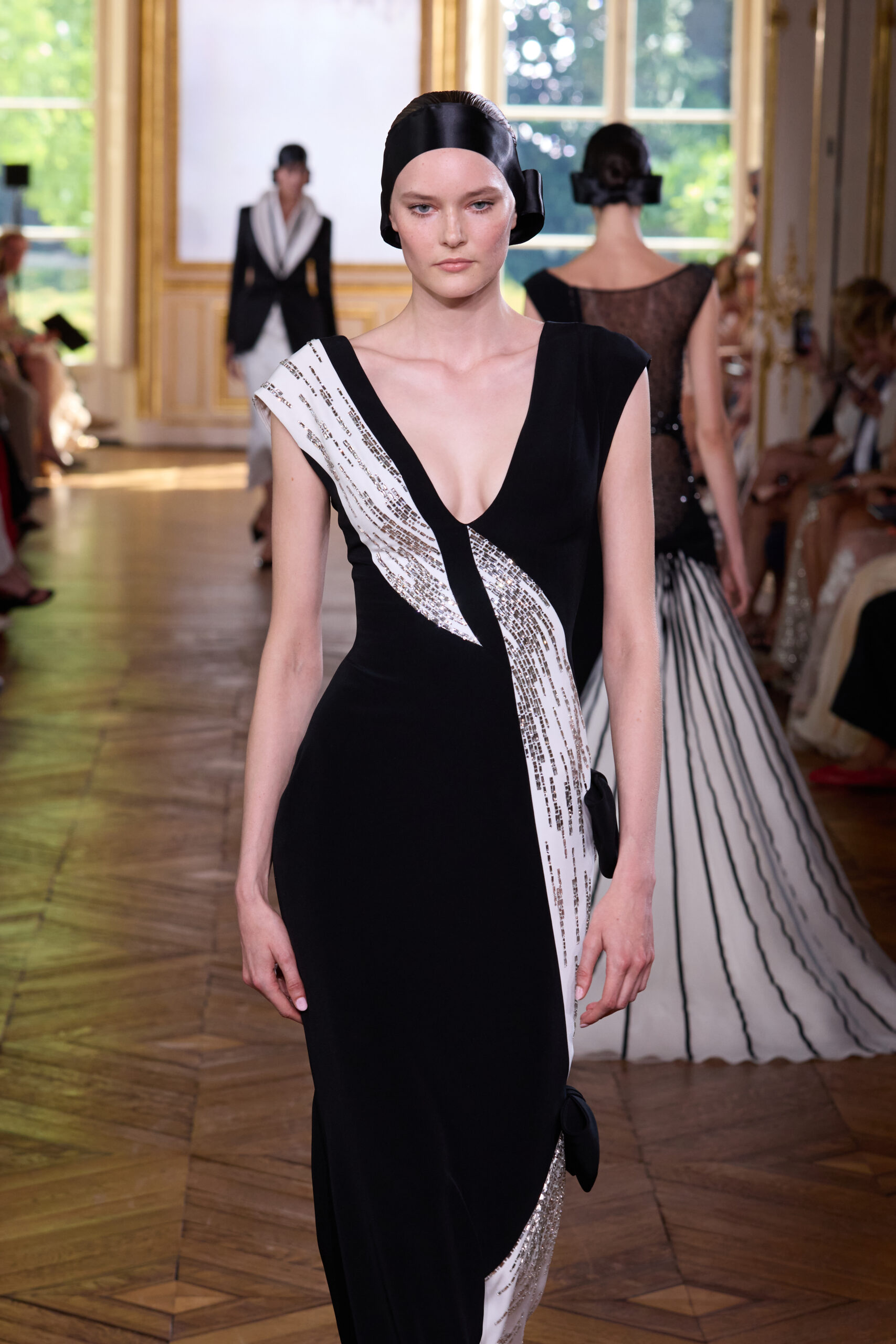
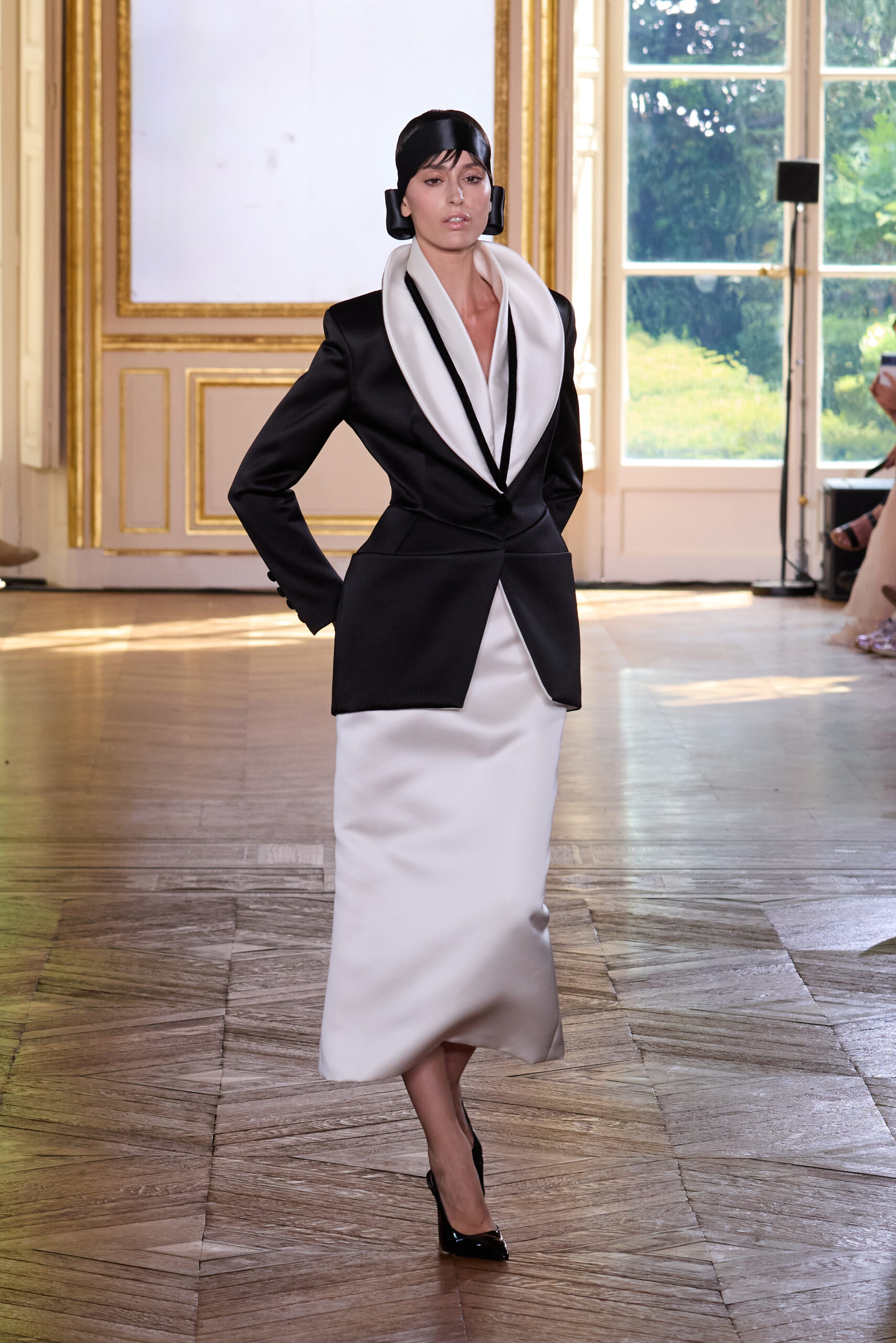
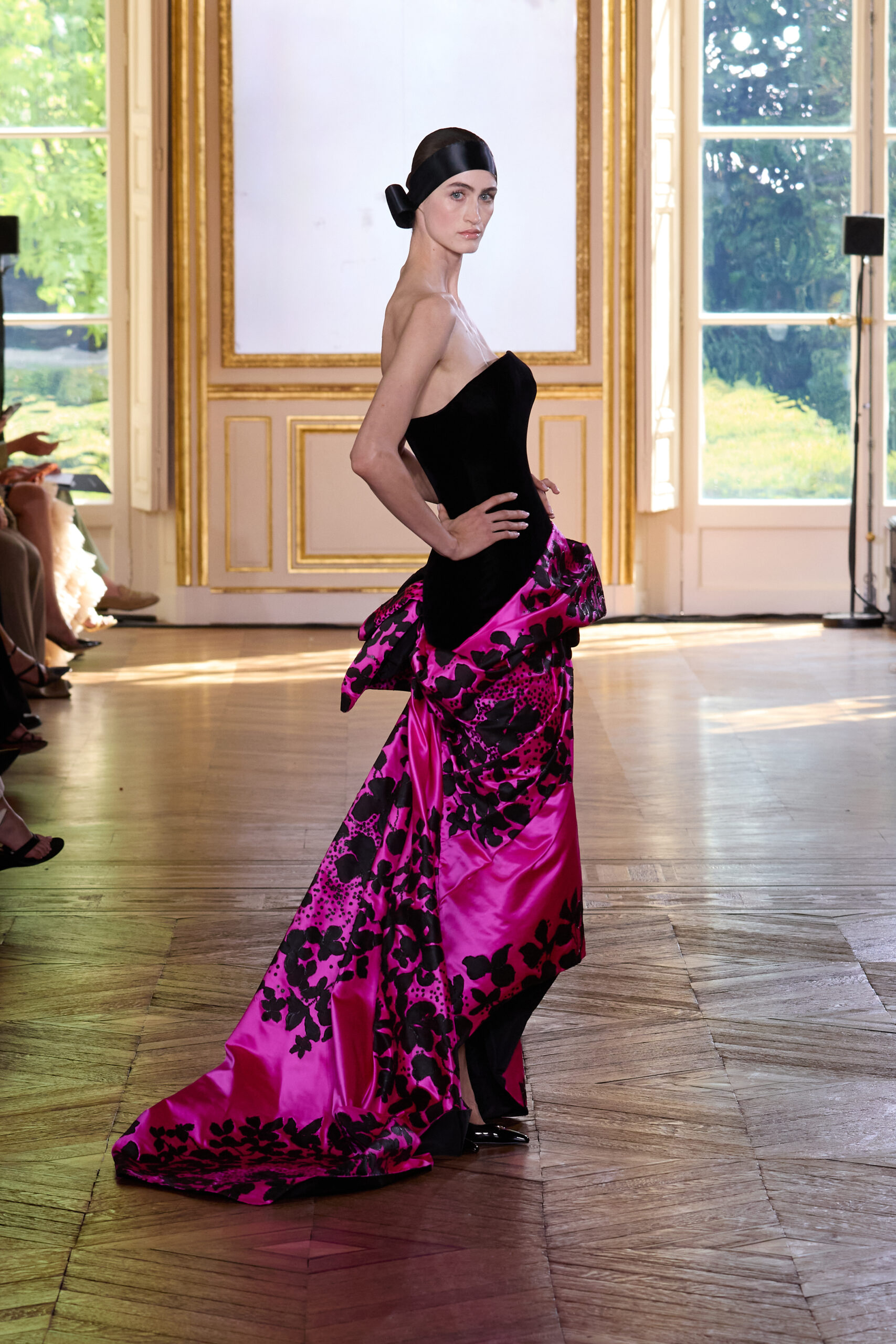
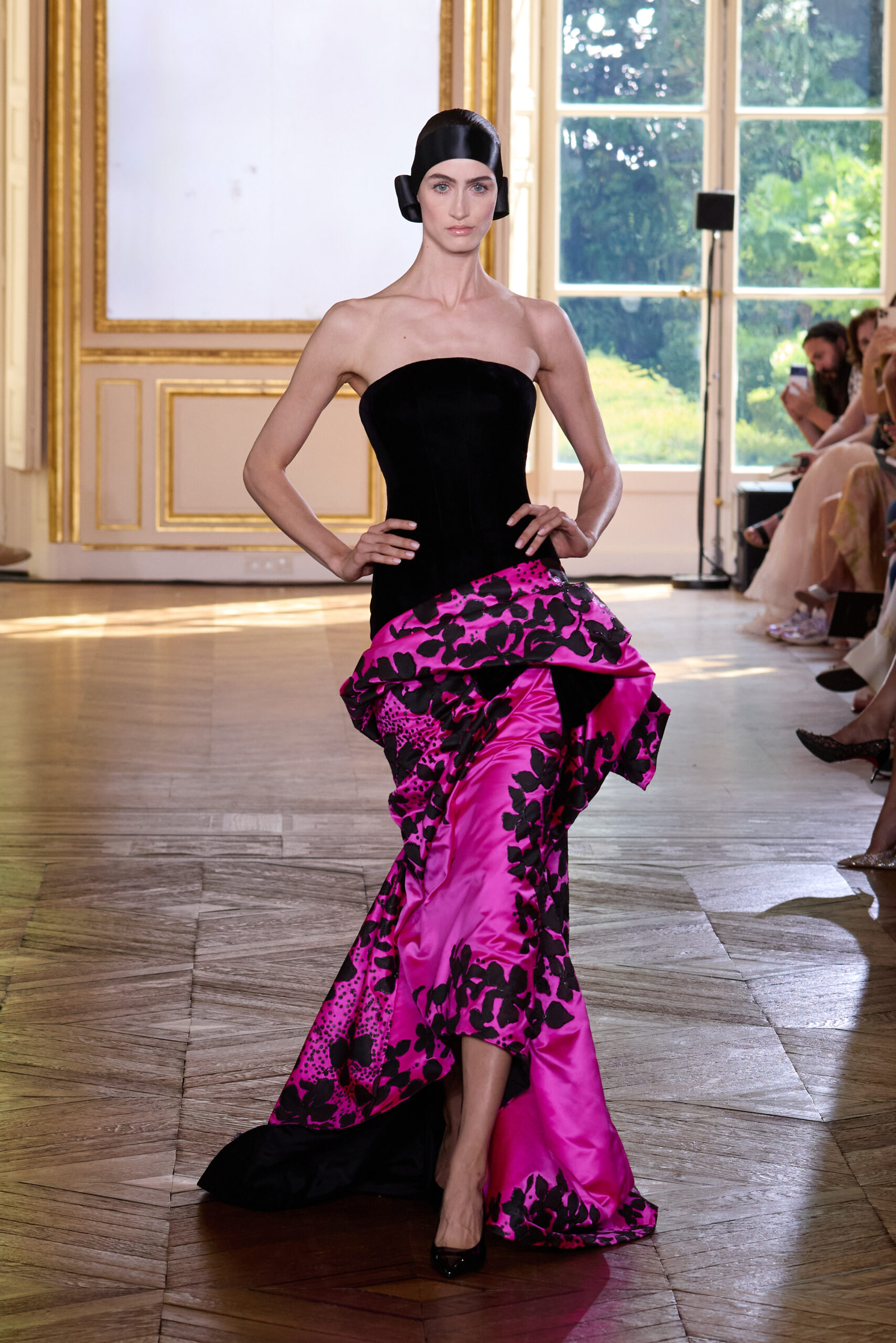
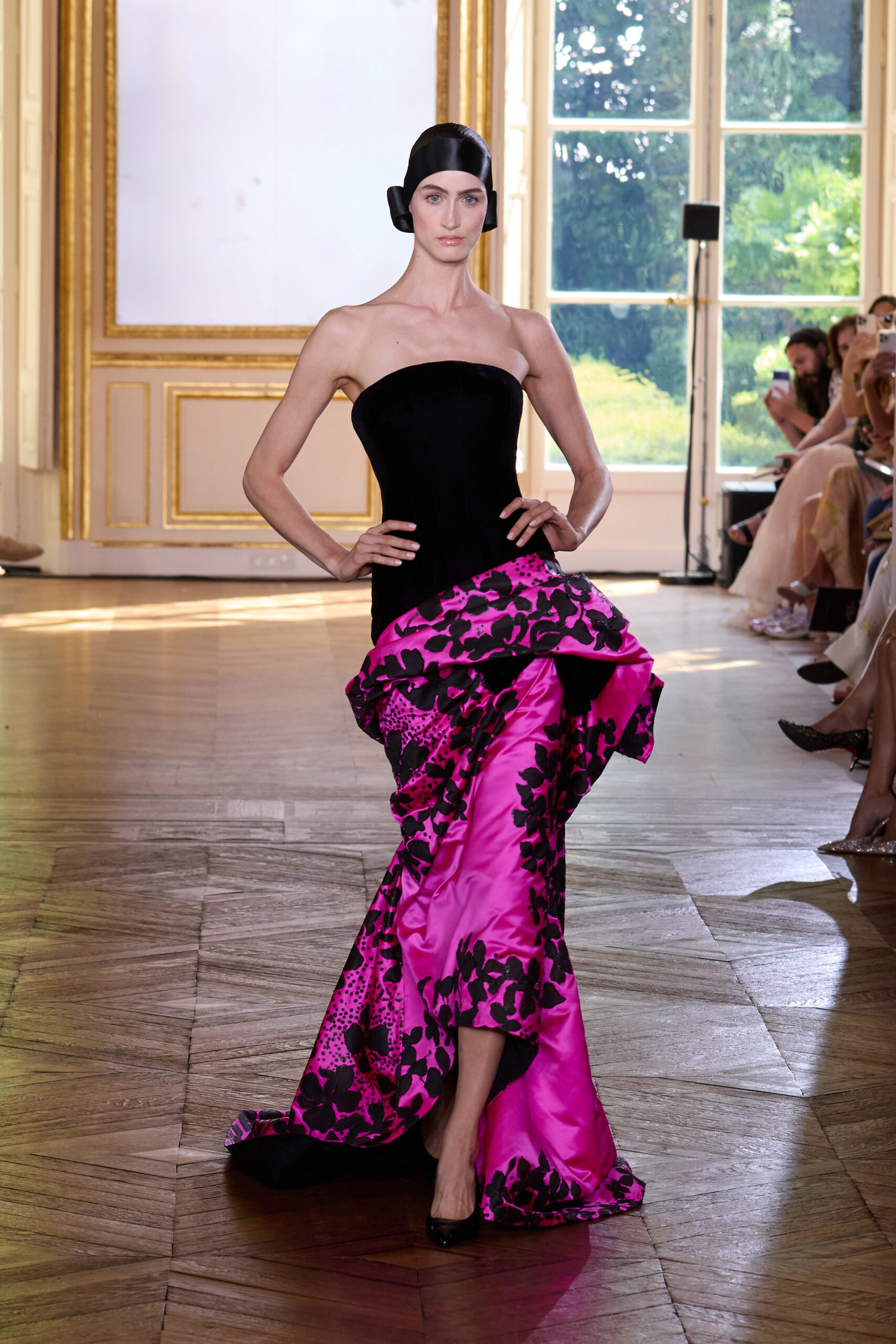
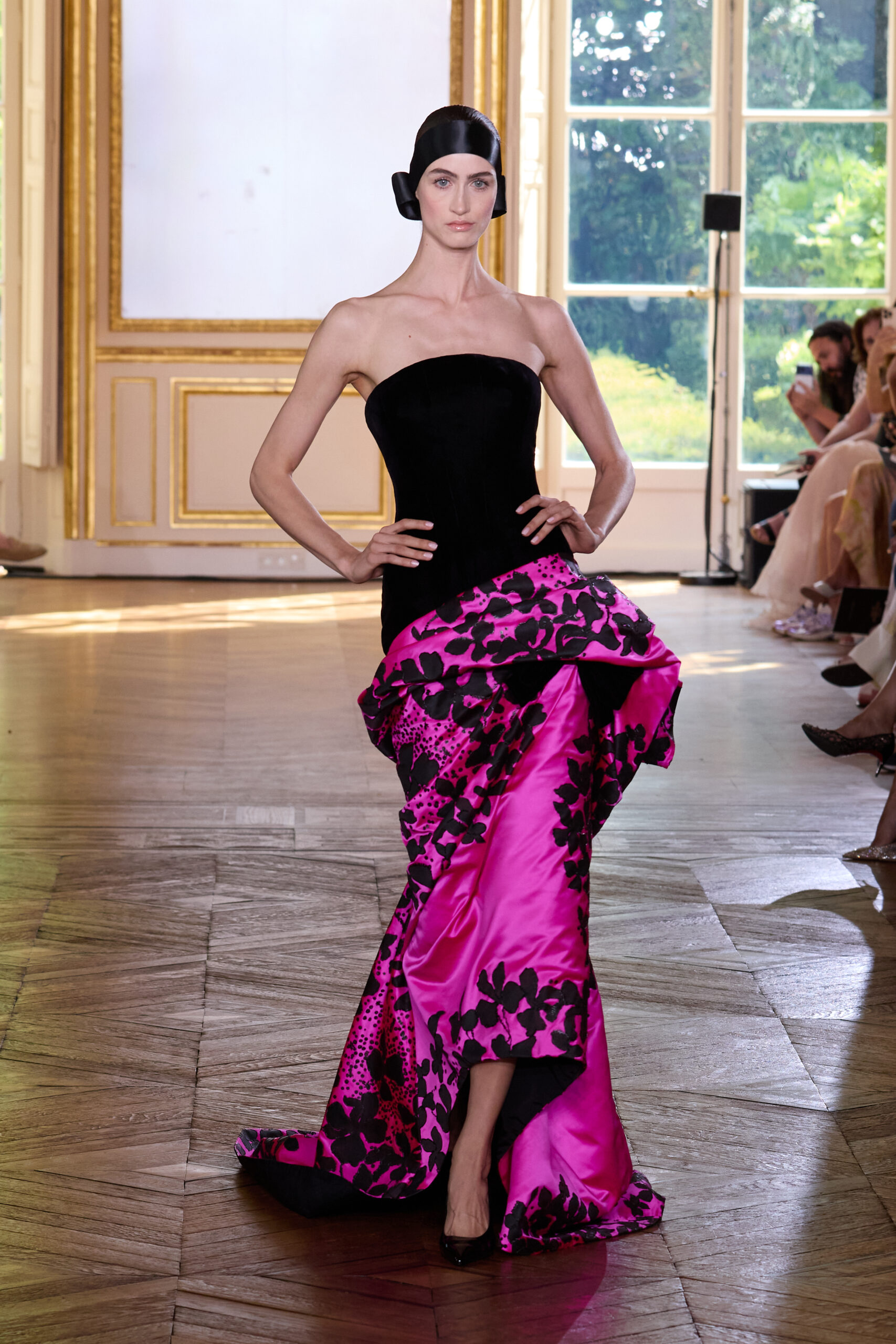
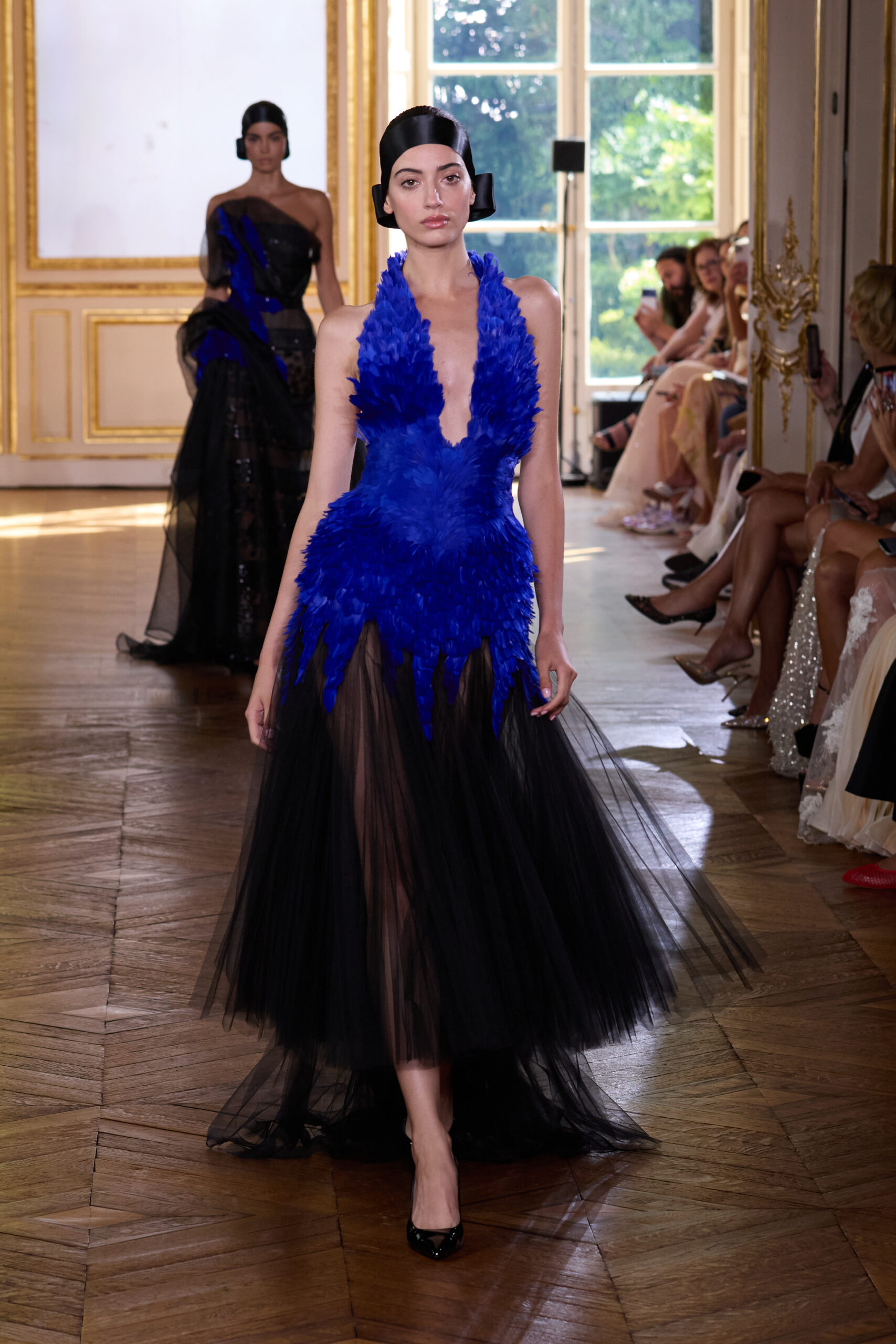
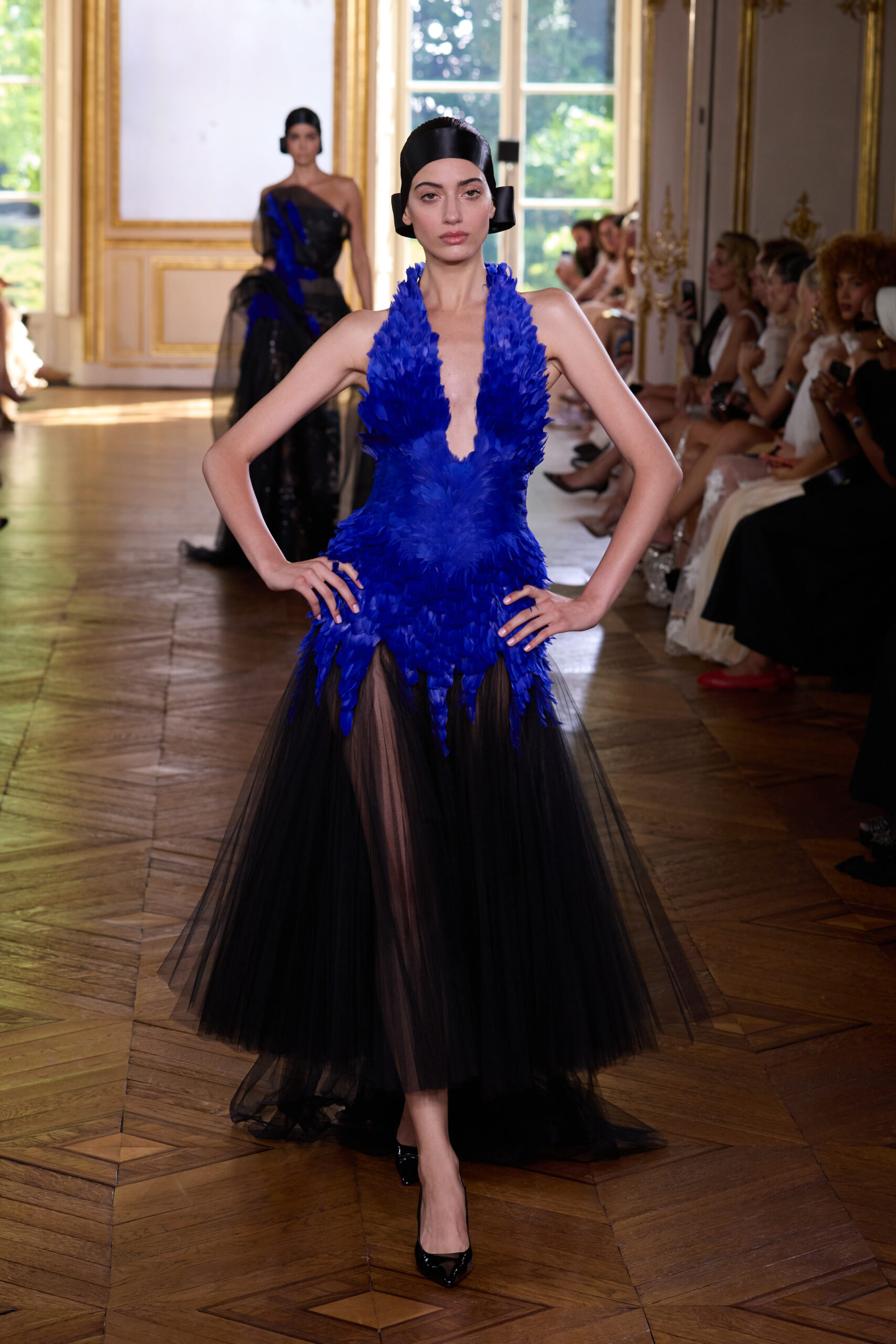
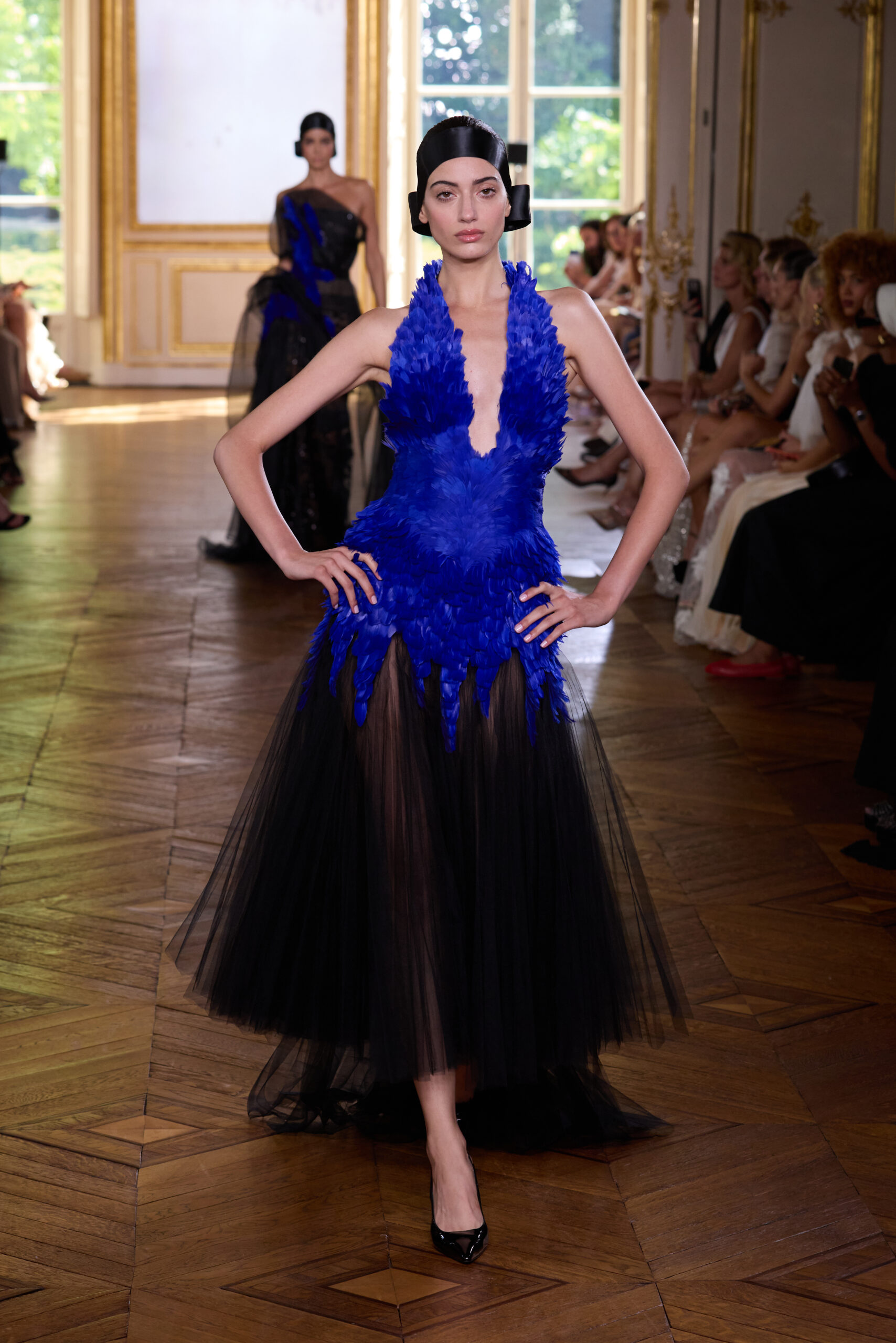
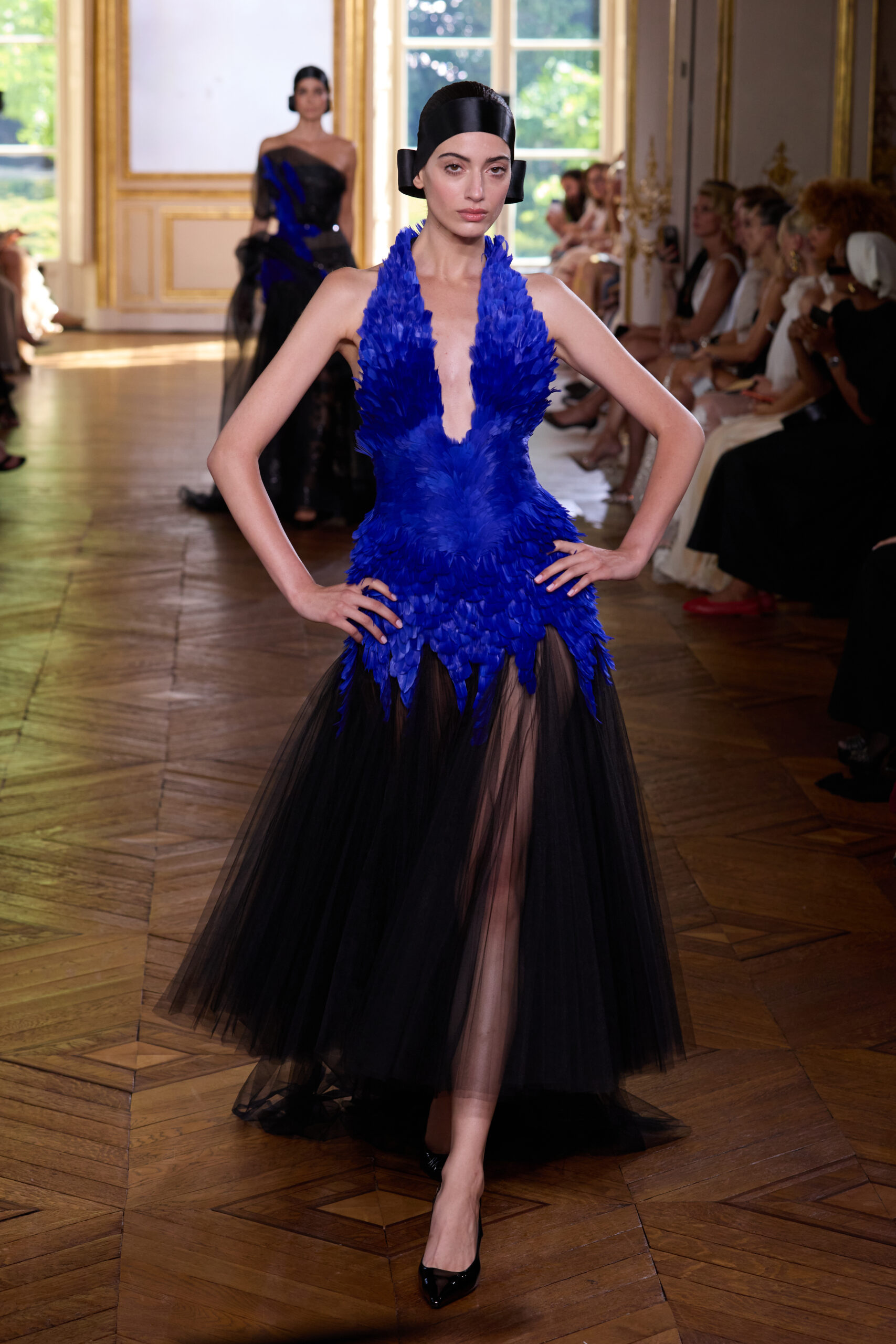
A haute couture dress usually hides its boning, lacing, and the structure that holds it together. For Fall-Winter 2026/2027, Georges Chakra does the opposite: he turns the garment inside out like a glove and reveals what, until then, had always remained invisible. Beneath this aesthetic gesture lies a more melancholic meditation on desire.
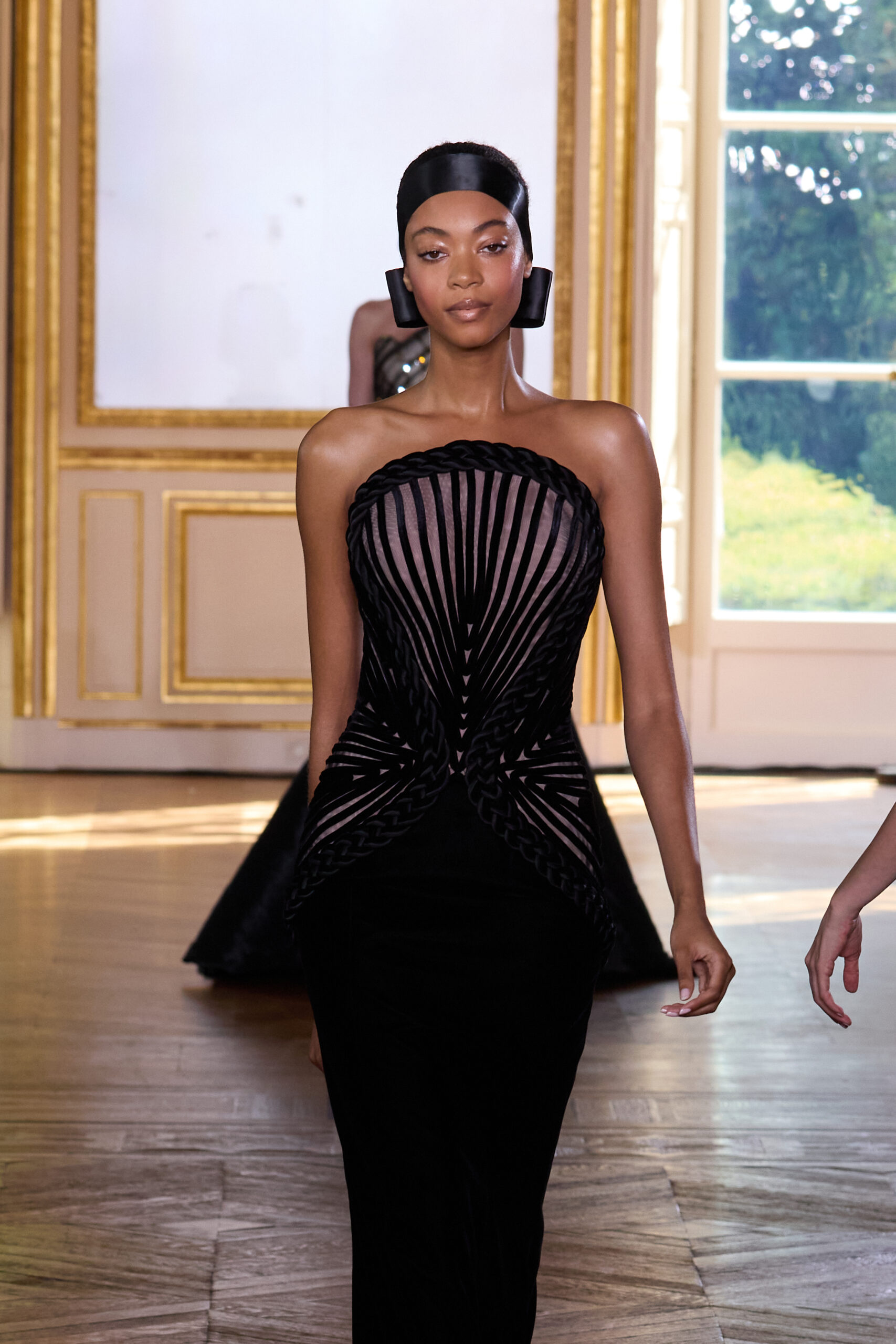
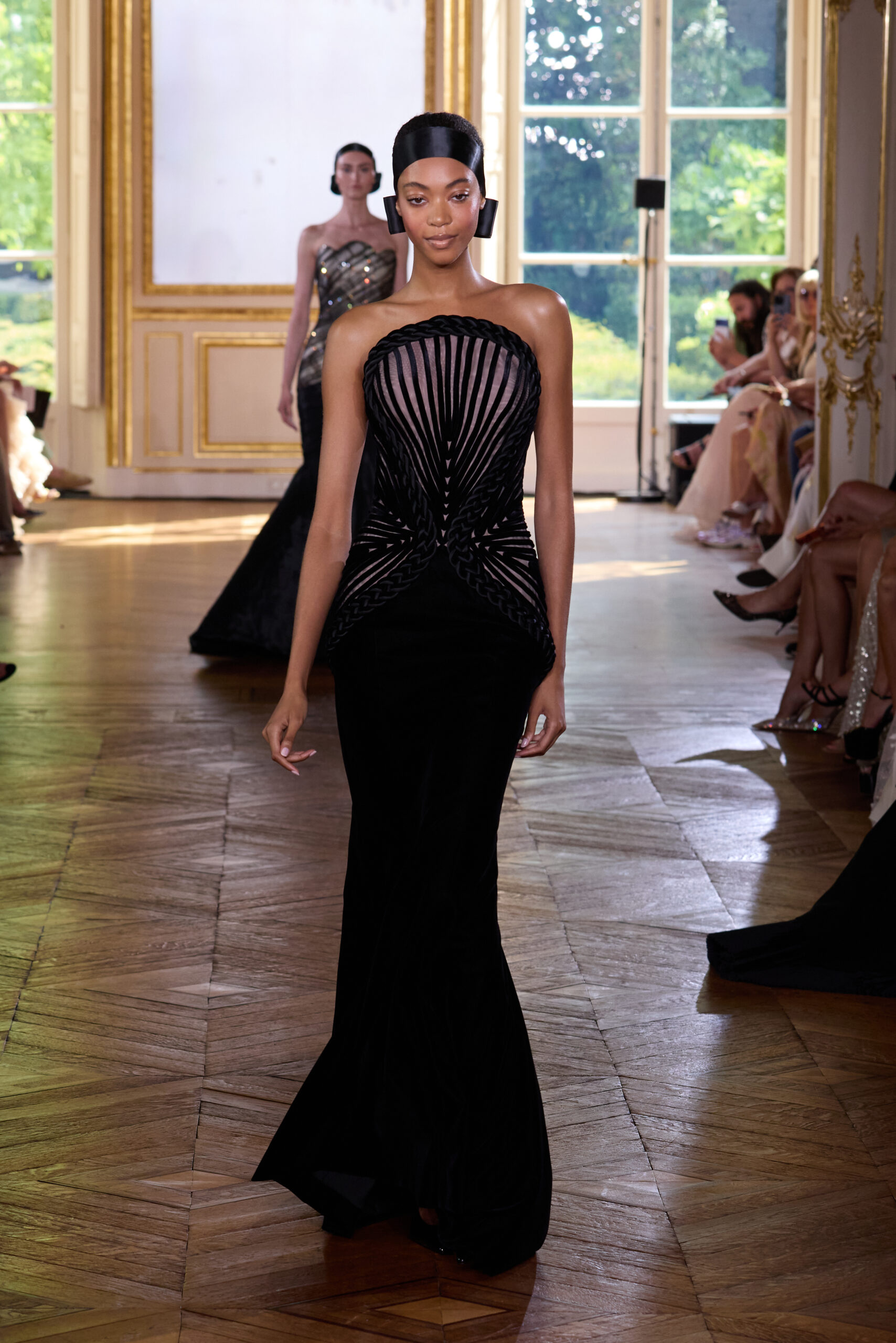
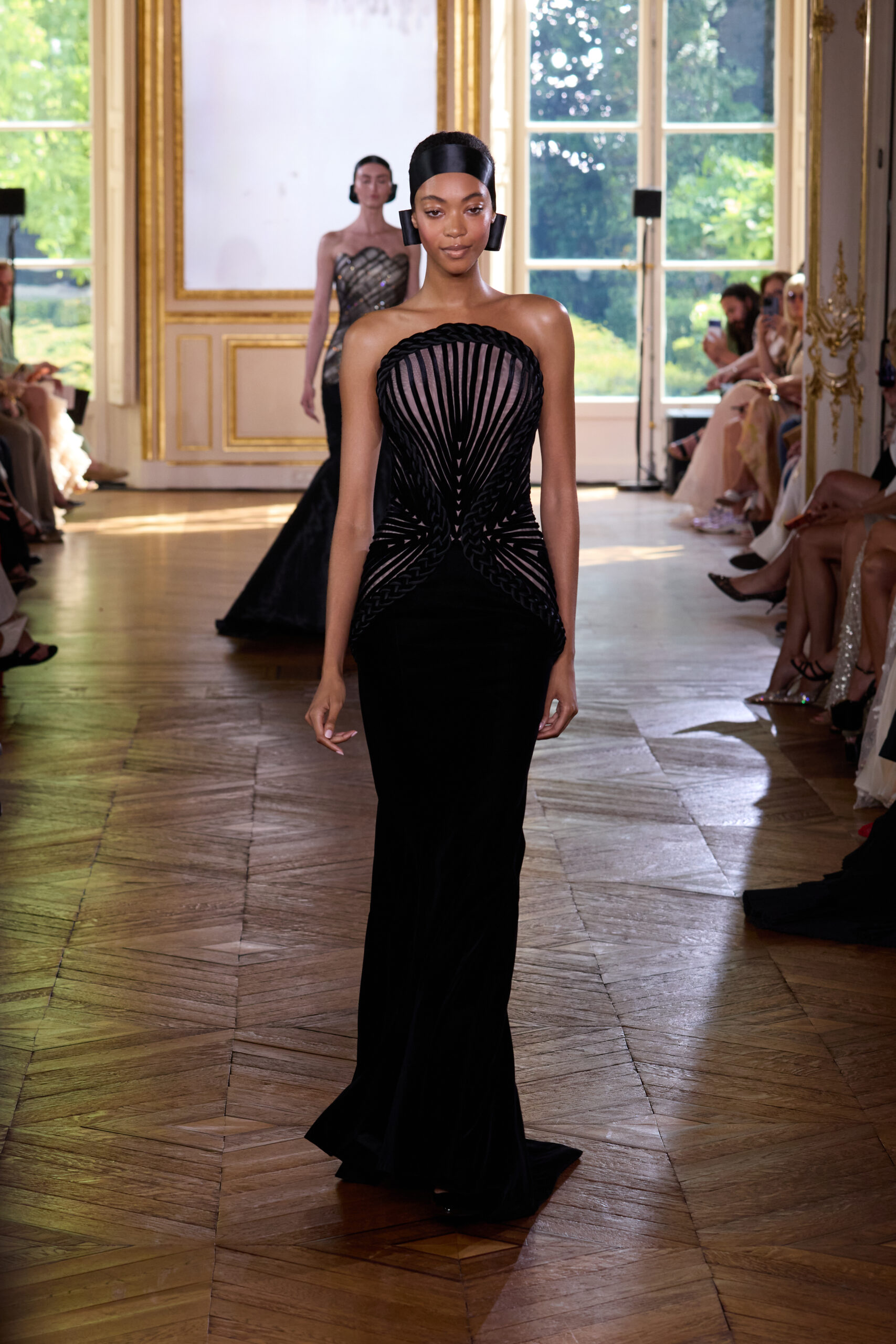
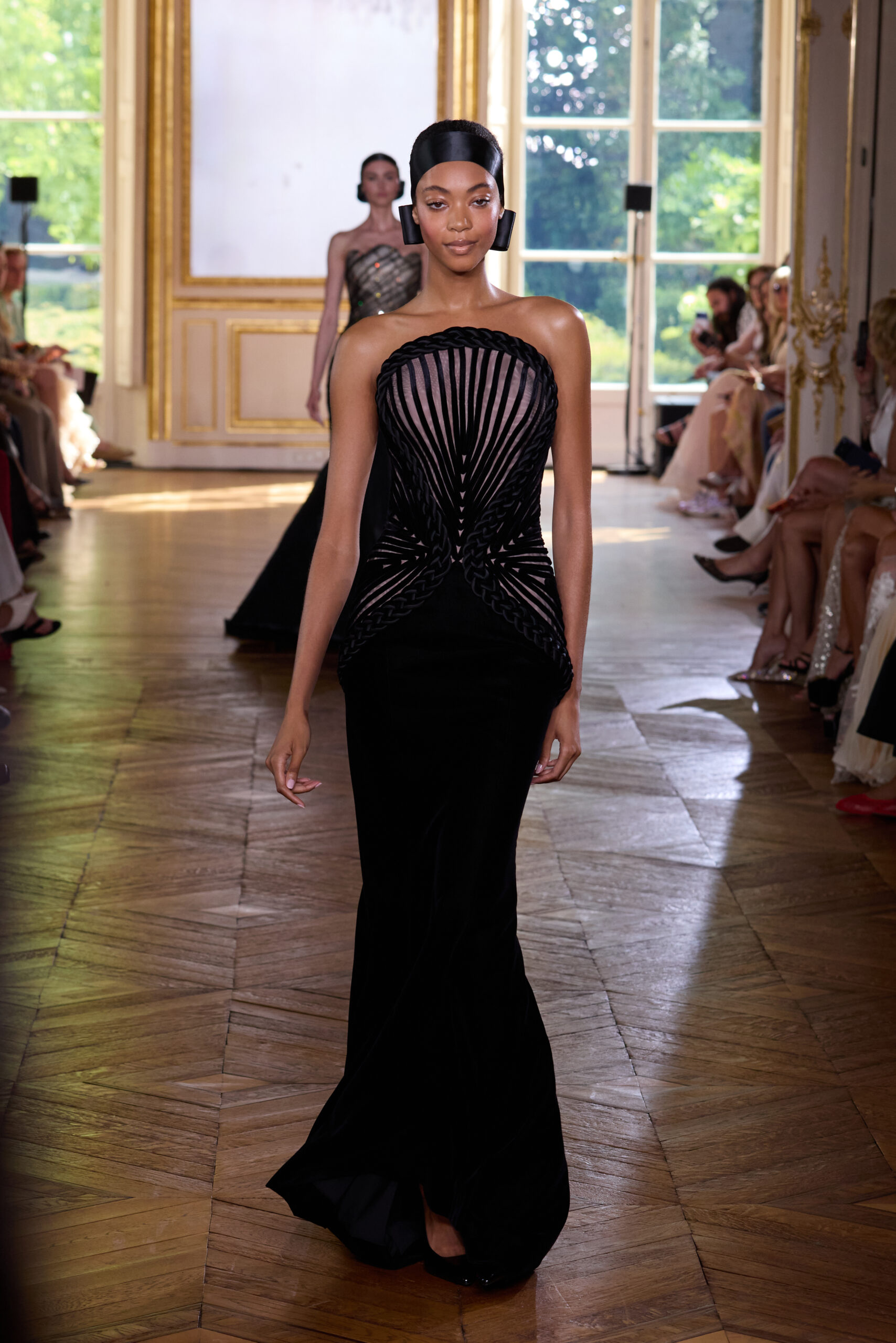
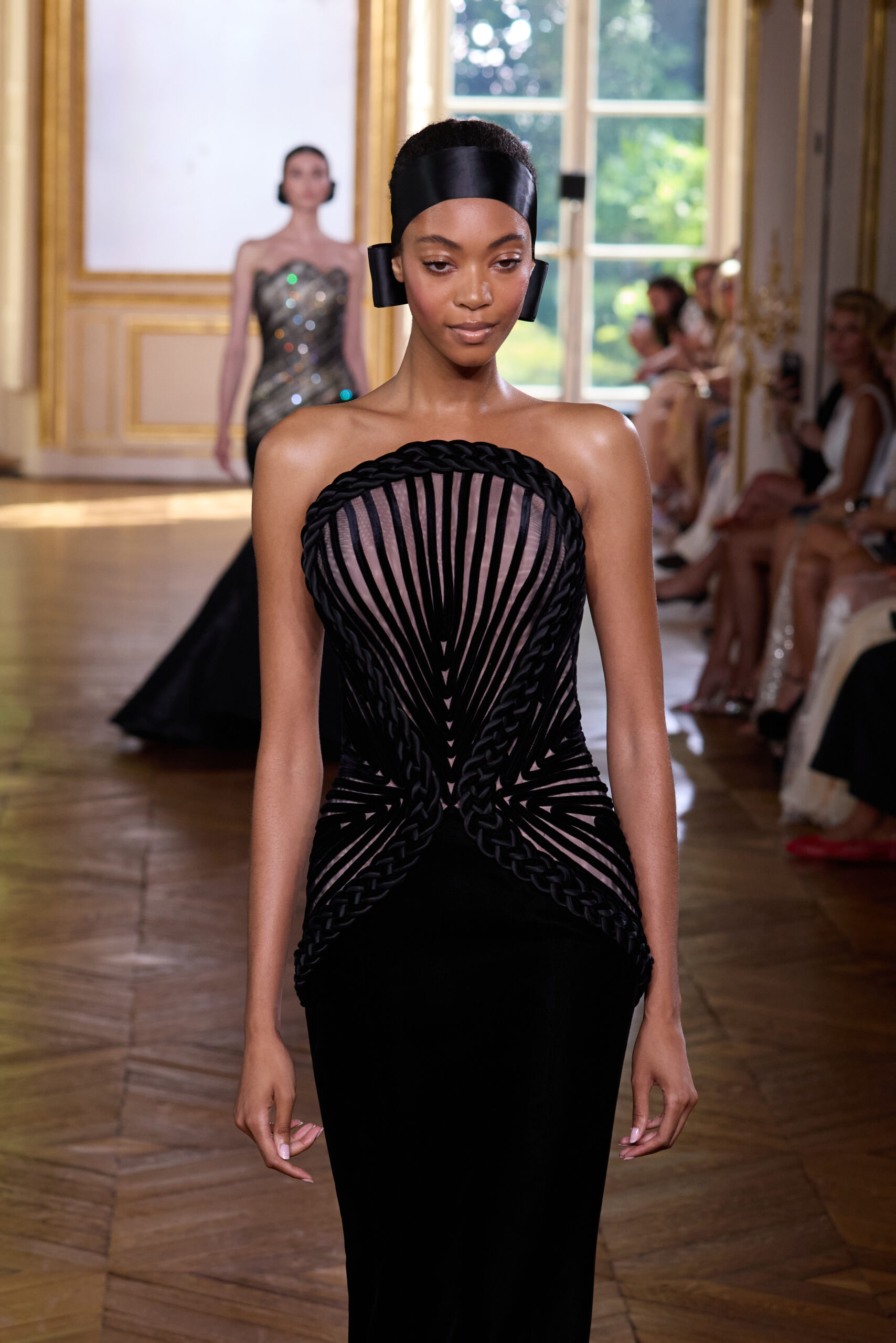
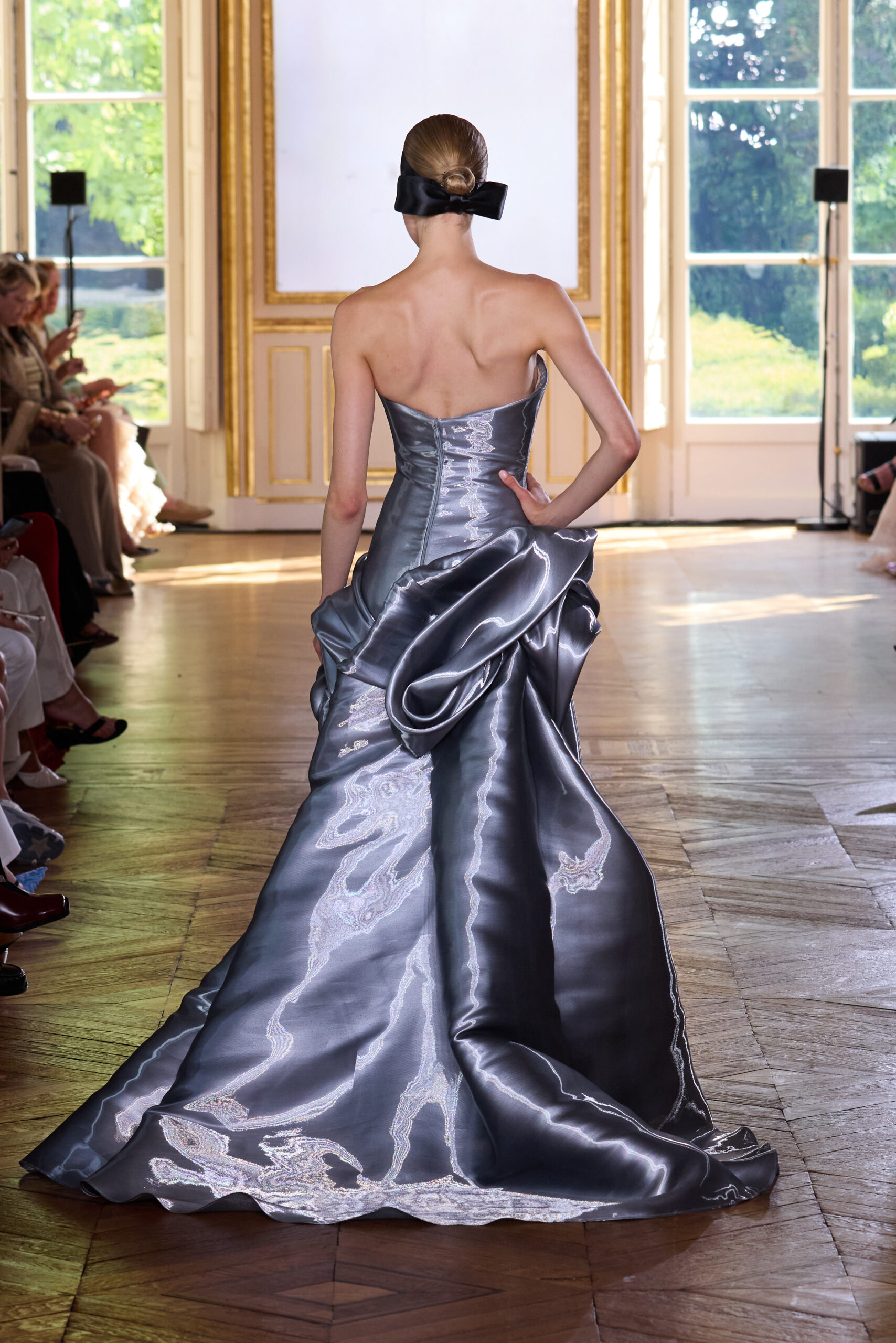
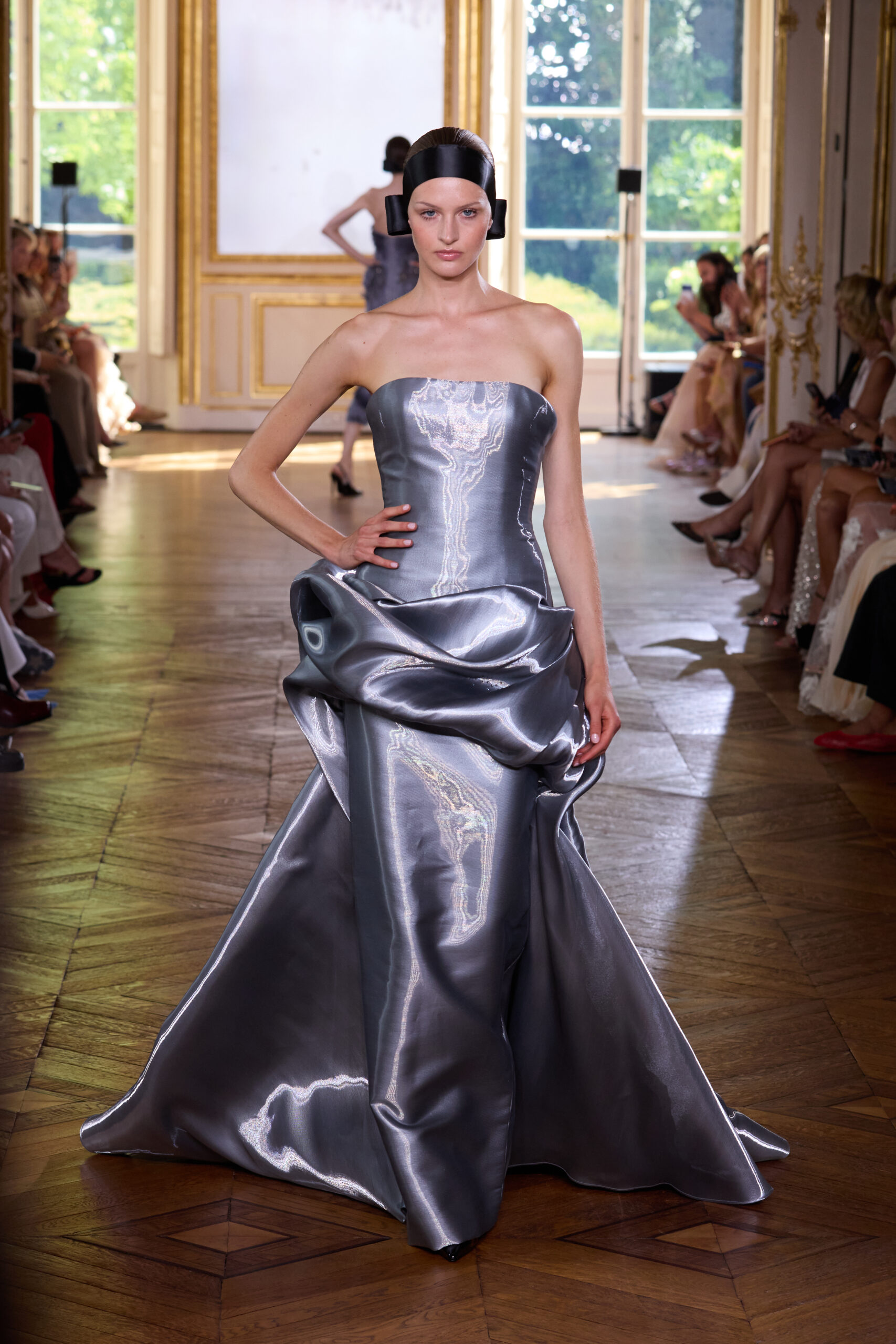
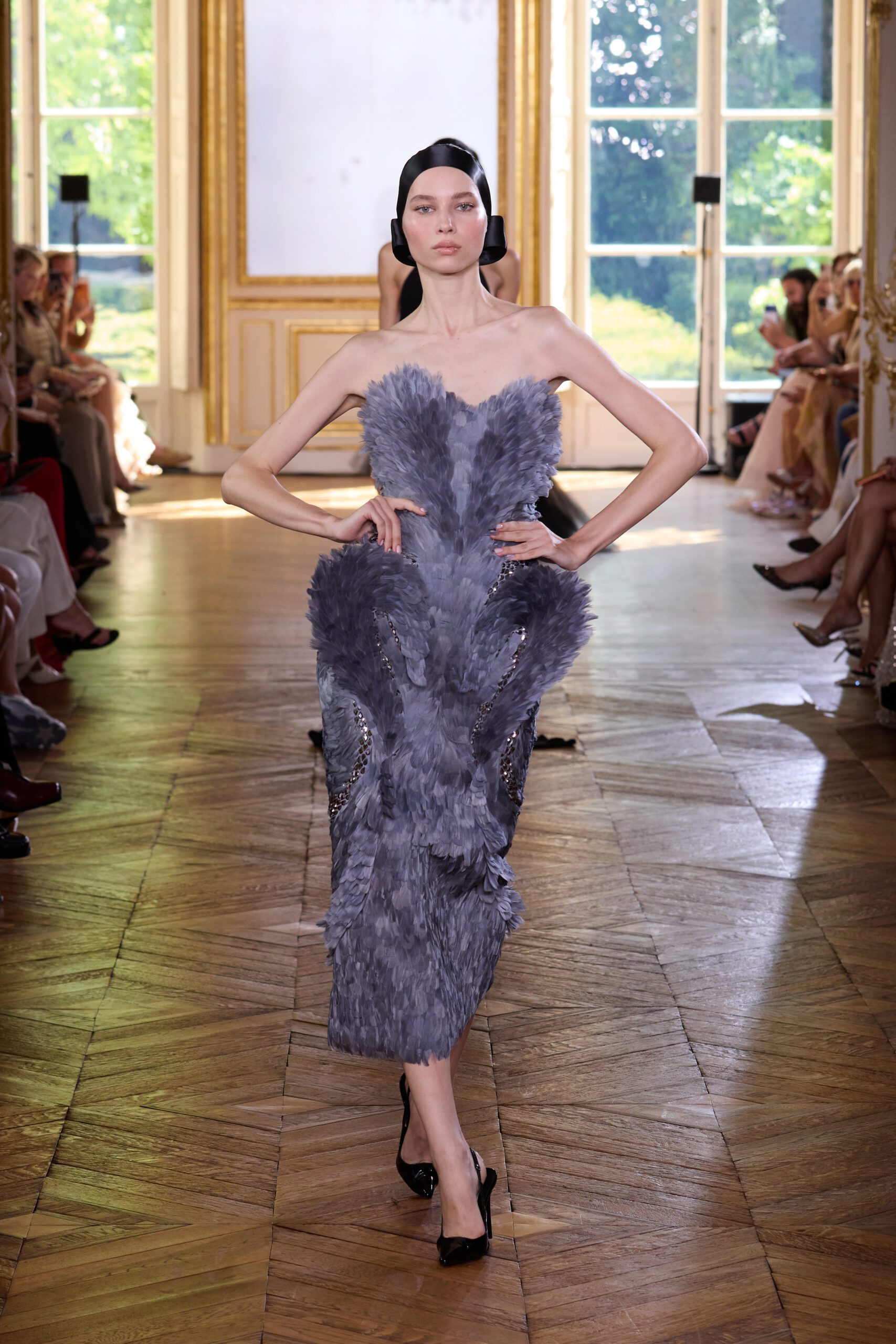
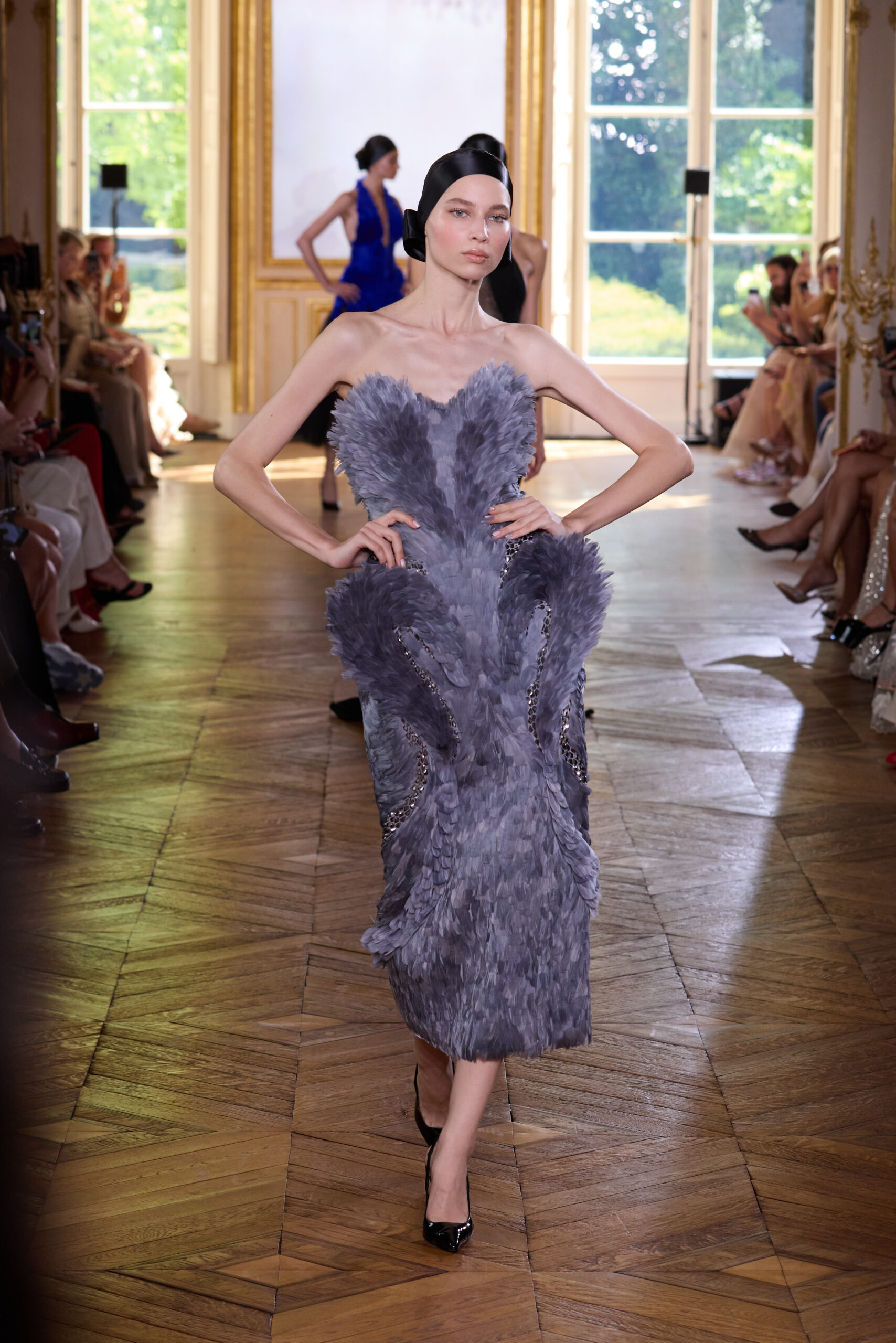
In the construction of a haute couture dress, there is a convention so ancient that it’s hardly noticed anymore: the elements that give the garment its structure must remain hidden. The boning, lacing, and supportive mesh—all the technical elements that allow the fabric to hold a silhouette—are concealed beneath the lining, invisible to the public, who admire only the smooth, finished result. For his Fall-Winter 2026/2027 couture collection, presented in Paris, Georges Chakra chose to break with this convention head-on. He turned the dress inside out—literally—to make its internal architecture the very focus of the collection.
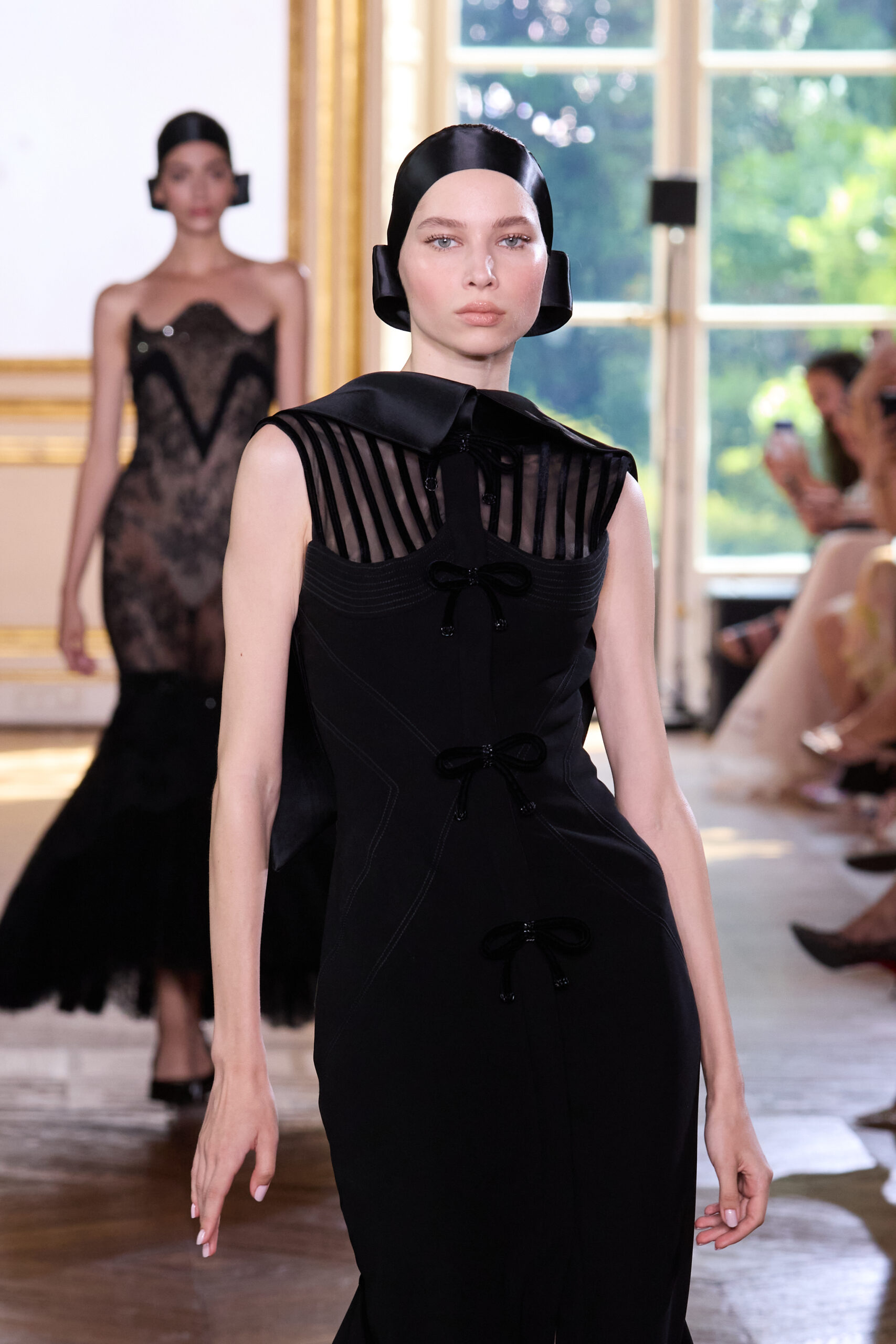
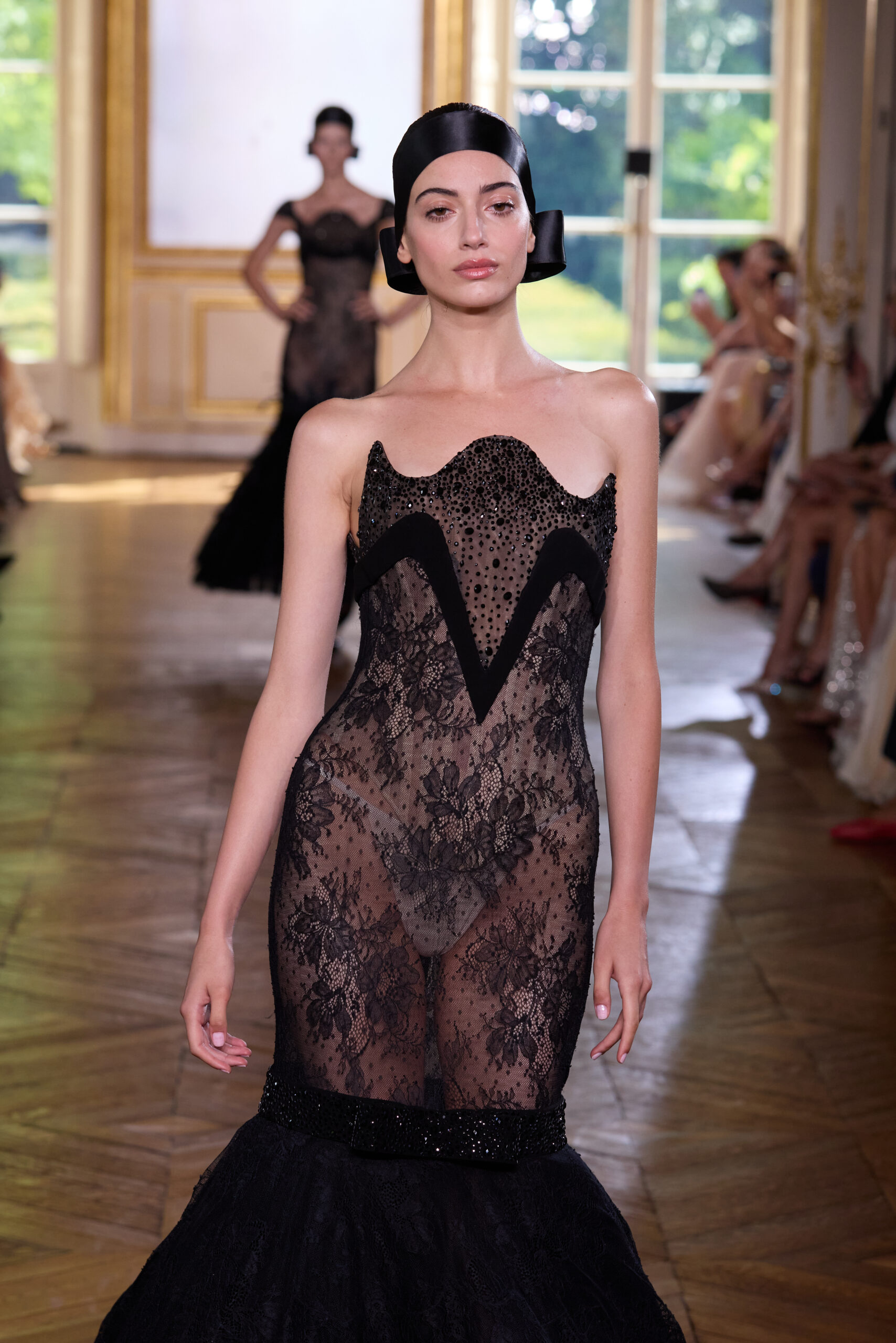
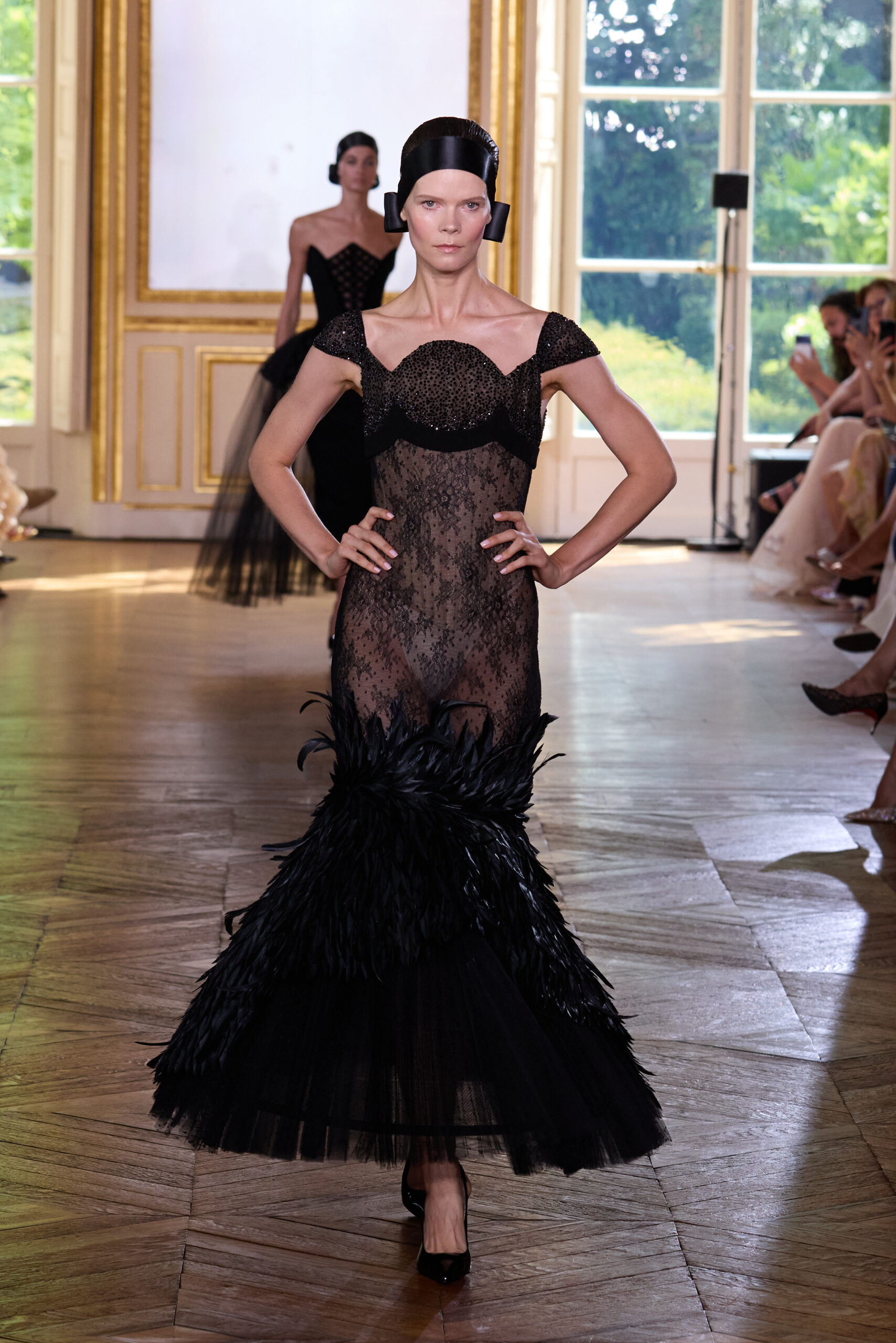
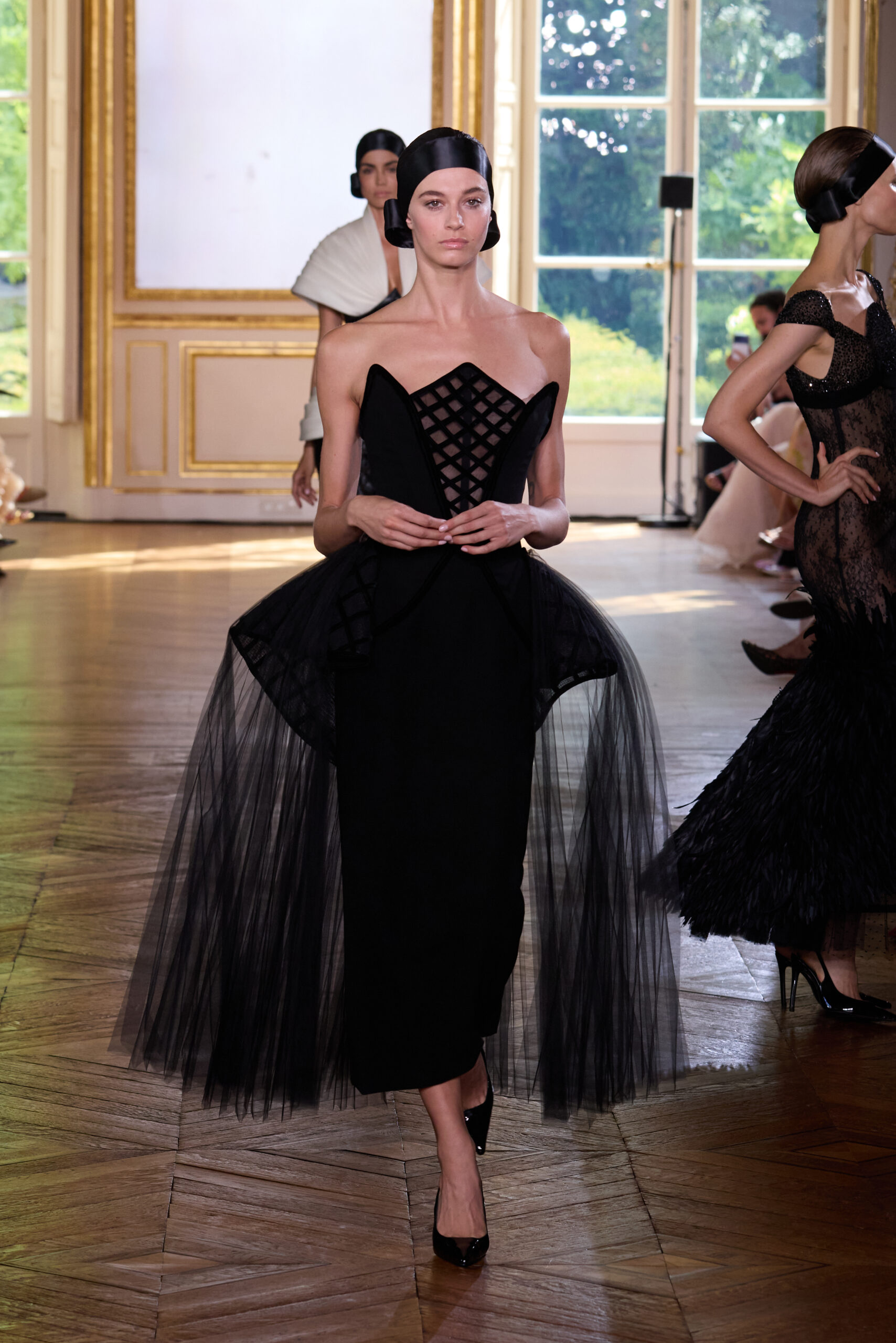
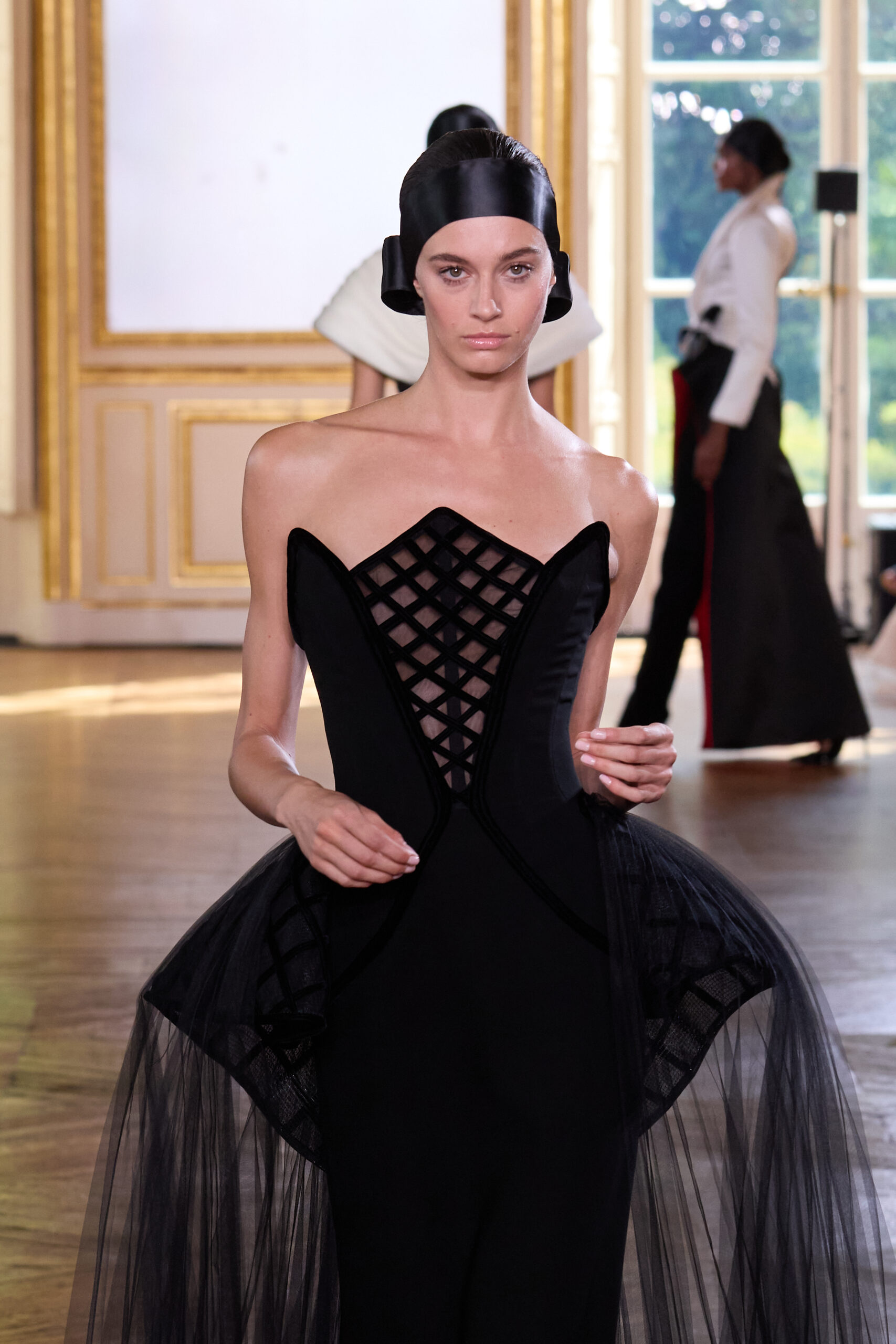
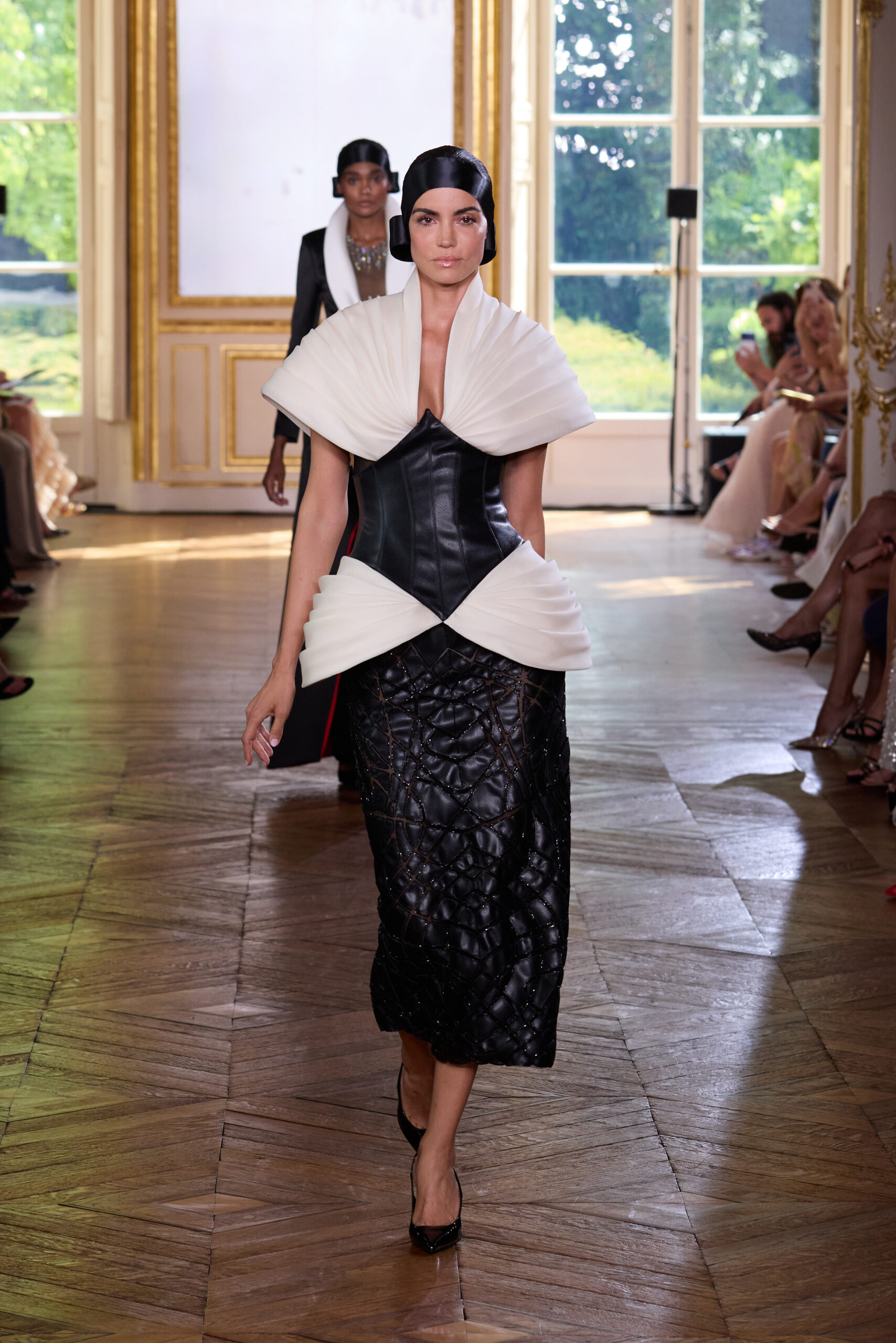
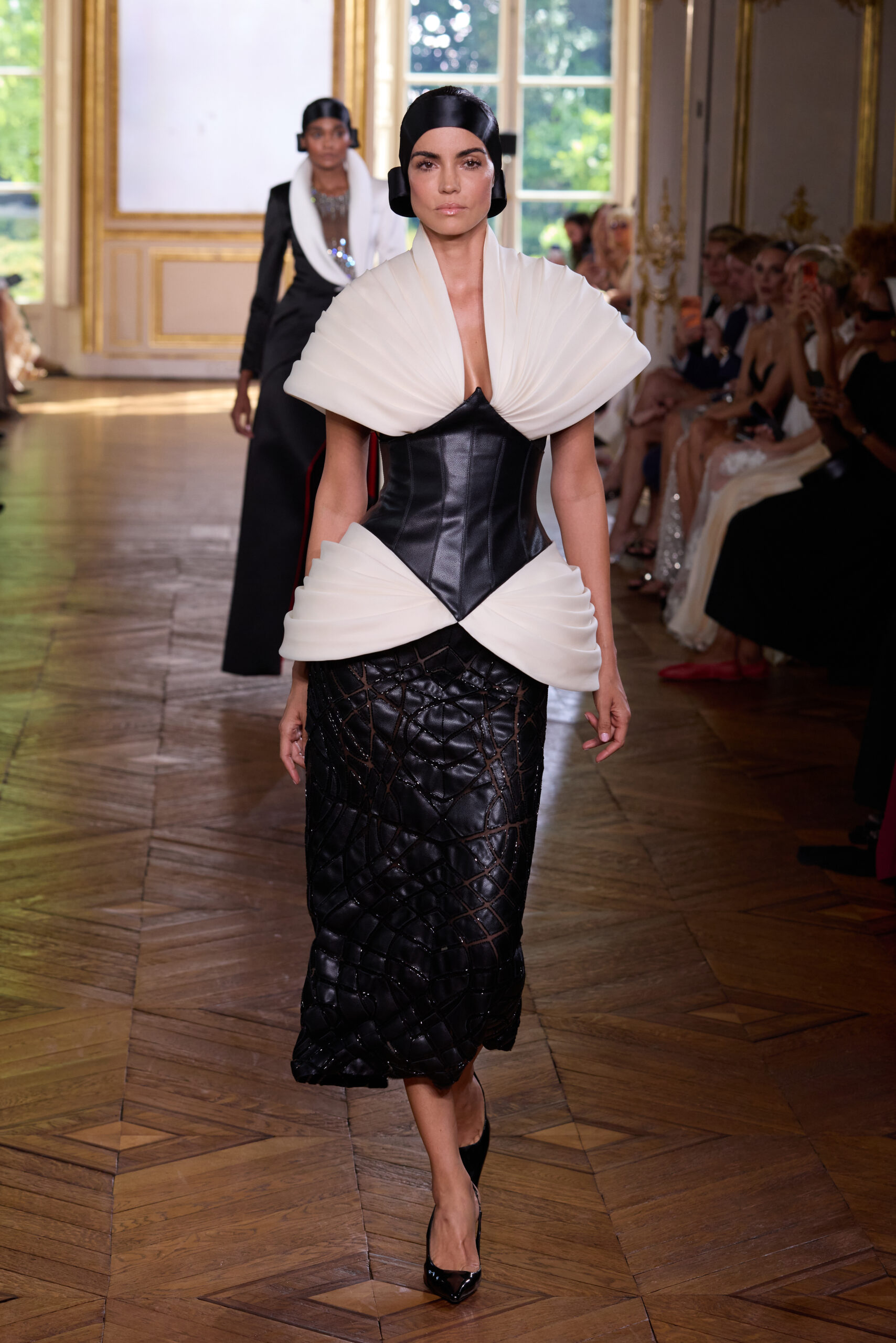
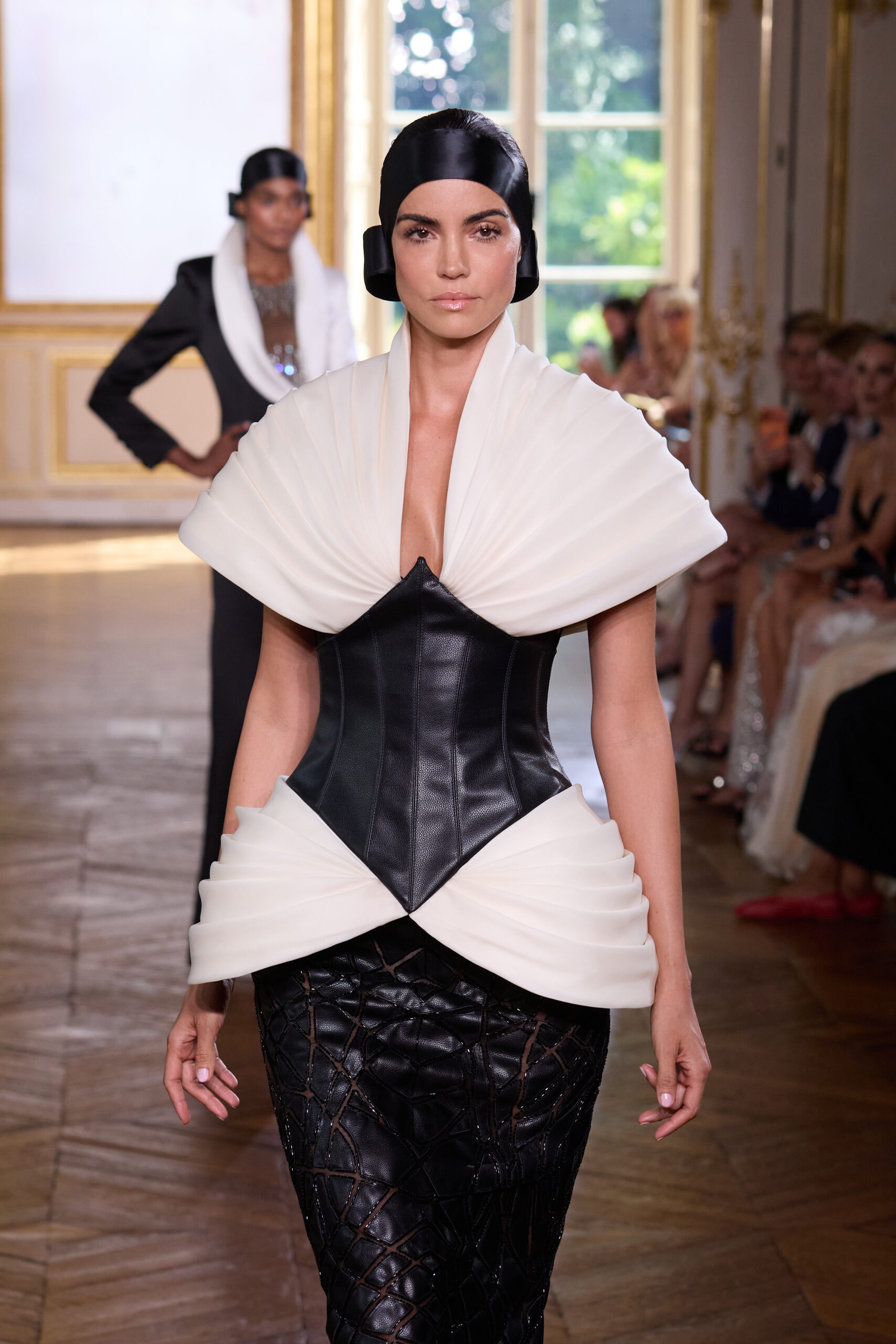
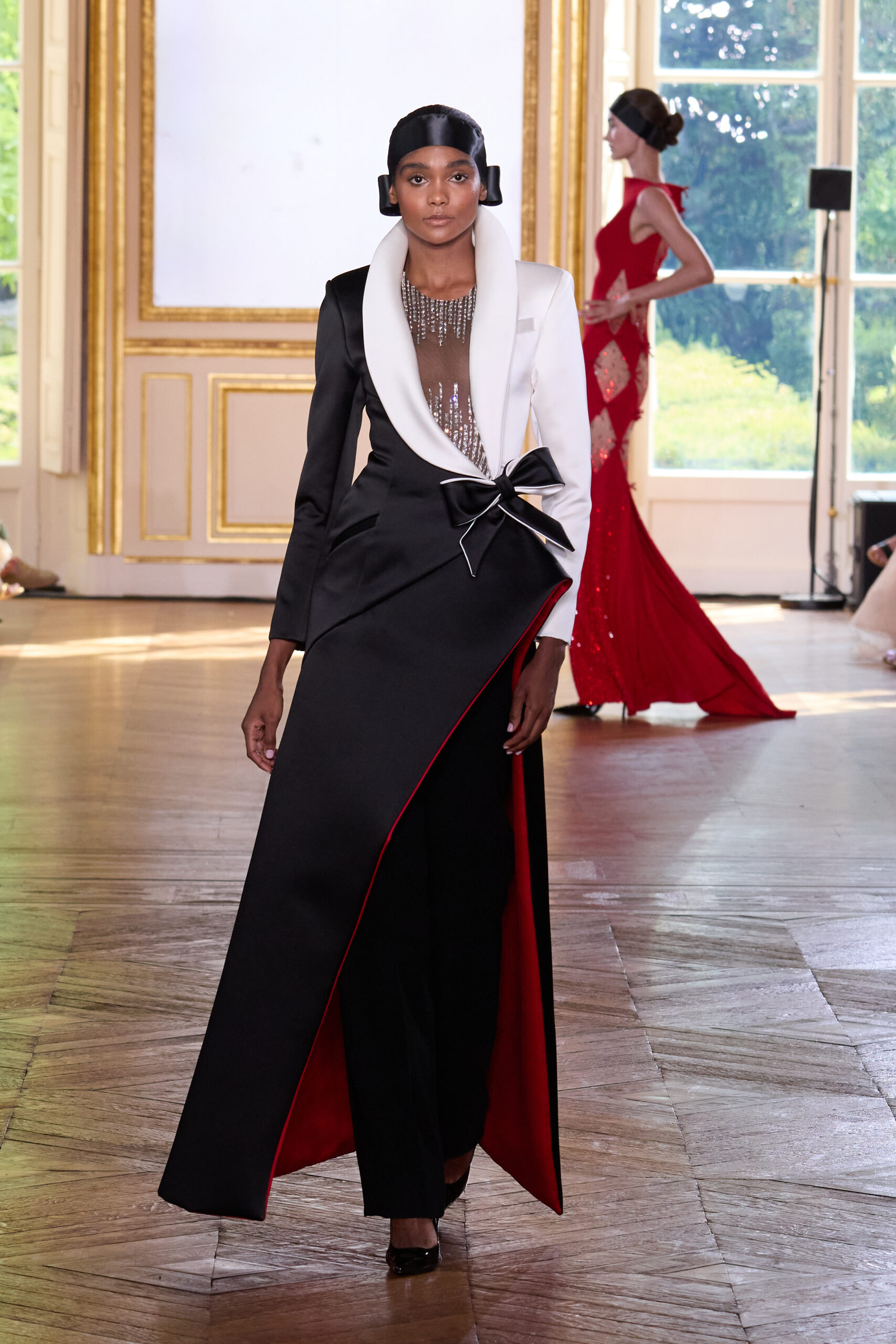
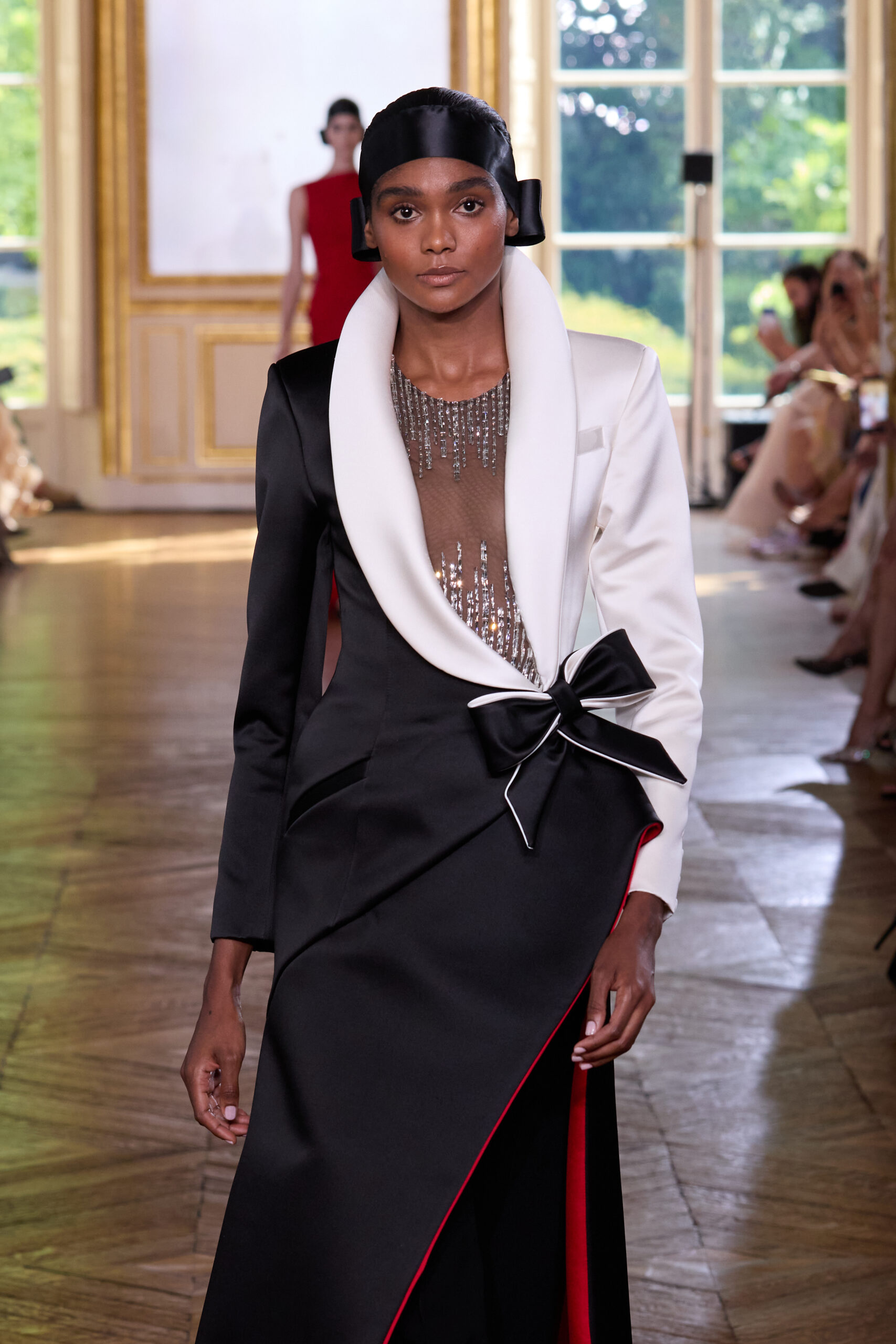
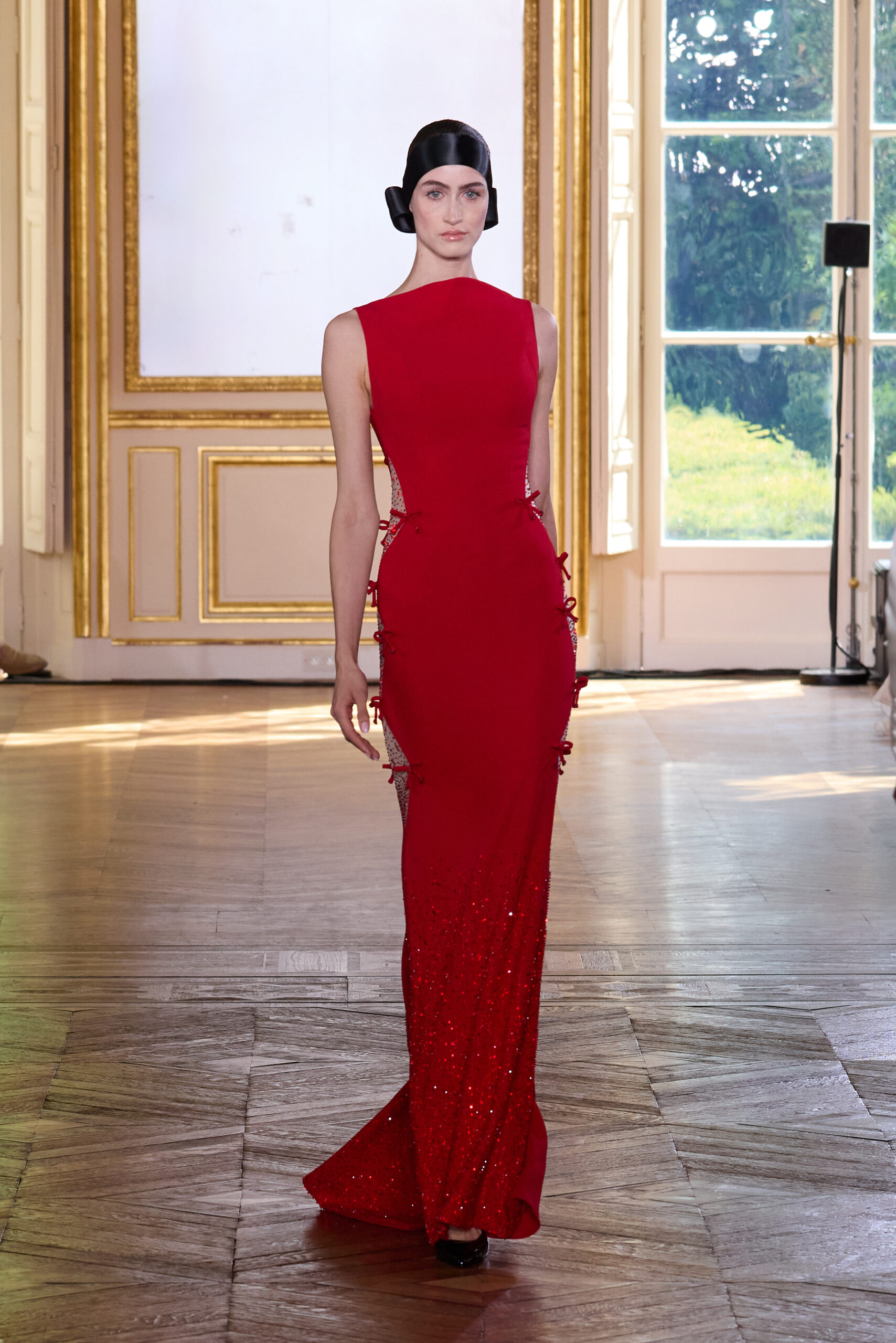
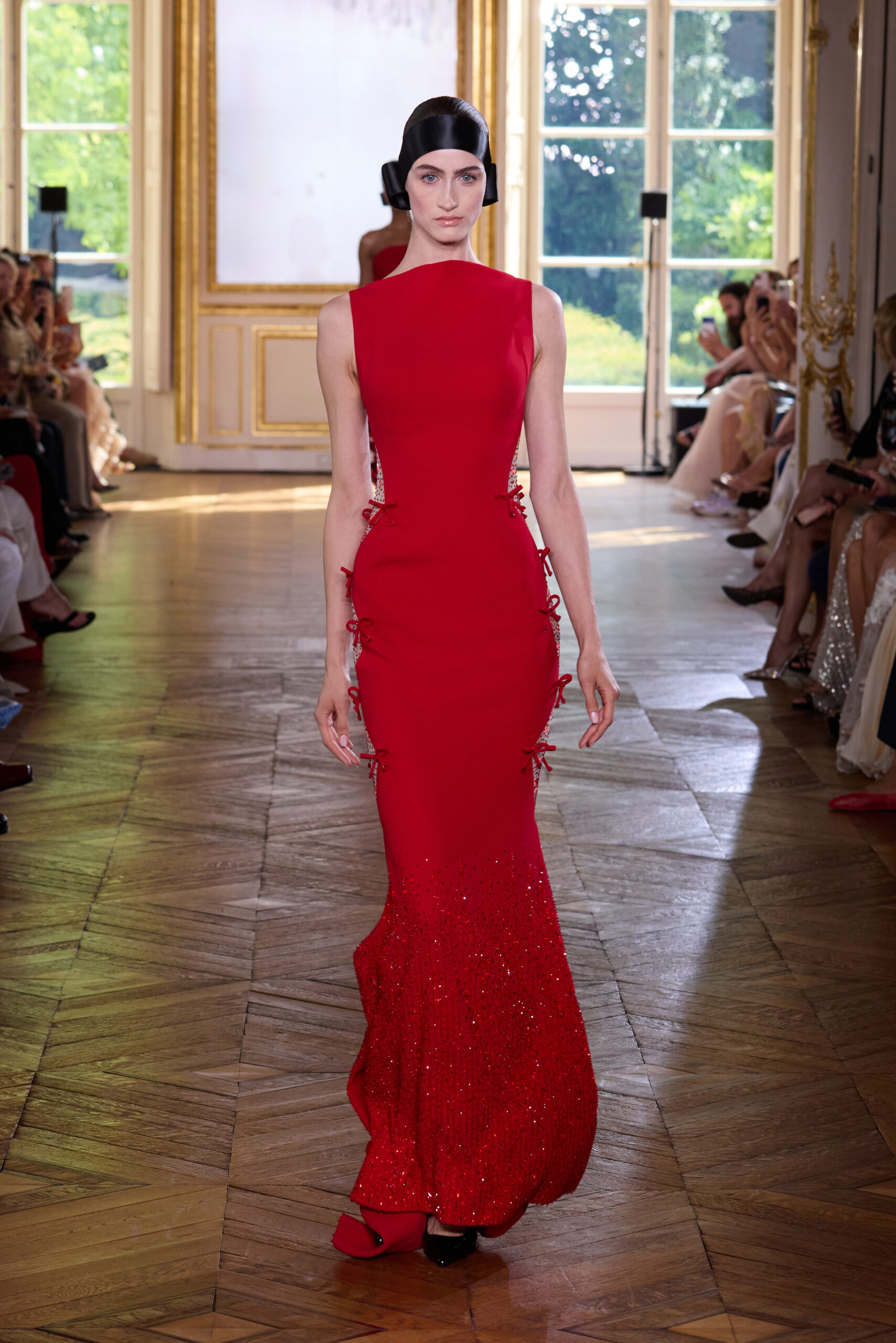
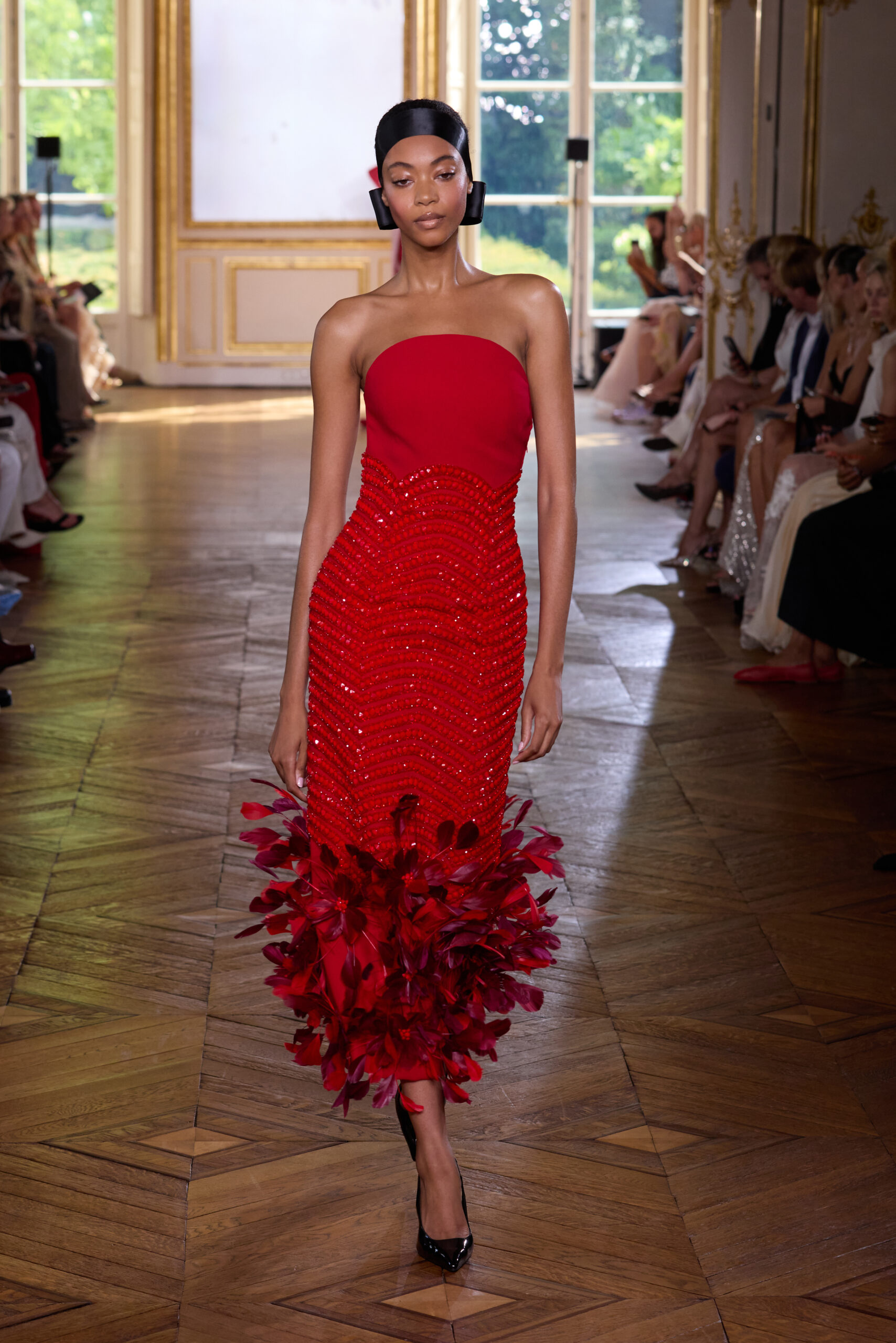
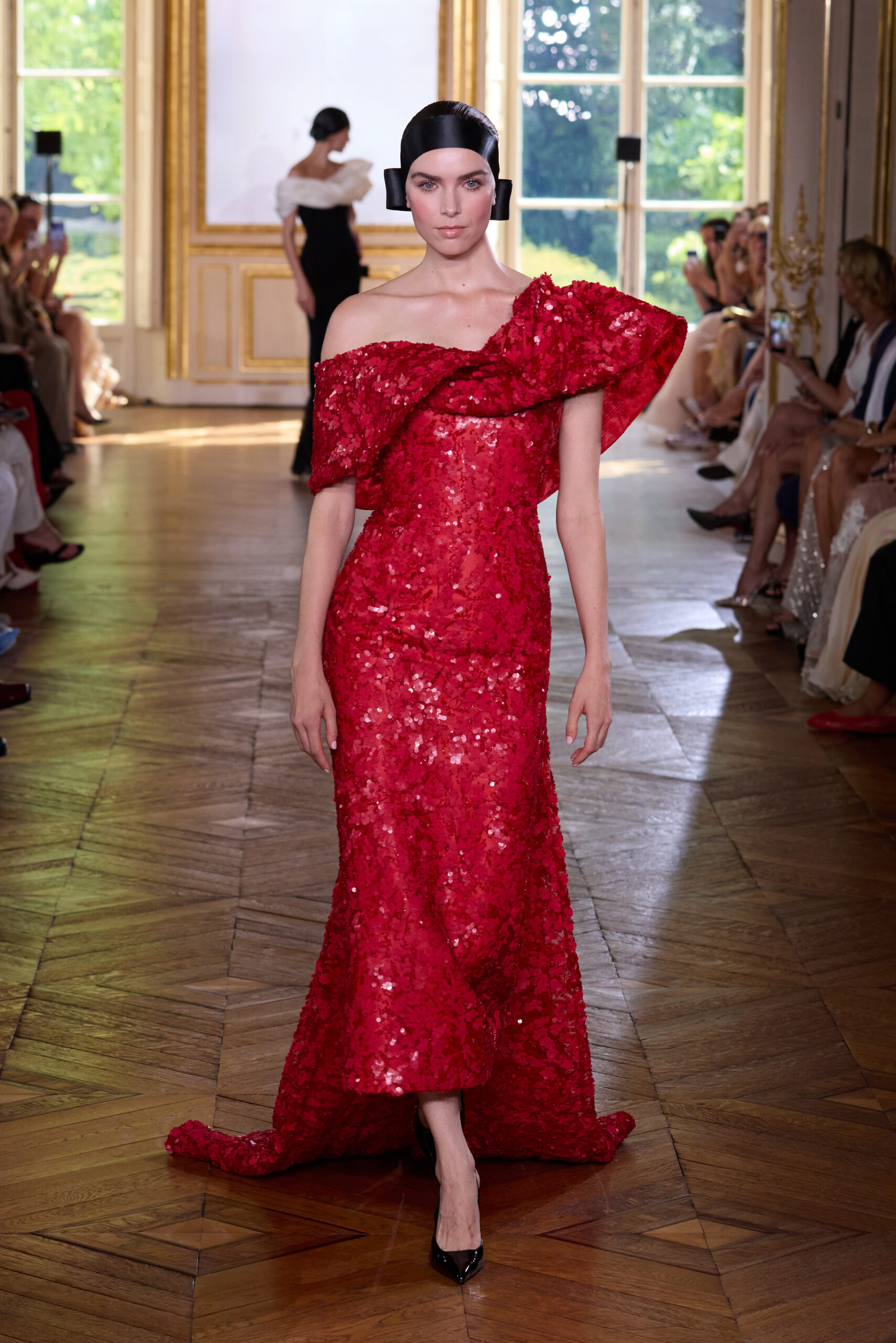
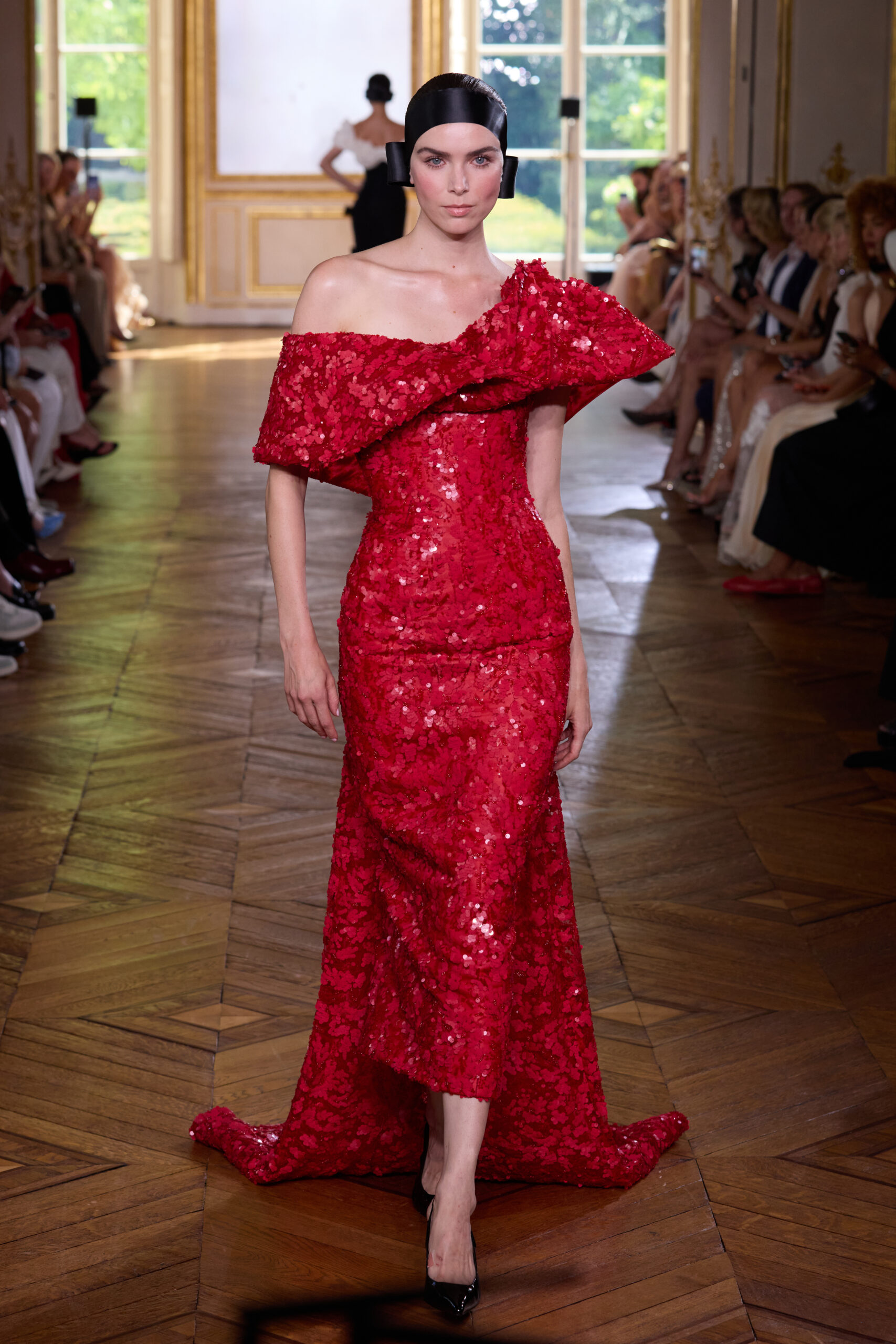
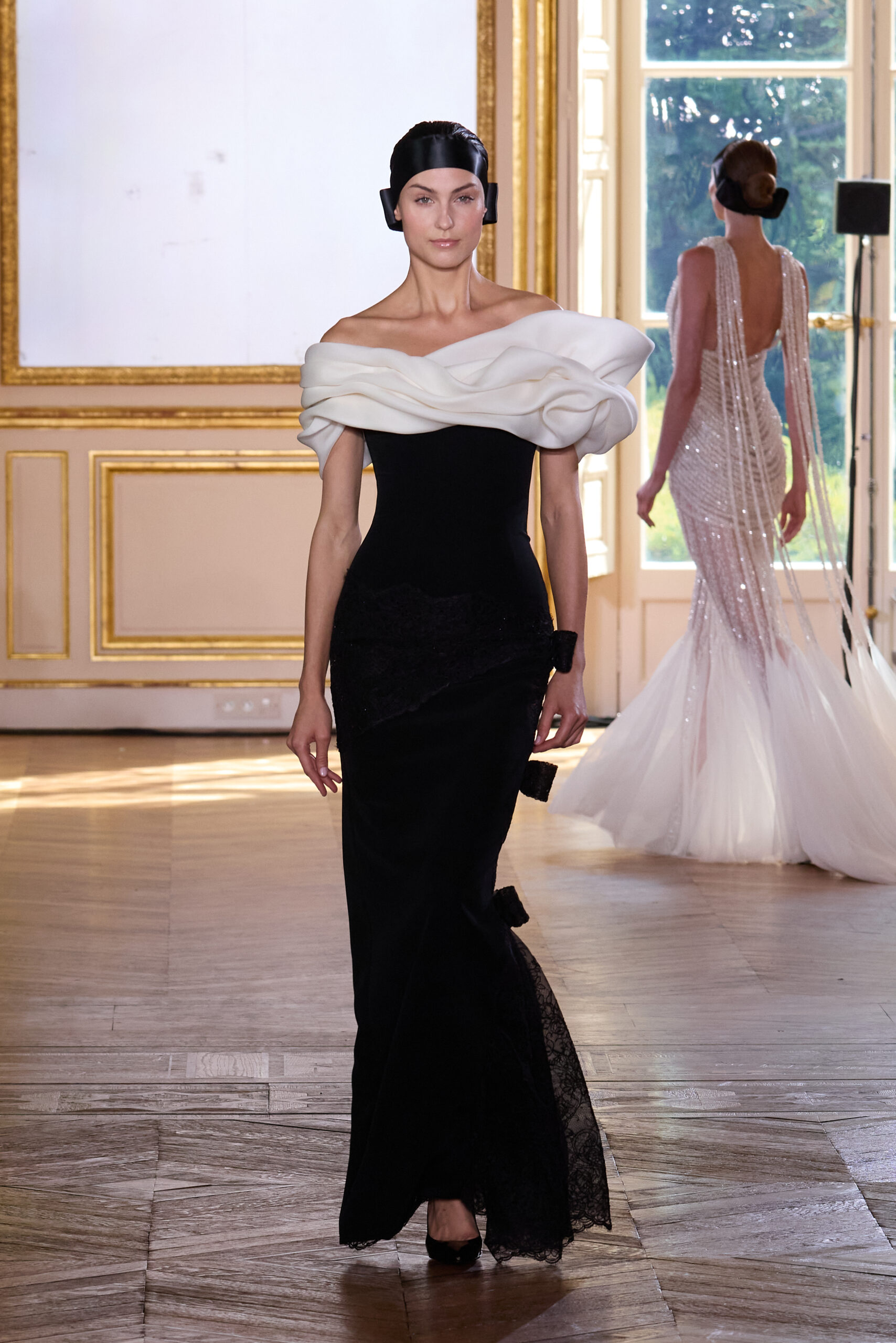
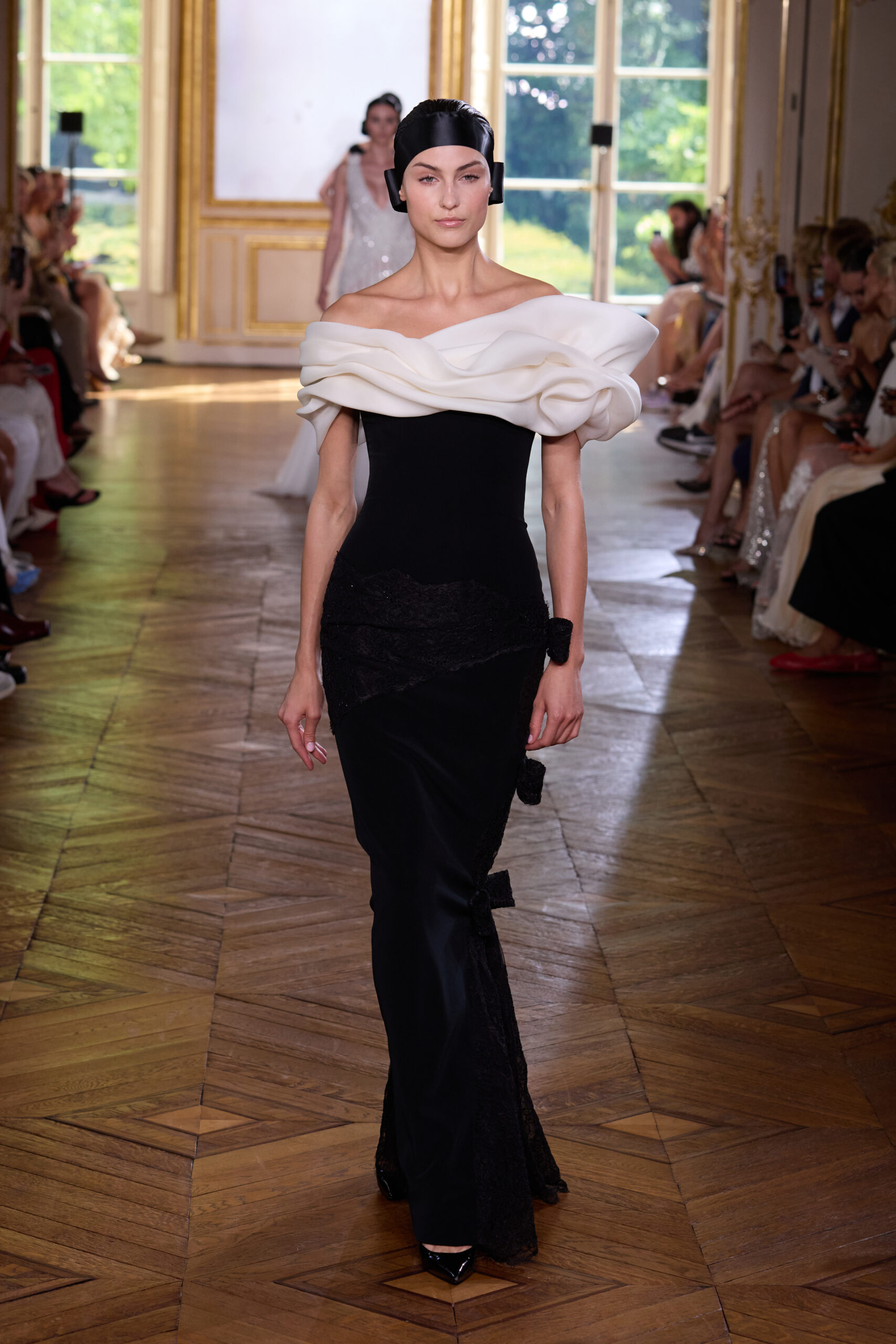
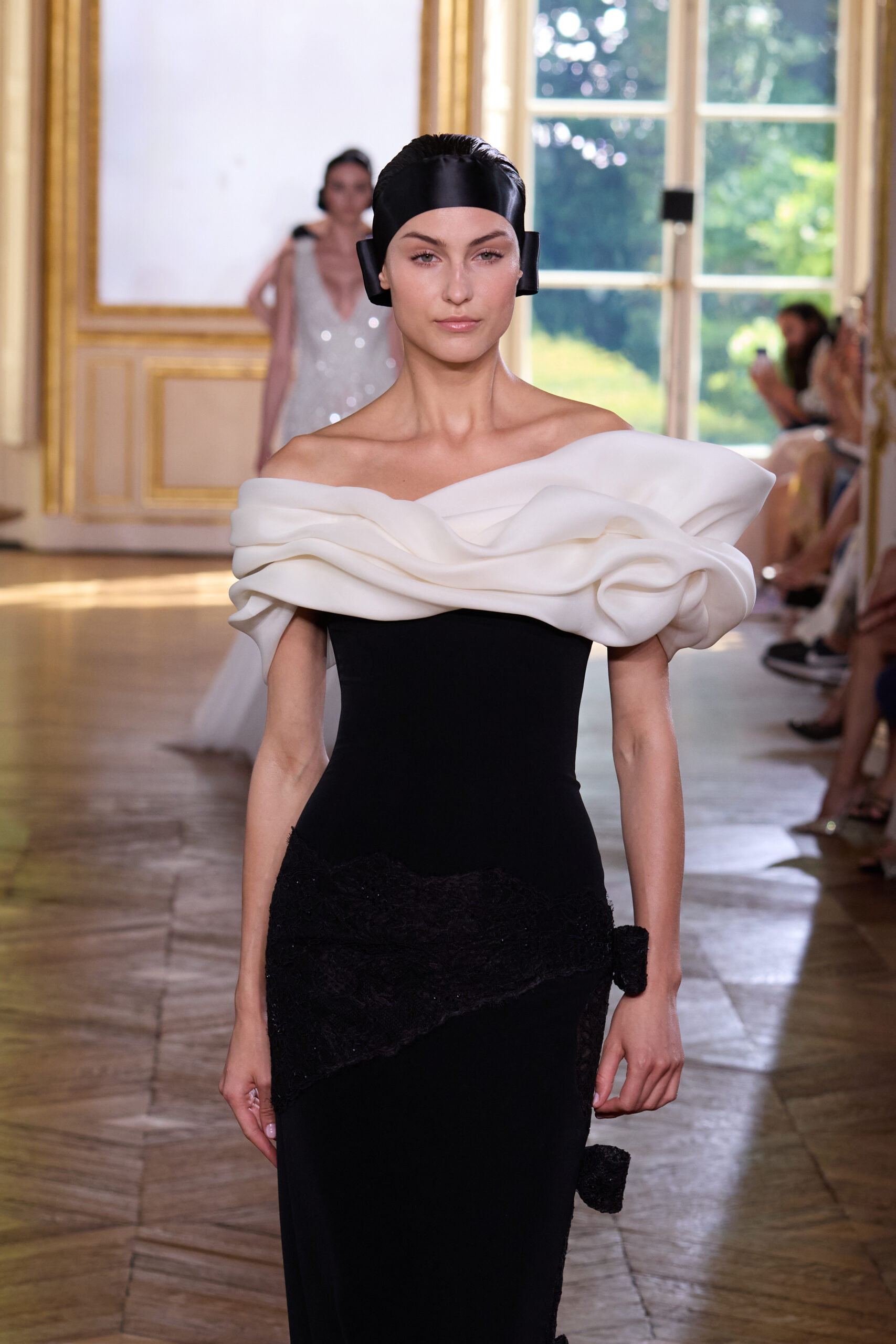
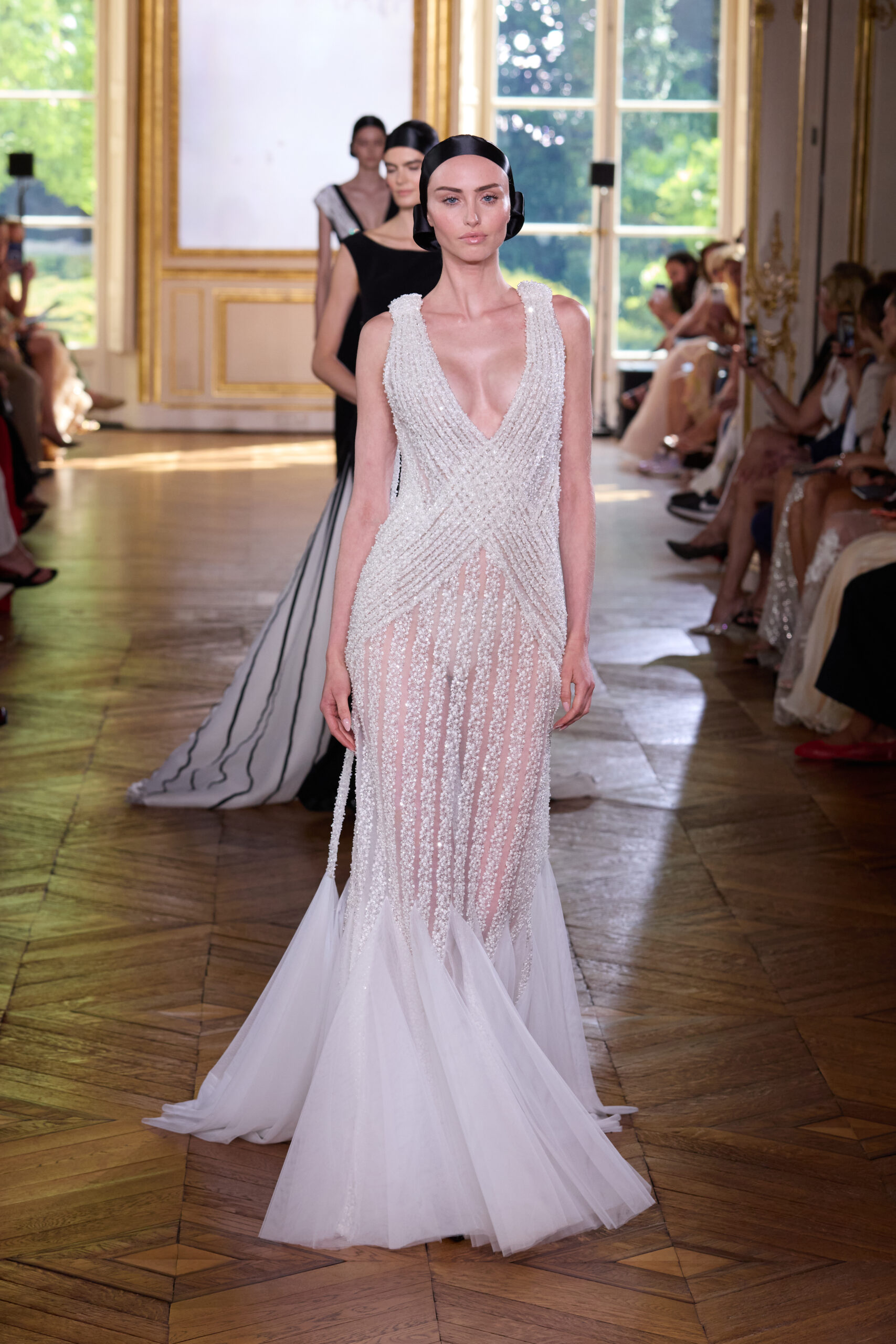
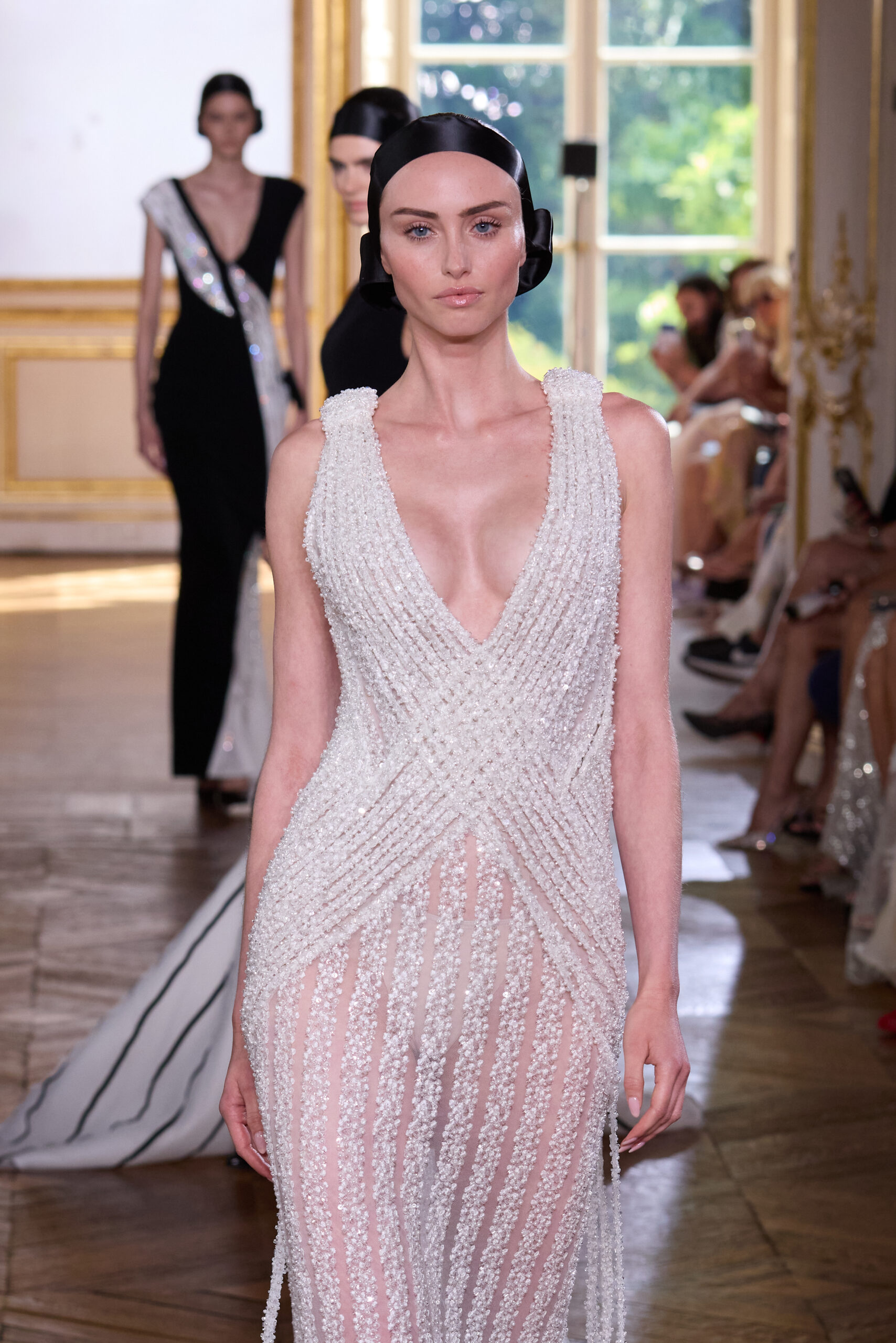
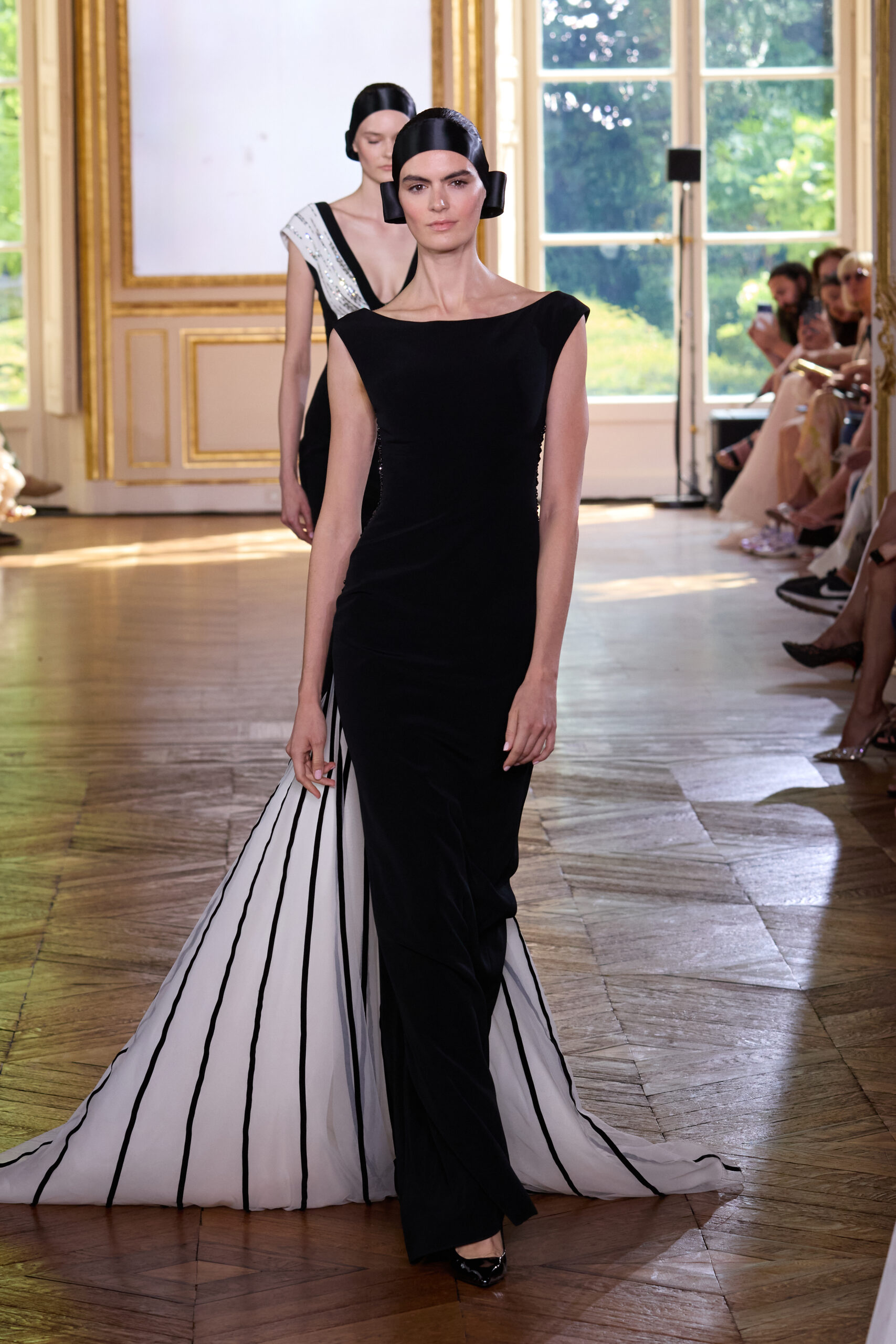
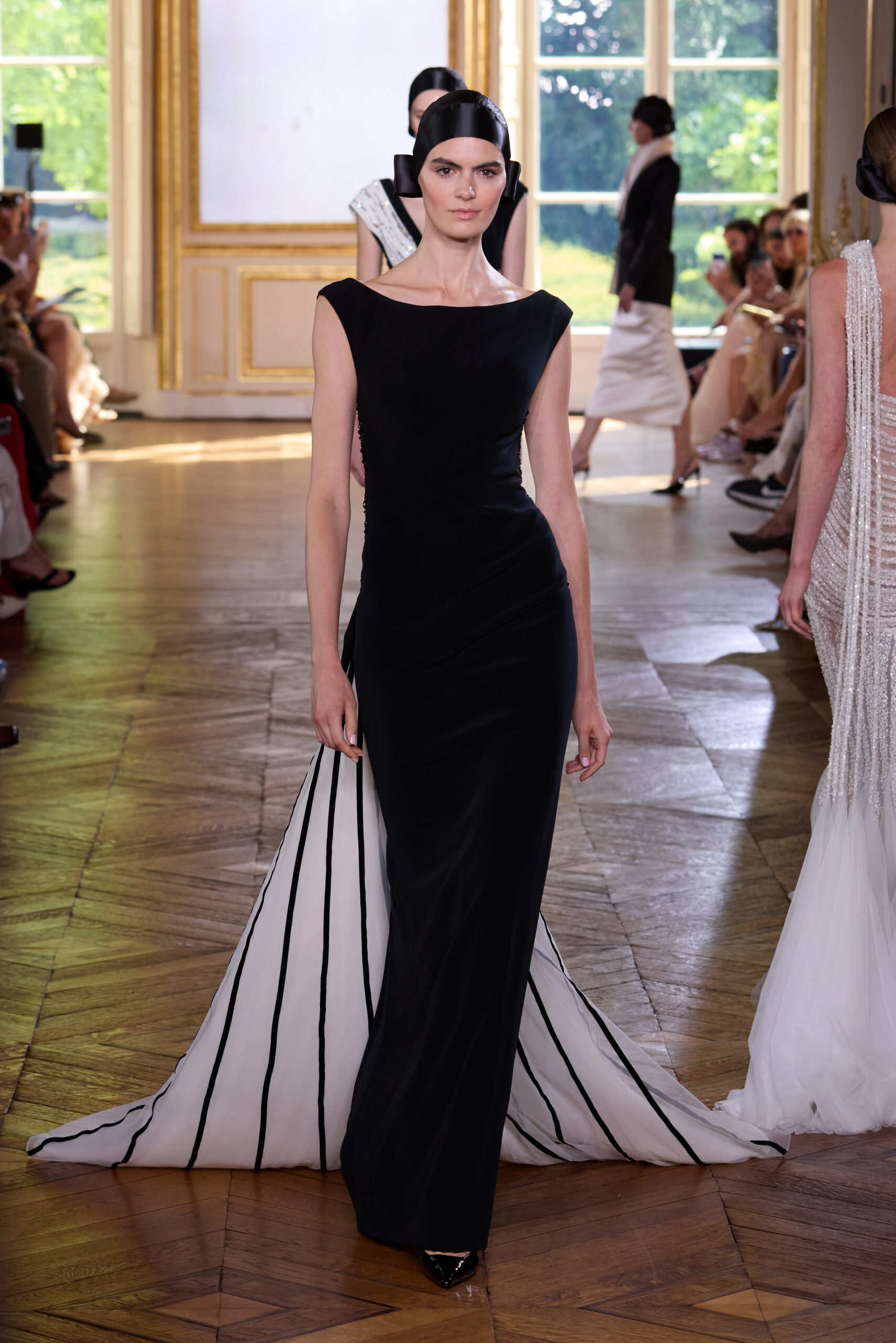
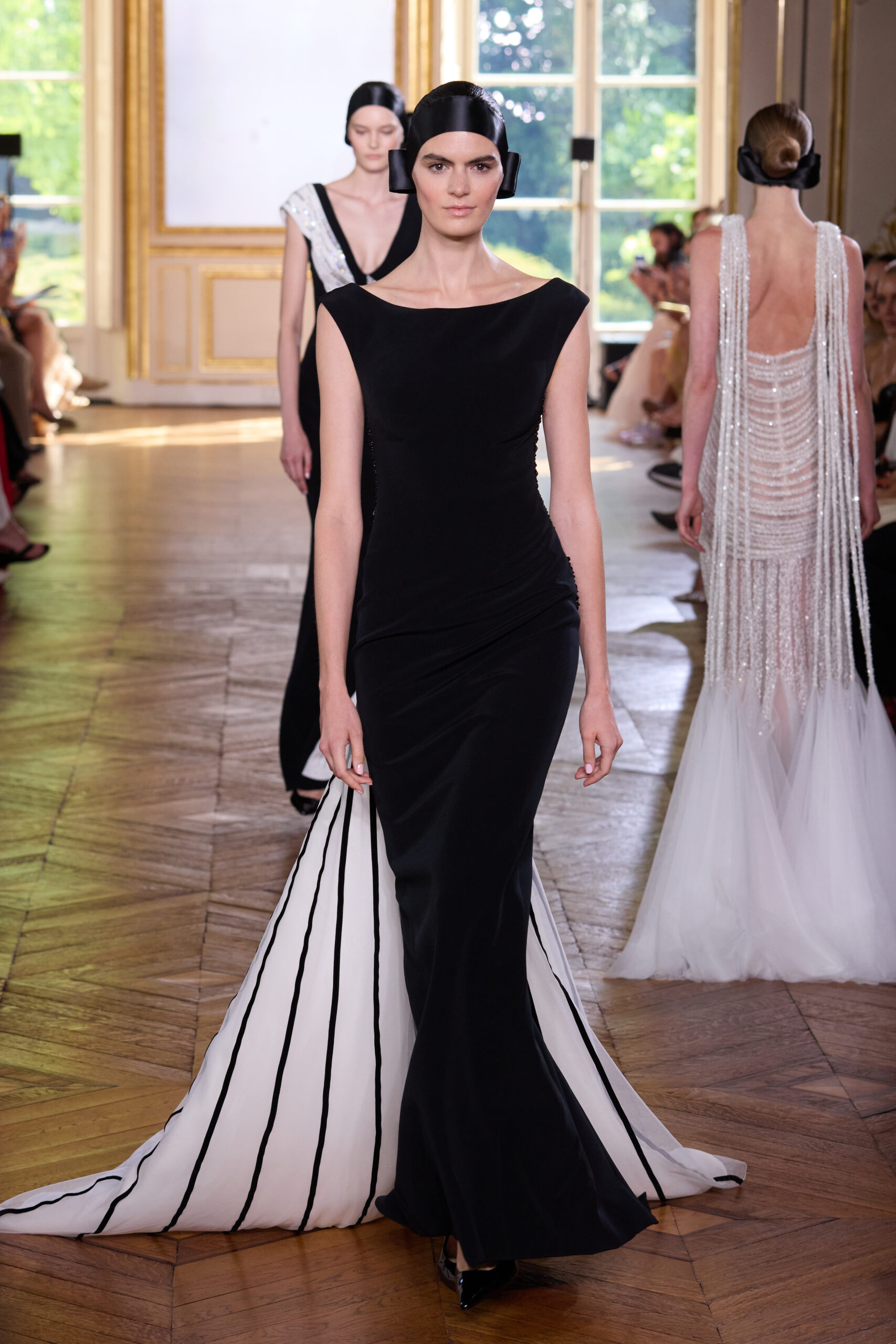
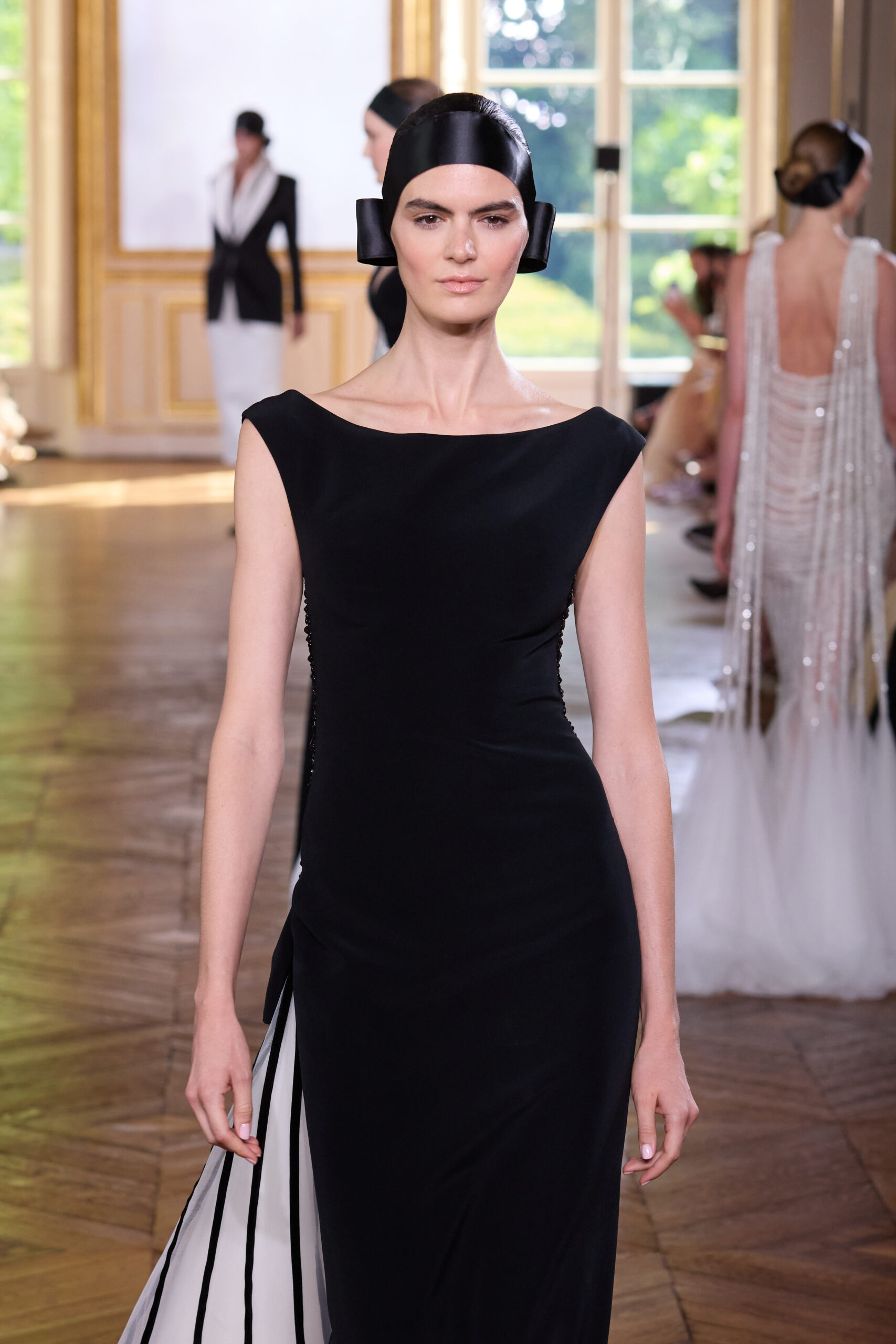
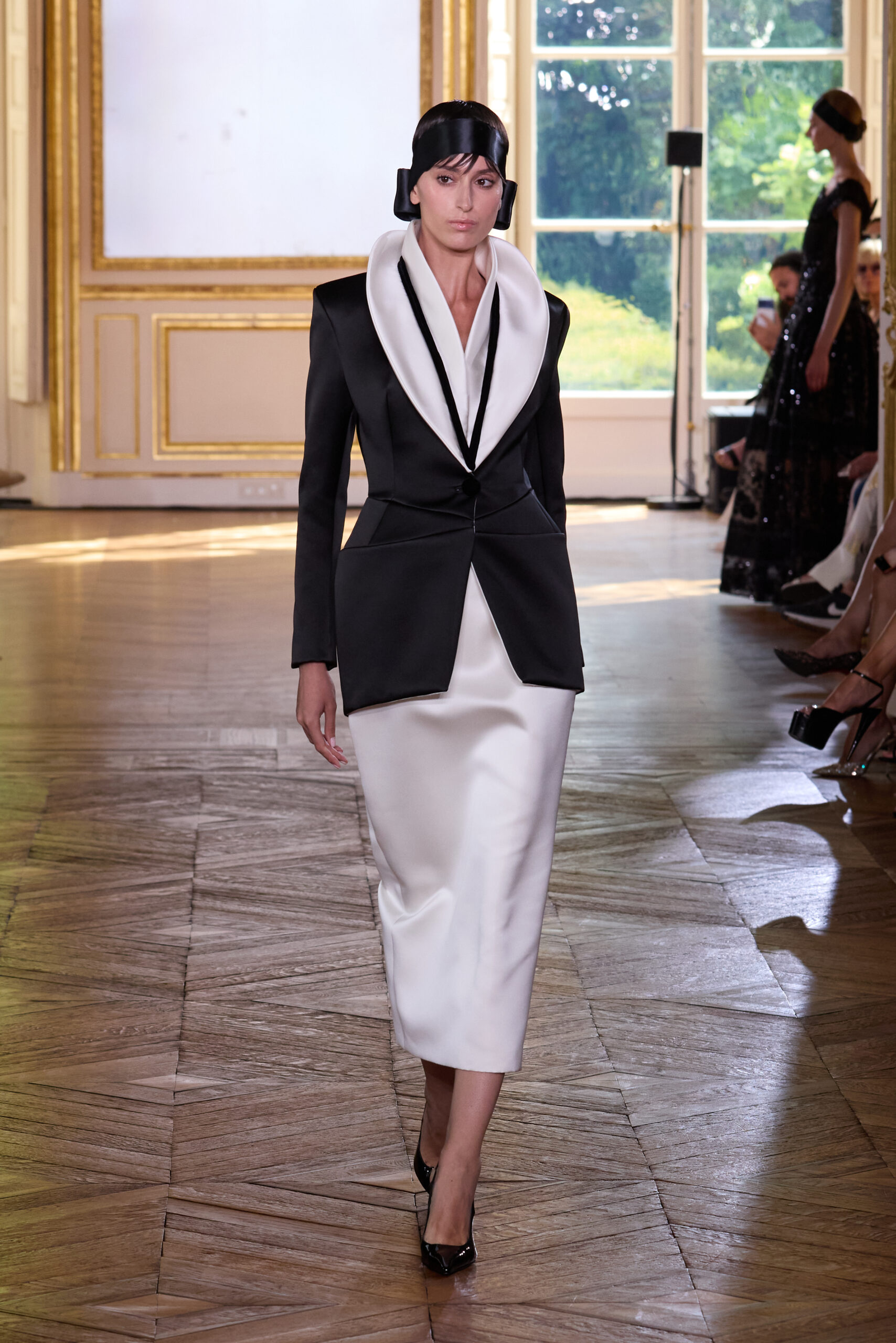
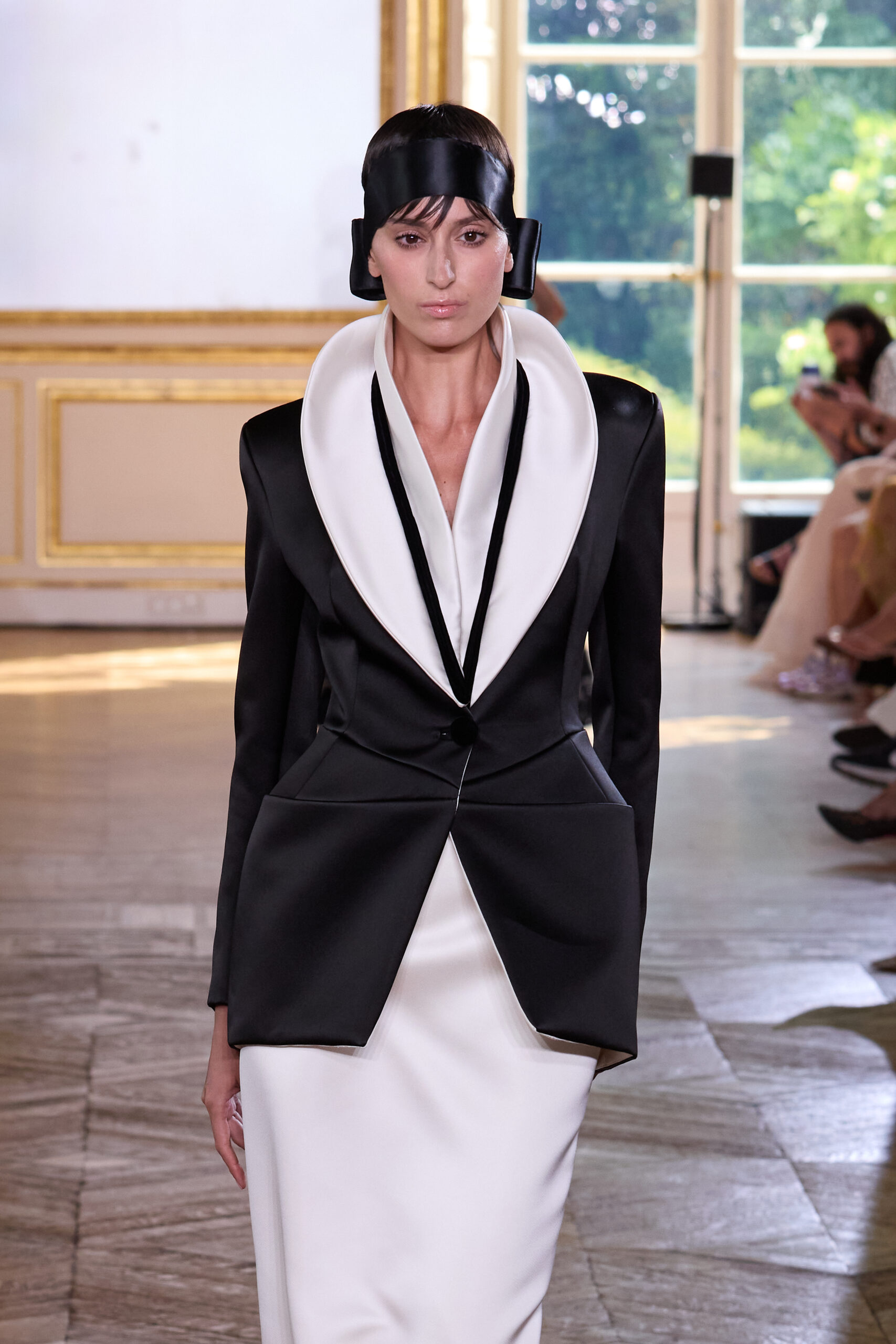
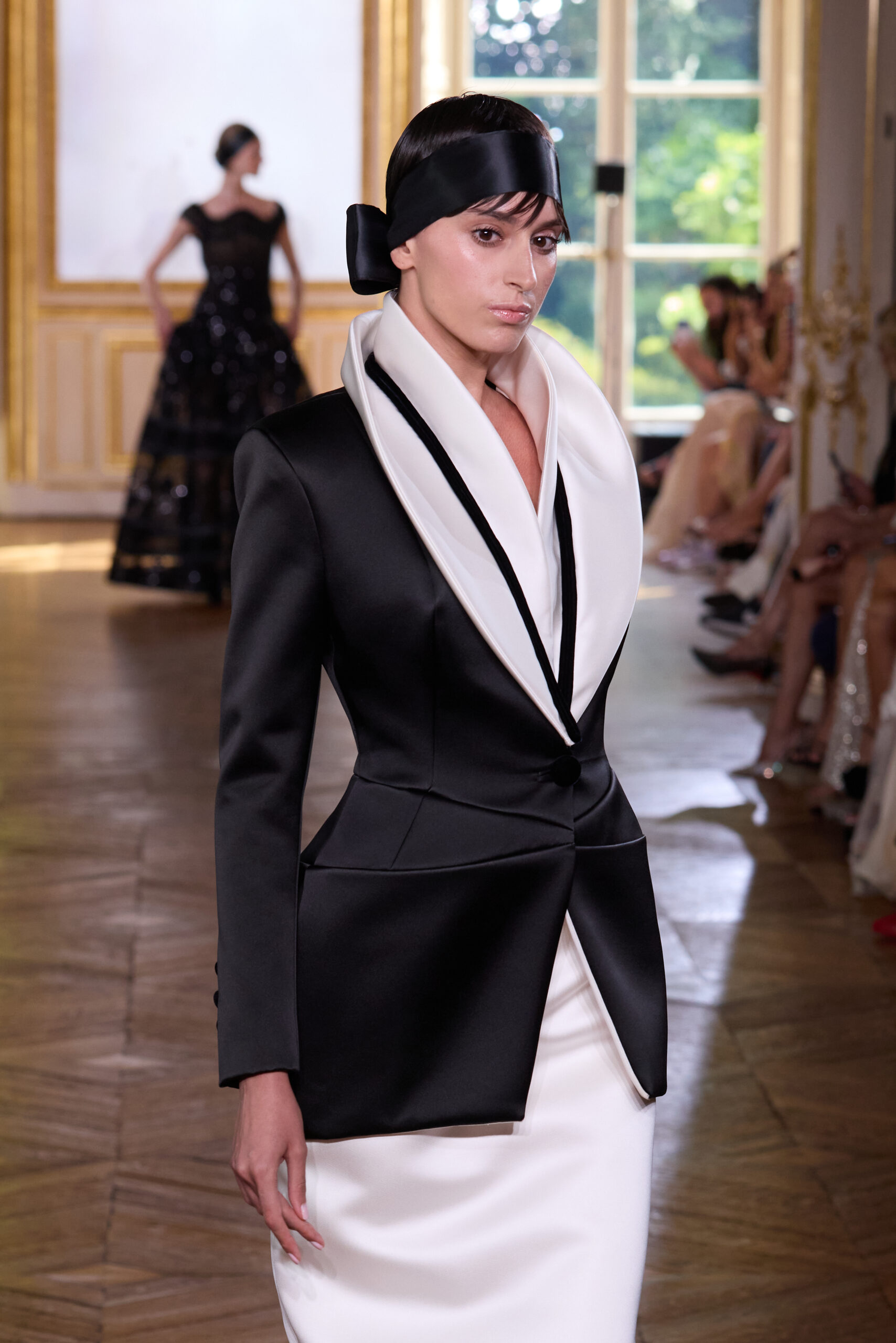
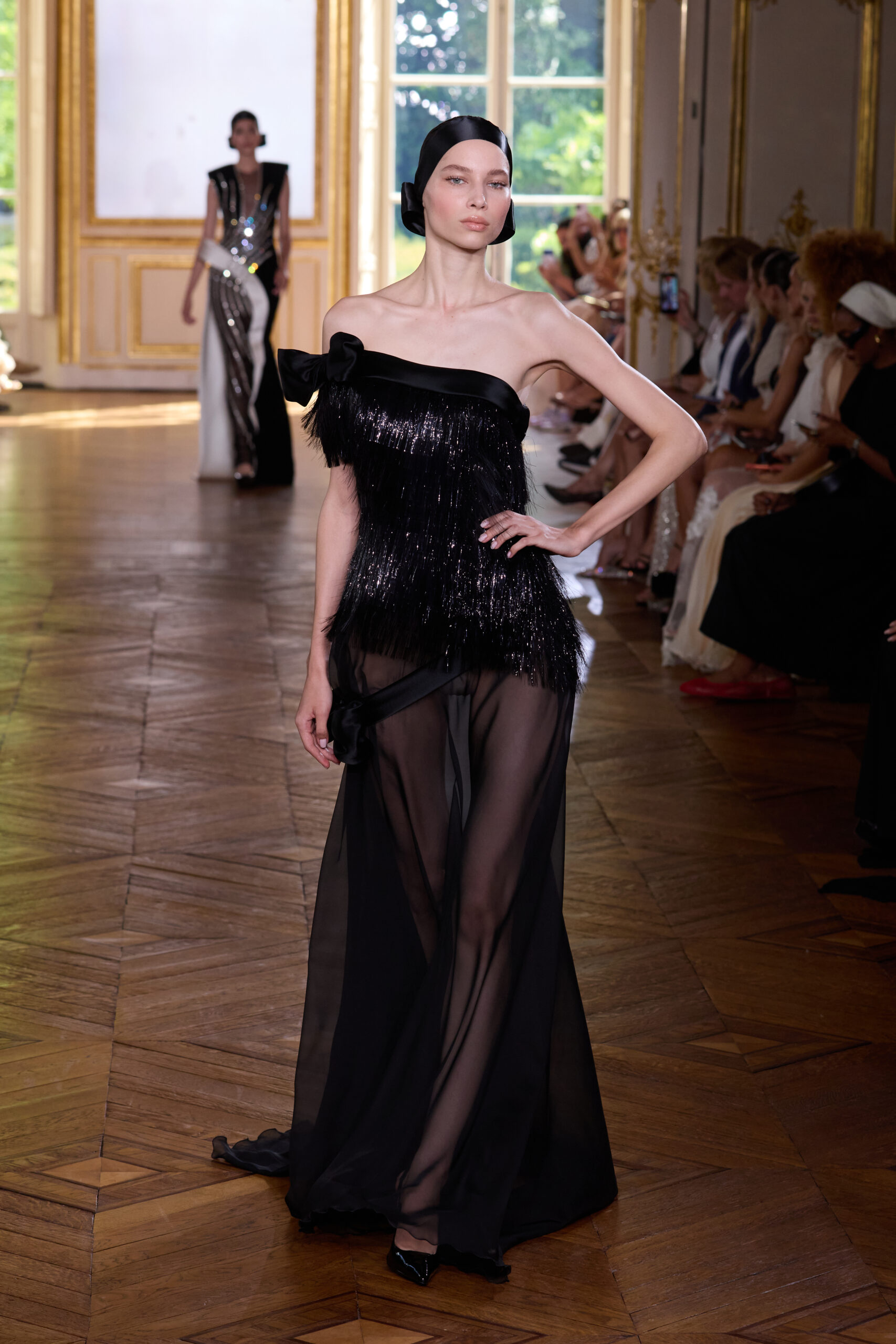
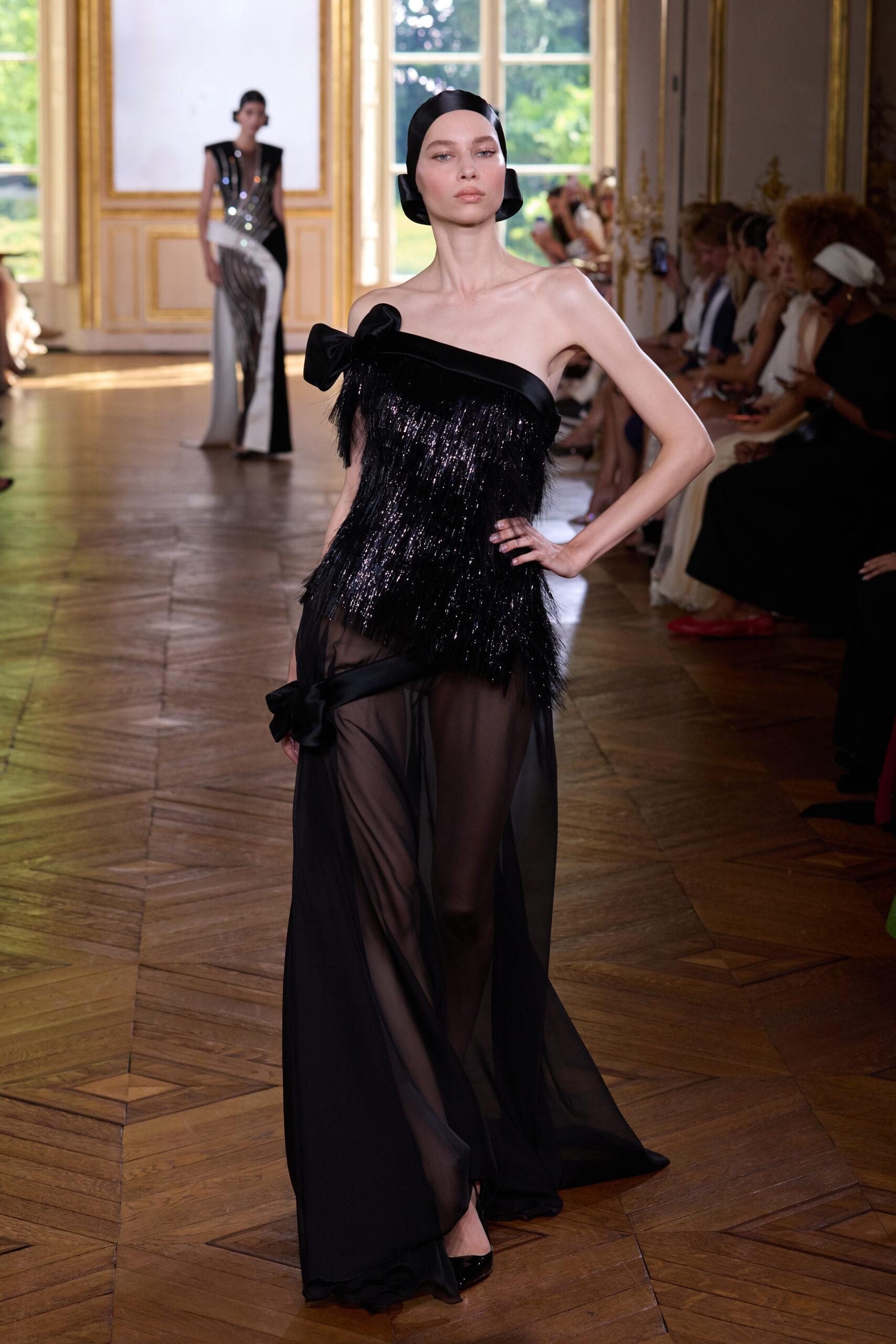
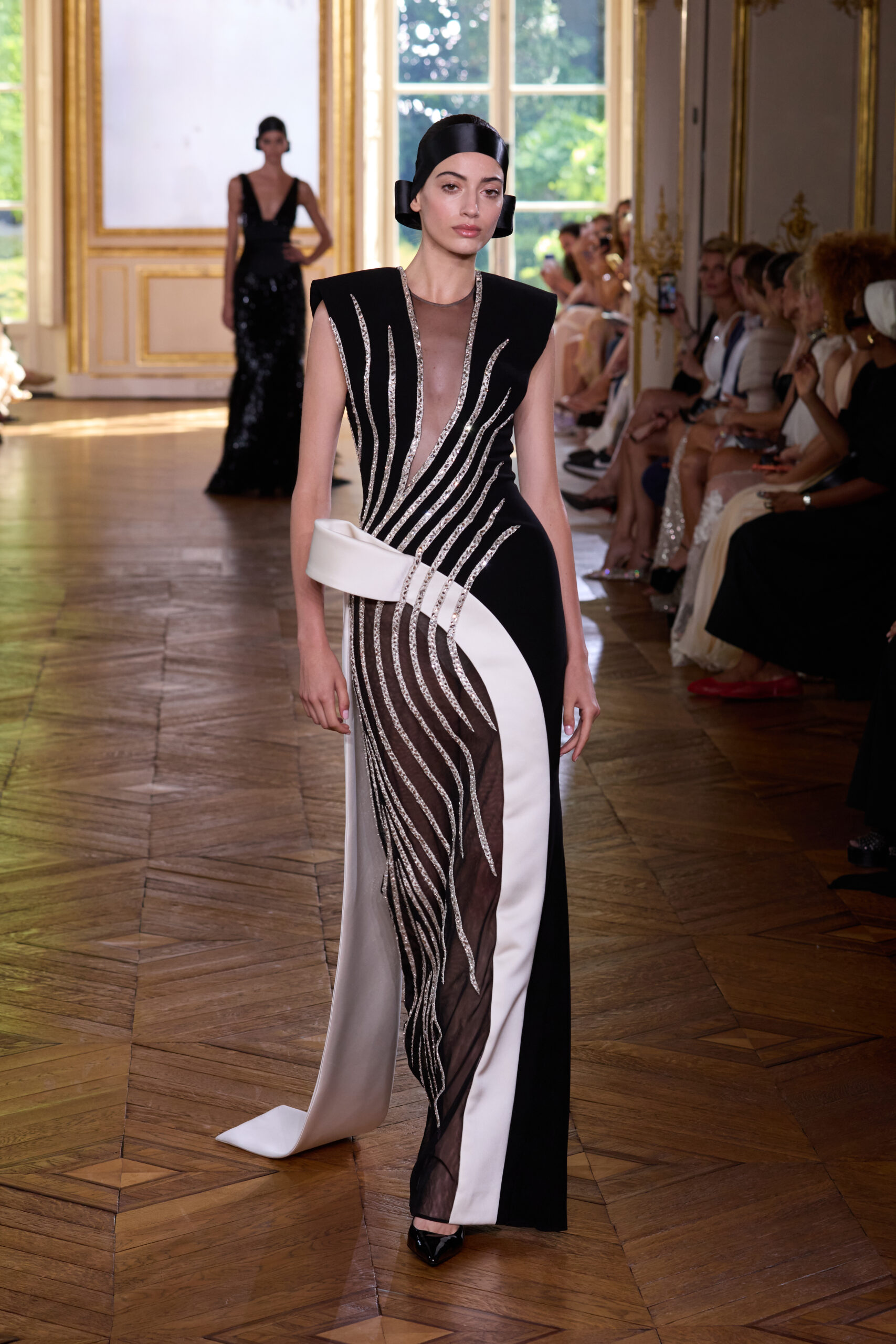
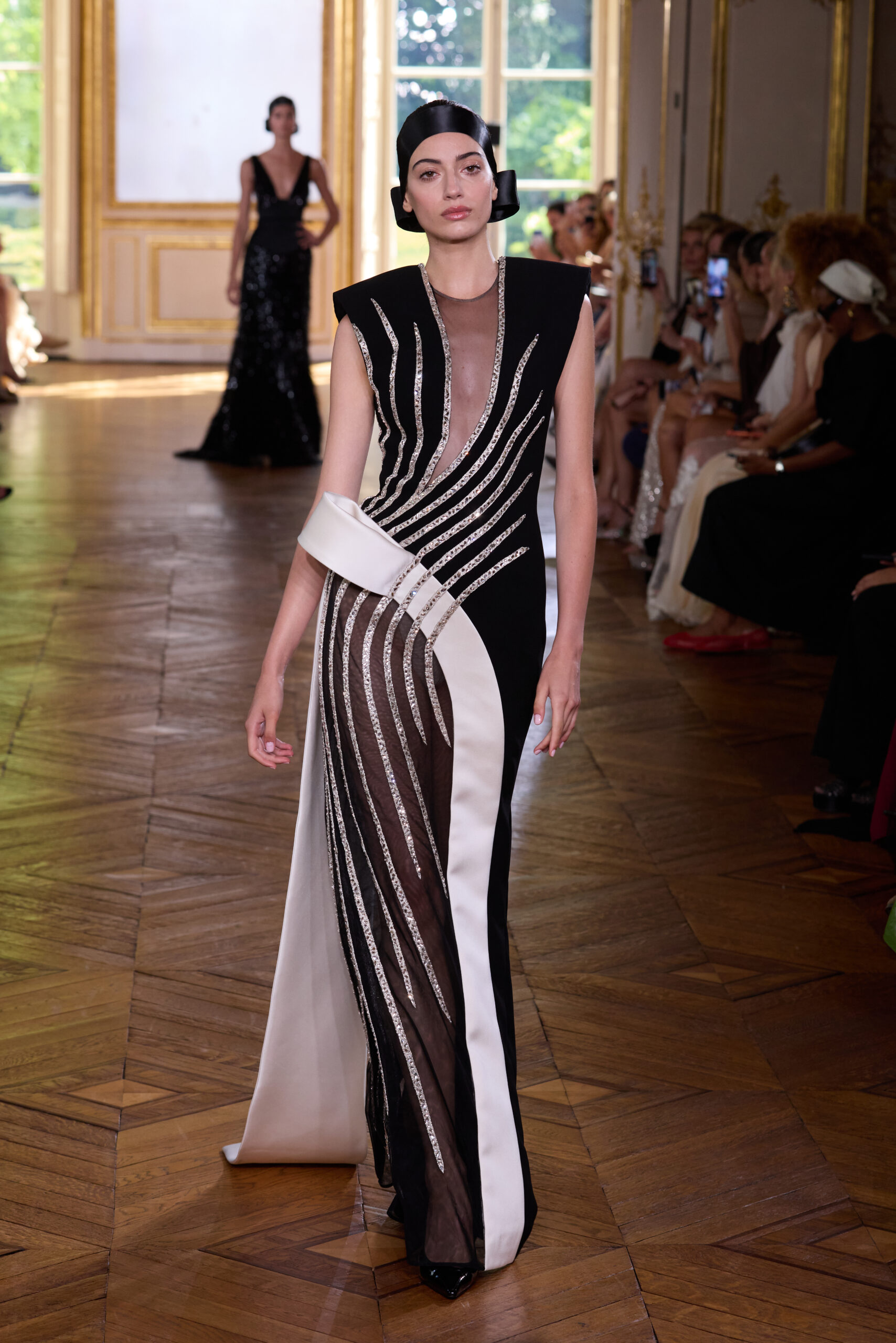
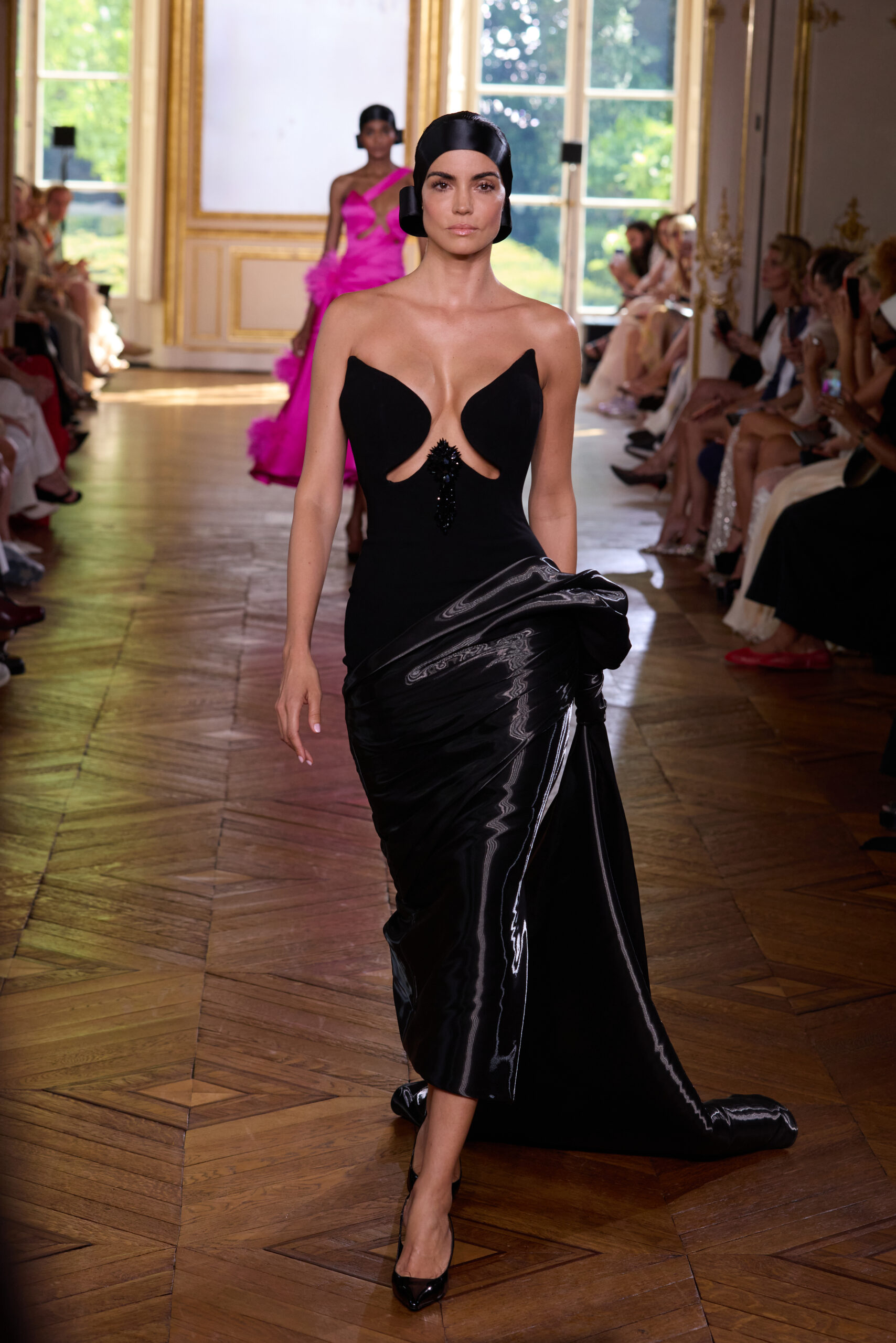
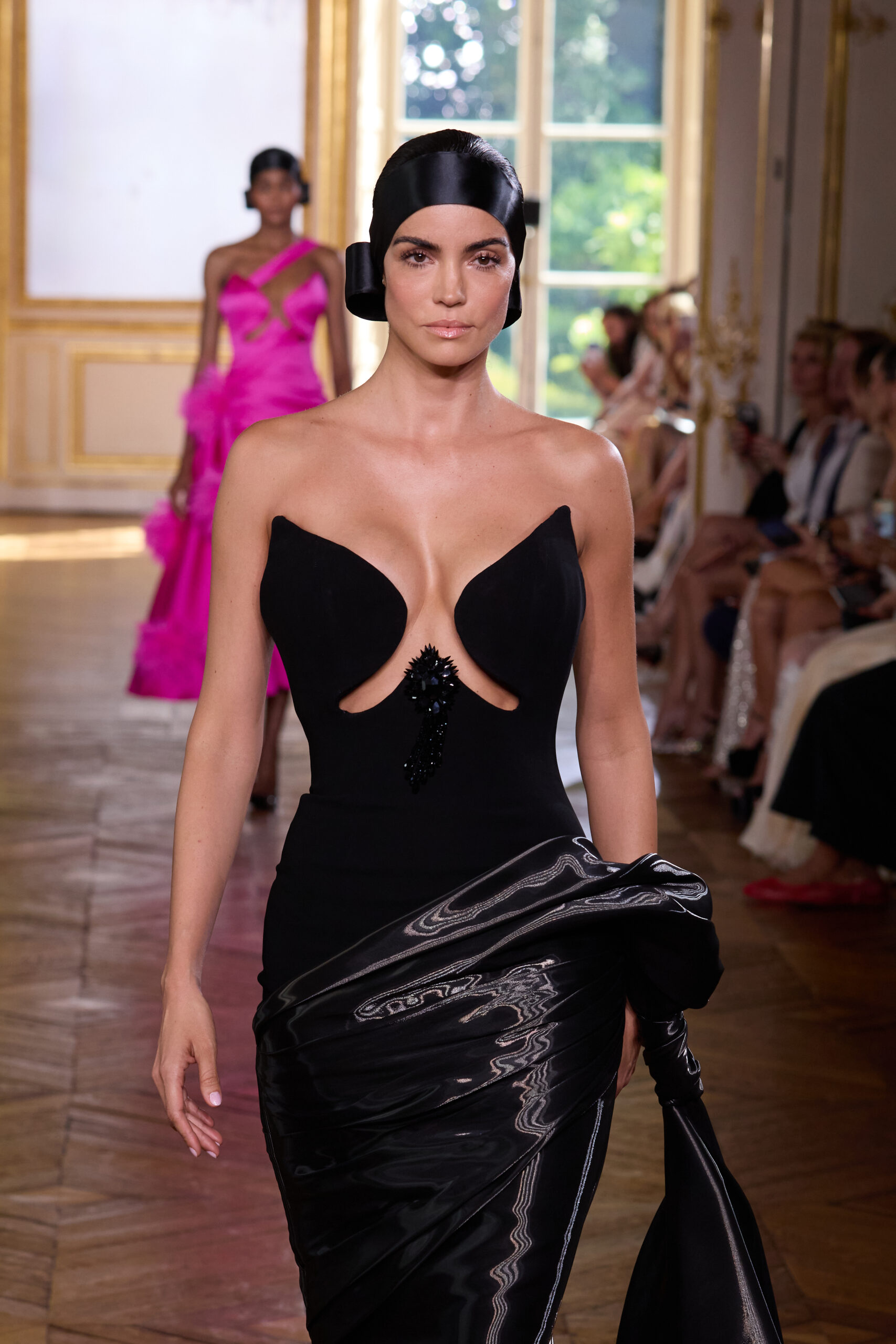
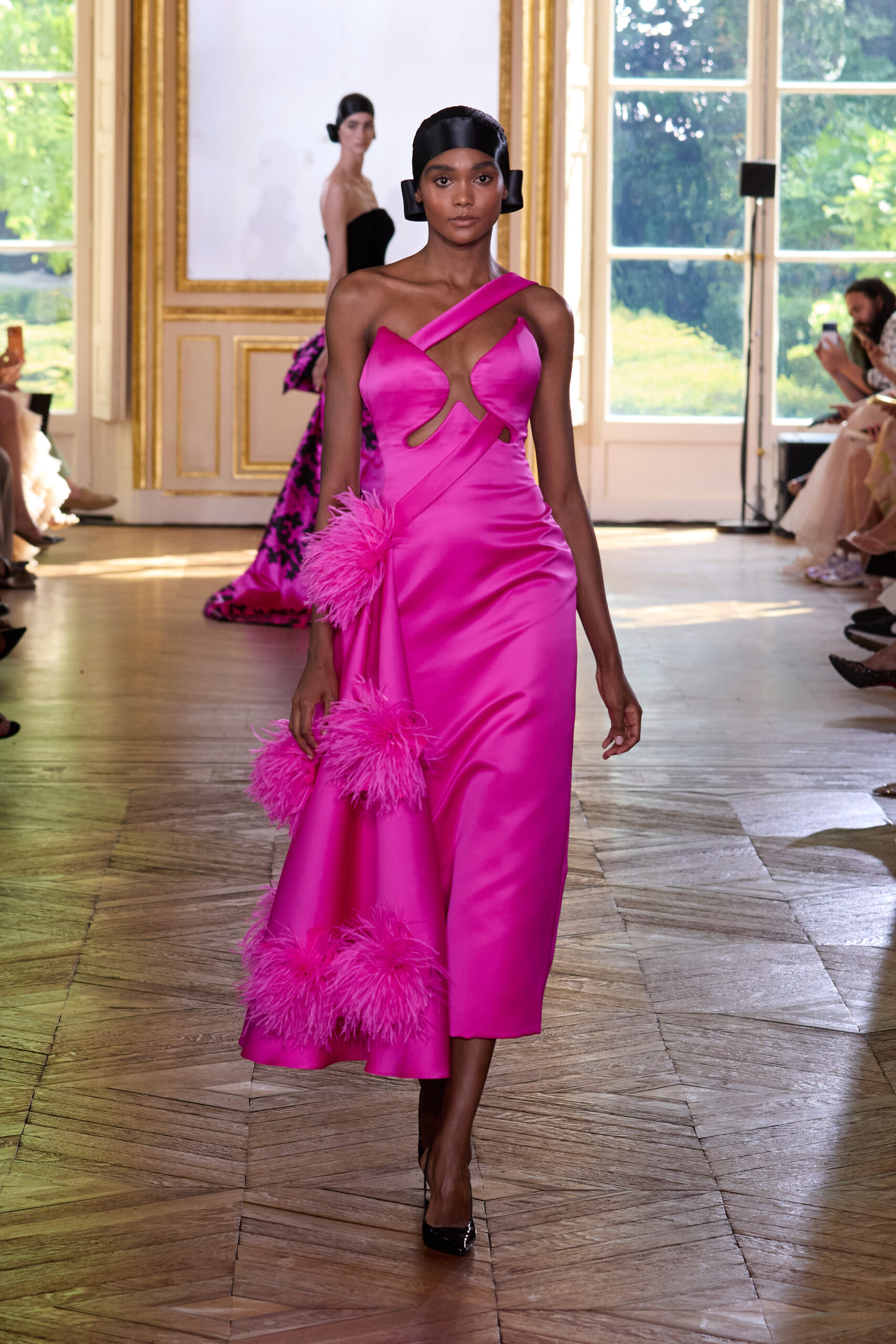
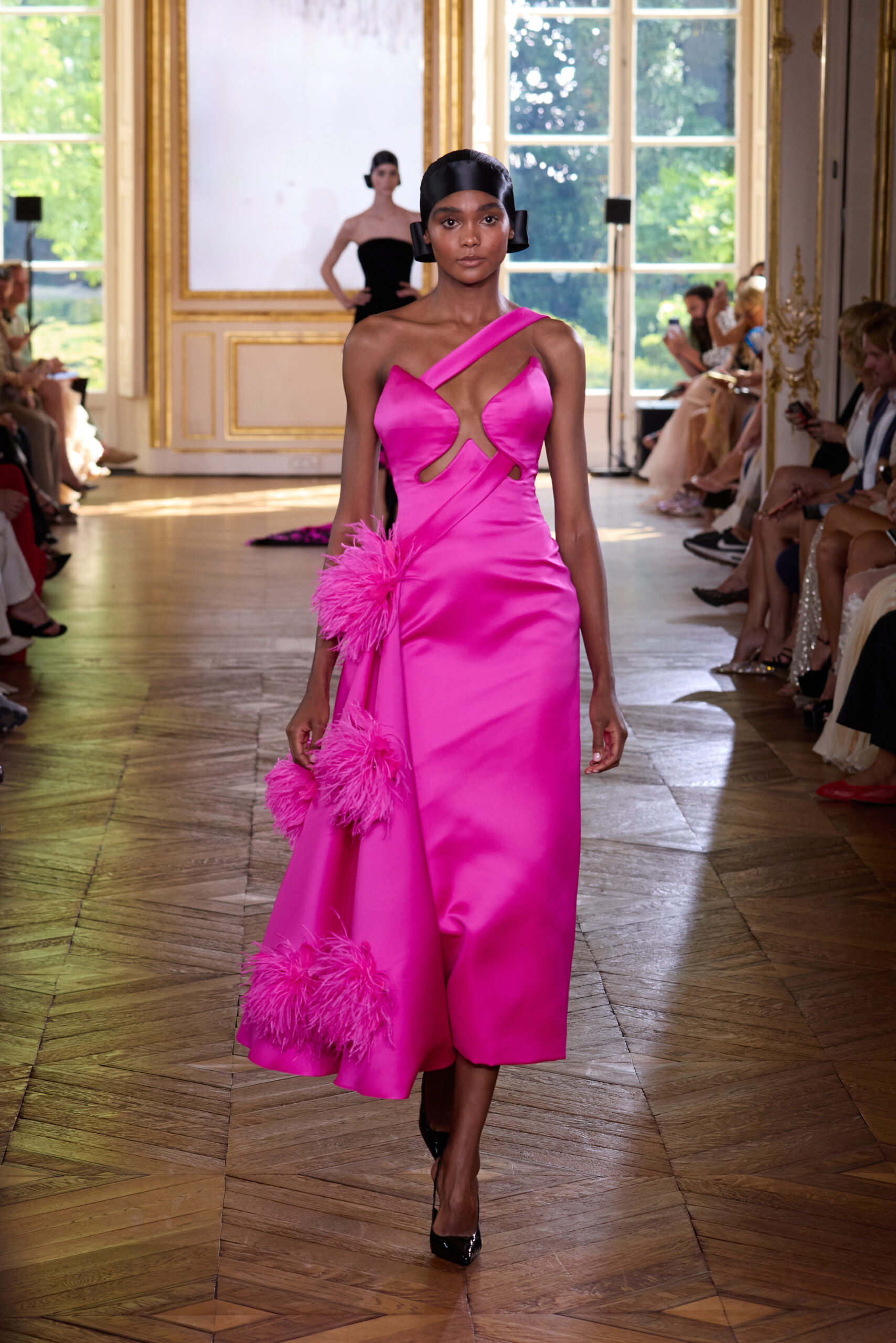
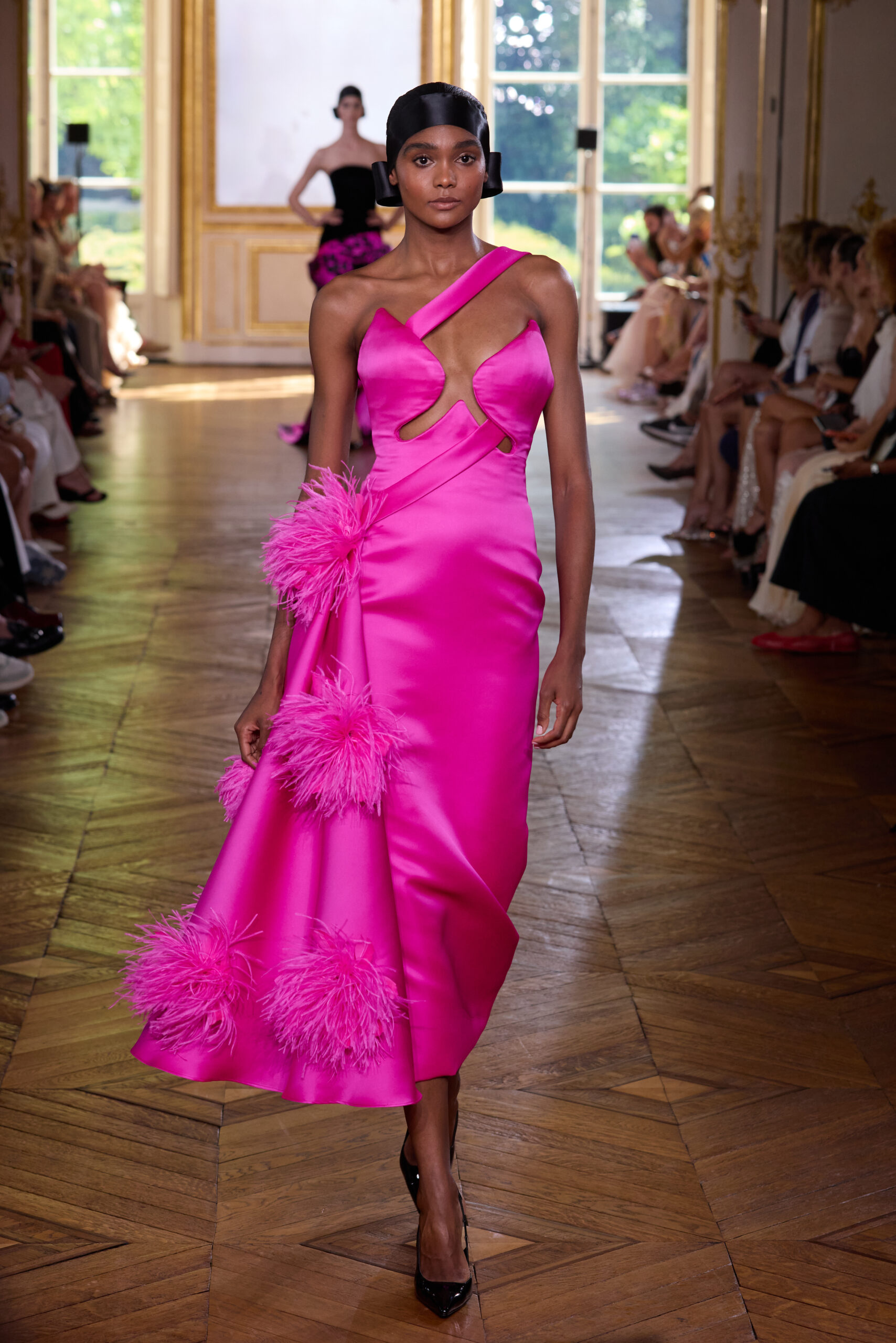
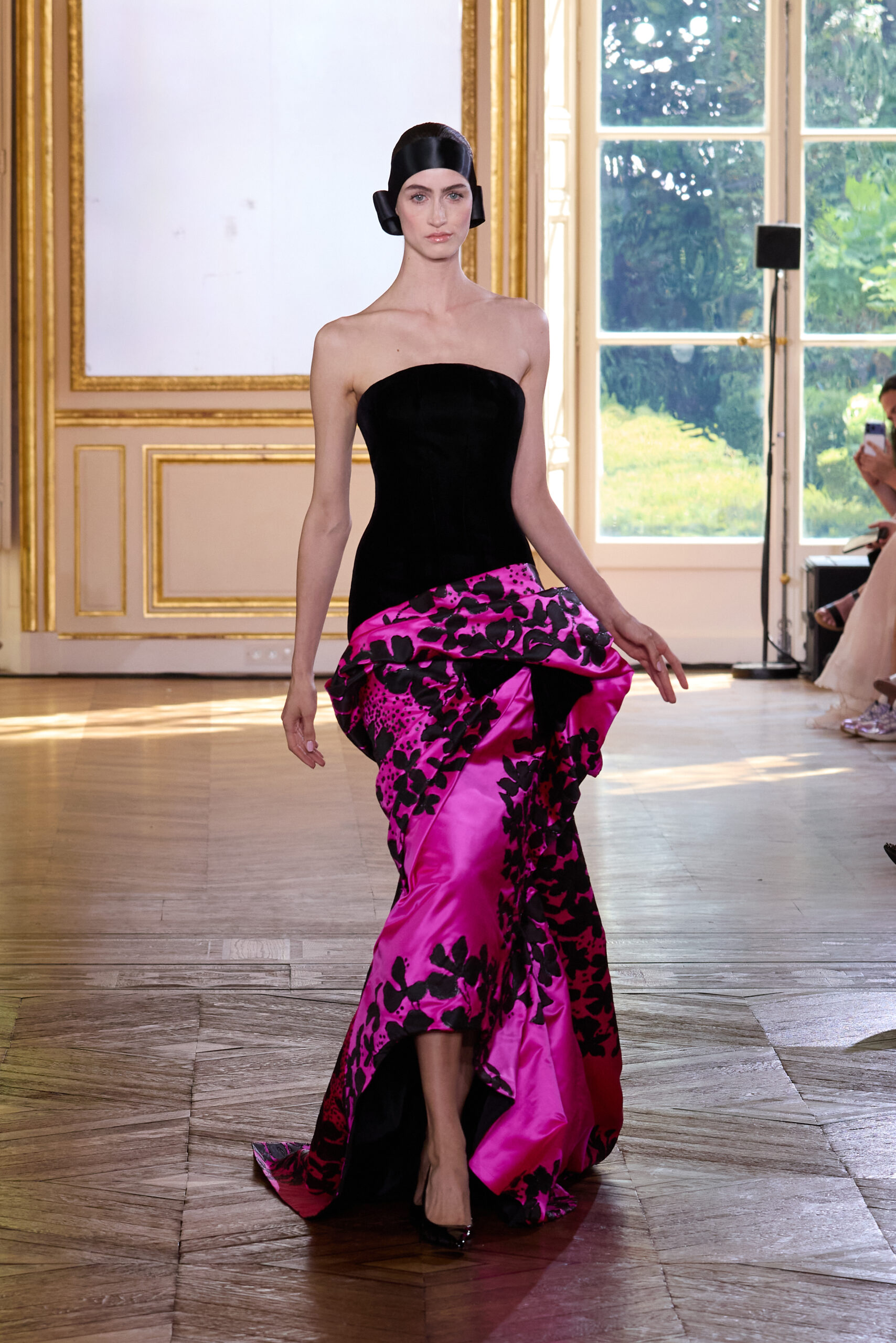
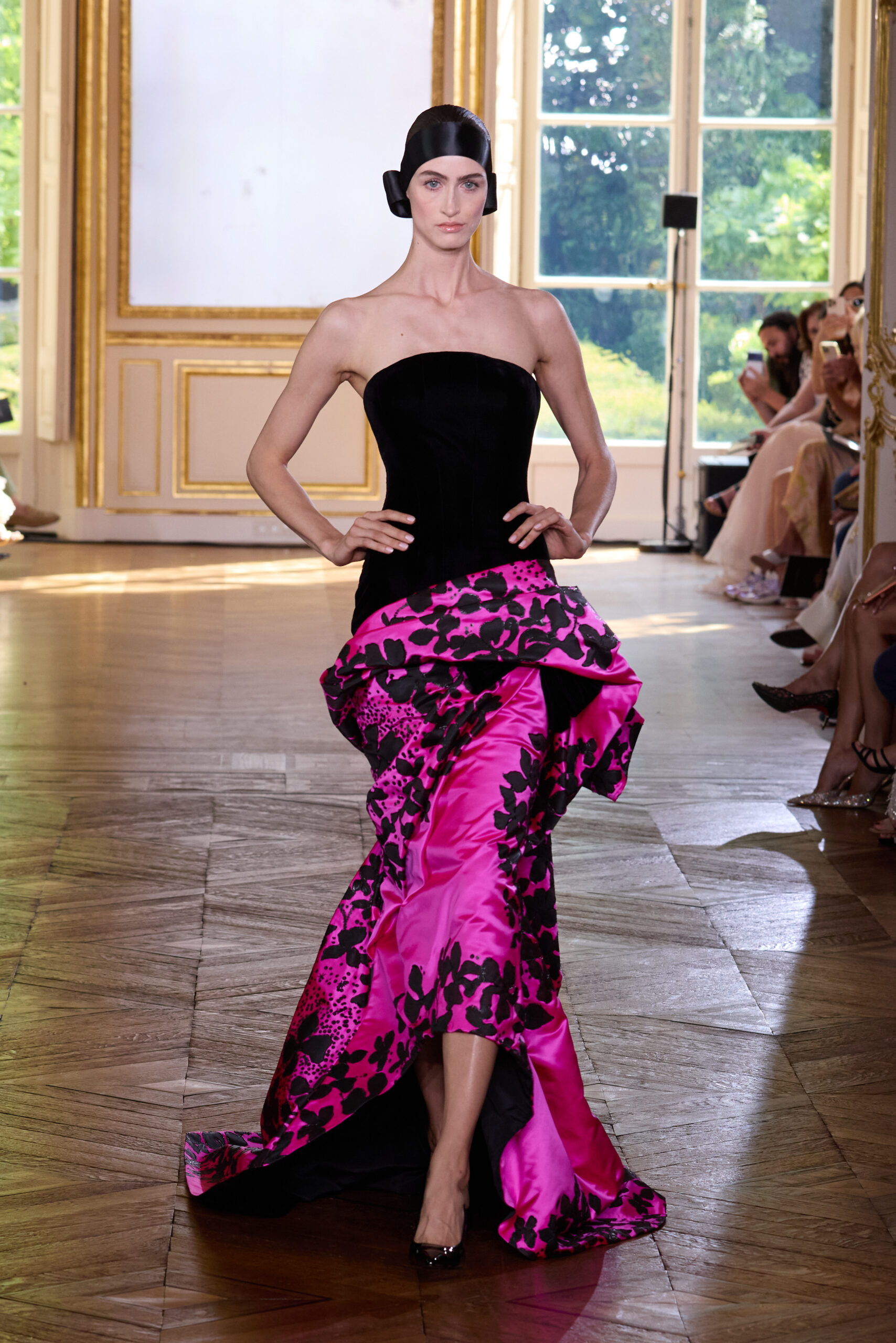
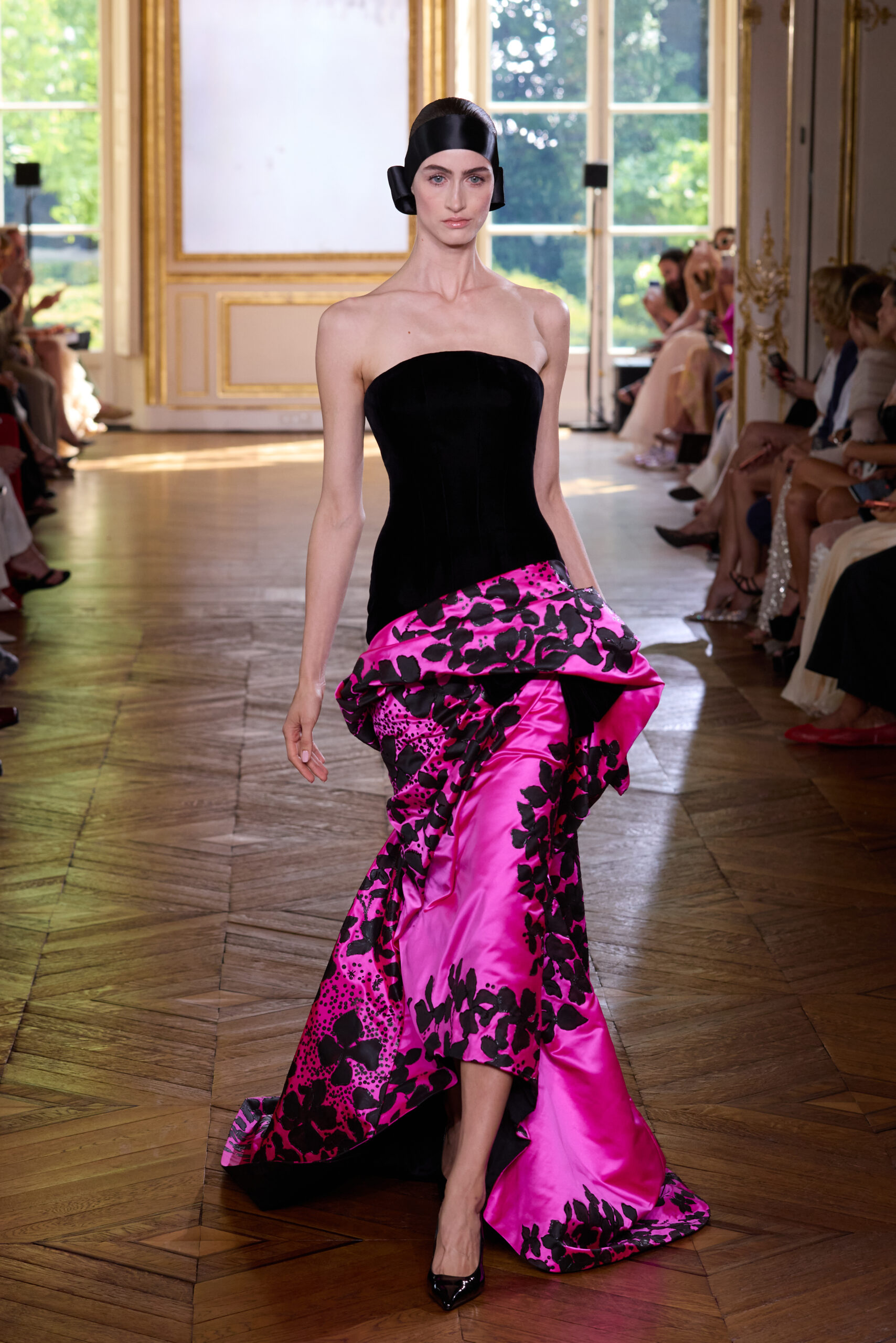
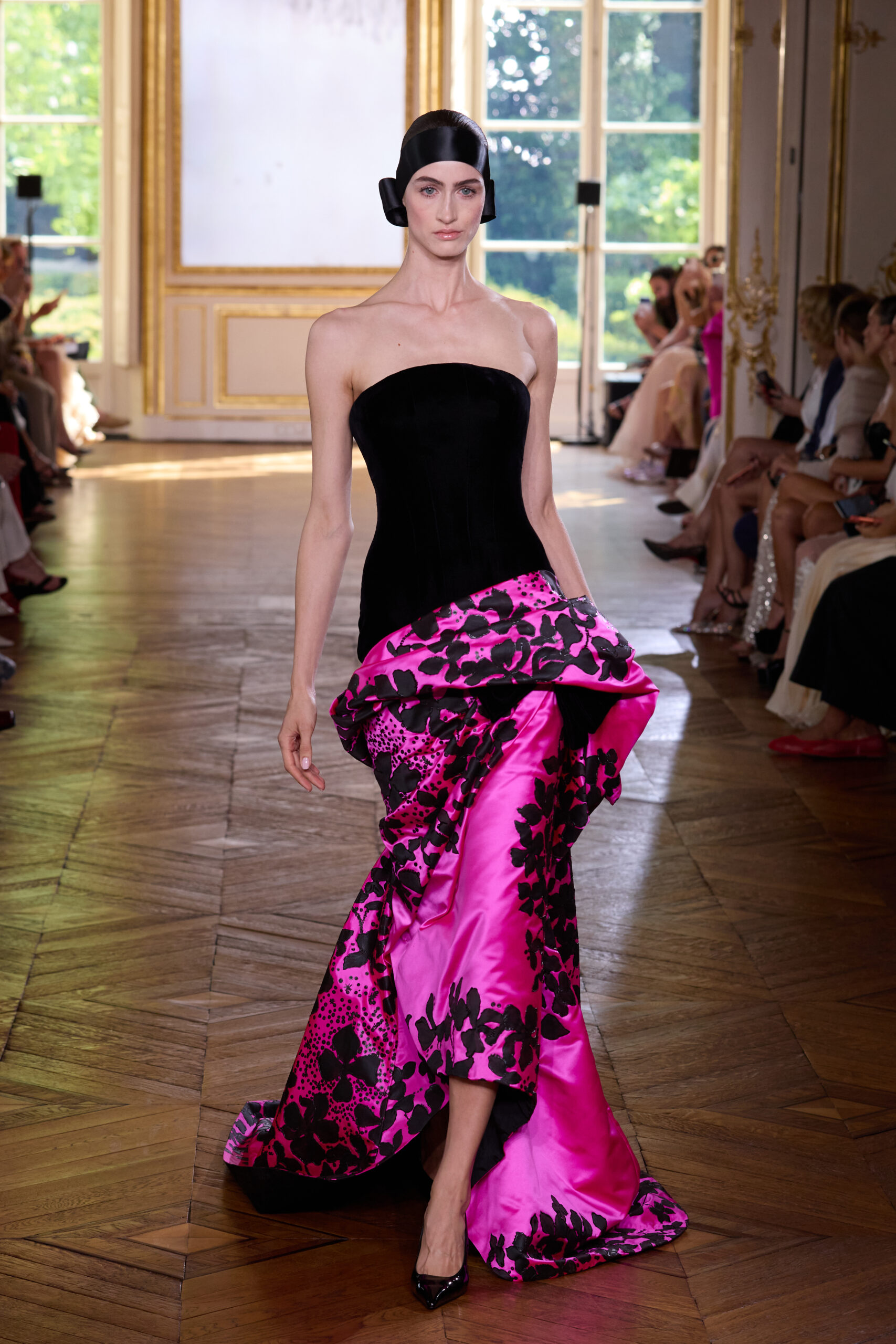
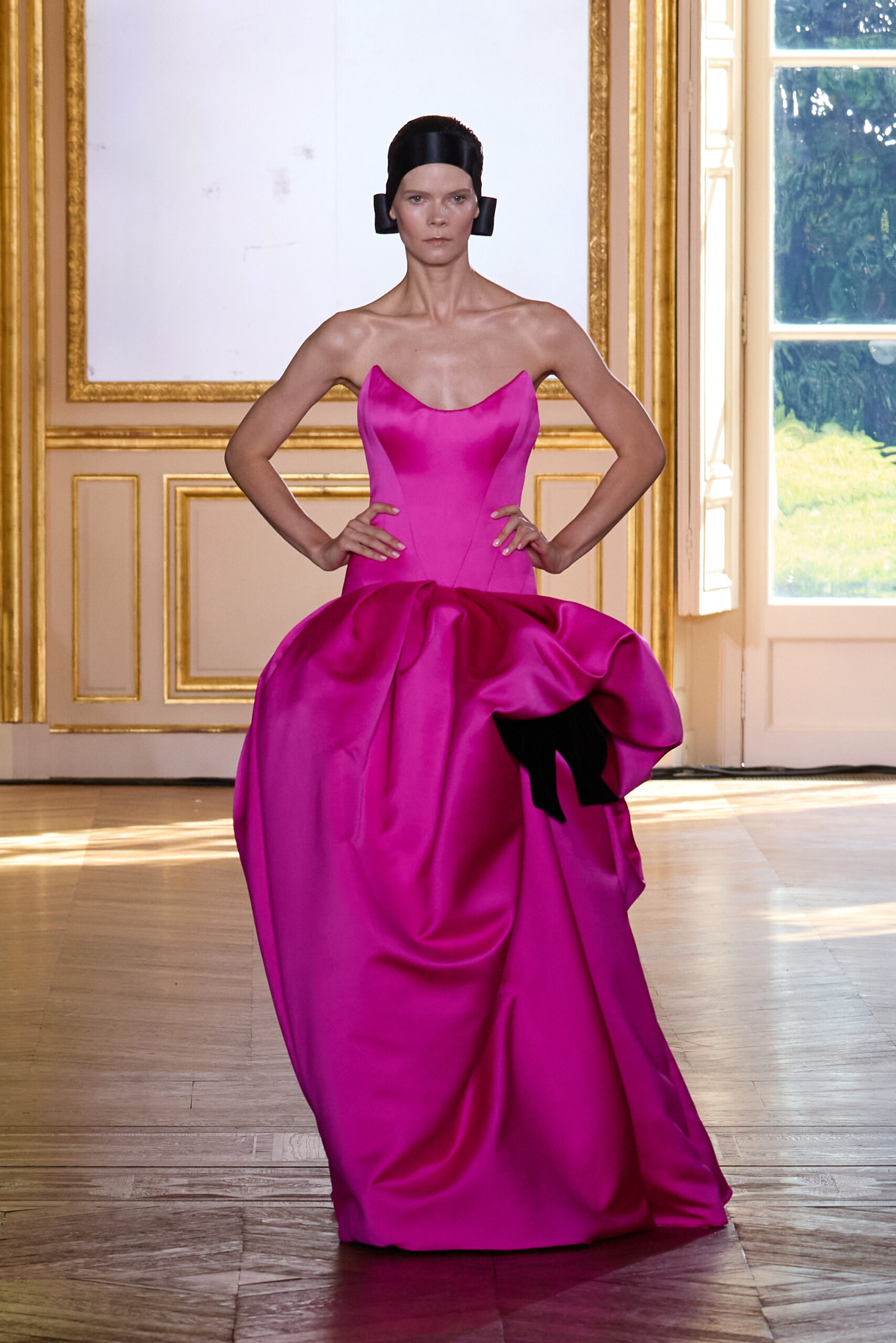
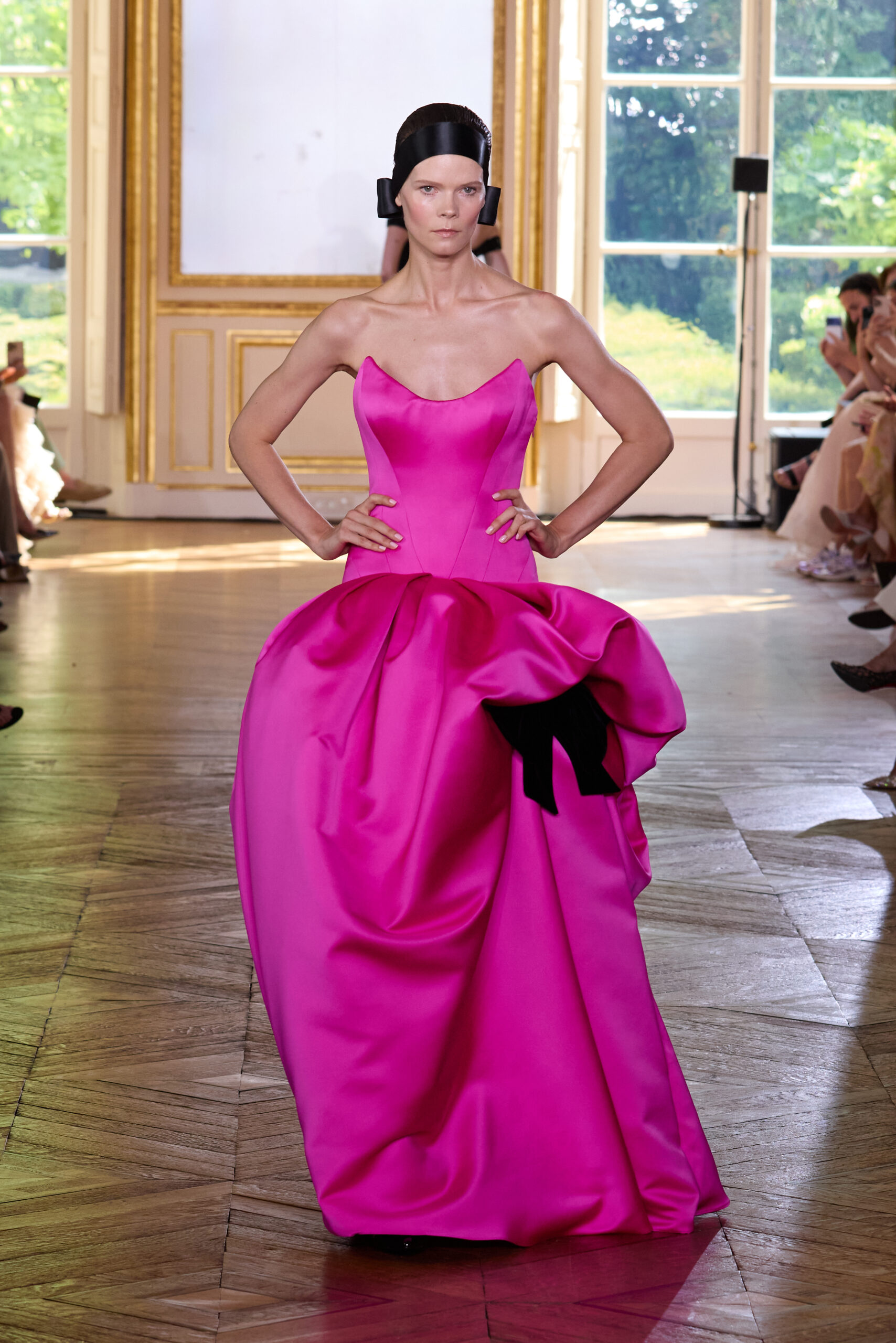
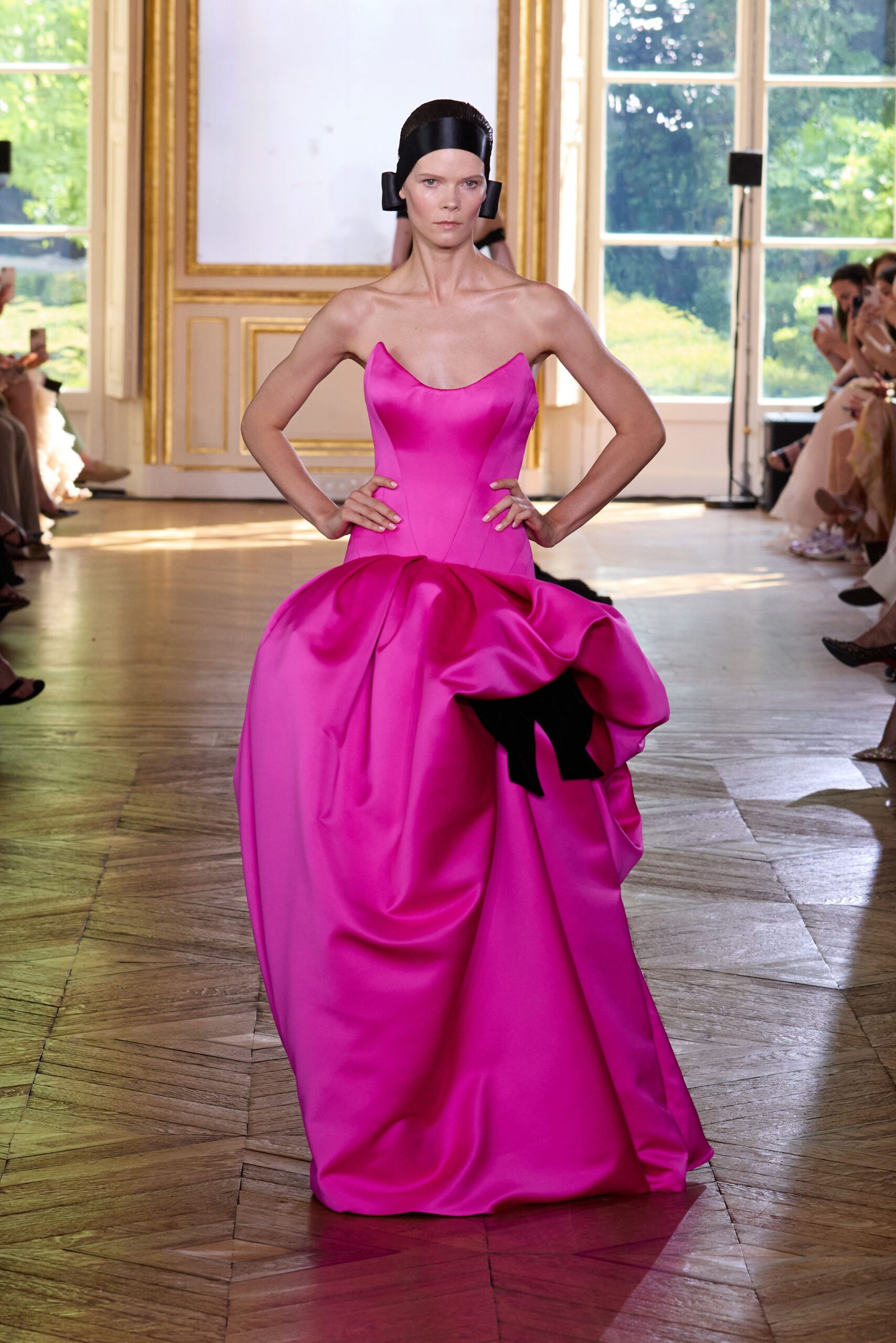
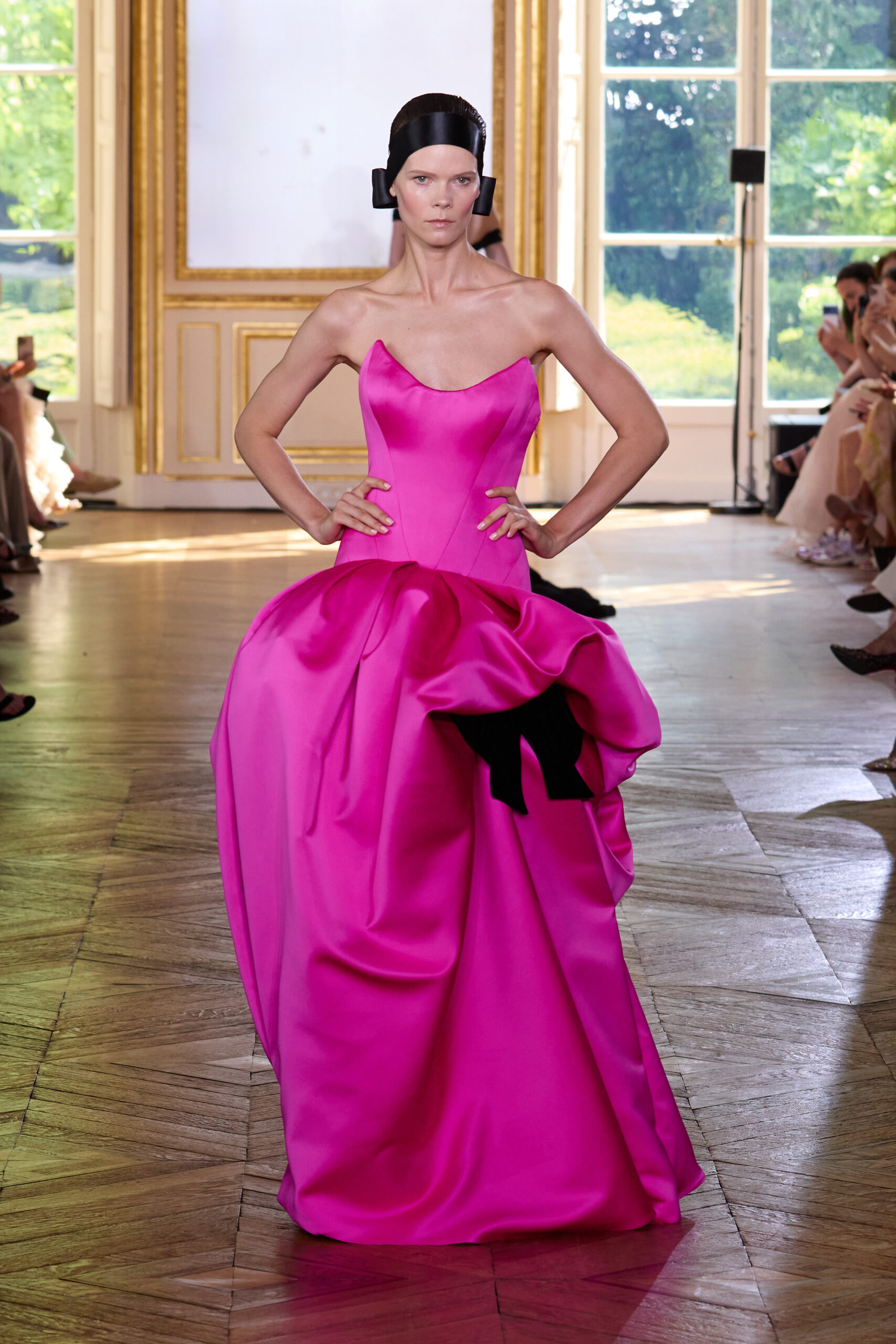
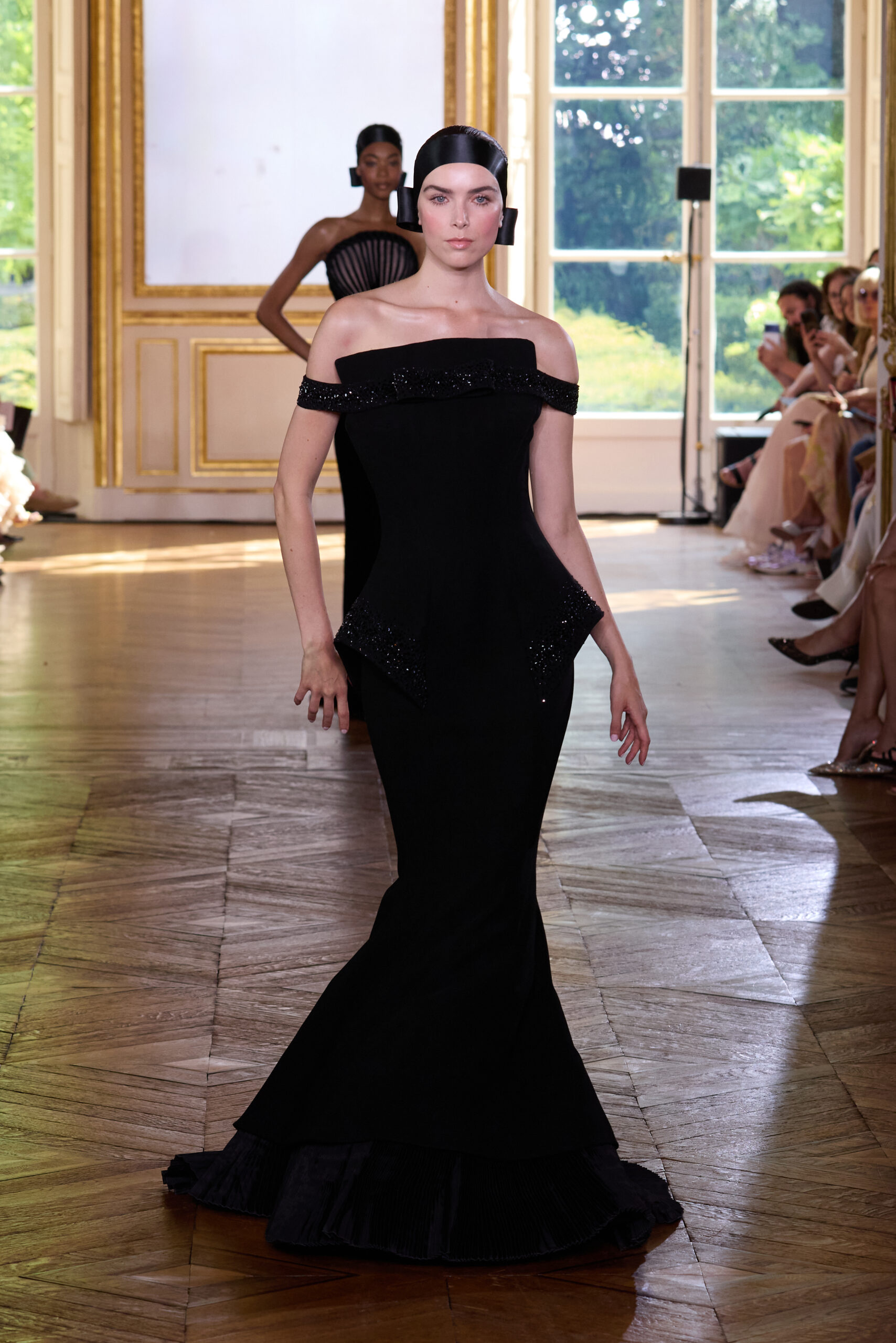
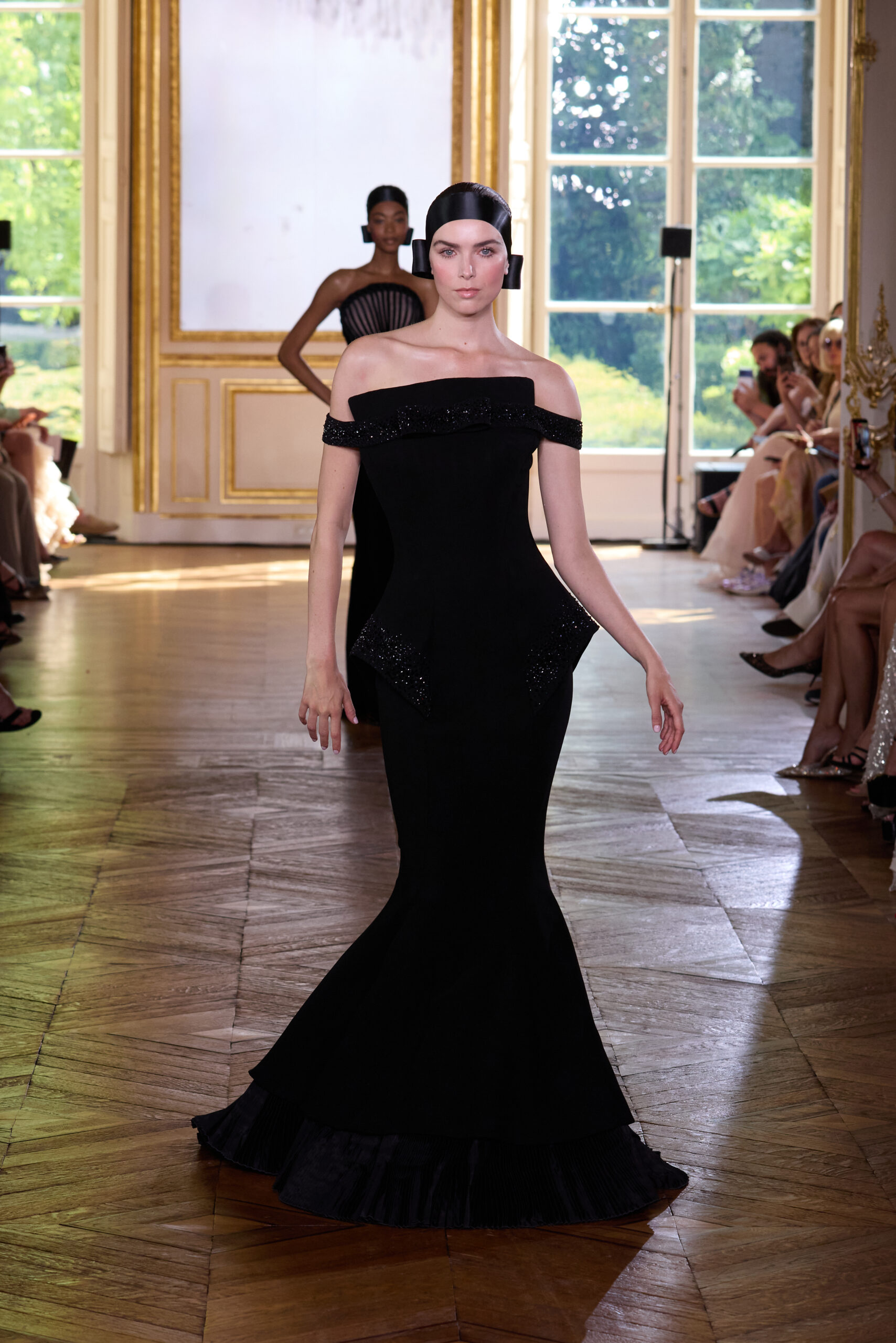
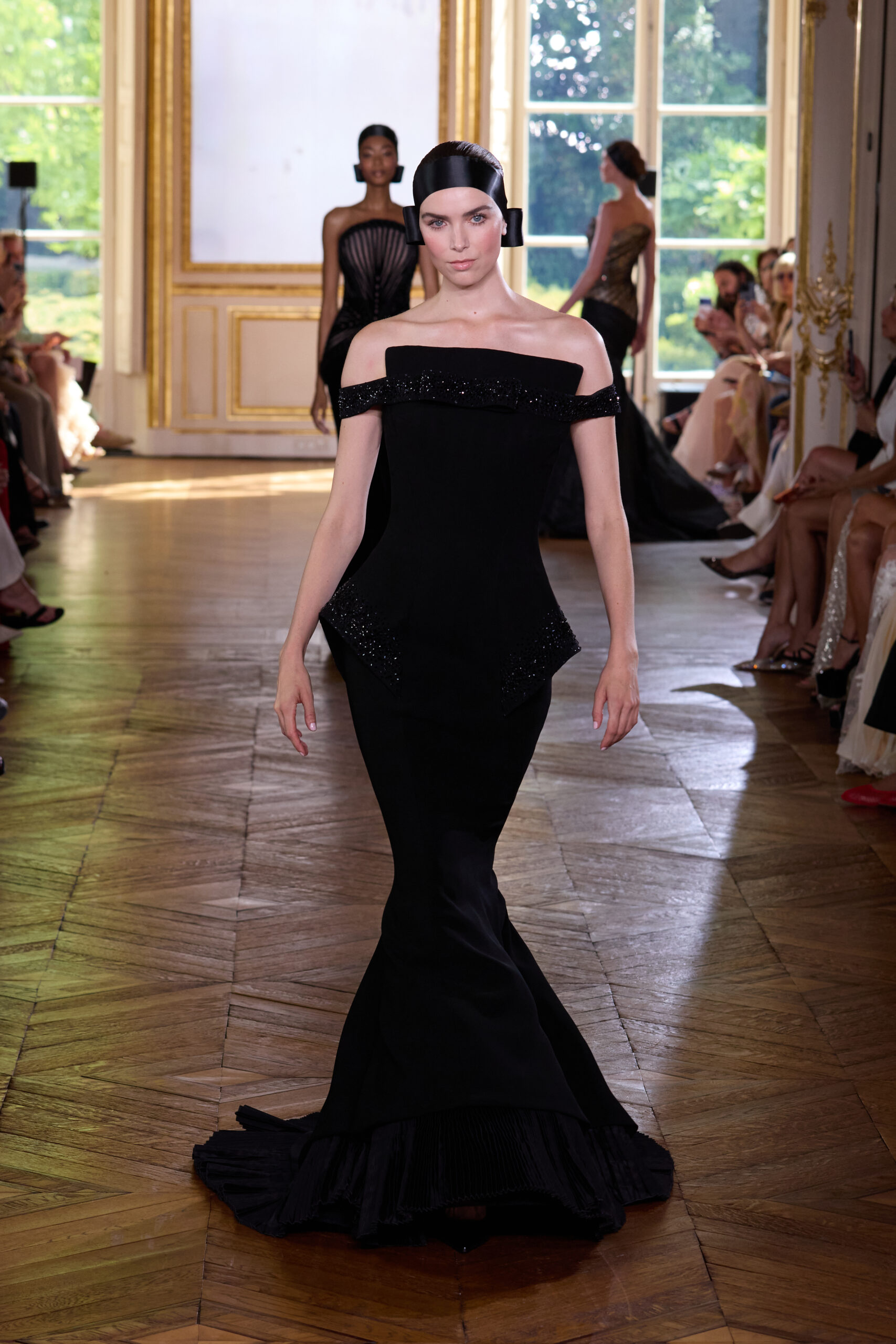
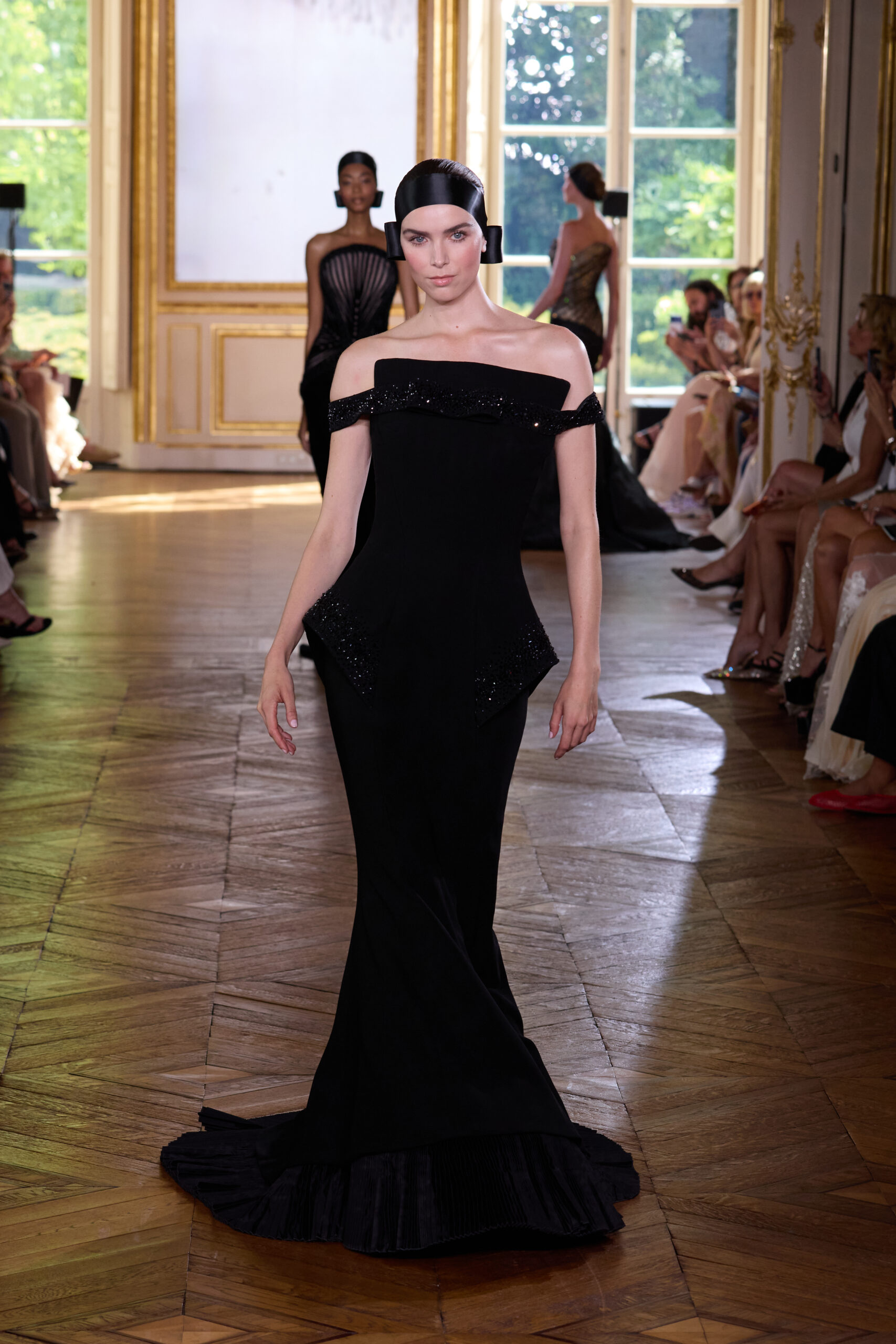
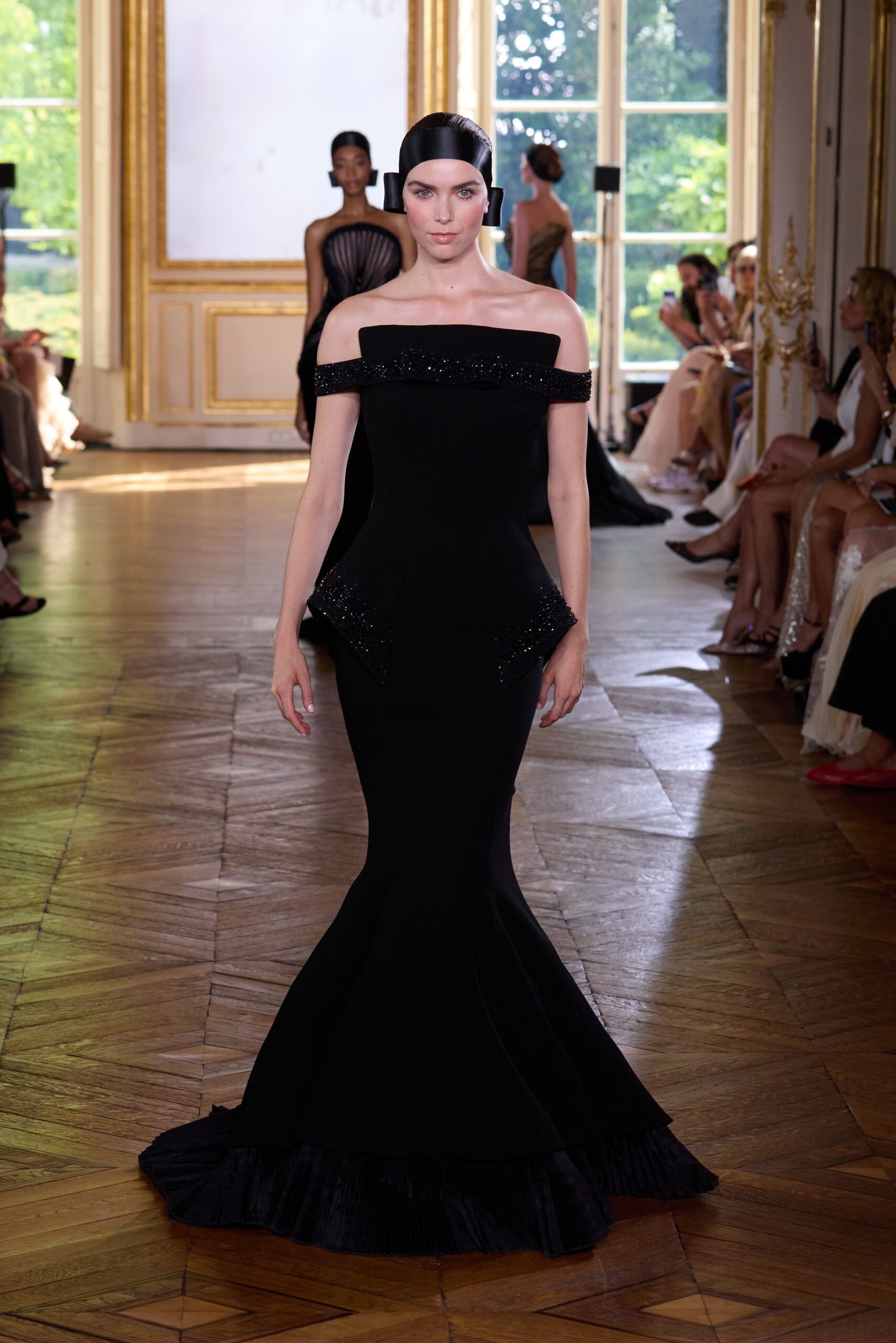
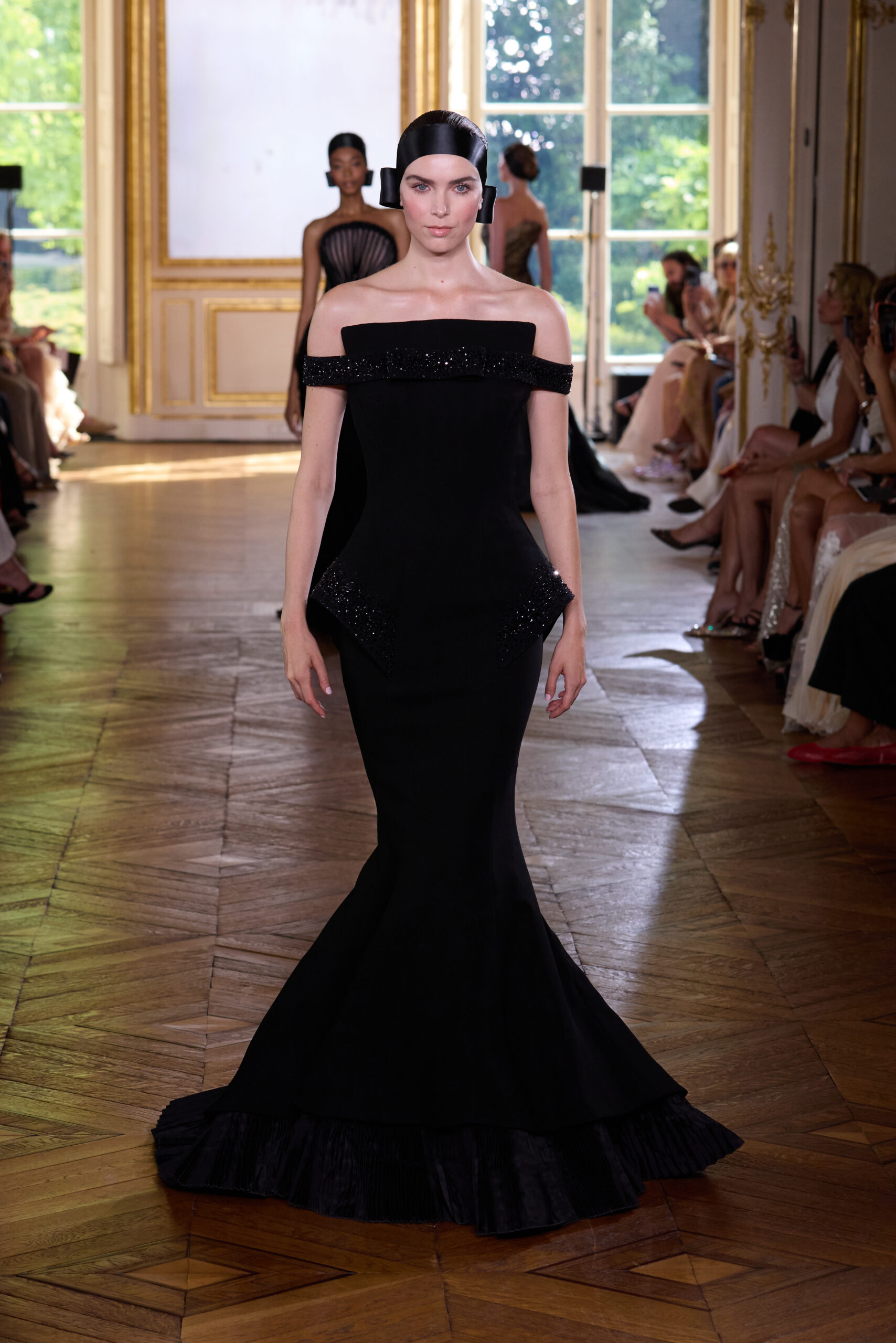
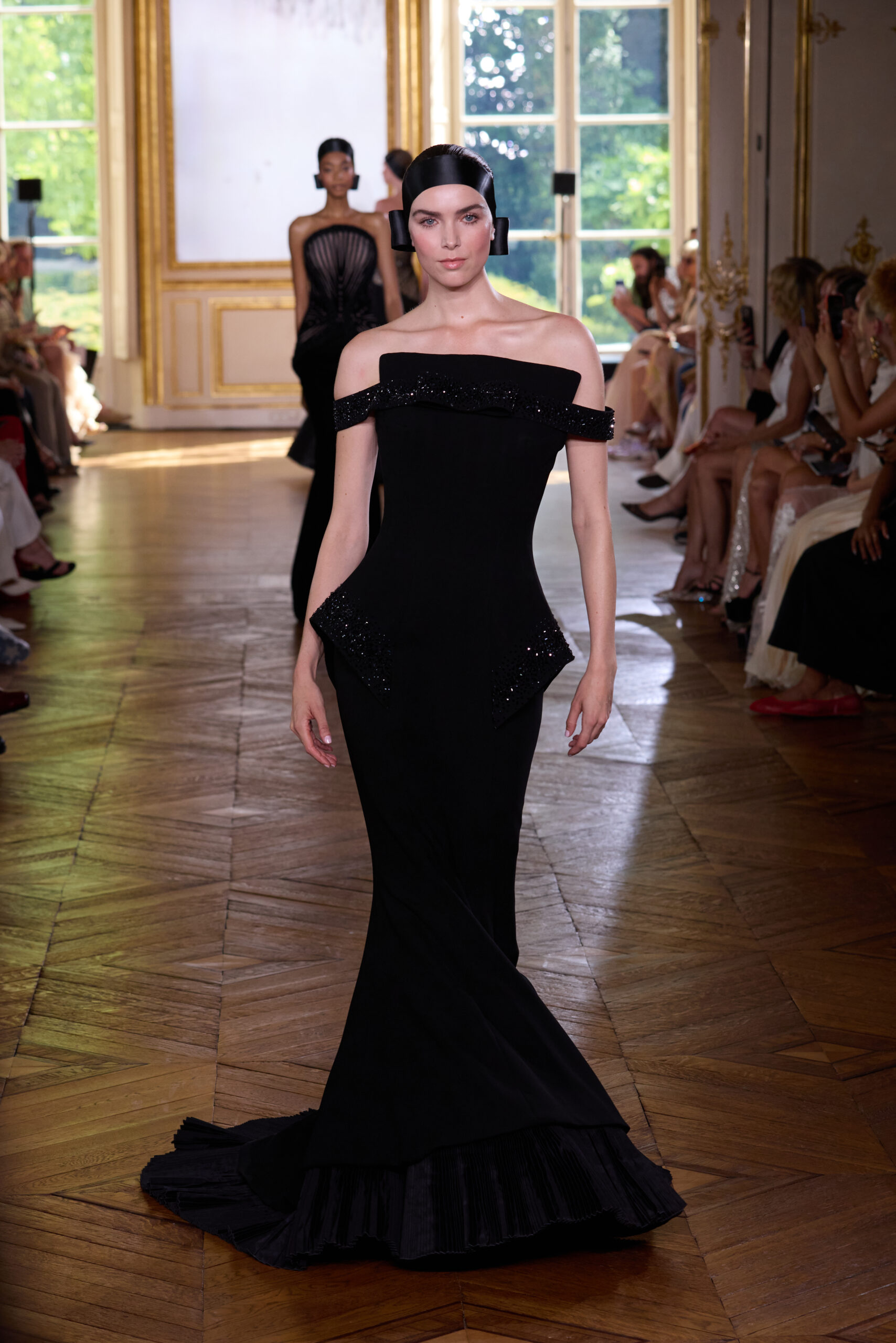
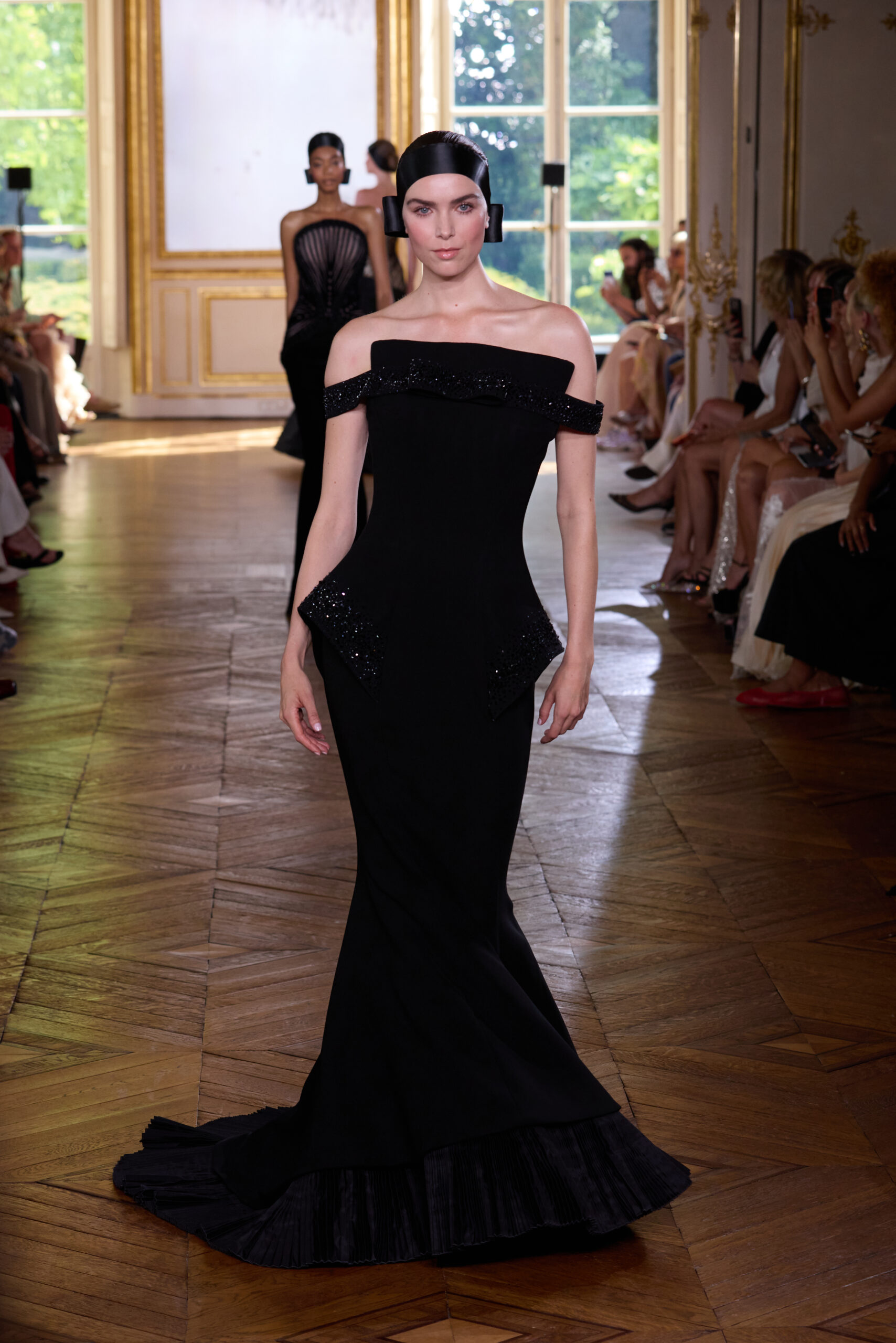
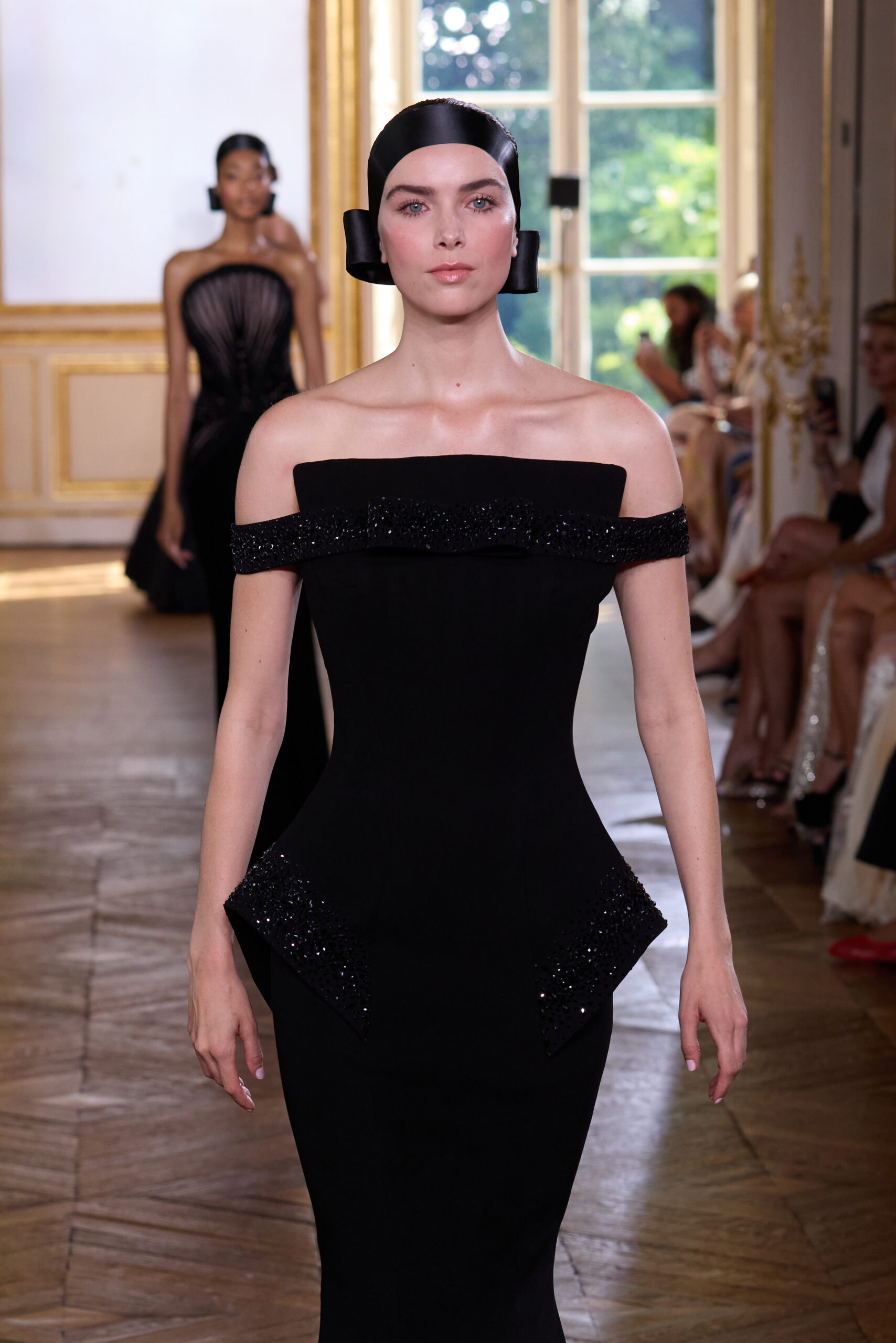
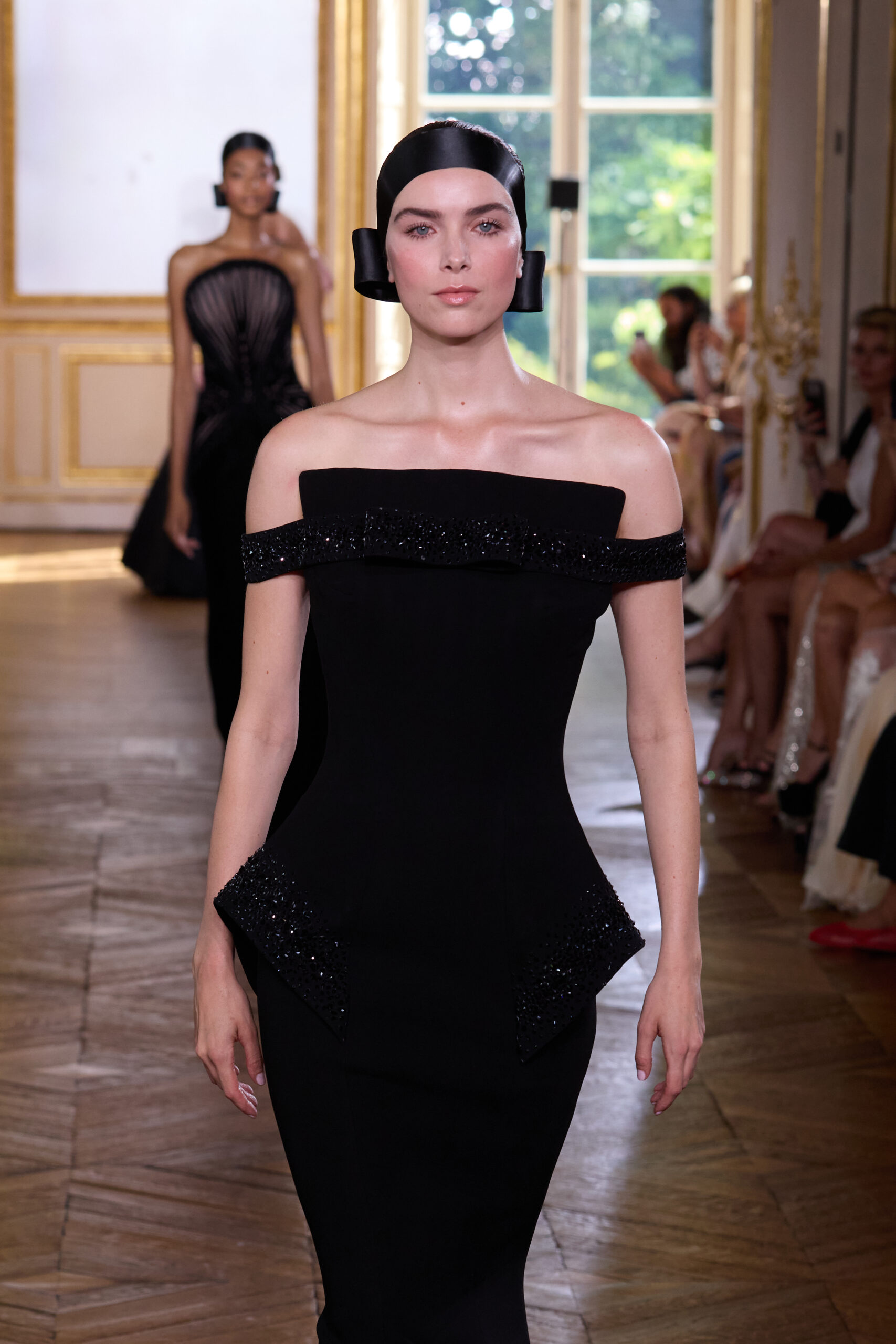
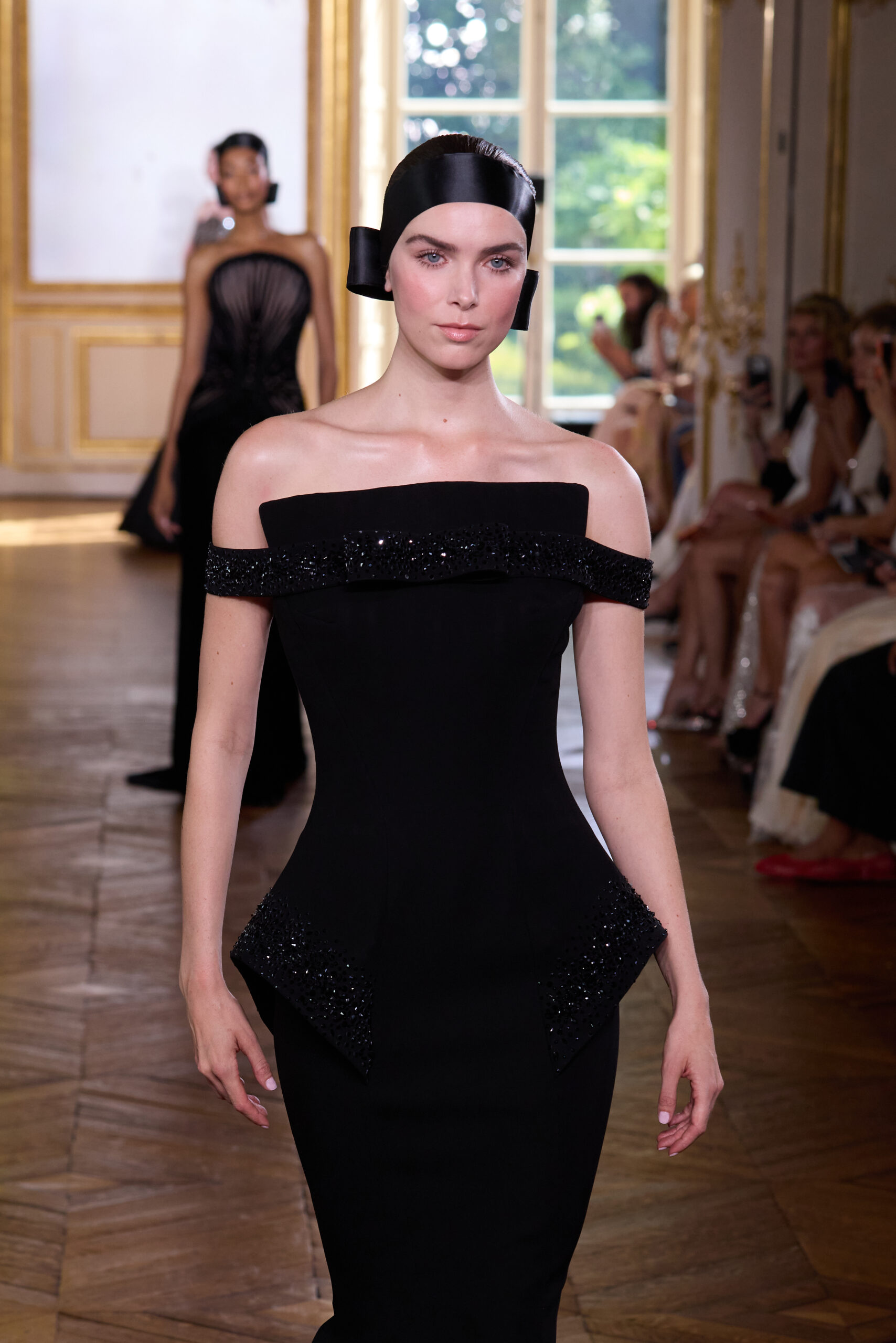
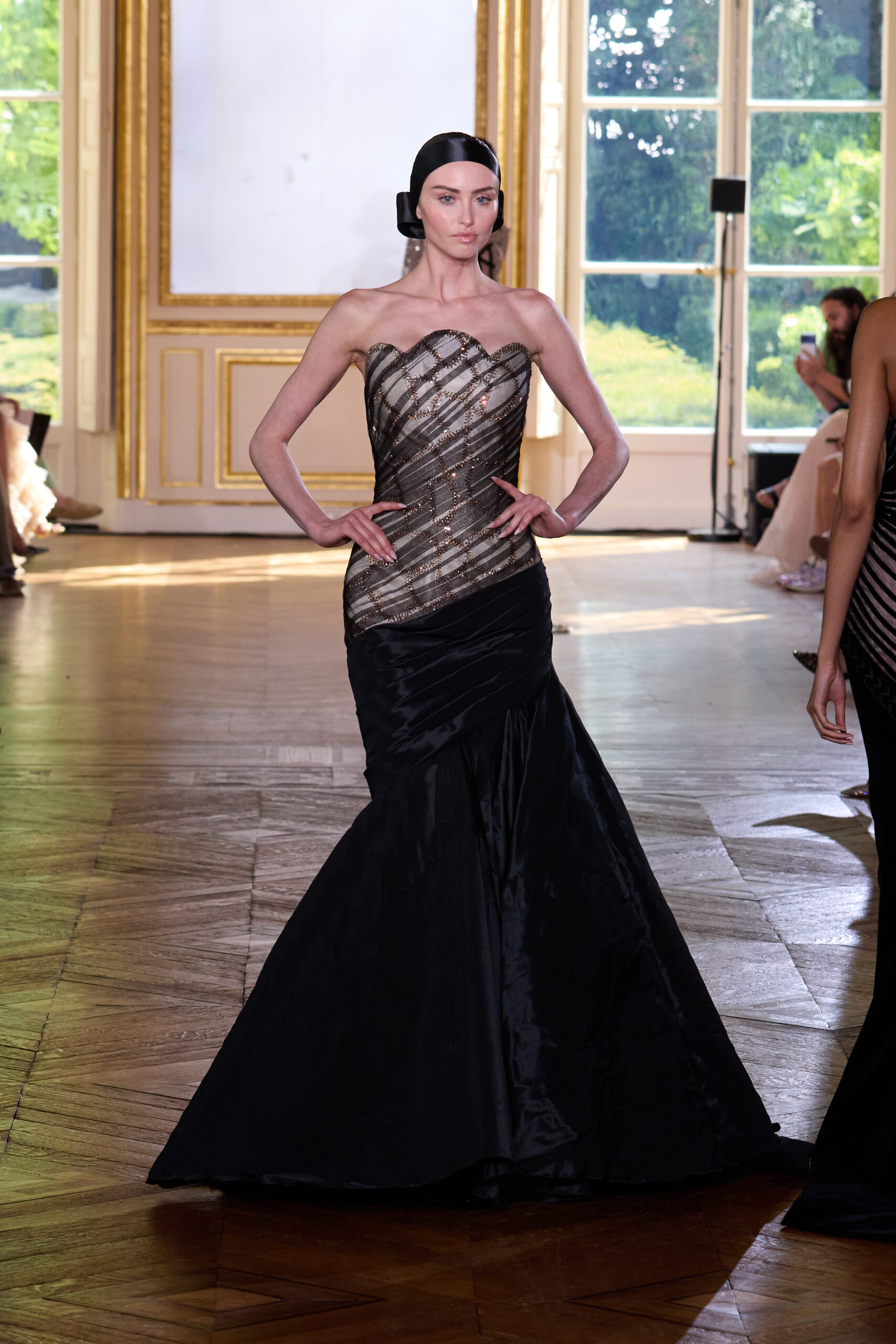
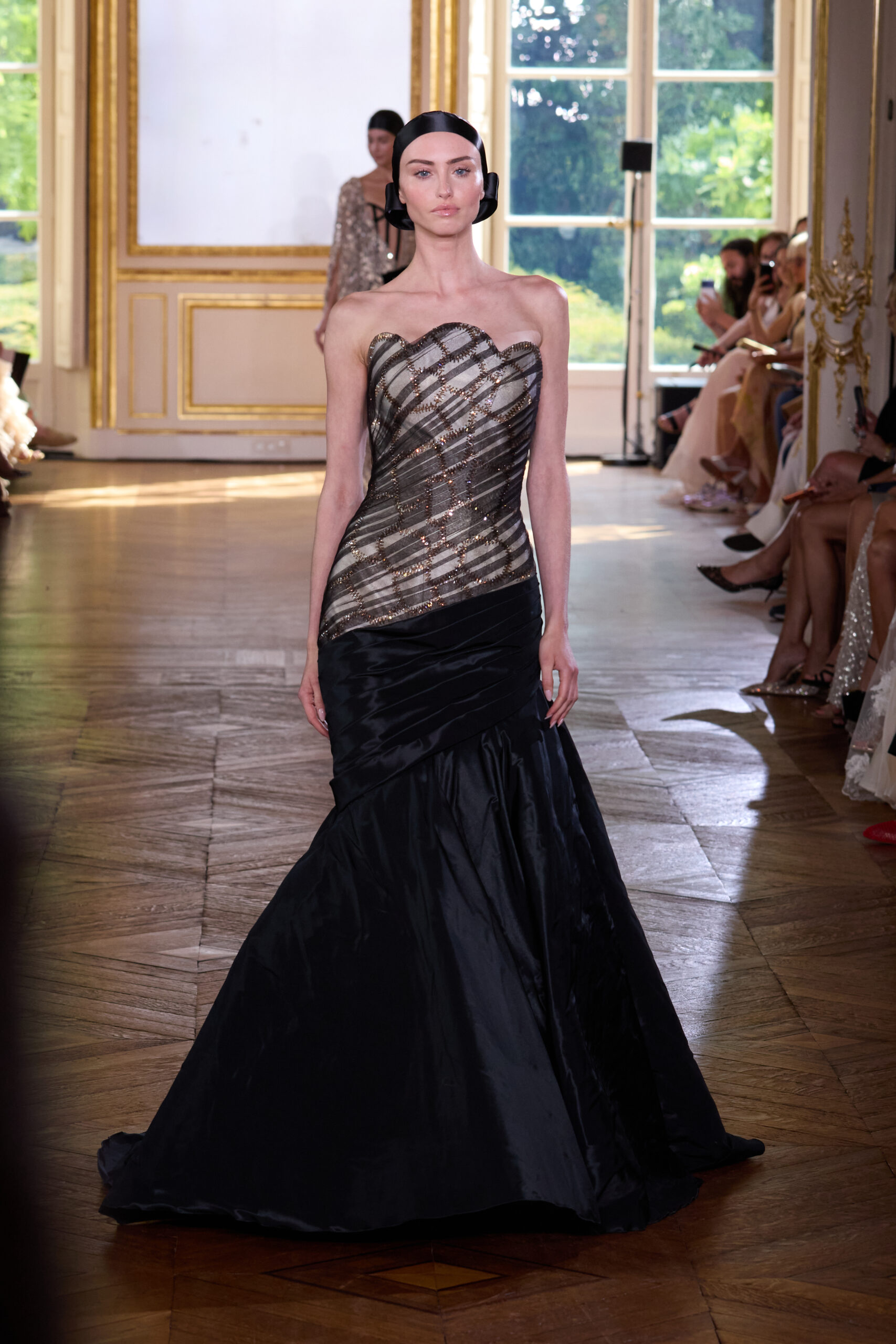
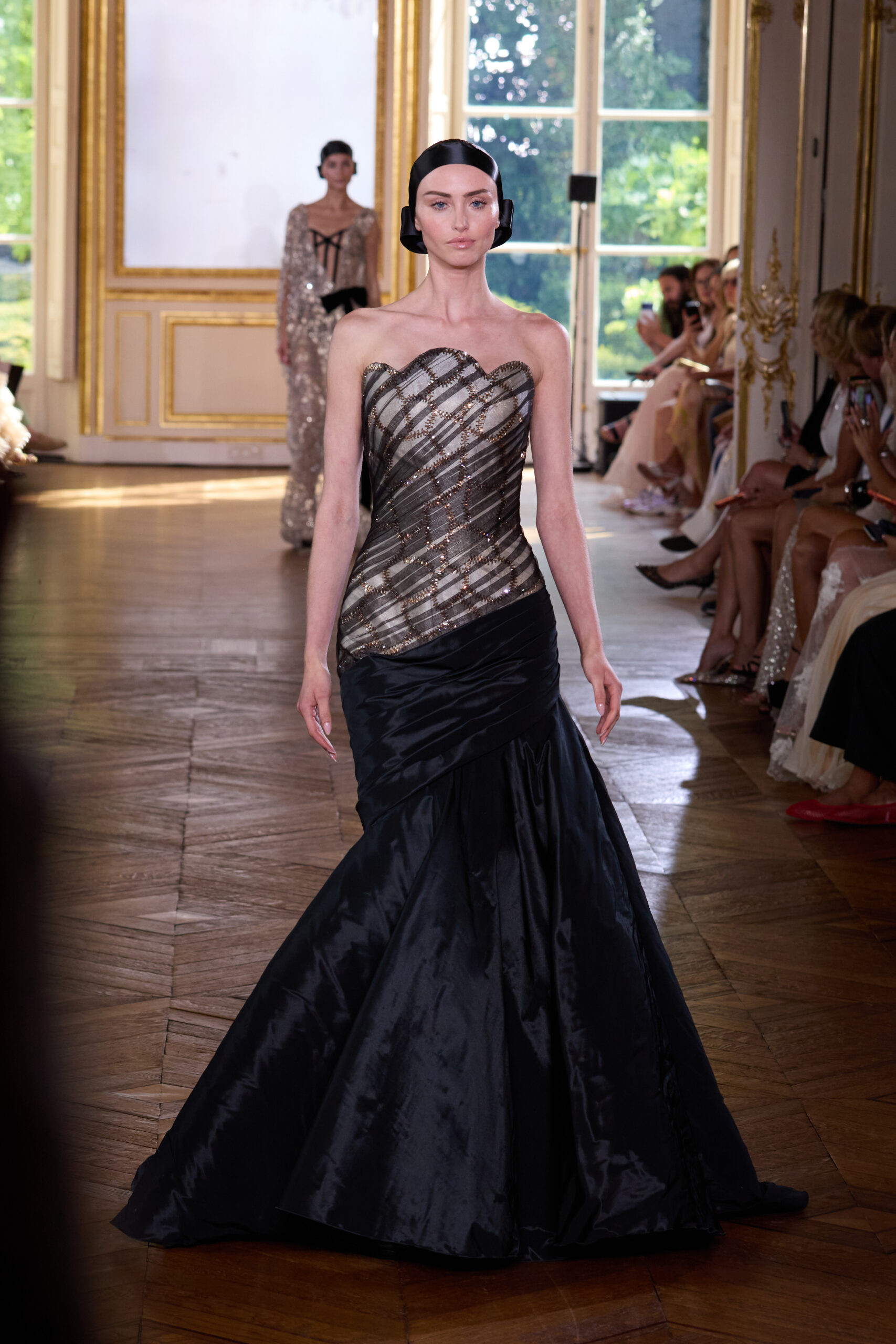
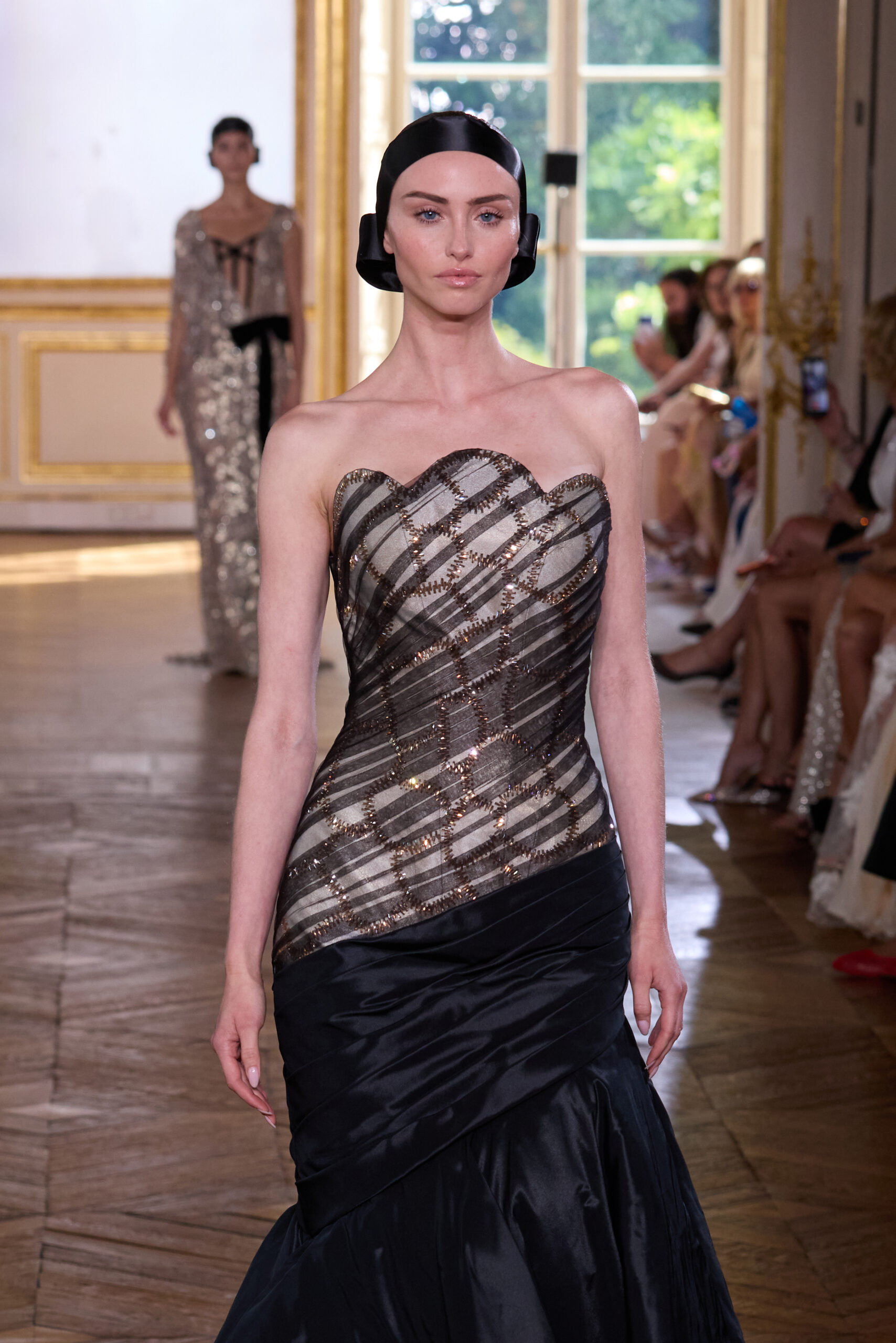
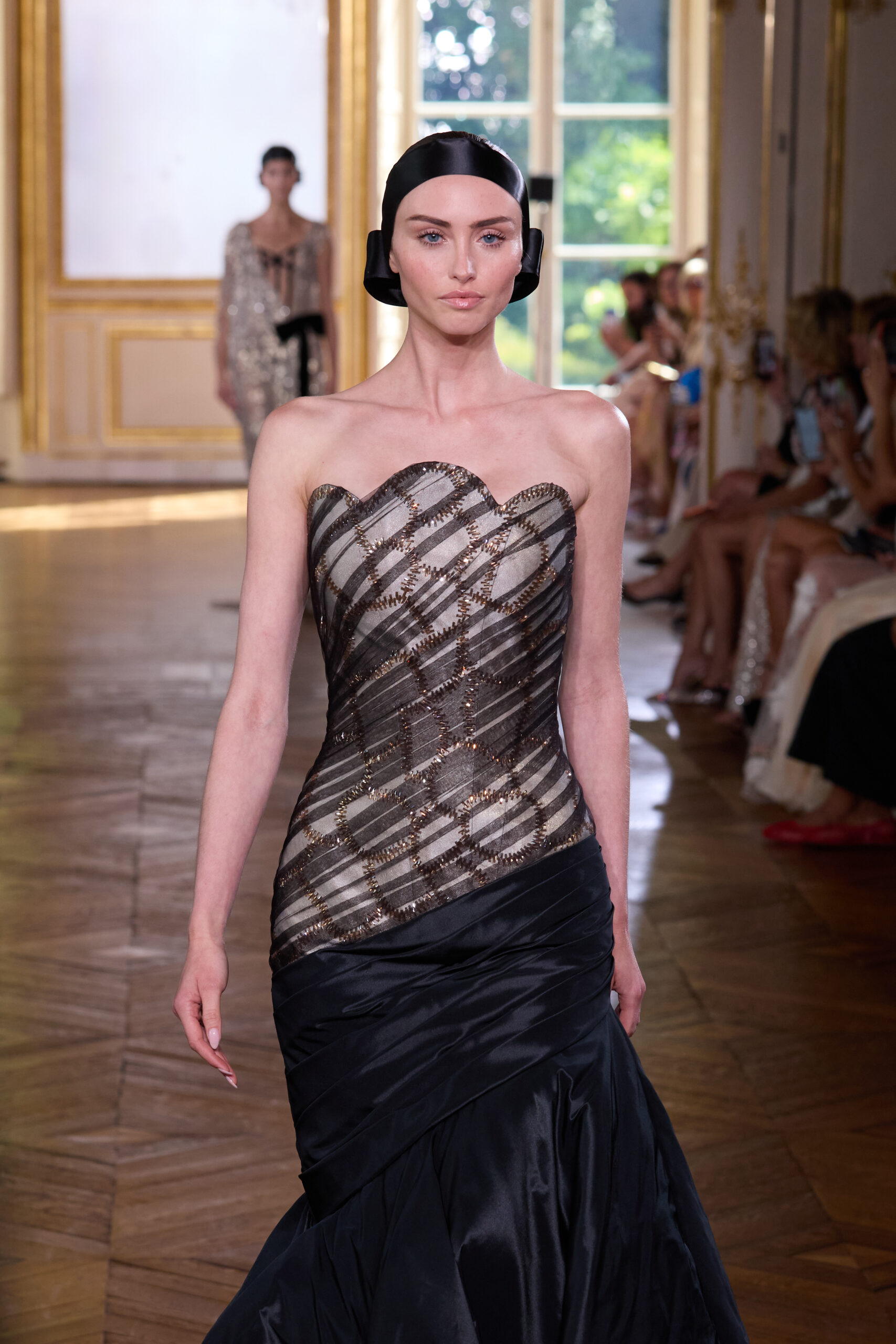
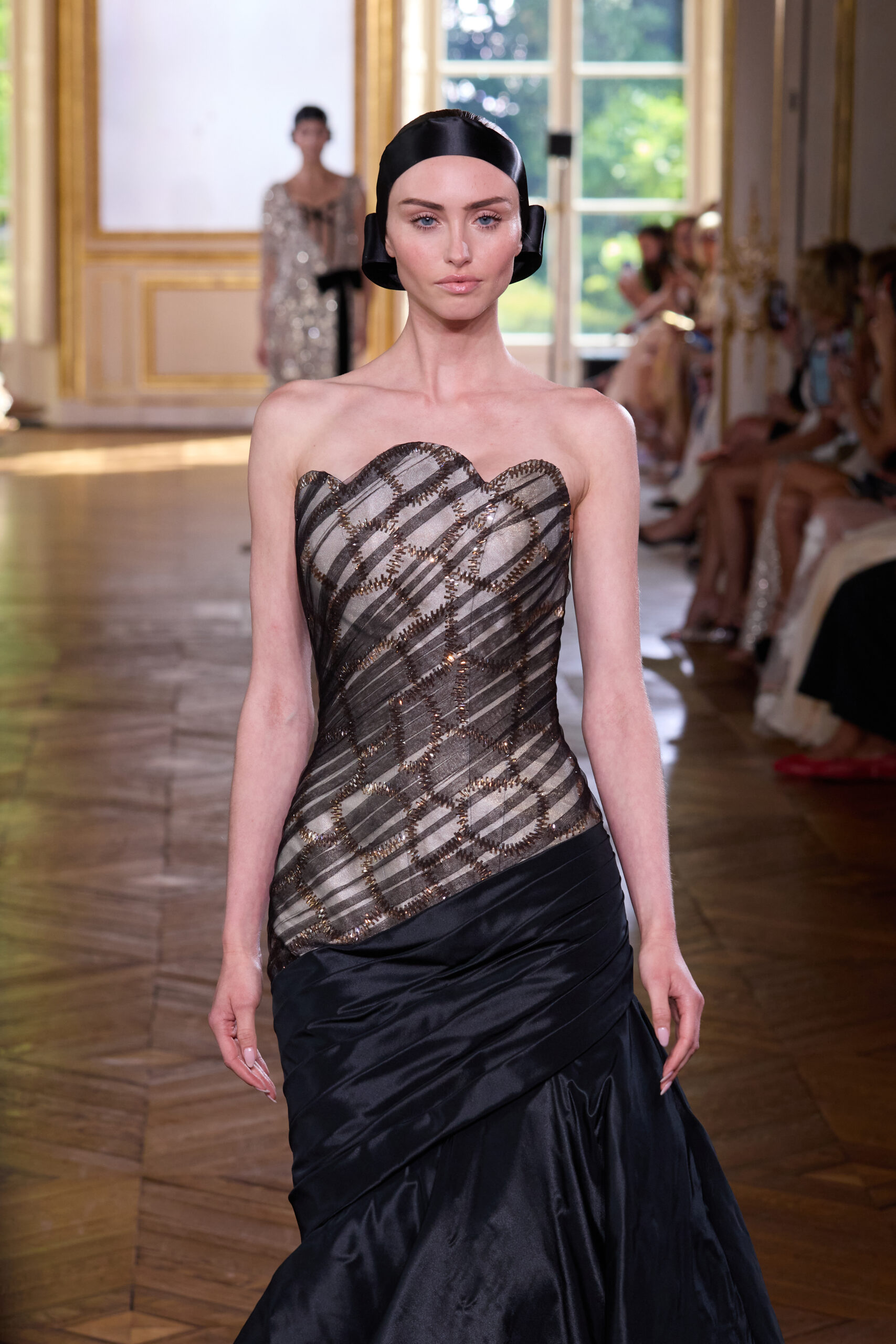
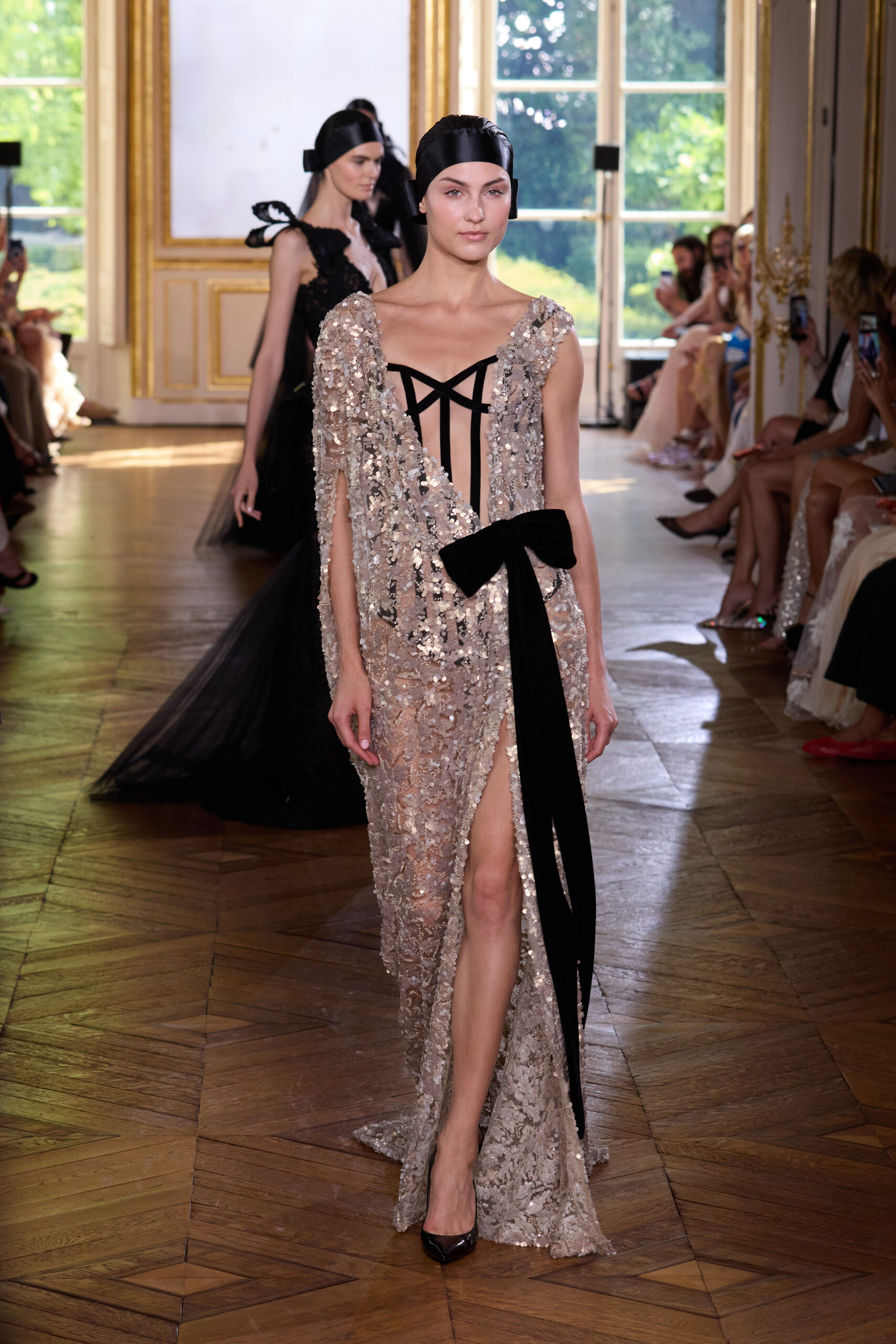
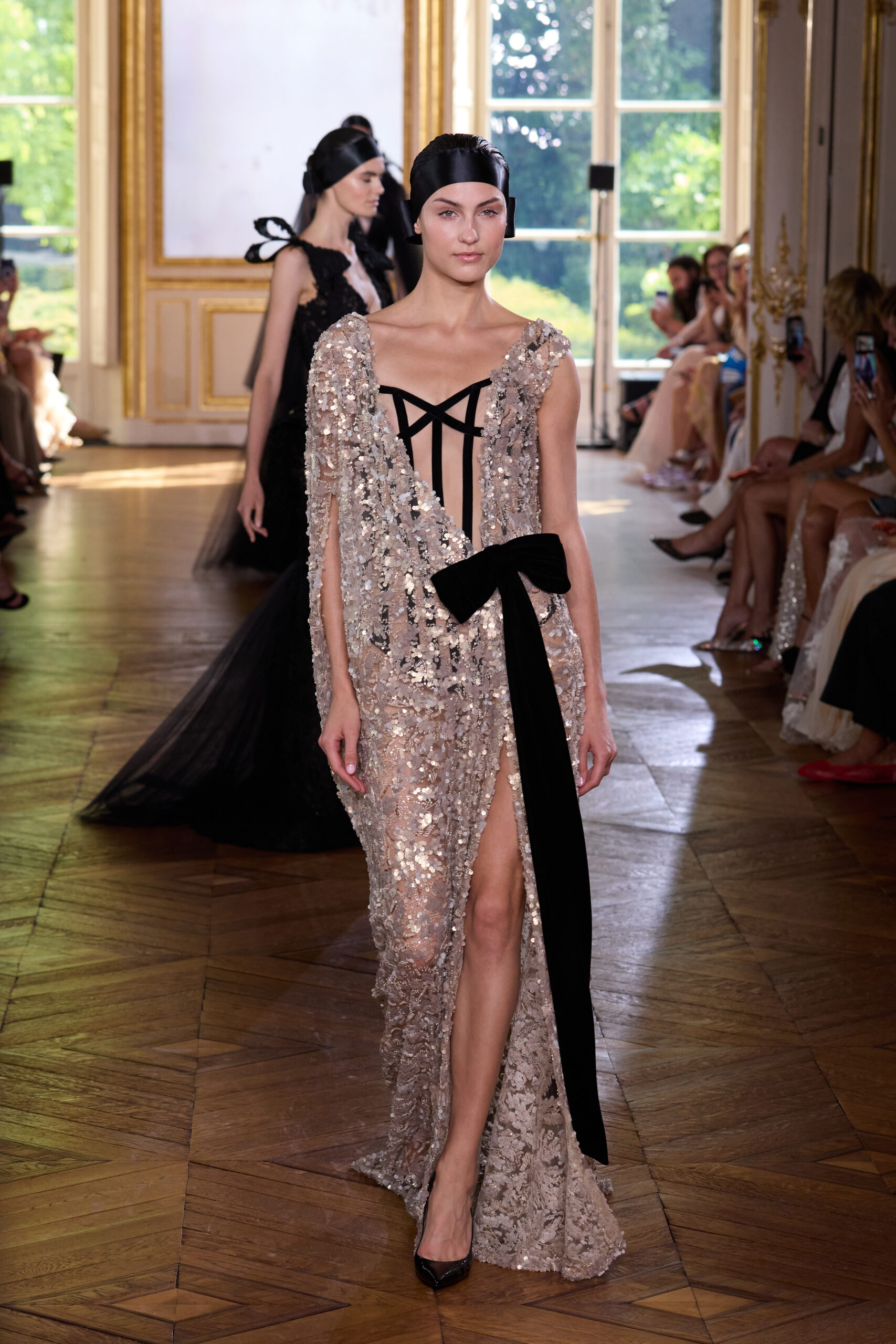
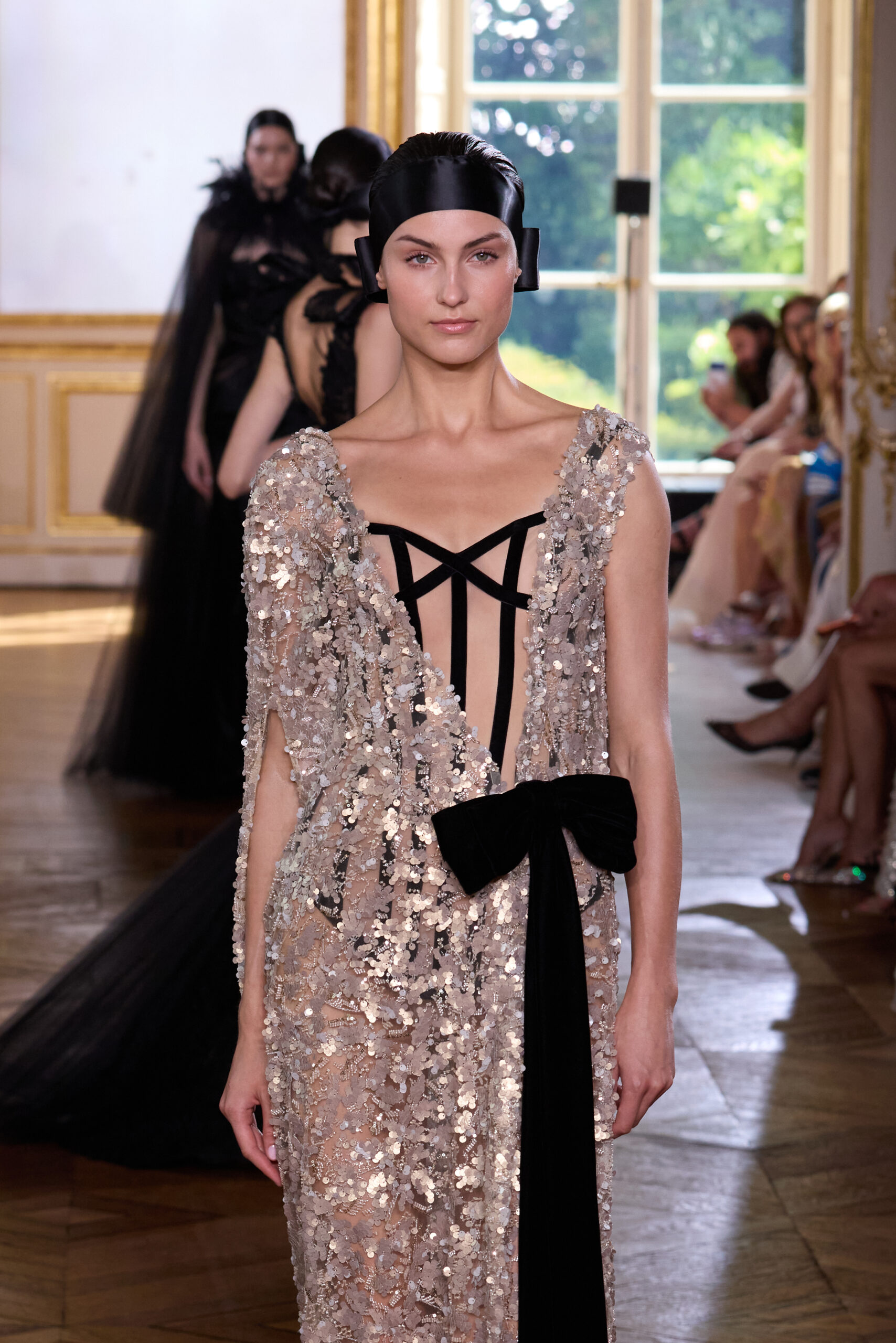
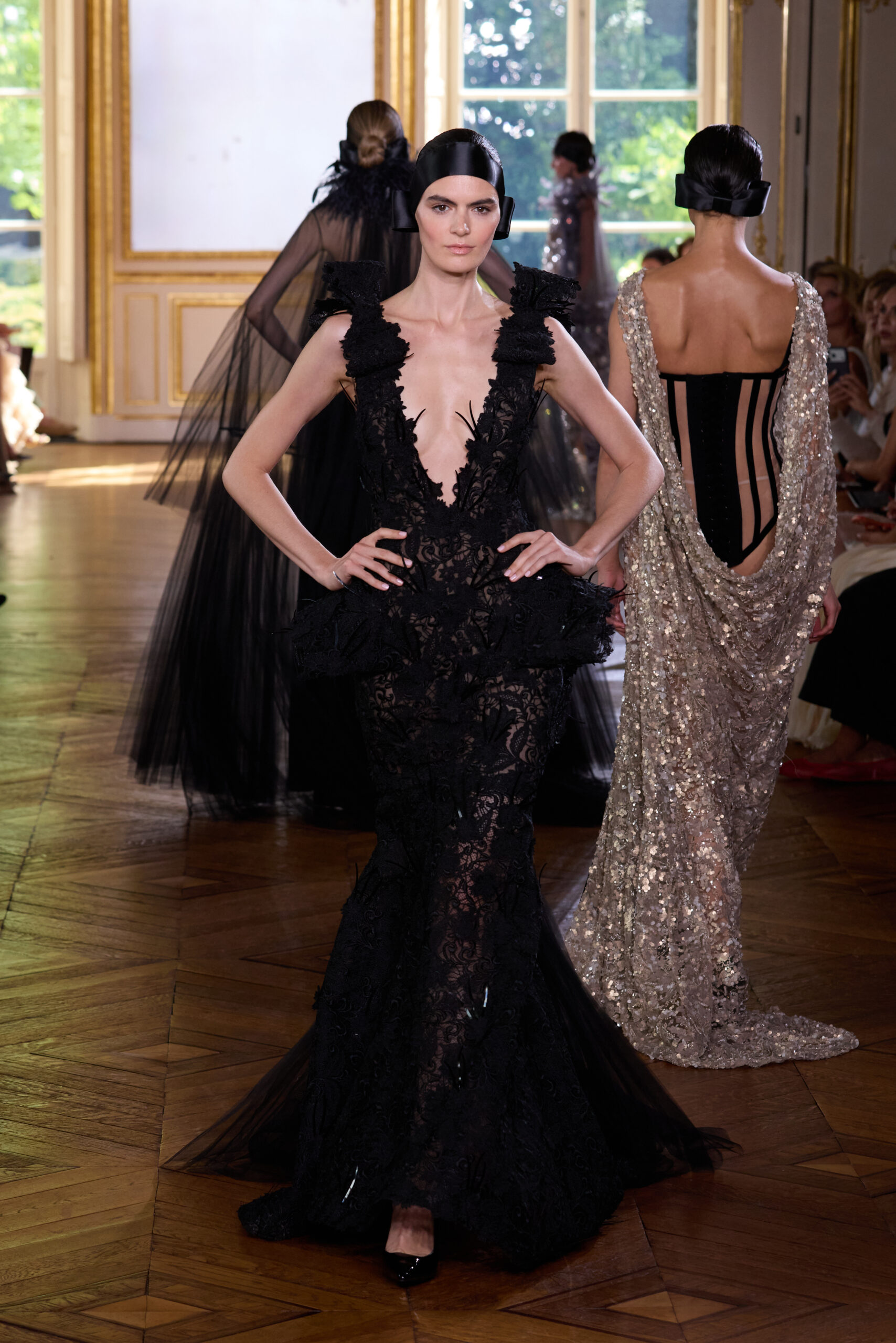
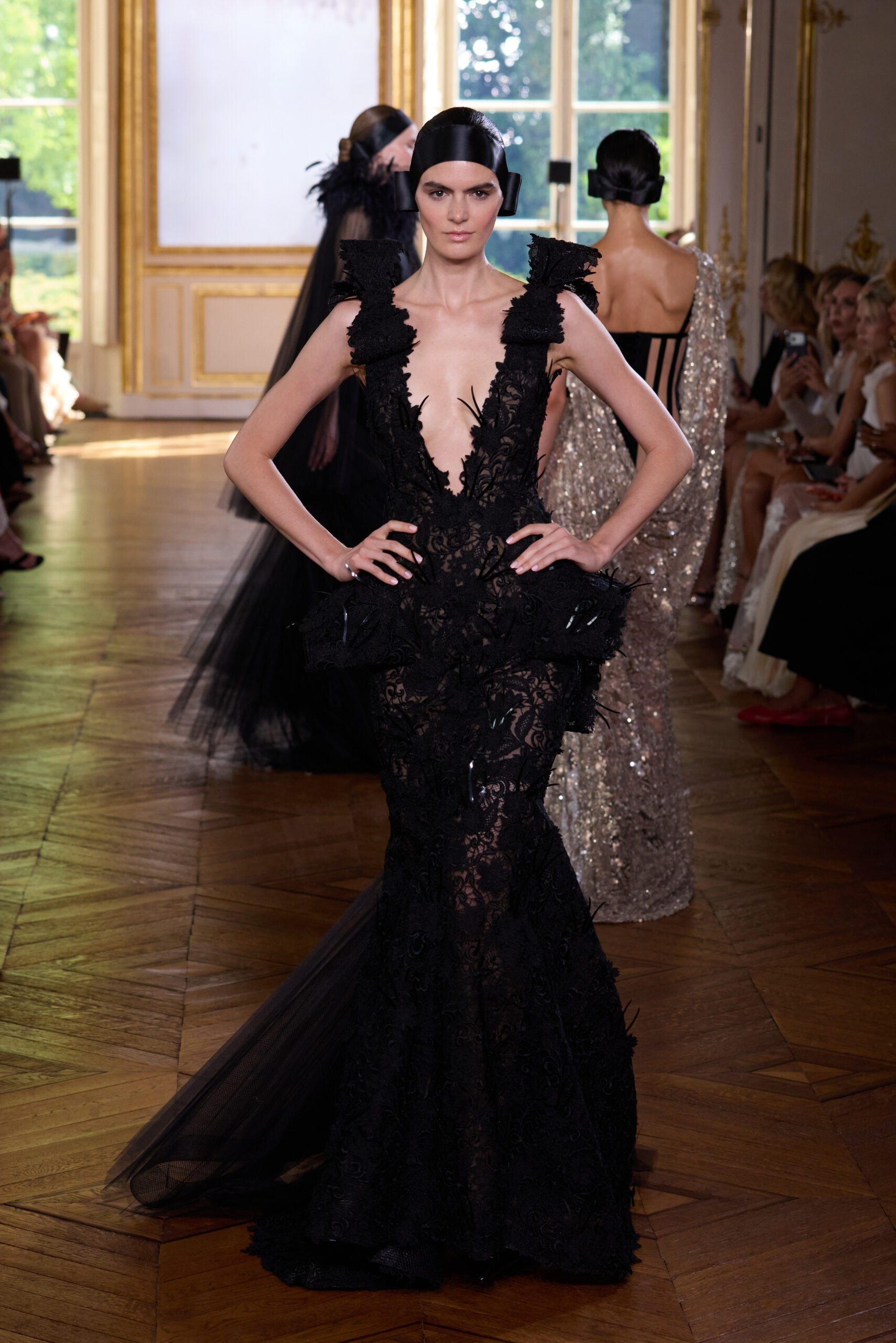
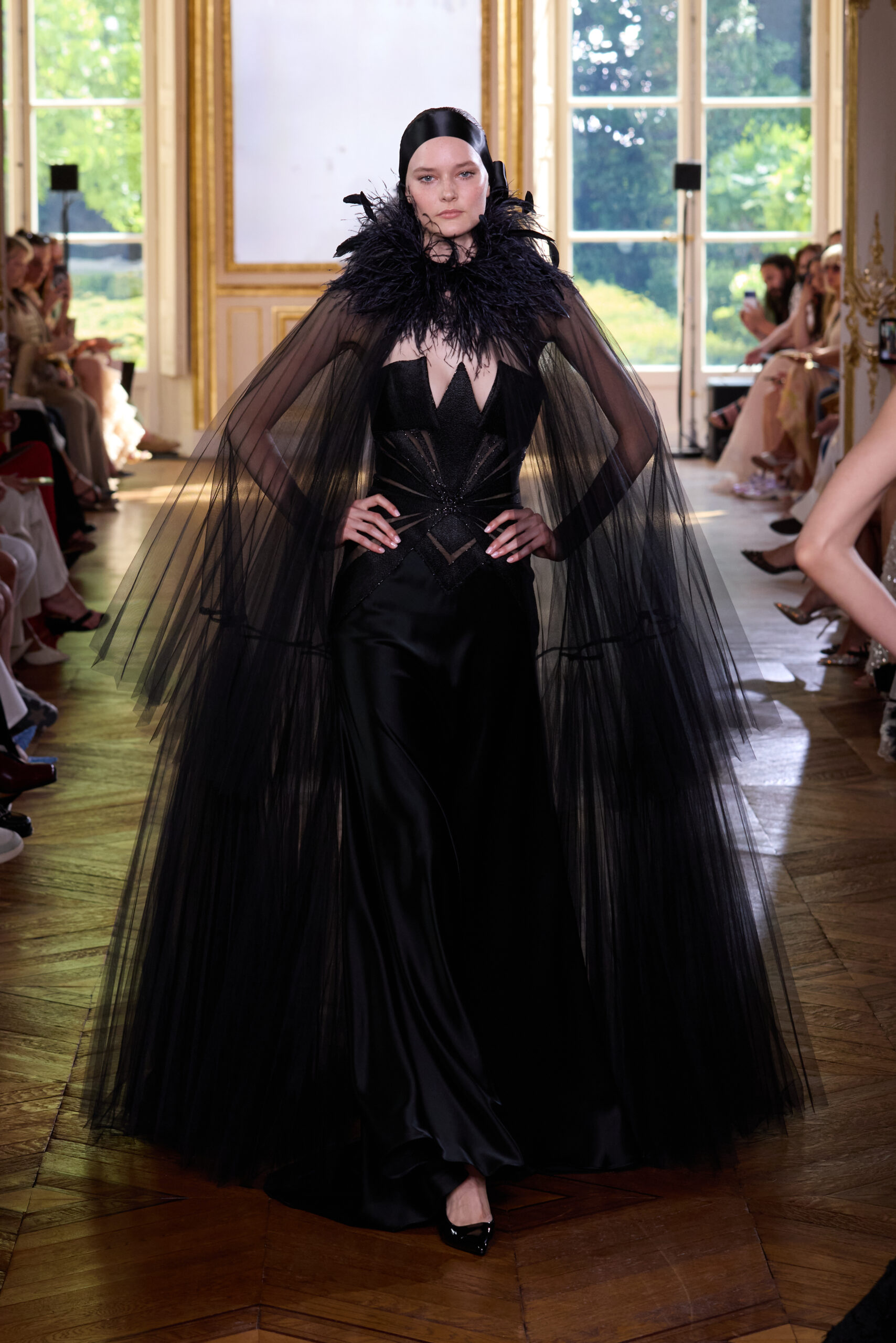
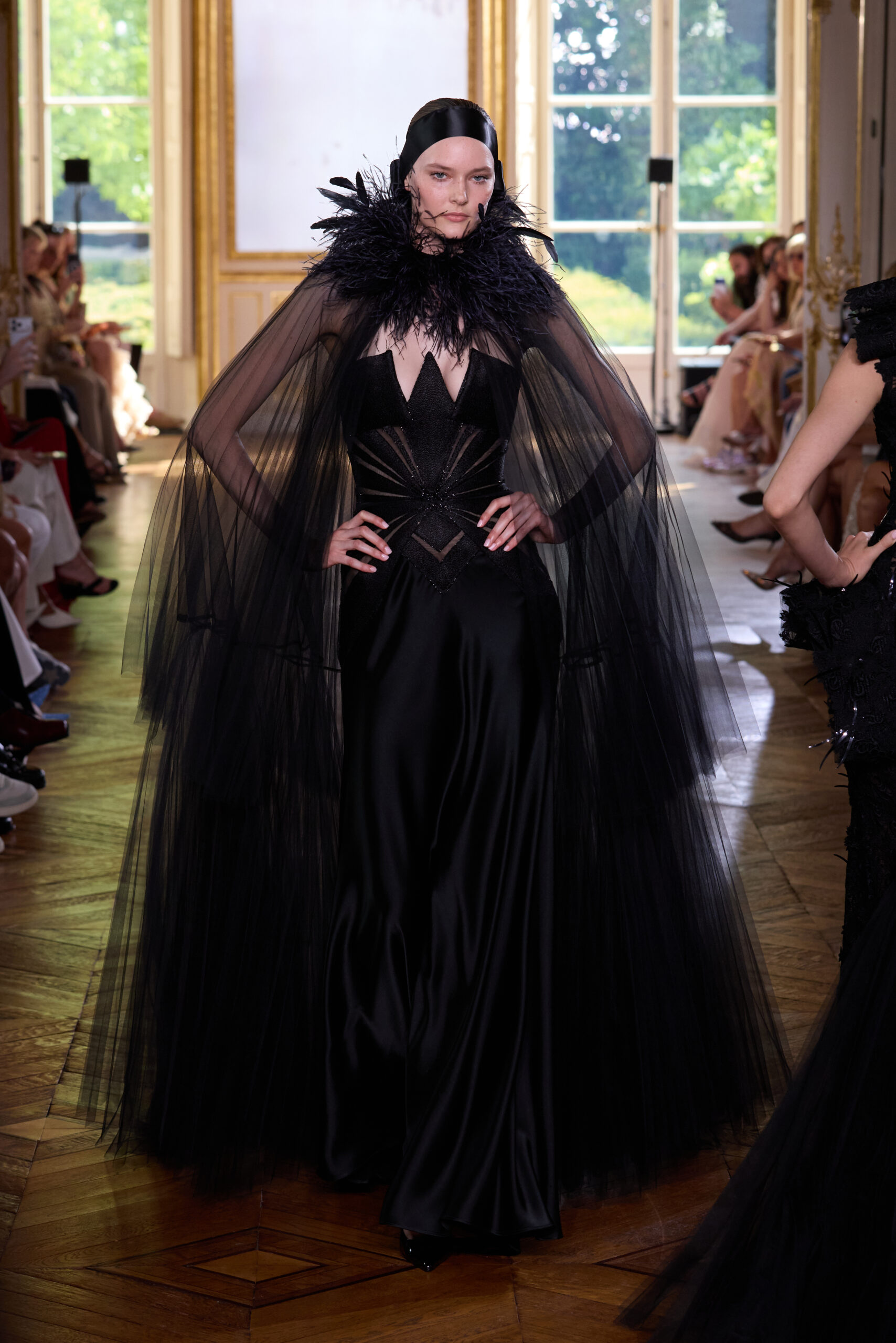
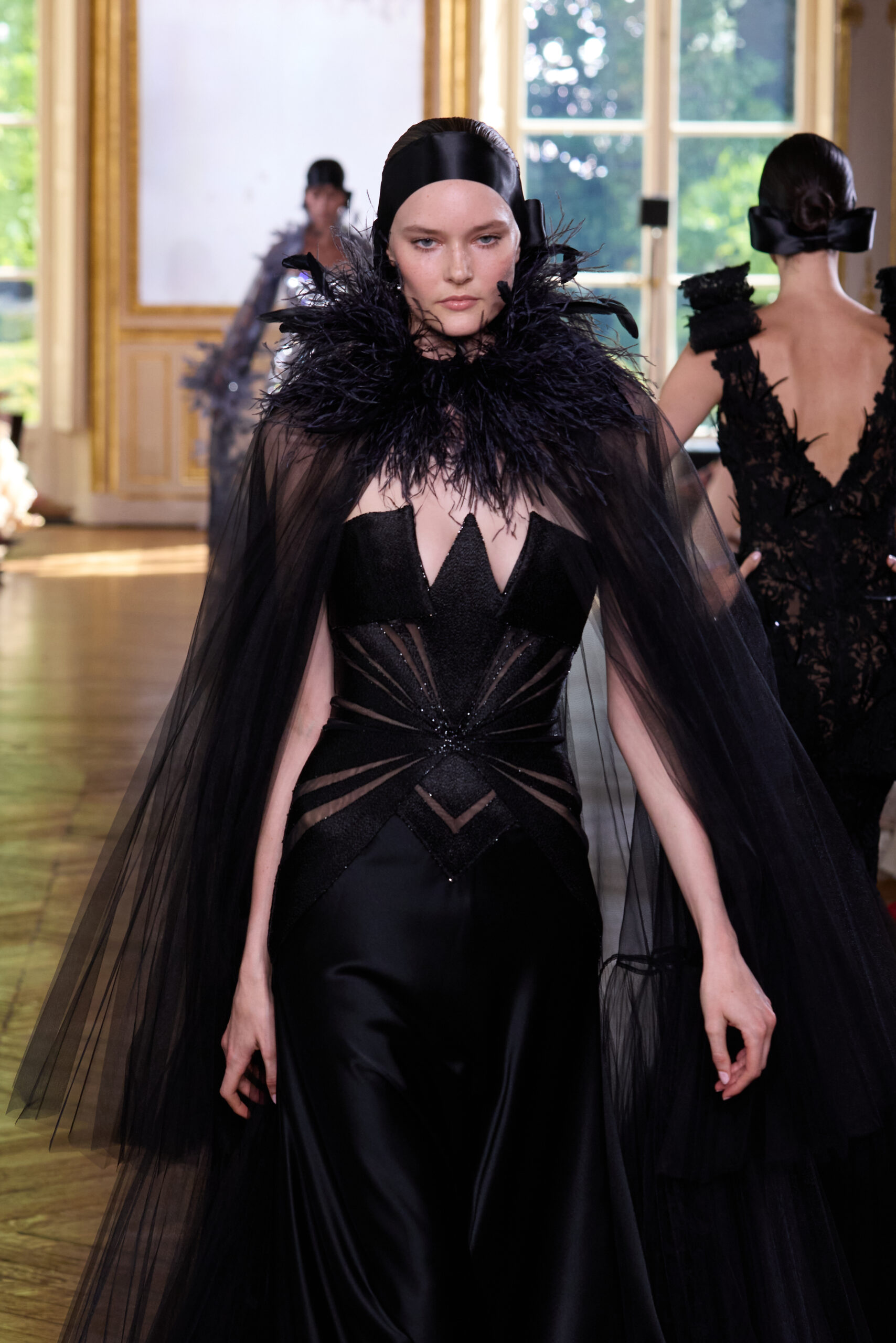
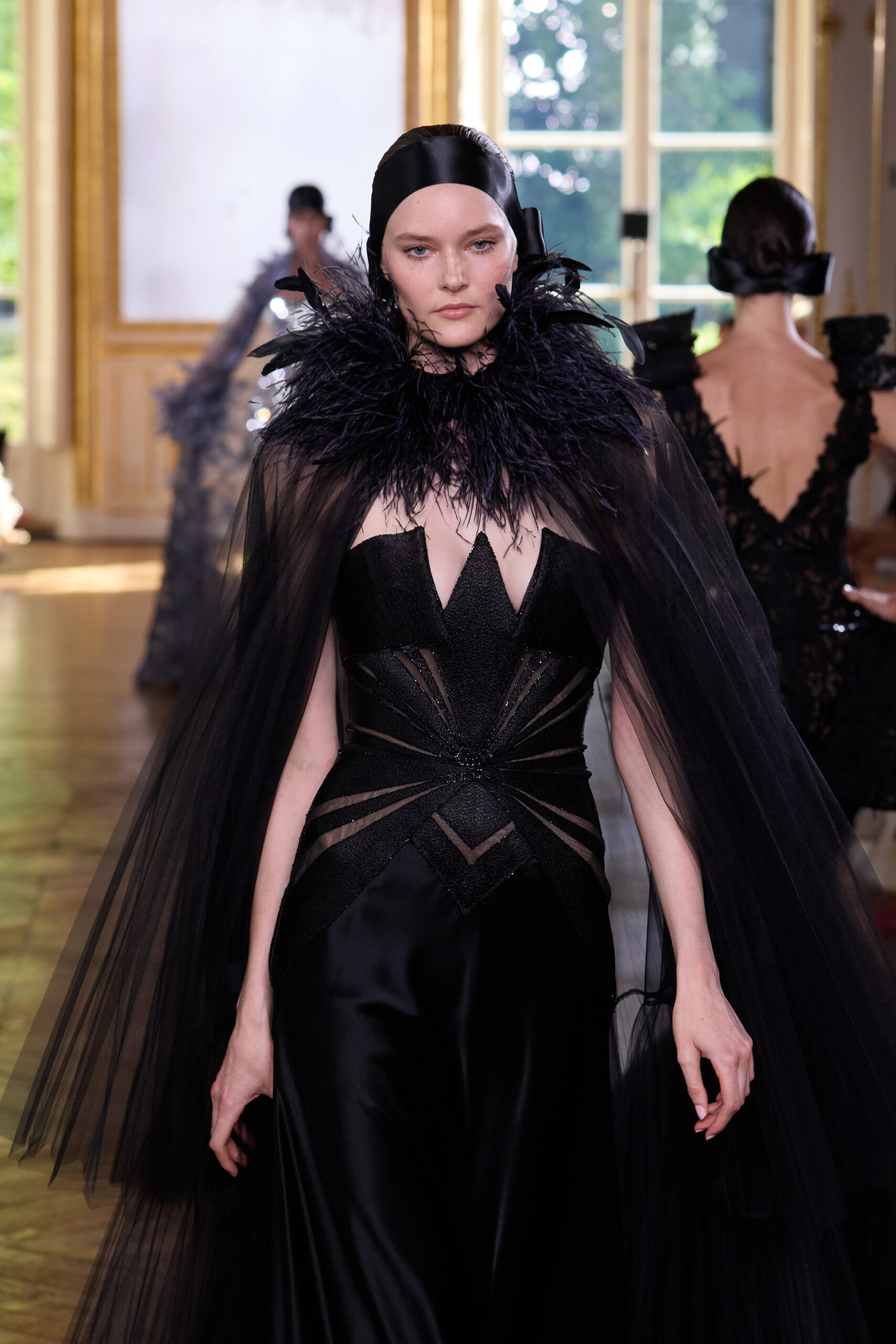
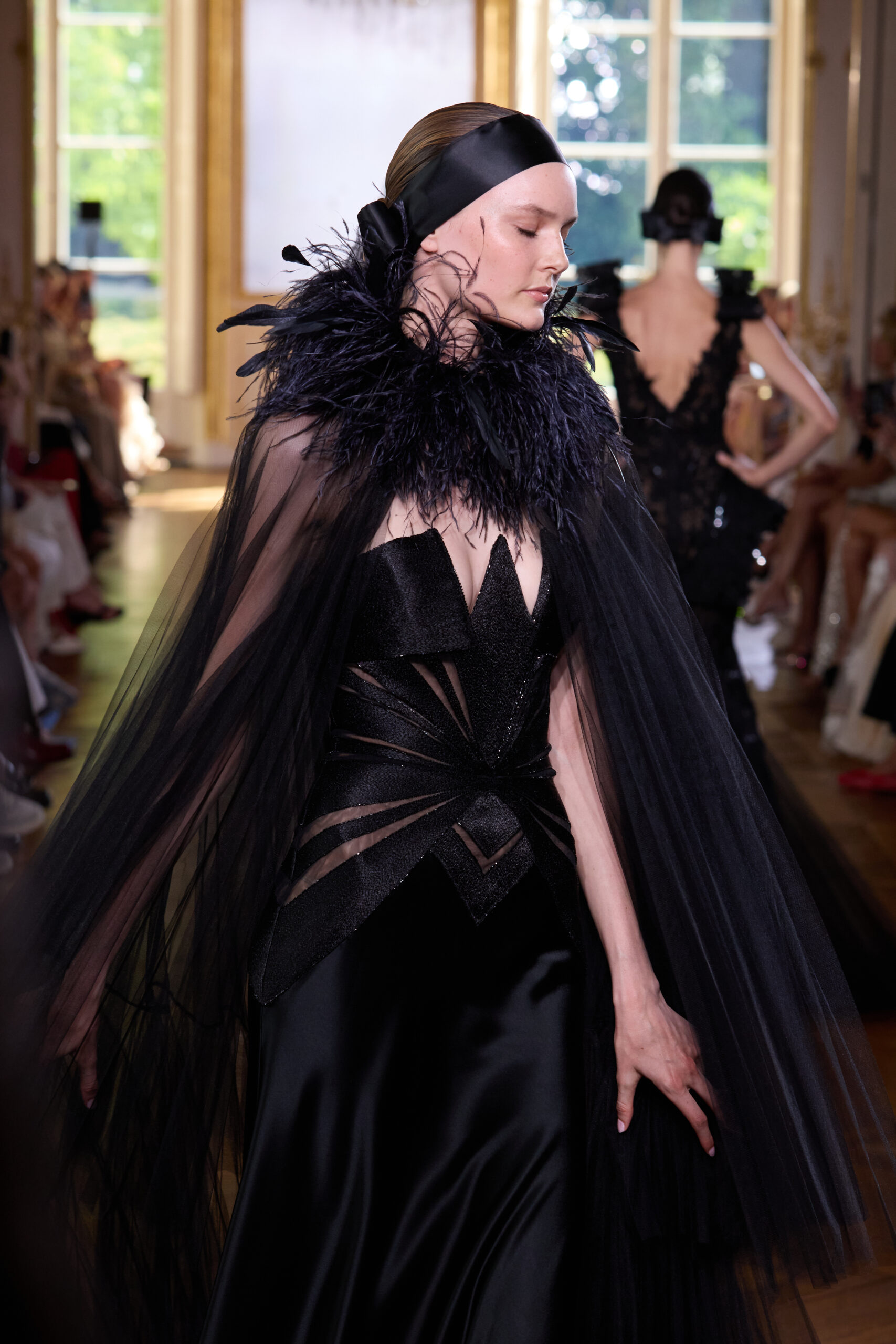
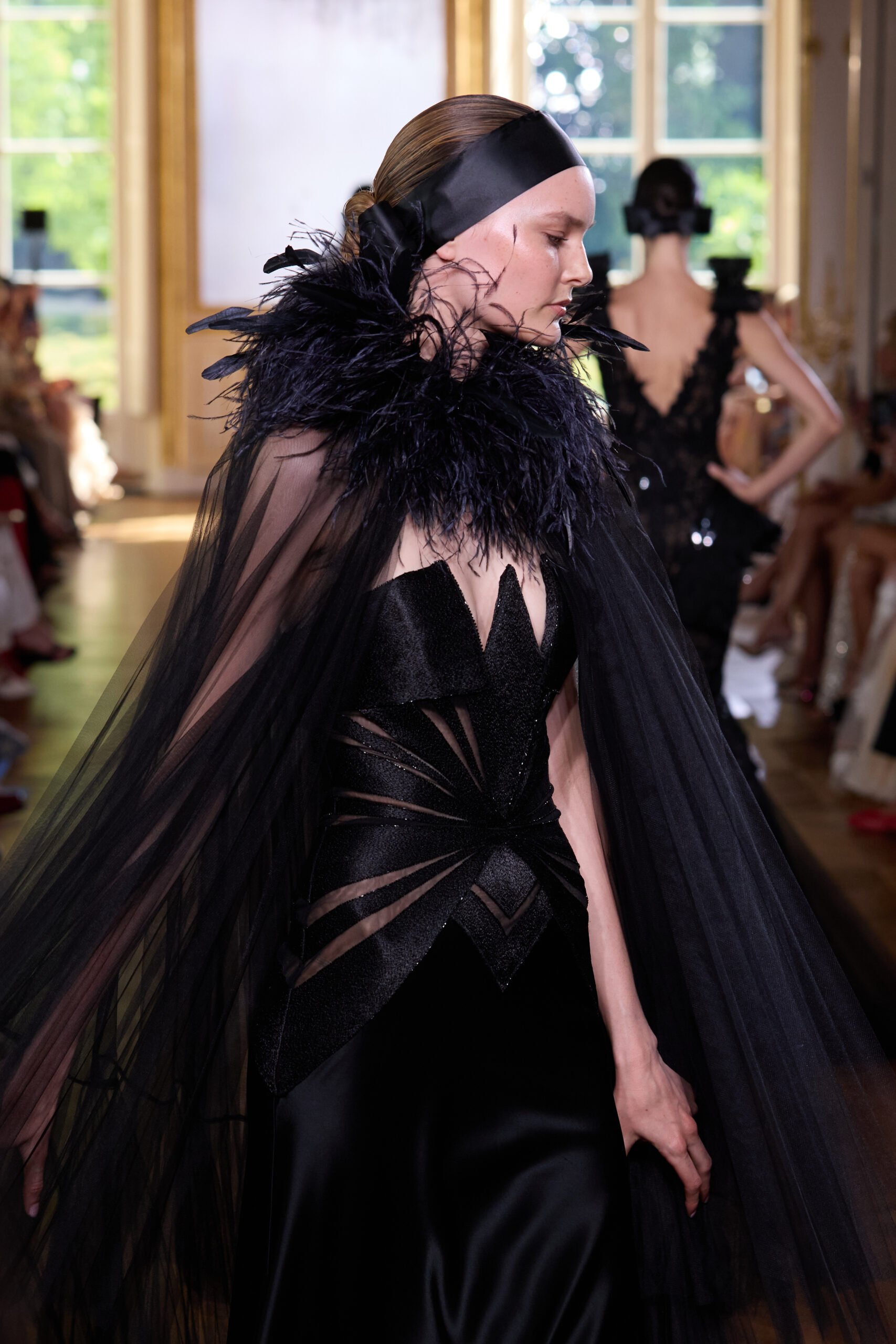
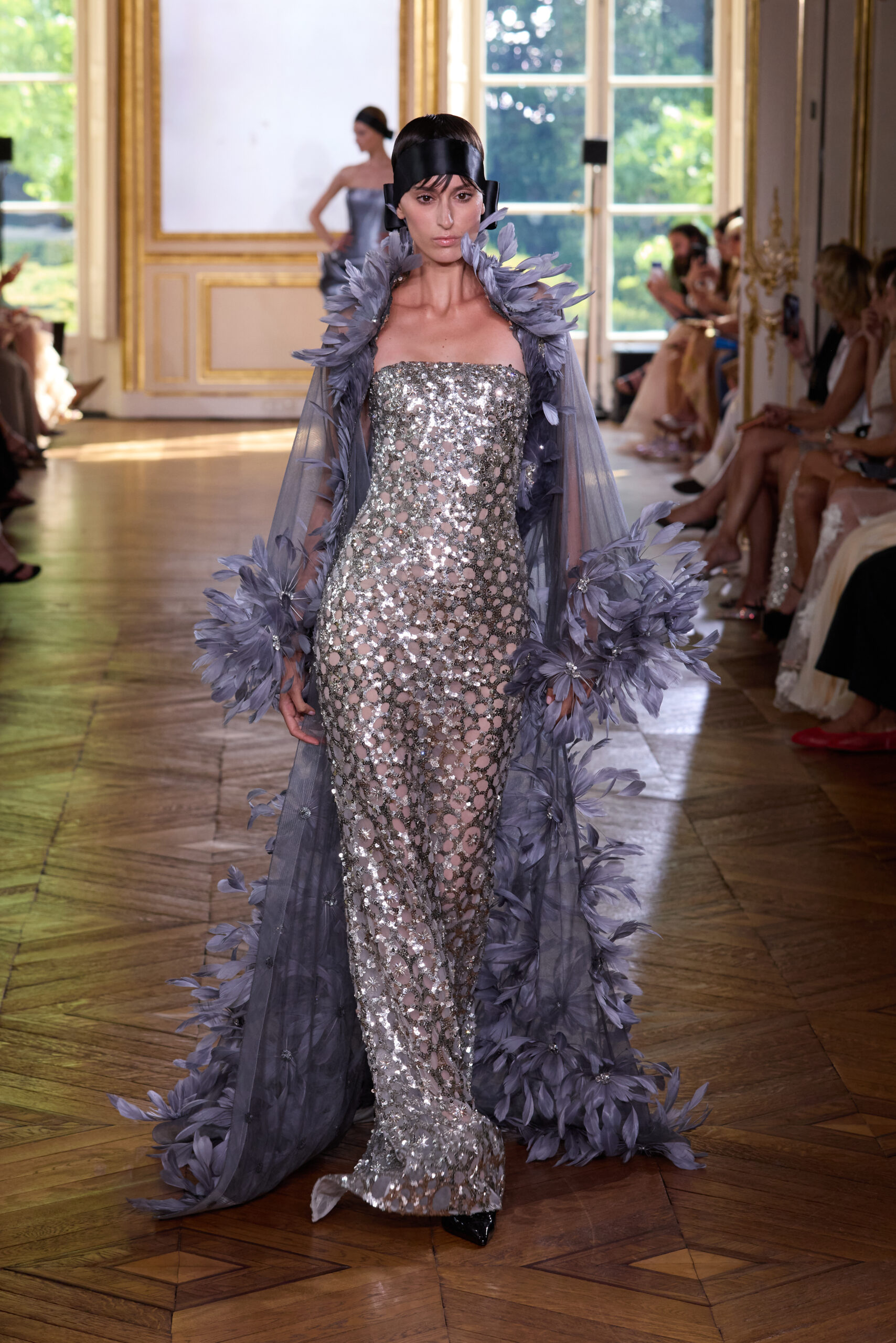
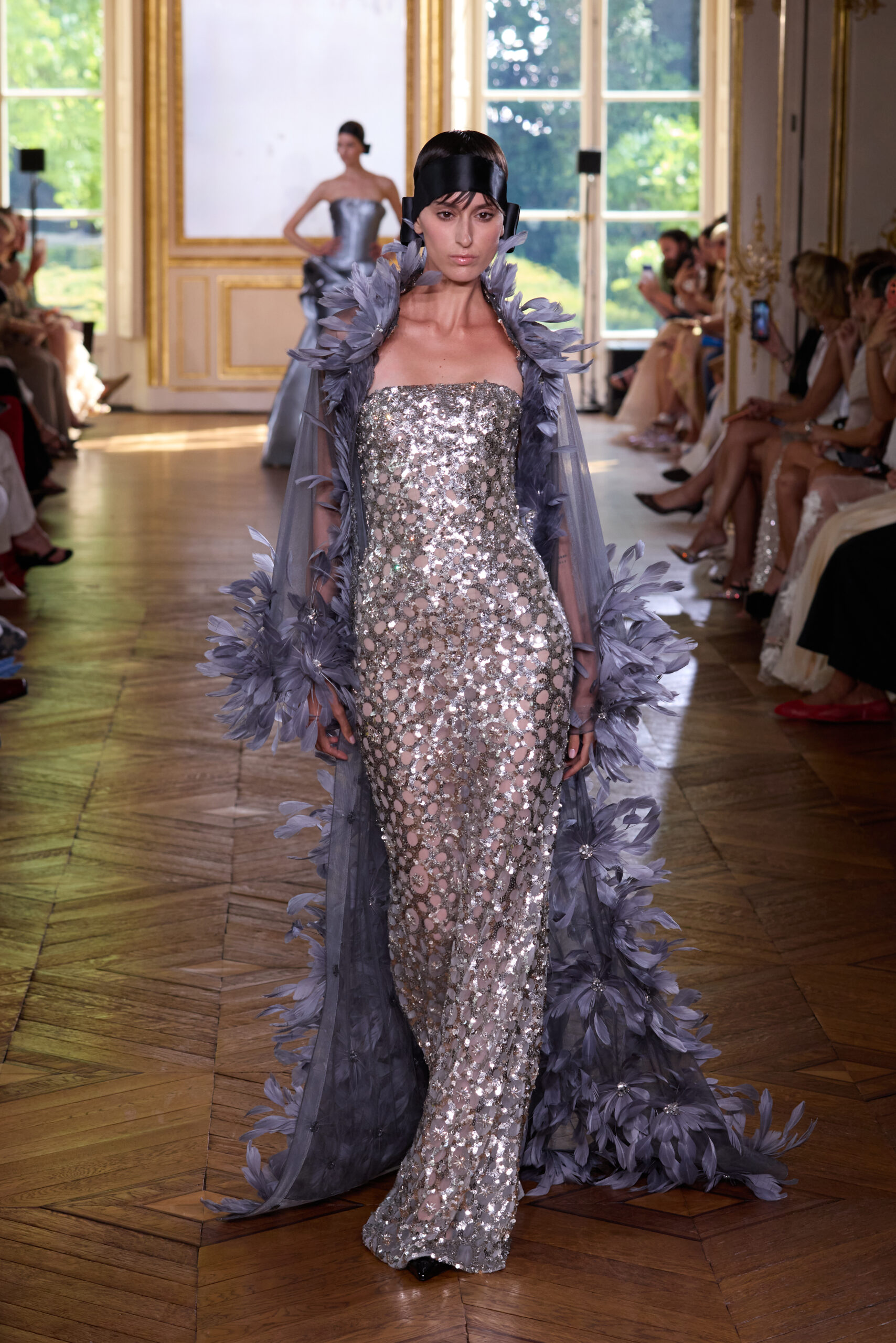
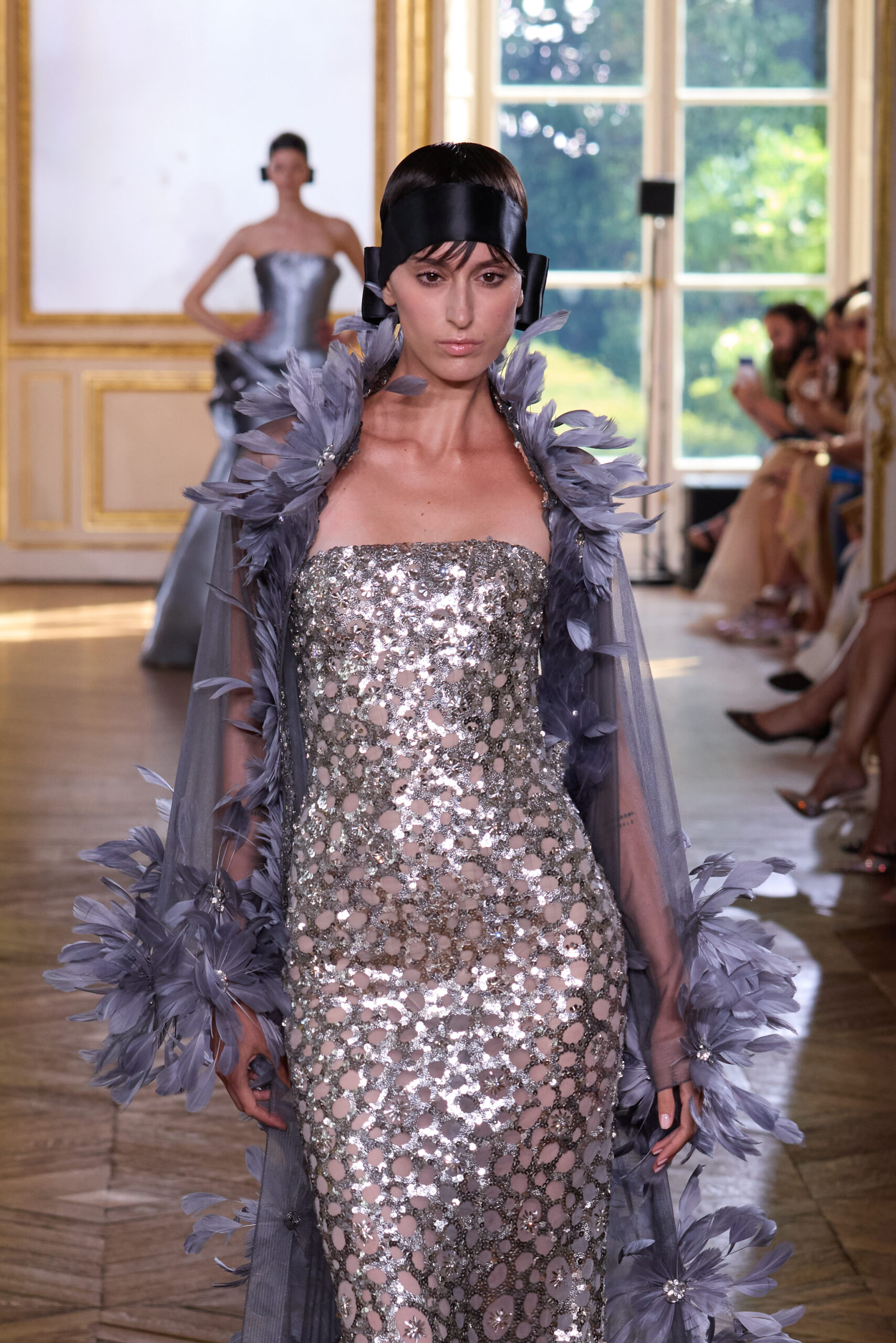
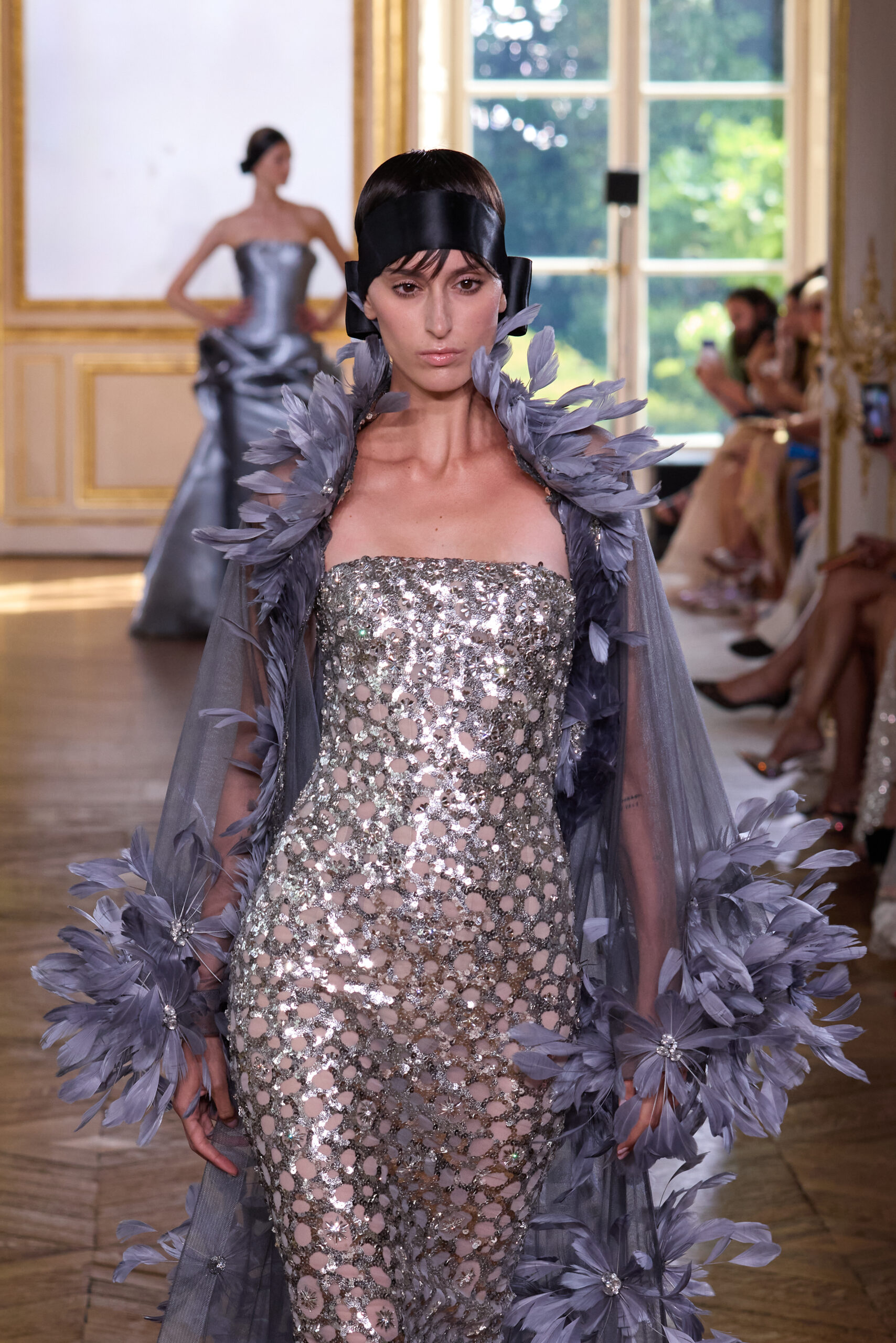
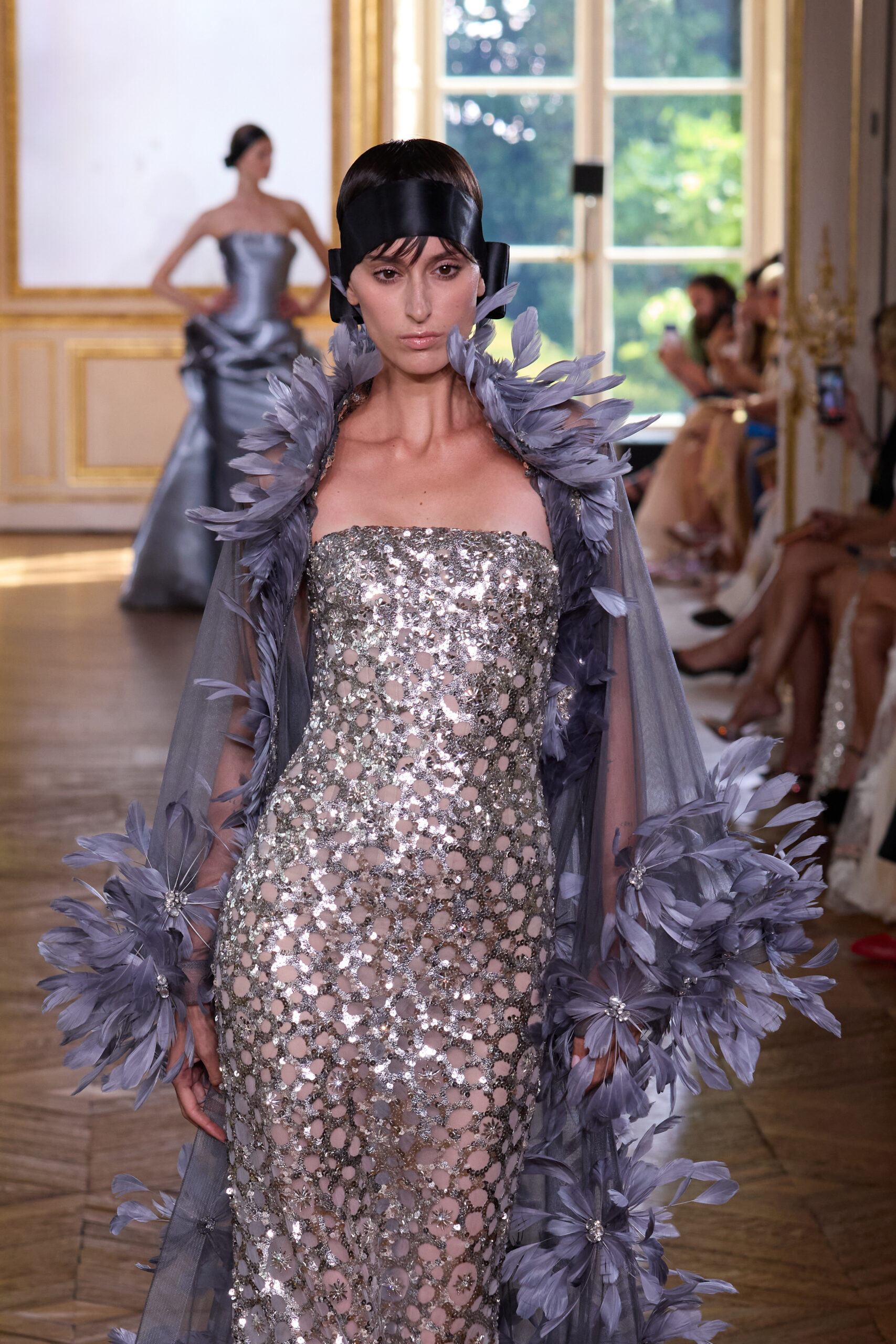
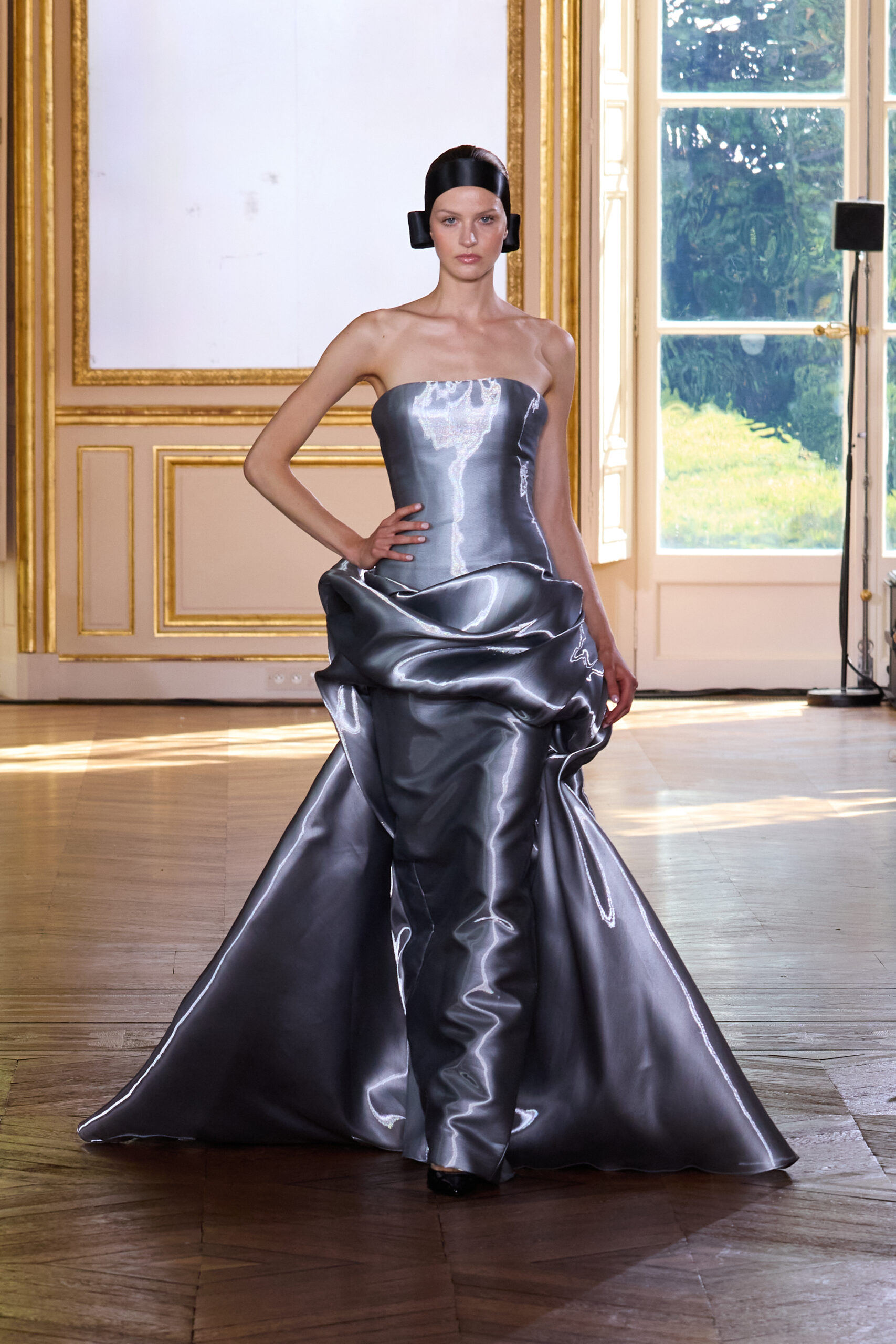
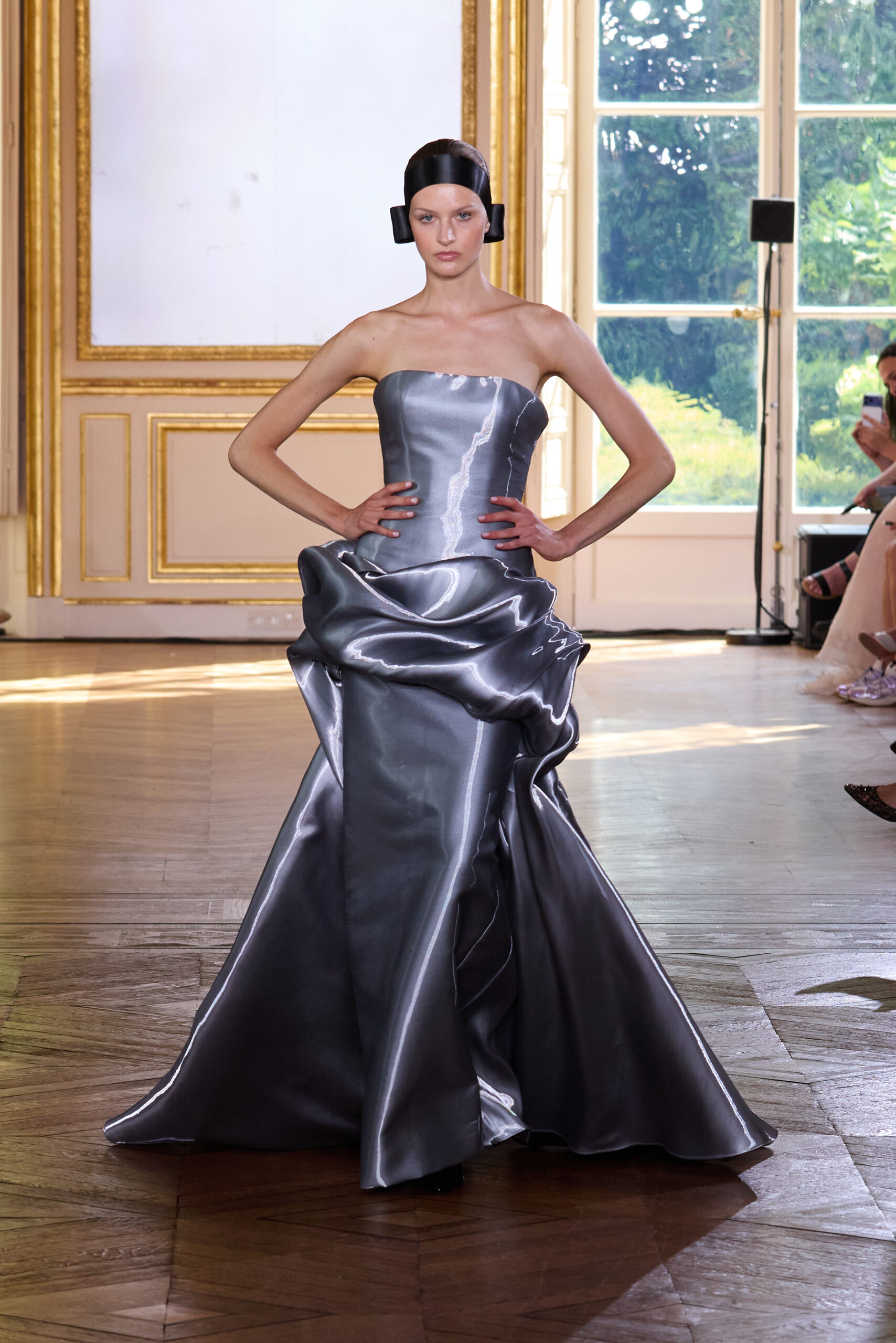
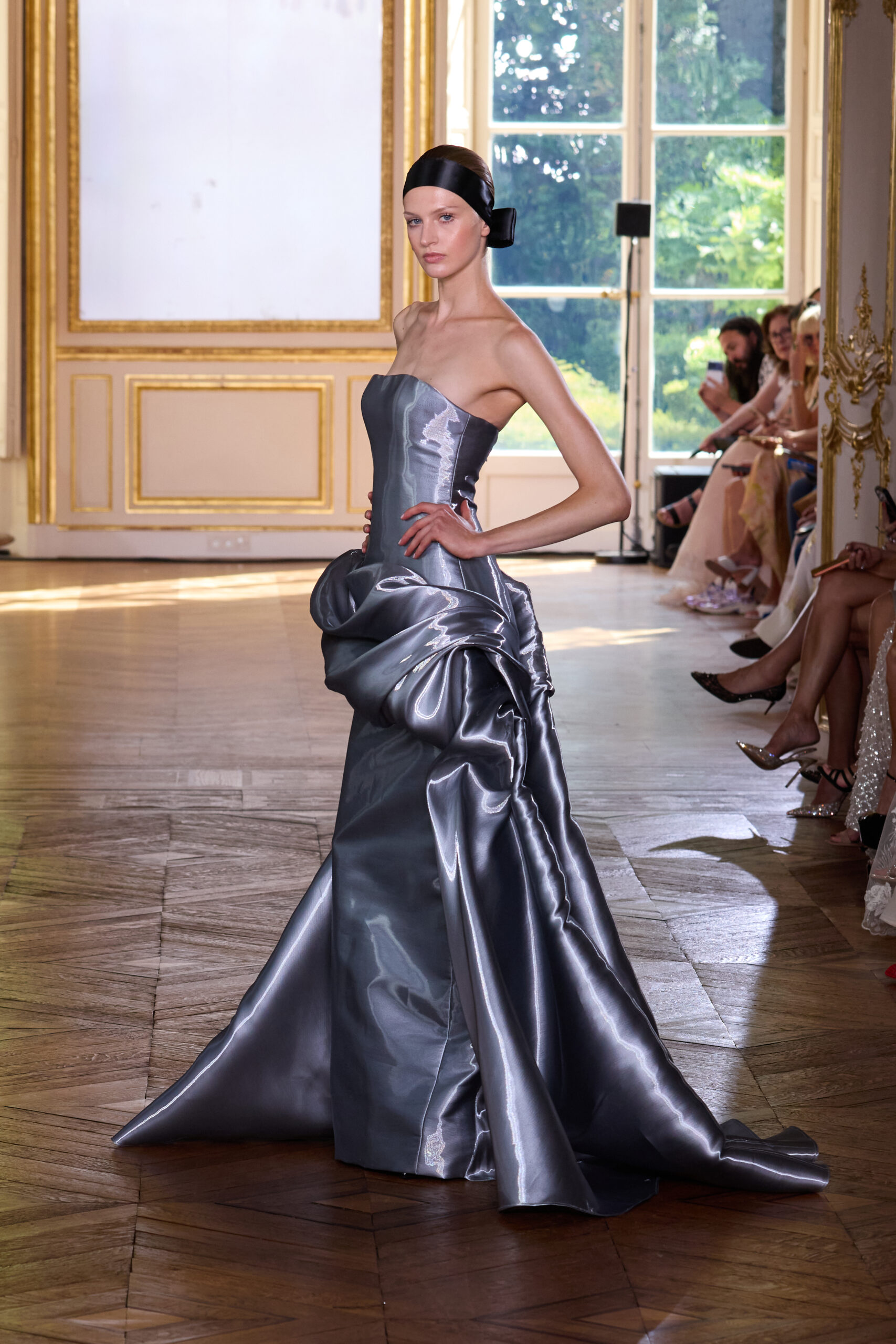
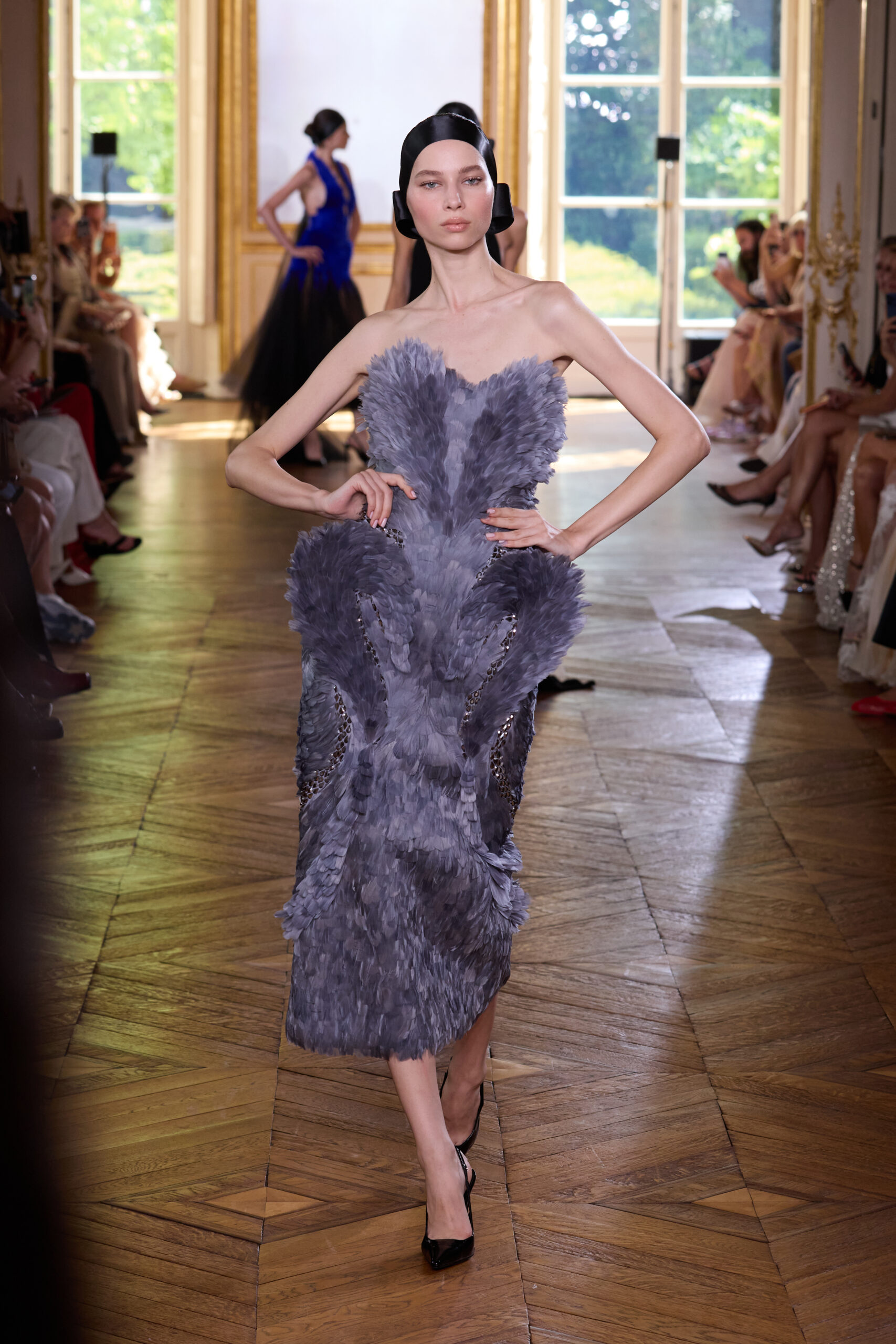
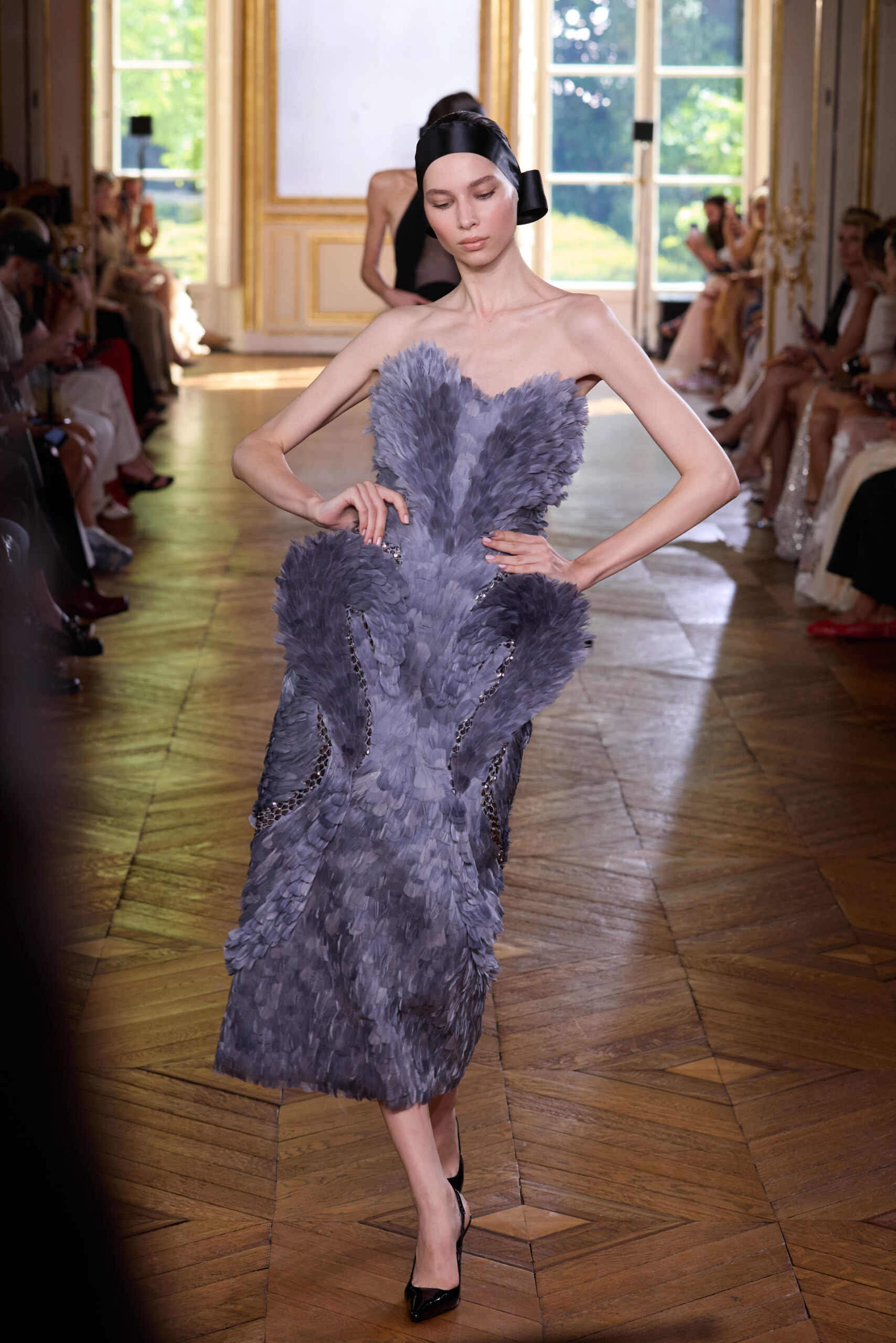
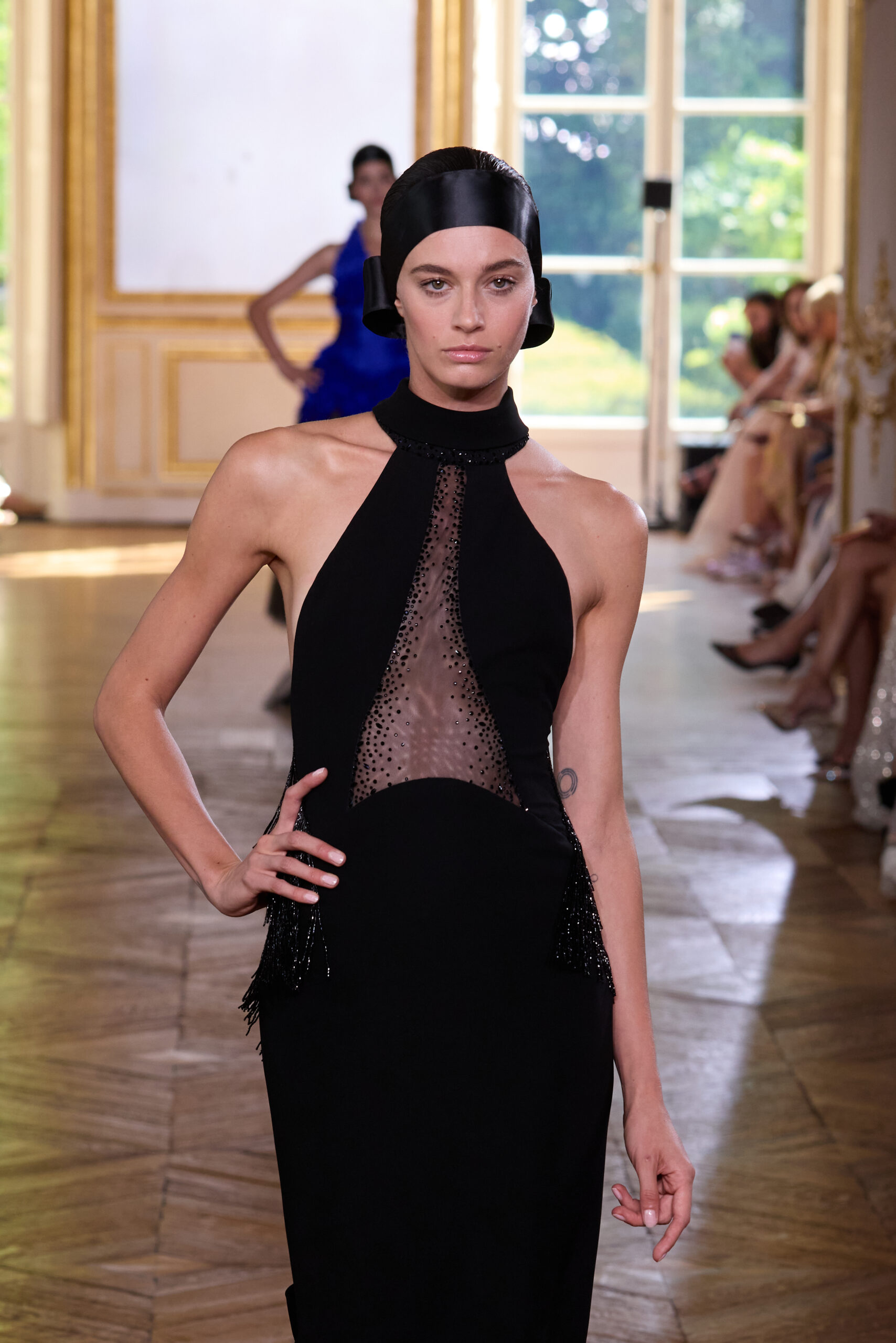
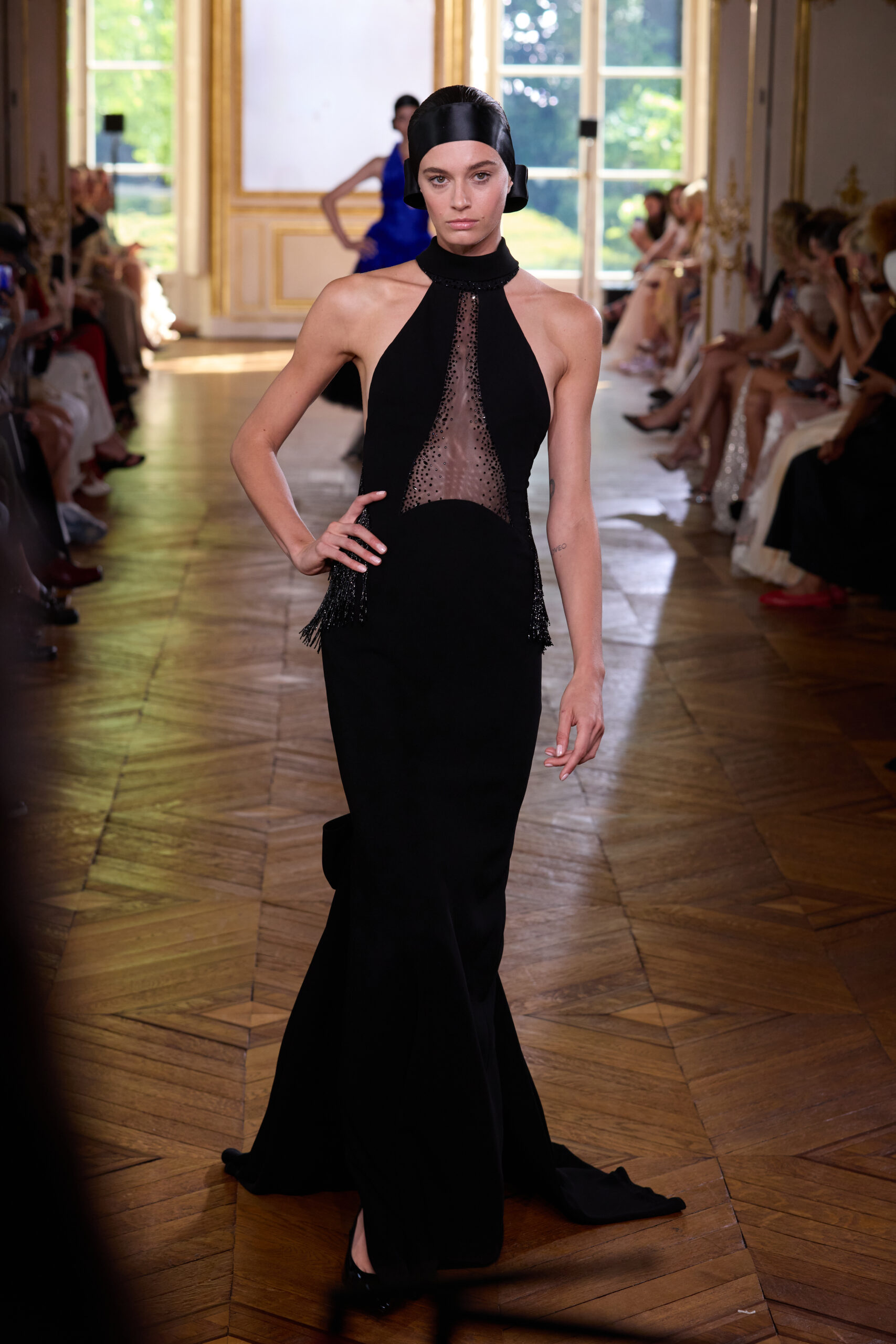
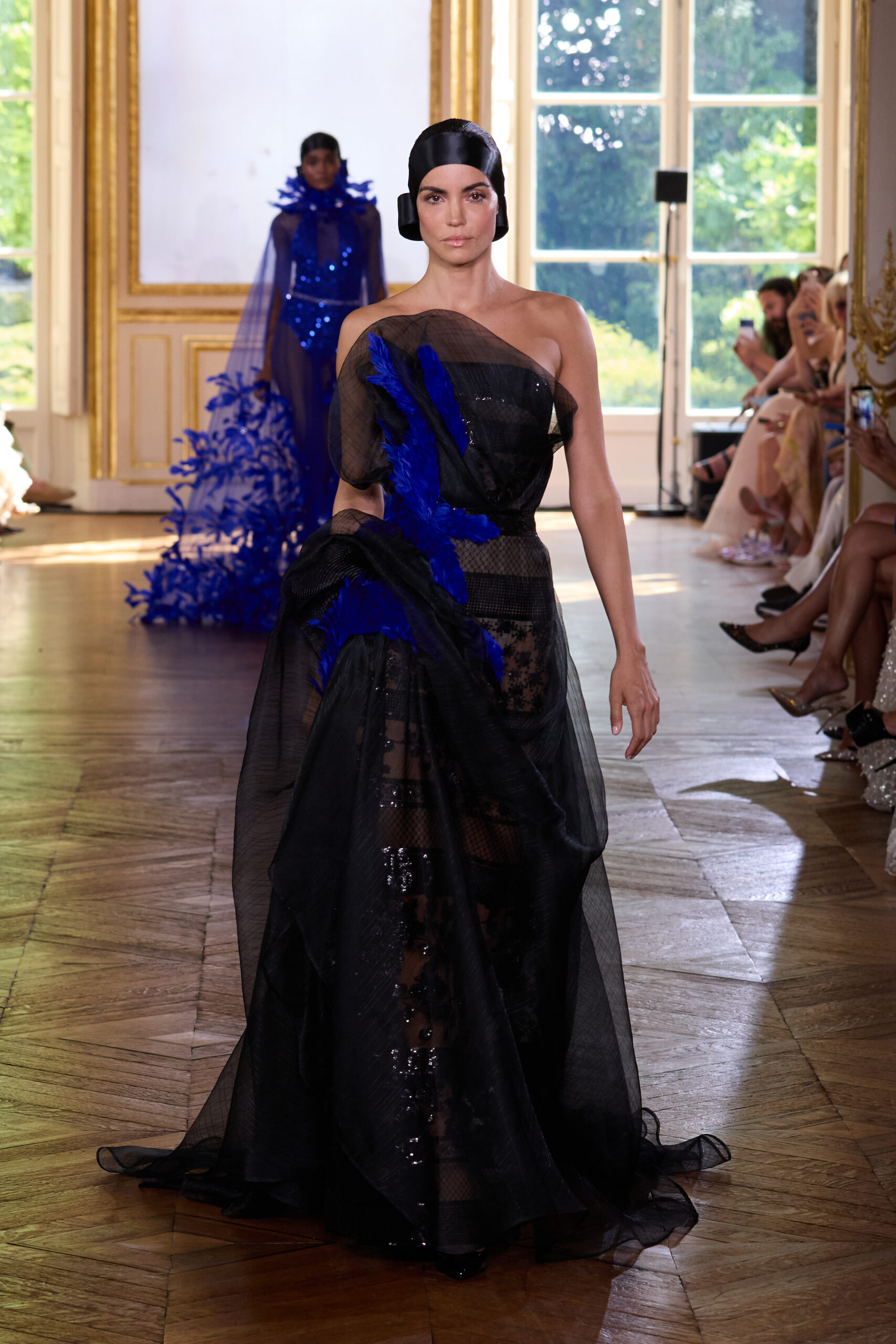
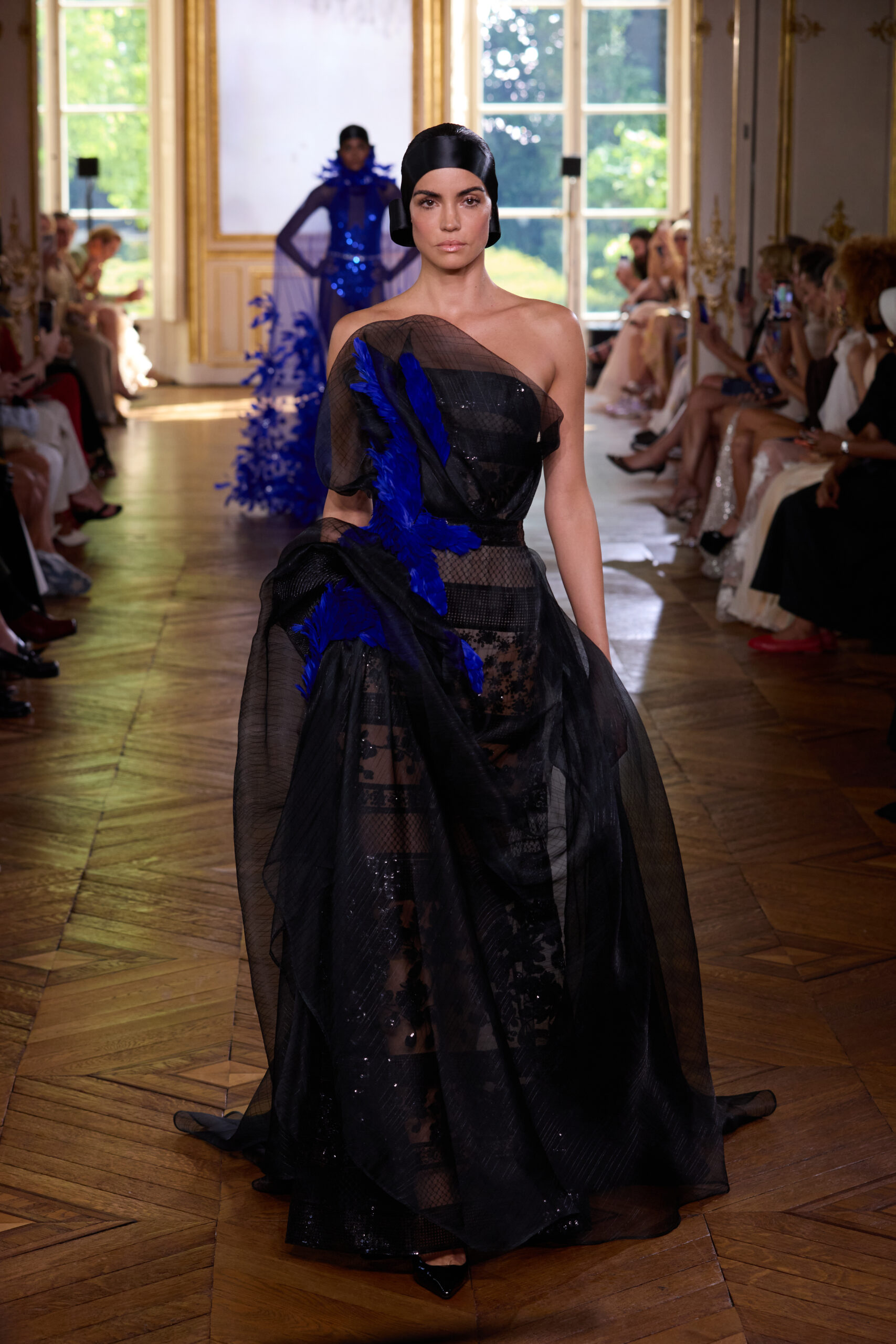
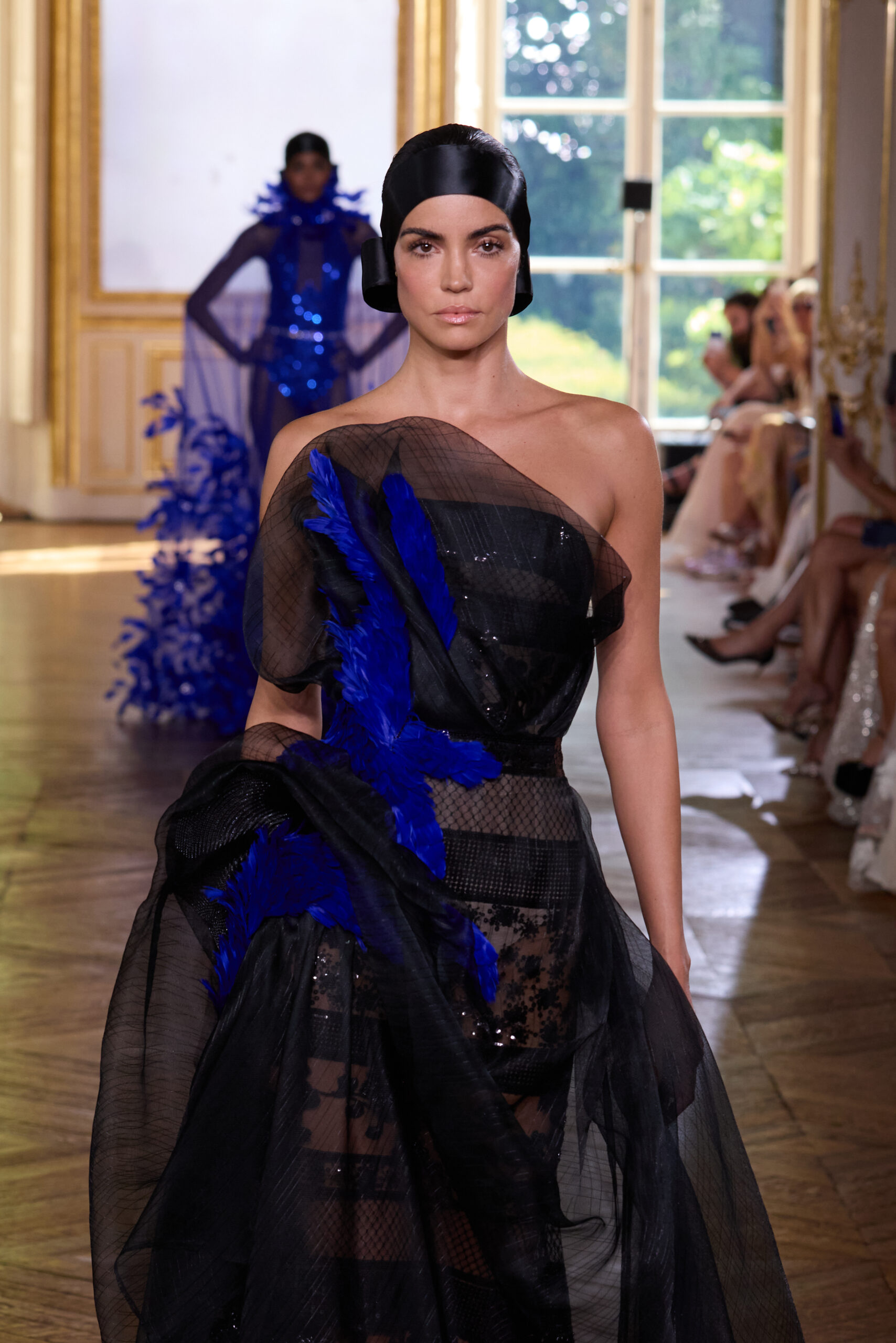
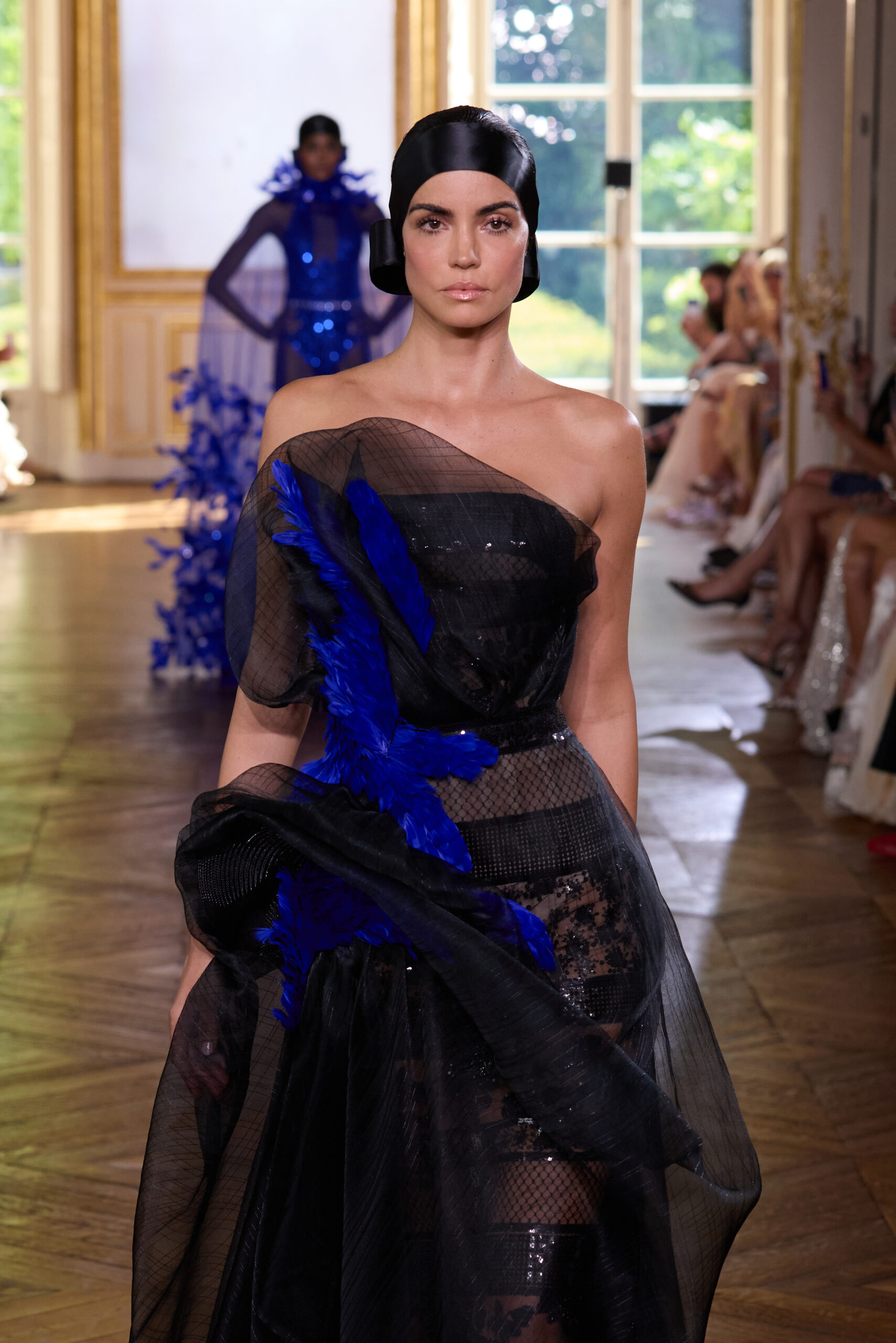
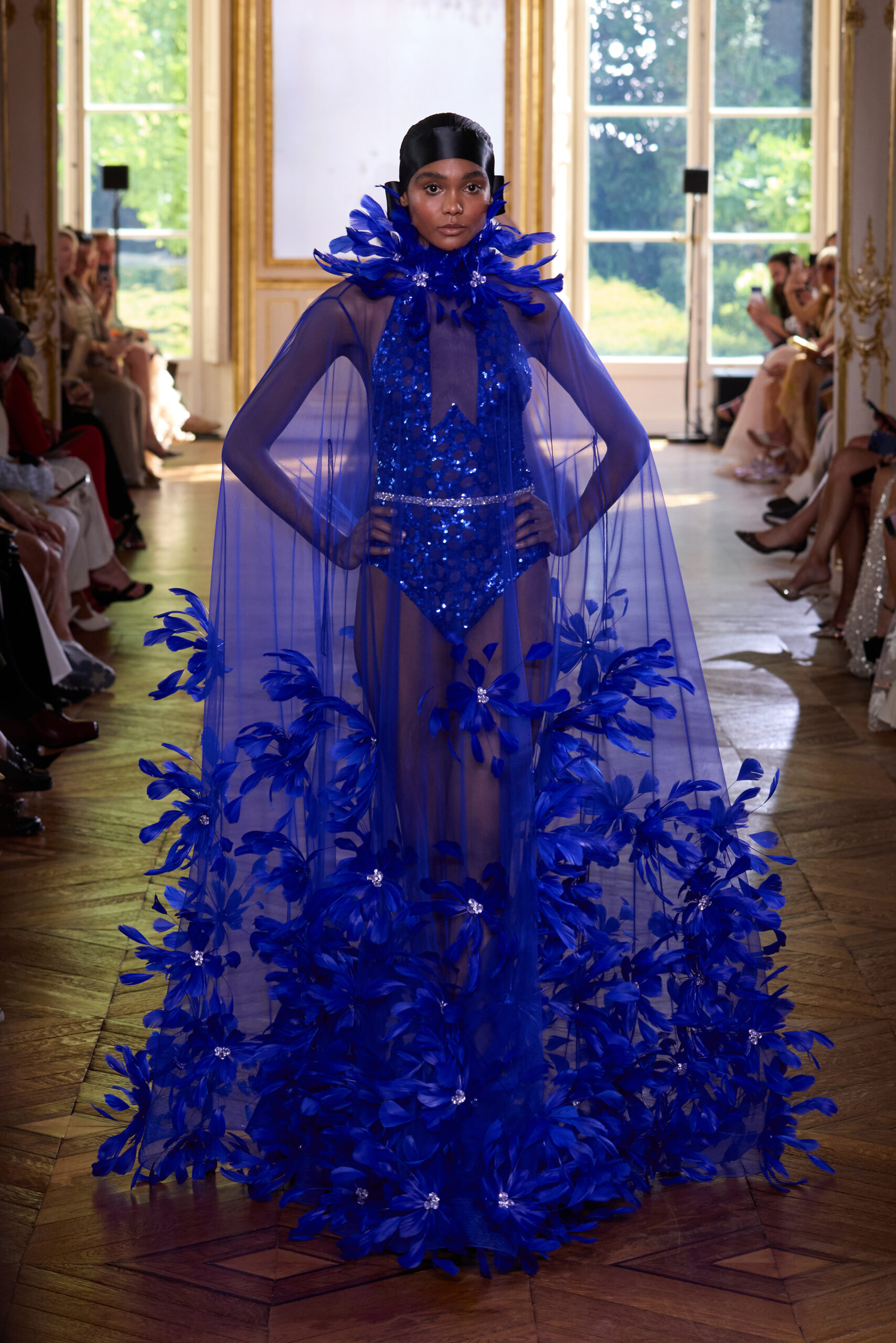
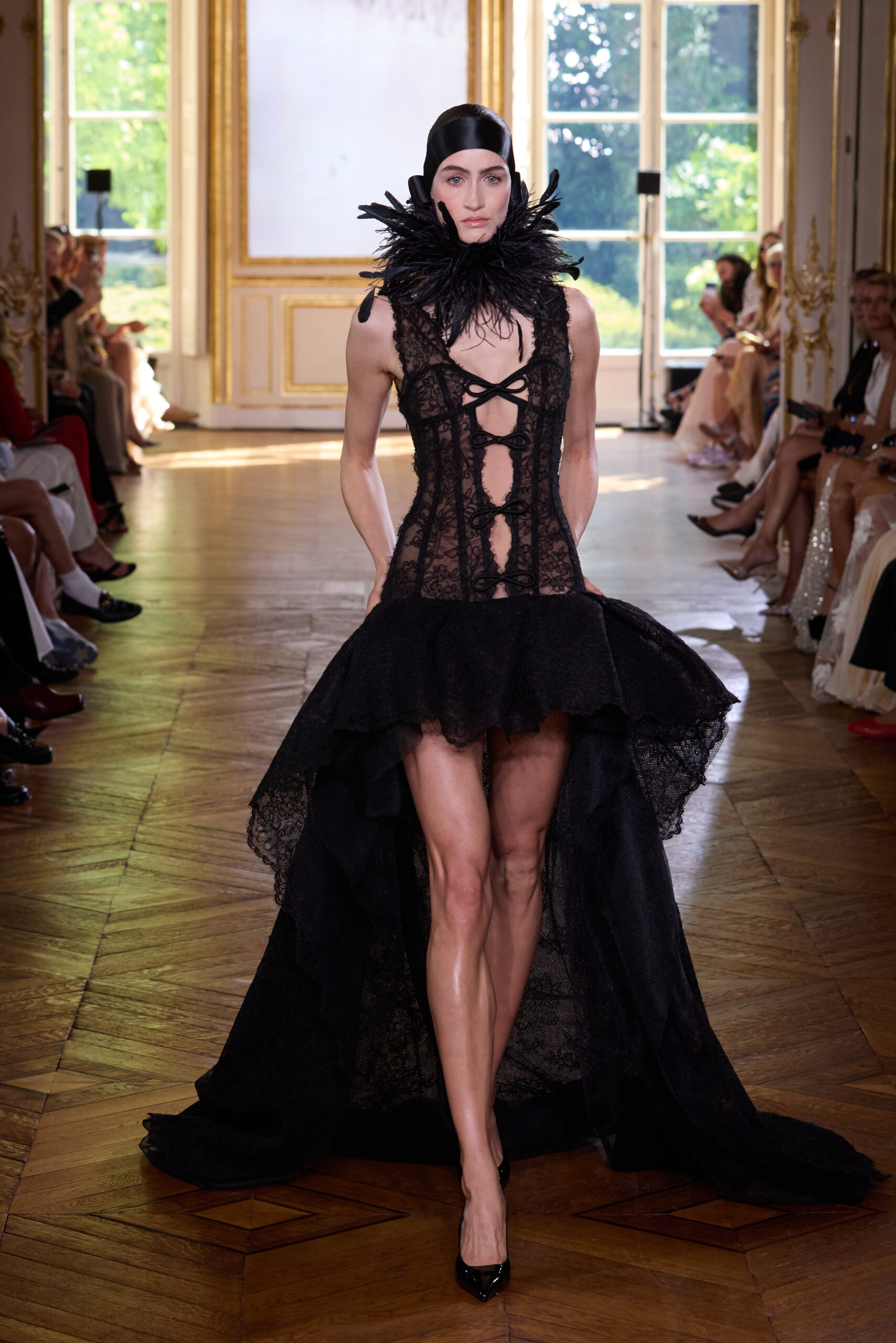
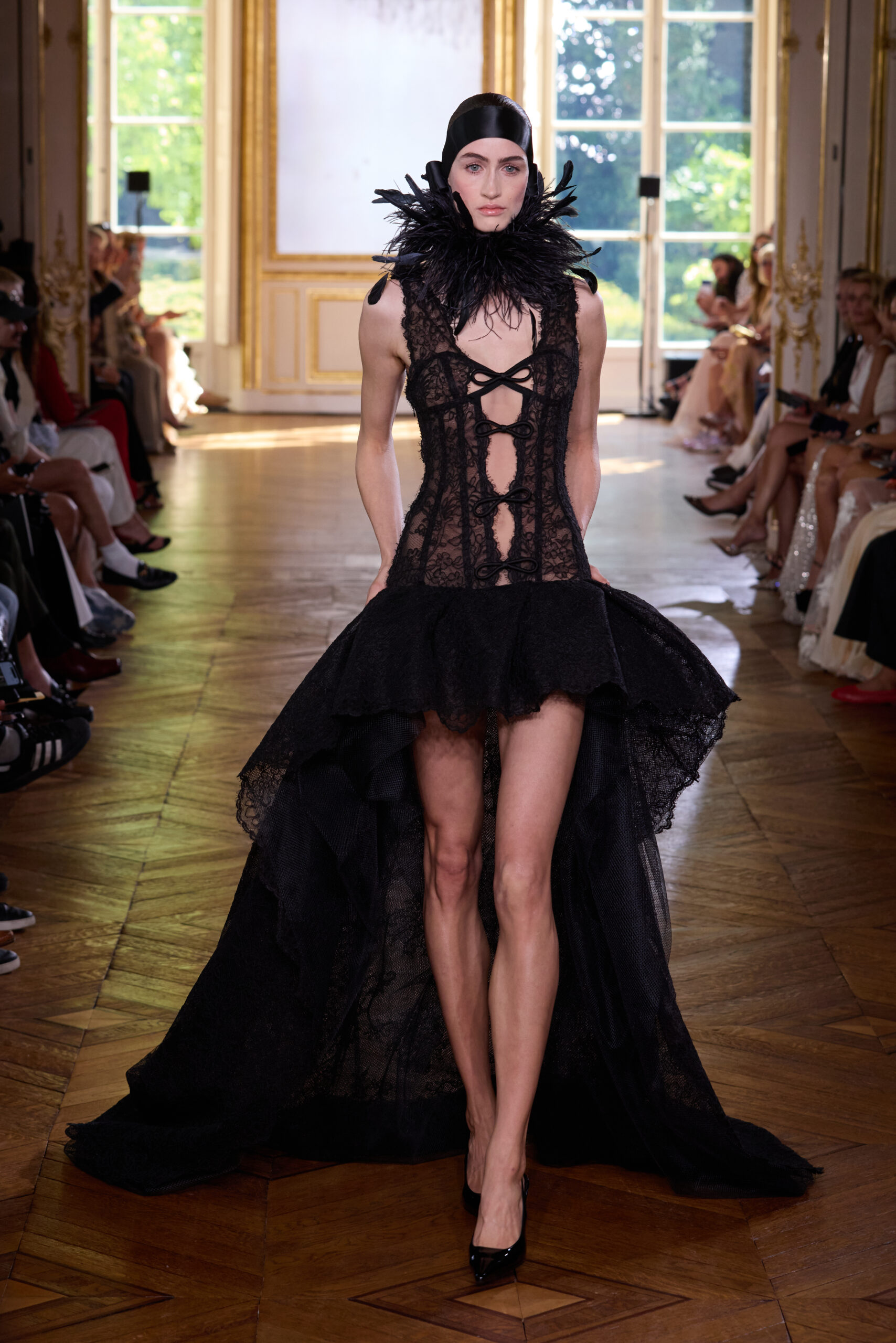
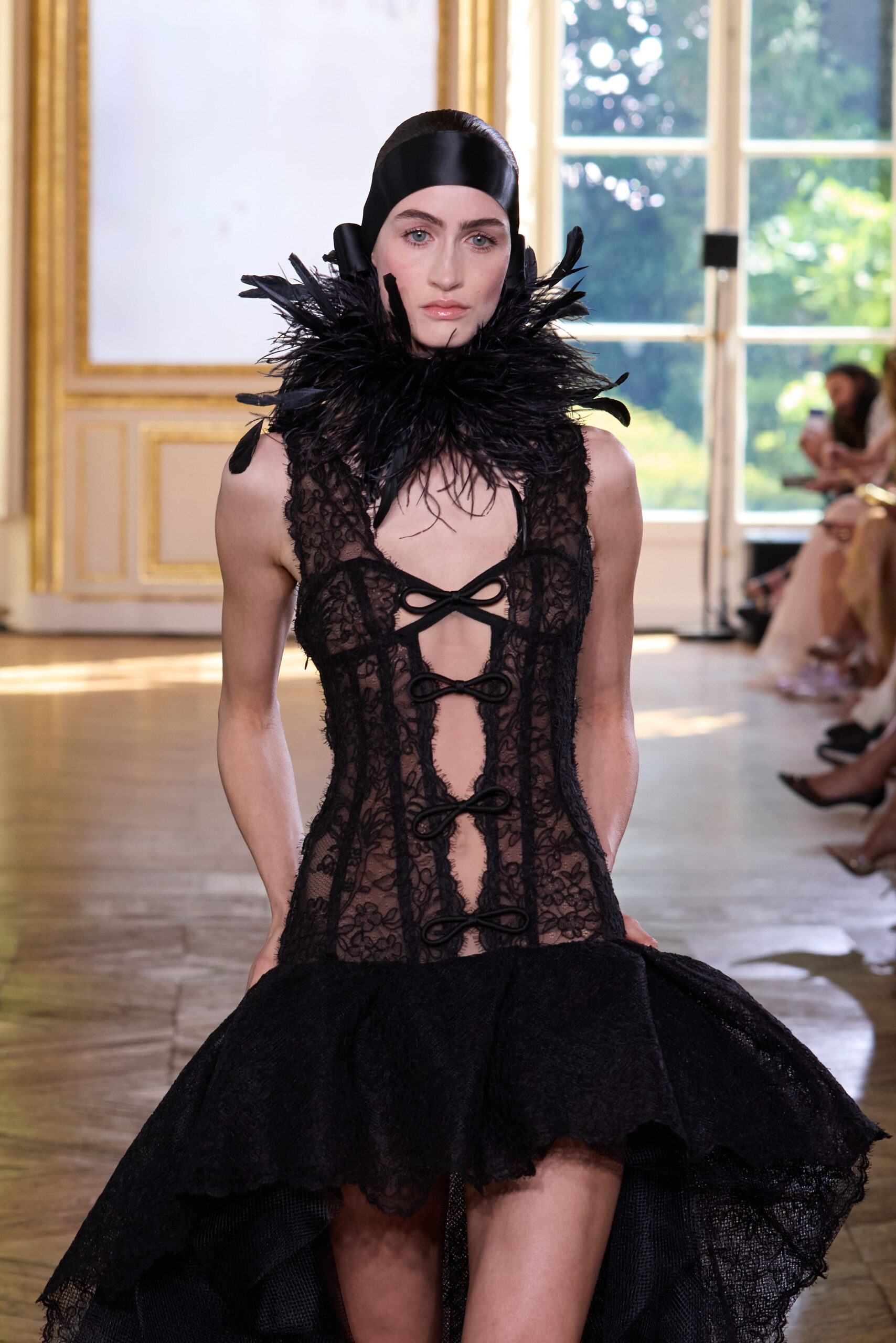
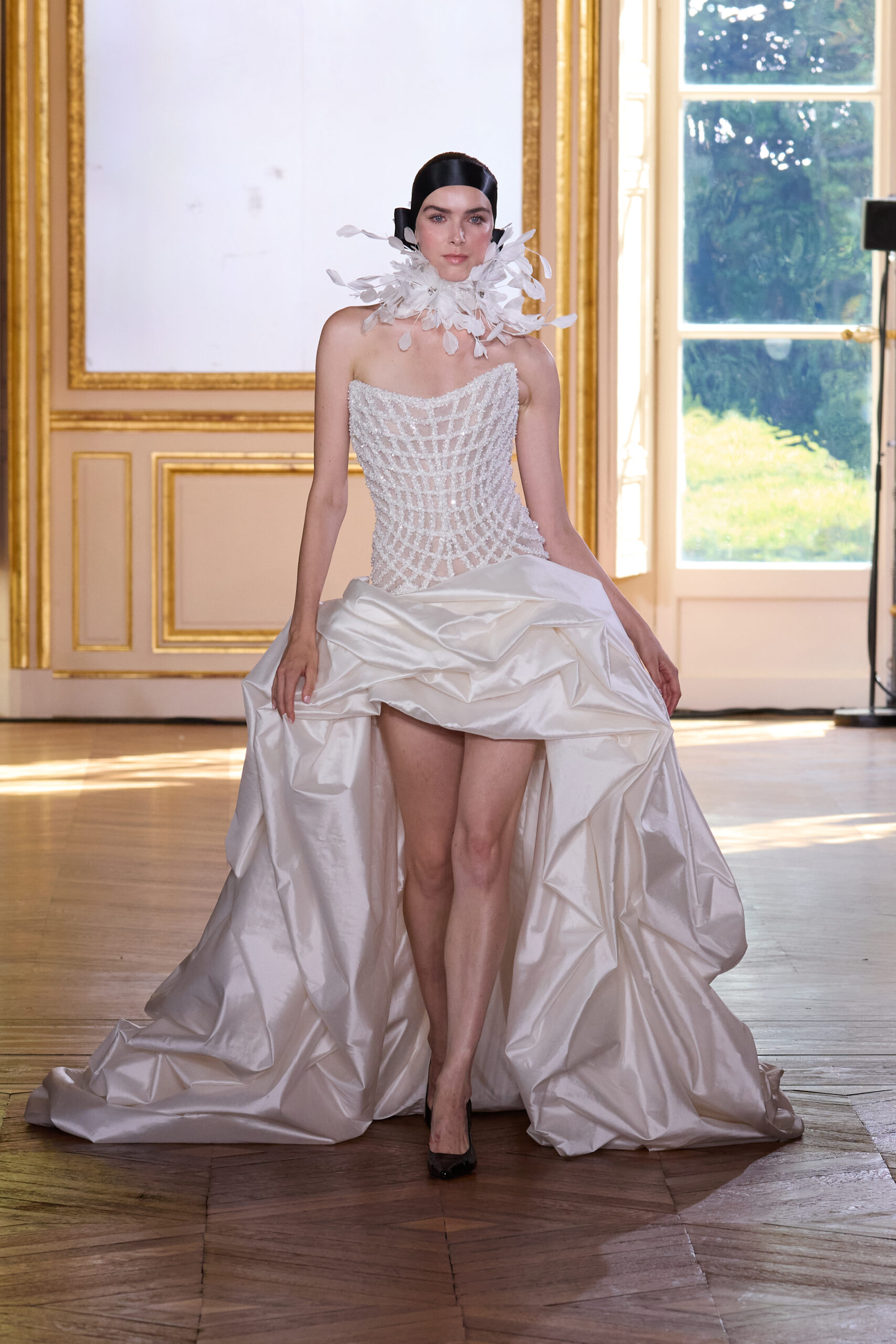
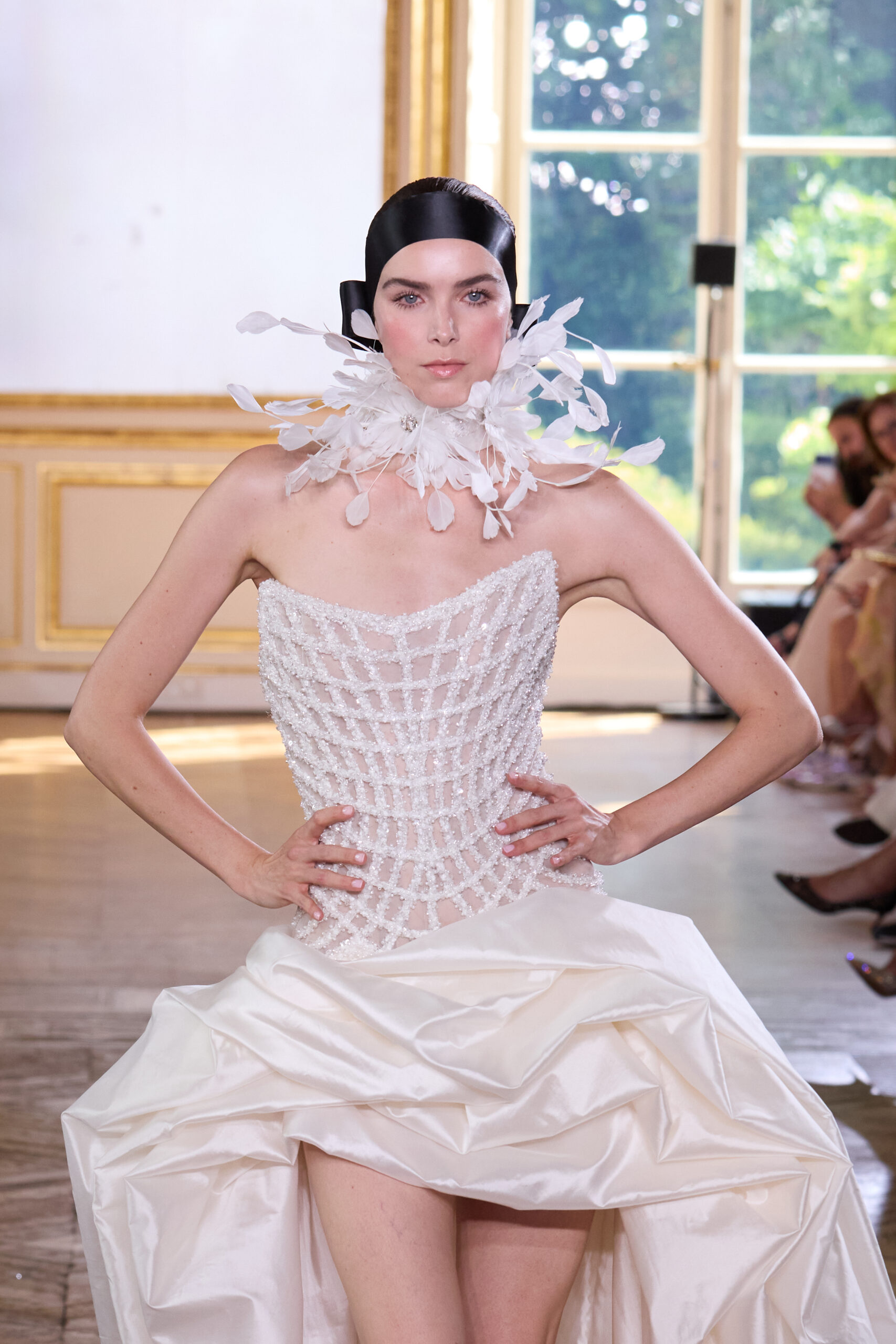
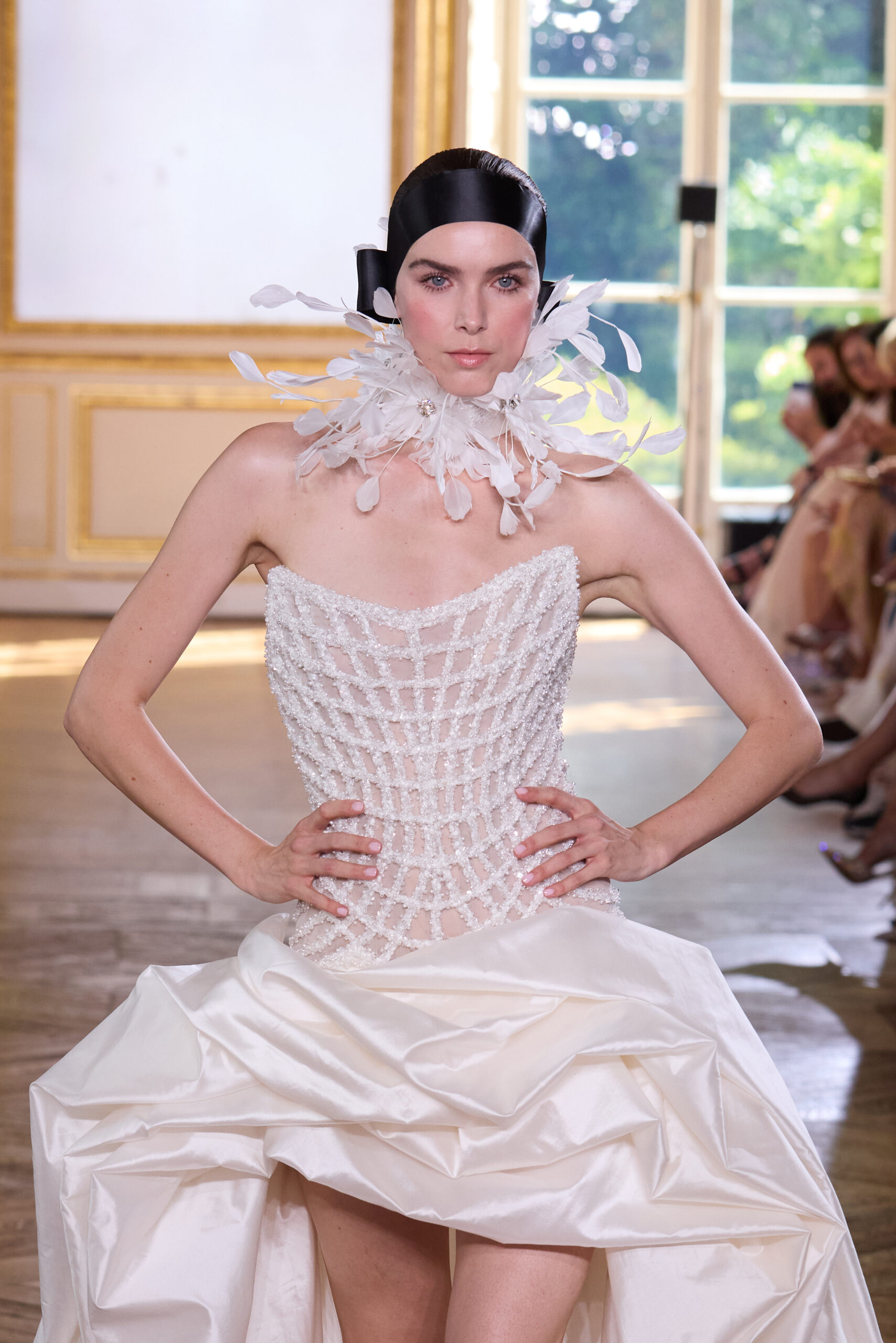
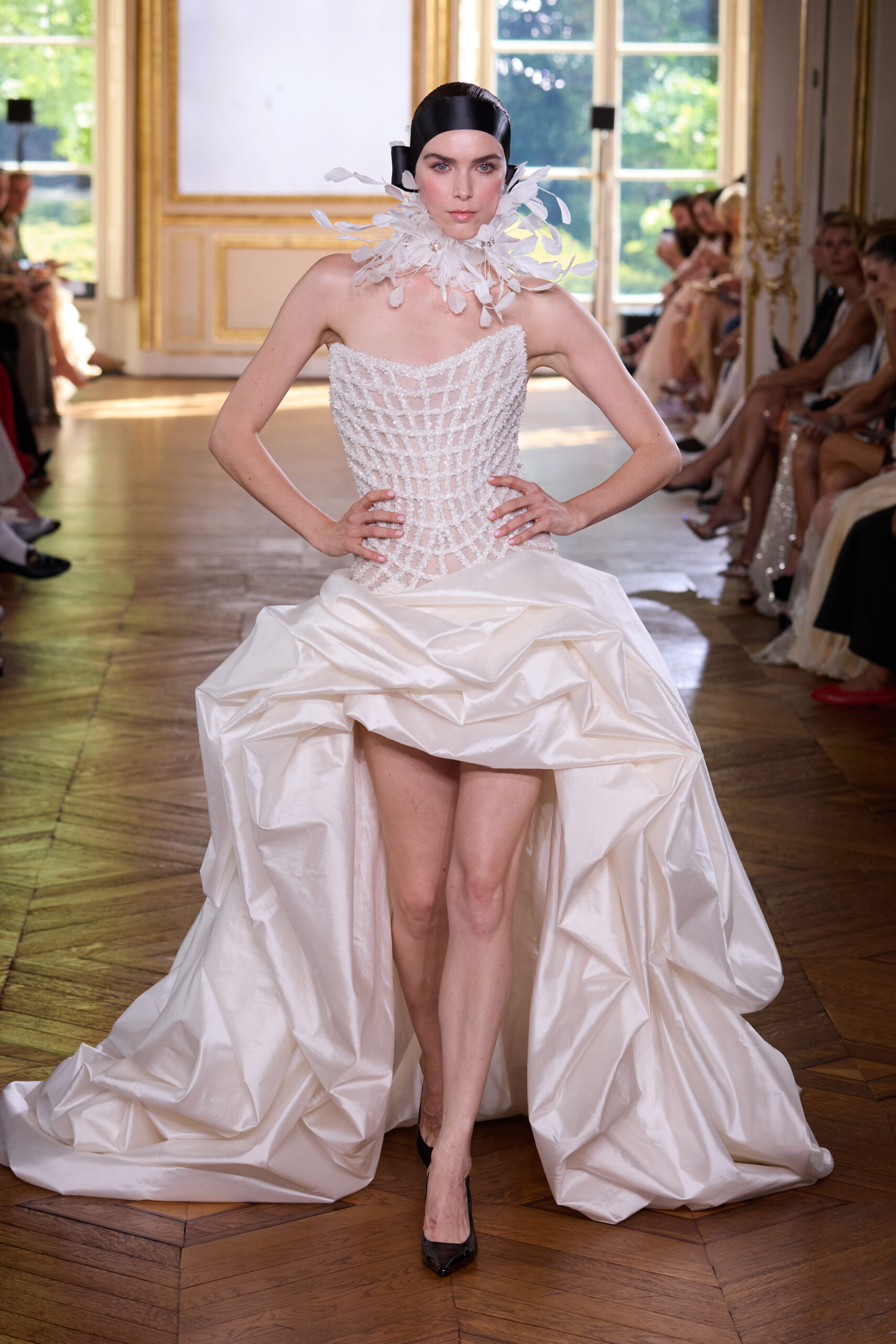
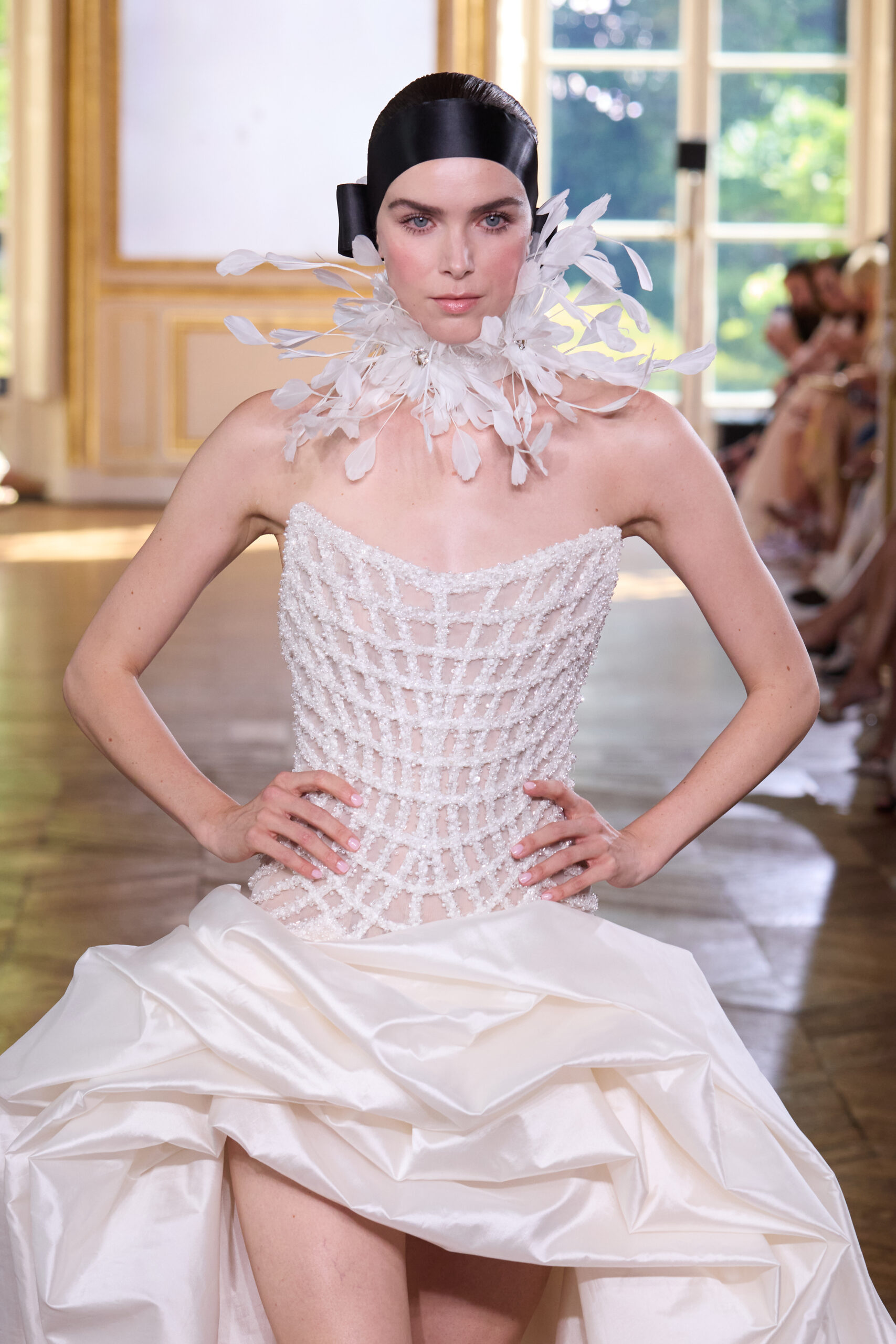
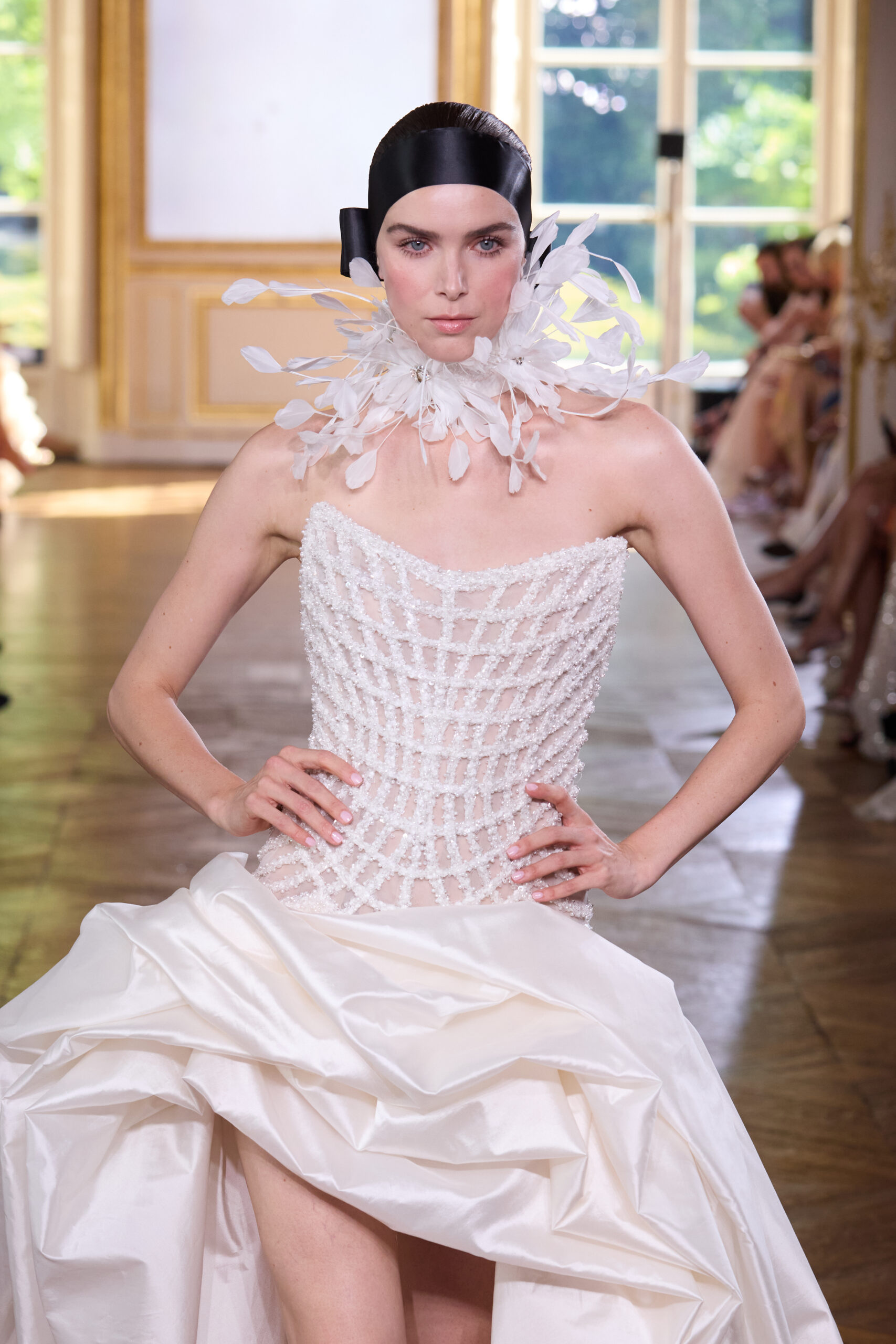
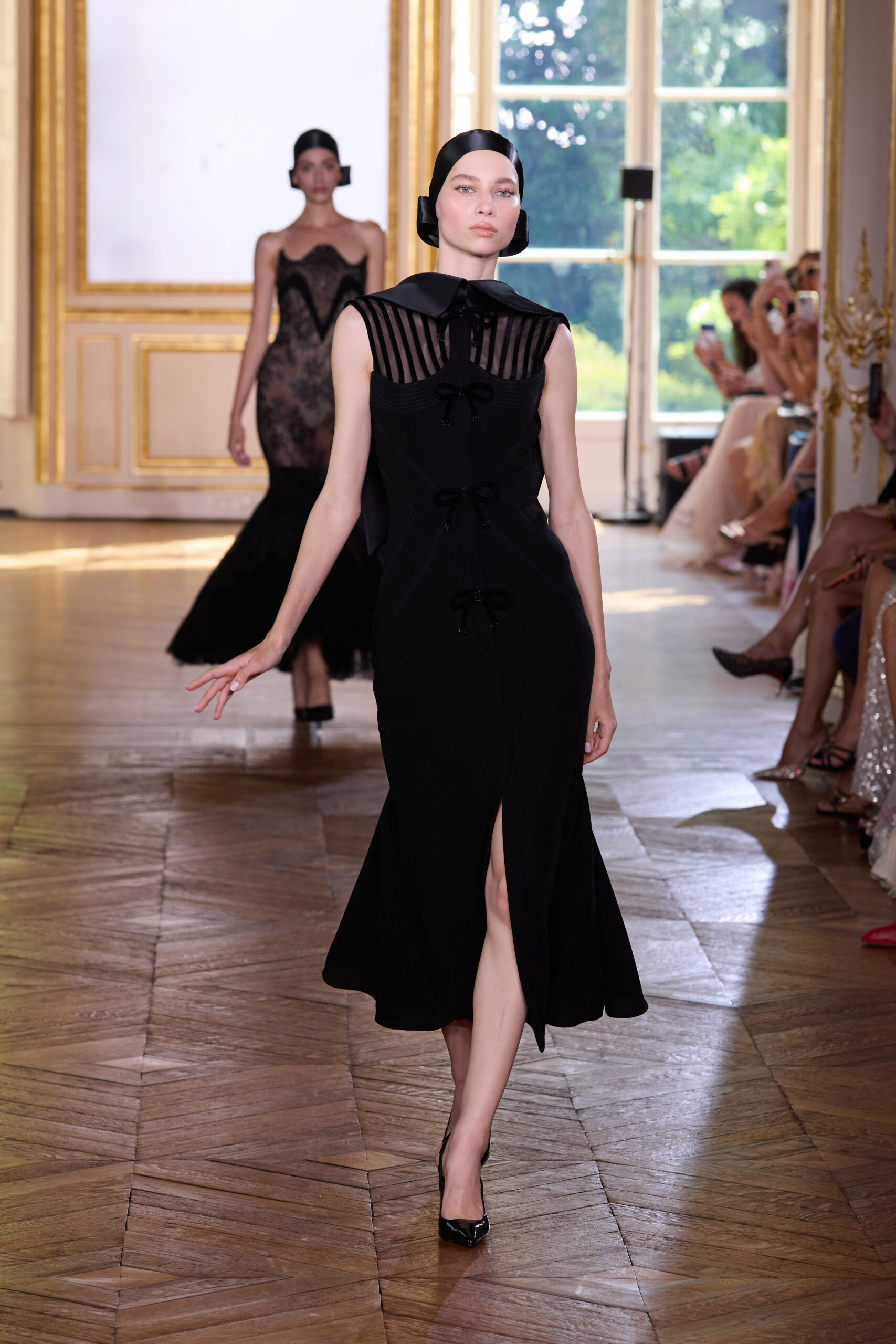
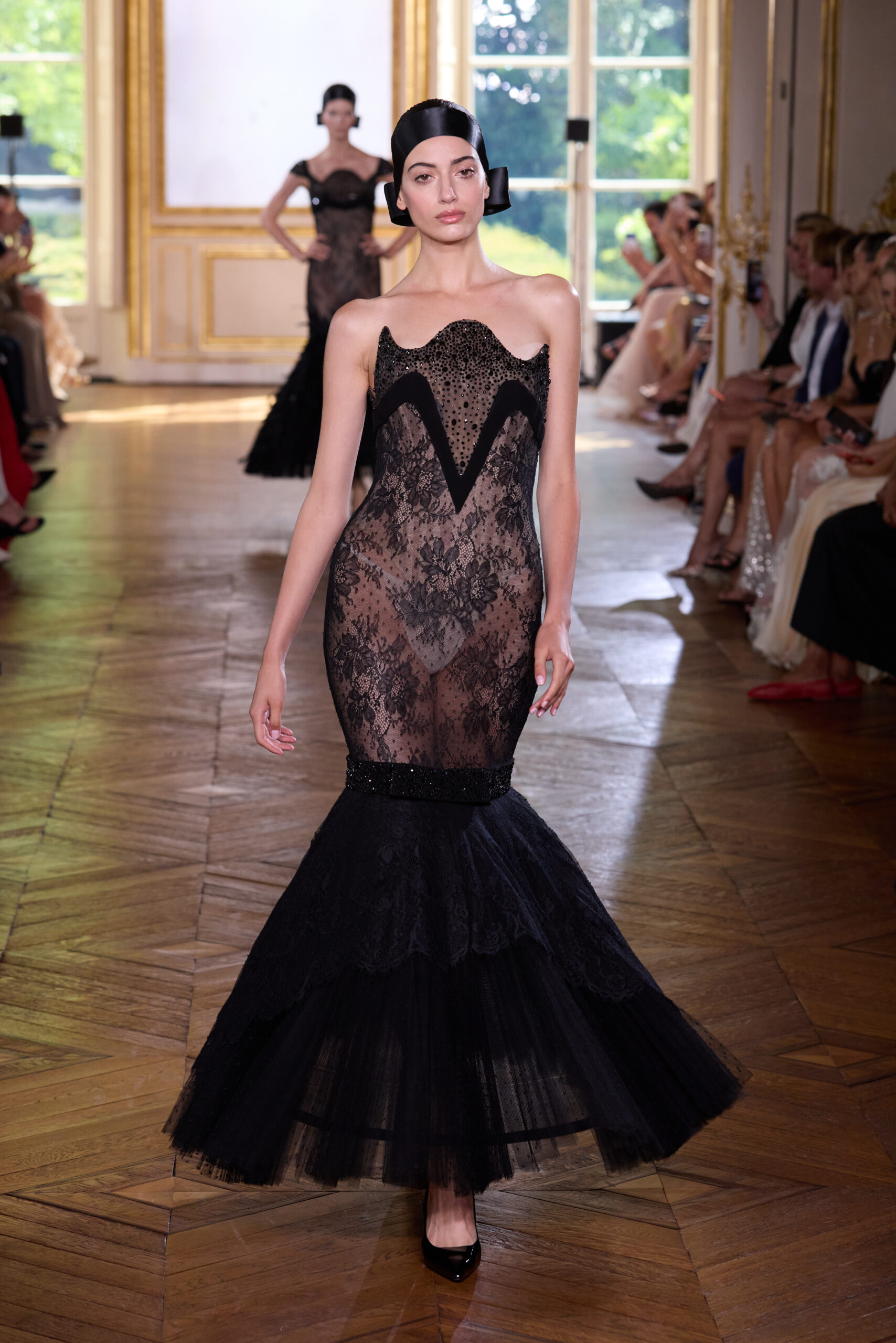
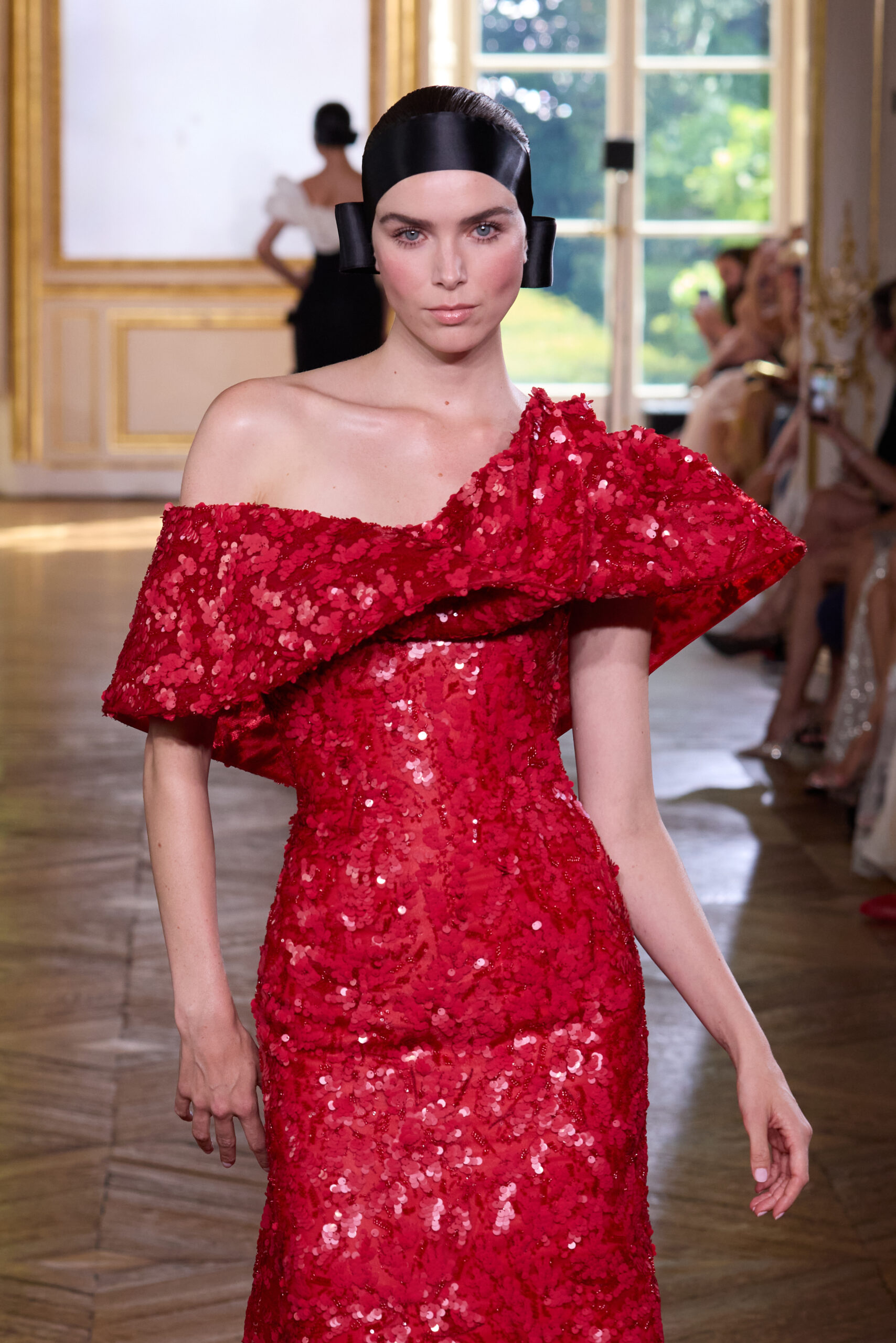
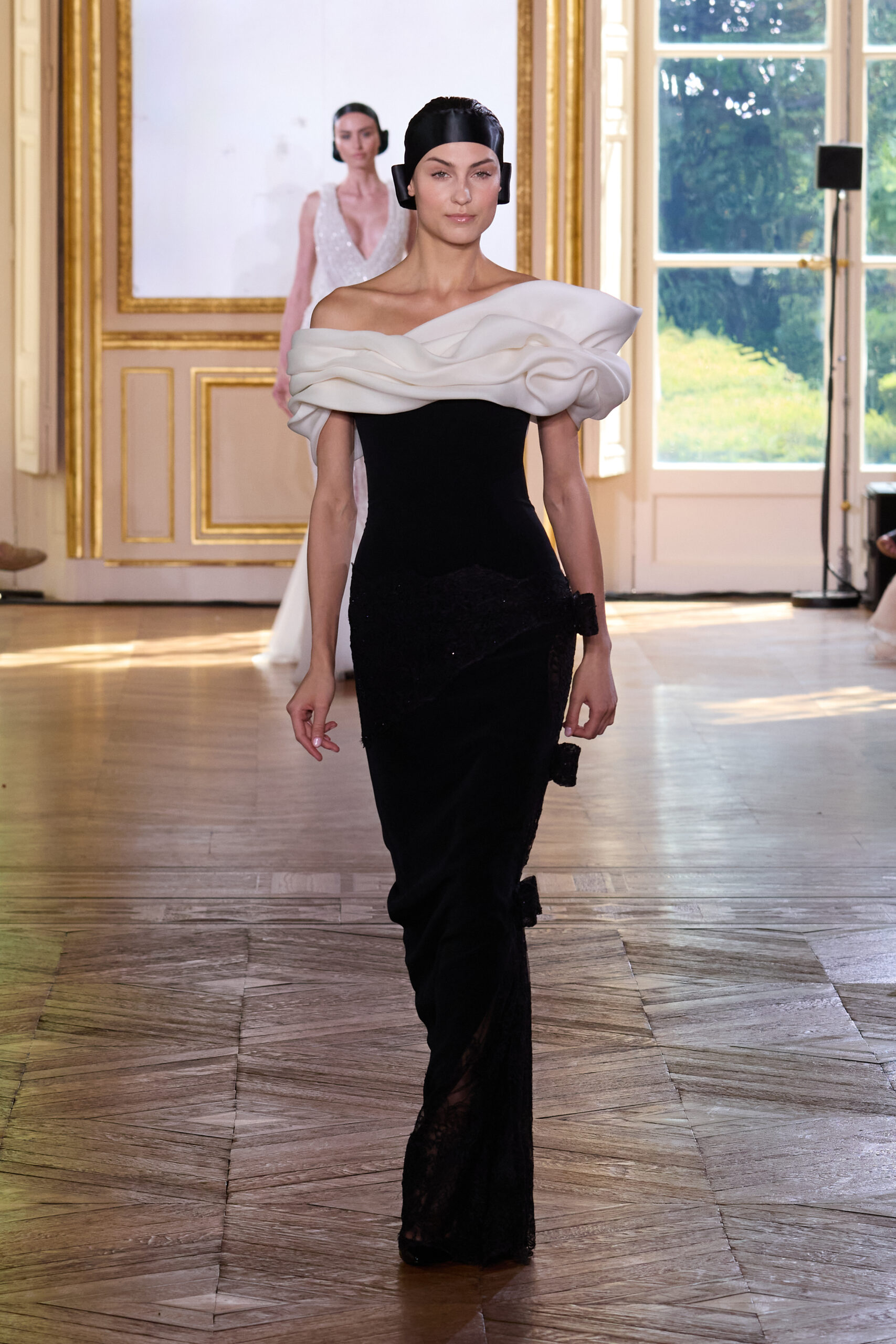
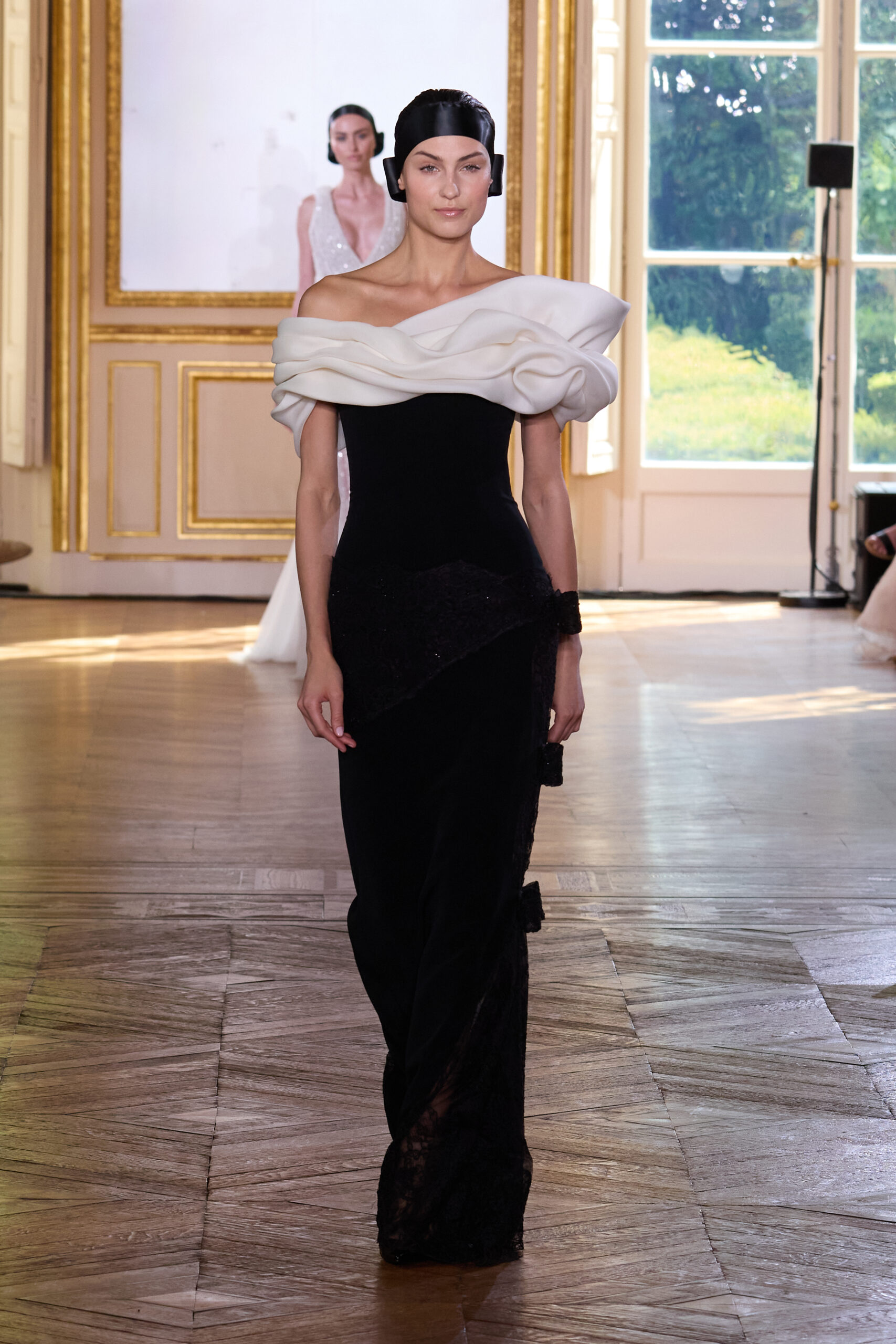
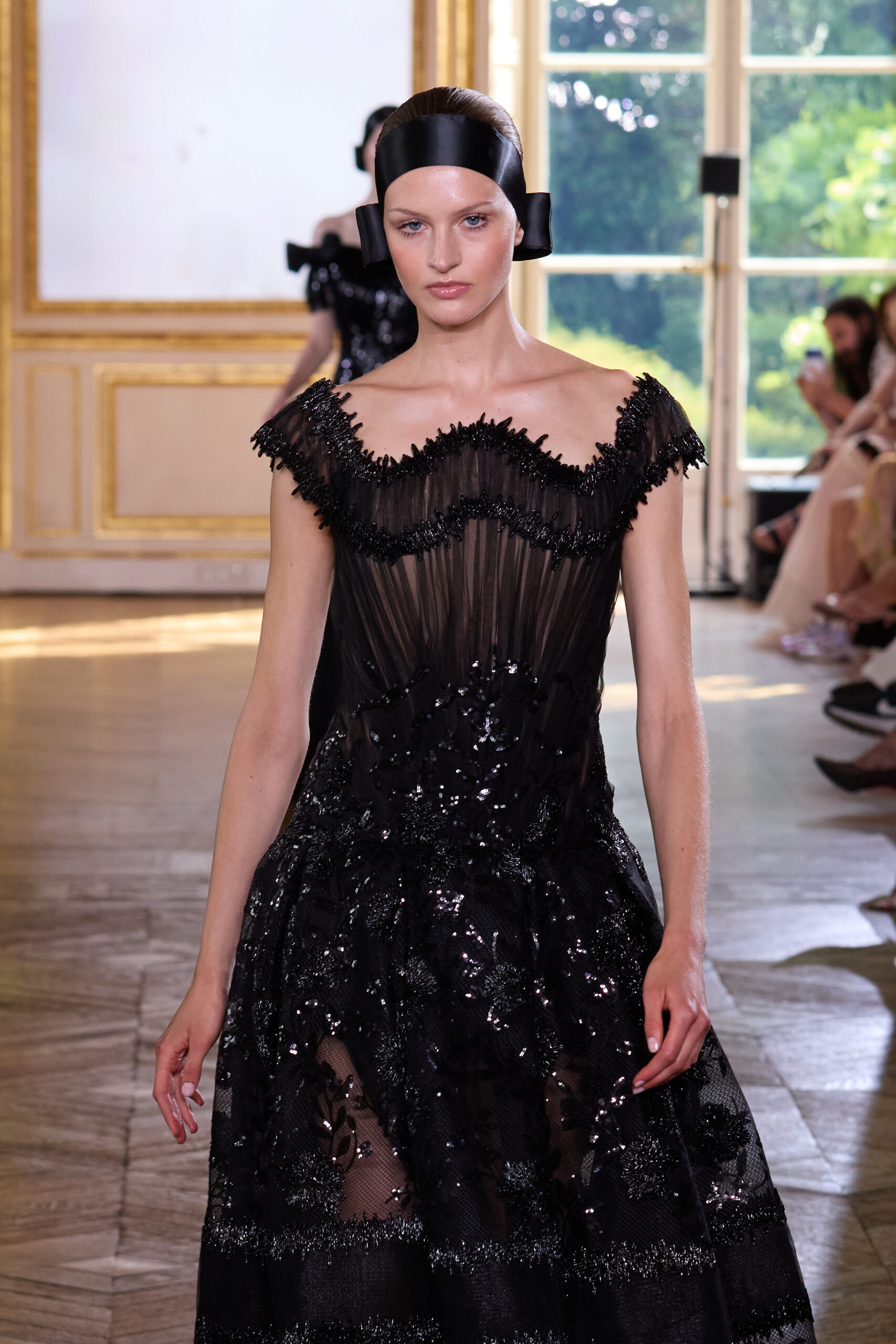
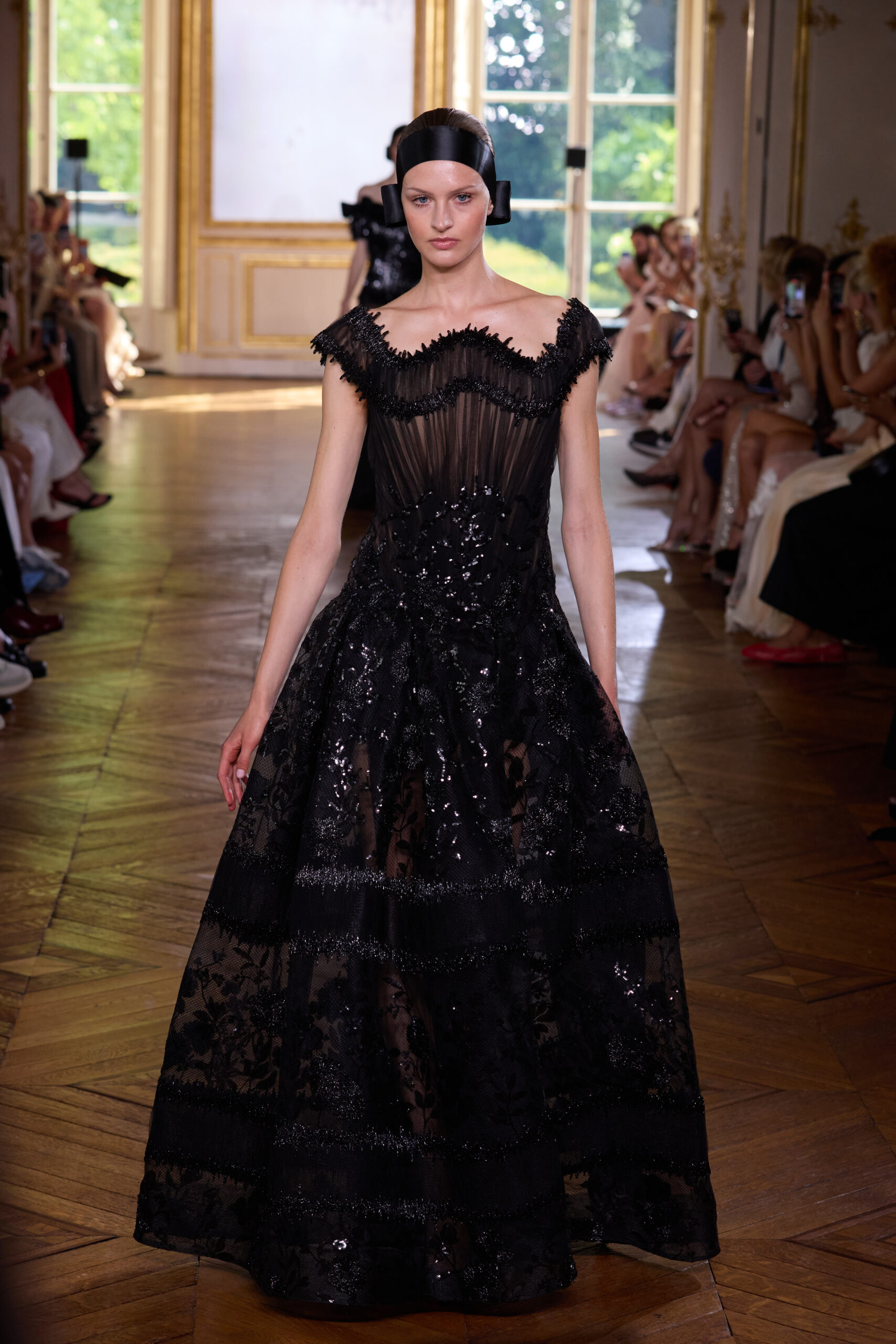
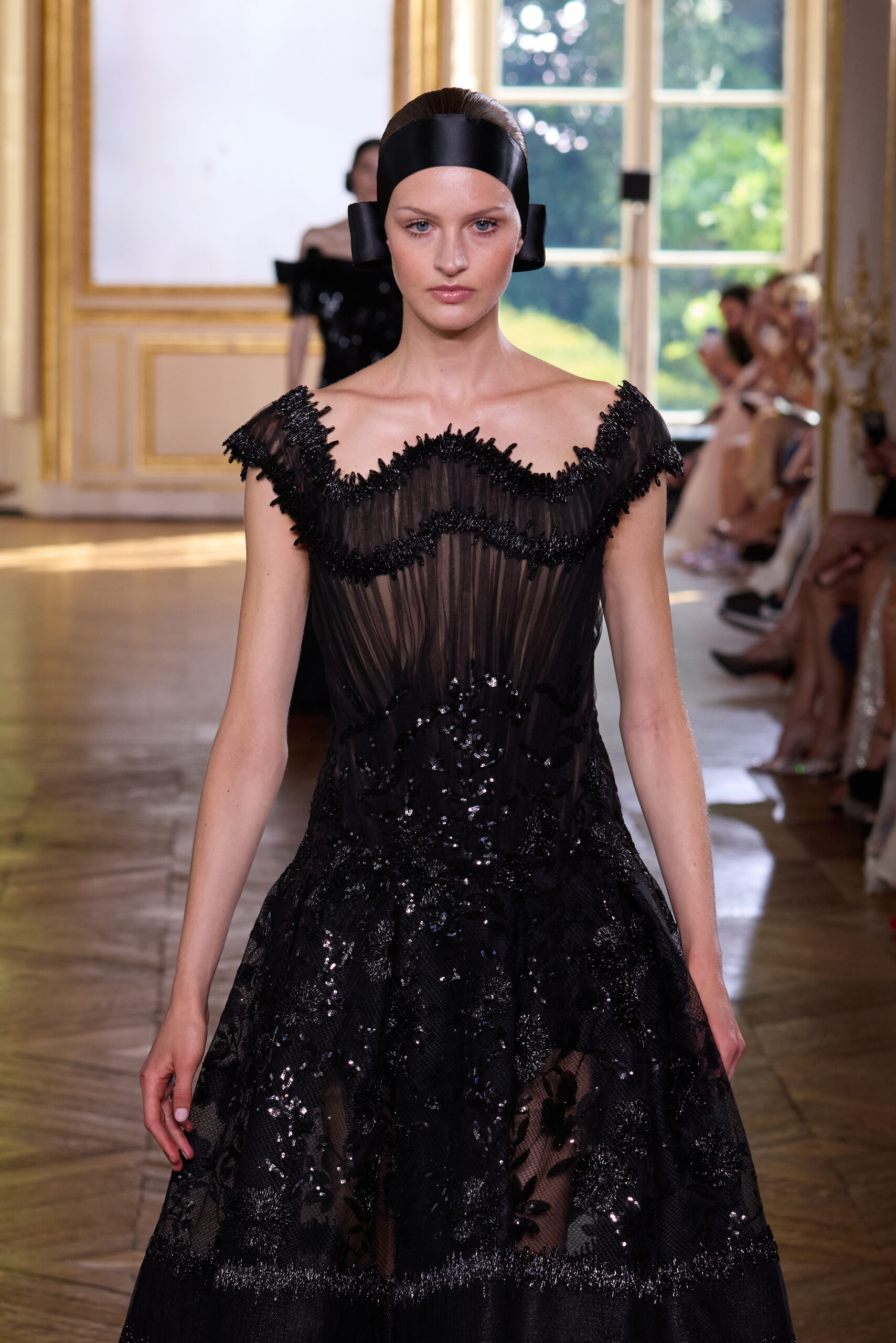
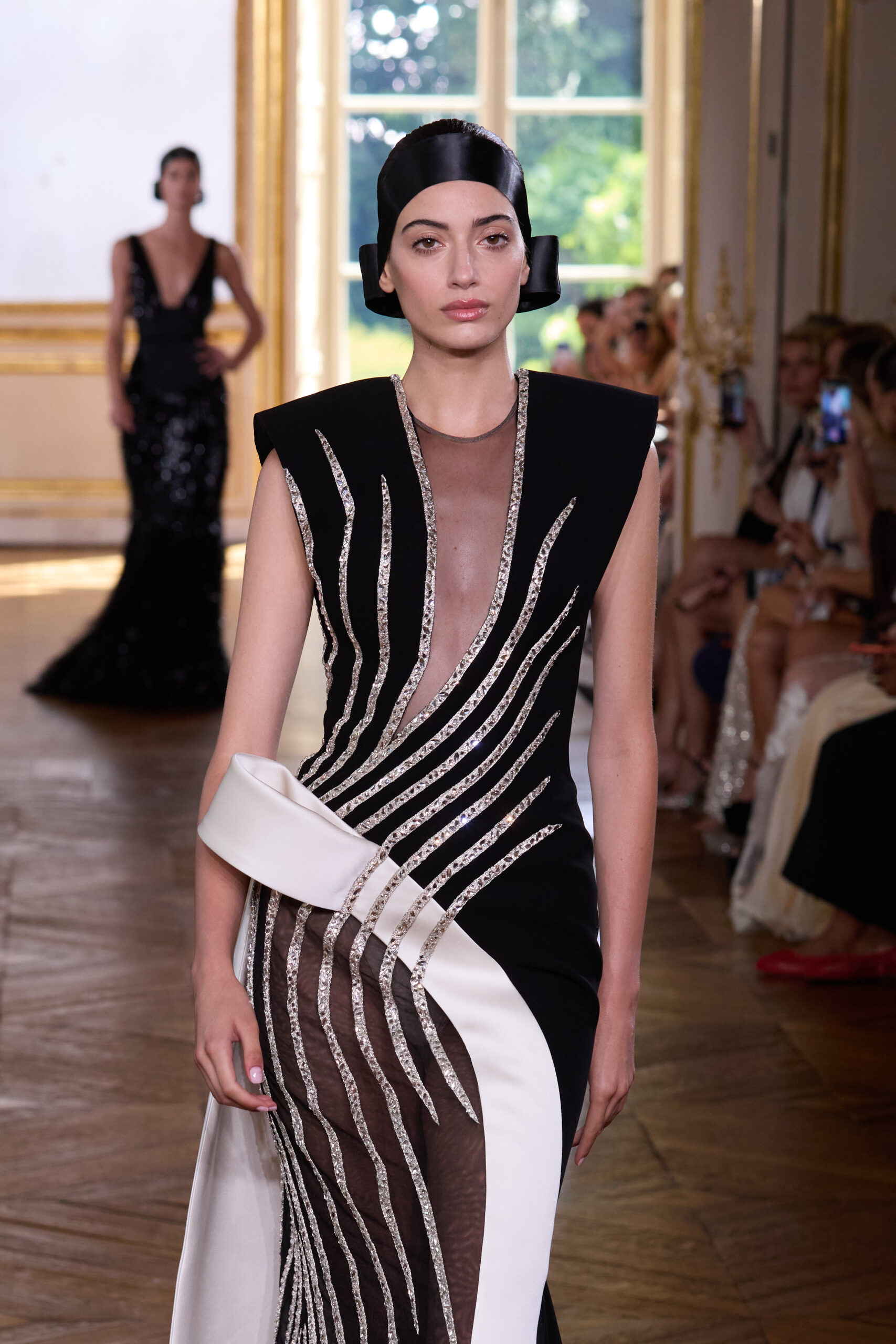
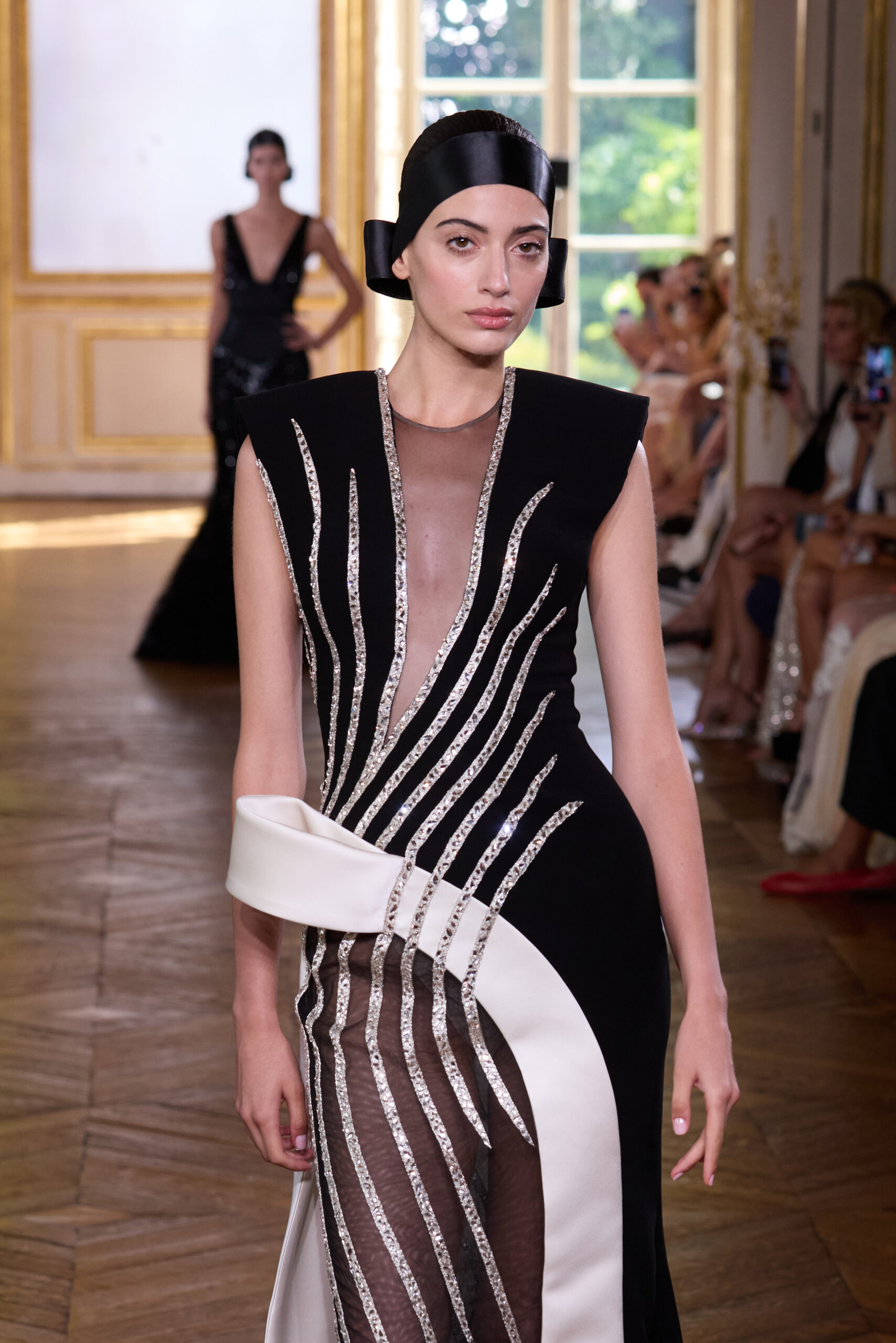
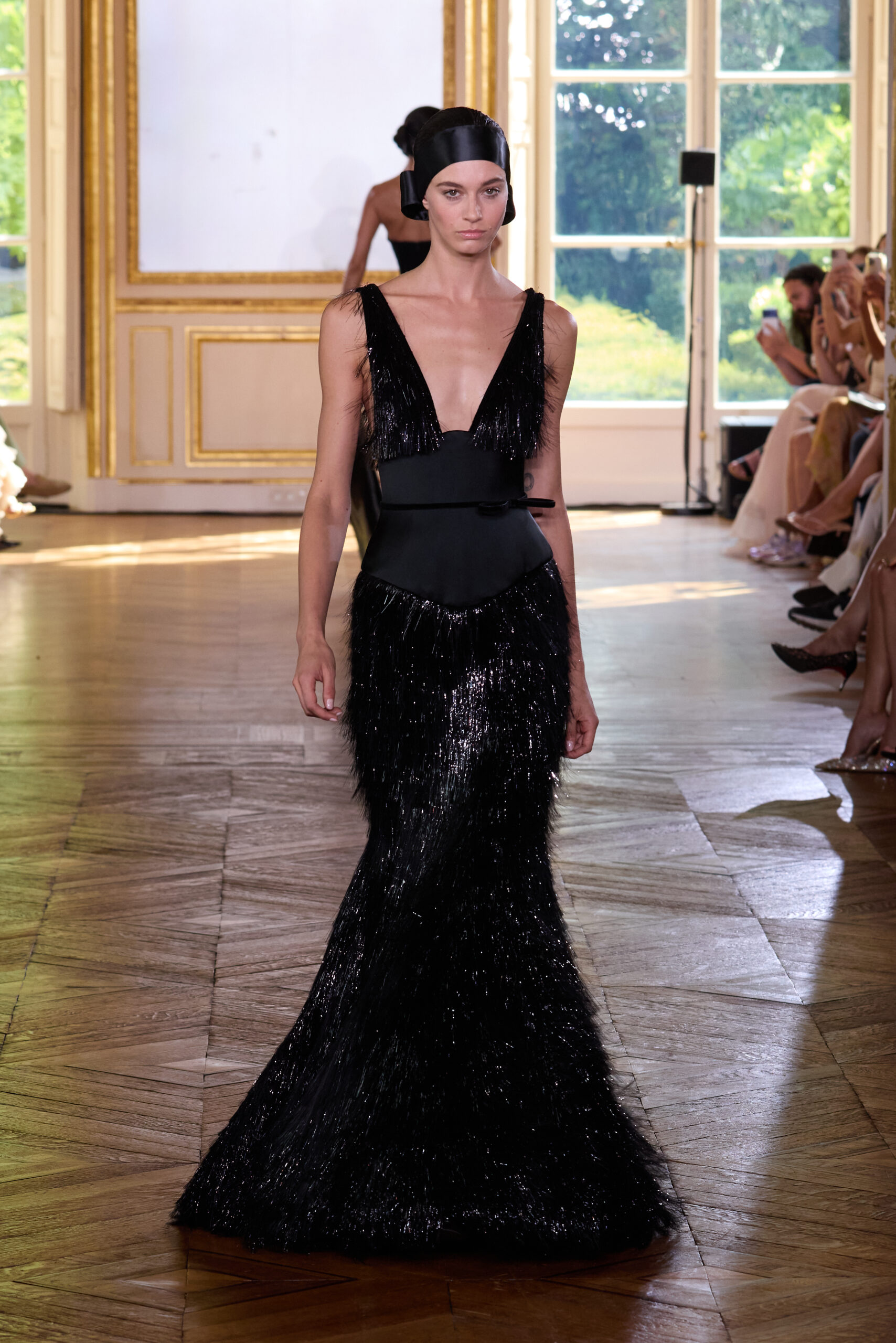
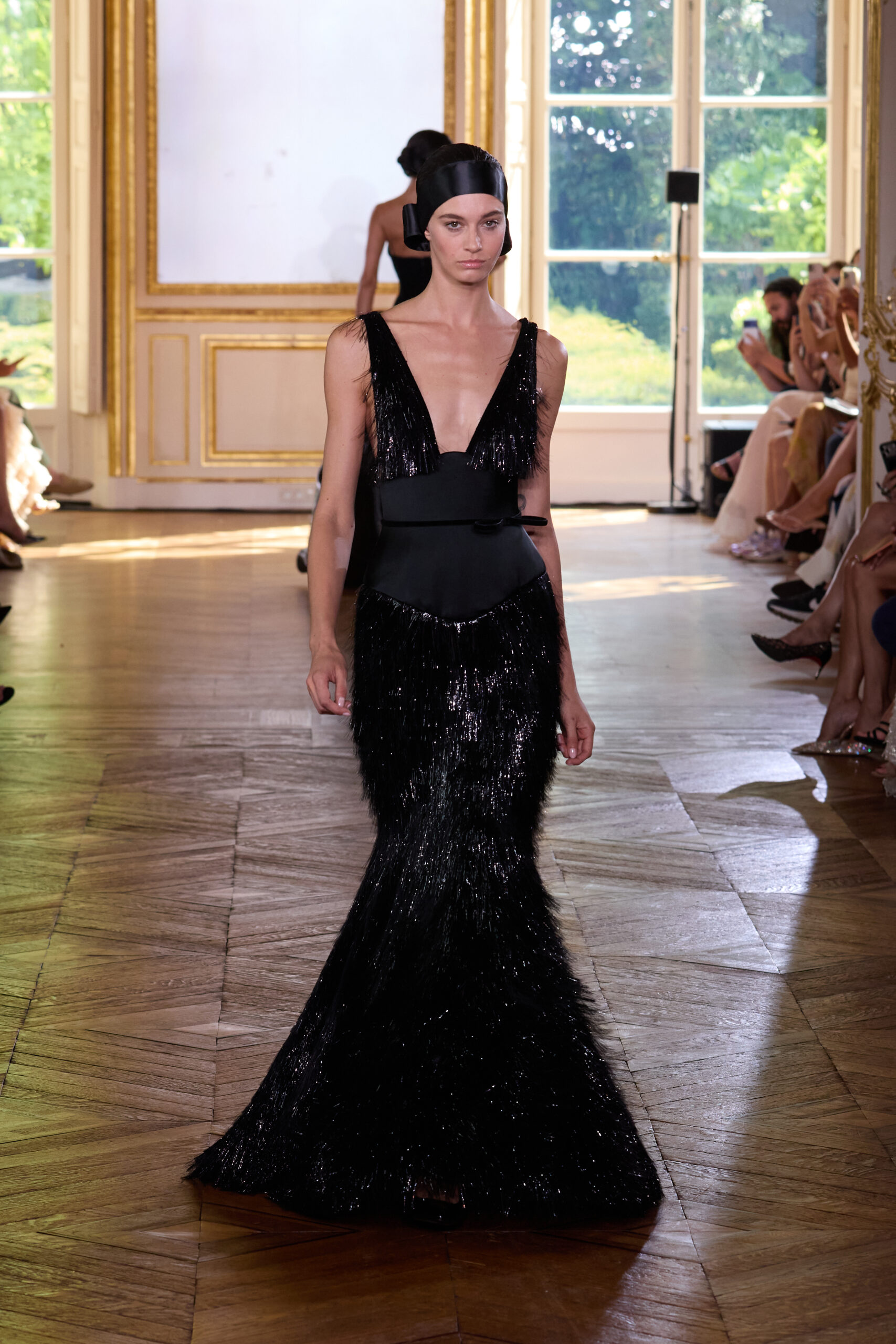
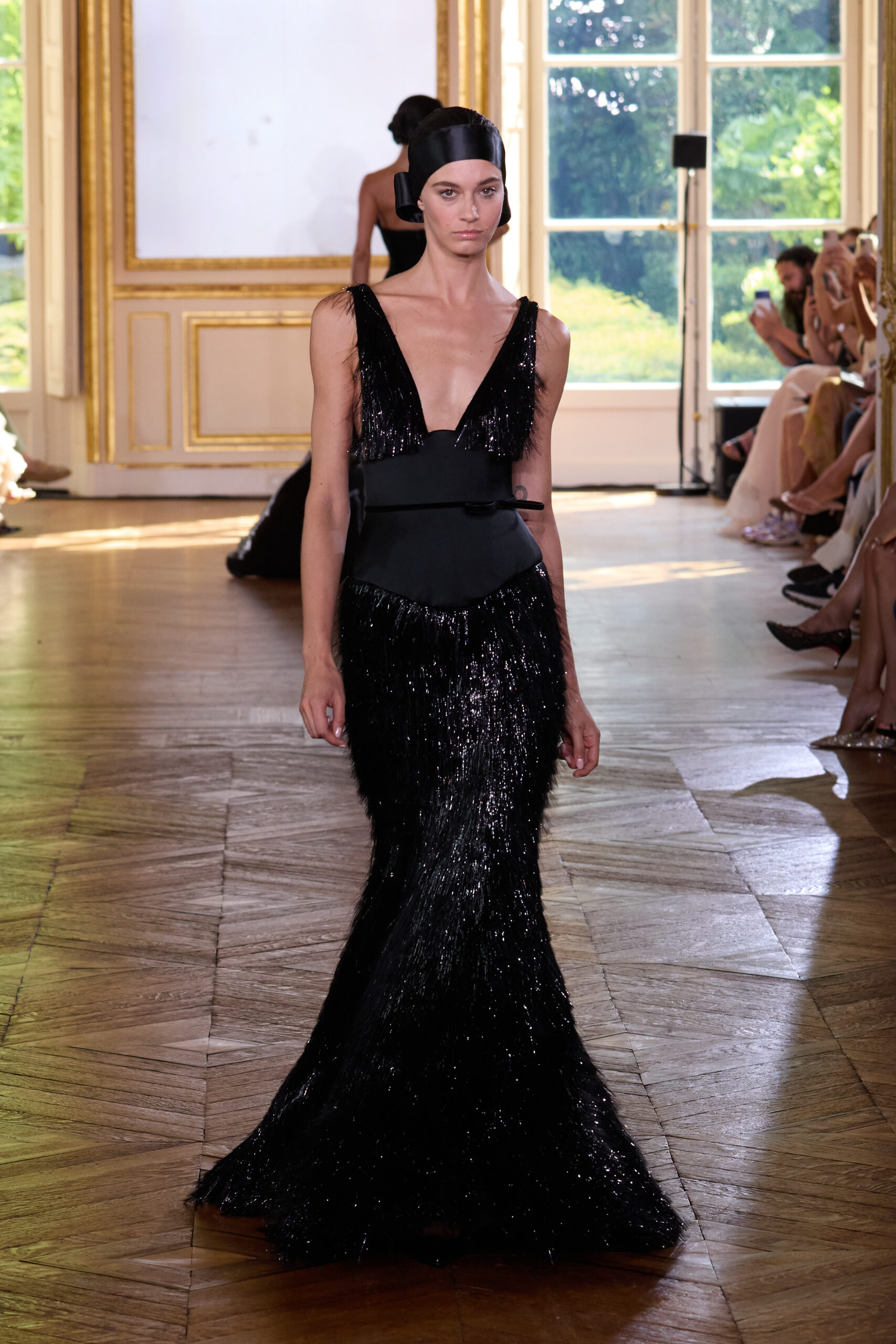
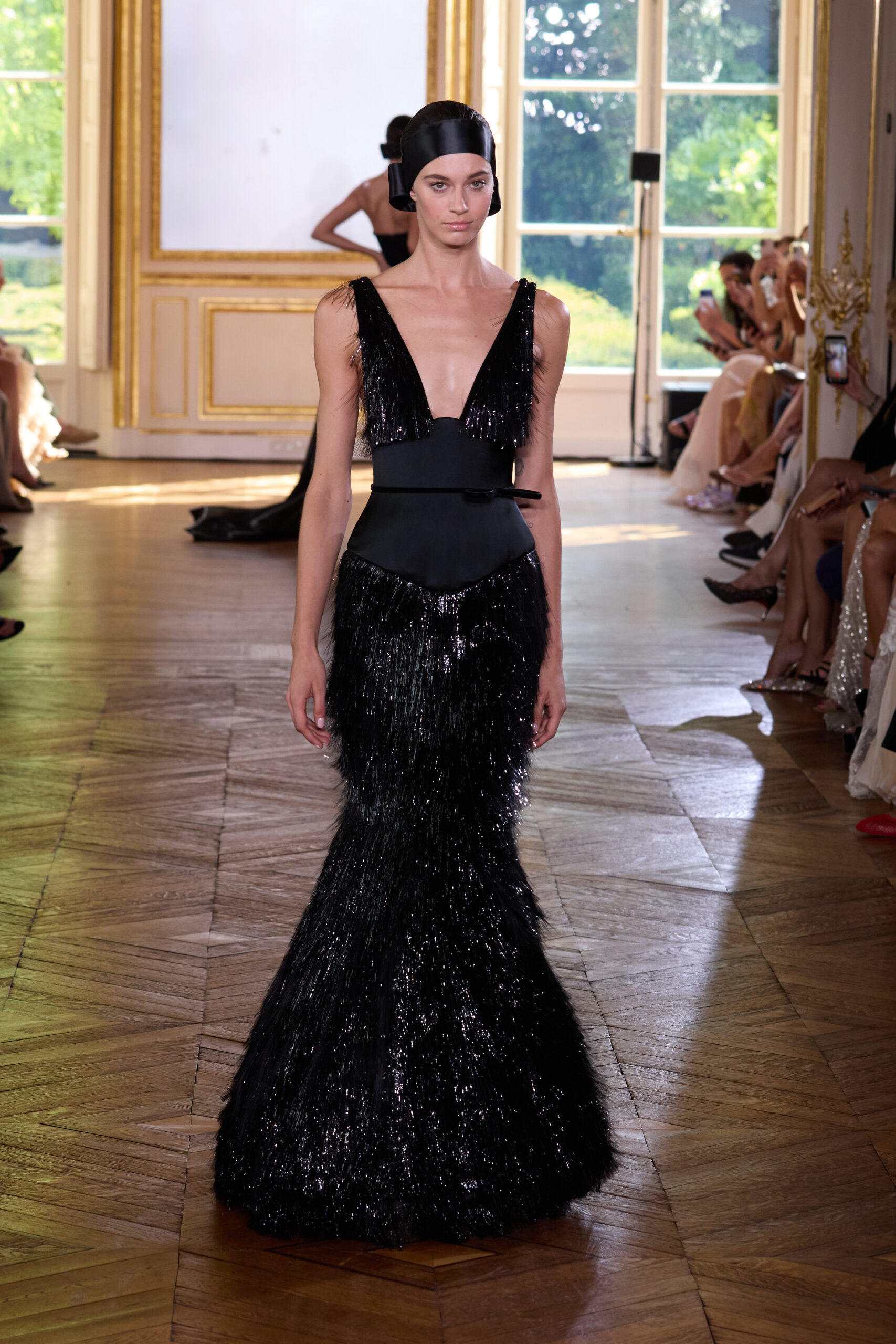
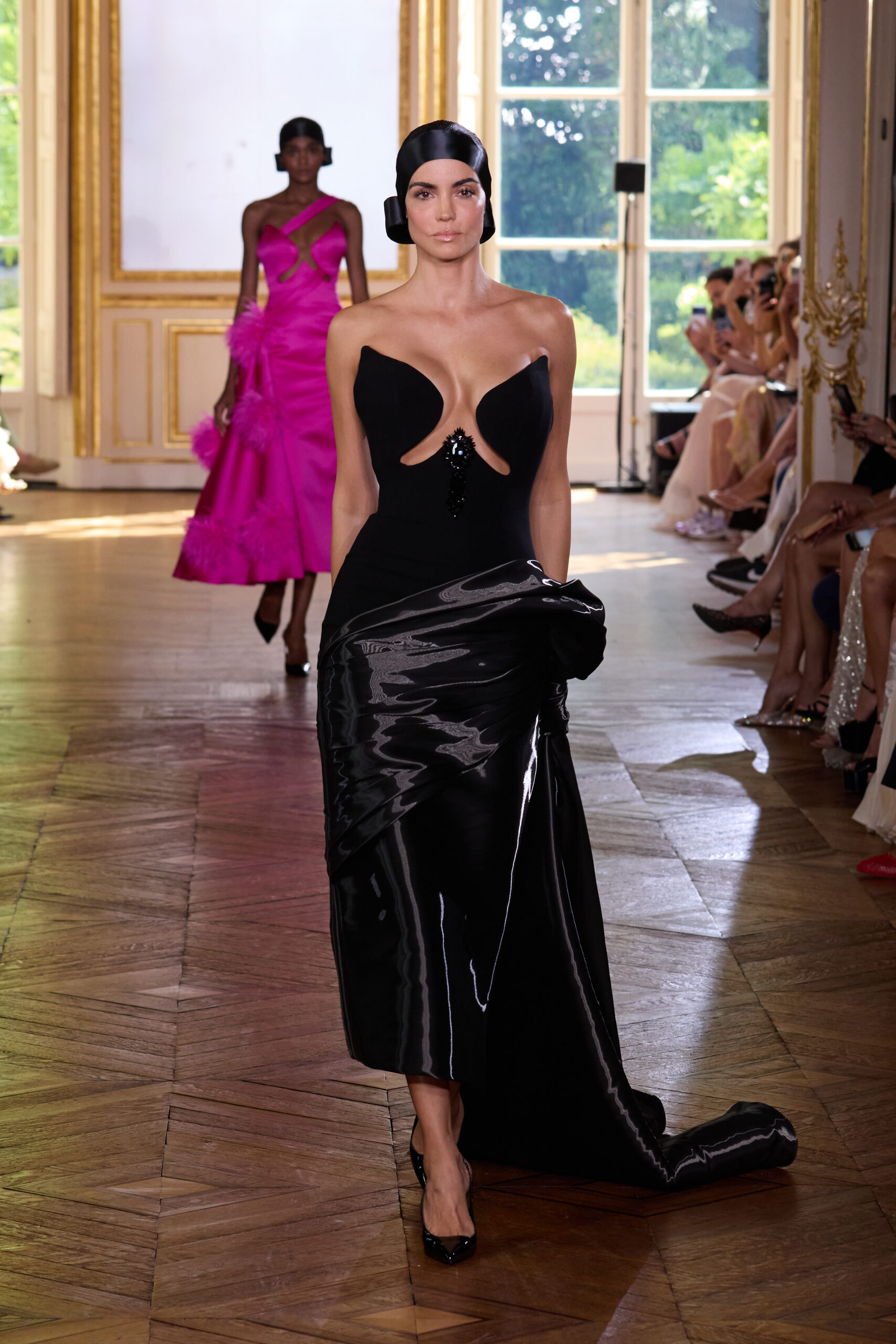
Corsetry thus becomes the foundation of nearly every silhouette presented, but it is a bold, exposed form of corsetry: boned bustiers in sheer fabrics reveal the structure that is usually concealed, while a velvet cord on the outside of the garment highlights the lines that tailoring traditionally keeps hidden beneath the fabric. Even more radically, certain pieces simply replace the fabric with a skillfully crafted mesh of pearls, giving rise to dresses that seem suspended between clothing and jewelry, between what clothes and what adorns. The body is no longer merely clothed: it is framed, almost mapped out, by a structure that no longer seeks to remain unnoticed.
This aesthetic gesture, as spectacular as it may be on a runway, is not merely a show of flair. It is part of a well-established tradition in the history of clothing—one that treats structure as a form of expression rather than a discreet tool. The corset, before becoming a shameful undergarment that the twentieth century sought to eliminate, was for centuries an object that was both functional and ostentatious, worn over outer garments in certain European courts. Chakra does not reinvent this history, but rather revives it through a contemporary vocabulary, embracing the idea that what holds the body together can also tell its story.
Yet beneath this evident technical mastery lies something darker than a mere display of skill. Regarding this collection, the fashion house evokes a subtle melancholy that lies just beneath the surface of its apparent glamour—an exploration of the fleeting nature of desire, of how certain moments gain intensity precisely because they cannot last. This tension between exposure and transience lends the collection a meaning that goes beyond a mere exercise in style: revealing the structure also reveals the fragility of what it supports, reminding us that all architecture, no matter how masterfully crafted, remains vulnerable the moment it ceases to hold.
By choosing to reveal what fashion has always taken care to hide, Georges Chakra poses a question that goes beyond his collection alone: Does seduction gain more from the mystery of what is concealed, or from the candor of what is laid bare without reservation? Judging by this collection, the answer may not be clear-cut—and it is precisely this ambiguity that keeps the dress so fascinating.
images: Enrique Urratia
Cette publication est également disponible en :

