
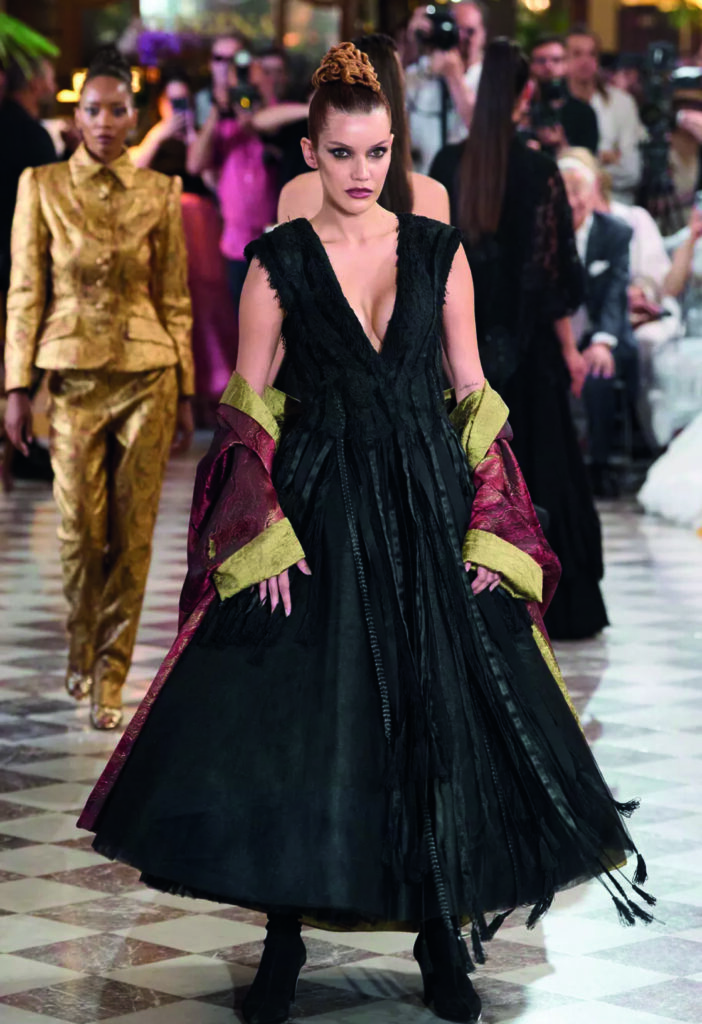
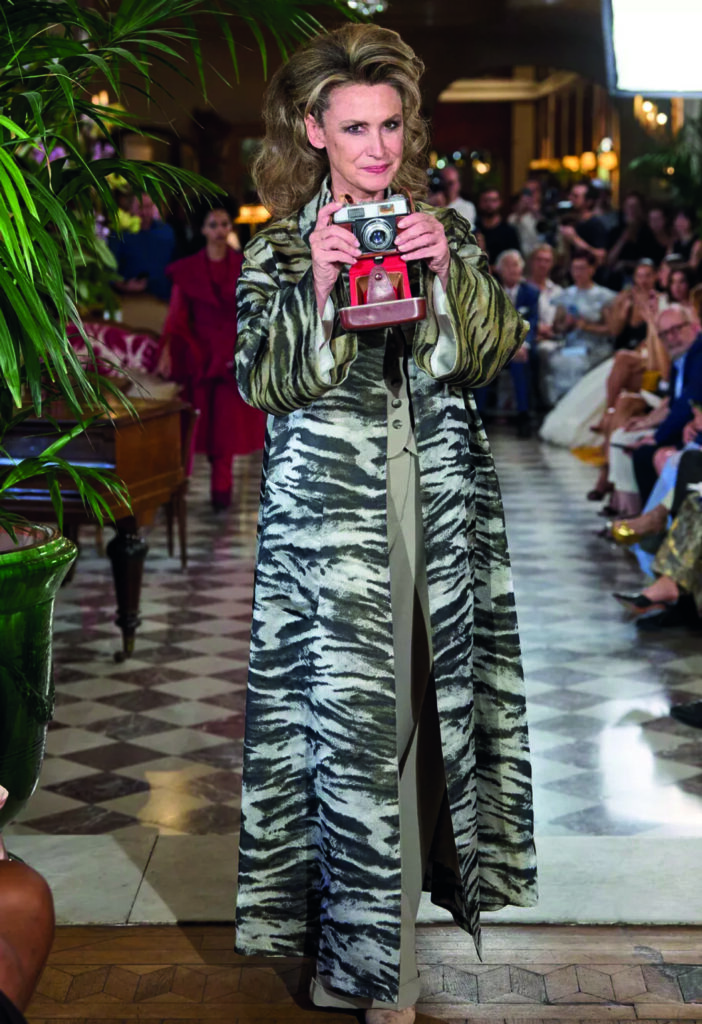
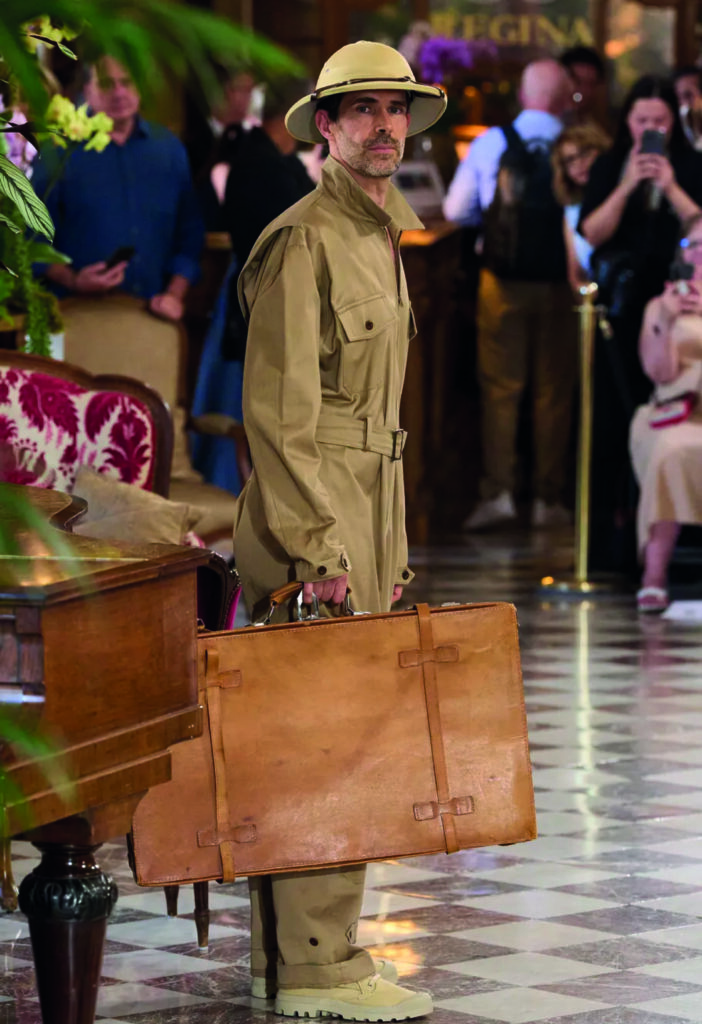
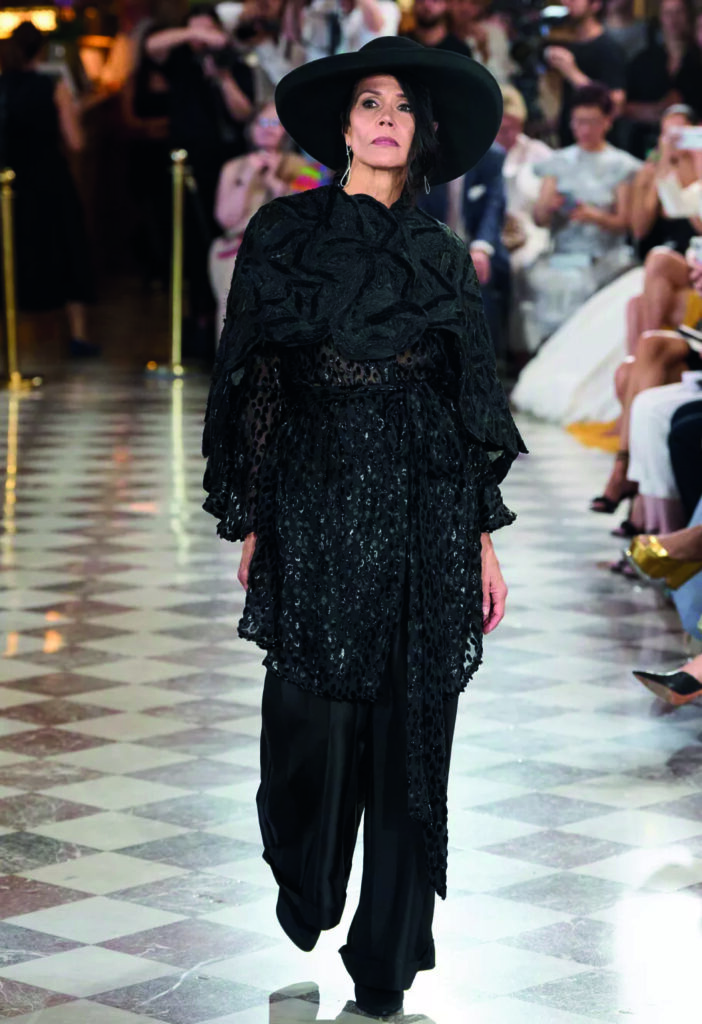
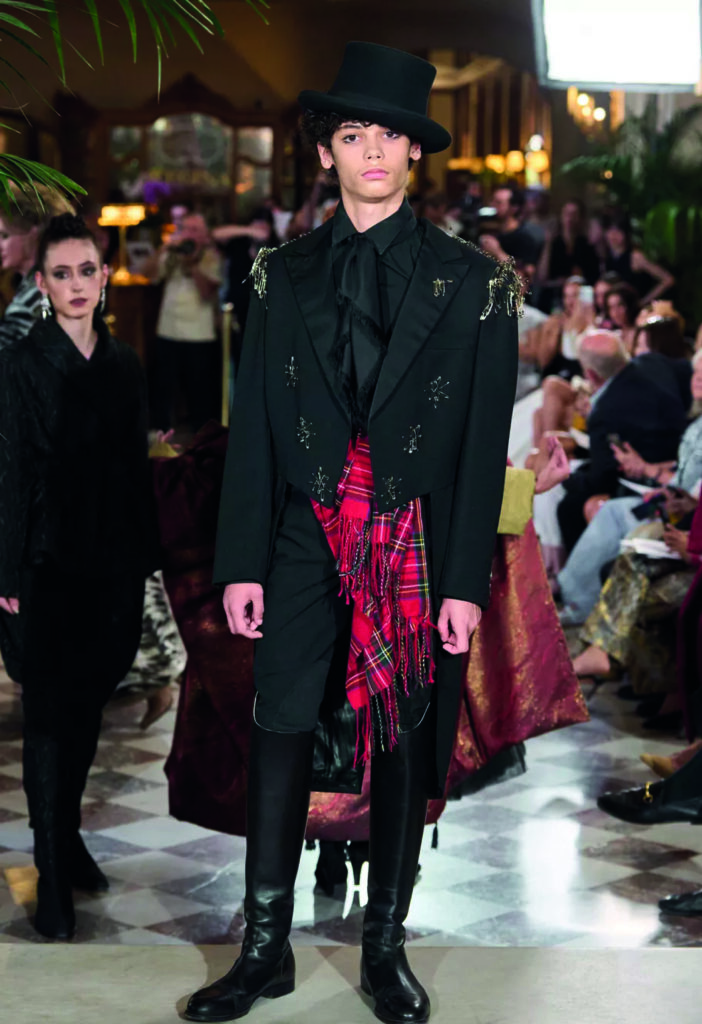
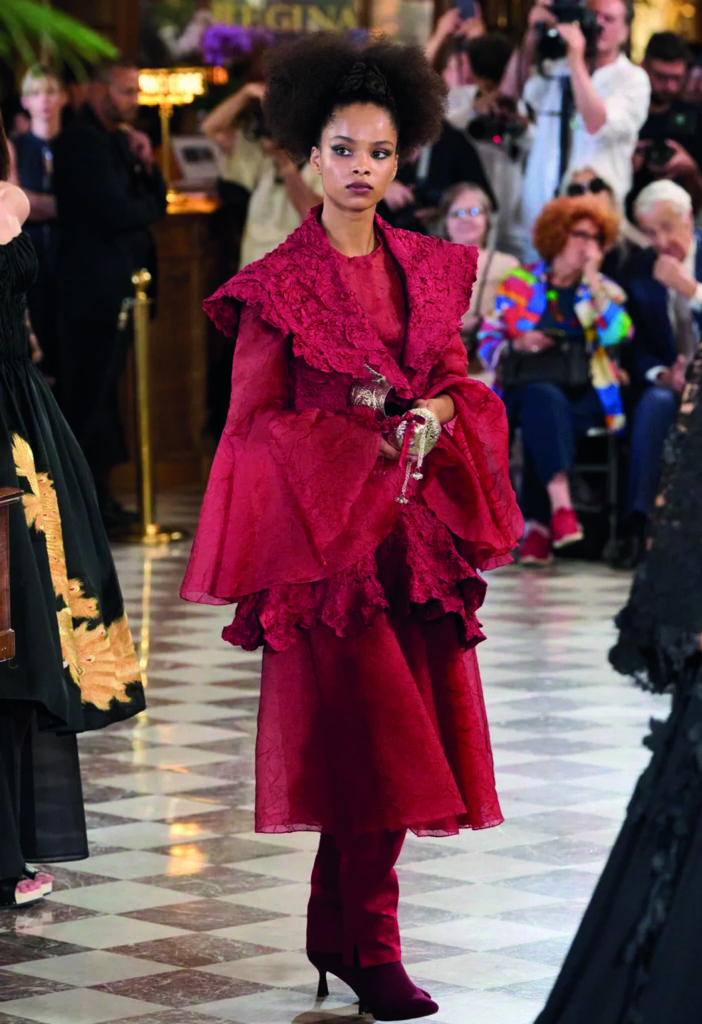
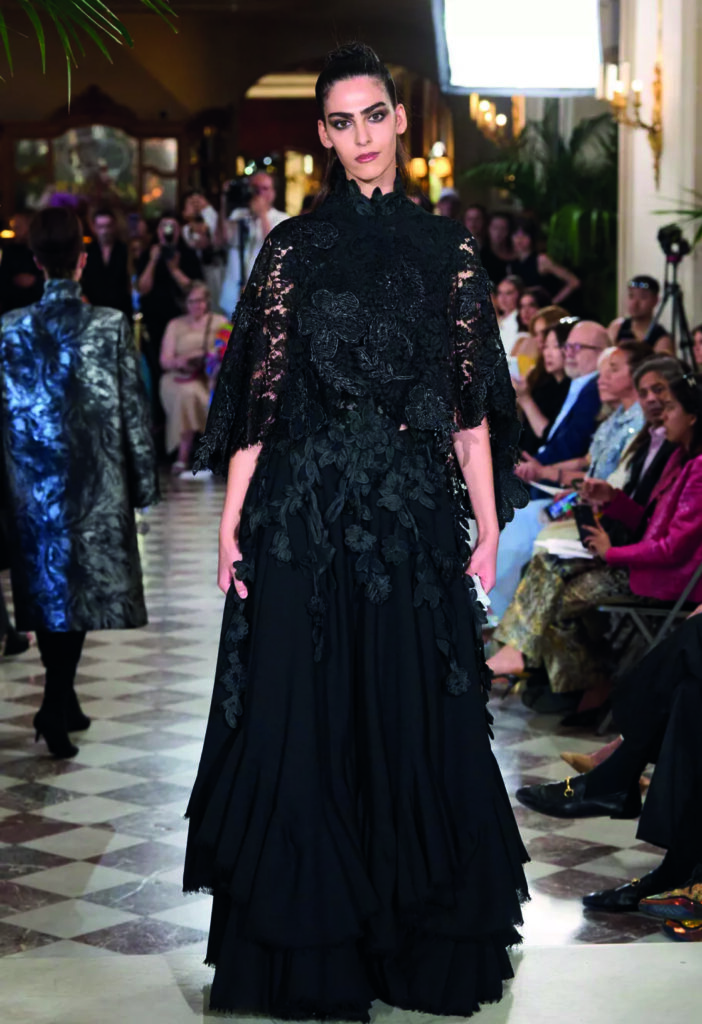
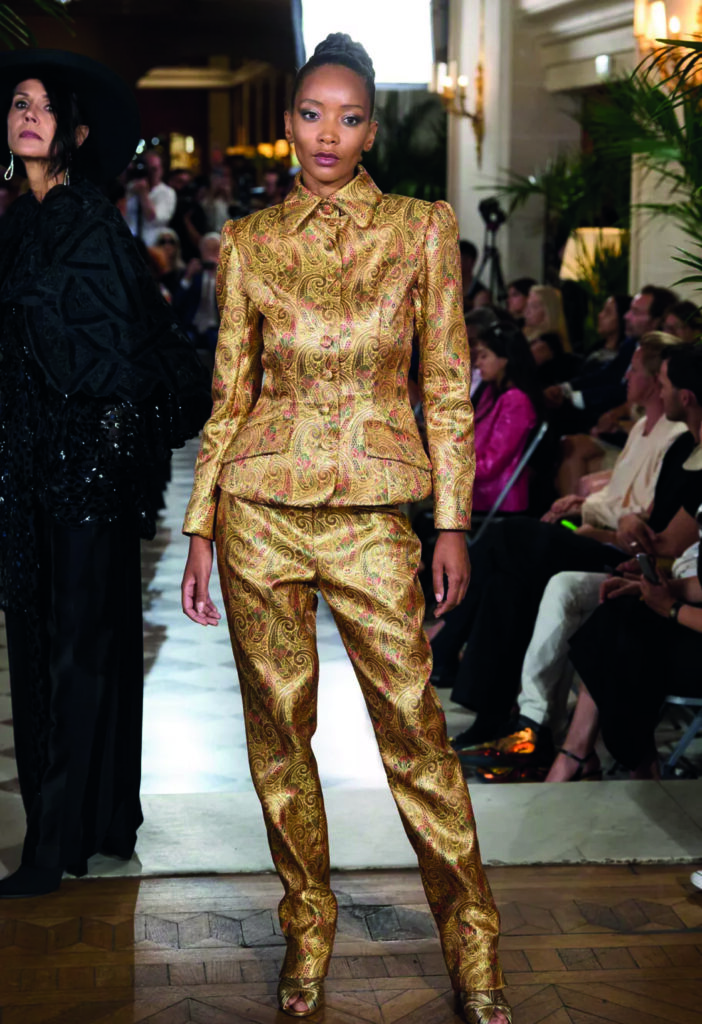
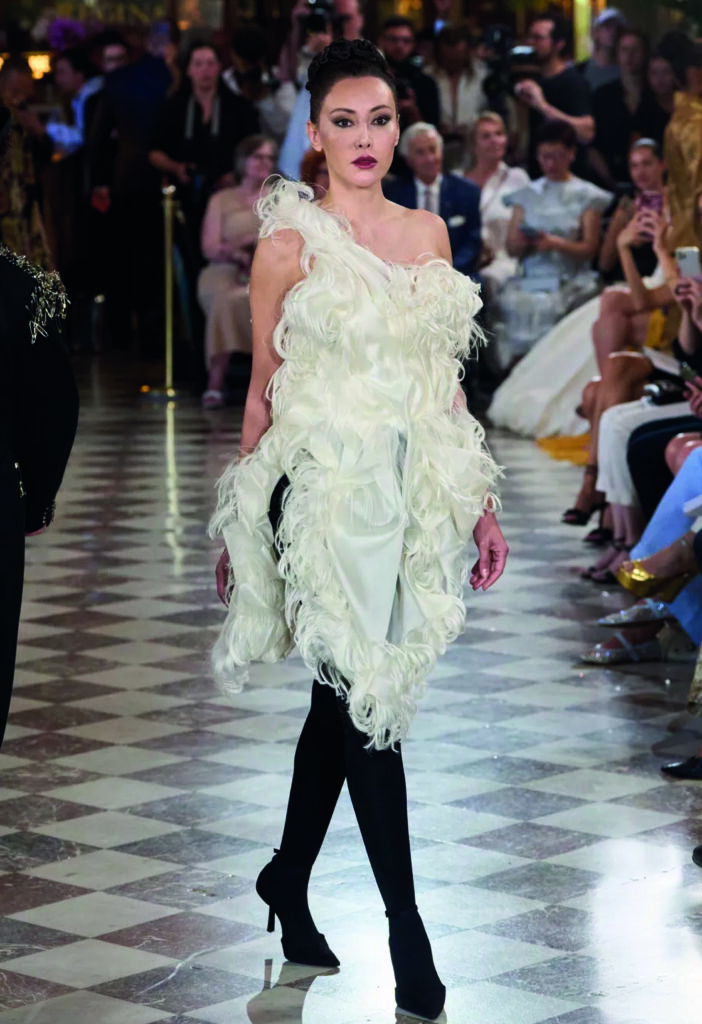
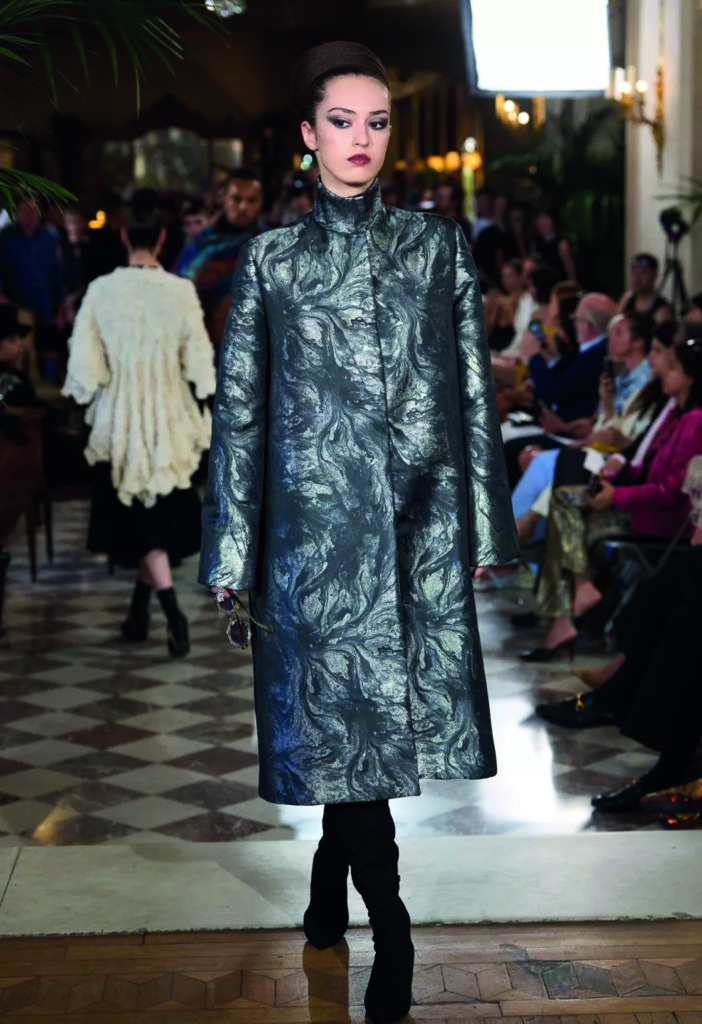
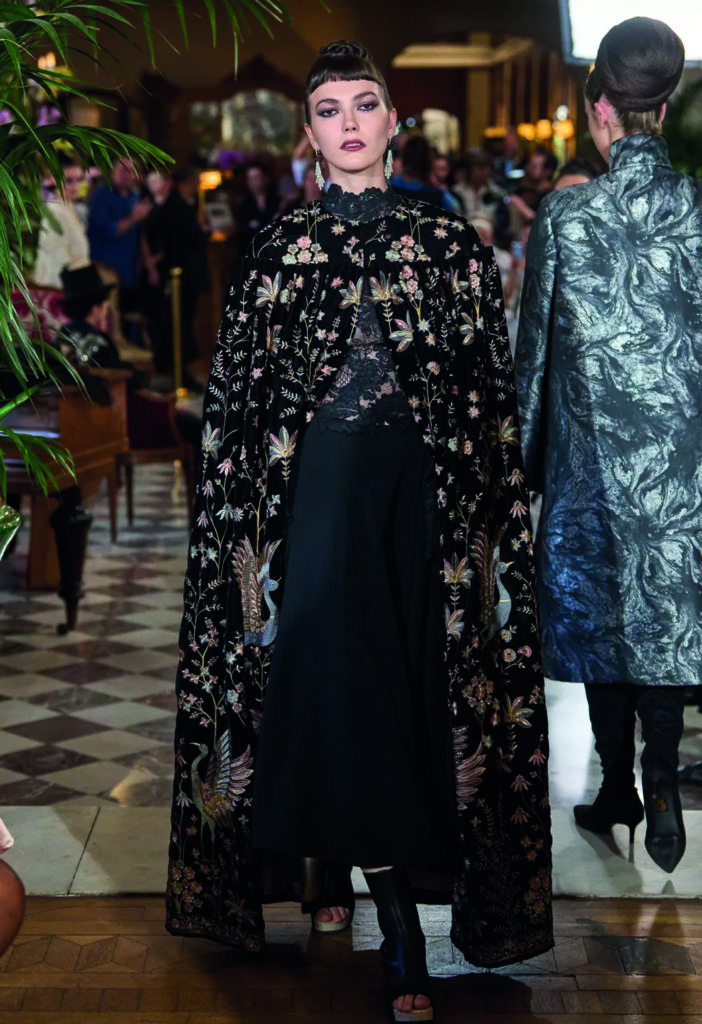
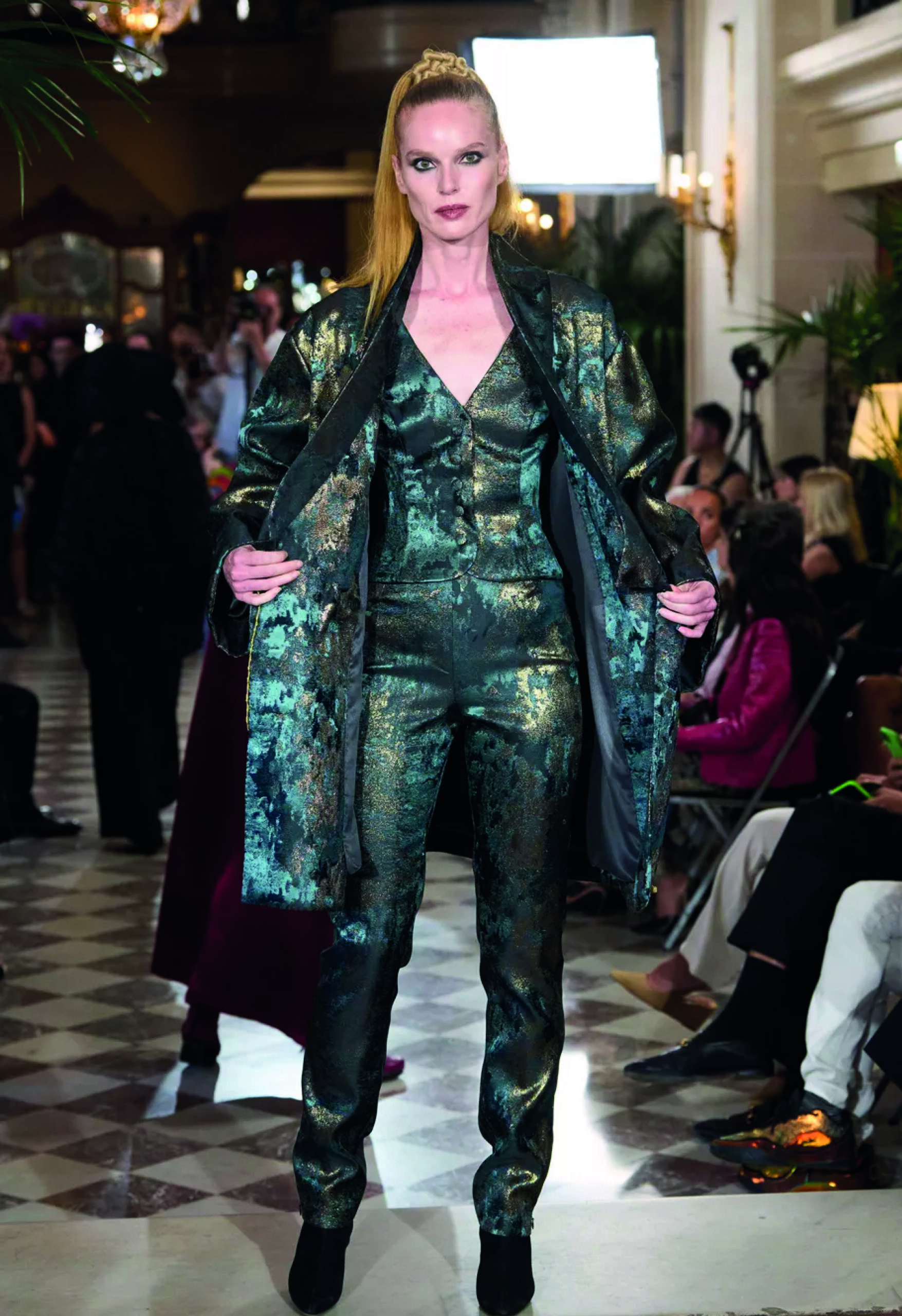
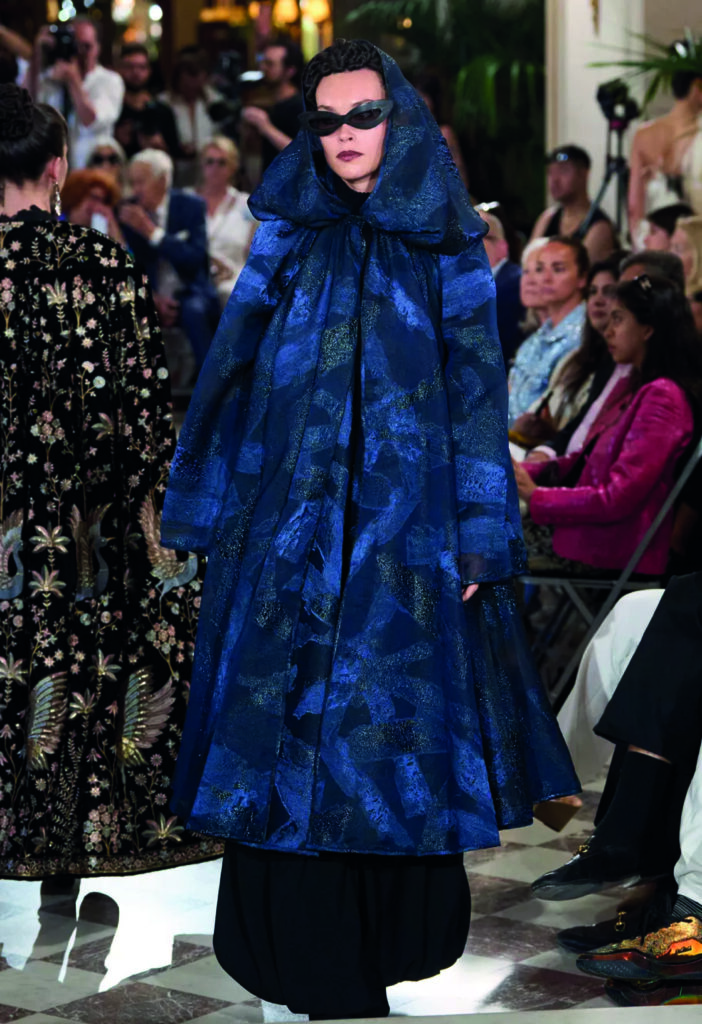
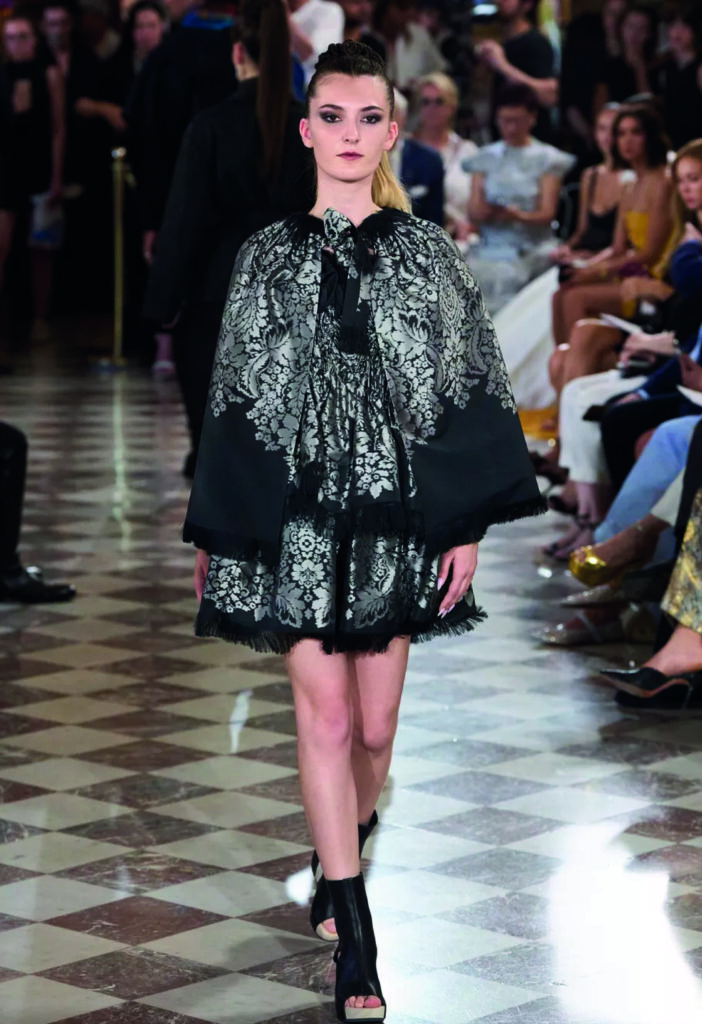
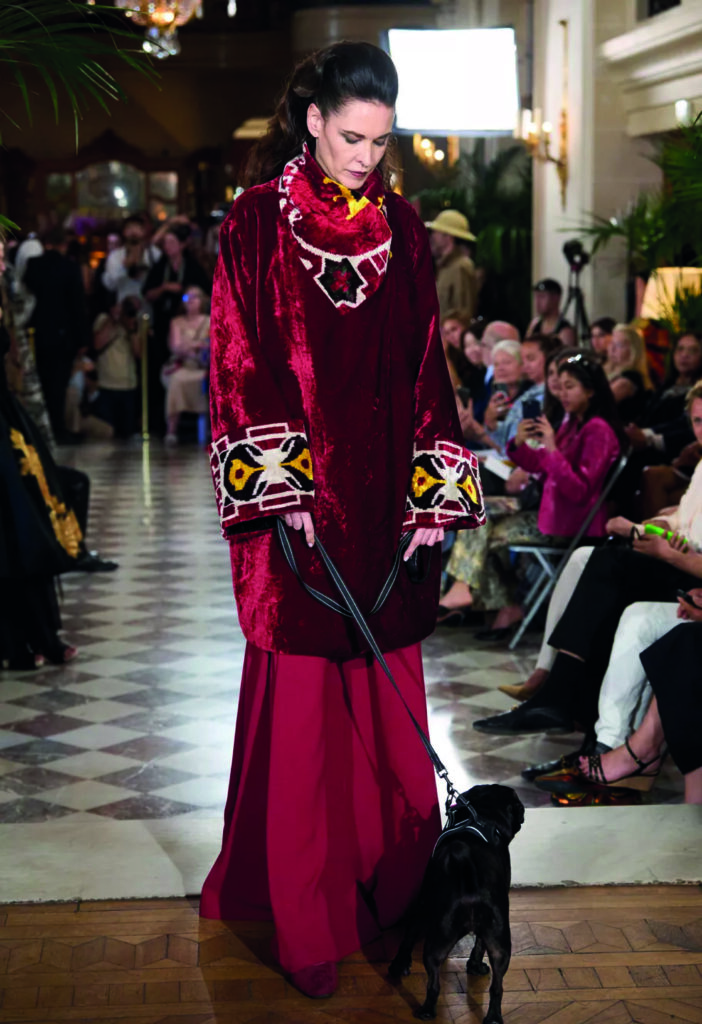
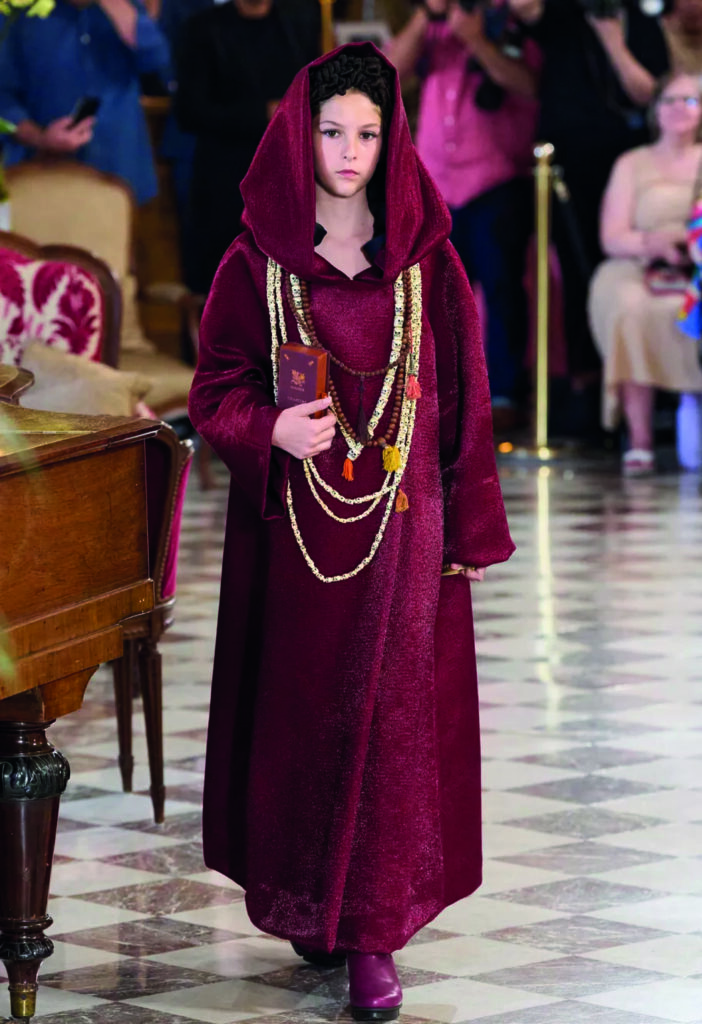
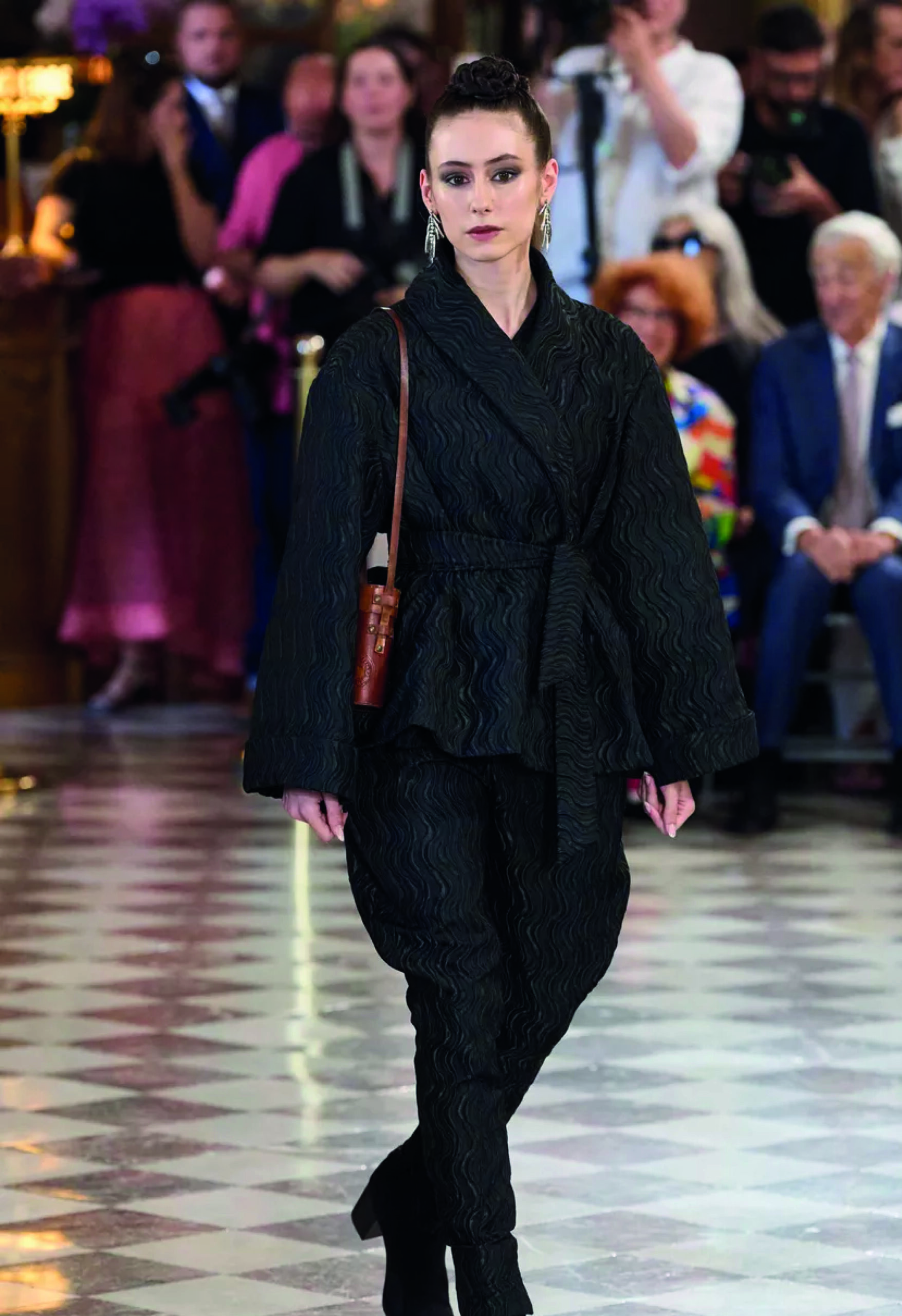
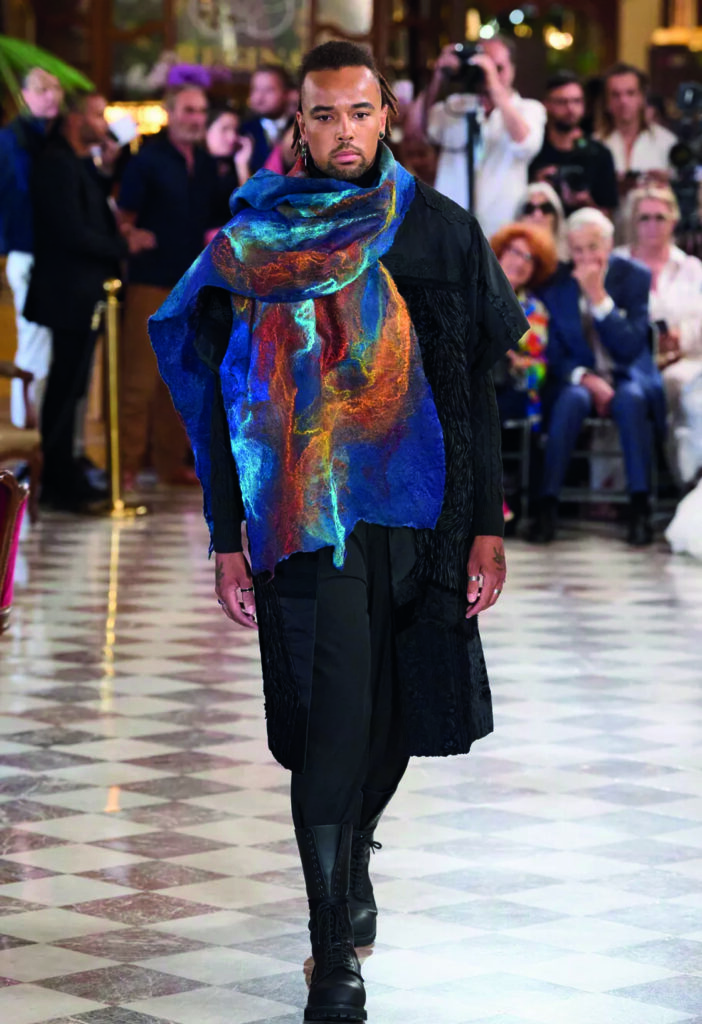
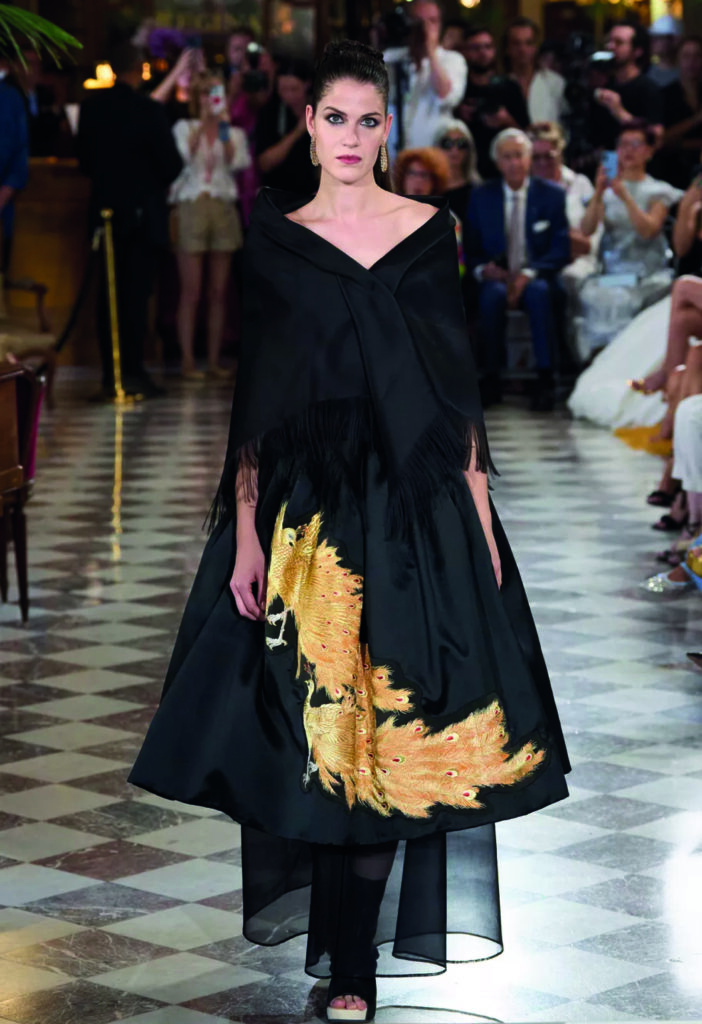
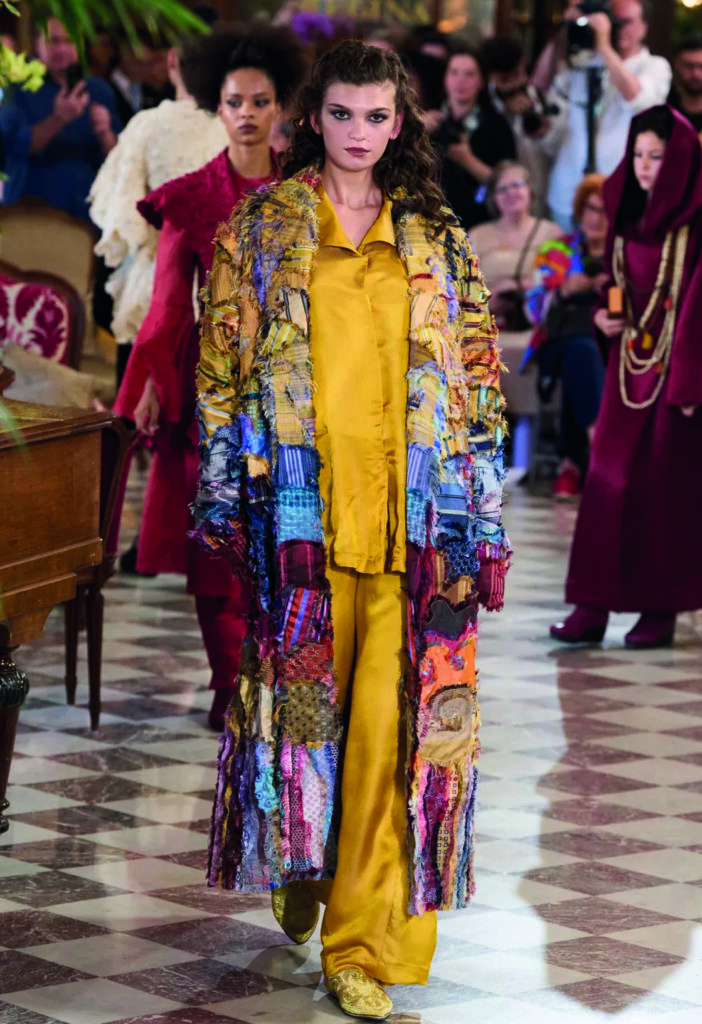
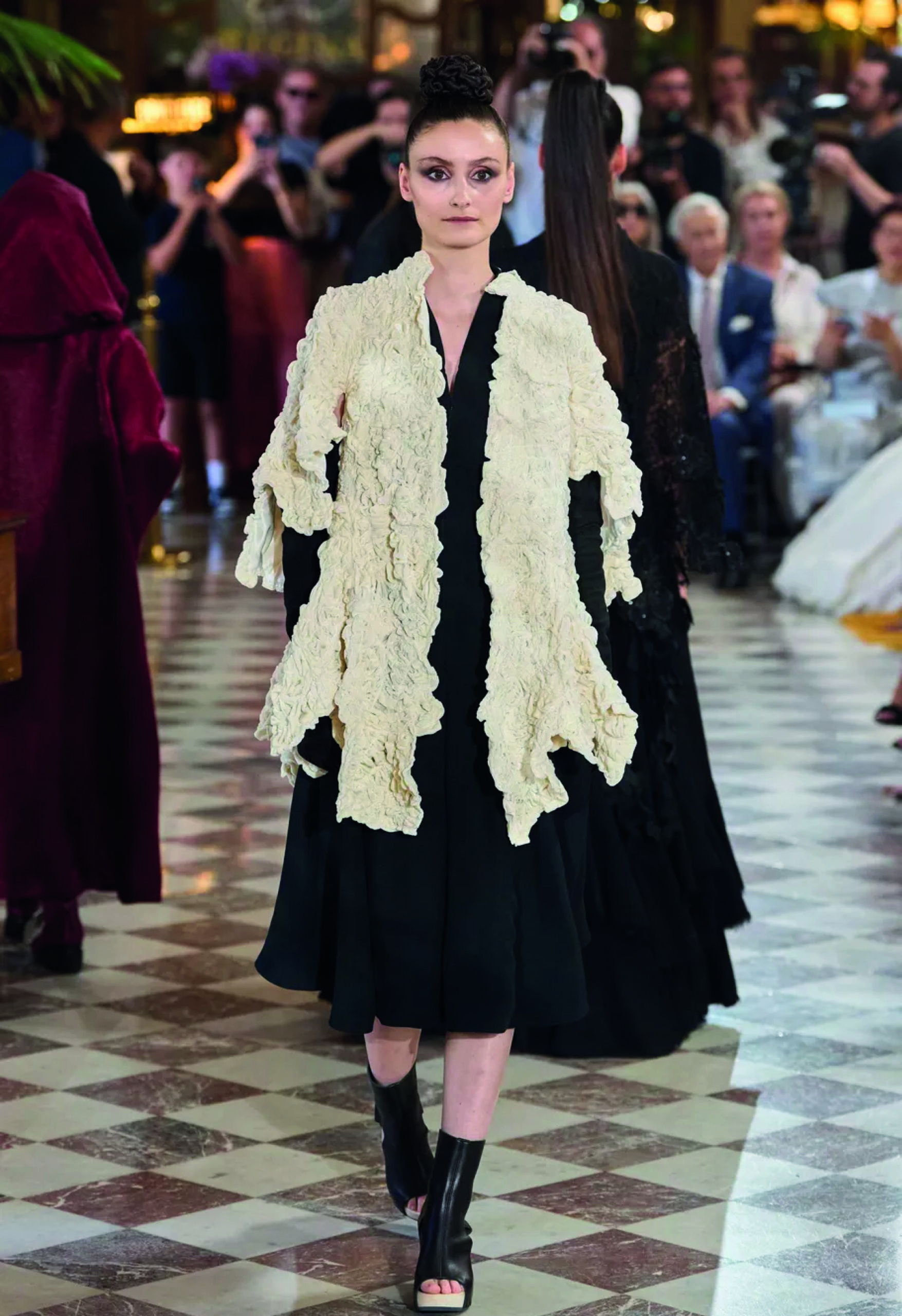
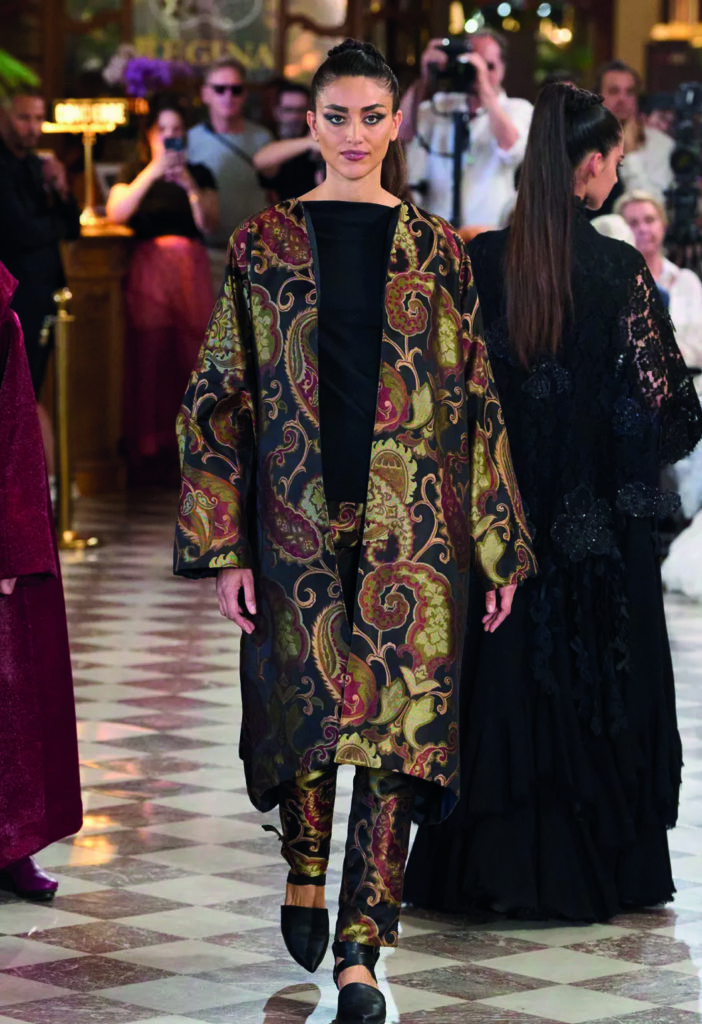
Before travel became a product, it was an act of defiance. “Le Parfum des Globes-trotteuses,” Franck Sorbier’s Winter 2026/2027 haute couture collection, tells not of destinations but of departures—those of women who, at the turn of the twentieth century, traded home for the horizon.
There is a difference—one that contemporary trends have largely erased—between traveling and setting out. Travel involves planning, comparing, and posting. Setting out—in the sense understood by certain female adventurers of the early twentieth century—was a far more radical choice: that of leaving a world that had no role for them other than in a parlor. It is this tension—between elegance and rupture—that Franck Sorbier chose to weave into his haute couture collection for winter 2026/2027, presented in Paris under the title “Le Parfum des Globes-trotteuses.”
The fashion designer draws his inspiration from the dawn of the twentieth century, a time when the World’s Fairs in Paris celebrated the discovery, craftsmanship, and cultures from around the world with the somewhat naïve enthusiasm of a continent that still believed it could understand everything simply by displaying it behind glass. But Sorbier does not dwell on the pavilions: he focuses on the women who were not content merely to watch the postcard-perfect scenes pass by. He imagines their journeys—lives traversing continents, oceans, and civilizations with a nonchalance that was, in reality, nothing less than constant courage. “Guided by curiosity rather than by destination,” he sums it up—a phrase that has the merit of shifting the focus of travel: it is not the place that matters, but the very act of allowing oneself to go there.
The collection thus unfolds a sentimental geography rather than a journey: the understated elegance of transatlantic liners, the restrained theatricality of the Orient Express, the caravans of the Silk Road, all the way to the silence of the monasteries of Tibet, Nepal, and Bhutan. One thinks—without Sorbier needing to name them—of the real-life figures who brought this imagination to life: explorers, journalists, and Orientalists—sometimes eccentric, often solitary—who crossed borders that their era deemed closed to women. In Sorbier’s work, clothing does not merely dress them retrospectively: it extends them, as if haute couture could still today clothe an intention rather than a silhouette.
This choice to focus on a theme rather than a season or a color places the collection in a tradition that Sorbier has long cultivated: that of narrative couture, where each piece functions as a chapter rather than a mere look. At a time when the word “travel” is being recycled by every luxury advertising campaign to sell a private airport or a loyalty card, returning to the figure of the globetrotter as both a political and aesthetic subject—a woman who decides her own path independently—feels like a subtle counterpoint. Haute couture—a discipline typically associated with the stillness of the model and the slow pace of the atelier—finds itself tasked with conveying movement, departure, and the unknown.
One question remains that goes beyond the collection itself: in an era when travel has become accessible, mapped out, and documented in real time, what remains of that pure curiosity that Sorbier evokes as a lost ideal? Perhaps haute couture, precisely because it escapes the rhythm and logic of mass tourism, is one of the last places where one can still dream of setting out without knowing where one is going.
Cette publication est également disponible en :

