
Scheduled to open in 2028 on Plaza Nueva, the future Four Seasons Hotel Sevilla is more than just the opening of a new hotel. Its arrival reflects a deeper evolution: that of a city that is gradually establishing itself as one of the key hubs for cultural tourism in Southern Europe.
In Seville, the most visible changes aren’t always the most significant.
The city continues to offer its Baroque facades, shaded patios, and religious processions with almost unchanging regularity. Yet behind this apparent permanence, the Andalusian capital has been undergoing a quiet transformation for several years. Infrastructure is being modernized, international connections are increasing, and the cultural offerings are expanding well beyond the traditional tourist seasons.
It is against this backdrop that Four Seasons announces its arrival on Plaza Nueva, in the Arenal neighborhood.
The future hotel will be located in a building constructed in the mid-20th century and will undergo a complete renovation. Spanning five floors, the hotel will feature approximately fifty-five rooms and suites, ranging in size from 40 to 117 m². A Presidential Suite will round out the offerings.
The architectural design was entrusted to the Madrid-based firm Estudio Lamela, while the interiors will be designed by Belén Domecq. This choice is far from trivial. For several years now, a new generation of Spanish designers has been seeking to reinterpret the Mediterranean heritage without resorting to decorative folklore. The goal is no longer to replicate Andalusia, but to understand what makes it recognizable.
The hotel’s location also contributes to this reflection on our relationship with heritage. From Plaza Nueva, it’s just a few minutes’ walk to the cathedral, the Alcázar, or the General Archive of the Indies. These three monuments alone tell the story of several centuries of the exchange of goods, knowledge, and influences between Europe and the Americas.
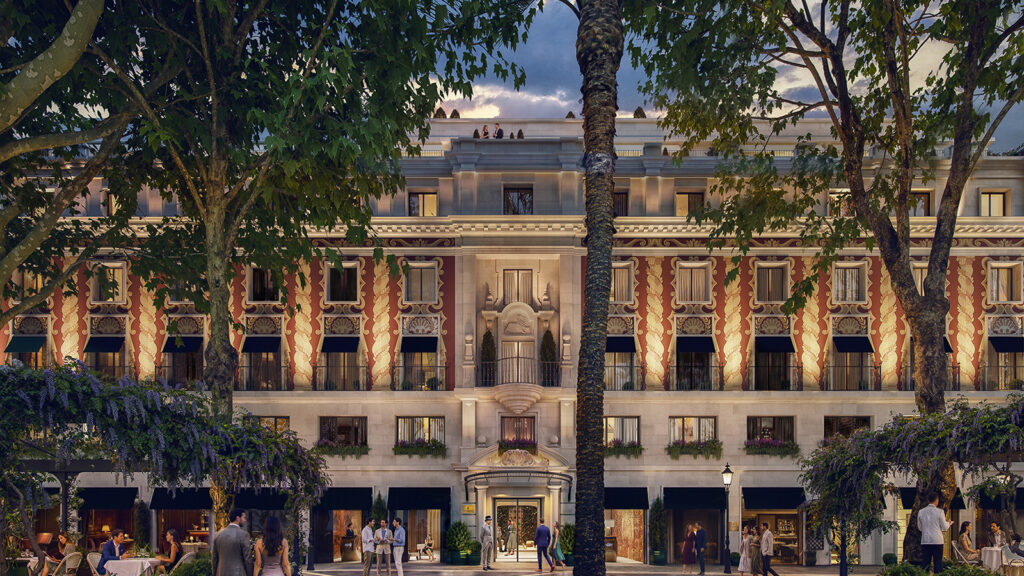
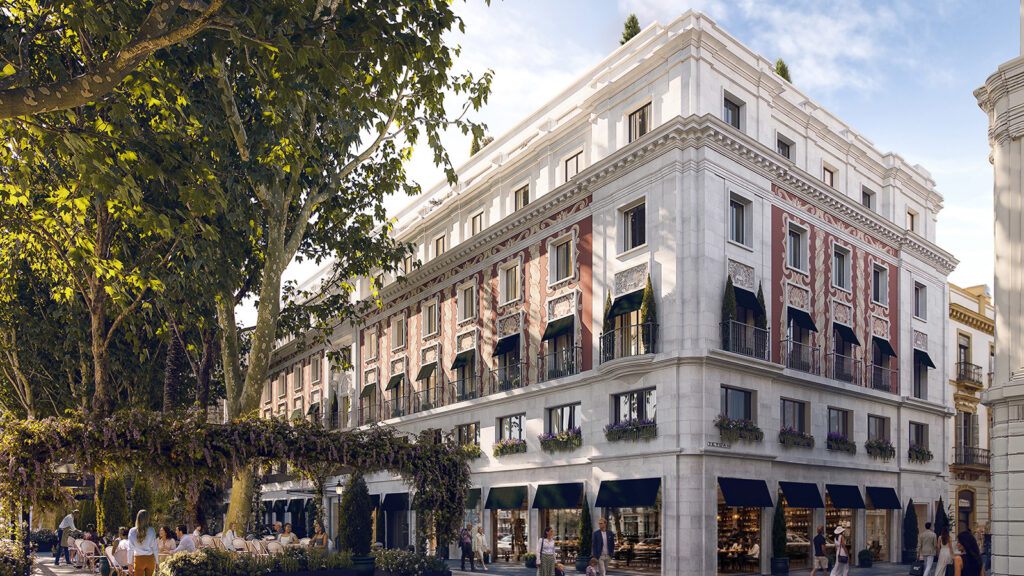
The building will feature three distinct dining areas: a restaurant opening onto Plaza Nueva, a rooftop restaurant and bar, and a lounge located on the ground floor. This layout reflects a shift in the contemporary hospitality industry: hotels are no longer conceived as a refuge reserved for their guests, but rather as an extension of urban life.
This opening also comes at a time when major hotel chains are seeking new growth opportunities in Europe. Following Madrid and Mallorca, Four Seasons is expanding its presence in Spain to a city that offers a rare balance: a strong cultural identity, exceptionally well-preserved heritage, and a steadily growing number of international visitors.
For Blasson, a partner in the project, the investment reflects a broader conviction. The value of a hotel property no longer depends solely on its location but on its ability to engage with its cultural environment.
It remains to be seen how this future destination will find its place in a city whose greatest asset is precisely what cannot be built: its rhythm. In Seville, time continues to pass at a leisurely pace—one that the travel industry often tries to market but doesn’t always manage to preserve. Perhaps that is where the project’s success will hinge.
Cette publication est également disponible en :

