
At Byblos Saint-Tropez, renovations are never carried out in a way that disrupts the hotel’s character. The hotel belongs to that rare category of places whose visual identity transcends the decor itself. Since its opening in 1967, the hotel has felt less like a luxury palace and more like a living Mediterranean legend: an ochre-hued village bathed in light, where Provençal architecture blends with the social life of Saint-Tropez. Laura Gonzalez’s redesign of twelve “Signature” suites fits perfectly into this delicate balance between continuity and reinterpretation.
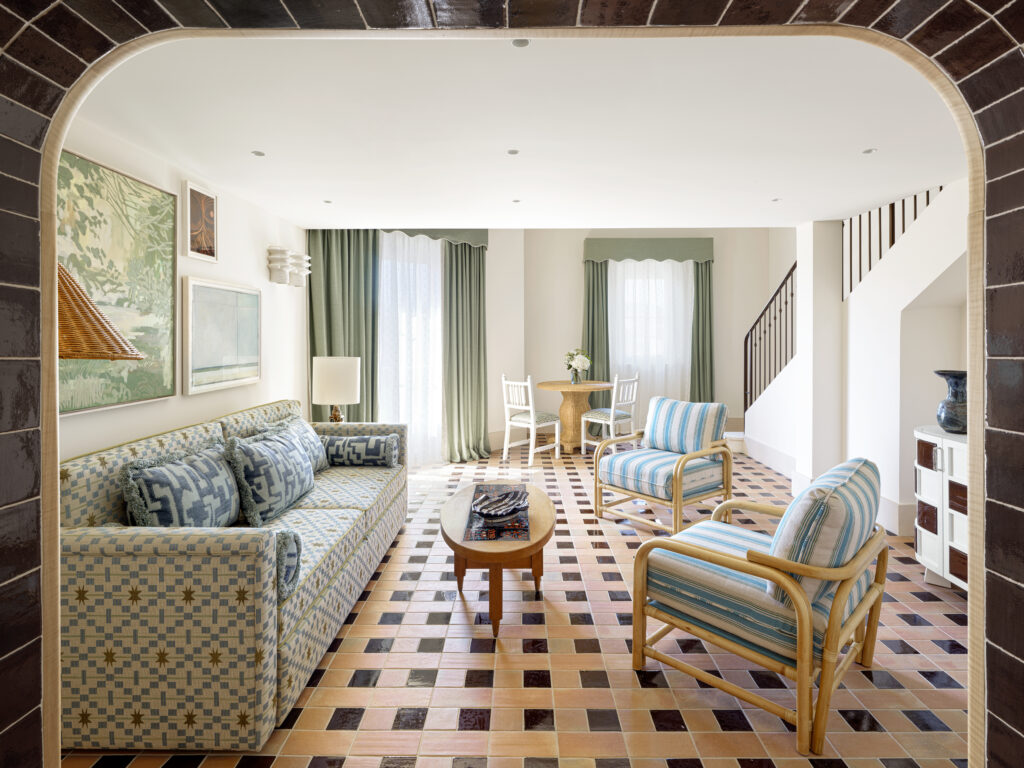
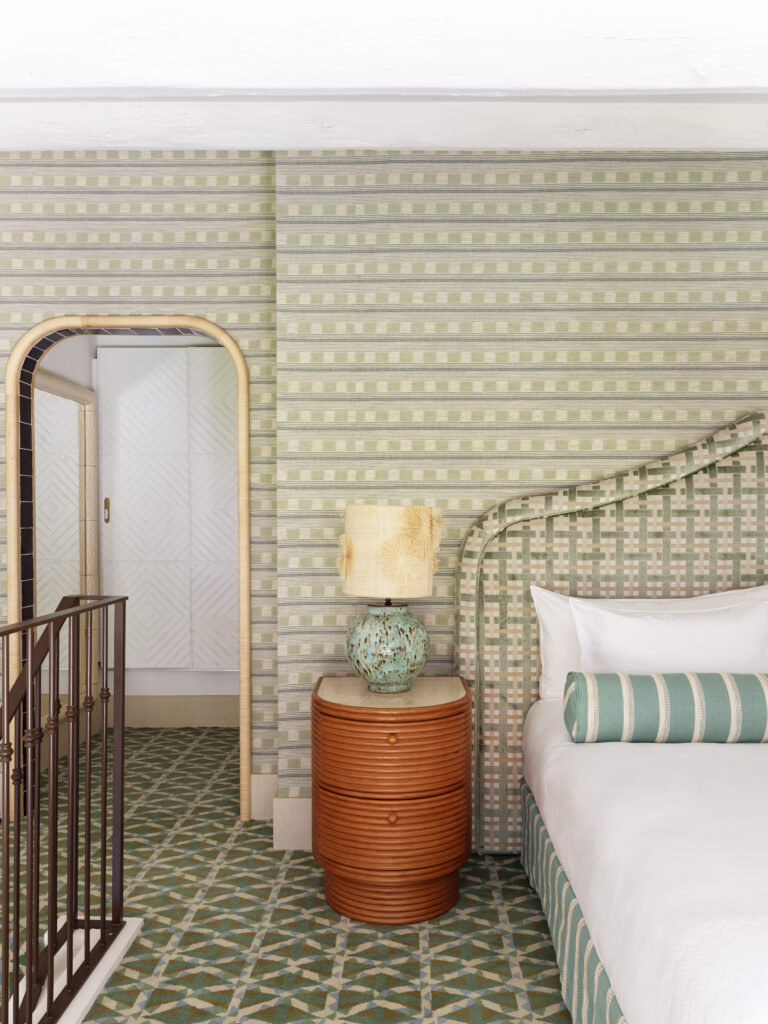
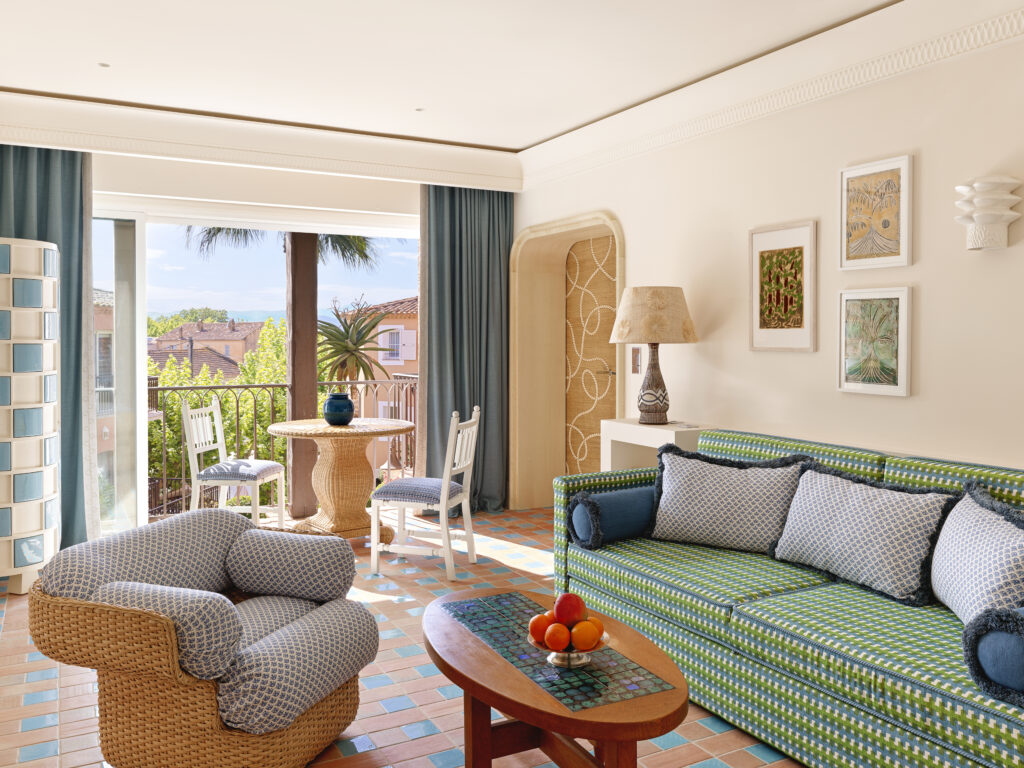
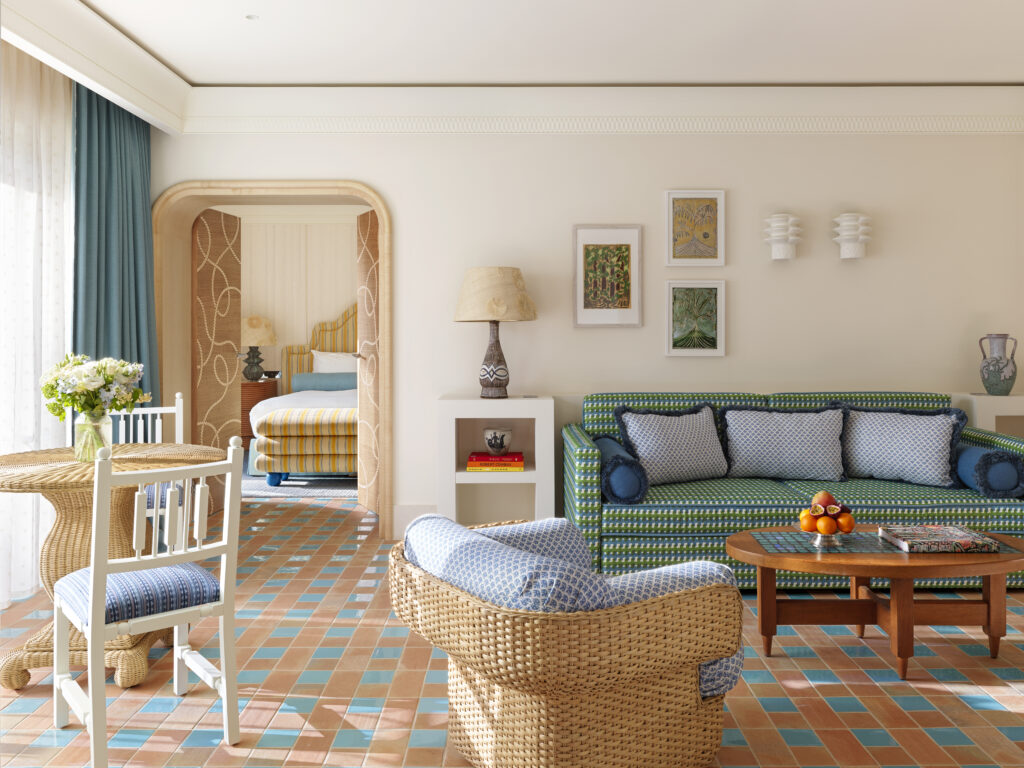
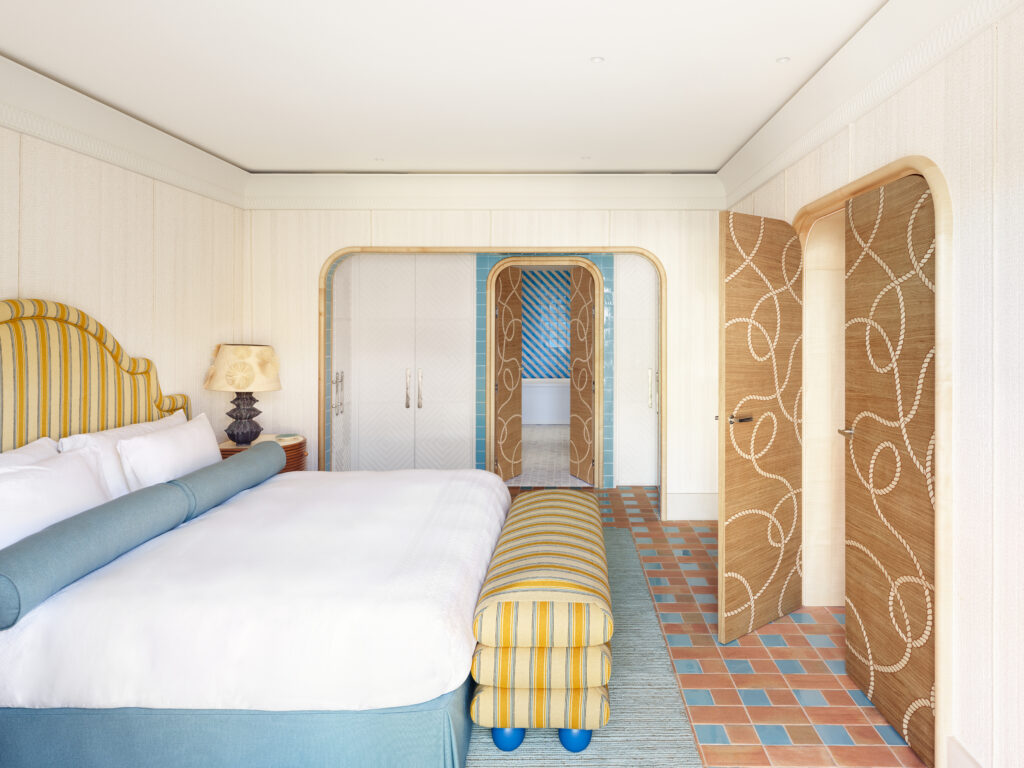
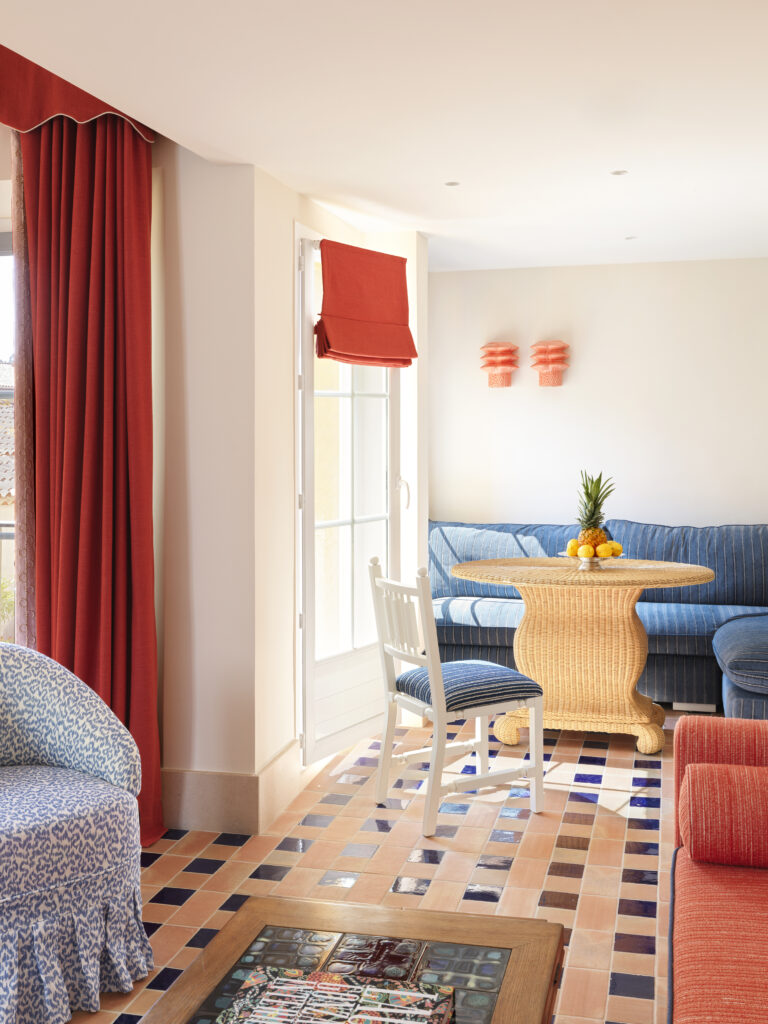
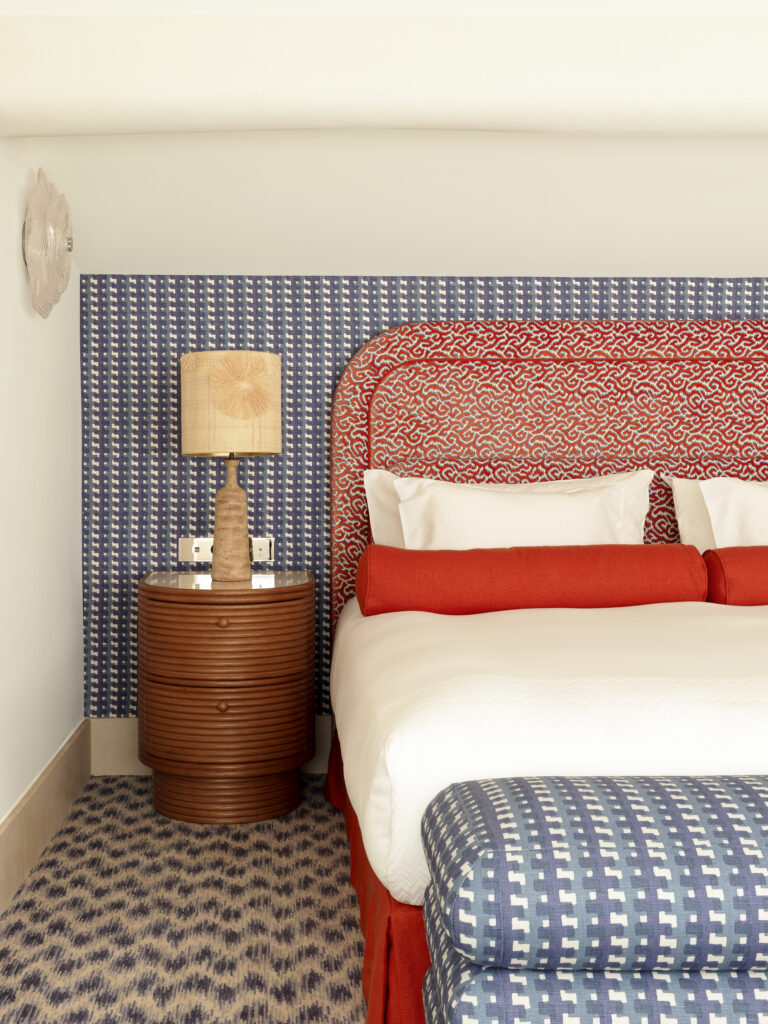
Here, the French interior designer continues a project she began in 2024, to which eight new suites—dominated by a palette of deep blues—have now been added. The color choice might seem predictable on the French Riviera; in reality, however, it is treated with more restraint than in many contemporary Mediterranean hotels. Laura Gonzalez uses blue not as an immediate nod to the seaside, but as a luminous variation. The press release describes a color that “shifts with the light, like the sea in Saint-Tropez.” In the visuals, this intention is most evident in the contrasts between glazed tiles, woven fibers, and printed fabrics, each of which absorbs the Provençal light differently.
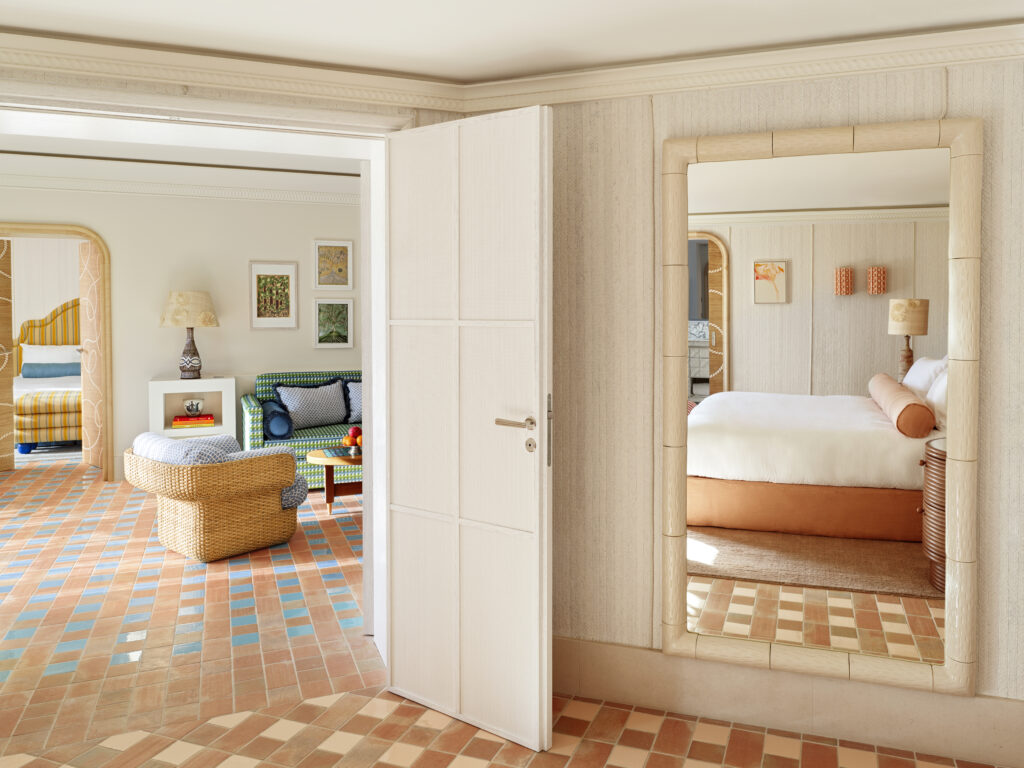
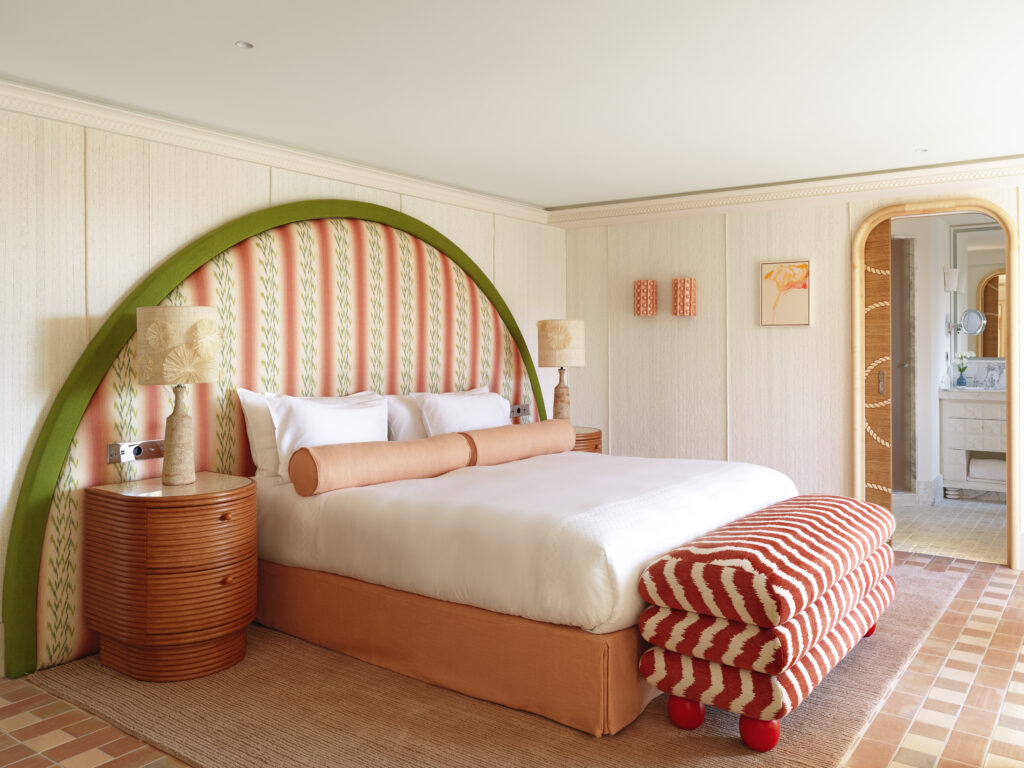
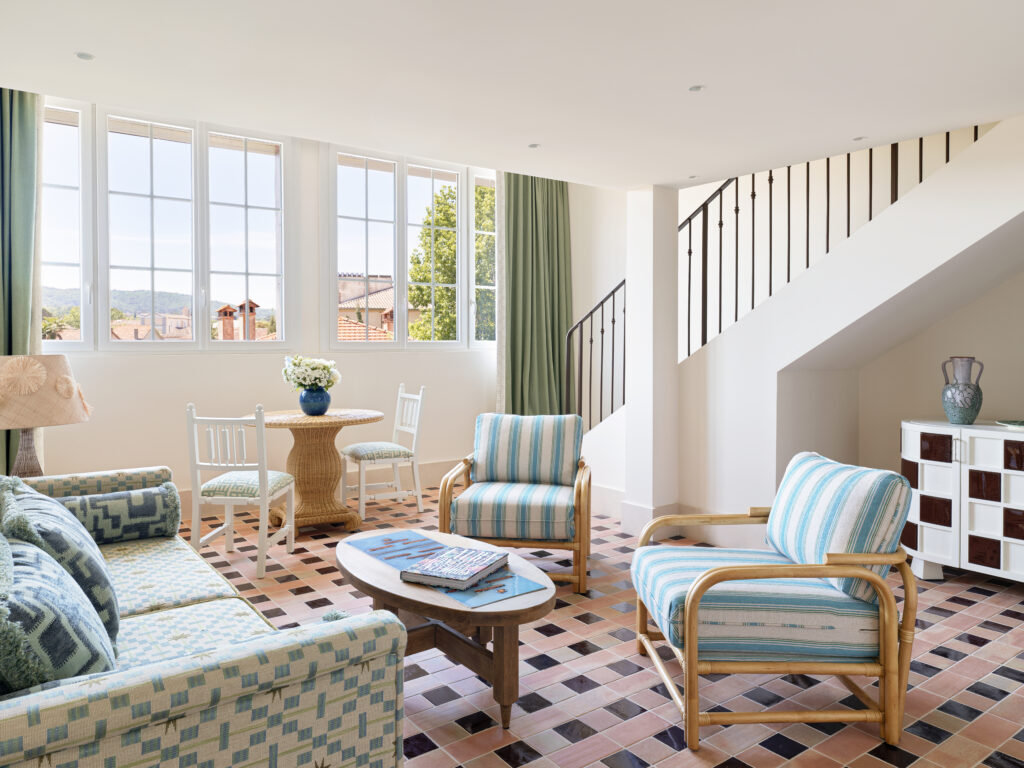
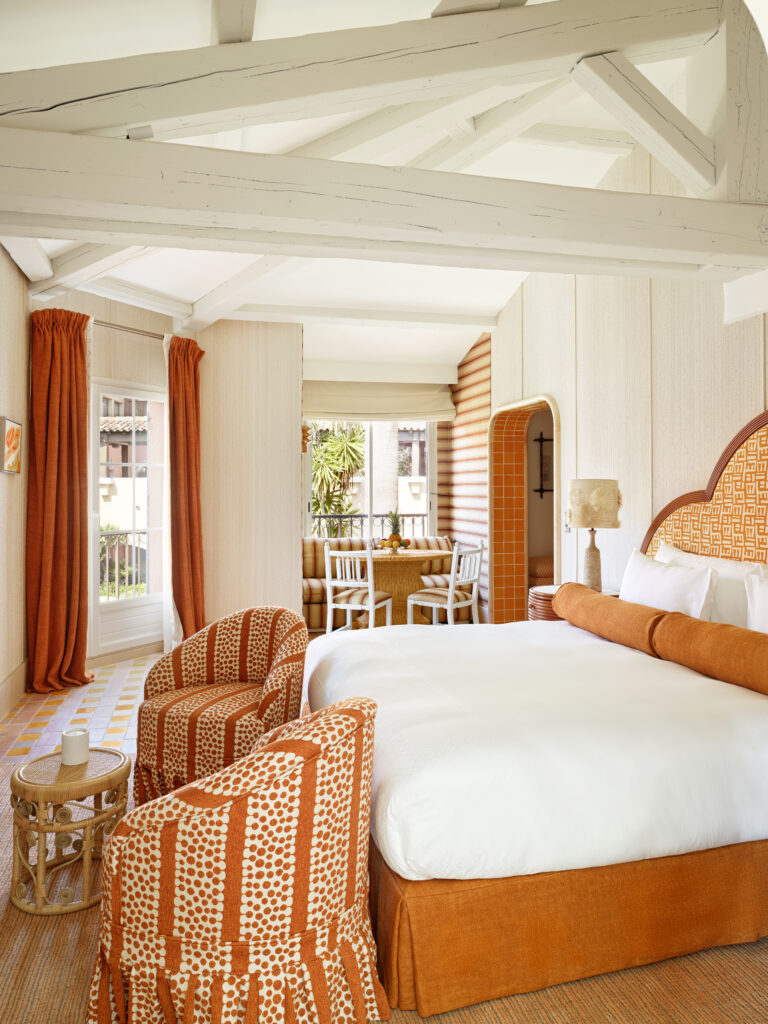
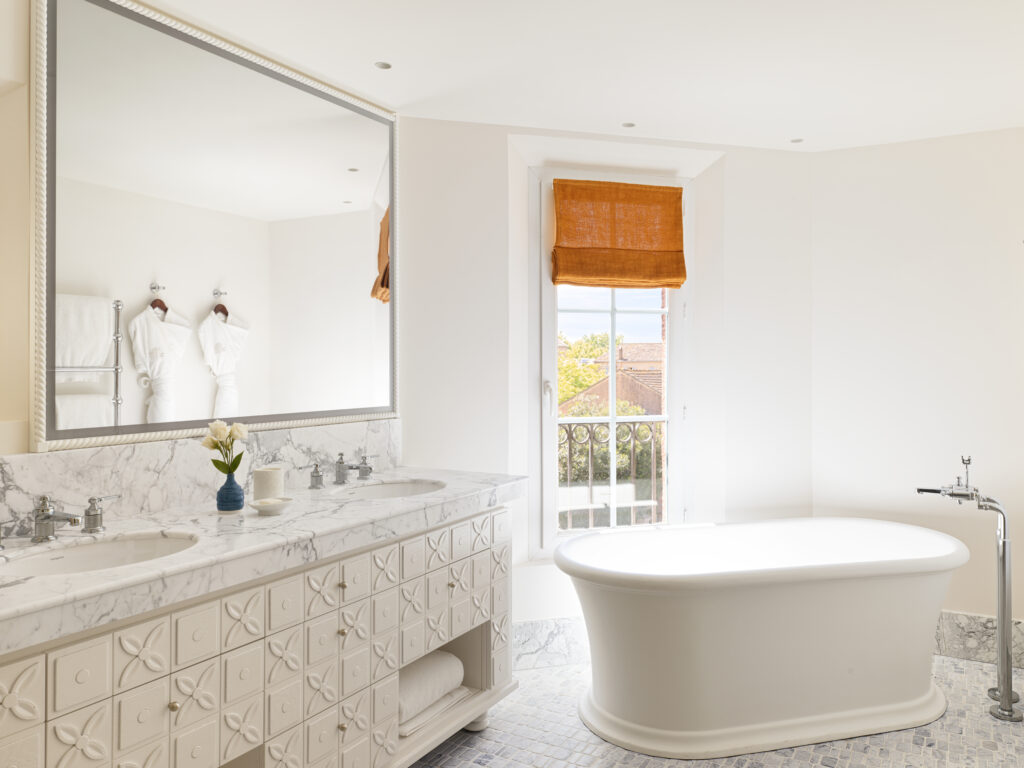
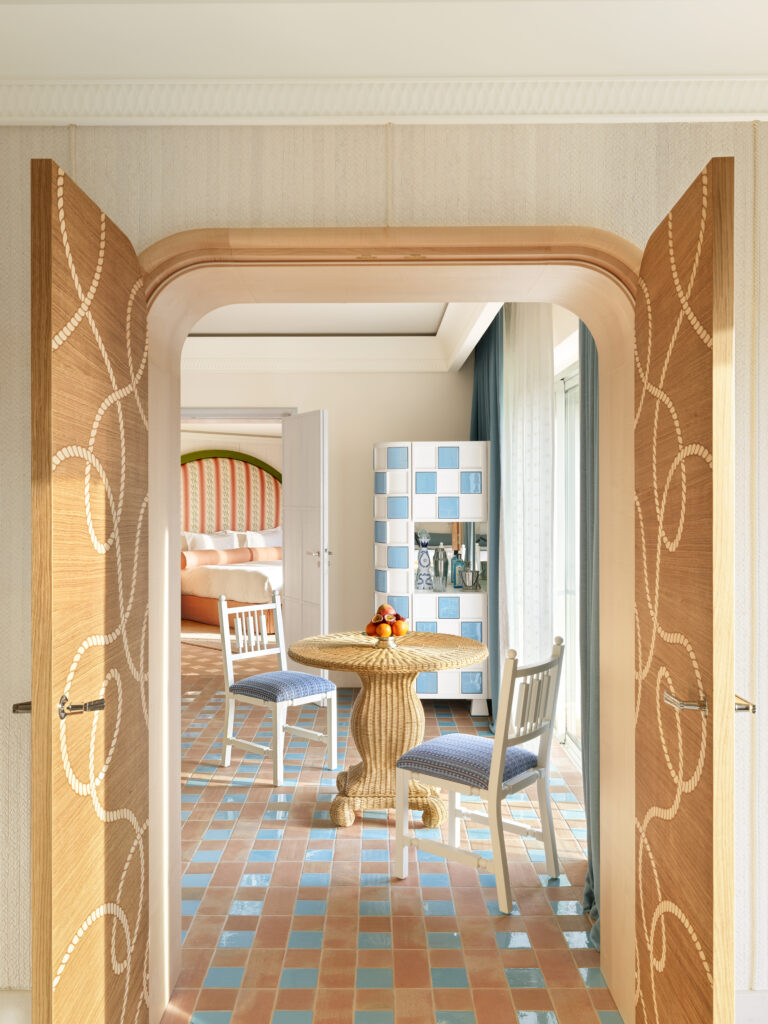
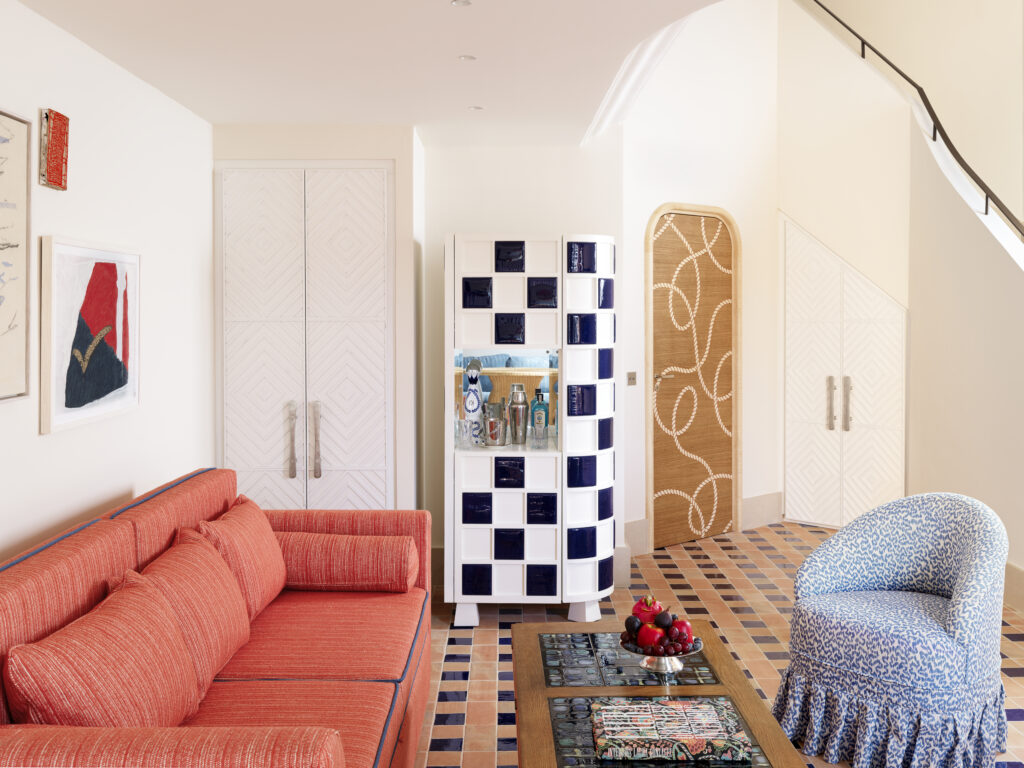
What sets this project apart has more to do with the treatment of materials than with the decor itself. The terracotta floor interspersed with midnight-blue tiles, the weathered wood, the ropes, the woven fabrics, and the ceramic pieces come together to form an almost artisanal Mediterranean aesthetic. Here we see a recurring theme in Laura Gonzalez’s work: composition through tactile layers rather than spectacular displays. The ceramic mini-bars, the wood-inlaid doors, and the pieces crafted by artisans serve as subtle accents throughout the space.
The Byblos, however, faces a unique challenge: its historic visual identity is already extremely strong. Many hotels on the Riviera today fall into two opposing extremes—neo-Provençal pastiche or interchangeable international minimalism. Laura Gonzalez avoids both of these pitfalls by preserving what defines the place’s DNA: a light, almost sunny sense of theatricality, where graphic motifs coexist with simple forms and deliberately imperfect materials.
The press release also mentions a connection to “Capron’s work.” This reference to Roger Capron is significant. In the 1950s and 1960s, the Vallauris-based ceramicist helped define a modernist Mediterranean decorative language based on raw materials, geometric motifs, and the relationship between craftsmanship and architecture. In the Byblos suites, the glazed surfaces and graphic compositions seem to carry on this legacy without explicitly referencing it.
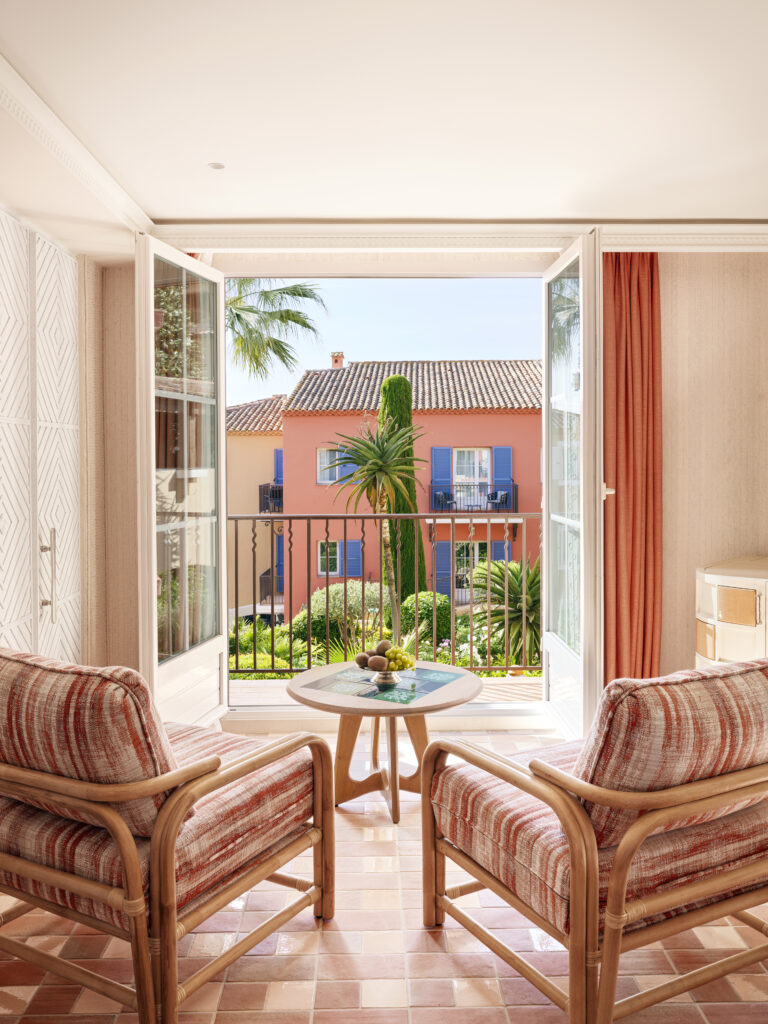
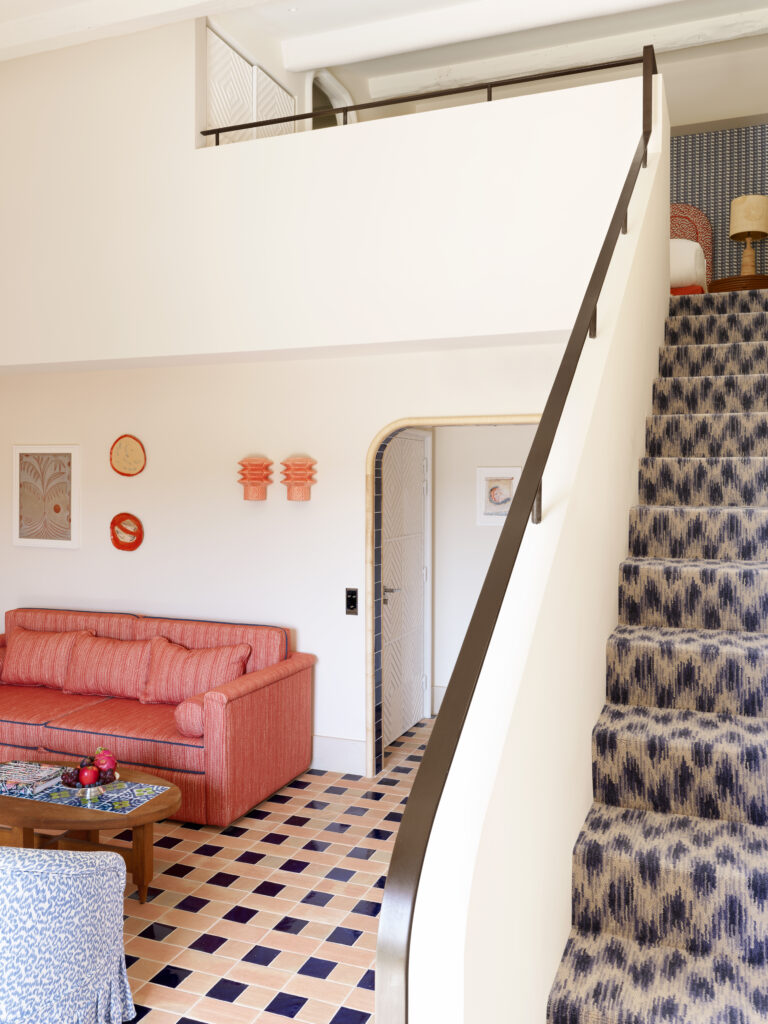
Beyond the decor, this renovation also says something about the current evolution of the hospitality industry on the French Riviera. Contemporary luxury no longer seeks solely to be grandiose or ostentatious. It now emphasizes spaces capable of creating a sophisticated, home-like atmosphere. The press release refers to it as a “family home.” The expression is often overused in the hotel industry; here, it finds a concrete expression in the way the suites are laid out: open living areas, mezzanines, low-profile furniture, cozy textiles, and terraces that feel almost like home.
This trend also reflects a broader shift in international tastes. Major Mediterranean hotels no longer seek to impress through formal distance. Instead, they strive to create spaces of aesthetic familiarity, where refinement is conveyed through texture, airflow, and the sensation of natural light rather than through decorative excess.
At Byblos, this approach takes on special significance. Because Saint-Tropez remains one of the few places where luxury continues to function as a seasonal social stage. People still come here to see and be seen, but also to rediscover a certain idea of French summer freedom—less rigid than the Italian Riviera, less ostentatious than certain international seaside enclaves.
The suites designed by Laura Gonzalez do not, therefore, seek to transform the Byblos. Rather, they aim to preserve its visual rhythm: that very Saint-Tropez-esque way of blending craftsmanship, color, and lightness without ever veering into folklore
Cette publication est également disponible en :

