
The summer of 2026 was supposed to be a celebration. Instead, it feels more like a test of materials’ durability.
“Crystallization — A Look Back at 15 Years of Lalique Art,” the exhibition currently on view at the Lalique Museum through November 1 in the Alsatian village where the Manufacture was founded in 1921, brings together 33 pieces from thirteen collaborations launched since 2011. Thirteen artists, architects, or foundations. Forty-five years of accumulated artistic practice. And, at its core, a question that the title barely hints at: what happens when visual worlds built on principles foreign to glass are imposed on a House whose expertise lies precisely in the mastery of glass?
The answer isn’t in the display cases. It lies in the failures that the exhibited pieces don’t reveal—the kiln mishaps, the discarded formulas, the remade molds. What this retrospective reveals, between the lines, is the scope for adaptation of a workshop faced with demands that are not its own.
The first collaboration, in 2011, already gave a sense of the scale of the challenge. Translating IKB—that ultramarine blue that Yves Klein had developed beginning in 1956 and which is based on a chromatic saturation unmatched by ordinary pigments—into crystal required a specific formulation. The House developed a composition based on copper and cobalt oxides to approximate this depth. The resulting “Winged Victory of Samothrace,” standing 495 mm tall and cast in a limited edition of 83 pieces using the lost-wax method, owes its chromatic density as much to the chemistry of the crystal as to the sculpture itself.
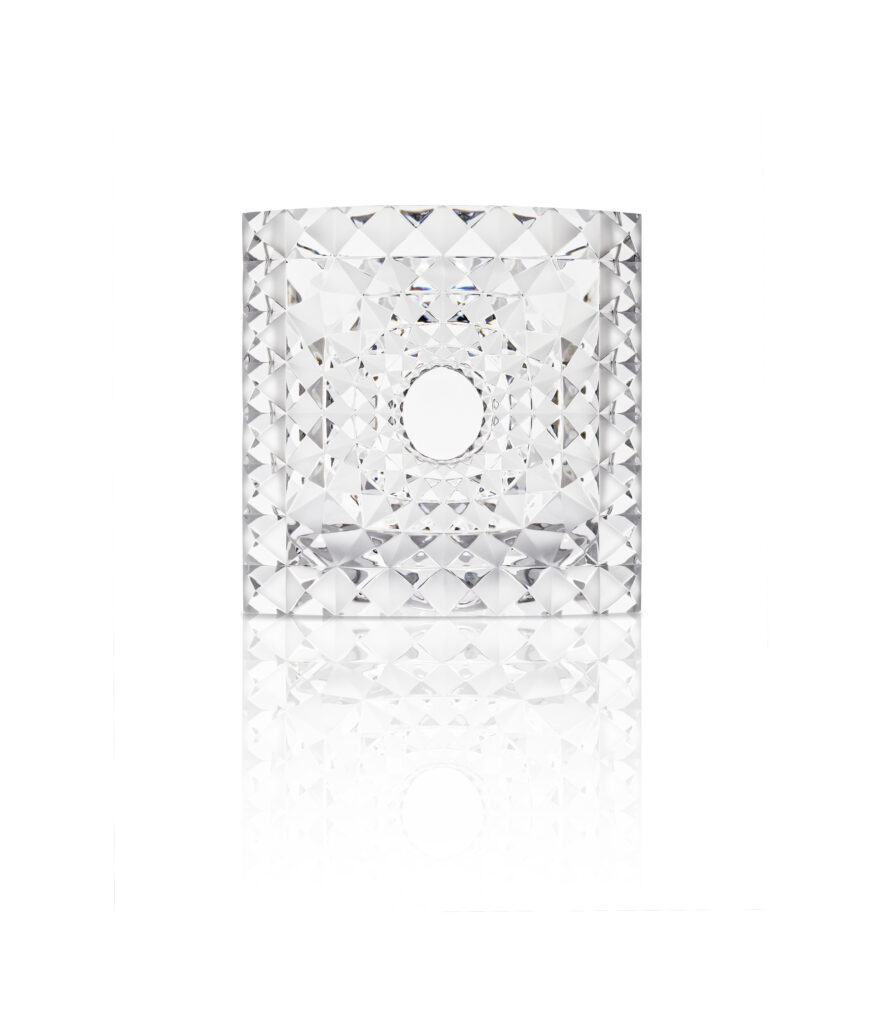
The lost-wax casting technique is at the heart of the exhibition. René Lalique used it for his one-of-a-kind pieces and small-batch productions—creations that stood apart from his catalog line. Lalique Art has revived this technique as its primary method for collaborations, including pieces where the original technique had to adapt to forms that René Lalique had never envisioned. In 2016, Mario Botta created a cubic vase measuring 400 × 400 × 170 mm, entirely covered with pyramids whose facets are alternately finished in matte and glossy—a cold-applied treatment, applied after casting, which amplifies the diffraction of natural light. Botta said that this vase could be interpreted as a miniature version of a grand palace, in reference to the Palazzo dei Diamanti in Ferrara. The manufacturing process, however, followed a different logic: the regular pyramids of a brutalist, achieved by a glassmaker.
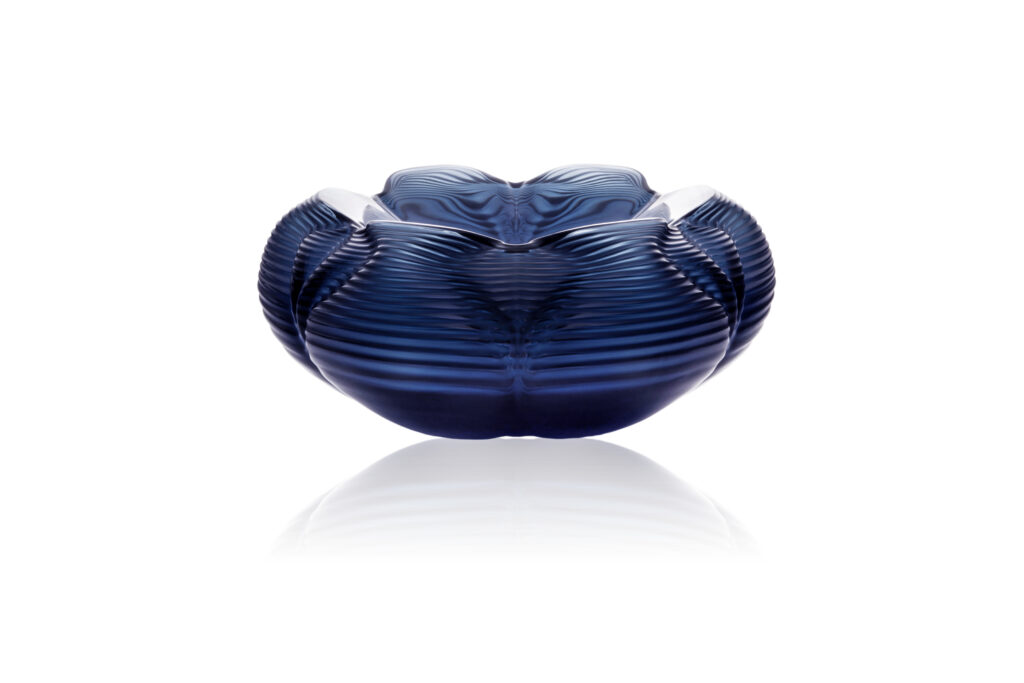
The constraint is not always geometric. It can be rheological. For Elizabeth de Portzamparc’s Tandrillah vase (2019, H. 394 mm), the twisted shape of the blown-and-molded body required a mold design that had no equivalent in the Manufacture’s repertoire. The slanted cut of the opening posed an additional challenge. The contrast between the satin and re-polished finishes—a technique the House has mastered—was here put to work in the service of a “water architecture”—the vase evokes the movement of a liquid frozen in mid-flight.
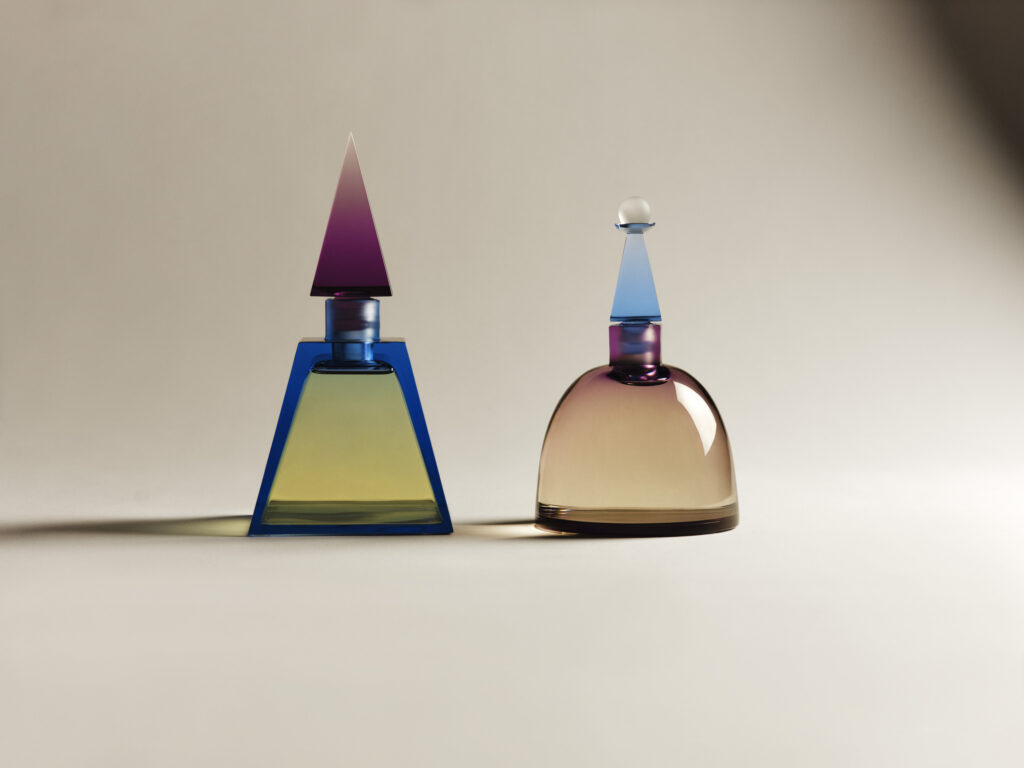
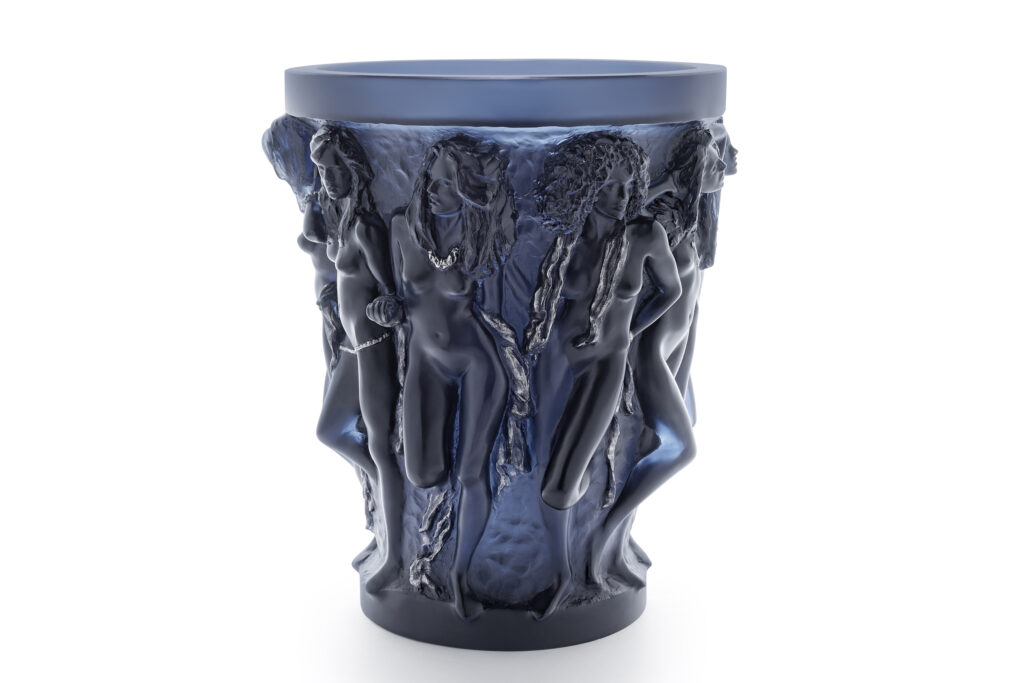
It took two years of collaboration with the artisans at the Manufacture to bring Terry Rodgers’ *Sirènes* (2017) out of the furnaces at Wingen-sur-Moder—nine hyperrealistic crystal figures, cast using the lost-wax technique, set against a reimagined *Bacchantes* vase. It took four years to complete the collaboration with James Turrell, which resulted in 42 illuminated panels and two perfume bottles, whose bodies act as refractive prisms. Turrell has been working with light as a material since the 1960s; the Manufacture has been working with crystal as a light conductor for over a century. The question raised by their collaboration was not an aesthetic one. It was technical: how does an Alsatian crystal maker encode, within the mass of a bottle, the optical properties of a Ganzfeld?
Marc Larminaux, the Maison’s artistic director, described these collaborations as unique human adventures, based on listening and experimentation—an ongoing dialogue that drives the evolution of craftsmanship. The statement is understated. Yet it says something specific about the nature of the institution: not a service provider that simply carries out orders, but a workshop that resists, negotiates, sometimes backs down, and emerges technically transformed.
The “Cristallisation” exhibition features 33 pieces. What it truly showcases is the malleability of a craft—its ability to absorb external constraints without losing its essence. In Alsace, in the village where glassmaking has been practiced since 1921, crystal reveals a form of quiet resilience.
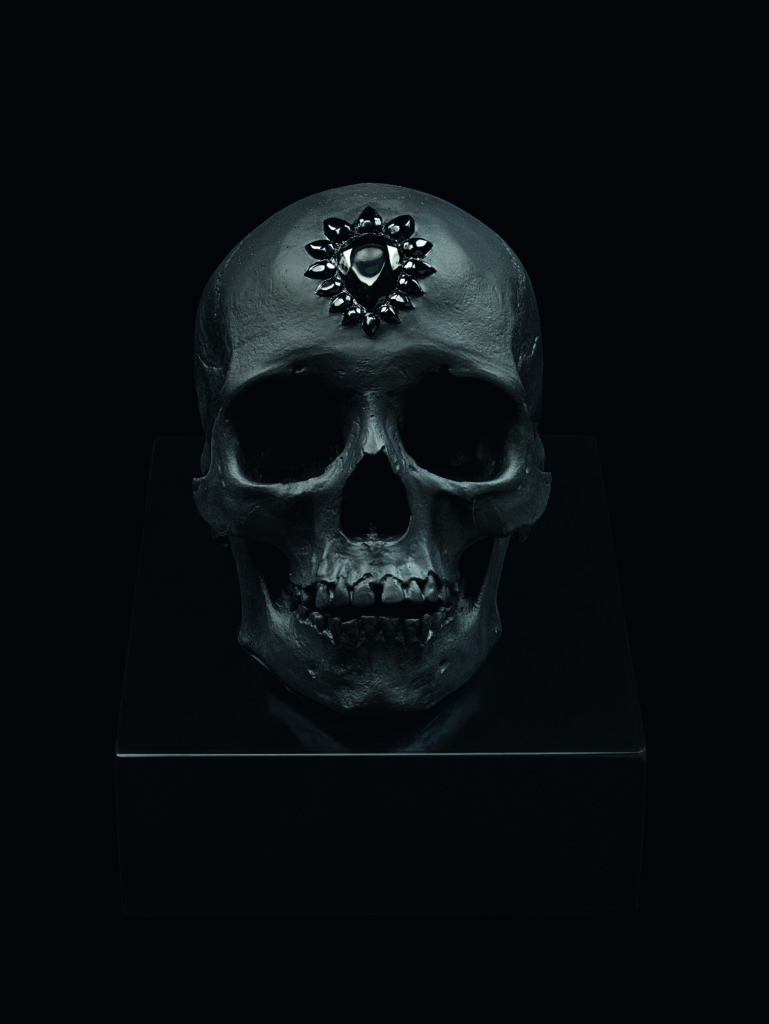
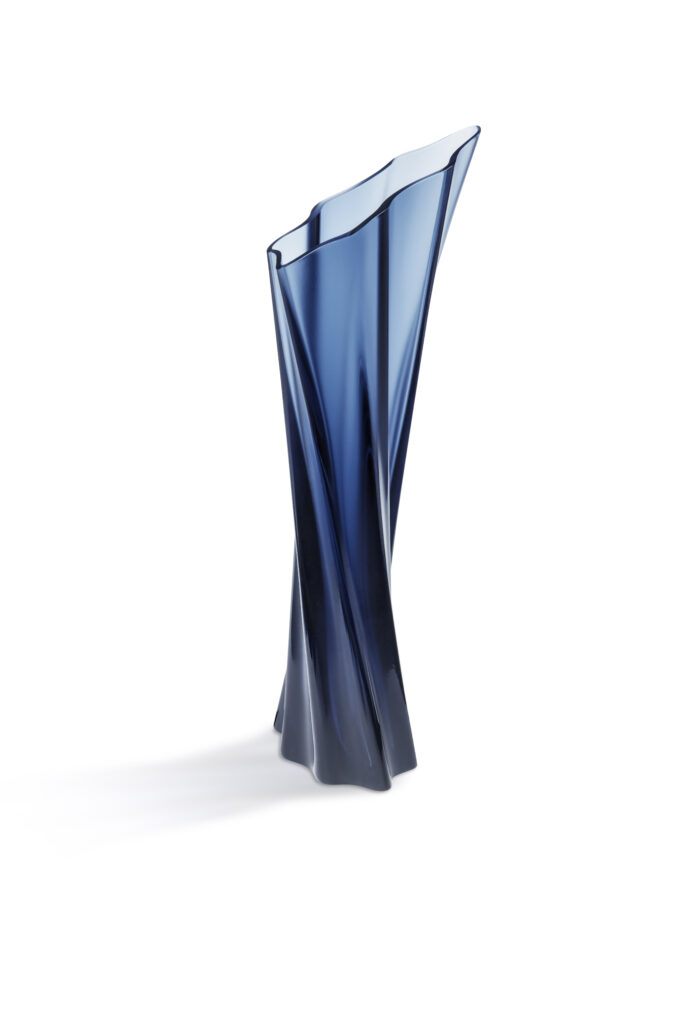
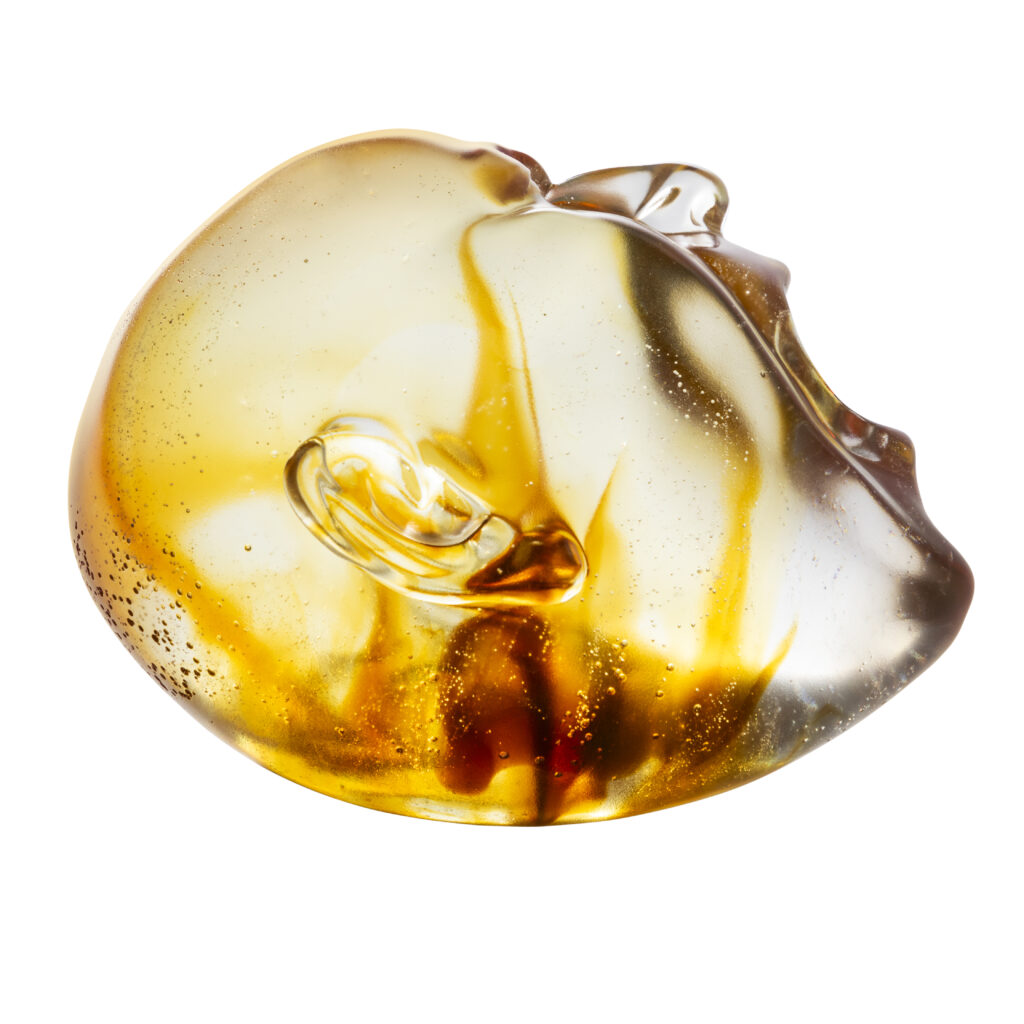
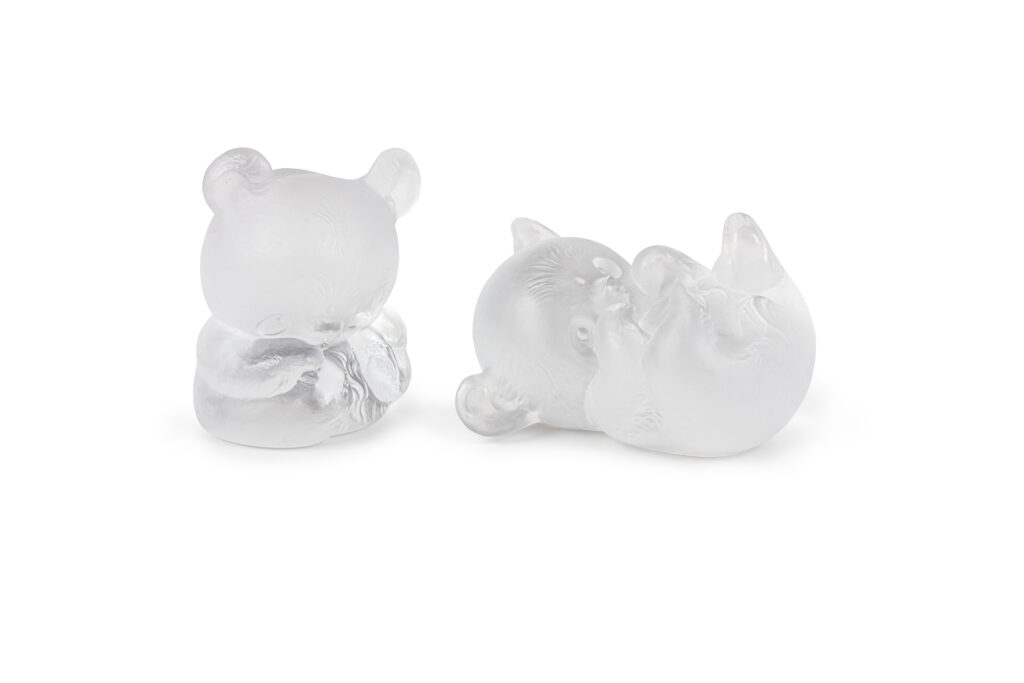
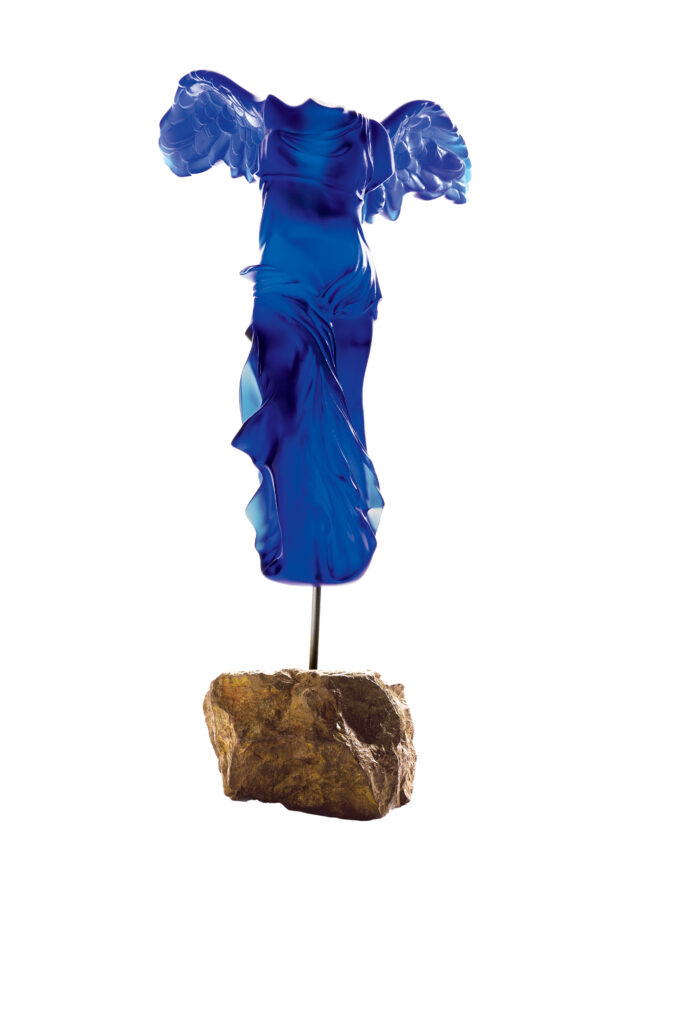
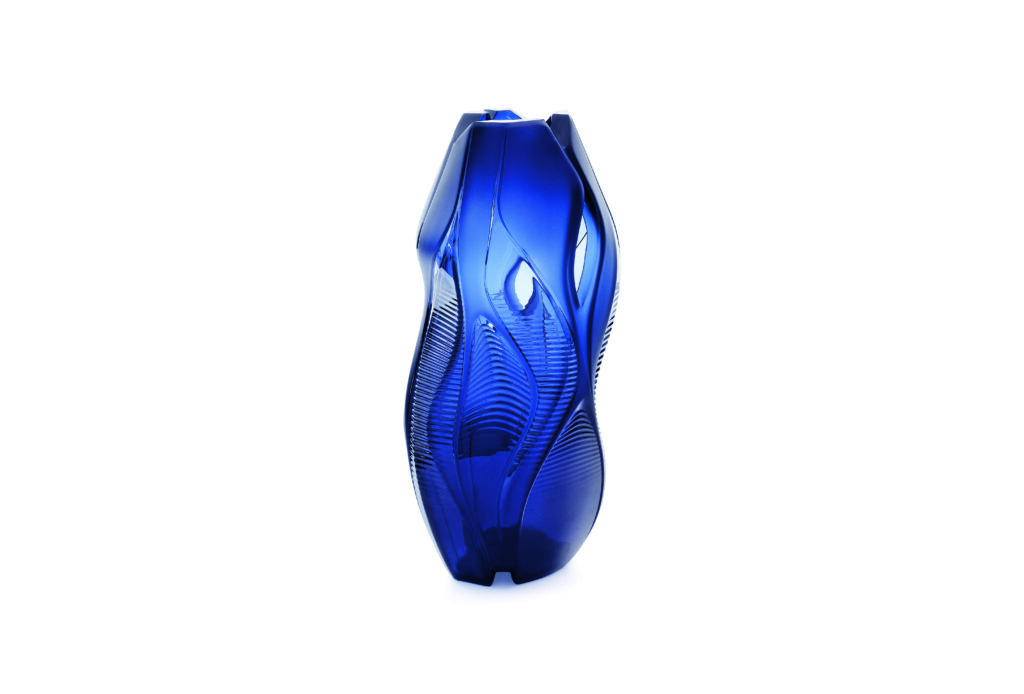
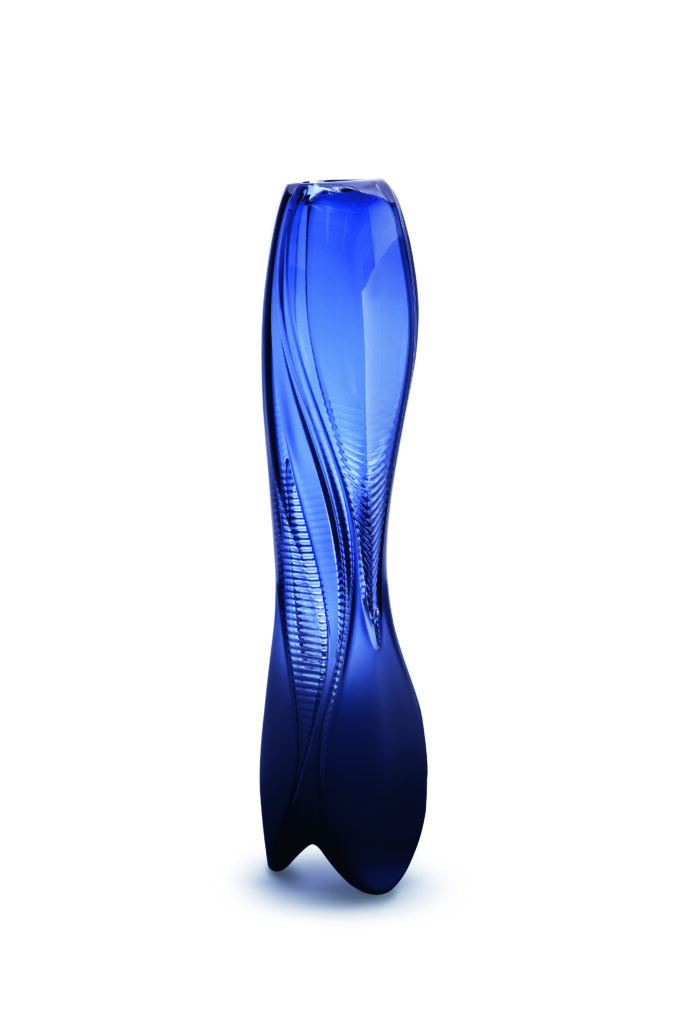
Details — To recreate Yves Klein’s IKB in the crystal of *The Victory of Samothrace* (2011, 83 pieces, H. 495 mm), Lalique developed a formula based on copper and cobalt oxides. The lost-wax casting technique, used by René Lalique for his one-of-a-kind pieces, was employed for all of the art editions, including the most complex forms—Mario Botta’s cubic vase with pyramids, Terry Rodgers’ hyperrealistic silhouettes, and Fang Lijun’s Shaved Head (192 × 220 × 164 mm, 2026).
Cette publication est également disponible en :

