
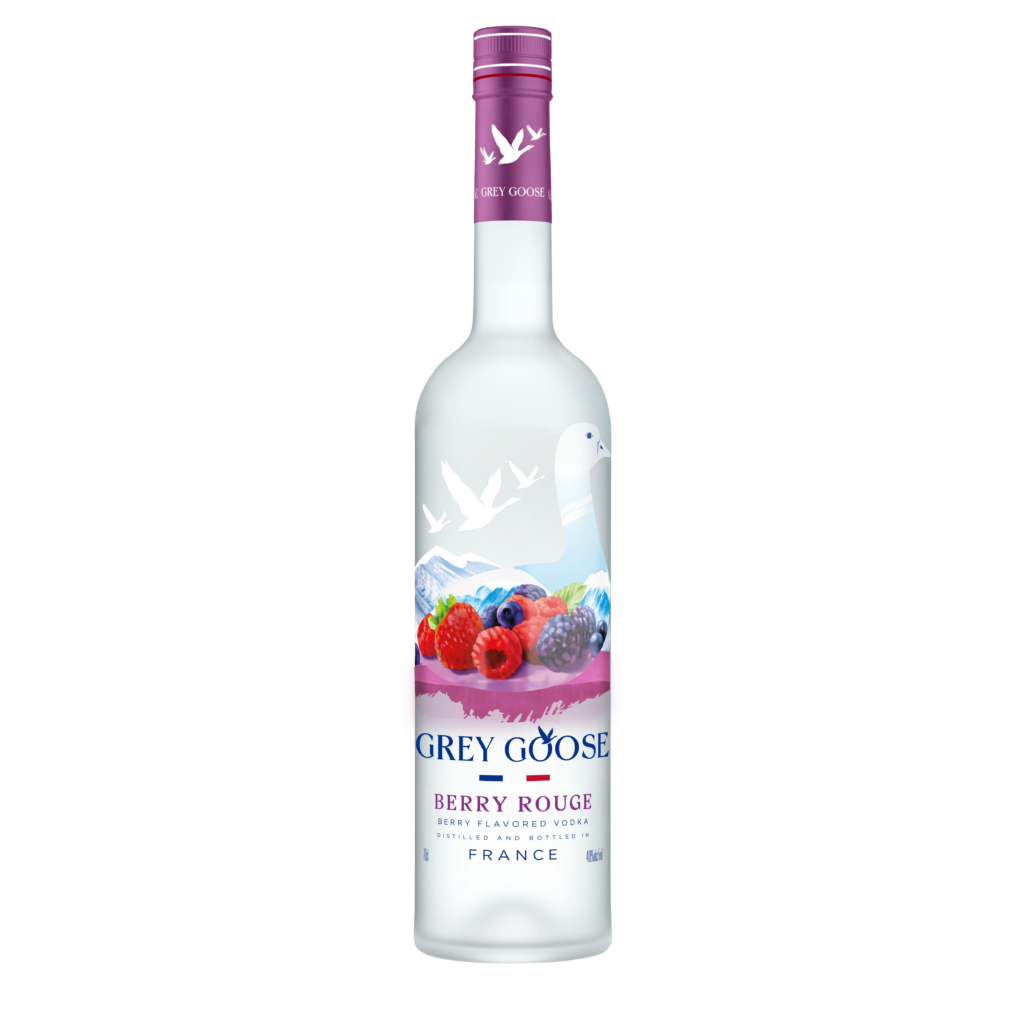
A global vodka brand is launching a red berry-flavored variant for the summer. Behind the summery marketing pitch lies a claim that’s rarer in this category: that of a specific, almost cadastral, French origin.
A flavored product that speaks to its origins
Flavored vodka is usually all about the aroma: it’s infused, colored, and sweetened. The new product introduced by Grey Goose for the summer season, called Berry Rouge, stands out because of what it emphasizes. Rather than the intensity of the flavor, the brand emphasizes the raw ingredients: strawberries, raspberries, blackberries, and blueberries picked in the Mediterranean, infused without added sugar, preservatives, or artificial colors.
This approach shifts the focus. It is no longer just a summer fruit, but a statement of origin—in a category where the origin often remains unclear.
Picardy and Charente: A Claimed Connection
The most telling detail isn’t the fruit, but the base. The vodka retains the two key ingredients that define the house’s brandy: soft winter wheat from Picardy and spring water from Gensac-la-Pallue, in Charente. Two specific locations, identifiable on a map. For a spirit whose widespread distribution makes it seem stateless in the public imagination, this geographical precision is as much an editorial choice as it is a technical one.
She points out that, contrary to popular belief, vodka is not a neutral spirit that came out of nowhere, but rather the product of a specific grain, water, and local expertise. By emphasizing this dual connection—even in a fruity variant designed for summer patios—the brand makes provenance a core selling point.
| New Release: Grey Goose Berry Rouge, a red berry-flavored variant. Berries: strawberries, raspberries, blackberries, and blueberries harvested in the Mediterranean. Base: soft winter wheat from Picardy, spring water from Gensac-la-Pallue (Charente). Production: no added sugar, no preservatives, and no artificial colors. Suggested retail price: €37.99 at major retailers. |
A Strategy for Matter
Launching a fruity product for summer and Father’s Day is part of a standard marketing calendar. What deserves attention, however, is how origin becomes the central theme, whereas competitors focus on the promise of flavor. The flavored spirits category has long been the “easy child” of the spirits industry; by applying a “terroir” approach to it, the company is attempting to elevate its status.
It’s not without risk. Too much “origin” can weigh down a product designed for summery lightness. It remains to be seen whether connoisseurs will pay as much attention to a fruity vodka as they do to a cognac or a wine. The answer will reveal whether origin has become a universal language of spirits—or merely a seasonal selling point.


Cette publication est également disponible en :

