
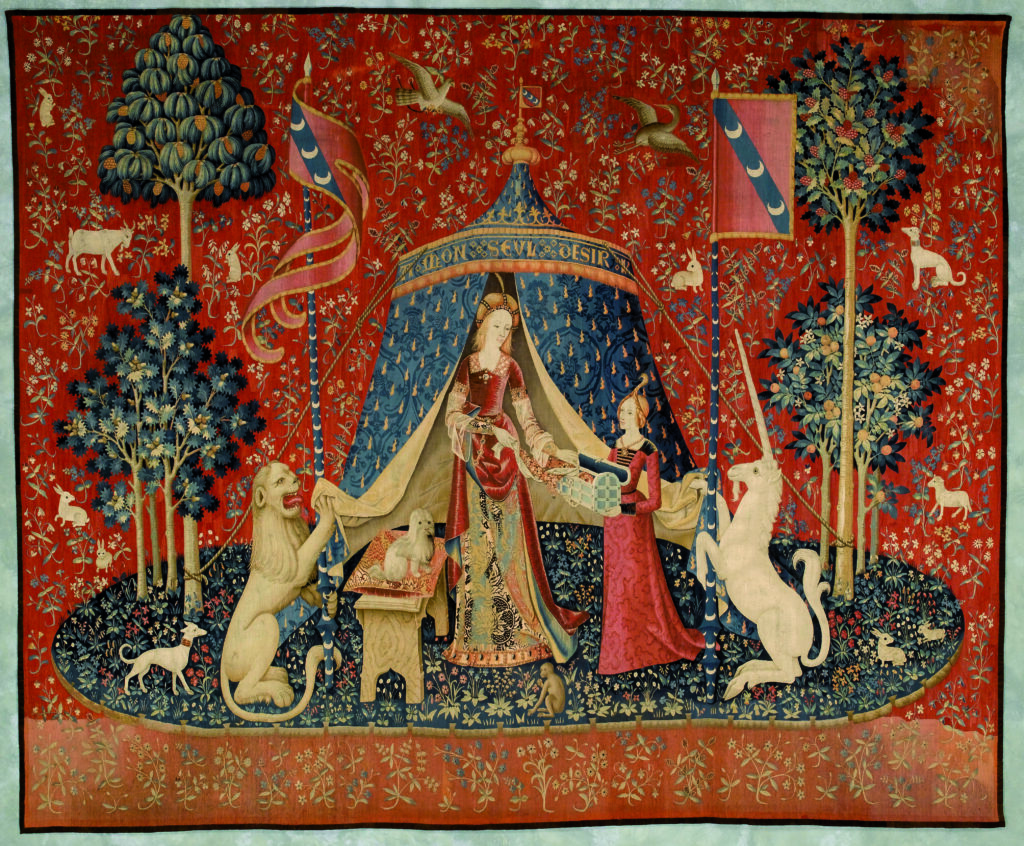
Designer Sylvio Giardina has chosen the Lady and the Unicorn tapestry, held at the Musée de Cluny, as the technical matrix of his Haute Couture Autumn-Winter 2026-2027 collection. The gesture goes beyond aesthetic citation: it turns a place of conservation into a device for creation.
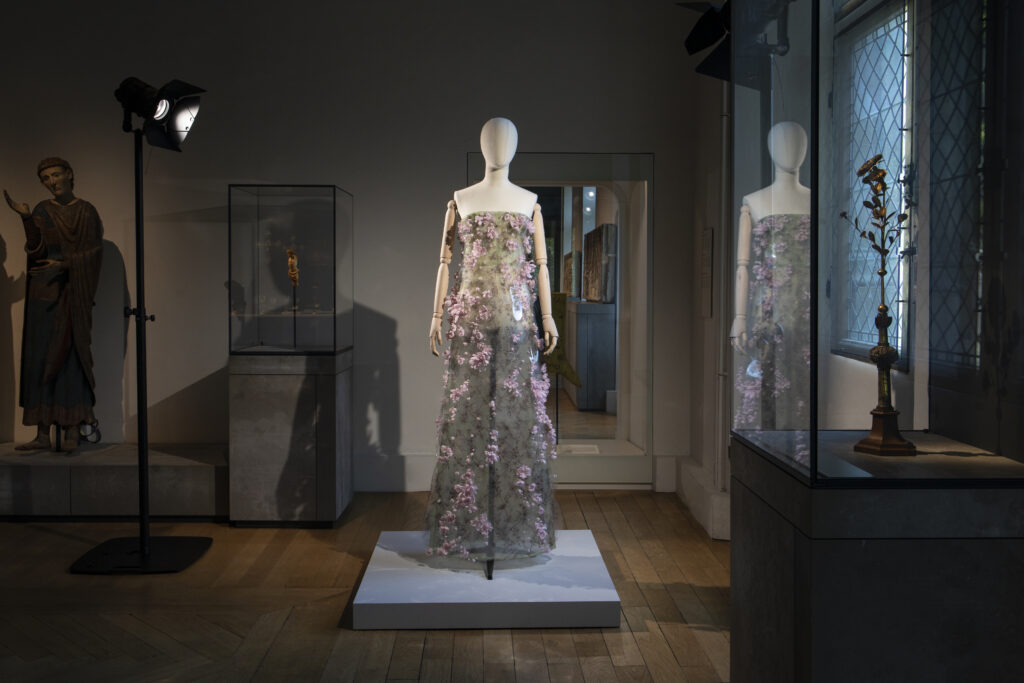
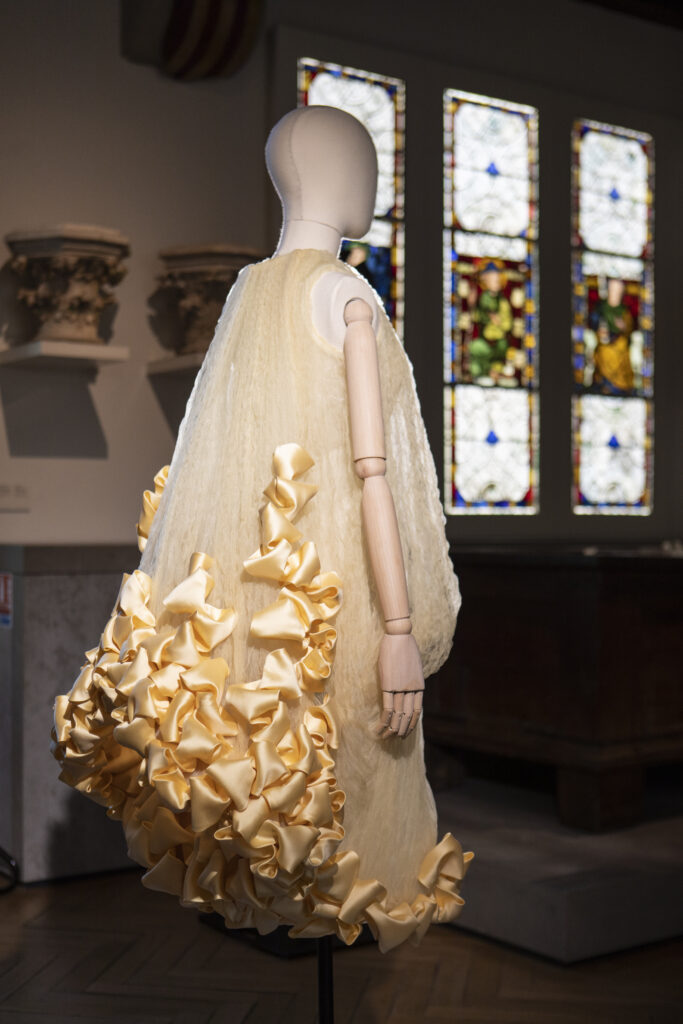
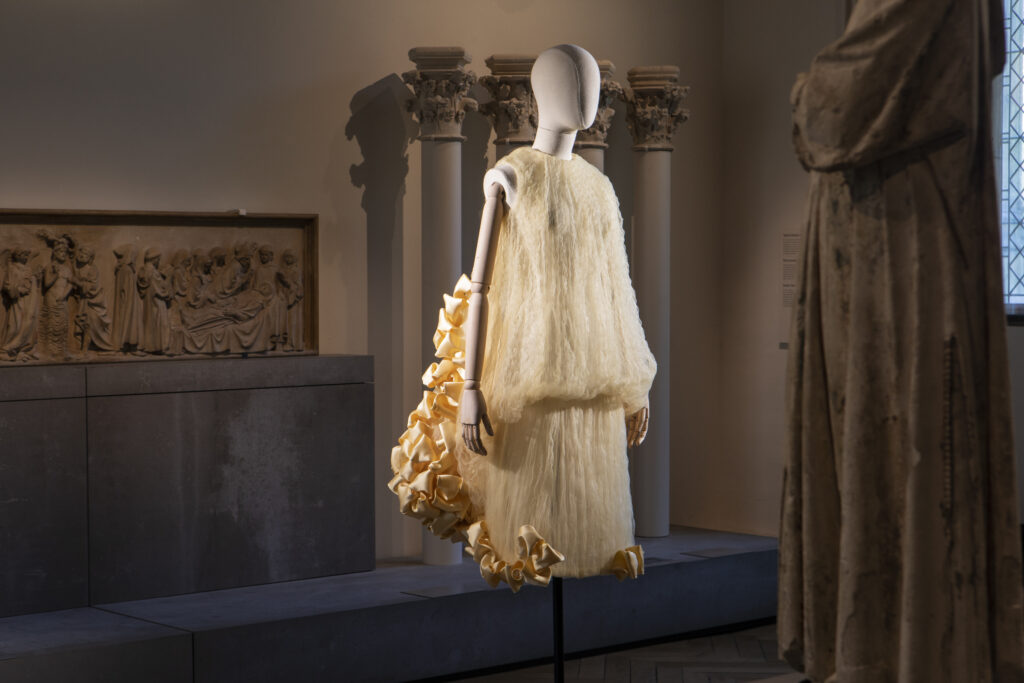
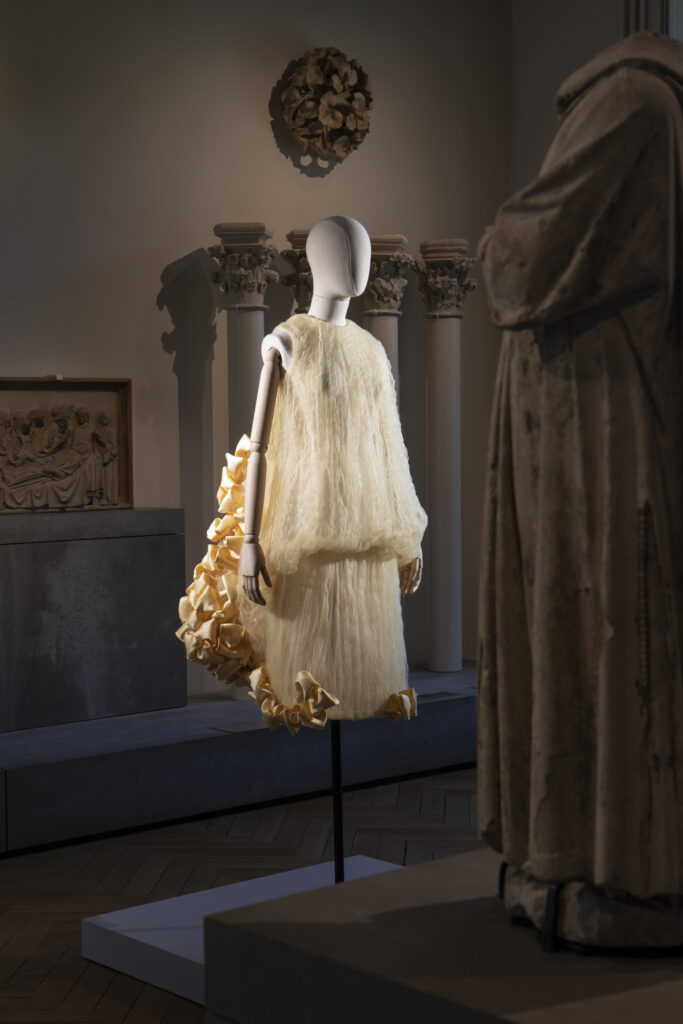
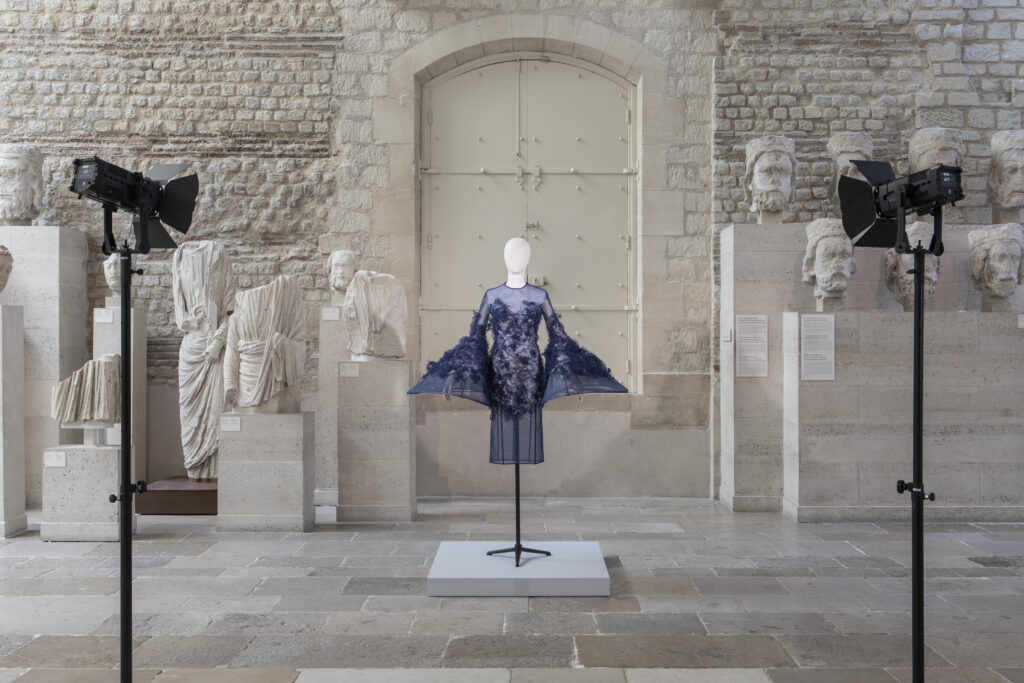
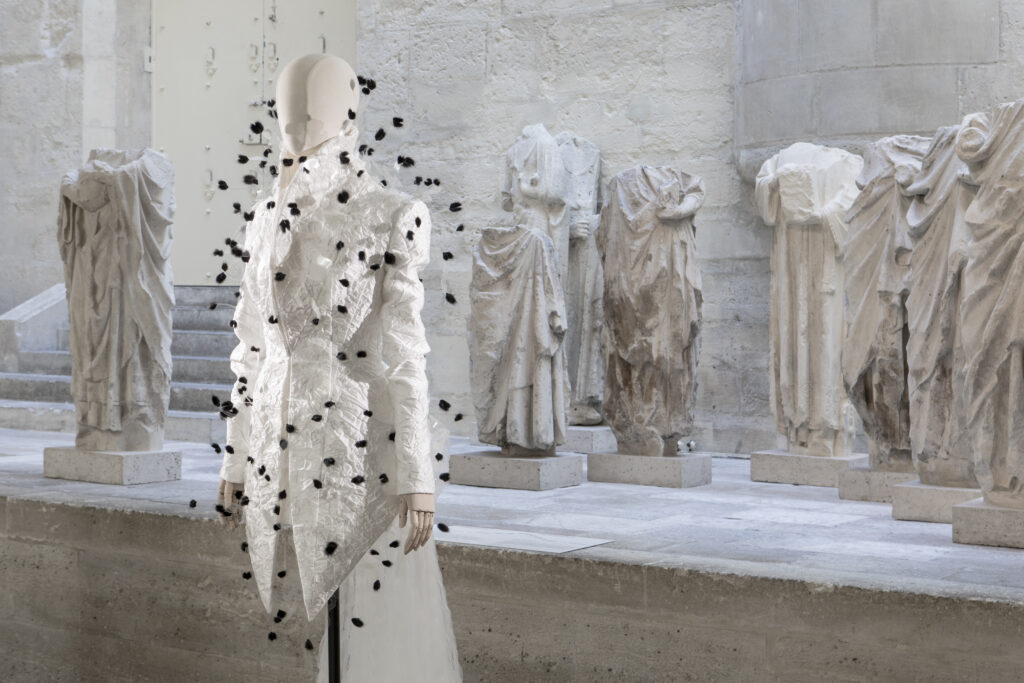
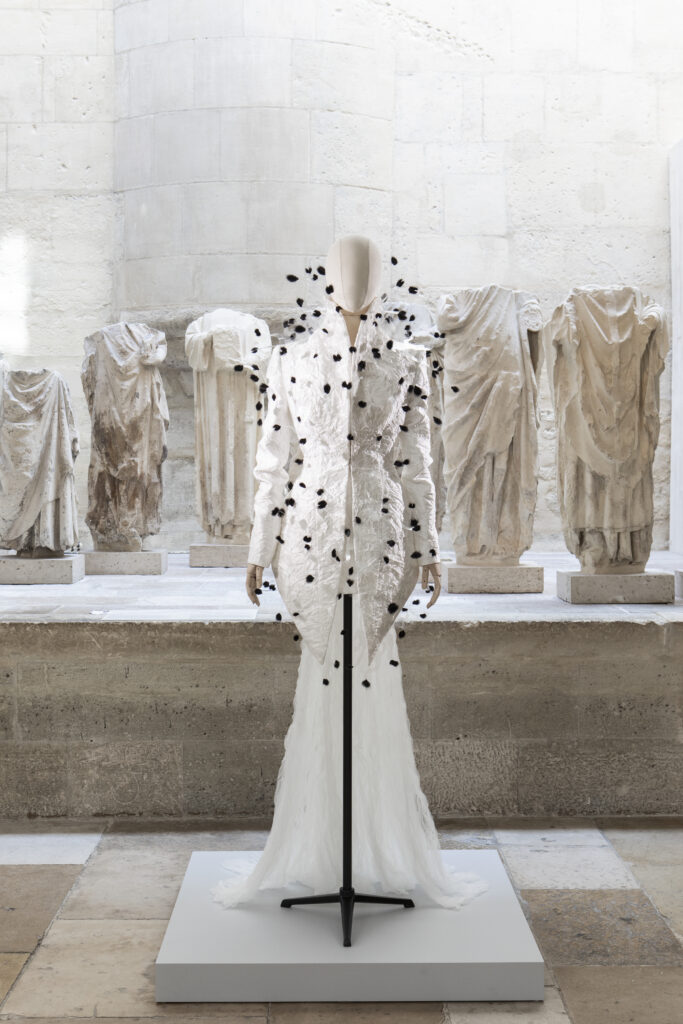
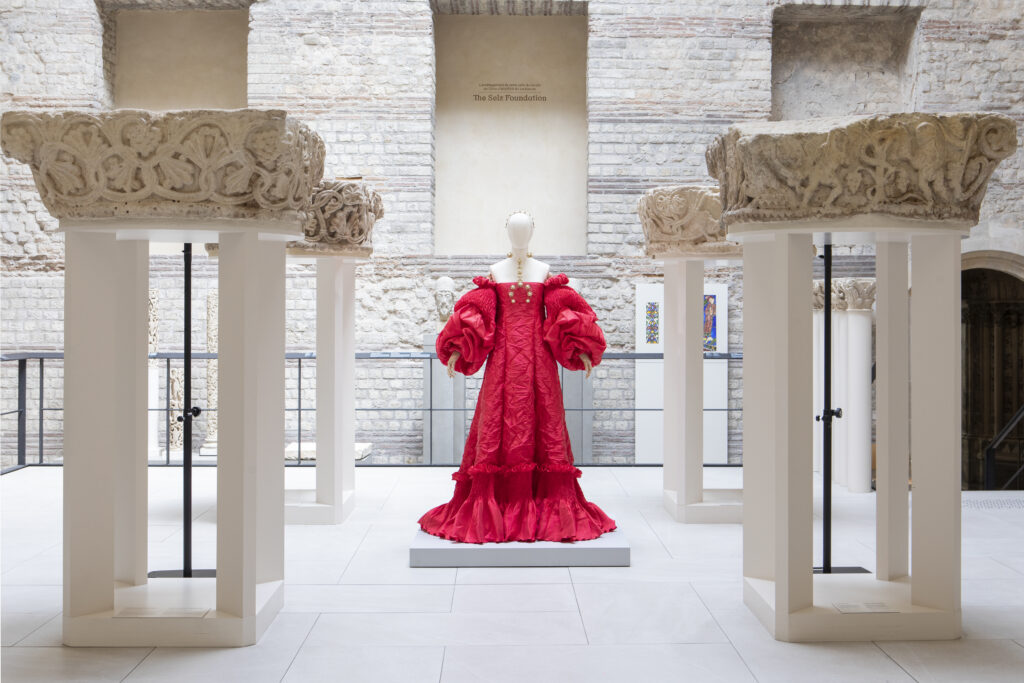
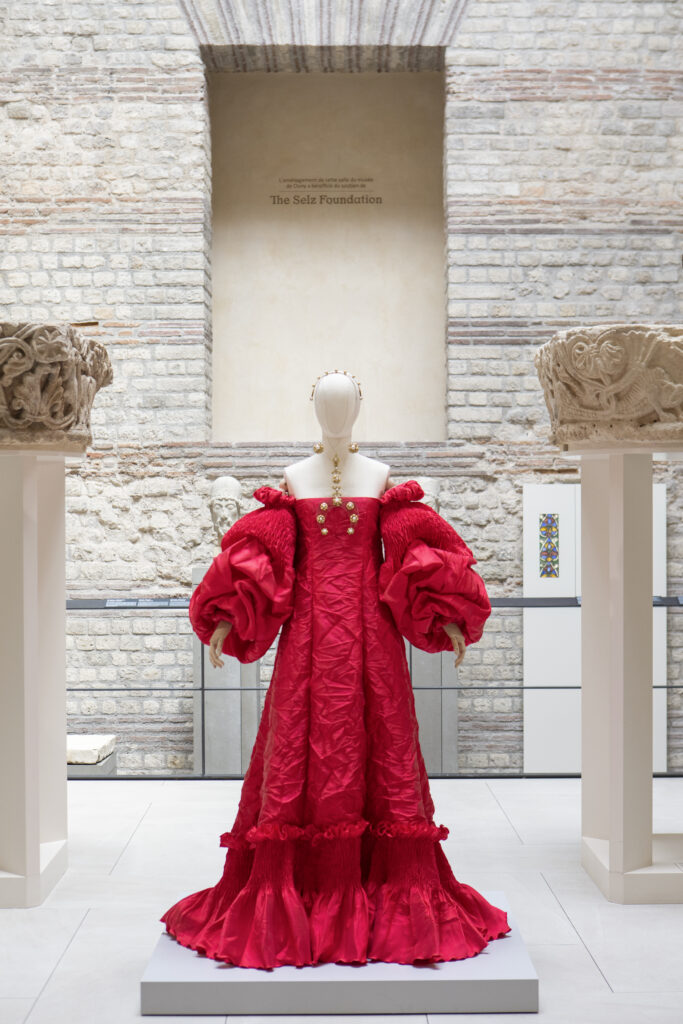
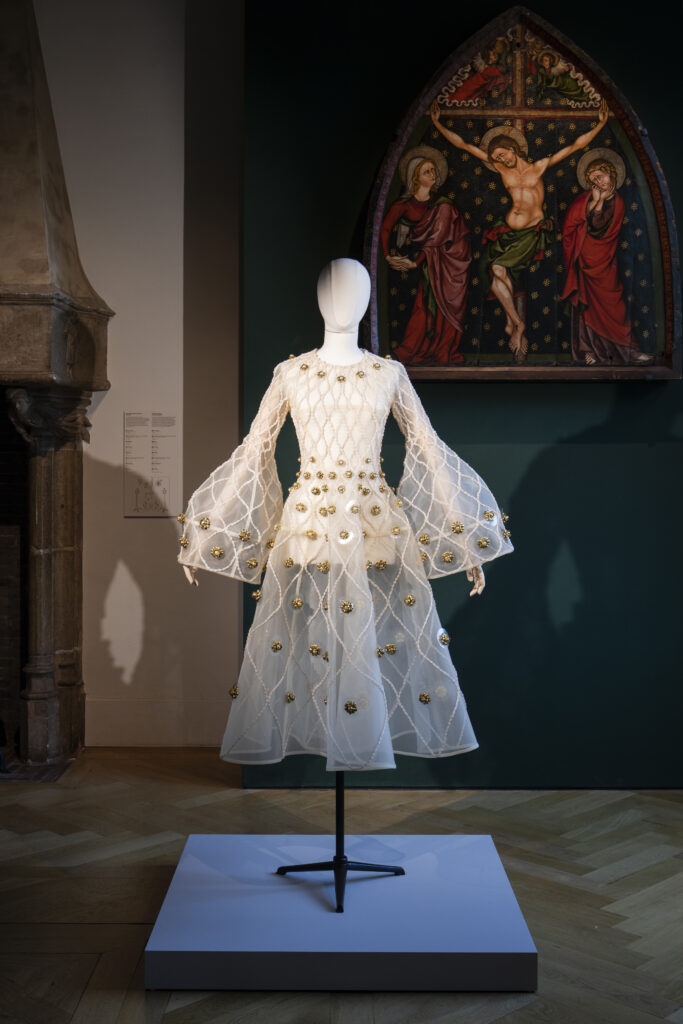
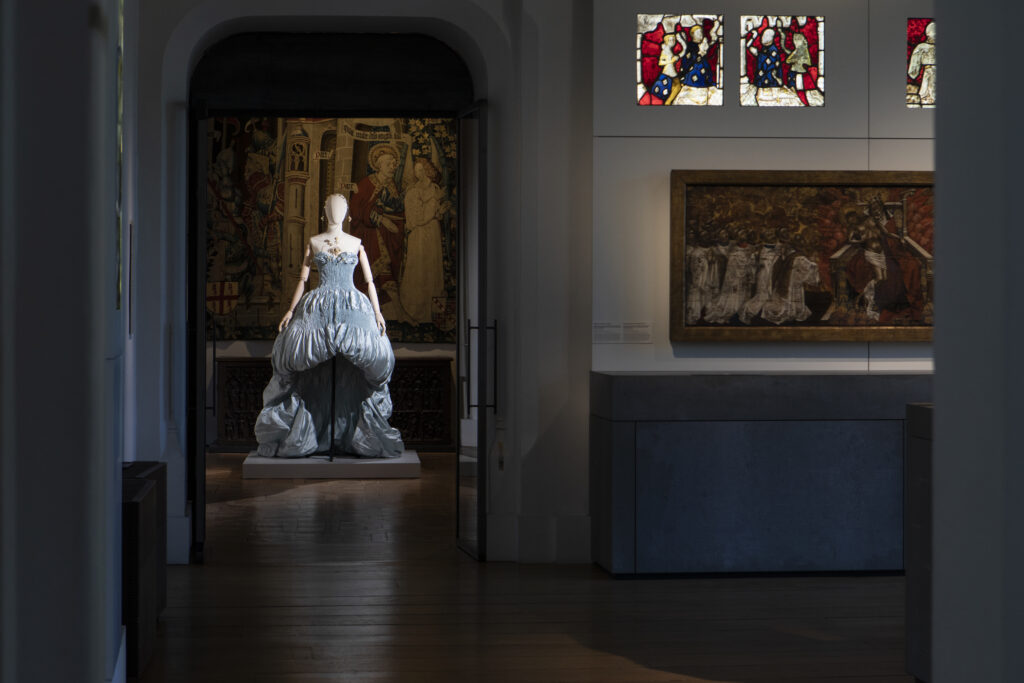
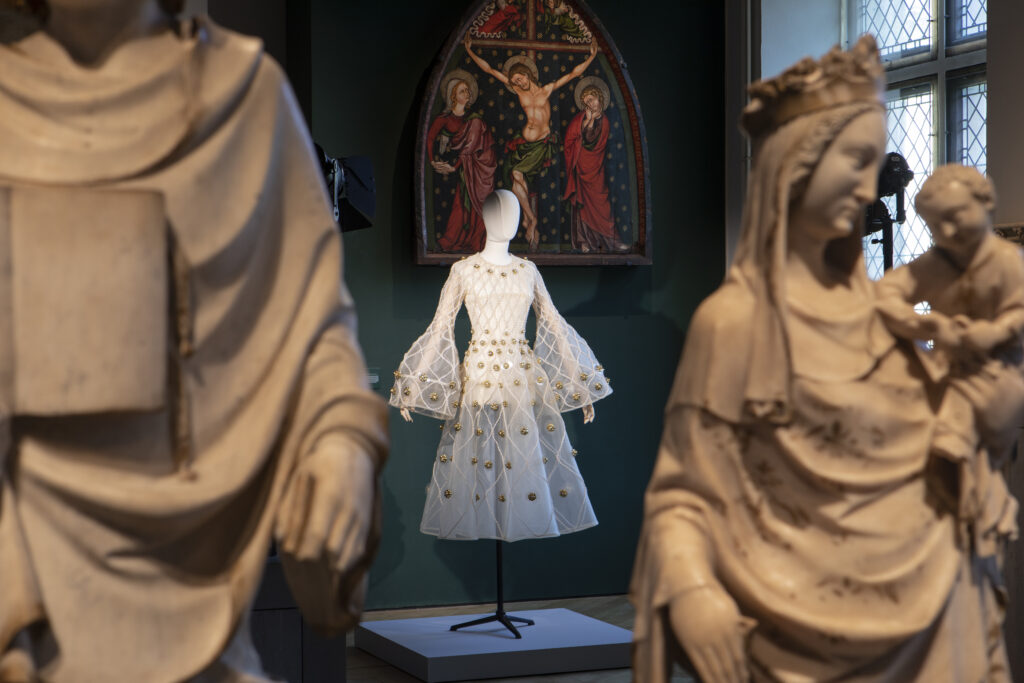
A museum conserves, in principle; it does not create. It is this boundary that the collection Mon Seul Désir shifts, presented on 6 July 2026 as an in situ installation at the Musée de Cluny, the national museum of the Middle Ages, by designer Sylvio Giardina. The starting point is not the aesthetic citation of a famous work — the Lady and the Unicorn tapestry, held in the museum’s collections — but an examination of its technique of manufacture: weaving, and the capacity of that gesture to produce material, depth and visual illusion from thread alone.
Weaving as method, not as motif
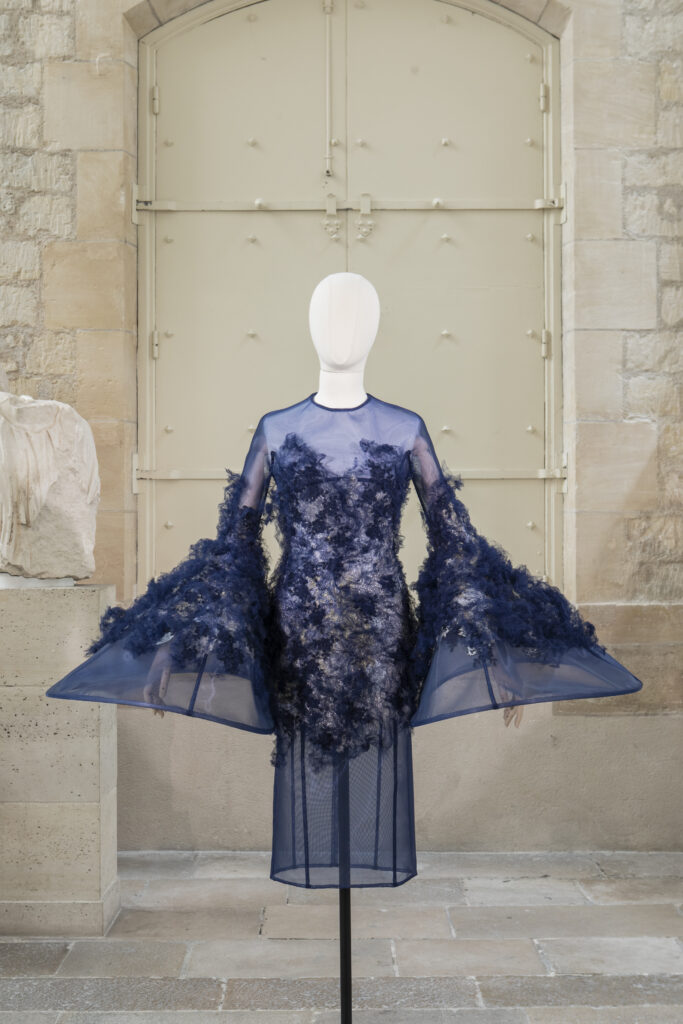
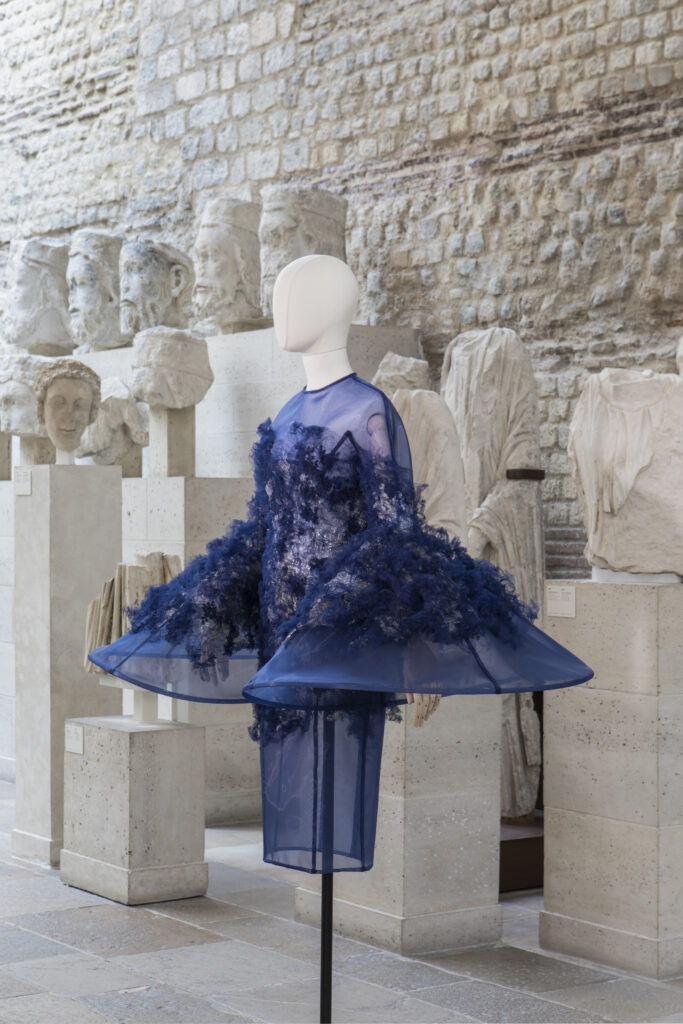
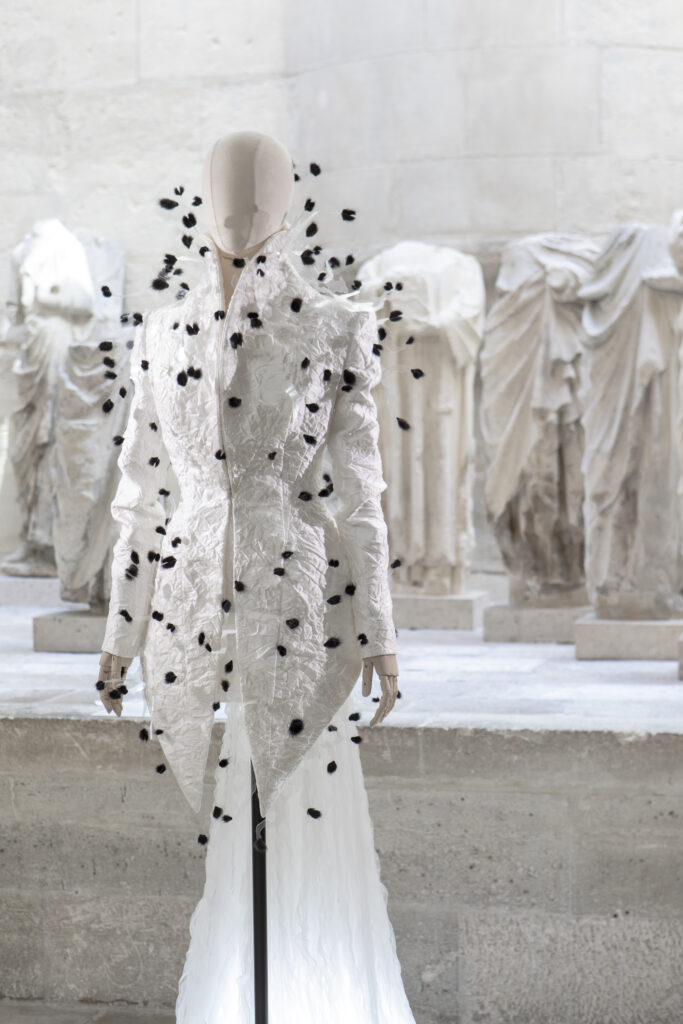
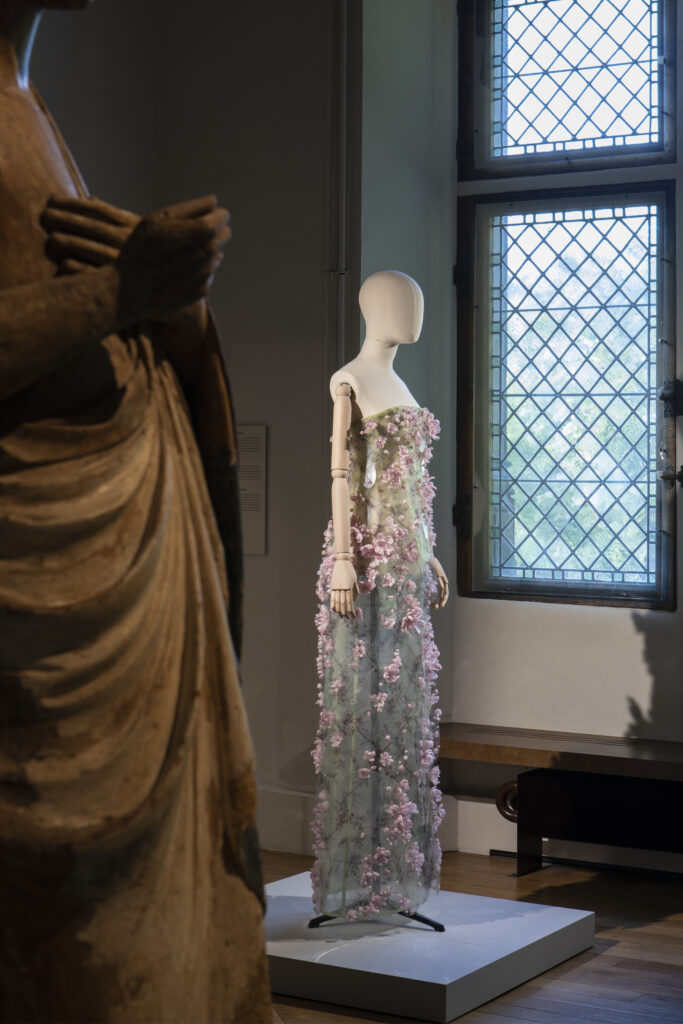
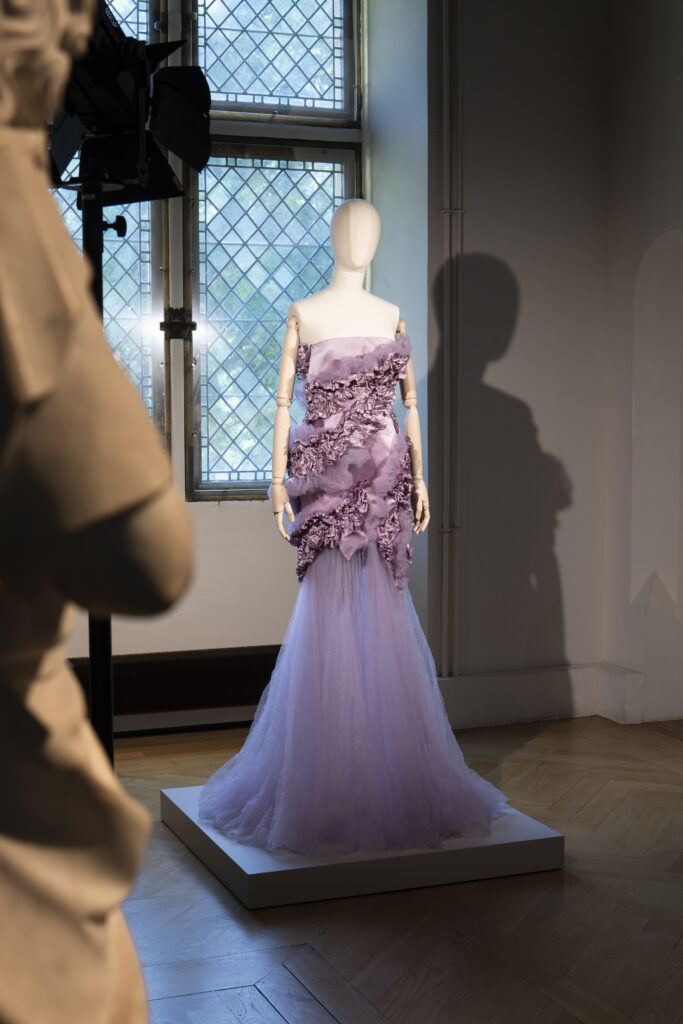
Giardina does not reproduce the tapestry’s scenes on garments: he extracts from it a principle of construction. The technique of textile braiding becomes the starting point of the collection, pursuing a precise aim — to make lightness and transparency visible through solid materials, by turning the surface of the garment into a three-dimensional space. The millefleurs motif, omnipresent in medieval tapestry, becomes in turn a visual grammar rather than mere decoration: the flower is treated as structural composition, developed across the entire collection.
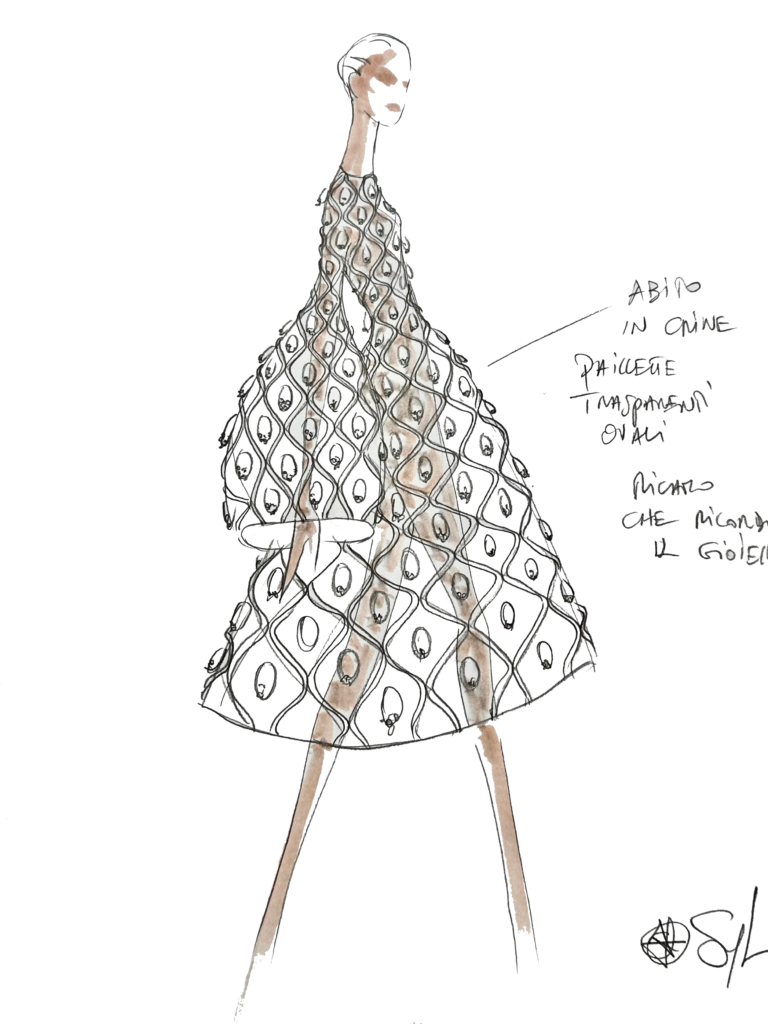
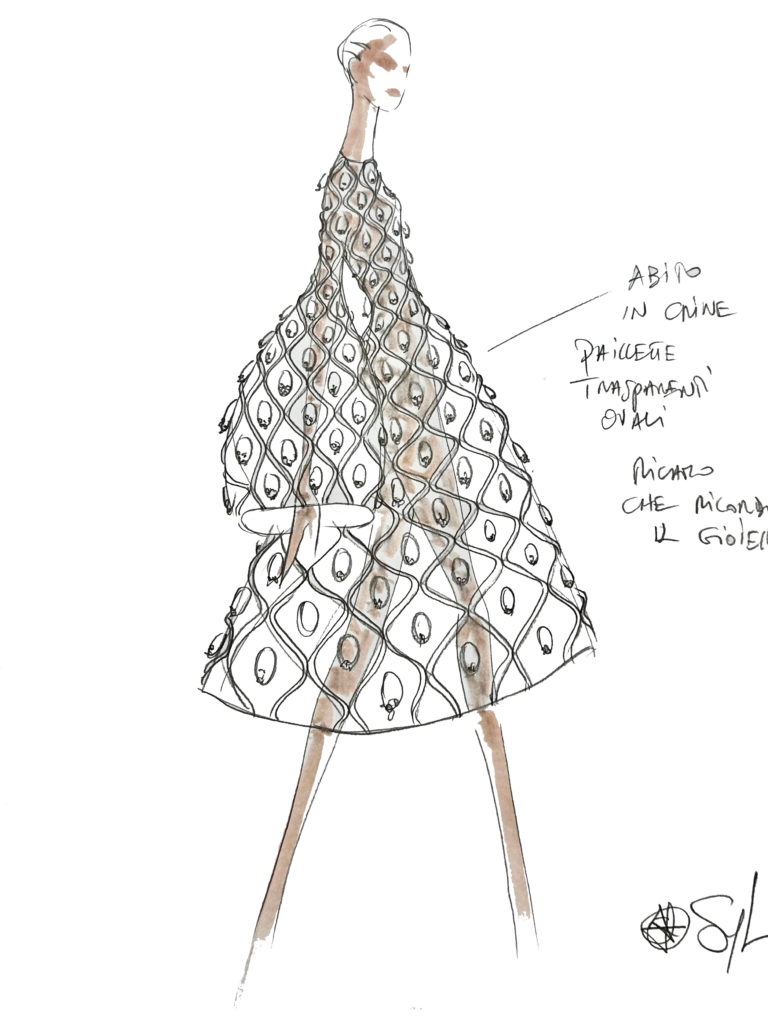
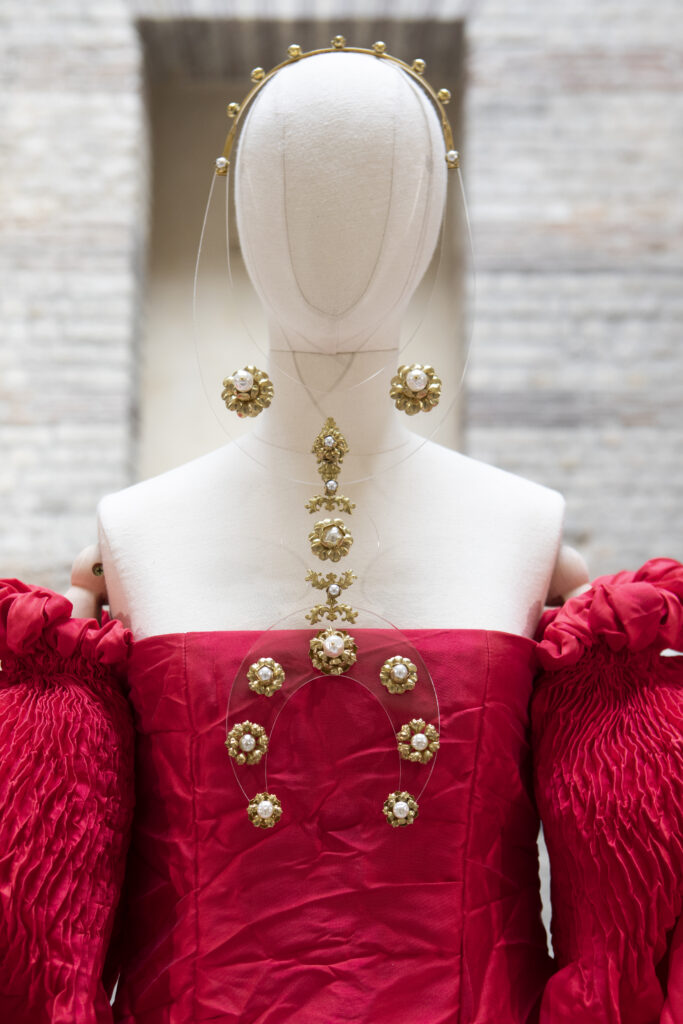
The work extends to the jewels depicted in the medieval tapestries, which Giardina transcribes into couture elements: necklaces and ornaments become suspended structures, some integrated into garments, others reinterpreted as fragments of matter on transparent surfaces. The colour palette, drawn directly from the tapestries — dominant red, combined with white, blue, purple, yellow, powder blue, gold and black — is treated as perceptual matter rather than decorative. The construction of the pieces draws on classic couture materials (mikado, duchesse, tulle, horsehair, lace, velvet) combined to produce contrasts of weight, transparency and structure, with pleating executed entirely by hand.
A project in two acts, Paris then Rome
The second shift lies in the format: Mon Seul Désir is not limited to a show but is built as a two-stage project. After the Paris installation of 6 July at the Musée de Cluny, in direct dialogue with the tapestries, the project will continue in October 2026 at the Trinità dei Monti in Rome, a historic complex of conventual origin linked to the Order of Minims, with an in situ performance extending the ritual dimension of the collection. The collection’s title takes up the motto of the sixth tapestry in the Lady and the Unicorn cycle — a symbol of the passage from desire to awareness — which Giardina treats not as an emotion but as a process of transformation between material, gesture and perception.
A designer trained between Rome and the atelier
Sylvio Giardina, of Sicilian origin and born in Paris, trained at the Accademia di Costume e di Moda in Rome before beginning his career at Fernanda Gattinoni, the house where he received his direct training in Haute Couture. Co-founder of the brand Grimaldi Giardina before launching his eponymous label, he has developed a practice built on a constant dialogue between textile material and the visual arts — a continuity already visible in his Autumn-Winter 2025-2026 collection, presented in a Parisian Haussmann apartment as an installation of ten Haute Couture pieces conceived as mobile micro-scenographies.
The gesture undertaken with the Musée de Cluny extends this logic to an institutional scale: medieval textile heritage is no longer merely conserved there, it becomes working material again. It remains to be seen whether this collaboration will open, for other heritage institutions, a path of dialogue with contemporary couture — or whether it will remain an isolated case, in keeping with a designer whose approach has always been built on the margins of the classic institutional circuits.
Cette publication est également disponible en :


