
In Paris, picnics have never really gone out of style. They’ve simply taken on a new form. By partnering with Maison Veuve Clicquot on the “Picnic by Veuve Clicquot” experience, SO/ Paris transforms this summer ritual into a mobile expression of hospitality, designed as much for the eye as for practical use. This initiative speaks volumes about how hotel groups today are reimagining the concept of understated luxury: less ostentatious, more contextual.
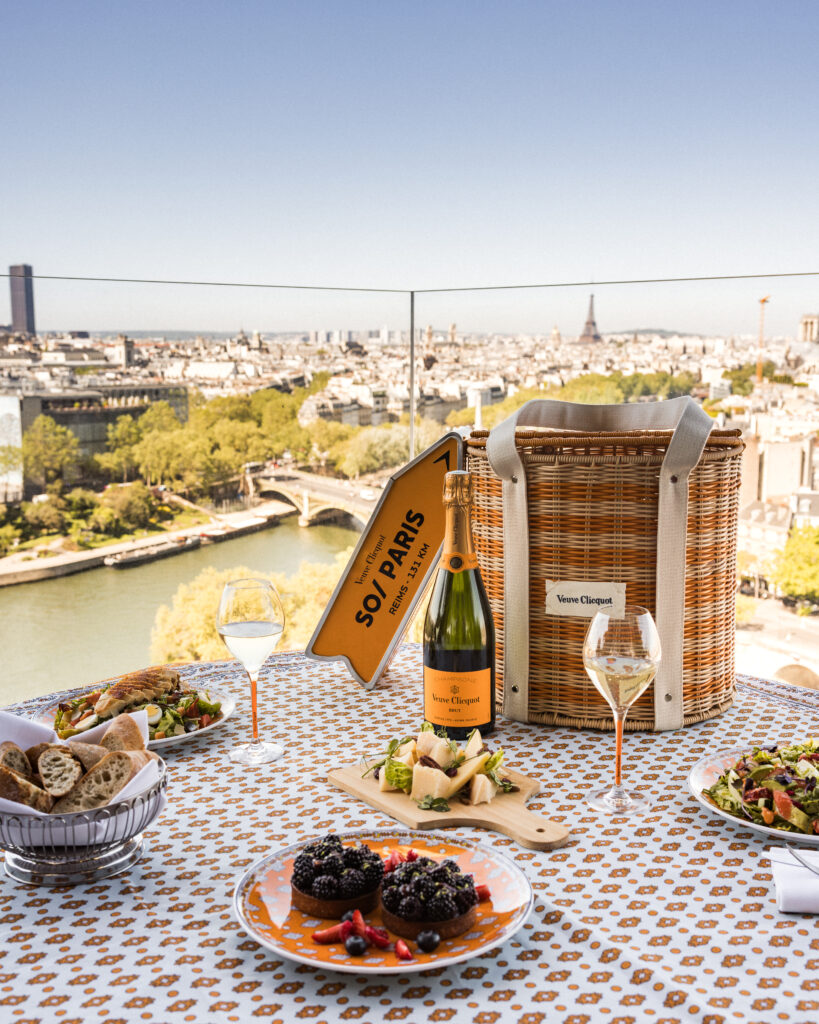
The focus is not so much on the hotel itself as on the area it brings to life. Located right next to the banks of the Seine and the Place des Vosges, SO/ Paris uses its location here as a natural extension of its hospitality offerings. Luxury is no longer confined to the guest room; it spills out into the city. This concept of hospitality beyond the hotel walls—already very prevalent in certain Italian and Japanese hotels—is now taking hold in Paris in a more curated, almost staged form.
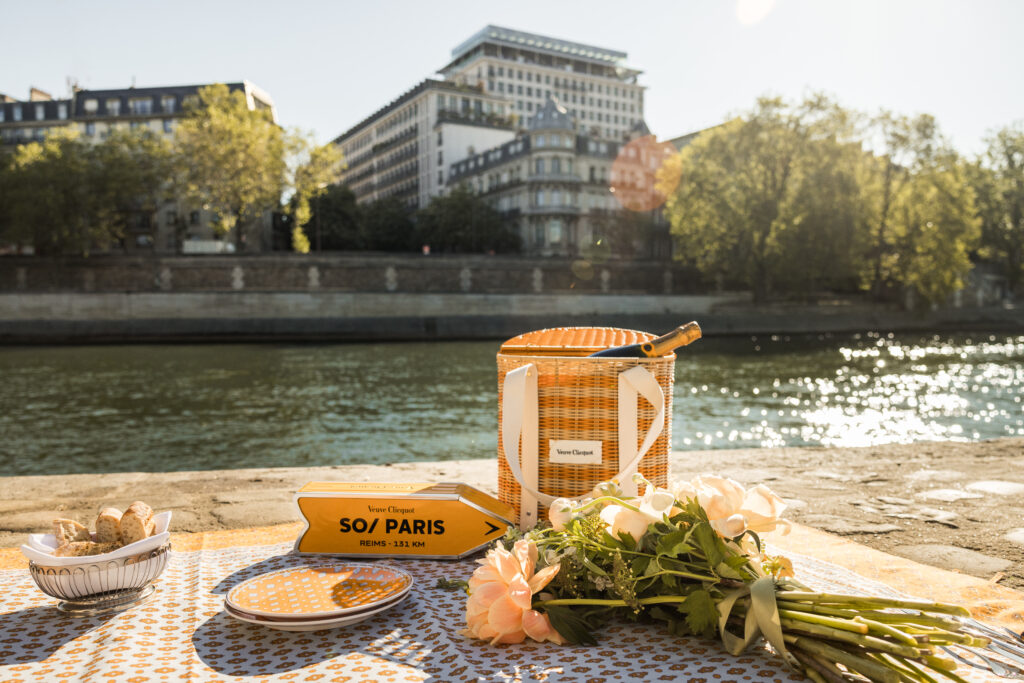
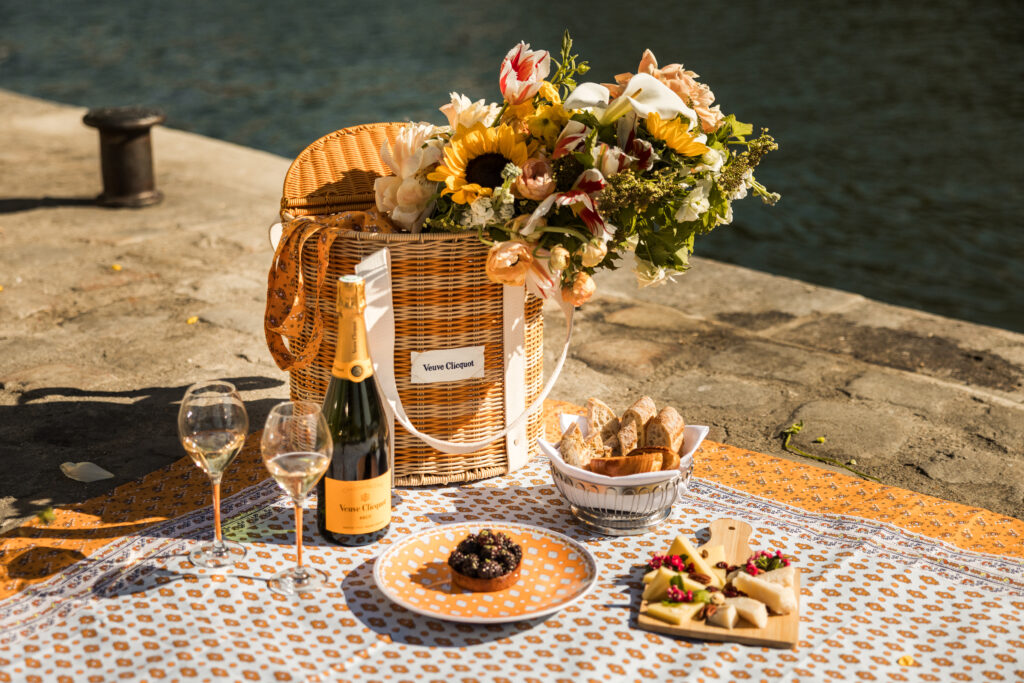
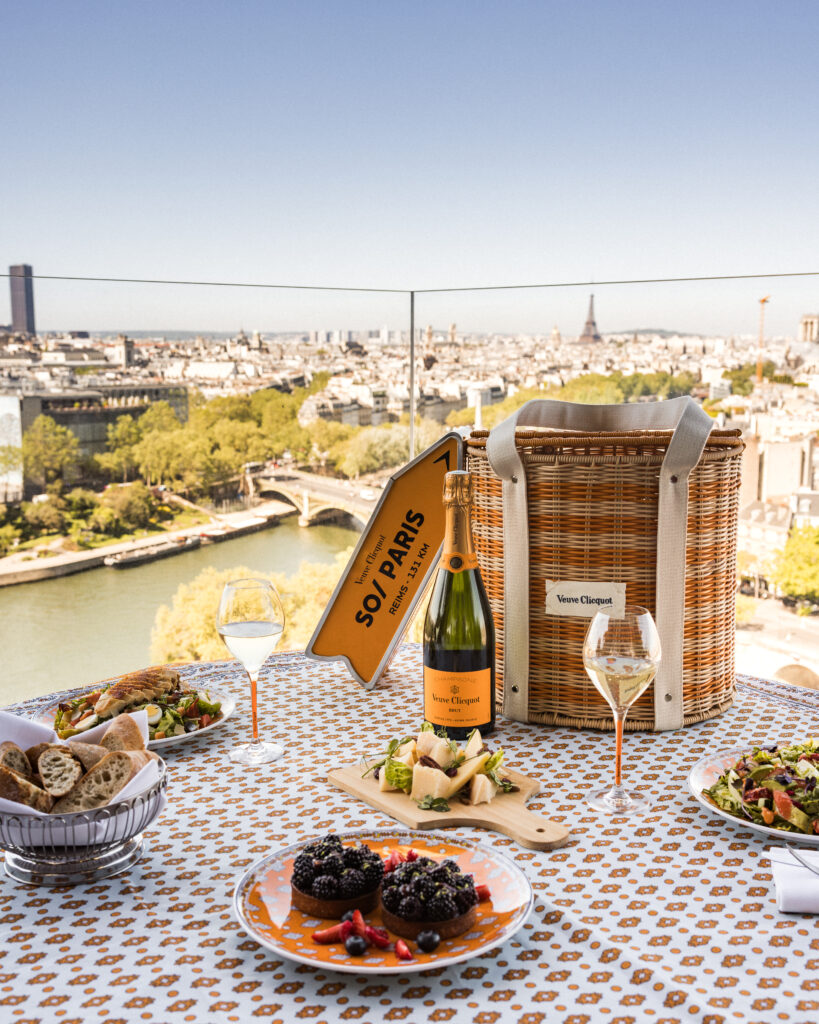
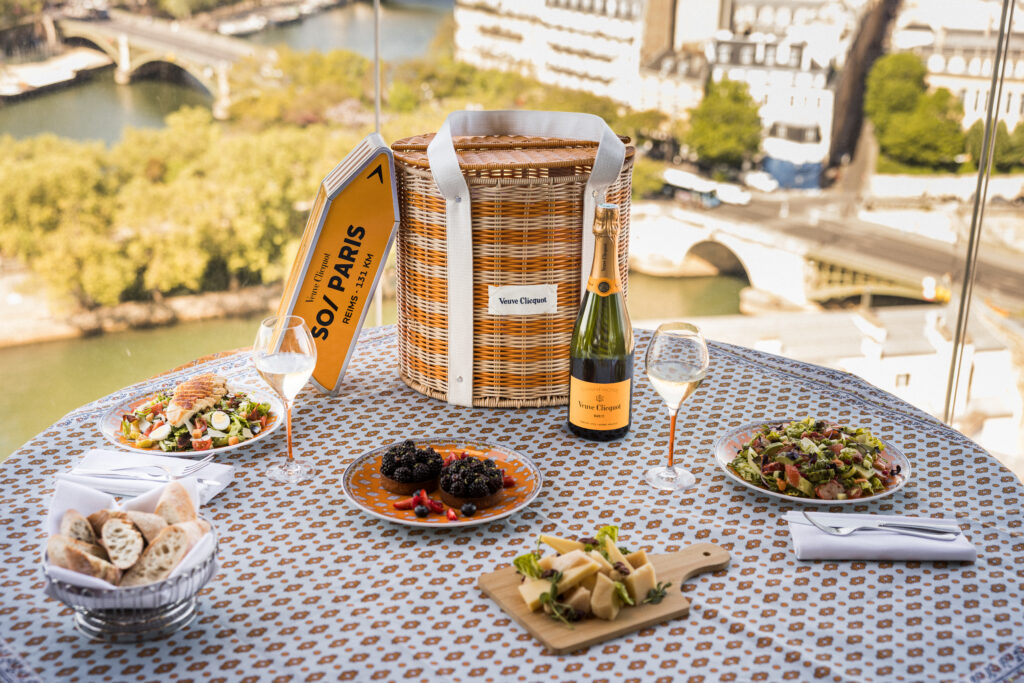
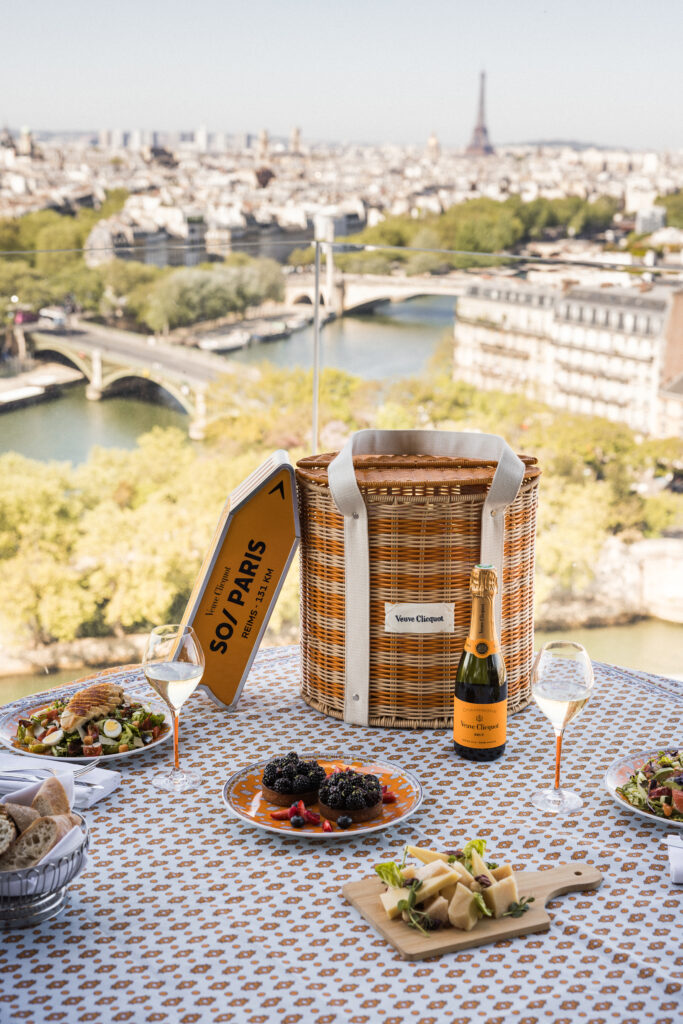
The experience is based on a carefully curated menu. A gourmet salad of your choice—lobster, chicken, or vegetarian—a selection of French cheeses, bread, and a flaky brioche, followed by a seasonal fruit tart. The meal is accompanied by a half-bottle of Veuve Clicquot Carte Jaune for two people, or a full bottle for four. Attention to detail matters more than abundance: the composition evokes not so much a banquet as a thoughtfully planned outdoor lunch.
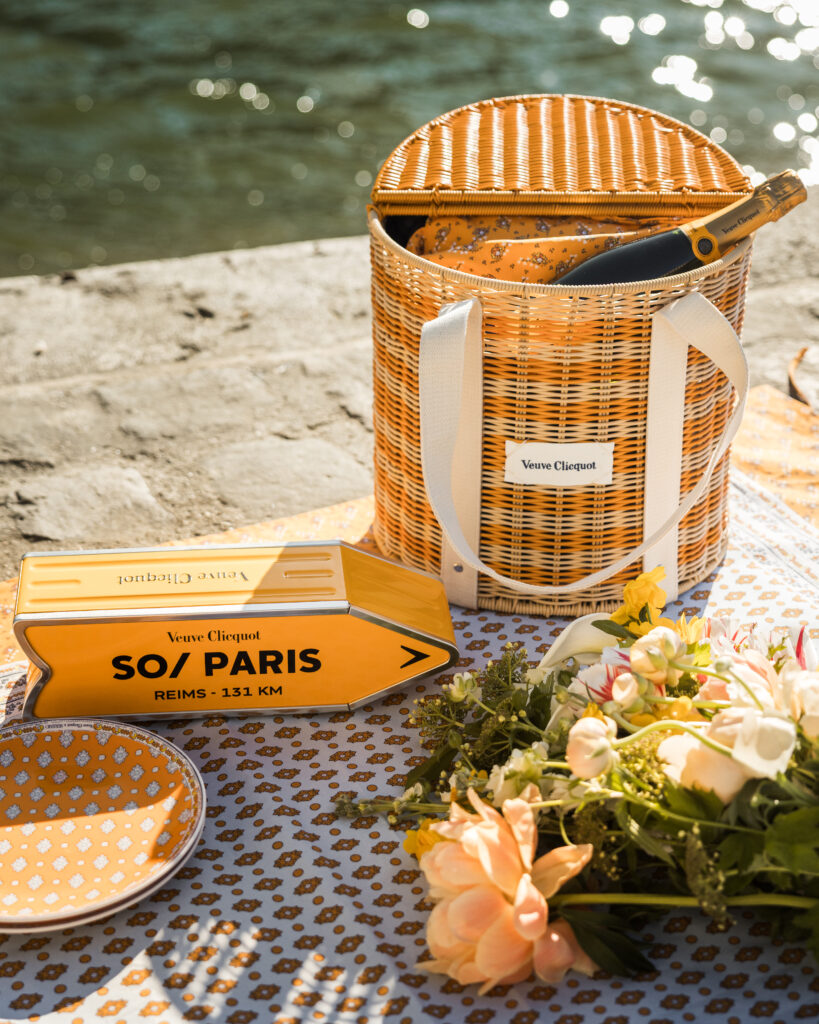
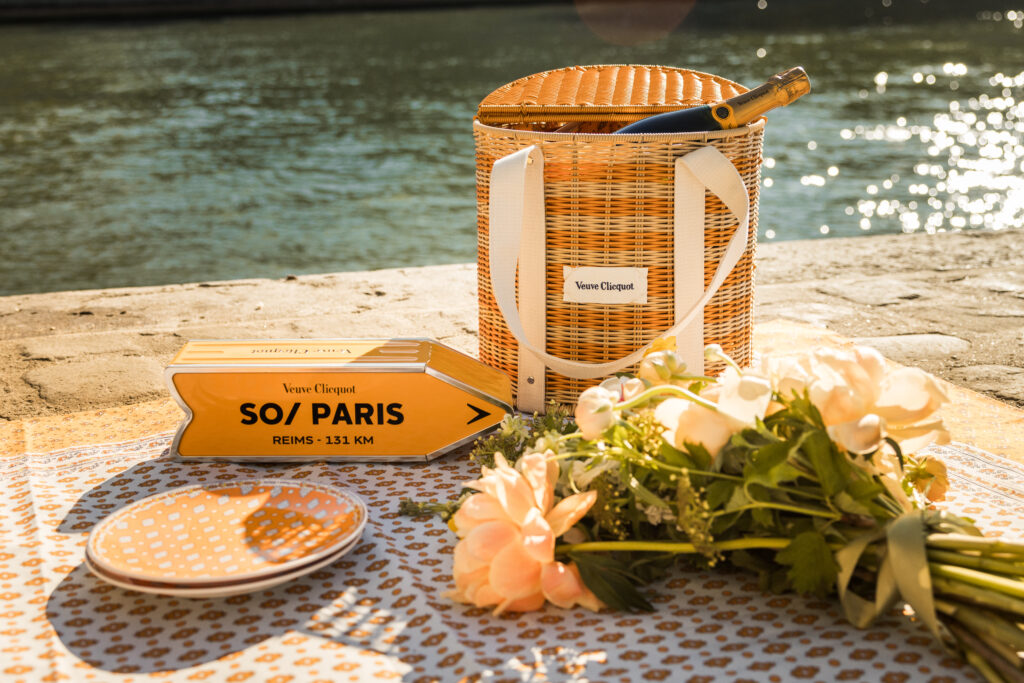
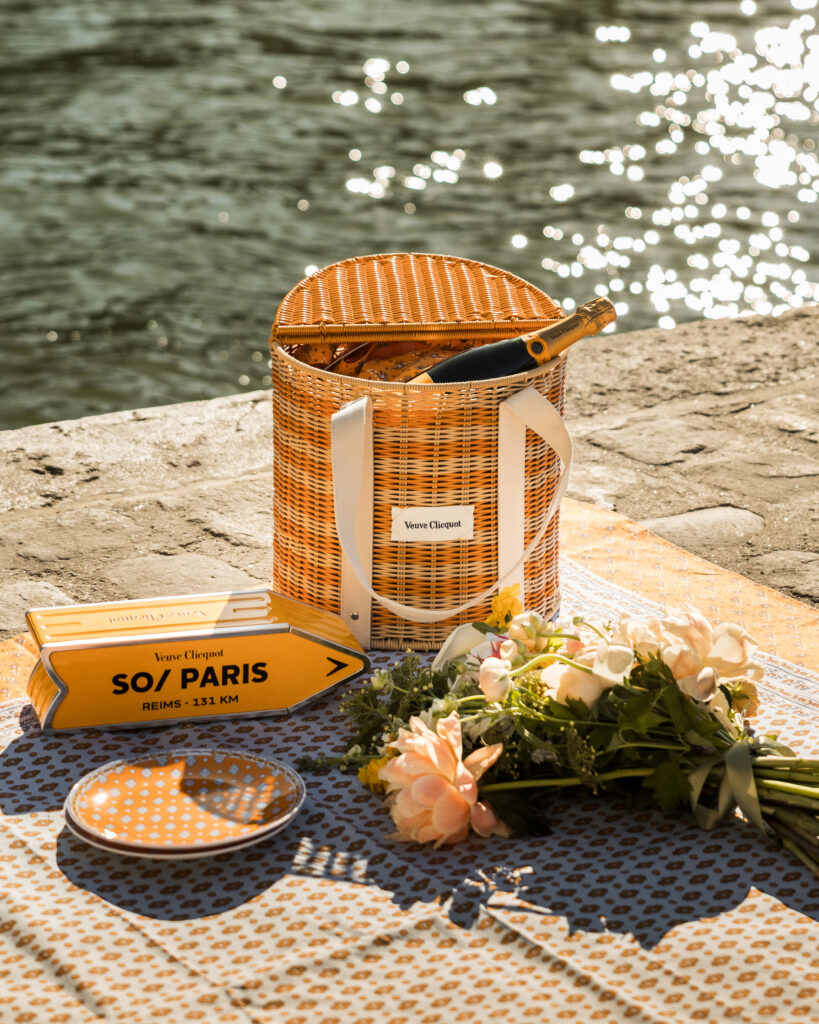
What deserves attention lies elsewhere: in the way the object is designed. The collaboration with Souleiado introduces a textile dimension that is rarely trivial in the contemporary hotel world. Tablecloths, plates, outdoor-friendly glassware, portable cutlery: the picnic becomes a matter of materials and visual coherence. A southern aesthetic brought to the banks of the Seine. Here again, this approach reflects a broader evolution in experiential luxury: the rise of a lifestyle that’s Instagram-worthy, yet designed above all to be savored at a leisurely pace.
Veuve Clicquot, for its part, is pursuing a long-standing strategy: moving champagne beyond the gourmet dining table and integrating it into more casual and social settings. The House has been consistently developing this concept since the 19th century. The press release also highlights Madame Clicquot’s technical legacy: the first riddling table, the development of blended rosé champagne, and the establishment of a visual identity centered on the color yellow since 1877. These are often-repeated points, but they retain particular relevance here: champagne is no longer presented as a symbol of spectacular celebration, but as a companion to a well-curated urban moment.
SO/ Paris belongs to a generation of hotels that draws more from the world of fashion than from that of traditional hospitality. The group boasts collaborations with Guillaume Henry, Christian Lacroix, and Viktor&Rolf in the design of its spaces and uniforms. This connection to the world of fashion is no mere coincidence: it is part of a shift in the hospitality industry where cultural identity now takes precedence over simple, standardized comfort.
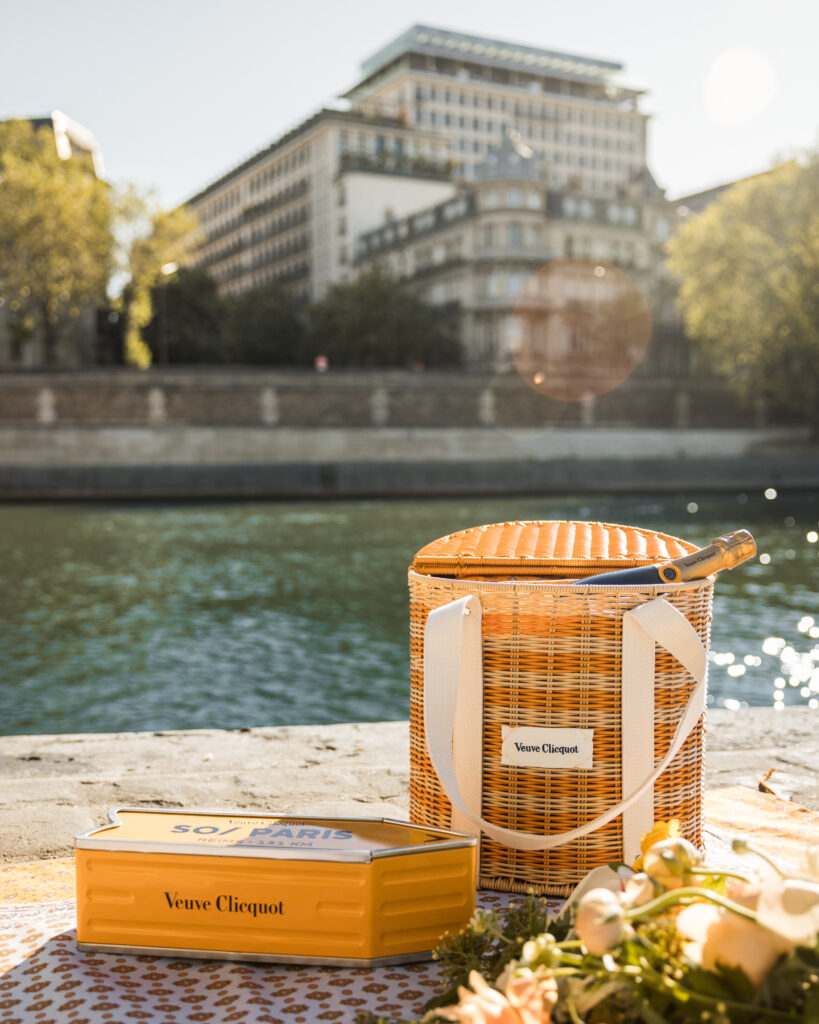
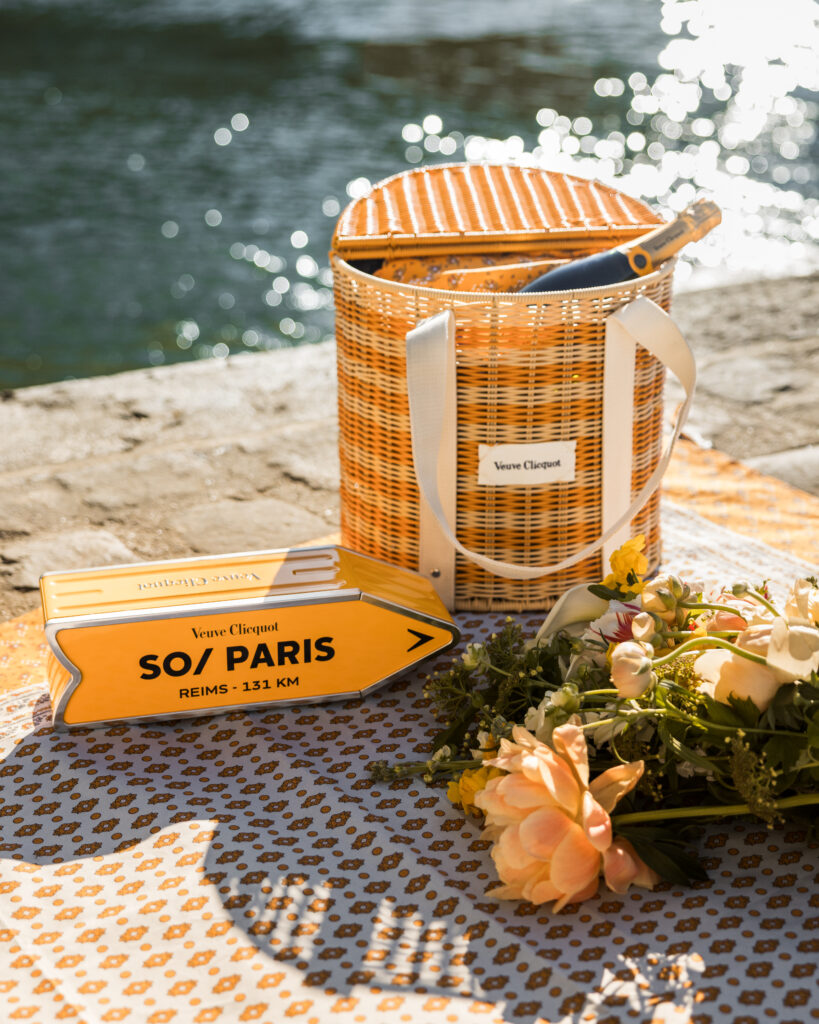
Ultimately, this picnic is really about an era when luxury was less about making an impression and more about creating experiences. A basket, a tablecloth, a bottle, a view of the Seine. Nothing spectacular. And that’s probably why it works.
Detail
The basket includes glassware designed for outdoor use and a textile developed in collaboration with Souleiado, a Provençal company historically associated with cotton printing. A subtle detail, but one that reveals the growing importance of portable tableware in contemporary hospitality.
Cette publication est également disponible en :

