
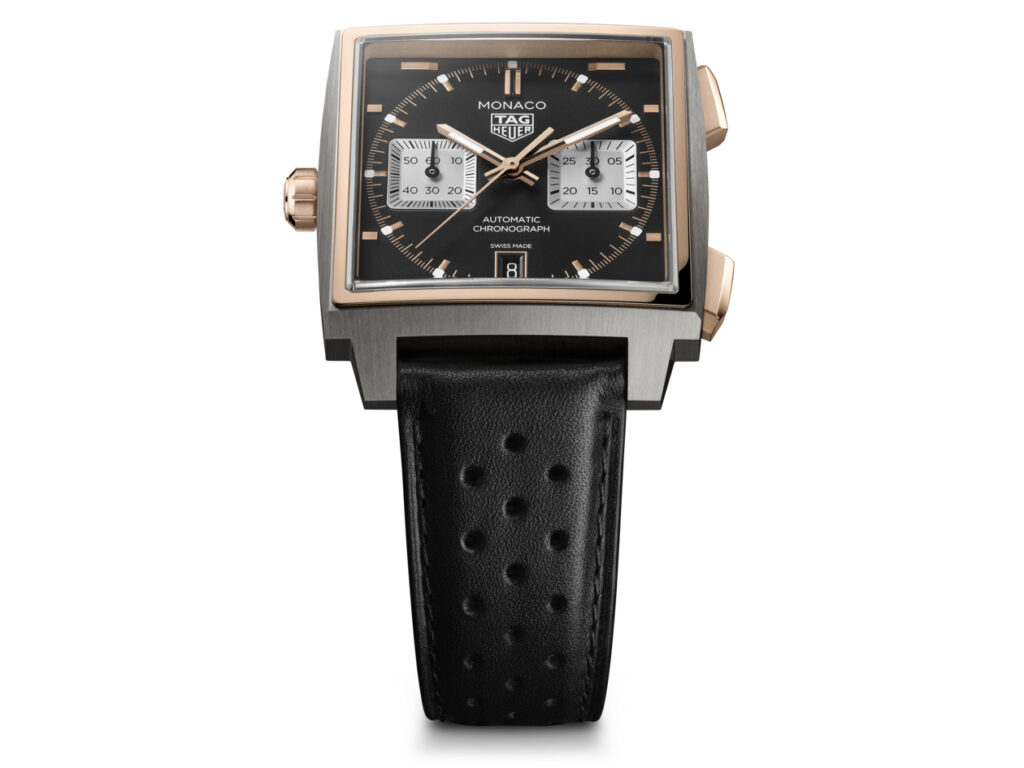
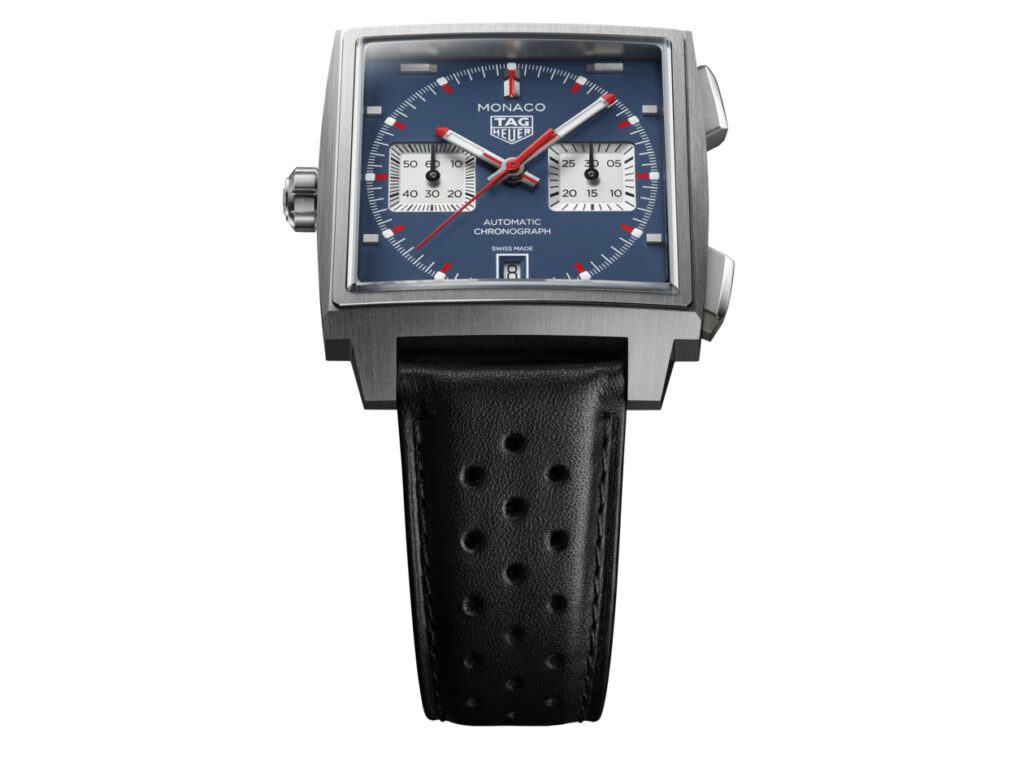
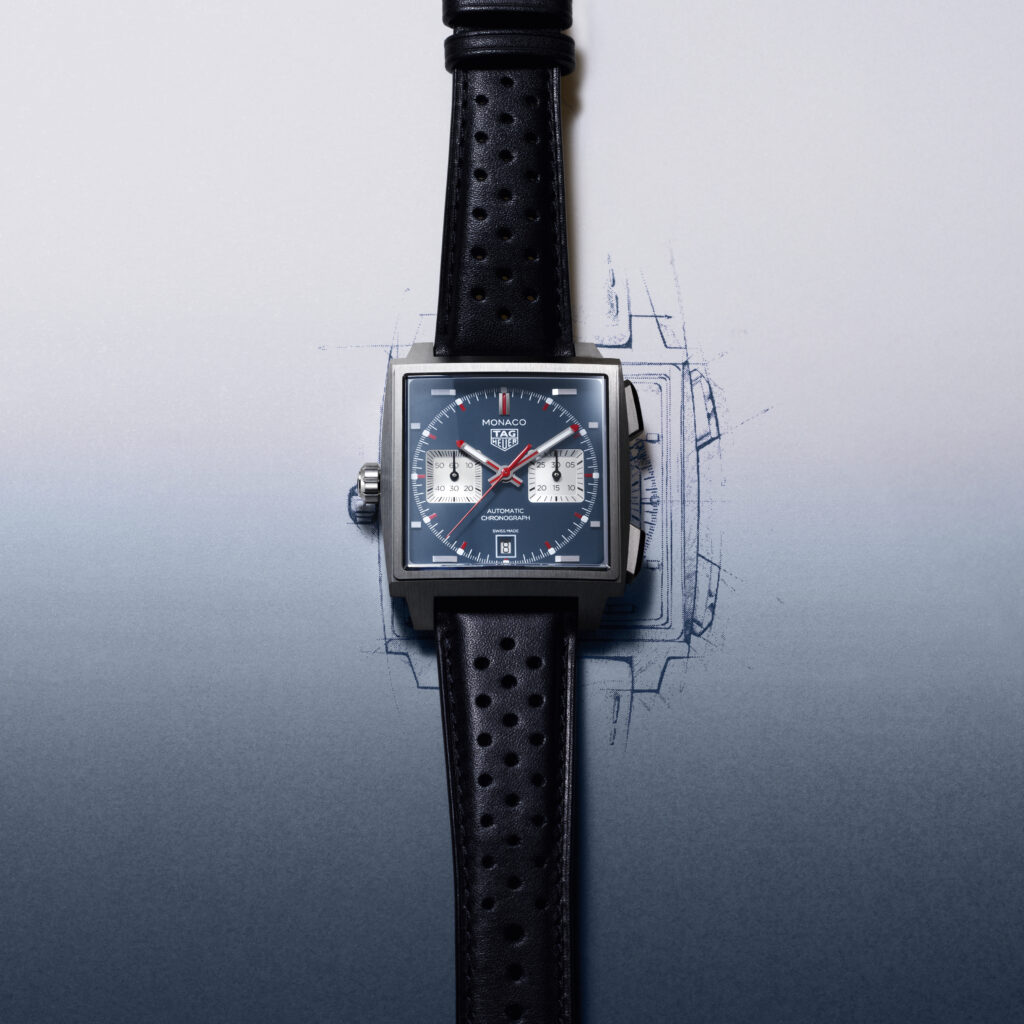
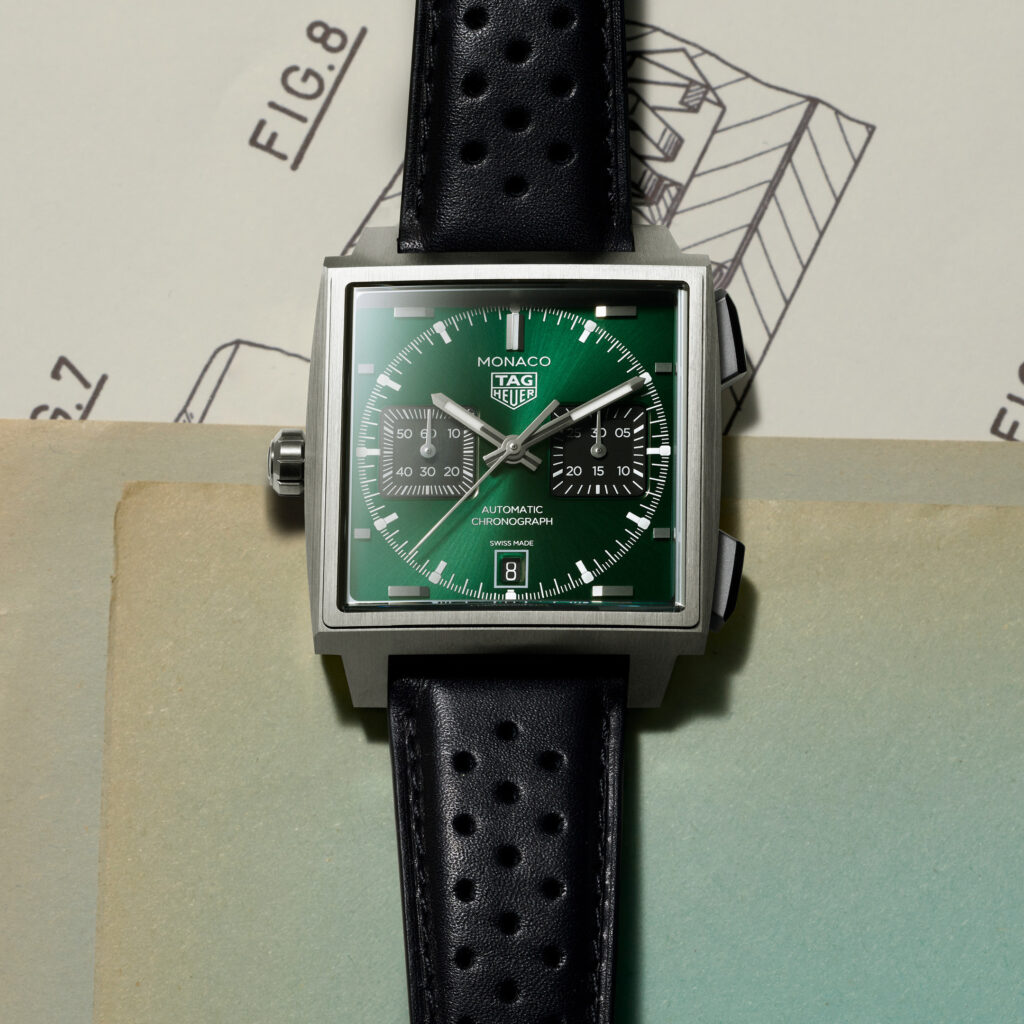
In 1969, the engineers of “Project 99” placed the crown on the left side of the case—not out of a desire for paradox, but out of mechanical necessity. The Buren micro-rotor and the Dubois-Depraz chronograph module left no other option: the movement’s bulk made this the only choice. What could have remained a manufacturing anomaly became the most recognizable design feature of the TAG Heuer Monaco—and one of the few instances in the history of watchmaking where a workshop constraint dictated a lasting aesthetic.
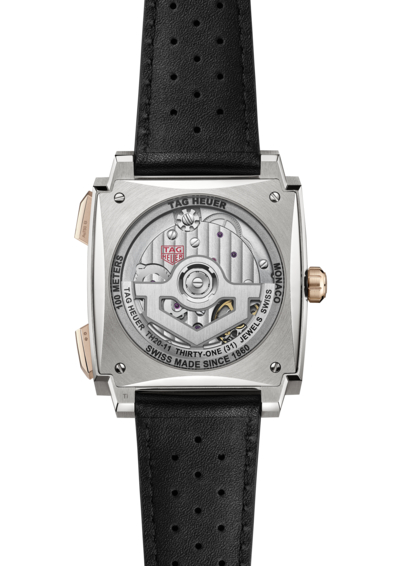
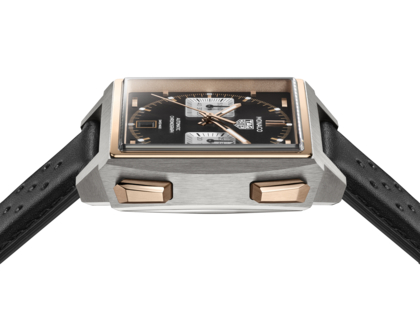
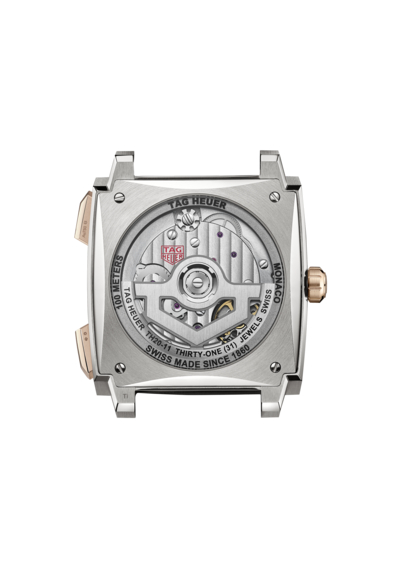
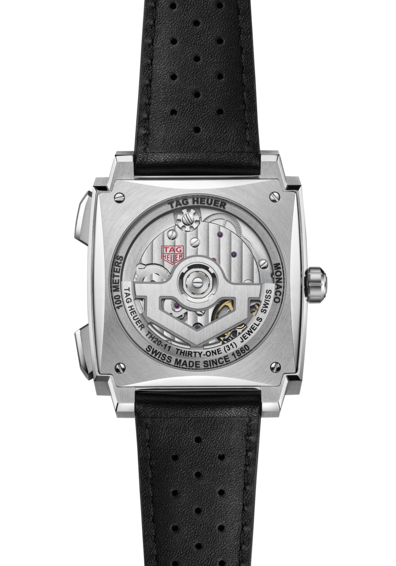
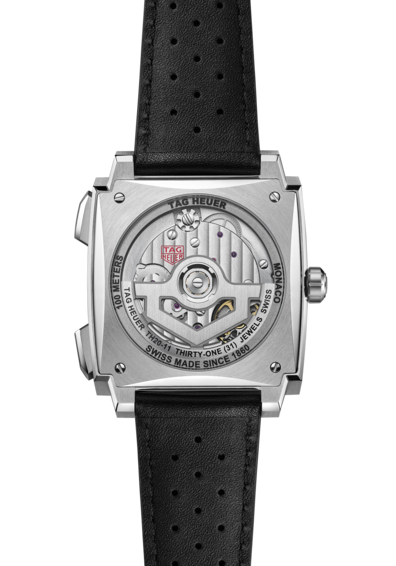
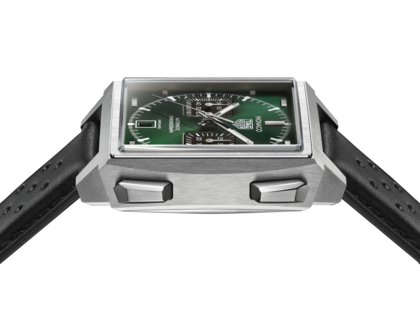
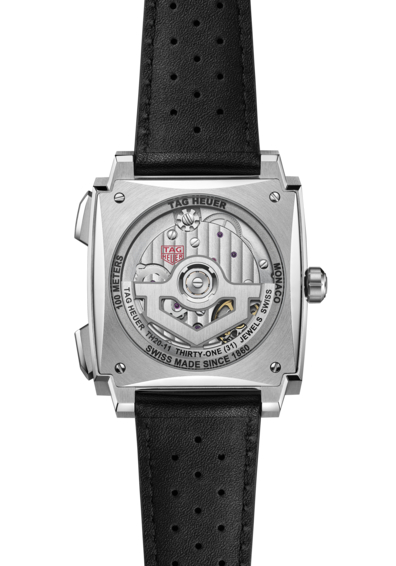
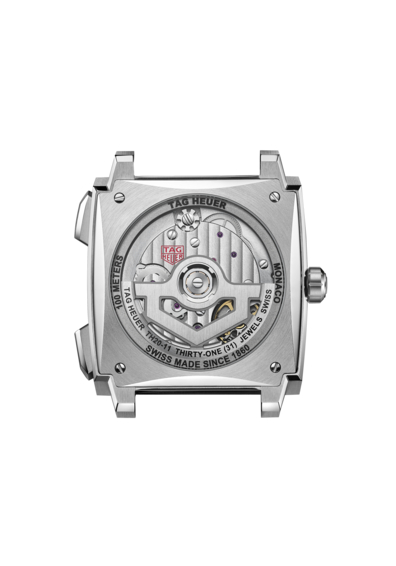
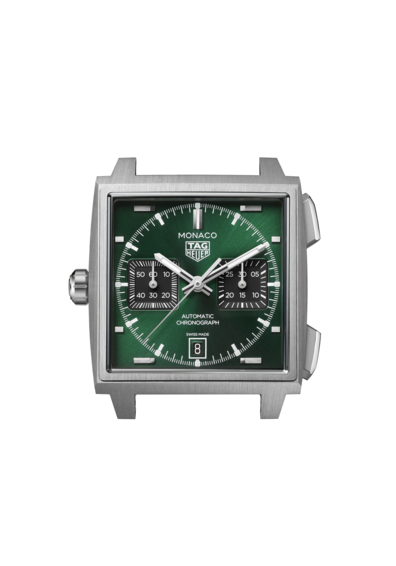
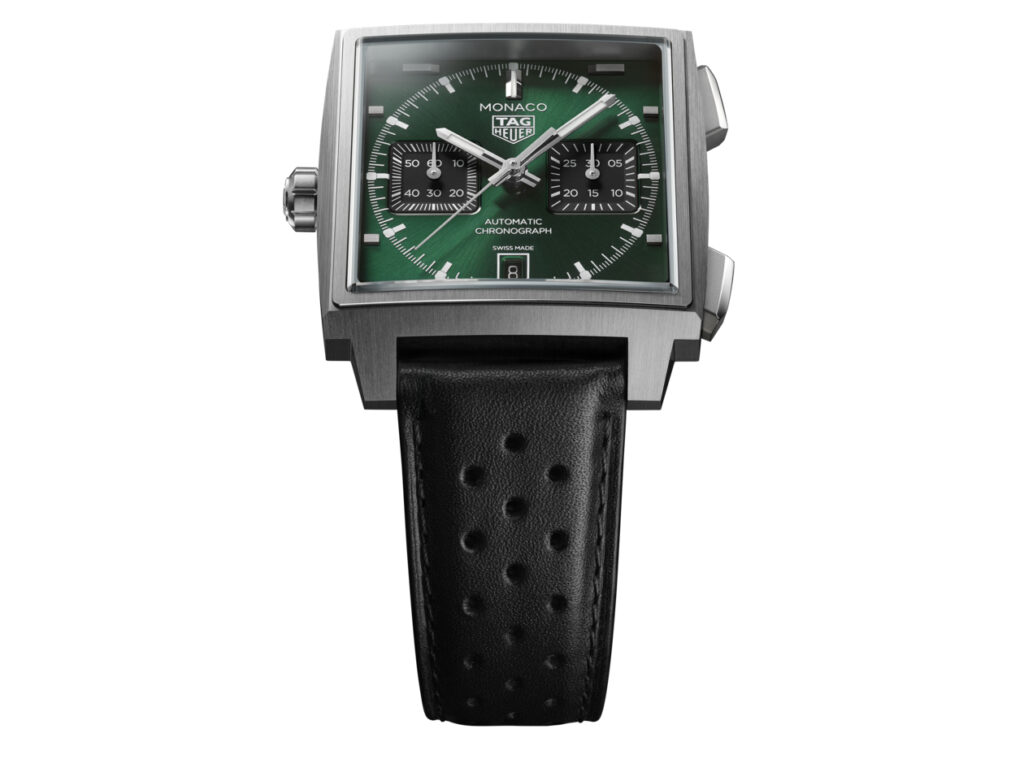
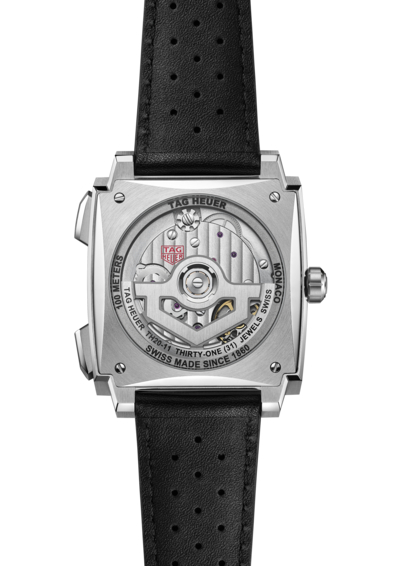
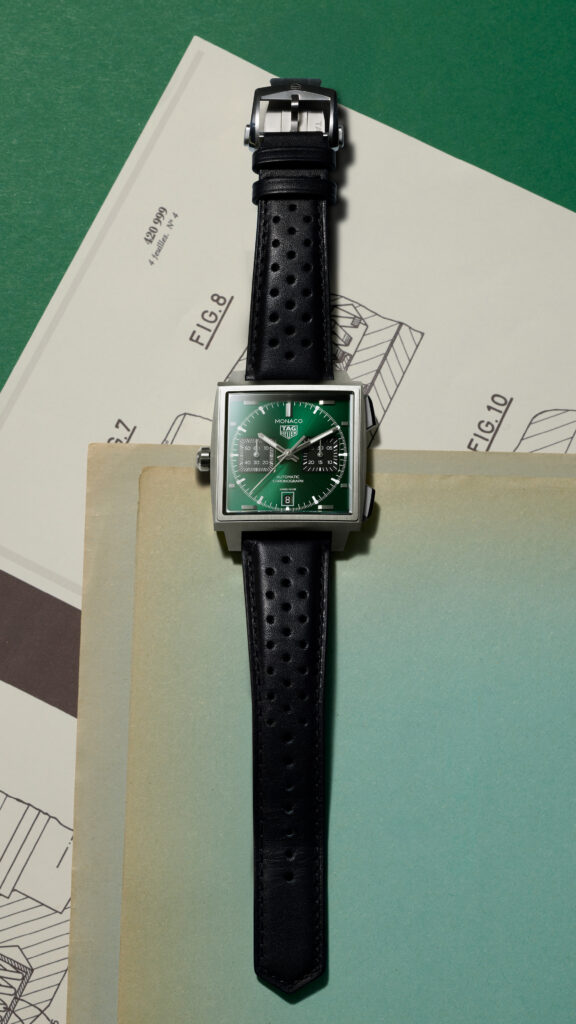
Fifty-seven years later, the brand is presenting a reimagined Monaco at Watches & Wonders that takes this precedent seriously. The 39-mm case is now crafted from Grade 5 titanium, an aerospace-grade material whose lower density significantly alters the watch’s feel on the wrist without compromising its structural rigidity. The edges, more pronounced than on post-1997 versions, are closer in style to the original Reference 1133. The case back abandons the flat profile: a round central section curves toward the edges, echoing a detail from the original that already improved the fit on the wrist—ergonomics conceived before the term even entered the standard watchmaking vocabulary.
The TH20-11 caliber
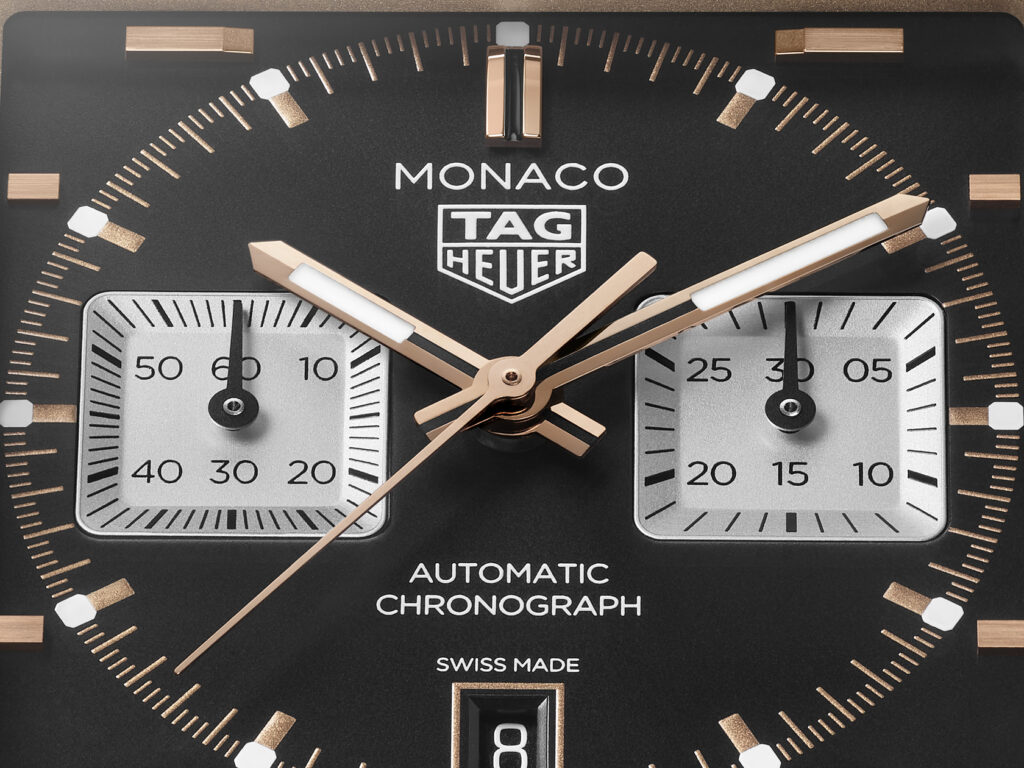
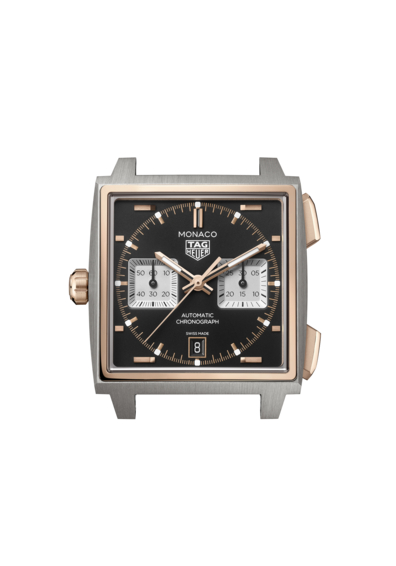
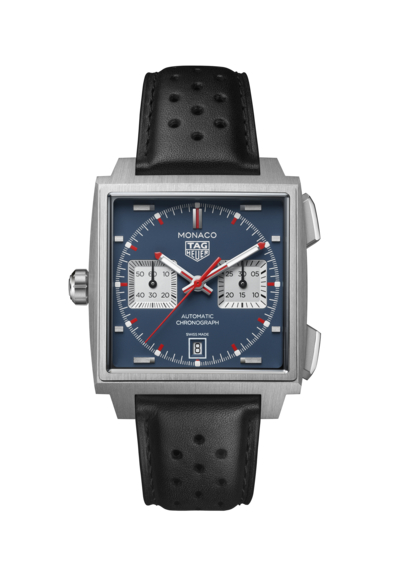
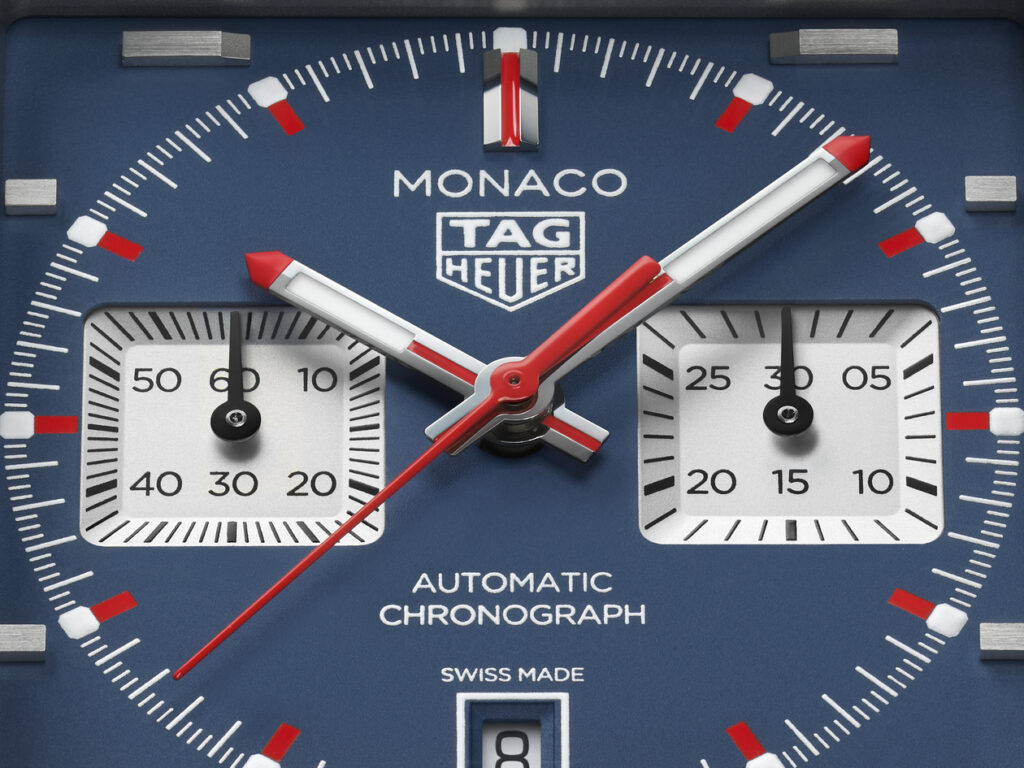
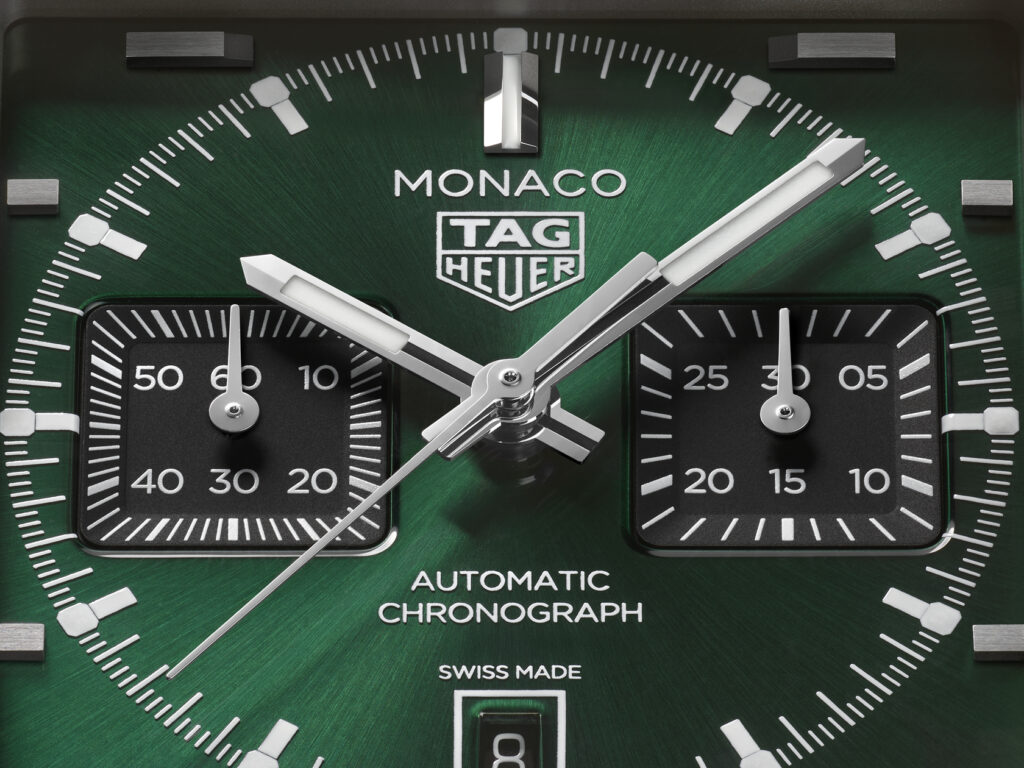
Developed from the TH20-00—the brand’s internal reference for its automatic chronographs—the new caliber has undergone several years of redesign by the teams in La Chaux-de-Fonds. Its bi-compax layout—subdials at three and nine o’clock, date window at six o’clock—explicitly pays homage to the original Caliber 11, whose name is reflected in the designationTH20-11. Power reserve: 80 hours. Manufacturer’s warranty: five years.
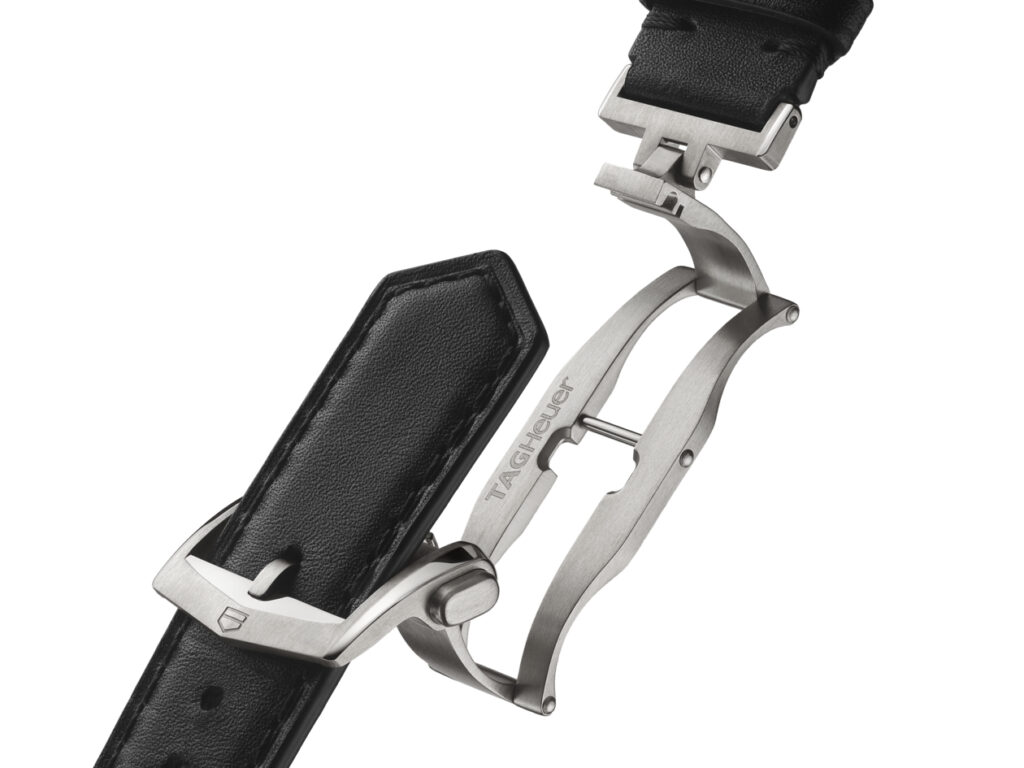
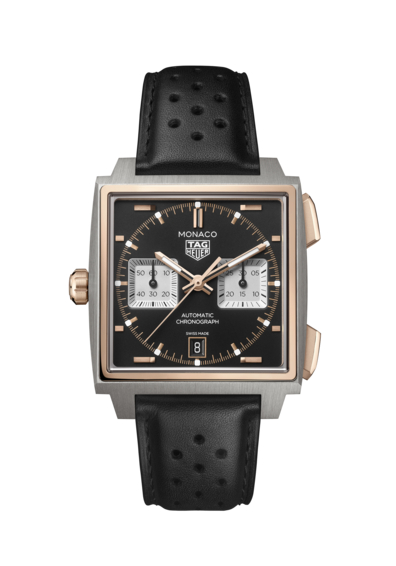
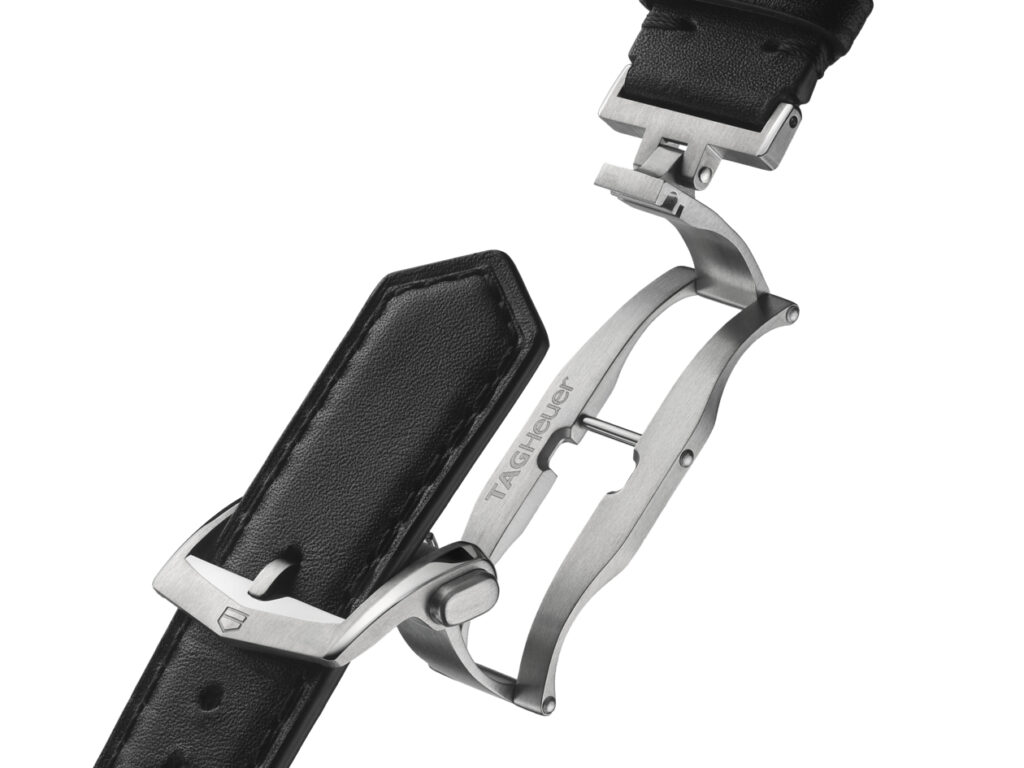
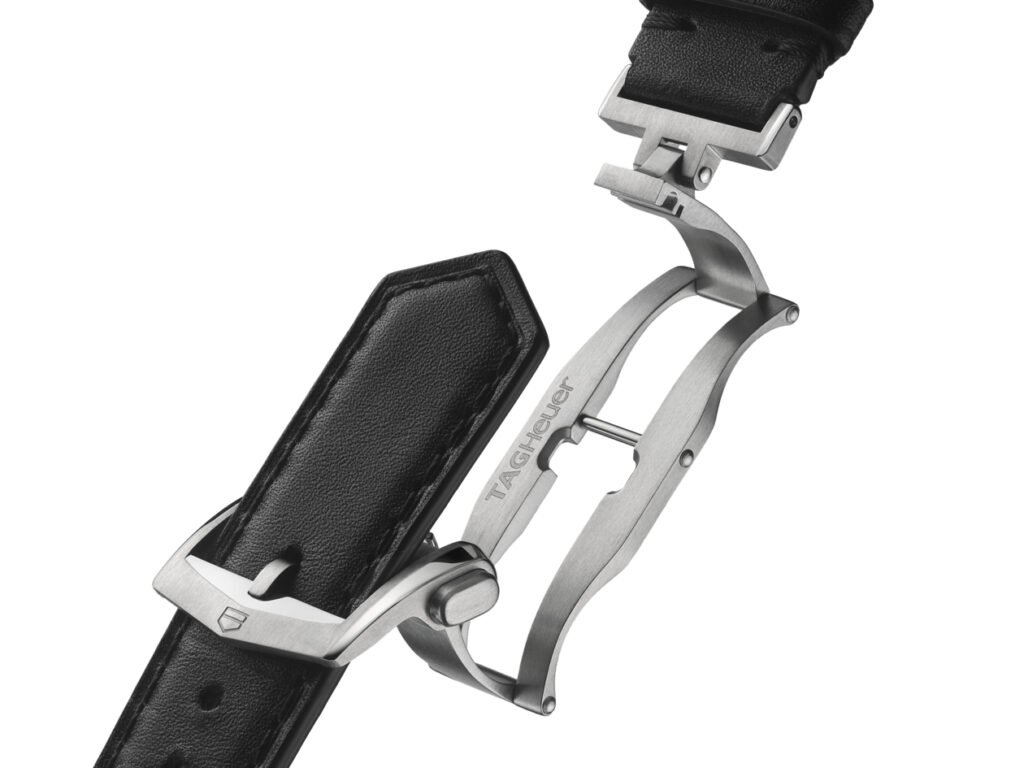
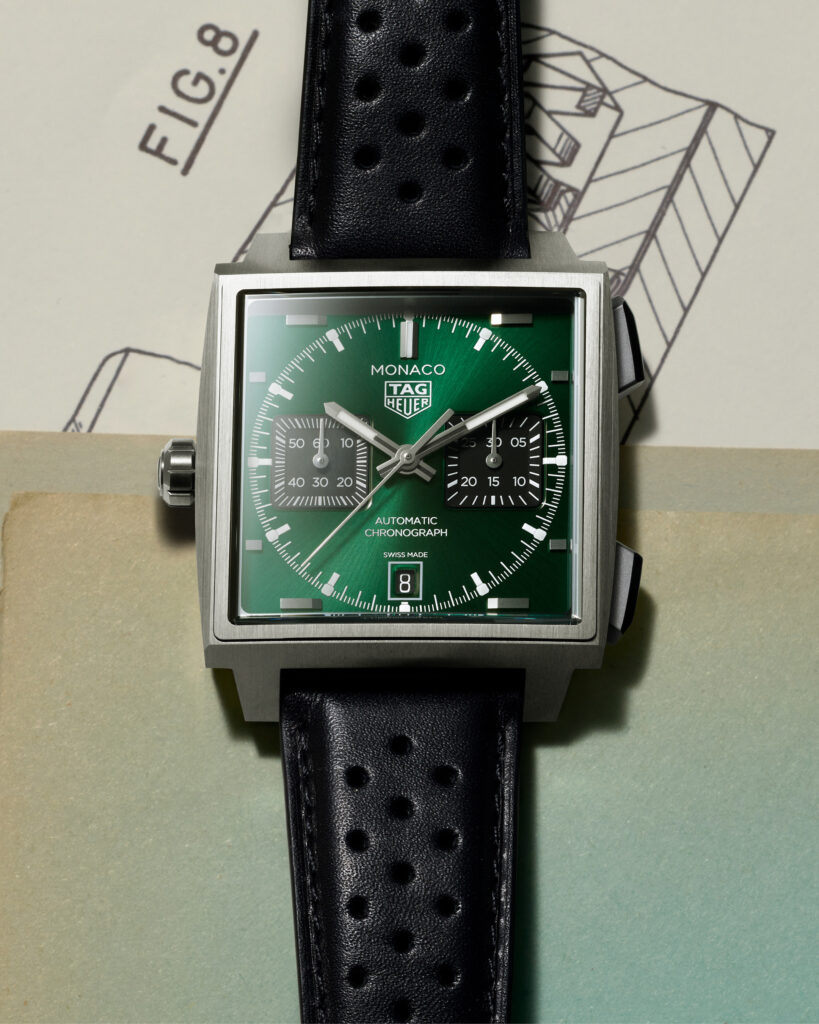
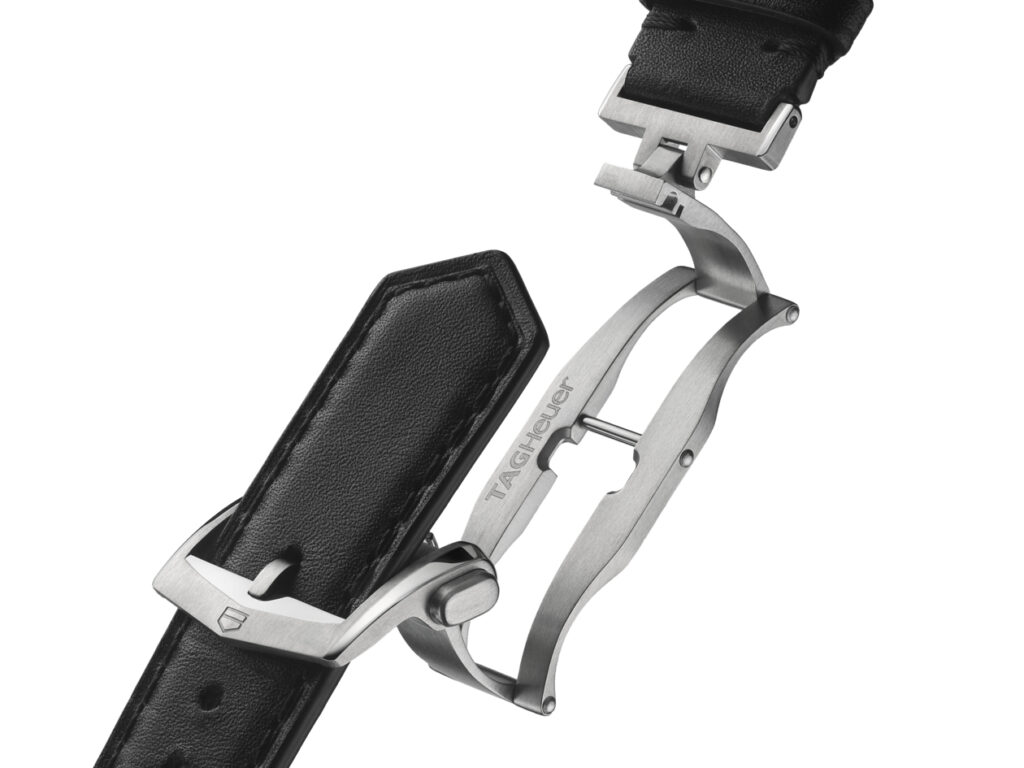
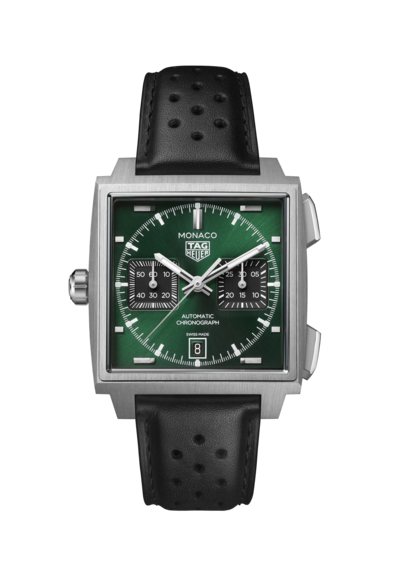
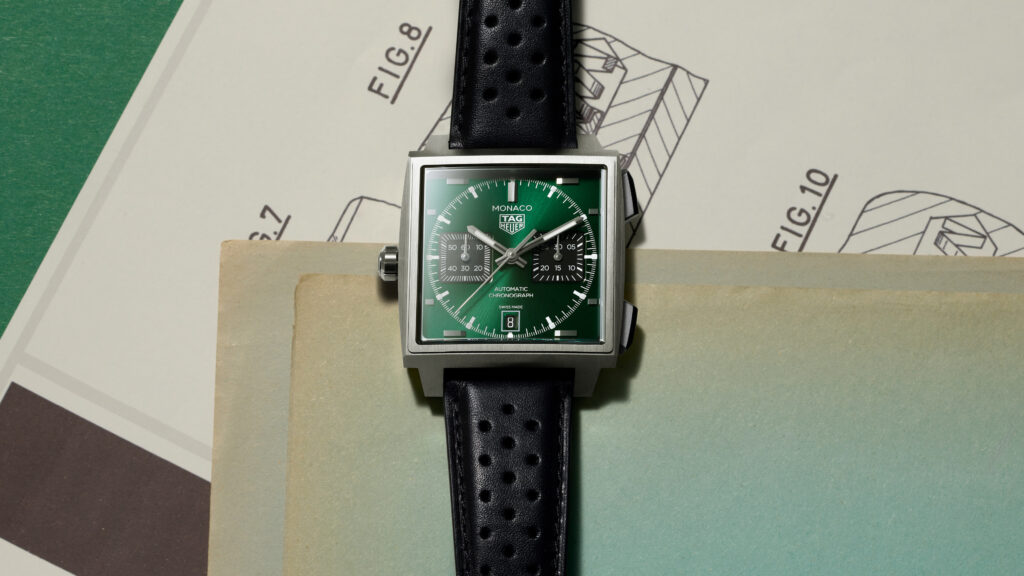
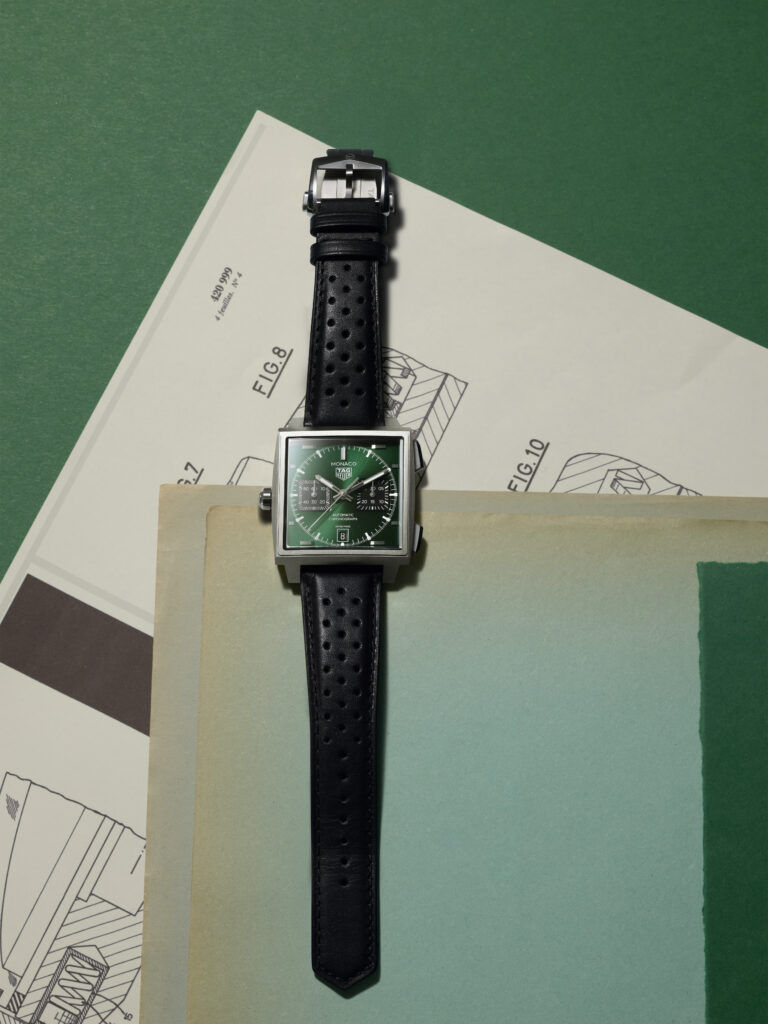
The opaline blue dial, inspired directly by the shade worn by Steve McQueen on the Le Mans racetrack in 1971, is offered alongside a brushed sunburst green dial that evokes the style of British Racing Green and a black version with a two-tone case in titanium and 18K rose gold. Each watch comes with a perforated calfskin strap and a Grade 5 titanium folding clasp. The two all-titanium models are available for 9,300 euros; the two-tone version for 13,000.
What stands out about this redesign is not so much the novelty as the method itself. Starting from the 1133 model to rediscover what successive updates had gradually watered down—the bold angularity, the crown stubbornly positioned on the left, and the case back that hugs the wrist—is part of a retrospective engineering approach that few watchmakers still have the discipline to see through to the end. The next logical step would be to submit the TH20-11 to independent chronometric certification: this caliber, which clearly claims a manufacture heritage, deserves to be evaluated based on objective criteria rather than solely on the prestige of its lineage.

Cette publication est également disponible en :

