
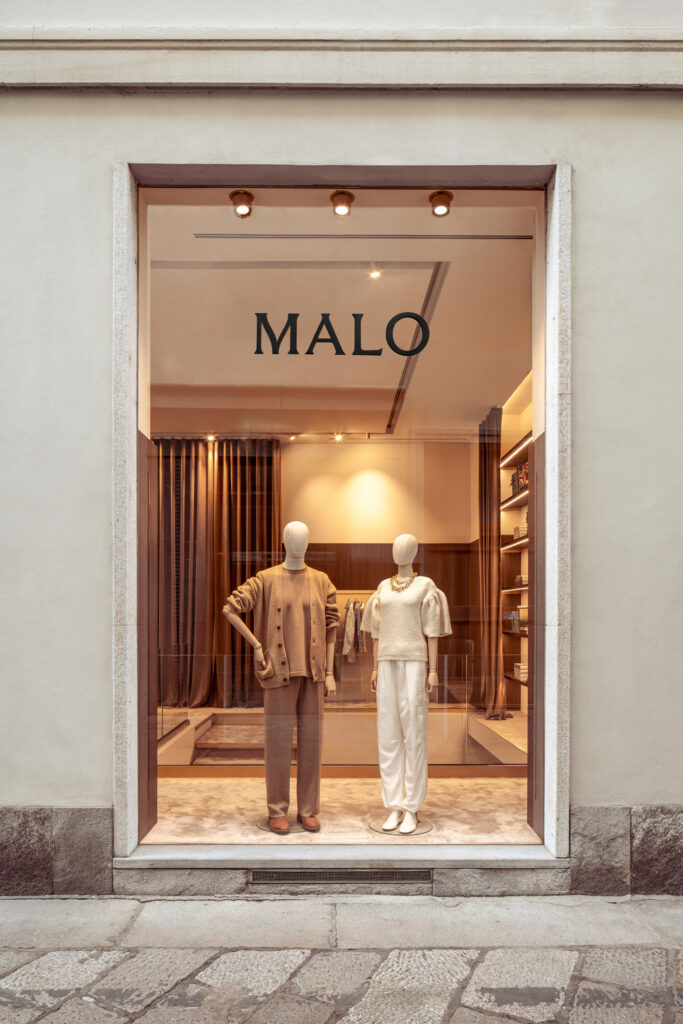
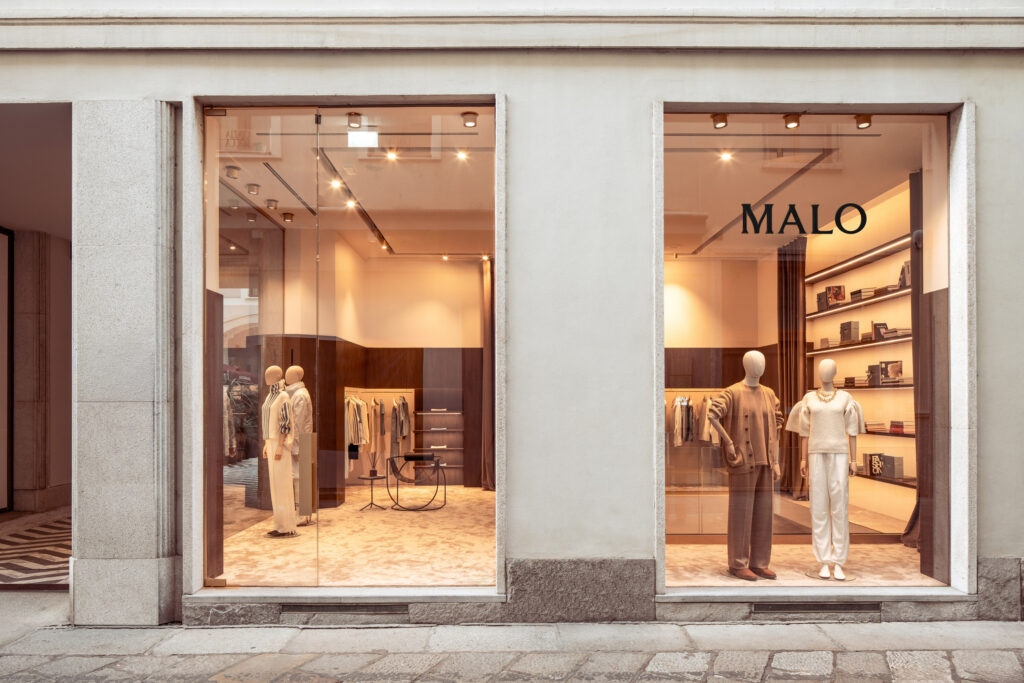
Malo isn’t opening a new store at 30 Via della Spiga. The Italian cashmere house is setting up a private apartment there—with no storefront and no visible display—a sign of luxury that withdraws from public view to make itself all the more desirable in private.
The address that stays out of sight
Via della Spiga is one of the most photographed streets in Milan’s fashion district, a never-ending parade of storefronts designed to be seen. Malo House Milan has taken the opposite approach: a space conceived “as an intimate Milanese apartment,” which brings together the collection, customer service, private appointments, and a membership program, without playing into the spectacle of a showy storefront.
This choice is no small matter on a street where competition is often measured in square meters of glass facing the street. By stepping away from the spectacle, Malo asserts that its audience no longer needs to be lured in from the sidewalk: they already know where to go—and why.
The Intelligence of Materials Over Flashiness
Developed in collaboration with SSStudio and Axiis, and complemented by a selection of Living Divani pieces, the space emphasizes an intelligent use of materials and measured proportions rather than decorative effect. It’s a way of translating into architecture what Malo has always championed in its pieces: the delicacy of cashmere and fine knit isn’t demonstrated through grand gestures, but revealed through touch.
This harmony between the product—discreet, tactile, durable—and the space that houses it—intimate, unpretentious—sets Malo House Milan apart from flagship stores that prioritize going viral.
Privacy as the New Frontier of Italian Luxury
This opening is part of a broader trend among independent Italian fashion houses, which are gradually trading mass appeal for more intimate, exclusive, almost confidential settings. At a time when many luxury houses are multiplying event-driven boutiques and high-profile collaborations, Malo is taking the opposite approach: reducing the number of people who walk through the door to enhance the quality of the experience offered to those who do.
An apartment without a storefront, on Milan’s most high-profile street: the paradox is embraced. It remains to be seen whether this deliberate discretion will become a model for other Italian family-run firms, or whether it will remain an isolated gesture, befitting a company that has never sought to be everywhere.
Cette publication est également disponible en :

