
Opened in 1929, the Hôtel Palais de la Méditerranée is entering a new chapter in its history by joining The Unbound Collection by Hyatt. Behind this announcement lies a broader question: how can the identity of a Riviera landmark be preserved while bringing it in line with contemporary standards of international hospitality?
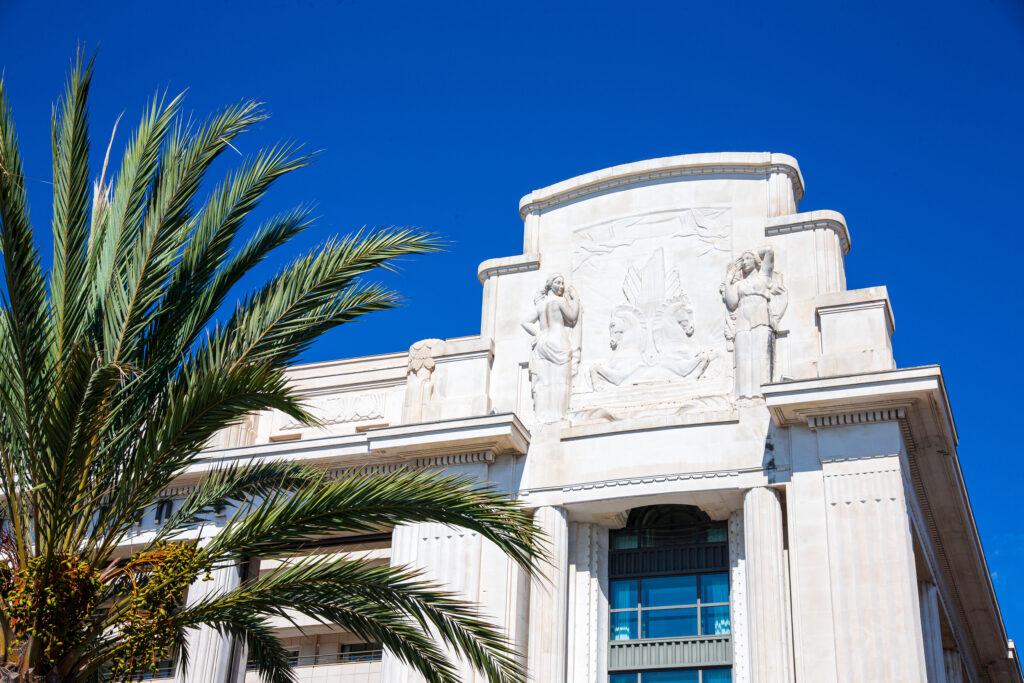
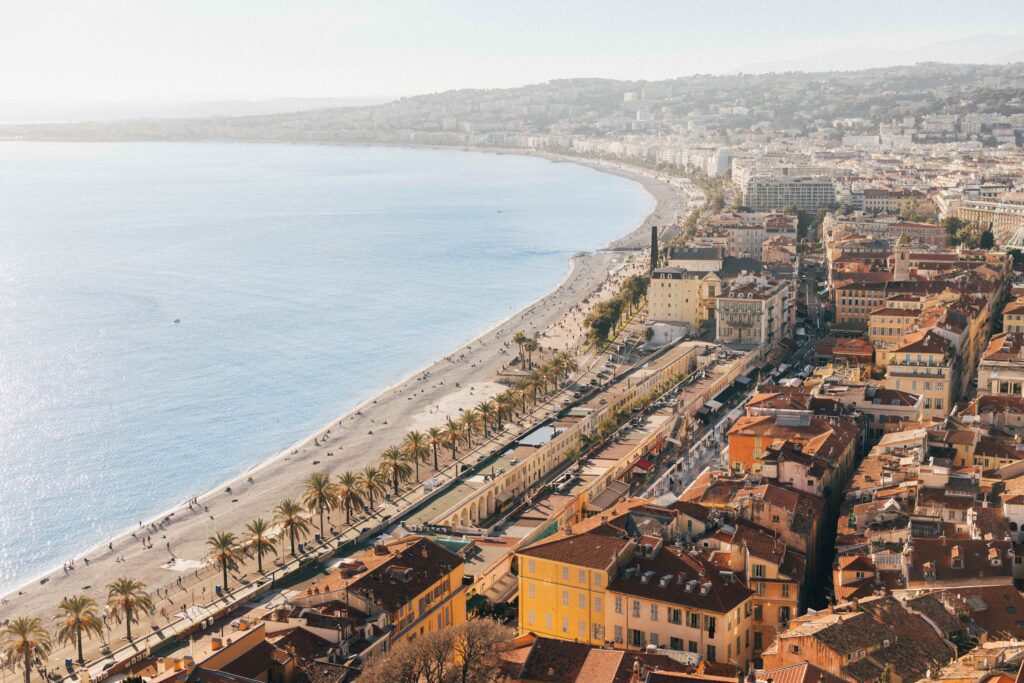
Overlooking the Baie des Anges, some buildings are more a part of the collective memory than of the urban landscape. The Palais de la Méditerranée falls into this rare category. For nearly a century, its Art Deco silhouette has borne witness to Nice’s transformations, the tourist seasons of the French Riviera, and the various visions of what the Riviera was meant to be.
The period in which it was built is significant. In 1929, the French Riviera had established itself as one of Europe’s major social hubs. Architects, artists, aristocrats, and wealthy travelers gathered there in an environment where architecture became a tool for self-expression. The Palais de la Méditerranée was born in this context, designed by architects Charles and Marcel Dalmas. Its façade, now protected as a historic monument, remains one of the most recognizable examples of Nice’s Art Deco style.
The challenge today, therefore, was not to rebuild a hotel, but to work with a heritage already rich in meaning.
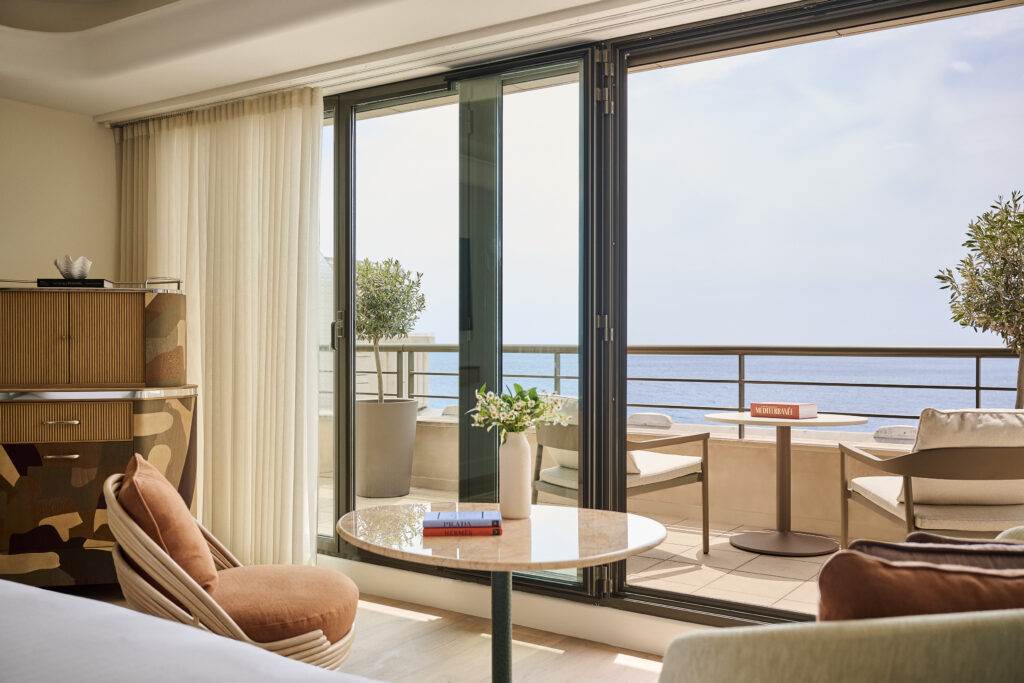
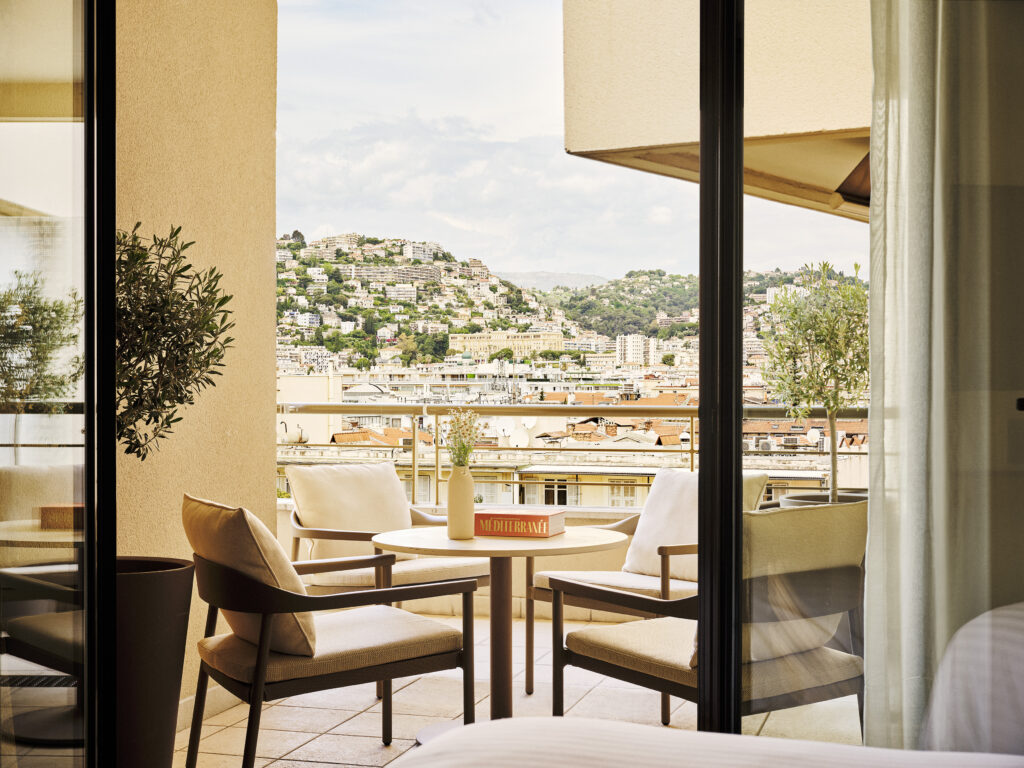
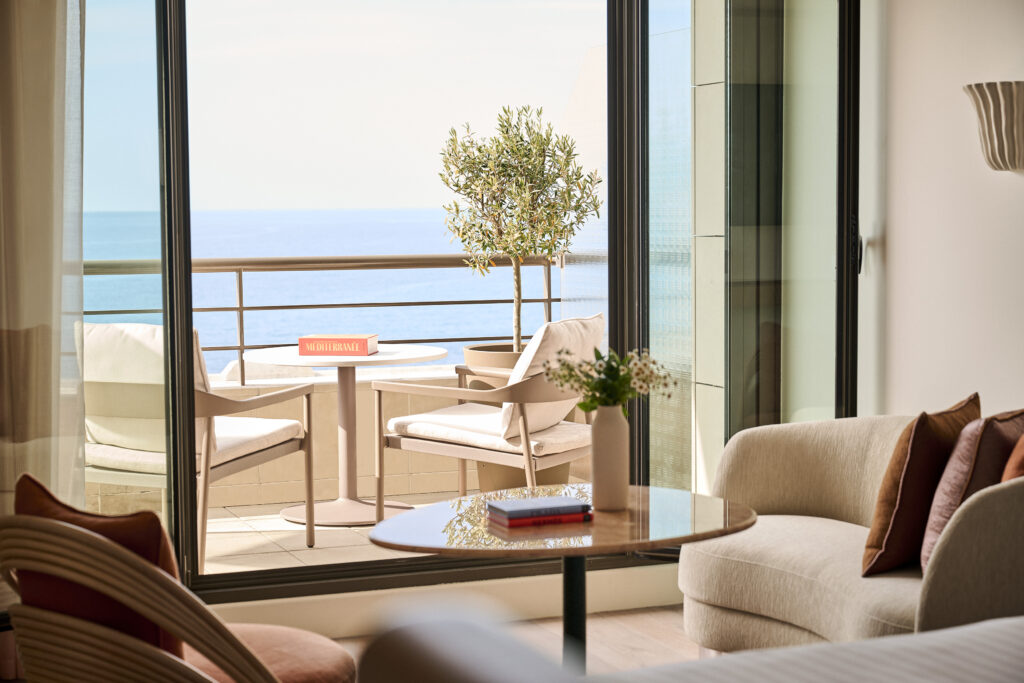
This is where interior designer Linda Boronkay’s work comes into play. Her approach does not consist of replicating the styles of the 1930s. Rather, she draws on the defining elements of the Mediterranean coastline—light, earthy tones, and the interplay between sea and sky—to extend the building’s spirit without resorting to historical reconstruction. The 173 rooms and suites—including 28 suites—feature curved lines, tactile materials, and a color palette inspired by the Côte d’Azur landscape.
This approach reflects a broader shift in the luxury hotel industry. For a long time, historic renovation involved preserving a setting steeped in comforting nostalgia. Today, the most talked-about hotels seek instead to maintain a dialogue between history and contemporary use. Authenticity no longer lies in recreating a bygone era, but in the ability to preserve the spirit of a place while adapting it to new uses.
The Palais de la Méditerranée is also part of a more subtle transformation of Nice itself. The city is no longer just a seaside destination. It is gradually developing a cultural identity in which heritage, gastronomy, architecture, and contemporary art serve as complementary driving forces. Its proximity to Old Nice, the Cours Saleya, and Place Masséna places the hotel within this urban continuum rather than as an isolated resort.
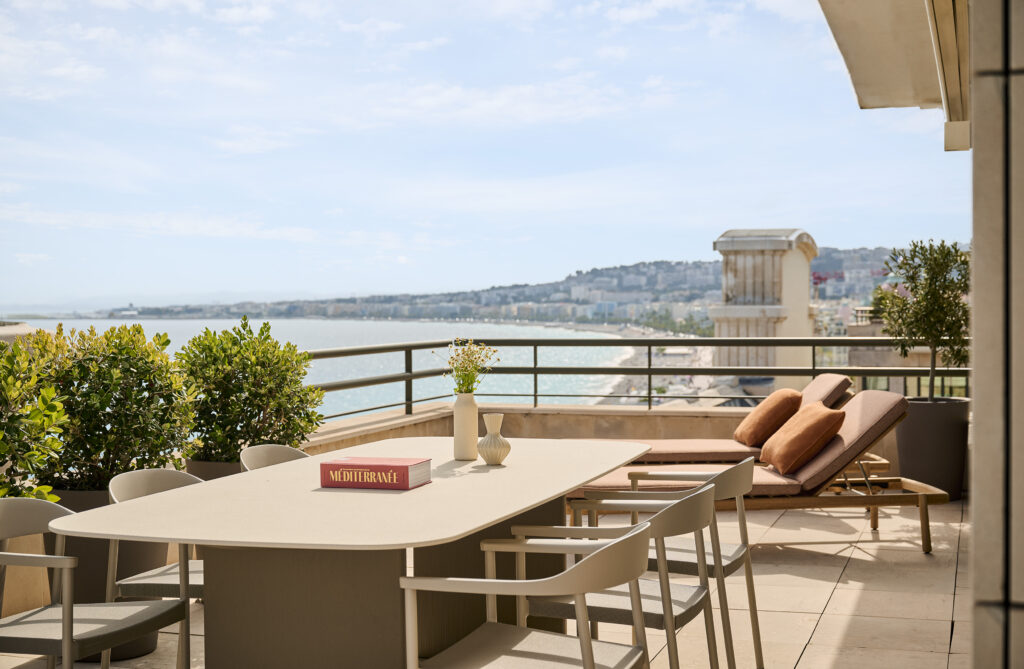
The ZOUZOU restaurant is part of this strategy. More than just a dining space, it draws inspiration from the Riviera’s historic spirit of socializing, when hotels were places for socializing as much as they were for lodging. The rooftop terrace extends this concept by using the landscape as its central design element: the bay becomes a permanent backdrop rather than just a view.
The other aspect—often less visible—concerns the economic role of these venues. With more than 1,700 square meters of event space and a ballroom capable of accommodating up to 936 people, the Palais de la Méditerranée is more than just a hotel. It serves as a venue for conferences, international events, and gatherings that contribute to the Côte d’Azur’s appeal year-round.
Details
- Art Deco façade designed by Charles and Marcel Dalmas and designated a historic monument.
- 173 rooms and suites, including 28 suites.
- Over 1,700 m² of event space.
- Riviera Ballroom: maximum capacity of 936 people in theater-style seating.
“Reimagining the Hôtel Palais de la Méditerranée is an extraordinary privilege. This building is deeply rooted in the very identity of Nice,” notes Julien Renetaud, the hotel’s general manager. Beyond the standard rhetoric, this remark highlights a real challenge: when a building transcends its original purpose to become an urban landmark, every transformation involves cultural preservation as much as it does the hospitality industry.
As major international hotel chains seek out locations with a unique history, the Palais de la Méditerranée appears less as a new venture than as a revival. In an industry often tempted by uniformity, the value of certain hotels lies precisely in their ability to remain deeply connected to their local area. Nice now has yet another reason to remind us that a facade can sometimes tell the story of nearly a century of Mediterranean history.
Cette publication est également disponible en :

