
Stuttgart is neither Zurich nor Munich. The capital of Baden-Württemberg is a city of engineers, automakers, and precision industries—Porsche and Mercedes have established their museums there as if planting a flag. The fact that a watch retailer founded in 1888 in Lucerne is opening its ninth German boutique there says something about how the watch market views the European landscape today.
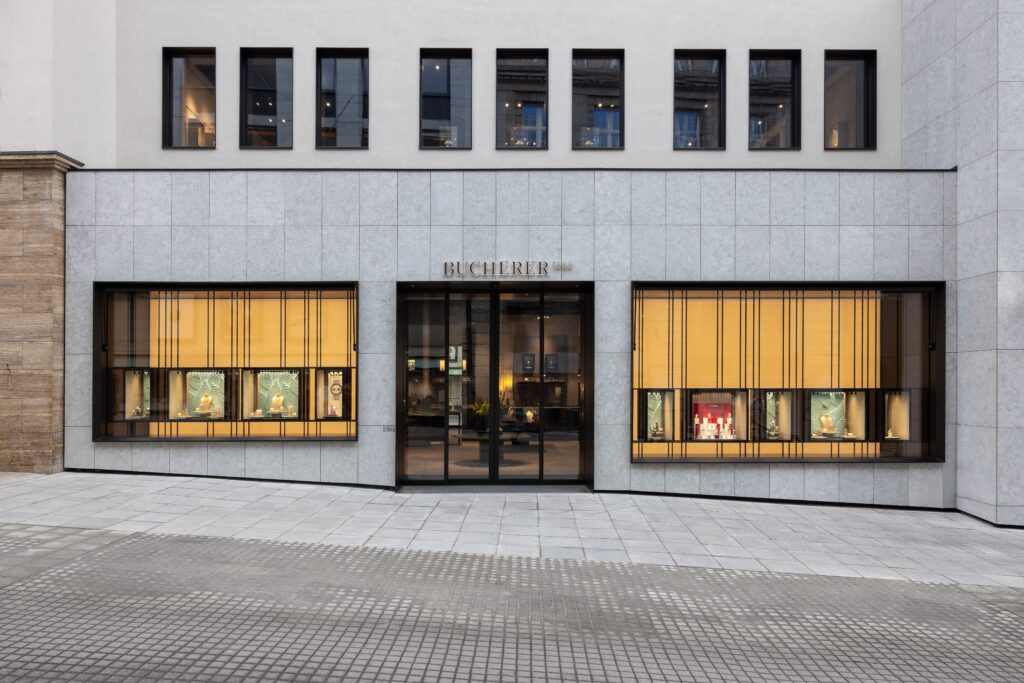
Bucherer 1888 opened on May 18, 2026, at 14 Stiftstrasse, just a stone’s throw from the collegiate church in the historic center. The location is no coincidence: the building’s large floor-to-ceiling windows frame a direct view of the Stiftskirche, a 15th-century Gothic monument. This dialogue between the new structure and the ancient stone is less a matter of chance than a deliberate positioning strategy.
Cubic architecture in a city of factories
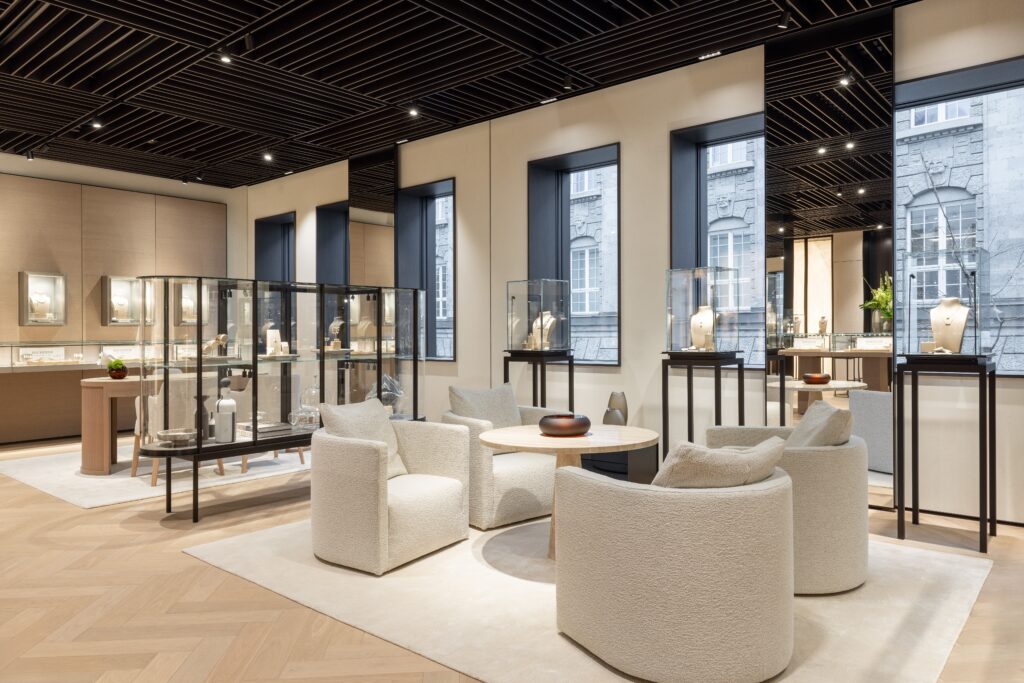
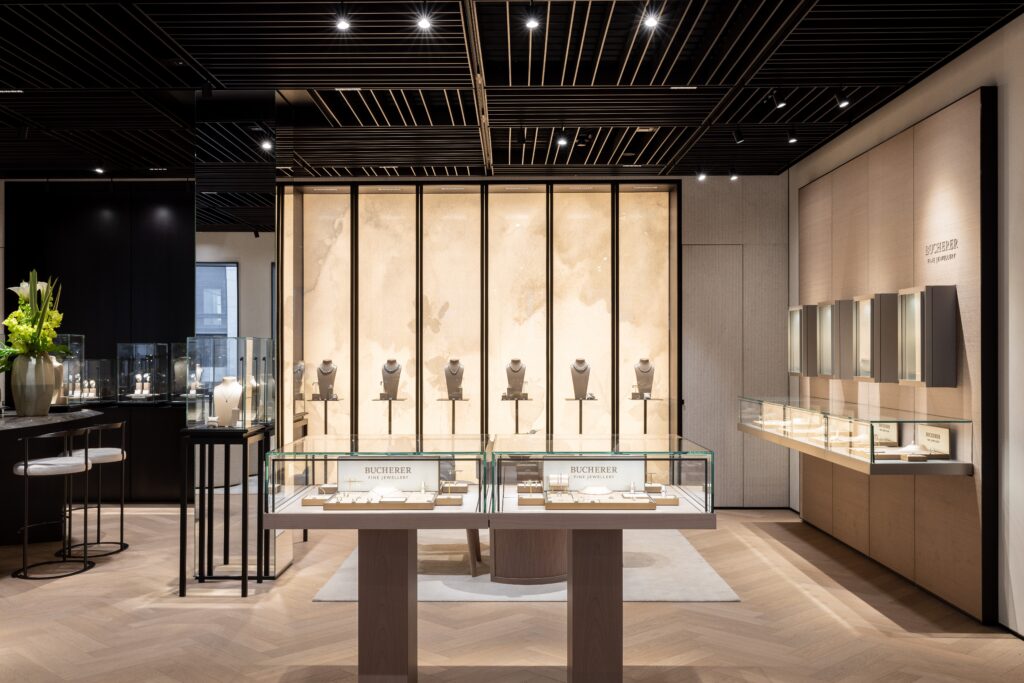
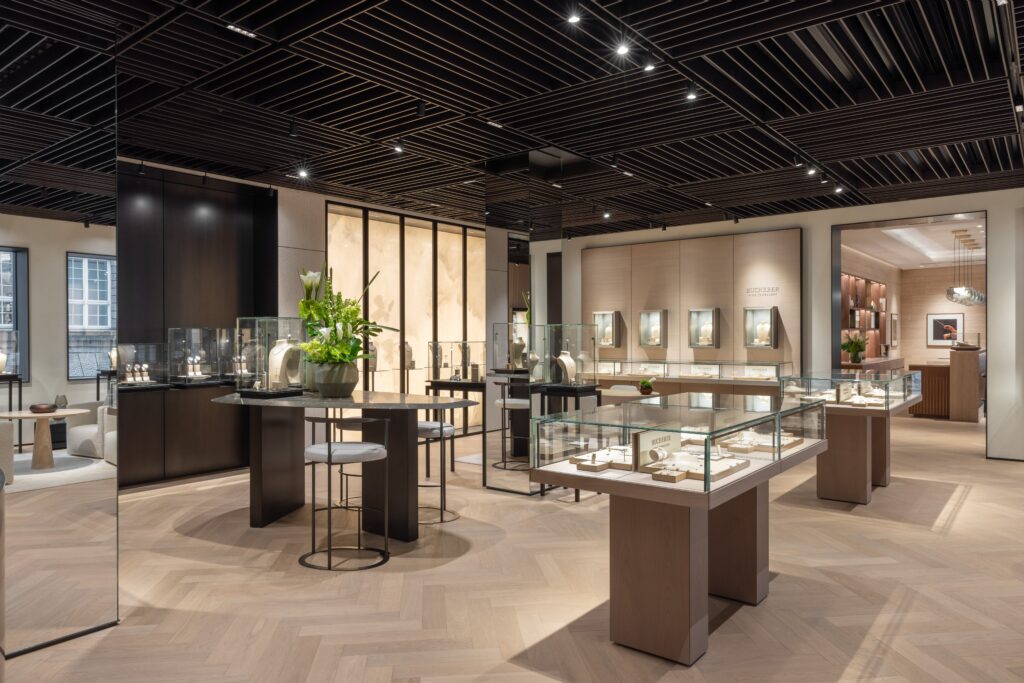
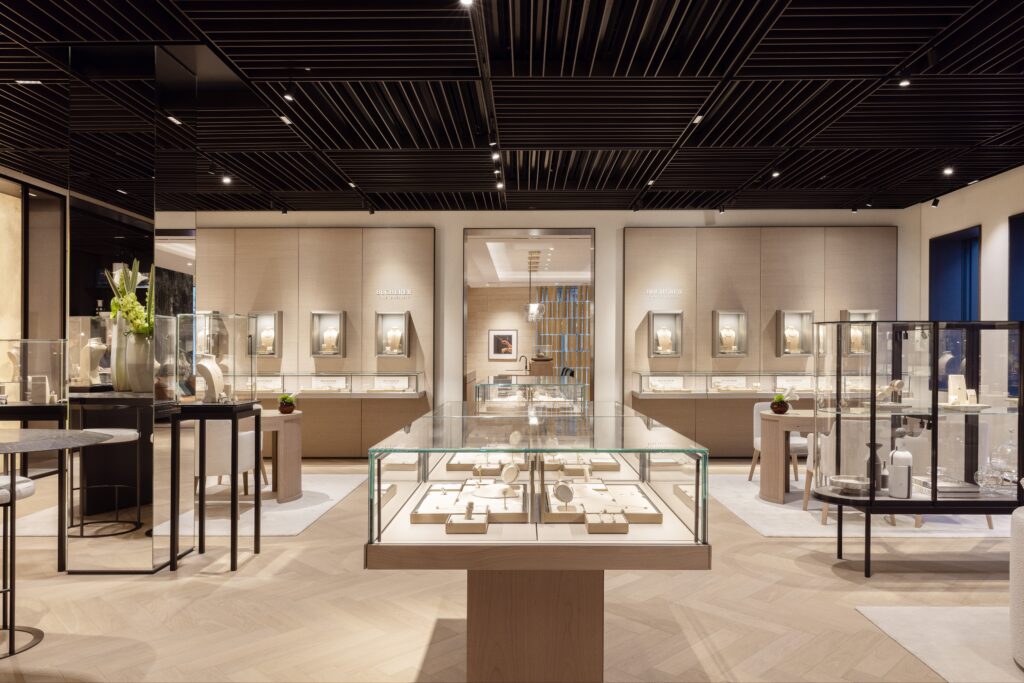
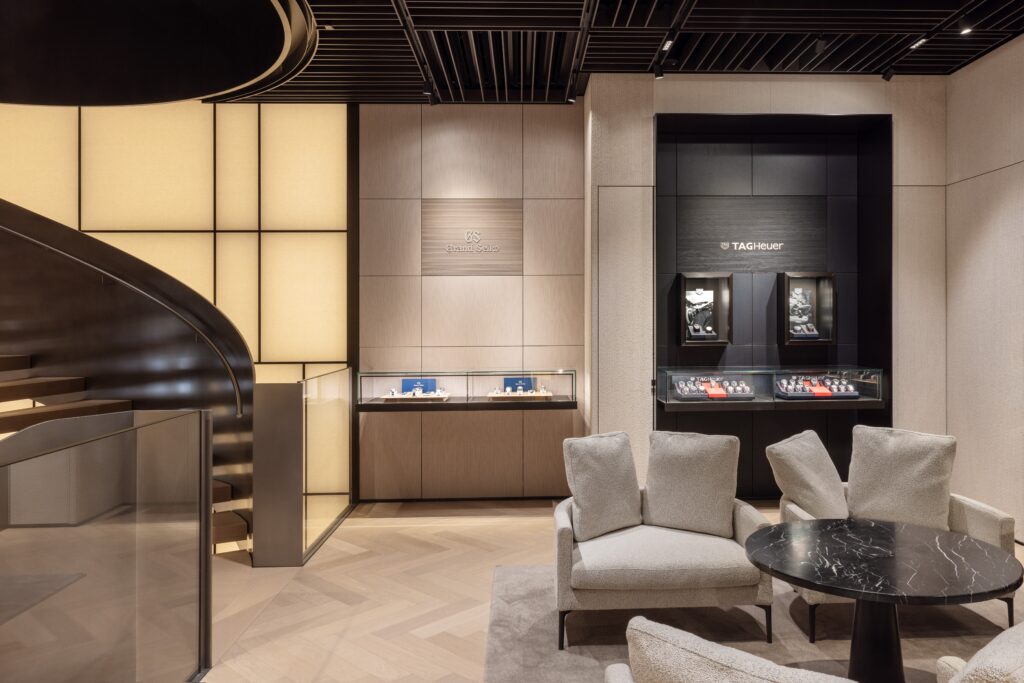
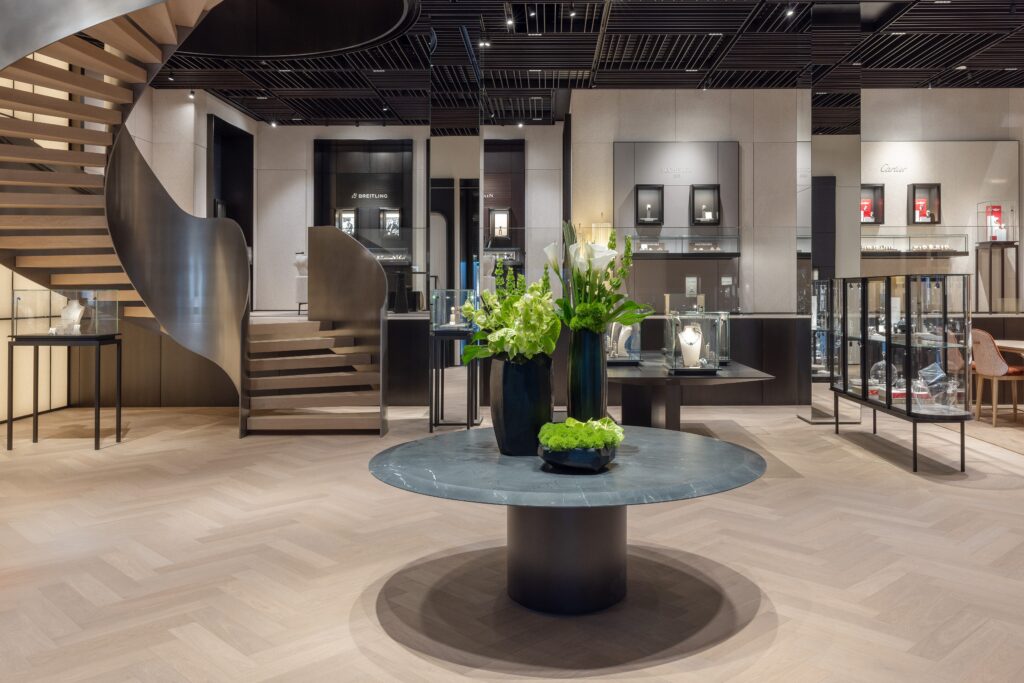
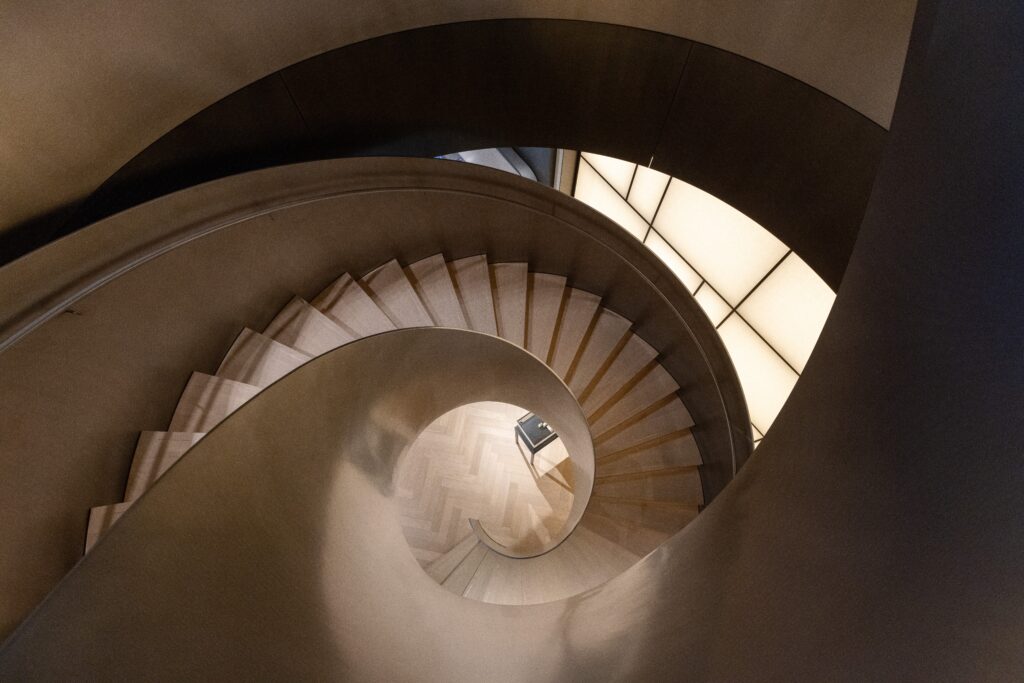
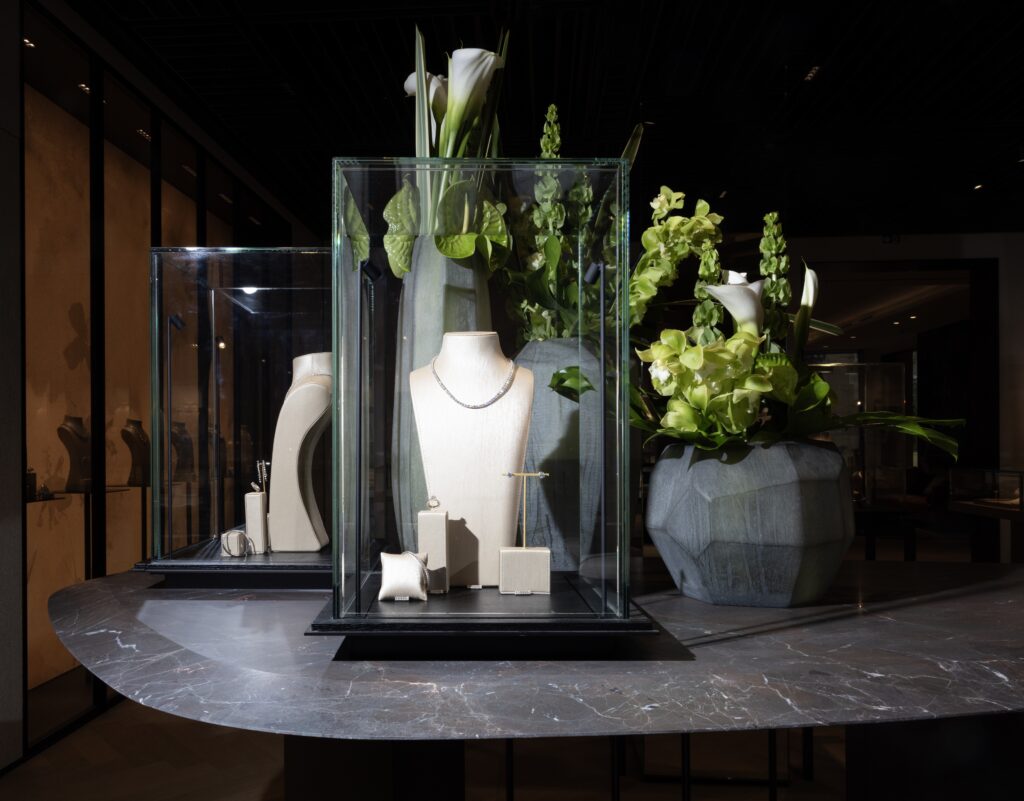
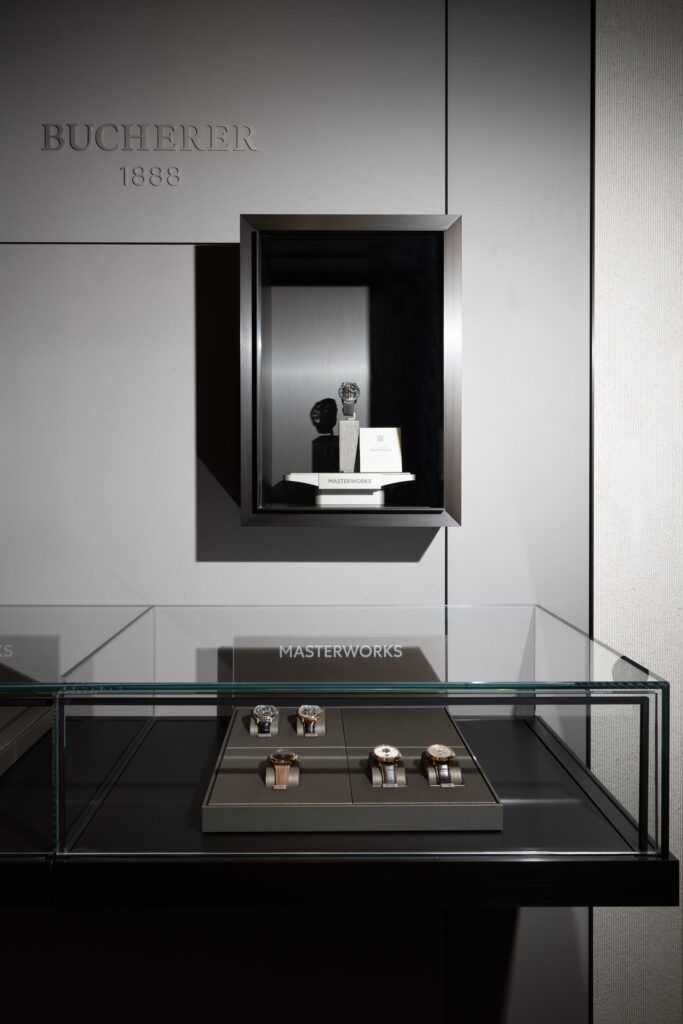
The company commissioned the Milan-based firm Lissoni & Partners to design the building. The result is a two-story cube-shaped building whose glass facade neither blends into the background nor dominates the surroundings. In Stuttgart, where the history of industrial design is ever-present, this choice of a geometry that is confident yet unostentatious speaks the same language as the permanent collections of the Staatsgalerie. Lissoni builds with materials that speak for themselves: light-colored wood floors, dark marble side tables, and a sculptural metal staircase serving as a connecting element between the two levels. There is no narrative decor, no nostalgic reference to Switzerland or traditional watchmaking. The space functions through proportion and light.
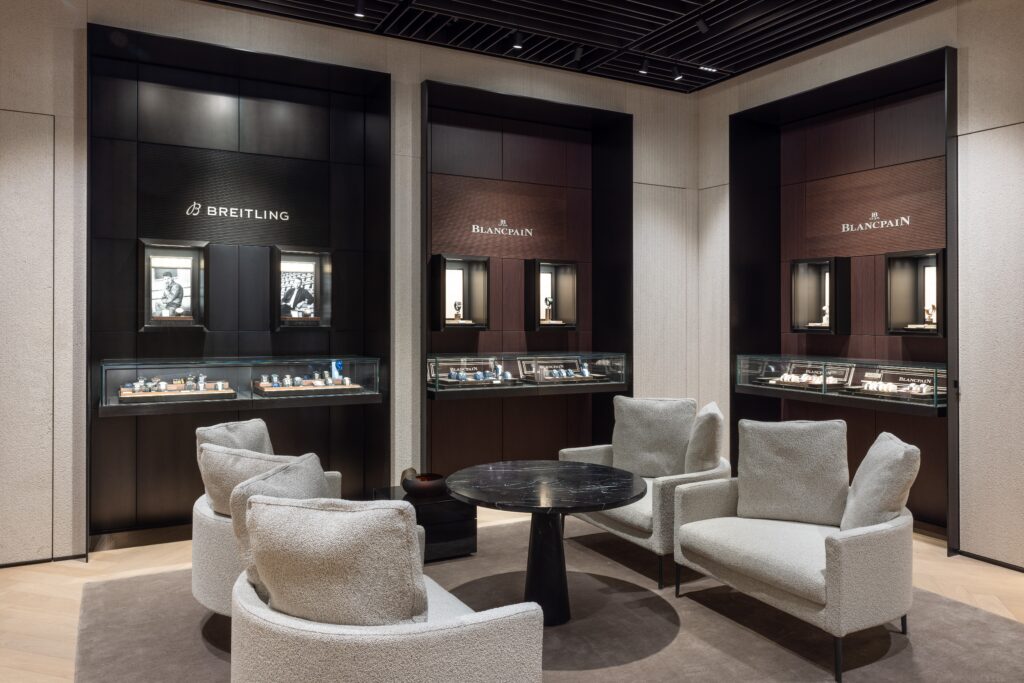
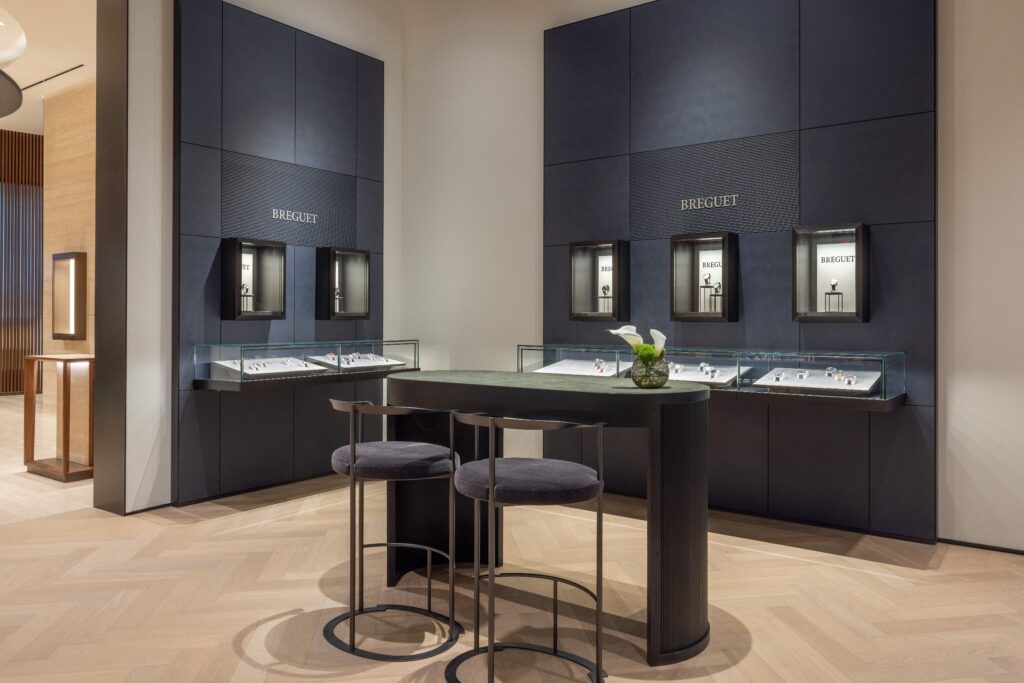
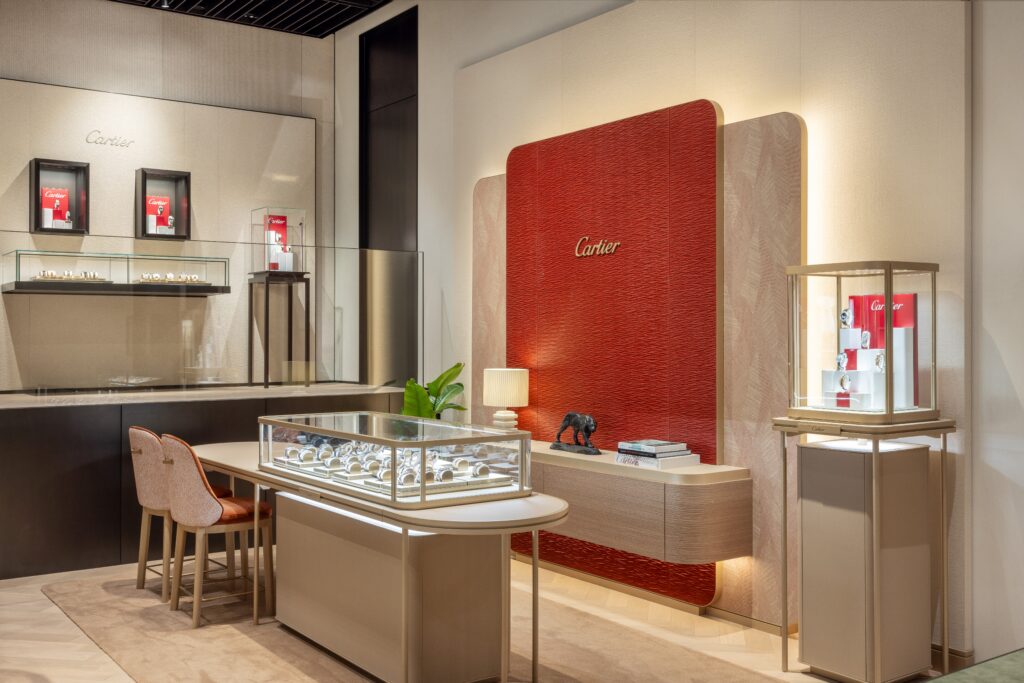
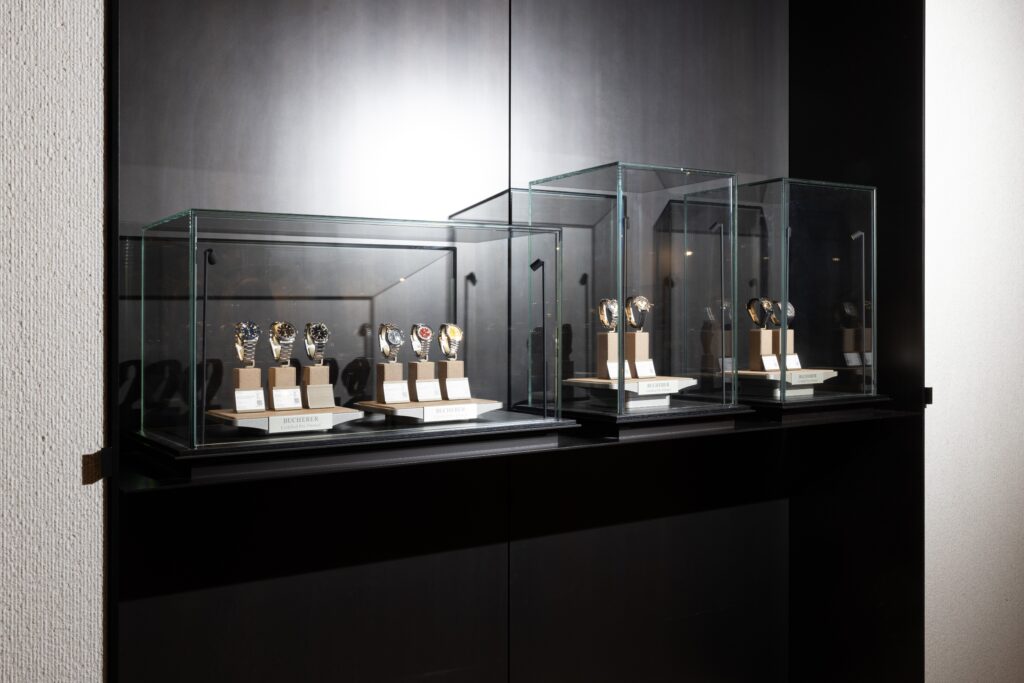
490 m² spread over two floors. On the ground floor, a long central table serves as the focal point for the watch display—Cartier and Tudor have dedicated spaces here, while Breguet blends into the overall layout. The mezzanine, visible from the entrance through a glass railing, houses Blancpain, Breitling, Grand Seiko, and TAG Heuer in a more intimate setting, complete with a consultation lounge. A metal staircase connects the levels without creating a visual barrier.
The first floor as a silent selling point
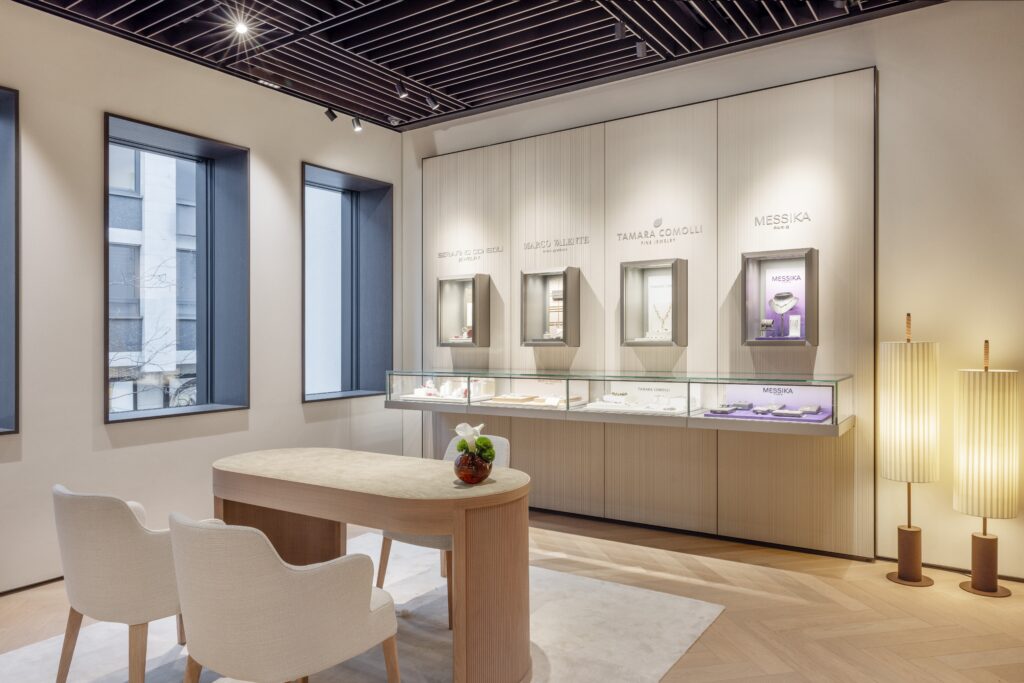
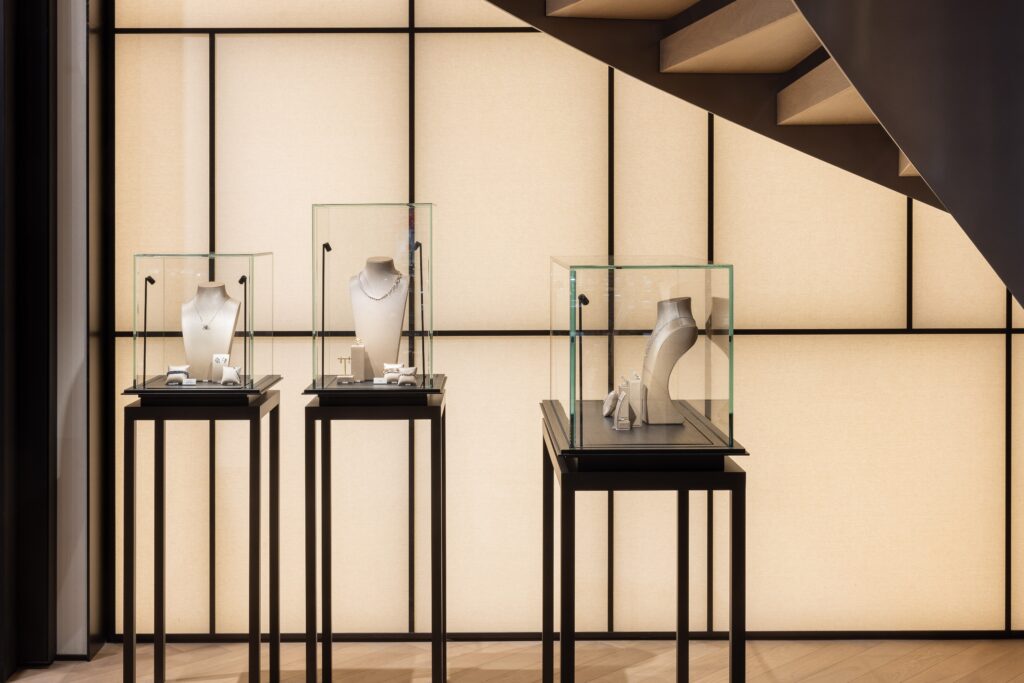
The jewelry section occupies the entire first floor. Bucherer made a specific lighting choice here: natural light streams in through large windows that extend all the way to the ceiling, framed by sliding mirrors that allow customers to try on pieces from different angles. This is no trivial detail—jewelry is sold by the light, and designing a space specifically for this purpose requires a significant investment. The pieces on display combine Bucherer Fine Jewellery’s own creations with those from brands such as Messika, Serafino Consoli, Marco Valente, and Tamara Comolli.
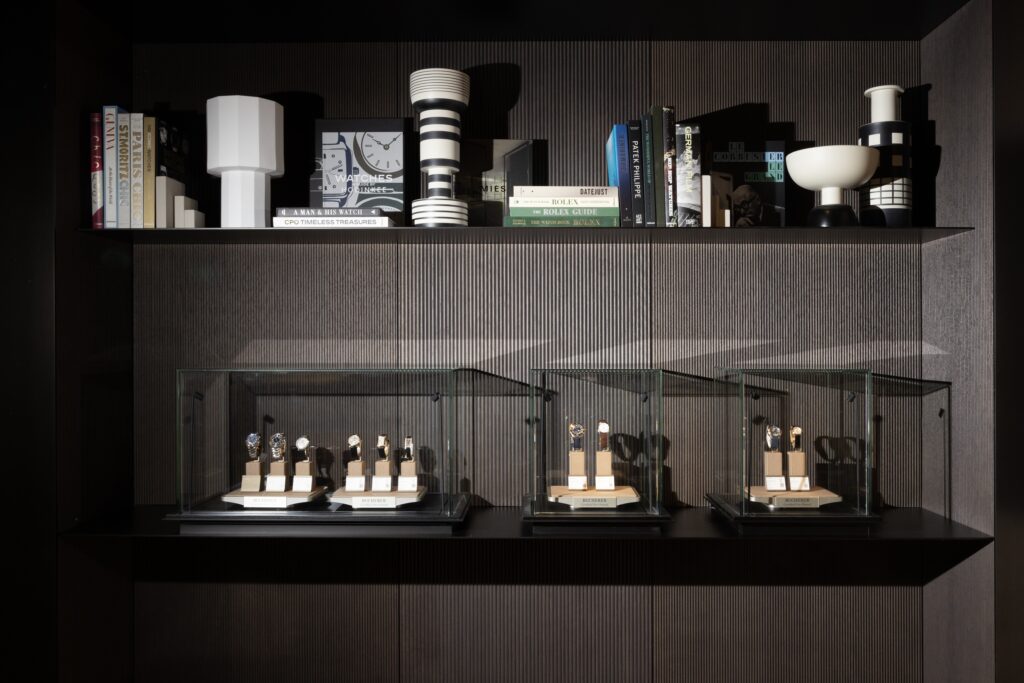
The Rolex space, meanwhile, spans two floors and features a distinct design concept: walnut wood, bronze-colored brass, and carefully calibrated lighting accents. A green marble bar—the brand’s signature color—occupies the first floor. Finally, a Certified Pre-Owned lounge features an area dedicated to Rolex models authenticated directly by the manufacturer—a segment that has become central to Bucherer’s strategy since the group structured its pre-owned timepiece offering as a standalone line.
What Stuttgart Says About the European Market
Bucherer currently operates 32 locations in Europe—sixteen in Switzerland, nine in Germany, and locations in Vienna, Paris, Copenhagen, and London. The 2018 acquisition of the American watchmaker Tourneau transformed it into the world’s leading retailer of watches and jewelry, with 17 additional boutiques in the United States and a flagship store in New York.
In this context, the opening in Stuttgart is no ordinary expansion. Southern Germany is a market of discerning consumers in the truest sense—a clientele that buys watches the same way it buys cars: as connoisseurs, with well-defined technical expectations. Placing a Lissoni-designed glass cube across from the Stiftskirche in this city is a bet that luxury watchmaking can establish a local foothold without having to masquerade as a watch museum.
It remains to be seen whether Stuttgart will confirm or refute this assessment. Germany is the only major European market where the luxury watch industry has long coexisted with a culture of rigorous value for money. Bucherer already has eight locations there. The ninth is the one that showcases its architectural ambition.
Cette publication est également disponible en :

