
On Rue Ramey, away from the picture-perfect terraces, an Art Deco dining room changes its decor every three and a half months. The menu follows suit. Léo Giorgis doesn’t just put together a menu here; he responds to the walls.
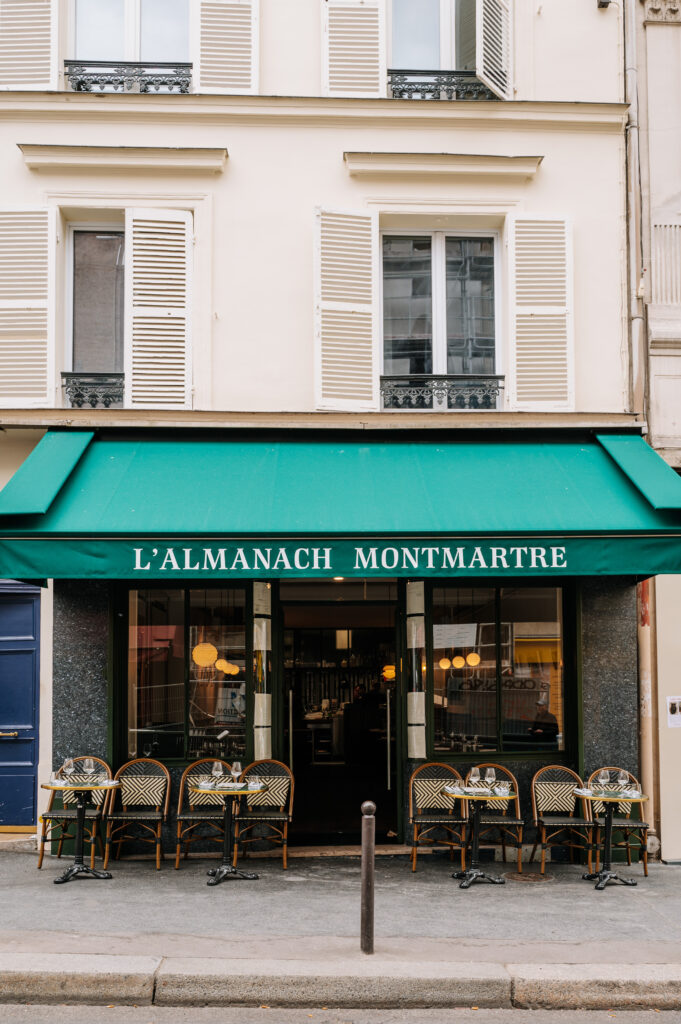
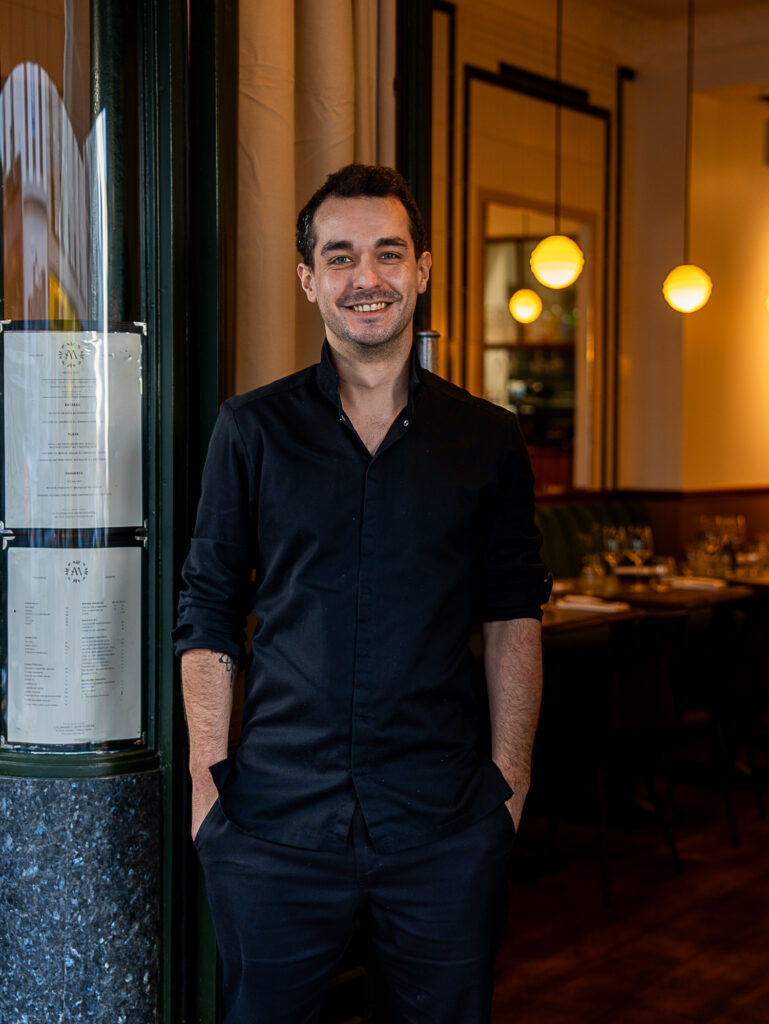
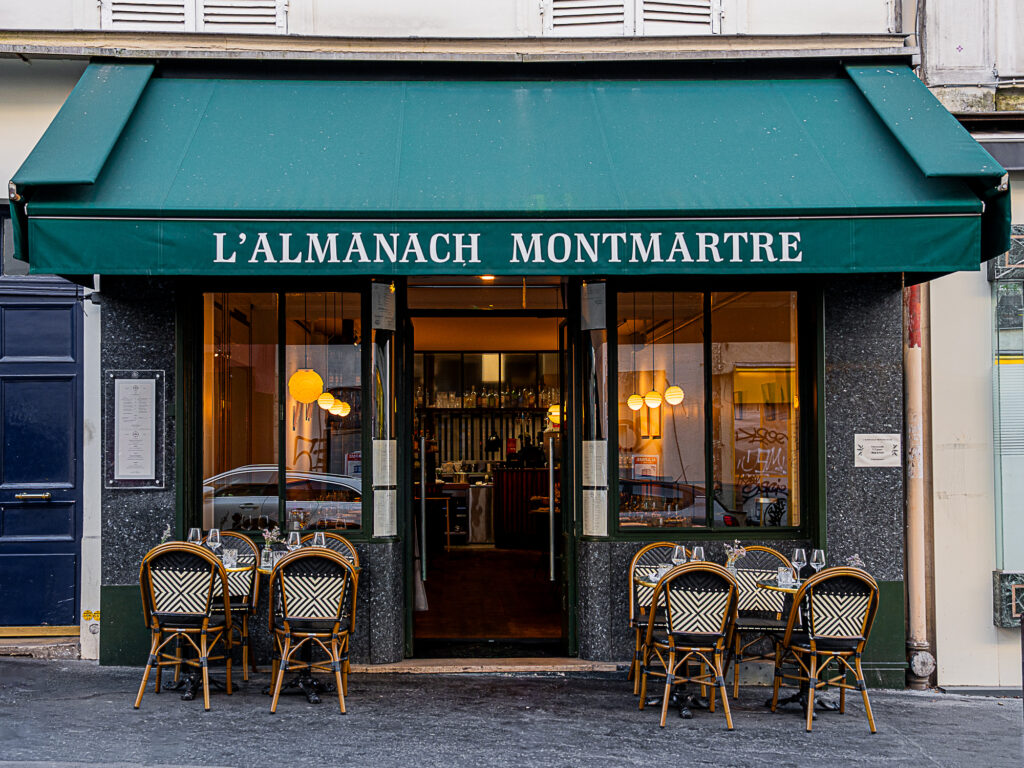
You have to leave the top of the Butte—with its tourist-oriented painters and its funicular—and head back down toward the bustling 18th arrondissement to stumble upon the Almanach. The address—35 Rue Ramey—is not advertised. It reveals itself, which, in a neighborhood that sells mostly its own souvenirs, is almost a statement of intent. Léo Giorgis opened his restaurant there at the very end of spring 2024, after cooking at Silencio des Prés and the Palais de Tokyo. It is this last stage that stands out most: a cuisine that learned to thrive in the midst of contemporary art, alongside the galleries, amid the bustle of exhibitions. L’Almanach builds on this experience, but on its own terms.
A place with a mind of its own, on a busy street
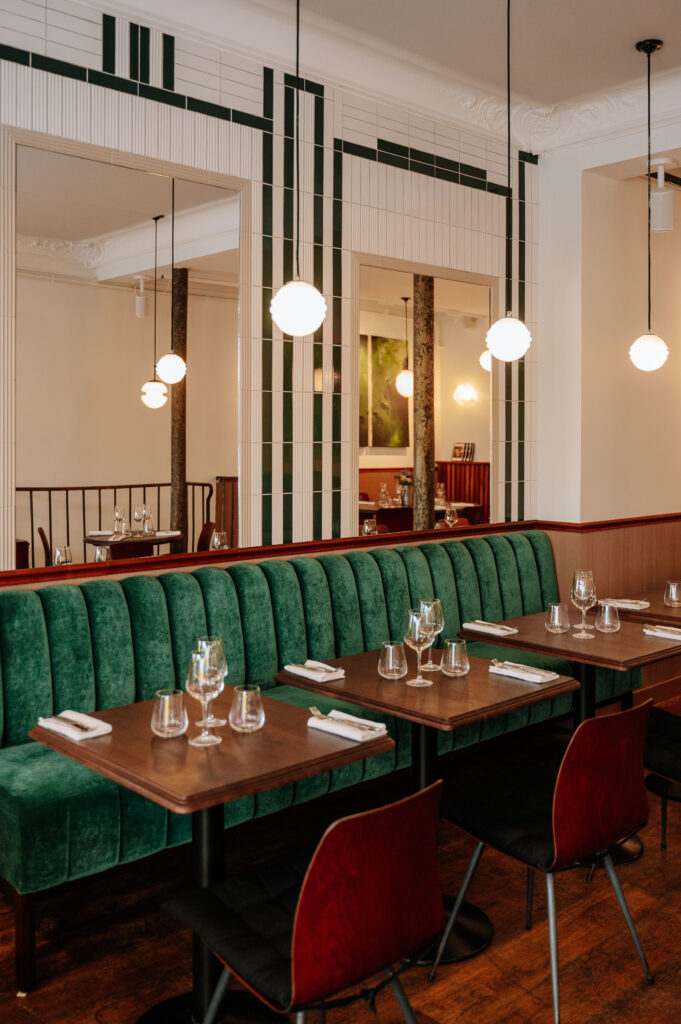
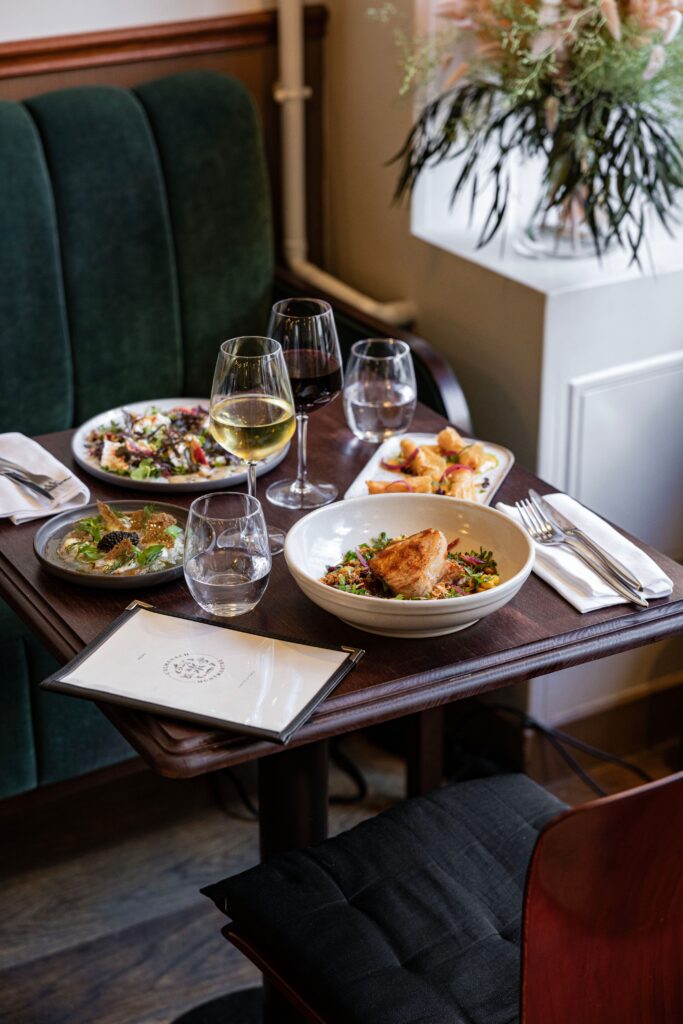
The space embraces an Art Deco aesthetic: clean lines, warm materials, and soft lighting. Yet it feels nothing like a museum. The space feels like a studio set up for service, and that is precisely the turning point. Where most Parisian restaurants hang a few paintings to dress up a bare wall, L’Almanach flips the script. The artwork doesn’t merely decorate the kitchen; it brings it to life. Every three and a half months, an artist takes up residence, covers the walls with their pieces, and leaves, making way for the next one. The decor is never set in stone. It’s on permanent hold.
The current artist is Sylviane Brandouy. Her presence will give the space a character that the next artist will erase. This planned obsolescence of the decor—rare in a profession that tends to dream of lasting legacies—compels the venue to adopt a form of humility: here, nothing is permanent, neither on the wall nor on the plate.
The map as a display
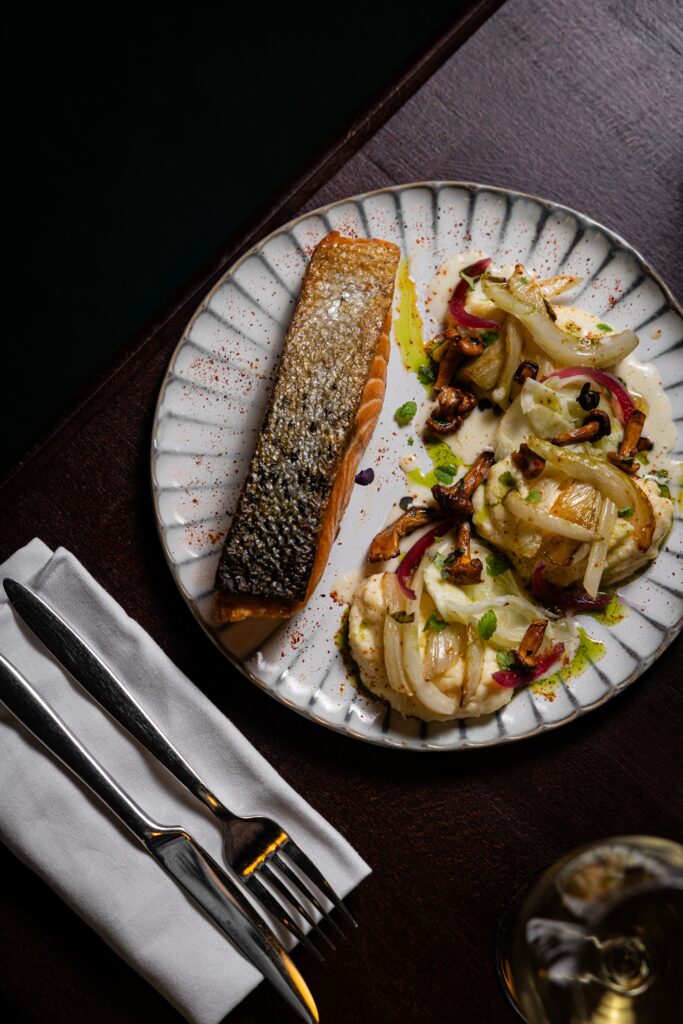
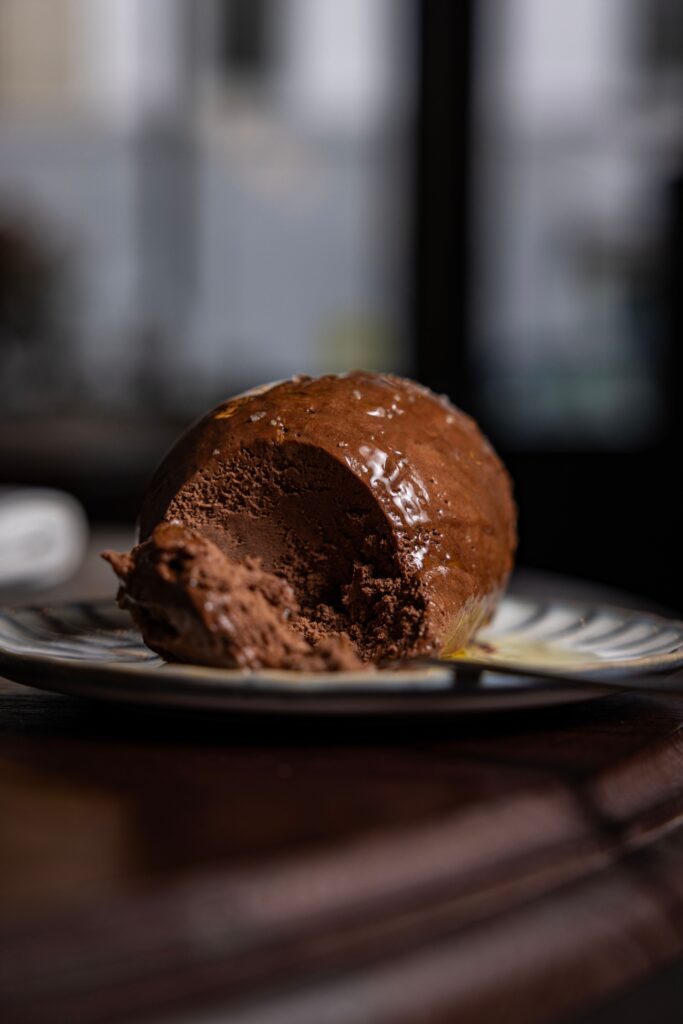
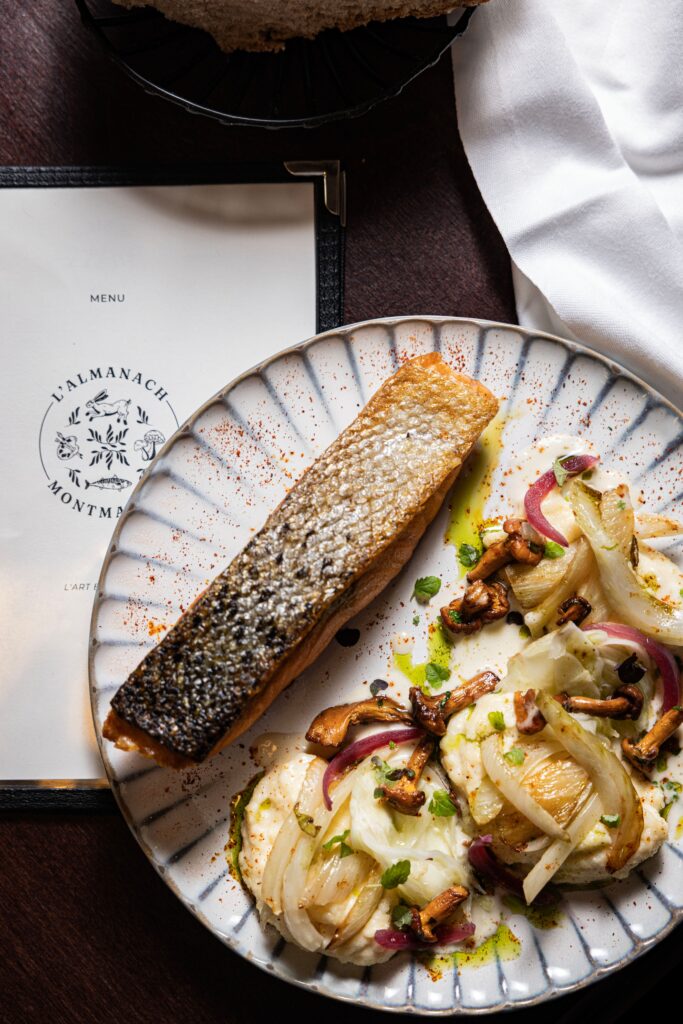
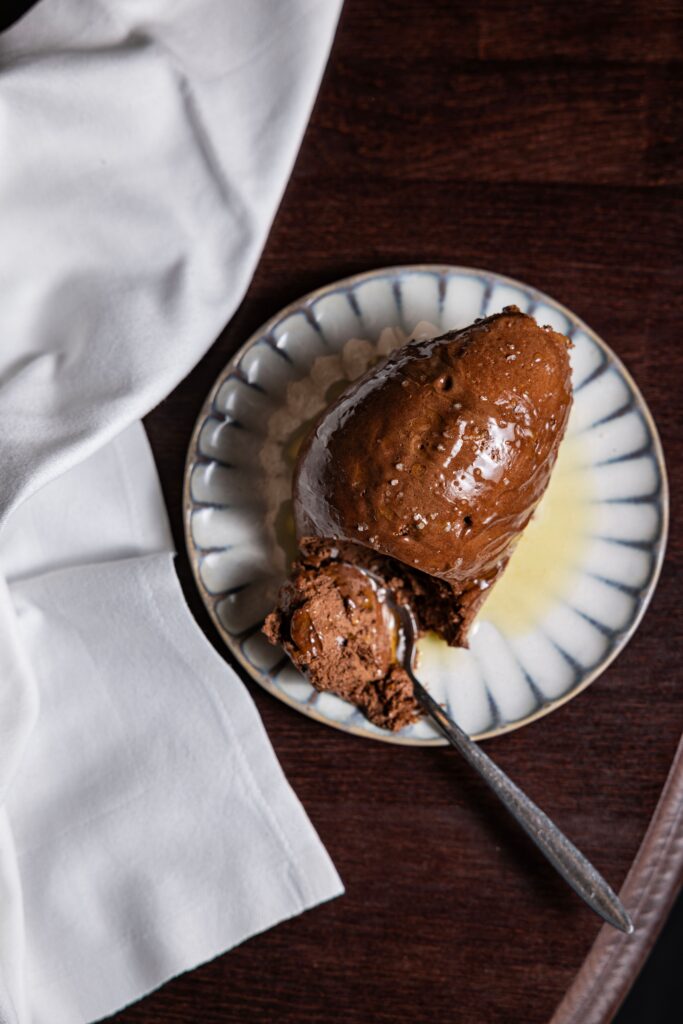
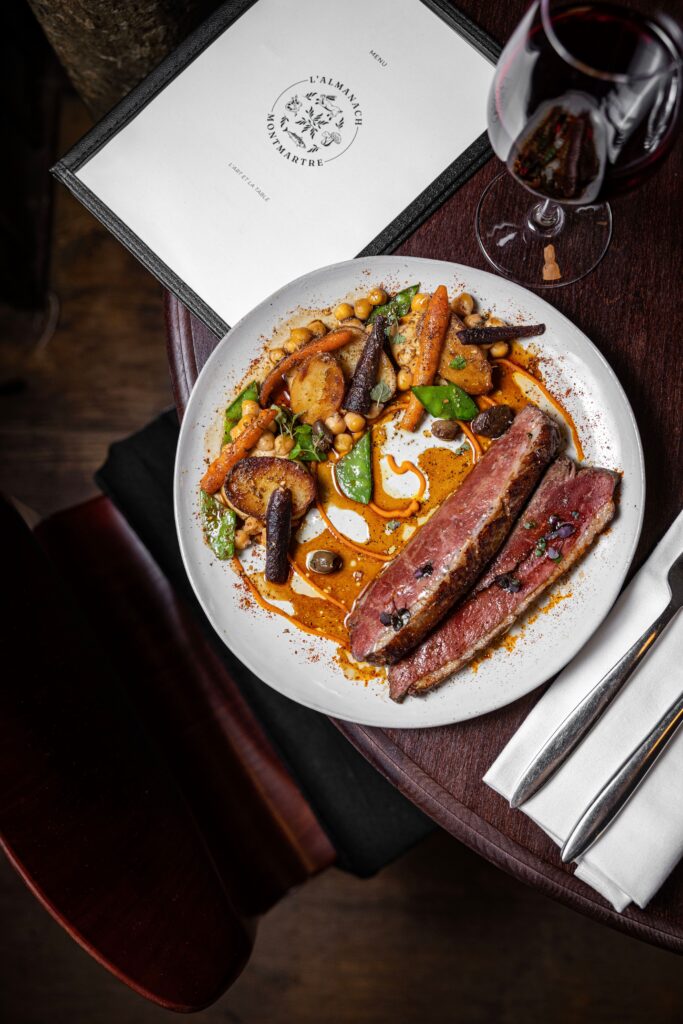
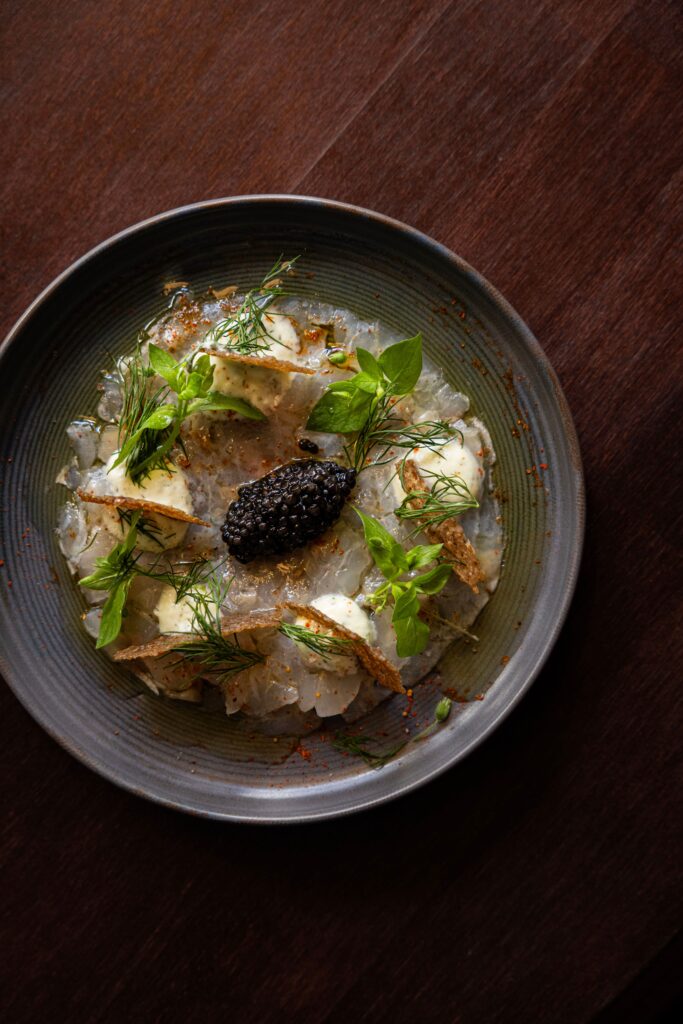
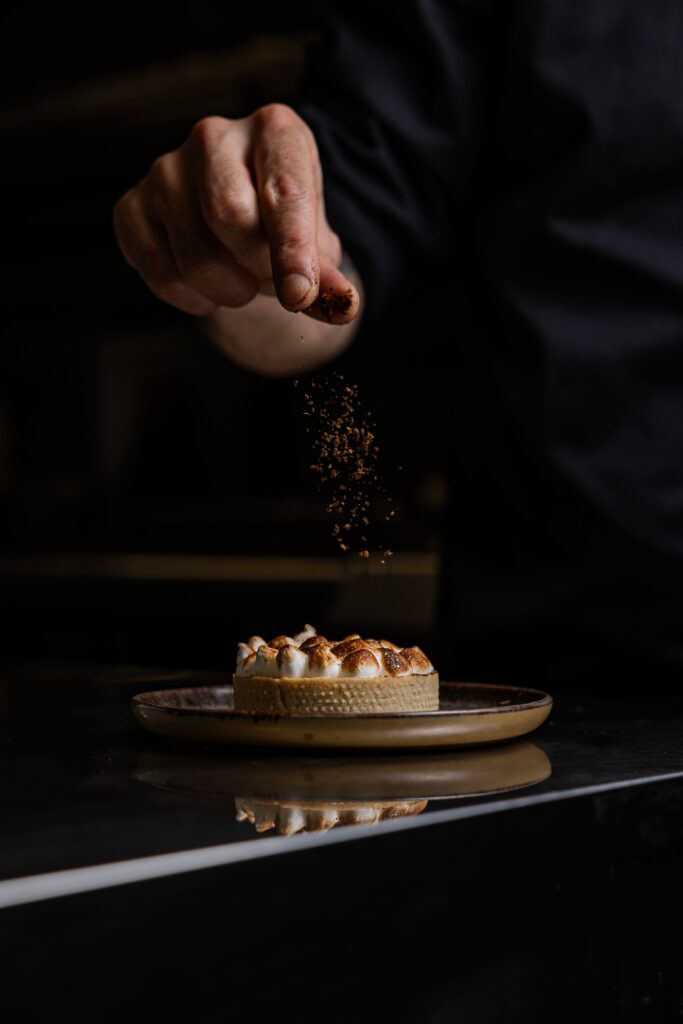
For Giorgis’s cuisine is constantly reinvented with the changing seasons and, above all, with the exhibitions. The menu does not merely illustrate the art on display; it enters into a dialogue with it. A pictorial cycle evokes its colors, contrasts, and density; the menu responds in its own way—through plating, cooking, and the rhythm of a meal. The idea is not new in principle—gastronomy likes to imagine itself as a visual art—but it is rarely executed with such consistency. Aligning the calendar of a kitchen with that of a gallery requires abandoning the fixed menu, that comfort that sustains so many establishments.
About every fourteen weeks, the Almanach changes its artist-in-residence and redesigns its layout. The menu is updated accordingly, so that no customer ever dines in the same spot twice.
This approach has a practical consequence: the Almanach isn’t something you visit once; it’s something you revisit. The meal ceases to be a reproducible product and becomes a milestone—marking a cycle, a painter, or the state of the house. One returns to it as one returns to see an exhibition, knowing that it will have changed. It is an economy of attention quite at odds with the times, which prefers the reassuring promise of the ever-identical.
The Bet on Slowness at the Top of the Hill
That leaves the question of the location. Montmartre is a neighborhood that long ago stopped producing and has since been content to sell its legend. Opening a restaurant there that focuses on living creativity, one that’s willing to reinvent itself every quarter, is a bet that the Butte can still be a workshop rather than just a backdrop. It’s not a sure thing: Rue Ramey isn’t Place du Tertre, and that’s a good thing. L’Almanach champions a simple yet demanding idea there—that a meal can be dated, situated, and perishable, and that this fragility is what gives it its value.
It remains to be seen which painter will succeed Sylviane Brandouy, and what card Léo Giorgis will play against her. That is likely the most accurate assessment: a move whose outcome cannot be predicted in advance, because change is her only constant.
Cette publication est également disponible en :

