
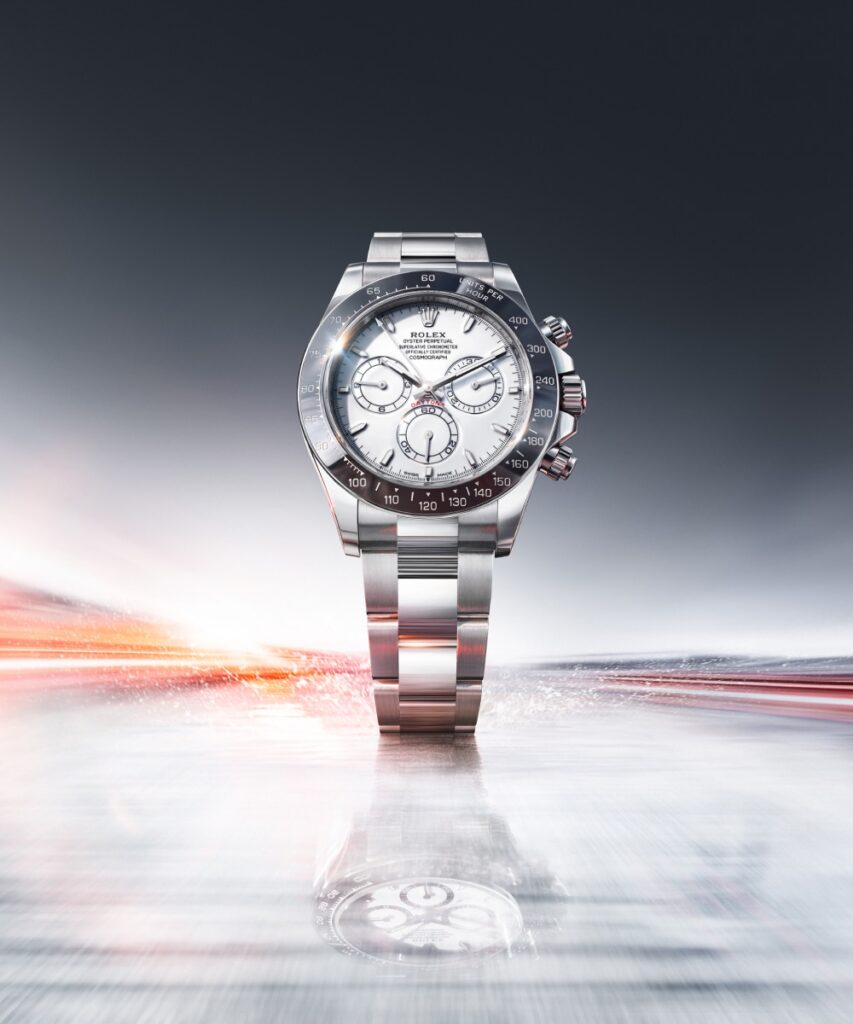
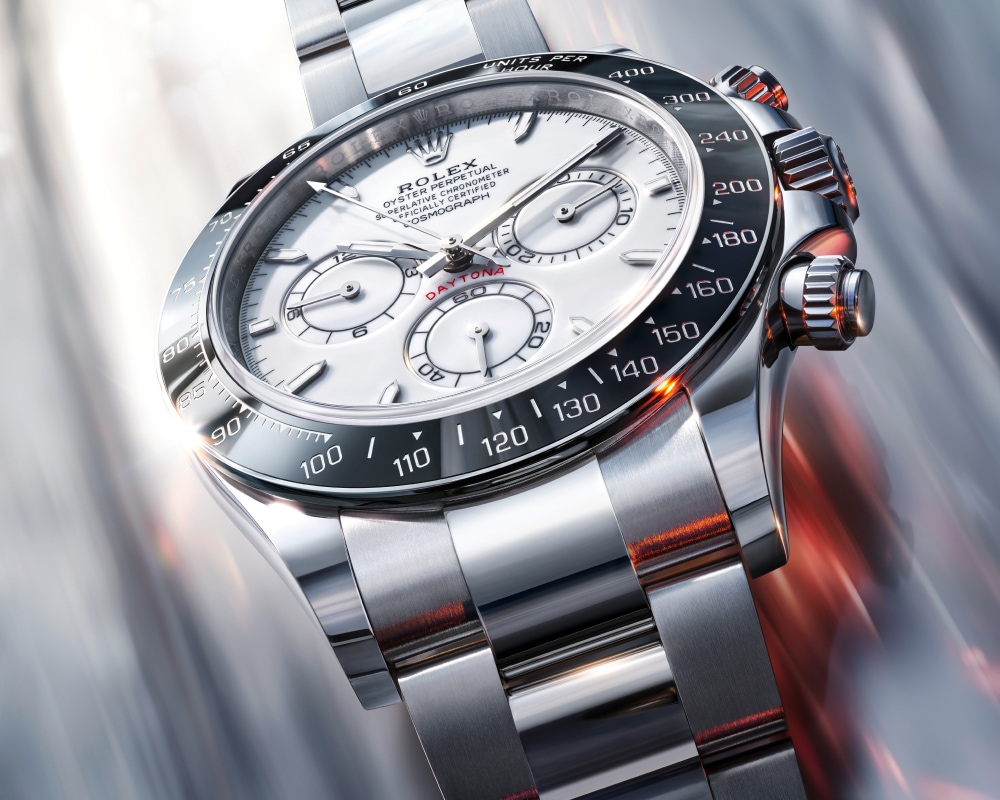
In its sixty-three-year history, the Cosmograph Daytona has never before combined Oystersteel and platinum in the same case. Version 2026 does just that, and turns the watch inside out.
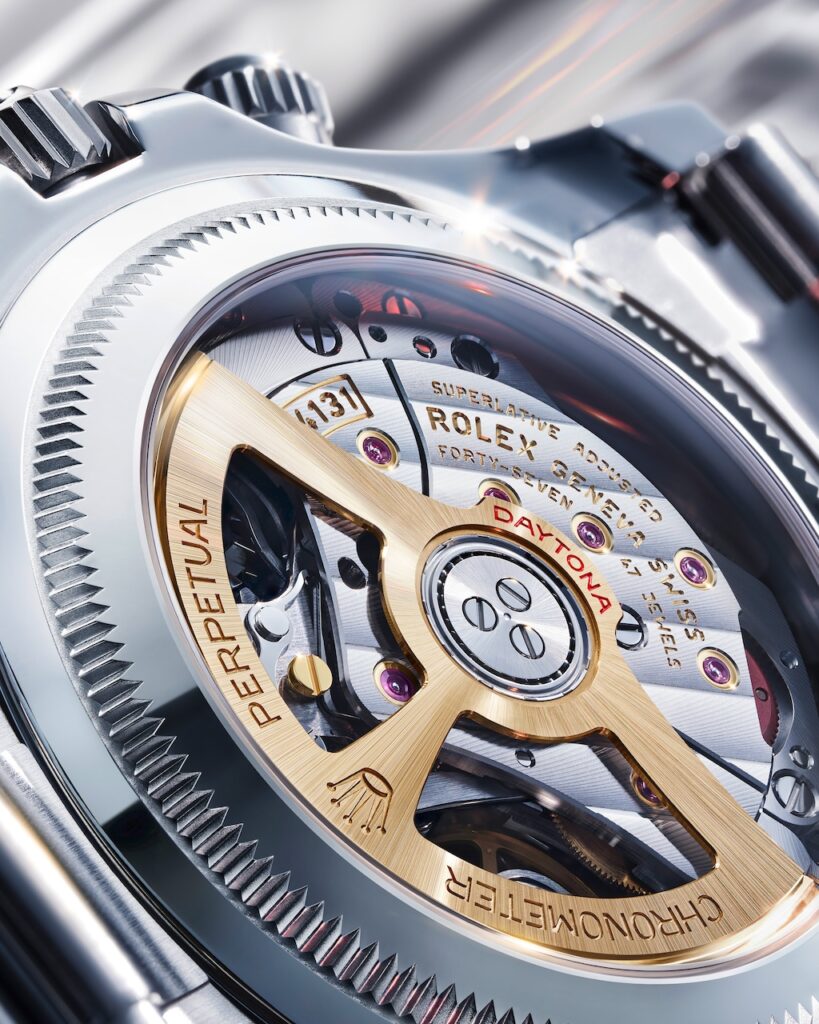
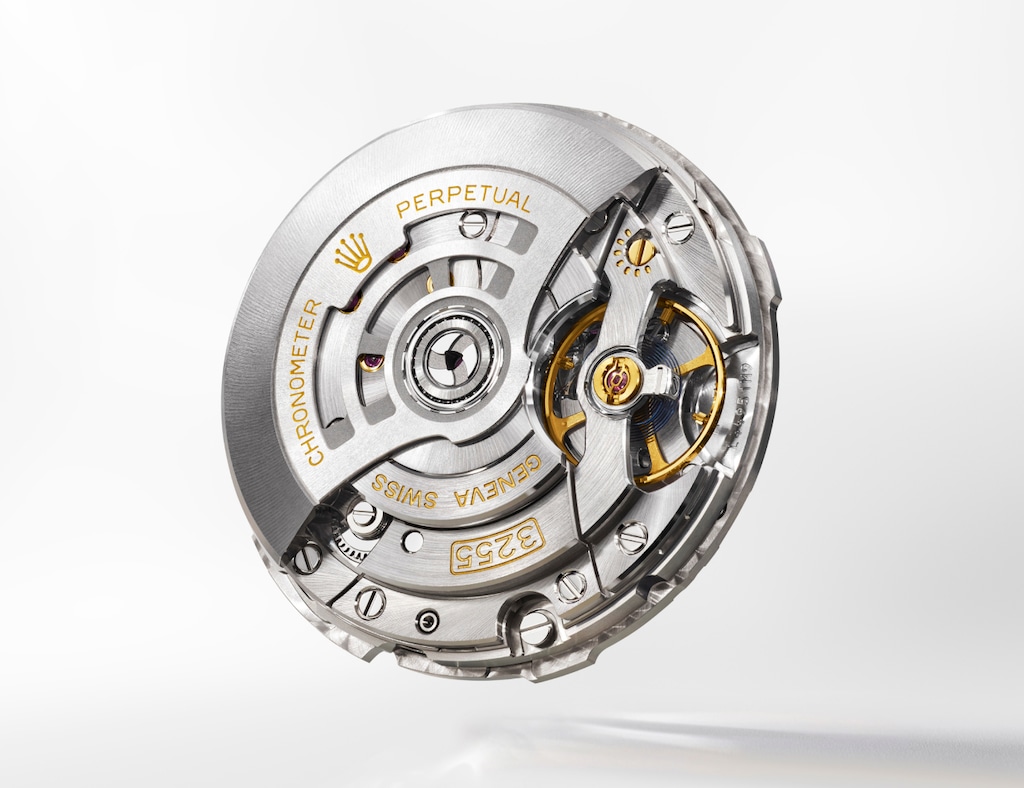
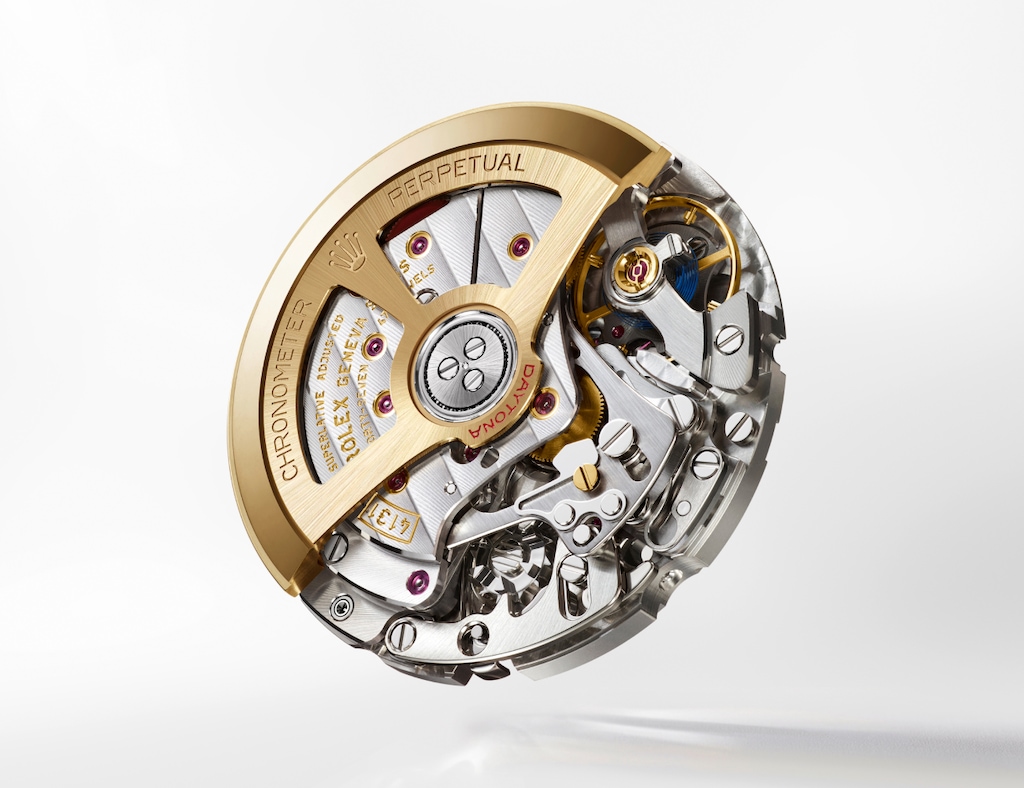
The transparent caseback – a first for this model – reveals the entire Calibre 4131: bridges decorated with Côtes de Genève Rolex, where a fine polished groove separates each rib from the next, and an openworked oscillating weight crafted in yellow gold. The Oystersteel of the case middle, the steel of the bracelet, and then suddenly this gold disc turning inside. Rolex chooses incongruity, and it’s accepted.
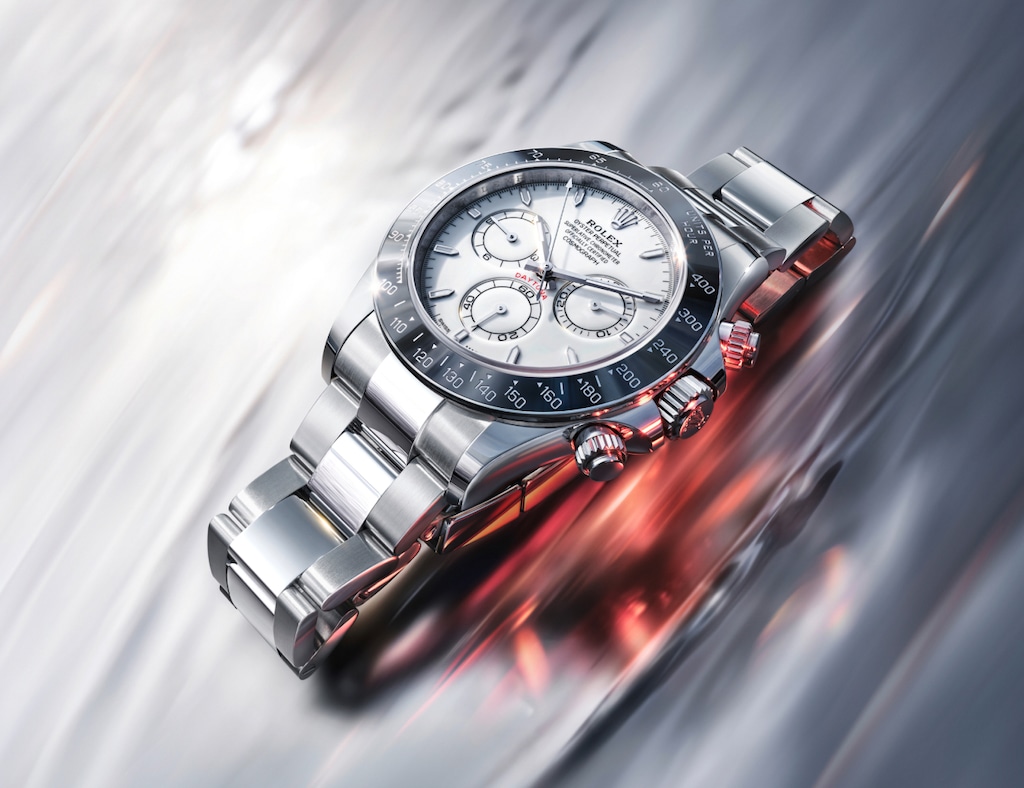
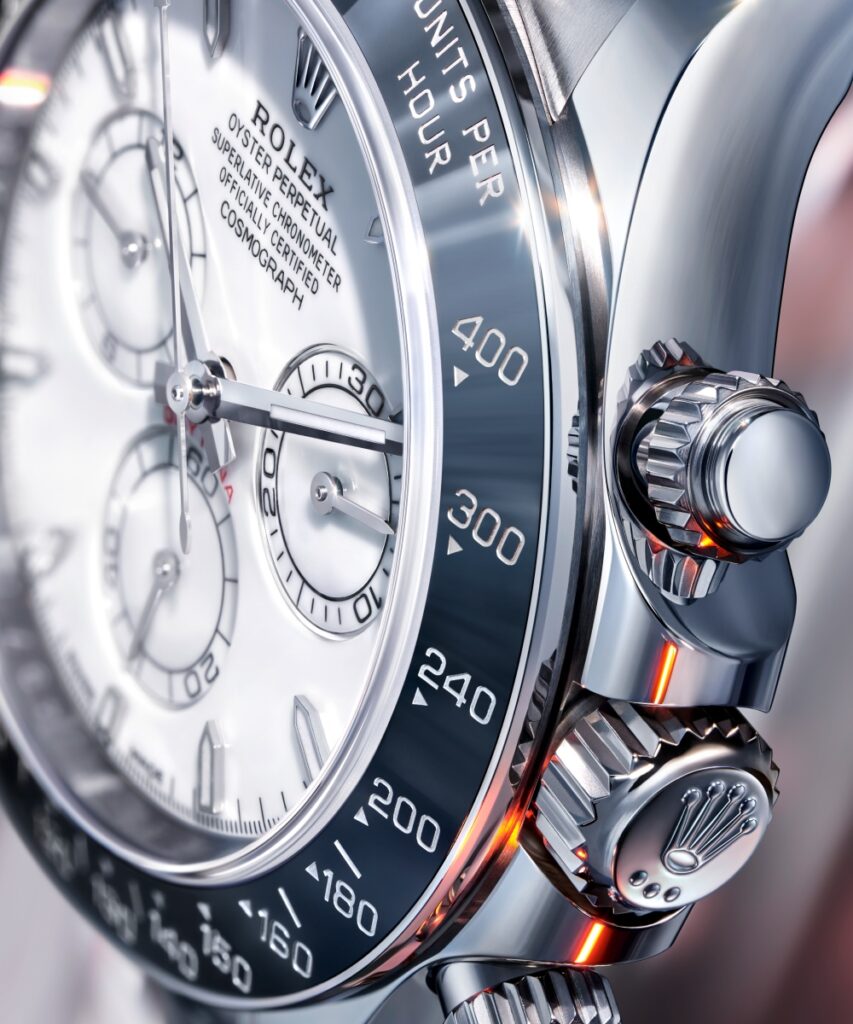
The bezel is worth a closer look. Cerachrom anthracite 2026 is not just another shade in the catalog: Rolex has specifically developed a zirconia enriched with tungsten carbide to obtain this metallic lustre with a ceramic surface, and has filed a patent application for it. The tachymeter scale takes up the horizontal graduation of the original 1963 model – the numerals don’t tilt, they float – and the inscriptions are colored by platinum vapor deposition (PVD). The same technique used on the bezel is used on the back ring, also in platinum.
Detail – The grand feu dial on ceramic The traditional grand feu enameling process consists of depositing a liquid mixture on a metal base before firing. On this Daytona, Rolex has substituted four ceramic plates for this base – one for the main dial, three for the counters – before affixing them to a brass base after vitrification at over 800°C. The result is a white dial whose depth and colorfastness are structurally different from those of a lacquered dial: the enamel is a layer of molten glass, not a coating.
The movement driving this timepiece – the calibre 4131, entirely developed and manufactured by Rolex – incorporates a column-wheel chronograph mechanism with vertical clutch. The column wheel is a more complex and costly mechanical device than a simple ratchet: it regulates the start, stop and reset sequences with mechanical precision, which the vertical clutch translates into instant start. 47 jewels, blue paramagnetic Parachrom balance-spring, Paraflex shock absorbers, power reserve of around 72 hours: the specifications for Superlative Chronometer 2026 certification now add resistance to magnetism, reliability and durability to the seven criteria established since 2015, including a precision measured on the finished watch within a range of -2 to +2 seconds per day.
The question posed by this version of the Daytona is not one of prestige – the model has had plenty of that for sixty years. It’s about the hierarchy of materials. Rolex places platinum where no one else in the shop looks: in the back ring, in the bezel edging, in the tachometric markings. The yellow gold of the oscillating weight is only visible with the caseback open. This is a workshop decision, not a communication one.

Cette publication est également disponible en :

