
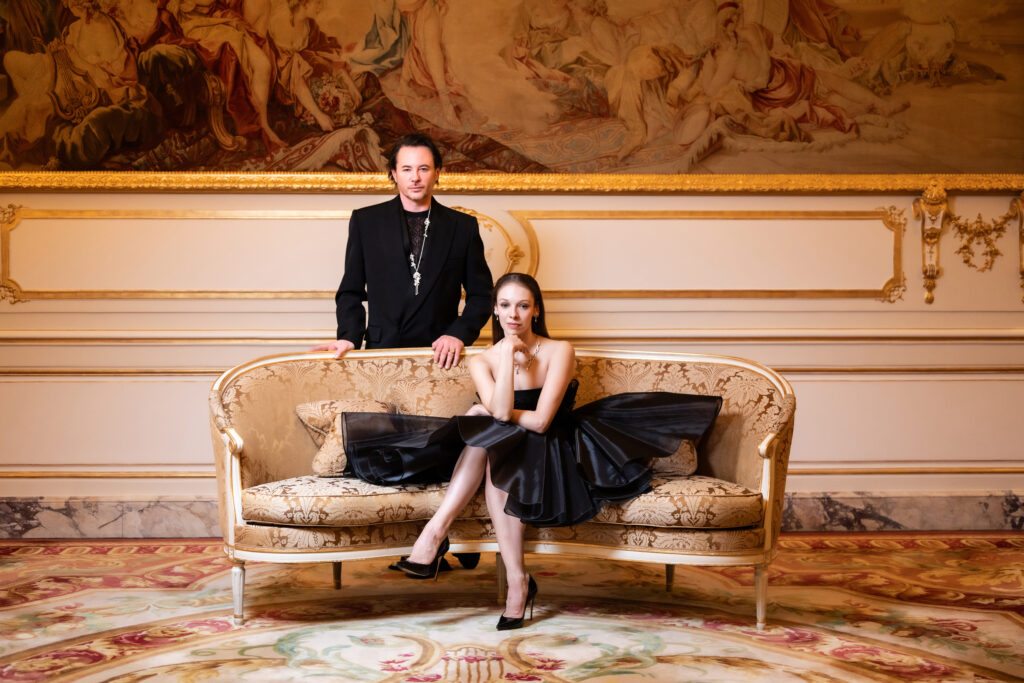
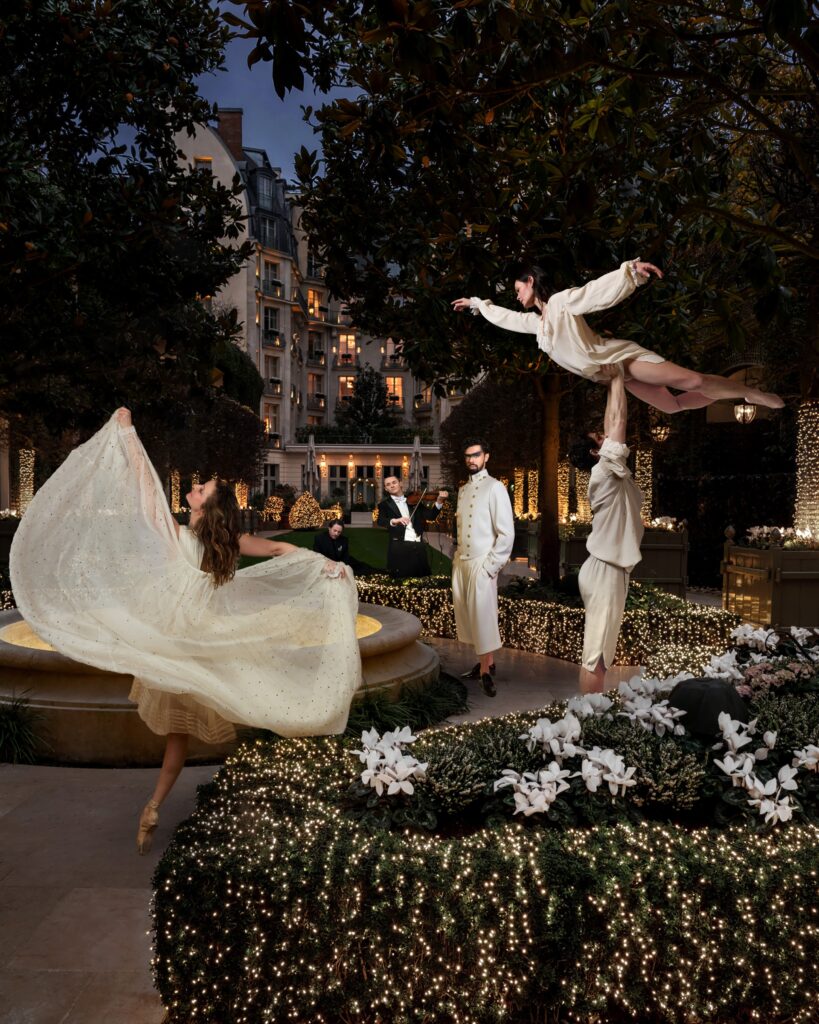
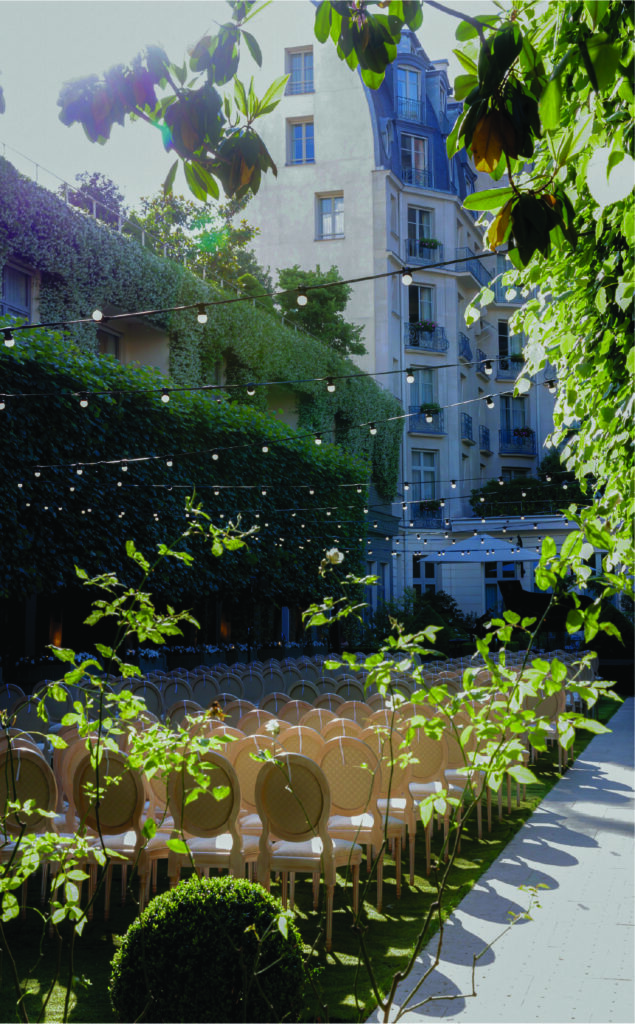
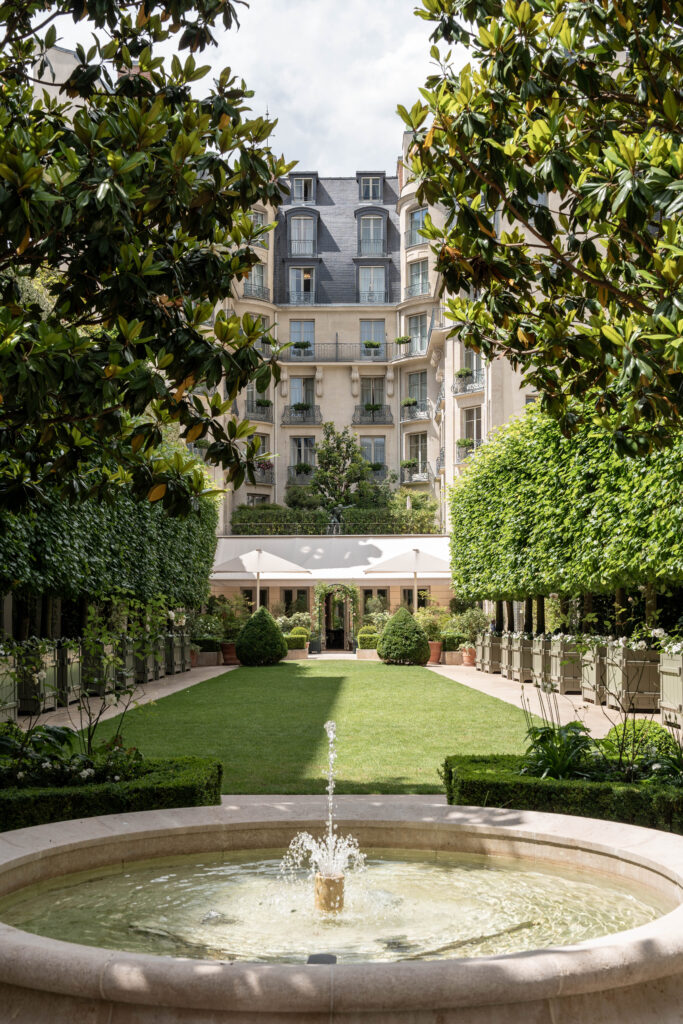
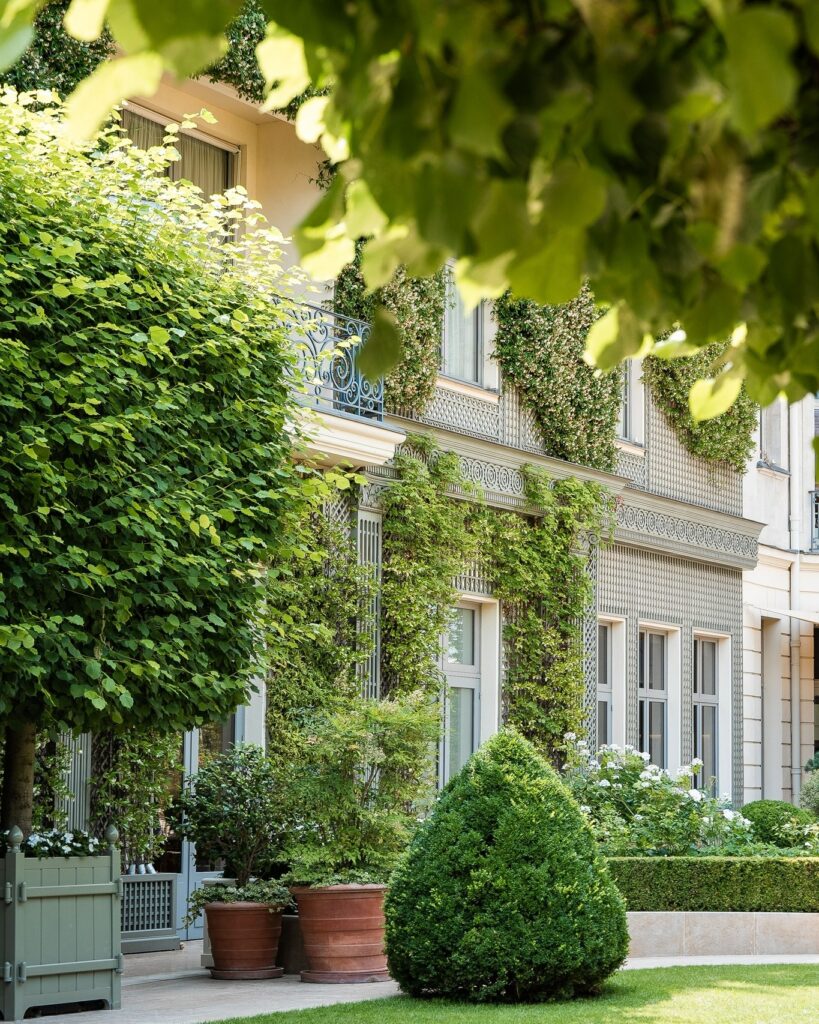
There are places that don’t need to be decorated. The Grand Jardin at the Ritz Paris is almost self-sufficient: 1,600 m² of French-style greenery, twenty-six lime trees, pruned boxwoods, white magnolias, jasmines, alcoves tucked into the hedges, a period fountain. In June 2026, this space, usually reserved for seclusion, quiet conversation and suspended time, will become an open stage for the first edition of Nuits Étoilées, a festival imagined by Frédéric Fontan and held on June 13, 14 and 15 within the hotel grounds.
The initiative says something about the current evolution of Parisian palaces. They are no longer simply places of hospitality, but producers of culture, houses of memory that seek to activate their heritage without freezing it. The Ritz Paris is part of an already rich history: founded in 1898 by César Ritz on Place Vendôme, the hotel was conceived from the outset as a synthesis of modern comfort, the art of entertaining and international sociability. The hotel’s official website recalls its pioneering role in the prestige hotel business, with private bathrooms and electricity on every floor at the end of the 19th century.
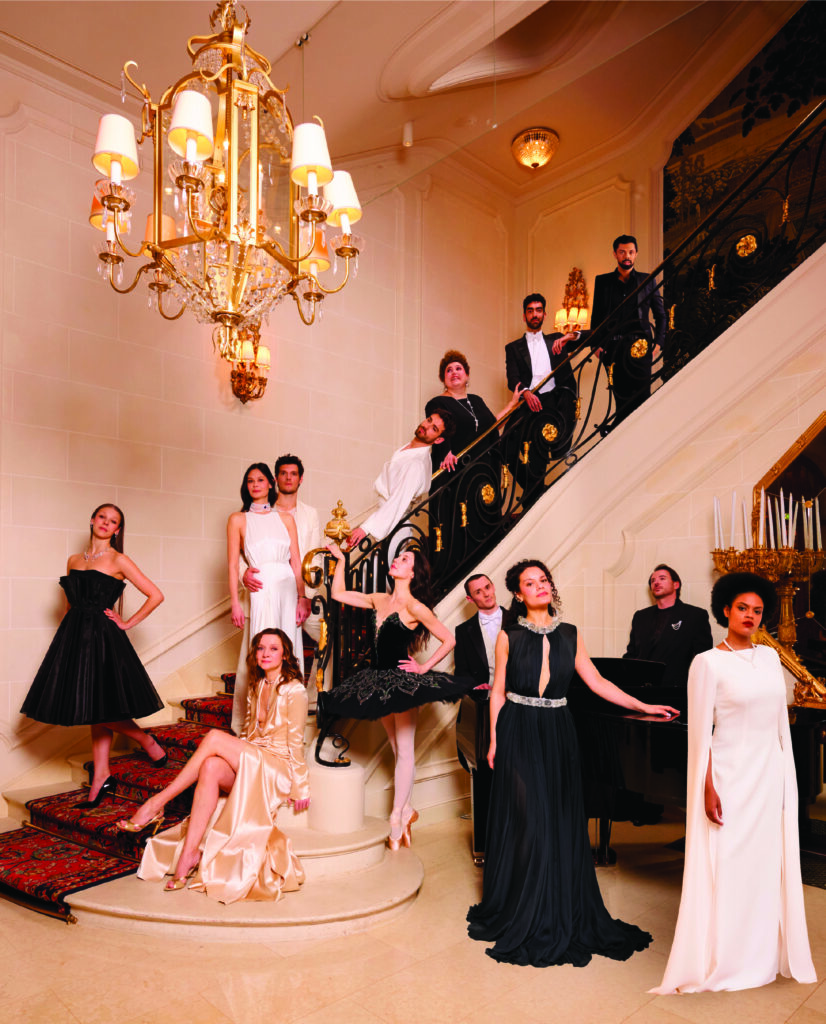
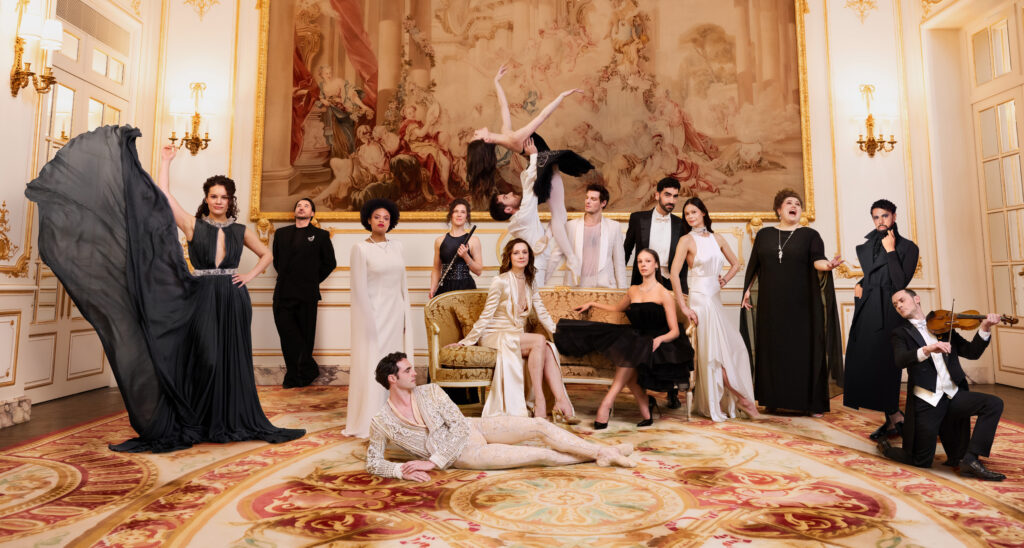
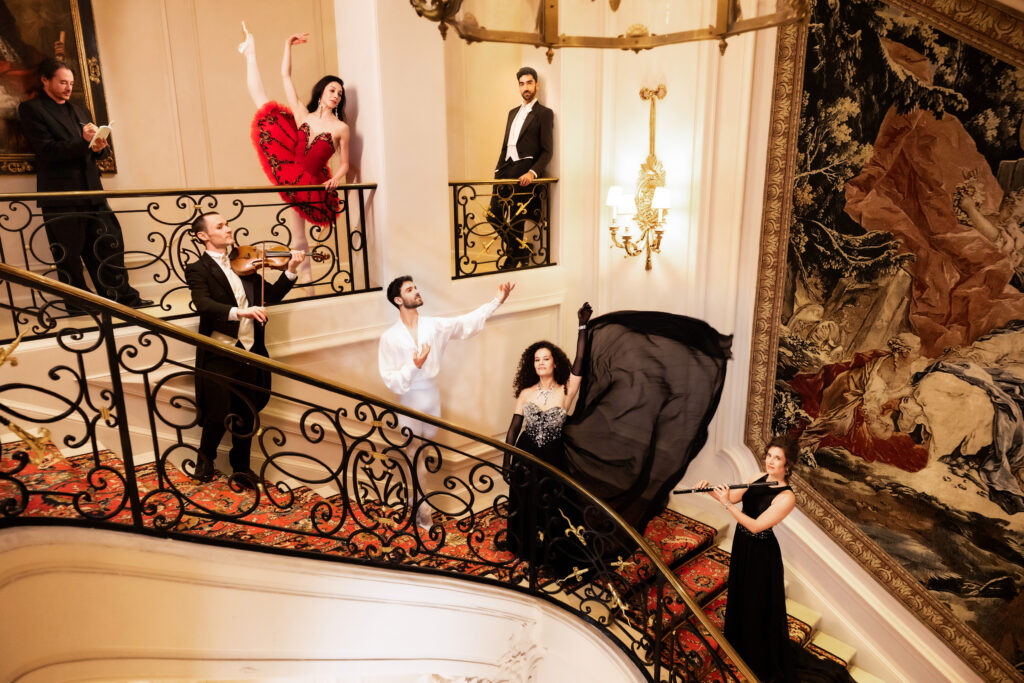
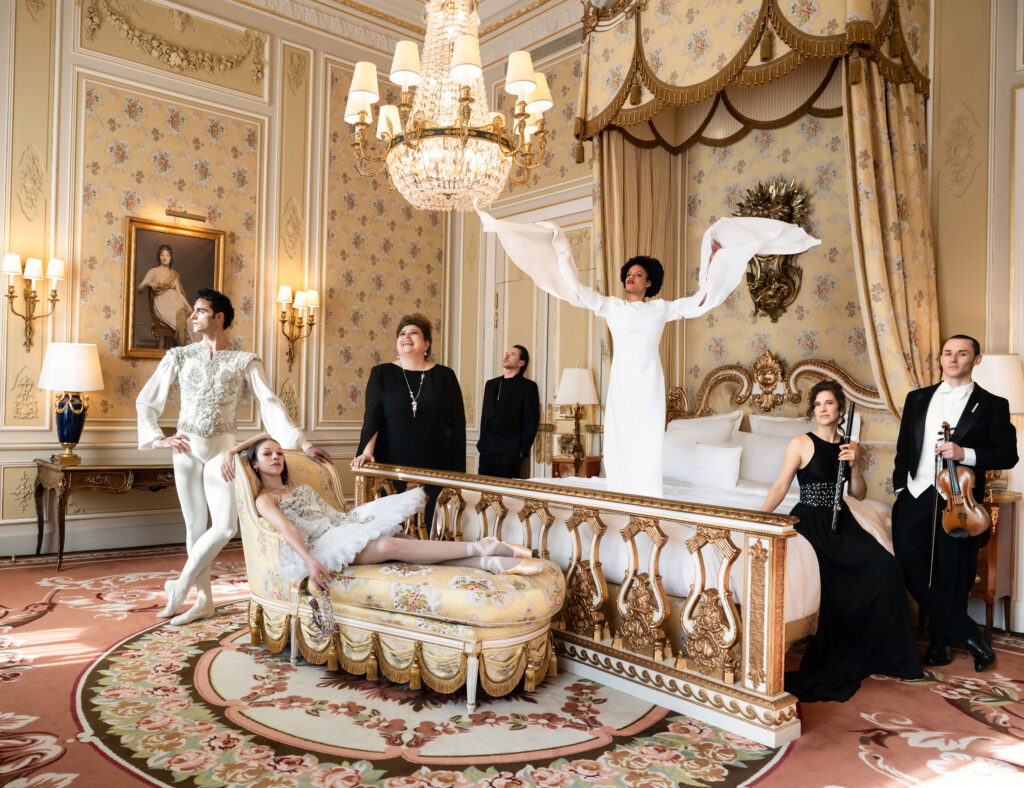
So the choice of garden is not anecdotal. In contrast to large, frontal halls, Les Nuits Étoilées favors a rare proximity: three hundred spectators per evening, an open-air scenography, a quartet and piano under the musical direction of Aymeric Gracia, and a circulation between opera, dance and orchestral music. The set-up seems to be less about the gala effect than the sensation of a salon moved under the trees. A very Ritz idea, in the end: not separating the ceremonial from the intimate.
The godmother of this first edition will be Roxane Stojanov, appointed Danseuse Étoile de l’Opéra national de Paris on December 28, 2024, after a performance of Paquita at the Opéra Bastille. Her career path, from the Opéra Ballet School to the title of Étoile, places the festival in a tradition where transmission counts as much as virtuosity.
On June 13, La Nuit de Diamant will open the cycle with a tribute to the Place Vendôme and its jeweler’s imagination. The program will feature Mendelssohn, Gounod, Offenbach and Chopin, with Claire de Monteil, Axelle Saint-Cirel, Roxane Stojanov and Florent Melac. Chopin’s presence here takes on a special significance: the composer took up residence at 12 Place Vendôme in the last months of his life, and died there in October 1849, according to the biographical calendar of the Narodowy Instytut Fryderyka Chopina. In this district, where jewelry, music and the hotel business have come to produce the same grammar of prestige, the program chooses not so much historical quotation as resonance.
On June 14, La Nuit des Romantiques will shift the center of gravity to love, from La Bohème to La Traviata, from Carmen to Romeo and Juliet. Tamara Bounazou, Quentin Desgeorges, Maia Makhateli, Andrea Sarri and Mickaël Lafon will cross paths with the world of Marcel Proust in Le Combat des Anges, an excerpt from Roland Petit’s ballet Proust. Here again, the Ritz Paris does not force the link: Proust belongs to its social memory as much as to its literary mythology. The palace becomes the setting for a form of survival, where the living arts converse with the cultivated ghosts of the house.
On June 15, La Nuit Clair de Lune will close this first edition on a more vegetal note. Bruno de Sá, Alice Renavand, Mathieu Ganio and Agnès Letestu will perform Saint-Saëns, Angelin Preljocaj’s Parc and an adapted solo by Jean-Claude Gallotta. A world premiere for Alice Renavand, by Loup Marcault-Derouard and Frédéric Fontan, on a reinterpretation of La Mort du cygne, will give this final evening a chiaroscuro tone. It’s not so much night as a setting that interests us here, but night as a way of looking: at bodies, voices, trees, facades.
Arnaud de Saint-Exupéry, General Manager of the Ritz Paris, presents the festival as a way of opening up the hotel “to new forms of creation”, and of making the Ritz Paris “a place of transmission, sharing and living culture”. Frédéric Fontan, for his part, links this initiative to a family memory: that of his grandfather Pierre Fontan, who in the Belle Époque would meet artists at the Ritz Paris, including Sarah Bernhardt and Edmond Rostand. These two quotations, taken from the dossier submitted, clarify the real ambition of the project: not to add another event to the Parisian calendar, but to create a cultural ritual in a place already saturated with stories.
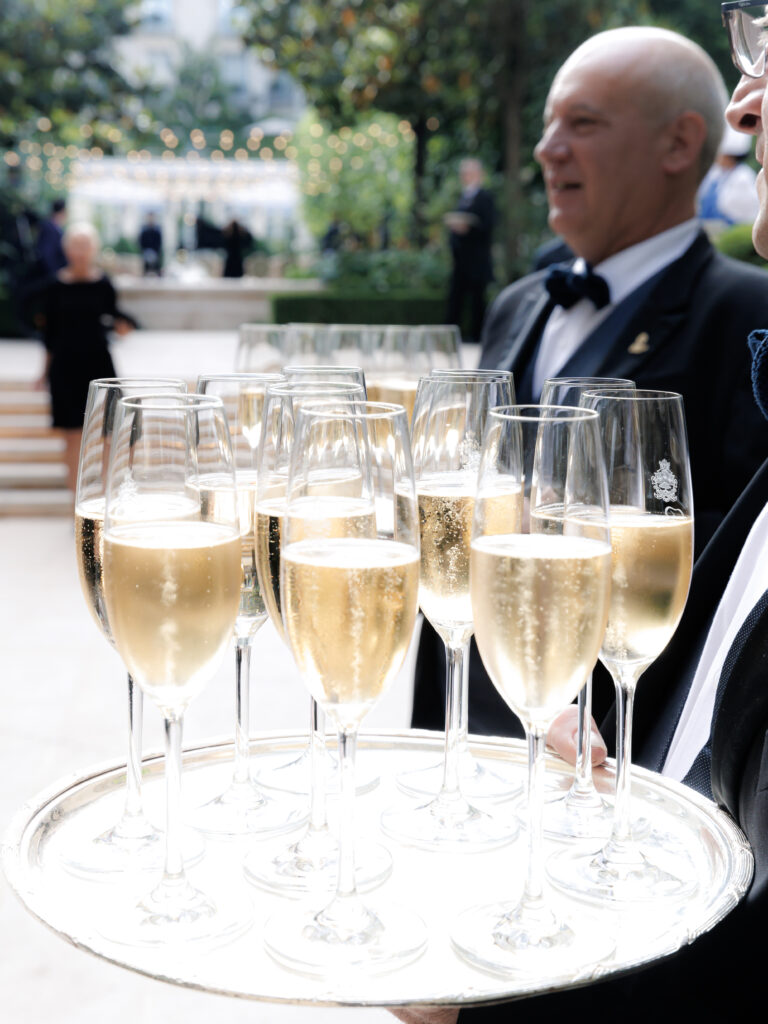
Perhaps the most accurate detail is the format. Three evenings, three hundred seats, a welcome at 8.15pm, a show at 9pm, lasting around an hour and twenty minutes. The public will be welcomed with petits fours and Roederer champagne; certain categories will include a gift signed by Ritz Paris, and the Gold category will give access to a meeting with the artistic director and certain artists in the backstage area. Ticket prices range from 150 to 390 euros, depending on the category, with a Gold category at 550 euros.
One might see this as nothing more than an extension of palatial hospitality. But that would be to miss the deeper movement: the great hotel houses are now seeking to become cultural institutions in their own right. They have venues, archives, clientele and stories to tell. What they sometimes lack is programming that goes beyond entertainment to embrace creation. With Les Nuits Étoilées, the Ritz Paris is doing just that: turning its garden into a stage, rather than a backdrop; a form of address to the Parisian cultural world, rather than an extra soul.
Official address: Ritz Paris, 15 place Vendôme, 75001 Paris.
Bookings: official Ritz Paris website, Les Nuits Étoilées section.
Cette publication est également disponible en :

