
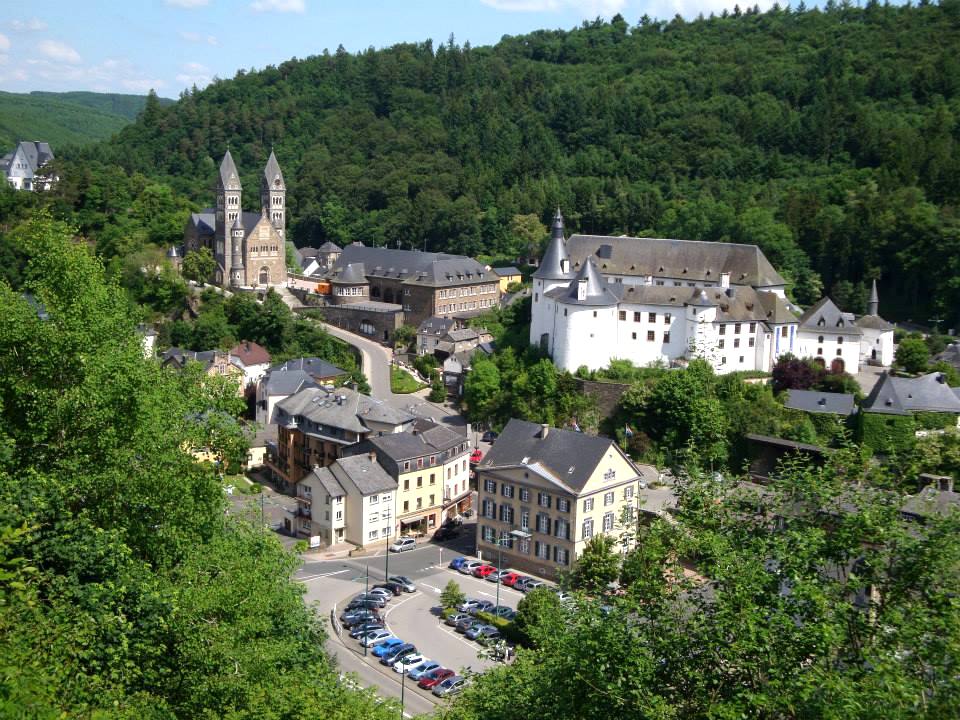
With a surface area of just 2,586 km2, Luxembourg is a very attractive place to live. Its population of around 500,000, 45% of whom do not hold a Luxembourg passport, testifies to the interest of foreigners in this country. With almost 900,000 travelers in 2013, and an average increase of 5% for 2014, Luxembourg is showcasing its potential. An invitation to visit this serene and invigorating country seems essential.
Luxembourg City is the country’s capital and home to a number of European institutions (secretariat general of the European Parliament, Court of Justice, Court of Auditors, etc.). The city is the Grand Duchy’s main seat of power. As such, it has a cultural impact on the rest of the country. The palace, official residence of the Grand Dukes since 1890, was built in the 16th century, more precisely between 1572 and 1574. Its function has evolved over time. Originally a town hall, it later became a prefecture and then the seat of government.
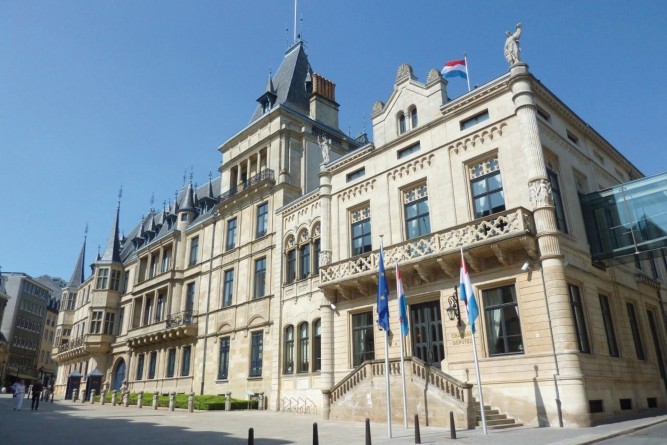
In 1890, it was modified by architects Charles Arendt and Gédéon Bordiau. For several decades, it has been visited from July to September. Guided tours are offered by the Tourist Office.
Beyond that, the town is resolutely committed to the notion of the future, particularly in the art sector. This summer, a synergy gives primacy to sound and art. 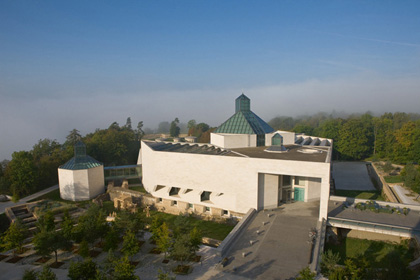 Mudam, Musée d’Art moderne Grand Duc Jean, perseveres in this line of research. AudioLab, from May 21 to July 27, 2014, highlights the alliance between architecture and sound design. Four designers worked on this project integrating design, music and art. Each in turn presents their work. From May 21 to July 27, 2014, Mudam is exhibiting Patrick Jouin’s work.
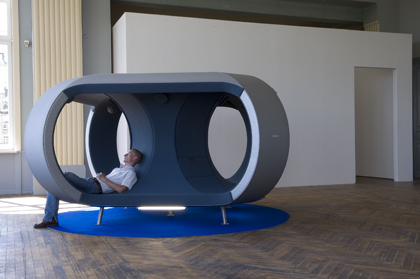
The experiment will continue from July 27 with … OF SOUNDS, WORDS,TURTLES & YOU by Katherina Bihler and Stefan Scheib of the Liquid Penguin Ensemble.
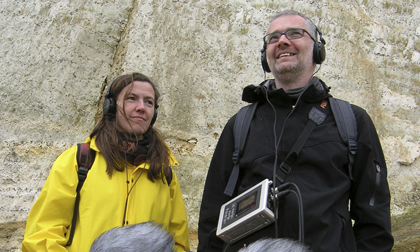
Since its creation in 1997, this artistic group has oscillated between sound-related performances, musical theater, radioplay and installations. At Mudam, from July 31 to August 21, 2014, they will present a sound installation. The work will be interactive, with the public able to drop words and sounds into a recorder. Once a week, these will be read by the artists. The sample collected will enable them to ask the public about their vision of Art and their choice of words. Over time, these sequences will form an evolving sound installation.
The Casino Luxembourg-Forum d’Art Contemporain is echoing the theme of sound with a group exhibition, HLYSNAN: The Notion and politics of Listening. The issue is not only the sound perceived, almost involuntarily, but also the voluntary act of listening, of grasping. Through political discourse, legal perceptions and recording techniques, questions emerge. What happens to the notion of preserving, documenting and reinterpreting history? Sound becomes art, an intangible document of great significance.
Behind the scenes, we look at the technical side of creation, as a prism through which to view reality. Through the exhibition, performances and workshops, visitors will forge their own analysis. Their quest will be facilitated by the various works on display. More than twenty artists have agreed to give their interpretation. Among them, Lawrence Abu Hamdan, Peter Cusack, Andra Maccartney, Marco Godinho, Yoko Ono, John Wynne and many others share their feelings and criticisms.
Angel Navarez & Valérie Tevere with What we might have heard in the future, Radio play, 2010/ 2014 present an atypical installation.
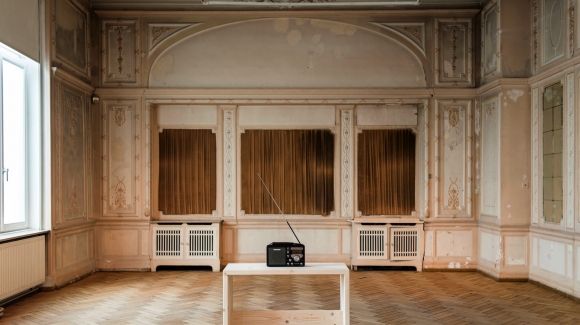
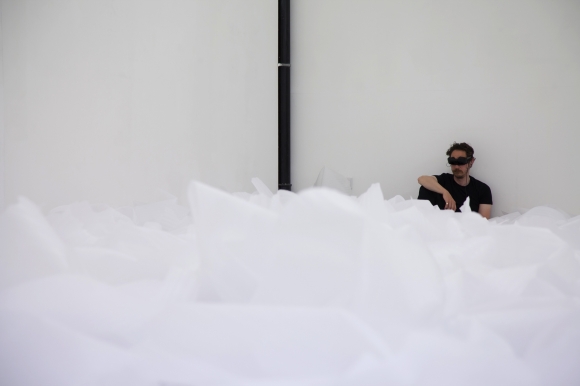
Sullivan and Flint, interpret sound differently with The Thing is performance at Motorcade/ Flash Parade in bristol, 2012.
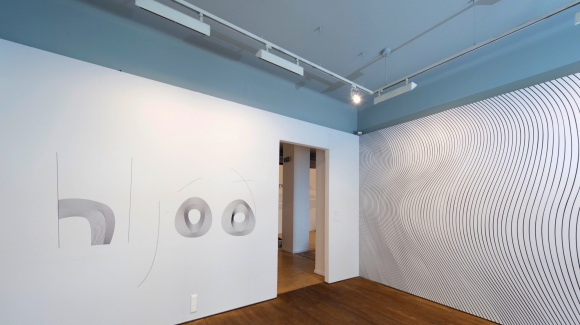
Icelandic artist Runa Egilsdottir has created a mural about listening. Hljod, sound or silence in Icelandic, depending on interpretation, emphasizes perception. The large white wall has been streaked with fine lines. The drawing becomes a framework for interpretation.
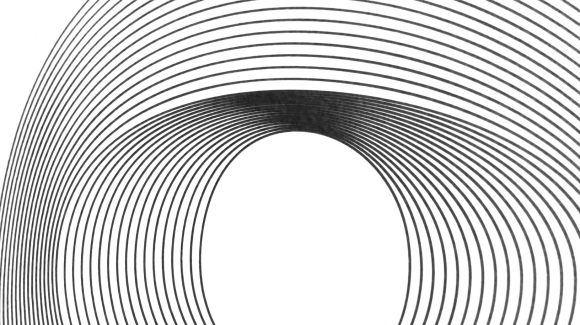
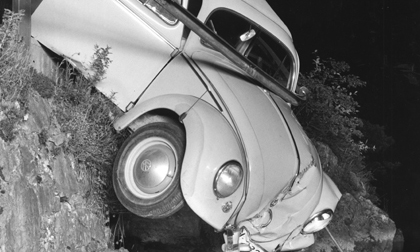
Mudam also presents Damage Control, Art and Destruction since 1950. The theme is focused. In perfect harmony with the end of the2nd World War, the evolution of the Cold War and the advent of new international relations, the notion of destruction, already correlated with the notion of creation, emerges in a new way. The scenes refer to contemporary historical events. Hiroshima, Nagasaki and the various clashes of history are highlighted through figuration or the prism of abstraction. The conceptual has its rightful place. Ninety works by forty different artists provide food for thought. Mediums abound and diversify: sculpture, painting, engraving, drawing, video, installation and performance. Every sector of contemporary art is represented. Arnold Odermatt and his stamped vehicle, Stansstad, 1958, explores the notion of limits.
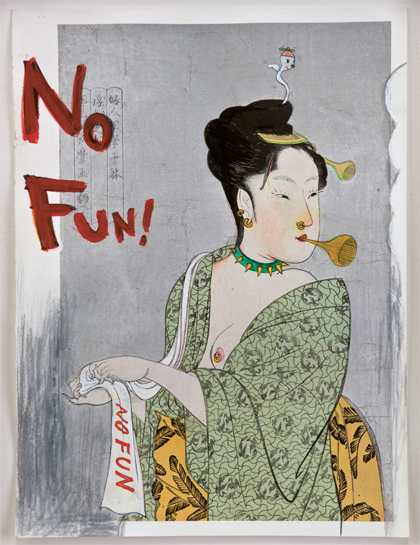
Yoshitomo Nara ventures into cliché destruction with No Fun! (in the floating world), 1999. Facet by facet, artist by artist, referents are destroyed.
To visit from July 12 to October 12, 2014.
The contemporary art gallery, Am Tunnel, is also worth a visit.
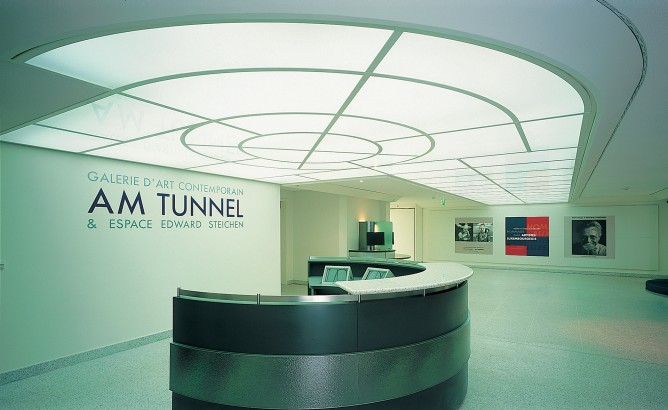
The project originated with BCEE (Banque et Caisse d’Epargne de l’Etat). In 1987, management decided to link the institution’s four buildings with a tunnel. Between 1992 and 1993, it was transformed into an art gallery. The Am Tunnel Contemporary Art Gallery is worth a visit not only for the singularity of its design, but also for its permanent collection. The latter features both established and emerging Luxembourg artists. A collection of around 120 works by 90 different artists offers a wide variety of presentations.
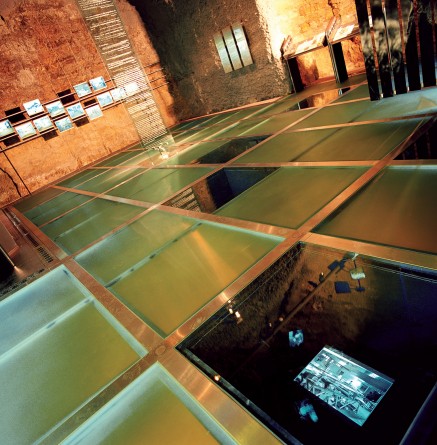
Temporary exhibitions are also regularly scheduled.
Other private galleries offer interesting programs. The purpose of this article is not to be exhaustive, so anyone wishing to find out more can visit their websites.
It’s clear that Luxembourg City is an art destination.
MUDAM www.mudam.lu
Casino-Luxembourg www.casino-Luxembourg.lu
BCEE, Am Tunnel Art Gallery, 16 Rue Zithe, L-954 Luxembourg City
www.visitluxembourg.com
www.luxembourg.public.lu/fr/tourisme
Photo credits Office Tourisme Luxembourg, Casino Luxembourg, Mudam, Galerie AM Tunnel
Cette publication est également disponible en :

