
For a long time, the premium automobile was a matter of European codes: clean lines, a quiet cabin, effortless acceleration and an almost moral relationship with the road. With the arrival of DENZA in Europe, the BYD group is trying something different: imposing a reading of automotive luxury based less on mechanical heritage than on technological integration, energy management and the cabin as augmented space.
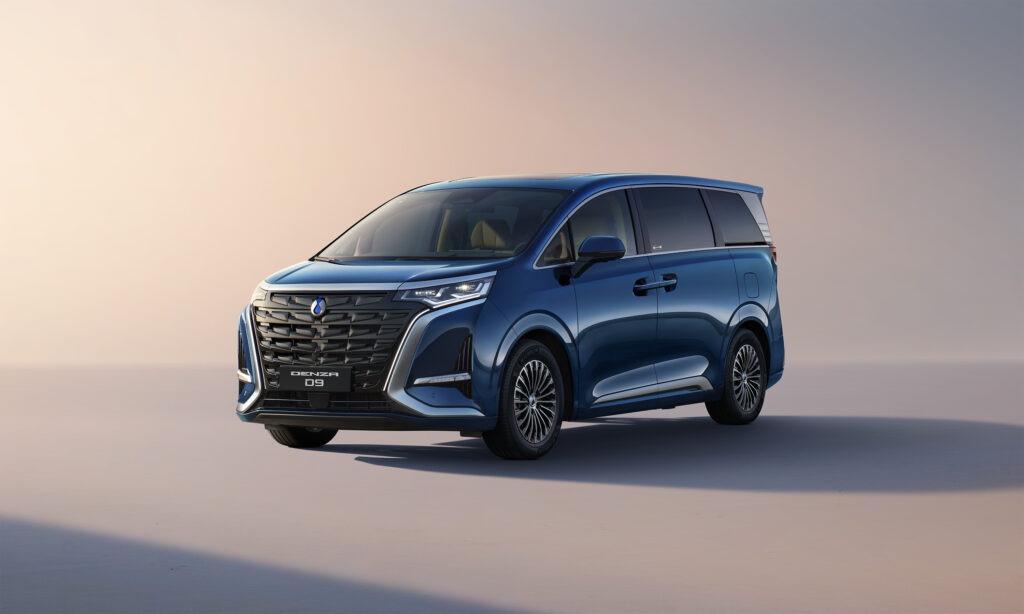
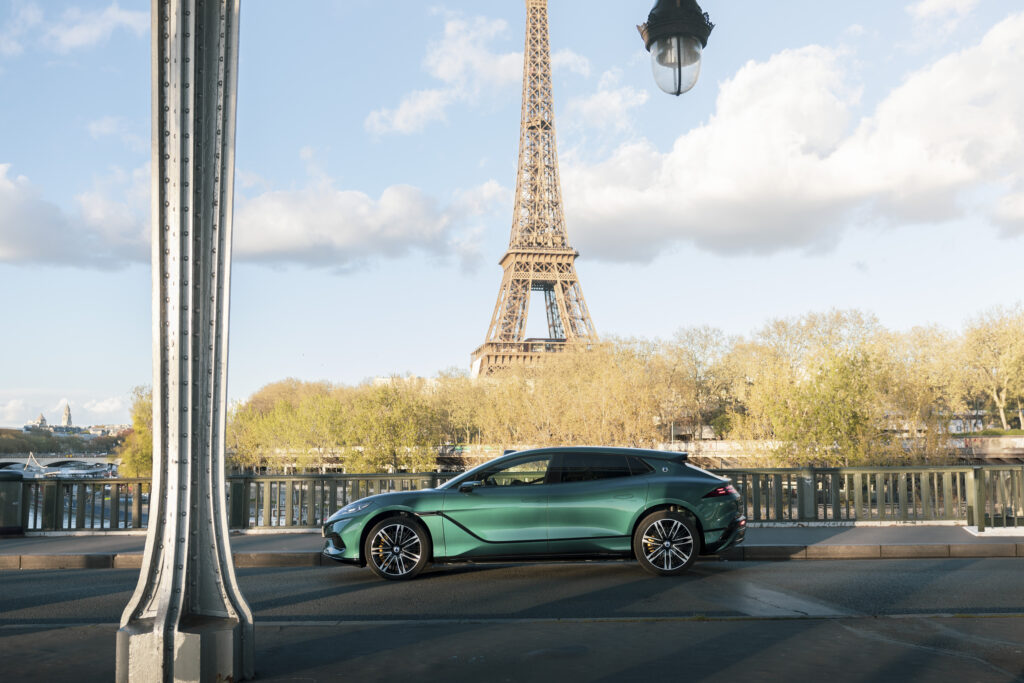
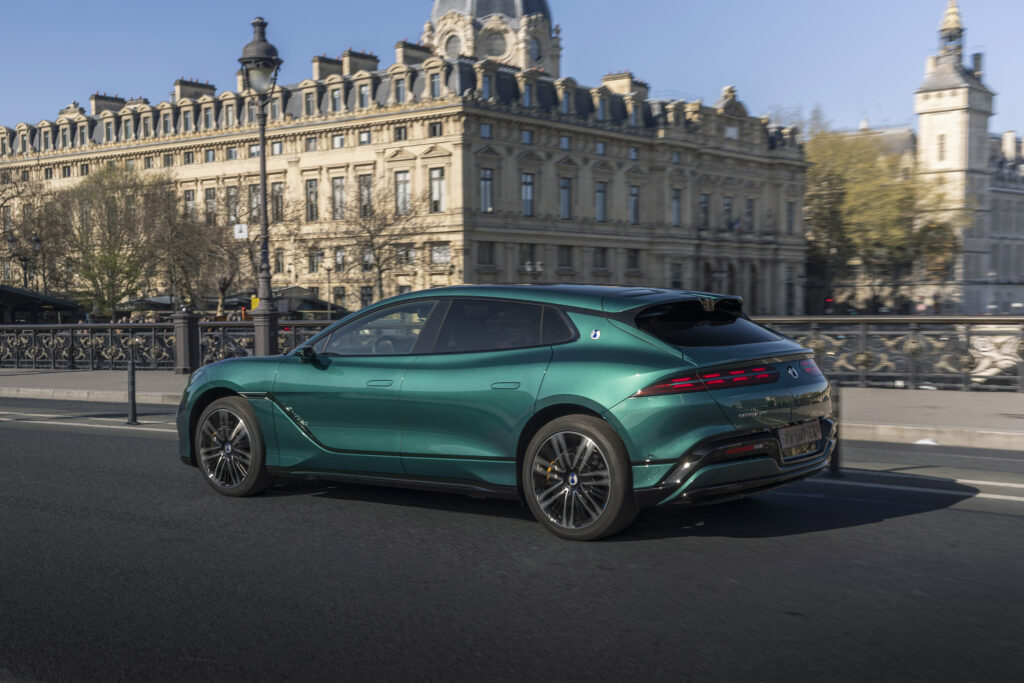
DENZA’s European launch is organized around two very different vehicles. On the one hand, the Z9GT, an electric or plug-in hybrid shooting brake, designed as a performance and grand touring manifesto. On the other, the D9 DM-i, a super-hybrid MPV that transposes the codes of first class to a family and business format. The choice is not insignificant: DENZA is not seeking to enter the premium segment through the back door, but through two highly symbolic silhouettes – the large touring estate and the rolling saloon.
The automotive house belongs to the BYD group, which has become one of the central players in China’s electric transition. DENZA was founded in 2010 as part of a partnership between BYD and Daimler, before becoming fully integrated into the BYD ecosystem. DENZA’s official website recalls this origin in 2010, while BYD states that the House launched its first model in 2014 and enters the European market in 2026.
The Z9GT focuses on the most visible ambition. It is based on the e³ platform, an architecture dedicated to electric and plug-in hybrid powertrains, and features a second-generation Blade battery. The 100% electric version boasts a WLTP range of up to 600 km, a maximum power output of 710 kW (966 hp) and a 0 to 100 km/h time of 2.7 seconds. The Super Hybrid DM version boasts a combined range of up to 805 km, with cumulative power of 570 kW (776 hp). The technical table in the press kit also indicates a towing capacity of 2,000 kg and a rear trunk capacity ranging from 494 to 1,680 liters, depending on configuration.
The most strategic factor, however, remains recharging. DENZA has announced that the Z9GT is compatible with BYD’s FLASH Charging technology, capable of going from 10% to 70% in five minutes, from 10% to 97% in nine minutes, and from 20% to 97% in twelve minutes in cold weather at -30°C. BYD had already presented this technology as one of the pillars of the Z9GT’s European launch, with the idea of reducing the psychological gap between thermal refuelling and electric recharging.
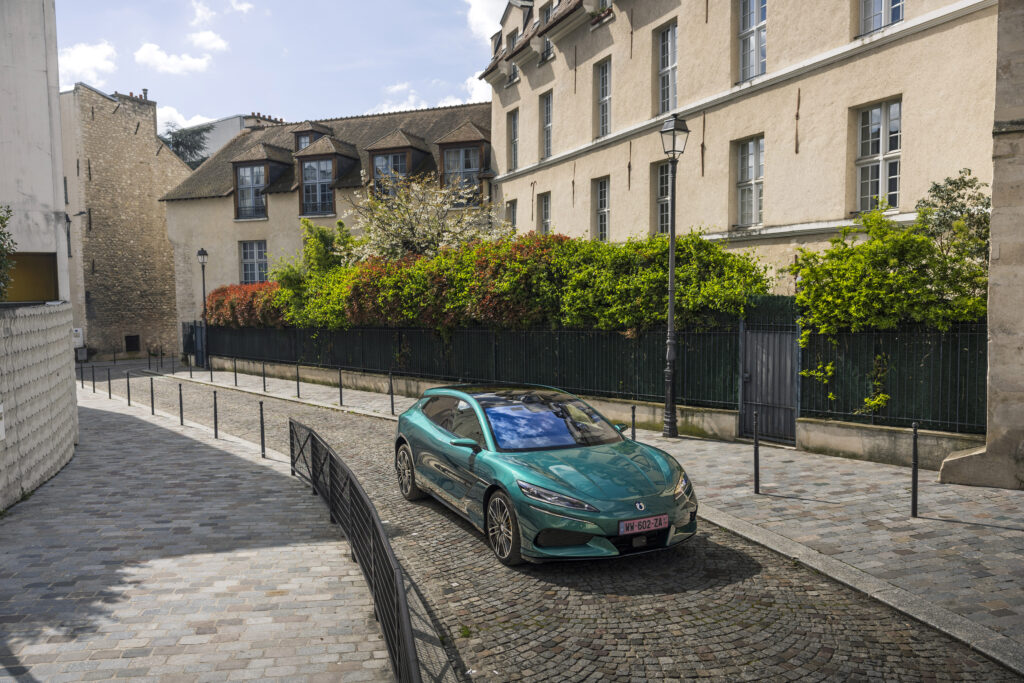
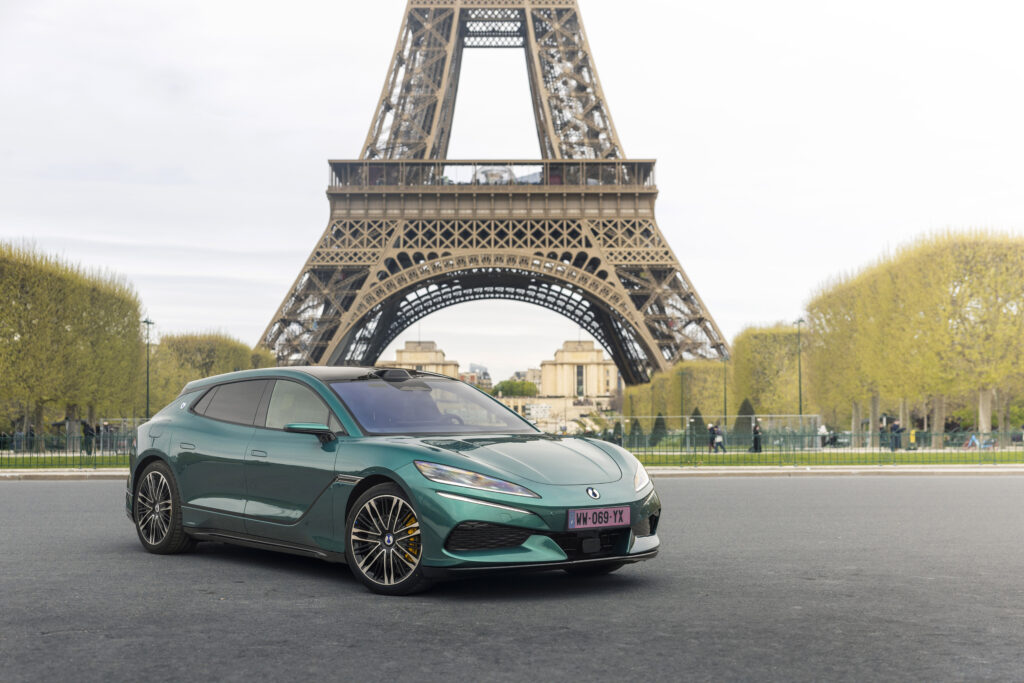
The Z9GT’s exterior language is more fluid than aggressive. The press kit emphasizes taut lines, a plunging hood, silk-inspired surfaces and a reinforced visual width at the rear. This approach is not just aesthetic. It reflects a desire to move away from the SUV as the dominant form of electric premium, in favor of a lower, more statutory silhouette, almost European in its imagination. Here, the shooting brake once again becomes an object of distinction: neither a sedan nor a utility station wagon, but a vehicle of distance.
On board, the Z9GT seeks to transform the car into a moving part. The Cell-to-Body structure provides a flat floor and an interior volume comparable, according to DENZA, to that of a limousine. The front seats feature electric adjustment, heating, ventilation, ten-point massage and active side bolsters. The cabin features a 17.3-inch central screen, a 13.2-inch driver’s display, a passenger screen, a 50-inch augmented reality head-up display, a refrigerated compartment capable of down to -6°C, and a 20-speaker, 2,000-W Devialet audio system.
The D9 DM-i responds to another logic: that of silent, modular transport. The vehicle is 5,250 mm long, 1,960 mm wide and 1,900 mm high, with a wheelbase of 3,110 mm. Its three-row 2+2+3 configuration accommodates seven occupants. In the press kit, DENZA claims up to 210 km WLTP 100% electric range and 950 km combined range with charged battery and full tank. The 1.5-liter turbocharged internal combustion engine develops 120 hp, combined with two electric motors for a combined output of 353 hp.
The D9 DM-i is distinguished less by speed than by organized comfort. The second row features “Air Spa Zero Gravity” seats, ventilated, heated, electrically adjustable to 14 positions and reclining to 152 degrees, with 16-point massage. The front seats offer heating, ventilation, ten-point massage and eight-way power adjustment. The third row remains heated and ventilated, with four-way power adjustment. In a segment often treated as rational, DENZA introduces a premium, almost hotel-like cabin vocabulary.
On-board technology follows this rolling lounge logic: 15.6-inch central screen, 10.25-inch digital instrumentation, 10.25-inch passenger screen, two LCD screens integrated into the second-row armrests, 12.8-inch multimedia screens in the front seatbacks, four 50 W wireless chargers, six USB Type-C ports, one USB Type-A port, a 7.5-liter refrigerator and more than 200 voice commands distributed over six zones. The Devialet audio system features 16 speakers, developed specifically to deliver an immersive experience to every row.
Trunk space varies according to use: 430 liters in seven-seat configuration, 570 liters when some seats are moved forward, and up to 2,310 liters when the third row is folded and the second advanced to its maximum. The D9 DM-i not only promises a move upmarket in the MPV segment, it also reminds us that automotive luxury can also be seen in the way a vehicle accommodates real-life constraints: children, luggage, drivers, long distances, work on the move.
DENZA’s arrival in Europe comes at a delicate time for established manufacturers. The electric premium is no longer just a question of image, but of speed of innovation. BYD has already built part of its advantage on the vertical integration of batteries, electric motors and electronic systems. DENZA is a more formal showcase for this, with a promise summed up by its slogan: “Technology drives elegance”. BYD Europe presents DENZA as a Premium House combining European-inspired design and cutting-edge technological platforms.
The challenge will be as much cultural as technical. In Europe, premium is not won by technical specifications alone. It requires trust, service density, a network, lasting perceived quality and an ability to create desire beyond novelty. DENZA knows this: the launch documents insist on a pick-up, maintenance and drop-off experience, with a dedicated app and valet service. The Z9GT will be available in France, Germany, Italy, Spain and the UK, followed by other European markets; the D9 DM-i will follow a similar trajectory at DENZA dealerships in France and several other European countries.
DENZA is not just another vehicle in an already saturated market. It’s another definition of automotive prestige: less focused on old-fashioned mechanical nobility, more attentive to recharge speed, interior modularity, interface, battery, acoustics, the ability of a cabin to become a space for work, rest or travel. It remains to be seen whether this technological precision will be able to produce what European luxury still demands: a slow emotion, a built confidence, a form of memory.


Cette publication est également disponible en :

