
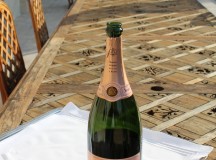
There are some appointments you just can’t miss. Privileged moments of encounter with a brand and its world, its intimacy. This evening at this exceptional venue was one of those rare moments suspended in time, as we discovered the history of one of France’s most beautiful houses and its illustrious widow: Veuve Clicquot.
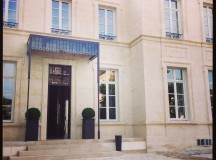
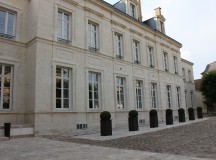
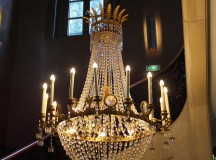
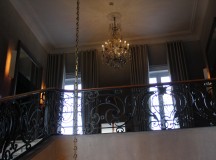
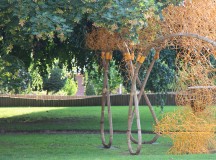
The Hôtel du Marc, to which we had the pleasure of being invited, is a prestigious and historic venue for Veuve Clicquot Ponsardin, where it has welcomed its distinguished guests for several generations.
The Hôtel du Marc is a very special hotel, the object of Veuve Clicquot Ponsardin’s tenderness and attention. Once an orchard, when Madame Clicquot acquired it in 1822, this confetti of city greenery became part of the history of the Champagne company when the Veuve offered it to her young German associate, Edouard Werlé, in 1840. The gift had all the makings of a symbol. Edouard Werlé’s name followed in the footsteps of the Clicquots, but above all it marked the beginning of his geographical and family roots in the city of Reims. For it was here, at 18 rue du Marc, that the company’s successor decided to build his private residence. A majestic building, moving in its sobriety, which pays homage to 18th-century classicism, through its facades of Romain ashlar and its floral-inspired woodwork.
Completed in 1846, the residence was home to the Werlé family, who entertained the notables of Reims, as well as the company’s agents and major customers from the four corners of the globe. In 1907, Veuve Clicquot Ponsardin acquired the building to host its prestigious guests. Since then, the Hôtel du Marc has embodied the French art de vivre so dear to the Champagne House. In 2011, after many years of renovation, the Hôtel du Marc turns a new page in its history, unfolding its poetry and romantic beauty in all its modernity.
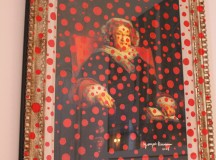
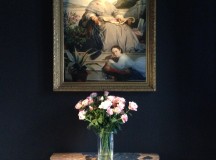
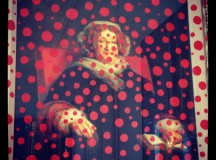

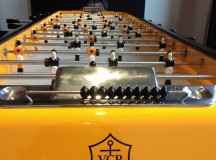
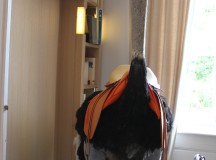
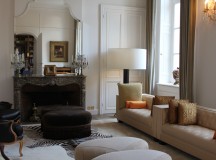
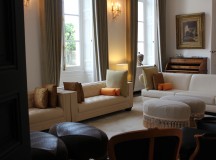
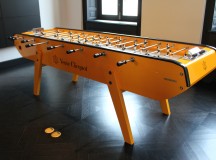
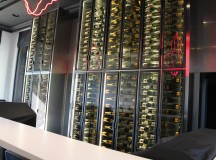

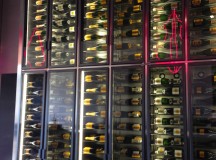
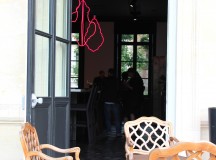

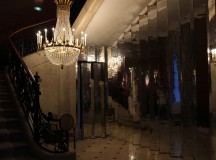
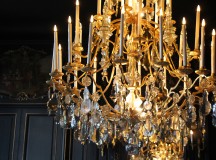
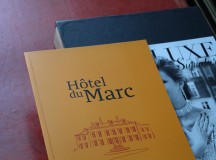



The Hôtel du Marc is also a museum, as in addition to retracing the history of the house, it houses a large number of works of art and magnificent pieces.
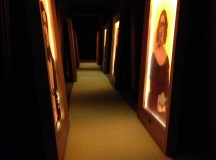
The Gallery of Portraits
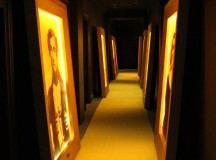
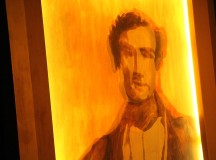
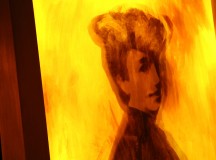
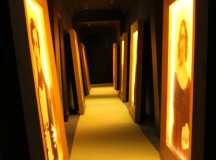
Access to the rooms is via a long corridor, where the theatrical lighting comes not from traditional sconces but… from paintings. With hushed steps, on the golden coconut carpet, you move forward under the gaze of Louis Bohne, then the Duchesse d’Uzès…
A journey for every night
Gray hail, opaque frost whites, tender buds, blazing autumns, summer sun on green grass. Like a tale to be reinvented each night, the rooms at the Hôtel du Marc are an ode to the seasons of vines and wine. The story of each room was then imagined according to the life and tastes of the illustrious character who sponsored it.
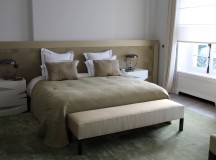
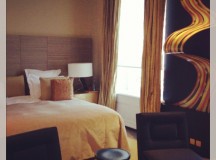
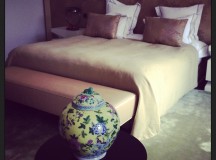
L’Heure des songes
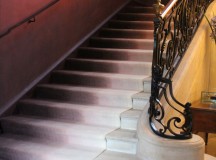
To reach the bedrooms, the grand staircase offers a foretaste of dreams. It is reached after crossing the vestibule and its château-like floor, a large carpet of white stone dotted with black cabochons. Artistic ironwork unfolds the arabesque banister, organized around the original builder’s cipher: an E encircled by a W, the signature of Edouard Werlé.
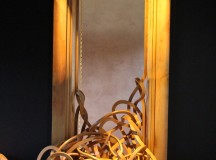
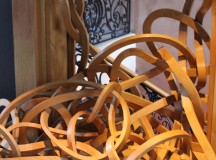
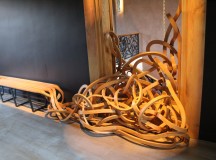
From the very first step, Hôtel du Marc writes an ode to the vine, the seasons and the colors of Champagne weather. Like a writer’s blotter, the wall seems to absorb the wine-lime colors of the staircase carpet. Opposite the original banister, another banister hangs on the watercolour wall. Nervous as a vine root, it springs from the stone, plunges back into the material, only to emerge a few centimetres further on. The work, by Pablo Reinoso, ends its mad journey on the second floor. The root rushes through a skylight and stretches out in a sitting position. For there’s nothing quite as good as reading at the foot of a tree, waiting for companions lost in a patch of vines, or simply sitting on a bench and dreaming.
Off to sleep: Once upon a dream
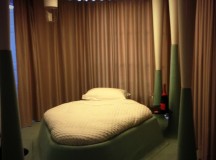
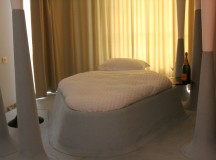
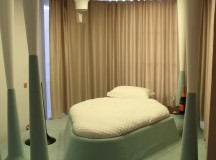
A suspended interlude, on the threshold of dreams… Because the room designed by Mathieu Lehanneur for Hôtel du Marc shatters conventional wisdom. Here, sleep is simply experienced. Let yourself be enveloped in a caressing bubble, as the diffusion of “white noise” isolates the sleeper from any sound nuisance. Curtains drawn, light gently fading, temperature 19°, perfect for falling asleep. A breeze of sea air, whose mineral content nimbles the cellular metabolism with anti-oxidant and moisturizing effects.
Tension falls, the mind escapes, the body lets go. Each element of this room is the fruit of numerous
physiological studies conducted by medical departments specializing in chronic sleep disorders. Mathieu Lehanneur imagined this room as a wink to Barbe Nicole Clicquot Ponsardin, a great insomniac, who used to forget the sleepless hours of the night by wandering through her cellars. A mischievous nod, too, to these famous cellars, where the House’s champagne bottles “sleep”.
The art of the table as a mysterious theater
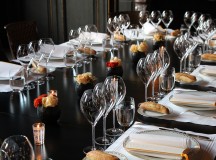
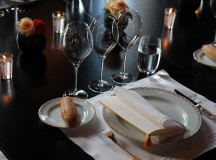
Depending on the number of guests and the mood of the day, the hotel’s guests are welcomed in the Grande Salle à manger or the Petite Salle à manger.
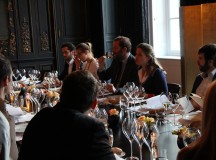
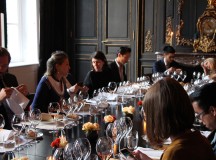
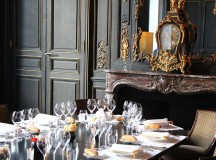
The Grande Salle à manger displays its gold against a spectacular background of matte black and a wide ashen parquet floor. The fireplace and marble consoles have also been repainted in this palette. At the heart of the room is a large table seating eighteen, surrounded by mahogany chairs upholstered in a patchwork of black and “Clicquot yellow” horsehair. Like a fairy tale, the lights come from a gigantic chandelier set with smoked glass pendants. And if the day gets too incisive, huge frosted linen curtains obscure the windows.
At the opposite end of the spectrum, the Petite Salle à manger is all about softness. Faded blues, pastels and ochre tones inspired by the Orient stretch along a large tapestry wall.
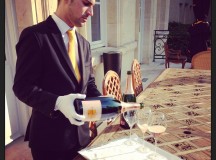
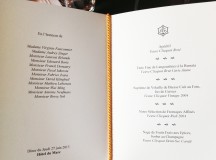
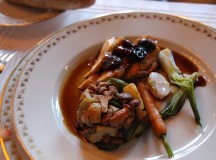
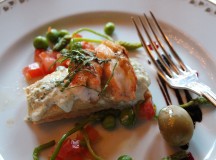
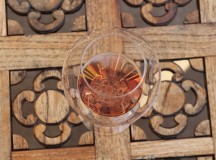
The gastronomy served here is concocted by exceptional chefs who prepare lunches or dinners with delicate Champagne pairings.
After this magnificent dinner, drivers were waiting to take us back to Paris, our minds dreaming of having seen and drunk so many beautiful things.








Cette publication est également disponible en :

