
I’m leaving at intermission
Nicolas d’Estienne d’Orves
Paris, a night of defeat, Saturday, April 16, 2011,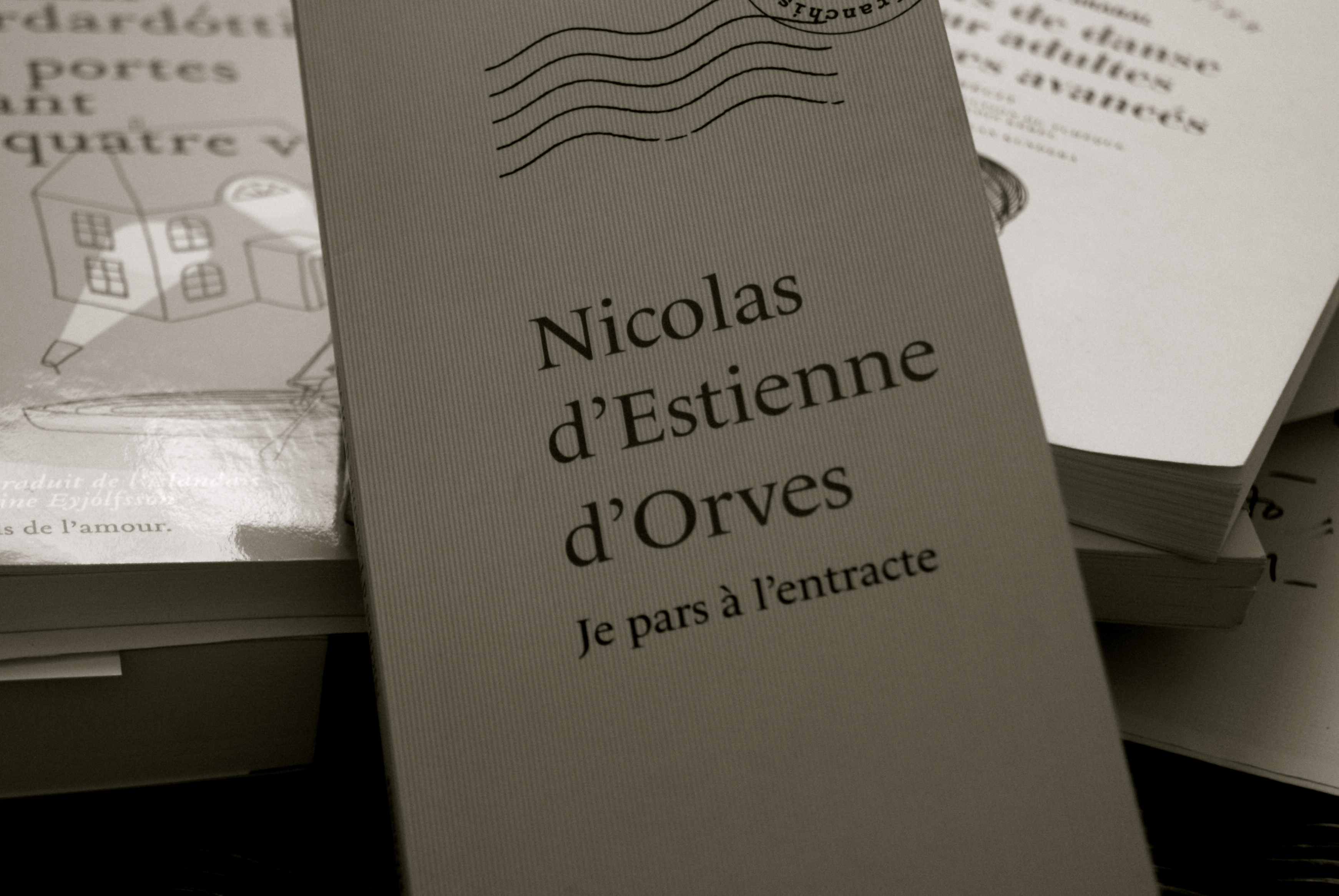
Crédit photo : EP
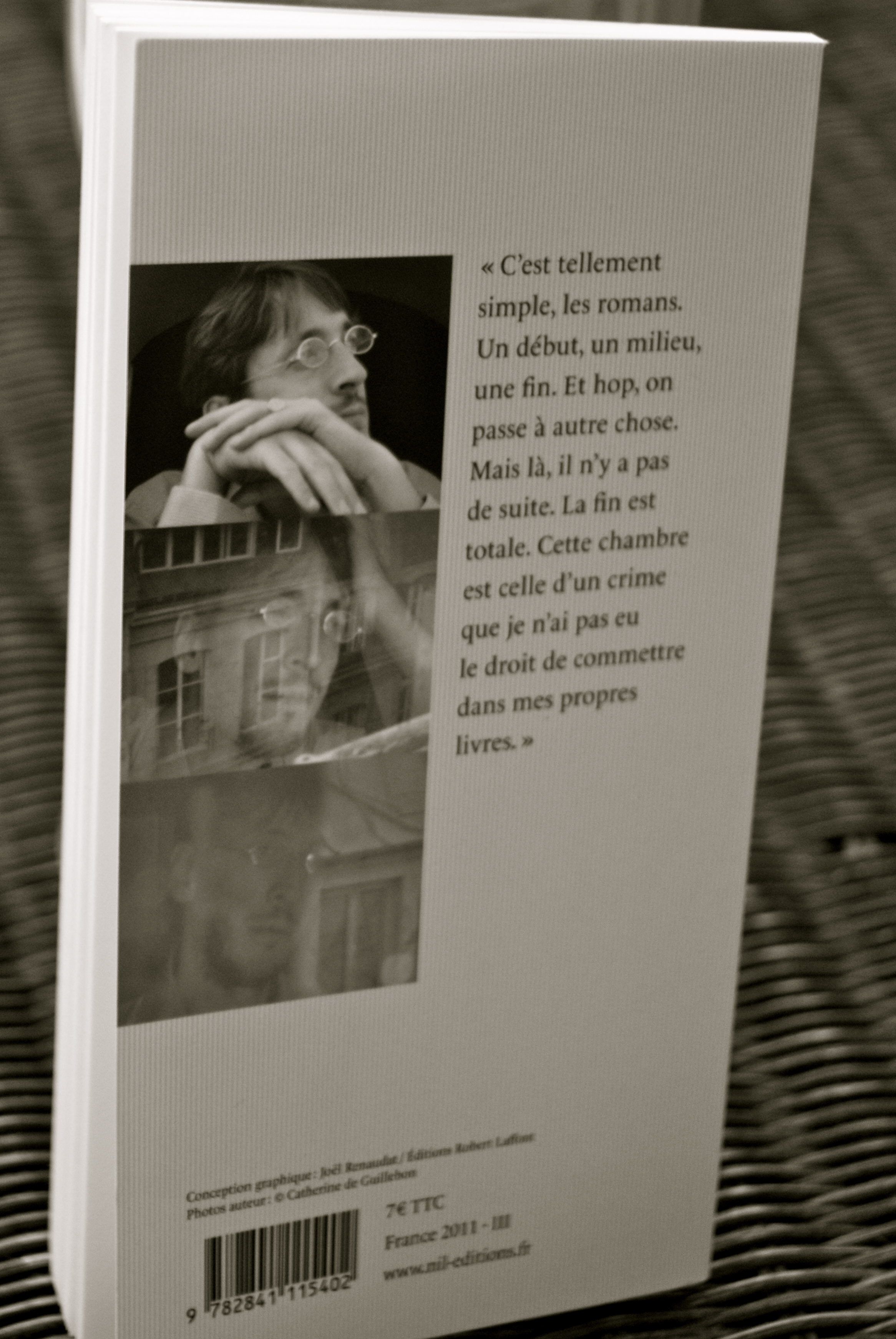
Crédit photo : EP
The “Les Affranchis” collection asks its authors to write the letter they have never written. Nicolas d’Estienne d’Orves plays along and chooses his childhood friend, also a Nicolas, who left the field by committing suicide. Nicolas (I) and Nicolas (II) have been friends for almost thirty years. Something vital, viral, and terribly oppressive too. Yeah, the famous backlash. Together, they’re going to make themselves believe that they’re above it all, that our teenage problems (acne, girls, sexuality) don’t concern them (no time to be part of the lower classes), that only films, operas, paintings and books have any right to exist in their world, a kind of no-man’s-land, necessarily elitist and pretentious. Nicolas (I), a master thinker in his own right, dictates the rules, decides what’s good and what’s not, gives his approval or not, and condemns with unprecedented violence what he deems to be, or to be dangerously close to being, “crap”. In this hand-to-hand combat, Nicolas (II) absorbs his brother-in-spirit’s opinions and positions like a blotter, as if they were his own.
“When you grow up together, you don’t realize it. We just move on. Hand in hand, you and I have gone through the last fires of childhood, the hideous adolescence and the first slaps of manhood. One inside the other – if I may say so – we unleashed our sensations: the discovery of the world, of wide open spaces, of misery, of laughter under the moon; disappointment in our loved ones, our parents, our ideals, our first infatuations. Each of us looked to the other for validation of our intuitions. Tolerant, I praised yours; destructive, you murdered my tastes.” p.18 & 19
Crédit photo : EP
But while the world – which has come to its senses – revolves around him, Nicolas (I) falls flat on his face and finds himself miserably stuck in his shantytown-like Tour d’Argent. His desire for greatness and perfection, not to mention his intransigence towards the human race, has made him an embittered, maladjusted, déclassé figure, stagnating in troubled waters. He’s also penniless, spineless and dripping with laziness, a bit of a mythster, mentally ill, jealous and disproportionately weak… Quite simply, when he decides to kill himself with drugs, it’s almost the only thing we want to applaud, since for once he’s (one) almost up to the character’s level and (two) gets things done.
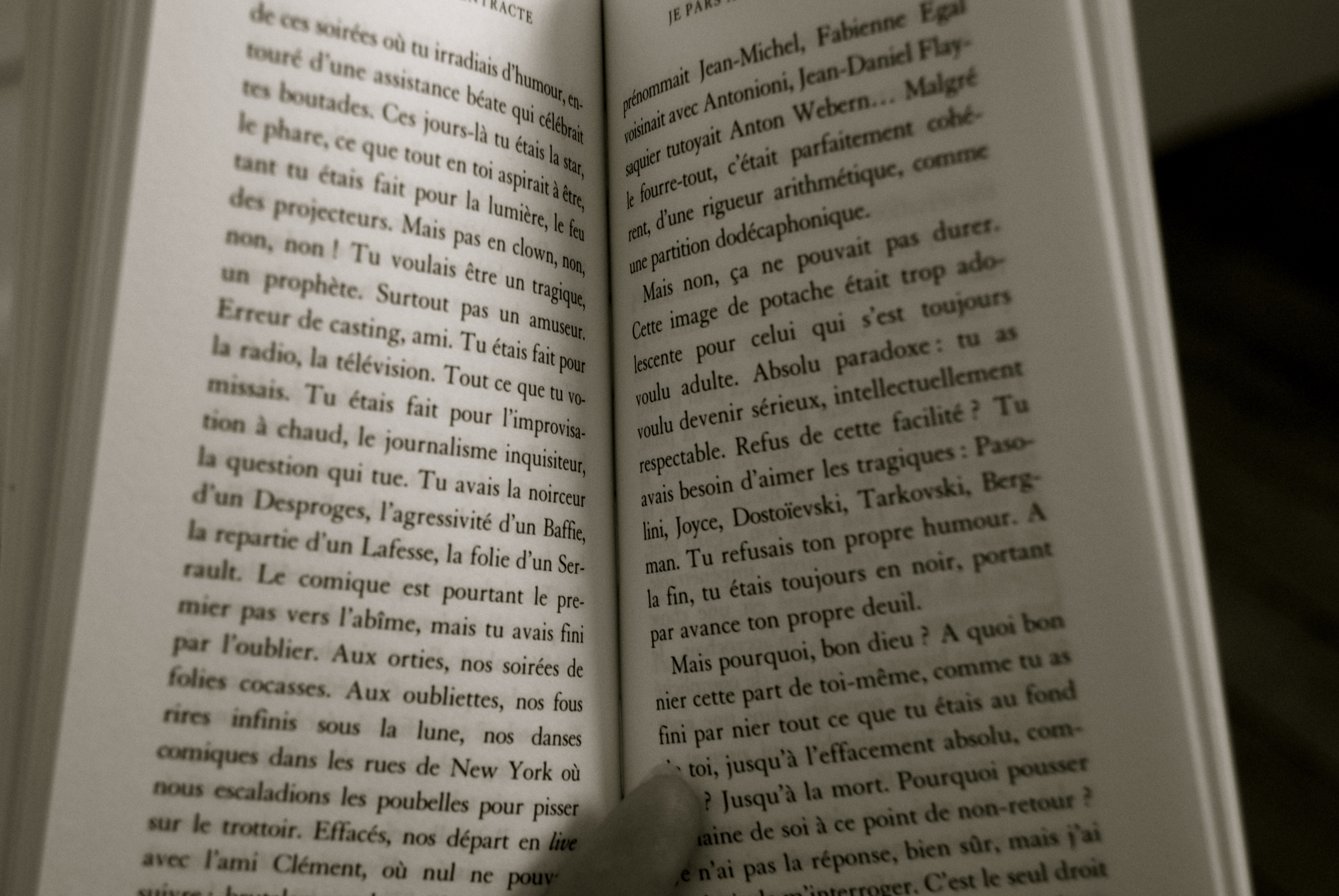
“Because you’re dead: finally, what a relief! Bravo, bravo! Champagne! Christmas! It’s about time! For years you’ve owed us this sacrifice, for years I’ve been waiting for this phone call, dreading it at first, hoping for it soon, then calling for it with all my heart. There’s nothing cruel about what I’m writing here. In a way, this is your most coherent, most logical act. For years, you’ve been threatening us, in a less and less playful tone: “One day, you’ll find me dead. Duly noted. At last you were bringing a project to fruition, at last you were “following through”. The global impotence of your whole life, of all your commitments, was receiving your fist in its mouth! It was about time, firecracker!” p. 59 & 61
A strong impression.
Thank you.
Elisa Palmer
I'm leaving at intermission
Nicolas d'Estienne d'Orves
Editions NiL
7€
73 pages
Cette publication est également disponible en :

